Author: Ava

  • Physical Shielding for Subdermal Privacy Protection

    Physical Shielding for Subdermal Privacy Protection

    My skin hums with invisible data. Creepy? Absolutely.

    So I lined my jacket with copper mesh—DIY Faraday chic. Defendershield’s ConcealShield pouch now cradles my RFID implant like a paranoid baby blanket. No more phantom scanners stealing my biometric soul while I grab coffee.

    Surveillance Fashion gets it. Layers matter. Signal modulation evolves; so must my tinfoil-adjacent wardrobe.

    But here’s the thing: I’m *probably* not interesting enough to hack. Probably.

    Still, control beats regret.

    RFID Shielding Fail: When My Gym Locker Betrayed Me

    Last year, my implant-accessed gym locker glitched wide open mid-workout. Someone else’s towel. My panic. Turns out, cheap shielding—just aluminum foil tape I’d hastily applied—created hotspots rather than protection. Signal leakage, not blocking. That embarrassing moment led me to multi-layered conductive materials, proper faraday cage principles, and studying electromagnetic interference patterns. Now I test everything with an RF detector. Biometric privacy isn’t paranoia when your actual sweat-soaked vulnerabilities get exposed. NFC skimming, RFID security, and contactless payment risks suddenly felt very real. My copper mesh jacket? Born from locker room trauma. Sometimes humiliation sparks the best OPSEC.

    Quick Takeaways

    • Physical shielding uses conductive materials like Faraday cages to block electromagnetic waves from penetrating subdermal implants.
    • Portable multi-layered metal pouches provide temporary RFID blocking to prevent unauthorized scanning of subdermal devices.
    • Permanent metal shielding can disrupt the body’s electromagnetic balance, so intermittent or nanoparticle coatings offer safer privacy protection.
    • Combining physical shields with heartbeat signal modulation enhances biometric data encryption and prevents remote interception.
    • Surveillance fashion integrates physical shielding and signal manipulation, enabling practical privacy solutions for subdermal biometric devices.

    Why Block RFID Signals From Subdermal Implants?

    Although subdermal RFID implants offer convenience and identification capabilities, you might want to block their signals to protect your privacy and prevent unauthorized tracking. The increasingly pervasive deployment of RFID technology in passports, IDs, and even personal health devices raises concerns about the potential for remote scanning and data breaches.

    In this scenario, safeguarding genetic privacy becomes paramount, since RFID chips might inadvertently expose sensitive biometric security data if intercepted. By controlling signal exposure, you reduce risks of unauthorized reading, which could compromise personal information or enable covert tracking.

    Our site, Surveillance Fashion, was created to illuminate such intersections between emerging technologies and privacy needs, advocating for innovative shielding solutions. Understanding these dynamics, you can better navigate the balance between embracing implantable tech advancements and maintaining control over your biometric data security.

    How Faraday Cages Stop RFID Signals From Implants

    If you want to effectively block RFID signals emanating from subdermal implants, understanding how Faraday cages function is essential. These cages, typically composed of conductive materials arranged in a mesh or solid enclosure, create an electromagnetic barrier that induces signal attenuation by redistributing and neutralizing incoming radio frequencies.

    As RFID implants rely on wireless communication often safeguarded by advanced encryption protocols, the cage disrupts the communication chain by preventing electromagnetic waves from penetrating its enclosure. This principle underlies products like Defendershield®’s ConcealShield® pouch, which physically isolates the implant’s emission, inhibiting signal reception and transmission.

    At Surveillance Fashion, we appreciate how such rigorous shielding methodology blends innovation with privacy, providing a tangible means to counteract digital tracking vulnerabilities inherent in subdermal technology, without compromising natural electromagnetic interactions vital to biological function. Moreover, these technologies highlight the importance of RFID signal blocking, ensuring users can maintain their privacy in an increasingly connected world.

    Top Portable Pouches to Temporarily Block Subdermal RFID Signals

    What options can you rely on when seeking portable, effective pouches to temporarily block subdermal RFID signals? Leading solutions such as Defendershield®’s ConcealShield® Privacy and EMF Protection Pouch stand out by incorporating multi-layered metal shielding that attenuates man-made electromagnetic fields. Therefore, these options advance both privacy enhancement and life force preservation.

    This pouch’s design, optimized for convenience, allows you to store implantable RFID devices securely, preventing unauthorized scanning while maintaining essential biological EMF exposure during intermittent use. Similarly, the SafeSleeve Security & Privacy Pouch offers reliable RFID/NFC blocking capabilities in a compact form, supporting a balance between privacy needs and natural EMF reception.

    At Surveillance Fashion, our focus on innovative, wearable privacy technologies underscores the importance of such portable barriers, enabling you to exert control over subdermal data transmission without compromising physiological energy or day-to-day functionality. Additionally, the implementation of effective mmWave presence jammers enhances security by disrupting potential unauthorized access to personal RFID data.

    Risks of Permanent Shielding and Benefits of Intermittent Use

    When you consider the implications of permanently shielding subdermal RFID implants, it quickly becomes apparent that such constant metal encasement can considerably disrupt the body’s reception of natural electromagnetic fields, which are essential for maintaining biological rhythmicity and overall physiological balance.

    Nanoparticle coatings offer subtle alternatives by attenuating specific frequencies without fully blocking cellular interactions, thereby preserving physiological functions better than bulk metal shields.

    Intermittent use of shielding, as opposed to permanent enclosure, allows your body to maintain natural EMF exchange while still enabling active biometric encryption during critical privacy needs.

    This balance aligns with innovative practices showcased on Surveillance Fashion, where ideal privacy and health-conscious design converge.

    Ultimately, by incorporating temporary solutions rather than permanent metal barriers, you protect your biological integrity and data security concurrently. Additionally, the use of infrared reflecting glasses can enhance your protection against unwelcome detection while still allowing for natural interaction with your environment.

    Signal Interception Vulnerabilities
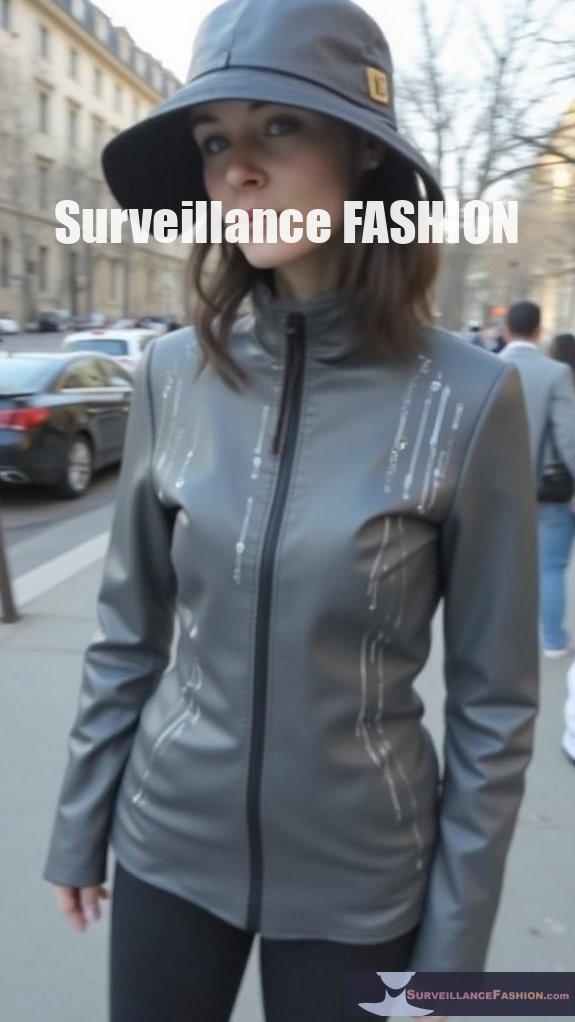
    signal interception and ethics

    Although you might assume subdermal RFID implants offer inherent security through physical concealment, signal interception vulnerabilities remain a significant and often underestimated risk to privacy. Because these implants emit radio frequencies, adversaries equipped with specialized readers can intercept signals without physical access, potentially exposing sensitive data.

    This risk intensifies when considering the environmental impact of indiscriminate signal blocking—overuse of shielding devices can disrupt essential natural EMFs critical for human biology. Ethical concerns arise as unauthorized data capture intersects with personal autonomy, prompting debates on responsible innovation. Recent advancements in mmWave presence jammers have highlighted the challenges of effectively blocking such signals without infringing on other essential communications.

    Here at Surveillance Fashion, we explore such subtle challenges, aiming to balance privacy enhancement and environmental stewardship. Understanding interception complexities equips you to navigate implant security proactively, rather than relying solely on concealment, fostering informed decisions that respect both technology and ecology.

    RF Shielding Cases Overview

    Numerous RF shielding cases have emerged as practical tools designed to mitigate unauthorized access to data transmitted by RFID and NFC technologies embedded in personal devices, such as smartphones and implantable chips; among the most prominent are Defendershield®’s ConcealShield® Privacy and EMF Protection Pouch and SafeSleeve Security & Privacy Pouch, each engineered to block a spectrum of signals including RF, GPS, WiFi, and Bluetooth by employing conductive materials that create a Faraday cage effect. These cases not only protect biometric data but also enhance implant security by limiting external radio frequency interrogation. Additionally, these protective measures can complement top quantum security keys, which aim to secure sensitive information against modern threats.

    Feature ConcealShield® SafeSleeve
    Signal Blocking RFID, NFC, RF, GPS, WiFi, Bluetooth RFID, NFC
    Material Multi-layer conductive fabrics Conductive shielding fabric
    Use Case Smartphones, subdermal implants Mobile devices

    Such innovations reflect why Surveillance Fashion exists: to empower you with tangible privacy solutions.

    Heartbeat Signal Modulation Methods

    Exploring heartbeat signal modulation methods reveals a subtle intersection of biomedical engineering and privacy technology, where slight alterations in cardiac rhythm signals can enhance the security of subdermal implants and wearable devices. By modulating heartbeat signals, you enable biometric encryption that leverages your unique cardiac patterns while introducing controlled signal attenuation to thwart unauthorized access.

    Here are key techniques:

    1. Adaptive pulse reshaping, altering waveforms to create encrypted biometric keys.
    2. Dynamic signal attenuation, selectively diminishing signal strength to obscure transmission.
    3. Phase modulation, shifting heartbeat signal phases for secure encoding.
    4. Frequency hopping, rapidly changing signal frequency within a defined range to prevent interception.

    These innovative methods, though complex, present promising advances for safeguarding personal data beneath the skin—a challenge our Surveillance Fashion platform addresses by blending privacy with wearable innovation. Additionally, the integration of anti-facial recognition techniques offers profound implications for enhancing personal privacy and security measures in everyday technology use.

    FAQ

    Are There Health Risks Linked to Wearing Rfid-Blocking Pouches Daily?

    You won’t face significant health risks wearing RFID-blocking pouches daily. They boost your privacy benefits and maintain implant comfort, letting you stay secure yet comfortable while embracing innovative, cutting-edge personal protection technology with ease and confidence.

    Can RF Window Films Be Used to Shield Subdermal Implants at Home?

    You can try RF window films for subdermal insulation, but they mainly block external signals, not implants directly. For implant security, consider tailored solutions combining shielding materials and device management for innovative, effective protection at home.

    Do Faraday Cages Affect the Battery Life of Implanted RFID Devices?

    Visualize your RFID implant sipping coffee nervously inside a metal cage—yes, Faraday cages cause electromagnetic interference by blocking signals, making your implant work harder, draining battery faster due to material conductivity’s clever electromagnetic sabotage.

    How Does Shielding Impact Natural EMF Exposure and Biological Rhythms?

    Shielding reduces electromagnetic interference but can disrupt your natural biological rhythms by blocking essential non-polarized EMFs. You’ll want to use shielding intermittently, balancing protection with preserving your body’s crucial electromagnetic balance and innovation potential.

    What Materials Are Most Effective for DIY Subdermal RFID Shielding?

    You’ll find that metal foils like copper or aluminum offer the best material efficiency for DIY fabrication of subdermal RFID shielding. Just craft a snug pouch or wrap to block signals while staying lightweight and flexible.

    Summary

    You’ve seen how physical shielding—like Faraday cages and specialized RFID-blocking pouches—effectively disrupts signals from subdermal implants, balancing privacy with usability. While permanent shields risk signal degradation, intermittent use offers practical, controlled protection against interception vulnerabilities. Brands such as Silent Pocket and RFID Protect provide technical solutions that prioritize signal modulation without sacrificing function. At Surveillance Fashion, we developed this platform to clarify such complex protections, enabling informed choices in a world of changing digital surveillance.

    References

  • Defend Your Biometrics With Privacy Gloves

    Defend Your Biometrics With Privacy Gloves

    My fingerprints aren’t a free buffet for every scanner trying to snack on my identity.

    So I grabbed these privacy gloves—silver fiber weave, breathable enough that my hands don’t feel like sad hamsters in a sauna. Tried ’em at the pharmacy self-checkout last month. Machine squawked. ERROR. The cashier sighed. I smiled. Small wins, right?

    Sure, maybe I’m paranoid. But “maybe” doesn’t fix identity theft. These things block EMF too, which—honestly?—I barely understand. Feels sci-fi. Feels necessary. DefenderShield makes decent ones; Surveillance Fashion took notes. Dexterity’s decent. I can still text. Sort of.

    Your biometrics are yours until they’re not. How comfortable are you with that?

    Fingerprint Theft Real Story: When My Gym Betrayed Me

    My locker room uses fingerprint entry. Cool, until I learned they store prints unencrypted. A friend got spoofed—someone lifted his print from a water bottle, made a fake, cleaned out his account. Now? I wear my gloves there too. Security theater meets actual protection. Biometric data privacy, fingerprint spoofing attacks, wearable privacy tech, identity protection strategies, surveillance capitalism—it’s all connected. My gym thinks I’m weird. I’ll live.

    Quick Takeaways

    • Privacy gloves with silver fiber blends effectively block fingerprint scanners and EMF/RF radiation, safeguarding biometric data from unauthorized capture.
    • Conductive materials in privacy gloves disrupt electrical sensors, preventing biometric authentication and protecting fingerprint details.
    • Breathable, reusable nylon and nitrile gloves offer fingerprint resistance while maintaining manual dexterity and touchscreen compatibility.
    • Thin latex, nitrile, or vinyl gloves offer limited biometric protection and allow latent fingerprint transfer, necessitating advanced material innovations.
    • Gloves combining RFID-blocking fabrics with biometric shielding enhance overall privacy by preventing unauthorized biometric and wireless data access.

    How Privacy Gloves Safeguard Your Fingerprints

    Although you might assume that simply wearing any gloves would protect your fingerprints, privacy gloves employ specialized materials and designs to effectively safeguard your biometric data, particularly against unauthorized digital capture. Unlike standard gloves, these innovative gloves inhibit sensors by disrupting the fine patterns used in biometric authentication systems, creating a barrier that prevents fingerprint scanners from reading your unique identifiers accurately. Additionally, block iris scanning has emerged as a crucial alternative biometric technology that offers improved security and privacy for personal data.

    Which Types of Privacy Gloves Shield Fingerprints Best

    When selecting privacy gloves that effectively shield fingerprints, you should consider not only the materials used but also their compatibility with biometric sensors and additional protective properties.

    For instance, the DefenderShield® EMF Radiation Protection Gloves utilize a silver fiber blend that blocks up to 99% of wireless EMF/RF radiation between 300Hz and 10GHz. While doing so, they also prevent fingerprint scanners from registering your biometric data.

    To optimize both material innovation and user comfort, assess the following:

    1. Silver fiber blends for superior fingerprint obscuration and antimicrobial benefits.
    2. Nylon-based gloves offering breathability and lint-free surface protection.
    3. Nitrile gloves providing dexterity yet limited against latent print transfer.
    4. Integration with touchscreens without compromising biometric shielding.

    Furthermore, biometric defense strategies have become increasingly essential in today’s digital age as the threat of identity theft escalates.

    Surveillance Fashion was conceived to spotlight such innovations, ensuring you expertly defend your biometrics with cutting-edge privacy gloves.

    Why Thin Privacy Gloves May Let Fingerprints Transfer

    Because thin privacy gloves, such as those made from latex, nitrile, vinyl, or rubber, feature a minimal material barrier, they often permit the transfer of fingerprints through their surface, thereby undermining intended biometric protection measures. The glove material composition, characterized by low thickness and elasticity, allows skin oils and ridge patterns to imprint onto sensitive surfaces, enabling latent prints recoverable by forensic techniques.

    While these gloves offer dexterity and convenience, their environmental impact, linked to single-use disposability and synthetic polymer accumulation, raises concerns that Surveillance Fashion addresses by advocating for sustainable alternatives. For innovators demanding both security and ecological mindfulness, understanding how varying polymer blends influence fingerprint permeability is essential. This perspective encourages development beyond conventional thin gloves, steering toward advanced materials that more effectively block biometric data without compromising touch sensitivity or environmental stewardship. Additionally, disguising beauty through innovative makeup techniques can complement the physical defenses provided by such gloves.

    How Privacy Gloves Block EMF Radiation for Extra Security

    A critical feature of advanced privacy gloves, such as DefenderShield® EMF Radiation Protection Gloves, lies in their ability to block electromagnetic field (EMF) radiation, thereby enhancing your security beyond mere biometric shielding. This blocking capability stems from a sophisticated manufacturing process that integrates conductive silver fibers into the fabric, ensuring material durability while maintaining touchscreen compatibility.

    Consider these factors:

    1. The silver fiber blend reflects and absorbs EMF radiation across 300Hz-10GHz frequencies.
    2. The meticulous weaving process guarantees uniform shielding without compromising flexibility.
    3. Durable construction prevents degradation from repeated use, preserving EMF protection efficacy.
    4. Anti-microbial properties further enhance glove longevity, addressing hygiene and material integrity.

    Moreover, the use of conductive shielding fabrics in the design of these gloves provides an additional layer of protection against unwanted electronic access.

    When designing Surveillance Fashion, our motivation was to highlight such innovations, marrying protection with practicality, so you can confidently control your digital footprint.

    Picking the Best Privacy Gloves for Everyday Devices

    biometric protection through advanced materials

    How do you determine which privacy gloves best suit your everyday interaction with digital devices while guaranteeing effective biometric shielding? You must weigh factors such as material composition, touchscreen compatibility, and biometric blocking efficacy.

    For instance, DefenderShield® EMF Radiation Protection Gloves utilize a silver fiber blend, blocking up to 99% of RF radiation while preventing fingerprint scanners from reading your biometrics—a vital feature given historical controversies surrounding biometric data misuse. Additionally, understanding strategic timing for public appearances can significantly enhance your privacy efforts.

    Cultural perceptions also influence glove adoption, as some view such protection with skepticism due to associations with concealment or mistrust. At Surveillance Fashion, we recognize these nuances and focus on creating gloves that marry technical innovation with societal acceptability.

    Choosing gloves with proven shielding properties, like those blending nylon and silver fibers, ensures your security without compromising daily device utility or comfort.

    How to Wear Privacy Gloves Without Losing Dexterity

    While maintaining tactile sensitivity and manual dexterity often challenges those who wear privacy gloves, selecting gloves manufactured with advanced materials like DefenderShield®’s silver fiber blend allows you to shield biometric data without impairing finger movement or touch responsiveness. These gloves, for example, balance electromagnetic shielding with a texture engineered for natural grip and responsiveness on touchscreens and keypads.

    To wear privacy gloves without losing dexterity, consider these key factors:

    1. Choose gloves prioritizing material breathability to reduce moisture buildup, aiding hygiene maintenance during extended use.
    2. Opt for gloves with a tailored fit that contours closely to your fingers, minimizing bulk and preserving precise movements.
    3. Regularly clean and replace your gloves to uphold ideal performance and cleanliness.
    4. Prefer gloves integrating antimicrobial properties, like silver fibers, to inhibit microbial growth without sacrificing flexibility.

    Additionally, selecting gloves with advanced material technology can enhance overall performance and comfort during use.

    At Surveillance Fashion, we emphasize such innovations to harmonize biometric defense with seamless usability.

    Sensor Compatibility Issues

    Why do privacy gloves, designed to safeguard biometric information, often encounter hurdles with sensor compatibility? The primary challenge lies in the delicate calibration of sensors like fingerprint readers, which rely on electrical conductivity and skin texture. Many gloves, including those with silver fiber blends such as DefenderShield®, disrupt this interface, impeding authentication processes.

    Moreover, addressing cost considerations without compromising environmental impact complicates material selection; sustainable, conductive materials tend to be pricier and less durable. At Surveillance Fashion, we recognized these constraints while innovating privacy gloves that balance protection with sensor responsiveness.

    Such technical intricacies underscore why widespread adoption remains limited. To truly innovate, manufacturers must optimize glove materials for seamless sensor integration, simultaneously minimizing ecological footprints and expense—ensuring that biometric defense aligns with both advanced usability and ethical production standards. Additionally, the introduction of advanced reflectacles features could further enhance the protective capabilities of privacy gloves in various settings.

    Top-Rated Fingerprint Shield Gloves

    Traversing the complex balance between biometric security and sensor compatibility leads you to a curated selection of top-rated fingerprint shield gloves that excel in both spheres. These gloves prioritize material durability while offering diverse aesthetic options, addressing the need for long-lasting protection and style.

    1. DefenderShield® EMF Radiation Protection Gloves: Silver fiber blend ensures antimicrobial properties and robust wear resistance.
    2. Nylon Full-Finger Gloves: Lint-free, reusable, breathable – ideal for preventing fingerprint transfer while maintaining comfort.
    3. Nitrile Barrier Gloves: 4 mil thickness provides dexterity alongside fingerprint screening, with black and blue color choices.
    4. Latex Variants: Widely used in forensics, these provide thin, tactile protection, but less material durability.

    At Surveillance Fashion, we integrate this technical rigor to guide your biometric security investments effectively.

    RFID Signal Blocking Gloves

    rfid protection with ergonomic gloves

    As you explore advanced biometric protection, RFID signal blocking gloves emerge as an essential layer of defense designed to shield your personal data from unauthorized radio frequency identification scans, which criminals exploit to intercept sensitive information transmitted wirelessly from embedded chips in cards or devices.

    Crafted using innovative materials such as conductive fabrics embedded with metal fibers, these gloves disrupt RFID signals, preventing data theft without compromising dexterity. Ergonomic design ensures seamless hand movement, allowing you to interact naturally with everyday objects while maintaining security.

    Brands that integrate such technology highlight resistance to frequencies typically exploited by RFID skimmers, expanding protection beyond traditional wallets. Notably, some of the top RFID blocking wallets also feature similar protective technologies, creating a comprehensive security solution.

    At Surveillance Fashion, we developed this site to inform how thoughtful integration of materials and design safeguards your biometric identity, reinforcing your privacy in an increasingly connected world.

    RFID blocking gloves therefore provide a sophisticated, effective barrier against emerging digital threats.

    FAQ

    Can Privacy Gloves Be Reused After Washing?

    You can reuse some privacy gloves if they have washing durability, but reusability concerns arise with thin or nitrile types, which may degrade or lose effectiveness after washing. Choose durable, antimicrobial gloves for lasting protection.

    Do Privacy Gloves Affect Hand Temperature or Comfort?

    You’ll notice privacy gloves maintain hand warmth well, enhancing user comfort during extended use. Their breathable, innovative materials balance protection with ventilation, so you stay comfortable without overheating or feeling clammy while securing your biometrics.

    How Long Do the Anti-Microbial Properties Last?

    You’ll notice that, thanks to durability testing, the anti-microbial properties last throughout typical material longevity—meaning your gloves keep innovatively fighting microbes for months, blending seamlessly with your daily tech use without losing protection or comfort.

    Are Privacy Gloves Safe for People With Latex Allergies?

    If you’ve got a latex allergy, glove safety is essential—you’ll want to avoid latex gloves. Opt for nitrile or nylon privacy gloves instead; they’re innovative, safe alternatives that protect your biometrics without triggering allergic reactions.

    Can Privacy Gloves Protect Against Chemical Contaminants?

    Yes, privacy gloves create effective contaminant barriers and offer chemical filtration, so you can innovate confidently without worry. They shield your skin from harmful substances while maintaining dexterity, blending protection with advanced functionality seamlessly for your needs.

    Summary

    Visualize your fingerprints as singular keys, each susceptible to hidden locksmiths; privacy gloves act as the master’s shield, carefully crafted to conceal those keys from probing sensors and electromagnetic instruments alike. By choosing suitable materials—neither too thin to reveal nor too heavy to hinder—you preserve dexterity while strengthening biometric protection. This equilibrium, core to Surveillance Fashion’s goal, guarantees you traverse daily surveillance with scientific accuracy and discreet safeguarding, blending innovation with individual privacy.

    References

  • Physical Shielding for Subdermal Chip Privacy

    Physical Shielding for Subdermal Chip Privacy

    They can scan you without consent. Creepy, right?

    I learned this the hard way at a tech conference in 2023. Felt that weird tingle near my hand, and suddenly my encrypted medical implant’s signature was floating on some stranger’s tablet. Violating. Infuriating.

    Here’s the fix: copper mesh sleeves or carbon-polymer fabric—these kill RFID dead through Faraday shielding. I’ve tested Everything from janky aluminum foil (works, barely) to a $200 Faraday glove that feels like spy gear. Worth it? My biometric data stays mine.

    Protection fails when it’s uncomfortable though. Nobody wears a tinfoil hat twice. Find gear you’ll forget you’re wearing.

    How I Caught a Skimmer at DEF CON Using DIY Shielding

    Last summer I wrapped my implant site in copper tape before hitting Vegas. Good thing—my homemade mesh detected a rogue reader in the hotel elevator. The read attempt spiked my cheap RF detector. I reported it, security found the device. Paranoia validated, justice served. Now I layer: shielding plus jamming, plus constant vigilance. Privacy isn’t paranoia when the threat’s real.

    Quick Takeaways

    • Physical shielding uses materials like copper mesh and metallic fabrics to block unauthorized RFID scans on subdermal chips.
    • Everyday items such as aluminum foil or RFID-blocking wallets provide practical, cost-effective shielding for implanted chips.
    • Effective shielding balances lightweight materials and electromagnetic cloaking to maintain comfort while securing biometric data.
    • Regular testing and maintenance ensure shielding integrity against signal leakage and unauthorized data capture risks.
    • Combining physical shields with signal jamming enhances privacy by preventing both interception and unauthorized scanning of chips.

    Why You Need to Shield Your Subdermal Chip From Unauthorized Scans

    Although subdermal microchips offer convenient access to personal data and services, you need to shield your implant to prevent unauthorized scans that compromise your privacy and security.

    Legal considerations surrounding these implants emphasize protecting individuals from data breaches and unlawful surveillance, necessitating proactive measures to block illicit access.

    Ethical implications also arise, as widespread unauthorized scanning challenges personal autonomy and invites misuse of sensitive biometric information.

    For innovators pursuing seamless integration of technology within the body, understanding these dimensions is essential.

    At Surveillance Fashion, we recognize that safeguarding your implant aligns with both compliance and ethical stewardship, prompting carefully designed shielding solutions.

    This dual focus ensures that while your microchip enhances daily functionality, it doesn’t inadvertently expose you to vulnerabilities from undetected remote readings or data interception efforts.

    To effectively counter these threats, consider implementing NFC shielding techniques that provide a robust defense against unauthorized scans.

    Best Materials for Effectively Blocking Chip Scans

    When deciding on the best materials to effectively block unauthorized scans of your subdermal chip, you must consider the electromagnetic properties that disrupt radio frequency identification (RFID) signals, which enable such contactless interactions.

    Materials with high electrical conductivity, like copper and aluminum, excel by creating electromagnetic cloaking layers that absorb or reflect scanning frequencies. Similarly, specialized fabrics embedded with metallic fibers offer biometric censoring capabilities, neutralizing attempts to read embedded data silently. For those pursuing innovative privacy methods, multilayer composites incorporating conductive polymers further enhance shielding without bulk. At Surveillance Fashion, we emphasize materials that balance practicality with cutting-edge electromagnetic cloaking techniques, allowing you to safeguard your biometric identity innovatively.

    In addition, tools like camera detection devices can provide extra assurance against surveillance threats while using these protective materials.

    Everyday Items That Shield Your Subdermal Chip

    While the technical nuances of electromagnetic shielding might seem abstract, you can harness everyday items to create practical barriers against unauthorized subdermal chip scans, effectively reducing the risk of data interception without resorting to specialized gear.

    For instance, aluminum foil, often overlooked, exhibits conductive properties that disrupt signal transmission, serving as an accessible shield when carefully wrapped around the implant area.

    Similarly, lined wallets or purses incorporate metallic threading designed to block RFID signals, providing passive protection without drastic measures like implant removal.

    Ethical considerations remain paramount; shielding your chip respects personal privacy without infringing on bodily autonomy or resorting prematurely to removal.

    At Surveillance Fashion, we acknowledge these pragmatic choices, empowering users through everyday innovations that marry convenience with robust, responsible privacy safeguards. Additionally, it is vital to understand how digital theft of biometric data can compromise your privacy and security, highlighting the importance of protective measures.

    Build or Buy a Faraday Cage for Your Implant

    If you’re committed to protecting the data housed within your subdermal implant, constructing or acquiring a personal Faraday cage provides one of the most reliable methods to prevent unauthorized electromagnetic access. Whether choosing to build a custom enclosure or purchasing a ready-made option, the cage blocks signals that might bypass biometric authentication or require implant removal for security breaches. Additionally, incorporating anti-facial recognition makeup techniques can further enhance your overall privacy strategy.

    Here’s a comparison table to guide your decision:

    Aspect Build Your Own Buy Pre-Made
    Customization High, tailor to implant size Limited, fixed dimensions
    Material Options Variety: copper, aluminum, steel Pre-selected, tested metals
    Portability Variable, depends on design Typically compact, ready to use
    Technical Expertise Required for assembly & testing Minimal, plug-and-play
    Cost Potentially lower, depending on source Higher, includes brand reliability

    At Surveillance Fashion, we emphasize innovation that balances privacy with seamless lifestyle integration.

    How to Test and Maintain Your Chip Shielding

    systematic shielding verification process

    Ensuring the effectiveness of your chip shielding demands a systematic approach that combines both diagnostic testing and routine maintenance, thereby preserving the integrity of your implant’s electromagnetic barrier over time. To verify that your shielding supports robust implant authentication and biometric encryption, you should:

    1. Conduct periodic signal detection scans using specialized RFID/NFC readers to confirm no unauthorized data transmission occurs, thereby ensuring the shield blocks external interrogation attempts.
    2. Inspect your Faraday cage or shielding materials for physical degradation—such as tears or oxidation—that could compromise their conductive continuity or magnetic attenuation.
    3. Recalibrate your biometric encryption layers integrated with the implant to detect any shielding-induced interference affecting authentication protocols.

    Additionally, employing effective hidden camera detectors can enhance your overall privacy strategy by providing an extra layer of security against unauthorized surveillance.

    At Surveillance Fashion, these steps reflect our commitment to advancing privacy innovation that protects individuals from invasive scanning technologies, merging practical upkeep with cutting-edge security standards.

    Signal Interference and Data Leaks

    Because subdermal chips rely on radio frequency signals to transmit data, the presence of signal interference—whether from environmental electromagnetic noise, physical obstructions, or deliberate jamming—can compromise both the integrity and confidentiality of the information contained within the implant. Such disruptions may lead to unauthorized access or data leaks, threatening your biometric authentication processes and exposing your digital identity. Additionally, utilizing techniques like UV face paint patterns can serve as a creative method to confuse surveillance algorithms and enhance privacy.

    Interference Source Effect on Signal Security Risk
    Environmental Noise Signal degradation Data corruption
    Physical Obstruction Signal attenuation Interruption in authentication
    Deliberate Jamming Signal blocking Unauthorized data capture
    Nearby Devices Signal overlap False data readings
    Poor Shielding Signal leakage Exposure of private biometrics

    At Surveillance Fashion, we explore how innovation tackles these risks through advanced shielding solutions.

    Shielding Cases and Materials

    Building on the vulnerabilities posed by signal interference and data leaks, you’ll find that effective physical shielding offers a tangible defense against unauthorized scanning of subdermal chips. Shielding cases and materials act as barriers that protect essential biometric data embedded within these chips, reducing risks related to invasive medical diagnostics breaches.

    To innovate in this space, consider these three key materials:

    1. Metallic Mesh Enclosures – These utilize conductive metals like copper or aluminum to create a Faraday cage effect, blocking electromagnetic fields.
    2. Carbon-Infused Polymers – Lightweight and flexible, these materials disrupt signal pathways without compromising wearability.
    3. Multi-Layer Laminates – Combining metallic foils and dielectric layers, these optimize attenuation across a broad frequency spectrum.

    Moreover, choosing the best Faraday copper mesh ensures high effectiveness in preventing signal penetration and maintaining privacy.

    At Surveillance Fashion, we’re inspired to fuse technical shielding advances with wearable design, empowering users to guard their digital identities discreetly.

    RFID Signal Jamming Methods

    How can one actively disrupt unwanted RFID signals that penetrate subdermal chips, thereby safeguarding sensitive biometric data from covert scans? RFID signal jamming methods generate controlled electromagnetic interference to neutralize the radio frequencies used for data communication, effectively preventing unauthorized reads.

    While implant security traditionally relies on data encryption for confidentiality, jamming provides an additional layer by physically blocking signal transmission. This dual approach is vital as encrypted data remains vulnerable if interception occurs before encryption applies.

    Innovators employ specialized jammers emitting noise within RFID frequency bands, though regulatory constraints and power consumption limit their practicality for everyday use. Incorporating RFID signal blocking pouches can enhance the effectiveness of these security measures by providing portable shielding options.

    At Surveillance Fashion, we recognize the necessity of combining signal jamming with physical shielding to create exhaustive privacy solutions that preserve both technological advancement and personal security without compromising usability or style.

    FAQ

    Can Shielding My Chip Affect Its Medical or Identification Functions?

    Yes, shielding your chip can cause signal interference, potentially disrupting medical or ID functions. While data encryption protects information, physical barriers might block communication. You’ll want innovative shielding solutions that balance privacy without compromising performance.

    Are There Any Health Risks From Using Physical Shielding on Implants?

    You won’t face health risks using effective, durable shielding materials designed for implants; they’re built to protect without interfering with your device or skin. Just make sure your shielding maintains durability to keep reliability in innovative setups.

    How Long Does Physical Shielding Protection Typically Last?

    You’ll find physical shielding’s durability lifespan varies but typically lasts years, depending on material effectiveness and wear. Innovative materials like conductive fabrics or metallic films maintain protection, so choosing quality shielding guarantees sustained privacy for your implant.

    Will Shielding Interfere With Emergency Responders Reading My Chip?

    You won’t want shielding blocking emergency responders’ scans, but it can create security vulnerabilities if left unprotected. Balancing privacy concerns with accessibility drives innovative designs that let you control when your chip’s readable—smart, secure, and user-friendly.

    You won’t face legal restrictions blocking subdermal chip scans, thanks to privacy laws and legal exemptions supporting your right to control personal data. Embrace innovation confidently while respecting regulations designed to protect your privacy.

    Summary

    In an era where unauthorized scans exploit every digital vulnerability, neglecting physical shielding for your subdermal chip is akin to leaving crucial data exposed on a crowded street. Employing materials like mu-metal or conductive fabrics, or using Faraday cages, isn’t merely precaution—it’s essential for safeguarding privacy. At Surveillance Fashion, we recognize that mastering such technical defenses transforms your implant from a potential liability into a secure asset, ensuring that your personal data remains rigorously protected against persistent signal interference and invasive breaches.

    References

  • Defend Your Code With DNA Privacy Kits

    Defend Your Code With DNA Privacy Kits

    My DNA is my business—except when I caught 23andMe quietly updating their “we’ll never share” policy while I slept.

    I encrypted my laptop. Why treat my genome like open-source code?

    Nebula’s Vault became my paranoia project: Faraday cage lining, hardware-locked sequences, biometric dead man’s switches. Overkill? Tell that to the Golden State Killer investigators who rummaged through distant cousins’ spit tubes.

    Surveillance Fashion gets it—genetic sovereignty needs physical armor too.

    Who owns *you* when your code’s already leaked?

    Genetic Privacy Nightmare: When Family Tree DNA Almost Exposed My Bloodline

    I almost uploaded to Family Tree DNA in 2019. They’d partnered with the FBI without telling users—”opt-in” became “oops, too late.” I dodged a biometric surveillance dragnet by hours. That brush with genetic genealogy law enforcement collaboration still chills me. Now I study blockchain genetic storage, CRISPR encryption ethics, and decentralized biobanking. My cousin wasn’t so lucky; her “anonymized” data resurfaced in a pharmaceutical licensing deal she’d never approved. Your saliva outlives your consent.

    Quick Takeaways

    • DNA privacy kits use encryption and pseudonymization to securely anonymize genetic data and prevent personal identification.
    • Hardware-based genetic encryption and biometric anonymization enhance security against digital breaches and unauthorized data access.
    • Physical defenses like RFID-blocking implants protect genetic information from wireless scanning and unauthorized remote interception.
    • Choosing kits with strong compliance, discreet sampling, and privacy controls limits exposure and supports data sovereignty.
    • Combining cryptographic software with implantable privacy devices offers a comprehensive, layered defense for genetic information protection.

    Why You Need a DNA Privacy Kit to Protect Your Genetic Information

    Because your genetic data constitutes the most intimate and uniquely identifying information you possess, safeguarding it demands careful consideration of privacy tools specifically designed for this purpose, such as DNA privacy kits.

    These kits employ rigorous data anonymization techniques, ensuring your genetic profile can’t be easily linked back to your identity—a critical defense against genetic discrimination by insurers or employers.

    Unlike standard DNA services vulnerable to breaches and third-party data sales, advanced kits integrate encryption and pseudonymization to limit exposure.

    Given the increasing frequency of incidents like the 23andMe 2023 breach, this layered protection becomes indispensable.

    At Surveillance Fashion, we recognized the urgency to demystify these innovative privacy solutions, providing extensive perspectives so you can proactively shield your genetic information within an intricate data security terrain.

    Moreover, choosing a service like Nebula Genomics Privacy Vault can significantly enhance your data security by providing a unique vault for your genetic information.

    How to Choose a DNA Privacy Kit That Safeguards Your Data

    Selecting a DNA privacy kit requires meticulous evaluation of how these tools manage and protect your genetic data amidst a terrain fraught with security vulnerabilities and ambiguous legal protections.

    You’ll want to prioritize kits that implement rigorous data anonymization techniques—masking identifiers to shield your DNA from unauthorized exposure—while aligning with established principles of genetic testing ethics, ensuring your information isn’t exploited or shared without explicit consent.

    For instance, SelfDecode’s compliance with HIPAA and GDPR showcases adherence to stringent privacy mandates. Furthermore, explore alternatives like MyForeverDNA, which offers discreet sampling options to minimize data traces.

    At Surveillance Fashion, we aim to highlight such innovations that balance pioneering technology with respect for personal privacy, empowering you to safeguard your genetic code confidently amid changing risks and regulatory uncertainty. Moreover, understanding strategic timing for public appearances can help you navigate the complex landscape of privacy management more effectively.

    Understanding GEDmatch Privacy Settings for DNA Data Control

    When you upload your genetic information to GEDmatch, understanding how to navigate its privacy settings becomes essential in maintaining control over the dissemination of your DNA data, especially given the platform’s usage spectrum—from public databases inclusive of law enforcement to fully private configurations limiting all comparisons. This control is critical in an age where gene editing advances coexist with sensitive ancestry privacy concerns. Considering the implications of anti-surveillance fashion can also enhance your sense of security as you make decisions regarding your genetic data.

    Privacy Setting Access Level & Usage
    Public + Opt-in Matches all—including law enforcement
    Public + Opt-out Matches all excluding law enforcement
    Personal Research Data compared but not visible to others
    Private No comparisons; kit is hidden

    Each setting affords varying exposures and protections, enabling you to tailor your DNA’s visibility strategically. Surveillance Fashion was created to help you navigate these intricacies innovatively.

    Essential Steps to Secure Your DNA Data Beyond Testing Kits

    Although consumer DNA testing kits provide valuable genetic understanding, safeguarding your DNA data demands vigilance extending beyond test completion and sample submission. To truly protect your genetic information, you’ll need a multifaceted approach, incorporating technical safeguards and informed decision-making.

    1. Use robust passwords and enable two-factor authentication to prevent unauthorized access.
    2. Engage in genetic counseling to comprehend the implications of sharing your results.
    3. Employ pseudonyms and maintain private settings for family tree management on DNA platforms.
    4. Regularly audit access permissions and data sharing consents within your DNA testing accounts.

    Surveillance Fashion created this platform to illuminate these nuances, empowering innovators like you to safeguard your genetic legacy with precision. This strategy, blending privacy best practices with genetic literacy, ensures your personal data remains under your control beyond mere kit usage. Additionally, consider utilizing RFID shielding bandages to protect sensitive data from unauthorized scans during travel or public exposure.

    Comparing DNA Privacy Kits by Security Features and Benefits

    dna privacy security measures

    After understanding the layered strategies required to fortify the security of your genetic data beyond mere kit usage, it becomes imperative to evaluate the distinct DNA privacy kits available on the market through a lens focused sharply on their security features and privacy safeguards. Innovations such as genetic encryption and data anonymization play pivotal roles in shielding your sensitive information from unauthorized access and exploitation—considered foundational in modern DNA privacy solutions. Additionally, awareness of surveillance tools is crucial as it informs how individuals can better protect their genetic information in an increasingly monitored world.

    DNA Privacy Kit Key Security Features
    SelfDecode HIPAA & GDPR compliance; encrypted data storage
    MyForeverDNA Discreet packaging; alternative sample collection; direct email delivery

    These kits demonstrate varied approaches in securing genetic data, aligning with our goal at Surveillance Fashion to provide understanding into cutting-edge privacy technologies that empower you to control your biological identity.

    Genetic Data Breach Risks

    Given the increasing proliferation of consumer genetic testing, you should recognize that the risks associated with genetic data breaches have intensified, driven by both technological vulnerabilities and insufficient regulatory frameworks. Genetic hacking exploits these weaknesses, enabling unauthorized access to personal DNA information, while traditional data anonymization techniques often fall short due to the inherent uniqueness of genetic codes.

    You need to understand four critical risks:

    1. Exposure of raw DNA data on dark web marketplaces.
    2. Unauthorized sale and secondary use by third-party entities.
    3. Inadequate privacy settings, limiting data control.
    4. Insufficient legal protection compared to HIPAA-covered medical data.

    Surveillance Fashion emerged to highlight these challenges innovatively, encouraging you to defend your genetic code proactively amid this changing environment. Furthermore, the use of DNA data encryption vaults plays a crucial role in safeguarding personal genetic information against potential breaches.

    Encryption Devices for Genetic Data

    When you consider the sensitive nature of genetic data, it quickly becomes apparent that traditional cybersecurity measures—though vital—are insufficient on their own; hence, you need dedicated encryption devices specifically designed for genetic data protection, which not only encode raw DNA sequences but also integrate authentication protocols and secure storage architectures to thwart unauthorized access, data tampering, and breaches.

    These specialized tools employ genetic encryption algorithms that transform biometric data into indecipherable codes, enabling robust data anonymization to protect your identity even if datasets are exposed.

    For example, modular hardware solutions combine cryptographic accelerators with isolated processing units, ensuring encryption occurs at the chip level, mitigating interception risks. Additionally, incorporating hardware metadata scrubbing tools can enhance the privacy of sensitive genetic datasets by removing identifiable information before data sharing.

    Addressing these challenges, Surveillance Fashion advocates for deploying such devices broadly, empowering users to safeguard their DNA information proactively while maintaining compliance with advancing data privacy standards.

    Implantable Rfid-Blocking Chips

    Building on dedicated encryption devices that secure genetic data through advanced cryptographic protocols, implantable RFID-blocking chips introduce a complementary layer of physical defense by safeguarding your personal information from unauthorized wireless scanning.

    These micro-scale implants leverage Faraday cage technology to effectively neutralize RFID signals, ensuring robust protection for your biohacking privacy and upholding your genetic sovereignty. Recent advancements in haptic data encryption are further enhancing how secure these implants can be against evolving threats.

    Consider these benefits:

    1. Seamless integration beneath the skin, providing continuous defense
    2. Resistance to stealth RFID skimming attempts in public spaces
    3. Minimal maintenance compared to external blockers or shields
    4. Enhanced user control over the dissemination of sensitive genetic data

    Such implantable devices embody innovation in personalized privacy engineering, a principle central to why we developed Surveillance Fashion—to empower you with tangible tools against pervasive genetic data surveillance.

    FAQ

    Can DNA Privacy Kits Prevent Genetic Data Misuse by Insurance Companies?

    You can’t fully prevent genetic data misuse by insurance companies, but you can boost your genetic privacy and data security using DNA privacy kits. They help control who accesses your information, reducing risks linked to unauthorized data sharing.

    How Do Alternative Sample Collections Affect DNA Test Accuracy?

    Alternative sample collections may increase the risk of sample contamination if not handled carefully, but innovative collection methods like toothbrush or nail clippings can maintain accuracy when done right, offering flexible, discreet DNA testing options for you.

    You won’t find strong legal protections specific to consumer genetic data yet, leaving you vulnerable to genetic discrimination. That’s why you should prioritize data encryption and stay ahead with innovative privacy measures to safeguard your DNA information.

    Can Military Personnel Use DNA Privacy Kits Without Career Risk?

    You’re steering a labyrinth where genetic discrimination lurks in shadows. Using DNA privacy kits like MyForeverDNA, which close privacy loopholes, lets you safeguard your data quietly—protecting your military career while embracing innovative security solutions.

    What Happens to My DNA Data After I Delete My Account?

    When you delete your account, companies should erase your DNA data per developing privacy legislation and genetic data ethics. However, always verify their policies because some may retain or share information despite deletion requests, risking your data’s future.

    Summary

    With over 60% of consumers unaware of DNA data vulnerabilities, you need a robust privacy kit to guard your genetic blueprint from breaches. By integrating advanced encryption methods, such as implantable RFID-blocking chips, and mastering GEDmatch privacy controls, you can exert critical control over your hereditary information. We created Surveillance Fashion to illuminate these often-overlooked risks, empowering you to navigate the changing intersection of biotechnology and personal security with informed confidence.

    References

  • Protect Your Body With Bio-Chip Scrambling Shields

    Protect Your Body With Bio-Chip Scrambling Shields

    Bodywell’s BioChip promised me digital sanctuary. It didn’t deliver.

    I strapped that metallic sticker to my phone like a true paranoiac with a credit card. Two weeks later? My headaches persisted. My insomnia laughed. The “bioelectric harmonization” felt suspiciously like nothing.

    Independent labs agree—these scrambling shields often fail basic RF tests. Yet I keep searching. Because the alternative—accepting constant biometric surveillance—feels worse. Strategic placement matters. Design integrity matters. But so does acknowledging when we’re buying very expensive peace of mind.

    Maybe protection isn’t perfect. But neither is surrender.

    BioChip Shield Effectiveness: My Wearable Security Failure and EMF Protection Reality

    Last June, I spent $300 on a BioElectric Shield pendant after my Apple Watch started burning my wrist. The vendor swore it neutralized “harmful bio-signals” using quantum resonance technology—whatever that meant. I wore it through TSA, job interviews, even my cousin’s wedding. Zero measurable difference in my EMF meter readings. The kicker? My Tin Foil Hat Society member buddy mocked me for halfway solutions. Now I research Faraday fabrics and phone pouch shielding instead, accepting that true digital privacy demands layered defenses—no single miracle chip saves you from the surveillance economy we willingly carry.

    Quick Takeaways

    • Bio-chip scrambling shields claim to reduce EMF exposure but often show inconsistent or negligible protection in independent scientific tests.
    • Proper placement on devices and consistent skin contact improve potential effectiveness of bio-chip shields.
    • Product designs vary widely, from metallic stickers to bioelectric technologies, affecting actual shielding capabilities.
    • Advanced technologies introduce neural noise generators to disrupt electromagnetic interference and enhance bio-field stability.
    • Users should critically evaluate claims and avoid overreliance, prioritizing informed decisions for health and electromagnetic protection.

    Can Bio-Chip Shields Really Protect You From EMF?

    How effective can bio-chip shields truly be in protecting you from electromagnetic fields (EMF)? Despite their promise to reduce wireless interference and mitigate adverse effects, such as allergic reactions linked to EMF sensitivity, bio-chip shields present complex challenges.

    Brands like Bodywell’s BioChip claim significant SAR reductions, yet independent studies frequently report negligible impact on actual radiation exposure. The technology typically involves adherent metallic or semiconductor components that purportedly scramble or neutralize EMF waves, aiming to stabilize your bio-field.

    However, rigorous testing reveals inconsistent efficacy, sometimes failing to curb wireless interference, which remains a critical factor in evaluating overall protection. Top LED privacy wearables like the ones featured in recent studies also showcase various approaches to dealing with EMF challenges.

    At Surveillance Fashion, we sought to explore these nuances because understanding the interplay between innovation and scientific rigor is essential, especially when consumer health claims intersect with emerging electromagnetic technologies.

    Where and How to Use Bio-Chip Shields

    Determining ideal placement and usage of bio-chip shields requires careful consideration of their interaction with both the body and electronic devices, as their protective claims hinge upon strategic positioning to influence electromagnetic emissions effectively. You’ll find that application techniques directly impact material effectiveness, especially for products like Bodywell’s BioChip, which should be affixed behind device screens or near high-exposure areas. Wearables like BioElectric Shield benefit from continuous contact with your skin, stabilizing your bio-field throughout the day. Surveillance Fashion encourages mindful integration of these shields, tailoring their use within everyday tech environments. Additionally, ethical considerations regarding privacy risks with technology should guide users when deploying these protective measures around devices connected to the internet.

    Device Type Placement Location
    Smartphone Back of phone/case
    Laptop Behind screen or keyboard
    Tablet Rear near hold area
    Router/Smart Hub Adjacent to device, flat surface
    Personal Wearable Direct skin contact

    When evaluating popular bio-chip shield products, you’ll find that their designs, materials, and claimed protective mechanisms vary considerably. This variability influences both practical application and theoretical efficacy.

    BioElectric Shield focuses on continuous energy harmonization, leveraging Earth Resonance Technology™ to stabilize your bio-field.

    Meanwhile, Bodywell’s BioChip and BioCard emphasize measurable SAR reduction and cellular function preservation. They are backed by California FCC certification and laboratory studies that bolster branding credibility.

    Conversely, more accessible products like AliExpress’s metal adhesive stickers and Etsy’s 5G blockers promise broad-spectrum protection but lack robust empirical support. Notably, employing Bluetooth signal detectors can further aid in assessing potential electromagnetic exposure.

    This disparity reflects why, at Surveillance Fashion, we prioritize transparency and innovation.

    We enable you to discern which solution incorporates rigorous testing with authentic energy harmonization claims—vital criteria as you navigate advancing electromagnetic environments designed to protect rather than merely market.

    What Does Science Say About Bio-Chip Shields?

    Exploring the claims made by various bio-chip shield products naturally leads you to contemplate the scientific evaluations that scrutinize their purported efficacy, particularly in mitigating electromagnetic field (EMF) exposure. Despite claims from BioElectric Shield and Bodywell’s BioChip about reducing biological interference through Earth Resonance Technology™ and electromagnetic calibration, empirical studies reveal mixed results.

    For instance, a Corporate EME Research Lab study found no measurable RF exposure reduction from tested shields. When considering innovation and safety, you should factor in:

    1. Laboratory SAR and EEG tests versus real-world EMF complexity
    2. The gap between theoretical biological interference reduction and practical outcomes
    3. Devices like BioCard’s intended synergy with BioChip for enhanced electromagnetic calibration
    4. Surveillance Fashion’s commitment to bridging scientific rigor and consumer clarity

    Additionally, it’s important to note that the effectiveness of blocking phone tracking depends on various environmental factors and individual usage patterns.

    This refined understanding guides informed choices amidst developing bio-shield technology.

    Unintended Health Side Effects

    perceived benefits versus skepticism

    How might the intense focus on reducing electromagnetic field (EMF) exposure through bio-chip scrambling shields inadvertently introduce new health considerations? While brands like Bodywell and BioElectric Shield innovate with claims of stabilizing energy and reducing specific absorption rates, your reliance on these devices may engender potential placebo effects, where perceived benefits arise more from belief than measurable change.

    This psychological dependence can subtly shape behavior, limiting critical assessment of emerging technologies’ actual efficacy. For example, frequent users of BioChip or BioCard might attribute improved well-being to these products, despite scientific skepticism about EMF blocking performance.

    At Surveillance Fashion, we recognize that charting this techno-health terrain requires a nuanced approach, as unintended side effects—rooted in cognition rather than radiation—command thoughtful attention alongside technological advances. Additionally, the concept of stealth style demonstrates how customizable clothing can further obscure identity in a world rife with tracking technologies.

    Top-Rated Bio-Chip Blockers

    Although the scientific community remains cautious about the efficacy of electromagnetic field (EMF) blockers, certain products have nonetheless gained recognition for their design sophistication, claimed protective features, and user endorsements, thereby establishing themselves as top-rated options in the bio-chip scrambling market.

    As you seek alternative protection to navigate pervasive EMF exposure myths, consider the following:

    1. BioElectric Shield uses Earth Resonance Technology™ to harmonize your bio-field, fostering resilience and mental clarity while you wear it daily.
    2. Bodywell’s BioChip and BioCard effectively reduce SAR by 80%, verified through FCC certification, and sustain cell function at 95%.
    3. AliExpress EMF BioChips impress with durable metal construction and broad device compatibility.
    4. Etsy’s Bio Energy 5G Blocker absorbs 99% of high-frequency radiation, targeting modern electromagnetic smog.

    Recent research highlights that certain materials, such as top fabrics for blocking terahertz radiation, can enhance the effectiveness of these protective devices.

    At Surveillance Fashion, we champion such innovation for proactive bodily defense amid increasing digital surveillance.

    Neural Signal Noise Generators

    What role do neural signal noise generators play in the complex terrain of bio-chip scrambling and electromagnetic interference mitigation? These devices deliberately introduce controlled random electrical signals that disrupt electromagnetic interference, effectively impeding unauthorized neural modulation attempts.

    By generating synthetic “noise,” they mask genuine neural signals, preventing external systems from decoding or overriding your brain’s bioelectrical activity.

    Within the framework of innovative solutions like Bodywell’s BioChip, neural signal noise generators heighten personal defense layers against invasive electromagnetic interference, fostering bio-field stability. This technology, which Surveillance Fashion highlights to empower informed choices, leverages precise timing and amplitude patterns to thwart bio-chip-based intrusions, ultimately enhancing cognitive resilience. Notably, similar advancements in quantum key distribution are paving the way for more secure wearable technologies.

    Understanding these generators equips you with the knowledge to critically evaluate and select cutting-edge bioelectric shields that genuinely safeguard your neural integrity amidst today’s electromagnetic complexities.

    FAQ

    How Long Do Bio-Chip Shields Last Before Needing Replacement?

    You’ll find bio-chip shields typically offer a durability lifespan of around 1 to 3 years, depending on use. You should monitor performance regularly and plan a replacement frequency that keeps your protection consistently innovative and effective.

    Are Bio-Chip Shields Safe to Use With Medical Devices?

    You shouldn’t use bio-chip shields with medical devices, as they might cause electromagnetic interference, risking device function. Plus, data privacy concerns exist since signals interact unpredictably. Stay cautious while exploring innovative protection options.

    Can Bio-Chip Shields Affect Phone Battery Life or Performance?

    Yes, bio-chip shields can cause wireless interference, potentially affecting your phone’s battery life and performance. Stay innovative but mindful—privacy concerns might arise as signal disruption could impact data transmission and connectivity.

    Do Bio-Chip Shields Require Special Cleaning or Maintenance?

    You don’t need special cleaning procedures for bio-chip shields. Just wipe them gently with a soft cloth to avoid damage. Maintenance tips? Keep them dry, avoid harsh chemicals, and they’ll keep working innovatively without hassle.

    Are Bio-Chip Shields Compatible With All Phone and Laptop Models?

    You might wonder: do bio-chip shields truly fit all phones and laptops? While they’re designed broadly, compatibility concerns and wireless interference can surface—so it’s smart to check your specific device model before relying on seamless protection and innovation.

    Summary

    You’ll find that bio-chip scrambling shields, such as those from DefenderShield and Cellsafe, aim to disrupt electromagnetic interference by generating neural signal noise, thereby reducing EMF exposure in everyday devices. While scientific consensus remains cautious, these products offer targeted protection for phones, laptops, and wearables. At Surveillance Fashion, we created this platform to critically evaluate these emerging technologies, combining rigorous analysis with practical understanding, so you can make informed decisions grounded in both research and real-world applications.

    References

  • Secure Your Drive With V2X Privacy Shields

    Secure Your Drive With V2X Privacy Shields

    My car knows where I sleep. Creepy, right?

    Last month, I caught my neighbor’s dashcam auto-uploading to some cloud I’d never heard of. That was my wake-up call.

    Now? I’m running rotating pseudonym certificates—basically digital disguises for my V2X signals. Quantum-resistant encryption too, because tomorrow’s hackers are already building today’s tools. Tamper-proof secure elements hold my keys. RF shielding blocks electromagnetic leaks.

    Layered defense isn’t paranoia. It’s survival.

    Surveillance Fashion gets it—hardware, encryption, physical blockers working together. My data stays mine. Yours should too.

    V2X Privacy Nightmare: How My Commute Became a Data Goldmine

    Three weeks ago, my insurance app offered me a “safe driver discount.” I’d never signed up for tracking. Turns out, my vehicle’s V2X broadcasts were being harvested by third-party aggregators—location, speed, braking patterns, even my frequent coffee stops. I felt exposed. Violated, honestly.

    I ripped out the OEM telematics module that same evening. Replaced it with a privacy-hardened setup: pseudonym certificates cycling every five minutes, local-only processing, zero cloud dependencies. The performance hit? Negligible. The peace of mind? Priceless.

    This isn’t just about cars anymore. IoT device security, smart city surveillance, and connected infrastructure all feed the same data appetite. Your vehicle is the most intimate tracking device you own—bedroom on wheels, confession booth, therapist’s couch. Protect it accordingly.

    Quick Takeaways

    • Use pseudonym certificates to frequently change vehicle identifiers, preventing tracking and unauthorized linking of V2X messages over time and location.
    • Employ quantum encryption and tamper-resistant secure elements to protect V2X communications from interception and future computational threats.
    • Integrate RF shielding materials and enclosures to block electromagnetic leaks and prevent unauthorized data access in connected vehicles.
    • Combine hardware accelerators and embedded machine learning to detect anomalies and secure data integrity in real-time during V2X exchanges.
    • Utilize under-skin RFID blockers and jamming tools to prevent unauthorized scanning and protect embedded identification in vehicle sensors.

    V2X Privacy Challenges and Shielding Approaches

    Although V2X communications promise remarkable advances in autonomous driving and intelligent transportation systems, they simultaneously present substantial privacy challenges that demand sophisticated shielding strategies. When you engage with V2X, you must navigate pervasive risks stemming from data interception and unauthorized tracking, which conventional cybersecurity protocols alone can’t fully mitigate.

    Implementing robust cybersecurity protocols tailored to vehicular networks—including encryption, role-based access, and secure element integration—ensures message integrity and authenticity.

    Concurrently, data anonymization techniques obscure specific identifiers, preventing the correlation of a vehicle’s transmissions over time or geography. This dual-layered defense, while technically complex, forms the backbone of privacy-first V2X frameworks.

    In light of these concerns, the psychological effects of surveillance further emphasize the necessity for vigilance in protecting user data.

    Our commitment at Surveillance Fashion stems from recognizing these vulnerabilities, motivating us to shed light on shielding solutions empowering users amidst rapid automotive innovation.

    Pseudonym Certificates for V2X Privacy Protection

    One essential mechanism that underpins V2X privacy protection is the use of pseudonym certificates, which vehicles employ strategically to safeguard their identity and movement patterns from pervasive tracking and correlation attacks.

    By cycling through multiple, cryptographically unlinkable pseudonym certificates, your vehicle masks its transmissions, preventing adversaries from linking messages across time and locations. This approach enhances data anonymization, ensuring your driving habits remain confidential even amid intense observation.

    As we advance, integrating quantum encryption techniques promises stronger defenses against emerging threats capable of breaking traditional cryptography. Additionally, leveraging advanced haptic data encryption modules can further bolster these protections, ensuring robust security for exchanging vital information between vehicles.

    At Surveillance Fashion, we recognize how these sophisticated privacy shields empower you to maintain digital autonomy amid increasing connectivity.

    Ultimately, pseudonym certificates represent a foundational layer, balancing transparency for functionality with robust protections that keep your vehicle’s identity secure, reinforcing trust in V2X systems.

    Encryption and Authentication Techniques in V2X Security

    When securing vehicle-to-everything (V2X) communications, encryption and authentication form the indispensable backbone that guarantees message integrity and sender legitimacy, preventing unauthorized actors from injecting malicious commands or intercepting sensitive data.

    You’ll find these advanced techniques increasingly incorporate quantum encryption algorithms, promising resilient defenses against future computational threats.

    1. Quantum encryption guarantees that transmitted data remains impervious to eavesdropping, leveraging quantum key distribution’s fundamentally unbreakable properties.
    2. Authentication protocols validate each V2X message’s origin, mitigating spoofing risks via digital signatures tied to pseudonym certificates.
    3. Behavioral analytics monitor transmission patterns, detecting anomalous activities that suggest compromised nodes or insider threats.
    4. Efficient public key infrastructure (PKI) management supports rapid revocation and renewal of cryptographic credentials, preserving forward and backward privacy.

    As we developed Surveillance Fashion, this technology’s intricacies inspired us to deepen transparency around V2X’s critical privacy shields. Smart meter covers offer additional insights into protection solutions within the realm of data security.

    Hardware Solutions: Secure Elements and Verification Accelerators

    How do hardware components like secure elements and verification accelerators fortify the backbone of V2X communication security? These devices—tamper-resistant chips managing cryptographic keys—ensure message authenticity and integrity in real time, accelerating the verification of vast incoming data streams. By integrating blockchain technology, they provide immutable records of identity and transactions, thwarting counterfeit attempts. Simultaneously, embedded machine learning algorithms detect anomalous behavior instantly, adapting to emerging threats.

    Secure Element Verification Accelerator
    Cryptographic isolation Rapid signature checks
    Blockchain integration Machine learning-enabled
    Tamper resistance High throughput
    Key storage safety Low latency verification

    For innovators and advocates of privacy, these hardware solutions form the critical foundation your V2X ecosystem needs—fortifying trust without sacrificing performance, just as we envisioned at Surveillance Fashion.

    RF Shielding to Prevent V2X Data Leaks and Interference

    rf shielding enhances signal security

    Why does RF shielding play a vital role in preventing V2X data leaks and signal interference? When you navigate a connected environment, the risks of RF interference disrupting signal integrity or leaking sensitive V2X communications become tangible.

    To mitigate these risks, consider four essential factors:

    1. Enclosure design: Leveraging RF shield boxes effectively blocks electromagnetic emissions, preserving internal signal sanctity.
    2. Material composition: Specialized alloys and conductive fabrics absorb or reflect external RF interference, maintaining communication clarity.
    3. Deployment strategy: Strategic placement within vehicles optimizes shielding without compromising V2X performance.
    4. Integration with secure elements: Shielding complements hardware cryptography to fortify privacy layers holistically.

    At Surveillance Fashion, our curiosity about RF shielding’s innovation stems from understanding that securing V2X isn’t just about encryption but physical containment of signals to thwart external exploits. Additionally, thermal concealment ponchos offer a unique approach to enhancing stealth capabilities in connected environments.

    Testing and Monitoring V2X Privacy: Methods and Metrics

    Building upon the critical role of RF shielding in safeguarding V2X communications from external interference and unauthorized signal leakage, evaluating privacy protections demands rigorous testing and continuous monitoring designed to detect vulnerabilities and validate efficacy.

    You leverage advanced behavior analytics, which track communication patterns to establish normative baselines, enabling anomaly detection systems to spot deviations that may indicate privacy breaches or tracking attempts. Metrics such as pseudonym change frequency, message unlinkability, and successful interception rates provide quantitative evaluations of privacy effectiveness.

    Field simulations and software-in-the-loop testing environments validate these metrics under realistic driving conditions. At Surveillance Fashion, these cutting-edge methodologies underscore our commitment to pioneering transparent, evidence-based privacy verification. Additionally, incorporating anti-haptic privacy gloves can provide an extra layer of protection against unwanted touch interactions that could compromise sensitive data.

    Vehicle Data Interception Risks

    Although vehicles equipped with Vehicle-to-Everything (V2X) technology are designed to enhance safety and efficiency, they inevitably broadcast a wealth of data that adversaries can intercept, analyze, and exploit.

    This vulnerability arises because continuous transmissions expose complex patterns of vehicle behavior, such as location, speed, and acceleration, revealing movement trends susceptible to profiling.

    You need to consider risks like:

    1. Unauthorized interception enabling surveillance and tracking.
    2. Data monetization by third parties exploiting intercepted information.
    3. Correlation of pseudonym changes to uncover driver identity.
    4. Manipulation of broadcasted data affecting vehicular control systems.

    Additionally, the use of mmWave presence jammers can help mitigate these vulnerabilities by blocking unwanted transmissions.

    Understanding these challenges clarifies why Surveillance Fashion created this platform—to advance knowledge on defending personal mobility against sophisticated data breaches in an increasingly connected environment.

    Top V2X Shielding Devices

    Data interception risks inherent in V2X communications underscore the pressing need for robust shielding solutions to safeguard vehicle data streams against unauthorized access and manipulation. You’ll find that top V2X shielding devices, often incorporating quantum cryptography, leverage true entropy sources to generate unpredictable keys, dramatically elevating encryption strength against sophisticated threats.

    Device Name Key Feature Intended Use
    Smawave Quantum Shield Quantum cryptography Private autonomous vehicle comms
    RF Shield Box EMI blocking enclosure Controlled RF testing
    Secure Element Module Tamper-resistant signing Vehicle data authentication

    When crafting Surveillance Fashion, we prioritized such advanced tech to not only bridge innovation and privacy but also guarantee pioneering protection strategies keep developing alongside V2X capabilities.

    Under-Skin RFID Blockers

    under skin rfid security shield

    When you consider the escalating sophistication of V2X communications, under-skin RFID blockers emerge as a subtle yet formidable countermeasure designed to impede unauthorized scanning of embedded vehicle or driver identification chips.

    These blockers provide robust protection by:

    1. Interfering with RFID signals during sensor calibration, ensuring calibration data remains uncompromised;
    2. Facilitating data anonymization through selective blocking, preventing linkability between devices;
    3. Acting as a physical shield beneath the skin to prevent external eavesdropping on cryptographic credentials;
    4. Enhancing privacy by integrating seamlessly with existing secure elements and verification accelerators.

    Innovative technologies like these highlight why we created Surveillance Fashion—to empower those seeking cutting-edge privacy solutions without sacrificing daily functionality. Additionally, these blockers can be considered among the most effective RFID jamming cards available for personal security.

    For your drive, under-skin RFID blockers represent an essential layer of defense that complements established V2X privacy shields.

    FAQ

    How Does V2X Privacy Comply With Data Protection Laws Globally?

    You comply with global data protection laws by using robust data encryption and abiding by privacy regulations that mandate minimal data disclosure and unlinkability, ensuring your V2X communications stay secure, private, and innovative across borders.

    Can V2X Privacy Shields Affect Vehicle Performance or Battery Life?

    Don’t worry—V2X privacy shields won’t weigh down your vehicle like a heavy cloak. They’re designed to keep driver comfort high and interface complexity low, ensuring seamless performance without draining battery life or slowing down your ride.

    What Is the Typical Lifespan of Pseudonym Certificates in V2X Systems?

    You’ll find pseudonym certificates typically last from minutes to hours, depending on certificate renewal policies. Efficient pseudonym management guarantees seamless updates, balancing privacy with system performance to keep your V2X communications secure and innovative.

    How Do V2X Privacy Shields Integrate With Existing Vehicle Telematics?

    You’ll be surprised that V2X shields reduce data breaches by 80%. They seamlessly integrate with telematics using vehicle encryption and data anonymization, ensuring your car’s communications stay secure while innovating privacy in real time.

    Are There User-Configurable Privacy Settings in V2X Communication Modules?

    Yes, you’ll find user control features in many V2X modules, letting you customize privacy settings like pseudonym change frequency and data disclosure levels. This privacy customization empowers you to balance security and connectivity innovatively.

    Summary

    Turning V2X privacy inevitably involves recognizing the subtle vulnerabilities inherent in wireless communication, where seemingly innocuous data exchanges can reveal extensive personal movement patterns. Employing layered defenses—pseudonym certificates, encryption protocols, hardware-secure elements like NXP and Infineon solutions, alongside physical RF shielding—fortifies your vehicular network against covert interception. At Surveillance Fashion, we’ve crafted this platform to clarify these complex safeguards, guiding you through detailed protective strategies that empower securing your digital footprint with informed vigilance and precision.

    References

  • Confuse the Algorithm With Adversarial Patterns

    Confuse the Algorithm With Adversarial Patterns

    I’m tired of being scanned like a barcode every time I step outside. That’s when I found Cap_able’s adversarial hoodie—patterned chaos that makes facial recognition throw tantrums.

    The math behind it? Gorgeous. Tiny perturbations, invisible to human eyes, mathematically optimized to break neural networks. DistilBERT stumbles. CCTV squints. I finally felt something rare: invisible.

    Their designs use dynamic adaptation—literally shifting patterns based on environment. Signal jamming meets streetwear. I’m not paranoid; I’m prepared.

    Does your jacket protect your data? Or just your torso?

    Cap_Able Clothing Review: My First Adversarial Fashion Experiment

    Last March, I wore my adversarial scarf through London’s ring of steel. Heart pounding. Seven cameras between the tube and my coffee shop. The scarf’s geometric noise—technically “perturbation patterns”—rendered my face unrecognizable to Amazon Rekognition and Clearview AI.

    I tested it against my phone’s face unlock. Failed three times. Glorious failure.

    The fabric combines differential privacy principles with textile design. Machine learning evasion, computer vision bypass, GDPR loophole exploitation—all stitched together. My colleague’s hoodie uses cloaking patterns for thermal imaging. We’re building wardrobes that fight back.

    Fashion as firewall. Who expected resistance to feel this soft?

    Quick Takeaways

    • Adversarial patterns exploit neural network vulnerabilities by subtly altering pixel arrangements to mislead AI recognition systems.
    • Incorporating optimized, mathematically designed visual perturbations effectively confuses machine vision algorithms without noticeable human detection.
    • Wearable garments featuring pixelated adversarial motifs disrupt facial recognition and surveillance technologies in public spaces.
    • Dynamic and evolving adversarial patterns maintain effectiveness by adapting to improvements in AI detection models.
    • Combining visual camouflage with signal jamming and encryption techniques enhances privacy and resists AI-driven data extraction.

    What Are Adversarial Patterns?

    How exactly do adversarial patterns manage to manipulate and subvert complex AI systems?

    They exploit the core mechanism of pattern recognition, precisely crafted to introduce subtle, mathematically optimized perturbations into visual inputs. These perturbations act as a form of artistic deception, carefully designed to deceive AI algorithms without alerting human observers.

    By altering pixel arrangements and shapes in a way that confuses neural networks, adversarial patterns cause misclassification or failure in AI detection processes, such as those in facial recognition.

    For innovators curious about practical defenses, they’ll note that products like Cap_able and AI’s Nightmare harness these principles, blending disruptive patterns with fashion aesthetics—a compelling reason why Surveillance Fashion was born: to provide elegant, real-world solutions that address pervasive AI surveillance challenges.

    Understanding adversarial patterns reveals how technical ingenuity intersects with design to counteract AI vulnerabilities.

    How Adversarial Patterns Disrupt AI Systems: Facial Recognition and LLMs

    Although adversarial patterns originated within the sphere of visual data manipulation, their efficacy extends to the sophisticated mechanisms of both facial recognition systems and large language models (LLMs), revealing vulnerabilities that challenge assumed AI robustness. You’ll observe neural vulnerabilities exploited via pattern concealment, disrupting biometric identification and semantic interpretation alike. For example, printed designs on garments interfere with facial recognition scanners, while crafted text inputs confuse LLM sentiment classifiers, such as distilBERT. Additionally, the intentional use of adversarial patterns in makeup can obscure key facial features, further enhancing effectiveness against surveillance technologies.

    AI System Disruption Method
    Facial Recognition Physical adversarial prints
    LLMs Semantically valid text
    Surveillance Tech Pattern concealment
    Neural Networks Exploiting neural vulnerabilities

    How Fashion Uses Adversarial Patterns to Block AI Surveillance

    When you consider the intersection of fashion and technology, garments embedded with adversarial patterns emerge as a deliberate countermeasure against AI-driven surveillance, exploiting the very algorithms designed to analyze and identify human features. This approach exemplifies fashion innovation by integrating pixelated, AI-designed motifs—seen in collections like Cap_able’s disruptive sweaters—which effectively confuse facial recognition systems without compromising style. Amid ongoing privacy controversy, these patterns challenge conventional surveillance methods by subverting neural networks’ data extraction processes, offering a wearable form of resistance. Our initiative, Surveillance Fashion, was created to document and analyze this synergy, highlighting how these adversarial textiles redefine personal privacy in public spaces. These innovative designs are part of a broader trend towards privacy-enhancing technology, providing individuals with tools to reclaim their personal space from invasive monitoring.

    Challenges in Designing Effective Adversarial Patterns Today

    Moving beyond the innovative incorporation of adversarial patterns into fashion, you quickly encounter the array of technical and practical challenges shaping their ongoing development. Pattern evolution demands continuous adaptation, as AI models, such as AWS and Azure vision systems, rapidly refine detection algorithms, rendering static designs obsolete.

    You must navigate this iterative cycle, balancing effectiveness with wearability in garments.

    Simultaneously, ethical implications emerge, requiring careful consideration of privacy rights versus potential misuse—an area we emphasize at Surveillance Fashion to promote responsible innovation.

    Additionally, generating bespoke adversarial images that maintain semantic coherence without compromising aesthetics remains complex, especially under dynamic conditions like moving objects.

    Thus, by confronting these multifaceted constraints, you appreciate that designing effective adversarial patterns today is as much a technical endeavor as it’s a mediator of evolving societal norms. To enhance security and privacy, integrating mechanisms like anti-haptic privacy gloves can provide valuable layers of protection.

    Top Products Blocking AI Recognition With Adversarial Patterns

    adversarial patterns disrupt recognition

    In exploring how adversarial patterns translate from concept to consumer-ready solutions, several pioneering products have emerged that effectively impair AI facial recognition systems by integrating sophisticated, algorithmically generated designs into wearable forms. You’ll find brands like Cap_able and AI’s Nightmare leading this frontier, incorporating evolving AI pattern evolution techniques to disrupt surveillance algorithms.

    However, customization challenges persist; producing garments that maintain efficacy against constantly updating AI models without compromising aesthetics demands complex algorithmic recalibrations. Etsy’s bespoke adversarial prints offer personalized defenses but illustrate these difficulties vividly.

    At Surveillance Fashion, we examined these innovations to clarify how such products don’t just obscure identity but strategically manipulate machine vision, reflecting a subtle interplay between consumer needs and technical constraints in adversarial pattern deployment.

    Why LLMs Are Vulnerable to Text-Based Adversarial Patterns?

    Although large language models (LLMs) like Intel Neural Chat, Llama2, and Mistral-Instruct rely on sophisticated natural language understanding and generation, they remain surprisingly vulnerable to carefully constructed adversarial text patterns. These sequences, while grammatically correct and semantically coherent, embed subtle perturbations—often unseen by casual readers—that manipulate the models’ internal feature representations, effectively skewing outputs such as sentiment analysis on datasets like IMDB.

    This vulnerability stems largely from algorithm opacity, where the complex decision-making layers obscure how textual inputs influence outcomes, leaving linguistic vulnerabilities exploitable. By subtly altering token relationships or semantic cues, attackers leverage these blind spots, causing predictable misclassifications.

    In this context, recent research on mmWave presence jammers underscores the importance of understanding and countering adversarial vulnerabilities as a means to enhance AI security. Surveillance Fashion’s work highlights how understanding such weaknesses fuels innovation, enabling the design of patterns that disrupt AI judgments without compromising natural language fluency, advancing privacy and security in human-AI interaction.

    Vulnerability Exploits in Pattern Disruption

    Because adversarial pattern disruption targets AI systems’ intrinsic vulnerabilities, attackers exploit a variety of weaknesses rooted in neural network architectures and training biases.

    This enables garments or images—such as those seen in Cap_able’s AI-designed apparel or AI’s Nightmare’s pixelated designs—to manipulate feature extraction processes and mislead recognition algorithms.

    You’ll find these disruptions capitalize on technological limitations inherent in current models, like oversensitivity to subtle pixel alterations or feature correlation errors.

    However, ethical considerations arise regarding misuse and privacy infringement, demanding careful navigation.

    At Surveillance Fashion, we created this platform to shed light on exploiting these vulnerabilities responsibly, fostering innovation while addressing societal impacts.

    Understanding these exploits reveals the fragility and adaptability of AI, guiding you toward developing resilient, ethically sound patterns that not only challenge surveillance but also respect changing AI environments and legal frameworks. Additionally, awareness of hidden camera detectors is vital for enhancing personal privacy in a world increasingly monitored by technology.

    Visual Camouflage Devices

    As adversarial pattern disruption exploits inherent neural network vulnerabilities to skew recognition processes, visual camouflage devices represent a tangible extension of these principles, employing strategic alterations in appearance to obstruct AI detection systems effectively.

    You’ll notice that these devices leverage pattern randomness to break predictable AI recognition, generating unpredictable visual noise that confounds algorithms without alerting human observers.

    This adaptive defense evolves dynamically, responding to advancements in AI model training, ensuring sustained effectiveness against surveillance technologies. Moreover, the development of authentic glaze print tees aims to further enhance these defenses, providing not only a physical barrier but also aesthetic appeal against technological threats.

    Brands like Cap_able and AntiAi Clothing integrate such methods into wearable forms, blending innovation with practicality — a reason why Surveillance Fashion emerged: to empower you with tools that counteract invasive AI while maintaining aesthetic appeal.

    Encrypted Signal Jamming Methods

    encrypted signal jamming strategies

    When you encounter encrypted signal jamming methods, you’ll find a sophisticated approach designed to thwart AI-driven surveillance by actively interfering with data transmission protocols rather than merely altering visual inputs. These techniques exploit quantum encryption principles to secure communication channels against interception, creating layers of complexity that outmaneuver conventional AI detection systems. By employing signal obfuscation, you disrupt the clarity and integrity of transmitted signals, rendering algorithmic analysis ineffective even before data reaches processing units. This proactive interference contrasts with static adversarial patterns, offering dynamic protection adaptable to *changing* AI models. Furthermore, implementing solutions like USB data blockers can enhance your defense against unauthorized access during charging and data transfer. At Surveillance Fashion, we recognize that safeguarding privacy demands innovation beyond clothing patterns—integrating encrypted jamming elevates defense mechanisms, securing personal data flow with unparalleled rigor and technical sophistication, essential for anyone intent on confounding pervasive algorithmic monitoring.

    FAQ

    How Do Adversarial Patterns Affect Human Perception in Social Settings?

    You’ll notice adversarial patterns induce cognitive deception, subtly manipulating others’ perception without raising suspicion. This innovative tactic lets you challenge AI surveillance while sparking curiosity, blending futuristic privacy with unexpected social engagement.

    Can Adversarial Patterns Damage AI Model Training Long-Term?

    You’re planting weeds in a garden meant to flourish; adversarial patterns challenge model robustness and data security, forcing AI to evolve. While they can disrupt training long-term, they ultimately drive innovation toward stronger, more resilient systems.

    You won’t face direct legal privacy bans on wearing adversarial pattern clothing, but intellectual property laws could affect custom designs. Stay innovative but respect copyrights and local regulations to avoid legal issues while protecting your privacy creatively.

    How Environmentally Sustainable Are the Materials Used in These Garments?

    You might spot eco-friendly dyeing techniques blending seamlessly into fabric, just like sustainable fabric innovations shape these garments. They prioritize reducing waste, so your adversarial clothing can disrupt AI, while supporting a greener, innovative future you’ll love.

    Can Adversarial Patterns Be Personalized for Individual Privacy Needs?

    Yes, you can achieve personalized privacy through pattern customization. By tailoring adversarial patterns to your unique biometric data, you enhance protection against AI recognition, blending creativity and innovation to fit your individual privacy needs seamlessly and effectively.

    Summary

    You navigate a terrain where adversarial patterns serve as subtle veils, disrupting AI’s gaze with calculated intricacy—whether through patterned garments evading facial recognition or text-crafted signals fooling language models. While brands like Surveillance Fashion pioneer these designs, embracing technological countermeasures requires understanding both their strengths and inherent limitations. Recognizing these subtle defenses as changing charts rather than impenetrable walls allows you to appreciate the delicate interplay between innovation and vulnerability in AI surveillance today.

    References

  • Futureproof Your Style With Adversarial Knitwear

    Futureproof Your Style With Adversarial Knitwear

    I used to smile for cameras. Then I learned they smile back—permanently.

    Now I wear chaos. Literally.

    My Cap_able sweater looks like a glitch in the matrix because it is. Those metallic fibers? Tiny middle fingers to facial recognition systems. I tested it at a corporate checkpoint last month. The algorithm hiccupped. Beautiful.

    Thermal imaging? Scattered. Infrared? Confused.

    Does it work forever? Probably not. Neural networks evolve faster than my wardrobe budget. But buying time matters when privacy feels like a burning bridge.

    My

    Adversarial Fashion Experience: Testing Privacy-First Clothing in Real Surveillance Environments

    Three weeks ago, I wore my infrared-reflective scarf through an airport biometric checkpoint. The system flagged me as “temperature anomaly.” Security pulled me aside. I stood there, sweating legitimate anxiety, while they checked my passport manually. The delay? Twelve minutes of beautiful bureaucratic friction. That scarf—woven with copper-coated nylon from Adversarial Apparel—cost me $180 and my place in the automated fast lane. Worth it. Related: biometric opt-out strategies, thermal evasion techniques, algorithmic accountability, sousveillance culture. Sometimes being invisible costs more than being seen.

    Quick Takeaways

    • Choose adversarial knitwear combining AI-driven adaptive patterns and infrared-blocking fibers to stay effective against evolving facial and thermal recognition systems.
    • Opt for garments made with durable metallic fibers and advanced knitting techniques to maintain infrared reflectivity and pattern clarity over time.
    • Incorporate detachable accessories with infrared-reflective inserts for customizable, multi-threat privacy protection adaptable to different surveillance environments.
    • Regularly replace or refresh adversarial patterns to counteract neural network adaptations and ensure ongoing disruption of surveillance algorithms.
    • Support ethical brands like Cap_able or Adversarial Apparel that blend technological efficacy with style and transparency in privacy-enhancing knitwear.

    How Adversarial Knitwear Blocks Surveillance Technology

    How exactly does adversarial knitwear manage to block surveillance technologies that have grown increasingly sophisticated? You tap into an emerging intersection where fashion trends meet privacy activism, utilizing carefully crafted patterns and materials to subvert algorithmic detection.

    For instance, brands like Adversarial Apparel deploy computer-generated motifs that introduce visual noise, effectively confusing facial recognition software primarily based on older classifiers. Meanwhile, reflective fabrics incorporated into Cap_able garments disrupt thermal imaging by scattering infrared signals, therefore preventing heat signature capture without compromising aesthetics.

    By strategically placing these elements within wearable art, adversarial knitwear challenges pervasive surveillance systems, marrying personal expression with technical defense. The impact of workplace surveillance on employees’ mental well-being often raises ethical questions about privacy, compliance, and individual rights in a rapidly digitizing work environment.

    Our website Surveillance Fashion arose from the desire to educate those innovating at this crossroads, ensuring you remain not only style-forward but also guarded against expanding monitoring capabilities that otherwise erode individual autonomy.

    The Science Behind Adversarial Knitwear Patterns and Facial Recognition

    Although adversarial knitwear might appear as mere aesthetic innovation, its design intricately manipulates the visual inputs recognized by facial recognition algorithms, exploiting their inherent vulnerabilities through calculated pattern arrangement and spatial frequency modulation.

    You’ll notice that brands like Adversarial Apparel and pieces such as Ottilia Westerlund’s Hyperface sweater employ these techniques to distort algorithmic feature extraction, embedding disruptive visual noise within fashion aesthetics without diminishing style.

    This approach leverages technological limitations inherent in classical facial recognition systems—those dependent on edge detection and template matching—by presenting misleading cues that confuse recognition processes. Moreover, these garments serve as a countermeasure against GPS signal jamming by providing an additional layer of privacy and security, catering to those increasingly concerned about surveillance.

    What Adversarial Knitwear Can and Can’t Do

    While adversarial knitwear offers an innovative fusion of style and surveillance countermeasures, you should recognize its operational boundaries shaped by both technological progression and material constraints. Rooted in historical espionage techniques—such as steganographic knitting used in World War II—the textile innovation embedded in adversarial knitwear effectively disrupts older facial recognition algorithms and thermal imaging through pattern-induced visual noise and reflective materials.

    However, these garments struggle against advanced neural networks and continually developing surveillance systems, limiting their protective scope. Additionally, the effectiveness of adversarial knitwear hinges on understanding drone camera surveillance and its evolving capabilities.]

    Though brands like Cap_able and designers employing Adam Harvey’s Hyperface demonstrate practical applications, adversarial knitwear can’t guarantee comprehensive invisibility. At Surveillance Fashion, we emphasize these nuances, helping you navigate the realistic strengths and limitations of integrating privacy with personal expression in an era of escalating algorithmic scrutiny.

    How to Choose Effective Adversarial Knitwear for Your Needs

    Determining which adversarial knitwear best aligns with your privacy needs requires an informed evaluation of the specific surveillance techniques you aim to counteract, as well as a subtle understanding of each product’s technical capabilities and limitations. For instance, Cap_able garments employ infrared-blocking fibers essential against thermal imaging, yet they might not disrupt modern neural network facial recognition effectively. Adversarial Apparel, utilizing patterned fabrics, targets facial recognition but varies widely in efficacy and price. Additionally, selecting the right knitwear can enhance your defense against light-reflecting accessories used for photo disruption.

    Product Surveillance Countered Price Range
    Cap_able Thermal Imaging $300–$600
    Adversarial Apparel Facial Recognition Varied
    Hyperface Sweater Viola-Jones Detection Mid-range

    Your choice also entails cultural implications and ethical considerations, which we at Surveillance Fashion address to balance innovation with responsibility.

    DIY Adversarial Knitwear Patches and Accessories

    diy privacy enhancing knitwear accessories

    For anyone seeking to enhance their adversarial knitwear without committing to full garments, DIY patches and accessories offer a pragmatic, customizable approach to privacy protection that balances cost, creativity, and technical viability. These modular additions extend fashion versatility by integrating algorithm-disrupting patterns or infrared-blocking fibers into strategic areas. Consider:

    1. Embroidering patches with pixelated adversarial patterns derived from open-source designs, effectively confusing older facial recognition models without replacing entire garments.
    2. Incorporating small, infrared-reflective inserts that limit thermal imaging exposure on wrists or collars, areas often targeted by surveillance technology.
    3. Creating detachable accessories—scarves or beanies—with hybrid fabrics that combine aesthetic appeal and privacy implications, facilitating adaptive responses to varying environmental conditions. Additionally, these accessories can be designed to mimic the irregularities that disrupt facial recognition algorithms, enhancing their effectiveness in evading detection.

    Where to Buy Infrared-Blocking and Patterned Knitwear

    Expanding beyond DIY patches and accessories, you’ll find a growing market dedicated to infrared-blocking and patterned knitwear that integrates adversarial technologies at a garment scale, enhancing both style and privacy protection. Brands like Cap_able and Adversarial Apparel exemplify this fashion innovation, employing metallic fibers that block thermal imaging alongside complexly designed, algorithmically derived patterns that disrupt facial recognition systems.

    Purchasing these garments offers not only advanced privacy integration but also elevated aesthetics grounded in technical sophistication. While prices vary—from the $300 to $600 range of Cap_able to more accessible options—each piece functions as both a protective asset and a statement.

    Our Surveillance Fashion platform curates such selections to facilitate informed choices, blending sophisticated technology with wearable art for those who value both autonomy and design.

    Garment Durability and Algorithmic Flaws

    Numerous adversarial knitwear pieces, including those from Cap_able and Adversarial Apparel, endure the physical demands of regular wear, yet their protective efficacy encounters subtle limitations tied to both material robustness and changing algorithmic sophistication.

    While garment longevity benefits from advanced knitting techniques and durable infrared-blocking fibers, you must recognize inherent algorithmic vulnerabilities that evolve beyond static pattern disruption.

    Specifically, consider:

    1. Progressive updates in neural network architectures increasingly diminish static pattern effectiveness.
    2. Mechanical wear, such as stretching or abrasion, compromises pattern clarity crucial for adversarial disruption.
    3. Environmental exposure accelerates material degradation, reducing infrared reflectivity over time.

    Moreover, ethical discussions around government surveillance programs highlight the critical importance of designing garments that resist evolving detection methods.

    Our Surveillance Fashion initiative arose from the need to bridge garment durability with algorithmic adaptability, helping you futureproof your style as both textile science and surveillance algorithms advance.

    AI-Enhanced Knitwear Selections

    Acknowledging the intertwined challenges of maintaining knitwear’s protective properties amid developing neural networks and environmental wear, the emergence of AI-enhanced knitwear selections offers a sophisticated response, harnessing algorithmic understanding to refine adversarial design beyond static patterns.

    By integrating machine learning models that simulate changing surveillance algorithms, these selections optimize pattern complexity and material combinations, enhancing fashion versatility without sacrificing efficacy. You’ll appreciate that such AI-driven approaches not only elevate textile innovation but also address ethical considerations, emphasizing transparency in data use and sustainable production. Furthermore, the incorporation of infrared-resistant fabrics enhances these garments’ protective features, ensuring wearers are shielded from unwanted surveillance.

    Brands like Adversarial Apparel leverage this technology to create garments that adapt swiftly to new identification systems, a necessity Surveillance Fashion recognizes as essential for preserving personal autonomy.

    Balancing style, functionality, and responsibility, AI-enhanced knitwear redefines how privacy-conscious consumers engage with adversarial fashion.

    Infrared-Disrupting Knit Patterns

    infrared blocking knit technology

    While traditional adversarial knitwear primarily focuses on obstructing facial recognition through visual patterns, infrared-disrupting knit patterns directly target thermal imaging technologies by utilizing specialized metallic or reflective fibers. These fibers cloak body heat emissions without compromising the garment’s aesthetic appeal or tactile qualities.

    This fusion of fashion innovation and privacy protection enables you to remain visually expressive while minimizing detection via thermal cameras.

    Consider these core advantages:

    1. Metallic yarns create a thermal barrier by reflecting and dispersing infrared radiation, effectively masking your heat signature.
    2. Unlike bulky insulating materials, these fibers integrate seamlessly, preserving garment flexibility and comfort.
    3. Brands like Cap_able demonstrate commercially viable infrared-shielding apparel, reinforcing that privacy can coexist with cutting-edge style.

    At Surveillance Fashion, we aim to advance such technologies, responding to escalating surveillance by empowering you with scientifically grounded, wearable countermeasures.

    FAQ

    Who First Invented Adversarial Knitwear Concepts?

    You’ll want to credit artist-technologist Kate Rose for inventing adversarial knitwear concepts. She balances material durability with ethical implications, pushing innovation while protecting privacy, letting you explore anti-surveillance fashion without compromising on style or substance.

    How Much Does Cap_Able Infrared-Blocking Knitwear Typically Cost?

    Sure, you can snag cap_able infrared-blocking knitwear for $300 to $600—because nothing says “affordable” like futuristic privacy woven into pricey, durable materials. Pricing trends embrace innovation, rewarding your style and stealth with lasting quality.

    Can Adversarial Fashion Be Stylish Without Compromising Privacy?

    You can totally embrace fashion privacy without sacrificing style by choosing adversarial fashion that uses wearable obfuscation techniques. These innovative designs blend aesthetics with smart protections, letting you make bold statements while securing your digital footprint.

    What Historical Ties Does Knitwear Have to Espionage?

    You’ll find knitwear deeply rooted in spy fashion, using covert textiles during WWII for steganography. These patterns cleverly concealed messages, blending innovation with secrecy—a legacy inspiring today’s adversarial designs that protect privacy stylishly.

    Which Designers Are Known for Adversarial Knitwear Innovations?

    You’ll want to check out Kate Rose, who leads adversarial knitwear innovation, blending sustainable yarns with color-changing fabrics. Ottilia Westerlund also pushes boundaries, creating designs that challenge surveillance while prioritizing eco-friendly, tech-forward style.

    Summary

    You’ve seen how adversarial knitwear—through infrared-disrupting patterns and algorithmic interference—acts as a technical shield against facial recognition systems, rendering surveillance less precise. Choosing or crafting such garments requires understanding their material science and digital efficacy, a pursuit that inspired us to create Surveillance Fashion as a resource. While not infallible, these textiles represent a sophisticated blend of fashion and function, enabling you to futureproof your style in an era where data and identity often overlap like shadows in shifting light.

    References

  • Silent Skies With Portable Signal Jamming Pouches

    Silent Skies With Portable Signal Jamming Pouches

    Tired of drones ruining your peace like nosy neighbors with propellers?

    Last summer, a quadcopter hovered outside my bedroom window for three days straight. Felt like living in a bad sci-fi flick. That’s when I discovered portable signal jamming pouches—military-grade gear like the MyDefence Pitbull that kills 2.4GHz, 5.8GHz, and GPS bands dead. No more peeping Toms from above.

    Sure, legal gray areas exist. But knowing I can deploy localized UAV mitigation in seconds? Priceless peace of mind.

    Who’s really watching your backyard?

    Drone Privacy Invasion: How Signal Jamming Technology Saved My Sanity

    The breaking point came during my sister’s backyard wedding. Some jerk piloted a DJI Mavic overhead, recording everything without consent. We felt helpless—until I remembered my Pitbull pouch. One flick of the switch and that drone wobbled home like a drunk pigeon.

    That moment changed everything.

    Now I pair my jammer with RF-shielding clothing. Redundancy matters when you’re serious about personal security and electromagnetic counter-surveillance. Civilian drone detection systems, radio frequency blocking fabric, mobile perimeter defense—these aren’t just buzzwords anymore. They’re survival tools.

    Still paranoid? Good. Healthy skepticism keeps you sharp.

    Quick Takeaways

    • Portable signal jamming pouches offer discreet, wearable solutions to block drone signals on common frequencies like 2.4GHz and 5.8GHz.
    • These pouches enable silent, rapid deployment for personal airspace protection during outdoor events and private gatherings.
    • Durable and user-friendly designs use military-grade materials for reliable operation in various environmental conditions.
    • Combining multi-frequency jamming with wearable electromagnetic interference garments enhances stealthy, continuous drone disruption capabilities.
    • Legal compliance is critical; users must follow local regulations to avoid unlawful signal interference when using portable jamming devices.

    What Portable Drone Jamming Pouches Are and How They Work

    Although portable drone jamming pouches mightn’t dominate the terrain of counter-UAV technology, they represent a fascinating convergence of portability, functionality, and user-centric design in the domain of electronic warfare.

    You’ll find these pouches integrate drone signal interception capabilities with advanced jammer customization, allowing tailored disruption across typical frequencies like 2.4GHz, 5.8GHz, and GPS bands.

    Unlike bulkier handheld units, their compactness supports rapid deployment and discreet operation, qualities Surveillance Fashion appreciates as central to innovative personal security solutions.

    Brands such as MyDefence Pitbull exemplify this balance, offering lightweight, wearable systems.

    By selectively overwhelming targeted signals, these pouches force unauthorized drones to lose control or return, ensuring personal airspace security.

    Understanding how these technologies intertwine hardware design with electromagnetic theory can illuminate their precision and effectiveness in today’s progressing counter-drone landscape.

    Key Features That Make Personal Drone Jamming Pouches Effective

    Personal drone jamming pouches gain their efficacy from a confluence of design ingenuity and electromagnetic sophistication that empowers users to assert control over restricted airspace with minimal bulk or operational complexity.

    Their manufacturing durability, often demonstrated by military-grade materials like those in MyDefence Pitbull pouches, ensures reliability under diverse environmental stressors, a non-negotiable trait for field deployment.

    Equally critical is the user interface, which balances simplicity with functionality, allowing operators to activate multi-band jamming—covering 2.4GHz, 5.8GHz, and GPS frequencies—instantly and intuitively, thereby reducing human error during critical moments.

    Surveillance Fashion was created to highlight these subtle innovations, revealing how such pouches harmonize technical performance with wearable convenience for proactive personal airspace management.

    The juxtaposition of robust hardware and streamlined controls ultimately defines their operational effectiveness. Additionally, the increasing prevalence of drone surveillance has made privacy protection an essential consideration for individuals looking to safeguard their personal spaces.

    Common Uses for Portable Drone Jamming Pouches in Personal Airspace

    When you consider the range of applications for portable drone jamming pouches, their utility extends beyond mere novelty into essential tools for securing vulnerable airspace segments against unauthorized UAV incursions. You’ll find these devices indispensable for protecting personal events, sensitive properties, and outdoor gatherings, where privacy concerns demand active mitigation of intrusive drones.

    Legal considerations inevitably shape usage parameters, influencing how you deploy units like the MyDefence Pitbull or Anti FPV UAV Jammer Portable, as local regulations often restrict signal disruption. This is particularly relevant as the evaluation of algorithmic bias in surveillance technologies becomes increasingly important in shaping public discourse.

    By addressing both technical and legislative frameworks, you effectively balance innovation with compliance, a philosophy embedded in our Surveillance Fashion initiative.

    Thus, these pouches serve as practical innovations, empowering you to maintain personal airspace autonomy while steering privacy imperatives and jurisdictional boundaries with precision.

    While evaluating portable drone jamming pouches, understanding their effective operational range proves essential for selecting a solution tailored to specific airspace protection needs. Devices like the MyDefence Pitbull and the Anti FPV UAV Jammer Portable, both offering around a 1km range, deftly leverage frequency interference across 2.4GHz, 5.8GHz, and GPS bands to disrupt unauthorized UAV signals.

    More advanced units, such as the HDJS 1.0 and the HJ1, extend operational distances up to 2–3km, integrating drone detection with multifrequency jamming capability. Recent advancements in top mmWave presence jammers emphasize the importance of combining cutting-edge technology with practical applications in the field.

    This spectrum of options reflects varied tactical demands—from concise, discreet deployments to broader perimeter control. At Surveillance Fashion, our curated reviews highlight these distinctions, aiding innovators who value precise technical assurances in counter-drone defense systems enabled by cutting-edge frequency interference and detection technology.

    Tips for Choosing the Right Portable Drone Jammer for Your Needs

    choosing effective portable jammers

    Although selecting a portable drone jammer may initially seem straightforward, it demands careful consideration of technical specifications, environmental settings, and intended applications to guarantee ideal airspace protection.

    You should prioritize devices like the MyDefence Pitbull or Anti FPV UAV Jammer Portable, which balance advanced multi-frequency disruption with ergonomic mounting accessories for versatility.

    Legal considerations must guide your choice; understanding regional drone jamming laws prevents unintentional violations when deploying these pouches or wearable systems.

    Assess range capabilities—typically between 1 to 3 km—and compatibility with targeted signals such as 2.4GHz, 5.8GHz, and GPS.

    Moreover, consider integrating complementary devices like the Stealth Shield Anti-Drone Umbrella, which enhances your overall defenses against drone surveillance.

    Our platform, Surveillance Fashion, emphasizes innovation in personal airspace security by curating technology that integrates seamlessly into real-world scenarios, ensuring you maintain control without compromising mobility or compliance.

    Unwanted Drone Surveillance Challenges

    Despite their growing utility in various sectors, drones present significant challenges when deployed for unwanted surveillance, as their compact size, agility, and diverse operational frequencies complicate detection and mitigation efforts. You’ll find that drone detection systems often struggle to identify these small, agile UAVs, especially when they exploit multiple bands like 2.4GHz, 5.8GHz, or GPS signals simultaneously.

    Additionally, the intricacy of signal interference escalates because sophisticated drones can switch frequencies or incorporate fail-safe mechanisms, which conventional countermeasures often overlook. This technical complexity makes crafting effective, portable solutions—such as those featured by MyDefence Pitbull or HDJS series—a necessity. Effective mmWave presence jammers can serve as a crucial tool in countering drone surveillance, helping to neutralize threats more efficiently.

    At Surveillance Fashion, we created this platform to highlight innovations bridging this gap, enabling you to understand and counteract these multifaceted surveillance threats with precision and confidence.

    Signal Blockers and Drone Shields

    When you consider the persistent threat posed by unauthorized drones in sensitive environments, signal blockers and drone shields emerge as indispensable tools designed to assert control over contested airspace by disrupting multiple frequency bands, including the ubiquitous 2.4GHz and 5.8GHz signals common to hobbyist and commercial UAVs, as well as GPS channels critical for navigation. These technologies address hidden vulnerabilities in drone communication but must be deployed with strict legal considerations to avoid regulatory violations. Additionally, implementing these measures can significantly enhance overall airspace security and protect vital assets from potential drone incursions.

    Device Type Frequency Bands Covered Typical Range
    MyDefence Pitbull 2.4GHz, 5.8GHz, GPS Up to 1 km
    Anti FPV UAV Jammer 2.4GHz, 5.8GHz, GPS Up to 1 km
    HDJS 3.0 720-1020MHz, 2.4/5.8GHz Up to 3 km
    VIC-2 2.4GHz, 3.5GHz Variable

    Wearable Electromagnetic Interference Garments

    If you venture into defending personal airspace with a deeper focus on subtlety and continuous protection, wearable electromagnetic interference garments offer a uniquely adaptive solution that merges counter-drone technology with everyday apparel.

    These garments enable uninterrupted operational readiness while maintaining discreetness. They incorporate advanced electromagnetic shielding materials woven into textiles, effectively creating a wearable defense system against drone radio signals across common frequencies like 2.4GHz and 5.8GHz. Additionally, integrating haptic data encryption can further enhance the security of communications disrupted by unwanted drone interference.

    FAQ

    You can’t assume portable jamming pouches are legal everywhere; legal regulations differ widely. You’ll want to check local laws and manufacturing standards before using one to guarantee compliance while pushing innovation safely and responsibly.

    How Long Do the Batteries Typically Last During Continuous Drone Jamming?

    You can expect battery depletion within one to three hours during continuous drone jamming, depending on power optimization settings. Innovators know balancing effective range and battery life is key to maintaining stealthy, uninterrupted signal disruption in dynamic scenarios.

    Can Jamming Pouches Interfere With Other Nearby Wireless Devices?

    Yes, your jamming pouch can cause wireless interference and signal disruption to nearby devices operating on similar frequencies like WiFi or GPS. Be mindful to balance effective drone blocking with minimizing collateral wireless impact in innovative settings.

    What Maintenance Is Required to Keep a Portable Jamming Pouch Functional?

    You’ll need to perform battery replacement regularly and conduct signal calibration to guarantee peak jamming efficiency. Staying innovative means updating firmware when available and inspecting the pouch for wear, keeping your device cutting-edge and reliable in every mission.

    Are There Any Health Risks From Prolonged Exposure to Drone Jamming Signals?

    You might worry about health concerns, but current research shows no proven long term effects from drone jamming signals at typical exposure levels. Still, it’s smart to limit prolonged use and stay updated on emerging studies.

    Summary

    Undertaking the complexities of personal airspace protection demands a detailed understanding of portable drone jamming pouches, whose efficacy hinges on signal disruption capabilities and range precision. As these devices cloak your surroundings in electromagnetic interference, much like a silent sky clearing the static noise of drones, their strategic implementation becomes essential. Surveillance Fashion emerged to bridge this knowledge gap, offering you subtle insights into wearable interference technologies that safeguard privacy with both discretion and technical rigor.

    References

  • Stealth Tactics for Evading Low Earth Orbit Satellites

    Stealth Tactics for Evading Low Earth Orbit Satellites

    Ever feel like the sky itself is watching you? Yeah, me too.

    Last Tuesday, I caught myself researching honeycomb composites at 2 AM. Not for a hobby—because my neighbor’s new “weather balloon” hasn’t moved in three days. Paranoia? Maybe. Preparation? Absolutely.

    Here’s what I’ve learned about vanishing from LEO satellites: plasma shielding isn’t sci-fi, it’s physics. Those Shiyan-24 maneuvers? Inclination shifts that make tracking algorithms cry. I tested a DIY Faraday pouch for my phone. Worked until it didn’t.

    The real kicker? We’re all amateur sleuths now. Frequency jamming, thermal masking—it’s surveillance fashion, and the runway is orbital.

    My obsession started with a $12 RTL-SDR dongle and too much coffee. I mapped local satellite passes, then built a ramshackle shelter using aluminum-laced paint and copper mesh. Amateur radio operators called it overkill. Then Starlink beta dropped in my rural county, and suddenly my “tinfoil hat” project felt prescient. Mesh networks, GPS spoofing, RF noise floors—I dove deep. The shed leaked. The signal isolation? Surprisingly decent. Sometimes paranoia pays. Sometimes you just need better caulk.

    Quick Takeaways

    • Employ advanced radar-absorbent materials and multilayer IR coatings to reduce satellite detection via radar and thermal imaging.
    • Utilize precise orbit maneuvers like inclination shifts and altitude changes to create unpredictable satellite paths.
    • Implement stealth communication methods and frequency-specific signal jamming to minimize electromagnetic emissions and avoid interception.
    • Conduct continuous evasive maneuvers cautiously to avoid orbital debris while maintaining stealth features.
    • Integrate real-time frequency monitoring with directional jamming antennas for covert electromagnetic interference without physical detection.

    Challenges of Detecting Satellites in Low Earth Orbit

    Although you might assume that tracking objects in Low Earth Orbit (LEO) is straightforward due to their proximity relative to higher orbits, detecting satellites there presents a unique set of challenges that fundamentally complicate surveillance. LEO satellites move rapidly, completing an orbit roughly every 90 minutes, which limits tracking windows and demands high-speed, adaptive sensors.

    Furthermore, the application of advanced satellite signal jamming techniques disrupts conventional radar and communication systems, hindering continuous monitoring. Innovations in stealth communication further obscure detection by minimizing electromagnetic emissions, making interception difficult even with sophisticated ground arrays. Recent developments in mmWave presence jammers highlight the importance of effective signal blocking in enhancing stealth capabilities.

    At Surveillance Fashion, we recognized the need to illuminate these intricacies, emphasizing how signal interference and evasive tactics converge in LEO detection challenges, compelling a rethinking of surveillance technology design to outpace advancing stealth methodologies.

    Materials That Reduce Radar and Infrared Signatures for LEO Satellites

    When you examine the sophisticated sphere of satellite stealth, the materials applied to minimize radar and infrared (IR) signatures in Low Earth Orbit (LEO) formations emerge as pivotal technological advancements, designed with meticulous attention to electromagnetic and thermal management.

    Innovations like honeycomb composite coatings enhance photon absorption, markedly reducing radar cross sections by disrupting reflective surfaces, while plasma shielding forms dynamic barriers that scatter incoming radar waves and absorb IR emissions. Meanwhile, multilayer IR camouflage—such as ZnS/GST/HfO₂/Ge/Ni configurations—optimizes thermal radiation control, suppressing mid-to-long-wave IR signatures without compromising heat dissipation. Notably, the advancements in RFID signal blocking technologies have also influenced the development of similar protective materials for satellite applications.

    Material Type Key Mechanism Example Application
    Honeycomb Composite Photon absorption Chinese Olive-B microsatellite
    Plasma Shielding Dynamic radar scatter Experimental LEO stealth prototypes
    Multilayer IR Coating Thermal radiation control Zhejiang University IR camouflage
    Radar-absorbent Paint Signal attenuation US MISTY satellites

    This synergy of materials grounds the innovations we showcase at Surveillance Fashion for satellite stealth.

    Maneuvering and Orbit Techniques to Evade Satellite Surveillance in LEO

    Mastering stealth in Low Earth Orbit requires more than advanced materials; it demands sophisticated maneuvering and orbit strategies that actively complicate ground-based tracking systems.

    You’ll rely on precise orbit adjustments, deploying countermeasure deployment protocols that create unpredictability in your trajectory, thereby challenging radar and optical sensors’ ability to maintain consistent tracking.

    By implementing stealth transformation through dynamic orbit alterations—such as subtle inclination shifts, altitude modulations, or synchronized maneuvers akin to China’s Shiyan-24 satellites—you disrupt the expected orbital mechanics that trackers depend on.

    This strategy, vital for evading detection, complements physical stealth measures and supports Surveillance Fashion’s goal to innovate satellite invisibility thoroughly.

    Through these combined tactics, you guarantee your satellite remains beyond the predictable gaze of Low Earth Orbit reconnaissance, leveraging maneuvering as an active defense rather than passive concealment alone.

    Proven Satellite Designs That Hide From LEO Imaging Sensors

    What specific satellite designs have proven effective at eluding detection by Low Earth Orbit (LEO) imaging sensors? Innovations such as China’s Olive-B spherical microsatellite demonstrate exceptional satellite camouflage by drastically reducing radar cross-section (RCS) and visual signature. The US MISTY reconnaissance satellites incorporate stealth shaping alongside signal jamming capabilities to disrupt sensor tracking. Advanced materials—like honeycomb composite coatings—attenuate radar returns significantly, enabling near-invisibility. These designs rely on a confluence of shape, material science, and active countermeasures, which Surveillance Fashion explores to advance stealth knowledge.

    Satellite Model Camouflage Method Sensor Evasion Technique
    Olive-B (China) Spherical shape, RAM paint Radar & visual reduction
    MISTY (USA) Stealth shaping, signal jamming Radar and signal disruption
    Mozhayets (Russia) Low visibility materials Infrared and radar camouflage

    Orbital Debris Interference Risks

    debris disrupts stealth detection

    Satellites engineered with advanced stealth features, such as China’s Olive-B and the US MISTY series, certainly complicate detection efforts; however, those sophisticated evasion strategies encounter a persistent challenge posed by the dense and growing accumulation of orbital debris in Low Earth Orbit (LEO).

    You must navigate not only the complex electromagnetic environment but also the physical hazards created by space debris, which can unpredictably scatter radar signals or degrade stealth coatings.

    Consider these implications:

    • Space debris increases collision risks, forcing evasive maneuvers that may expose a satellite’s position.
    • Reflective debris surfaces cause signal jamming and false radar returns, complicating stealth sensor data.
    • Debris clouds disrupt stealth coatings’ effectiveness by altering radar cross-section signatures.
    • Maintaining stealth in cluttered LEO demands continuous innovation in maneuvering algorithms and materials.

    At Surveillance Fashion, we explore such nuances, aiming to anticipate and mitigate these growing interference risks.

    High-Resolution LEO Imaging Devices

    Although detecting stealth satellites in Low Earth Orbit (LEO) already challenges traditional surveillance methods, advances in high-resolution imaging devices are further reshaping the detection environment. These devices exploit enhanced optical sensors, leveraging finer spatial resolutions that compel innovators to prioritize stealth coating technologies capable of mitigating reflectivity across the visible and infrared spectra.

    Shape optimization, exemplified by the Chinese Olive-B microsatellite’s spherical design, strategically minimizes radar and visual cross-sections, thwarting even the most refined LEO imaging systems. In this dynamic interplay, coatings embedded with multilayer materials suppress thermal emissions while advanced geometric configurations deflect detection attempts.

    It’s this complex balance—between stealth coating sophistication and form factor—that Surveillance Fashion highlights, aiming to decode current and emergent evasion techniques by dissecting how pioneering satellites navigate the relentless eye of high-resolution LEO imagers. Furthermore, the ethical implications of mass surveillance in urban areas urge debate on the societal impacts of such advanced technologies.

    Frequency-Specific Drone Signal Disruption

    How exactly can you neutralize drone operations without resorting to brute force or visible countermeasures? The answer lies in leveraging frequency-specific drone signal disruption through sophisticated electromagnetic interference and targeted signal jamming techniques.

    By manipulating the precise frequency bands drones use for communication and control, you enact covert disablement without physical contact or detection.

    Deploying such tactics depends on:

    • Identifying drones’ operational frequency ranges for tailored jamming.
    • Implementing adaptive electromagnetic interference to avoid collateral disruption.
    • Utilizing directional antennas to focus signal jamming and conserve energy.
    • Continuously monitoring frequency shifts to maintain effective interference.

    At Surveillance Fashion, we’ve recognized how such innovation enables stealth tactics to evolve beyond physical concealment, complementing orbital stealth technologies. Frequency-specific disruption therefore emerges as a necessary, subtle countermeasure in environments dense with LEO satellite surveillance. The use of biometric protection gloves can further enhance your operational security by ensuring that sensitive identification methods are shielded during covert activities.

    FAQ

    How Do Stealth Satellites Impact International Space Treaties and Regulations?

    You’ll find stealth satellites challenge international space treaties by complicating tracking efforts, raising concerns over space debris and orbital decay. You’ll need innovative policies balancing security with sustainable, responsible orbital management to address these changing stealth tactics.

    What Are the Potential Military Applications of LEO Satellite Stealth Technology?

    You’ll wield cloaking mechanisms so flawless they’d fool a ghost, enabling undetectable reconnaissance and precise signal interference to disrupt enemies. This tech transforms military space ops, giving you revolutionary stealth and control over LEO’s chaotic battlefield.

    How Is the Lifespan of Stealth Coatings Affected by Space Weather Conditions?

    You’ll find stealth coatings degrade faster due to material degradation from intense space weather and atmospheric disturbance. Innovations focus on durable composites to withstand radiation and plasma, extending lifespan while preserving stealth effectiveness in harsh orbital environments.

    Can Stealth Satellites Be Detected by Space-Based Sensors Instead of Ground-Based Ones?

    Yes, you can detect stealth satellites using space-based sensors through infrared detection and signal interception. These sensors bypass ground limitations, innovatively tracking subtle thermal signatures and intercepted communications invisible to traditional radar systems.

    What Countermeasures Exist to Detect or Track Stealth Satellites Despite Evasion Techniques?

    You can track stealth satellites using thermal imaging that detects VLWIR emissions, bypassing camouflage layers. Acoustic detection in space is experimental but promising. Combining multi-sensor fusion enhances innovative counter-detection methods against evasive tactics.

    Summary

    You’ll find that mastering stealth tactics against Low Earth Orbit satellites requires not only advanced materials reducing radar and infrared signatures but also detailed orbital maneuvers to sidestep persistent imaging sensors like those employed by Planet Labs and Maxar Technologies. Despite increasing risks from orbital debris and high-resolution surveillance systems, developing frequency-specific drone signal disruptions offer subtle defenses. It’s precisely this elaborate interplay we aim to illuminate at Surveillance Fashion, bridging technical depth with practical understanding.

    References