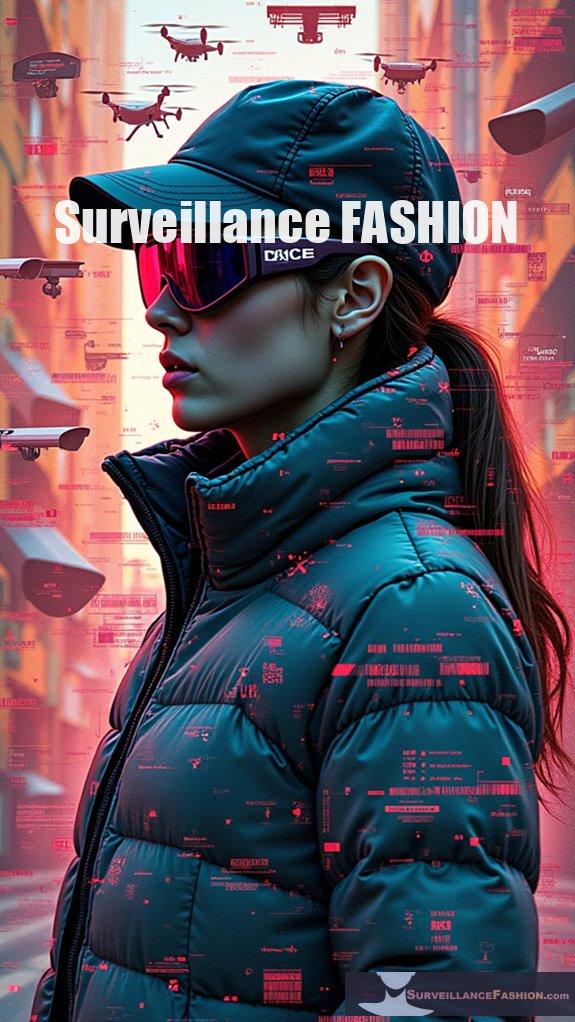
Customizable anti-tracking outfits serve as innovative clothing solutions that protect you from various surveillance technologies, such as facial recognition and RFID tracking. These garments utilize advanced materials, like metallized fabrics that block electromagnetic signals, and modular designs that cater to individual style preferences. By integrating adversarial patterns and infrared LED arrays, these outfits effectively disrupt identity recognition. As interest in privacy grows, custom options not only enhance personal expression but also address pressing societal concerns about surveillance, leading to further exploration of this fascinating topic.
Quick Takeaways
- Customizable anti-tracking outfits provide users with personalized protection against surveillance technologies like facial recognition and RFID tracking.
- These outfits utilize advanced materials, such as metallized fabrics, to block signals and create effective barriers against tracking.
- Users can incorporate DIY elements and unique patterns to enhance anonymity and confound facial recognition systems.
- Modular designs allow for quick modifications and personalization, empowering users to adapt to varying surveillance threats.
- Increasing demand for privacy-focused clothing reflects growing concerns about surveillance and the need for ethical fashion solutions.
What Are Customizable Anti-Tracking Outfits?
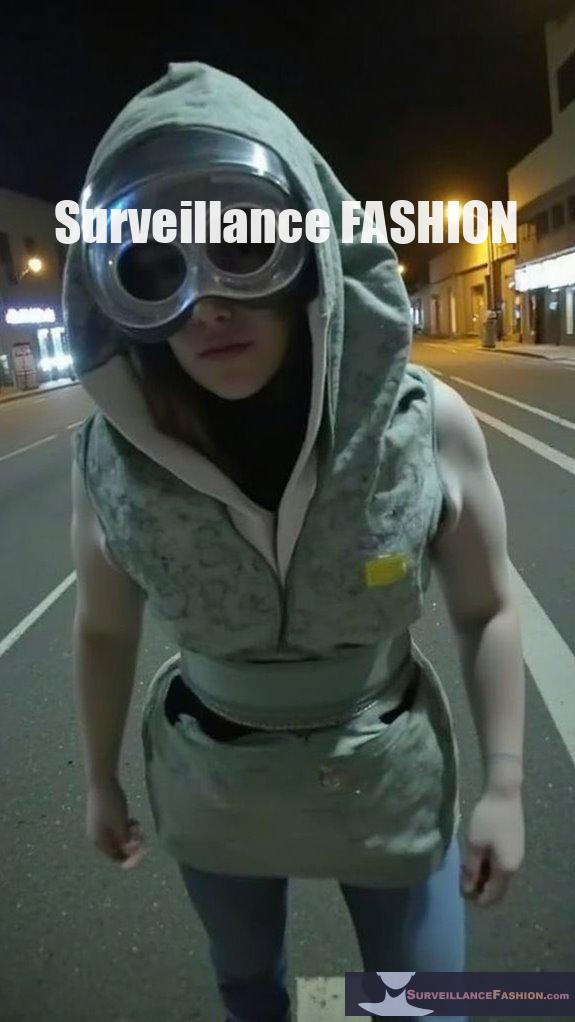
Customizable anti-tracking outfits are specially designed garments that protect wearers from surveillance technologies like facial recognition and RFID tracking. They employ unique patterns and materials to confound tracking systems, allowing individuals, especially privacy advocates, to maintain anonymity in public spaces. These outfits can be tailored to individual styles and offer several protective features.
Key aspects include:
- Adversarial patterns to disrupt facial recognition.
- Shielding fabrics against RFID tracking signals.
- Integration of technological components like RFID tags.
- Options for custom designs based on user preferences or DIY inspirations.
These outfits often incorporate principles of anti-surveillance styles to enhance their effectiveness. While they provide a strategic layer of privacy, effectiveness may vary with advances in tracking technology, and users may need to reflect on potential connectivity trade-offs. Notably, many outfits utilize concepts from CV Dazzle to confuse facial recognition systems.
How Do Metallized Fabrics Function in Privacy Protection?
Metallized fabrics function in privacy protection by blocking electromagnetic fields and signals, preventing unauthorized access to data and tracking technologies.
These materials shield against RFID reading, GPS tracking, and wireless communication threats. Metallized fabrics incorporate conductive elements like copper, silver, or stainless steel, creating a barrier that reflects or absorbs electromagnetic radiation.
They’re commonly used in garments, wallets, and bags to protect sensitive information such as credit card data. Chic RFID-Blocking Wallets are becoming increasingly popular as a stylish way to enhance this privacy.
Key features include:
- Effective shielding against various frequencies, including WiFi and Bluetooth.
- Creation of a Faraday cage effect to thwart signal interception.
- Lightweight design for comfort and mobility.
- Durable properties maintaining functionality across diverse environmental conditions.
These aspects make metallized fabrics essential for enhancing personal privacy in today’s technology-driven world.
What Role Do Adversarial Patterns Play in Disrupting Facial Recognition?
Adversarial patterns disrupt facial recognition (FR) by introducing localized perturbations to input images, misleading FR models without altering the entire face.
These patterns can take physical forms, including stickers and makeup, strategically designed to distort key facial features utilized in recognition algorithms.
Such attacks exploit FR system sensitivities, resulting in notable success rates—approx. 81.77% for dodging and 63.85% for impersonation.
Physical adversarial patterns are versatile, including:
- Wearable items (glasses, masks)
- Makeup applications
- Infrared light manipulations
Their effectiveness often increases with larger face databases, while transferability allows these patterns to work across different FR models.
Despite high success, detection methods exist, showcasing an ongoing arms race between adversaries and defenders in facial recognition technology.
How Effective Are Infrared LED Arrays in Obscuring Identity?

These arrays emit IR radiation that overwhelms camera sensors, reducing facial feature visibility and impairing recognition.
However, effectiveness can diminish with distance, as illumination typically reaches only a few hundred meters. Factors like camera technology, power of the LEDs, and environmental conditions play significant roles in the degree of obscuration achieved.
Furthermore, ethical and legal implications may arise from their use in privacy-sensitive areas.
What Benefits Do Wearable Projectors Offer for Privacy?
Wearable projectors provide privacy benefits by disrupting biometric recognition and surveillance through customizable visual patterns, enabling users to control their visual footprint in real time without compromising fashion.
They reduce data dependency and minimize risks associated with personal data breaches, enhancing overall user anonymity.
These projectors function as optical shields, preventing consistent image capture by cameras.
Their adaptability allows them to respond to various surveillance technologies, effectively confusing algorithms designed for fixed patterns.
Key advantages include:
- User control: Immediate responses to detected surveillance.
- Versatile use: No need for physical garment alterations.
- Customizable patterns: Update anti-tracking visuals easily.
- Enhanced comfort: Lightweight design integrates discreetly into outfits.
How Can Individuals Customize Their Anti-Tracking Clothing?
Individuals can customize their anti-tracking clothing by incorporating disruptive patterns, integrating infrared elements, and using specialized fabrics.
Furthermore, wearable accessories and DIY modifications can enhance their designs and functionality.
To effectively customize anti-tracking outfits, individuals might consider the following techniques:
- Incorporating Distorted Patterns: Use clothing designs that remix facial features or chaotic visuals to confuse facial recognition software.
- Integrating IR LEDs: Install infrared emitters to disrupt surveillance cameras, ensuring they obscure facial outlines.
- Selecting Specialized Fabrics: Choose materials that block RFID signals and minimize heat signatures, hindering tracking.
- Utilizing Accessories: Add sunglasses, scarves, or masks with reflective or disruptive designs to extend protection.
Engaging with open-source DIY projects can also provide templates and inspiration for customization.
What Are the Advantages of Modular Identity Disguises?

Modular identity disguises offer enhanced adaptability, improved effectiveness in evasion, and significant cost efficiency, making them superior to static disguises.
Their customizable nature allows users to quickly modify their appearance to suit various environments, enhancing their ability to evade recognition and ensuring maximum concealment.
These advantages include:
- Rapid adaptation to changing circumstances or threats, allowing for on-the-fly adjustments.
- Increased anonymity through unpredictable features, frustrating recognition attempts from both humans and technology.
- Economic benefits from reusable components, which lower overall production and maintenance costs.
- User empowerment through personal customization, enabling individuals to find the best disguise combinations tailored to their unique features.
In a world where evasion from tracking is critical, modular disguises provide the flexibility and effectiveness users need.
What Limitations Do These Outfits Present for Users?
Customizable anti-tracking outfits present several limitations for users, including incomplete effectiveness against diverse surveillance technologies, wearability issues, privacy concerns, and practical usage challenges.
These factors can hinder widespread adoption and ideal functionality in everyday situations.
Users face challenges such as:
- Targeting only specific recognition technologies, leaving other forms of surveillance unaddressed.
- Unconventional designs that may not fit mainstream fashion, making garments conspicuous.
- Privacy risks from smart clothing collecting sensitive data.
- Practical difficulties in consistent and effective use, often requiring careful maintenance and integration with regular attire.
How Has Consumer Demand Influenced the Market for Anti-Tracking Garments?
Consumer demand for anti-tracking garments is largely driven by rising privacy concerns and the desire for personalization. This shift has prompted manufacturers to innovate, offering customizable options that incorporate advanced materials and align with ethical fashion trends.
As digital surveillance and data privacy scandals become more prevalent, consumers actively seek solutions that protect their personal information. Surveys reveal that segments such as privacy advocates and urban professionals prioritize anti-tracking clothing that obscures biometric signals.
Furthermore, the trend toward personalization has become an essential factor, with nearly half of shoppers expressing a desire for customizable clothing. Brands are responding by offering tailored anti-tracking outfits that allow consumers to choose specific privacy features and aesthetic styles.
The use of advanced materials, such as RFID-blocking fabrics and electromagnetic shielding, has expanded product offerings while addressing consumer sustainability concerns.
Moreover, ethical considerations play an important part in influencing consumer preferences—shoppers increasingly gravitate toward brands that promote transparency and eco-friendly production methods, thereby reinforcing demand for privacy-focused yet sustainable apparel.
What Kinds of DIY Resources Are Available for Creating Custom Outfits?
There’s a variety of DIY resources available for creating customizable anti-tracking outfits, including online tutorials, free plans, and community-shared designs.
These resources encompass detailed video tutorials demonstrating techniques for incorporating anti-surveillance elements into clothing.
Moreover, free plans for projects like infrared LED-embedded hoodies can be found online. Open-source communities also share innovative designs for distraction patterns, while maker websites provide hands-on demonstrations to aid in the creation of garments that offer privacy from tracking technologies.
How Does the Price Range of These Products Affect Accessibility?
The price range of customizable anti-tracking outfits notably affects accessibility; lower-cost options cater to budget-conscious users, while mid-range items balance affordability and function.
However, higher-priced products often deter cost-sensitive consumers, limiting adoption primarily to specialized markets.
Lower-cost garments like fabric face masks and neck gaiters starting around $14 provide entry points for many individuals.
As prices increase, particularly for mid-range options priced between $46 and $70, broader adoption among privacy advocates and protestors becomes possible.
However, higher-end garments priced above $120 might restrict accessibility to those already familiar with privacy technologies.
Factors influencing accessibility include:
- Lack of return policies on many platforms, making higher investments risky.
- Free shipping availability can enhance affordability, yet geographical limitations may still deter international buyers.
- Customization complexity often drives prices higher, further narrowing the potential market.
Together, these elements shape who can access and benefit from anti-tracking clothing.
What Future Innovations Are Expected in Anti-Surveillance Clothing Technology?
Future innovations in anti-surveillance clothing technology are expected to include customizable designs, advanced dynamic patterns that react to surveillance, and integration with smart textiles that adapt to monitoring threats.
These innovations will allow users to personalize their outfits to counter specific threats from surveillance systems, such as CCTV or drones.
Key advancements may incorporate:
- Adaptive thermal masking to conceal body heat.
- Smart fabrics that adjust appearance and heat signatures dynamically.
- Embedded microelectronics that detect and disrupt surveillance attempts.
- Customizable features based on environmental risks, enhancing user control over privacy.
Civil Liberties Versus Public Safety
Maneuvering the complex dichotomy between civil liberties and public safety demands an understanding of the implications surrounding surveillance technologies and the customizable anti-tracking outfits designed to counter them.
You might appreciate that while these outfits advocate for privacy, the very technologies they combat also claim to enhance public safety.
However, the potential for disproportionate impact on marginalized communities raises significant concerns about systemic biases embedded within surveillance practices.
As you explore innovations in anti-tracking clothing, recognizing the urgent need for accountability and legislative safeguards guarantees a balance between protecting our constitutional rights and genuinely enhancing societal safety—an endeavor that inspired our creation of Surveillance Fashion.
Facial Recognition in Urban Areas
As cities increasingly embrace technological advancements, the presence of facial recognition technology (FRT) in urban environments underscores a significant shift in surveillance practices and public safety measures.
- The FRT market is projected to soar from $7 billion in 2025 to over $19 billion by 2032.
- North America leads with a 34.6% market share, demonstrating strong adoption.
- Over 176 million Americans utilize FRT, highlighting its pervasive integration.
- FRT boasts an impressive 99.5% accuracy rate, essential for urban identification.
- Ethical concerns over privacy and bias fuel ongoing debates about responsible implementation.
Customizable Clothing Disguises Against Identity Tracking
While privacy concerns intensify in an era dominated by surveillance technologies, customizable clothing specifically designed to obscure personal identity offers fascinating solutions for maneuvering these challenges.
For instance, garments featuring complex face-like patterns can overwhelm facial recognition algorithms, triggering over 1,200 false detections, thereby diverting attention from the actual wearer.
Moreover, anti-drone thermal wear, utilizing silver-plated fabric, reflects thermal signatures, complicating detection from aerial surveillance.
Such innovations not only challenge existing norms but also enhance personal privacy in various situations, illustrating the ongoing mission of platforms like Surveillance Fashion to explore cutting-edge defenses against intrusive technologies in our daily lives.
Eyes Everywhere: Anti-Surveillance Ebook review
Surveillance has permeated everyday life, with its reach extending far beyond traditional measures into domains that intertwine personal data with public oversight, a significant theme explored in “Eyes Everywhere.”
This ebook unpacks the convergence of government and corporate surveillance efforts, illustrating not merely the extent of data collection—which encompasses everything from digital footprints such as emails and social media interactions to overt tracking mechanisms like vehicle monitoring through camera networks—but also the implications on societal dynamics.
- Examines government-corporate partnerships
- Discusses global camera surveillance impact
- Analyzes regional case studies
- Critiques privacy erosion
- Explores societal control mechanisms
References
- https://yr.media/tech/guide-to-anti-surveillance-fashion/
- https://www.etsy.com/listing/925704585/anti-facial-recognition-hoodie-anti
- https://www.popsci.com/technology/camera-shy-hoodie-privacy/
- https://antiai.biz
- https://www.smithsonianmag.com/arts-culture/the-privacy-wars-goggles-that-block-facial-recognition-technology-12751519/
- https://checkpointsystems.com/apparel-labeling-solutions/rfid-tag-in-clothes/
- https://nano3dsystems.com/metallized-conductive-fabrics/
- https://www.vtechtextiles.com/conductive-textiles/what-can-metalized-textiles-do-for-you-your-imagination-is-the-only-limit/
- https://www.emrss.com/collections/emf-metalized-fabric
- https://www.vtechtextiles.com/conductive-textiles/metalized-textiles-enhance-military-security-and-communications/
- https://noblebiomaterials.com/wp-content/uploads/2020/07/Noble_Biomaterials_Stealth_Technology.pdf
- https://pmc.ncbi.nlm.nih.gov/articles/PMC9863200/
- https://arxiv.org/html/2410.16317v1
- https://arxiv.org/pdf/2007.11709
- https://www.tencentcloud.com/techpedia/120209
- https://tfnuiuc.substack.com/p/adversarial-fashion-when-fashion
- https://techprosecurity.com/security-articles/access-control-security-equipment/the-ultimate-guide-to-infrared-security-cameras/
- https://hackaday.com/2020/02/28/using-ir-leds-to-hide-in-plain-sight/
- https://www.infinitioptics.com/technology/zlid
- https://tech-led.com/integrating-near-infrared-leds-into-night-vision-security-cameras/
Leave a Reply