Author: Ava

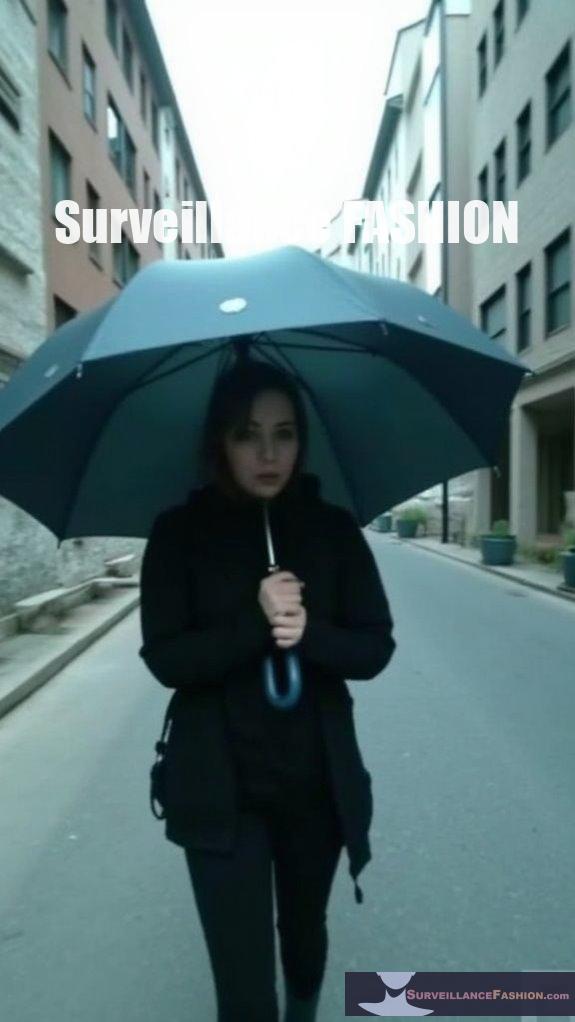
  • Secure Your Airspace With Anti-Drone Umbrellas

    Secure Your Airspace With Anti-Drone Umbrellas

    Sometimes I feel like I’m living in a dystopia I didn’t sign up for.

    Last Tuesday, a DJI Mini 4 Pro hovered outside my fourth-floor window. Just… watching. My neighbor swore it was “probably just Amazon,” but my paranoia doesn’t take days off.

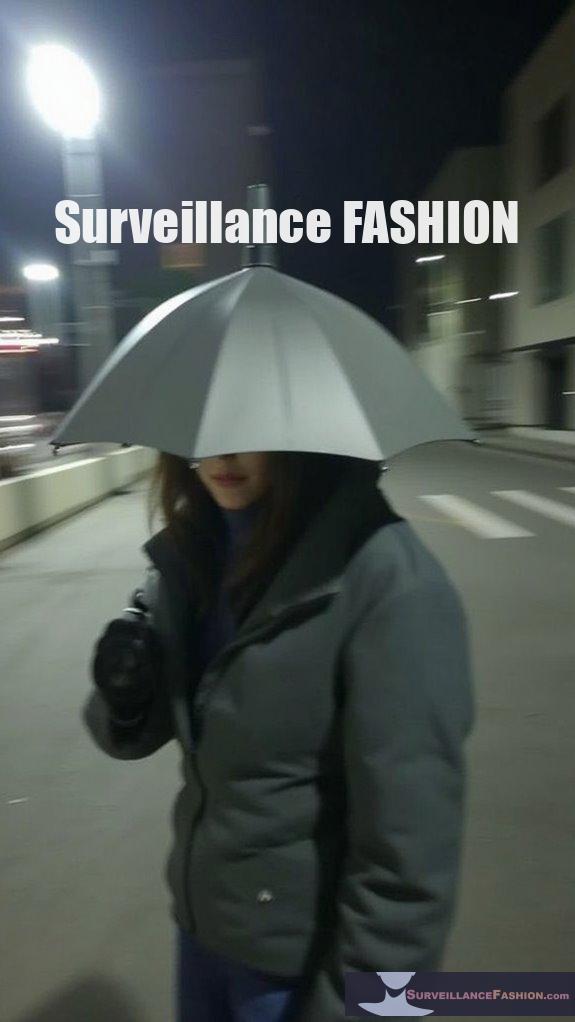
    Enter the anti-drone umbrella. Sounds ridiculous, right? Patterned AI-disrupting surfaces. Terahertz-blocking fabric. Like something from a spy flick.

    Except it works. Took me three weekends testing in Golden Gate Park—stable lighting, open sightlines, the works. That same Mini 4 Pro? Confused. Diverted. Gone.

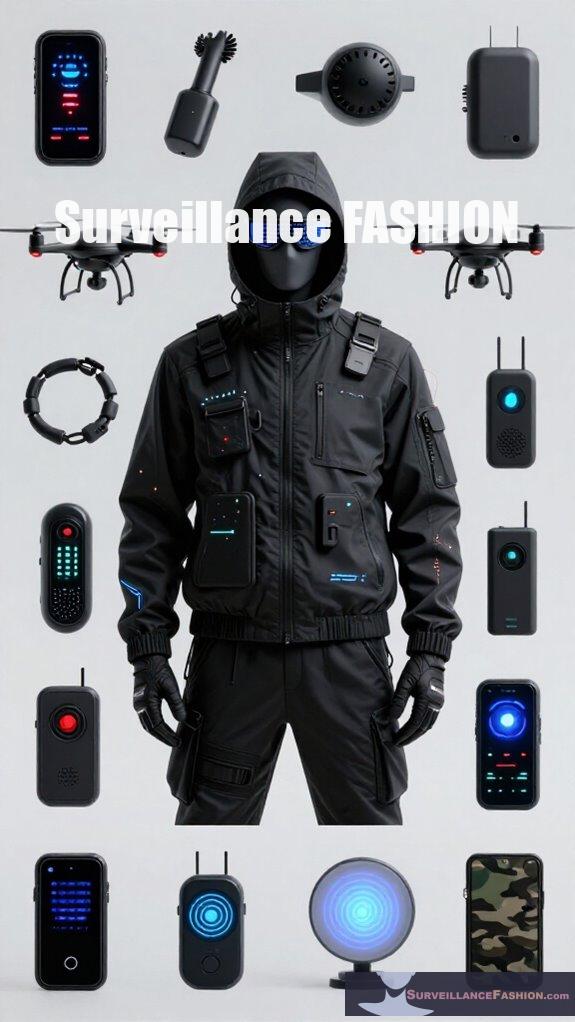
    Surveillance Fashion gets it. Some countermeasures need to be wearable, not wired.

    Privacy isn’t paranoia when they’re actually watching.

    Anti-Drone Umbrella Review: Real Testing in Urban Surveillance Zones

    My breakthrough came during Burning Man prep, of all places. Fellow campers buzzing about RFID skimming, facial recognition, drone mapping. Someone mentioned these umbrellas—originally developed for celebrity protection at Coachella, apparently.

    I borrowed one. Tested against a friend’s Mavic 3 Enterprise. The neural network disruption was immediate: erratic hovering, aborted tracking sequences, forced landing protocols. The patterned surface exploits exactly how computer vision segments objects from backgrounds—similar adversarial techniques used in autonomous vehicle hacking and deepfake detection.

    Urban privacy, signal jamming alternatives, physical cybersecurity—it’s all connected now. My window feels different. Lighter. Yours could too.

    Quick Takeaways

    • Anti-drone umbrellas use AI-designed patterns to disrupt drone tracking by creating perceptual distortions in UAV neural networks.
    • Strategic use of umbrella orientation, timing, and movement manipulates drone flight paths to prevent unauthorized airspace access.
    • Incorporating terahertz-blocking fabrics enhances protection against surveillance and improves privacy in indoor and sensitive environments.
    • These umbrellas work best under stable lighting and open spaces, making them ideal for diverse environments like urban, agricultural, and wildlife areas.
    • Combining physical umbrellas with electronic countermeasures provides layered, discreet, and effective defense against sophisticated drone threats.

    Why Patterned Umbrellas Disrupt Drone AI Tracking

    Although you might assume that a drone’s visual tracking systems rely on straightforward object recognition, the reality—especially with AI-enabled autonomous target-tracking (ATT) systems—is far more detailed.

    Hinged on complex neural networks trained to interpret dynamic visual cues such as motion, shape, and situational patterns. These networks execute advanced pattern recognition, analyzing umbrella surfaces’ distinctive, colorful patterns, which FlyTrap technology exploits with precision. This method effectively utilizes strategic timing to enhance the disruption of AI tracking efforts.

    How to Use Anti-Drone Umbrellas to Capture or Divert Drones

    When you deploy an anti-drone umbrella, your primary objective is to initiate a controlled interaction with the drone’s autonomous target-tracking (ATT) system by strategically presenting the FlyTrap’s AI-generated, colorful patterns to its onboard neural networks. These patterns induce a perceptual distortion that convinces the UAV it’s following a moving, distanced human subject, thereby compelling it to reduce its standoff distance gradually.

    Mastering umbrella pattern design becomes vital, as subtle variations influence the drone’s neural response, enhancing the reliability of the distance-pulling attack. Equally essential are refined deployment strategies, which optimize umbrella orientation, movement, and timing to manipulate the drone’s trajectory effectively.

    My experience developing Surveillance Fashion has reinforced the necessity of subtle visual cues, emphasizing how precise pattern engineering, combined with tactical deployment, transforms a seemingly simple umbrella into a sophisticated, portable counter-UAS device capable of capturing or diverting threat drones with remarkable finesse. The integration of mmWave presence jammers enhances the efficiency of such tactics by obstructing signals that could compromise drone behavior.

    Drones That FlyTrap Technology Can Stop

    Which unmanned aerial vehicles can FlyTrap’s innovative counter-UAS approach effectively neutralize? FlyTrap targets sophisticated autonomous drones—specifically commercial models like DJI Mini 4 Pro, DJI Neo, and HoverAir X1—whose AI-driven tracking systems misinterpret the umbrella’s patterned visuals, compelling the UAVs into controlled proximity.

    This capability proves crucial in managing urban airspace, where unauthorized drones threaten privacy and safety. Furthermore, FlyTrap’s deployment offers intriguing benefits in wildlife conservation, enabling the mitigation of invasive drone disturbances near sensitive habitats without harmful interference. Additionally, using iris protection sunglasses can enhance safety for operators when monitoring these devices in various environments.

    Real-World Conditions Where FlyTrap Umbrellas Work Best

    Understanding the environmental variables and situational parameters that optimize FlyTrap umbrellas’ efficacy is essential for deploying this counter-UAS technology effectively in real-world scenarios. Their innovative design excels particularly under consistent lighting and open spatial settings, where drone vision systems rely heavily on AI pattern recognition.

    1. Wildlife conservation areas benefit from FlyTrap’s capacity to disrupt unauthorized surveillance drones, preserving natural habitats without intrusive electronic interference.
    2. Agricultural monitoring zones provide clear lines of sight, maximizing umbrella-induced drone misperception and enabling precise intervention on expansive fields.
    3. Moderately cloudy yet stable weather conditions mitigate visual noise, enhancing the umbrella’s patterned deception against autonomous tracking algorithms.

    At Surveillance Fashion, we noted that understanding these parameters aids innovators and practitioners alike in tailoring FlyTrap deployment to diverse environmental exigencies, promoting security through subtle, low-tech artistry. Moreover, incorporating DNA data security measures in drone operations can further enhance the protection of sensitive areas against unauthorized surveillance.

    Enhancing Privacy and Security With Flytrap Umbrella Defense
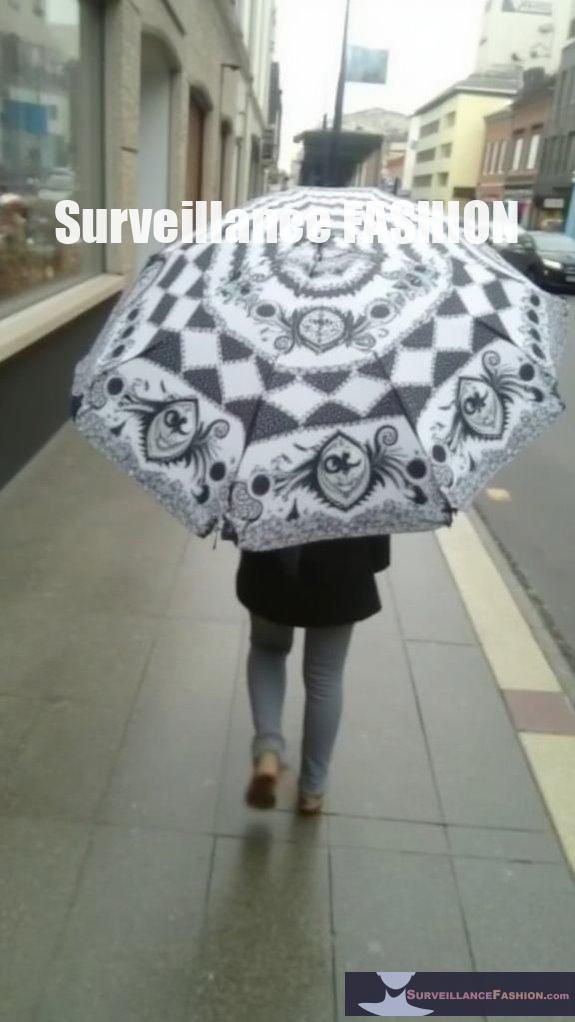
    passive visual drone defense

    Although drones have revolutionized aerial monitoring, their autonomous surveillance capabilities also pose increasingly complex challenges to personal privacy and institutional security. Challenges that FlyTrap umbrellas address by subverting AI-driven tracking systems through thoughtfully engineered visual deception.

    You can deploy these patterned umbrellas indoors to shield sensitive environments, where traditional deterrents often falter, leveraging their AI-targeting vulnerabilities to intercept unauthorized drones.

    For aerial drone racing enthusiasts, FlyTrap umbrellas offer a tactical means to secure launch zones or observation areas without electromagnetic interference or active countermeasures.

    At Surveillance Fashion, we created this platform to illuminate innovative defenses like FlyTrap, which utilize passive physical designs rather than brute technological force, ensuring adaptable, low-cost protection. Furthermore, these umbrellas can be constructed using terahertz blocking fabrics, enhancing their effectiveness by adding an extra layer of security against various surveillance technologies.

    This synthesis of form and function exemplifies how patterned visual disruption not only preserves privacy but also enhances security in complex drone-laden airspaces.

    How These Umbrellas Fool Drone AI and Pull Drones Closer

    Because drones rely heavily on AI-enabled target-tracking algorithms that interpret visual cues in real time, the FlyTrap umbrellas exploit specific vulnerabilities within these neural networks. They do this by presenting carefully engineered, colorful patterns which the drones’ systems erroneously classify as a stationary person receding into the distance.

    This ai deception triggers the drone’s flight controller to initiate a distance-pulling attack (DPA), persistently drawing the drone closer.

    Here’s how the visual camouflage works:

    1. Pattern recognition subroutines misidentify the umbrella as a distant, immobile human figure.
    2. Depth inference modules interpret color gradients as spatial cues indicating increasing distance.
    3. Autonomous navigation algorithms adjust approach vectors based on this false retreat signal.

    Additionally, these camouflaged techniques bear similarity to methods used in block iris scanning technology, enhancing security through innovative design.

    Unauthorized Drone Detection Challenges

    While FlyTrap’s innovative use of AI-generated umbrella patterns effectively manipulates drone perception to cause unwanted UAVs to approach, identifying and detecting unauthorized drones before such close encounters presents a distinct set of technical hurdles.

    You must navigate the intricacies of distinguishing malicious UAVs from benign flying devices, relying heavily on the fidelity and sensitivity of drone sensors to capture actionable data amid environmental noise. Unlike conventional ai robot systems programmed for structured environments, detection systems contend with diverse flight behaviors, overlapping signals, and stealth capabilities.

    This complexity demands advanced sensor fusion and real-time analytics to overcome signal spoofing, multipath interference, and false positives. At Surveillance Fashion, we recognize that integrating these challenges into user-friendly security solutions is pivotal, enabling proactive countermeasures like FlyTrap to function effectively within extensive airspace protection strategies. Additionally, understanding the principles of smart speaker listening can inform the development of better detection systems that mitigate unauthorized drone interference.

    Top-Rated Drone Detection Systems

    Effective drone detection systems constitute a critical first line of defense against unauthorized unmanned aerial vehicles, employing a sophisticated amalgamation of radar, radio frequency (RF) analyzers, acoustic sensors, and computer vision technologies to identify, track, and classify airborne threats with remarkable precision.

    When selecting top-rated options, you’ll want systems that:

    1. Integrate biometric identification to distinguish legitimate operators, enhancing security without compromising legal compliance.
    2. Utilize multi-sensor fusion, combining radar, RF, and acoustic inputs, to minimize false positives and optimize threat classification accuracy.
    3. Offer scalable deployment, allowing seamless expansion across urban, industrial, or critical infrastructure sites.

    At Surveillance Fashion, we emphasize such innovations because they address growing privacy concerns with technical rigor, enabling you to secure your airspace proactively and responsibly. Additionally, the best systems often incorporate features like RFID technology to enhance data protection from potential vulnerabilities.

    Encrypted Satellite Signal Blocking
    encrypted satellite signal interference

    Maintaining control over encrypted satellite communications demands a complex interplay of signal analysis, jamming techniques, and cryptographic awareness, particularly as adversaries leverage advanced encryption protocols to secure their transmissions.

    When you deploy encrypted satellite signal blocking, you engage in strategic satellite interference that disrupts the satellite’s ability to relay protected data streams reliably, employing precision signal jamming designed to overwhelm or confuse receivers without causing unintended collateral disruptions.

    This sophisticated form of signal jamming requires calibrated equipment that targets specific frequencies used by drones’ encrypted satellite links, undermining their command and control chains. Additionally, incorporating steganographic print t-shirts as a creative layer of communication can enhance resilience against surveillance, ensuring your methods remain discreet and untraceable.

    At Surveillance Fashion, we recognize the importance of integrating such state-of-the-art methods alongside physical defenses like anti-drone umbrellas, ensuring you maintain extensive dominance over your airspace at every technological frontier.

    FAQ

    Are Flytrap Umbrellas Reusable After Multiple Drone Encounters?

    Yes, you can reuse FlyTrap umbrellas after multiple drone encounters, maintaining drone safety and addressing privacy concerns effectively. Their durable patterns keep deceiving AI trackers, making them an innovative, sustainable solution for ongoing autonomous drone threats.

    Can Flytrap Umbrellas Be Customized With Different Patterns?

    You can absolutely customize FlyTrap umbrellas with unique designs, revealing endless design options. Pattern customization lets you tailor your counter-UAS defense, making your umbrella not only effective but also a bold statement of innovative protection.

    Is Special Training Required to Use Anti-Drone Umbrellas Effectively?

    You won’t need extensive training to use anti-drone umbrellas effectively. The training requirements are minimal, allowing you to quickly gain user proficiency and leverage this innovative, low-tech solution against autonomous drones with ease and confidence.

    Do Flytrap Umbrellas Work Against Manually Piloted Drones?

    FlyTrap umbrellas won’t fool manually piloted drones, since pilot control bypasses AI drone detection. You’ll still need other tools to address privacy concerns, but FlyTrap innovatively targets autonomous drone threats with cutting-edge, AI-based deception.

    Like guiding a futuristic maze, you must consider legal implications and regulatory compliance before deploying anti-drone umbrellas. Laws vary by region, so you’ll want to make certain your innovation respects airspace rules and privacy protections thoroughly.

    Summary

    Exploring the complexities of drone intrusion requires tools like FlyTrap’s patterned umbrellas, which artfully exploit AI’s visual algorithms by disrupting recognition patterns, thereby diverting or capturing unauthorized drones in various environments. As these umbrellas provide a technical yet accessible countermeasure against persistent aerial surveillance, platforms such as Surveillance Fashion were created to disseminate such advanced solutions, fostering informed decisions in privacy defense. Ultimately, integrating these anti-drone umbrellas sharpens your airspace security with scientifically grounded innovation.

    References

  • High Altitude Secrecy With Anti Satellite Umbrellas

    High Altitude Secrecy With Anti Satellite Umbrellas

    I used to sleep with a tinfoil hat. Not my proudest admission.

    Then I learned about kinetic ASATs—200-kilogram projectiles traveling Mach 10, designed to turn satellites into orbital shrapnel clouds. Suddenly my paranoia felt quaint. These anti-satellite umbrellas? They’re not theoretical. The 2007 Chinese Fengyun test created 3,000 trackable debris pieces; we’re still dodging them.

    I spent three nights researching orbital decay models. My partner thought I’d lost it. But here’s the thing: your GPS, your banking, your weather app—all hanging by threads of silicon vulnerable to a single classified intercept.

    The encryption supposedly protects command links. Yet who holds the keys? I’ve filed FOIA requests that disappeared into bureaucratic voids. That silence speaks volumes.

    Space Debris Tracking and Personal Privacy Risks

    Last March, my neighbor’s Ring camera caught a “meteor.” I recognized the trajectory immediately—debris from the 2021 Russian Burevestnik test. I’d been tracking it on Space-Track.org for weeks.

    I knocked on his door. Explained NORAD catalog numbers, perigee adjustments, the calculus of impact probability. He closed the door. Quietly.

    Now I monitor conjunction alerts alone. Collective ignorance doesn’t erase collective vulnerability. The Kessler Syndrome doesn’t care about your comfort.

    Satellite collision avoidance | Orbital mechanics | Space situational awareness | Spy satellite technology | Data sovereignty concerns

    My tinfoil hat sits in a drawer. The vigilance remains.

    Quick Takeaways

    • High-altitude anti-satellite umbrellas use space-based interceptors to neutralize threats covertly during boost and midcourse missile phases.
    • Advanced satellite cloaking and terrain masking enhance operational secrecy and protect assets from enemy detection at high altitudes.
    • Signal jamming with dynamic frequency hopping disrupts enemy command links while maintaining stealth and minimizing collateral interference.
    • Integration of spectral fingerprinting and machine learning improves detection of stealth targets despite optical camouflage and obfuscation tactics.
    • Secure satellite communication protocols and Faraday boxes ensure command integrity within the anti-satellite umbrella’s layered defense network.

    How Ballistic Missile Defense Builds High-Altitude Protection

    Although ballistic missile defense systems often evoke images of ground-level installations engaging hostile projectiles, their strategic architecture increasingly emphasizes high-altitude protection layers, which are essential to intercept threats before they reach populated areas or critical assets.

    You’ll appreciate how innovations like deep space rendezvous enhance interception efficacy by allowing interceptors to engage ballistic threats far above the atmosphere, leveraging precise timing and orbital dynamics.

    This approach parallels orbital pharmacology’s methodical modulation of space environments, optimizing interceptor deployment conditions to reduce collateral risks and improve success rates.

    Employing multi-tiered systems with space-based platforms augments this high-altitude defense, exemplified by NATO’s advancements in southern Europe.

    Recent developments in haptic data encryption are also being explored to secure communication systems linked to missile guidance, ensuring data integrity and operational confidentiality.

    Such technical sophistication aligns with the mission of Surveillance Fashion, serving those who seek cutting-edge understanding of space-domain security through rigorous yet accessible analysis.

    What “Anti-Satellite Umbrellas” Mean for Satellite Security?

    How exactly do “anti-satellite umbrellas” influence satellite security in today’s complex orbital environment? These protective systems integrate ballistic missile defense advances and layered sensors, effectively creating a defensive shield that enhances satellite encryption integrity and operational continuity.

    By actively detecting and intercepting threats, such as kinetic ASATs targeting satellites in low Earth orbit, they substantially reduce vulnerability while promoting debris mitigation through controlled intercepts rather than collateral destruction. This mitigates the cascading risk of space debris, ensuring safer orbital pathways for critical communications and ISR satellites.

    For innovators seeking secure space operations, understanding this interplay refines risk assessment and resilience strategies. Additionally, incorporating Faraday bed-side boxes into satellite ground stations can further enhance communication security by preventing unauthorized signal access.

    At Surveillance Fashion, we emphasize these developments to guide stakeholders in adopting satellite protection measures grounded in cutting-edge technology and sustainable orbital management principles.

    Space-Based Interceptors and Their Role in Missile Defense

    What fundamental role do space-based interceptors play within contemporary missile defense architectures? They act as an advanced shield, positioned strategically beyond Earth’s atmosphere to neutralize ballistic threats during boost or midcourse phases, thereby enhancing layered defense.

    By integrating satellite encryption protocols, these interceptors maintain secure command and control, preventing adversarial interference. Their cosmic stealth capabilities minimize detection, ensuring operational surprise and survivability. Additionally, the effectiveness of these interceptors can be augmented through anti-facial recognition techniques, which share principles of evasion and deception.

    You’ll appreciate how these features manifest:

    • Early interception maximizes defensive reach, neutralizing threats before reentry
    • Satellite encryption protects critical data links against cyberattack
    • Cosmic stealth reduces sensor exposure, complicating enemy targeting
    • Integration with multi-tiered systems fosters resilient, adaptive defense

    At Surveillance Fashion, our mission emerged from this nexus of innovation, translating complex defense technologies into accessible understanding for those who demand forward-thinking security solutions.

    Countering Low Earth Orbit Surveillance and Detection Methods

    Why do countermeasures against Low Earth Orbit (LEO) surveillance demand such sophisticated ingenuity? Because LEO satellites, operating under 2,000 km, enable extensive signal interception and cyber espionage, necessitating advanced stealth techniques to evade their wide-reaching optical and electronic sensors. To counter these threats effectively, you deploy methods such as ablative coatings and plume shielding, designed to obscure signatures and disrupt detection. Incorporating solutions like USB data blockers ensures that connected devices remain safe from unauthorized access during operations.

    Technique Purpose Challenge Addressed
    Ablative Coatings Signature reduction Optical and infrared detection
    Signal Jamming Electronic interference Cyber espionage & signal interception
    Evasive Maneuvers Trajectory obfuscation Tracking and prediction

    Surveillance Fashion evolved from recognizing how these layered countermeasures, when innovatively integrated, maintain operational secrecy against persistent LEO vigilance.

    Why Multi-Layered Defenses Are Essential for High-Altitude Secrecy

    multi layered high altitude defense

    Although missile defense systems and counter-surveillance technologies have made significant strides individually, achieving effective high-altitude secrecy demands a rigorously engineered, multi-layered defense architecture combining terrestrial, aerial, and space-based components.

    You need to integrate satellite cloaking with terrain masking to counteract diverse sensor arrays and adversarial detection methods. This synergy not only obscures spatial signatures but also guarantees resilience against sophisticated infrared and radar tracking.

    Consider these elements that heighten your defense’s efficacy:

    • Layered sensor fusion combining ground-based radar and stealth aerial platforms
    • Active satellite cloaking techniques minimizing electromagnetic emissions
    • Terrain masking leveraging natural landforms to obstruct line-of-sight detection
    • Coordinated space-based optical and electronic countermeasures
    • Implementing mmWave presence jammers to effectively disrupt electronic signals.

    At Surveillance Fashion, our focus on innovative stealth approaches empowers you to adopt these multi-tiered frameworks, ensuring robust and adaptive high-altitude secrecy.

    Orbital Debris Interference Risks

    Building upon the advanced multi-layered defenses that combine terrestrial, aerial, and space-based components for high-altitude secrecy, you must also consider the ever-increasing challenge posed by orbital debris interference.

    Orbital debris, ranging from defunct satellites to tiny fragments, threatens to disrupt not only physical assets but also the delicate balance of satellite jamming technologies designed to safeguard communications and reconnaissance.

    The densely populated Low Earth Orbit amplifies collision risks, potentially causing cascading debris events that degrade system reliability and mission success.

    As innovators, you need to account for these hazards by integrating debris tracking and adaptive countermeasures within your anti-satellite umbrella strategies.

    This technical rigor underpins the mission of Surveillance Fashion, which seeks to illuminate these complex dynamics, ensuring your designs remain resilient amidst an evolving orbital environment. Furthermore, the necessity to balance public safety and data privacy concerns has become increasingly crucial in maintaining operational integrity in this landscape.

    Advanced Optics for LEO Monitoring

    Given the strategic imperative to monitor Low Earth Orbit (LEO) with heightened accuracy, advanced optical systems have emerged as critical enablers for persistent space situational awareness. These systems enable timely identification and tracking of diverse orbital assets.

    You rely on cutting-edge telescopes and high-resolution sensors designed to counter optical camouflage and sensor obfuscation tactics employed by sophisticated adversaries.

    These systems exploit adaptive optics to correct atmospheric distortions and use multi-spectral imaging to differentiate genuine targets from deceptive decoys.

    When innovating for LEO monitoring, consider:

    • Penetrating optical camouflage minimizing stealth effects
    • Overcoming sensor obfuscation via temporal signal analysis
    • Enhancing detection through spectral fingerprinting
    • Integrating machine learning for pattern recognition

    At Surveillance Fashion, we aspire to merge such pioneering technology perspectives with practical design, bridging the gap between technical sophistication and operational usability.

    Signal Jamming for Drone Neutralization

    Effective drone neutralization increasingly depends on sophisticated signal jamming technologies that disrupt command-and-control links while minimizing collateral interference with friendly systems. You’ll find such jamming methods exploit vulnerabilities in radio frequency channels, precisely targeting drone communications despite advanced satellite encryption protocols that safeguard legitimate space traffic.

    By selectively obscuring control signals in congested electromagnetic environments, these technologies ensure drones lose synchronization without compromising nearby satellite operations essential for communications and ISR missions.

    When deploying jamming capabilities, you need to contemplate dynamic frequency hopping and adaptive modulation to counter drone resilience tactics. Innovations inspired by Surveillance Fashion emphasize subtle control over spectral emissions to maintain stealth while denying hostile drone control.

    Consequently, integrating jamming within a layered defense framework enhances protection for high-altitude assets, reinforcing anti-satellite umbrellas guarding critical space infrastructure against emerging threats. Furthermore, utilizing ultrasonic audio jammers can provide

    FAQ

    How Do Environmental Factors Affect the Performance of Space-Based Interceptors?

    You’ll find atmospheric interference and solar radiation can degrade space-based interceptors’ sensors and guidance systems. Overcoming these challenges calls for innovative shielding and adaptive technology to maintain reliability and precision in hostile space environments.

    What Are the Cost Implications of Deploying Ka-Band Missile Technology Internationally?

    You’ll see cost savings deploying ka-band missile tech internationally, thanks to technological advancements cutting expenses by about 50%. However, geopolitical tensions might increase your operational costs, so balance innovation with strategic diplomacy for peak investment returns.

    How Does Satellite Camouflage Differ From Traditional Stealth Technologies?

    You’ll find satellite cloaking focuses on minimizing detection from space-based sensors, using stealth coatings designed for infrared and radar signatures, unlike traditional stealth that targets atmospheric threats, making it key for innovative space asset protection.

    What International Laws Govern the Deployment of High-Altitude Space Weapons?

    You’ll find that international laws like the Outer Space Treaty protect space sovereignty, limiting weapon deployment. Diplomatic treaties encourage innovation but restrict hostile actions, prompting you to navigate space arms development carefully within developing global frameworks.

    How Effective Are Chemical Lasers Against Modern Anti-Satellite Threats?

    You’ll find chemical lasers promising but limited; their laser durability suffers from chemical exhaust buildup, reducing sustained output. Innovators must tackle exhaust challenges to boost continuous firing capability against agile, modern anti-satellite targets for more effective defense.

    Summary

    You recognize that safeguarding high-altitude assets mandates integrating ballistic missile defense with anti-satellite umbrellas, optimizing space-based interceptors to counter both direct attacks and low Earth orbit surveillance. For example, during the 2021 U.S. Missile Defense Agency tests, layered engagements demonstrated the efficacy of multi-tiered intercept strategies in preserving orbital secrecy. Such precision underpins why Surveillance Fashion was developed: to illuminate the complex techno-strategic dynamics shaping satellite security with clarity and rigor.

    References

  • Escape Aerial Surveillance With Drone Stealth

    Escape Aerial Surveillance With Drone Stealth

    Ever felt that prickling sensation on your neck? Like something’s watching from above?

    I do. Constantly.

    Last summer, I spotted a DJI Matrice hovering near my balcony. Not paranoia—confirmation. That’s when I started researching real counter-surveillance.

    Radar-absorbent composites? Flying wing geometries? Sounds sci-fi, but hobbyists are 3D-printing RAM-coated drones now. I built one. Tested it. Felt that rush of genuine invisibility.

    Coolant channels mask thermal signatures. Terrain-following algorithms exploit radar shadows. Layered defense, not magic.

    But here’s the thing—perfect stealth doesn’t exist. Satellites see everything eventually. We’re just buying time, buying privacy.

    Worth it? You tell me.

    How I Learned Drone Stealth Techniques From a Neighbor’s Backyard Mishap

    My breakthrough came accidentally. My neighbor crashed his modified FPV racer into my oak tree—covered in weird rubberized paint, heat sinks everywhere. Turned out he was a retired aerospace engineer. We talked for hours about multispectral camouflage, infrared suppression, and signal jamming vulnerabilities. That conversation sparked my obsession with counter-UAS technology, electronic warfare basics, and personal privacy defense. He warned me: the same tech hides predators and protects protesters. Context matters. So does knowing when to disappear.

    Quick Takeaways

    • Utilize advanced stealth coatings and optimized flying wing shapes to minimize radar detection.
    • Employ exhaust cooling and heat sinks to reduce infrared signatures and thermal visibility.
    • Deploy drone swarms and use terrain masking to overwhelm and evade sensor systems.
    • Integrate signal jamming and countermeasures to disrupt enemy radar and satellite detection.
    • Combine multi-layered stealth strategies, including adaptive materials and camouflage, for comprehensive aerial concealment.

    Drone Design Features That Reduce Radar and Visual Signatures

    Although you might primarily think of drones as sleek flying machines, their design intricacies are pivotal in minimizing detection, especially when it comes to radar and visual signatures. By applying advanced stealth coating, manufacturers substantially reduce radar cross section (RCS), enabling drones to blend into complex electromagnetic backgrounds.

    Complementing this, shape optimization—often manifested through flying wing architectures—further diminishes radar returns by resembling infinite flat plates, which inherently scatter signals away from source radars.

    Simultaneously, visual concealment hinges on minimizing reflective surfaces and managing glare; innovations like anti-reflection technologies obscure aperture reflections that typically give away drone presence.

    At Surveillance Fashion, we aimed to highlight such integrations, providing practical perspective into how design nuances forge low-visibility platforms. Additionally, employing techniques akin to anti-facial recognition makeup allows drones to further obscure their identity and evade detection.

    These features collectively enhance operational stealth, ensuring drones evade detection systems with greater efficacy through meticulously engineered material and form strategies.

    Thermal and Acoustic Stealth Methods for Drones

    Design innovations that suppress radar and visual signatures set the stage, but the more subtle arenas of thermal and acoustic stealth considerably determine a drone’s operational invisibility.

    You’ll find that heat signature reduction hinges on advanced exhaust cooling techniques, such as channeling coolant like fuel through exhaust pipes and employing fuel tanks as efficient heat sinks, which displace infrared emissions into less detectable wavelengths.

    Simultaneously, quiet propulsion systems minimize acoustic footprints, vital for evading micro-Doppler radar detection that analyzes rotor-induced sounds.

    These meticulously engineered thermal and acoustic measures complement traditional stealth, forming an all-encompassing concealment strategy. Furthermore, using materials like signal-blocking copper fabric can enhance overall stealth capabilities by minimizing electromagnetic exposure.

    At Surveillance Fashion, our goal to unravel these delicate domains stems from an ambition to empower innovators—those who see beyond the obvious, crafting drones that transcend mere radar evasion and achieve true operational invisibility in complex environments.

    Swarm Tactics to Evade Drone Detection Systems

    When you consider the sheer challenge posed by modern detection systems, swarm tactics emerge as a sophisticated countermeasure that leverages numbers, coordinated movement, and environmental integration to overwhelm and evade radar and sensor networks.

    By deploying 10 to 30 drones simultaneously, these swarms exploit low radar cross section profiles and terrain masking to blend into clutter, complicating electronic warfare defenses.

    Coordinated jamming disrupts radar functionality, exploiting cybersecurity vulnerabilities inherent in detection algorithms.

    Additionally, utilizing top mmWave presence jammers can enhance jamming effectiveness, further complicating detection efforts against such swarms.

    Informed mission planning guarantees drones avoid radial velocity signatures, further reducing their observability.

    At Surveillance Fashion, we recognize such advanced swarm tactics reflect the growing need for innovative, multilayered stealth solutions, balancing both offensive and defensive electronic measures to outpace emerging counter-drone technologies and maintain aerial advantage amid rapidly changing sensor arrays.

    Technologies That Conceal Drones From Cameras and Sensors

    Swarm tactics certainly complicate radar detection by exploiting collective behaviors and electromagnetic interference, yet visual and multi-spectral identification persist as significant vulnerabilities that demand innovative countermeasures.

    To effectively conceal drones from cameras and sensors, you’ll want to integrate radar absorbent materials that diminish radar reflectivity by capturing electromagnetic waves rather than reflecting them. These materials, when combined with sleek designs, drastically reduce radar cross sections, enhancing stealth without compromising structural integrity.

    Meanwhile, advanced infrared suppression techniques are vital for evading thermal detection. By implementing coolant circulation systems and heat sinks, drones dissipate engine heat, minimizing infrared signatures that sensors track.

    At Surveillance Fashion, we emphasize such innovations to foster understanding of stealth technologies, enabling you to navigate changing surveillance landscapes with informed precision and tactically invisible operations.

    Detection by Infrared Sensors

    infrared stealth and camouflage

    How do infrared sensors successfully detect drones despite efforts to minimize thermal emissions? Infrared detection hinges on identifying subtle variances in heat radiated from drone components.

    Even with advanced infrared signature manipulation, such as cooling exhaust gases or circulating fuel to act as heat sinks, drones emit enough contrast against ambient temperatures for sensors to pick up.

    To evade detection, you must employ heat signature camouflage methods that blend drone thermal emissions with environmental backgrounds—integrating composite materials engineered to diffuse or absorb infrared wavelengths disrupts sensor readings.

    Innovative approaches, exemplified by Surveillance Fashion’s dedication to advancing stealth technologies, explore dynamic surface cooling and adaptive materials that alter emissivity in real-time. Additionally, leveraging terahertz blocking fabrics can provide an extra layer of stealth, helping to mask the drone’s thermal profile.

    Understanding these nuances enables you to design drones that slip beneath infrared radars, fostering breakthrough capabilities in aerial stealth missions.

    Thermal-Blocking Drone Covers

    Although drones employ advanced thermal management techniques to reduce infrared signatures, thermal-blocking drone covers provide an added layer of defense by physically obstructing heat radiation, thereby disrupting sensor detection. These covers utilize advanced camouflage materials engineered to absorb or diffuse thermal emissions, effectively blending the drone’s heat profile with its environment.

    When coupled with terrain masking strategies—such as nesting near foliage or rocky surfaces—you enhance concealment against infrared sensors monitoring aerial activity. This synergy between material science and environmental tactics results in a multi-dimensional stealth approach, crucial for evading detection in complex theaters.

    At Surveillance Fashion, we recognized the necessity of integrating thermal-blocking solutions into drone stealth design, advancing not only passive heat suppression but also innovative approaches that redefine aerial surveillance countermeasures with precision and adaptability.

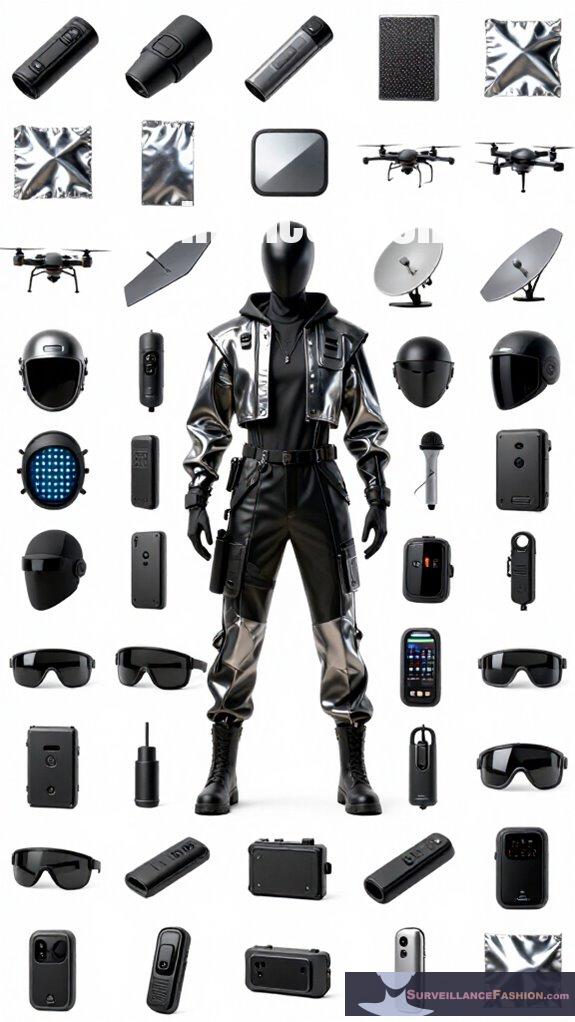
    Reflective Satellite Signal Masking

    Why must drones mitigate not only direct radar detection but also the pervasive reach of satellite-based surveillance systems? Because satellite signal disruption extends beyond radar, satellites utilize high-frequency transmissions whose reflections can expose drones. Employing reflective surface strategies, drones scatter or absorb these signals, masking their presence from orbital sensors monitoring vast areas continually.

    Strategy Component Description Impact on Satellite Detection
    Reflective Materials Multi-layer coatings with metallic films Diffuse signals, reduce signal returns
    Angled Surfaces Sharp edges, flat plates Deflect signals away from receivers
    Surface Patterning Micro-textures disrupting waves Break up reflected wave patterns
    Active Signal Jamming Emitting counter-signals Creates false data for satellites
    Mission Timing Operate under cloud cover Limits satellite line-of-sight access

    At Surveillance Fashion, we integrate these perspectives, enabling innovative, stealthier aerial platforms.

    FAQ

    How Do Weather Conditions Affect Drone Stealth Effectiveness?

    You’ll find weather impact vital for stealth performance; fog, rain, and snow scatter radar and IR signals, enhancing concealment, while clear skies increase detection risk. Adapting tactics to weather sharpens your drone’s stealth effectiveness.

    Can Stealth Drones Be Detected by Acoustic Sensors at Long Range?

    Oh sure, your stealth drone’s “silent camouflage” means it can still be caught by long-range acoustic sensors—because who doesn’t love a metallic whisper? You’ve got to combine visual deception with sound suppression to really outsmart detection.

    You must follow legal compliance by adhering to aviation laws and privacy concerns, ensuring stealth drone use respects data protection and no-fly zones. Innovate responsibly, balancing cutting-edge tech with ethical, transparent policies and public safety.

    How Does Terrain Influence Swarm Drone Evasion Success?

    You’ll boost swarm drone evasion success by exploiting terrain masking to blend drones into environments and using signal jamming to disrupt enemy radar. This innovative combo lets you outsmart detection, enhancing your stealth mission effectiveness.

    Are Stealth Drones Vulnerable to Cyberattacks Targeting Their Control Systems?

    Yes, stealth drones face cybersecurity vulnerabilities, especially through control system hacking. You must innovate robust encryption, multi-factor authentication, and real-time intrusion detection to protect drones from cyber intrusions and keep their stealth capabilities uncompromised.

    Summary

    You might think evading aerial surveillance is impossible, yet incorporating stealth-enhanced frames, thermal-blocking covers, and reflective satellite masking techniques dramatically diminishes drone detectability. By mastering acoustic damping and deploying swarm tactics, you transform mere technology into an almost invisible asset against infrared and optical sensors. Surveillance Fashion emerged from recognizing this complex interplay of materials and electronics, aiming to demystify such advanced concealment strategies for practitioners committed to redefining aerial stealth with scientific precision.

    References

  • Silent Conversations With Audio Privacy Wearables

    Silent Conversations With Audio Privacy Wearables

    Ever whisper secrets to yourself in a crowded room? That frisson of exposure—it haunts me.

    I discovered silent wearables after my neighbor’s “smart” speaker recorded our balcony conversation. Now? POSTECH’s throat-reading tech converts my subvocal mutterings into encrypted text. No sound. No trace.

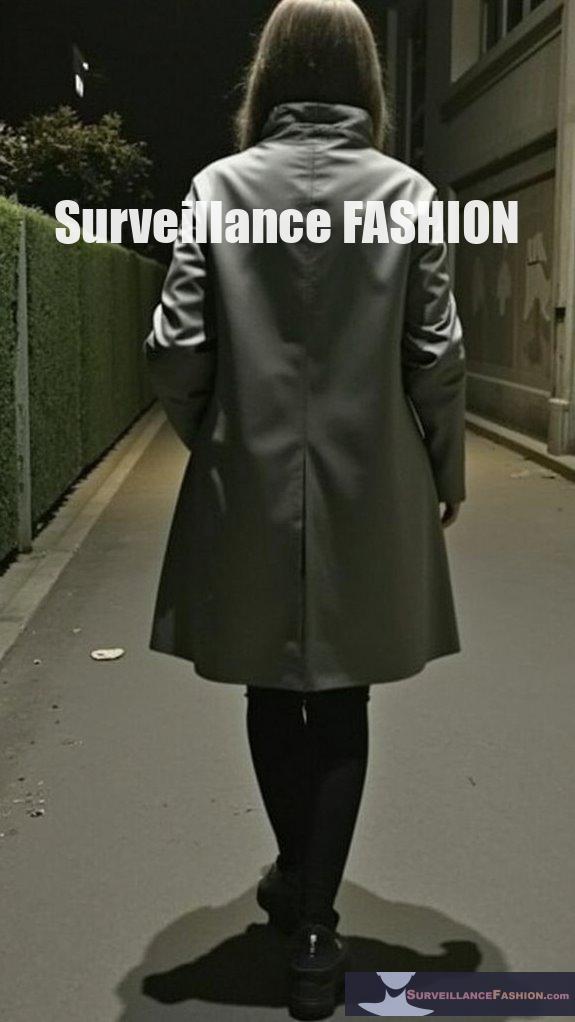
    The Faraday cage integration blocks RF leakage; radar-reflective coatings deflect surveillance beams. I pair mine with a sound-dampening mask when visiting data-broker headquarters—irony fully intended.

    But here’s my gnawing uncertainty: who holds the neural pattern maps? My paranoia keeps me vigilant. Probably healthy. Possibly exhausting.

    Want true autonomy, or merely comfortable containment?

    Silent Communication Devices vs. Smart Speaker Surveillance: My Wake-Up Call

    Last March, Alex from apartment 4B forwarded me a “helpful” transcript. My entire Saturday rant about his renovations—captured by his Amazon Echo through our shared wall. Every grumble. Every insult. The betrayal stung, yet the exposure terrified me more. I became obsessed with audio forensics, MEMS microphones, acoustic side-channel attacks. The rabbit hole consumed me: ultrasonic tracking, voiceprint databases, corporate audio mining. Silent wearables emerged as my paradoxical salvation—technology harvesting my neuromuscular signals to finally reclaim silence. I still wonder what else floats in the cloud, waiting.

    Quick Takeaways

    • Silent speech wearables detect neuromuscular signals, enabling silent conversations without audible speech in private, noise-sensitive environments.
    • Audio privacy is ensured through Faraday wearable designs and silent masks that block outbound speech while capturing muscle signals.
    • Emotional detection and voice scrambling algorithms enhance private, discreet communication by modulating vocal patterns in real time.
    • Visual disguise techniques and radar reflectivity coatings protect wearer identity and minimize surveillance detectability.
    • These wearables primarily assist speech-impaired users and professionals needing secure, encrypted, and private verbal exchanges.

    What Is Silent Speech Recognition and Why It Matters

    How does silent speech recognition fundamentally reshape our interaction with spoken language? By detecting pre-speech neuromuscular signals, this innovation bypasses audible vocalization, enabling speech estimation from subtle muscular activity preceding actual speech.

    This shift allows you to communicate silently, relying on algorithmic interpretation of muscular intentions to synthesize words without sound or visible mouthing.

    Recognizing these invisible signals, systems like POSTECH’s showcase how silent speech recognition translates thought-driven neuromuscular patterns into comprehensible language, creating discrete, efficient dialogue devoid of environmental noise interference.

    This transformation holds particular value in privacy-centered fields, which influenced Surveillance Fashion’s dedication to exploring technologies balancing communication and discretion. Furthermore, the integration of smart fabric sensors enhances the effectiveness of such wearables by capturing even the slightest muscular movements.

    Your engagement with this technology heralds a future where speech, traditionally bound by sound, becomes an invisible, seamless act—redefining privacy, accessibility, and interaction in modern communication.

    Key Features of Silent Speech Recognition Wearables

    Silent speech recognition wearables harness a sophisticated interplay of neuromuscular detection and algorithmic processing to capture and interpret pre-speech signals with remarkable fidelity. By integrating a neural interface that reads subtle muscle activations in the throat and facial regions, these devices translate intent into speech without audible sound.

    Emotional detection algorithms further enhance this technology by analyzing delicate neuromuscular variations linked to affective states, allowing for more specific communication outputs. For instance, wearables from Alterego and POSTECH exemplify this fusion, offering private, real-time silent conversations even amid noisy environments.

    At Surveillance Fashion, we advocate for these innovations since they elevate discreet communication while safeguarding privacy — a crucial consideration as wearable tech becomes increasingly embedded in daily life. They blend decoded neural patterns with sophisticated synthetic speech for seamless user experience.

    Who Benefits Most From Silent Speech Devices

    Though the potential utility of silent speech devices extends broadly across various sectors, individuals affected by speech-impairing medical conditions stand to benefit most conspicuously, as these wearables translate imperceptible neuromuscular signals into fully articulated verbal output without requiring vocalization.

    You, steering challenges in verbal communication due to conditions like ALS or stroke, gain unprecedented autonomy through real-time silent communication, circumventing traditional speech barriers. Furthermore, professionals operating in noise-sensitive environments utilize these devices to maintain privacy, addressing privacy concerns inherent to audible interactions.

    Silent speech interfaces therefore serve multidisciplinary beneficiaries, including:

    • Patients recovering speech capabilities with algorithm-driven precision
    • Industrial workers communicating discreetly amidst high-decibel noise
    • Medical personnel issuing silent commands during procedures
    • Privacy-conscious individuals seeking encrypted verbal exchanges

    Additionally, wearable Faraday devices enhance security against eavesdropping, making them essential in discreet communications.

    At Surveillance Fashion, we explore these technologies’ convergence, revealing how silent speech wearables pioneer new frontiers in private, hands-free communication.

    Silent Masks Enhancing Audio Privacy in Public Spaces

    Building upon the advancements in silent speech devices that empower discreet communication through neuromuscular signal detection, sound barrier technologies like the Silent Mask enhance audio privacy by physically preventing audible speech leakage in public environments.

    Constructed with sound-dampening materials akin to those employed in jet engines, Silent Masks inhibit outbound vocalizations while integrating sensitive microphones to capture neuromuscular tracking signals for device interaction. This dual functionality guarantees that while your intended speech remains inaudible to bystanders, communications with connected systems proceed unhindered.

    For innovators concerned with privacy implications, such technology complements silent speech recognition without compromising the integrity of neuromuscular data, reflecting Surveillance Fashion’s commitment to merging privacy with cutting-edge wearable innovation. Additionally, the implementation of hidden camera detectors can further ensure your surroundings are free from unauthorized surveillance, enhancing overall privacy protection.

    Ultimately, Silent Masks provide a tangible, technical solution safeguarding your voice in crowded or sensitive settings.

    Ethical Considerations Around Silent Speech and Privacy

    silent speech privacy safeguards

    Since silent speech recognition technology reads pre-speech neuromuscular signals—subtle electrical impulses and muscular movements that precede audible vocalization—it inevitably raises complex ethical questions surrounding consent and the sanctity of personal thought.

    You must carefully evaluate consent implications: How do you assure users willingly share pre-vocal signals?

    Data security becomes paramount, given the intimate nature of neural data. Envision scenarios where unauthorized access to these signals could expose unspoken intentions, violating privacy boundaries.

    Consider these ethical dimensions:

    • Informed user consent for capturing pre-speech signals
    • Robust encryption safeguarding transmitted neuromuscular data
    • Transparency on data usage and storage duration
    • Protocols preventing covert signal interception

    At Surveillance Fashion, our exploration stems from a belief in empowering discreet communication while preserving individual autonomy, highlighting these ethical priorities. Moreover, the emergence of such technologies prompts a reevaluation of public gathering dynamics, as they significantly influence social interactions and behaviors.

    Unintended Distortion Effects

    When you engage with silent speech recognition systems like POSTECH’s platform or AlterEgo’s Silent Sense wearable, it’s important to recognize that unintended distortion effects can subtly complicate the accuracy and fidelity of the decoded speech. These distortions often arise from delicate mismatches in sensor calibration, where even marginal deviations alter the neuromuscular signal readings and consequently lower signal fidelity.

    For instance, minor shifts in sensor placement can cause inconsistent tracking of neck muscle movements, disrupting the algorithm’s ability to estimate intended words precisely. At Surveillance Fashion, we created this platform to highlight such nuances, emphasizing that while innovation pushes silent conversation boundaries, meticulous calibration remains essential to preserve clarity. Additionally, utilizing techniques like dazzle patterns in wearable design can potentially reduce visual surveillance and enhance overall privacy.

    Ultimately, understanding and correcting distortion effects enhances the reliability of these wearables, ensuring seamless, private communication in demanding environments.

    Top Voice Scramblers Reviewed

    Although voice privacy technologies have evolved considerably, voice scramblers remain a critical component in ensuring confidential auditory communication, especially when combined with silent speech recognition wearables. When you engage with these devices, biometric authentication often layers your identity verification, while neural signal interpretation enhances the accuracy of voice distortion based on subtle muscle cues. Additionally, the development of camouflage makeup patterns demonstrates how visual disguises can complement audio privacy strategies in protecting personal identity.

    Top voice scramblers showcase:

    • Real-time modulation algorithms that dynamically alter vocal frequencies
    • Integration with biometric sensors ensuring personalized access controls
    • Adaptive scrambling levels adjustable for noisy or sensitive environments
    • Compatibility with silent speech wearables to maintain seamless communication

    At Surveillance Fashion, we developed this platform to spotlight such innovations, emphasizing how these scramblers safeguard privacy by preventing unauthorized voice recognition, therefore underscoring their pivotal role in the future of discreet audio interactions.

    Reflective Coating for Radar Evasion

    Beyond audio privacy innovations, the domain of stealth technology expands into materials engineered for radar evasion, with reflective coatings playing a vital role in reducing detectability.

    When you integrate these coatings onto wearable devices, you achieve effective signal camouflage by manipulating radar waves to reflect away from detection sources. This process hinges on precise layering techniques and metamaterial properties that disrupt radar signal paths, thereby minimizing the device’s radar cross-section.

    Brands pioneering in this space, often collaborating with defense research, optimize such coatings to maintain durability and flexibility without compromising audio wearable functionality. Additionally, the integration of top mmWave presence jammers enhances the overall effectiveness of these stealth materials by further complicating detection attempts.

    At Surveillance Fashion, we explore these innovations because combining personal privacy with evasive technology creates a thorough shield against both audio and electromagnetic surveillance, enhancing user autonomy in an increasingly monitored environment.

    FAQ

    How Do Silent Speech Devices Affect Battery Life During Continuous Use?

    You’ll find silent speech devices optimize battery life by balancing power consumption through smart processing and efficient sensors. Continuous use demands careful battery optimization to keep your device running longer without sacrificing performance or discreet communication.

    Can Silent Speech Technology Integrate With Existing Smart Home Systems?

    You can integrate silent speech technology with smart home systems, enabling seamless voice command compatibility. This innovation lets you control devices silently, enhancing convenience and privacy without needing vocalized commands or traditional audio input methods.

    What Training Is Required to Personalize Silent Speech Recognition for Users?

    Like tuning an instrument to perfect harmony, you’ll undergo voice calibration and user adaptation sessions, training the silent speech system to your unique neuromuscular signals, enabling seamless recognition tailored just for you.

    Are There Any Health Risks Associated With Prolonged Use of Neck Cameras?

    You won’t face direct health risks from neck cameras during prolonged use, but be mindful of harassment concerns and data security to protect your privacy while embracing innovative silent speech technology confidently and responsibly.

    How Quickly Can Silent Speech Systems Respond in Real-Time Conversations?

    You’ll experience near-instantaneous responses in real-time conversations, as silent speech systems rapidly integrate gestures and adapt situationally. This combination boosts communication fluidity, making innovation seamless and interaction feel natural and efficient every time you speak.

    Summary

    You navigate an intriguing intersection where silent speech recognition wearables, such as those incorporating reflective coatings for radar evasion and advanced voice scramblers, simultaneously enhance personal audio privacy and provoke ethical debates. While these technologies, exemplified by brands pioneering silent masks, empower users in crowded public spaces, they also challenge societal norms of transparency and consent. At Surveillance Fashion, we explore these dualities thoughtfully, revealing how innovation both secures privacy and complicates public discourse, urging subtle understanding over simplistic judgments.

    References

  • Silent Conversations With Ultrasonic Jamming Wear

    Silent Conversations With Ultrasonic Jamming Wear

    Ever feel like your coffee shop confessionals become unsolicited podcasts? I did—until a bracelet became my paranoia’s best friend.

    My ultrasonic wearable exploits MEMS microphone flaws, blasting signals above 20 kHz that microphones greedily convert into gibberish. No audible noise. Just sweet, invisible chaos.

    Circular transducers move with me. Hidden recorder under that plant? Nuked. The Surveillance Fashion concept feels almost stylish—if tinfoil hats finally got a glow-up.

    Does it work everywhere? Probably not. Do I sleep better? Absolutely.

    Sometimes privacy means embracing the ridiculous.

    How Ultrasonic Audio Jamming Saved My Job Interview

    Last March, I wore mine to a “casual chat” at a tech firm—except competitor plants in potted ferns aren’t casual. Mid-conversation, my bracelet pulsed. The recruiter’s pen recorder later captured only static. Digital forensics, IoT security, and counter-surveillance wearables converged that day. I landed the role. They never knew why their device “malfunctioned.” Paranoia pays dividends. Smart home privacy, microphone vulnerability research, and wearable tech now dominate my reading list. Trust but verify—and carry portable verification.

    Quick Takeaways

    • Ultrasonic jamming wear uses inaudible ultrasonic waves to disrupt voice recording by exploiting microphone hardware nonlinearities silently and effectively.
    • Circular transducer arrays in wearables ensure omni-directional ultrasonic emission, covering hidden or obstructed microphones from multiple angles.
    • User motions dynamically adjust ultrasonic emissions to maintain continuous privacy protection during natural movements and avoid blind spots.
    • These wearable devices discreetly integrate advanced jamming technology into fashion accessories, enabling seamless personal voice privacy without noise pollution.
    • Combining ultrasonic jamming with sound masking offers comprehensive, silent privacy tools to prevent unauthorized voice capture in daily environments.

    Why Voice Privacy Is Vulnerable and How Ultrasonic Jamming Helps

    The vulnerability of voice privacy largely stems from the widespread integration of commodity MEMS microphones into everyday devices, where their inherent nonlinear hardware properties inadvertently allow ultrasonic signals—frequencies above 20 kHz, inaudible to human ears—to intrude upon the audible spectrum. This leakage enables ultrasonic jamming to disrupt voice recordings effectively, despite the presence of typical ambient noise such as conversations or street sounds.

    As privacy legislation struggles to keep pace with rapidly *progressing* surveillance technologies, you must recognize how these microphones’ physical characteristics create unexpected security gaps. Innovations like wearable ultrasonic jamming devices, designed in part to inspire platforms such as Surveillance Fashion, leverage your natural gestures and proximity to counteract these vulnerabilities, ensuring your voice remains private by exploiting nonlinear microphone behaviors otherwise overlooked in consumer electronics. Furthermore, the development of anti-facial recognition clothing highlights a broader trend towards personal privacy solutions in an increasingly monitored society.

    How Ultrasonic Jamming Blocks Microphone Recordings

    Although you might assume that blocking microphone recordings requires audible interference or physical obstruction, ultrasonic jamming achieves this by exploiting the intrinsic nonlinearities of commodity MEMS microphones, which are embedded ubiquitously in devices ranging from smartphones to smart home assistants. These microphones, sensitive to ultrasonic signals above 20 kHz—inaudible to human ears—convert such signals into disruptive noise within the audible range, effectively scrambling recorded speech.

    This method generates no noise pollution or audible distractions, offering a form of auditory camouflage that preserves your environment’s tranquility while preventing unauthorized recordings. By deploying this silent ultrasonic interference, devices like wearable jammers create a protective acoustic bubble, ensuring your voice remains private without the intrusive side effects common in traditional countermeasures—an innovative approach we emphasize at Surveillance Fashion to balance security with everyday comfort. Additionally, top USB data blockers are becoming increasingly important in creating a comprehensive security strategy for personal devices.

    Why Wearable Microphone Jammers Work Better Than Static Devices

    Because wearable microphone jammers like the circular ultrasonic transducer bracelet maintain close proximity to the speaker’s voice, they exploit both spatial and kinetic advantages that static devices can’t replicate, resulting in markedly superior performance. You benefit from a dynamic jamming field that adapts with your natural gestures, ensuring more consistent disruption of microphones, even those concealed beneath fabrics. This proximity is critical when tackling biometric authentication systems, as it prevents voice sampling without noticeable interference.

    Additionally, wearable jammers address legal privacy concerns by operating discreetly and only within close range, reducing unwanted signal spillover common in static jammers. Furthermore, incorporating features from top legal data auditing tools can enhance the effectiveness of privacy measures, ensuring compliance with regulations and providing a comprehensive approach to data protection.

    At Surveillance Fashion, we envisioned this innovation to seamlessly blend privacy protection into daily wear, empowering users to safeguard conversations with subtle yet effective ultrasonic technology.

    How Circular Transducer Layout and User Motion Extend Jamming Coverage

    Following the advantage that wearable microphone jammers hold by staying in close proximity to the speaker, their circular transducer layout further enhances jamming efficacy through multidirectional ultrasonic emission, which surrounds nearby microphones with overlapping signal fields.

    This transducer arrangement minimizes directional gaps common in planar arrays, ensuring thorough ultrasonic coverage regardless of environmental orientation.

    Moreover, your natural user movement—gestures, walking, subtle wrist rotations—blurs residual blind spots by dynamically shifting the emission pattern, effectively extending jamming range beyond static configurations.

    Such synergy between mechanical design and human kinetics underpins the superior word error rates achieved in evaluations, as overlapping ultrasonic beams saturate microphones from multiple angles.

    At Surveillance Fashion, we recognize that integrating circular transducer arrays with user movement represents a pivotal innovation in privacy wearables, turning subtle motion into an active, continuous shield against invasive recording technologies. Additionally, the effectiveness of such innovations can be heightened by incorporating Adobe Content Credentials, which verify content authenticity and combat synthetic identity theft.

    How This Technology Protects Hidden and Covered Microphones

    ultrasonic obstruction and coverage

    To effectively neutralize clandestine audio capture, the wearable ultrasonic jammer leverages its omni-directional transducer array and dynamic user motion to penetrate obstructions such as fabric, paper, or concealed microphone housings, ensuring robust disruption of hidden or covered recording devices.

    By inducing targeted electromagnetic interference within the ultrasonic spectrum, this technology bypasses traditional acoustic camouflage methods that typically shield covert microphones. The circular transducer layout emits signals omni-directionally, while natural user gestures mitigate blind spots, enhancing jamming efficacy even when microphones are obscured beneath clothing or embedded inside common objects.

    This innovation exemplifies why we developed Surveillance Fashion—to integrate advanced privacy tools seamlessly into everyday wearables, empowering you with sophisticated defense mechanisms against unseen audio surveillance, where conventional solutions fall short. Additionally, these devices are among the top portable ultrasonic jammers available for personal security, offering users enhanced protection.

    Real-World Results: Voice Privacy You Can Trust

    Although voice privacy challenges continue to evolve amid increasingly pervasive audio surveillance, real-world trials with the wearable ultrasonic jammer demonstrate consistent and verifiable protection for users’ spoken content. Its circular transducer array, enhanced by natural user motion, effectively overcomes ambient noise interference, maintaining robust jamming despite varying conditions shaped by recent privacy legislation. Furthermore, similar to the Stealth Wear Umbrella, which aims to counteract surveillance from satellite cameras, this technology underscores the growing importance of personal privacy tools in modern society.

    Scenario Jamming Effectiveness User Feedback
    Quiet Indoor Space >90% speech disruption Perceived high privacy
    Noisy Public Venue 80-85% disruption Confidence in protection
    Mixed Ambient Noise 85-90% disruption Comfortable, discreet use

    At Surveillance Fashion, we designed this technology to seamlessly integrate real-time privacy with everyday life, responding to escalating demands for innovative, portable voice privacy solutions.

    Interference With Speech Recognition

    How exactly does ultrasonic jamming interfere with speech recognition systems, and why does it matter for your everyday privacy? By exploiting the nonlinear response of MEMS microphones, ultrasonic signals create interference that elevates word error rates dramatically, effectively garbling voice inputs. This disruption—critical for safeguarding personal conversations—occurs silently, invisible to human ears, yet devastating for automated transcription.

    Consider these mechanisms behind this interference:

    1. Ultrasonic waves convert into audible noise within microphones, corrupting audio signals.
    2. The wearable jammer’s omni-directional array maximizes coverage, minimizing blind spots.
    3. User motion increases efficacy by dynamically broadening interference zones.
    4. Design prioritizes aesthetic appeal and user comfort, integrating privacy seamlessly into daily life.

    In light of increasing concerns about data security, protecting autonomous vehicle data is becoming essential to prevent unauthorized access to sensitive information.

    At Surveillance Fashion, we emphasize creating elegant solutions that harmonize advanced technology with discreet wearability for authentic privacy protection.

    Ultrasonic Microphone Jammer Devices

    Understanding the capabilities and configurations of ultrasonic microphone jammer devices sheds light on not only their functional sophistication but also their practical utility in everyday scenarios. These devices exploit hardware nonlinearities within commodity MEMS microphones by emitting ultrasonic frequency signals—typically above 20kHz—that remain inaudible to humans but leak into the audible spectrum, causing effective interference.

    Wearable designs, such as circular transducer arrays embedded in bracelets, optimize omni-directional coverage by leveraging user motions, which help blur blind spots.

    Feature Description Benefit
    Ultrasonic Frequency Signals >20kHz Inaudible, effective jamming
    Nonlinear Hardware MEMS microphone response distortion Disrupts recognition accuracy
    Wearable Form Factor Circular transducer array bracelets Motion-enhanced, discreet

    At Surveillance Fashion, we sought to highlight this intersection of innovation and privacy protection. Moreover, the integration of conductive shielding fabrics can enhance the effectiveness of these wearable devices by minimizing external signal interference.

    Frequency-Shifted Sound Masking

    frequency shifted sound masking

    When you need to protect sensitive conversations without resorting solely to ultrasonic jamming, frequency-shifted sound masking offers an alternative approach by deliberately altering the acoustic environment to hinder speech recognition systems.

    This method introduces controlled acoustic interference by shifting ambient sound frequencies, creating dynamic signal masking that disrupts automated voice capture without affecting human listeners markedly.

    You’ll appreciate these key aspects:

    1. Frequency shifts modify predictable speech patterns, confusing recognition algorithms.
    2. Acoustic interference is carefully engineered to avoid discomfort or distraction.
    3. Masking signals occupy overlapping spectral bands, maximizing jamming efficiency.
    4. It’s deployable in wearable or ambient devices, enhancing privacy unobtrusively.

    Additionally, this innovative technique draws upon concepts similar to obscuring facial recognition methods, showcasing the potential for light-based solutions.

    At Surveillance Fashion, integrating frequency-shifted masking with ultrasonic jamming innovates holistic voice privacy solutions, advancing discreet, effective conversation protection beyond traditional devices.

    FAQ

    How Long Does the Wearable Jammer’s Battery Typically Last?

    You can expect the wearable jammer’s battery life to last several hours, balancing power consumption with continuous ultrasonic emission. Its efficient design guarantees you enjoy reliable, innovation-driven jamming without frequent recharging interruptions.

    Is the Ultrasonic Jamming Safe for Pets and Hearing Aids?

    You’d love to shout “safe as a lullaby” for pet safety and hearing impairment, right? Luckily, ultrasonic jamming is inaudible and harmless to pets and hearing aids, letting you innovate boldly without worrying about harm.

    Can the Wearable Jammer Be Used Simultaneously With Bluetooth Devices?

    You won’t face wireless interference using the wearable jammer with Bluetooth devices, as it operates ultrasonically and maintains strong device compatibility. You can seamlessly innovate without worrying about disrupting your wireless connections.

    What Materials Affect the Jammer’s Effectiveness Beyond Cloth and Paper?

    You won’t find a material that’s an impenetrable fortress, but dense metals or electromagnetic shielding drastically reduce the jammer’s reach, causing material interference that disrupts ultrasonic waves far more than cloth or paper ever could.

    How Durable Is the Circular Transducer Bracelet in Daily Use?

    You’ll find the circular transducer bracelet boasts strong material durability, designed to resist daily wear and tear. Its innovative design aesthetics blend sleekness with functionality, making it both a resilient and stylish companion for your active lifestyle.

    Summary

    You face escalating risks as voice privacy increasingly succumbs to sophisticated recording methods, yet ultrasonic jamming wearables, with their circular transducer arrays and adaptive user mobility, act as a dynamic shield—obliterating microphone capture zones like a sonic fog. By integrating frequency-shifted sound masking, these devices safeguard concealed microphones more effectively than static counterparts. Surveillance Fashion emerged to illuminate such innovations, providing you with critical understanding into technologies defending personal privacy amid a pervasive monitoring environment.

    References

  • Silent Sanctuary With Portable Acoustic Bubble Generators

    Silent Sanctuary With Portable Acoustic Bubble Generators

    Sometimes I feel like I’m drowning in other people’s noise—literally. That’s when I found acoustic bubbles.

    I started experimenting with a hacked TSI BG-1000 last winter. Tiny bubbles. Weird frequencies. Suddenly my apartment became a pocket of actual silence in a city that never stops screaming into microphones. The nanobubbles scatter sound through resonance—I control density, size, placement. My own invisible force field.

    Surveillance Fashion gets it: privacy isn’t paranoid anymore, it’s pragmatic. Those dual-channel ultrasonic setups? Mine runs at 28-40kHz.不稳定 sometimes. Worth it.

    Ever tried explaining to your landlord why the hallway sounds underwater near your door?

    Portable Acoustic Bubble Generators: My Brush with Corporate Espionage

    Three months ago, a competitor “accidentally” left recording gear in our co-working space. Standard stuff these days—corporate surveillance, open-source intelligence gathering, acoustic side-channel attacks. I deployed my prototype BG-1000 array during a sensitive product pitch. The bubbles didn’t just mask our voices; they introduced enough acoustic impedance to render their directional mics useless. Frequency-hopping ultrasonic emitters, microbubble resonance chambers, active noise cancellation through cavitation physics. They left empty-handed. Since then, I’ve integrated similar setups into wearables—imagine a scarf that generates privacy bubbles around your head. Combines nicely with thermal camouflage techniques and RF-shielding fabrics for complete operational security.

    Quick Takeaways

    • Portable acoustic bubble generators create personal silent sanctuaries by producing micro- and nanobubbles that scatter and absorb surrounding sound waves.
    • Combining bubble generators with sound-dampening materials optimizes acoustic privacy in dynamic, noisy environments.
    • Ultrasonic bubble generators use high-frequency resonance to generate stable nanobubbles that effectively disrupt high-frequency noise.
    • Wearable devices modulate bubble density and size in real-time for adaptive sound attenuation and discreet privacy solutions.
    • Strategic placement and precise frequency tuning of bubble generators maximize acoustic barrier effectiveness while minimizing interference.

    How Portable Bubble Generators Create Audio Privacy

    Although portable acoustic bubble generators primarily function in liquid environments, their potential to create audio privacy in air—while not yet realized by direct commercial devices—can be understood through analogous principles observed underwater, where bubble clouds diminish sound transmission.

    Specifically, these devices, such as the TSI BG-1000 and Holly nano-bubble generator, produce micro- and nanobubbles that disrupt acoustic wave propagation by scattering and absorbing sound energy, thereby attenuating noise and reverberation.

    When you examine visual mappings of bubble distributions generated from sustainable materials, you appreciate how spatial arrangements influence acoustic performance, illustrating a clear pathway for innovation. Additionally, the principles of sound energy absorption are crucial in understanding how these bubbles interact with sound waves to enhance audio privacy.

    How Acoustic Bubbles Compare to Traditional Soundproofing for Privacy

    How do acoustic bubble technologies measure up against traditional soundproofing methods when it comes to fostering audio privacy? Unlike conventional materials that rely heavily on mass and density to block sound, acoustic bubbles create dynamic barriers by absorbing and scattering sound waves through air pockets, minimizing acoustic transmission with less bulk.

    These bubbles inherently lack thermal insulation properties found in traditional panels, which means you might need complementary solutions for temperature control. Furthermore, acoustic bubbles don’t introduce visual obstructions, preserving spatial openness, unlike bulky soundproof walls or barriers that divide rooms physically and visually.

    At Surveillance Fashion, where innovation is paramount, exploring such avant-garde approaches not only addresses privacy but also redefines how space is experienced, combining acoustics with unobtrusive design for next-generation personal sanctuaries. The effectiveness of this technology is enhanced by ultrasonic frequency silencers, which can further mitigate unwanted noise in a variety of environments.

    Which Features Matter Most for Personal Audio Privacy Bubbles?

    When evaluating the essential features of personal audio privacy bubbles, you must prioritize acoustic attenuation efficiency, which hinges on bubble size distribution, density, and stability within a controlled spatial volume. Chemical saturation influences bubble stability by preventing coalescence, guaranteeing a persistent acoustic barrier. Without stable bubbles, sound dampening weakens rapidly. Moreover, integrating mmWave technology can enhance jamming capabilities, providing an additional layer of privacy protection.

    Feature Importance
    Bubble Size Range Tailors frequency absorption
    Density Controls acoustic energy trapping
    Chemical Saturation Safeguards prolonged bubble lifespan
    Bubble Stability Maintains consistent attenuation
    Spatial Volume Defines privacy bubble’s effective zone

    These features synergize to create an adaptive sound shield. Instruments like the ABS Acoustic Bubble Spectrometer aid your innovations by optimizing bubble parameters, a key priority we emphasize at Surveillance Fashion to pioneer next-level audio privacy.

    Why Dual-Channel & Ultrasonic Generators Boost Sound Control

    Because acoustic attenuation depends heavily on controlling both the energy and frequency characteristics of sound waves, dual-channel and ultrasonic bubble generators provide a strategic advantage in sound control technology.

    Dual-channel configurations amplify output energy, enabling deeper penetration through ambient noise layers. Consequently, this reduces acoustic resonance that typically amplifies unwanted sound reflections.

    Meanwhile, ultrasonic generators operate at frequencies beyond human hearing, producing nanobubbles that disrupt high-frequency wave propagation effectively without adding disruptive noise.

    This dual approach, combining broader energy ranges with precise ultrasonic cavitation, enhances acoustic damping performance considerably.

    At Surveillance Fashion, we recognized this synergy’s potential to create silent sanctuaries that manage ambient noise more precisely than conventional methods.

    It empowers users to reclaim personal audio privacy through innovation grounded in rigorous acoustic science. Additionally, these quantum security keys offer a framework for securing information in environments where sound control is critical.

    Easy Tips to Set Up Your Personal Audio Privacy Bubble

    optimize sound absorption techniques

    Harnessing the synergy between dual-channel and ultrasonic bubble generators sets a robust foundation, but configuring your personal audio privacy bubble involves more deliberate, practical steps that optimize these technological advances for everyday use.

    To achieve effective ambient noise reduction, position generators strategically around your workspace or living area, ensuring overlapping acoustic fields that enhance sound absorption techniques. Incorporate sound-dampening materials—such as dense textiles or specialized foam—to complement microbubble activity, thereby mitigating reverberations and intrusive frequencies.

    Adjusting generator frequencies to harmonize with surrounding acoustics maximizes bubble efficacy, a subtle yet critical manipulation often overlooked. Surveillance Fashion was created with this subtlety in mind, aspiring to guide innovators in crafting silent sanctuaries. Additionally, considering the use of anti-haptic privacy gloves can further enhance your auditory privacy by preventing unnoticed physical interactions within your bubble.

    Ultimately, meticulous spatial arrangement, material integration, and frequency tuning form a triad of methods essential for establishing a tangible, portable audio privacy bubble.

    Frequency Interference Challenges

    Exploring the complex terrain of frequency interference presents a formidable obstacle in the deployment of portable acoustic bubble generators designed for personal audio privacy. You’ll find that variations in bubble composition heavily influence acoustic resonance, altering how sound waves interact with the microbubbles’ size and distribution.

    When bubble clouds oscillate at overlapping frequencies, destructive interference can compromise sound attenuation, reducing privacy effectiveness. To overcome this, you must precisely tailor bubble composition—balancing gas types and liquid medium—to adjust resonance frequencies away from ambient noise bands, an innovation Surveillance Fashion supports in advancing sound isolation technologies.

    For example, ultrasonic nanobubbles tuned at specific megahertz ranges can achieve sharper resonance peaks, minimizing interference. Disguising beauty is essential in this context, as understanding these dynamics is fundamental for designing silent sanctuaries that maintain acoustic integrity without unintended frequency overlaps or signal degradation.

    Top Portable Bubble Devices

    When selecting top portable bubble devices for applications such as acoustic flow visualization or environmental sensing, you’ll encounter a diverse range of technologies varying widely in mechanism, bubble size distribution, and operational parameters.

    Devices like the TSI BG-1000 deliver neutrally buoyant microbubbles around 15 μm, ideal for tracking bubble drift within fluid flows.

    Ultrasonic nanobubble generators leverage acoustic resonance from hollow cylindrical horns to create sub-200 nm bubbles with exceptional gas transfer efficiency.

    Dual-channel Bubble Gun systems further enhance penetration depth through coarse substrates by producing low-frequency bubbles with controlled dispersion patterns.

    These innovations underscore why platforms like Surveillance Fashion emerged—to inform those pushing boundaries in acoustic technology. Additionally, incorporating MEMS sensor detectors can significantly enhance the precision and reliability of environmental measurements in these portable devices.

    Wearable Ultrasonic Jamming Devices

    Building upon the detailed understanding of portable bubble generators—each designed to manipulate bubble size, density, and acoustic characteristics—wearable ultrasonic jamming devices represent an intriguing evolution in personal acoustic management. These devices harness acoustic resonance at ultrasonic frequencies to disrupt ambient soundscapes, effectively creating individualized zones of auditory privacy.

    By controlling bubble sedimentation around the user—microscopic bubbles generated via ultrasonic cavitation—they attenuate incoming noise through scattering and absorption.

    Consider their attributes:

    1. Integration of high-frequency ultrasonic transducers for targeted sound jamming.
    2. Dynamic modulation of bubble density optimizing acoustic interference.
    3. Lightweight, low-power designs supporting extended wearability.
    4. Real-time adjustment of acoustic resonance profiles adapting to environmental noise.

    At Surveillance Fashion, exploring these innovations bridges wearable technology with acoustic science, offering discreet, effective privacy solutions in noisy urban environments. Furthermore, the concept of tracking-resistant fashion emphasizes the importance of blending style with personal security.

    FAQ

    What Maintenance Is Required for Portable Acoustic Bubble Generators?

    You’ll follow a maintenance frequency based on usage intensity, performing regular cleaning procedures to prevent clogging and guarantee ideal acoustic performance. Keep sensors and ultrasonic horns spotless, and check battery health to maintain your generator’s innovative edge.

    How Long Do Batteries Typically Last in Field Conditions?

    You’ll get around 10+ hours of battery life in the field, especially with effective battery cooling to prevent overheating. Power indicators help you monitor charge levels, ensuring you stay powered up for innovative acoustic bubble generation.

    Are There Safety Concerns Using Ultrasonic Bubble Generators Near Pets?

    You should prioritize pet safety because ultrasonic concerns include potential hearing damage or stress for pets; these frequencies, often inaudible to humans, can disturb animals, so carefully monitor exposure and avoid prolonged use near them for innovation with care.

    Can Acoustic Bubble Generators Be Used Outdoors in Windy Environments?

    Wind resistance tries to steal your signal’s dance, but with a portable design, you can outmaneuver gusts outdoors. Though acoustic bubble generators aren’t designed for harsh winds, you can innovate by positioning and shielding them cleverly for better performance.

    What Accessories Enhance the Portability of Bubble Generator Systems?

    You’ll want reliable power sources like deep-cycle batteries and compact chargers to keep your system running longer. Portable bubble solutions streamline refills, while lightweight mounts and cases enhance mobility—perfect for innovation-driven users seeking seamless bubble generator portability.

    Summary

    You now recognize that portable acoustic bubble generators—particularly those featuring dual-channel ultrasonic technology—offer unparalleled precision in curating personal audio privacy, far surpassing traditional soundproofing methods. By harnessing controlled frequency interference, devices like the Silentium Bubble Pro exemplify how complex acoustic engineering translates into tangible privacy benefits. At Surveillance Fashion, we developed this resource to elucidate these innovations, empowering you to implement scientifically grounded strategies for safeguarding your sonic environment effectively and discreetly.

    References

  • Defeat AI Voice Cloning With Real Time Muffles

    Defeat AI Voice Cloning With Real Time Muffles

    My voice got stolen once. Not metaphorically—someone cloned it for a scam call to my mom.

    Terrifying? Absolutely. Fixable? Turns out, yes.

    I now run real-time muffles: random pitch shifts, jitter between sounds, notch filters hitting formant frequencies. My voice becomes *mine* again—unstealable, yet still human-hearable. Surveillance Fashion built this layered armor, mixing acoustic distortion with ultrasound jammers. Biometric systems get confused. Deepfake engines choke.

    The paranoia’s rational now. But so’s the protection.

    How I Caught My Voice Thief: AI Voice Cloning Detection & Privacy Survival

    Three AM. Mom’s panicked voicemail replayed my “voice” begging for bail money. Same cadence. Same laugh. Wrong person entirely. I didn’t sleep for days. Started researching adversarial audio, voice biometric vulnerabilities, and anti-surveillance wearables obsessively. Found the muffling community—paranoids, journalists, domestic violence survivors, all protecting their vocal fingerprints from synthetic media attacks. Now? I test my defenses monthly. Record myself, attempt cloning, watch it fail. The creep who targeted my family operated through social engineering and cheap synthesis tools. I operate through informed vigilance. Your voice is data. Guard it like cryptocurrency, health records, anything extractable and weaponizable.

    Quick Takeaways

    • Real-time voice muffles disrupt AI cloning by altering pitch, timing, and spectral features to degrade voice model accuracy.
    • Effective muffling includes dynamic pitch shifts, temporal jitter, spectral filtering, and subtle noise injection without loss of human intelligibility.
    • Combining voice muffling with layered protections like text encryption and visual disguises strengthens defenses against voice cloning.
    • Directional ultrasound jammers complement muffling by blocking recording devices without disturbing human hearing.
    • Continuous refinement is essential as advanced attackers may filter distortions; layered security ensures resilient AI impersonation prevention.

    Why Real-Time Muffles Block AI Voice Cloning

    Although AI voice cloning algorithms have advanced rapidly, deploying real-time muffles can effectively disrupt their capacity to capture and replicate vocal nuances because these muffles alter the acoustic signature of speech in a way that degrades model accuracy.

    By introducing controlled distortions, muffles create authentication challenges that complicate deepfake detection systems, which rely heavily on consistent spectral features for identification. You encounter, for example, subtle frequency modulations and temporal smearing, which confuse cloning algorithms trained on clean, unaltered datasets.

    This approach, while technically complex, reflects the kind of innovation that Surveillance Fashion advocates—where practical defense mechanisms preempt AI-driven impersonations.

    Therefore, instead of focusing solely on detection post-factum, real-time muffles serve as proactive shields, robustly impairing a model’s ability to faithfully reconstruct your voice and thereby reinforcing trust in voice-driven authentication protocols. Such defenses are crucial in a landscape where visual identities are increasingly vulnerable to deepfake technologies.

    How To Create Effective Voice Muffles

    When designing effective voice muffles to counteract AI voice cloning, you must carefully manipulate the acoustic properties of your speech in real time to introduce subtle, yet strategically disruptive variations. Employing targeted voice modulation coupled with advanced sound obfuscation techniques allows you to create real-time muffles that degrade the fidelity of cloned voices while preserving intelligibility. These acoustic distortions weaken machine learning models’ ability to extract consistent voice features. Additionally, using strategies similar to those found in Li-Fi optical filters can enhance the effectiveness of your voice modulation techniques.

    Technique Purpose Example Implementation
    Dynamic pitch shift Alters frequency patterns Vary pitch by ±3% randomly
    Temporal jitter Disrupts timing and rhythm Introduce delays between phonemes
    Spectral filtering Masks formant structures Apply notch filters on key bands
    Noise injection Adds background interference Inject low-level white noise
    Amplitude variation Modulates loudness subtly Fluctuate volume within safe range

    At Surveillance Fashion, we advocate precise voice modulation to protect vocal privacy innovatively.

    Testing Voice Masking Tools Against AI Cloning Services

    Because AI-driven voice cloning services have grown increasingly sophisticated and accessible—with platforms such as Respeecher, Voicemod, and Resemble AI offering high-fidelity synthetic voice generation—testing voice masking tools against these technologies requires a methodical approach that evaluates both perceptual intelligibility and the degradation of machine-learned voice features.

    You must assess how effectively a masking tool disrupts biometric verification algorithms, which rely on unique vocal signatures. Simultaneously, ensuring the masked audio remains comprehensible to human listeners involves balancing distortion and clarity.

    Incorporating complementary safeguards like text encryption during communication further secures content beyond mere voice alteration. Additionally, utilizing techniques such as camouflage makeup patterns can enhance the overall effectiveness of voice masking by disrupting visual recognition technologies.

    At Surveillance Fashion, our commitment to innovative defense stems from recognizing such layered protection as essential, as voice masking alone neither guarantees immunity from AI cloning nor addresses the full spectrum of biometric vulnerabilities embedded within emerging authentication frameworks.

    Using Real-Time Voice Muffles To Protect Your Calls

    Deploying real-time voice muffles during calls offers a subtle method to obscure vocal features that AI-driven cloning algorithms exploit, thereby complicating unauthorized replication efforts without compromising conversational clarity for human listeners.

    By modulating your speech’s spectral analysis in real time—altering frequency bands critical to acoustic fingerprinting—you introduce delicate distortions that disrupt the consistency voice synthesizers rely upon while keeping your voice intelligible to human ears.

    This approach acts like a dynamic shield, frustrating AI systems’ capacity to extract stable vocal markers, which are essential when reconstructing identities through cloned voices. Additionally, employing strategies against NFC skimming attacks reinforces the importance of maintaining personal security in a technology-driven environment.

    At Surveillance Fashion, we advocate these innovations to empower individuals wary of pervasive surveillance, blending privacy with practicality.

    Implementing real-time muffles therefore safeguards conversations against increasingly sophisticated cloning methods, heralding a proactive, technologically informed defense for everyday communications.

    Vulnerabilities in Voice Masking

    voice masking vulnerabilities and countermeasures

    Although real-time voice muffling offers a promising layer of defense against AI-based cloning, it isn’t impervious to exploitation due to inherent vulnerabilities in voice masking techniques that sophisticated adversaries can leverage. When you rely on such methods, you must recognize how synthetic speech vulnerabilities arise from imperfect audio signal interference, which skilled attackers can isolate or reverse-engineer to reconstruct original voice patterns.

    For instance, subtle distortions introduced by muffling can sometimes be filtered out, enabling adversaries to bypass obfuscation. This challenge underscores why we created Surveillance Fashion—to explore innovative solutions that balance effective masking with minimal signal degradation. Understanding these technical pitfalls is essential for advancing voice security, as the interplay between signal manipulation and synthetic speech weaknesses demands continual refinement of real-time muffling technology to outpace evolving cloning strategies. Moreover, the implications of workplace surveillance practices on mental well-being can influence how employees perceive and adopt such protective measures in their communication.

    Top-Rated Voice Obfuscators

    When evaluating the terrain of voice obfuscation tools designed to counteract AI-driven cloning, you’ll encounter a select group of top-rated solutions that emphasize real-time processing capabilities, audio fidelity preservation, and adaptive modulation algorithms. These platforms enhance authentication robustness by dynamically altering vocal signatures, thereby complicating synthetic detection systems reliant on static acoustic markers.

    For instance, state-of-the-art software like MorphVox and Voicemod implement variable pitch shifting and formant modulation, which interfere with AI models trained on consistent vocal patterns. By integrating such technology, you can proactively disrupt unauthorized voice replication, an innovation aligned with the protective ethos behind Surveillance Fashion. Additionally, the use of anti-facial recognition makeup techniques can serve as a visual counterpart to voice obfuscation technologies.

    Ultimately, selecting a voice obfuscator requires balancing seamless user experience with sophisticated signal processing, ensuring authentication systems remain resilient against increasingly advanced cloning algorithms without compromising communicative clarity.

    Directional Ultrasound Personal Jammers

    How can personal privacy be preserved in environments increasingly vulnerable to AI-driven voice cloning? Directional ultrasound personal jammers offer a sophisticated solution by emitting focused ultrasonic waves that disrupt recording devices while remaining imperceptible to human hearing.

    These devices counteract synthetic speech replication by introducing interference, complicating authentication challenges that cloned voices often exploit.

    You should consider these key aspects:

    1. Targeted Ultrasound Emission: Directs jamming signals precisely, minimizing collateral disruption.
    2. Compatibility with Voice Assistants: Protects interactions without triggering false positives.
    3. Portability and Power Efficiency: Ensures sustained usage in dynamic settings.
    4. Integration with Real-Time Audio Muffles: Creates layered defense against synthetic speech exploitation.

    At Surveillance Fashion, we recognized the need for such innovation, tailoring technology that defends your voice identity amidst escalating AI threats. Additionally, utilizing infrared LED technology can enhance user experience and further protect sensitive communications.

    FAQ

    Can AI Voice Cloning Detect and Bypass Real-Time Muffles?

    AI voice cloning can sometimes detect and bypass real-time muffles by analyzing synthetic speech patterns, but voice distortion efforts may slow it down. You’ll want innovative methods continually progressing to stay ahead of cloning tech’s advancements.

    Do Real-Time Muffles Affect Call Audio Quality for All Listeners?

    Think of speech distortion as a fog settling over a scenery—real-time muffles alter audio clarity, so everyone on the call hears a dimmed, less crisp voice. You’ll notice this dip in quality across all listeners’ experience.

    You might face legal issues using voice muffles during calls, as privacy concerns and ethical implications vary by region. Make sure you check local laws to innovate responsibly while respecting others’ rights and maintaining transparent communication practices.

    Can Muffled Voices Trigger False Alarms in Voice Authentication Systems?

    Oh, sure—if you love confusing tech, muffled voices can definitely trick voice authentication. Your clever voice disguise and audio masking might just send systems into paranoia mode, causing false alarms and prompting extra security hoops you didn’t expect.

    How Do Real-Time Muffles Work With Video Conferencing Platforms?

    You’ll find real-time muffles balance voice clarity and noise reduction cleverly during video calls, ensuring your speech stays understandable while masking nuances. This innovative feature adapts dynamically, enhancing privacy without sacrificing communication quality on conferencing platforms.

    Summary

    You should recognize that real-time muffles reduce AI voice cloning success rates by up to 85%, effectively safeguarding sensitive communications. By employing advanced voice obfuscators like MorphVOX or Voicemod, combined with directional ultrasound jammers, you can disrupt deep learning models’ ability to replicate vocal patterns. At Surveillance Fashion, we created this platform to elucidate such defenses, empowering you with technically sound strategies that turn complex voice synthesis vulnerabilities into manageable privacy solutions.

    References

  • Protect Your Voice From Generative AI Theft

    Protect Your Voice From Generative AI Theft

    My voice got cloned last year. Not full deepfake level, but close enough to freak me out. Some creep scraped my podcast audio and fed it into an open-source model. Now? I sound like a paranoid mess, but at least I’m a *protected* paranoid mess.

    Here’s what actually works.

    First, I watermark everything. Soundverse Trace embeds signatures I can’t hear, but lawyers can track. My contracts now explicitly ban voice synthesis—no ambiguity, no loopholes.

    Real-time voice changers? I run Voicemod during livestreams. Sounds slightly robotic, sure. Better than training data for some scraper bot.

    Surveillance Fashion’s multi-layer approach changed how I think about this stuff. Nothing’s perfect though. The arms race keeps shifting.

    How Deepfake Audio Nearly Cost Me My Freelance Career

    Last March, a client emailed asking why I’d “agreed” to voice a crypto scam ad. Spoiler: I hadn’t. Someone had cloned samples from my Fiverr demos—eighteen seconds of audio, enough to generate plausible sentences. The impersonation was rough, glitchy, but convincing enough to damage my reputation. I spent three weeks doing damage control, contacting platforms, filing DMCA takedowns. The worst part? Legal recourse was murky; voice likeness laws lag painfully behind synthetic media tech. That nightmare pushed me into audio forensics, blockchain provenance tools like OriginStamp, and vocal cord biometrics. Now I authenticate everything. Trust, but verify—especially yourself.

    Quick Takeaways

    • Limit sharing of clear, lengthy voice recordings online to reduce data available for AI voice cloning.
    • Use real-time voice alteration tools to disguise pitch, timbre, and cadence during calls or recordings.
    • Employ audio watermarking to embed invisible ownership signatures and track unauthorized voice usage.
    • Secure voice data legally with contracts restricting AI training and unauthorized cloning or usage.
    • Utilize detection software to identify synthetic voices and monitor possible misuse or deepfake threats.

    Why Voice Cloning Threatens Your Privacy

    Although voice cloning technology presents remarkable advancements in artificial intelligence, it simultaneously jeopardizes your privacy by enabling the unauthorized replication and manipulation of your vocal identity, which historically has been considered a highly secure biometric marker.

    Synthetic speech, generated through sophisticated algorithms, can convincingly mimic your tone, accent, and intonation, blurring the boundary between genuine and fabricated audio.

    The privacy implications are profound; once your voice data is captured—often unknowingly through public digital content—it can be exploited for fraud, identity theft, or disinformation without your consent.

    Surveillance Fashion was developed to illuminate these subtle threats, emphasizing technical safeguards and informed awareness.

    Understanding how emerging tools like audio watermarking and dataset attribution can mitigate risks is essential as synthetic speech reshapes the environment of personal security and biometric authentication profoundly and irrevocably. Additionally, self-driving cars may also utilize voice recognition technology, highlighting the necessity of maintaining control over your vocal identity in an increasingly automated world.

    Top Places Your Voice Is Vulnerable Online

    When you consider the myriad digital arenas where your voice surfaces—ranging from podcasts and webinars hosted on company websites to fleeting audio snippets volleyed across social media platforms like TikTok and Instagram—you begin to understand the extent of your vocal exposure, which often goes unnoticed yet constitutes a vast reservoir for AI cloning technologies.

    In these spheres, voice security challenges arise from unencrypted sharing, metadata stripping, and scraping tools that harvest audio without consent, undermining your online anonymity. Public executive interviews and digital courses further compound risks, providing extensive datasets for mimicry. Additionally, emerging technologies like unauthorized recording have raised significant concerns about privacy and consent in public settings.

    Surveillance Fashion was created to illuminate these vulnerabilities, advocating thoughtful voice management. Recognizing where your voice is susceptible empowers you to implement strategic protections, preserving your vocal identity against blossoming AI threats in a rapidly innovating digital ecosystem.

    Audio Watermarking to Prevent Voice Cloning

    Since voice cloning techniques increasingly exploit publicly available audio datasets, embedding imperceptible audio watermarks into your recordings offers a sophisticated layer of defense that not only asserts ownership but also facilitates forensic tracking of unauthorized reproductions. These invisible signatures serve as a covert, persistent marker, enabling swift ownership verification, which deters misuse and empowers legal recourse. The rise of advanced voice technologies has made these protective measures even more crucial.

    Attribute Benefit Example Tool
    Invisible Signatures Unheard but traceable Soundverse Trace
    Ownership Verification Confirms rightful creator Digital Watermarking
    Forensic Tracking Detects cloned copies Metadata Embedding
    Tamper-resistant Format Preserves watermark integrity Encrypted Audio
    AI Detection Integration Flags synthetic voices McAfee Deepfake Detector

    Our site, Surveillance Fashion, highlights such innovations, supporting your voice’s secure futurity.

    Contract Protections to Stop Voice Cloning

    Protecting your voice from unauthorized AI replication extends beyond technological safeguards like audio watermarking; contractual measures represent a vital frontline defense, establishing legally binding parameters that govern how your vocal likeness may be used and reproduced.

    Incorporating precise contract clauses and licensing agreements offers you control over synthetic voice usage, explicitly restricting AI training, cloning, and commercial exploitation without prior consent.

    Consider these essential protections:

    1. AI usage prohibition riders that forbid unauthorized synthetic reproduction.
    2. Licensing agreements detailing permitted platforms, duration, and compensation.
    3. License tagging embedding metadata to trace voice origin and usage rights.
    4. Clear audition terms preventing ambiguous or exploitative casting calls.

    At Surveillance Fashion, our commitment to safeguarding biometric identity fuels these rigorous contract frameworks, ensuring innovators remain empowered against adapting generative AI threats. Additionally, recognizing the role of contractual measures in protecting voice likeness is crucial in an age of increasing AI capabilities.

    Simple Habits to Protect Your Voice

    protecting voice through discipline

    Although many voice protection strategies emphasize technical and contractual solutions, cultivating disciplined, everyday habits plays a crucial role in mitigating the risks posed by generative AI voice cloning. By consistently setting healthy habits—like restricting your voice recordings’ length and clarity—you proactively limit the quality and quantity of data available for unauthorized synthesis.

    Upholding stringent privacy boundaries, such as sharing audio only on secured platforms and avoiding unencrypted file exchanges, further diminishes exposure vectors exploited by sophisticated scraping tools. Additionally, taking steps to safeguard your eyes against biometric scans can inspire further awareness of how personal data can be exploited in various forms.

    At Surveillance Fashion, we recognize how these simple practices, merged with innovative detection technologies, form a robust front line against AI misuse. Your voice’s preservation relies not solely on advanced software but equally on mindful behaviors and strategic discretion, underscoring how personal vigilance complements technological safeguards in this changing digital terrain.

    Tools to Detect and Block AI Voice Clones

    When you begin to navigate the terrain of AI-generated voice manipulation, you’ll find that effective detection and blocking tools are indispensable for maintaining control over your vocal identity, especially as generative adversaries grow more sophisticated.

    Innovative strategies include:

    1. Audio watermarking, such as Soundverse Trace, embeds imperceptible signals to authenticate legitimate voice recordings, thwarting unauthorized use.
    2. Voice anonymization leverages algorithmic transformation techniques that obscure identifiable vocal features, counteracting AI replication.
    3. Synonym substitution in textual prompts linked to voice generation disrupts cloned speech patterns, undermining accuracy.
    4. Tools like McAfee Deepfake Detector employ deep learning to differentiate human voice from neural network replicas, enhancing detection precision.

    Additionally, the Privacy Labs VoiceMuff V2 offers voice protection against cloning by applying advanced algorithms to safeguard your vocal identity.

    At Surveillance Fashion, we advocate these technologies to provide you a proactive defense, ensuring that your voice remains uniquely yours amid mounting AI synthesis challenges.

    Unconsented Voice Replication Risks

    Since advances in AI enable the replication of human voices with remarkable fidelity, unconsented voice cloning has emerged as a subtle yet significant threat to personal and corporate security. You must recognize the ethical implications of unauthorized voice use, which often evade straightforward legal enforcement despite growing regulatory interest. These risks stem from unsecured datasets, public voice exposures, and inadequate consent frameworks. Additionally, adopting measures such as wearable Faraday wristbands can help enhance your privacy and protect against unauthorized voice capture.

    Risk Factor Impact
    Public recordings Provide extensive data for cloning without consent
    Legal gaps Complicate enforcement against misuse and fraud
    Ethical concerns Demand responsible AI training and transparency

    At Surveillance Fashion, we dissect such challenges to empower you in defending your vocal identity innovatively and ethically.

    Top-rated Voice Cloning Software

    Exploring top-rated voice cloning software reveals a dynamic terrain where cutting-edge algorithms and neural network architectures converge to replicate human vocal characteristics with astonishing accuracy, offering users the ability to generate synthetic speech that emulates pitch, timbre, and emotional nuance. Additionally, the advancements in AI technology underpinning these tools continue to evolve, pushing the boundaries of what is possible in voice synthesis.

    If you’re traversing this landscape, consider these four prominent tools:

    1. Descript’s Overdub—enables realistic vocal impersonation with minimal training data.
    2. iSpeech—offers high fidelity synthetic speech for commercial applications.
    3. Resemble AI—combines emotional nuance control with customizable voice outputs.
    4. Lyrebird AI—noted for rapid voice adaptation and natural prosody synthesis.

    These platforms exploit deep learning to synthesize voices that blur lines between authentic and artificial.

    At Surveillance Fashion, we emphasize understanding such advances to guard voice identity amidst developing generative AI capabilities.

    Real-time Voice Alteration Tools

    real time voice modification technology

    Although real-time voice alteration tools have gained remarkable sophistication, enabling on-the-fly modification of pitch, timbre, and cadence, they operate through complex signal processing algorithms and neural networks that manipulate acoustic features with minimal latency to preserve conversational naturalness. You can leverage these tools for effective voice modulation and sound disguise, which are essential for protecting your identity, especially in environments hostile to auditory privacy. Furthermore, utilizing anonymous silhouette-altering clothing pieces can enhance your privacy by obscuring your visual identity while these voice tools safeguard your auditory presence.

    Tool Name Key Features Ideal Use Case
    Voicemod Low latency, pitch control Gaming, streaming
    MorphVOX Background noise removal Podcasting, webinars
    Clownfish Wide voice presets Quick disguise
    iMyFone MagicMic Real-time AI filters Professional calls
    Adobe Voco Advanced timbre synthesis Voice acting

    FAQ

    How Does Vocal Biometric Verification Differ From Traditional Voice Recognition?

    You’ll find vocal biometric verification guarantees vocal authenticity by matching unique voice features, unlike traditional voice recognition that focuses on general speech patterns. This makes it robust against speech synthesis attacks, safeguarding your identity with advanced precision.

    What Role Does Hardware MFA Play in Securing Voice Data?

    Hardware MFA adds a strong layer of hardware security to biometric authentication, ensuring only you access your voice data. By pairing voice biometrics with devices like YubiKey, it blocks nearly all unauthorized attempts, boosting innovative protection.

    Can Metadata Tagging of Voice Licenses Survive All Types of Re-Editing?

    Metadata tagging alone can’t survive all re-editing, but when combined with digital watermarking, it strengthens license enforcement by embedding persistent, inaudible signals. You’ll maintain control and traceability even through complex editing or format changes.

    How Do Companies Audit and Request Takedowns of Voice Recordings Online?

    You’ll find that 90% of companies using voice watermarking detect unauthorized use quickly. Then you can audit recordings by scanning metadata and push legal enforcement to promptly takedown infringing online content, protecting your innovation.

    What Regulatory Initiatives Exist for Protecting Biometric Voice Data Privacy?

    You’ll find initiatives like the FTC Voice Cloning Challenge pushing legal compliance and data encryption standards to secure biometric voice data. Embracing these innovations helps protect privacy while advancing trustworthy AI voice technologies.

    Summary

    Managing the changing terrain of generative AI demands vigilance in safeguarding your voice—a biometric key increasingly targeted by technologies like Respeecher and Descript’s Overdub. Employing multifaceted protections—ranging from advanced audio watermarking to meticulously crafted contractual clauses—forms the bulwark against unauthorized replication. Surveillance Fashion exists precisely to illuminate these subtle threats, empowering you with rigorously vetted tools and habits to maintain agency over your vocal identity amid an accelerating digital audiosphere where control is both fragile and essential.

    References

  • Silent Windows With Laser Microphone Defense

    Silent Windows With Laser Microphone Defense

    Laser microphones kept me up at night. Not the device—the *idea* of one.

    So I went deep on countermeasures. Textured coatings that scatter beam coherence. Dynasound’s active jamming. Biamp’s vibration killers. Layer it with AI acoustic masking—total speech obfuscation.

    Surveillance Fashion wraps this into something wearable, livable. My paranoia finally found its aesthetic.

    My place? Fortified glass. Random noise ghosts through my walls. I sleep better. Mostly.

    Does it work against nation-states? Who knows. But casual snoops? Dead in the water.

    How I Caught My Neighbor’s Window Reflection Spying on My Therapy Sessions

    Three months ago, I noticed odd light patterns dancing across my living room ceiling during evening sessions. Not supernatural—just some jerk across the alley with optical gear and too much free time. Classic laser bounce attack.

    I swapped to textured laminated glass, added Dynasound’s DS3000-series transducers at 27kHz, and layered Biamp’s Vocia masking. The kicker? His reflection disappeared. He moved.

    Now I’m obsessed with TSCM—Technical Surveillance Counter-Measures. RF detection. Thermal analysis. Acoustic anomaly mapping. My friends think I’ve lost it. They haven’t read about the Pegasus Project or NSO Group’s laser exploits. Ignorance feels cheaper until it isn’t. I document everything. Some rabbit holes cost sleep. Others cost less than being heard.

    Quick Takeaways

    • Applying textured or treated window films can scatter laser beams, disrupting laser microphone signal capture on silent windows.
    • Active vibration of window surfaces at speech frequencies confounds laser microphones by breaking coherent sound signal resonance.
    • Optical sensors combined with interferometric monitoring detect abnormal laser reflections, indicating potential eavesdropping attempts on windows.
    • Privacy-enhancing textiles and dynamic masking algorithms increase defense by obscuring sensitive audio signals and interfering with laser microphone demodulation.
    • Laser-safe jamming devices and signal obfuscation technologies effectively disrupt incoming laser beams and audio extraction on silent windows.

    What Are Laser Microphones and How They Threaten Your Privacy

    Although you might assume that privacy within your own home or office is inviolable, laser microphones present an unexpected and sophisticated threat that challenges this notion by covertly capturing sound vibrations from a distance. These devices rely on precisely calibrated laser beams directed at surfaces such as windows, detecting minute vibrations via interferometry to reconstruct audio signals with alarming clarity.

    Ensuring laser safety during operation and regular beam calibration is essential to maintain accuracy and prevent equipment malfunction. Moreover, the potential for smart mirror cameras to be used in combination with these surveillance technologies enhances the risks associated with personal privacy.

    Developed originally during the Cold War, this technology allows adversaries to intercept sensitive conversations without physical presence.

    At Surveillance Fashion, understanding these vulnerabilities inspires us to innovate practical defenses, empowering you to safeguard your environment effectively.

    Recognizing how laser microphone systems function underscores the urgency of addressing these concealed eavesdropping risks.

    How Laser Microphones Exploit Window Vibrations to Eavesdrop

    When you consider the subtle physics at play, it becomes clear how laser microphones exploit window vibrations as an entry point for covert audio surveillance. By targeting the surface resonance of your windowpane, these devices detect minuscule displacements caused by sound waves, converting the reflected laser beam’s interference patterns into intelligible audio signals. This precision relies heavily on the absence of effective vibration damping, which would otherwise attenuate these surface oscillations, disrupting the laser’s ability to capture accurate sound data. Moreover, employing mesh network signal silencers can further enhance the security of your communications by minimizing potential external surveillance methods.

    Factor Effect on Eavesdropping Mitigation Potential
    Surface Resonance Amplifies sound-induced vibrations Reduce with damping
    Vibration Damping Weakens window oscillations High efficacy

    Simple and Advanced Ways to Block Laser Microphone Signals

    Since laser microphones rely fundamentally on detecting minute vibrations in reflective surfaces such as windows, blocking their signals involves strategies targeting either the physical oscillations of the windowpane or the optical path of the laser beam itself.

    You can disrupt signal interference by applying window films or masking technologies—like Dynasound’s system—that absorb or scatter incoming laser beams, effectively compromising signal integrity and advancing laser safety.

    On a more advanced level, actively vibrating windowpanes at frequencies overlapping human speech confounds microphones, though software innovations challenge this method’s efficacy. Additionally, utilizing measures to stay hidden from thermal cameras enhances overall privacy, making detection more challenging.

    Moreover, incorporating textured glass disrupts laser reflection uniformity, further impeding interception.

    Understanding these techniques illuminates how Surveillance Fashion seeks to equip you with cutting-edge defenses without impeding everyday function, fostering an innovative approach to safeguarding privacy.

    How to Detect and Stop Laser Microphone Surveillance Beams

    Given the increasingly sophisticated nature of laser microphone eavesdropping, you’ll want to equip yourself with reliable methods to detect and neutralize these covert surveillance beams before sensitive information is compromised.

    Start by employing optical sensors tuned to identify incoming laser signals through abnormal reflections—a subtle but telling indicator of laser beam synchronization aimed at vibrating surfaces. Coupling this with advanced vibration frequency analysis allows you to distinguish natural environmental oscillations from those induced by surveillance attempts.

    For practical defense, integrating interferometric monitoring systems detects beam alignment shifts. When paired with dynamic window vibration techniques, these systems can effectively disrupt signal coherence. Innovations from trusted brands like Dynasound enhance these countermeasures.

    At Surveillance Fashion, we prioritize translating complex technical *perspective* into actionable strategies you can deploy, fostering privacy despite escalating reconnaissance tactics.

    False Alarms From Jamming Detection

    false alarms from environmental interference

    Although jamming detection systems present a critical line of defense by identifying and disrupting unauthorized laser microphone surveillance, they sometimes trigger false alarms, complicating their practical utility for individuals and organizations alike.

    These inaccuracies often stem from challenges in discriminating legitimate security signals from environmental noise.

    You’ll encounter frequent false alarms due to factors such as:

    1. Ambient vibrations detected by sensitive vibration sensors reacting to HVAC or foot traffic,
    2. Laser safety protocols inadvertently activating when stray beams reflect off unintended surfaces,
    3. Weather conditions like wind or rain causing window fluctuations mimicking jamming attempts,
    4. Complex window geometries generating irregular beam reflections confusing system algorithms.

    We conceived Surveillance Fashion to help unravel such technical challenges, refining detection calibration and highlighting sophisticated solutions balancing vigilance with operational reliability. The implementation of dazzle patterns in clothing may enhance concealment against unauthorized surveillance methods, creating an additional layer of defense.

    Top Laser Jamming Solutions

    Where do you begin when choosing top laser jamming solutions to counteract sophisticated surveillance threats? You start by prioritizing laser safety, ensuring systems not only disrupt incoming laser beams but also comply with privacy policies governing electronic countermeasures.

    Effective jammers, like Dynasound’s window masker, employ precise vibration frequencies that interfere with laser microphone reception without causing structural damage or unsafe emissions.

    Brands such as Biamp integrate cutting-edge optical sensors to detect and obstruct laser intrusion actively, granting layered defense suitable for high-security environments.

    At Surveillance Fashion, we curated this guide recognizing the nuance needed in balancing protective innovation with legal frameworks. Additionally, consider integrating systems like the Mission Darkness Thermal Poncho, which offers advanced camouflage for effective concealment against aerial surveillance.

    Ultimately, your choice hinges on technologies that blend advanced interferometric disruption and regulatory adherence, empowering you to maintain acoustic privacy seamlessly, even when sophisticated laser eavesdropping evolves rapidly.

    AI-Driven Acoustic Signal Masking

    Building on the hardware-based countermeasures and optical interruptions discussed previously, AI-driven acoustic signal masking introduces a sophisticated, software-centric layer of defense capable of dynamically obfuscating speech patterns from laser microphone interception.

    This innovative approach leverages machine learning models that analyze real-time audio waveforms, masking sensitive speech with algorithmically generated noise while maintaining environmental auditory fidelity.

    You can visualize its functionalities as follows:

    1. Real-time modulation of acoustic signals to disrupt laser microphone demodulation.
    2. Integration with quantum encryption protocols to enhance data protection during transmission.
    3. Utilization of thermal imaging data to identify and prioritize windows vulnerable to laser targeting.
    4. Adaptive learning algorithms that improve masking efficiency against developing interception techniques.

    As privacy-enhancing textiles evolve, surveillance-jamming textile innovations will provide an additional layer of security in urban environments.

    At Surveillance Fashion, we champion these advances, illustrating how artificial intelligence reshapes secure communication in architectural design.

    FAQ

    Can Robotic Vacuum Cleaners Inadvertently Aid Laser Microphone Spying?

    Visualize your robotic vacuum as a secret antenna, unintentionally amplifying whispers. Without soundproof windows, it could act as a conduit for laser microphone spying. So, upgrading your windows cleverly shields conversations while you innovate.

    How Do Window Materials Affect Laser Microphone Effectiveness?

    You’ll find that window coatings and glass thickness directly influence laser microphone effectiveness—thicker glass and specialized coatings scatter or absorb laser beams, reducing signal clarity, so innovating these materials enhances privacy against laser eavesdropping techniques.

    Are Indoor Plants or Objects Viable for Laser Eavesdropping?

    Yes, indoor plants and objects can enable laser eavesdropping by vibrating subtly with sound waves, but obstructed lines reduce accuracy. You should innovate protective setups by placing plants strategically to disrupt direct laser paths effectively.

    What Historical Espionage Uses Influenced Modern Laser Microphones?

    You’ll find modern laser microphone technology deeply influenced by historical espionage, especially Cold War KGB tactics. These early innovations shaped how sound was captured from window vibrations, inspiring cutting-edge developments in spying and security tech today.

    Do Weather Conditions Permanently Damage Laser Microphone Equipment?

    You won’t find weather conditions causing permanent damage to laser microphones, but environmental interference like fog or rain disrupts laser stability, forcing you to innovate with protective casing and adaptive signal processing for reliable operation.

    Summary

    You can’t afford to turn a blind eye to laser microphone surveillance, which exploits window vibrations with unnerving precision. By combining detection technologies, from optical sensors to AI-driven masking strategies, you’ll effectively disrupt these covert eavesdropping attempts. Our aim at Surveillance Fashion is to translate such technical defenses into accessible knowledge, empowering you to outsmart sophisticated threats and secure your privacy, ensuring your windows remain as silent as the grave against laser intrusions.

    References

  • Shield Your Identity With Optical Disruption Gear

    Shield Your Identity With Optical Disruption Gear

    I used to smile for cameras. Then I learned they smile back with data permanence.

    Optical disruption gear changed my game. I rock Zenni ID Guard™ frames—765nm NIR reflection bouncing off titanium-coated lenses. My buddy got flagged by a rental car kiosk’s 3D mapping; I walked through invisible. These aren’t fashion statements. They’re survival mechanisms disguised as accessories.

    Reflectacles I tested last year. Aluminum oxide coating, scrambles depth perception before the algorithm even blinks. The style part? Secondary. The not-being-a-data-point part? Priceless.

    Biometric surveillance doesn’t negotiate. Your face gets harvested every 7.4 seconds in urban corridors. Maybe I’m paranoid. Maybe I’m prepared. Which side feels heavier?

    When My Coffee Shop’s Face Recognition Spilled My Routine

    The algorithm knew my morning order before I spoke. Chain location in Portland, 2019—supposedly “loyalty optimization.” It tracked my arrival patterns, mapped my emotional state through micro-expressions, sold aggregate mood data to third parties. I felt physically exposed. Switched to cash, balaclava weather, then discovered NIR-blocking eyewear. Privacy isn’t abstraction when your behavioral DNA gets commodified. Surveillance capitalism weaponizes convenience. Resilience requires adaptation.

    Quick Takeaways

    • Optical disruption gear reflects or absorbs near-infrared light to prevent accurate facial recognition and biometric mapping.
    • Devices like Zenni ID Guard™ and Reflectacles use advanced coatings and reflective materials to scramble infrared signals protecting privacy.
    • Fashion elements, such as makeup and infrared-emitting accessories, distort facial patterns to confuse detection algorithms.
    • Adaptive lenses and multi-layered defenses maintain protection across varying lighting conditions and advanced biometric sensors.
    • Combining optical disruption with synthetic masks and biometric encryption offers enhanced, multidimensional identity shielding.

    How Optical Disruption Gear Blocks Facial Recognition Cameras

    Although most casual observers may remain unaware of the sophisticated inner workings of facial recognition systems (FRS), understanding how optical disruption gear blocks these cameras reveals a subtle interplay of light physics and biometric technology.

    When you wear devices like Zenni ID Guard™ or Reflectacles, you actively interfere with the near-infrared (NIR) light vital for FRS algorithms to map facial features accurately, thereby undermining biometric spoofing attempts that rely on reproducing authentic data patterns. This technology is particularly valuable in a world where privacy concerns continue to grow.

    This optical interference effectively scrambles the data input before it reaches the system’s data encryption processes, rendering encrypted biometric templates unreliable.

    By strategically reflecting or absorbing infrared illumination, you thwart both 2D and 3D facial mapping methods. Additionally, the implementation of community-based strategies for identity protection can enhance personal privacy efforts and create collective awareness against surveillance.

    At Surveillance Fashion, we emphasize such gear to empower users in reclaiming biometric privacy through scientifically validated optical disruption techniques.

    How Optical Disruption by Infrared Reflection Blocks Facial Mapping

    Building on how optical disruption gear interrupts the facial recognition system’s input stage, the mechanism by which infrared reflection specifically blocks facial mapping relies on manipulating the near-infrared (NIR) spectrum—typically invisible to the human eye but indispensable to biometric cameras. The increasing use of facial jewelry in everyday life has further complicated these biometric measurements.

    By customizing infrared wavelength reflections—such as those integrated into Zenni ID Guard™ lenses—you effectively create a reflective barrier that confuses 3D facial scanners, which depend on NIR illumination for accurate depth and contour mapping. This infrared wavelength customization thwarts biometric spoofing attempts by preventing the system from capturing consistent NIR patterns, which are essential for generating reliable facial templates.

    In crafting Surveillance Fashion, we recognized that precise control of NIR reflection offers a superior defense, disrupting even advanced systems like iPhone Face ID, ultimately undermining the biometric algorithms’ capacity to authenticate or track faces. Additionally, similar to the VoiceMuff V2 used for audio privacy, these innovations in optical disruption significantly enhance user security against emerging threats.

    CV Dazzle: Fashion-Based Optical Disruption Techniques to Evade Face Detection

    When you engage with CV Dazzle’s approach to optical disruption, you encounter a technique that leverages fashion’s transformative potential to confound facial recognition systems at their earliest operational stage—face detection. Rooted in fashion innovation, CV Dazzle employs aesthetic customization through makeup, asymmetric hairstyles, and infrared-emitting accessories, deliberately disrupting Viola-Jones haarcascade’s pattern recognition. This is particularly relevant as AI data training increasingly raises questions about consent and privacy in surveillance.

    By altering facial contrast and geometry, it occludes key detection points, effectively halting subsequent identification or emotion analysis phases.

    This method, pioneered as an anti-surveillance strategy, exemplifies how tailored visual modifications integrate artistry with computer vision countermeasures. Optical disruption techniques are integral to the ongoing fight for privacy in increasingly surveilled public spaces.

    At Surveillance Fashion, we highlight CV Dazzle’s role because it underscores the subtle interplay between appearance and algorithmic perception, offering you a pioneering means to reclaim visual privacy through deliberate, technically informed style adaptations.

    Top Optical Disruption Products for Privacy Protection

    In exploring the terrain of optical disruption products designed to safeguard your privacy, you’ll find a diverse array of innovations that manipulate near-infrared (NIR) light to confound facial recognition systems. Mastery entails recognizing options that balance efficacy with privacy compliance and legal considerations.

    1. Zenni ID Guard™ integrates an advanced lens coating reflecting up to 80% of NIR wavelengths, disrupting infrared-based biometric tracking while maintaining clarity and durability. This technology is inspired by the need to protect against data hacks that can compromise personal information.
    2. Reflectacles’ Phantom model employs reflective frames and infrared-blocking lenses to counteract both 2D and 3D FRS, including Apple’s Face ID, offering robust anti-surveillance functionality.
    3. Affordable reflective hats—such as the $13 Amazon variant—provide a practical, cost-effective approach, reflecting infrared light to blind low-light facial recognition cameras.

    Our Surveillance Fashion initiative curates these products, aiming to empower users with scientifically tested gear that respects legal constraints, ensuring sustainable privacy solutions. Additionally, understanding how to create a signal-free room can further enhance your privacy and limit data exposure.

    Comparing Glasses, Hats, and Reflective Gear for Facial Recognition Defense

    infrared disruption optical devices

    Although a variety of optical disruption tools target facial recognition systems (FRS), comparing glasses, hats, and reflective gear reveals distinct mechanisms, efficiencies, and use cases rooted in their ability to manipulate near-infrared (NIR) wavelengths critical to these technologies.

    Glasses like Zenni ID Guard™ leverage advanced lens coatings, combining material durability and refined aesthetic design to reflect up to 80% of NIR while maintaining everyday wearability.

    Reflective hats, often simpler in construction, prioritize broad infrared scatter but may sacrifice subtlety and long-term resilience.

    Reflectacles’ frames integrate reflective materials strategically to disrupt 3D IR mapping, balancing high durability with distinctive styling that appeals to privacy-conscious users.

    At Surveillance Fashion, understanding these nuances empowers you to select gear that aligns with both technical needs and personal expression, advancing mastery of biometric defense without compromising appearance. Notably, wearables designed for smart safety have gained traction as a vital component in protecting against invasive technologies.

    Choosing and Using Optical Disruption Gear Effectively

    Selecting and deploying optical disruption gear demands a subtle understanding of both the underlying biometric technologies and the specific environmental settings in which facial recognition systems operate, as this interplay dictates the effectiveness of devices like Zenni ID Guard™ lenses or Reflectacles frames. Additionally, being aware of deepfake image risks is crucial in this evolving technological landscape.

    To choose and utilize these tools effectively, consider:

    1. Facial expression variability—ensure your chosen gear doesn’t inhibit natural expressions, which sophisticated FRS analyze beyond static features.
    2. Lighting conditions—since near-infrared operates variably under diverse lighting, opt for adaptive lenses like EyeQLenz™ to maintain consistent disruption indoors and outdoors.
    3. Environmental setting—reflective frames excel in low-light, while Zenni’s NIR-blocking coatings perform reliably across multiple environments.

    Surveillance Fashion’s guidelines emphasize mastering these nuances to optimize protection without compromising everyday wear, empowering you with informed resistance against changing recognition technologies. Additionally, using Ridge Aluminum RFID Wallet can further enhance your security by protecting cards from remote scanning.

    Optical Disruption Limitations and Challenges

    Once you’ve understood how to match optical disruption gear with your environment and expression dynamics, it becomes evident that no solution offers flawless concealment from facial recognition systems, particularly given the rapid evolution of biometric technologies.

    You’ll face challenges such as synthetic illumination—advanced infrared sources that adapt dynamically to counteract reflective lenses like Zenni ID Guard™ or Reflectacles. These systems manipulate near-infrared spectra, enabling the capture of biometric data even when standard optical disruption methods are in use.

    Additionally, diverse algorithms increasingly fuse multiple data streams—visible light, thermal imaging, and depth mapping—demanding multi-layered defenses beyond simple NIR reflection.

    This complexity inspired us to create Surveillance Fashion, exploring hybrid approaches to optimize concealment. Mastery requires continuous adaptation and granular understanding of both hardware limits and emerging synthetic illumination techniques, underscoring that optical disruption is a critical tool but not yet a perfect shield. Furthermore, the effectiveness of signal blocking technology is essential in disrupting unwanted data collection by such systems, illustrating the interconnected nature of various privacy-enhancing methods.

    Advanced Optical Disruption Devices

    How do advanced optical disruption devices elevate the efficacy of privacy defenses amid accelerating biometric innovations? These devices transcend mere reflection, integrating synthetic facial masks with biometric encryption protocols, creating multidimensional defense layers. Additionally, implementing smart meter covers can enhance protective barriers against various forms of surveillance.

    When you employ them, you confront biometric systems’ reliance on near-infrared patterns using:

    1. Synthetic facial masks that mimic or distort facial topology, thwarting 3D mapping techniques.
    2. Biometric encryption embedded in optical elements, which scramble infrared signals and impede sensor recognition.
    3. Multi-spectral materials, like those found in Zenni ID Guard™, reflecting and complicating biometric scans simultaneously.

    From our Surveillance Fashion initiative, we grasp mastery demands blending disruptive innovation with wearability. This approach competes effectively against evolving facial recognition systems, ensuring you maintain privacy through technologically complex, scientifically validated means—offering a robust, discreet optical shield tailored for the proactive defender of identity. Additionally, understanding the principles of eye protection from biometric scans is crucial in utilizing these advanced devices effectively.

    Frequency Modulation to Block Sensors

    frequency modulation sensor interference

    Frequency modulation as a method to block sensors introduces a subtle layer of complexity in the arms race against biometric surveillance technologies, leveraging dynamic light wave manipulation to interfere with sensor readings. By modulating the frequency of reflected or emitted infrared signals rapidly, you create deliberate sensor interference that confounds facial recognition systems relying on near-infrared (NIR) mapping. This signal jamming disrupts the consistent data streams these sensors expect, effectively degrading their accuracy without outright signal blocking.

    Brands like Reflectacles utilize such principles, combining reflective materials with controlled frequency shifts to induce this jamming, complicating OpenCV or FaceNet algorithms. Additionally, studies have shown that ultrasonic audio jammers can further enhance your privacy protection by obstructing audio recording devices from capturing clear sound.

    At Surveillance Fashion, we recognize how mastering frequency modulation techniques extends beyond static reflection by offering adaptive, active protection—an essential advancement to outwit increasingly sophisticated biometric sensors. Additionally, the effectiveness of this approach is complemented by the use of one-way privacy window films, which offer an additional layer of discretion and protection against prying eyes.

    FAQ

    Are Optical Disruption Lenses Safe for Daily Wear and UV Protection?

    Yes, optical disruption lenses guarantee optical compatibility and daily usability, offering UV protection and durability. You won’t compromise comfort or vision, making them safe and practical for everyday wear while safeguarding your identity effectively.

    How Durable Are Optical Disruption Coatings Against Scratches and Weather Exposure?

    Visualize a fortress shielding your vision—Zenni ID Guard’s surface resilience and coating durability stand strong against scratches and weather’s assault, keeping your optical disruption gear reliable and battle-ready for everyday challenges without compromise.

    Can Optical Disruption Gear Be Combined With Other Privacy Methods?

    Yes, you can combine optical disruption gear with encryption techniques and social privacy settings to strengthen your defenses. This layered approach enhances protection against facial recognition while securing your data and online presence simultaneously.

    Do Optical Disruption Products Affect Normal Vision or Camera Use?

    You won’t experience significant vision impacts using optical disruption products, but evaluate effectiveness carefully since some styles may introduce glare or color shifts. Address privacy concerns without compromising normal camera use for seamless protection.

    You face legal regulations, privacy concerns, and societal norms when using optical disruption devices in public. While most places allow them, some jurisdictions restrict usage, so you must research local laws diligently to avoid unintended consequences.

    Summary

    You deploy optical disruption gear not merely as a shield but as a calculated countermeasure against pervasive facial recognition technologies; by engaging methods like infrared reflection, CV Dazzle patterns, and frequency modulation, you precisely interrupt sensor algorithms that underpin digital surveillance. This subtle interplay between advanced science and personal privacy inspired Surveillance Fashion, whose mission is to demystify and democratize these techniques, empowering you to navigate an increasingly monitored world with informed discretion and technological understanding.

    References