I’m tired of feeling like a walking data leak every time I step into a crowd.
My paranoia paid off last October. Some guy brushed against me at a concert—classic bump-and-scan move. I’d slipped a Vaultskin NFC blocker in my wallet that morning, that 13.56 MHz jammer creating its tiny 1.2-inch force field of “nope.” My cards stayed silent. His reader got static.
These paper-thin cages need zero power. No charging. No forgetting. Just engineered chaos for anyone trying to skim my life.
But here’s the thing—how many times have you *actually* checked your statements for ghost charges?
—
How I Caught a Skimmer at My Local Coffee Shop
Three months later, I noticed identical $4.87 charges appearing twice weekly at a café I visit once. Not coincidence. Pattern. That near-field protection I’d trusted? It worked in crowds, but I’d tapped my phone there for months before adopting RFID blocking cards. The skimmer lived in their point-of-sale, not a pocket. Digital hygiene isn’t one gadget—it’s layers. I reported it, switched to Apple Pay with randomized tokens, and now carry multiple signal blockers. Privacy isn’t paranoia when the threat models include Bluetooth beacons, QR phishing, and contactless pickpockets evolving faster than our defenses.
Quick Takeaways
- NFC blocking cards use electromagnetic jamming to prevent unauthorized scans within a 1.2 to 2-inch radius.
- Compact, credit card–sized designs ensure seamless wallet integration without added bulk.
- Placement next to payment cards optimizes interference coverage and maximizes protection.
- Regular cleaning with microfiber cloth and isopropyl alcohol maintains signal blocking performance.
- Choosing patented, high-quality NFC blockers enhances security against digital eavesdropping.
How NFC Blocking Cards Stop Digital Pickpocketing?
Although the invisible threat of digital pickpocketing may seem abstract, NFC blocking cards employ a sophisticated, physics-based method to neutralize it effectively, ensuring your sensitive financial credentials remain impervious to unauthorized access.
These cards utilize electromagnetic jamming technology, derived from military-grade applications, which disrupts conventional encryption protocols by generating controlled interference signals. This technology is similar to that used in effective mmWave presence jammers, which create deliberate signal disturbances to protect sensitive data.
Through deliberate signal attenuation, they prevent valid reads within a specific radius—typically around 1.2 to 2 inches—thwarting illicit scanners before they can extract data.
Why Pocket-Sized RFID Blockers Work So Well
When you consider the compact dimensions and strategic design of pocket-sized RFID blockers, it becomes clear why they deliver such dependable protection against unauthorized near-field communication scans. These devices exploit advanced electromagnetic jamming technology, effectively neutralizing security vulnerabilities inherent to RFID and NFC-enabled cards, passport data, and licenses without requiring power, leveraging scanner energy instead.
- Their credit card size ensures seamless card compatibility with standard wallets, allowing uninterrupted daily carry.
- By generating targeted signal interference, they prevent unauthorized reads within a 1-2 inch radius, critical for thwarting digital pickpocketing.
- The precision engineering found in brands like Vaultskin VAULTCARD and Innovative Haus emphasizes detailed coverage, surpassing ineffective foils or sleeves.
Additionally, certain models incorporate specialized materials that enhance their acoustic performance, further improving their efficacy in sound control.
Surveillance Fashion designed this resource to empower you with subtle knowledge, enabling you to make informed security decisions and maintain control over your digital footprint.
Easy Ways To Use NFC Blocking Cards For Daily Protection
Incorporating NFC blocking cards into your daily routine offers a pragmatic and unobtrusive method to safeguard against unauthorized electromagnetic scans, a concern increasingly pertinent in our digitally interwoven environments. By strategically placing blocking cards alongside your credit cards or passports, you initiate wireless interference, effectively disrupting illicit near-field communication attempts through robust signal jamming. Additionally, using these cards alongside a wide brim hat can enhance your defense against privacy threats in crowded areas.
Here’s a practical guide to daily use:
| Action | Effect |
|---|---|
| Insert next to payment cards | Creates a jamming field at 13.56MHz |
| Carry multiple blockers | Amplifies interference radius |
| Position in wallet center | Uniform shield against scanning |
| Replace sleeves with cards | Ensures complete, battery-free blocking |
At Surveillance Fashion, we emphasize these approaches, empowering you to maintain seamless, covert protection without bulk, leveraging military-grade technology in everyday settings.
Simple Tips To Maximize Protection Without Adding Bulk

Building upon the practical guidance of placing NFC blocking cards next to your payment instruments, you can optimize protection without increasing physical burden by strategically calibrating card thickness, placement, and quantity within your wallet.
Effective rfid privacy hinges on such precision to thwart unauthorized scans while maintaining sleekness.
Consider these tips to maximize digital security with minimal bulk:
- Select ultra-thin cards like the Innovative Haus RFID Blocking Card (0.03 inches) to preserve wallet ergonomics.
- Position blockers around high-value cards, ensuring electromagnetic interference envelops all contactless data sources.
- Limit quantity to essential coverage; excessive stacking may cause wallet expansion, diluting practicality.
Additionally, disguising beauty with makeup can further enhance your overall anonymity in an era of advanced facial recognition technologies.
Surveillance Fashion’s ethos embodies this blend of subtle security and convenience, enhancing your defensive posture discreetly and efficiently.
Comparing Popular NFC Blocking Cards On The Market
Although numerous NFC blocking options flood the market, discerning their subtle differences demands a careful evaluation of their design specifications, interference effectiveness, and user compatibility, aspects we at Surveillance Fashion analyze to empower your informed choice.
Navigating NFC blockers requires careful scrutiny of design, interference strength, and user fit for true protection.
For instance, the Innovative Haus RFID Blocking Card employs PVC with moderate material conductivity that guarantees consistent frequency interference without risking card demagnetization.
Whereas the Mighty Wallet Mighty Card integrates internal circuitry finely tuned to disrupt 13.56MHz signals over a broader radius.
Thickness and seamless wallet fit—exemplified by Vulkit’s VCP103—affect physical compatibility but may compromise jamming strength if material conductivity falters.
Such subtle performance metrics, grounded in electromagnetic theory and practical tests, demonstrate why selection isn’t trivial; your security depends on understanding these distinctions to optimize NFC blocking efficacy. Additionally, considering the design specifications of each card can greatly enhance your overall protection strategy.
RFID Tag Residue Buildup
When you repeatedly use RFID or NFC-enabled cards, you mightn’t realize that microscopic residues—composed of dust, oils, and environmental particles—gradually accumulate on both the embedded tags and the card surfaces. This phenomenon is known as RFID tag residue buildup.
This residue can subtly degrade the card’s ability to communicate, causing signal interference that compromises read rates and operational reliability.
You should note these impacts of RFID residue accumulation:
- Diminished signal strength due to layered contamination disrupting electromagnetic waves
- Increased risk of false reads or scanning failures, especially in busy or crowded environments
- Potential acceleration of wear on tag antennas when residue traps moisture or grit
Surveillance Fashion explores these technical nuances to enhance your pocket-sized security arsenal, ensuring your RFID blocking cards perform at peak levels while preserving tag hygiene. Additionally, it’s crucial to regularly inspect for hidden tracking devices to ensure your personal security is not compromised by these threats.
RFID NFC Contact Cleaning Methods
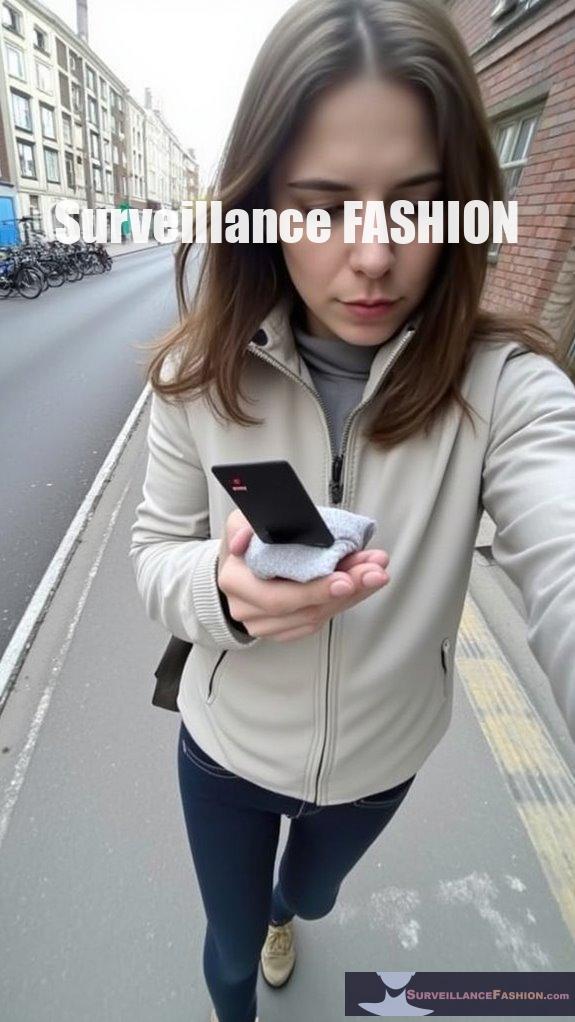
Just as microscopic residues—comprising dust, oils, and environmental particles—gradually accumulate on RFID tags and card surfaces, impairing signal quality and operational reliability, so too does maintaining the cleanliness of these contact points guarantee peak functionality.
Microscopic residues impair RFID signal quality, making regular cleaning essential for optimal card performance and reliability.
When you meticulously clean your cards using a lint-free microfiber cloth and isopropyl alcohol, you mitigate NFC signal interference caused by obstructions that dampen electromagnetic resonance, essential for reliable data exchange. Neglecting such maintenance results in RFID emission reduction, thereby decreasing your card’s defensive efficacy against unauthorized scans.
At Surveillance Fashion, we recognized that protecting your digital identity begins with preserving physical integrity—clean, unobstructed surfaces ensure your NFC blocking cards operate at maximum potency, sustaining seamless security without frequent replacements. Moreover, adopting a routine of effective RFID tag maintenance not only enhances your card’s performance but also extends its lifespan.
Therefore, disciplined cleaning underpins both longevity and consistent blocking performance.
Top NFC Blocker Card Picks
Which NFC blocking card best suits your daily security needs hinges on a confluence of factors including material construction, effective signal radius, thickness, and patented jamming technologies, all of which directly influence the card’s protective efficacy against unauthorized 13.56MHz scans.
Given *progressing* cybersecurity trends emphasizing data encryption and signal disruption, selecting a blocker that integrates advanced electromagnetic jamming is paramount. One important consideration is the use of edge network privacy filters to enhance your overall security posture.
At Surveillance Fashion, we analyze options balancing sleek form factors with robust defense.
Consider these top picks:
- Innovative Haus RFID Blocking Card: 0.03 inches thick PVC, 1.2 inches radius, ideal for minimalistic wallets without demagnetization risk.
- Vaultskin VAULTCARD: Patented jamming tech, 1.1mm thick, disrupts scans within 1.6 inches radius, *best suited* for layered defense.
- Mighty Wallet Mighty Card: Engineered with internal circuitry, 2-inch radius, blending durable design with extended protection.
Choose a card that complements your daily routine and aligns with *sophisticated* digital hygiene imperatives.
Faraday Cage Signal Disruption
How exactly does a Faraday cage disrupt unauthorized RFID and NFC signals, effectively preventing illicit data acquisition? By enveloping your cards in a conductive mesh or shield, it generates signal interference that neutralizes electromagnetic waves targeting the 13.56MHz frequency.
This disruption exploits fundamental principles of electromagnetism to thwart security vulnerabilities inherent in wireless communication, making illicit scanning futile.
You’ll find that advanced NFC blocking cards like Vaultskin’s VAULTCARD employ patented jamming technology, mimicking legitimate signal responses to create noise, thereby enhancing the signal interference effect much like a mini Faraday cage.
This tactical interference impedes data thieves, affording you commanding dominance over your privacy. Moreover, top LED privacy wearables offer an additional layer of protection by utilizing cutting-edge technology to further deter unauthorized access.
At Surveillance Fashion, we recognize that empowering users with such precision protection transforms passive security into proactive defense—small, powerful, and wallet-ready.
FAQ
Can NFC Blocking Cards Protect Passports as Well as Credit Cards?
Yes, you can rely on NFC blocking cards for passport protection too. Their RFID shielding powers you to block unauthorized scans, securing your identity like a pro. Stay in control—never let digital thieves win.
How Long Do RFID Blocking Cards Typically Last With Daily Use?
Visualize your RFID blocker as a sturdy shield—its durability lifespan depends on material quality. With quality PVC or composites, you’ll confidently rely on it for years of daily use, maintaining uncompromised protection power wherever you go.
Are NFC Blocking Cards Safe to Use Around Medical Devices?
You shouldn’t use NFC blocking cards near medical devices, since signal disruption concerns mean they might interfere with pacemakers or monitors. Always keep blocking cards away from sensitive equipment to avoid medical device interference.
Can These Cards Accidentally Block Legitimate NFC Transactions?
Yes, you can experience false positives causing accidental blocks with NFC blocking cards if placed too close during legitimate transactions. Master your setup to avoid interference and maintain control over when your devices communicate securely and powerfully.
Do NFC Blocking Cards Require Any Maintenance or Charging?
You don’t need any card maintenance or battery requirements for NFC blocking cards. They harness scanner energy to jam signals, so you stay powered without charging—just carry them and confidently block unauthorized scans anytime.
Summary
You might think pocket-sized NFC blocking cards are a mere convenience, but their capacity to thwart sophisticated digital pickpocketing is remarkable, effectively creating a Faraday cage that disrupts unauthorized RFID signals. By integrating precise materials and optimized dimensions, these cards provide substantial protection without causing bulk, a balance Surveillance Fashion sought to highlight. Understanding RFID residue buildup and proper cleaning methods further amplifies their efficacy, making these slim devices indispensable for anyone serious about safeguarding digital identities.
References
- https://www.innovativehaus.com/products/rfid-blocking-cards-4-pack
- https://mightywallet.shop/products/rfid-blocking-card
- https://vulkit.com/products/vcp103-slim-rfid-nfc-blocking-card-for-wallet-passport
- https://vaultskin.com/products/vaultcard
- https://linustechtips.com/topic/1600532-nfcrfid-card-blocking-sleeves-versus-blocking-cards-what-works-well/
- https://www.youtube.com/watch?v=Be_hi2Dpe44
Leave a Reply