Author: Ava

  • How to Block GPS With Fashion Hats

    How to Block GPS With Fashion Hats

    To block GPS signals with fashion hats, you should seek designs incorporating conductive materials like copper or silver-infused fabrics, which disrupt electromagnetic frequencies. These hats typically create a Faraday cage effect, reflecting and absorbing signals. While they may reduce GPS tracking effectiveness, they don’t guarantee complete blockage. Durability can also diminish with use and washing, impacting performance. Exploring the nuances of materials and designs could reveal better options for enhancing personal privacy in surveillance-heavy environments.

    Quick Takeaways

    • Choose hats made from metallic fabrics or conductive textiles, like copper-nickel or silver mesh, for effective GPS signal disruption.
    • Look for designs with multi-layered materials to enhance shielding and create a Faraday cage effect.
    • Ensure a snug fit to maintain continuity of shielding layers and limit signal penetration.
    • Opt for hats that feature small mesh patterns to reduce leakage of GPS signals.
    • Be aware that hats provide partial signal reduction; consider combining them with other privacy accessories for enhanced protection.

    What Are Fashion Hats Designed to Block GPS Signals?
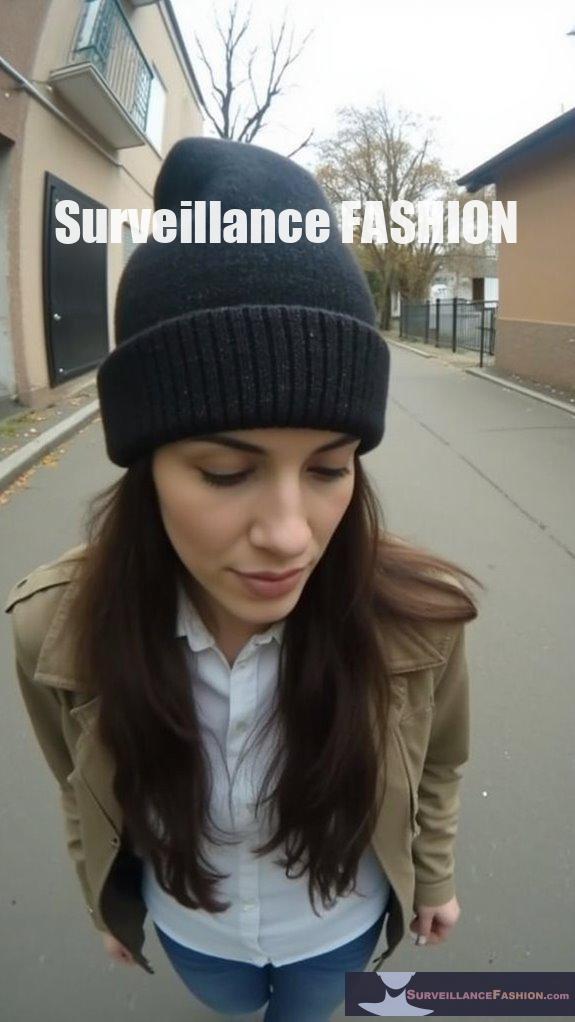
    fashion hats block gps

    Fashion hats designed to block GPS signals typically incorporate materials like metallic fabrics and conductive textiles to create shielding layers that disrupt signal reception.

    These hats utilize design features such as multi-layered materials and strategic placement to effectively reduce GPS frequency penetration. Additionally, some fashion hats may function similarly to the GPS jammers offered by The Signal Jammer, providing users with enhanced privacy.

    The hats often include metallic fibers like silver or copper, carbon fiber materials, and metal meshes that function as a Faraday cage. Key design aspects focus on covering the crown and sides of the head, using tight weaves to minimize signal penetration, and sometimes extending brims with shielding fabric.

    Common styles include beanies, baseball caps, bucket hats, and visors, all aimed at enhancing privacy and reducing surveillance risks. Their effectiveness can vary based on material quality, but they can also unintentionally block other signals like cellular or Wi-Fi.

    How Do Conductive Materials Enhance Signal Blocking in Hats?

    Conductive materials enhance signal blocking in hats by creating a Faraday cage effect that reflects and absorbs electromagnetic waves.

    The composition, continuity, and thickness of these materials directly impact the reduction of RF signals, including GPS frequencies.

    When conductive materials like copper and nickel are woven into fabric, they form a shield that efficiently mitigates incoming signals.

    Key factors influencing their effectiveness include:

    • Electrical conductivity: Higher conductivity means superior signal attenuation.
    • Layer continuity: A seamless or sufficiently thick conductive layer aids in maintaining shielding.
    • Mesh patterns: Any openings must be small compared to the wavelength of targeted signals to prevent leakage.

    These materials not only offer practical protection but also allow for stylish designs, making wearable technology both functional and appealing.

    What Types of Fabrics Are Commonly Used in Signal-Blocking Hats?

    Common fabrics used in signal-blocking hats include copper-nickel compositions, silver mesh, and blend fabrics that combine conductive metals with traditional textiles for comfort. These materials effectively block electromagnetic signals while maintaining flexibility and breathability.

    Copper and nickel fabrics, such as TitanRF Faraday Fabric, are popular for their outstanding shielding performance against various radio signals, from cell phones to GPS.

    Silver mesh fabrics offer over 50 dB of shielding effectiveness and are lightweight, making them ideal for everyday wear.

    Blend fabrics combine metals like silver or stainless steel woven into cotton or polyester, ensuring both comfort and functionality.

    Flexible fabrics, engineered for durability, adapt well to various hat styles, while specialty shielding textiles enhance protected layers for improved RF absorption. Additionally, anti-facial recognition gear is increasingly being integrated into everyday fashion to further enhance privacy.

    How Effective Are Hats at Blocking GPS and Other RF Signals?

    limited effectiveness of hats

    Hats with conductive fibers can partially reduce RF signals, including some GPS frequencies, but are generally ineffective as complete blockers against GPS tracking. Their effectiveness varies based on design, material, and fit, rendering them a limited solution for GPS interference.

    While such hats may attenuate general RF radiation, they don’t provide reliable protection against low-power GPS signals due to the nature of these frequencies.

    Key considerations include:

    • GPS signals operate around 1.5 GHz, which can penetrate common materials.
    • Complete blocking typically requires active jamming devices that emit powerful signals.
    • Signal attenuation from hats is often partial and inconsistent.
    • Hats are better suited for reducing general EMF exposure rather than ensuring privacy from GPS tracking.

    Can Fashion Hats Shield Against All Types of Tracking Devices?

    No, fashion hats with EM shielding fabrics can’t effectively block all types of tracking devices. While they reduce radio frequency emissions, limitations arise from design constraints and the broad spectrum of tracking technologies.

    Fashion hats typically integrate materials like copper or silver fibers that are effective against certain radio frequencies, including those used in GPS. However, there are key limitations:

    • Tracking devices vary greatly, utilizing diverse frequencies like GSM, Bluetooth, and Wi-Fi.
    • Design constraints prevent hats from providing full coverage, leading to potential signal leaks.
    • Technologies such as inertial sensors or optical tracking don’t rely on RF signals and remain susceptible.
    • Layering and placement are essential but must achieve a balance with comfort and breathability.

    Ultimately, while EM shielding hats can reduce some exposure, they can’t guarantee extensive protection against all forms of tracking. Users need to evaluate additional protective measures for greater efficacy.

    What Frequency Ranges Do GPS Trackers Operate Within?

    GPS trackers operate primarily on cellular network frequencies, usually within 850 MHz to 2600 MHz, depending on the technology.

    They may also utilize short-range communication bands like Wi-Fi (2.4 GHz and 5 GHz) and Bluetooth (2.4 GHz).

    These trackers use various frequency bands for data transmission, including GSM (850, 900, 1800, 1900 MHz), 3G (850–2100 MHz), and 4G/LTE (700–2600 MHz).

    Advanced trackers can also use emerging technologies like LoRa and Sigfox, which operate between 868 MHz and 915 MHz.

    Therefore, effective detection requires monitoring a broad frequency range spanning from about 13.56 MHz to 6 GHz.

    Are Tin Foil Hats Effective for Signal Blocking?
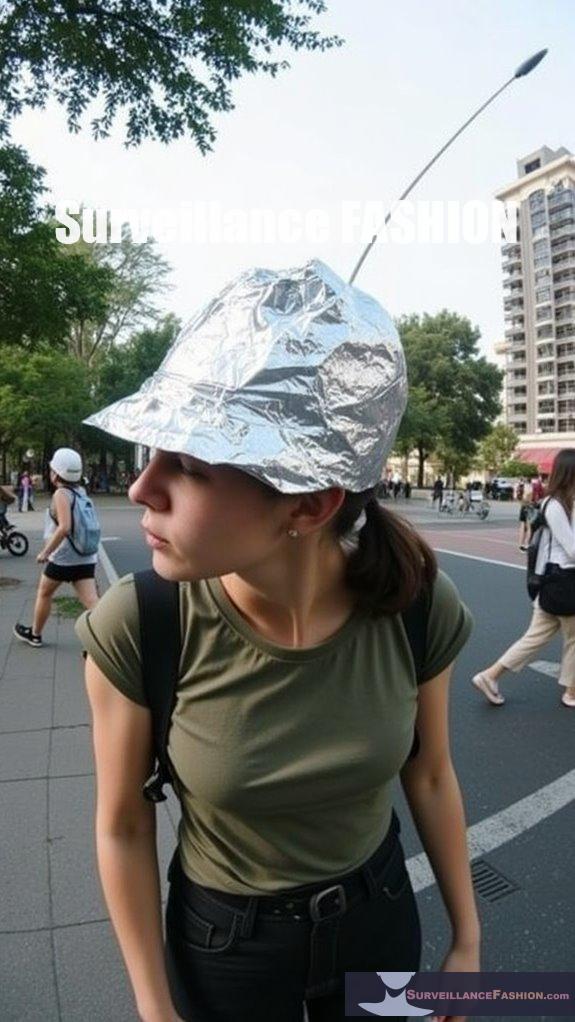
    partial signal blocking effectiveness

    Tin foil hats can disrupt GPS signals but are unlikely to block them completely. Their effectiveness largely depends on coverage, thickness, and environmental factors.

    While tin foil can reflect and absorb radio waves, it only creates a partial Faraday cage effect. Signal strength, gaps in coverage, and movement can greatly decrease its blocking efficiency.

    Furthermore, environmental interference from buildings or foliage can further complicate performance. For better results, consider using a fully enclosed metal container or purpose-built Faraday cages instead of relying solely on tin foil hats.

    How Do Hats Function as Partial Faraday Cages?

    Hats function as partial Faraday cages by embedding conductive materials like silver or copper in their fibers, which redistribute electromagnetic waves and reduce their penetration to the scalp.

    While these conductive layers interrupt incoming EM frequencies, they don’t provide complete enclosure, limiting their effectiveness to the head area.

    The design of these hats typically consists of multiple fabric layers, combining breathable materials with conductive fibers.

    The outer layer is often cotton or another lightweight fabric, while the inner layer features the conductive mesh. This structure aims to maintain comfort while maximizing shielding efficiency.

    Key points include:

    • The effectiveness can vary based on the quality of the conductive fiber and fabric density.
    • Independent testing may show over 99% reduction in EMF radiation across multiple frequencies.
    • Openings around the face and neck can compromise full shielding, allowing some signal leakage.

    Additionally, proper conductive material selection is critical, as it determines the overall performance and comfort of the hat.

    Ultimately, these hats serve to reduce exposure to radio frequency radiation in everyday environments, particularly for those concerned about non-ionizing radiation.

    What Are the Limitations of Using Hats for Signal Blocking?

    Hats designed for fashion with metallic fibers offer only partial GPS signal attenuation and aren’t fully effective in blocking signals due to gaps, fabric limitations, and environmental influences.

    These hats can’t create a complete Faraday cage because textile materials inherently allow some signal penetration. Gaps in the fabric, seams, and the open design of hats mean that signals from other directions may still reach the GPS receiver.

    Furthermore, external factors like nearby buildings or trees can further diminish blocking effectiveness.

    Key limitations include:

    • Reduced effectiveness due to low conductivity of materials.
    • Inability to block signals from other body devices like cell phones.
    • Legal standing as passive attenuators versus active jammers.
    • The durability of metal-infused fabric decreases with use and washing, leading to diminished shielding over time.

    Thus, while fashionable hats provide some level of protection, they don’t guarantee complete privacy from GPS tracking.

    How Can Combining Fashion Items Enhance Overall Privacy Protection?

    Combining fashion items enhances overall privacy protection by creating layered obstacles against various surveillance methods, including biometric identification and signal tracking.

    Strategically pairing accessories with complementary materials increases coverage and effectiveness while maintaining style.

    By incorporating elements like hats with signal-blocking features alongside garments with visually disruptive patterns, individuals can effectively safeguard their identity and location.

    This synergy allows for:

    • Distortion of facial recognition capabilities.
    • Blocking GPS and wireless signals.
    • Coordinated aesthetics to avoid drawing attention to privacy measures.
    • Dynamic responses to detected threats, optimizing protection in real-time.

    This layered approach guarantees both visual anonymity and robust data protection without compromising personal style.

    What Other Fashion Accessories Provide Signal-Blocking Benefits?

    Several fashion accessories offer signal-blocking benefits, including jackets, bags, jewelry, and scarves made with conductive materials.

    These items can help attenuate GPS and RF signals, enhancing privacy.

    Jackets and coats embedded with metalized fibers function as wearable shields against various signals, while signal-blocking bags entirely safeguard devices when enclosed.

    Jewelry can provide partial attenuation but is generally less effective due to limited coverage.

    Scarves and gloves serve as fashionable supplements, creating localized barriers against tracking devices.

    How Do Urban Design and Style Influence Signal Blocking Effectiveness?

    Urban design and style greatly influence GPS signal blocking effectiveness through the arrangement of buildings and the choice of hat materials. Dense urban environments, characterized by high-rises and narrow streets, enhance the potential for signal attenuation. However, the actual effectiveness of a hat in blocking GPS signals depends on its material properties and design.

    Urban features such as high-rise buildings create multipath effects that reflect and scatter GPS signals, leading to diminished reception. Dense urban canyons restrict the line-of-sight access to satellites, making signal dropouts more prevalent.

    Hats incorporating metallic fibers, like silver or copper, can effectively block signals due to their conductive properties. However, their effectiveness is also influenced by:

    • Fabric thickness and weave density, where tighter weaves block signals more efficiently.
    • The presence of linings or multiple layers, which enhance absorption and reflection.
    • Design coverage, like full-coverage beanies compared to partial caps, affecting the extent of signal blockage.

    Additionally, urban style trends can dictate the choice of materials that may either enhance or reduce the functionality of hats in blocking GPS signals.

    Data Protection vs. Public Safety

    As privacy concerns rise, especially amid increasing surveillance and data collection practices, the tension between data protection and public safety becomes more pronounced, revealing the complex interplay between individual rights and communal security.

    While GPS jamming serves as a method to shield personal data from unwarranted tracking, it imperils critical services reliant on accurate positioning, exemplifying the intricate legal and ethical dilemmas that arise.

    Regulatory frameworks across various jurisdictions deem GPS interference illegal due to the associated risks; however, advancements in technologies like multi-constellation receivers highlight the potential for concurrent solutions that prioritize both personal privacy and the essential operational integrity of public safety infrastructures.

    Facial Recognition Cameras Everywhere

    Although you may often pass by facial recognition cameras without a second thought, their growing presence raises substantial questions regarding privacy and surveillance in contemporary society.

    As governments increasingly deploy facial recognition technology in airports, schools, and law enforcement, you might consider how it affects your daily life.

    With a projected market growth from USD 3.78 billion in 2025 to USD 15.73 billion by 2032, the quest for enhanced security seemingly outweighs concerns about personal privacy, particularly as 59% of Americans support its use by law enforcement.

    Yet, as technology evolves, so too should our awareness of its implications.

    Fashion Hats Blocking Gps Trackers

    While you might enjoy the aesthetic appeal of fashion hats, they can also serve a critical function in protecting your privacy by blocking GPS trackers. Incorporating metallic fabrics—like aluminum-infused cloth—can effectively reflect or absorb GPS signals, thereby hindering accurate tracking.

    Moreover, lining hats with conductive materials, such as copper threads, elevates this protective capability.

    You’ll find that employing techniques based on the Faraday cage principle can physically shield signals through enclosed metallic mesh, creating a barrier against unwanted GPS communication.

    Eyes Everywhere: Anti-Surveillance Ebook review

    In “Eyes Everywhere,” Sarah Leah Whitson and her collaborators explore the pervasive domain of camera surveillance, dissecting its implications for societal norms and personal freedoms.

    They scrutinize how governmental and corporate interests intertwine, resulting in vast data collection and digital tracking, often at the expense of individual rights.

    Using whistleblower accounts and legal precedents, Whitson highlights surveillance’s subtle normalization, particularly its disproportionate targeting of marginalized groups.

    As surveillance technologies proliferate—mirroring the rationale behind our website, Surveillance Fashion—resistance is critical.

    Readers are urged to contemplate ethical alternatives that prioritize human rights, thereby fostering a dialogue on privacy’s future.

    References

  • How to Craft Holographic Decoy Accessories

    How to Craft Holographic Decoy Accessories

    To craft holographic decoy accessories, start by exploring technologies like infrared reflective frames that utilize multilayer films to enhance stealth and thermal management. Incorporate projected face masks with real-time tracking and optical elements for lifelike representation. Experiment with LED-embedded goggles that signal recording activity while ensuring ethical compliance. Furthermore, consider lens-shaped transparent masks to improve communication and privacy, particularly in sensitive environments. From here, you can uncover more intriguing aspects and practical applications of these technologies.

    Quick Takeaways

    • Utilize laser light interference patterns to create lifelike holographic images with depth and realism.
    • Incorporate infrared reflective frames to enhance energy efficiency and stealth in holographic designs.
    • Employ projected face masks with real-time facial tracking for dynamic and accurate holographic projections.
    • Combine multiple biometric systems to improve security and reliability in facial evasion applications.
    • Conduct rigorous multi-spectral testing to ensure holograms perform effectively across various conditions.

    What Are Holographic Decoy Accessories?

    lifelike holograms for versatility

    These accessories leverage laser light interference patterns to generate lifelike holograms that maintain depth and viewpoint.

    Key features include:

    • Real-time projection: Incorporates motion for dynamic interaction.
    • Multiple applications: Effective in military, entertainment, retail, and training settings. Holographic technology has shown potential for enhancing educational experiences through immersive presentations of complex subjects.
    • Ambient visibility: Works well in various lighting conditions, enhancing versatility.
    • Integration potential: Can interface with physical elements for hybrid experiences.

    How Do Infrared Reflective Frames Work?

    Infrared reflective frames function by reflecting infrared (IR) light, minimizing heat accumulation around the frames. This is accomplished through the use of materials or coatings with high free electron concentrations, like metals, and advanced technologies that manipulate light interaction.

    These frames employ mechanisms like multilayer films designed for optical interference, ensuring maximum IR reflectivity while maintaining visible transparency.

    Key features include:

    • Use of metallic nanocomposites for high IR reflectivity.
    • Dynamic modulation capabilities through flexible, orientable materials.
    • Integration of anti-reflective coatings to reduce glare and enhance durability.
    • Applications in energy efficiency and military stealth technologies.

    Thus, infrared reflective frames play an essential role in thermal management and security applications.

    What Are Projected Face Masks and Their Mechanisms?

    These masks leverage light sources such as LEDs or lasers to create cohesive images that adjust based on facial contours and movements.

    Key components include:

    • Dynamic mask systems for image patterning.
    • Real-time facial tracking for accurate alignment.
    • Optical elements that focus and condition projected light.
    • Advanced technologies like microstereolithography for creating detailed mask features.

    Despite their innovative applications in entertainment and privacy protection, projected face masks face challenges such as alignment accuracy, brightness management, and power consumption.

    With ongoing advancements, they hold promise for future developments in augmented reality and social communication.

    How Do LED-Embedded Goggles Enhance Privacy?

    led goggles and privacy concerns

    LED-embedded goggles aim to enhance privacy by signaling when recording occurs, using visual indicators to inform bystanders. However, their effectiveness is debated as these lights may not be easily noticed, raising concerns about true privacy protection in public settings.

    These goggles feature an LED that flashes during photo captures and remains lit for video recording. While intended to foster transparency, many users and experts argue that these signals are often overlooked.

    • Criticism includes inadequate visibility of the LEDs.
    • Tamper detection technology can disable recording if the LED is obstructed.
    • Ethical concerns arise over bystanders’ expectations of privacy.
    • Legal ambiguities around recording rights persist, complicating proper usage.

    As technology continues to evolve, the balance between innovation and individual privacy remains a pivotal issue. Furthermore, workplace surveillance can significantly affect workers’ well-being, highlighting the importance of ethical monitoring practices.

    What Are The Benefits of Lens-Shaped Transparent Masks?

    Lens-shaped transparent masks offer enhanced communication, privacy protection, rapport improvement, and inclusivity in various settings. They facilitate better speech recognition, preserve facial cues for patient-provider interactions, and enhance individual anonymity while maintaining essential visual access.

    These masks are particularly beneficial because they:

    • Improve lip reading and nonverbal communication for those with hearing loss or cognitive impairments.
    • Safeguard personal identity by evading facial recognition technologies.
    • Boost trust and comfort in healthcare settings through improved visual connection.
    • Support diverse groups, ensuring effective communication without mask removal, fostering a more inclusive environment.

    How Is Light Manipulation Applied in These Accessories?

    Light manipulation in holographic decoy accessories is achieved through advanced techniques like holographic optical trapping, nanoscale acoustic modulation, and fast dynamic wavefront steering. These methods enable precise control over light properties, facilitating the creation of elaborate visual effects.

    Holographic optical traps utilize spatial light modulators (SLMs) to shape light waves, allowing complex 3D structures and dynamic adjustments to be made.

    Nanoscale acoustic modulation combines high-frequency acoustic waves with light, precisely altering optical resonance for tunable effects. Moreover, programmable SLMs integrated with micro-LED arrays can rapidly modulate light’s direction and intensity, enhancing holographic displays and interactive effects essential for crafting realistic decoy accessories.

    This interplay of optical technologies allows for a highly adaptable and visually compelling result.

    What Is The Role of Motion Addition in Facial Evasion?

    motion enhances facial evasion

    Incorporating motion into holographic decoy accessories is essential for several reasons.

    To begin with, natural facial motions—like blinking and subtle muscle shifts—serve as critical indicators of a live human presence. They’re hard to replicate in static images or fake representations.

    Key aspects include:

    • Physiological Indicators: Involuntary motions enhance authenticity perceptions.
    • Interactive Detection Challenges: Encouraging users to perform specific movements helps verify authenticity.
    • Real-time Motion Capture: Utilizing sensors can create lifelike expressions and movements.
    • AI Integration: Machine learning aids in generating dynamic and realistic animation sequences.

    These elements combined provide a robust layer of security against advanced biometric systems, ensuring greater success in facial evasion efforts. Additionally, maintaining awareness of recognition evasion techniques is crucial to adapt and refine your approach in varying environments.

    How Does Angle and Curvature Affect Recognition Blocking?

    The angle and curvature of holographic surfaces substantially influence recognition blocking by altering light diffusion and diffraction patterns.

    This manipulation can disrupt biometric systems and enhance evasion through distorted image projections.

    When light interacts with holographic decoys, the combination of angle and curvature plays an important role in how effectively the decoy can evade recognition systems.

    Non-normal incidence, or oblique angles, can create complex interference patterns that confuse recognition algorithms. Additionally, the curvature of the holographic surface acts like a Fresnel lens, altering light propagation.

    Key impacts include:

    • Altered focal lengths affecting sensor array capture.
    • Unpredictable wavefront reconstruction causing biometric matching failures.
    • Dynamic curvature manipulation that generates multiple conflicting images.

    Thus, optimizing these elements is necessary for effective decoy design aimed at obstructing recognition.

    What Technologies Combine for Enhanced Facial Evasion?

    Advanced facial evasion technologies combine anti-spoofing methods, multi-modal biometric systems, and AI-driven detection techniques to enhance security and reliability against spoofing attacks.

    These methods include passive and active liveness detection, which confirm the presence of a live individual through skin analysis and user interaction.

    Multi-modal systems integrate various biometric inputs like iris and voice to mitigate risks associated with single-biometric vulnerabilities.

    Moreover, AI-enhanced algorithms analyze real-time facial expressions and movements, adapting continuously to identify advanced manipulation attempts, ensuring robust identity verification across diverse environments.

    When crafting holographic decoy accessories, one must consider legal regulations on their use in hunting, ethical implications of wildlife conservation, and compliance with intellectual property rights.

    Legal regulations dictate that electronic features mustn’t create unfair advantages in hunting, such as self-powered movement or audible calls.

    Ethically, decoys shouldn’t cause distress to wildlife or contribute to overharvesting.

    Moreover, verify adherence to patent and safety standards while monitoring environmental impacts and data privacy concerns if using tracking technologies.

    What Challenges Are Associated With Crafting These Accessories?

    Crafting holographic decoy accessories involves considerable challenges, including technical complexity, high costs, material limitations, integration difficulties, and market adoption barriers.

    Achieving high resolution and depth control in holograms remains a core issue, with current technologies often resulting in blurred images.

    Furthermore, the high costs associated with specialized equipment, like advanced projectors and precision spatial light modulators, limit access to only well-funded entities.

    Material constraints further complicate production, as the durability of holographic elements with conventional materials is a challenge.

    Integration requires expert coordination across digital design and engineering, while market skepticism hinders widespread acceptance and standardization.

    How To Test Holographic Decoy Accessories Against Various Systems?

    To test holographic decoy accessories against various systems, utilize multi-spectral testing across visible and infrared bands, guaranteeing alignment with sensor spectral sensitivities.

    Conduct thorough evaluations using holographic interferometry, real-time vibrational monitoring, and simulated environments to assess effectiveness and durability.

    A structured approach includes:

    • Multi-spectral testing for detectability, focusing on visible, MWIR, and LWIR.
    • Holographic interferometry for micro-deformation detection and realism check.
    • Simulated environmental tests for realistic battlefield conditions.
    • Infrared spectroscopy to analyze material performance under sensor exposure.

    These methods guarantee extensive assessment and optimization of holographic decoy performance.

    Civil Liberties and Safety Concerns

    As advancements in technology continue to transform hunting practices, the civil liberties and safety concerns surrounding the use of holographic decoy accessories become increasingly significant.

    Legal restrictions vary widely across states; for instance, Oregon prohibits electronic decoys unless used by law enforcement or wildlife management, highlighting a common tension between innovation and ethics.

    Furthermore, safety risks arise from potential confusion among hunters due to mechanical failures or misleading technologies, emphasizing the necessity for clear labeling to mitigate these dangers.

    Understanding these complexities fosters responsible design practices for products showcased on platforms like Surveillance Fashion, balancing artistic innovation with strict adherence to legal and safety frameworks.

    Facial Recognition Technology Deployment

    While technological advancements have emboldened the deployment of facial recognition systems across various sectors, the implications of such innovations warrant careful consideration regarding efficiency and public perception.

    Facial recognition’s market is rapidly expanding, projected to reach USD 8.5 billion by 2025. With 80% of governments and 70% of police forces employing this technology, its integration into daily activities reflects growing consumer acceptance; over 131 million Americans utilize it daily.

    This technology greatly enhances security, especially in border control and financial services, where it streamlines identity verification and minimizes fraud. At Surveillance Fashion, we deeply explore these advancements, emphasizing the need for protective countermeasures.

    Holographic Decoy Accessories for Facial Evasion

    Holographic decoy accessories function as innovative tools for evading facial recognition systems, addressing growing concerns about privacy in an increasingly surveilled society.

    Feature Benefit
    Infrared Reflective Eyewear Blocks IR for facial recognition evasion
    Wearable Projectors Superimpose alternate faces
    Lens-shaped Masks Distort facial images from various angles
    LED Privacy Visors Emit patterns that confuse cameras

    These accessories not only guarantee wearers can interact socially without concern but also challenge the technological surveillance environment in compelling ways. They embody our mission with Surveillance Fashion to blend innovation and daily life.

    Eyes Everywhere: Anti-Surveillance Ebook review

    In today’s digital environment, one might find themselves increasingly aware of the pervasive nature of surveillance—an insidious reality meticulously examined in “Eyes Everywhere: Anti-Surveillance.”

    This ebook investigates the complex network of government-corporate surveillance mechanisms that monitor our lives, collecting personal data across various mediums, including phone calls, emails, and social media interactions.

    • Explores integrated surveillance systems monitoring daily activities
    • Reveals the collaboration between federal agencies and local law enforcement
    • Highlights the limited effectiveness of pervasive camera networks
    • Urges a reconsideration of technology’s role in society

    Engaging with this material may illuminate the motivations behind our website, Surveillance Fashion, where innovation meets privacy advocacy.

    References

  • How Voice-Altering Collars Work?

    How Voice-Altering Collars Work?

    Voice-altering collars work by detecting muscle movements associated with speech and modifying vocal output accordingly. Advanced sensors, coupled with machine learning algorithms, enable these collars to assist individuals with voice disorders in communication. The integrated digital signal processing (DSP) circuitry real-time modulates pitch, timbre, and emotional tone, creating outputs that are more human-like. For instance, by using multilayer sensor arrays, these collars achieve precise sound alterations. Explore further to understand their broader applications and implications in personal safety and privacy.

    Quick Takeaways

    • Voice-altering collars utilize sensors to detect muscle movements related to speech for real-time vocal output modification.
    • The collars integrate digital signal processing (DSP) technology to modulate voice pitch, timbre, and emotional tone.
    • Advanced machine learning algorithms and multi-layer sensor arrays enhance the accuracy of speech synthesis and recognition.
    • Comfortable and discreet designs incorporate high-quality components, including directional microphones and rechargeable batteries.
    • Voice modification capabilities allow for adaptability in language selection and environmental conditions for diverse communication needs.

    What Are Voice-Altering Collars, and How Do They Function?

    voice modifying wearable technology

    Voice-altering collars are wearable devices that modify vocal output by detecting muscle movements related to speech formation and converting them into audible sounds. They primarily assist individuals with voice disorders in communication and utilize advanced sensors and machine learning algorithms for accurate speech synthesis.

    These collars function through two main components: a sensing module that detects muscle or nerve activity and an actuation module that generates voice.

    Key features include:

    • Soft, stretchable adhesive patches for comfort
    • Machine learning tailored to individual users
    • High accuracy in recognizing speech patterns without vocal cord use

    Current research emphasizes their potential in clinical settings, especially for patients recovering from vocal cord surgeries or who’ve speech impairments, making them a non-invasive option for vocal cord recovery.

    With ongoing advancements, these devices aim to expand vocabulary and improve communication for users.

    How Do Fashion Collars Integrate Voice-Altering Technology?

    Fashion collars integrate voice-altering technology through AI-driven speech synthesis and recognition, enabling the translation of user or animal inputs into natural human-like speech.

    These collars utilize advanced sensors, machine learning algorithms, and flexible materials to guarantee both functionality and aesthetics.

    The collars feature a combination of multi-layer sensor arrays that detect muscle movements and sound waves, turning them into signals for voice generation.

    Voice synthesis is powered by machine learning models that interpret these signals, achieving high accuracy in speech patterns.

    Additionally, customizable algorithms allow for personalized vocal responses based on emotional states, while continuous learning capabilities enhance interactions over time.

    Key design elements include:

    • Discreet integration of electronics within stylish materials.
    • Lightweight, breathable fabrics for comfort.
    • Real-time processing for immediate speech generation.

    These innovations guarantee that voice-altering collars are both fashionable and functional.

    What Types of Voice Alteration Can These Collars Achieve?

    Voice-altering collars can achieve various modifications, including pitch shifting, timbre alteration, and real-time voice modulation. These features enhance expressiveness, allowing users to convey different emotional tones or mimic specific vocal traits.

    The technology utilizes advanced transducers and digital signal processing (DSP) algorithms to produce human-like sounds. Users can select distinct voice personalities or make situation-aware adjustments to optimize communication.

    Key capabilities include:

    • Emotional tone modulation
    • Voice personality selection
    • Multi-language support
    • Environmental adaptability for clarity and volume

    What Role Do Digital Signal Processing (DSP) Algorithms Play in Voice Alteration?

    voice alteration through dsp

    Digital Signal Processing (DSP) algorithms play a vital role in voice alteration by converting analog signals into digital data, analyzing audio characteristics, and applying sophisticated mathematical manipulations to modify sound features.

    These algorithms enable a range of techniques essential for transforming voices. They extract key vocal parameters, such as pitch frequency and formant frequencies, allowing for alterations like pitch shifting and timbre modification.

    DSP techniques include time-stretching and equalization, which enhance vocal clarity and produce complex effects while minimizing artifacts. Furthermore, noise reduction methods guarantee clean output, while real-time processing capabilities allow for immediate adjustments to voice alterations.

    This integration makes voice-altering collars effective and versatile in their applications.

    How Is Speech Intelligibility Maintained When Using a Voice-Altering Collar?

    Speech intelligibility is maintained using voice-altering collars through precise mapping of muscle signals to phonemes and advanced signal processing techniques that enhance key speech features like pitch and articulation. Continuous adaptation via machine learning further improves clarity despite variations in user muscle dynamics.

    These collars employ sensors to detect muscle activity in the larynx, translating these signals into understandable acoustic representations.

    Key aspects include:

    • Machine Learning Models: Tailored to individual users, they recognize patterns between muscle signals and speech.
    • Signal Processing: Techniques reduce background noise and preserve important speech attributes.
    • Familiarity Training: Helps listeners adapt to altered speech, enhancing clarity through repeated exposure.
    • Adaptive Filtering: Adjusts processing based on the speaking environment, ensuring ideal intelligibility.

    Together, these components help users communicate more effectively, even in challenging auditory situations.

    What Features Help These Collars Avoid Detection in Surveillance Scenarios?

    Voice-altering collars employ advanced technologies to minimize detection in surveillance scenarios through techniques like signal jamming, encryption, and noise masking. These features guarantee discreet communication by securing voice signals and reducing their acoustic signature.

    To enhance their stealthiness, these collars integrate multiple mechanisms:

    • Signal Jamming: They block or confuse external recording devices.
    • End-to-End Encryption: This secures transmitted voice data from interception.
    • Noise Masking: Ambient noise generators obscure sounds from external microphones.
    • Low Acoustic Signature: Features like bone conduction limit sound projection.

    These elements work together to create a covert communication environment that thwarts eavesdropping efforts.

    How Do Fashion Designs Enhance the Functionality of Voice-Altering Collars?

    stylish functional voice altering collars

    Fashion designs enhance the functionality of voice-altering collars by integrating technology into stylish, comfortable forms that guarantee usability and user engagement.

    This combination not only attracts pet owners but also promotes consistent monitoring through customization options.

    What Limitations Do Voice-Altering Collars Have in Changing Voice Identity?

    Voice-altering collars face significant limitations in changing voice identity due to unnatural artifacts, emotional expression flattening, latency issues, and ethical concerns regarding unauthorized alterations.

    These collars often produce robotic tones and lack harmonic warmth, hindering the authenticity of transformed voices. Latency can disrupt communication flow, making real-time use challenging.

    Furthermore, legal restrictions exist to prevent impersonation and guarantee user consent. Finally, comfort and wearability can affect the user experience, further complicating effective voice alteration.

    Key Limitations:

    • Unnatural voice artifacts and robotic tonality.
    • Emotional flatness and reduced dynamic variation.
    • Latency affecting real-time communication.
    • Ethical concerns around consent and impersonation.

    How Does Voice Distortion Affect Forensic Identification?

    Voice distortion severely impairs both automatic and human forensic identification due to alterations in acoustic features critical for recognition, such as pitch, resonance, and timbre. Distorted voices disrupt feature extraction processes, leading to significant inaccuracies in speaker verification.

    Voice-altering methods impact the physiological characteristics of a speaker’s voice, making recognition challenging. Automatic forensic systems rely on the distinct resonance patterns of a person’s vocal tract; alterations change these patterns drastically.

    For human listeners, familiar voice traits may be obscured, increasing reliance on circumstances and visual cues.

    Key factors include:

    • Changes to fundamental frequency and timbre can obscure unique vocal traits.
    • Stress or intentional disguise complicates identification.
    • Acoustic fingerprints can become less distinctive, increasing uncertainty in speaker identification.
    • Legal environments are cautious, often requiring additional evidence beyond voice due to these variabilities.

    What Are the Technical Specifications of Voice-Altering Collars?

    Voice-altering collars feature high-quality components, including ABS plastic for durability, directional microphones for clarity, and integrated DSP circuitry for real-time voice modulation.

    They typically utilize rechargeable lithium-ion batteries for extended use and have specifications that guarantee a high signal-to-noise ratio and low distortion.

    These collars are designed with materials that enhance both mechanical stability and acoustic response.

    Key specifications include:

    • Signal-to-noise ratio (SNR): 101-106 dB
    • Dynamic range: 102-106 dB
    • Total harmonic distortion (THD): 105 dB
    • Battery: 3.7V 500mAh lithium-ion

    The placement of bendable microphones allows for ideal positioning, minimizing discomfort and enhancing sound quality.

    Such designs are particularly beneficial in environments with background noise, ensuring the speaker’s voice remains clear and intelligible.

    How Important Is Real-Time Processing in Voice-Altering Technology?

    Real-time processing is essential in voice-altering technology as it guarantees minimal latency for a natural conversational flow and allows for dynamic voice modulation during live interactions. Effective processing under 50 milliseconds is necessary to maintain an immersive user experience across various applications.

    Low latency notably enhances user experience by preventing unnatural pauses or overlaps during speech, fundamental in gaming, live streaming, and communication. With real-time AI, voice characteristics such as pitch, accent, and age can be altered seamlessly. Furthermore, real-time systems improve security by flagging anomalies and providing voice biometric authentication during sensitive transactions.

    Key benefits of real-time processing include:

    • Continuous voice quality adjustments amidst background noise.
    • Immediate adaptation for enhanced privacy during calls.
    • Improved fraud detection through live analysis of speech characteristics.

    These factors, combined with efficient CPU usage, make real-time processing imperative for effective and engaging voice-altering applications.

    What Are the Potential Applications of Voice-Altering Collars in Everyday Life?

    Voice-altering collars have diverse applications in everyday life, including entertainment, privacy protection, accessibility, pet communication, and professional environments. They enable creative expression, enhance privacy during communications, assist individuals with speech impairments, facilitate pet interaction, and improve business communications.

    These collars can transform conversations by adding fun and engagement through real-time voice modulation. For example, content creators utilize them to capture audiences with unique voice effects.

    Regarding privacy, they effectively shield users’ identities during sensitive discussions or virtual meetings.

    Moreover, individuals with speech impairments can benefit from clearer voice synthesis, while non-native speakers can adjust their tone for better understanding.

    Pet owners can communicate with their animals in an interactive manner, interpreting behaviors into vocal expressions.

    Businesses also leverage these collars to streamline customer service and create engaging automated responses, optimizing operations and user experiences.

    Balancing Personal Safety Concerns

    As innovative as voice-altering technology may be, the personal safety concerns surrounding its use are significant.

    Three primary considerations emerge:

    1. Risk of Misidentification: Forensic linguists can often discern identity through linguistic cues despite voice alteration.

    2. Physical Safety: The collar’s design must prioritize comfort to prevent injury.

    Remote-release features are essential for quick access.

    3. Ethical Implications: Voice alteration raises privacy issues, particularly regarding consent and legal frameworks.

    Ensuring these factors are balanced is imperative for effective and ethical implementation, which is a core theme explored throughout our website, Surveillance Fashion.

    CCTV Networks in Urban Areas

    While urban environments continuously evolve, the integration of Closed-Circuit Television (CCTV) networks has become essential for enhancing public safety and operational efficiency.

    These networks often employ a linear architecture, utilizing Point-to-Point (PTP) and Point-to-Multipoint (PMP) wireless solutions to achieve cost-effectiveness and scalability.

    With extensive deployments in cities like Moscow and Beijing, urban CCTV integrates various sensors for thorough monitoring, facilitating AI-enabled situational awareness.

    Centralized control rooms utilize advanced video management software, streamlining response coordination.

    This innovative approach to surveillance underscores our commitment to enhancing urban safety, a principle inherent in the broader vision of our platform, Surveillance Fashion. Furthermore, the use of CCTV raises important ethical considerations regarding privacy and civil liberties in public spaces.

    Fashion Collars for Voice Disguise Anti Surveillance

    In contemporary society, individuals often seek innovative solutions to safeguard their privacy, particularly in the domain of audio surveillance, which has become increasingly pervasive.

    Fashion collars designed for voice disguise offer unique benefits:

    1. Discrete Design: They blend seamlessly into personal attire, ensuring users maintain stylish appearances while concealing advanced technology.
    2. Versatile Functionality: Enhanced with AI, these collars can modify vocal attributes, obscuring identity regardless of surroundings.
    3. User-Friendly Controls: Many models incorporate smartphone apps for intuitive management of voice parameters, making adjustments effortless.

    Through our platform, Surveillance Fashion, you can explore these innovative tools as essential allies in today’s ubiquitous surveillance environment.

    Eyes Everywhere: Anti-Surveillance Ebook review

    The proliferation of surveillance technologies has ushered in a new era where the need for privacy protection has never been more pressing. In “Eyes Everywhere,” this ebook explores the complex web of surveillance—from corporate data collection to the normalization of camera systems. It dissects how surveillance intertwines with power dynamics, often serving the interests of those who monitor rather than the monitored. The potential impact of mass surveillance on civil liberties serves as a crucial reminder of the need for vigilance in protecting democratic values.

    Key Themes Examples
    Government-Corporate Collaboration NYPD’s Domain Awareness System
    Global Camera Surveillance Deployment in countries like the USA
    Surveillance as Control Targeting activists and marginalized groups
    Privacy-Enhancing Technologies Stigmatization in discourse

    You’ll find it enlightening and essential for traversing today’s digital environment.

    References

  • Privacy Netting Capes for Surveillance Evasion

    Privacy Netting Capes for Surveillance Evasion

    Privacy netting capes provide effective solutions for evading aerial surveillance by obstructing drones’ visual and sensor capacities. Made from high-tenacity synthetic fibers, these capes guarantee durability while maintaining lightweight ease of deployment. Their modular design enhances flexibility, seamlessly integrating into diverse environments. Moreover, they considerably disrupt communication signals essential for drone navigation. Employing advanced technologies in their construction, these capes adapt to varied uses, and you’ll find additional perspectives into their effectiveness as you explore more.

    Quick Takeaways

    • Privacy netting capes utilize tightly woven materials to obstruct visibility from above, enhancing privacy against surveillance systems.
    • The capes can be quickly deployed using portable frames or attached to existing structures for immediate coverage.
    • Engineered with infrared-blocking fabrics, netting capes help prevent advanced drones from detecting heat signatures.
    • Regular maintenance and proper installation of netting capes are crucial for maximizing their lifespan and effectiveness in surveillance evasion.
    • The modular design of privacy netting capes allows for customizable aesthetics that seamlessly blend into various environments while providing security.

    What Are the Main Features of Anti-Drone Netting Capes?

    anti drone netting features highlighted

    These netting capes utilize high-tenacity fibers to resist environmental factors, ensuring long-term service life.

    Key attributes include:

    • Lightweight construction: Easy deployment and minimal installation requirements.
    • Modular design: Rapidly scalable for both temporary and permanent needs.
    • Transparent compatibility: Allows visibility for surveillance purposes without obstruction.
    • Customized appearance: Adaptable aesthetics to integrate seamlessly with surroundings. Additionally, they are designed for effective containment or deterrence of drone incursions, enhancing the overall functionality of the capes.

    How Do Privacy Netting Capes Prevent Drone Detection?

    Privacy netting capes prevent drone detection by obstructing visual and sensor surveillance systems, disrupting communication signals, and blending into the environment. This multi-faceted approach reduces the ability of drones to collect identifiable data and maintain stable operation over covered areas.

    The capes act as a physical barrier, impairing the drone’s cameras and sensors. The mesh texture confuses visual recognition algorithms, creating a blurred background that makes identification challenging.

    Additionally, some designs can absorb or scatter RF signals, disrupting navigation and communication with operators. As a passive anti-drone strategy, privacy netting capes effectively deter surveillance without emitting detectable signals, ensuring enhanced privacy in sensitive areas.

    • Block drone cameras and infrared sensors
    • Impair GPS and RF signal stability
    • Blend into surroundings for stealth
    • Cost-effective and easy to deploy

    What Materials Are Used in Anti-Drone Netting Capes?

    Anti-drone netting capes are primarily made from composite proprietary materials, lightweight synthetic fibers such as polypropylene and nylon, as well as infrared-blocking fabrics like InfraHex. These materials guarantee strength, durability, and reduced detectability.

    The composite material used in anti-drone capes is engineered for superior tensile strength and cut resistance, providing excellent protection against various environmental factors. Specifically, polypropylene and nylon are chosen for their lightweight, tear resistance, and UV-resistant properties, making them suitable for diverse operational environments.

    InfraHex fabric enhances cloaking capabilities by blocking thermal signatures, markedly reducing visibility to infrared detection systems. Together, these materials create effective barriers while promoting portability and ease of use.

    How Effective Are Privacy Screens Against Aerial Surveillance?

    privacy screens versus aerial surveillance

    Privacy screens utilize tightly woven materials to obstruct visibility from above, achieving a lower openness percentage that enhances privacy.

    However, their effectiveness diminishes under artificial lighting at night, exposing details within.

    Importantly:

    • Thermal Imaging: Advanced drones can bypass visual barriers by detecting heat signatures.
    • Operational Limitations: Some hobbyist drones may circumvent regulations meant to control aerial surveillance.
    • Material and Design: Strategic selection of screen materials impacts privacy levels and environmental effects.

    These complexities highlight the importance of integrated solutions for maintaining privacy in the era of advanced drone technology. Additionally, workplace monitoring that prioritizes mental health considerations can lead to more effective privacy practices.

    What Is the Visibility Blockage Percentage of Anti-Drone Netting Capes?

    The visibility blockage percentage of anti-drone netting capes typically ranges from 70% to 96%, depending on the material and mesh size used.

    Standard nets can block 70-80% of visual detection, while specialized camouflage nets may achieve up to 90-96% effectiveness, particularly against thermal and infrared detection.

    Different factors influence these percentages, including:

    • Material Type: Knotless woven polypropylene offers minimal gaps, enhancing blockage.
    • Mesh Size: Smaller holes grant higher blockage but may increase weight.
    • Lighting Conditions: Variability in effectiveness under different environmental factors.
    • Operational Use: Rapid deployment nets balance weight and blockage effectiveness.

    How Do Anti-Drone Netting Capes Differ From Traditional Privacy Screens?

    Anti-drone netting capes differ from traditional privacy screens primarily in material design and functional purpose.

    While anti-drone capes focus on physically disabling drones through entanglement and impact resistance, privacy screens aim solely to obstruct visibility and enhance privacy without engaging flying objects.

    Anti-drone netting utilizes durable, lightweight synthetic fibers specially constructed to withstand drone impacts and facilitate rapid deployment. Their mesh sizes are specifically designed to catch drone rotors without restricting airflow, prioritizing defense against aerial threats.

    In addition, anti-drone netting often features non-metal components for quick, tactical installation, which contrasts with the heavier, semi-permanent framing options commonly found in privacy screens.

    Key distinctions include:

    • Purpose: Anti-drone nets actively disable drones; privacy screens passively block visibility.
    • Material: Anti-drone nets are impact-resistant; privacy screens focus on UV protection.
    • Deployment: Anti-drone nets allow for quick reconfiguration; privacy screens are typically fixed installations.
    • Durability: Anti-drone nets endure repeated impacts; privacy screens withstand weather and fading.

    What Are the Deployment Options for These Netting Capes?

    netting cape deployment options

    Netting capes can be deployed in several ways, including attachment to existing fences or posts, using retractable systems for flexible privacy, mounting on portable frames for temporary use, integrating with architectural features, or creating full enclosures from ground to height.

    Each method offers unique benefits based on surveillance needs and installation requirements.

    For fixed fence or post attachments, netting is secured directly using cable ties or screws, typically featuring grommets to evenly distribute tension and prevent tearing.

    Retractable systems provide the ability to adjust coverage, integrating motorized options for convenience and allowing for intermittent privacy.

    Portable frames permit quick setups in transient areas, while integrated architectural installations blend netting seamlessly with existing structures, enhancing aesthetics.

    Ground-to-height enclosure systems effectively block surveillance lines of sight, reinforced with tensioned lines and anchors. Furthermore, deploying these systems must take into consideration public safety and data privacy to ensure compliance with regulations while protecting individual rights.

    How Do Environmental Factors Impact the Performance of Netting Capes?

    Environmental factors such as UV exposure, wind pressure, moisture, temperature variations, and soil conditions can greatly impact the performance of netting capes, affecting their durability, shading effectiveness, and structural integrity.

    UV exposure can lead to gradual degradation, even with stabilizers. Wind loading increases strain, risking structural compromise. Moisture resistance prevents degradation in humid conditions, while temperature variations guarantee resilience against cracking.

    Soil conditions may affect installation hardware but not the netting’s core integrity. Regular maintenance and proper installation are vital for longevity.

    • UV protection enhances tensile strength.
    • Wind load requires adequate tensioning and reinforcements.
    • Moisture resistance prevents mildew and maintains stability.
    • Soil conditions impact maintenance rather than material performance.

    What Customization Options Are Available for Privacy Netting Capes?

    Customization options for privacy netting capes include tailored sizes, various fabric types, color choices, and enhanced attachment features to suit specific needs.

    Customers can choose from custom sizing that accurately matches fence or cape dimensions and stretchy fabrics that extend for a snug fit.

    There are multiple material options such as knitted HDPE mesh and vinyl, allowing users to select based on desired opacity and durability.

    A variety of color options range from earth tones to vibrant hues, facilitating aesthetic integration with the surroundings or branding.

    Finally, attachment features such as reinforced edges and rust-resistant grommets enhance usability and stability during installation.

    How Long Does an Anti-Drone Netting Cape Typically Last?

    The lifespan of an anti-drone netting cape varies widely, typically lasting from 3 to 4 days for temporary uses to several months or even years for permanent installations when made from high-quality materials and properly maintained.

    Factors influencing lifespan include material quality, environmental conditions, and usage intensity. Temporary nets face rapid degradation due to environmental stress, while permanent installations can endure longer with:

    • Routine inspections and maintenance
    • Strong, secure installations
    • Cleaning to prevent moisture-related damage
    • Appropriate storage after use

    What Application Scenarios Are Best Suited for Anti-Drone Netting Capes?

    These netting capes effectively create physical barriers against drones, enhancing security in various scenarios.

    For military use, they protect sensitive assets in high-risk combat areas. In VIP security, they shield motorcades from malicious drone activities.

    Critical infrastructure benefits from netting that secures vulnerable areas, while public events are protected from unauthorized aerial surveillance and payload threats.

    In urban settings, lightweight netting adapts to existing structures, ensuring minimal visual obstruction and rapid installation.

    How Do the Weight and Opacity of the Materials Affect Concealment?

    The weight and opacity of materials greatly influence concealment by affecting visibility, mobility, and comfort.

    Heavier materials offer greater opacity, improving visual obstruction, while lighter fabrics enhance agility and reduce noise, essential for stealth.

    Weight impacts both the drape of the cape and how it conforms to the wearer’s body, altering silhouette disruption.

    Higher opacity levels provide more effective concealment against both human observers and optical devices.

    Key factors include:

    • Heavier materials improve wind resistance and durability.
    • Lightweight fabrics favor agility and stealth but may reduce opacity.
    • Opacity levels must match the environment; dense settings may require lower transparency.
    • Patterned or printed materials can further disrupt outlines, enhancing effectiveness in various terrains.

    Balancing Civil Liberties and Safety

    As society continues steering through the complex terrain of surveillance and civil liberties, finding a balance between individual rights and public safety becomes increasingly essential.

    The legal framework governing surveillance varies remarkably across jurisdictions, influencing the legitimacy of tools like privacy netting capes. While laws like the GDPR assert individual rights, they often overlook physical evasion methods, creating a legal gray area.

    Ethical debates arise around whether surveillance infringes on privacy, ultimately calling for transparent practices. As technologies advance and the demand for personal autonomy grows, surviving the scrutiny of both safety imperatives and civil liberties will require ongoing innovation and reform.

    Traffic Camera Data Collection

    With increasing complexities surrounding privacy rights and surveillance practices, traffic camera data collection emerges as a significant focal point in urban planning and public safety.

    These cameras, often positioned at strategic locations, capture images at frequent intervals, allowing for near real-time monitoring.

    By employing advanced machine learning techniques to process video frames, cities can analyze extensive data on vehicle counts, classifications, and even pedestrian movement.

    The integration of this information into traffic management systems not only enhances efficiency but also influences policy development.

    As we explore surveillance methodologies through our platform, the synergy between technology and urban safety becomes increasingly apparent.

    Privacy Enhancing Netting Capes for Surveillance Avoidance

    Privacy-enhancing netting capes represent an innovative solution to the increasing challenges posed by urban surveillance in contemporary environments. Their lightweight, ultra-strong mesh provides effective visual barriers while maintaining airflow, optimizing various privacy attributes adaptable to individual settings.

    Material Features Applications
    80-85% solid-to-open weave Outdoor privacy screens
    Durable vinyl-coated polyester Event coverage
    Shade factors 80%-92% Sports facilities

    These netting capes find utility in diverse locations, from residences to construction sites, merging aesthetic appeal with practical surveillance avoidance. Ultimately, they align well with our mission at Surveillance Fashion, promoting privacy in urban environments.

    Eyes Everywhere: Anti-Surveillance Ebook review

    The pervasive presence of surveillance cameras has transformed the way society navigates public spaces, embedding a culture of constant observation into everyday life.

    “Eyes Everywhere: Anti-Surveillance” offers a pivotal examination of this phenomenon, presenting a thorough analysis of the global surge in camera surveillance throughout the 21st century.

    References

  • Opposition to Member States’ Surveillance Expansion Risks

    Opposition to Member States’ Surveillance Expansion Risks

    As I step out in my snazzy anti-surveillance gear, I can’t help but chuckle at the irony.

    Ever thought about how my weekend “shopping spree” feels more like a spy mission?

    With surveillance powers growing, I feel like a character in a dystopian novel.

    I mean, Hungary’s targeting marginalized groups with real-time facial recognition? Talk about a plot twist that leaves you shaken!

    Why should my privacy sacrifice civil liberties? Seriously, let’s rethink who’s watching.

    We’ve got to connect the dots between privacy rights and democracy – for everyone’s sake.

    And trust me, navigating this maze is not a walk in the park!

    My Journey into Anti-Surveillance Fashion: A Real-Life Spy Adventure

    So, picture this: I’m at a crowded festival, rocking this chic scarf that’s stylish yet packs anti-surveillance tech. I felt a thrill as I dodged the cameras flanking the entrances.

    Suddenly, I spotted an overzealous security detail, and my heart raced. Was I about to be “identified” in their surveillance net?

    Transformative, right? Protecting my privacy became a fashion statement.

    I’m convinced that fashion and activism converge here.

    It’s not just about looking good; it’s about standing up for our rights. Let’s embrace this wearable movement!

    Quick Takeaways

    • Civil society opposition to surveillance expansion underscores threats to privacy rights and democratic engagement, particularly for marginalized communities and dissenting voices.
    • The use of surveillance tools by member states raises legal violations of EU regulations, increasing risks associated with insufficient accountability and ethical usage.
    • Surveillance practices, like facial recognition, can lead to intimidation and social control over vulnerable populations, creating a chilling effect on free expression.
    • The erosion of civil liberties through expanded surveillance undermines public trust in democratic institutions, threatening the rule of law and judicial independence.
    • Activists advocate for stronger legal frameworks and moratoriums on intrusive surveillance technologies to safeguard human rights and uphold civil liberties.

    The Rise of Surveillance Powers in the EU

    surveillance ethics and privacy

    As the environment of governance evolves, particularly within the European Union, it’s essential to recognize how surveillance powers have recently surged, greatly altering the relationship between state authority and personal privacy.

    In nations like Hungary and Austria, the deployment of real-time facial recognition and advanced spyware raises serious surveillance ethics concerns, specifically regarding privacy implications. These measures, often justified by state security narratives, encroach upon citizens’ rights, normalizing invasive monitoring and redefining what’s acceptable in public life. Notably, the EU’s Artificial Intelligence Act prohibits real-time biometric surveillance in public spaces, yet member states still pursue such measures. This trend aligns with the growing prevalence of mass surveillance techniques that fundamentally undermine civil liberties.

    When surveillance technologies penetrate peaceful gatherings, like the monitoring of an LGBTQIA+ Pride event, they pose a profound threat to individual freedoms. This setting calls for vigilance and advocacy to guarantee that governance prioritizes ethics and protects foundational privacy rights, a core mission of initiatives like Surveillance Fashion.

    The legal environment governing biometric surveillance, particularly through the lens of the AI Act, reveals a complex interplay between technological innovation and ethical considerations. The AI Act classifies biometric systems as prohibited, high-risk, or limited-risk, emphasizing biometric consent as a cornerstone of surveillance ethics. For instance, real-time remote biometric identification (RBI) is restricted, only permitted under narrowly defined situations with stringent judicial authorization to protect civil liberties. High-risk AI systems mandate thorough risk management, ensuring accountability through mandatory fundamental rights impact assessments. Moreover, understanding facial recognition privacy rights is critical in shaping public perceptions and legal frameworks surrounding surveillance technologies. While there’s a push for advancing technology, the AI Act acknowledges the dire need for ethical frameworks to safeguard individual freedoms, a principle at the heart of our collective mission with Surveillance Fashion, advocating for informed consent and transparency in surveillance practices.

    Hungary’s Controversial Use of Facial Recognition

    IssueImplications
    Surveillance ExpansionErodes civil liberties and democratic norms, leading to an environment where citizens may feel constantly watched.
    Targeting CommunitiesIntimidation of marginalized groups
    Legal ViolationsBreaches of EU AI Act and GDPR
    Lack of AccountabilityInsufficient risk assessments undermine ethical usage

    This situation signals a need for an urgent collective response to uphold rights and safeguard privacy across Europe. The recent change allows for the use of facial recognition technologies in identifying suspects for minor offences, raising significant concerns about increased surveillance.

    Civil Society Opposition to Mass Surveillance

    While concerns about mass surveillance often focus on state security and national safety, civil society‘s opposition to these practices underscores a critical intersection between privacy rights and democratic engagement.

    Activists, journalists, and opposition figures increasingly find themselves in the crosshairs of intrusive spyware like Pegasus, which targets tens of thousands across at least 24 countries. This surveillance not only aims to suppress dissent but also stifles the essential freedom of assembly, creating a chilling effect that dissuades public participation in the democratic process.

    International civil society groups are calling for moratoriums on spyware use and stringent legal frameworks to protect human rights.

    Chat Control Regulations: Breaking Encryption and Privacy

    surveillance undermines privacy rights

    As mass surveillance efforts continue to expand, the implementation of Chat Control regulations poses significant threats to the integrity of privacy and encryption.

    These regulations rely on client-side scanning, meaning your messages are inspected before encryption, effectively transforming your device into a surveillance tool. This undermines encryption integrity, akin to giving a master key to malicious actors.

    Moreover, mandated scanning can lead to overblocking, where innocent messages and images get flagged, chilling your freedom of expression.

    While proponents argue for surveillance accountability, the consequences may deepen societal divides, eroding trust in communication platforms.

    It’s vital to recognize that prioritizing security mustn’t come at the expense of fundamental freedoms; therefore, we advocate for balanced solutions through initiatives like Surveillance Fashion.

    The Risks of Data Breaches for Vulnerable Groups

    Data breaches pose significant risks, particularly for vulnerable groups who often bear the brunt of compromised personal information. In an environment where healthcare and education sectors account for 38% of cyberattacks, it’s evident that institutions serving vulnerable populations are prime targets.

    With entities like Moviynt exposing sensitive data, including social security numbers, identity theft risks escalate dramatically for those with limited resources to mitigate such threats.

    Further complicating matters, these breaches can lead to financial instability and denial of essential services. The emotional toll of compromised privacy fosters anxiety and mistrust in institutions meant to serve you.

    As a result, strengthening security measures is vital not just for safeguarding data but for protecting the dignity and stability of vulnerable populations you represent.

    Mission Creep: Expanding Surveillance Beyond Intent

    Surveillance initiatives often start with a well-defined purpose, such as national security or crime prevention, yet, all too frequently, they gradually extend into areas far beyond their original scope.

    This phenomenon, known as mission creep, erodes the ethical boundaries surrounding surveillance practices, raising significant privacy implications for individuals.

    For example, tools designed for counter-terrorism can easily shift to monitor minor offenses like littering, creating an environment ripe for government overreach.

    When agencies repurpose surveillance data originally intended for serious threats, the fundamental principles of surveillance ethics become compromised, leading to a misuse of personal information.

    As we navigate these encroachments on civil liberties, the need for a critical discourse about privacy rights and the legitimacy of surveillance frameworks has never been more urgent.

    Security Concerns With Backdoors in Communication

    While many embrace the advancements in digital communication, the presence of backdoors remains a contentious issue, posing complex challenges for both security practitioners and everyday users.

    Backdoor vulnerabilities inherently weaken the integrity of encryption, lowering security by design. Such mandated weaknesses create exploitable pathways for malicious actors—including cybercriminals and hostile states. For instance, network-based backdoors amplify risk, allowing unauthorized observation and manipulation of data across organizations, escalating potential intrusions considerably.

    Moreover, as evident from numerous data breaches, once trust in encrypted systems deteriorates, individual privacy erodes, leading to increased surveillance risks for vulnerable populations.

    Therefore, creating a digital environment with resilient encryption, unburdened by backdoor mandates, is essential—not just for national security but for safeguarding individual freedoms, a core tenet of our initiative at Surveillance Fashion.

    Balancing Security and Fundamental Rights

    surveillance versus fundamental rights

    In an increasingly complex environment where safety and personal freedoms intersect, achieving equilibrium between robust security measures and the preservation of fundamental rights is essential.

    Amid rising external threats, such as cyberattacks and geopolitical rivalries, governments rush to adopt surveillance tactics, frequently pushing the limits of privacy norms and risking a breakdown in government accountability.

    The EU Artificial Intelligence Act exemplifies this tension, prohibiting most real-time biometric surveillance yet revealing national deviations, like Hungary’s facial recognition practices targeting LGBTQIA+ events, which violate ethical principles of surveillance.

    Such instances threaten to erode trust in democratic institutions, highlighting the importance of adhering to stringent legal safeguards and ensuring that liberty isn’t sacrificed on the altar of security.

    Our exploration of surveillance through sites like Surveillance Fashion aims to raise awareness of these critical intersections.

    The Future of EU Governance and Civil Liberties

    The terrain of EU governance is increasingly entangled with the challenges of preserving civil liberties in an era marked by systemic changes and competing interests. As you consider the future governance of the EU, it’s essential to address the diminishing civic space, media freedom, and judicial independence, affecting democratic values.

    ChallengesImplicationsSolutions
    Shrinking civic spaceReduced public oversightEnhance EU mechanisms
    Erosion of media freedomControl over narrativesImplement Media Freedom Act
    Threats to judicial independenceRule of law under duressStrengthen judicial reforms

    The convergence of these elements underscores a pressing need for a commitment to uphold existing protections. This endeavor guarantees the importance of civil liberties, which are foundational for authentic democracy, highlighting the impetus behind our work with Surveillance Fashion.

    Data Collection Techniques

    Charting the complex terrain of data collection techniques reveals a plethora of methodologies employed by diverse entities, ranging from governmental bodies to commercial enterprises, all aiming to gather meaningful understandings while accounting for ethical considerations.

    Open Source Intelligence (OSINT) exemplifies this, utilizing publicly available records and social media content to support sectors like law enforcement and cybersecurity, enhancing threat identification without intruding on privacy.

    However, social media monitoring (SOCMINT) raises significant data privacy concerns as it extracts information inherently intended for specific audiences, highlighting regulation challenges.

    Moreover, primary data methods—like surveys, interviews, and observations—further illustrate the balance between effective data collection and ethical practices.

    Ultimately, our commitment to addressing these complexities is why we created Surveillance Fashion, fostering awareness about surveillance’s implications.

    Fashionable Monitoring Technologies

    Fashion has increasingly intertwined with technology, particularly as monitoring devices evolve and become more sophisticated. The rise of fashionable monitoring technologies means these surveillance tools often blend subtly into everyday life, complicating the dialogue around privacy.

    Surveillance TechnologyPurposeRisks
    Facial RecognitionTerrorism and crime preventionInvasive monitoring, privacy loss
    AI AnalyticsThreat detection and forensicsDual-use risks, identity fraud
    DronesBorder and emergency monitoringIllegal surveillance, privacy concerns
    Post-Quantum EncryptionProtecting secure communicationsVulnerability to quantum threats

    As we face state-driven expansions of these technologies, it’s essential to reflect on their implications. Our platform, Surveillance Fashion, advocates for a future where freedom and privacy thrive amidst growing surveillance technologies.

    EU Chat Control Opposition From EU Member States

    privacy vs technology oversight

    As opposition to the EU’s Chat Control proposal rises among member states, a pivotal debate emerges that intertwines privacy rights with technological oversight.

    Six EU countries, including Austria and Poland, stand firm against mandates that would violate chat encryption and compromise user privacy.

    These nations argue that mandatory scanning of encrypted messages is a direct assault on personal liberties, eroding essential privacy rights and increasing cybersecurity risks.

    Belgium’s strong condemnation likens the proposal to “a monster that invades your privacy,” reflecting widespread concern that encompasses diverse political groups.

    While roughly 15 member states support this controversial initiative, the objections highlight an urgent need for a balanced approach that respects individual privacy rights while addressing legitimate safety concerns.

    EU Chat Control Proposal Risks and Anti-Surveillance Strategies Ebook review

    The potential ramifications of the EU Chat Control proposal invite serious scrutiny, particularly regarding its implications for privacy, security, and the future of ethical communication technologies.

    This proposal’s mandate for mass surveillance critically undermines digital rights, as it would necessitate breaking encryption standards intrinsic to platforms like WhatsApp and Signal.

    The proposal not only compromises privacy for vulnerable groups—like journalists and whistleblowers—but also introduces exploitable security gaps, inviting cyber threats.

    Legal experts indicated that this initiative poses risks of substantial legal challenges due to constitutional conflicts.

    In light of these concerns, we suggest in our ebook that exploring anti-surveillance strategies becomes crucial, driving us to advocate for informed discussions, like those featured on Surveillance Fashion, that prioritize civil liberties and technological ethics in our digital environment.

    EU Chat Control FAQ

    What Are the Potential Long-Term Effects of Surveillance Expansion on Democracy?

    Surveillance impacts democracy by fostering democratic erosion, since constant monitoring cultivates a climate of fear among citizens.

    You may find your ability to express dissent stifled, distorting public opinion and encouraging self-censorship on contentious issues.

    Over time, this pervasive data collection concentrates power among elite groups, undermining pluralism and democratic accountability.

    Consequently, your engagement in political processes may diminish, making it increasingly difficult for marginalized voices to contribute meaningfully to collective dialogue.

    How Do Surveillance Measures Impact Marginalized Communities Specifically?

    Surveillance measures profoundly affect marginalized communities, as data profiling and community profiling often exacerbate existing inequalities.

    These practices lead to invasive monitoring, reinforcing systemic oppression and exclusion from essential services—keeping individuals in the shadow of societal progress.

    Your data, which tells countless stories, becomes a weapon of control, while corporations and governments profit.

    Liberation comes through awareness, and sites like Surveillance Fashion aim to illuminate these challenges, empowering communities to reclaim their agency.

    What Specific Technologies Are Being Used for Mass Surveillance in the EU?

    In the EU, facial recognition technology and extensive data retention practices serve as central components of mass surveillance.

    Authorities systematically collect and store user metadata, including call records and location data, enabling real-time tracking of individuals.

    Devices like advanced biometric scanners identify citizens in public spaces, while integrated surveillance systems process vast amounts of information.

    How Can Citizens Protect Their Privacy Amidst Increasing Surveillance?

    To protect your privacy amidst increasing surveillance, actively engage in digital literacy and utilize various privacy tools.

    Implement end-to-end encrypted messaging apps like Signal to secure your communications, while employing VPNs to mask your internet footprint.

    Regularly audit your privacy settings on social media, minimizing personally identifiable information shared online.

    Educate yourself about technologies and advocacy efforts that limit government oversight, fostering a culture of informed vigilance in defending personal liberties against intrusive monitoring.

    What Role Does Public Opinion Play in Shaping Surveillance Policies?

    Public opinion profoundly shapes surveillance policies, especially when awareness of privacy issues grows.

    While you might think the government knows best, your opinion influences decisions greatly. For instance, when citizens voice concerns about unethical data use, policies often shift to address those fears.

    Ironically, as you demand transparency and accountability, the government may become more protective of your rights.

    Ultimately, your engagement in conversations about privacy fosters a more balanced surveillance approach.

    Summary

    In the domain of escalating surveillance, it’s amusing to observe the paradox: while the EU champions human rights, member states march toward a digital Big Brother. The AI Act, with its lofty promises, crumbles beneath the weight of insidious practices like Hungary’s facial recognition escapades. As civil society mobilizes against chat control, we’re left to ponder—will we let fashionable monitoring technologies dictate our freedoms? Perhaps it’s time to reclaim privacy, one snarky meme at a time, as Surveillance Fashion advocates suggest.

    References

  • False Alarms Risk User Security and Control

    False Alarms Risk User Security and Control

    Ever had a security system that seemed more unreliable than a drunk uncle at a wedding?

    False alarms are like that. They mess with our sense of safety and waste precious resources.

    I once had a panic attack when my alarm blared at midnight. Turns out, it was just my cat. Imagine calling 911 for a feline heist!

    And with over 90% of alarms being false, I wasn’t alone.

    We’re living in a world where trust in tech is fading fast. It’s a slippery slope into invasive monitoring—no, thank you!

    What’s the takeaway? Embrace anti-surveillance tactics—because let’s face it, discretion is the better part of valor.

    The Time I Tried Anti-Surveillance Fashion

    So, there was this one Halloween where I dressed as a “statistical anomaly” for a party, complete with a super stylish reflective jacket that was supposed to confuse facial recognition cameras. Honestly, did anyone notice? Nope.

    But as I strolled through the crowd, it sparked conversations about technology, privacy, and how fashion can be a form of protest. That night taught me how empowering it is to wear pieces that keep an eye on the watchers—pun intended!

    I learned that anti-surveillance fashion isn’t just a quirky choice; it’s a statement. We should all embrace our right to privacy, one outfit at a time.

    Quick Takeaways

    • High false positive rates lead to resource inefficiencies, diverting attention from real threats and compromising user security.
    • Alert fatigue caused by frequent false alarms increases the likelihood of overlooking legitimate security risks.
    • False alarms can erosion user trust, making them less cooperative with security measures that are intended to protect them.
    • Frequent false alerts can overwhelm law enforcement resources, prolonging response times to actual emergencies.
    • Inaccurate detection systems can result in wrongful accusations, threatening both personal safety and privacy rights.

    High False Positive Rates and Their Implications

    high false positive challenges

    As organizations increasingly rely on automated security systems to protect their assets, they often confront the challenge of high false positive rates, which constitute a notable barrier to effective threat detection and response.

    These persistent false alarms create resource inefficiency, leading security teams to waste countless hours investigating benign activities mistakenly flagged as threats.

    In a financial institution, a staggering 12% false positive rate overwhelmed staff, draining resources and hampering operational efficiency.

    Such inefficiencies contribute to alert fatigue, where responders become desensitized to alerts, considerably increasing the risk of missing legitimate threats. A high false positive rate can indicate the effectiveness of security monitoring systems, revealing areas that may require urgent attention.

    Erosion of User Privacy and Trust

    The erosion of user privacy and trust has become increasingly evident as false alarms proliferate in security systems that many individuals depend on for safety.

    When you consider privacy expectations within this framework, it’s clear that frequent false alarms deteriorate trust dynamics between users and their security providers. For instance, the necessity for video verification, intended to curb unnecessary alerts, often leads to invasive monitoring practices, exposing personal routines without consent. Moreover, the increased calls related to false alarms can lead to longer police response times, further heightening user frustration. The cycle of irritation and mistrust is exacerbated by user awareness of surveillance networks, which can make individuals feel vulnerable and watched.

    As more data gets shared—like activity logs to third parties—users may feel cornered, trading their privacy for perceived security. Compounded by consistent false alarms, their confidence falters further, leaving them disillusioned with monitoring services.

    This growing dissatisfaction is precisely why we created the site “Surveillance Fashion”—to advocate for a balance between user autonomy and effective security.

    Impact on Law Enforcement and Child Protection

    False alarms don’t just undermine user trust in security systems; they greatly impact law enforcement and child protection, creating numerous challenges for those tasked with ensuring public safety.

    With about 36 million false alarm calls made annually, law enforcement resources are stretched thin, leading to significant implications. Over 90% of alarm responses often turn out to be false, consuming valuable police time and delaying interventions to genuine emergencies. Consequently, the “boy who cried wolf” phenomenon manifests, diminishing urgency for real threats. Burglar alarms create a higher volume of these false alarms, further complicating police response efforts. The increasing reliance on mass monitoring technology has also contributed to the complexities surrounding false alarm calls.

    Cities, aiming for budget sustainability, impose escalating fines for repeat false alarms; effective systems, like verified video monitoring, show promise in alleviating these law enforcement challenges.

    At Surveillance Fashion, we acknowledge the intersection of technology and public safety—ensuring liberation and empowerment in a monitored society.

    The Consequences of Weakening Encryption

    Weakening encryption considerably compromises digital safety, exposing both individuals and businesses to a slew of cyber threats and data breaches.

    This erosion leads to notable encryption vulnerabilities, creating fertile ground for cybercrime exploitation. When encryption becomes weak, sensitive personal information, such as banking details and private communications, risks exposure to malicious actors, consequently allowing identity theft to flourish.

    Moreover, small businesses that depend on encrypted communications for financial data face heightened attack risks, which can result in substantial financial losses.

    The existence of encryption backdoors inevitably opens the door wide for unauthorized access, undermining the very foundation of cryptographic security.

    Ultimately, this cycle of vulnerability stifles innovation, as many firms hesitate to invest in cybersecurity technologies amid prevailing uncertainties, which we, at Surveillance Fashion, endeavor to mitigate.

    Voices of Opposition From Experts and Advocates

    false alarms harm safety

    Numerous experts and advocates are raising their voices against the widespread consequences of false alarms, particularly within the domain of security systems. Alarm misconceptions perpetuate a flawed trust in these technologies, detracting from genuine safety efforts.

    Expert ConcernsKey Statistics
    80% of false alarms arise from user error94-98% of alarms are false alerts
    False alarms cost over $100 million annually36 million alarms activated in 2002
    Malfunctioning systems lead to alerts2.21 million false fire alarms annually
    Poor user training exacerbates risks90-99% of calls to emergency services
    Trust in systems diminishes over timeEmergency responders face unnecessary risks

    In these debates, the liberation of users’ control hinges on addressing these fundamental flaws, showcasing how community safety must reclaim its priority.

    Data Monitoring Technology

    The evolution of data monitoring technology presents both innovative benefits and critical vulnerabilities that organizations must navigate carefully.

    With data breaches soaring by 200% from 2013 to 2022, exposing over 2.6 billion personal records, you recognize how essential data accuracy is in maintaining user autonomy. Cybercrime losses, projected to hit $10.5 trillion by 2025, highlight significant security flaws demanding your attention.

    For example, high-profile incidents, such as MoveIt vulnerabilities affecting 65 million individuals, illustrate the impact of poor data monitoring practices.

    Moreover, the challenge of false alarms often leads to alert fatigue, diminishing your control and response capacity. As organizations face rising threats from modern surveillance tools, addressing these vulnerabilities and prioritizing robust security measures is crucial to reclaiming autonomy over your data, paving the way for a liberated digital experience.

    Fashion in Privacy Invasion

    In light of the increasing integration of technology into personal fashion, you may find yourself questioning how such innovations often come with unintended privacy implications.

    The rise of wearable tech, while enhancing aesthetics and convenience, inadvertently supports a framework of fashion surveillance that can compromise your digital rights.

    Consider luxury brands like Cartier and Louis Vuitton, which have been victims of data breaches.

    These incidents expose sensitive customer information, revealing the vulnerabilities created by third-party service providers.

    As biometric and neural data collection becomes standard in fashion retail, your emotions and physiological responses could be exploited without adequate protective measures.

    It’s essential to navigate this complex environment, ensuring your voice is heard and your rights safeguarded, a principle at the heart of our initiative, Surveillance Fashion.

    EU Chat Control False Positives and User Risks

    While the intent behind the EU’s Chat Control initiative aims to combat child sexual exploitation, the implications of false positives raise significant security and privacy concerns for users.

    False flags arise when advanced AI-based detection systems inaccurately target innocent individuals, leading to wrongful accusations. For instance, a staggering 80% false-positive rate in countries like Switzerland illustrates how easily lawful users can be flagged, compromising their privacy.

    Moreover, breaking end-to-end encryption to facilitate mass scanning threatens digital security, making personal data vulnerable. This violates not just individual rights but also undermines communal trust in encrypted platforms like WhatsApp and Signal.

    EU Chat Control Proposal Risks and Anti-Surveillance Strategies Ebook review

    digital privacy under threat

    Exploring the potential ramifications of the EU Chat Control proposal in our e-book reveals inherent risks to both digital privacy and civil liberties that warrant deep scrutiny, particularly as they pertain to the implementation of extensive surveillance measures.

    The potential ethical ramifications and threats to digital autonomy are profound. The proposed scanning of encrypted communications undermines foundational privacy rights, risking not only individual safety but also democratic integrity.

    AspectImplicationConcerns
    Encryption FatigueBackdoors weaken securityIncreased unauthorized access
    False PositivesAI scanning creates privacy intrusionsMisuse of sensitive data
    Legal IncoherenceConflicts with fundamental rightsUndermines trust in digital spaces

    Understanding these nuances is essential, as we advocate for anti-surveillance strategies through platforms like Surveillance Fashion, aiming to safeguard digital rights amidst growing threats.

    EU Chat Control FAQ

    How Are False Positives Determined in the Chat Control System?

    False positives in chat control systems are determined by classifiers evaluating patterns in language, circumstances, and metadata, often influenced by algorithmic bias, which arises from inadequate, skewed datasets used in training.

    When classifiers incorrectly flag benign communications, it detracts from user experience, amplifying misconceptions around privacy and safety.

    For instance, an innocent photo may become a misclassified threat, illustrating the delicate balance between detection efficacy and user trust, emphasizing the need for system refinement.

    Users facing false accusations possess fundamental rights and legal recourse, defined under both state and federal laws.

    You can challenge these accusations through mechanisms like defamation lawsuits, which address reputational harm stemming from false statements. By proving negligence or malice, you can seek compensation.

    Furthermore, protecting your legal rights often involves retaining experienced counsel to navigate complexities, ensuring that you effectively challenge the false claims while safeguarding your personal and professional integrity.

    How Can Users Mitigate Risks From Chat Control Measures?

    To mitigate risks from chat control measures, enhance user awareness and adjust your privacy settings diligently.

    Picture your digital interactions as open books; you’ve got the pen to edit which pages are visible.

    Are There Alternative Solutions to Detect CSAM Safely?

    Alternative detection methods for CSAM can incorporate privacy-preserving technologies that focus on anonymized data processing, guaranteeing user autonomy.

    Techniques such as client-side scanning allow for initial content review without exposing the data to external servers, preserving individual privacy rights.

    Moreover, collaboration with organizations like NCMEC can enhance detection efficacy, while employing advanced AI algorithms guarantees a more dynamic approach to identifying new abusive content.

    This method safeguards individual privacy while maintaining vigilance against harmful imagery.

    What Actions Are Being Taken to Address Encryption Vulnerabilities?

    To address encryption vulnerabilities, organizations adopt rigorous encryption standards and conduct vulnerability assessments regularly.

    For instance, implementing AES-256 and TLS 1.3 fortifies data security, while regular security audits identify weaknesses in encryption protocols.

    Furthermore, organizations focus on crypto-agility, preparing for future threats such as quantum computing.

    Summary

    In summary, traversing the terrain of false alarms in security is akin to walking a tightrope; the balance between user protection and autonomy often teeters precariously. As we’ve explored the myriad implications, from the erosion of trust to the ramifications on law enforcement, it’s clear that we must critically assess the technologies driving these risks. By fostering a subtle discussion, we can contribute to a discourse that promotes both safety and respect for individuality, a core tenet of our mission at Surveillance Fashion.

    References

  • Tips for RFID-Blocking Fashion Jackets

    Tips for RFID-Blocking Fashion Jackets

    When considering RFID-blocking fashion jackets, focus on materials like conductive fibers that enhance shielding against unauthorized scanning. Look for full coverage in pockets, as it creates an effective electromagnetic barrier, preventing potential scanning breaches. Understanding RFID frequencies—Low, High, and Ultra High—will help you appreciate the technology’s nuances and the need for proper coverage. Regular maintenance also matters; inspect for wear and adhere to cleaning guidelines to preserve efficacy. More perspectives await as you explore the domain of smart fashion.

    Quick Takeaways

    • Ensure jackets feature fully lined RFID-blocking pockets made from high-quality materials to provide a continuous electromagnetic barrier.
    • Check for independent testing certifications validating the RFID-blocking effectiveness of the jacket’s fabric and construction.
    • Maintain jacket functionality by following specific care instructions and avoiding harsh chemicals during cleaning.
    • Regularly inspect the jacket for wear and damage to ensure the shielding materials remain effective over time.
    • Consider the design and coverage of the jacket to balance style with optimal RFID protection for sensitive cards.

    What Materials Are Effective for RFID Blocking in Jackets?

    effective rfid blocking materials

    These materials offer high shielding effectiveness due to their conductive properties. Additionally, research has shown that conductive materials can significantly reduce the risk of unauthorized RFID scanning.

    Key features of effective RFID blocking fabrics include:

    • High surface resistance for strong RF performance.
    • Flexibility to guarantee comfort and durability in wear.
    • Lightweight construction to minimize bulk in the garment.
    • Resistance to corrosion for long-term efficacy. Additionally, using RFID Blocking Fabric in your designs can significantly enhance their protective capability.

    Incorporating these materials can enhance the protective capability of fashion jackets against RFID threats.

    How Important Is Full Coverage for RFID Blocking Pockets?

    Full coverage is vital for RFID blocking pockets as it guarantees a continuous electromagnetic barrier, preventing radio signals from accessing RFID chips. Incomplete coverage can lead to vulnerabilities and ineffective protection against identity theft threats. The effectiveness of RFID blocking relies heavily on the quality and density of the shielding materials used, so thicker materials are especially essential to maintain peak security. To maintain peak security, RFID blocking pockets must be designed to cover all surfaces of the items without bending or exposing edges.

    Key considerations include:

    • Fully lined pockets negate scanning attempts from any angle.
    • Consistent application of quality materials is important to avoid gaps.
    • Overlapping layers can enhance efficiency and durability.
    • Testing confirms that only pockets with complete coverage successfully block RFID signals, guaranteeing reliable protection against unauthorized access.

    What Are the Different RFID Frequencies and Why Do They Matter?

    RFID frequencies vary primarily across Low Frequency (LF), High Frequency (HF), and Ultra High Frequency (UHF) bands, each serving different applications and environments.

    Understanding these frequencies is vital for selecting the right RFID technologies, especially in RFID-blocking fashion jackets, to guarantee effective protection against unauthorized scanning.

    LF operates from 30 kHz to 300 kHz, typically used for asset and livestock tracking. Although it has a short read range (up to 10 cm), it’s less affected by metals and liquids.

    HF, centered around 13.56 MHz, can read tags from 10 cm to 1 meter and is commonly found in payment systems and NFC applications, making it essential in consumer settings. Common applications for HF include secure access control and library tracking.

    UHF (860-960 MHz) provides the longest read ranges (up to 100 meters), allowing fast tag reading and simultaneous tracking, but it faces more interference from environmental factors.

    Understanding these frequency bands guarantees RFID solutions are efficiently tailored to specific use cases, particularly in protective apparel designed to block RFID signals effectively.

    How Can I Verify the Effectiveness of RFID-Blocking Jackets?

    To verify the effectiveness of RFID-blocking jackets, perform practical tests using RFID-enabled cards and readers, or employ professional lab testing for more accurate results. Check for manufacturer claims and the presence of shielding materials in the jacket.

    Begin by placing an RFID-enabled card inside the jacket pocket and testing it with a mobile RFID scanner or reader. A successful block indicates effectiveness. Alternatively, use an aluminum foil-wrapped card as a control for comparison.

    Consider testing from various angles and distances, as real-world usage will vary. For a thorough evaluation, check the jacket’s fabric for metallic fibers or shielding technology, ensuring adherence to recognized standards, such as IEEE 299.

    Lastly, perform consumer-level tests in everyday scenarios, including contactless payments or access systems, to assess the jacket’s performance in daily life. Document the results to gauge reliability and consistency across different environments.

    What Maintenance Is Required to Keep RFID Blocking Functionality?

    maintain rfid jacket integrity

    To maintain RFID blocking functionality, follow specific washing instructions, avoid harsh chemicals, and regularly inspect the jacket for wear or damage. Store it in a cool, dry place to preserve material integrity.

    Regular care is essential for the longevity of RFID-blocking jackets. Adhere to cleaning guidelines by spot cleaning and avoiding machine washing unless stated.

    Inspection for fraying or peeling is vital, as is ensuring that the jacket doesn’t come into contact with moisture-laden objects.

    Furthermore, preventing prolonged exposure to sunlight and heat will help maintain the RFID materials’ effectiveness.

    Can Leather Jackets Provide RFID Protection?

    To guarantee RFID protection, it’s vital that leather jackets marketed for this purpose include integrated shielding components.

    Without these additions, they don’t fully prevent unauthorized scanning.

    • Leather offers only minimal signal interference.
    • Incorporating metallic fibers enhances RFID-blocking capabilities.
    • Consumers should verify manufacturer claims regarding RFID protection.
    • Consider combining leather with other protective measures for best results.

    Implementing covert RFID protection in fashion is becoming increasingly popular among consumers seeking stylish yet secure options.

    How Do Fashion Designs Incorporate RFID Blocking Without Compromising Style?

    Fashion designs incorporate RFID blocking without compromising style by utilizing thin conductive mesh fabrics, advanced EMF shielding coatings, and concealed pockets, all while focusing on aesthetic appeal and functionality.

    The key to achieving RFID protection is through the integration of lightweight materials that don’t add bulk, such as conductive metal fiber meshes and MXene coatings. Customized panels can be seamlessly integrated into various sections of jackets to maintain design integrity.

    Hidden pockets lined with RFID-blocking fabric discreetly protect digital items. Moreover, multi-layer constructions guarantee that the fashion remains stylish while incorporating technology without compromising comfort or silhouette.

    What Certifications Should I Look for in RFID-Blocking Fashion Jackets?

    When looking for RFID-blocking fashion jackets, seek certifications from recognized authorities like the FTC, Auburn University RFID lab, or Oeko-Tex Standard 100.

    Verify that the product has documented evidence of effective signal blocking capabilities through independent testing reports. These certifications guarantee the jacket’s materials effectively block RFID signals across various frequencies and adhere to safety regulations.

    Important certifications include:

    • FTC guidelines for product effectiveness
    • Auburn University RFID lab testing quality
    • Oeko-Tex Standard 100 for harmful substance testing
    • REACH compliance for chemical safety in the EU

    Additionally, check for validated third-party testing reports that detail signal attenuation levels and the specific frequencies tested.

    This information confirms the claimed efficacy and guarantees you’re purchasing a reliable RFID-blocking jacket.

    Are There Any Limitations to RFID Blocking Technology in Jackets?

    rfid blocking technology limitations

    Yes, there are significant limitations to RFID blocking technology in jackets, including effectiveness range, material constraints, and usability issues.

    While RFID-blocking layers can provide protection, they often come with trade-offs that could limit the jacket’s comfort and functionality.

    Blocking effectiveness primarily diminishes beyond 10 cm, making close proximity vulnerabilities a concern.

    Moreover, materials that incorporate RFID-blocking properties may wear down over time, losing their shielding capability.

    The design must cover all areas effectively; partial protection may leave gaps, compromising the jacket’s overall security.

    In addition, users may experience inconvenience as cards may need to be removed from blocking pockets for legitimate access, consequently reducing practicality.

    Finally, the evolution of RFID technology means that obsolescence is a risk, necessitating constant adaptation in blocking methods.

    RFID Blocking Pockets

    RFID blocking pockets represent a significant advancement in personal information security, specifically engineered to mitigate the risks associated with unauthorized RFID scanning.

    Crafted from innovative pocket materials like metallic foils, carbon fiber, or metal mesh fabrics, these pockets form an effective barrier, utilizing layers to create a Faraday cage effect that provides robust RFID privacy.

    Strategically placed within jackets, these pockets not only shield your sensitive cards but also maintain your style.

    Anti Surveillance Ebook review: Eyes Everywhere

    Surveillance, in its myriad forms, has evolved into a pervasive reality in contemporary society, where the boundaries between public and private are increasingly indistinct.

    In “Eyes Everywhere,” the authors explore alarming surveillance trends that intertwine government and corporate sectors, harvesting your data from various sources.

    This thorough examination investigates how your physical movements are monitored through facial recognition and any random CCTV cameras, spotlighting significant privacy implications.

    For instance, the text highlights efforts to monitor activist movements, illustrating the alarming normalization of surveillance, ultimately leading you to question your own visibility and autonomy in an increasingly scrutinized world.

    Facial Recognition Systems Deployed

    As facial recognition systems become increasingly prevalent in various sectors, understanding their deployment environment reveals critical implications for privacy and security.

    You’ll find that trends indicate a significant increase in global adoption, with the market projected to exceed USD 8.5 billion by 2025.

    While many support their use for public safety—78% backing police efficiency—biometric privacy concerns remain a hot topic.

    The prevalence of biometric technology in workplace security, mobile devices, and border control illustrates not only its utility but also the growing need for protective measures, highlighting why RFID-blocking fashion is gaining popularity amid these surveillance advancements.

    Balancing Civil Liberties and Safety

    civil liberties versus safety balance

    Balancing civil liberties with safety in the domain of advanced surveillance technologies requires a subtle understanding of the complex interplay between governmental authority and individual privacy rights.

    You might consider the following critical factors:

    • Government regulations often favor national security over privacy.
    • RFID-blocking devices can be banned in sensitive locations.
    • The onus of privacy protection often falls on consumers.
    • Legislative responses sometimes lag behind technological advancements.
    • RFID’s potential for mass surveillance poses ongoing threats.

    Engaging in privacy advocacy while adopting safety measures creates a delicate dance, one we address here at Surveillance Fashion, illustrating the ongoing necessity for informed dialogue and mindful personal choices.

    References

  • Why Mandated Scanning Endangers Digital Security and Rights

    Why Mandated Scanning Endangers Digital Security and Rights

    What if I told you that mandated scanning could turn your digital life into one big, messy game of hide-and-seek?

    It’s scary stuff.

    End-to-end encryption? Yeah, that’s in jeopardy. I once thought my private messages were safe until I learned about vulnerabilities ripe for exploitation.

    Marginalized groups are especially at risk.

    Then there’s the whole surveillance paranoia! I felt like I was being watched when a simple text got flagged.

    Total trust? Forget about it. It all feels rather authoritarian, doesn’t it?

    And yet, here I am, navigating the digital minefield.

    Do we really want a world where privacy is just an illusion?

    The Fashion of Resistance: My Anti-Surveillance Experience

    There was this one time I showed up to a tech conference wearing my chic anti-surveillance outfit—plenty of reflective materials and a hoodie that made me feel like a cyber ninja.

    I remember chatting with a friend who’s deep into data privacy. As I adjusted my retro-looking sunglasses, I’d joked about ‘hiding in plain sight.’

    We laughed, but honestly, it was a defense shield against potential prying eyes.

    In a world where everyone’s data is up for grabs, that outfit felt empowering. And yeah, anti-surveillance fashion is my way to stand against the norm. Isn’t it fascinating how style and activism can blend?

    Quick Takeaways

    • Mandated client-side scanning undermines end-to-end encryption, compromising privacy and creating vulnerabilities for exploitation and abuse.
    • Centralizing sensitive data increases the risk of attacks and failures, eroding user trust in digital security.
    • False positives from scanning can lead to unnecessary interventions, diminishing trust and overburdening essential services like healthcare.
    • Political opposition highlights concerns over civil liberties, with mandated scanning seen as government overreach and a threat to fundamental rights.
    • Ineffectiveness in protecting children and potential misuse in authoritarian regimes illustrate the risks of scanning policies masked as security measures.

    The Threat to End-to-End Encryption

    end to end encryption vulnerability

    As the digital domain continues to evolve, the introduction of mandated client-side scanning (CSS) poses a direct threat to the integrity of end-to-end encryption (E2EE), a cornerstone of online privacy and security.

    CSS not only circumvents the essential privacy guarantees of E2EE but also introduces significant end-to-end vulnerabilities by enabling access to plaintext content on devices, thereby creating potential backdoors for malicious exploitation. This compromise weakens collective security, as all users face reduced encryption strength due to new attack vectors. Furthermore, experts, including respected human rights bodies, underline that these privacy implications are disproportionately harmful, undermining trust in secure communications and eroding foundational freedoms, ultimately revealing the fragility of our digital protections. The systemic risks linked to CSS policies highlight the necessity for ongoing scrutiny in balancing safety with privacy rights. As organizations aim to combat automated CSAM detection, the challenges in adhering to both safety and privacy principles become increasingly complex.

    At Surveillance Fashion, we seek to illuminate these critical issues for your liberation.

    Risks of a Single Point of Failure

    In a vista increasingly dominated by surveillance practices, the risks associated with a Single Point of Failure (SPOF) in mandated scanning systems present significant challenges to digital infrastructure. Centralized systems concentrate sensitive data, creating lucrative targets for attackers, while scanning failures can lead to catastrophic security breaches. Identifying and addressing SPOFs is crucial for maintaining the overall integrity and resilience of these systems, especially in light of the ethical concerns surrounding government surveillance programs.

    Consequences of SPOFExamples
    Loss of Operational ContinuityTotal shutdown of scanning services
    Data Integrity RisksIrrecoverable loss of security logs
    User Trust ErosionDecreased confidence in digital safety

    The intertwining of these factors reveals an unsettling potential for systemic disruption. If an essential scanning system fails, the cascading repercussions become undeniably perilous, showcasing the fragility of our technological frameworks. This awareness is why we created Surveillance Fashion, to shed light on these critical issues in the age of surveillance.

    Increased Vulnerabilities to Hacking and Surveillance

    Steering through the complexities of mandated scanning protocols reveals a paradoxical reality where the very tools intended to bolster cybersecurity can inadvertently amplify vulnerabilities to hacking and surveillance.

    When scanning frequency increases, the observable network footprint expands, creating additional attack vectors for adversaries. Credential management becomes critical, as using privileged credentials for scanning raises the stakes of potential theft, especially when these tools are misconfigured or compromised.

    Furthermore, reliance on automated vulnerability management introduces risks; for instance, centralizing scanning data can invite exploitation by both insiders and external threats. Vulnerability scanning is designed to identify known weaknesses proactively, but when over-reliance on its outputs occurs, critical context may be missed during urgent compliance audits.

    As organizations chase compliance, they may prioritize reporting over subtle threat detection, inadvertently overlooking targeted or zero-day vulnerabilities, leaving systems more exposed.

    At Surveillance Fashion, we recognize that the dance between security and vulnerability requires vigilant awareness.

    Mass Surveillance and Privacy Violations

    Mass surveillance has emerged as a pervasive phenomenon, effectively reshaping the terrain of privacy and personal freedoms in the digital age.

    • State-sponsored spyware converts your smartphone into an incessant monitoring device.
    • Broad data collection by agencies like the NSA violates your privacy rights without consent.
    • Marginalized communities face targeted surveillance, exacerbating social divides.
    • Transparency in data retention practices is alarmingly lacking, fuelling abuse.

    The implications of such surveillance extend far beyond mere monitoring; they foster an environment of fear, stifling free expression and political dissent. Additionally, the balance between public safety and individual rights has become a contentious battleground, further complicating the discourse on surveillance.

    Privacy concerns aren’t just hypothetical—they impact lives directly, leading to travel bans or job denials for innocents.

    As we navigate this reality, platforms like Surveillance Fashion advocate for liberation from pervasive control, promoting awareness of the critical need for personal sovereignty.

    The Problem of False Positives in Scanning

    addressing false positives urgently

    False positives in digital scanning, particularly in breast cancer detection systems, represent a significant challenge that can lead to unnecessary interventions and anxiety among patients.

    The implications of false positives are far-reaching; when automated scanning technologies, such as digital breast tomosynthesis, trigger false alarms—often involving benign calcifications or asymmetries—patients face follow-up imaging and potentially invasive procedures that yield no diagnostic benefit.

    These automated scanning challenges not only burden individuals with anxiety and expense, but they also threaten public health initiatives as repeated negative experiences may deter future participation in screening programs.

    Trust in digital security becomes compromised when the consequences of false positives are overlooked. Consequently, addressing these challenges is essential for liberation in healthcare technology.

    Erosion of Online Anonymity

    The scenery of online interaction has been rapidly reshaped by legislative measures that prioritize security over anonymity, raising concerns about individual privacy in digital spaces.

    • New laws mandate age verification, threatening anonymous access.
    • Sensitive data collection elevates risks of breaches and identity theft.
    • Marginalized individuals face heightened censorship without anonymity.
    • Anonymity tools struggle against enforcement requirements.

    These growing anonymity challenges cast significant privacy implications, especially as platforms enforce policies that could compromise your identity and personal safety.

    The requirement for government-issued identification undercuts the digital liberation many seek, stifling voices that rely on pseudonymity.

    With legislation demanding extensive monitoring, it becomes imperative to advocate for online spaces that prioritize anonymity, a principle we uphold at Surveillance Fashion, fostering dialogue and creativity without fear of exposure.

    Political Opposition and Public Backlash

    Political opposition to mandated scanning initiatives has emerged as a critical response, driven by widespread concerns about civil liberties and governmental overreach.

    Public dissent is palpable, evidenced by the vigorous activist mobilization from privacy and digital security organizations that heighten legislative awareness ahead of pivotal votes.

    Leaked documents revealing political coercion within the EU Parliament have intensified scrutiny, prompting dedicated campaigns to spotlight the potential risks of surveillance expansion.

    Prominent figures, including former politicians, actively frame scanning mandates as infringements on rights, highlighting the glaring exemption of government communications, which underscores prevailing double standards.

    This growing wave of opposition underscores a collective unwillingness to accept a future where fundamental privacy norms are compromised under the guise of security, illustrating the pressing need for vigilant public engagement in digital rights advocacy.

    Ineffectiveness in Protecting Children

    Initiatives aimed at enhancing digital security, such as mandated scanning, unfortunately often fail to address more pressing concerns, particularly when it comes to protecting children from maltreatment.

    • Many child protection tools lack accuracy in identifying abuse
    • Increased reporting doesn’t correlate with confirmed cases
    • Nonprofessionals often file unsubstantiated reports, reducing reporting accuracy
    • Resource diversion from efficient investigations harms genuine victims

    Mandated scanning may flood systems with noise, overwhelming child protective services without improving protection for vulnerable children.

    Tools designed for child protection often exhibit moderate effectiveness, resulting in false positives that disrupt innocent lives.

    Focusing on more precise reporting and integrating extensive training could yield substantial benefits, ensuring that resources are directed toward genuine cases of abuse, which is a central aim of our platform, Surveillance Fashion.

    The Global Precedent for Authoritarian Practices

    surveillance under authoritarian regimes

    While many people perceive mandated scanning as a tool for bolstering national security or enhancing child protection, it often serves more insidious purposes, especially in authoritarian regimes.

    These practices, underpinned by legal frameworks like Russia’s “sovereign internet” law and China’s Great Firewall, exemplify state control over information.

    Legal implications arise when governments justify invasive surveillance measures as necessities for “national security,” obscuring their true aim to quash dissent and regulate the populace.

    Countries like the U.S. are no strangers to this either, as Executive Order 12333 facilitates mass data collection, demonstrating a troubling blend of legality and oppression.

    In our quest for liberation, understanding these global precedents is vital, demanding transparency, accountability, and protection of fundamental human rights.

    Alternatives to Techno-Solutionism in Child Protection

    Techno-solutionism often positions advanced technology as the panacea for child protection, yet this belief overlooks the necessity for multifaceted approaches that extend beyond digital interventions.

    • Community engagement fosters trusted relationships and awareness.
    • Educational initiatives develop critical digital literacy skills.
    • Holistic approaches blend psychological support with protective measures.
    • Collaborative frameworks unite various sectors for thorough protection.

    Mandatory Monitoring of Communications

    As the demand for heightened security measures in various sectors escalates, organizations often turn to mandatory monitoring of communications as a means to safeguard sensitive information.

    However, this approach can inadvertently increase vulnerability. With numerous communication platforms in play, the chances of data breaches multiply, especially when employees mishandle sensitive data on informal channels without proper monitoring.

    While employee training and clear communication policies are essential, reliance on mandatory oversight risks creating a false sense of security. The complexity of monitoring diverse tools can lead to oversight gaps, exposing organizations to social engineering attacks or insider threats.

    Instead of fostering trust, such measures may inhibit open dialogue, highlighting the delicate balance between security and individual rights that our initiative, Surveillance Fashion, seeks to address.

    Definition of Privacy Invasion

    In our increasingly interconnected world, where both personal and professional interactions often spill over into digital domains, understanding privacy invasion becomes imperative.

    • Privacy invasion entails unauthorized intrusions into your protected privacy rights.
    • Four main legal torts outline its definition: intrusion on seclusion, public disclosure of private facts, false light, and appropriation.
    • Legal protections are essential, deriving from constitutional rights, such as those established in Katz v. United States.
    • Victims often seek remedies for reputational harm or emotional distress.

    With the rise of technology, unauthorized surveillance and data breaches intensify these risks, emphasizing the urgent need for robust legal frameworks. Recognition of privacy invasions not only preserves individual autonomy but also fortifies the collective rights we, as society, must safeguard.

    For that reason, we created Surveillance Fashion to champion awareness.

    EU Chat Control Mandatory Scanning of Private Communications

    mandatory scanning threatens privacy

    The implementation of the EU’s mandatory scanning framework for private communications raises significant concerns regarding digital privacy and security within the European Union, where approximately 450 million citizens could be subjected to extensive surveillance measures.

    By mandating the scanning of all private digital communications, including messaging apps like WhatsApp and platforms such as Gmail, the EU risks undermining foundational digital rights.

    This approach compromises communication safety, as breaking end-to-end encryption paves the way for potential data breaches and unauthorized access.

    Experts highlight that forced scanning amplifies cybersecurity vulnerabilities, creating a two-tier privacy system where citizens bear the brunt of mass surveillance while governments remain shielded.

    Your ability to communicate freely is endangered when child protection mechanisms infringe on your fundamental rights without consent or transparency.

    EU Chat Control Proposal Risks and Anti-Surveillance Strategies Ebook review

    Mandating the scanning of private communications under the EU Chat Control proposal presents a labyrinth of risks to individual privacy and digital security that merits careful consideration.

    These concerns highlight the necessity for vigilant surveillance activism and robust advocacy for digital rights.

    • Mass surveillance jeopardizes privacy for all EU citizens, breaching core fundamental rights.
    • Weakening end-to-end encryption exposes users to cybercriminal threats and diminishes security.
    • High false positive rates from automated systems lead to wrongful incrimination and misuse of law enforcement resources.
    • Unequal protection allows EU politicians to evade scrutiny, creating disparities in fundamental rights.

    We are certain in our ebook that this potential erosion of digital freedoms serves as a catalyst for essential discourse, emphasizing the relevance of initiatives like Surveillance Fashion to promote awareness and safeguard individual liberties amid growing governmental overreach.

    EU Chat Control FAQ

    How Would Mandatory Scanning Affect Businesses Using Messaging Platforms?

    Mandatory scanning substantially burdens businesses, resulting in operational impacts that strain resources and compromise messaging security.

    As platforms struggle with mandatory surveillance, you may experience degraded performance and increased workload from false positives, compelling manual reviews.

    Additionally, the imposition of privacy invasions generates distrust among users, potentially diminishing platform engagement and leading reputable clients to seek alternatives.

    In an environment where safeguarding user data is paramount, these challenges underscore the pressing need for alternative solutions.

    Messaging service providers face significant legal liabilities due to mandated scanning practices, which, like a double-edged sword, could expose them to civil lawsuits alleging negligence or privacy violations.

    When service disruptions occur, users may claim damages, leading to costly class actions. Additionally, non-compliance with regulations can result in hefty fines, sometimes reaching millions, while failing to safeguard user data could devastate reputations and trust—essential elements in the digital environment where liberation thrives.

    How Might User Trust in Digital Platforms Change Under Scanning Mandates?

    User trust in digital platforms may greatly decline under scanning mandates due to heightened concerns about user privacy and perceived lack of digital transparency.

    When scanning practices are unclear, users often experience fear of intrusive data collection, leading them to reassess their engagement with brands. They increasingly demand transparency in data usage, and without robust privacy protections, platforms risk alienating users.

    As seen in recent trends, a user-centric approach is essential for sustaining trust and loyalty.

    What Technological Advancements Could Mitigate Risks While Protecting Privacy?

    To mitigate risks while protecting privacy, consider adopting privacy-preserving technologies like advanced cryptographic methods and enhanced encryption techniques.

    Utilizing homomorphic encryption allows computations on encrypted data, ensuring confidentiality. Meanwhile, differential privacy introduces controlled noise, safeguarding individual identities during analysis.

    By implementing these robust systems, you can foster a digital environment where sensitive information remains protected.

    As you explore solutions, keep in mind that technologies supporting privacy can harmonize freedom with security, promoting trust across platforms.

    How Can Individuals Protect Their Privacy Without Relying on Encrypted Messaging?

    To protect your privacy without relying solely on encrypted messaging, consider implementing data minimization techniques and engaging in anonymous browsing. By limiting personal information shared on various platforms, you reduce exposure to potential breaches.

    Utilizing VPNs can obscure your online activities, while browser extensions that block trackers enhance anonymity.

    Also, regularly scrutinizing app permissions empowers you to take control over your data, thereby preserving your privacy in an increasingly surveilled digital environment, reminiscent of the principles behind Surveillance Fashion.

    Summary

    To sum up, the scenery of digital security faces perilous transformations, as mandated scanning threatens the very foundation of privacy rights and end-to-end encryption. As you navigate this advancing terrain, consider the looming specter of increased vulnerabilities and potential surveillance. The EU’s proposition to monitor private communications could create a chilling effect on personal expression. Are we ready to sacrifice our digital freedom for the illusion of safety? It’s essential to contemplate the implications of such policies on our interconnected world.

    References

  • Top Thermal Camouflage Fabrics for Urban Privacy

    Top Thermal Camouflage Fabrics for Urban Privacy

    Top thermal camouflage fabrics designed for urban privacy incorporate features such as broad-spectrum concealment and dynamic thermal regulation, effectively minimizing heat signatures to evade infrared detection. For instance, materials utilizing Phase Change Materials (PCMs) adapt to environmental temperatures, ensuring comfort while maintaining concealment. Durable aramid blends enhance resistance to wear, while breathable designs facilitate moisture management. Such technological advancements greatly enhance operational stealth in surveilled environments, therefore fostering both anonymity and security. Explore the complex benefits these fabrics offer further.

    Quick Takeaways

    • Thermal camouflage fabrics provide broad-spectrum concealment to effectively shield heat signatures from infrared detection in urban environments.
    • Advanced materials use dynamic adaptation to minimize temperature differences, enhancing stealth during high-surveillance operations.
    • Breathable constructions prevent overheating and moisture accumulation, maintaining comfort and operational efficiency for extended urban wear.
    • Multi-layered thermal protection is designed to adapt to various climate conditions, ensuring effective concealment across diverse urban landscapes.
    • Integration of low-emissivity coatings and phase change materials optimizes thermal regulation and camouflage effectiveness in crowded settings.

    What Are the Key Characteristics of Effective Thermal Camouflage Fabrics?

    effective thermal camouflage fabrics

    Effective thermal camouflage fabrics possess properties that enable them to blend with their environment by controlling infrared reflectance and maintaining comfort under various conditions. They’re also durable, lightweight, and designed for multi-layered thermal protection. Key characteristics include:

    • Broad-spectrum concealment: Ability to reflect and absorb multiple infrared wavelengths.
    • Durability: Made from aramid blends, enhancing resistance to wear and tear.
    • Dynamic adaptation: Engineered to change IR properties based on the environment, taking advantage of technologies that focus on nature-inspired materials for real-time concealment.
    • User comfort: Features like breathability and moisture-wicking guarantee comfort during extended use, regardless of climate conditions.

    How Do Thermal-Blocking Fabrics Work to Reduce Heat Signatures?

    These fabrics integrate several technologies to enhance thermal regulation. For instance, low thermal conductivity materials, like recycled polycarbonate fibers, greatly decrease heat transfer. Additionally, low-emissivity coatings help control the surface’s infrared radiation, while PCMs absorb and release heat, stabilizing temperature fluctuations. Other design elements, such as spatial variations in thermal conductivity, also optimize thermal camouflage by redirecting heat away from detection. Moreover, using recycled polycarbonate fibre contributes to reducing emitted infrared and thermal signatures in fabrics. The incorporation of thermal signature-masking technology ensures that these garments not only provide style but also effective urban privacy.

    What Advantages Do Adaptive Thermal Camouflage Materials Offer in Urban Settings?

    Adaptive thermal camouflage materials offer considerable advantages in urban settings by dynamically matching their heat signatures to the surrounding environment, reducing detection risks from advanced thermal imaging and surveillance technologies.

    These materials are designed to adapt to complex thermal environments, where heat patterns fluctuate due to urban infrastructure and human activities. Additionally, advanced thermal camouflage materials can absorb or dissipate heat effectively, further minimizing the chances of thermal detection.

    Key benefits include:

    • Real-time adjustment of thermal emission, maintaining minimal temperature differences.
    • Enhanced concealment by mimicking the diverse thermal environment of urban areas.
    • Integration with advanced technologies for stealth against sophisticated surveillance systems.
    • Energy efficiency and comfort in wearable applications, suitable for extended urban operations.

    Together, these features considerably enhance operational stealth and safety in high-surveillance regions.

    How Can Insulating Base Layers Enhance Thermal Concealment?

    Insulating base layers enhance thermal concealment by trapping warm air close to the body and reducing heat radiation detectable by thermal sensors, consequently minimizing the emitted infrared signature.

    These base layers play a significant role in maintaining body heat while also managing moisture through materials that effectively wick sweat away. The snug fit of these layers maximizes insulation, reducing air gaps that would compromise thermal concealment.

    Utilizing advanced materials that adapt thermal emissivity and incorporating camouflage patterns further improve the overall effectiveness by blending visual and thermal signatures, vital for urban stealth operations. Innovative fashion techniques are continuously evolving to provide even greater stealth capabilities.

    Key features include:

    • Use of low thermal emissivity fabrics.
    • Integration of adaptive materials for environmental responsiveness.
    • Effective insulation that cuts down detection ranges.
    • A proper layering sequence for peak performance.

    What Role Do Thermal Cloaks and Blankets Play in Urban Camouflage?

    thermal concealment for stealth operations

    Thermal cloaks and blankets enhance urban camouflage by concealing individuals or equipment’s heat signatures, effectively evading infrared detection in crowded environments. Their use provides tactical advantages for stealth operations, privacy, and asset protection against surveillance.

    In urban settings, thermal cloaks are essential for maintaining operational anonymity. They enable discreet movement in heavily surveilled areas like public transit or during nighttime operations. When used to cover vehicles, these blankets prevent heat detection, safeguarding asset locations.

    Effective deployment can lead to:

    • Enhanced privacy in urban spaces
    • Increased tactical advantage for security personnel
    • Protection of sensitive materials from thermal detection
    • Improved safety for both responders and civilians in crisis situations

    However, challenges such as imperfect coverage or heat buildup require careful consideration when utilizing these materials for maximum effectiveness. Additionally, integrating anti-surveillance face paint techniques can further enhance an individual’s ability to remain undetected by blending into their environment.

    How Do Infrared-Reflective Coatings Disrupt Heat Signature Detection?

    Infrared-reflective coatings disrupt heat signature detection by utilizing low infrared emissivity materials to reflect mid-infrared wavelengths, effectively masking an object’s emitted thermal radiation while maintaining visible transparency.

    These coatings are strategically designed to reflect wavelengths in the 8–14 μm range, critical for thermal sensors. By employing techniques such as multilayer thin-film structures and nano-mesh designs, they manipulate IR emission through interference and reflection.

    Key features include:

    • Reduction of surface temperatures by reflecting IR radiation.
    • Use of phase-change materials like VO2 for dynamic emissivity control.
    • High visible transmittance (>80%) alongside low mid-IR emissivity.
    • Compatibility with various substrates for seamless integration into fabrics.

    What Are the Best Strategies for Layering Thermal Camouflage Materials?

    The best strategies for layering thermal camouflage materials involve utilizing multiple layers with air gaps, incorporating dynamic phase-change materials (PCMs), and applying both metallic and polymer layers to optimize heat management and reduce infrared detectability.

    To effectively design thermal camouflage, consider the following:

    • Layer Arrangement: Position high-reflectivity layers closest to the heat source to minimize heat escape.
    • Adaptive Materials: Use PCMs for their capability to adjust thermal emissions according to ambient temperature.
    • Insulation: Integrate insulating materials to control radiant heat loss while maintaining comfort.
    • Dynamic Adaptability: Guarantee layers can adapt to environmental changes, avoiding static setups that may be easily detected by modern sensors.

    Implementing these strategies guarantees improved thermal camouflage performance.

    How Does Breathability Affect the Comfort and Effectiveness of Thermal Fabrics?

    Breathability greatly enhances comfort and effectiveness in thermal fabrics by preventing overheating and moisture accumulation, which can interfere with thermal camouflage. This balance aids in maintaining consistent body temperature while reducing the infrared signature detectable by sensors.

    Breathable fabrics prioritize airflow and moisture management, vital for extended wear in varying environments. Their ability to dissipate heat helps mitigate dampness that could compromise thermal concealment, making them preferable for urban or outdoor use.

    Key benefits include:

    • Enhanced comfort during prolonged use
    • Improved thermal regulation without excessive bulk
    • Reduced risk of increased thermal signatures
    • Better integration with advanced materials like phase change materials (PCMs)

    Ultimately, optimizing breathability while preserving thermal camouflage capabilities is essential for effective performance in diverse conditions.

    What Considerations Should Be Made for Durability in Urban Thermal Camouflage?

    durable urban thermal camouflage

    Urban thermal camouflage fabrics must withstand various environmental challenges to guarantee longevity and effectiveness. Key considerations include:

    • Material Resistance: Fabrics should resist UV degradation, moisture, and abrasion, as urban environments expose them to harsh conditions.
    • Thermal Properties: Incorporating nano additives can enhance camouflage but may impact durability; consequently, careful material selection is necessary.
    • Mechanical Strength: Using synthetic fibers improves tensile strength, guaranteeing the fabric can handle friction and motion without degrading.
    • Comfort: Durability features mustn’t compromise breathability or thermal comfort, balancing functionality with user performance during operations.

    Testing according to military standards is essential to validate long-term performance under realistic conditions.

    How Can Multi-Spectral Camouflage Improve Stealth in Urban Environments?

    Multi-spectral camouflage enhances stealth in urban environments by reducing detectability across various electromagnetic domains, including visible, infrared, and radar spectra.

    This technology effectively conceals personnel and assets in sensor-dense cityscapes, improving survivability during operations.

    By employing advanced materials, these camouflage solutions disrupt visual recognition, minimize heat signatures detectable by thermal imaging, and absorb radar signals.

    Key benefits include:

    • Improved concealment against aerial drones and surveillance systems.
    • Enhanced durability and adaptability to urban weather conditions.
    • Solutions for mitigating electromagnetic interference with communication systems.
    • Operational efficiency through seamless integration with existing urban gear.

    Ultimately, multi-spectral camouflage enables tactical advantages in environments characterized by diverse monitoring technologies.

    Thermal Imaging Camouflage Fabrics

    The development of thermal imaging camouflage fabrics represents a significant leap in the technology of stealth materials, aiming to shield individuals and equipment from infrared detection. By incorporating advanced thermal detection techniques, these fabrics, including those with graphene layers, enable selective thermal control, which masks heat signatures without affecting surface temperature.

    Embracing camouflage innovation trends, such textiles utilize phase change materials alongside thermoelectric devices to adapt dynamically to surroundings, ensuring ideal stealth across diverse environments.

    Such innovations underscore our mission at Surveillance Fashion, where we explore and celebrate groundbreaking solutions for enhancing urban privacy and personal security.

    Anti Surveillance Ebook review: Eyes Everywhere

    How has the rise of surveillance practices fundamentally reshaped our societal terrain?

    In *Eyes Everywhere*, the author discloses a profound government-corporate surveillance nexus, illustrating alarming surveillance ethics and privacy implications that extend beyond mere observation.

    This book interlaces personal narratives with legal research to reveal how pervasive tracking—such as digital mail monitoring—erodes civil liberties.

    For instance, activist movements like Occupy exemplify the dire consequences of surveillance, where coordinated efforts by agencies stifle dissent.

    Moreover, the work emphasizes the collaboration between law enforcement and private entities, exposing the crucial need for transparency within surveillance frameworks—a focal concern of our website, Surveillance Fashion.

    CCTV Networks in Urban Centers

    urban surveillance and privacy

    As urban populations continue to swell, the proliferation of CCTV networks emerges not merely as a security measure but also as a detailed tapestry interwoven into the very fabric of city life, shaping how residents navigate their environments.

    In densely populated areas, urban surveillance flourishes, with camera density reaching staggering levels; cities like Beijing boast approximately 11.2 million government-owned cameras.

    These networks not only deter crime but also enable real-time monitoring, influencing decision-making for both individuals and authorities.

    Our website, Surveillance Fashion, explores thermal camouflage fabrics to offer a subtle yet effective counterpoint to this complex web of watchful eyes, amid the ever-present cameras.

    Civil Liberties Against Surveillance Demands

    Surveillance technologies have proliferated in urban environments, with thermal imaging being one of the most controversial developments affecting civil liberties. As you navigate these complex environments, it’s essential to understand how surveillance technology intersects with your civil rights; the Fourth Amendment safeguards you against unwarranted intrusions, yet loopholes persist.

    In some places, legislation protects privacy against thermal imaging, requiring warrants for government use. Consequently, advocacy groups urge reforms to adapt legal frameworks, reflecting the pressing need for updated protections.

    Technologies like thermal-blocking fabrics aid in asserting your privacy rights, empowering you in a world increasingly influenced by invisible surveillance.

    References

  • Using Anti-Glare Sunglasses Aganist Facial Recognition

    Using Anti-Glare Sunglasses Aganist Facial Recognition

    Using anti-glare sunglasses can markedly disrupt facial recognition systems, especially those dependent on near-infrared (NIR) light for accurate biometric scanning. These sunglasses employ specialized coatings that block NIR wavelengths, essential for capturing 3D facial maps. Additionally, their anti-reflective surfaces reduce glare, enhancing comfort while obscuring facial contours from recognition algorithms. However, the effectiveness can vary with environmental factors. For instance, while some systems may struggle, others might still detect features. To understand this further, consider the balance between privacy needs and technological advancements.

    Quick Takeaways

    • Anti-glare sunglasses block or reflect near-infrared light essential for accurate facial recognition, enhancing privacy protection.
    • Their anti-reflective coatings minimize light reflections, providing additional privacy from surveillance technologies.
    • Specialized surface coatings filter out wavelengths used in biometric scanning, disrupting identification attempts.
    • Comfortable frame designs obscure facial features from infrared cameras while ensuring vision clarity.
    • However, they only partially block infrared light, leaving some facial areas exposed to recognition technologies.

    How Do Anti-Glare Sunglasses Protect Against Facial Recognition?

    infrared blocking privacy eyewear solutions

    These sunglasses function primarily by blocking or reflecting near-infrared (NIR) light, which many facial recognition systems rely on. Common features include:

    • Anti-reflective coatings to minimize light reflections.
    • Specialized surface coatings that filter critical wavelengths for biometric scanning.
    • Frame designs that obscure facial contours from infrared cameras. Additionally, chic styles for privacy-enhancing eyewear can make these sunglasses fashionable and functional.

    While they effectively hinder camera-based infrared scanning, their performance may vary based on product design and usage. Additionally, users can choose from various designs, including Ghost and Phantom models, to enhance their privacy protection.

    What Role Does Near-Infrared Light Play in Facial Recognition Technology?

    What Role Does Near-Infrared Light Play in Facial Recognition Technology?

    Near-Infrared (NIR) light is essential for facial recognition technology as it enables the capture of 3D facial maps by projecting invisible structured light patterns. This allows accurate detection even in low light or total darkness. NIR systems are particularly advantageous because they combine multiple features to enhance identification accuracy. The integration of anti-surveillance jewelry can complement these technologies by providing an additional layer of protection against unwanted monitoring.

    NIR light, with wavelengths ranging from 700 nm to 3000 nm, provides depth-sensitive data that enhances security and accuracy in facial recognition systems.

    Key benefits include:

    • Ability to differentiate live faces from static images.
    • High accuracy across various angles and environmental conditions.
    • Effective operation irrespective of ambient lighting.
    • Improved robustness against skin tone variations.

    These features make NIR technology resistant to spoofing attempts, ensuring reliable biometric identification.

    How Effective Are Anti-Infrared Coatings in Blocking Facial Recognition Systems?

    Anti-infrared coatings can effectively disrupt facial recognition systems by reflecting up to 80% of near-infrared light. However, their effectiveness varies and doesn’t fully guarantee anonymity due to the multi-spectral nature of recognition technologies. These coatings hinder biometric systems, such as infrared-based facial recognition, but don’t block visible light, maintaining clear vision. Their performance relies on factors like environmental conditions and specific algorithms. Notably, ir-reflective materials are a key component in enhancing the capabilities of these coatings.

    Importantly:

    • They may require temporary removal for IR biometrics.
    • Coatings feature optical enhancements like scratch resistance.
    • Effectiveness isn’t universal; multi-layered privacy approaches are recommended.
    • They maintain wearer comfort while offering privacy benefits. Additionally, the coating is identified by a subtle iridescent pink sheen, which can be a visual cue for users.

    What Features Should I Look for in Anti-Glare Sunglasses for Privacy Protection?

    When selecting anti-glare sunglasses for privacy protection, look for lenses that block infrared radiation, have anti-reflective coatings, include scratch-resistant surfaces, and feature near-infrared reflecting coatings.

    Moreover, guarantee a comfortable frame design that provides good coverage around the eyes.

    These features are essential for disrupting facial recognition technologies and maintaining visual clarity.

    Key characteristics to take into account include:

    • Infrared blocking to obstruct eye biometrics.
    • Anti-reflective coatings to minimize glare.
    • Scratch-resistant surfaces for longevity and clarity.
    • Comfortable frame design that supports extended wear and covers the eyes adequately.

    Can Anti-Glare Sunglasses Prevent Biometric Systems Like Apple Face ID From Working?

    anti glare sunglasses disrupt recognition

    Yes, anti-glare sunglasses can prevent biometric systems like Apple Face ID from working effectively due to their infrared-blocking properties.

    These specialized sunglasses disrupt the infrared light that biometric systems utilize to scan and map facial features. The lenses either reflect or absorb near-infrared (NIR) light, leading to failed scans by facial recognition technology.

    For instance, Reflectacles sunglasses are specifically designed to block NIR illumination and have demonstrated effectiveness in impairing Face ID. Moreover, darker or reflective lenses obscure vital facial landmarks, reducing recognition accuracy.

    It’s important to note, however, that not all anti-glare sunglasses offer the same level of infrared blockage, and their effectiveness can vary.

    How Do Reflective Frames Enhance the Effectiveness of Privacy-Focused Sunglasses?

    Reflective frames enhance the effectiveness of privacy-focused sunglasses by distorting key facial features and blocking infrared light, which are critical for facial recognition systems.

    This combination confuses algorithms, reducing their ability to accurately identify individuals.

    The incorporation of reflective surfaces into sunglasses creates visual noise, complicating the detection of facial landmarks, particularly the eyes.

    By disrupting the consistent patterns sought by facial recognition technologies, these sunglasses generate unreliable reflections that obscure essential biometric data.

    Key benefits include:

    • Obscuring Eye Details: Critical for recognition accuracy.
    • Blocking Infrared Light: Targets 3D recognition systems reliant on IR data.
    • Creating False Light Patterns: Confounds software detection processes.
    • Increasing Recognition Failure Rates: More effective than non-reflective alternatives.

    These features collectively bolster privacy by making successful identification less likely.

    What Are the Limitations of Using Anti-Glare Sunglasses Against Facial Recognition?

    Anti-glare sunglasses have significant limitations against facial recognition due to incomplete infrared (IR) blocking, limited coverage of facial features, variability in algorithm sensitivity, and practical usability challenges.

    While many sunglasses reduce visible glare, they often don’t effectively block IR light, allowing facial recognition systems to function partially.

    Coverage is another issue; only the eye region is blocked, leaving other key facial features exposed. Advanced algorithms can recognize individuals based on minimal data, making sunglasses an inconsistent alternative for privacy.

    Moreover, ultra-dark IR-blocking glasses can be impractical for daily use, leading to discomfort and compromised safety.

    Are There Any Practical Alternatives to Passive Anti-Nir-Coated Sunglasses?

    Specialty IR-blocking glasses, like Reflectacles, are designed specifically to block critical near-infrared wavelengths, making them effective against facial recognition systems.

    Moreover, anti-infrared coatings on various lenses can offer a balance of comfort and protection without greatly altering appearance.

    Other alternatives may include:

    • Makeup formulated with IR-reflective materials.
    • Accessories that incorporate similar technology.
    • Fabrics or hoods that can obscure facial features.

    While these alternatives can vary in effectiveness, they provide options for those seeking to protect their identity from IR-based tracking technologies.

    specialized anti facial recognition eyewear

    Most popular brands or models of anti-glare sunglasses, such as standard mirrored or polarized sunglasses, are ineffective against facial recognition systems.

    Specialized infrared-blocking sunglasses, like Reflectacles, Zenni ID Guard™, and Sunphey glasses, are designed to effectively thwart facial recognition.

    While typical sunglasses may offer a degree of glare reduction, they lack the necessary infrared blocking coatings to protect against facial biometric systems.

    Key points about effective anti-facial recognition sunglasses include:

    • Reflectacles: Features infrared blocking lenses that defeat systems like iPhone’s Face ID.
    • Zenni ID Guard™: Incorporates an anti-infrared coating blocking up to 80% of near-infrared radiation.
    • Sunphey: Marketed as premium privacy glasses from a well-known manufacturer.

    Consumer awareness of the differences in eyewear technology is vital for selecting effective privacy solutions.

    Anti-Glare Sunglasses

    When traversing bright environments, whether you’re on a sunlit beach or driving through reflective urban settings, the benefits of specialized coatings on sunglasses can considerably enhance your visual comfort and safety.

    Consider these key aspects of anti-glare sunglasses:

    1. Lens Materials: Multiple layers of metal oxides create effective coatings.
    2. Visual Comfort: Reduces eye strain from intense light.
    3. Clarity: Transmits up to 99% light, minimizing distortions.
    4. Protection: Offers UV shielding and resists smudges.

    With these features, anti-glare sunglasses serve both daily convenience and essential protection, aligning with our mission at Surveillance Fashion to enhance personal privacy.

    Anti Surveillance Ebook review: Eyes Everywhere

    In a world considerably shaped by the proliferation of surveillance technologies, the release of the ebook “Eyes Everywhere” by Boghosian resonates deeply with ongoing concerns about personal privacy and the methods employed to monitor it.

    It details a complicated network where government and corporate entities intertwine, tracking communications and scrutinizing everyday life, affecting marginalized communities disproportionately.

    With perspectives from privacy activism, Boghosian underscores the surveillance impact on social movements, exposing how law enforcement collaborates with private sectors without oversight—inviting us to rethink our roles in a culture increasingly normalized by covert monitoring.

    This kind of awareness informs why we created Surveillance Fashion.

    CCTV Camera Networks Expanding Rapidly

    The rapid expansion of CCTV camera networks is shaping the modern surveillance environment, fundamentally altering how societies perceive privacy and security.

    Consider these points to understand the implications:

    1. The global CCTV market is projected to reach USD 25 billion by 2035, reflecting a CAGR of 7.2%.
    2. An estimated 700 million cameras will be in operation worldwide by 2025, raising severe privacy concerns.
    3. Technological advancements facilitate clearer images and smarter analytics, often with minimal security.
    4. Countries like China and the United States lead in camera density, impacting daily life markedly.

    Such overwhelming surveillance invites a reconsideration of individual freedoms, a core mission behind our website, Surveillance Fashion.

    Balancing Freedom and Safety

    privacy versus public safety

    Surveillance technologies, particularly facial recognition systems that thrive on extensive CCTV networks, continually redefine the terrain of security and personal privacy.

    Balancing privacy rights and public safety calls for thoughtful consideration of surveillance ethics, making choices like wearing anti-glare sunglasses essential for individuals. These glasses, by blocking infrared light, disrupt facial recognition, allowing you to assert your rights against unsolicited tracking.

    Yet, the tension remains: while they enhance personal freedom, they also challenge safety measures designed to protect the public. As we navigate this changing environment, supporting tools for privacy empowers you to reclaim agency in an increasingly monitored world.

    References