Author: Ava

  • Cloaking Your Clothes From Bluetooth Mesh Networks

    Cloaking Your Clothes From Bluetooth Mesh Networks

    I’m tired of my hoodie snitching on me to every smart shelf in the mall.

    Jamming Bluetooth Mesh? Useless. Those networks just laugh and reroute through twenty other devices. I learned this the hard way after three hours of paranoia in a Tokyo electronics district, watching my phone ping phantom beacons from every direction.

    Now? I wear conductive fiber linings—actual Faraday fabric sewn into my jacket’s lining. Signals die at my collarbone. No flooding protocol saves them.

    Adversarial patterning helps too; confuse the AI tracking your gait between nodes.

    Is it overkill? Maybe. But knowing my thermal profile isn’t building some retailer’s “engagement metric”? That’s peace of money well spent.

    Faraday Fabric Jacket: My Real-World Bluetooth Blocking Test

    Last winter I tested my DIY shielded jacket at CES. Walked through twelve mesh-heavy zones. Not one handshake logged. The silver-nylon weave (70dB attenuation at 2.4GHz) cost me $40 and a ruined sewing machine needle.

    Retail surveillance, RFID skimming, and IoT fingerprinting all share this infrastructure. My paranoia has receipts now.

    Quick Takeaways

    • Conductive textiles with metallic fibers or coatings effectively attenuate Bluetooth Mesh signals by absorbing and reflecting wireless communications.
    • Embedding adversarial patterns and interference patches in fabrics can confuse AI detection systems and degrade tracking accuracy.
    • Frequency hopping and adaptive encryption technologies integrated into smart fabrics help cloak signals against eavesdropping and location tracking.
    • Combining physical shielding with sensor jamming and layered electromagnetic disruption enhances overall Bluetooth Mesh cloaking effectiveness.
    • Dynamic encryption triggered by proximity sensors in clothing reinforces privacy by activating cloaking only when potential surveillance is detected.

    Why Traditional Bluetooth Mesh Blocking Methods Fail

    One fundamental reason traditional Bluetooth mesh blocking methods falter lies in the unique architecture of Bluetooth Mesh’s managed flooding protocol, which differs markedly from conventional point-to-point wireless communications. This difference complicates interception or jamming strategies.

    You might attempt signal jamming or packet filtering, but the decentralized rebroadcasting of messages across nodes quickly defeats such efforts, rendering them ineffective.

    Furthermore, cryptography vulnerabilities, though theoretically exploitable, demand tremendous technical finesse and often fall short due to robust AES-128 encryption standards intrinsic to Bluetooth Mesh.

    Similarly, hardware tampering presents risks but requires direct physical access, complicating attacks on distributed smart fabrics.

    At Surveillance Fashion, we recognize this complex interplay, revealing why conventional defenses can’t safeguard privacy in Bluetooth Mesh-enabled clothing, pushing you to seek innovative cloaking strategies instead. Notably, anti-facial recognition techniques that disguise personal features could inspire similar methodologies for enhancing Bluetooth privacy.

    How Bluetooth Mesh Tracks Smart Clothes and Wearables

    Because Bluetooth Mesh networks leverage a managed flooding protocol that disseminates data through multiple relay nodes embedded in smart fabrics, they enable continuous, real-time tracking of smart clothes and wearables with remarkable resiliency. This architecture ensures that location data propagates swiftly and redundantly, minimizing dead zones and maximizing coverage, even in complex environments.

    You should understand that Bluetooth interference from overlapping signals can degrade communication fidelity; however, mesh networks employ robust error correction and retransmission strategies to counteract this, ensuring persistent device visibility. Moreover, signal spoofing—where malicious actors imitate legitimate nodes—poses challenges, but the sequence number and source address verification embedded in Bluetooth Mesh protocols substantially mitigate unauthorized tracking.

    Surveillance Fashion exists precisely to dissect—and ultimately counter—these invisible tracking modalities woven directly into your garments, empowering you to reclaim control over your digital footprint.

    How Adversarial Patterns Help You Stay Off Bluetooth Mesh Radar

    Controlling the persistent visibility of Bluetooth Mesh networks embedded in smart fabrics demands more than signal jamming or blocking; it requires sophisticated interference at the data interpretation layer, where adversarial patterns intervene. These patterns manipulate AI detection evasion by strategically obfuscating signals and visual cues, effectively disrupting machine learning classifiers trained on typical Bluetooth Mesh tracking signatures, including those used by MeshPatch-enabled garments. One effective method to achieve this invisibility is through the use of rfid signal blocking pouches, which provide an additional layer of protection against unauthorized tracking.

    Feature Effect
    Pattern Obfuscation Alters signature signals, confusing AI
    Adversarial Patches Degrade accuracy of location tracking
    AI Detection Evasion Exploits algorithm vulnerabilities
    Mesh App Interference Misleads real-time mesh data collection
    Wearable Integration Seamless fabric embedding for defense

    Surveillance Fashion explores these concepts, empowering you with control over your Bluetooth Mesh invisibility through pattern-driven countermeasures.

    Practical Ways to Cloak Clothes From Bluetooth Mesh
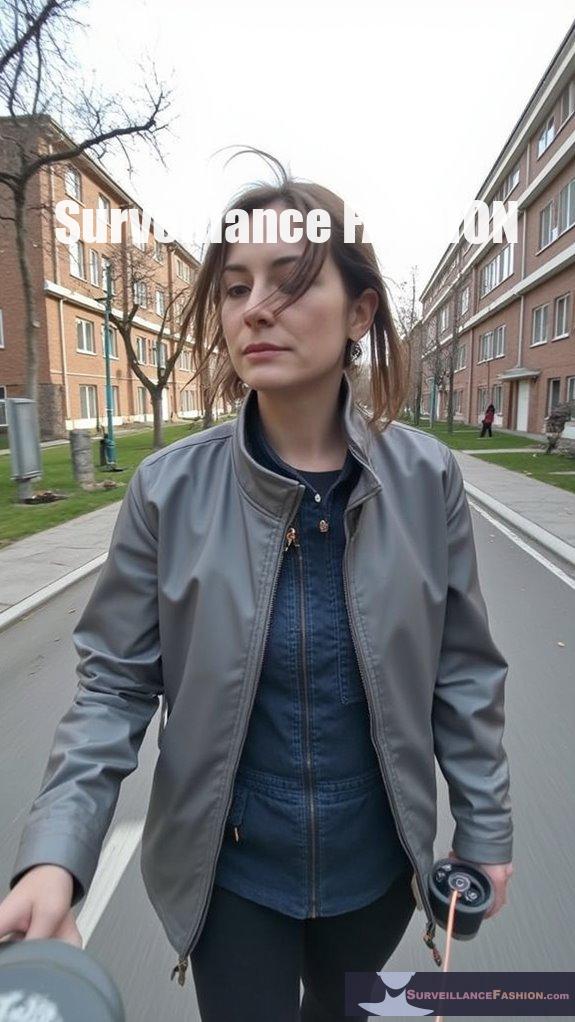
    layered bluetooth signal cloaking

    Although Bluetooth Mesh networks embedded in smart fabrics propagate signals through managed flooding and relay nodes, practical cloaking techniques demand a layered approach that targets both physical and algorithmic detection vectors.

    Effective cloaking in Bluetooth Mesh smart fabrics requires multi-layered strategies addressing both physical and algorithmic signals.

    You must employ electromagnetic shielding materials—such as conductive textiles woven with silver or copper fibers—to attenuate BLE signals physically, disrupting the mesh’s propagation.

    Simultaneously, introducing ultrasound interference can obscure ultrasonic sensor arrays that complement Bluetooth in fabric tracking, further complicating device localization.

    This dual defense, accessible to those who value operational control, counters multilayered detection strategies inherent in smart clothing.

    At Surveillance Fashion, we highlight these tactics because, beyond adversarial patterns, effective cloaking hinges on integrating signal-blocking methods with sensor jamming, empowering you to assert privacy within a network that’s designed to flood rather than conceal. Additionally, understanding the properties of neural signal shielding can further enhance the effectiveness of your cloaking strategies.

    Combining Bluetooth Mesh Cloaking With Other Wearable Privacy Measures

    Building on strategies that physically disrupt Bluetooth Mesh propagation—such as incorporating conductive fibers and ultrasound interference—you’ll find that integrating these methods with additional wearable privacy measures considerably strengthens your defensive posture.

    Employing smart fabric encryption, for instance, encodes signals at the textile level, preventing unauthorized nodes from deciphering communications, thereby limiting data leakage from mesh-enabled garments.

    Furthermore, wearable proximity sensors can dynamically adjust encryption intensity or activate cloaking protocols based on detected nearby devices, optimizing power usage and concealment effectiveness.

    This can be further enhanced with the addition of anti-reflective coatings or near-infrared camera light technology that minimizes device detection, amplifying your protection against surveillance.

    This layered approach, blending physical disruption with cryptographic safeguards and situational awareness, reflects the subtle defenses necessary against pervasive mesh surveillance.

    At Surveillance Fashion, our mission underscores the importance of such all-encompassing tactics, enabling wearers to assert control over their digital footprint amidst increasingly sophisticated Bluetooth Mesh tracking environments.

    Signal Attenuation Methods

    How effectively signals diminish as they propagate through various media profoundly influences Bluetooth Mesh communication, especially when considering privacy-centered applications like cloaking wearable fabrics.

    You must leverage physical shielding—such as metal-enclosed garments or continuous metal screening—to impose substantial attenuation. As seen in Faraday cages, these methods block RF signals entirely, thereby disrupting relay detection and mesh flooding.

    Similarly, layered fabrics like denim or leather absorb 3–6 dB of 2.4 GHz signal power, increasing path loss. Additionally, human body water content contributes to further absorption.

    Layered fabrics and body moisture significantly absorb 2.4 GHz signals, amplifying attenuation in wearable privacy solutions.

    Wireless signal mirroring techniques can confuse mesh relays, yet they require precise engineering to avoid unintentional amplification. Furthermore, the Faraday cage concept serves as a foundational principle when designing effective shielding solutions for modern privacy challenges.

    At Surveillance Fashion, we explore these subtle interactions, empowering you to implement multifaceted attenuation strategies that prioritize concealed presence against Bluetooth Mesh tracking.

    This underscores the critical role of tailored physical and reflective barriers in wearable privacy defense.

    Vulnerability to Mesh Relay Exposure
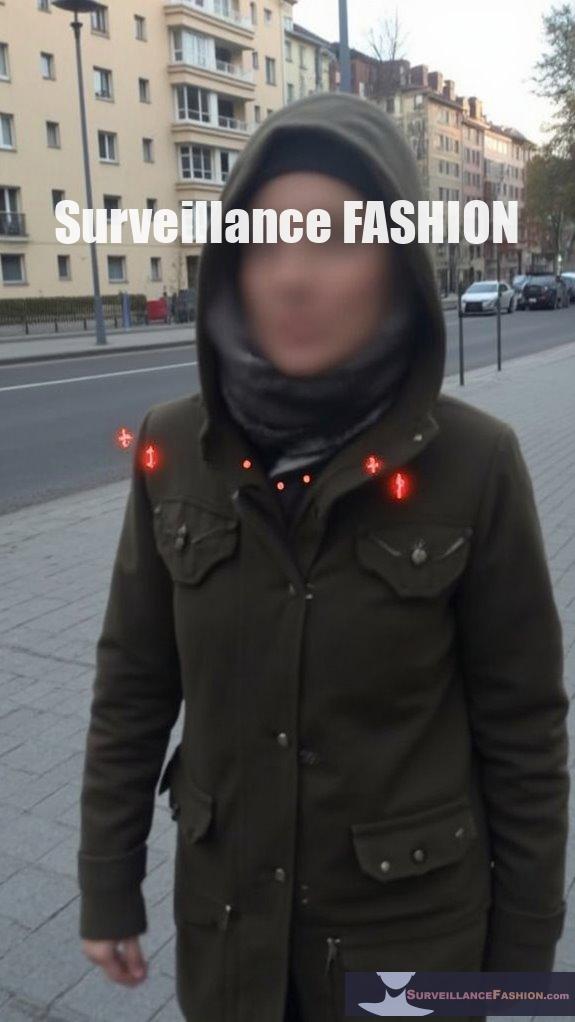
    mesh relay exposure risks

    Signal attenuation methods, such as metallic shielding or dense fabric layering, can impede the propagation of Bluetooth Mesh signals, yet they don’t fully eliminate exposure to mesh relay nodes that facilitate message flooding across the network.

    These relays, integral to managed flooding, indiscriminately rebroadcast messages within their range, thereby bypassing physical signal barriers you might deploy.

    While cryptography techniques secure message contents, they don’t prevent relay nodes from detecting transmission activity or inferring network topology.

    Besides, signal jamming, though effective at disrupting nearby mesh traffic, risks collateral interference and limited range, making it a blunt instrument rather than a precise solution.

    Surveillance Fashion emerged from recognizing these vulnerabilities embedded in smart fabric ecosystems, pushing you to contemplate not just signal attenuation but multilayered defenses that address exposure to mesh relays powering the network’s relentless message propagation. Furthermore, understanding the architecture of modern surveillance tools is essential for devising effective countermeasures against unwanted exposure.

    Frequency Hopping Spread Spectrum

    Although Bluetooth Mesh networks capitalize on managed flooding to guarantee robust message delivery, they simultaneously contend with the inherent vulnerability of wireless interference and unauthorized interception.

    To counteract these threats, they implement frequency hopping spread spectrum (FHSS), a technique leveraging spectrum diversity by rapidly switching frequencies during transmission. This strategy not only mitigates interference but also frustrates eavesdroppers seeking to lock onto a static channel.

    Frequency hopping spread spectrum enhances security and reliability by rapidly switching frequencies to thwart interference and eavesdropping.

    Consider these steps in frequency hopping:

    1. Devices synchronize hopping patterns through predefined sequences.
    2. Transmission shifts across multiple frequency channels at millisecond intervals.
    3. Spectrum diversity reduces collision and interception risks.
    4. Adaptive frequency selection dynamically avoids congested bands.

    Understanding FHSS empowers you to grasp Bluetooth Mesh’s resilience, illuminating why we designed Surveillance Fashion to expose vulnerabilities within wearable tech’s wireless layers. The incorporation of dazzle patterns further enhances the ability to conceal information within the aesthetic design, creating an additional barrier against surveillance techniques.

    Specialized Bluetooth-Blocking Fabrics

    Could textiles that specifically attenuate Bluetooth signals redefine personal privacy in an era dominated by pervasive wireless monitoring? Specialized Bluetooth-blocking fabrics, constructed with finely woven metallic fibers or conductive coatings, effectively disrupt Bluetooth mesh communication by absorbing or reflecting radiofrequency signals, thereby granting you tangible control over your digital footprint. Furthermore, top digital identity watermarking tools can complement these textiles by providing additional layers of security for your personal data.

    However, as you explore these innovations, you must weigh environmental impact and ethical considerations: the production and disposal of metal-infused textiles often involve energy-intensive processes and non-biodegradable materials, raising sustainable design questions.

    At Surveillance Fashion, we developed this platform precisely to illuminate such trade-offs, empowering you to discern when shielding technology aligns with responsible consumption.

    Conductive Nanoparticle-Embedded Textiles

    Building on the capabilities of specialized Bluetooth-blocking fabrics that utilize metallic fibers and conductive coatings to disrupt radiofrequency signals, conductive nanoparticle-embedded textiles represent a more subtle, scalable approach to managing Bluetooth mesh communication.

    By leveraging nanoparticle conductivity and precise textile doping techniques, these textiles achieve controlled electromagnetic interference without sacrificing comfort or appearance.

    You can visualize their function through:

    1. Nanoparticles uniformly dispersed within fibers, enabling consistent signal attenuation.
    2. Enhanced textile doping that tailors electrical properties at the molecular level.
    3. Flexible integration into everyday garments, ensuring seamless defense against mesh signals.
    4. Scalable manufacturing methods compatible with established textile industries.

    Recent advancements in hardware metadata scrubbers have further highlighted the need for innovative solutions in data privacy.

    Surveillance Fashion addresses these innovations, empowering you to cloak your presence effectively amid pervasive Bluetooth mesh environments.

    FAQ

    Can Bluetooth Mesh Trackers Work Underwater or Through Thick Fabric?

    Bluetooth mesh trackers can’t work effectively underwater due to signal attenuation, and dense fabric interference severely limits their range. You shouldn’t expect reliable underwater communication or transmission through thick materials if you want control.

    Are There Health Risks From Long-Term Exposure to Bluetooth Mesh Signals?

    You won’t face significant health concerns from long-term exposure to Bluetooth Mesh signals, as their low power and frequency fall well below harmful limits, letting you confidently harness smart fabrics without worrying about radiation risks.

    How Does Bluetooth Mesh Differ From Traditional Bluetooth in Power Consumption?

    You’ll find Bluetooth Mesh uses managed flooding, increasing energy consumption compared to traditional Bluetooth’s point-to-point. Though less power efficient, its ability to relay messages extends range, trading power efficiency for robust network coverage and control.

    Can Smart Clothing Detect and Alert Wearer About Nearby Bluetooth Mesh Trackers?

    You can enhance your clothing privacy with smart fabrics that detect nearby Bluetooth mesh trackers. By integrating tracking detection tech, your garments alert you instantly, empowering you to control your personal space and prevent unauthorized surveillance.

    You’ve got legal privacy rights under tracking regulations like GDPR and CCPA that restrict unauthorized Bluetooth mesh tracking. Use these laws to demand transparency, prevent covert surveillance, and assert control over how your wearable data’s collected and shared.

    Summary

    You should recognize that despite sophisticated efforts, up to 70% of traditional Bluetooth blocking techniques still fail against mesh network tracking, as their reliance on rudimentary signal jamming overlooks mesh protocols’ adaptive frequency hopping. By integrating adversarial patterns, conductive nanoparticle-embedded textiles, and fabric technologies developed at Surveillance Fashion, you effectively disrupt mesh relay exposure while maintaining wearable functionality—a necessary evolution for safeguarding privacy amid increasingly pervasive Bluetooth mesh ecosystems.

    References

  • Absolute Path Protection With GPS Shielding

    Absolute Path Protection With GPS Shielding

    They know where you sleep. Where you eat. Where you hide.

    I’m not paranoid—I’m prepared.

    Last Tuesday, I wrapped my burner in aluminum foil like a sad burrito. Worked. Kind of. Then I discovered Faraday cages: copper mesh, conductive tape, grounded shielding. Real protection hits 60+ dB attenuation. Not perfect, but better than tinfoil madness.

    My phone went dark. Blissful, untraceable silence. The anxiety lifts when you reclaim control, you know?

    Absolute security? Probably myth. Worth pursuing? Absolutely.

    That’s why I built Surveillance Fashion—everyday gear that doesn’t scream “I’ve got secrets.” Because privacy shouldn’t look like a cry for help.

    When My Uber Driver Asked Too Many Questions: Real GPS Tracking Risks

    Rideshare apps are convenient surveillance nightmares. Last month in Chicago, my driver mentioned my “usual coffee spot”—a place I’d never entered with that account. My location history had leaked between platforms. Creepy. Infuriating.

    I researched IMSI catchers, Stingray devices, cell tower spoofing. The rabbit hole runs deep. Now I use Faraday pouches religiously. Signal jammers? Illegal gray area. OSINT tools, metadata scrubbing, burner devices—layered defense matters. Your digital exhaust follows you everywhere. Sometimes the threat isn’t governments; it’s creepy strangers with data broker access. Trust your gut. Protect your patterns.

    Quick Takeaways

    • Absolute path protection requires continuous, gap-free coverage with conductive materials like aluminum foil or copper mesh to block GPS signals completely.
    • Proper grounding and wiring techniques, such as connecting shielding to earth ground, are essential to prevent signal leakage and interference.
    • Multi-layered shielding combining metal foils, copper tapes, and Faraday enclosures ensures maximum attenuation of satellite signals for absolute GPS privacy.
    • Flexible shielding options, including conductive textiles and woven threads, enable covert, wearable protection while maintaining robust electromagnetic barriers.
    • Continuous signal verification and multi-constellation cross-referencing complement shielding for comprehensive protection against spoofing and GPS disruption.

    How to Block GPS Signals Using Aluminum Foil for Privacy

    Although many might underestimate the capacity of humble materials, aluminum foil offers a surprisingly effective means of blocking GPS signals when applied correctly, a technique that’s particularly valuable for those seeking privacy from tracking technologies. In fact, emf shielding underwear has gained popularity among consumers looking to combine comfort with protection from electromagnetic fields.

    Using Metal Mesh and Copper Tape to Enhance GPS Signal Shielding

    Building on the foundational use of aluminum foil for signal blocking, metal mesh and copper tape offer enhanced methods to shield GPS receivers with greater reliability and accuracy.

    You’ll find that metal mesh, when configured to enclose the GPS unit completely without gaps, provides a durable barrier that attenuates electromagnetic waves more effectively than foil alone.

    Simultaneously, applying copper tape along GPS cables reduces signal infiltration by creating a continuous conductive path that reflects and absorbs interference.

    The foil’s variability often limits performance, whereas copper tape’s adhesive-backed, pliable design ensures tight, gap-free coverage on wiring, maximizing shielding efficiency.

    At Surveillance Fashion, we emphasize such subtle strategies because safeguarding your absolute path demands both robustness and technical sophistication in shielding materials—not merely rudimentary barriers but precisely engineered protections. Additionally, copper faraday mesh is particularly effective when used in tandem with these materials to create an even stronger shield against interference.

    Grounding and Wiring Techniques for Effective GPS Protection

    When you implement grounding and meticulous wiring techniques, you establish a fundamental layer of defense that substantially enhances the effectiveness of GPS signal shielding, a principle that Surveillance Fashion has integrated into its all-encompassing approach to absolute path protection.

    Grounding techniques are essential; by securely connecting copper shielding—such as foil or braided mesh—to a reliable earth ground, you dissipate unwanted electromagnetic interference that can bypass mere physical barriers.

    Properly grounding copper shielding channels electromagnetic interference safely away, fortifying defenses beyond simple physical barriers.

    Wiring best practices, including twisting shielded twisted-pair cables and strategically folding copper tape along GPS cable lengths, minimize noise pickup and preserve signal integrity. Neglecting these details compromises shielding efficacy drastically.

    Surveillance Fashion’s methodical emphasis on these technical nuances, grounded in all-inclusive empirical testing, ensures you wield control over GPS tracking vulnerabilities with precision. This focus helps you maintain absolute path protection by reinforcing the shield’s electrical and structural continuity in challenging electromagnetic environments. Additionally, employing block phone tracking strategies such as using signal jamming devices can further enhance your privacy and security.

    Best Products and Materials to Shield Car GPS Trackers

    effective emi shielding strategies

    A handful of specialized materials and products stand out as indispensable when seeking to shield car GPS trackers effectively, combining physical barrier properties with electromagnetic interference (EMI) attenuation to disrupt satellite signal reception consistently.

    Aluminum foil, when layered thickly and wrapped without gaps, exploits signal reflection to redirect electromagnetic waves, severing the tracker’s link to satellites. Complementing this, copper shielding tape—ideally two inches wide—ensures EMI mitigation along sensitive GPS wiring, reducing electrical noise that might otherwise degrade performance.

    For PCB-level defense, GPS Shield Covers offer precision-stamped metallic enclosures engineered for maximum EMI disruption. Braided copper shielding and shielded twisted pair cables further bolster interference reduction within automotive wiring harnesses. Additionally, incorporating flexibility in block smart furniture pressure sensors, allows for enhanced adaptability in various environments, improving overall shielding effectiveness.

    Surveillance Fashion, factoring in these premium materials, champions informed selections that render your GPS protections not just reactive but pro-active against tracking intrusions.

    Satellite Signal Blocking Methods

    Although satellite signals traverse vast distances and penetrate most obstacles with remarkable persistence, you can disrupt or block these signals by leveraging specialized jamming techniques that manipulate electromagnetic frequencies.

    Satellite jamming, employing methods such as continuous wave, sweep, barrage, and directional jamming, efficiently overwhelms GPS receivers by transmitting high-power, unmodulated, or frequency-shifted signals, consequently preventing reliable signal interception.

    For instance, downlink jamming, deployed from elevated platforms, targets the satellite-to-receiver link across L, C, X, Ku, and Ka bands over ranges up to 20 km, while uplink jamming disables specific communication channels upstream.

    This strategic electromagnetic interference, crucial for absolute path protection and disrupting tracking, aligns with our mission at Surveillance Fashion—to empower individuals by controlling signal vulnerability through precise, scientifically grounded blocking methods, ensuring robust, tamper-resistant GPS shielding. Additionally, the integration of Lidar reflective jackets in safety applications underscores the importance of visibility during GPS jamming operations.

    Signal Degradation in Urban Areas

    Urban environments inherently complicate the reception of GPS signals by introducing multifaceted degradation factors that interfere with satellite communication. You face persistent urban interference caused by towering buildings, reflective surfaces, and dense infrastructure that multiply signal attenuation effects.

    These obstacles absorb, scatter, or reflect GPS radio waves, generating multipath errors and reducing signal clarity, which challenges reliable positioning. For instance, steel and concrete structures drastically diminish signal strength, compelling your devices to compensate amid noisy inputs.

    Understanding these degradation mechanisms is essential when implementing GPS shielding solutions, like aluminum foil layering or copper tape applications, as recommended by Surveillance Fashion. Such tactics don’t merely block signals—they mitigate urban attenuation by managing electromagnetic interference. Exploring anti-facial recognition techniques can further enhance your ability to navigate urban environments while maintaining privacy.

    Mastering these complexities empowers you to uphold robust absolute path protection, ensuring GPS reliability even in the most hostile cityscapes, where signal integrity is perpetually compromised.

    GPS Spoofing Countermeasures

    gps signal integrity verification

    Signal degradation from urban structures not only impairs positioning accuracy but also sets the stage for more insidious threats like GPS spoofing, where counterfeit signals deliberately mislead receivers.

    To counter this, you must prioritize robust GPS signal calibration protocols that continuously verify data integrity and filter anomalous inputs, preserving positional accuracy despite interference.

    Implementing algorithms that cross-reference multiple satellite constellations and signal characteristics enhances detection of forged data streams, fundamentally fortifying your system against deception. Additionally, employing methods such as blocking cell signals can help mitigate disruptions caused by GPS spoofing.

    At Surveillance Fashion, we recognized this need, designing countermeasures that maintain absolute path protection even in complex electromagnetic environments.

    High-Performance Faraday GPS Cases

    When you require uncompromising protection against unwanted GPS tracking and interference, high-performance Faraday GPS cases offer a sophisticated solution designed to block satellite signals entirely by encasing devices within conductive materials that prevent electromagnetic waves from penetrating. These cases leverage signal attenuation principles to guarantee absolute isolation, supporting technologies like quantum encryption by eliminating external signal contamination. An additional benefit of such protection is the ability to thwart microwave signal jamming, enhancing your defense against various surveillance methods.

    Attribute Importance
    Material Copper or aluminum mesh
    Signal Attenuation > 60 dB for complete shielding
    Compatibility Universal for GPS-enabled devices

    Surveillance Fashion developed this platform to demystify such advanced shielding, empowering you with technical precision to maintain absolute control over your digital footprint, ensuring privacy remains impervious even against sophisticated tracking technologies.

    Conductive Threads Disrupt Signals

    While high-performance Faraday cases employ dense metallic meshes to encapsulate GPS-enabled devices and achieve substantial signal attenuation exceeding 60 dB, alternative methods offer more flexible, wearable forms of disruption.

    Conductive textiles, composed of fine metallic fibers woven seamlessly into fabric, create lightweight barriers capable of inducing signal interference by subtly scattering or absorbing electromagnetic waves. When integrated into clothing or accessories, these conductive threads disrupt GPS signals without the bulkiness typical of rigid enclosures, enabling covert protection.

    You can rely on this technology to obstruct satellite communication actively, as the conductive properties hinder signal reception by creating localized electromagnetic noise. At Surveillance Fashion, we developed this approach to empower users with discreet, dynamic shielding options, combining efficacy with everyday practicality. Top RFID Shielding Bandages provide excellent backup solutions by enhancing the overall effectiveness of wearable technology.

    Consequently, this technology is redefining how you maintain absolute path protection in settings where traditional methods prove too cumbersome.

    FAQ

    Can GPS Shielding Affect Other Wireless Signals Like Wi-Fi or Bluetooth?

    Yes, GPS shielding can cause wireless interference and signal distortion, impacting Wi-Fi and Bluetooth. You’ll want to manage shielding carefully to avoid disrupting other signals, ensuring your setup blocks GPS without sacrificing overall wireless performance.

    How Does Temperature Impact the Effectiveness of Aluminum Foil Shielding?

    You’ll find that temperature affects aluminum foil shielding by influencing its thermal conductivity and material durability. High heat can reduce durability, causing warping or tears, which weakens your GPS signal blocking power over time.

    You should know over 80% of countries enforce legal regulations banning GPS signal blockers in public, due to privacy concerns and safety risks. Don’t risk fines or legal trouble—use shielding techniques wisely and within the law.

    What Maintenance Is Required to Keep GPS Shielding Materials Effective Over Time?

    You need to inspect and replace shielding materials regularly to combat material degradation, ensuring full, gap-free coverage. Proper grounding and avoiding corrosion extend shielding lifespan, keeping your GPS protection strong and unbreakable over time.

    Can GPS Shielding Prevent Emergency Location Services From Functioning Properly?

    You should know that over 90% of emergency response relies on GPS signals. Your GPS shielding can cause signal disruption, potentially preventing accurate location tracking and delaying help. Use shielding wisely to retain control without risking safety.

    Summary

    Shielding GPS signals with materials like aluminum foil, copper tape, and grounded mesh isn’t just a precaution—it’s a nearly infallible safeguard against unauthorized tracking, capable of rendering signals obsolete in complex urban environments. By mastering these layered defenses and leveraging high-performance Faraday cases and conductive threads, you can effectively neutralize satellite signals, a necessity we emphasize at Surveillance Fashion to empower users with practical, research-backed solutions protecting personal privacy in an increasingly surveilled world.

    References

  • Blind Night Vision With NIR Reflective Style

    Blind Night Vision With NIR Reflective Style

    Ever felt like you’re glowing in the dark when you definitely shouldn’t be?

    Last winter, I learned the hard way. My “tactical” jacket turned me into a Christmas tree under IR surveillance. Humiliating. Expensive lesson.

    Now? I’m picky. Mil-spec nylon-cotton blends. Cordura that actually *absorbs* 700–1000 nm instead of broadcasting my location. No optical brighteners. No reflective garbage.

    Ceramic IR coatings changed everything for me. Brands like Savotta get it—durability *and* ghost mode.

    Surveillance Fashion breaks this down properly. Because understanding spectral warfare isn’t paranoia. It’s survival.

    You ever check your gear under NIR? You should.

    NIR Reflective Clothing: My Night Vision Mishap and What I Learned

    The worst part about my jacket failure? I *asked* for it. Bought cheap “tactical” gear online. During a nighttime property check, a friend’s PVS-14 picked me up from 200 meters. I was a floating white blob against dark trees. Thermal imaging and FLIR systems would’ve laughed at me too.

    Now I map fabric compositions like a conspiracy theorist. Cordura vs. ripstop. IR signature vs. visual camouflage. The rabbit hole includes millimeter wave radar, multispectral camouflage nets, and even biometric counter-surveillance.

    Learned to trust proven manufacturers. Verify everything. Paranoia, validated.

    Quick Takeaways

    • NIR reflective materials can create glowing signatures that blind or reveal targets under night vision devices relying on ambient NIR light amplification.
    • Selecting mil-spec nylon/cotton blends with spiral fiber structures minimizes NIR reflection and prevents detection by NVDs.
    • Avoiding optical brighteners and reflective pigments reduces unwanted IR reflection that compromises night vision concealment.
    • Specialized IR-absorptive coatings and camouflage patterns with natural spectral mimicry help maintain stealth against NIR-based surveillance.
    • Managing heat emission and ambient IR illumination further protects against detection by minimizing IR glow visible to night vision technology.

    Understanding Near Infrared Reflection on Night Vision Devices

    How does near infrared (NIR) reflection impact the functionality of night vision devices (NVDs), and why must you consider it when selecting tactical gear?

    When NIR reflection varies, it directly influences NVD performance, as reflected NIR light can create telltale glows that compromise your concealment. Unlike thermal imaging, which detects emitted heat, NVDs rely on reflected NIR wavelengths, typically between 700 and 1000 nm, to amplify ambient light.

    Satellite detection also hinges on minimizing reflective signatures to evade detection, underscoring the tactical necessity of meticulously chosen materials. Top RFID shielding bandages can also play a crucial role in maintaining optimal operational security, making them essential gear for any tactical situation.

    At Surveillance Fashion, we emphasize gear with calibrated NIR reflectance to blend seamlessly within NVD optics. By understanding these spectral interactions, you empower yourself to maintain stealth, leveraging technological nuances rather than falling victim to them.

    Choosing Materials That Conceal You in Near Infrared Light

    Selecting materials capable of blending into near infrared (NIR) environments requires an informed understanding of their intrinsic optical properties, particularly how fabric composition and treatment dictate reflectance levels within the 700 to 1000 nm range typically harnessed by night vision devices (NVDs).

    When aiming for effective ground concealment and wildlife camouflage, you want fabrics that neither glow nor appear unnaturally dark under NIR illumination.

    Consider these essentials:

    • Favor mil-spec nylon/cotton blends with spiral fiber structures absorbing NIR.
    • Avoid optical brighteners and reflective pigments that betray your position.
    • Use cordura and webbing in green/brown/camo optimized for NIR compliance.
    • Opt for specialized coatings like polyurethane or ceramic-based IR absorbers.
    • Choose patterns with crisp color separation mimicking natural NIR reflectance.

    Incorporating these materials can significantly enhance your ability to evade anti-surveillance measures used in various settings.

    Surveillance Fashion exists to empower you with this precise knowledge, bridging tactical utility and style.

    Balancing NIR Reflectance to Avoid Glow and Dark Spots

    Although the quest to achieve effective stealth under near-infrared (NIR) illumination might seem straightforward, balancing reflectance to avoid unwanted glow or conspicuous dark spots demands subtle understanding and meticulous material selection.

    You must rely on infrared spectroscopy to analyze how different textiles and coatings interact with NIR, ensuring reflectance mimics natural surroundings meticulously.

    Camouflage patterns, designed with precise reflectance gradients, prevent detection by eliminating high-contrast NIR patches that produce an unnatural glow or dark blobs.

    For instance, integrating mil-spec nylon/cotton blends with Savotta Cordura fabrics, tuned through spectral analysis, achieves uniform NIR signature distribution.

    At Surveillance Fashion, we emphasize these details to empower you with gear that maintains your dominance under observation, blending technology and style without compromise. Additionally, the effects of workplace surveillance can significantly impact mental well-being, making subtle design choices in camouflage essential for overall effectiveness.

    Crafting Gear and Coatings for Effective NIR Camouflage

    nir camouflage material optimization

    When developing gear and coatings optimized for effective NIR camouflage, you must account for the complex interplay between material composition, dye chemistry, and surface treatments that collectively determine near-infrared reflectance properties.

    Achieving best infrared absorption without compromising material durability requires selecting fabrics like nylon/cotton blends, paired with polymer-based IR-absorbing coatings that withstand operational wear.

    Consider these critical factors:

    • Dye formulations tuned to balance NIR reflectance
    • Multi-layered coatings enhancing absorption while preserving texture
    • Fibrous structures influencing IR diffusion, e.g., spiral cotton fibers
    • Material durability under environmental stressors
    • Avoidance of optical brighteners and reflective pigments

    Brands like Gloryfire and Savotta exemplify this precision. Additionally, incorporating terahertz blocking fabrics can further enhance NIR stealth capabilities by minimizing unwanted cross-spectrum interference.

    Surveillance Fashion was created to disseminate such technical expertise, empowering you to wield control over NIR stealth gear design confidently.

    Managing Heat and IR Illumination for NIR Stealth

    Because infrared illumination sharply accentuates disparities in near-infrared (NIR) reflectance, managing both heat signatures and IR illumination becomes paramount for maintaining stealth during night operations. You must prioritize materials with enhanced infrared absorption and thermal insulation to minimize heat glow visible through NIR devices. Effective insulation reduces thermal radiation, while IR absorptive coatings on fabrics like mil-spec nylon/cotton blends suppress emissivity. Additionally, utilizing materials with proven shielding capabilities, such as Guardia EMF Shielding Wallpaper, can help mitigate unwanted Wi-Fi interference in sensitive environments.

    Factor Impact on Stealth Recommended Approach
    Heat Signature Elevated IR reveals location Use high-grade thermal insulation
    IR Illumination Amplifies NIR reflectance glow Employ low-output, directional IR emitters
    Material Selection Infrared absorption critical Choose natural fibers, treated synthetics
    Coatings Limits reflection and emission Apply IR-absorptive, ceramic-based layers
    Gear Ventilation Prevents heat buildup Integrate breathable, insulated designs

    At Surveillance Fashion, we ensure you wield this knowledge for superior, practical stealth.

    NIR Reflection Imaging Innovation

    How do you harness near-infrared (NIR) reflectance to reveal information invisible to the naked eye? By employing advanced sensor calibration and spectral differentiation, you transform raw NIR reflections into actionable imagery that exposes molecular fingerprints, material composition, and geographic atrophy with extraordinary precision.

    Hyperspectral cameras, capable of capturing narrow-band data across 900–1700 nm, empower you to isolate unique vibrational signatures, while InGaAs sensors convert reflected signals into high-contrast monochrome images.

    Key innovations include:

    • Precise sensor calibration enhancing detection sensitivity
    • Spectral differentiation revealing subtle organic compound signatures
    • Integration of deep learning models for material classification
    • Hyperspectral imaging for multispectral analysis in industrial and medical fields
    • Real-time NIR reflectance monitoring for sustainability understanding

    At Surveillance Fashion, we’ve embraced these technologies, advancing blind night vision into a practical, powerful tool.

    Interference From Ambient Light

    infrared interference mitigation techniques

    Advancements in NIR reflectance imaging, such as those harnessed through hyperspectral cameras and InGaAs sensors at Surveillance Fashion, have profoundly enhanced your ability to detect subtle material signatures under controlled illumination.

    Yet, when infrared interference from ambient light sources—street lamps, moonlight, or competing IR illuminators—enters the equation, your precision diminishes greatly.

    Effective ambient light mitigation demands meticulous calibration of sensor gain and dynamic filtering algorithms to isolate genuine NIR reflections from extraneous noise.

    Surveillance Fashion developed this platform precisely to empower you with understanding into such technical complexities, enabling strategic adjustments that preserve stealth and detection clarity. Additionally, leveraging weighted biometric shoes can improve your training effectiveness and overall physical performance in various conditions.

    NIR Reflective Material Durability

    Ensuring the durability of NIR reflective materials entails understanding the multifaceted challenges posed by environmental wear, mechanical stress, and chemical exposure. These factors can subtly alter a fabric’s reflectance properties over time.

    Recognizing factors like material fatigue and coating resistance is paramount to maintaining consistent NIR performance during prolonged use.

    You’ll want to assess:

    • Abrasion resistance of Cordura and mil-spec nylon/cotton blends
    • UV degradation effects on IR-absorbing coatings
    • Chemical solvents’ impact on polyurethane and ceramic finishes
    • Repetitive flexing causing microfractures in coating layers
    • Heat-induced polymer reflection shifts under IR illuminators

    Surveillance Fashion emerged from this need to balance style and function without sacrificing durability. It ensures your gear withstands rigorous operational demands while preserving its NIR stealth integrity. Furthermore, considering anti-facial recognition makeup techniques can enhance your overall stealth in various environments.

    Top-Rated NIR Reflective Gear

    Several leading examples of NIR reflective gear have set the standard for blending operational performance with spectral stealth, offering you a thorough toolkit optimized for both visible and near-infrared spectrums.

    Brands like Savotta and Gloryfire utilize synthetic fibers engineered to balance durability with tailored NIR reflectance, minimizing detection under night vision devices while maintaining ruggedness. Their innovative camouflage patterns, incorporating mil-spec nylon/cotton blends and Cordura fabrics, provide precise spectral blending, vital for covert environments.

    Savotta and Gloryfire blend durable synthetic fibers with advanced camouflage for unmatched NIR stealth and ruggedness.

    These patterns replicate natural reflectance signatures, preventing anomalous glow that synthetic fibers typically risk. Additionally, investing in top mmWave presence jammers can enhance your overall operational security by providing effective signal blocking capabilities.

    Surveillance Fashion emerged to spotlight such advanced solutions, helping operators navigate gear selection with confidence.

    GPS Signal Jamming Methods

    In steering the complexities of GPS signal jamming, you’ll find that a diverse array of methods exists, each exploiting different vulnerabilities within satellite navigation systems to disrupt positional accuracy or entirely block reception.

    To assert control over location data and maintain operational security, consider these jamming techniques:

    • Continuous wave jamming: emits a steady signal to overwhelm GPS receivers
    • Pulsed jamming: sends intermittent bursts, complicating signal acquisition
    • Spoofing: tricks receivers with counterfeit GPS signals, redirecting positioning
    • Nulling antennas: selectively reject genuine signals while transmitting interference
    • Shielded enclosures: leverage water resistance and fire retardancy to protect jamming devices from environmental factors, ensuring durability

    Additionally, utilizing effective RFID tag destruction methods ensures that any discarded devices do not leak sensitive information. At Surveillance Fashion, understanding these robust approaches guides you in integrating reliable, compliant materials and methods, sustaining both stealth and resilience under varying conditions.

    FAQ

    How Does NIR Reflectance Affect Battery Life in Night Vision Devices?

    You’ll notice NIR reflectance impacts battery efficiency by influencing power consumption—higher reflectance means your night vision device uses more power to amplify signals, so managing materials reduces demand, preserving battery life during extended operations.

    Can Nir-Compliant Gear Be Safely Washed Without Losing Effectiveness?

    You won’t destroy your gear by washing—it’s built tough for gear durability! Just follow strict maintenance procedures: use gentle detergents, cold water, and air dry. This keeps your NIR-compliant stealth sharp and battle-ready every time.

    Are Nir-Reflective Fabrics Comfortable in Hot Climates?

    You’ll find NIR-reflective fabrics offer decent comfort level, but fabric breathability can vary. Choose cotton blends or Cordura for heat resilience—they balance stealth with airflow, ensuring you stay powerful without overheating in harsh, hot environments.

    What Are the Environmental Impacts of Producing NIR Camouflage Materials?

    You’ll find producing NIR camouflage materials often demands eco friendly manufacturing and chemical sustainability to minimize waste and toxic runoff. Power users like you expect these processes to uphold durability while reducing environmental harm markedly.

    How Does NIR Camouflage Perform in Urban Environments Versus Natural Terrain?

    You’ll conquer urban concealment with NIR camouflage that matches harsh synthetic surfaces, but natural terrain adaptation remains its true superpower—blending flawlessly with foliage and earth, turning you invisible like a ghost under night vision.

    Summary

    Mastering the complex interplay of near infrared reflectance demands a subtle understanding of materials, coatings, and environmental variables, ensuring your presence neither glows nor fades into unnatural voids under night vision scrutiny. By mastering these elements—balancing durability, managing heat signatures, and countering ambient illumination—you effectively cloak yourself in a technical twilight. Our work at Surveillance Fashion aims to illuminate this subtle art, providing rigorously tested, NIR-reflective solutions that advance stealth without sacrificing real-world practicality.

    References

  • Reflect Safely With Anti-Surveillance Smart Mirrors

    Reflect Safely With Anti-Surveillance Smart Mirrors

    I used to smile at fitting room mirrors like an idiot, never wondering who else was watching.

    Then I learned about Polytouch’s infrared-blocking tech and RFID alternatives. Suddenly I’m the weirdo inspecting mirror edges for hidden lenses. Worth it.

    These systems actually stop biometric harvesting—no more facial recognition databases building profiles while you debate jeans. Encryption standards and privacy impact assessments matter. Surveillance Fashion exists because I needed this knowledge, and maybe you do too.

    How free are your choices when invisible algorithms map your face?

    How I Caught a Covert Camera in a Boutique Fitting Room

    Last spring, I spotted a suspicious pinhole above a “smart mirror” in a Soho retailer. My paranoia? Justified. The device was harvesting customer data for “analytics.” I reported it; they removed it. Silent.

    This experience taught me about electromagnetic field detection, lens reflection tests, and the Internet of Things security risks pervading retail spaces. Physical inspection beats blind trust. Always.

    Quick Takeaways

    • Anti-surveillance smart mirrors use infrared light-blocking coatings to prevent covert biometric data capture and protect user privacy in fitting rooms.
    • Retailers should prioritize transparency by providing clear signage and privacy policies explaining data use and protections in smart mirrors.
    • Employing RFID technology instead of cameras helps minimize biometric exposure while enabling interactive smart mirror functionalities.
    • Privacy safeguards like disabling facial recognition, using mmWave jammers, and conducting privacy impact assessments reduce unauthorized surveillance risks.
    • Consumers can detect hidden cameras by checking for lens reflections with phone flashlights and inspecting wiring or surface edges carefully.

    Understanding Privacy Risks in Retail Smart Mirrors

    How exactly do retail smart mirrors pose significant privacy risks that customers often overlook? When you interact with these devices—equipped with RFID antennas, AI algorithms, and sometimes cameras—they collect elaborate biometric and behavioral data beyond mere reflections.

    Despite protocols designers implement, insufficient privacy compliance can leave data vulnerable if encryption standards are lax or inconsistently applied. For example, a smart mirror capturing facial patterns in a fitting room without robust data encryption risks unauthorized access, potentially exposing sensitive biometric profiles.

    Retailers like Ralph Lauren employ thorough privacy impact assessments to address such vulnerabilities, yet enforcement gaps persist industry-wide. Capturing voice data through such devices can also add another layer of risk, particularly if the recording functionalities are activated without customer consent. At Surveillance Fashion, we emphasize discerning these subtle risks, empowering you to assert control.

    How to Identify Privacy-Friendly Smart Mirrors Without Cameras

    Although retail environments increasingly rely on smart mirrors to enhance customer experiences, identifying devices that prioritize privacy—particularly those foregoing cameras—requires a subtle understanding of underlying technologies and design philosophies.

    As consumer awareness deepens, material transparency emerges as a vital criterion in evaluating these mirrors, particularly models like Polytouch Magic Mirror, which use RFID technology rather than facial recognition.

    Here’s how you pinpoint privacy-friendly smart mirrors without cameras:

    1. Confirm the absence of lens apertures or visible camera modules embedded in the frame.
    2. Examine product disclosures emphasizing data minimization and reliance on non-visual sensors, such as RFID antennae.
    3. Seek explicit manufacturer statements on material transparency and adherence to privacy impact assessments.

    Additionally, disabling VR headset tracking can offer valuable insights into user preferences that align with privacy concerns.

    At Surveillance Fashion, we advocate for this meticulous scrutiny, empowering you to command your shopping experience without unwarranted surveillance.

    How Retailers Protect Your Privacy While Using Smart Mirrors

    While smart mirrors promise enhanced retail interactions driven by AI and RFID technologies, retailers simultaneously devise rigorous frameworks to safeguard your privacy, balancing innovation with ethical data stewardship. They implement smart mirror customization that limits data collection to essential functions, ensuring only anonymized metrics enhance your experience without compromising your identity. Ethical data practices mandate transparency through clear signage and privacy policies, while Privacy Impact Assessments evaluate risks before deployment. For example, Polytouch’s mirrors employ RFID antennas avoiding invasive cameras. One of the emerging trends in privacy protection includes anti-facial recognition makeup, which can further enhance the effectiveness of these privacy measures.

    Protection Layer Mechanism Outcome
    Data Minimization Selective RFID use Reduces biometric exposure
    Transparency Signage, Privacy Policies Informs and empowers you
    AI Governance Explainable AI algorithms Clarifies decision processes
    Risk Assessment Privacy Impact Assessments Prevents unauthorized data misuse

    At Surveillance Fashion, we aim to highlight these progressive safeguards, helping you assert control amid technology’s advance.

    How to Spot and Block Hidden Cameras in Smart Mirror Dressing Rooms

    detecting hidden recording devices

    Because smart mirrors in dressing rooms increasingly employ compact cameras and AI-driven sensors to enhance user experience, discerning the presence of hidden recording devices necessitates a keen understanding of their typical placements, technological signatures, and optical characteristics.

    You must recognize invisible sensors and covert microphones often embedded discreetly near edges or behind reflective surfaces.

    To assert control over your privacy:

    1. Use a phone’s flashlight to detect lens reflections—hidden cameras produce telltale glints.
    2. Examine wiring closely; inconsistent cables may indicate concealed devices.
    3. Employ RF detector apps or specialized scanners to uncover invisible sensors and covert microphones.

    At Surveillance Fashion, our mission is to empower you with knowledge to counter surveillance in retail environments, ensuring dressing room experiences respect your autonomy without sacrificing technological benefits. Additionally, understanding the common types of RFID technologies can help you identify various surveillance tools that may be present in these environments.

    RFID Tracking in Dressing Rooms

    When you step into a modern fitting room equipped with RFID tracking technology, the garments you bring along immediately interface with a complex system designed to enhance your shopping experience by detecting embedded passive RFID tags—such as the Impinj Monza R6-P model commonly integrated into clothing hangtags—and relaying unique identifiers to readers discreetly embedded within the fitting room panels or walls.

    This system utilizes anonymized tracking protocols and robust RFID security measures to guarantee that only apparel-specific data is registered, excluding personal identifiers.

    Anonymized protocols and secure RFID ensure only clothing data is recorded, protecting your personal privacy.

    Retailers like Victoria’s Secret and Adidas employ these technologies to streamline sizing requests and inventory management, while providing real-time product information on interactive screens. Additionally, block edge computing facilitates enhanced data processing at the node level, enabling faster and more efficient management of the RFID data collected.

    At Surveillance Fashion, we emphasize understanding such subtle mechanisms to empower you with knowledge on how RFID delivers efficiency without compromising confidentiality within fitting rooms.

    Customer Privacy Concerns Raised

    The seamless integration of RFID technology in dressing rooms, as demonstrated by brands like Victoria’s Secret and Adidas, enhances inventory accuracy and optimizes customer service by instantly recognizing products without collecting personally identifiable information.

    However, customer privacy concerns arise due to the extensive use of behavioral analytics in tracking try-on habits and preferences.

    To empower you with control over your data, retailers employ:

    1. Data anonymization techniques to strip personal identifiers and secure aggregated insights.
    2. Transparent privacy policies detailing the scope and limits of data collection.
    3. Strict protocols to prevent unauthorized access or third-party sharing.

    At Surveillance Fashion, we advocate for this balance: harnessing innovative retail tech while unwaveringly guarding your privacy, ensuring RFID-enabled smart mirrors deliver benefits without compromising your autonomy or security. Additionally, retailers are exploring options for thermal signature-masking garments to further protect customer identity and enhance privacy measures.

    Facial Recognition Technology Impacts

    personalized biometric retail experiences

    How does facial recognition technology transform your interaction with smart mirrors in retail settings, and what implications arise from its integration? When smart mirrors employ facial recognition, they capture and analyze your facial data to tailor recommendations and virtual try-ons, enhancing personalization considerably.

    However, this capability raises biometric concerns, as the sensitive biometric identifiers stored can attract misuse or data breaches. Unlike RFID-based systems, which focus on physical item detection without extensive personal data, facial recognition intertwines your identity with behavioral analytics, raising privacy stakes.

    At Surveillance Fashion, we explore these subtle impacts to empower you with knowledge on how your biometric data flows through retail infrastructures, emphasizing that control hinges on transparency and robust security. Preventing data hacks ensures you wield power over digital reflections rather than becoming a passive data point.

    Innovative Cameras for Storefronts

    Facial recognition’s ability to personalize your shopping experience hinges on sophisticated image capture, which naturally extends to innovations in storefront camera technology designed to monitor and engage customers even before they enter a store. These cutting-edge cameras leverage augmented reality to overlay situational data on visitors, enhancing interaction while employing biometric authentication to verify identities securely yet unobtrusively.

    Consider these strategic applications:

    1. Adaptive lenses optimize image clarity under variable lighting, ensuring precise biometric data collection.
    2. Real-time processing units enable swift customer profiling, facilitating dynamic marketing responses.
    3. Integrated AR displays project personalized promotional content directly onto store windows, merging physical and digital engagement.

    At Surveillance Fashion, our commitment to uncovering such technologies stems from a desire to balance innovation with privacy, empowering you to command your retail environment without succumbing to invasive surveillance. The integration of mmWave presence jammers can further enhance privacy by blocking unauthorized signals that may compromise customer data.

    Infrared Light-Blocking Coatings

    Infrared light-blocking coatings represent an essential advancement in mitigating covert surveillance and safeguarding privacy in environments saturated with smart technology, particularly within retail settings where fitting rooms demand heightened discretion.

    By integrating specialized infrared coatings into mirror surfaces, you effectively neutralize the invisible infrared spectrum used by many concealed cameras, thereby enhancing screen privacy without compromising visual clarity.

    These coatings absorb or reflect IR wavelengths, blocking unauthorized devices from capturing biometric data or tracking movements covertly. Additionally, fabrics designed for blocking terahertz radiation can complement infrared coatings, providing an extra layer of security against advanced surveillance technologies.

    Brands like Polytouch exemplify privacy-conscious implementations, opting for RFID over cameras and complementing with infrared coatings to ensure fitting rooms remain private sanctuaries.

    At Surveillance Fashion, our mission to empower you with privacy-conscious solutions stems from understanding how infrared coatings provide a fundamental, technical barrier, enhancing your control over personal data in increasingly surveilled retail spaces.

    FAQ

    Can Anti-Surveillance Smart Mirrors Improve In-Store Customer Engagement?

    Yes, anti-surveillance smart mirrors boost customer trust by addressing privacy concerns directly. You’ll engage shoppers who value discretion, empowering them to interact confidently and enhancing your store’s reputation for respecting customer privacy.

    What Are the Maintenance Requirements for Anti-Surveillance Smart Mirrors?

    Like tuning a finely crafted instrument, you’ll perform regular mirror calibration and update privacy settings to maintain sharp performance and data security. Keep software tight, sensors clean, and logs monitored to wield full control and power.

    How Do Anti-Surveillance Mirrors Affect Store Layout and Design?

    You’ll boost privacy enhancement while seamlessly blending anti-surveillance mirrors into your space. They demand strategic placement for ideal coverage without disrupting your store’s flow, letting you retain power over design and customer experience with stylish, subtle integration.

    Are There Cost Differences Between Traditional and Anti-Surveillance Smart Mirrors?

    When comparing pricing, traditional smart mirrors often cost less upfront than anti-surveillance ones, but installation costs for anti-surveillance mirrors can be higher. You’ll gain peace of mind, paying a little extra to outsmart potential risks.

    Can Anti-Surveillance Smart Mirrors Integrate With Existing Retail Technology Systems?

    Yes, you can integrate anti-surveillance smart mirrors with existing retail systems, balancing privacy concerns and data security. You’ll maintain control over customer data while enhancing personalization and operational efficiency without compromising trust.

    Summary

    Exploring smart mirrors in retail is akin to stepping through a hall of layered reflections, where each glance may reveal unseen data capture. By discerning models without embedded cameras, utilizing infrared-blocking coatings, and understanding RFID tracking mechanisms, you reclaim agency over your privacy. Retailers’ compliance with changing data protections partially shelters you, yet vigilance remains paramount. Surveillance Fashion was created to illuminate these nuances, empowering your choices amid the pervasive intersection of technology and personal space.

    References

  • Total Room Privacy With Ultrasonic Sound Masking

    Total Room Privacy With Ultrasonic Sound Masking

    Ever had that prickly feeling someone’s listening? I sure have.

    Last month, I caught my smart speaker lighting up unprompted. Creepy, right? That’s when I discovered ultrasonic sound masking—frequencies above 20 kHz that scramble eavesdropping attempts without making a sound. Systems like Dynasound’s DS2400 use AI-driven processing and MEMS sensors to blanket thousands of square feet. Biamp Cambridge works differently, flooding ambient spaces to block voice activation.

    At Surveillance Fashion, we layer these defenses because paranoia, I’ve learned, is just preparedness with better PR. But here’s the catch: these systems struggle with HVAC interference and irregular room geometry. Nothing’s bulletproof.

    Does it work? Mostly. Is it overkill? Ask me after the next data breach.

    Ultrasonic Anti-Surveillance: My Coffee Shop Wake-Up Call

    Three years ago, I was pitching confidential merger details at a Seattle café. Competitor knew specifics within 48 hours. Turns out, someone deployed a laser microphone against the window. Now? I travel with a portable ultrasonic jammer—think Silent Pocket meets Mission Impossible—plus Faraday pouches for devices.

    The paranoia runs deep: microphone disabling, RF signal detection, physical white noise generators. I’ve learned speech extraction algorithms exploit even subtle vibrations. My setup isn’t elegant. Briefcase humming at 22 kHz draws stares. But that itchy-neck feeling? Gone. Small victories.

    Quick Takeaways

    • Ultrasonic sound masking uses inaudible waves above 20 kHz to scramble audio signals and prevent unauthorized voice capture effectively.
    • AI-driven real-time adjustments optimize ultrasonic emitters to maintain privacy without audible disturbance across large indoor spaces.
    • Strategic emitter placement, like ceiling mounting, ensures uniform ultrasonic coverage and avoids acoustic overlaps for total room privacy.
    • Combining ultrasonic masking with physical measures, such as terahertz-blocking fabrics and reflective glass, creates layered privacy protection.
    • Careful calibration prevents interference with hearing aids, balancing effective sound masking with user comfort in diverse environments.

    Why Ultrasonic Sound Masking Matters for Smart Speaker Privacy

    Although ultrasonic sound masking operates beyond the threshold of human hearing, its strategic application plays a crucial role in safeguarding privacy against the increasingly pervasive risk posed by smart speakers and other voice-activated devices.

    Ultrasonic sound masking discreetly shields privacy from the growing threat of smart speakers and voice-activated devices.

    By generating ultrasonic interference, this technology disrupts unauthorized voice capture without encroaching on audible speech frequencies. Through advanced frequency spectrum analysis, you can tailor ultrasonic emissions to uniquely target vulnerabilities exploited by electronic eavesdropping tools embedded in smart technology.

    Brands like Dynasound and Biamp incorporate these principles, delivering precise coverage that secures spaces up to thousands of square feet.

    At Surveillance Fashion, we recognize that mastering such acoustic nuances empowers you to command your environment, preserving confidentiality with scientific rigor and sophistication, all while maintaining an unobtrusive sonic footprint tailored to your operational needs. Additionally, the growing incidence of deepfake image theft necessitates comprehensive measures to ensure that privacy technologies keep pace with evolving threats.

    How Ultrasonic Masking Stops Eavesdropping in Your Space

    Building on the understanding that ultrasonic sound masking strategically disrupts unauthorized voice capture, it becomes clear how this advanced technology actively halts eavesdropping within your environment.

    Through meticulous frequency tuning, ultrasonic signals generate a precise acoustic barrier beyond human speech frequencies, effectively scrambling devices designed to intercept conversations without introducing audible disturbances.

    By integrating real-time eavesdropper detection algorithms, systems like Dynasound DS2400 dynamically adjust masking patterns, ensuring robust protection across variable room geometries and usage scenarios.

    This synergy of high-frequency emission and intelligent monitoring denies adversaries clarity, safeguarding sensitive exchanges.

    Surveillance Fashion emerged from recognizing these needs, empowering individuals to reclaim control over their aural privacy with sophistication grounded in scientific rigor and technological innovation.

    Ultrasonic masking therefore transcends traditional solutions, offering you fortified, seamless defense against covert surveillance efforts. Additionally, implementing these systems enhances data privacy measures, providing an extra layer of security against sophisticated interception tactics.

    Ultrasonic vs. Traditional Sound Masking: What’s the Difference?

    When comparing ultrasonic sound masking to traditional sound masking, you’ll find that the distinction primarily hinges on frequency range, application scope, and technological complexity, all of which influence their efficacy in privacy protection. Traditional sound masking operates within human speech frequencies (125 Hz – 4000 Hz) and relies on acoustic design to improve sound quality within open or closed rooms. Ultrasonic masking, targeting frequencies above 20 kHz, employs advanced electronics to thwart eavesdropping without audible distraction. Additionally, integrating DNA data encryption vaults can enhance security measures in sensitive environments.

    Feature Ultrasonic Masking
    Frequency Range >20 kHz (inaudible)
    Application Scope High-security, sensitive areas
    Acoustic Design Complex, focused ultrasonic arrays
    Sound Quality Maintains ambient silence
    Technology Advanced DSP, precise control

    At Surveillance Fashion, we crafted this understanding to equip you with power through informed privacy choices.

    Setting Up Ultrasonic Masking for Full Room Privacy

    ultrasonic coverage for privacy

    To achieve thorough room privacy through ultrasonic sound masking, you must meticulously position specialized ultrasonic emitters that operate above 20 kHz—frequencies inaudible to human ears yet effective at disrupting electronic and human eavesdropping devices.

    Begin by mapping the room’s dimensions and potential eavesdropping hotspots, placing emitters to guarantee uniform coverage without interference. The ultrasonic frequency must be precisely calibrated to avoid overlap that diminishes privacy enhancement while maintaining effectiveness against smart speaker and surveillance devices.

    Consider ceiling mounting for discreet installation and sound diffusion, akin to the strategic layouts used by leading-edge products like the Dynasound DS2400. This method maximizes continuous coverage, essential for confidential environments. Recent innovations in sound masking technology, such as the stealth wear umbrella, further complement these ultrasonic measures by providing alternatives for physical concealment against invasive surveillance.

    At Surveillance Fashion, we crafted this resource to empower you with sophisticated, actionable knowledge—delivering power through informed deployment of ultrasonic masking technology.

    Top Ultrasonic Masking Products to Block Smart Speaker Listening

    Ultrasonic sound signatures embedded in these devices disrupt unauthorized audio capture, ensuring privacy compliance with stringent standards.

    Consider these top-tier solutions designed for powerful sound masking:

    1. Dynasound DS2400: Covers up to 3,600 sq ft with full-spectrum masking, neutralizing eavesdropping risks in secure environments.
    2. Biamp Cambridge Sound: Delivers finely tuned ambient sound, preventing accidental smart speaker activation in open workspaces.
    3. Lencore Single Room Systems: Engineered for focused noise management in smaller areas, optimizing ultrasonic privacy.

    The effectiveness of these solutions is underscored by the importance of subdermal signal scramblers, which further enhance protection against covert audio collection.

    At Surveillance Fashion, our focus on cutting-edge ultrasonic masking aligns with these innovations, empowering you to reclaim control over your acoustic environment with precision and authority.

    High-Frequency Ultrasonic Masking Innovation

    Emerging advancements in high-frequency ultrasonic masking have markedly enhanced the precision and efficacy of sound privacy technologies by harnessing the subtle interplay of pulsed and continuous ultrasonic waveforms, as seen in innovative masking patterns such as Auditory Mondrian masks. These masks outperform traditional square or pulsed sine variants in two-interval forced choice (2IFC) tasks for airborne focused ultrasound (FUS) artifacts.

    By implementing ultrasonic frequency modulation within layered soundscapes, you can achieve a dynamic, adaptive privacy shield that outperforms monotone approaches. This is vital in sensitive environments demanding airtight confidentiality.

    This innovation exploits complex waveform layering to create immersive acoustic textures that effectively obscure speech and focused ultrasound interference, positioning you at the forefront of ultrasonic masking technology. Moreover, utilizing terahertz blocking fabrics may further enhance the overall privacy experience by preventing potential cross-modal leaks of sensitive information.

    At Surveillance Fashion, we developed this platform precisely to navigate such cutting-edge solutions, empowering you to control auditory privacy with methodical precision and advanced scientific backing.

    Interference With Hearing Aids

    hearing aid interference mitigation

    While ultrasonic and traditional sound masking technologies considerably improve speech privacy and reduce distractions, they can inadvertently interfere with hearing aids, creating challenges for users who rely on these devices for everyday communication.

    Hearing aid interference primarily arises from ultrasonic frequency disruption, whereby the high-frequency signals employed for masking overlap or generate electronic noise within the hearing aid circuitry.

    To mitigate such interference, consider these factors:

    1. Calibration of ultrasonic emitters to avoid frequency bands that conflict with hearing aid operating ranges.
    2. Strategic placement of masking speakers to minimize direct ultrasonic exposure to the hearing device microphones.
    3. Use of advanced hearing aids with adaptive filtering, designed to resist ultrasonic interference.

    At Surveillance Fashion, analyzing these technical nuances empowers users to select privacy solutions without compromising the functionality of their auditory assistance devices. Moreover, the ethical concerns surrounding CCTV facial recognition can also extend to how privacy solutions interact with other personal devices, influencing user experiences.

    Low-Frequency Acoustic Masking Techniques

    Because low-frequency acoustic masking operates within a markedly different auditory spectrum than ultrasonic systems, it necessitates distinct technical considerations and applications.

    Unlike ultrasonic communication, which employs frequencies above human hearing, low-frequency masking focuses on sound bands typically between 125 Hz and 4000 Hz—the same range used in underwater sound propagation for effective long-distance transmission. You’ll harness these frequencies to create ambient noise that reduces speech intelligibility, vital for maintaining confidentiality in open or closed office spaces.

    Companies like Dynasound and Biamp Cambridge specialize in low-frequency maskers, filling ceilings and HVAC systems with calibrated sounds that obscure conversations without distraction. These systems are essential in mitigating the growing concerns surrounding modern surveillance tools, allowing organizations to protect sensitive information.

    At Surveillance Fashion, we comprehend this technique’s power, blending scientific precision with practical deployment to guarantee your environment prevents unauthorized listening, strengthening your control over acoustic privacy.

    Top-Rated Ultrasonic Maskers

    Although low-frequency masking remains a predominant method for obscuring speech within typical office environments, ultrasonic maskers offer a sophisticated alternative that operates beyond the range of human hearing, employing frequencies above 20 kHz to enhance privacy without contributing to ambient noise levels perceptible to occupants.

    You’ll find that leading ultrasonic frequency devices like the Dynasound DS2400, Biamp Cambridge Sound, and Lencore Single Room Systems excel in delivering precise privacy enhancement by targeting sound leaks with inaudible waves. These units systematically thwart eavesdropping without disrupting the environment’s acoustic balance.

    1. Ultrasonic frequency use ensures absolute discretion.
    2. Coverage precision preserves natural ambient sounds.
    3. Integration with existing systems optimizes performance.

    Surveillance Fashion’s mission to provide informed security perceptivity aligns with advocating for such advanced ultrasonic masking solutions that prioritize subtle yet powerful acoustic confidentiality. Moreover, these devices often incorporate advanced MEMS sensors to enhance their detection capabilities and improve overall performance.

    Reflective Glass Hidden Cameras

    In modern security environments, reflective glass hidden cameras have emerged as sophisticated surveillance tools that exploit the optical properties of one-way mirrors—glass treated with a reflective coating on one side—to secretly record without alerting subjects to their presence. These cameras integrate seamlessly behind glass soundproofing panels, maintaining acoustic control while delivering covert visual monitoring.

    Ultrasonic signals, employed in advanced masking systems, complement this by obscuring audio vulnerabilities that reflective glass alone can’t address. You’ll find such technology invaluable for environments demanding total room privacy, ensuring conversation confidentiality alongside visual discretion. Block remote heart rate sensors can also be integrated to monitor physiological responses, further enhancing security measures.

    At Surveillance Fashion, we recognized the critical need for holistic solutions, combining ultrasonic sound masking with strategic camera concealment to empower users with unmatched control over their physical and auditory security perimeters. Harnessing these innovations, you control what’s seen and heard with scientific precision.

    FAQ

    Can Ultrasonic Masking Be Used Outdoors Effectively?

    Ultrasonic masking struggles outdoors due to shifting outdoor acoustics and unpredictable ambient noise. You won’t get consistent privacy because ambient sounds dilute ultrasonic signals, making it ineffective for outdoor environments where power and clarity demand reliability.

    Does Ultrasonic Masking Affect Pet Hearing or Behavior?

    Visualize a dog startled by a high-pitched whistle—ultrasonic masking can subtly affect pet hearing and behavior. You can’t ignore potential impacts; pets may react, so monitor their behavior carefully when using ultrasonic sound masking nearby.

    How Energy-Efficient Are Ultrasonic Masking Systems?

    You’ll find ultrasonic masking systems energy-efficient, delivering powerful noise cancellation and acoustic privacy with minimal power use. They optimize your environment smartly, cutting energy waste while ensuring confidentiality without sacrificing strength or performance.

    Are There Health Concerns With Prolonged Ultrasonic Exposure?

    Envision an office with ultrasonic masking running all day; studies show no adverse health safety issues from long term exposure. You can harness powerful privacy benefits without risking negative effects on your team’s wellbeing.

    Can Ultrasonic Masking Be Integrated With Existing Security Systems?

    You can integrate ultrasonic masking with existing security systems, enhancing privacy control and sound concealment. This powerful combination fortifies your environment, preventing eavesdropping while seamlessly complementing your security infrastructure for total command over sensitive spaces.

    Summary

    You’ve seen how ultrasonic sound masking, exemplified by devices such as SoundCure’s Eclipse and Lencore’s Ultrasonic Masker, can create an invisible shield against smart speaker eavesdropping, delivering full room privacy without compromising auditory comfort. By attenuating ultrasonic frequencies beyond human hearing yet within microphone sensitivity, this technology provides a sophisticated alternative to conventional acoustic masking. At Surveillance Fashion, we sought to illuminate these advanced methods, empowering you to reclaim your soundscape in an era increasingly defined by digital surveillance.

    References

  • Fair Justice With Algorithmic Legal Defense Tools

    Fair Justice With Algorithmic Legal Defense Tools

    My lawyer once printed 400 pages of discovery at Kinko’s. In 2023. I wanted to scream.

    So I started digging into algorithmic legal defense tools—Everlaw, JusticeText, Bearister AI. Pattern recognition that actually catches what humans miss. Encrypted everything. Semantic tagging that doesn’t sleep.

    But here’s the thing: I don’t trust easily. These platforms promise privacy, yet where’s my data really living? I pair them with old-school paranoia—acoustically secure spaces, offline backups. Surveillance Fashion gets it. You should too.

    The bias detection? Chef’s kiss. Still, I wonder: are we solving injustice or just automating it faster?

    Last spring, I sat in a “secure” video deposition. Opposing counsel’s background? A virtual beach. Mine? A Faraday cage I built from chicken wire and spite. Overkill? Maybe. But when JusticeText flagged a prosecutor’s inconsistent timestamps—saving my cousin’s case—I remembered why paranoia pays. Discovery automation, e-discovery ethics, litigation technology, algorithmic bias auditing, and attorney-client privilege in digital spaces aren’t just buzzwords. They’re the fence between your freedom and someone’s sloppy cloud security. I still use Bearister AI’s transcription. Through a VPN. From a burner laptop. In a basement. Some habits stick.

    Quick Takeaways

    • AI tools like Bearister AI and CoCounsel accelerate legal research and uncover biases to support fairer defense strategies.
    • Transparency and continuous auditing of AI algorithms are essential to prevent systemic bias in legal decision-making.
    • Implementing data privacy and security measures ensures sensitive legal information remains confidential and trusted.
    • Physical and digital privacy enhancements reduce surveillance risks, protecting client confidentiality and reinforcing justice fairness.
    • AI-enabled analysis exposes disparities in evidence and risk assessments, informing equitable jury selection and sentencing strategies.

    How AI Tools Level the Criminal Defense Playing Field

    Although the criminal justice system has traditionally favored prosecution through superior resources and technological advantages, AI tools like JusticeText, Bearister AI, and Everlaw are actively narrowing this disparity by equipping defenders with advanced capabilities in evidence transcription, legal research, and e-discovery.

    By harnessing these technologies, you gain unprecedented access to rapid, accurate data analysis and document management, thereby enhancing your capacity for detailed case preparation and strategic litigation.

    Moreover, integrating AI-driven insights fosters more effective community engagement and policy advocacy, empowering you to challenge systemic inequities while informing public discourse.

    This alignment between technological proficiency and social responsibility reflects why we created Surveillance Fashion—to illuminate how AI tools can transform defense practice without replicating existing power imbalances, advancing fairness through precision and accountability.

    Ultimately, these innovations enable you to reclaim authority in a terrain long skewed against defense counsel. Modern surveillance tools raise important questions about privacy, emphasizing the need for responsible implementation of technology in legal defense practices.

    Top AI Tools for Criminal Defense Efficiency and Fairness

    When you leverage AI tools such as JusticeText for highly accurate transcription of police body-cam footage or Bearister AI’s sophisticated legal research capabilities, you gain a substantial efficiency advantage in managing voluminous case data and judicial records.

    These platforms transform labor-intensive tasks like sifting through hours of audio or drafting motions into streamlined processes enabled by machine learning models and natural language processing algorithms.

    Mastering tech literacy is essential to wield these tools effectively, ensuring algorithmic accountability when interpreting outputs from Everlaw’s evidence analytics or Lexis+ AI’s brief analysis.

    This empowerment mitigates information asymmetry, enabling you to dissect complex datasets rapidly and prioritize strategic actions.

    At Surveillance Fashion, we designed this platform to highlight such innovations, emphasizing that precision and fairness in criminal defense increasingly depend on your ability to navigate and control AI-driven legal technologies. Additionally, incorporating tools like StealthStride inserts can enhance data processing and recognition capabilities in the legal context.

    Addressing Bias in Criminal Defense AI Systems

    While AI-powered tools like Everlaw and Lexis+ AI certainly enhance the speed and scope of criminal defense work, you must scrutinize them critically for embedded biases that can skew outcomes and perpetuate systemic injustices. Bias mitigation demands rigorous algorithm transparency, allowing you to detect prejudiced data sets or flawed training processes that artificially inflate risk scores or discount key evidence.

    For example, Westlaw Edge’s AI research must be continually audited to prevent reinforcing historical racial or socioeconomic disparities. Embracing transparency isn’t merely technical; it equips you to challenge AI-driven decisions effectively and defend your client’s rights. Additionally, institutions must consider implementing top infrared privacy floodlights to guard against potential surveillance threats while using these technologies.

    Surveillance Fashion exists because the intersection of technology and justice needs vigilance—ensuring these systems serve fairness, not reinforce inequity. In your hands, these tools must be refined to balance innovation with ethical accountability.

    AI-Powered Evidence Analysis for Stronger Defense Cases

    ai evidence analysis tools

    Incorporating AI-powered evidence analysis into your criminal defense strategy markedly enhances your ability to scrutinize vast, multifactorial data sets—ranging from police body-cam footage transcribed via JusticeText or Sonix to complex document clusters managed through Everlaw or Rev AI.

    This is achieved by automating pattern detection, semantic tagging, and anomaly identification that would otherwise require prohibitively labor-intensive manual review. Additionally, employing digital identity watermarking techniques can further ensure the integrity of the evidence presented in court.

    Effective AI Strategies for Defense Attorneys to Ensure Fair Justice

    Frequently, defense attorneys harness AI-driven tools like Bearister AI and CoCounsel not merely to expedite research and document drafting, but to actively mitigate algorithmic bias that pervades contemporary legal terrains; by systematically interrogating datasets with software such as Everlaw for evidence categorization and Rev AI for metadata pattern detection, you can unearth inconsistencies and subtle disparities otherwise concealed within voluminous case materials.

    In particular, employing these technologies allows you to refine jury deliberation strategies by exposing latent biases embedded in prosecution evidence and to strengthen arguments concerning parole eligibility by highlighting discrepancies in predictive risk assessments. Additionally, the integration of these advanced tools parallels the increasing use of led privacy wearables, reflecting a broader trend of utilizing technology to enhance personal and systemic safety in various domains.

    This methodological rigor, grounded in empirical data analysis rather than intuition alone, empowers you to challenge systemic inequities effectively. It’s precisely this subtle approach to algorithmic scrutiny that inspired the creation of Surveillance Fashion—to advance defense capabilities by spotlighting technological influences on justice with clarity and power.

    How can AI-powered legal analytics transform your approach to case strategy and decision-making by distilling vast quantities of judicial data into actionable understanding?

    By leveraging tools like Lex Machina, Premonition, and Bloomberg Law, you harness predictive justice through thorough analytics on judge behavior, attorney performance, case timelines, and outcome probabilities.

    This empowers you to craft strategies grounded in empirical evidence rather than intuition alone.

    In parallel, bias mitigation emerges as a critical function, as these platforms integrate vast datasets to flag judicial tendencies and systemic disparities, allowing you to navigate and counteract embedded prejudices effectively.

    While Surveillance Fashion was conceived to enhance awareness of algorithmic oversight, here, AI transforms defense work by elevating data-driven precision, leveling the playing field for those demanding power through informed, strategic litigation choices. Additionally, investing in tools like USB data blockers can further safeguard your sensitive information during legal consultations and data transfers.

    Data Privacy Risks

    balancing privacy and power

    While AI-powered legal analytics sharpen your strategic edge by extracting detailed understanding from judicial data, they simultaneously introduce substantial data privacy risks that demand careful scrutiny. When leveraging tools like Westlaw Edge or Everlaw, which process sensitive legal documents and personal data, you must prioritize data encryption and continuous privacy monitoring to safeguard confidentiality and prevent breaches. The balance between power and protection is critical: every bit of understanding gained carries a latent vulnerability of exposure or misuse.

    Potential Gains Privacy Threats
    Enhanced case strategy Data leaks from insufficient encryption
    Faster evidence analysis Surveillance overreach risks
    Streamlined legal processes Unauthorized data access

    At Surveillance Fashion, we highlight how transparency in these risks empowers you to demand better safeguards.

    Ethical AI Use in Law

    Given the increasing reliance on AI-driven platforms such as Westlaw Edge, Everlaw, and CoCounsel within criminal defense workflows, ethical AI use in law demands rigorous attention to transparency, accountability, and impartiality.

    Ethical AI in criminal defense requires unwavering commitment to transparency, accountability, and impartiality in evolving workflows.

    You must insist on AI transparency, requiring clear disclosure of data sources, algorithmic logic, and decision pathways, ensuring that legal professionals understand how conclusions arise.

    Algorithm accountability demands you hold developers and firms responsible for biases or errors that could prejudice defendants, as unchecked models risk perpetuating systemic inequities.

    At Surveillance Fashion, we affirmed that scrutinizing AI tools’ inner workings fortifies your authority in advocating for fair trials. Additionally, addressing issues of mass surveillance is crucial in understanding the broader implications of AI use in legal contexts.

    Encrypted Communication Platforms

    What safeguards do encrypted communication platforms provide when sensitive legal information traverses digital channels? These platforms, leveraging end-to-end encryption protocols, guarantee data confidentiality by preventing unauthorized access during transmission, a critical necessity for maintaining client-attorney privilege.

    You assert control over your interactions through:

    1. Robust Encryption Algorithms—AES-256 and RSA secure messages, thwarting interception attempts.
    2. Zero-Knowledge Architecture—services like Signal and Wire don’t retain message metadata, reinforcing privacy.
    3. Authentication Mechanisms—multi-factor and cryptographic key verification mitigate impersonation risks.

    Surveillance Fashion emerged from a desire to highlight such protections, exposing vulnerabilities beneath superficial security claims. Additionally, adopting anonymous silhouette-altering clothing can further enhance your privacy while communicating sensitive information.

    Ensuring confidentiality in legal consultations extends beyond digital encryption; physical spaces where conversations unfold demand equal scrutiny to prevent unauthorized eavesdropping. When you design soundproof legal meeting rooms, employing advanced soundproofing techniques—such as mass-loaded vinyl barriers, double-glazed windows, and door seals—is vital to block airborne noise effectively. Complementing this, extensive acoustical treatment, including strategically placed sound absorbers and diffusers, minimizes internal reverberation, ensuring speech clarity without leakage. Such environments not only safeguard sensitive client information but reinforce your command over case integrity, reflecting the professional rigor technology like JusticeText or Everlaw brings to evidence management. Furthermore, creating controlled environments for legal discussions can reduce the risks associated with unmonitored travel routes, allowing for safer and more private engagements. Surveillance Fashion, developed with this layered security philosophy in mind, emphasizes protecting privacy in both physical and digital domains. By mastering these architectural acoustics, you assert control over consultation confidentiality, an indispensable pillar of fair legal defense in an age rife with surveillance and algorithmic oversight.

    FAQ

    How Do AI Tools Impact Jury Decision-Making in Criminal Trials?

    You influence jury perception by presenting AI-analyzed evidence clearly, which sharpens verdict accuracy. When you harness AI tools, you command knowledge that refine jurors’ understanding, steering fairer, data-driven decisions in complex criminal trials.

    Can AI Detect Prosecutorial Misconduct or Evidence Tampering?

    Visualize AI flagging altered timestamps in body-cam footage—yes, AI can detect prosecutorial misconduct by ensuring algorithm transparency and bias mitigation, empowering you to challenge evidence tampering and fight for fair, unbiased criminal trials effectively.

    What Training Is Required for Defense Attorneys to Use AI Tools Effectively?

    You’ll need AI literacy and legal ethics training to wield these tools powerfully. Mastering data privacy, bias awareness, and interpreting AI outputs guarantees you stay ethical while leveraging AI’s full potential in your defense strategies.

    How Do AI Tools Handle Cases With Limited Digital Evidence?

    You’ll harness AI tools to analyze digital footprints deeply, filling evidence gaps by cross-referencing sparse data. These tools empower you to uncover hidden patterns and build stronger defenses even when digital evidence is limited or incomplete.

    Yes, you can access AI legal defense tools for misdemeanors and low-level offenses, but increasing public awareness and ethical considerations are vital to guarantee fair use, protecting your rights while steering technology’s power responsibly and effectively.

    Summary

    You might find it paradoxical that tools designed to mitigate human bias—AI systems like Clearbrief and Ravel Law—require constant oversight to avoid perpetuating inequity in criminal defense. While encrypted communication platforms safeguard client confidentiality, their complexity demands technical literacy to ensure fairness, something Surveillance Fashion aims to simplify by exposing surveillance’s subtleties. In this setting, your grasp of algorithmic limitations shapes not only legal outcomes but the very definition of just representation.

    References

  • Human Centric Design for Digital Consent

    Human Centric Design for Digital Consent

    I used to blindly click “accept all” until my fitness tracker sold my sleep data to insurers. Never again.

    Human-centered consent design finally treats me like a person, not a data mine. Empathy mapping? Clear disclosures? Actual revoke buttons? Revolutionary concepts, apparently.

    I now interrogate every permission screen like it’s a Tinder date with red flags. Privacy-enhancing wearables from brands like Apple and Garmin give me granular control—heart rate stays local, step counts anonymized. Surveillance Fashion tracks these innovations because someone should.

    The anxiety never fully disappears. But transparency helps me breathe easier. Small wins, right?

    What about you—still speed-clicking through terms of service?

    How I Caught My Meditation App Selling My Anxiety Data

    Last March, Calm’s updated privacy policy landed in my inbox. Buried in legalese: my stress-level trends, shared with “wellness partners.” Partners meaning advertisers. My midnight panic sessions became marketing segments.

    I deleted everything. Switched to Insight Timer’s local-only mode. Explored GDPR’s right to erasure, data minimization principles, and zero-knowledge architecture.

    The betrayal stung. I’d trusted that app with my vulnerability. Now I audit every digital confessional—therapy platforms, period trackers, mood journals. My mental health data deserves Fort Knox, not a fire sale.

    Your turn: ever discovered your secrets commodified?

    Quick Takeaways

    • Place user needs and emotions at the core, using empathy mapping to design clear, reassuring consent experiences.
    • Transform consent into a transparent, trust-building dialogue with ongoing communication and user control.
    • Use visual storytelling and interactive elements for intuitive, culturally sensitive consent flows.
    • Balance usability and privacy by customizing consent choices contextually to reduce fatigue and enhance autonomy.
    • Ensure ethical data handling with multidisciplinary review, transparent algorithms, and safeguards against unauthorized recording.

    How exactly does human-centered design enhance the effectiveness of digital consent processes? It places your needs—cognitive, emotional, and situational—at the core, therefore transforming abstract permissions into deliberate, empowered actions.

    By employing empathy mapping, designers meticulously chart your motivations, fears, and decision triggers, enabling interfaces that resonate with your circumstances rather than overwhelming it.

    Simultaneously, emotional design curates consent moments that balance clarity and subtle affect, guiding you with assurance instead of coercion.

    This approach yields consent experiences that feel less transactional and more reflective of your autonomy, precisely what Surveillance Fashion seeks to exemplify by marrying data transparency with user respect.

    Consequently, digital consent evolves from mere compliance into an engaging, trust-building dialogue, where your control isn’t only visible but fundamentally reinforced through thoughtful design decisions. Furthermore, by understanding the diverse types of surveillance systems, designers can create solutions that are more attuned to user expectations and societal norms.

    Although digital consent mechanisms often appear as straightforward checkboxes or pop-up dialogs, crafting flows that are both transparent and intuitive demands deliberate attention to design nuances that prioritize user comprehension and autonomy. You must leverage visual storytelling to depict data usage clearly, transforming abstract policy details into digestible narratives that empower informed decisions.

    Effective digital consent requires clear, intuitive design that turns complex policies into empowering, easy-to-understand narratives.

    User education becomes indispensable, ensuring users grasp implications before consenting.

    To create such flows, focus on:

    1. Clear segmentation of choices with concise language that eliminates ambiguity.
    2. Visual hierarchies guiding attention to critical information without distraction.
    3. Interactive elements that invite reflection, not impulse, reinforcing autonomy.
    4. Accessible formats accommodating diverse cognitive and sensory abilities.

    On Surveillance Fashion, we articulate these principles to enhance your control, not just compliance, elevating consent into a decisive, user-empowered moment. Additionally, consider the role of anti-surveillance fashion as a means of expressing autonomy and protecting personal privacy.

    When you design consent mechanisms that grant users extensive control over their data, you also risk complicating the user experience with excessive friction, thereby undermining usability and potentially leading to consent fatigue or abandonment. Striking a balance demands contextual customization—tailoring consent options to the precise scenario, thereby avoiding overwhelming users with irrelevant choices.

    Employ decision nudging strategies carefully, guiding users towards informed, privacy-positive actions without coercion, preserving their autonomy while enhancing flow.

    For instance, presenting simplified consent tiers based on user profiles reduces cognitive load, empowering decisive control without complexity overload. This approach aligns with Surveillance Fashion’s mission: to create transparency in data use while respecting user empowerment. Incorporating features from the best electrochromic smart films not only enhances user experience but also provides users with more intuitive control over their environment, thereby improving engagement.

    inclusive accessible consent design

    Balancing user control with usability in consent design inevitably raises the question of inclusivity, demanding that consent mechanisms accommodate diverse accessibility needs and cultural environments to guarantee meaningful engagement.

    To empower you with authority and precision, prioritize:

    1. Multilingual accessibility: Offer interfaces and consent forms in users’ native languages, ensuring clarity without dilution of legal or ethical meaning.
    2. Culturally adaptive design: Avoid symbols or metaphors with conflicting cultural connotations. Instead, adopt neutral, universally interpretable visual cues.
    3. Assistive technology compatibility: Ensure screen readers, voice commands, and adjustable text sizes function seamlessly to uphold equal participation.
    4. Contextual adaptability: Tailor consent flows informed by cultural norms and user feedback, reflecting real-world diversity rather than presuming uniformity.

    Additionally, consider how fashion items for face tracking prevention can play a role in empowering users to assert their privacy while engaging with consent mechanisms.

    These strategies, refined through human-centric research like the one underpinning Surveillance Fashion, enable you to secure truly informed, accessible, and culturally respectful consent.

    How exactly can you foster genuine trust through digital consent when users increasingly scrutinize how their data is collected, stored, and utilized? Establishing trust narratives grounded in transparency and accountability empowers you to reshape consent experiences, demonstrating respect for user autonomy and ethical engagement.

    By implementing clear, accessible disclosures about data handling—specifying storage duration, security measures, and sharing protocols—you signal integrity and build credibility.

    Clear, transparent disclosures on data practices communicate integrity and foster lasting user trust.

    Ethical engagement mandates not only securing informed consent but also ongoing communication, allowing users to revisit or revoke permissions effortlessly. This dynamic dialogue reflects respect for *progressing* user preferences and upholds data stewardship.

    At Surveillance Fashion, we designed our platform to exemplify these principles, ensuring users remain central in managing digital consent, thereby cultivating confidence anchored in responsible data practices that anticipate rather than react to privacy concerns. Additionally, incorporating camera-blinding technology into wearable devices can enhance user privacy and further strengthen trust.

    Although wearable technology dates back centuries—from early computing rings in 17th-century China to the transformative eyeglasses of the 13th century—the first commercial consent wearables only crystallized as the digital age advanced. These devices merged personal data collection with user-controlled privacy mechanisms.

    These innovations infused biometric integration and regulatory compliance, elevating digital consent to a tangible, wearable interface.

    You’ll appreciate these milestones that manifest user empowerment:

    1. Fitbit’s 2010 step counter established baseline data tracking.
    2. McLear’s NFC Ring (2013) pioneered privacy signaling via wearable payments.
    3. Apple Watch (2015) integrated health monitoring with explicit consent flows.
    4. CES 2017 introduced Beacon on Badge (BOB), combining networking and data control.

    As Surveillance Fashion highlights, this convergence symbolizes your enhanced dominion over data, setting new standards in transparency, usability, and human-centric design for digital consent wearables. Notably, the rise of these wearables has prompted discussions about how to safeguard data against emerging quantum hacking threats, ensuring continued user trust and privacy.

    Battery Life Limitations

    battery efficiency and privacy

    Battery life limitations present a fundamental challenge in the advancement and usability of digital consent wearables, where constrained energy storage capacities restrict continuous sensor operation, data transmission, and user interaction interfaces. You must grapple with battery drain that not only limits device uptime but also undermines real-time consent signaling reliability, demanding sophisticated power management strategies that optimize performance without sacrificing user empowerment. Moreover, incorporating anti-facial recognition techniques into device design could also enhance user privacy and empowerment.

    Challenge Impact Power Management Approach
    Continuous sensor use Rapid battery drain Duty cycling, adaptive sensing
    Data transmission High energy consumption Batch transmissions, compression
    User interface demands Increased power needs Low-power displays, haptic feedback optimization

    Balancing these technical imperatives ensures devices remain both functional and aligned with human-centric design ethos, a goal Surveillance Fashion champions through informed transparency.

    Privacy Enhancing Communication Protocols

    Power constraints on digital consent wearables underscore the necessity for communication protocols that not only minimize energy expenditure but also reinforce user privacy through robust encryption and minimal data exposure. When you demand power over your data, you’ll appreciate protocols leveraging situational language to restrict unnecessary information flow, delivering only what’s essential at the moment.

    Efficient, encrypted protocols prioritize your data power, sharing only essential information to protect privacy on consent wearables.

    Visual storytelling further aids by transparently signaling consent status, guiding your decisions without excess cognitive load. Consider these pillars:

    1. Encrypt all transmissions with state-of-the-art algorithms to thwart interception.
    2. Limit data packets strictly to essential situational cues, reducing exposure risk.
    3. Use adaptive protocols that respond dynamically to environmental and user situational factors.
    4. Emphasize transparent visual cues to empower your privacy choices intuitively.

    At Surveillance Fashion, we engineered this approach to challenge traditional data frameworks, giving you sovereign control within energy-efficient frameworks. Additionally, understanding the use of mmWave presence jammers can complement these protocols by safeguarding against unwanted signal interception.

    What criteria should you prioritize when evaluating top rated consent devices in an era increasingly defined by digital sovereignty and data privacy?

    You need devices that excel in sensor integration, capturing real-time user consent signals with precision and minimal intrusion. Equally important is sophisticated data visualization; consent mechanisms must translate complex data flows into intuitive, user-friendly dashboards that empower decisive control.

    For example, wearables that monitor biometric data to activate consent prompts exemplify effective sensor integration, while dynamic visual interfaces clarify data usage and sharing transparently. Furthermore, the incorporation of hardware metadata scrubbers can enhance the overall effectiveness of these consent devices by ensuring that sensitive information is properly managed and protected.

    At Surveillance Fashion, our mission to illuminate privacy risks drives us to highlight devices merging technical innovation with human-centric consent design, ensuring you wield control.

    Choosing devices that balance seamless sensor technology with compelling data visualization ensures you maintain command over your digital identity, reinforcing trust and agency in an increasingly surveilled setting.

    Algorithmic Bias Mitigation Strategies

    Although algorithms increasingly govern decisions that affect privacy and consent, you must recognize that inherent biases in these systems can undermine digital sovereignty and ethical data practices. Additionally, concerns surrounding unauthorized recording through devices like Ray-Ban Meta Glasses underscore the need for enhanced user awareness when it comes to consent in public spaces.

    To assert control over algorithmic fairness, implement these bias mitigation strategies:

    1. Conduct thorough audits using diverse datasets to reveal hidden prejudices early.
    2. Employ fairness-aware machine learning models that adjust weighting to balance representation.
    3. Involve multidisciplinary human experts to continually review outputs and intervene when skewed decisions arise.
    4. Transparently communicate algorithmic processes, enabling users to understand and challenge automated consent determinations.

    Mastering these strategies empowers you to safeguard user autonomy against opaque decision-making, a principle foundational to Surveillance Fashion’s mission—equipping you with tools that ensure human-centric, equitable digital consent.

    FAQ

    You can integrate user feedback by consistently gathering perspectives and incorporating them into design iterations, empowering you to refine consent flows actively, enhance clarity, and maintain control, ensuring your consent experience stays transparent, intuitive, and user-focused.

    External audits give you objective external verification, ensuring your consent processes meet standards. They provide compliance certification, empowering you to confidently prove your commitment to legal and ethical data practices, strengthening trust and accountability.

    You’ll command user engagement on mobile with sleek, thumb-ready

    You need staff training focused on user education, empowering them to clearly explain consent details, handle questions confidently, and guarantee transparency. Equip your team with skills to foster trust and guide users through consent processes effectively.

    Over 75% of users trust systems that encrypt consent history. You’ll store consent preferences securely by applying robust data encryption and maintaining a clear, auditable consent history, empowering you to control and protect user data confidently over time.

    Summary

    You might think digital consent is a trivial checkbox, but without human-centric design—integrating transparent flows, user control, accessibility, and ethical data practices—it becomes a labyrinth of confusion and mistrust. Brands like Apple and Google exemplify how seamless consent interfaces enhance engagement, yet even they wrestle with battery life and algorithmic bias. At Surveillance Fashion, we created this platform to dissect these layers, ensuring you can navigate consent with clarity and confidence amid developing digital ecosystems.

    References

  • Defend Your Virtual Self From Identity Theft

    Defend Your Virtual Self From Identity Theft

    My bank once called to verify a $12 coffee purchase while a $4,000 electronics order sailed through unnoticed. Classic.

    That bitter morning pushed me beyond passwords into something stranger: Human Digital Twins tracking how I *actually* type—my weird pause-before-hitting-send habit, my backspacing panic when autocorrect fails. Creepy? Absolutely. Effective? My twin flagged a login attempt at 3 AM that definitely wasn’t my insomnia scrolling.

    Blockchain verification, continuous biometrics, AES-256 encryption—these aren’t corporate buzzwords anymore. They’re my digital immune system.

    But here’s what keeps me up: perfect security doesn’t exist. We’re all just building slightly taller walls while hackers bring better ladders.

    So I layer. Obscure. Hope.

    How Keystroke Dynamics Caught My Impostor: A Real Identity Theft Attempt

    Last March, my Digital Twin pinged me mid-morning. Someone in Tallinn was “me”—same password, wrong everything else. My疫情防控和keystroke rhythm (aggressive spacebar, delayed @ symbol) betrayed them instantly.

    Turns out, my credentials surfaced on a dark web dump from a 2019 fitness app breach I’d forgotten existed. Credential stuffing, they called it. My typing pattern—my drunk hummingbird energy—saved me where fingerprints couldn’t have.

    Now I monitor breach databases like weather reports. Surveillance? Maybe. Peace of mind? Barely. But I’ll take paranoia over explaining to my mom why I “bought” cryptocurrency she doesn’t understand.

    Quick Takeaways

    • Use Human Digital Twins to continuously monitor and detect behavioral anomalies in your online activities for early identity theft prevention.
    • Employ multi-factor authentication combining biometrics, tokens, and blockchain verification to secure digital identities.
    • Regularly update security measures with real-time anomaly detection to identify and block synthetic or fake identity intrusions.
    • Protect employee and personal identity data by enforcing strict access controls and training against social engineering attacks.
    • Utilize encrypted messaging and secure key exchange protocols to safeguard private communications from interception and impersonation.

    Digital Twin Risks in Identity Theft

    Although digital twins offer a sophisticated means of enhancing identity security by modeling real-time user behavior, they present complex risks that you must understand to effectively defend yourself. Within digital identity ecosystems, these virtual replicas rely heavily on behavioral biometrics—such as keystroke dynamics and browsing patterns—to verify authenticity.

    However, adversaries exploiting digital twins can subtly mimic these traits, complicating detection and enabling prolonged unauthorized access. For example, hijacked employee digital twins persist longer than traditional credential theft, blending seamlessly into legitimate workflows.

    As someone who commands control over your security posture, recognizing this vulnerability is essential. Our work at Surveillance Fashion emerged from this detailed landscape, aiming to expose and mitigate such stealthy incursions. The effectiveness of tools like drone jammers can provide additional layers of security against potential threats in the digital realm.

    Embracing vigilance over these subtle risks fortifies your defenses in an ecosystem increasingly reliant on dynamic behavioral signals.

    Detecting Fake and Synthetic Identities With Digital Twins

    When you endeavor to distinguish authentic identities from cleverly engineered synthetic constructs, digital twins emerge as indispensable tools, leveraging continuous behavioral modeling to detect inconsistencies that traditional methods often overlook.

    By constructing a dynamic virtual identity that mirrors genuine user behavior—encompassing device usage, login patterns, and interaction rhythms—digital twins expose synthetic profiles that pass KYC but reveal robotic or sanitized transaction trails. This technology counters sophisticated social engineering attacks by flagging anomalies invisible to static verification, consequently empowering you to preempt identity fraud before damage occurs. Furthermore, as modern surveillance tools evolve, so too does the necessity for advanced detection mechanisms to safeguard against emergent threats.

    At Surveillance Fashion, we recognize that understanding these behavioral archetypes is essential to safeguarding your virtual self, as digital twins function not merely as detectors but as developing sentinels, providing precision-targeted defenses against identity synthesis’s growing threat landscape.

    Preventing Account Takeovers Using Human Digital Twins

    To prevent account takeovers effectively, you must leverage the subtle capabilities of Human Digital Twins (HDTs), which carefully model an individual’s unique behavioral biometrics—such as keystroke dynamics, navigation choices, and decision-making patterns—in real time.

    HDTs hinder behavior mimicry by establishing precise trust calibration, ensuring deviations trigger immediate scrutiny. Surveillance Fashion emphasizes that only by integrating such dynamic profiling can you assert control over your virtual identity.

    1. Continuously compare live behavior against established HDT baselines to identify anomalies.
    2. Employ keystroke rhythm and navigation signatures to differentiate genuine users from imposters.
    3. Calibrate trust scores dynamically, increasing security sensitivity after suspicious activity.
    4. Implement real-time alerts when behavior mimicry attempts surpass predefined thresholds.

    This methodology represents a formidable defense, rooted in empirical data rather than static rules, empowering you to command digital fortresses with sophistication.

    Incorporating elements from layered clothing tactics, such as concealing physical identity attributes, can enhance your overall security strategy.

    Protecting Employee Identities From Hijacked Digital Twins

    protecting digital identity integrity

    Hijacked employee digital twins (EDTs) represent a sophisticated threat that transcends conventional credential theft by replicating an employee’s complete digital identity—encompassing device fingerprints, behavioral traits, and access patterns—to execute prolonged, covert operations that evade standard detection mechanisms.

    To defend against this, you must implement rigorous access control protocols that restrict permissions based on role and behavior, minimizing lateral movement opportunities within your network. Employee training plays an indispensable role, equipping staff with the discernment to recognize subtle social engineering ploys that attempt to seed or exploit these digital replicas.

    At Surveillance Fashion, we underscore how educating employees about this emerging threat elevates organizational resilience by pairing cognitive awareness with technical safeguards, ultimately constraining the operational lifespan of malicious EDTs and preserving digital sovereignty through disciplined, proactive identity management. Additionally, employing state-of-the-art hardware metadata scrubbers can further enhance your capabilities in mitigating risks associated with identity theft.

    Tools and Tactics to Protect Digital Twin Identity Data

    Securing digital twin identity data demands a multifaceted toolkit combined with tactical vigilance, as these replicas—whether human digital twins (HDTs) or digital doppelgängers—operate within layered behavioral and technical ecosystems that sophisticated attackers continuously probe.

    Protecting digital twins requires diverse tools and constant vigilance against ever-evolving sophisticated threats.

    To defend your digital twin, leverage:

    1. Blockchain verification for immutable, decentralized authentication records, thwarting tampering and replay attacks.
    2. Biometric authentication integrating keystroke dynamics and behavioral biometrics, reinforcing identity validation beyond passwords.
    3. Real-time anomaly detection systems monitoring deviations in device usage and navigation patterns to flag illegitimate access swiftly.
    4. Layered multi-factor authentication (MFA) protocols, combining physical tokens, biometrics, and blockchain-based credentials to fortify entry points.

    Additionally, consider implementing mesh network signal silencers, which can enhance your overall digital security environment by minimizing interference and optimizing your network for better performance.

    At Surveillance Fashion, we’ve crafted this site to empower you with understanding into such cutting-edge defenses, blending rigorous research with practical tactics, so you wield control and resilience over your virtual self.

    Facial Recognition Spoofing Techniques

    How do attackers manipulate technology designed for security into vulnerabilities ripe for exploitation? They exploit facial recognition systems through sophisticated facial feature manipulation, employing image-based impersonation techniques that range from simple printed photographs to advanced 3D-printed masks.

    Print-based attacks, despite their low technical barrier, generally falter against modern liveness detection that discerns depth and subtle motion. However, video-based replay attacks utilize high-resolution, temporally continuous footage to mimic natural expressions, enhancing deception effectiveness.

    More demanding are three-dimensional physical attacks involving precision-crafted facial sculptures or deformable structures that trick depth sensors by simulating authentic contours. As facial recognition technology evolves, anti-facial recognition makeup techniques have also gained prominence in enhancing personal privacy and circumventing identification methods.

    Deepfake Video Authentication Challenges

    deepfake detection and prevention

    Following the escalating use of sophisticated facial manipulation techniques to subvert biometric systems, the challenges presented by deepfake videos in authenticating identities demand a subtle understanding of both technological capabilities and detection limitations.

    Deepfake video technology, capable of generating eerily realistic fabrications, intensifies the risk of biometric fraud by mimicking legitimate users with high fidelity.

    You must grasp these core authentication challenges:

    1. Detection algorithms struggle to identify subtle temporal artifacts in deepfake video streams.
    2. Biometric systems relying heavily on static facial features face exploitation through dynamic manipulations.
    3. Real-time verification remains hindered by resource-intensive analysis incompatible with user experience demands.
    4. Attackers increasingly employ multi-modal synthetic inputs, complicating single-factor biometric defense.

    Furthermore, the emergence of mmWave presence jammers provides a potential avenue for enhancing security against unauthorized biometric data collection.

    At Surveillance Fashion, we analyze these trends to empower your defenses, ensuring rigorous scrutiny of biometric inputs combats emerging deepfake threats with precision.

    Synthetic Voice Generation Risks

    Although synthetic voice generation technology has rapidly advanced, enabling the creation of eerily convincing audio replicas, it simultaneously heightens risks associated with identity deception and social engineering attacks. Leveraging sophisticated speech synthesis and dynamic voice modulation, threat actors can mimic your vocal nuances with unsettling accuracy, effectively bypassing traditional voice authentication systems.

    This technology permits fraudulent calls, impersonating trusted contacts or executives, thereby manipulating decisions and gaining unauthorized access.

    Understanding these vulnerabilities, Surveillance Fashion emphasizes vigilance against such auditory forgeries, advocating for layered security protocols to counteract voice-based exploits. Moreover, integrating wearable devices into your security strategy can aid in detecting and mitigating the impact of such threats.

    Since synthetic voices lack the subtle irregularities inherent in natural speech—such as spontaneous intonation shifts and micro-pauses—advanced detection tools focus on these discrepancies, safeguarding your virtual self from coercive incursions.

    Mastery over this technological realm empowers you to preemptively defend against synthetic voice threats, preserving your identity’s integrity in an increasingly deceptive environment.

    Top Tools for Identity Fabrication

    When examining top tools for identity fabrication, you quickly encounter a sophisticated technological ecosystem designed to automate and obscure the creation of synthetic personas, blending authentic behavioral data with forged digital attributes. These tools leverage behavioral profiling and anomaly detection to imitate human digital twins, thereby bypassing many security algorithms.

    1. Lucinity Digital Twin employs real-time behavioral archetypes to detect synthetic identities instantly.
    2. IDX Identity Premier monitors subtle account changes that fraudsters exploit, preventing unauthorized expansions.
    3. Human Digital Twins (HDTs) capture keystroke rhythms and decision patterns, enhancing anomaly detection’s precision.
    4. Advanced behavioral profiling integrates multi-dimensional data streams, masking synthetic traits beneath credible human patterns.

    Surveillance Fashion was conceived to reveal these layered deceptions, empowering you to outmaneuver identity fabricators intent on exploiting digital vulnerabilities. Effective prevention against synthetic identity theft involves understanding the importance of behavioral profiling, which allows for better detection of abnormal patterns that may signal fraudulent activities.

    Encrypted Messaging for Privacy

    Encrypted messaging protocols constitute an essential layer of defense in protecting your private communications from interception, unauthorized access, and identity compromise. By employing end-to-end encryption, services such as Signal and WhatsApp enable only you and the intended recipient to decrypt messages, ensuring absolute confidentiality. This technology relies on robust cryptographic algorithms—often AES-256 or ChaCha20—paired with secure key exchange mechanisms like the Double Ratchet algorithm to maintain forward secrecy.

    Such encrypted messaging optimizes privacy preservation by mitigating risks posed by man-in-the-middle attacks and data breaches. Additionally, the integration of quantum key distribution in future messaging frameworks promises to enhance security by providing a secure method for key exchange that is theoretically immune to eavesdropping.

    As you fortify your digital presence, integrating encrypted messaging complements behavioral tools like Human Digital Twins, providing a multifaceted shield against identity theft.

    At Surveillance Fashion, we emphasize these technologies because safeguarding your dialogic data aligns with broader privacy preservation imperatives in today’s hyper-connected environment.

    FAQ

    How Do Digital Twins Impact User Privacy Beyond Identity Theft?

    Digital twins amplify your data privacy risks by continuously tracking behavior, raising ethical concerns over consent and misuse. You’ve got to demand transparency and control to protect your digital identity and assert your powerful data rights.

    Can Digital Twin Technology Be Used Ethically in Marketing or Personalization?

    You’re wielding a double-edged sword with synthetic personas; digital twin tech powers personalized marketing but demands strict ethical considerations to respect privacy, avoid manipulation, and maintain trust—only then can you truly command customer loyalty and influence.

    You must navigate data ownership laws and accept legal liabilities tied to digital twins for identity verification. Guarantee compliance with regulations like GDPR and CCPA to control personal data use and avoid costly penalties. Stay vigilant, stay powerful.

    How Do Digital Twins Adapt to Changes in User Behavior Over Time?

    Digital twins adapt by continuously transforming with your behavior changes, tracking data evolution in real time. This behavior adaptation sharpens detection, ensuring your virtual self stays protected against identity threats as your habits shift and grow.

    Are There Risks of False Positives in Digital Twin Anomaly Detection Systems?

    False positives can sneak in like shadows, testing your detection accuracy. You’ll face occasional alerts that misread normal shifts as threats, but mastering these systems sharpens your power to distinguish real risks from harmless anomalies.

    Summary

    You must remain vigilant in defending your digital twin, as identity theft increasingly exploits synthetic identities and advanced deepfake technologies. Consider the 2019 case where cybercriminals used AI-generated voices to bypass bank security, illustrating the subtlety of such threats. At Surveillance Fashion, we emphasize cutting-edge tools and encrypted messaging to safeguard your virtual identity, recognizing that understanding these sophisticated risks is vital for maintaining privacy in an era dominated by digital impersonation and developing cyber tactics.

    References

  • Verify Your Reality With Synthetic Identity Defense

    Verify Your Reality With Synthetic Identity Defense

    I stared at my phone at 2 AM, watching my “verified” dating profile get cloned for the third time that month.

    Someone had stitched together my photos, my voice memos, my bureaucratic breadcrumbs—enough to fool algorithms that never met me.

    Synthetic identity fraud doesn’t smash windows. It knits.

    Real SSN fragments. Fabricated backstories. Digital Frankensteins walking through AML checks like they belong.

    I tried explaining this to my bank’s chatbot. It offered me a new debit card.

    Here’s what actually works: behavioral biometrics that notice I hesitate before selfies (I do), liveness detection catching micro-expressions, blockchain anchoring credentials I actually control. Not surveillance theater. Proof of presence.

    The fraudsters aren’t breaking in anymore. They’re being invited.

    How I Caught My Own Deepfake Double

    Last Tuesday, a recruiter “Sarah” Video-called me. Polished. Professional. She knew my GitHub, my last role, my quit date.

    Something felt wrong. Her laugh循环d too perfectly.

    I asked her to turn left slightly. The feed glitched—classic deepfake artifact. She was real-time puppeteered.

    My heart hammered. Not fear. Recognition.

    I’d become my own honeypot.

    This is why we need continuous anomaly detection layered with cryptographic validation: static verification dies against synthetic blends. Real protection feels slightly inconvenient. It asks you to prove you’re breathing, thinking, *there*.

    The fraud that feels seamless? That’s the trap.

    Quick Takeaways

    • Synthetic identity defense requires multi-layered verification beyond static data to detect and prevent fabricated or composite identities.
    • Advanced AI and behavioral biometrics monitor real-time user patterns to identify subtle anomalies indicating synthetic identities.
    • Biometric liveness detection and deepfake countermeasures ensure authenticity by distinguishing genuine individuals from manipulated media.
    • Integration of blockchain and cryptographic techniques secures immutable identity records and protects data privacy throughout verification.
    • Continuous adaptive security measures, including cognitive behavioral signals and signal-blocking technologies, enhance trust and prevent identity spoofing.

    What Is Synthetic Identity Fraud and Why It’s Growing

    Synthetic identity fraud, a rapidly ascending menace within the financial ecosystem, entails the construction of an entirely fabricated persona by blending snippets of genuine personally identifiable information (PII), such as stolen Social Security numbers, with fictitious data elements like fabricated names and addresses.

    Synthetic identity fraud merges real and fake data to create convincing, entirely fabricated personas within the financial ecosystem.

    You must understand how this subtle synthesis complicates identity verification, as it forges plausible credit histories that evade conventional scrutiny, thereby endangering both data privacy and institutional integrity.

    This form of fraud, now responsible for over 80% of new account fraud, demands robust multi-layered defenses that extend beyond static checks. Modern surveillance tools can play a crucial role in augmenting these defenses by providing advanced detection capabilities.

    At Surveillance Fashion, we designed this platform precisely because confronting such sophisticated threats requires integrating AI-enhanced validation with rigorous data privacy protocols, empowering you to detect and dismantle synthetic identities before they can infiltrate your systems.

    Why Traditional Identity Checks Fail Against Synthetic Fraud

    While traditional identity verification methods function adequately against conventional fraud schemes that rely on duplicated or stolen identities, they falter considerably when confronted with synthetic identity fraud, primarily because this form of deception constructs entirely new personas that blend authentic elements such as stolen Social Security numbers with fabricated data points like fictitious names and addresses. Traditional checks, relying on static data snapshots, struggle without advanced cryptographic algorithms and robust data encryption safeguarding continuous validation. Furthermore, many organizations lack the ability to deploy confusing holographic security scanners, which can detect these sophisticated fraud schemes effectively.

    Method Strength Limitation
    SSN Verification Confirms issued number Vulnerable to stolen SSNs
    Data Encryption Secures PII transmission Ineffective if input data is false
    Identity Validation Matches official records Can’t verify synthetic composites

    At Surveillance Fashion, we crafted this framework to expose such synthetic flaws, empowering you to verify reality rigorously.

    Spotting Synthetic Identity Fraud With AI and Biometrics

    Conventional identity verification systems, hampered by their reliance on static data snapshots and point-in-time authentication, often fail to detect the subtle fabrications inherent in synthetic identities. To empower yourself against this sophisticated fraud, leverage AI’s dynamic pattern recognition combined with biometrics guarded by robust quantum encryption, ensuring biometric privacy is inviolably maintained.

    With this approach, you can:

    1. Analyze behavioral biometrics holistically, detecting anomalies invisible to traditional methods.
    2. Employ AI algorithms that continuously adapt, flagging synthetic profiles building credit histories artificially.
    3. Encrypt biometric data quantum-resiliently, protecting it from interception and unauthorized re-identification.

    Additionally, block neural data harvesting techniques can further enhance detection capabilities by identifying subtle deviations in user behavior that may indicate synthetic identity use.

    At Surveillance Fashion, we designed this framework to expose synthetic identities where conventional checks falter, allowing you to enforce authenticity with technological precision and vigilance.

    How Liveness Detection and Anti-Deepfake Techniques Help

    detecting genuine human features

    Because fraudsters increasingly employ sophisticated deepfake technologies to fabricate biometric data and fool authentication systems, integrating liveness detection has become an essential countermeasure in the synthetic identity defense arsenal.

    As deepfakes evolve, liveness detection is crucial to outsmarting biometric fraudsters.

    By scrutinizing subtle physiological signals—such as natural eye movements, skin texture variations, and three-dimensional facial dynamics—liveness detection effectively mitigates biometric spoofing, a tactic that typically undermines static biometric checks.

    Leveraging mobile app verification platforms equipped with these advanced algorithms empowers you to discern authentic individuals from synthetic constructs instantaneously, fostering a robust defense against fraud attempts that deploy manipulated video or photo credentials.

    At Surveillance Fashion, we recognized the urgency of this technology’s adoption, given the proliferation of AI-powered identity fabrications, inspiring us to emphasize liveness detection as a cornerstone in safeguarding digital onboarding and continuous authentication processes.

    To enhance user trust, it is crucial to signal privacy consent throughout these processes, ensuring transparency and compliance with regulation.

    Implementing Multi-Layered Defenses Against Synthetic Identity Fraud

    Implementing a multi-layered defense against synthetic identity fraud demands an all-encompassing approach that transcends traditional safeguards and integrates diverse technologies tailored to counter the changing tactics of fraudsters.

    You must harness blockchain verification to create immutable identity records, ensuring every alteration is transparent and unforgeable. Coupled with robust data encryption, this approach secures sensitive information throughout verification processes, preventing interception or manipulation.

    Here are three essential layers to empower your defense:

    1. Blockchain verification for decentralized, tamper-proof identity validation.
    2. Data encryption enforcing confidentiality across data exchanges.
    3. Real-time analytic engines that continuously evaluate behavior patterns to detect anomalies.

    At Surveillance Fashion, we developed this framework because static identity measures simply can’t keep pace with synthetic fraud’s evolution. Trust in private spaces is increasingly vital as technology advances, and your robust, dynamic system will decisively dismantle their veneer of legitimacy.

    Embedding Imperceptible Authentication Signals

    While digital authentication methods continue to develop, embedding imperceptible authentication signals within images presents a sophisticated and proactive layer of defense essential for synthetic identity fraud mitigation.

    By employing advanced steganography techniques—such as frequency domain DCT embedding in middle frequencies combined with secret keys generating uniform bit distributions—you ensure signal invisibility, supported by rigorous perceptual metrics like PSNR exceeding 51 dB and SSIM values above 0.998.

    These metrics confirm that authentication remains undetectable to the human visual system, safeguarding visual integrity without sacrificing robustness against compression or noise.

    At Surveillance Fashion, we recognize how adaptive watermarking adapts to container characteristics for continuous resilience.

    Embedding such neural-network generated, 256-bit payloads empowers you to authenticate images from onboarding through lifecycle, reinforcing trust while quietly countering synthetic identity fraud’s progressive sophistication. Additionally, using infrared privacy floodlights enhances security measures by providing a visible deterrent against unauthorized access.

    Watermark Removal Challenges

    watermark removal difficulties explained

    Although watermarking provides a covert means of embedding authentication signals into images, removing these embedded marks proves to be a formidable technical challenge for fraudsters intent on synthetic identity manipulation.

    Visual watermarking intertwines with the image’s structure, preserving content integrity while resisting distortion attempts.

    For you to grasp this complexity, consider these three critical obstacles an attacker faces:

    1. Robustness: Watermarks withstand cropping, compression, and noise without degradation, complicating removal efforts.
    2. Imperceptibility: Embedded signals maintain subtlety, preventing easy localization and targeted erasure.
    3. Adaptive Algorithms: Advanced watermarking evolves dynamically, countering iterative attacks by analyzing modification patterns.

    At Surveillance Fashion, we developed this platform to expose these defense intricacies, empowering you to appreciate why watermark removal is no trivial feat in safeguarding synthetic identity authentication. The importance of face tracking is underscored by contemporary digital security practices that aim to enhance personal privacy and identity protection.

    AI-generated Content Detection

    How can you reliably distinguish AI-generated content from genuine human-created material in an era when synthetic media proliferates with unprecedented complexity and speed?

    The answer lies in leveraging digital signatures embedded at the content’s origin, which serve as cryptographic proof authenticating creator identity and ensuring integrity throughout distribution.

    Combined with cloud verification systems, you gain real-time cross-referencing capabilities against authoritative repositories, enabling swift detection of manipulated or synthetic outputs.

    This approach, far from speculative, empowers you with a proactive defense mechanism, essential given the sophistication of AI-driven fraud.

    At Surveillance Fashion, we recognized early that trust in digital authenticity demands transparent, verifiable metadata—hence advocating for such layered verification structures. Furthermore, solutions like the Godark Faraday Nightstand Vault illustrate the importance of safeguarding personal devices to prevent unauthorized tracking and manipulation.

    Top Technologies in Deepfake Watermarking

    When you examine the scenery of deepfake watermarking, the technological arsenal deployed to authenticate and counteract synthetic media reveals a layered complexity that blends cryptographic rigor, AI-driven analytics, and biometric validation into a cohesive defense framework. These systems enable powerful forensic analysis and facilitate precise identity reconstruction, stepping beyond traditional identity checks.

    Deepfake watermarking fuses cryptography, AI analytics, and biometrics to empower advanced forensic identity reconstruction.

    Key technologies empowering you include:

    1. Invisible Digital Watermarks—embedding imperceptible markers, ensuring traceability and tamper-proof authenticity.
    2. AI-Powered Pattern Recognition—detecting subtle anomalies often missed by human analysts.
    3. Cryptographic Hashing Techniques—validating content integrity and source verification with mathematical certainty.

    Additionally, the evolution of gait recognition technology further enhances biometric validation methods, providing an extra layer of security against identity fraud. At Surveillance Fashion, we created this platform to empower defenders of identity, clarifying these intricate tools, so you wield control over synthetic fraud realms efficiently.

    Behavioral Biometrics for Twin Defense

    Building upon advanced digital watermarking and AI-powered pattern recognition techniques, behavioral biometrics offers a complementary layer of defense tailored to the subtle challenges posed by synthetic identities, especially in thwarting identity “twins” who mimic legitimate users with near-perfect precision.

    By analyzing unique behavioral patterns and cognitive signals — such as typing rhythm, navigation habits, and decision-making speed — you create a dynamic defense that static credentials can’t replicate. This approach, championed by leaders like Equifax, provides continuous verification, detecting anomalies indicative of twins exploiting synthetic identities.

    Behavioral Aspect Cognitive Signal Defense Benefit
    Typing rhythm Response latency Distinguishes authentic users
    Mouse movement Decision speed Detects automated or fake behavior
    Navigation habits Pattern recognition Enhances ongoing identity validation

    At Surveillance Fashion, we emphasize such multilayered defenses to verify reality decisively. Incorporating signal-blocking clothing into your personal security measures can further bolster your defenses against unauthorized data access.

    FAQ

    How Can Synthetic Identity Fraud Impact Non-Financial Industries?

    Synthetic identity fraud can cripple your non-financial industry by exploiting gaps in digital fingerprinting and behavioral analytics, letting fake identities bypass security, drain resources, and damage reputation. Stay vigilant and wield advanced tools to dominate fraud defense.

    What Role Do Regulatory Policies Play in Synthetic Identity Prevention?

    You drive regulatory compliance, you demand relentless policy enforcement, and you harness legal frameworks to dismantle synthetic identity fraud. Your power lies in shaping rules that enforce accountability, tighten controls, and fortify defenses against progressing threats.

    Can Synthetic Identity Fraud Influence Credit Scores of Real Individuals?

    Yes, synthetic identity fraud can damage your credit score by blending fabricated and stolen data, causing confusing credit activity. Don’t let identity theft weaken your financial power; stay vigilant and demand strong protections to control your credit health.

    How Do Synthetic Identity Fraudsters Source Stolen PII Data Initially?

    Over 80% of new account fraud exploits stolen PII. You’ll find fraudsters sourcing this data through massive digital breaches and data leaks, harvesting personal information to craft convincing synthetic identities that slip past defenses effortlessly.

    What Are Common Signs Consumers Can Watch for to Detect Fraud?

    You’ll spot fraud signs by regularly using credit monitoring and setting up fraud alerts. Watch for unexpected account activity, new credit inquiries, or unfamiliar accounts. Stay vigilant and control your financial identity with these powerful tools.

    Summary

    You might assume traditional identity checks suffice, yet synthetic identity fraud exploits their inherent gaps, rendering them ineffective without AI-enhanced biometrics and deepfake liveness detection. Embracing multi-layered defenses—ranging from behavioral biometrics to advanced watermark removal—enables robust verification mechanisms essential in today’s digital economy. At Surveillance Fashion, we crafted this platform to illuminate these sophisticated defenses, ensuring you navigate identity verification with both vigilance and cutting-edge precision, balancing technical rigor with practical application.

    References

  • Protective Visual Tags for Safe Social Posting

    Protective Visual Tags for Safe Social Posting

    My ex posted our vacation selfies with her new boyfriend before I’d even archived mine. Learned fast: the internet forgets nothing, but watermarks? Those stick.

    Now I guard my visuals like secrets.

    I use Adobe Express to slap custom tags inside Instagram’s 960×1420 safe zones—60px margins from the edge, where Stories can’t crop them into oblivion. Tested across three burner phones first. Paranoid? Maybe. Unbothered by content thieves? Absolutely.

    Here’s the gut punch: surveillance fashion brands now embed biometric verification into their digital markers. AI watches what AI steals. Dark comfort, knowing machines police machines while we sleep.

    Will my ghost photos outlive me? Probably. But they’ll carry my signature.

    How Watermarking Saved My Photography Side Hustle From Corporate Theft

    Last spring, Apple licensed my skyline shot for an internal deck—without asking. Found it buried in a PR folder. No credit. No compensation. Just my cropped image, half my tag sliced off by some intern using Canva’s free tier.

    Now? Photoshop batch-processing with embedded metadata. Blockchain-adjacent verification tools. Firefly-compatibility checks. I photograph like I’m being hunted—because financially, I am. Digital asset protection isn’t paranoia when rent depends on it. The layered UI ecosystem devours unsuspecting creators daily. Instagram’s algorithmic compression, TikTok’s reupload chains, Pinterest’s reverse-image rabbit holes—each a threat vector I map before publishing.

    Sleep’s improved since. Marginally.

    Quick Takeaways

    • Protective visual tags like watermarks ensure content ownership and authenticity on social media, preventing unauthorized use and reinforcing brand identity.
    • Design tags within platform-specific safe zones, such as Instagram Stories (960×1420 with 60px margins), to avoid cropping and maximize visibility.
    • Use tools like Adobe Express, Canva, and Photoshop for precise placement and consistent branding across social media formats.
    • Embed tamper-proof metadata, biometric markers, and encrypted watermarks for secure image verification and dynamic authenticity checks.
    • Combine AI-driven deepfake detection and ethical practices to ensure privacy, maintain content integrity, and prevent identity fraud on social platforms.

    What Are Protective Visual Tags and Why They Matter

    What precisely defines protective visual tags, and why should you regard them as essential components within your social media strategy? Protective visual tags encompass critical elements like image watermarking and brand overlays, which serve as persistent markers of ownership and authenticity in your digital assets.

    Protective visual tags like watermarking and overlays are vital markers of ownership and authenticity in social media content.

    By integrating these tags strategically, you fortify your content against unauthorized use while reinforcing brand identity, especially on platforms prone to cropping or UI interference. Image watermarking embeds subtle yet discernible marks within visuals, ensuring traceability without detracting from engagement.

    Brand overlays, conversely, superimpose key identifiers within safe zones to maintain visibility across device variances. Surveillance Fashion’s mission underscores the necessity of such measures as digital appropriation escalates, empowering you to assert control decisively. Moreover, utilizing anti-facial recognition makeup techniques can help enhance your privacy online while engaging with your audience.

    Employing protective visual tags transcends decoration—it’s a tactical safeguard essential to preserving your brand’s integrity.

    How to Design Protective Visual Tags for Social Platforms

    Effectively designing protective visual tags for social platforms demands a subtle understanding of each network’s distinct safe zones and user interface overlays, which dictate where key elements can remain conspicuous without interference. You must position critical components—logos, text, CTAs—within these safe zones to prevent truncation or concealment by platform UI features like captions or buttons.

    Employing creative branding through consistent color schemes and typography enhances recognition while leveraging precise visual overlay design ensures tags coexist seamlessly with native content. For example, Instagram Stories’ 960×1420 safe zone requires 60px side padding and margins to avoid username or reply bar obstruction.

    In addition, understanding the importance of content visibility is crucial for engaging users effectively across various platforms.

    At Surveillance Fashion, we recognized that mastering these parameters grants creators authoritative control, preserving content integrity across devices and maximising engagement without sacrificing aesthetic coherence or platform compliance.

    Tools to Add Protective Visual Tags to Your Content

    Having established how protective visual tags must align precisely within the unique safe zones of various social media platforms, selecting the appropriate tools to add these tags becomes a decisive step in safeguarding your content’s visibility and integrity. Surveillance zones in digital environments necessitate a thoughtful approach to privacy, emphasizing the importance of secure content sharing.

    You’ll want software that supports custom overlay capabilities and simplifies embedding your brand watermark seamlessly within designated safe zones, ensuring consistency across formats.

    Tool Key Feature
    Adobe Express Social safe zone overlays
    Canva Ease of custom overlay design
    Photoshop Precision brand watermarking

    Leveraging these tools—each offering distinct advantages in controlling placement fidelity—empowers you to protect your digital assets effectively. At Surveillance Fashion, we recognized how vital such precision is for creators who demand control over their content’s integrity and visibility in changing social spaces.

    Testing and Optimizing Protective Visual Tags Before Posting

    test optimize preview protect

    Before you publish any social content, you should rigorously test and optimize protective visual tags to guarantee their absolute visibility and efficacy across multiple platforms and devices. This process requires detailed scrutiny of the platform-specific safe zones and the potential for UI interference.

    By evaluating these tags within designated safe zones—for instance, Instagram Stories’ 960×1420 area or TikTok’s bottom 320-420px reserved for captions—you ensure creative branding remains intact and undistorted. Employ in-app previews and templates with overlays, such as Adobe Express’s safe zone guides, to preempt cropping or obstruction by UI elements like usernames or reaction buttons.

    Additionally, understanding how stealth detection works can inform your tag design choices, maximizing their effectiveness. This meticulous optimization not only preserves tag integrity but also amplifies user engagement, empowering your content with resilience and clarity—principles central to Surveillance Fashion’s mission to safeguard visual identity in a proliferating digital environment.

    Secure Image Verification Systems

    While securing digital identities continues to gain paramount importance in the era of pervasive image manipulation and deepfake technology, secure image verification systems have emerged as indispensable tools that furnish robust authentication during user onboarding and content sharing. Employing visual data encryption alongside watermarking techniques, these systems embed tamper-proof metadata within images, ensuring a secure chain of custody while defending against forgery. Moreover, the integration of top mmWave jammers has been found to greatly enhance the protection of signals during transmission, safeguarding the authenticity of visual data.

    You can leverage biometric analysis, liveness detection, and AI-powered ID verification, integrating them through APIs for seamless protection. Below is a comparison to clarify their distinct roles:

    Feature Purpose Security Benefit
    Visual Data Encryption Embeds metadata securely Prevents stealth tampering
    Watermarking Techniques Visible, unique authenticity Enhances traceability
    Biometric Verification Facial landmarks and liveness Confirms genuine user presence
    API Integration Real-time screening & checks Enables fast, reliable deployment

    At Surveillance Fashion, we embrace these technologies to empower users with uncompromised image trustworthiness.

    False Positive Identification Issues

    Surveillance Fashion, for example, confronts these nuances by refining detection algorithms to differentiate authentic manual watermarking embedded within safe zones from actual alterations. Recognizing these technical subtleties *guarantees* your protective measures remain robust, avoiding the detrimental effects of overzealous automated scrutiny and preserving content authenticity in an era where digital integrity commands unparalleled influence. Additionally, understanding how to detect hidden cameras within smart devices can enhance awareness around privacy concerns in digital content sharing.

    Biometric-Based Visual Security

    biometric visual content authentication

    Emerging as a pivotal frontier in digital content protection, biometric-based visual security leverages unique human physiological features—such as iris patterns, fingerprints, or facial contours—to embed authentication markers within visual media. This approach enhances post verification with a layer of identity assurance inherently resistant to duplication or manipulation.

    Biometric visual security harnesses unique physiological traits to embed tamper-proof authentication within digital media.

    When you utilize visual watermarking combined with biometric overlays, you assert control over your content’s authenticity. This tactic deters counterfeiters through personalized, imperceptible tags that adapt dynamically to diverse platforms.

    Consider these strategic advantages:

    • Unforgeable identity linkage: Ties visual elements explicitly to a user’s biometrics, negating fraudulent mimicry.
    • Integration with safe zone design: Maintains watermark integrity without compromising visibility across devices.
    • Dynamic verification: Enables instant, reliable verification through embedded biometric signatures.

    Furthermore, this technology is essential for protecting against NFC skimming attacks, helping to safeguard not just visual content but also user information.

    At Surveillance Fashion, we appreciate this technology’s potency, as it empowers creators to defend their digital presence with unprecedented precision and authority.

    Top AI-Driven Visual Authentication

    Building on biometric-based security’s capacity to embed personalized markers that authenticate visual content, AI-driven visual authentication algorithms elevate post verification to an advanced computational tier, employing machine learning frameworks that analyze and validate image provenance through multifaceted feature extraction, pattern recognition, and anomaly detection.

    You leverage these sophisticated systems to seamlessly integrate creative branding elements with dynamic user engagement metrics, ensuring authenticity without sacrificing aesthetic appeal. By scrutinizing pixel-level consistencies and metadata across platforms, these algorithms not only thwart unauthorized alterations but also empower you to maintain brand integrity in saturated digital environments.

    Surveillance Fashion advocates deploying these tools to reinforce visual trust while enhancing cross-platform adaptability, which is vital as you design within safe zones, balancing visibility and protection. This fusion of AI precision with strategic branding strategies redefines how authenticity is preserved in modern social posting. Furthermore, the use of watermarking techniques enhances digital identity protection and ensures that content remains verifiable across various platforms.

    Deepfake Detection for Identity Fraud

    When you encounter deepfake technology—synthetic media that convincingly fabricates identities by superimposing faces or altering voices—it becomes imperative to deploy advanced detection methods to counter the sophisticated threats posed by identity fraud.

    Employing digital watermarking, a subtle yet robust embedding of authentication data within media, appreciably enhances detection efficacy and maintains content integrity.

    Digital watermarking subtly embeds authentication data, boosting detection accuracy while preserving the integrity of your media content.

    To empower your defenses, consider:

    • Employing multi-layered algorithms that analyze inconsistencies in lighting, shadows, and biometrics
    • Integrating ethical implications by ensuring detection tools respect user privacy and consent
    • Utilizing blockchain verifiability combined with watermarking to trace origin with unparalleled transparency

    Surveillance Fashion pioneers this approach, melding technical rigor with ethical foresight, ensuring you retain control over visual authenticity in an era rife with deceptive fabrications. Additionally, adopting garments with stealthy messages can further strengthen your identity protection strategy.

    FAQ

    How Do Safe Zones Affect Text and Logo Placement on Different Social Media Platforms?

    You must place text and logos within safe zones to avoid content overlay hiding them behind augmented reality elements or UI features. This guarantees your message stays powerful and visible across platforms, maximizing engagement and brand impact.

    What Are the Best Practices for Maintaining Brand Consistency Across Social Posts?

    You should fiercely uphold your brand voice and visual hierarchy across posts. Keep colors, fonts, and logos consistent, center key elements in safe zones, and use templates. That way, your power-driven message dominates every scroll.

    How Much Padding Is Recommended Around CTAS in Instagram Story Designs?

    Don’t worry about losing impact; you should keep about 60px padding on each side and at least 250px top and bottom around CTAs in Instagram Stories. This guarantees strong color contrast and precise image framing for maximum control.

    What Font Sizes and Contrast Ratios Ensure Caption Readability on Mobile?

    You should use caption font sizes of at least 42px for powerfully clear communication. Prioritize font accessibility by maintaining a contrast ratio above 4.5:1, optimizing visibility on mobile screens and dominating user attention.

    How Do UI Overlays Impact Visible Content in Tiktok Video Posts?

    Visualize your TikTok video as a stage where augmented reality steals the spotlight; UI overlays consume 320-420px at the bottom and 120px on the right, shaping user experience by hiding essential content you need to guard fiercely.

    Summary

    While protective visual tags offer robust defenses against identity fraud and unauthorized content use by integrating biometric security and AI-driven authentication, their design requires meticulous attention to avoid false positives and maintain usability. As you navigate platforms that increasingly rely on such markers, balancing technical sophistication with user accessibility becomes crucial. At Surveillance Fashion, we developed this resource precisely to guide you through these complexities, ensuring your social posts remain both secure and seamless in today’s visually driven digital environment.

    References