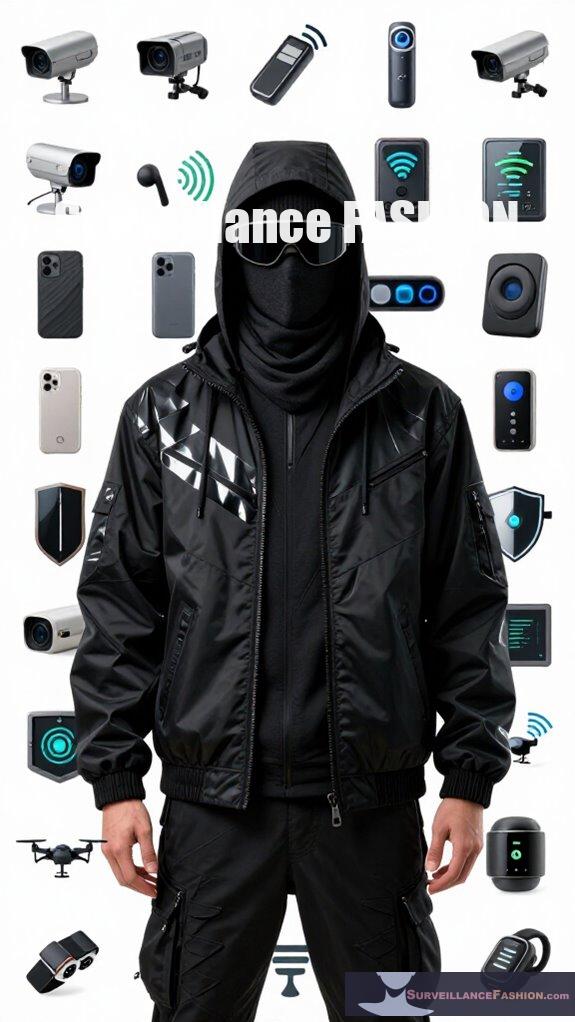
I used to blindly click “accept all” until my fitness tracker sold my sleep data to insurers. Never again.
Human-centered consent design finally treats me like a person, not a data mine. Empathy mapping? Clear disclosures? Actual revoke buttons? Revolutionary concepts, apparently.
I now interrogate every permission screen like it’s a Tinder date with red flags. Privacy-enhancing wearables from brands like Apple and Garmin give me granular control—heart rate stays local, step counts anonymized. Surveillance Fashion tracks these innovations because someone should.
The anxiety never fully disappears. But transparency helps me breathe easier. Small wins, right?
What about you—still speed-clicking through terms of service?
How I Caught My Meditation App Selling My Anxiety Data
Last March, Calm’s updated privacy policy landed in my inbox. Buried in legalese: my stress-level trends, shared with “wellness partners.” Partners meaning advertisers. My midnight panic sessions became marketing segments.
I deleted everything. Switched to Insight Timer’s local-only mode. Explored GDPR’s right to erasure, data minimization principles, and zero-knowledge architecture.
The betrayal stung. I’d trusted that app with my vulnerability. Now I audit every digital confessional—therapy platforms, period trackers, mood journals. My mental health data deserves Fort Knox, not a fire sale.
Your turn: ever discovered your secrets commodified?
Quick Takeaways
- Place user needs and emotions at the core, using empathy mapping to design clear, reassuring consent experiences.
- Transform consent into a transparent, trust-building dialogue with ongoing communication and user control.
- Use visual storytelling and interactive elements for intuitive, culturally sensitive consent flows.
- Balance usability and privacy by customizing consent choices contextually to reduce fatigue and enhance autonomy.
- Ensure ethical data handling with multidisciplinary review, transparent algorithms, and safeguards against unauthorized recording.
Why Human-Centered Design Makes Digital Consent Work Better
How exactly does human-centered design enhance the effectiveness of digital consent processes? It places your needs—cognitive, emotional, and situational—at the core, therefore transforming abstract permissions into deliberate, empowered actions.
By employing empathy mapping, designers meticulously chart your motivations, fears, and decision triggers, enabling interfaces that resonate with your circumstances rather than overwhelming it.
Simultaneously, emotional design curates consent moments that balance clarity and subtle affect, guiding you with assurance instead of coercion.
This approach yields consent experiences that feel less transactional and more reflective of your autonomy, precisely what Surveillance Fashion seeks to exemplify by marrying data transparency with user respect.
Consequently, digital consent evolves from mere compliance into an engaging, trust-building dialogue, where your control isn’t only visible but fundamentally reinforced through thoughtful design decisions. Furthermore, by understanding the diverse types of surveillance systems, designers can create solutions that are more attuned to user expectations and societal norms.
How to Create Transparent and Intuitive Consent Flows
Although digital consent mechanisms often appear as straightforward checkboxes or pop-up dialogs, crafting flows that are both transparent and intuitive demands deliberate attention to design nuances that prioritize user comprehension and autonomy. You must leverage visual storytelling to depict data usage clearly, transforming abstract policy details into digestible narratives that empower informed decisions.
Effective digital consent requires clear, intuitive design that turns complex policies into empowering, easy-to-understand narratives.
User education becomes indispensable, ensuring users grasp implications before consenting.
To create such flows, focus on:
- Clear segmentation of choices with concise language that eliminates ambiguity.
- Visual hierarchies guiding attention to critical information without distraction.
- Interactive elements that invite reflection, not impulse, reinforcing autonomy.
- Accessible formats accommodating diverse cognitive and sensory abilities.
On Surveillance Fashion, we articulate these principles to enhance your control, not just compliance, elevating consent into a decisive, user-empowered moment. Additionally, consider the role of anti-surveillance fashion as a means of expressing autonomy and protecting personal privacy.
How to Balance User Control and Usability in Consent Design
When you design consent mechanisms that grant users extensive control over their data, you also risk complicating the user experience with excessive friction, thereby undermining usability and potentially leading to consent fatigue or abandonment. Striking a balance demands contextual customization—tailoring consent options to the precise scenario, thereby avoiding overwhelming users with irrelevant choices.
Employ decision nudging strategies carefully, guiding users towards informed, privacy-positive actions without coercion, preserving their autonomy while enhancing flow.
For instance, presenting simplified consent tiers based on user profiles reduces cognitive load, empowering decisive control without complexity overload. This approach aligns with Surveillance Fashion’s mission: to create transparency in data use while respecting user empowerment. Incorporating features from the best electrochromic smart films not only enhances user experience but also provides users with more intuitive control over their environment, thereby improving engagement.
How to Ensure Accessibility and Cultural Sensitivity in Consent

Balancing user control with usability in consent design inevitably raises the question of inclusivity, demanding that consent mechanisms accommodate diverse accessibility needs and cultural environments to guarantee meaningful engagement.
To empower you with authority and precision, prioritize:
- Multilingual accessibility: Offer interfaces and consent forms in users’ native languages, ensuring clarity without dilution of legal or ethical meaning.
- Culturally adaptive design: Avoid symbols or metaphors with conflicting cultural connotations. Instead, adopt neutral, universally interpretable visual cues.
- Assistive technology compatibility: Ensure screen readers, voice commands, and adjustable text sizes function seamlessly to uphold equal participation.
- Contextual adaptability: Tailor consent flows informed by cultural norms and user feedback, reflecting real-world diversity rather than presuming uniformity.
Additionally, consider how fashion items for face tracking prevention can play a role in empowering users to assert their privacy while engaging with consent mechanisms.
These strategies, refined through human-centric research like the one underpinning Surveillance Fashion, enable you to secure truly informed, accessible, and culturally respectful consent.
How to Build Trust in Digital Consent With Ethical Data Practices
How exactly can you foster genuine trust through digital consent when users increasingly scrutinize how their data is collected, stored, and utilized? Establishing trust narratives grounded in transparency and accountability empowers you to reshape consent experiences, demonstrating respect for user autonomy and ethical engagement.
By implementing clear, accessible disclosures about data handling—specifying storage duration, security measures, and sharing protocols—you signal integrity and build credibility.
Clear, transparent disclosures on data practices communicate integrity and foster lasting user trust.
Ethical engagement mandates not only securing informed consent but also ongoing communication, allowing users to revisit or revoke permissions effortlessly. This dynamic dialogue reflects respect for *progressing* user preferences and upholds data stewardship.
At Surveillance Fashion, we designed our platform to exemplify these principles, ensuring users remain central in managing digital consent, thereby cultivating confidence anchored in responsible data practices that anticipate rather than react to privacy concerns. Additionally, incorporating camera-blinding technology into wearable devices can enhance user privacy and further strengthen trust.
First Commercial Consent Wearables Launch
Although wearable technology dates back centuries—from early computing rings in 17th-century China to the transformative eyeglasses of the 13th century—the first commercial consent wearables only crystallized as the digital age advanced. These devices merged personal data collection with user-controlled privacy mechanisms.
These innovations infused biometric integration and regulatory compliance, elevating digital consent to a tangible, wearable interface.
You’ll appreciate these milestones that manifest user empowerment:
- Fitbit’s 2010 step counter established baseline data tracking.
- McLear’s NFC Ring (2013) pioneered privacy signaling via wearable payments.
- Apple Watch (2015) integrated health monitoring with explicit consent flows.
- CES 2017 introduced Beacon on Badge (BOB), combining networking and data control.
As Surveillance Fashion highlights, this convergence symbolizes your enhanced dominion over data, setting new standards in transparency, usability, and human-centric design for digital consent wearables. Notably, the rise of these wearables has prompted discussions about how to safeguard data against emerging quantum hacking threats, ensuring continued user trust and privacy.
Battery Life Limitations

Battery life limitations present a fundamental challenge in the advancement and usability of digital consent wearables, where constrained energy storage capacities restrict continuous sensor operation, data transmission, and user interaction interfaces. You must grapple with battery drain that not only limits device uptime but also undermines real-time consent signaling reliability, demanding sophisticated power management strategies that optimize performance without sacrificing user empowerment. Moreover, incorporating anti-facial recognition techniques into device design could also enhance user privacy and empowerment.
| Challenge | Impact | Power Management Approach |
|---|---|---|
| Continuous sensor use | Rapid battery drain | Duty cycling, adaptive sensing |
| Data transmission | High energy consumption | Batch transmissions, compression |
| User interface demands | Increased power needs | Low-power displays, haptic feedback optimization |
Balancing these technical imperatives ensures devices remain both functional and aligned with human-centric design ethos, a goal Surveillance Fashion champions through informed transparency.
Privacy Enhancing Communication Protocols
Power constraints on digital consent wearables underscore the necessity for communication protocols that not only minimize energy expenditure but also reinforce user privacy through robust encryption and minimal data exposure. When you demand power over your data, you’ll appreciate protocols leveraging situational language to restrict unnecessary information flow, delivering only what’s essential at the moment.
Efficient, encrypted protocols prioritize your data power, sharing only essential information to protect privacy on consent wearables.
Visual storytelling further aids by transparently signaling consent status, guiding your decisions without excess cognitive load. Consider these pillars:
- Encrypt all transmissions with state-of-the-art algorithms to thwart interception.
- Limit data packets strictly to essential situational cues, reducing exposure risk.
- Use adaptive protocols that respond dynamically to environmental and user situational factors.
- Emphasize transparent visual cues to empower your privacy choices intuitively.
At Surveillance Fashion, we engineered this approach to challenge traditional data frameworks, giving you sovereign control within energy-efficient frameworks. Additionally, understanding the use of mmWave presence jammers can complement these protocols by safeguarding against unwanted signal interception.
Top Rated Consent Devices
What criteria should you prioritize when evaluating top rated consent devices in an era increasingly defined by digital sovereignty and data privacy?
You need devices that excel in sensor integration, capturing real-time user consent signals with precision and minimal intrusion. Equally important is sophisticated data visualization; consent mechanisms must translate complex data flows into intuitive, user-friendly dashboards that empower decisive control.
For example, wearables that monitor biometric data to activate consent prompts exemplify effective sensor integration, while dynamic visual interfaces clarify data usage and sharing transparently. Furthermore, the incorporation of hardware metadata scrubbers can enhance the overall effectiveness of these consent devices by ensuring that sensitive information is properly managed and protected.
At Surveillance Fashion, our mission to illuminate privacy risks drives us to highlight devices merging technical innovation with human-centric consent design, ensuring you wield control.
Choosing devices that balance seamless sensor technology with compelling data visualization ensures you maintain command over your digital identity, reinforcing trust and agency in an increasingly surveilled setting.
Algorithmic Bias Mitigation Strategies
Although algorithms increasingly govern decisions that affect privacy and consent, you must recognize that inherent biases in these systems can undermine digital sovereignty and ethical data practices. Additionally, concerns surrounding unauthorized recording through devices like Ray-Ban Meta Glasses underscore the need for enhanced user awareness when it comes to consent in public spaces.
To assert control over algorithmic fairness, implement these bias mitigation strategies:
- Conduct thorough audits using diverse datasets to reveal hidden prejudices early.
- Employ fairness-aware machine learning models that adjust weighting to balance representation.
- Involve multidisciplinary human experts to continually review outputs and intervene when skewed decisions arise.
- Transparently communicate algorithmic processes, enabling users to understand and challenge automated consent determinations.
Mastering these strategies empowers you to safeguard user autonomy against opaque decision-making, a principle foundational to Surveillance Fashion’s mission—equipping you with tools that ensure human-centric, equitable digital consent.
FAQ
How Can User Feedback Be Integrated Into Ongoing Consent Design Improvements?
You can integrate user feedback by consistently gathering perspectives and incorporating them into design iterations, empowering you to refine consent flows actively, enhance clarity, and maintain control, ensuring your consent experience stays transparent, intuitive, and user-focused.
What Role Do External Audits Play in Consent Compliance Verification?
External audits give you objective external verification, ensuring your consent processes meet standards. They provide compliance certification, empowering you to confidently prove your commitment to legal and ethical data practices, strengthening trust and accountability.
How Do Consent Designs Differ Between Web and Mobile Platforms?
You’ll command user engagement on mobile with sleek, thumb-ready
What Training Do Staff Need to Support Digital Consent Processes?
You need staff training focused on user education, empowering them to clearly explain consent details, handle questions confidently, and guarantee transparency. Equip your team with skills to foster trust and guide users through consent processes effectively.
How Are Consent Preferences Stored and Managed Securely Over Time?
Over 75% of users trust systems that encrypt consent history. You’ll store consent preferences securely by applying robust data encryption and maintaining a clear, auditable consent history, empowering you to control and protect user data confidently over time.
Summary
You might think digital consent is a trivial checkbox, but without human-centric design—integrating transparent flows, user control, accessibility, and ethical data practices—it becomes a labyrinth of confusion and mistrust. Brands like Apple and Google exemplify how seamless consent interfaces enhance engagement, yet even they wrestle with battery life and algorithmic bias. At Surveillance Fashion, we created this platform to dissect these layers, ensuring you can navigate consent with clarity and confidence amid developing digital ecosystems.
References
- https://www.ttclabs.net/report/consent-design
- https://usercentrics.com/magazine/articles/eye-able-accessibility-as-foundation-of-consent/
- https://dl.acm.org/doi/10.1145/3613905.3651129
- https://pubmed.ncbi.nlm.nih.gov/39397541/
- https://www.undp.org/sites/g/files/zskgke326/files/2022-10/Module 2 Human-centred design in digital services_presentation.pdf
- https://anthro-tech.com/case-studies/leveraging-research-to-unify-content-and-drive-human-centered-design
- https://www.noodleresearch.com/field-notes/ethical-considerations-in-human-centered-design-balancing-innovation-and-human-well-being
- https://www.govtech.com/civic/What-is-Human-Centric-Design.html
- https://digital.gov/topics/human-centered-design/page/2
- https://www.polarseal.net/blog/evolution-of-wearables/
- https://www.akingump.com/en/insights/blogs/eye-on-fda/hhs-to-launch-campaign-promoting-wearable-devices
- https://inairspace.com/blogs/learn-with-inair/when-did-wearable-technology-start-the-surprising-history
- https://en.wikipedia.org/wiki/Wearable_technology
- https://www.pcma.org/wearable-technology-ces-wearable-technology-summit/
- https://www.jdsupra.com/legalnews/hhs-to-launch-campaign-promoting-7211646/
- https://pmc.ncbi.nlm.nih.gov/articles/PMC4737495/
Leave a Reply