
To effectively combat facial recognition, consider accessories like infrared-blocking glasses, CV Dazzle pattern masks, and IR-reflective fabrics. These items obscure facial features and confuse algorithms, with some masks achieving up to 50% effectiveness against recognition systems. Disruptive patterns create visual noise, challenging technology’s reliance on contrast and symmetry. As surveillance grows, these fashionable yet functional solutions empower you, elevating conversations about personal privacy. Explore further to uncover the potential of this burgeoning field against ubiquitous monitoring.
Quick Takeaways
- Minimal coverage masks made of fabric reduce facial recognition accuracy by up to 30%, making them a practical choice for anonymity.
- Full-face concealment masks using brass can achieve up to 50% effectiveness against recognition systems.
- Disruptive pattern accessories utilize CV Dazzle techniques, creating visual noise that confuses facial recognition algorithms.
- IR-reflective fabrics emit glare to blind cameras, enhancing user anonymity while being lightweight and breathable.
- Combining accessories like masks with sunglasses or hats increases their effectiveness in evading surveillance technologies.
Overview of Anti-Facial Recognition Accessories

As society becomes increasingly aware of surveillance technologies, the development of anti-facial recognition accessories has gained significant traction, particularly among those concerned with privacy and personal autonomy.
These accessories encompass a variety of innovative designs, incorporating advanced accessory materials and privacy technology to counteract facial recognition systems. For example, infrared blocking glasses utilize UV and near-infrared blocking materials to obscure facial features from detection, while hats with brims can effectively shield your identity. Clothing featuring strategic prints can confuse algorithms, ultimately enhancing your privacy during movement. Moreover, some accessories use 3D infrared facial mapping prevention technology, presenting a promising frontier in the fight against intrusive surveillance. Additionally, many of these accessories are designed with infrared-reflecting materials that can help in blinding cameras, further ensuring user anonymity.
Innovative designs and advanced materials are key in crafting accessories that effectively combat facial recognition technologies.
As facial recognition technology continues to evolve, many of these accessories aim to address the growing concerns regarding privacy concerns related to the collection and processing of sensitive biometric data. As you explore these tools, consider how they empower individual freedom and foster a broader movement toward personal liberation.
Effectiveness of Anti-Facial Recognition Masks
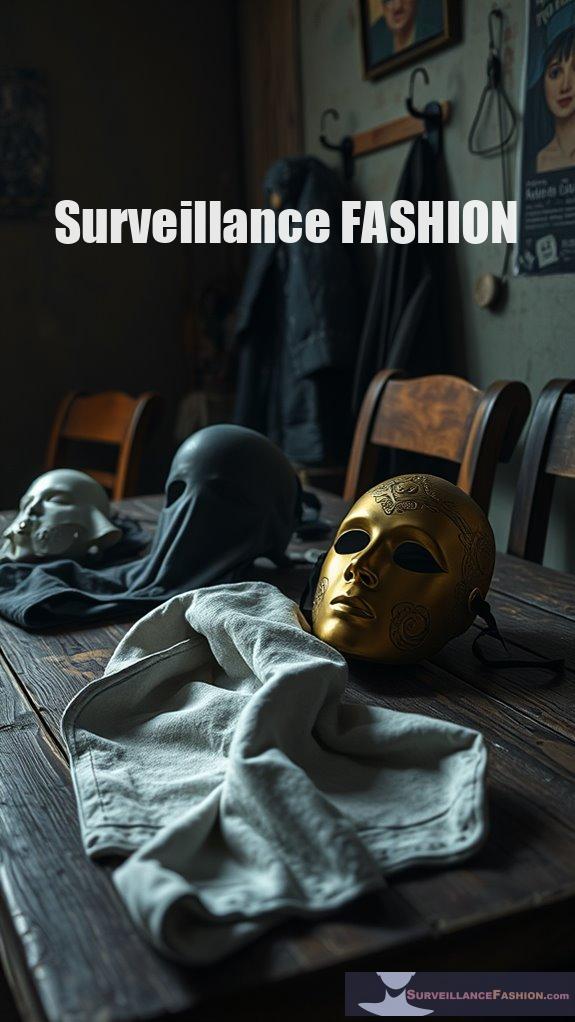
How effective are anti-facial recognition masks in evading modern surveillance technologies? The effectiveness of these masks largely hinges on their design innovations and the algorithms employed in facial recognition systems. While some masks can reduce recognition error rates considerably, others may falter against advanced technology.
| Mask Type | Material Used | Effectiveness Level |
|---|---|---|
| Minimal Coverage | Fabric | 30% |
| Full-Face Concealment | Brass | 50% |
| Human Face Replica | 3D Print | 20% |
| CV Dazzle Pattern | Various Fabrics | 40% |
As surveillance technology improves, constant updates to mask designs may become necessary to maintain their mask effectiveness. Engaging with these developments reflects not only a response to privacy concerns but also a quest for liberation from pervasive monitoring. Interestingly, some anti-surveillance clothing incorporates infrared-blocking technology to further enhance personal privacy and security.
Disruptive Pattern Accessories: A Fashion Statement

What if your wardrobe could serve as a shield against constant surveillance? Disruptive pattern accessories, rooted in the CV Dazzle strategy, utilize complex designs to confuse facial recognition systems, creating visual noise that disrupts the expected light and dark contrasts of your face.
Imagine fashion as your defense against surveillance, using intricate patterns to baffle facial recognition technologies and protect your identity.
This fashion innovation, inspired by World War I camouflage tactics, not only elevates style but also serves as a form of activism, empowering individuals to maintain anonymity in a surveilled world.
For instance, scarves and clothing adorned with specific patterns can alter perceived facial symmetry, targeting algorithmic vulnerabilities like those seen in the Viola-Jones framework. Additionally, these patterns can exploit recognition system weaknesses, which further enhances their effectiveness in obfuscating identity.
As these designs evolve, they encourage discussions about privacy, demonstrating how fashion can reclaim agency in an increasingly monitored society.
Signal-Blocking and IR-Reflective Fabrics Explained

While the impact of surveillance on personal privacy continues to escalate, advancements in signal-blocking and infrared (IR)-reflective fabrics offer innovative solutions for those seeking to navigate this digital terrain.
These fabrics utilize cutting-edge fabric technology, enhancing signal blocking efficacy by incorporating materials like metal-infused fibers and tiny reflective beads.
For instance, IR-reflective fabrics emit a glare that disrupts facial recognition cameras, effectively obscuring your identity.
Additionally, many of these fabrics are designed to be lightweight and breathable, ensuring comfort without sacrificing infrared-resistant materials in your privacy wear.
Moreover, as you wear such garments, you actively participate in a growing movement towards privacy protection, raising social awareness about the implications of constant surveillance.
Engaging with these technologies aligns with the mission behind Surveillance Fashion, aiming to empower individuals against invasive monitoring and foster a culture of liberation from digital overreach.
Challenges in Evading Advanced Surveillance Techniques

As advancements in signal-blocking and IR-reflective fabrics emerge to combat the pervasive threat of surveillance, a multitude of challenges continues to confront individuals attempting to evade advanced surveillance techniques.
Facial recognition limitations, including high misidentification rates particularly affecting darker skin tones and females, highlight significant surveillance ethics issues. These systems capture data without consent, raising privacy concerns and resulting in wrongful accusations.
Facial recognition technology raises ethical concerns, particularly with high misidentification rates for marginalized groups and consent violations.
While tools like Fawkes and anti-spy makeup offer some protection, their effectiveness diminishes against developing technologies. Furthermore, deepfakes complicate the integrity of personal data, rendering traditional methods less reliable. The hidden costs of mass surveillance on democracy further emphasize the urgent need for ethical considerations in technology deployment.
As you navigate these complexities, understanding the balance between personal privacy and the ethical use of facial recognition becomes essential in shaping a more liberated future.
What is Anti-surveillance Fashion?

Anti-surveillance fashion represents a revolutionary intersection of style and technology, addressing the urgent need for personal privacy in an era increasingly dominated by surveillance systems.
By seamlessly blending aesthetics with functionality, this innovative clothing line serves as a direct response to the pervasive tracking that threatens individual freedoms.
Garments like Cap_able’s Manifesto Collection utilize patented fabrics to confuse facial recognition algorithms, while items such as the Camera-Shy Hoodie employ infrared LEDs to obscure wearers from night-vision cameras. This trend is part of a larger movement towards camera-blinding wearable technology, empowering individuals to reclaim their privacy in public spaces.
Within the broader discourse on anti-surveillance ethics, these designs provoke critical dialogue about privacy implications, highlighting the delicate balance between security and personal rights in our digital environment.
As awareness grows, anti-surveillance fashion becomes an essential tool for those seeking liberation from constant observation.
Disguising Masks and Hoods

Disguising masks and hoods have emerged as pivotal components in the anti-facial recognition fashion movement, serving not only as protective measures against invasive surveillance technologies but also as striking statements of individuality and resistance.
The diverse mask designs, featuring asymmetrical patterns or 3D elements, aim to confuse facial recognition algorithms, providing varying effectiveness that can range from 5% to 50%. Hoods enhance this strategy, obscuring facial features further when combined with sunglasses or hats, capitalizing on their inherent hood functionality.
Incorporating materials like metalliferous fabrics or ribbed plastics adds depth to these designs, while simpler options, like face paint, also deter surveillance. Additionally, the use of counter-surveillance accessories is becoming increasingly common as people seek innovative ways to protect their privacy.
Ultimately, these accessories symbolize a broader movement against biometric tracking, emphasizing the need for privacy in today’s digital environment.
References
- https://www.liberties.eu/en/stories/anti-facial-recognition-mask/43570
- https://pubs.acs.org/doi/10.1021/acschemneuro.3c00532
- https://nordvpn.com/blog/anti-surveillance-fashion/
- https://pmc.ncbi.nlm.nih.gov/articles/PMC6352312/
- https://www.businessinsider.com/clothes-accessories-that-outsmart-facial-recognition-tech-2019-10
- https://physicalsciences.uchicago.edu/news/article/evaluating-anti-facial-recognition-tools/
- https://www.fraud.com/post/facial-recognition
- https://www.youtube.com/watch?v=RK7aCglDusc
- https://www.itpro.com/security/privacy/356882/the-pros-and-cons-of-facial-recognition-technology
- https://www.privacyglasses.net/anti-facial-recognition-privacy-glasses-product/
Leave a Reply