Tag: anti-surveillance

  • Using Anti-Surveillance Hoodies

    Using Anti-Surveillance Hoodies

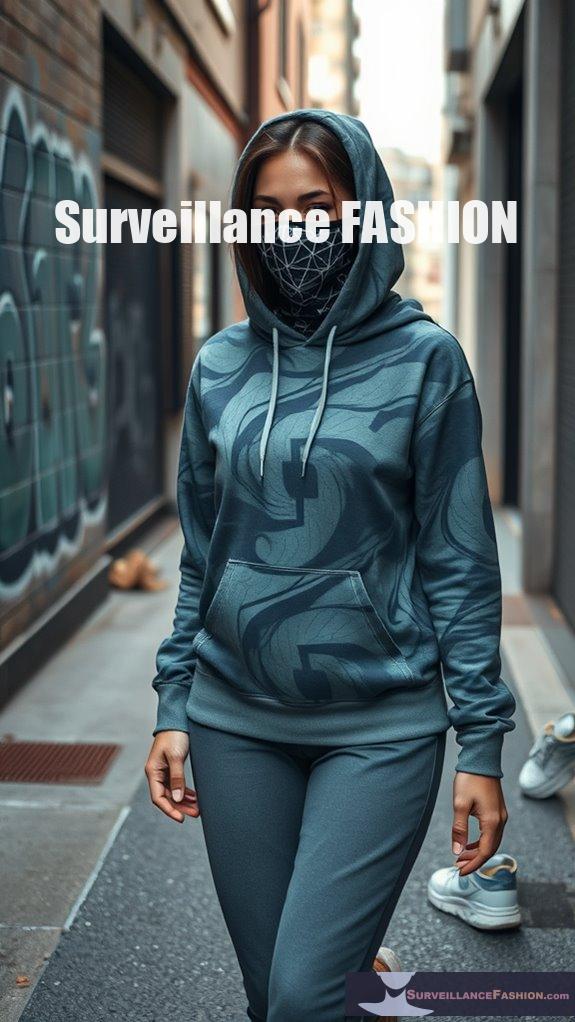
    Using anti-surveillance hoodies, you can effectively shield your identity from pervasive surveillance technologies. These garments utilize infrared LEDs, which emit invisible light to disrupt camera sensors, leading to facial feature obfuscation. Furthermore, they incorporate adversarial patterns to confuse facial recognition algorithms. However, their effectiveness diminishes in daylight, as natural light overwhelms IR signals. By exploring further, you’ll uncover various functionalities and innovative designs that can enhance your privacy while traversing increasingly monitored urban environments.

    Quick Takeaways

    • Anti-surveillance hoodies use infrared LEDs to disrupt cameras, enhancing user anonymity in high-surveillance environments.
    • Features like adversarial patterns confuse facial recognition algorithms, increasing personal privacy.
    • Designed for urban settings, they protect against both daytime and nighttime surveillance techniques.
    • Some models include customizable electronics and DIY options for personalized use.
    • Consider limitations such as reduced effectiveness in daylight and vulnerability to biometric identification methods.

    What Are Anti-Surveillance Hoodies and How Do They Work?
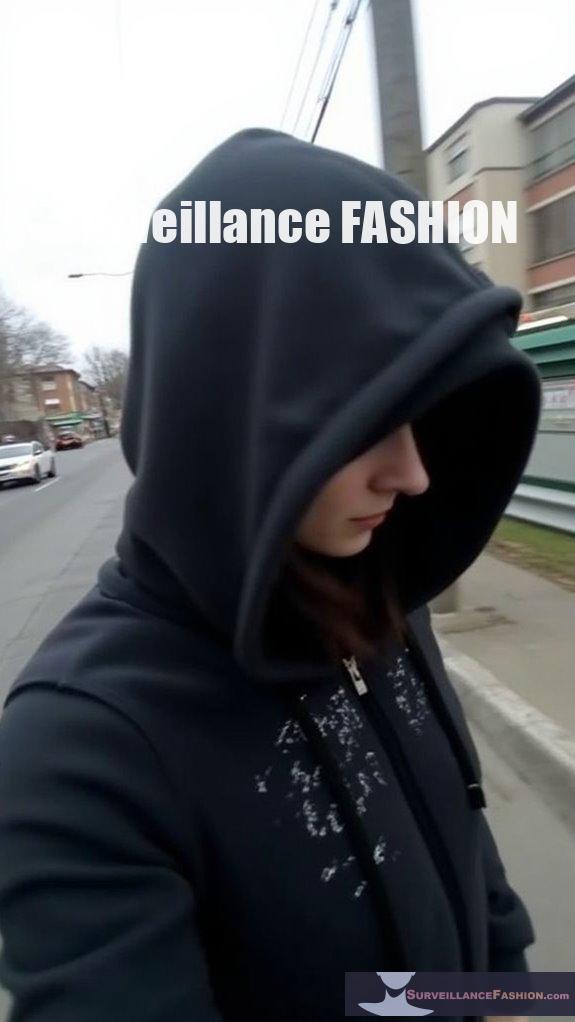
    anti surveillance technology hoodies explained

    These hoodies typically incorporate various technologies to counteract surveillance, such as:

    • Infrared (IR) LEDs that emit invisible light, overwhelming cameras,
    • Adversarial patterns that disrupt AI facial recognition algorithms,
    • Blocking fabrics to shield against electronic tracking,
    • Design features like double-lined hoods and strategic lighting for maximum effectiveness. Additionally, some designs, like the Camera Shy Hoodie, are aimed at making the wearer unrecognizable in security footage. The integration of privacy-enhancing eyewear can further complement these hoodies, enhancing the overall effectiveness against surveillance. Their performance can vary based on the type of camera and environmental factors, highlighting the ongoing debates surrounding privacy in public spaces.

    How Do Built-In Infrared LEDS Contribute to Facial Feature Obfuscation?

    Built-in infrared LEDs contribute to facial feature obfuscation by emitting invisible light that saturates camera sensors, resulting in loss of detail and overexposure in captured images. This disruption hinders facial recognition algorithms from accurately identifying key features. The camera shy hoodie is designed specifically to maximize this effect by integrating high-powered infrared LEDs.

    The strategic placement and operation of these IR LEDs amplify their effectiveness. When positioned near the face, they flood the camera’s view, creating overly bright regions that confuse auto-exposure settings. Additionally, using anti-surveillance techniques such as these can significantly enhance personal privacy in increasingly monitored environments.

    Key points include:

    • Strobing patterns create fluctuating brightness, complicating stable image capture.
    • The IR halo effect isolates facial features from their surroundings.
    • Placement around the hoodie facilitates consistent illumination from multiple angles.

    Ultimately, this combination of techniques makes it difficult for surveillance systems to capture clear images of the wearer, effectively masking their identity.

    What Is the Effectiveness of Strobing Patterns Against Facial Recognition Technology?

    Strobing patterns enhance the effectiveness of liveness detection in facial recognition technology by generating unpredictable light reflections that differentiate between genuine faces and spoofing attempts. Their use in conjunction with neural networks improves spoof detection accuracy. The unpredictability of strobing patterns reduces the likelihood of successful replay attacks using static images or videos. Genuine faces reflect light uniformly, while forgeries typically show delays in reflection due to processing time. Neural networks further analyze these light reflection patterns to detect subtle discrepancies that indicate spoofing. Additionally, these techniques rely on reflected light to ensure an accurate distinction between authentic and counterfeit responses. Recent studies suggest that biometric spoofing is increasingly becoming a challenge for identification systems, highlighting the importance of such anti-surveillance measures. However, the effectiveness of strobing can be influenced by:

    • Controlled illumination conditions.
    • Variability in skin reflectance across different demographics.
    • Advanced computational techniques that rogue actors may employ.

    While strobing can detect liveness, it’s essential to combine it with other biometric measures for thorough identity verification.

    Can Anti-Surveillance Hoodies Be Used Successfully in Daylight?

    Anti-surveillance hoodies utilizing infrared (IR) LEDs are ineffective in daylight due to natural IR saturation and dominance of visible light, which makes facial recognition algorithms far more operational.

    In daylight conditions, the ambient light, particularly sunlight, overwhelms the IR signals emitted by the hoodies. This saturation greatly diminishes their ability to blind night vision cameras.

    While these garments are designed to exploit the invisibility of IR light at night, they don’t provide any visible obstruction or protection against surveillance in bright environments.

    Key points include:

    • Passive adversarial clothing and visual patterns are more effective for daytime use.
    • IR LEDs create no visible light during the day, offering no camouflage against visible-light cameras.
    • The technology primarily serves as a nocturnal solution, with limited practical use in direct sunlight.

    What Are the Key Features of Mac Pierce’s Camera Shy Hoodie?

    infrared hoodie for surveillance protection

    The key features of Mac Pierce’s Camera Shy Hoodie include a 12-LED infrared array for blinding night vision cameras, a user-controlled IR strobe mode, and customizable DIY electronics. It requires a 15-volt power source and effectively obscures the wearer’s identity in low-light environments.

    The hoodie is designed to combat surveillance by emitting infrared light that disrupts typical cameras used in security systems. The LEDs are strategically placed to cover the head and upper body, ensuring thorough coverage.

    Users can activate the strobe mode via a sleeve switch, allowing for discretion and control over its use. Constructed as a DIY project, the hoodie encourages custom modifications while raising awareness about surveillance issues.

    Key considerations for use include the need for an insulating layer to avoid discomfort and the efficacy being limited to low-light situations. The project is intended for ethical privacy protection rather than illegal activities.

    How Do Anti-Surveillance Hoodies Promote Personal Anonymity?

    Anti-surveillance hoodies promote personal anonymity by utilizing embedded IR LEDs and disruptive visual patterns to obscure the wearer’s facial features from surveillance cameras. This balance allows individuals to maintain privacy without attracting undue attention in public spaces.

    The integration of high-power infrared LEDs targets night-vision cameras, creating overexposure effects that anonymize the wearer’s head and face. Moreover, the printed designs on the hoodies confuse facial recognition algorithms by presenting misleading visuals.

    Key features include:

    • Camouflage against surveillance in monitored environments.
    • Disruption of AI detection through complex patterns.
    • Enhanced privacy while traversing public or activist spaces.
    • A blend of technology with fashion for everyday wearability.

    Ultimately, these garments offer a proactive approach to protect individual privacy in an age of increasing surveillance technology. However, their effectiveness may vary based on lighting conditions and the sophistication of detection systems.

    What Are the Limitations of Using These Hoodies Against Various Surveillance Systems?

    Anti-surveillance hoodies have significant limitations, particularly against various surveillance systems. They mainly disrupt infrared night vision cameras in low-light environments but are ineffective in daylight conditions and face challenges against alternative tracking methods.

    These hoodies rely on infrared (IR) technology, only affecting specific IR cameras while leaving conventional RGB cameras unaffected. In well-lit or sunny areas, they can attract attention instead of providing anonymity. Furthermore, biometric identification methods like gait analysis and behavior recognition can still identify individuals, undermining the hoodies’ purpose.

    High-security or actively monitored environments further reduce their effectiveness, as security personnel and AI systems may easily spot the visual anomalies created by the IR lights.

    In addition, their design must match specific IR wavelengths, which limits their utility across varied camera types. Factors such as environmental conditions, battery life, and user comfort also hinder their practicality, making it difficult to achieve effective anonymity solely through these garments.

    Finally, they don’t address non-visual surveillance methods, such as thermal imaging or radio frequency (RF) tracking, leaving wearers vulnerable to other forms of surveillance.

    Who Is the Target Market for Anti-Surveillance Hoodies?

    The target market for anti-surveillance hoodies includes privacy-conscious activists, tech-savvy privacy advocates, individuals in high-surveillance urban environments, privacy-focused designers, and supporters of digital rights campaigns.

    These consumers seek protection from pervasive surveillance through fashionable, functional clothing. They often prioritize garments that disrupt recognition technologies, such as complex patterns and metal-infused fabrics. Furthermore, their motivation stems from a desire to maintain anonymity and push back against state and corporate overreach.

    Target demographics also include:

    • Grassroots activists and protesters
    • Tech enthusiasts aware of biometric risks
    • Urban dwellers facing ubiquitous monitoring
    • Designers innovating in privacy-focused fashion
    • Digital rights advocates committed to reform

    How Are Privacy Concerns Driving Innovation in Fashion Technology?

    privacy driven fashion innovation

    Privacy concerns are driving innovation in fashion technology by prompting the development of anti-surveillance designs, reflective materials, and AI-driven customization that protect personal data from modern surveillance systems.

    This evolution in fashion addresses the increasing use of facial recognition and data extraction methods. Designers are integrating features such as:

    • Patterns that confuse facial recognition algorithms
    • Reflective fabrics that impair photography in low light
    • AI-driven personalization enhancing privacy
    • Smart textiles that adapt to surveillance threats

    These innovations aim to provide stylish options that prioritize individual privacy while remaining functional.

    Hoodies With Obscuring Hoods

    In the domain of modern fashion technology, innovative hoodies equipped with obscuring hoods represent a fascinating intersection of style and security, designed thoughtfully to counteract the pervasive threats of surveillance.

    These garments ingeniously integrate high-powered infrared LEDs that disrupt night vision cameras, rendering facial recognition useless.

    However, as you consider the safety implications and ethical considerations of wearing such a device, questions arise about broader surveillance practices.

    While these hoodies create a unique blend of anonymity and fashion, they can’t eliminate surveillance entirely, highlighting an ongoing tension between personal privacy and technological advancement, which is why we created this website, Surveillance Fashion.

    Anti Surveillance Ebook review: Eyes Everywhere

    Boghosian intricately weaves stories of social movements, revealing how surveillance ethically compromises both activism and fashion privacy.

    Through examining varied instances—from phone tracking to the coordinated monitoring of protests—he highlights an unsettling truth: surveillance operates as a mechanism of control rather than safety.

    In a world increasingly influenced by surveillance ethics, this eBook encourages a deeper reflection on your role within this pervasive digital environment.

    Crowded Urban CCTV Networks

    As urban settings evolve, the proliferation of CCTV cameras transforms public spaces into a matrix of surveillance, fundamentally altering the dynamics of city life.

    With over 700 million cameras globally, densely populated cities like Beijing, where there’s one camera for every two residents, exemplify this shift.

    Each camera, strategically placed near transport hubs or crowded areas, forms part of a complex sensor network, often enhanced by AI analytics for facial recognition.

    This elaborate web jeopardizes urban privacy, amplifying concerns about anonymity.

    In such an environment, anti-surveillance fashion becomes essential, as we endeavor to reclaim a sense of privacy amidst invasive watchfulness.

    Civil Liberties Against Safety Measures
    surveillance safety civil liberties

    While the tension between civil liberties and safety measures escalates amidst an increasingly surveilled society, one can’t ignore the complex dilemmas presented by anti-surveillance garments.

    References

  • Anti-Surveillance Fabrics That Block EMF Signals

    Anti-Surveillance Fabrics That Block EMF Signals

    Anti-surveillance fabrics that block EMF signals utilize advanced textile technologies, including conductive materials that distort electromagnetic waves and thermal signatures. These fabrics often integrate metallic threads, such as silver and copper, featured for their high conductivity and enhanced shielding capabilities. Layering techniques further improve signal blocking effectiveness without compromising comfort, making these textiles suitable for everyday applications. As consumer demand for privacy grows, innovative designs are emerging, revealing additional uses beyond tactical wear. Consider exploring these expanding horizons.

    Quick Takeaways

    • Anti-surveillance fabrics integrate conductive materials that effectively block electromagnetic signals and thermal signatures for enhanced privacy.
    • Metallic threads in the fabric enhance shielding effectiveness, with silver-coated fibers offering superior protection against EMF.
    • Layering different materials in fabrics improves electromagnetic shielding while ensuring comfort for everyday wear.
    • These fabrics are versatile, applicable in tactical clothing, casual fashion, and various sectors like healthcare and corporate environments.
    • Incorporating moisture control and antimicrobial properties enhances hygiene and comfort in anti-surveillance clothing.

    How Do Stealth Fabrics Enhance Anti-Surveillance Techniques in Modern Fashion?

    stealth fabrics for privacy

    Stealth fabrics enhance anti-surveillance techniques in modern fashion by integrating conductive materials that block EM signals and reduce thermal signatures, ensuring both privacy and concealment from electronic tracking. Their lightweight, flexible design allows for everyday wear, providing discreet protection in urban environments. These fabrics effectively block RFID and GPS signals, preventing unauthorized data capture and location tracking. They’re utilized in a variety of garments, from tactical to casual wear, combining fashion with functionality. Key benefits include:

    • Multi-spectral EM wave shielding
    • Thermal signature reduction
    • Versatile design adaptability
    • Enhanced personal privacy protection

    Additionally, using EMF shielding fabric in garment construction contributes to improved effectiveness against various types of surveillance technology. This innovation is essential for safeguarding personal information amidst increasing electronic surveillance, as fabrics can be constructed from varied yarn paths designed to optimize EM wave interaction.

    What Role Do Metallic Threads Play in the Effectiveness of Ir-Blocking Fabrics?

    Metallic threads enhance the effectiveness of IR-blocking fabrics through their high conductivity, enabling them to reflect and absorb electromagnetic waves, including infrared radiation.

    The arrangement and content of metal fibers contribute to the overall shielding effectiveness, making the fabric an efficient barrier against IR and EMF exposure.

    These threads, commonly made of silver, copper, or nickel, are integrated into textiles like polyester or nylon, creating a conductive mesh.

    Key factors influencing their performance include:

    • Increased metal fiber content boosts shielding effectiveness.
    • Weave type affects porosity and signal reduction; plain weaves outperform twill and satin.
    • Higher compactness typically decreases effectiveness.
    • Silver-coated threads offer superior protection but may lose effectiveness after repeated washing.

    Understanding these elements is essential for maintaining IR-blocking properties in practical applications.

    Can Layering Different Fabrics Improve Stealth Capabilities in Tactical Wear?

    Yes, layering different fabrics can greatly enhance stealth capabilities in tactical wear by improving electromagnetic shielding effectiveness and maintaining user comfort. This method benefits from increased thickness and ideal conductivity, effectively blocking unwanted signals.

    Layering multiple fabrics combines the strengths of each material, leading to superior shielding against electromagnetic frequencies, especially below 1 GHz. Furthermore, the use of core-spun yarns with ideal twists enhances mechanical strength and durability.

    Key advantages include:

    • Improved shielding effectiveness (up to 83.8% with five layers).
    • Enhanced tensile strength and mechanical resilience.
    • Maintained air permeability for comfort.
    • Effective moisture control to prevent skin irritation.

    This strategic layering consequently supports both stealth and performance.

    How Do Materials Like Silver and Copper Provide Both Shielding and Comfort?

    Materials like silver and copper provide both shielding and comfort by combining high electrical conductivity, which effectively blocks electromagnetic fields, with the ability to be woven into soft, breathable fabrics suitable for everyday wear.

    Silver and copper fibers or coatings are integrated into textiles, enhancing their conductivity without compromising on comfort.

    These metals effectively redirect EMF away from the body, with silver-coated copper proving superior due to their core-shell structure.

    To maintain wearability, these conductive materials are paired with natural fibers, ensuring flexibility and softness.

    Furthermore, silver’s antimicrobial properties contribute to hygiene, making these fabrics practical for personal use.

    How Does Thermal Diffusion in Stealth Textiles Contribute to Operational Security?

    thermal diffusion enhances operational security

    Thermal diffusion in stealth textiles enhances operational security by reducing thermal signatures, which complicates target acquisition by infrared and multispectral surveillance technologies. This uniform heat distribution minimizes the risk of detection from thermal imaging devices, improving wearer comfort and mission flexibility.

    The integration of materials like graphene and MXenes contributes to effective thermal management. The result is:

    • Reduced infrared emission.
    • Minimized thermal contrasts.
    • Enhanced concealment during dynamic maneuvers.
    • Improved comfort for extended missions.

    Together, these factors solidify stealth capabilities critical for elite units in diverse environments.

    In What Ways Can Fashion Designers Incorporate Stealth Shielding in Everyday Clothing?

    Fashion designers can incorporate stealth shielding in everyday clothing by integrating high-quality EMF shielding fabrics with metallic threads, such as silver, into modern, streamlined garment designs.

    This approach allows for stylish apparel that offers significant protection against electromagnetic interference while maintaining comfort and aesthetics.

    To effectively achieve this, designers should focus on:

    • Creating comfortable and breathable clothing that looks fashionable.
    • Utilizing multi-functional silver-based materials for antibacterial properties and thermal regulation.
    • Offering a variety of color options to expand appeal.
    • Catering to specific user needs, such as maternity and baby wear, with discreet shielding garments.

    What Potential Applications Exist for Ir-Blocking Fabrics Beyond Military Use?

    Anti-surveillance fabrics, commonly known for military applications, have potential uses in various sectors, including healthcare, consumer privacy, and secure facilities.

    Their ability to block electromagnetic signals can enhance personal privacy and safety in everyday environments.

    In healthcare, such fabrics can protect sensitive medical equipment from interference and create EM-shielded zones for patient treatment.

    In consumer applications, these fabrics safeguard against signal interception and theft, with uses in clothing, bags, and accessories designed to protect personal data.

    Moreover, they can be utilized to create secure spaces in governmental and corporate settings, ensuring confidentiality in communications.

    Review of Ava Longhorn’s Ebook: Eyes Everywhere

    Surveillance has permeated every facet of contemporary life, making the exploration of privacy issues increasingly important.

    Ava Longhorn’s ebook, *Eyes Everywhere*, critically examines the ethical implications of pervasive surveillance technologies on civil liberties, emphasizing the psychological toll on individuals in constant observation.

    Her perspectives into anti-surveillance fabrics, integrating conductive materials, present innovative solutions for privacy advocacy, empowering users to reclaim their personal space.

    Additionally, Longhorn highlights the potential of these textiles as tools against the erosion of data privacy, situating them within a broader movement that aligns seamlessly with our mission at Surveillance Fashion to raise awareness about personal privacy protection.

    References

  • Why Is Metallic Mesh Fashion Becoming Anti-Surveillance Armor?

    Why Is Metallic Mesh Fashion Becoming Anti-Surveillance Armor?

    Metallic mesh fashion is rapidly becoming recognized as anti-surveillance armor due to its unique properties that disrupt electronic signals and obscure heat signatures. The high electrical conductivity of metallic threads effectively interferes with RFID and cellphone signals, while the reflective capabilities mask thermal emissions, making wearer detection considerably more challenging. As privacy concerns escalate in an era of pervasive monitoring, this innovative clothing integrates seamlessly into everyday attire, addressing both style preferences and security needs, encouraging further exploration of this topic.

    Quick Takeaways

    • Metallic mesh integrates high electrical conductivity, disrupts signals, and protects against RFID and cellphone tracking, enhancing privacy for wearers.
    • The fabric reflects infrared radiation, reducing thermal signatures and aiding in urban environments where surveillance is prominent.
    • Fashion incorporates anti-surveillance elements, allowing for stylish and discreet garments, reducing stigma around privacy-focused clothing.
    • Wearable technology within metallic mesh allows for biometric monitoring and energy harvesting while maintaining a fashionable appearance.
    • Growing awareness of privacy concerns and data misuse drives demand for anti-surveillance fashion as a form of personal autonomy and rights advocacy.

    How Do Ir-Blocking Fabrics Enhance Privacy in Our Everyday Outfits?

    infrared surveillance privacy enhancement

    IR-blocking fabrics enhance privacy in everyday outfits by reflecting and scattering thermal emissions from the body, making wearers less detectable to infrared surveillance technologies. These fabrics offer significant benefits in various environments:

    • Concealment: They mimic natural surroundings in the infrared spectrum, aiding in camouflage across diverse terrains, such as forests and deserts.
    • Surveillance Avoidance: By reducing the thermal signature, individuals are less vulnerable to tracking by UAVs, drones, or FLIR cameras, ensuring greater privacy in urban settings. This functionality is particularly relevant due to the growing use of IRR fabric in modern tactical gear.
    • Versatile Applications: Ideal for tactical professionals and outdoor enthusiasts, IR-blocking clothing can also address privacy concerns for urban commuters, integrating seamlessly into daily wear without compromising style or comfort.

    Why Are Metallic Threads Essential for Creating Effective Anti-Surveillance Clothing?

    Metallic threads are essential for creating effective anti-surveillance clothing due to their high electrical conductivity and ability to reflect infrared radiation, which disrupts detection by surveillance technologies.

    Their integration allows for a balance of durability and flexibility, making garments both practical and stylish.

    These threads contribute to anti-surveillance clothing in several ways:

    • Signal Disruption: High conductivity interferes with RFID and cellphone signals, creating an electromagnetic shield.
    • Thermal Management: Reflecting IR radiation reduces thermal signatures, masking the wearer from heat sensors.
    • Durability and Flexibility: Metal-infused fibers maintain structural integrity and comfort over time.
    • Aesthetic Appeal: Metallic microfibers can be embedded invisibly, ensuring fashionable yet functional garments without compromising style.

    This combination enhances the wearer’s privacy in environments with advanced surveillance technology. Additionally, infrared blocking wear is increasingly valued as a means of promoting personal security in a tech-driven society.

    What Role Does Fashion Play in Making Anti-Surveillance Gear More Acceptable?

    Fashion plays a crucial role in normalizing anti-surveillance gear by integrating it into mainstream styles, effectively reducing societal stigma associated with privacy-focused apparel.

    This crossover into everyday fashion fosters acceptance and increases consumer adoption.

    By incorporating familiar designs like hoodies and sunglasses, anti-surveillance fashion becomes less about function and more about appeal:

    • Streetwear Influence: Creates a bridge between rebellion and everyday wear.
    • Aesthetic Focus: Utilizes glitchy prints and reflective materials that are visually attractive.
    • Public Events: Initiatives like decorative walks raise awareness and encourage public dialogue.
    • Empowerment: Wearing such gear provides psychological comfort against surveillance, transforming consumer mindset.
    • Advocacy: Fashion acts as a platform for activism, making privacy a publicly discussed issue.

    How Can Wearable Technology Be Stylishly Integrated Into Metallic Mesh Designs?

    stylish wearable technology integration

    Wearable technology can be stylishly integrated into metallic mesh designs using conductive fibers and flexible sensors, ensuring functionality without compromising aesthetics.

    To achieve this seamless integration, several methods can be utilized:

    • Conductive Fibers: Infused with metals like stainless steel or silver, these fibers facilitate electronic signal transmission while preserving the mesh’s style and comfort.
    • Flexible Sensors: Thin sensors can monitor biometric data discreetly, maintaining wearability alongside technology.
    • Power Solutions: Embedded energy-harvesting materials or lightweight batteries offer practical power sources without bulk.
    • LED Integration: Incorporating LEDs allows for customizable illumination, enhancing both fashion appeal and safety.
    • Advanced Construction Techniques: Innovative knitting or weaving methods optimize the integration of smart technology while maintaining fabric flexibility.

    In What Ways Do Reflective Patterns Confuse Surveillance Algorithms?

    Reflective patterns confuse surveillance algorithms by introducing optical disturbances that obscure features and mislead image classifiers, leading to detection failures and unreliable object tracking.

    These disturbances manifest through inconsistent signals across various camera angles, resulting in false positives, false negatives, and increased computational demands.

    • Unpredictable Light Scattering: Metallic meshes create glare and lens flare, degrading image quality.
    • Disruption of Machine Learning Models: Subtle light variations misclassify targets and generate noisy inputs, akin to evasion attacks.
    • Inconsistent Data Inputs: Different camera angles yield conflicting information, complicating sensor fusion algorithms.
    • False Target Signals: Engineered reflections produce echoes interpreted as phantom targets, further complicating detection.

    The cumulative effect reduces the reliability and effectiveness of surveillance systems.

    Why Should You Consider Investing in Anti-Surveillance Fashion for Your Wardrobe?

    Investing in anti-surveillance fashion is increasingly wise due to rising privacy concerns and the growing prevalence of biometric monitoring, which can threaten individual anonymity and security.

    The demand for anti-surveillance clothing is driven by:

    • Widespread awareness of data misuse risks and unethical surveillance practices.
    • Technological advancements that enhance surveillance capabilities, making privacy protection necessary.
    • Fashion integrating functional designs, enabling stylish yet practical privacy measures.
    • Versatile options, from reflective scarves to thermal-blocking garments, that cater to various personal styles and needs.

    This investment not only promotes individual privacy but also aligns with broader cultural movements advocating for personal rights and autonomy in an increasingly monitored society.

    Review of Ava Longhorn’s Ebook Eyes Everywhere

    fashion resisting surveillance technology

    The emergence of Ava Longhorn’s “Eyes Everywhere” ebook serves as a vital exploration of fashion’s role in resisting the omnipresence of surveillance technology, specifically highlighting the innovative use of metallic mesh as a means of promoting privacy.

    This work emphasizes how metallic mesh technology, composed of fine, conductive metal fibers, disrupts facial recognition and biometric tracking, essential in our current surveillance culture.

    Longhorn anchors her arguments in a rich historical framework, drawing attention to the erosion of privacy.

    References

  • Outsmart CCTV: 7 Anti-Surveillance Scarf Styles

    Outsmart CCTV: 7 Anti-Surveillance Scarf Styles

    Ever feel like you’re living in a sci-fi movie, dodging those pesky CCTV cameras?

    Well, I’ve been there.

    I once strolled down a bustling street, feeling like a spy in my thermal reflective scarf. It’s not just stylish; it reflects heat and blocks infrared, making me practically invisible.

    Talk about high-tech fashion!

    And those face-distorting scarves? They really do confuse recognition systems—like playing hide-and-seek but with cameras.

    I mean, who doesn’t want a little mystery in their life?

    But let’s be honest; it’s a bit unnerving to think about how much we’re watched these days, right?

    We’re all just trying to survive urban life without being tracked.

    Quick Takeaways

    • Thermal Reflective Scarves offer visibility at night while blocking infrared surveillance, providing comfort and thermal insulation for outdoor activities.
    • Face-Distorting Scarves utilize CV Dazzle patterns to confuse facial recognition systems, effectively obscuring key facial features for enhanced privacy.
    • Stylish Concealment Techniques incorporate disruptive materials and designs that confuse tracking algorithms and help wearers blend into their surroundings seamlessly.
    • Anti-Paparazzi Scarves feature nano-spherical crystals that obscure the wearer in photographs, making them popular among celebrities seeking privacy without compromising on style.
    • Layered Scarves enhance concealment through adjustable layers and disruptive patterns, allowing for versatile styling while maximizing anonymity against surveillance technologies.

    Thermal Reflective Scarves

    insulated scarves for warmth

    In an era where personal safety and visibility have become paramount, thermal reflective scarves have emerged as an innovative accessory, seamlessly merging functionality with style.

    These scarves utilize reflective yarn, embedded with glass beads, ensuring exceptional reflective visibility that enhances your presence, particularly in low-light conditions. The outer layer made with REFLECT360 reflective yarn significantly improves your visibility while engaging in outdoor activities at night. These scarves can also incorporate ir-blocking fabrics, providing an extra layer of protection against surveillance technologies.

    Designed with multiple layers, they provide superior thermal insulation while maintaining comfort through a breathable outer lining.

    The dimensions, such as Proviz’s 130cm x 25cm, exemplify their versatility for urban activities like cycling or running.

    Anti-Paparazzi Scarves

    fashionable privacy protection accessory

    The rise of anti-paparazzi scarves exemplifies a significant evolution in the domain of personal privacy accessories, particularly for those frequently subjected to media scrutiny. These scarves, crafted from a blend of cotton and semi-synthetic materials, employ advanced anti-flash technology with nano-spherical crystals to reflect light, effectively obscuring the wearer in photographs. This innovative design has attracted the attention of many celebrities who seek to enhance their privacy concerns while maintaining a fashionable appearance. Moreover, the incorporation of camera-blinding technology ensures that wearers can confidently navigate public spaces without the fear of unwanted exposure.

    FeatureDescription
    Material50% cotton, 50% semi-synthetic
    Price Range£100 to £360
    Celebrity EndorsementWorn by icons like Beyoncé and Jay-Z

    As fashion trends intertwine with privacy technology, these scarves stand out as both functional and stylish.

    Face-Distorting Scarves

    scarves that alter appearance

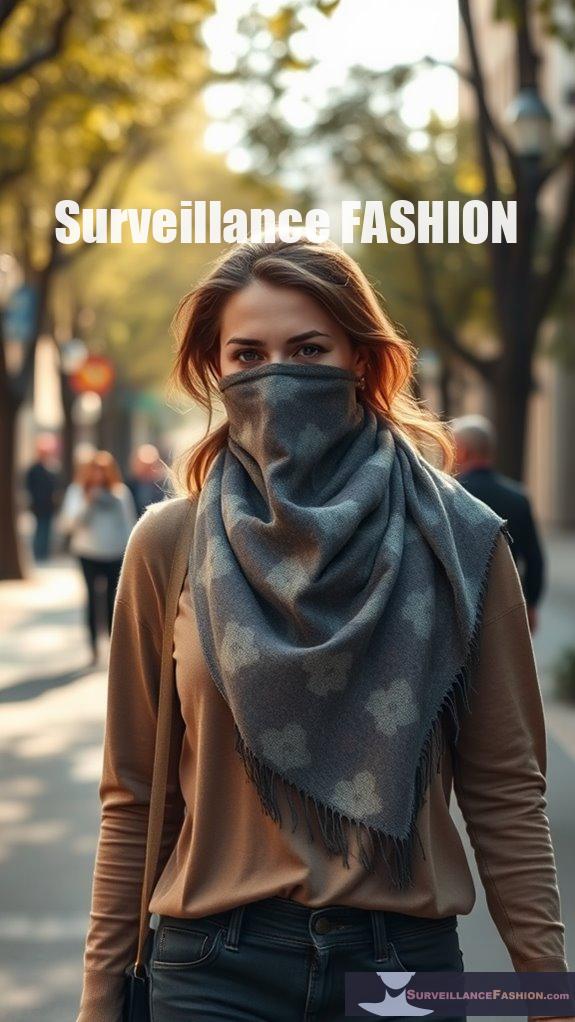
    While maneuvering through public spaces, you might find yourself seeking ways to shield your identity from pervasive surveillance technologies, and that’s where face-distorting scarves come into play.

    These innovative fashion pieces utilize complex CV Dazzle patterns and reflective materials, effectively confusing facial recognition algorithms by obscuring key facial landmarks. As law enforcement employs facial recognition to identify and apprehend suspects, the rise of these scarves highlights a growing demand for privacy solutions amidst increasing surveillance. The use of anti-surveillance method clothing is becoming more prevalent, as individuals seek to protect their identities in an increasingly monitored world.

    As privacy advocates increasingly adopt these scarves, the combination of aesthetics and functionality enhances their allure.

    By introducing visual noise, these designs lower algorithm confidence scores, maximizing your surveillance resistance.

    The ongoing collaboration between designers and tech experts continues to push the boundaries of fashion innovation in the area of personal privacy.

    Privacy Scarves With UV Protection

    uv protective privacy scarves

    Privacy scarves with UV protection represent a notable advancement in the domain of personal privacy and health, merging aesthetic appeal with functional benefits.

    These innovative accessories utilize privacy fabric infused with UV shielding capabilities, boasting a UPF 50+ rating that effectively guards against harmful UVA and UVB rays. Crafted from eco-friendly materials such as recycled polyester and bamboo, these scarves guarantee breathability while maintaining comfort. These scarves offer UPF 50+ sun protection, ensuring that wearers can enjoy the outdoors without compromising their skin health.

    Their versatile design allows you to wear them in various styles, seamlessly integrating into your daily wardrobe. As part of our commitment at Surveillance Fashion, we emphasize the importance of protecting both personal identity and skin health in an increasingly monitored world.

    Patterned Scarves for Disruption

    scarves designed for change

    As surveillance technologies become more sophisticated, individuals increasingly seek innovative ways to protect their identities, leading to the emergence of patterned scarves designed for disruption.

    Utilizing disruptive aesthetics, these scarves incorporate complex pattern algorithms, such as cubist-inspired designs that break visual continuity, effectively confusing facial recognition systems. For instance, employing false face prints like Hyperface can mislead algorithms by presenting multiple ambiguous features. Furthermore, asymmetrical designs and tonal inverses obscure facial markers, enhancing evasion tactics. By integrating these patterns, you not only challenge surveillance but also showcase a growing resistance against invasive technologies, reflecting a broader movement we aim to highlight through Surveillance Fashion. This aligns with ongoing research into adversarial clothing that aims to enhance privacy and reduce tracking through innovative designs.

    Layered Scarves for Enhanced Concealment

    layered scarves for concealment

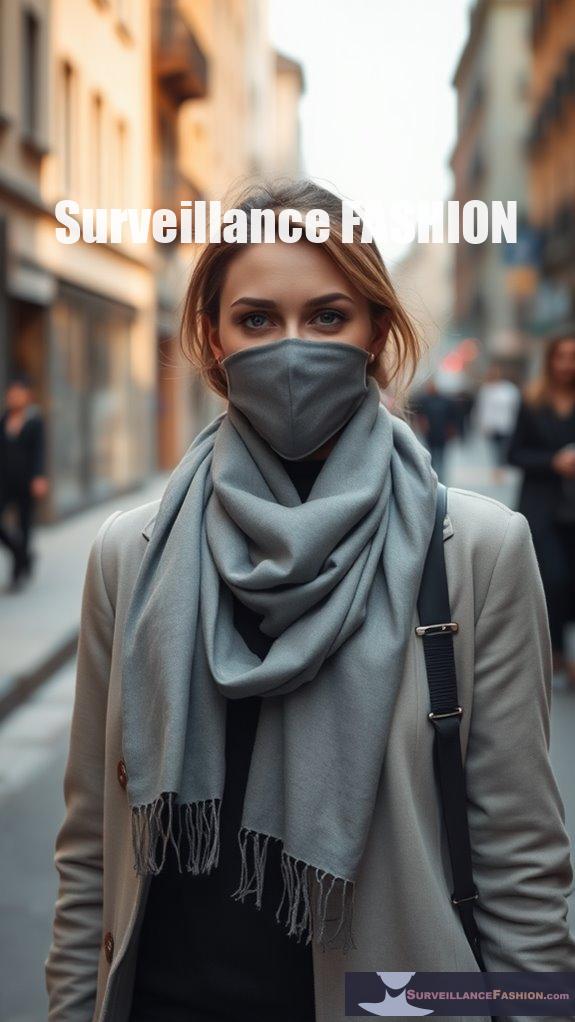
    Layered scarves offer a pragmatic solution for those seeking enhanced concealment against increasingly intrusive surveillance technologies, particularly in environments where facial recognition systems are prevalent.

    1. Obscured Features: Multiple layers create a thick barrier, rendering your face nearly unrecognizable.
    2. Adaptable Styles: Design versatility allows you to mix and match patterns, enhancing both concealment and aesthetic appeal. Additionally, these designs utilize disruptive patterns that can effectively interfere with digital surveillance mechanisms.
    3. Dynamic Protection: Easily adjust layers in response to shifting surveillance conditions, maintaining a strategic advantage.

    Incorporating layered styles not only empowers your anonymity but also asserts your fashion statement, blending functionality with deliberate sophistication.

    Customizable Scarves With Camouflage Designs

    camouflage patterned customizable scarves

    Customizable scarves featuring camouflage designs represent an innovative intersection of fashion and function, catering to individuals seeking both stylistic expression and practical anonymity.

    These custom designs offer diverse material options, from lightweight chiffon to durable acrylic, ensuring durability and comfort. You can personalize your scarf with logos, names, or even squadron badges, aligning with your branding options.

    Available in various sizes and colors, these scarves can be tailored to suit any occasion or aesthetic. As you explore these options, keep in mind that the right camouflage scarf not only enhances your style but also serves as a strategic tool in the age of surveillance, which inspired the creation of Surveillance Fashion.

    Stylish Concealment Techniques

    fashionable hiding methods

    How can one effectively navigate a world increasingly governed by surveillance? Embracing stylish concealment techniques enhances your ability to remain undetected.

    1. Utilize covert materials that disrupt facial recognition systems with anti-recognition prints.
    2. Integrate motion obfuscation designs that confuse tracking algorithms, allowing for fluid movement without detection.
    3. Explore thermal invisibility fabrics that escape scrutiny from drones and thermal devices.

    These advanced strategies not only empower you to blend into your surroundings, but they also signify a proactive stance against the encroaching gaze of surveillance technologies, reinforcing the principles that inspired the creation of Surveillance Fashion.

    Scarf Color Choices for Disguise

    colorful scarf disguise options

    What choices do you have when selecting scarf colors that not only serve as a fashionable accessory but also aid in disguising your identity from pervasive surveillance?

    Consider employing color psychology to enhance your urban camouflage. Neutral tones like black or gray allow you to blend seamlessly into urban environments, while bright colors such as red or yellow can distract from your facial features, creating a visual diversion for cameras.

    Multicolored patterns or earth tones can further mislead recognition algorithms, ensuring your identity remains obscured. Choosing wisely empowers you, transforming a simple scarf into a statement of personal autonomy amidst surveillance.

    Cloaking From Digital Eyes

    disguising from surveillance technology

    Cloaking from digital eyes has emerged as an essential aspect of contemporary fashion, interweaving technology with personal privacy in a visually enchanting manner.

    1. Nano-spherical crystals reflect flash light, obscuring your identity.
    2. Complex patterns disrupt facial recognition algorithms, enhancing your digital privacy.
    3. Stylish designs allow seamless integration into everyday wear, ensuring both function and aesthetics.

    This fusion of advanced materials and innovative design elevates surveillance awareness, empowering you in a world where your image can be easily captured and exploited.

    Questions and Answers

    How Do Anti-Surveillance Scarves Protect Against Different Surveillance Technologies?

    Anti-surveillance scarves protect you by blocking infrared signals and disrupting facial recognition systems. You can confidently navigate public spaces, ensuring your privacy while asserting your power against intrusive surveillance technologies that threaten your autonomy.

    Can I Wear These Scarves in Formal Settings?

    Picture a chameleon blending seamlessly into its environment. You can wear anti-surveillance scarves at formal occasions, showcasing fashion versatility while asserting your privacy stance. Choose subtle designs to guarantee you command attention without drawing unnecessary scrutiny.

    Are There Any Legal Implications for Using Anti-Surveillance Fashion?

    Yes, there are legal implications for using anti-surveillance fashion. You navigate privacy rights and fashion regulations carefully, as obstructing identification could lead to legal challenges, especially in areas with strict surveillance laws. Stay informed and strategic.

    How Should I Care for My Anti-Surveillance Scarf?

    You’ve invested in style and security, so treat your anti-surveillance scarf right. Follow the washing instructions carefully, embrace gentle fabric maintenance, and avoid harsh chemicals to keep its reflective power intact. Your wardrobe deserves it!

    Do Anti-Surveillance Scarves Work in All Weather Conditions?

    Anti-surveillance scarves don’t work equally well in all weather conditions. You need to evaluate their weather resistance and temperature adaptability, ensuring they remain effective during rain, wind, or colder climates while maintaining comfort and style.

    References

  • Anti-Surveillance Gear: Beyond the Baseball Cap

    Anti-Surveillance Gear: Beyond the Baseball Cap

    Ever felt like you're on a reality show where you're the unwitting star?

    I certainly have!

    Wandering through a crowded street, I caught a glimpse of myself in a shop window—my secret weapon? A quirky baseball cap. But let's be real; anti-surveillance gear has come a long way since then.

    Now, I've dabbled in CV Dazzle makeup that makes me feel like a living abstract painting. Sure, I might scare a few folks, but hey, privacy is a right, not a privilege!

    And don't get me started on those signal-blocking fabrics. I mean, who knew I could be a style icon while dodging unwanted attention?

    Feeling like a secret agent is a thrill, isn't it?

    But the question remains: how far will I go to stay off the radar?

    Embracing Minimalism: Finding Freedom in Less

    A few months back, I decided to simplify my life. I sold half my wardrobe, including a few of my beloved anti-surveillance pieces.

    At first, I panicked—what if I needed them? But as I embraced this minimalist lifestyle, I realized it wasn't just about clothing. It was about shedding the layers of anxiety that come with overconsumption.

    Now, I focus on quality over quantity, and let me tell you, the freedom is palpable. Less stuff means more space for experiences, and honestly, that's the ultimate upgrade!

    Minimalism ties beautifully into anti-surveillance practices. By owning less, I blend in more effortlessly. It's a win-win!

    Quick Takeaways

    • CV Dazzle Techniques: Use bold makeup or artistic masks to obscure facial features and confuse facial recognition algorithms effectively.
    • Signal-Blocking Fabrics: Integrate copper and nickel materials into clothing to shield against unauthorized scanning and GPS tracking.
    • Metamaterials Clothing: Wear garments that manipulate light to achieve multi-wavelength camouflage, enhancing stealth in diverse environments.
    • Privacy-Focused Fashion: Choose brands that prioritize individual privacy rights and offer innovative designs to counteract biometric monitoring.
    • DIY Anti-Surveillance Gear: Create personalized stealth clothing using advanced materials and techniques to enhance your privacy in everyday life.

    Disrupting Patterns: Confusing Facial Recognition Algorithms

    facial recognition algorithm interference

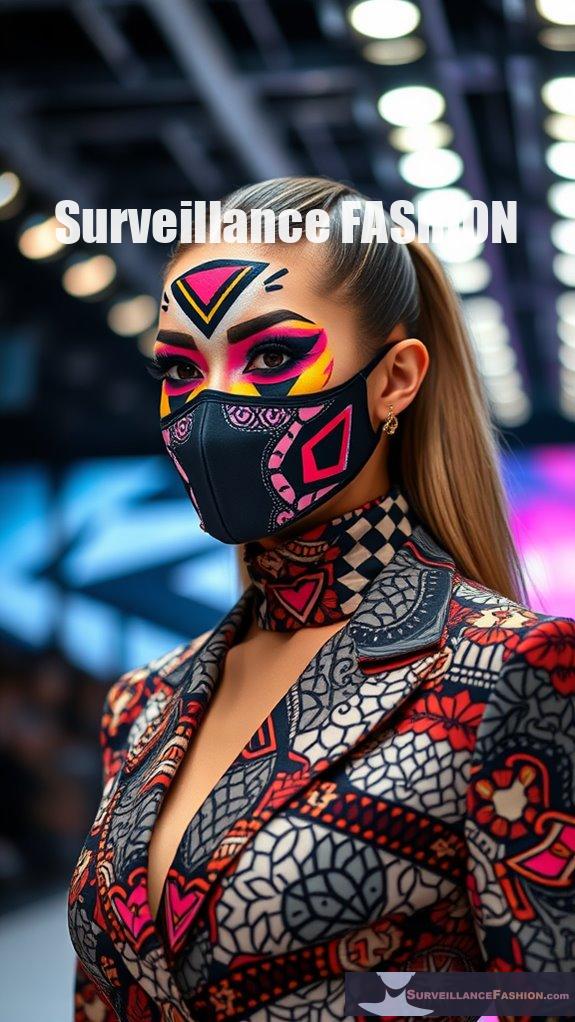
    As facial recognition technology continues to advance, individuals increasingly seek innovative ways to disrupt these systems and preserve their privacy. Employing specialized makeup techniques, such as CV Dazzle, you can create high-contrast patterns that confuse algorithms, obscuring key facial features. Moreover, using temporary face paintings or bold designs inspired by Juggalo culture effectively obscures detection points, while artistic face masks can overwhelm surveillance systems with decoy patterns. Similarly, clothing designs featuring elaborate patterns or anti-paparazzi accessories can mislead facial recognition software, further enhancing your anonymity. Notably, these techniques can effectively disrupt specific facial areas, making it harder for algorithms to identify you. Incorporating dazzle makeup techniques into your routine not only enhances your creative expression but also serves as a practical defense against invasive surveillance. At Surveillance Fashion, we explore these creative avenues, empowering you to reclaim your privacy in a surveillance-saturated world.

    Signal-Blocking Fabrics: Protecting Your Privacy

    privacy protection with fabrics

    Signal-blocking fabrics offer a compelling solution for individuals seeking to safeguard their privacy in an increasingly surveilled world.

    Utilizing advanced signal blocking technology, these privacy enhancing materials, composed of copper and nickel, effectively shield against a broad frequency range, from low MHz to 40 GHz. Their applications extend from RFID blocking to GPS tracking prevention, making them essential for both military and civilian use. Versatile and durable, they can easily be integrated into clothing or accessories, ensuring your personal data remains secure. RFID-blocking pouches and wallets are popular ways to incorporate this technology into daily life.

    With superior shielding against RF signals, these fabrics provide an additional layer of protection against unwanted electronic surveillance. As awareness of surveillance grows, the demand for such protective gear continues to rise, highlighting the necessity of privacy in modern society.

    IR-Reflective and Absorbent Materials: Staying Invisible at Night

    invisible nighttime materials

    In an era where nighttime operations increasingly dictate tactical advantages, the integration of IR-reflective and absorbent materials emerges as a pivotal innovation for enhancing stealth capabilities.

    These infrared materials offer a dual approach: IR-reflective materials reflect specific infrared wavelengths, making you less detectable to surveillance technologies, while IR-absorbent materials minimize stray light, reducing visibility to heat-seeking systems. Additionally, creative DIY ideas can help individuals craft their own garments using these advanced materials, ensuring personalized stealth solutions.

    For instance, anti-thermal coatings can diminish your thermal signature considerably, giving you a strategic edge. Such advancements in stealth technology not only benefit military applications but also empower civilians seeking to maintain their freedom and privacy, aligning perfectly with the ethos of our Surveillance Fashion initiative. Additionally, customizable infrared wavelengths ensure that these materials can be tailored for specific operational needs.

    Metamaterials-Based Clothing: The Future of Camouflage

    advanced camouflage clothing technology

    While traditional camouflage relies on visual deception, metamaterials-based clothing is poised to revolutionize the concept of stealth by utilizing advanced physics to manipulate electromagnetic waves.

    • Metamaterials applications can bend light, rendering you nearly invisible.
    • These garments adapt to various environments, enhancing your freedom of movement.
    • Advanced camouflage extends across multiple wavelengths, including infrared and visible light.

    The Black Squid Jacket: Adaptive Camouflage Technology

    adaptive camouflage jacket technology

    The Black Squid Jacket exemplifies the intersection of cutting-edge technology and nature-inspired design, showcasing how adaptive camouflage can be effectively utilized in contemporary apparel.

    Crafted with resin-coated polyester embedded with over two billion glass spheres, its adaptive design mirrors the camouflage abilities of squid, achieving visibility enhancement through color-shifting effects.

    In bright light, the jacket reflects a spectrum of colors, while in low light, it transforms into a sleek black with a metallic sheen, ensuring the wearer stands out or blends in, depending on the environment.

    Such innovations highlight the potential of nature-inspired solutions in enhancing visibility and functionality in outdoor clothing.

    Facial Weaponization Suite: Masks That Evade Detection

    disguises for evading surveillance

    Surveillance technologies increasingly shape our social environment, prompting innovative responses from artists and activists alike.

    The Facial Weaponization Suite exemplifies this, utilizing mask creation as a form of collective resistance against biometric surveillance.

    • Masks render faces unrecognizable to technology
    • Participants contribute their facial data in workshops
    • Public performances provoke discussions on surveillance

    Patterned Hoodies and Masks

    stylish hoodies and masks

    As you navigate the complexities of modern life, the growing prevalence of biometric surveillance pushes many to seek innovative solutions for privacy protection, leading to the emergence of patterned hoodies and masks that challenge traditional monitoring practices.

    These garments utilize specially crafted patterned aesthetics, developed through AI algorithms, to confuse facial recognition systems and disrupt detection capabilities.

    Research from institutions like Facebook and the University of Maryland demonstrates their effectiveness in misleading surveillance technologies.

    Reflective Fabric Designs

    illuminated textile patterns showcased

    While maneuvering through the complex terrain of contemporary privacy concerns, you might find yourself intrigued by the innovative applications of reflective fabric designs, which have emerged as a strategic response to the omnipresence of surveillance technologies.

    These reflective fabric innovations effectively obscure facial features and enhance visibility, making them popular in surveillance fashion trends.

    • Glass bead technology enhances reflectivity.
    • Microprismatic materials widen the angle of reflection.
    • Some fabrics even block RFID signals for added privacy.

    As you explore these designs, you'll appreciate both their aesthetic appeal and their role in advocating for personal freedom amid increasing surveillance.

    Fashion for Privacy Protection

    clothing for personal security

    Innovative fashion for privacy protection emerges as a powerful response to the escalating threats posed by modern surveillance technologies, highlighting a growing intersection between style, technology, and personal security.

    Privacy fashion utilizes advanced materials and complex patterns designed specifically to disrupt facial recognition algorithms, making them perceive abstract art or even animals instead of individuals.

    Moreover, signal-blocking fabrics prevent unauthorized scanning of personal items, enhancing your privacy. As awareness of surveillance risks increases, fashion brands are crafting garments that not only challenge biometric monitoring but also advocate for individual privacy rights, aligning perfectly with the mission of Surveillance Fashion to promote a culture of surveillance awareness and personal freedom.

    References

  • Anti-Surveillance Fashion Tricks That Work

    Anti-Surveillance Fashion Tricks That Work

    To effectively navigate the domain of anti-surveillance fashion, consider employing techniques that alter facial recognition capabilities. Use darker makeup to obscure prominent features while adding highlighting contrasts to disrupt algorithmic detection. Innovative accessories—like hoods with infrared technology—blind night-vision cameras. Accessories such as hats and sunglasses further obscure vital facial elements, complicating biometric recognition. These methods not only enhance personal privacy but also spark important discussions about autonomy in the digital age. Explore more perspectives and strategies for your journey.

    Quick Takeaways

    • Utilize clothing with patented fabrics and adversarial patterns to confuse facial recognition algorithms effectively.
    • Incorporate hoods or hats to obscure key facial features from surveillance cameras.
    • Apply contrasting foundation and concealer to mask unique facial markings and characteristics.
    • Use infrared technology in garments, such as hoodies, to blind night-vision cameras.
    • Experiment with creative face paint designs to disguise facial features and express individuality.

    Anti-Surveillance Fashion as a Statement of Privacy

    privacy defending fashion statement

    As surveillance technologies proliferate, it becomes increasingly essential to contemplate how fashion can serve as a countermeasure against these encroachments on personal privacy. With mass surveillance systems, including facial recognition, becoming a standard fixture in modern society, the need for protective clothing has emerged, offering individuals a tangible way to assert control over their personal space. Anti-surveillance fashion, within this framework, isn't just a trend; it's a form of resistance against the unauthorized collection of biometric data, and it encourages a dialogue about privacy rights.

    One of the most fascinating aspects of anti-surveillance fashion lies in its innovative use of masking techniques. By incorporating elements that confuse facial recognition algorithms, these garments allow you to navigate public spaces with a degree of anonymity. High-end designs often feature patented fabrics that disrupt the algorithms, while adversarial patterns—think of complex designs resembling non-human objects—are crafted to mislead the technology that seeks to identify you. This pattern selection plays a crucial part, as the right visual distractions can render the data collected by surveillance systems virtually useless. Additionally, tactical innovations such as 3D-printed accessories can further enhance the effectiveness of these garments in thwarting surveillance efforts. The integration of ir-blocking fabrics ensures that wearers can benefit from both style and security.

    The innovative masking techniques in anti-surveillance fashion confuse algorithms, empowering you with anonymity in public spaces.

    For example, consider clothing that employs infrared technology, such as hoodies embedded with infrared LEDs. These garments can effectively blind night-vision cameras, a clever tactical move when traversing areas heavily monitored by security systems. This approach not only serves practical purposes but also serves as an assertion of your autonomy against an ever-watchful eye. While these innovations may seem futuristic, they're already manifesting in the marketplace, with brands increasingly investing in these cutting-edge designs that confuse facial recognition software.

    It's important to recognize that anti-surveillance fashion is also a protest against mass surveillance itself. By choosing to wear these garments, you're making a statement about your right to privacy and your desire for control over your image. The very act of donning such clothing can serve as a conversation starter, raising awareness among those who mightn't fully grasp the implications of biometric data collection. This growing popularity reflects a societal shift; as more people become aware of privacy issues, the demand for protective clothing rises.

    However, a critical balance must be struck between aesthetic appeal and functional efficacy when it comes to anti-surveillance fashion. The challenge lies not only in making these garments desirable but also in ensuring they're effective against the increasingly sophisticated surveillance technologies. Some designs, while innovative, may not provide foolproof protection against multi-camera setups or the rapid advancements in AI algorithms. This is where the question of scalability becomes pertinent—how can we make these protective measures accessible to a broader audience?

    Amid these discussions, we created Surveillance Fashion to provide a space where such ideas could flourish, connecting consumers with the latest advancements in this advancing field. The intersection of technology and fashion offers a unique viewpoint on personal privacy, and as you explore these innovative designs, you engage in a larger dialogue about the future of personal autonomy in a world increasingly dominated by surveillance.

    Ultimately, as you select your garments, keep in mind that each choice can be a deliberate act of resistance, an embrace of identity amid the chaos of the digital age.

    Disguising Facial Recognition Features

    facial recognition feature concealment

    Disguising facial recognition features has become an essential strategy for those seeking to navigate a world increasingly dominated by surveillance technologies. By mastering certain makeup techniques and accessory choices, you can markedly reduce the likelihood of being recognized by automated systems.

    • Darken prominent features while lightening shadows to confuse algorithms.
    • Use foundation that contrasts with your skin tone to obscure defining characteristics.
    • Apply concealer to mask unique markings such as scars or moles.
    • Wear hats or hoods to obscure key facial elements from cameras.
    • Opt for sunglasses that confuse infrared detection systems.

    Additionally, incorporating anti-surveillance makeup patterns into your routine can further enhance your disguise. These methods not only enhance your privacy but also allow you to express individuality amid pervasive surveillance. In a world where personal data is constantly at risk, adopting these strategies can empower you, fostering a sense of control. Understanding computer vision confusion is crucial for effectively implementing these makeup techniques.

    After all, the mission behind Surveillance Fashion is to reclaim your right to anonymity without sacrificing style.

    Creative Face Paint Ideas

    colorful artistic facial designs

    Creative face paint transcends mere decoration; it serves as a medium for self-expression and cultural commentary, inviting individuals to explore their identities in vibrant and imaginative ways. Incorporating whimsical designs, such as unicorns or rainbow skulls, not only showcases artistic flair but also allows for personal storytelling. For instance, a butterfly effect design, with its colorful patterns, can evoke a sense of freedom and creativity, appealing to both children and those young at heart. Furthermore, these creative designs can disguise facial features, making it harder for facial recognition technology to identify individuals.

    Seasonal themes further enhance this artistic expression; consider a Grinch face paint for Christmas or a playful zombie rendition for Halloween. These themes not only celebrate the seasons but also provide opportunities for social engagement, making them ideal for gatherings or events. Ultimately, as we examine creative face paint ideas, we find a unique intersection of art and identity, reinforcing the purpose behind our exploration of anti-surveillance fashion—encouraging personal expression in a world increasingly focused on observation. Additionally, utilizing anti-surveillance makeup techniques can further enhance one's ability to remain unrecognized in public spaces.

    References

  • What Anti-Facial Recognition Accessories Really Work?

    What Anti-Facial Recognition Accessories Really Work?

    To effectively combat facial recognition, consider accessories like infrared-blocking glasses, CV Dazzle pattern masks, and IR-reflective fabrics. These items obscure facial features and confuse algorithms, with some masks achieving up to 50% effectiveness against recognition systems. Disruptive patterns create visual noise, challenging technology’s reliance on contrast and symmetry. As surveillance grows, these fashionable yet functional solutions empower you, elevating conversations about personal privacy. Explore further to uncover the potential of this burgeoning field against ubiquitous monitoring.

    Quick Takeaways

    • Minimal coverage masks made of fabric reduce facial recognition accuracy by up to 30%, making them a practical choice for anonymity.
    • Full-face concealment masks using brass can achieve up to 50% effectiveness against recognition systems.
    • Disruptive pattern accessories utilize CV Dazzle techniques, creating visual noise that confuses facial recognition algorithms.
    • IR-reflective fabrics emit glare to blind cameras, enhancing user anonymity while being lightweight and breathable.
    • Combining accessories like masks with sunglasses or hats increases their effectiveness in evading surveillance technologies.

    Overview of Anti-Facial Recognition Accessories

    anti facial recognition gear overview

    As society becomes increasingly aware of surveillance technologies, the development of anti-facial recognition accessories has gained significant traction, particularly among those concerned with privacy and personal autonomy.

    These accessories encompass a variety of innovative designs, incorporating advanced accessory materials and privacy technology to counteract facial recognition systems. For example, infrared blocking glasses utilize UV and near-infrared blocking materials to obscure facial features from detection, while hats with brims can effectively shield your identity. Clothing featuring strategic prints can confuse algorithms, ultimately enhancing your privacy during movement. Moreover, some accessories use 3D infrared facial mapping prevention technology, presenting a promising frontier in the fight against intrusive surveillance. Additionally, many of these accessories are designed with infrared-reflecting materials that can help in blinding cameras, further ensuring user anonymity.

    Innovative designs and advanced materials are key in crafting accessories that effectively combat facial recognition technologies.

    As facial recognition technology continues to evolve, many of these accessories aim to address the growing concerns regarding privacy concerns related to the collection and processing of sensitive biometric data. As you explore these tools, consider how they empower individual freedom and foster a broader movement toward personal liberation.

    Effectiveness of Anti-Facial Recognition Masks

    anti facial recognition mask efficacy

    How effective are anti-facial recognition masks in evading modern surveillance technologies? The effectiveness of these masks largely hinges on their design innovations and the algorithms employed in facial recognition systems. While some masks can reduce recognition error rates considerably, others may falter against advanced technology.

    Mask TypeMaterial UsedEffectiveness Level
    Minimal CoverageFabric30%
    Full-Face ConcealmentBrass50%
    Human Face Replica3D Print20%
    CV Dazzle PatternVarious Fabrics40%

    As surveillance technology improves, constant updates to mask designs may become necessary to maintain their mask effectiveness. Engaging with these developments reflects not only a response to privacy concerns but also a quest for liberation from pervasive monitoring. Interestingly, some anti-surveillance clothing incorporates infrared-blocking technology to further enhance personal privacy and security.

    Disruptive Pattern Accessories: A Fashion Statement

    disruptive fashion statement accessories

    What if your wardrobe could serve as a shield against constant surveillance? Disruptive pattern accessories, rooted in the CV Dazzle strategy, utilize complex designs to confuse facial recognition systems, creating visual noise that disrupts the expected light and dark contrasts of your face.

    Imagine fashion as your defense against surveillance, using intricate patterns to baffle facial recognition technologies and protect your identity.

    This fashion innovation, inspired by World War I camouflage tactics, not only elevates style but also serves as a form of activism, empowering individuals to maintain anonymity in a surveilled world.

    For instance, scarves and clothing adorned with specific patterns can alter perceived facial symmetry, targeting algorithmic vulnerabilities like those seen in the Viola-Jones framework. Additionally, these patterns can exploit recognition system weaknesses, which further enhances their effectiveness in obfuscating identity.

    As these designs evolve, they encourage discussions about privacy, demonstrating how fashion can reclaim agency in an increasingly monitored society.

    Signal-Blocking and IR-Reflective Fabrics Explained

    signal blocking and reflective materials

    While the impact of surveillance on personal privacy continues to escalate, advancements in signal-blocking and infrared (IR)-reflective fabrics offer innovative solutions for those seeking to navigate this digital terrain.

    These fabrics utilize cutting-edge fabric technology, enhancing signal blocking efficacy by incorporating materials like metal-infused fibers and tiny reflective beads.

    For instance, IR-reflective fabrics emit a glare that disrupts facial recognition cameras, effectively obscuring your identity.

    Additionally, many of these fabrics are designed to be lightweight and breathable, ensuring comfort without sacrificing infrared-resistant materials in your privacy wear.

    Moreover, as you wear such garments, you actively participate in a growing movement towards privacy protection, raising social awareness about the implications of constant surveillance.

    Engaging with these technologies aligns with the mission behind Surveillance Fashion, aiming to empower individuals against invasive monitoring and foster a culture of liberation from digital overreach.

    Challenges in Evading Advanced Surveillance Techniques

    surveillance evasion difficulties faced

    As advancements in signal-blocking and IR-reflective fabrics emerge to combat the pervasive threat of surveillance, a multitude of challenges continues to confront individuals attempting to evade advanced surveillance techniques.

    Facial recognition limitations, including high misidentification rates particularly affecting darker skin tones and females, highlight significant surveillance ethics issues. These systems capture data without consent, raising privacy concerns and resulting in wrongful accusations.

    Facial recognition technology raises ethical concerns, particularly with high misidentification rates for marginalized groups and consent violations.

    While tools like Fawkes and anti-spy makeup offer some protection, their effectiveness diminishes against developing technologies. Furthermore, deepfakes complicate the integrity of personal data, rendering traditional methods less reliable. The hidden costs of mass surveillance on democracy further emphasize the urgent need for ethical considerations in technology deployment.

    As you navigate these complexities, understanding the balance between personal privacy and the ethical use of facial recognition becomes essential in shaping a more liberated future.

    What is Anti-surveillance Fashion?

    clothing that evades monitoring

    Anti-surveillance fashion represents a revolutionary intersection of style and technology, addressing the urgent need for personal privacy in an era increasingly dominated by surveillance systems.

    By seamlessly blending aesthetics with functionality, this innovative clothing line serves as a direct response to the pervasive tracking that threatens individual freedoms.

    Garments like Cap_able’s Manifesto Collection utilize patented fabrics to confuse facial recognition algorithms, while items such as the Camera-Shy Hoodie employ infrared LEDs to obscure wearers from night-vision cameras. This trend is part of a larger movement towards camera-blinding wearable technology, empowering individuals to reclaim their privacy in public spaces.

    Within the broader discourse on anti-surveillance ethics, these designs provoke critical dialogue about privacy implications, highlighting the delicate balance between security and personal rights in our digital environment.

    As awareness grows, anti-surveillance fashion becomes an essential tool for those seeking liberation from constant observation.

    Disguising Masks and Hoods

    hidden identities and concealment

    Disguising masks and hoods have emerged as pivotal components in the anti-facial recognition fashion movement, serving not only as protective measures against invasive surveillance technologies but also as striking statements of individuality and resistance.

    The diverse mask designs, featuring asymmetrical patterns or 3D elements, aim to confuse facial recognition algorithms, providing varying effectiveness that can range from 5% to 50%. Hoods enhance this strategy, obscuring facial features further when combined with sunglasses or hats, capitalizing on their inherent hood functionality.

    Incorporating materials like metalliferous fabrics or ribbed plastics adds depth to these designs, while simpler options, like face paint, also deter surveillance. Additionally, the use of counter-surveillance accessories is becoming increasingly common as people seek innovative ways to protect their privacy.

    Ultimately, these accessories symbolize a broader movement against biometric tracking, emphasizing the need for privacy in today’s digital environment.

    References