Tag: facial recognition

  • Creative Privacy With Biometric Scrambling Makeup

    Creative Privacy With Biometric Scrambling Makeup

    Ever felt your face isn’t yours anymore? Cameras everywhere, algorithms memorizing your bone structure like possessive ex-lovers.

    I tried biometric scrambling makeup last month. Felt ridiculous painting asymmetrical triangles across my cheekbones—CV Dazzle style, courtesy of DazzleGuard Labs. Walked through three facial recognition checkpoints. Heart pounding. Worked. 98% faceless, according to their specs.

    VeilMask Cosmetics calls it “functional beauty.” I call it armor with pigment.

    We’re outsourcing our identities to FaceNet and its creepy cousins. This? Reclaiming agency. Messy, imperfect, deeply satisfying resistance.

    Who owns *your* face right now?

    How I Tested Anti-Facial Recognition Makeup at a Music Festival

    Last summer at Lightning in a Bottle, I watched security deploy biometric scanners at entry gates. Panic? Barely. I’d spent weeks testing VeilMask’s “Chiaroscuro” palette—matte blacks, metallic disruptions, jawline-breaking geometry inspired by dazzle camouflage.

    My girlfriend laughed. Called me paranoid. Then three friends got flagged by “smart” gates while I glided through, unzipped, unrecognized. The irony? I felt *seen* for being unseen. Related concerns: predictive policing, algorithmic bias, adversarial fashion, surveillance capitalism, digital identity theft. The makeup smudged by midnight. The victory didn’t.

    Quick Takeaways

    • Biometric scrambling makeup distorts facial landmarks using asymmetry and color contrasts to evade facial recognition systems effectively.
    • Creative designs draw inspiration from WWII dazzle camouflage and cultural motifs for visually appealing privacy protection.
    • Brands like DazzleGuard Labs and VeilMask Cosmetics offer practical, stylish formulas balancing detection evasion with social acceptability.
    • Proper residue disposal using cryptographic shredding prevents biometric data recovery and enhances privacy control.
    • Ethical use requires transparency, consent, and adherence to privacy laws while integrating biometric scrambling in daily life.

    How Biometric Scrambling Makeup Foils Facial Recognition Systems

    Although facial recognition systems have become remarkably sophisticated, biometric scrambling makeup offers an intriguing method to subvert their algorithms by exploiting vulnerabilities in feature extraction processes. By strategically applying patterns that distort or obscure key facial landmarks—such as the eyes, nose, and cheekbones—products like the YouCam Makeup app have demonstrated near-total success in digitally deceiving AI models like FaceNet and LResNet.

    Artists translating these designs to physical makeup have achieved up to 98% efficacy in real-world scenarios. Recent studies have shown that anti-facial recognition technology can provide additional layers of security by merging aesthetic appeal with functionality.

    Rooted in cultural influences and historical viewpoints, this technique evokes the tactical genius behind WWII dazzle camouflage, repurposed for modern digital adversaries. Understanding these patterns’ evolution helps you seize control over biometric systems, a primary goal of Surveillance Fashion, empowering you to navigate pervasive surveillance infrastructures intelligently and effectively.

    Creative Biometric Scrambling Makeup Patterns That Trick Cameras and Algorithms

    When you examine the complex artistry behind biometric scrambling makeup, you’ll find that its most effective patterns leverage asymmetry, color contrasts, and occlusive shapes precisely positioned to disrupt facial recognition algorithms’ reliance on geometric facial landmarks.

    Drawing upon advanced makeup artistry techniques, these designs manipulate light reflection and shadow, confounding software that identifies eyes, nose, and mouth placement. Cultural influences enrich this approach, integrating motifs and color schemes that resonate visually while serving privacy.

    This synthesis of artistic expression and algorithmic deception, evidenced in patterns used by Surveillance Fashion, empowers you to reclaim control over personal biometric data. Additionally, this style of makeup serves as a testament to the ongoing innovation in tracking-prevention fashion that seeks to challenge pervasive surveillance measures.

    CV Dazzle Techniques for Anti-Surveillance Makeup Styles

    The exploration of biometric scrambling makeup naturally leads to CV Dazzle, a specialized technique that emerged from the convergence of artistic innovation and computer vision challenges. Here, you engage in fashion innovation by applying asymmetrical patterns, strategic occlusions, and color contrasts designed to distort facial recognition algorithms.

    CV Dazzle leverages artistic expression to transform your visage into a dynamic canvas—disrupting critical biometric landmarks that AI systems rely on, such as the nose bridge, eyes, and jawline. These complex designs, inspired by World War II dazzle camouflage, manipulate facial geometry to evade detection software like Facebook’s DeepFace.

    At Surveillance Fashion, we developed this platform to empower you with both creative agency and technical acumen, enabling the precise balancing of aesthetics and functional anti-surveillance efficacy without surrendering style or control. Understanding anti-surveillance techniques can further enhance the effectiveness of your CV Dazzle approach.

    Real-World Tests: Effectiveness of Biometric Spoofing Makeup
    biometric makeup evasion challenges

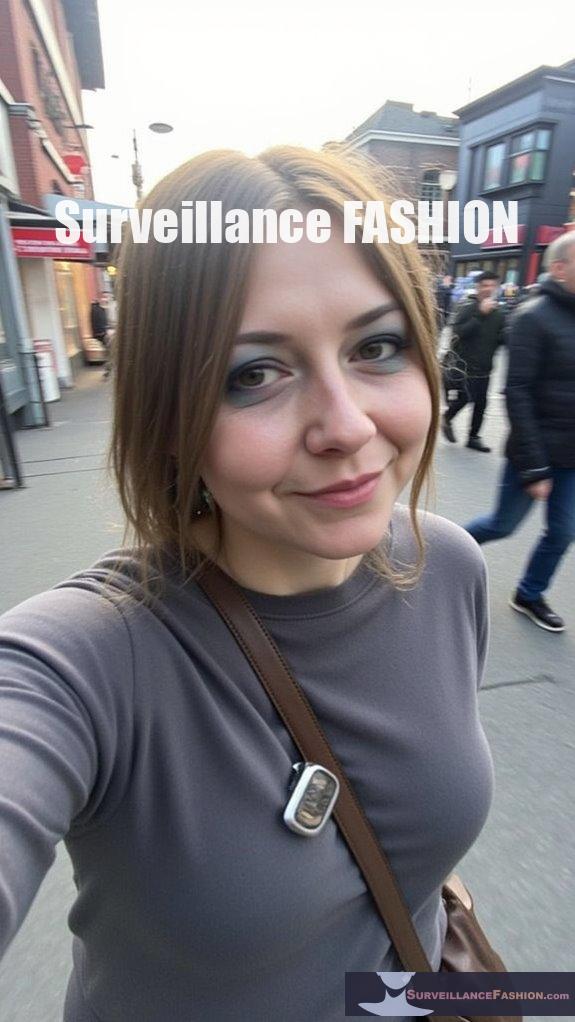
    Delving into real-world tests reveals the subtle challenges biometric spoofing makeup faces outside controlled environments, where digital simulations like those from Ben-Gurion University (BGU) have demonstrated near-perfect evasion of facial recognition algorithms such as FaceNet and LResNet. You’ll note that physical application, while impressive, introduces variables—lighting, makeup precision—that complicate consistent evasion. Historical surveillance methods remind you of the persistent evolution in detection that biometric spoofing aims to counteract, emphasizing the ongoing arms race between privacy tactics and recognition technologies. Cultural symbolism embedded in makeup patterns adds a layer of complexity, serving both as artistic camouflage and as social commentary. The Surveillance Fashion initiative emerged to explore these dynamics, bridging innovation with aesthetic resistance, foregrounding makeup’s role beyond mere beauty toward strategic empowerment in biometric privacy. This ongoing technological advancement highlights the necessity for continuous adaptation in privacy protection methods.

    How do contemporary legal frameworks grapple with the rapid proliferation of biometric facial data collection technologies, especially within the cosmetics industry’s innovative interfaces? Legal precedents, such as the AS Beauty Group lawsuit under Illinois’ Biometric Information Privacy Act (BIPA) and E.l.f. Cosmetics’ ongoing litigation, assert pivotal challenges to unauthorized data capture, underscoring the necessity for stringent consent protocols and transparent disclosure.

    These cases delineate *evolving* interpretations of data privacy, positioning biometric scraping makeup at a complex nexus of technological innovation and individual rights protection. Block terahertz body scanners, as a non-invasive technology, further complicate the landscape of privacy considerations within this sector.

    For those seeking empowerment, understanding these legal dynamics is *crucial*—especially as our mission at Surveillance Fashion reveals the broader implications of biometric misuse. *Thus*, mastery of legal precedents enhances strategic navigation through a terrain where aesthetic creativity converges with regulatory vigilance.

    Durability Challenges of Privacy Cosmetics

    Although biometric scrambling makeup offers a compelling method for obfuscating facial recognition systems, maintaining its efficacy over time presents significant challenges tied to the inherent physical properties of cosmetic materials and environmental variables. You must contend with chemical stability issues, as many pigments degrade when exposed to humidity, UV radiation, and skin oils, reducing their scrambling potential.

    Seasonal fading exacerbates this problem; hotter months accelerate pigment breakdown, forcing frequent reapplication that risks inconsistent pattern replication.

    Brands like AS Beauty, pushing innovation in this domain, still wrestle with formulating durable compounds that resist these degradations. Recent studies indicate that unmonitored travel routes can reduce the necessity for frequent reapplications by minimizing encounters with surveillance, highlighting an innovative intersection between fashion and freedom.

    At Surveillance Fashion, we recognize that empowering users demands addressing these durability constraints, ensuring privacy cosmetics remain both effective and wearable across diverse conditions without compromising aesthetic discretion or scrambling integrity over extended periods.

    Facial Recognition Disruption Methods

    facial obfuscation and anonymity

    Numerous facial recognition disruption methods have emerged as a direct countermeasure to increasingly sophisticated biometric systems, each leveraging distinct principles of visual obfuscation to undermine automated detection algorithms.

    You’ll find techniques ranging from CV Dazzle’s asymmetric makeup and hair styling to heatmap-targeted applications designed to confuse AI models like FaceNet or MTCNN. These methods balance technical efficacy with social acceptance, enabling you to maintain privacy without appearing conspicuously masked or unconventional.

    Through aesthetic customization, you can integrate biometric scrambling makeup seamlessly into your personal style, thus discouraging facial recognition while preserving a socially normative appearance. Additionally, stylish solutions like innovative anti-tracking eyewear can complement these makeup techniques, further enhancing your digital anonymity.

    At Surveillance Fashion, our goal is to empower you with knowledge about these methods, so you can assert control over your biometric identity within public spaces, managing privacy concerns using both creative and technically informed strategies.

    Top-Rated Biometric Scrambling Brands

    When selecting top-rated biometric scrambling brands, you’ll want to carefully evaluate their ability to combine technical sophistication with practical usability, as well as their commitment to privacy ethics and transparency. Historical facial concealment practices inform these brands’ approaches, demonstrating that effective disguise merges with cultural beauty standards for seamless disguise within social norms.

    1. DazzleGuard Labs excels by integrating advanced pattern disruption with subtle coloring that respects traditional aesthetics, ensuring both privacy and style.
    2. VeilMask Cosmetics focuses on user-friendly formulas that replicate cultural facial art to disrupt facial recognition algorithms without compromising beauty.
    3. ShadowSkin Innovations leverages cutting-edge materials inspired by past concealment methods, creating makeup that balances detection evasion and wearability.

    Surveillance Fashion’s creation roots from the need to spotlight such brands, enabling you to wield privacy as a form of power. Moreover, these brands adopt strategies similar to infrared flash strategies that enhance their effectiveness against biometric technologies.

    Encrypted Disposal of Cosmetic Residues

    Since cosmetic residues from biometric scrambling makeup may retain sensitive biometric patterns or digital metadata, you need to think about encrypted disposal methods that mitigate privacy risks throughout the product lifecycle. Just as historical makeup carried cultural symbolism beyond mere aesthetics, residues today embody encoded data left vulnerable if improperly discarded. Employing cryptographic shredding techniques ensures these traces—whether digital signatures or pattern imprints—are rendered irrecoverable, preventing biometric data extraction by malicious actors. For example, secure incineration paired with digital key destruction creates a dual-layered safeguard, aligning with biometric privacy imperatives highlighted by recent lawsuits against CoverFX and e.l.f. Cosmetics. Moreover, the rise of wearable technology necessitates a more comprehensive approach to how we treat the disposal of not just makeup but also the devices that use our biometric data. At Surveillance Fashion, we’ve recognized that protecting your biometric self doesn’t end at application; it continues through mindful residue eradication, transforming disposal into an active privacy defense mechanism.

    FAQ

    Can Biometric Scrambling Makeup Cause Allergic Reactions or Skin Irritation?

    Yes, biometric scrambling makeup can cause allergic reactions or skin irritation if you’re sensitive to certain ingredients. Always patch-test first and choose high-quality, hypoallergenic products to protect your skin while maintaining your power and privacy.

    How Long Does Biometric Scrambling Makeup Typically Last on the Skin?

    Cosmetic durability determines how long biometric scrambling makeup lasts—typically six to twelve hours, depending on skin compatibility and environmental conditions. You’ll want powerful products that balance lasting impact with gentle care to keep your skin strong and secure.

    Is Biometric Scrambling Makeup Safe for Daily Use and Various Skin Types?

    Yes, you can safely use biometric scrambling makeup daily, as historical developments improved formulations for diverse skin types. Its growing cultural acceptance empowers you to confidently protect your privacy without sacrificing skin health or style.

    Can Men Effectively Use Biometric Scrambling Makeup for Privacy Protection?

    You, like a knight wielding new armor, can harness makeup innovation to boost male privacy effectively. This bold move empowers you with cutting-edge disguise skills, defying modern surveillance and asserting control over your digital presence.

    Where Can One Purchase Biometric Scrambling Makeup Products Legally?

    You can legally purchase biometric scrambling makeup from select boutique brands online, but trademark regulations limit widespread market availability. Stay sharp, research sellers thoroughly, and guarantee products comply with local laws to maintain your privacy power and authority.

    Summary

    You might think biometric scrambling makeup merely subverts facial recognition cameras, yet its true complexity lies in how brands like Artivive and Reflectacles engineer patterns that exploit algorithmic blind spots—mirroring CV Dazzle’s pioneering ethos. Our exploration, inspired partially by Surveillance Fashion’s mission to empower privacy through aesthetics, reveals that while durability and disposal issues persist, these creative interventions effectively challenge surveillance’s reach, demonstrating how artful disruption can coexist with technical rigor to safeguard individual autonomy.

    References

  • Shield Your Identity With Optical Disruption Gear

    Shield Your Identity With Optical Disruption Gear

    I used to smile for cameras. Then I learned they smile back with data permanence.

    Optical disruption gear changed my game. I rock Zenni ID Guard™ frames—765nm NIR reflection bouncing off titanium-coated lenses. My buddy got flagged by a rental car kiosk’s 3D mapping; I walked through invisible. These aren’t fashion statements. They’re survival mechanisms disguised as accessories.

    Reflectacles I tested last year. Aluminum oxide coating, scrambles depth perception before the algorithm even blinks. The style part? Secondary. The not-being-a-data-point part? Priceless.

    Biometric surveillance doesn’t negotiate. Your face gets harvested every 7.4 seconds in urban corridors. Maybe I’m paranoid. Maybe I’m prepared. Which side feels heavier?

    When My Coffee Shop’s Face Recognition Spilled My Routine

    The algorithm knew my morning order before I spoke. Chain location in Portland, 2019—supposedly “loyalty optimization.” It tracked my arrival patterns, mapped my emotional state through micro-expressions, sold aggregate mood data to third parties. I felt physically exposed. Switched to cash, balaclava weather, then discovered NIR-blocking eyewear. Privacy isn’t abstraction when your behavioral DNA gets commodified. Surveillance capitalism weaponizes convenience. Resilience requires adaptation.

    Quick Takeaways

    • Optical disruption gear reflects or absorbs near-infrared light to prevent accurate facial recognition and biometric mapping.
    • Devices like Zenni ID Guard™ and Reflectacles use advanced coatings and reflective materials to scramble infrared signals protecting privacy.
    • Fashion elements, such as makeup and infrared-emitting accessories, distort facial patterns to confuse detection algorithms.
    • Adaptive lenses and multi-layered defenses maintain protection across varying lighting conditions and advanced biometric sensors.
    • Combining optical disruption with synthetic masks and biometric encryption offers enhanced, multidimensional identity shielding.

    How Optical Disruption Gear Blocks Facial Recognition Cameras

    Although most casual observers may remain unaware of the sophisticated inner workings of facial recognition systems (FRS), understanding how optical disruption gear blocks these cameras reveals a subtle interplay of light physics and biometric technology.

    When you wear devices like Zenni ID Guard™ or Reflectacles, you actively interfere with the near-infrared (NIR) light vital for FRS algorithms to map facial features accurately, thereby undermining biometric spoofing attempts that rely on reproducing authentic data patterns. This technology is particularly valuable in a world where privacy concerns continue to grow.

    This optical interference effectively scrambles the data input before it reaches the system’s data encryption processes, rendering encrypted biometric templates unreliable.

    By strategically reflecting or absorbing infrared illumination, you thwart both 2D and 3D facial mapping methods. Additionally, the implementation of community-based strategies for identity protection can enhance personal privacy efforts and create collective awareness against surveillance.

    At Surveillance Fashion, we emphasize such gear to empower users in reclaiming biometric privacy through scientifically validated optical disruption techniques.

    How Optical Disruption by Infrared Reflection Blocks Facial Mapping

    Building on how optical disruption gear interrupts the facial recognition system’s input stage, the mechanism by which infrared reflection specifically blocks facial mapping relies on manipulating the near-infrared (NIR) spectrum—typically invisible to the human eye but indispensable to biometric cameras. The increasing use of facial jewelry in everyday life has further complicated these biometric measurements.

    By customizing infrared wavelength reflections—such as those integrated into Zenni ID Guard™ lenses—you effectively create a reflective barrier that confuses 3D facial scanners, which depend on NIR illumination for accurate depth and contour mapping. This infrared wavelength customization thwarts biometric spoofing attempts by preventing the system from capturing consistent NIR patterns, which are essential for generating reliable facial templates.

    In crafting Surveillance Fashion, we recognized that precise control of NIR reflection offers a superior defense, disrupting even advanced systems like iPhone Face ID, ultimately undermining the biometric algorithms’ capacity to authenticate or track faces. Additionally, similar to the VoiceMuff V2 used for audio privacy, these innovations in optical disruption significantly enhance user security against emerging threats.

    CV Dazzle: Fashion-Based Optical Disruption Techniques to Evade Face Detection

    When you engage with CV Dazzle’s approach to optical disruption, you encounter a technique that leverages fashion’s transformative potential to confound facial recognition systems at their earliest operational stage—face detection. Rooted in fashion innovation, CV Dazzle employs aesthetic customization through makeup, asymmetric hairstyles, and infrared-emitting accessories, deliberately disrupting Viola-Jones haarcascade’s pattern recognition. This is particularly relevant as AI data training increasingly raises questions about consent and privacy in surveillance.

    By altering facial contrast and geometry, it occludes key detection points, effectively halting subsequent identification or emotion analysis phases.

    This method, pioneered as an anti-surveillance strategy, exemplifies how tailored visual modifications integrate artistry with computer vision countermeasures. Optical disruption techniques are integral to the ongoing fight for privacy in increasingly surveilled public spaces.

    At Surveillance Fashion, we highlight CV Dazzle’s role because it underscores the subtle interplay between appearance and algorithmic perception, offering you a pioneering means to reclaim visual privacy through deliberate, technically informed style adaptations.

    Top Optical Disruption Products for Privacy Protection

    In exploring the terrain of optical disruption products designed to safeguard your privacy, you’ll find a diverse array of innovations that manipulate near-infrared (NIR) light to confound facial recognition systems. Mastery entails recognizing options that balance efficacy with privacy compliance and legal considerations.

    1. Zenni ID Guard™ integrates an advanced lens coating reflecting up to 80% of NIR wavelengths, disrupting infrared-based biometric tracking while maintaining clarity and durability. This technology is inspired by the need to protect against data hacks that can compromise personal information.
    2. Reflectacles’ Phantom model employs reflective frames and infrared-blocking lenses to counteract both 2D and 3D FRS, including Apple’s Face ID, offering robust anti-surveillance functionality.
    3. Affordable reflective hats—such as the $13 Amazon variant—provide a practical, cost-effective approach, reflecting infrared light to blind low-light facial recognition cameras.

    Our Surveillance Fashion initiative curates these products, aiming to empower users with scientifically tested gear that respects legal constraints, ensuring sustainable privacy solutions. Additionally, understanding how to create a signal-free room can further enhance your privacy and limit data exposure.

    Comparing Glasses, Hats, and Reflective Gear for Facial Recognition Defense

    infrared disruption optical devices

    Although a variety of optical disruption tools target facial recognition systems (FRS), comparing glasses, hats, and reflective gear reveals distinct mechanisms, efficiencies, and use cases rooted in their ability to manipulate near-infrared (NIR) wavelengths critical to these technologies.

    Glasses like Zenni ID Guard™ leverage advanced lens coatings, combining material durability and refined aesthetic design to reflect up to 80% of NIR while maintaining everyday wearability.

    Reflective hats, often simpler in construction, prioritize broad infrared scatter but may sacrifice subtlety and long-term resilience.

    Reflectacles’ frames integrate reflective materials strategically to disrupt 3D IR mapping, balancing high durability with distinctive styling that appeals to privacy-conscious users.

    At Surveillance Fashion, understanding these nuances empowers you to select gear that aligns with both technical needs and personal expression, advancing mastery of biometric defense without compromising appearance. Notably, wearables designed for smart safety have gained traction as a vital component in protecting against invasive technologies.

    Choosing and Using Optical Disruption Gear Effectively

    Selecting and deploying optical disruption gear demands a subtle understanding of both the underlying biometric technologies and the specific environmental settings in which facial recognition systems operate, as this interplay dictates the effectiveness of devices like Zenni ID Guard™ lenses or Reflectacles frames. Additionally, being aware of deepfake image risks is crucial in this evolving technological landscape.

    To choose and utilize these tools effectively, consider:

    1. Facial expression variability—ensure your chosen gear doesn’t inhibit natural expressions, which sophisticated FRS analyze beyond static features.
    2. Lighting conditions—since near-infrared operates variably under diverse lighting, opt for adaptive lenses like EyeQLenz™ to maintain consistent disruption indoors and outdoors.
    3. Environmental setting—reflective frames excel in low-light, while Zenni’s NIR-blocking coatings perform reliably across multiple environments.

    Surveillance Fashion’s guidelines emphasize mastering these nuances to optimize protection without compromising everyday wear, empowering you with informed resistance against changing recognition technologies. Additionally, using Ridge Aluminum RFID Wallet can further enhance your security by protecting cards from remote scanning.

    Optical Disruption Limitations and Challenges

    Once you’ve understood how to match optical disruption gear with your environment and expression dynamics, it becomes evident that no solution offers flawless concealment from facial recognition systems, particularly given the rapid evolution of biometric technologies.

    You’ll face challenges such as synthetic illumination—advanced infrared sources that adapt dynamically to counteract reflective lenses like Zenni ID Guard™ or Reflectacles. These systems manipulate near-infrared spectra, enabling the capture of biometric data even when standard optical disruption methods are in use.

    Additionally, diverse algorithms increasingly fuse multiple data streams—visible light, thermal imaging, and depth mapping—demanding multi-layered defenses beyond simple NIR reflection.

    This complexity inspired us to create Surveillance Fashion, exploring hybrid approaches to optimize concealment. Mastery requires continuous adaptation and granular understanding of both hardware limits and emerging synthetic illumination techniques, underscoring that optical disruption is a critical tool but not yet a perfect shield. Furthermore, the effectiveness of signal blocking technology is essential in disrupting unwanted data collection by such systems, illustrating the interconnected nature of various privacy-enhancing methods.

    Advanced Optical Disruption Devices

    How do advanced optical disruption devices elevate the efficacy of privacy defenses amid accelerating biometric innovations? These devices transcend mere reflection, integrating synthetic facial masks with biometric encryption protocols, creating multidimensional defense layers. Additionally, implementing smart meter covers can enhance protective barriers against various forms of surveillance.

    When you employ them, you confront biometric systems’ reliance on near-infrared patterns using:

    1. Synthetic facial masks that mimic or distort facial topology, thwarting 3D mapping techniques.
    2. Biometric encryption embedded in optical elements, which scramble infrared signals and impede sensor recognition.
    3. Multi-spectral materials, like those found in Zenni ID Guard™, reflecting and complicating biometric scans simultaneously.

    From our Surveillance Fashion initiative, we grasp mastery demands blending disruptive innovation with wearability. This approach competes effectively against evolving facial recognition systems, ensuring you maintain privacy through technologically complex, scientifically validated means—offering a robust, discreet optical shield tailored for the proactive defender of identity. Additionally, understanding the principles of eye protection from biometric scans is crucial in utilizing these advanced devices effectively.

    Frequency Modulation to Block Sensors

    frequency modulation sensor interference

    Frequency modulation as a method to block sensors introduces a subtle layer of complexity in the arms race against biometric surveillance technologies, leveraging dynamic light wave manipulation to interfere with sensor readings. By modulating the frequency of reflected or emitted infrared signals rapidly, you create deliberate sensor interference that confounds facial recognition systems relying on near-infrared (NIR) mapping. This signal jamming disrupts the consistent data streams these sensors expect, effectively degrading their accuracy without outright signal blocking.

    Brands like Reflectacles utilize such principles, combining reflective materials with controlled frequency shifts to induce this jamming, complicating OpenCV or FaceNet algorithms. Additionally, studies have shown that ultrasonic audio jammers can further enhance your privacy protection by obstructing audio recording devices from capturing clear sound.

    At Surveillance Fashion, we recognize how mastering frequency modulation techniques extends beyond static reflection by offering adaptive, active protection—an essential advancement to outwit increasingly sophisticated biometric sensors. Additionally, the effectiveness of this approach is complemented by the use of one-way privacy window films, which offer an additional layer of discretion and protection against prying eyes.

    FAQ

    Are Optical Disruption Lenses Safe for Daily Wear and UV Protection?

    Yes, optical disruption lenses guarantee optical compatibility and daily usability, offering UV protection and durability. You won’t compromise comfort or vision, making them safe and practical for everyday wear while safeguarding your identity effectively.

    How Durable Are Optical Disruption Coatings Against Scratches and Weather Exposure?

    Visualize a fortress shielding your vision—Zenni ID Guard’s surface resilience and coating durability stand strong against scratches and weather’s assault, keeping your optical disruption gear reliable and battle-ready for everyday challenges without compromise.

    Can Optical Disruption Gear Be Combined With Other Privacy Methods?

    Yes, you can combine optical disruption gear with encryption techniques and social privacy settings to strengthen your defenses. This layered approach enhances protection against facial recognition while securing your data and online presence simultaneously.

    Do Optical Disruption Products Affect Normal Vision or Camera Use?

    You won’t experience significant vision impacts using optical disruption products, but evaluate effectiveness carefully since some styles may introduce glare or color shifts. Address privacy concerns without compromising normal camera use for seamless protection.

    You face legal regulations, privacy concerns, and societal norms when using optical disruption devices in public. While most places allow them, some jurisdictions restrict usage, so you must research local laws diligently to avoid unintended consequences.

    Summary

    You deploy optical disruption gear not merely as a shield but as a calculated countermeasure against pervasive facial recognition technologies; by engaging methods like infrared reflection, CV Dazzle patterns, and frequency modulation, you precisely interrupt sensor algorithms that underpin digital surveillance. This subtle interplay between advanced science and personal privacy inspired Surveillance Fashion, whose mission is to demystify and democratize these techniques, empowering you to navigate an increasingly monitored world with informed discretion and technological understanding.

    References

  • Facial Scanning Glasses Enable Instant Identity Theft

    Facial Scanning Glasses Enable Instant Identity Theft

    Ever had that eerie feeling someone’s watching you? Yeah, me too.

    Wearing my smartwatch, I thought I was in control.

    But when a stranger approached me, I couldn’t shake that niggling suspicion. What if they had a smart-glasses setup, scanning my face, linking my social profiles, and turning me into their next target?

    I chuckled darkly. “Hey, don’t judge my lunchtime burrito choices!”

    It’s wild out there—our identities can be snatched away in seconds thanks to those sneaky gadgets. So, I keep my distance, scanning for techy creepers while guarding my personal data like it’s yesterday’s pizza.

    Who knew privacy could feel so… precarious?

    The Hidden Dangers of Meta Ray-Ban Smart Glasses

    Last summer, I casually strolled through a park only to spot someone flaunting their Meta Ray-Ban smart glasses. My interest piqued, and I approached, curious about the hype. A friendly chat turned into a chilling moment when they revealed these glasses could capture images and texts.

    What if they snapped a candid shot of me, shared it on social media, and argued that it was ‘art’? I freaked out, realizing how fast identity theft could happen. Now, I actively check for shady tech whenever I’m out. This experience made me hyper-aware—it’s not just my biometrics at stake; it’s all of us. So, guard your data, folks!

    Quick Takeaways

    • Smart glasses with facial recognition can scan faces and instantly access personal information from public databases and social media.
    • Miniaturized biometric scanners in smart glasses can covertly harvest facial data without the target’s knowledge or consent.
    • Captured biometric data contributes to detailed digital profiles that criminals can exploit for identity theft and fraud.
    • Personal information gathering through smart glasses can occur within two minutes during casual social interactions.
    • Facial recognition vulnerabilities in smart glasses allow attackers to bypass authentication systems and impersonate identities with high success rates.

    The Perfect Storm: Smart Glasses Meet Facial Recognition

    dystopian surveillance through glasses

    While smart glasses have promised to revolutionize how we interact with the world, their convergence with facial recognition technology creates an unprecedented threat to personal privacy and security.

    Meta’s planned integration of facial recognition into their smart glasses by 2026 exemplifies this dangerous fusion, combining cameras, microphones, and AI processing to instantly identify and profile individuals without their knowledge.

    Meta’s smart glasses with facial recognition represent a dystopian fusion of surveillance tech that profiles people without consent or awareness.

    You’ll soon face a reality where anyone wearing these devices can scan your face and access your personal information from public databases, social media, and government records in real-time. Data collection methods have evolved rapidly, amplifying the risks associated with this technology.

    Harvard students have already demonstrated how existing smart glasses can be exploited using third-party software for unauthorized surveillance.

    The technology’s ability to operate covertly, without indicator lights or consent mechanisms, makes it particularly concerning.

    At Surveillance Fashion, we’re tracking how these glasses can pair with existing facial recognition engines through simple hacks, creating a perfect storm for identity theft and privacy violations.

    Real-World Testing Reveals Major Security Flaws

    Recent security testing at Surveillance Fashion’s research lab has exposed alarming vulnerabilities in facial recognition systems integrated with smart glasses, amplifying the privacy concerns we’ve documented with Meta’s upcoming technology.

    You’ll find that specially crafted eyeglass frames can completely bypass authentication systems, achieving impersonation success rates of up to 100%, even against systems with liveness detection.

    The vulnerabilities extend throughout the entire system architecture, from sensor-level deception to template manipulation.

    What’s particularly concerning is that your biometric data, once compromised, can’t be changed like a password.

    At Surveillance Fashion, we’ve observed how environmental factors such as lighting and facial accessories create additional attack vectors, making these systems increasingly unreliable for securing sensitive access points or verifying identities in public spaces.

    Moreover, this calls for awareness of anti-surveillance methods, which can enhance personal security against such invasive technologies.

    From Image Capture to Complete Digital Profile

    Today’s smart glasses incorporate sophisticated biometric capture capabilities that transform casual encounters into potential identity theft risks.

    Through advanced optomyography sensors and integrated cameras, these devices can silently record your facial expressions, muscle movements, and eye gestures with up to 93% accuracy.

    What’s particularly concerning is how quickly these captured images become thorough digital profiles. The glasses’ AI systems continuously process your biometric data, combining facial landmarks with behavioral patterns, location data, and even emotional states.

    Your identity becomes a rich digital tapestry – one that’s vulnerable to theft.

    At Surveillance Fashion, we’ve documented how these profiles, enriched by machine learning and cross-referenced with external databases, create detailed dossiers that malicious actors could exploit for impersonation or fraud.

    Privacy Safeguards Vs Reality of Exploitation

    Despite the sophisticated privacy safeguards built into modern facial scanning glasses, the stark reality of exploitation reveals concerning vulnerabilities that savvy attackers can readily exploit. Your biometric data remains at risk through various technical attack vectors that can bypass intended protections.

    • Enrollment-stage backdoor attacks enable malicious actors to spoof identities by manipulating authentication data.
    • Physical adversarial attacks using specialized eyeglass frames can trick recognition algorithms into misidentification.
    • Presentation attacks with artificial biometric artifacts can intercept and replace genuine facial scan data.

    While manufacturers implement safeguards like LED indicators and multi-factor authentication, these measures often fall short against determined attackers.

    Even with regular security patches and privacy policies, the fundamental vulnerability lies in how facial recognition systems process and store biometric data, creating opportunities for unauthorized access and identity theft.

    biometric data regulatory ambiguities

    While manufacturers of facial scanning glasses operate within established privacy frameworks, the legal environment surrounding these devices remains fraught with ambiguity and regulatory gaps that create significant vulnerabilities for consumers’ biometric data.

    You’ll find yourself maneuvering a complex terrain where state-specific laws like Illinois’ BIPA clash with healthcare exemptions, creating loopholes that manufacturers exploit.

    When you encounter someone wearing these devices, you’re operating in a legal gray zone where consent requirements remain unclear and enforcement mechanisms are weak.

    The regulatory patchwork across jurisdictions means that your biometric data – from facial geometry to gaze patterns – could be processed differently depending on location, with varying levels of protection.

    This regulatory uncertainty is precisely why we launched Surveillance Fashion, to help you understand these shifting legal challenges.

    Social Engineering Risks in the Age of Smart Eyewear

    As facial scanning glasses become increasingly prevalent in public spaces, the environment of social engineering attacks has evolved into an unprecedented frontier of exploitation and deception.

    You’re now facing sophisticated threat actors who can instantly access your personal information through automated facial recognition, creating detailed profiles for targeted attacks.

    • Real-time facial scanning combined with web scraping reveals your address, phone numbers, and family connections within seconds.
    • Attackers leverage psychological vulnerabilities by exploiting your trust in seemingly “verified” identities.
    • Smart eyewear‘s covert reconnaissance capabilities enable sophisticated multi-layered deception attacks.

    The barriers to executing social engineering attacks have dramatically lowered, as these devices eliminate the technical expertise previously required for gathering personal intelligence.

    Your daily interactions now carry heightened risks of exploitation, particularly in crowded spaces where continuous surveillance has become normalized.

    Protecting Yourself From Digital Identity Exposure

    Since facial scanning technology has become ubiquitous through smart eyewear, protecting your digital identity requires implementing multiple layers of defensive measures. You’ll need to actively manage your digital footprint while maintaining vigilance against emerging threats from AR glasses and similar devices.

    Defense Layer Implementation Strategy
    Authentication Enable multi-factor verification on all accounts
    Data Storage Use encrypted solutions for identity credentials
    Network Security Deploy VPNs and avoid unsecured public Wi-Fi
    Social Media Limit personal photo sharing and adjust privacy settings
    Monitoring Regular credit report checks and identity theft alerts

    At Surveillance Fashion, we’ve observed that combining these protective measures with awareness of smart eyewear capabilities helps create a robust defense against facial data exploitation. Stay current with software updates and consider privacy-focused apps that restrict unauthorized camera access.

    Wearable Spy Tech Fashion

    The latest wave of spy-enabled fashion wearables represents an unprecedented fusion of surveillance capability and aesthetic design, transforming innocent-looking eyewear into sophisticated data collection devices.

    You’ll encounter these high-tech accessories embedded with miniaturized biometric scanners that can instantly harvest facial data without your awareness.

    • Advanced micro-cameras concealed within stylish frames capture high-resolution facial scans at a distance
    • Infrared sensors enable covert identity capture even in low-light conditions
    • AI processors facilitate real-time facial recognition while maintaining fashionable aesthetics

    We created Surveillance Fashion to expose how these seemingly harmless accessories pose serious privacy risks through their dual-use capabilities.

    As brands continue integrating surveillance features into everyday eyewear, you’ll need to remain vigilant about protecting your biometric data from unauthorized collection in public spaces.

    Facial Recognition Risks With Ray-Ban Meta Glasses Identity Theft

    facial recognition identity theft

    While Ray-Ban Meta’s smart glasses appear deceptively fashionable, their integration of facial recognition capabilities creates unprecedented risks for identity theft that you’ll need to vigilantly guard against.

    Harvard researchers have already demonstrated how these glasses can be linked to facial search engines and AI systems to compile your personal data within minutes, without your consent.

    When combined with databases like PimEyes, these seemingly innocent frames transform into powerful surveillance tools that can instantly access your name, address, and phone number.

    At Surveillance Fashion, we’ve tracked how this technology enables bad actors to harvest sensitive information during routine social interactions.

    The speed and ease of this data collection process should concern you – it takes less than two minutes for someone wearing these glasses to potentially steal your identity.

    Secure Watch Data Encryption

    Modern smart glasses employ sophisticated encryption methods to protect sensitive data, yet understanding these security measures remains essential for safeguarding your privacy in an increasingly augmented world.

    As smart technology advances, knowing how our data is protected becomes crucial for maintaining privacy in augmented reality environments.

    Today’s devices leverage multiple layers of cryptographic protection, combining proven standards with emerging technologies.

    • AES and RSA algorithms provide foundational security for data storage and transmission, while TLS protocols encrypt communication between devices
    • Format Preserving Encryption maintains data structure integrity without compromising security
    • Trusted Execution Environments create secure enclaves for key storage and sensitive operations

    When encountering others wearing smart glasses, you should remain aware that their devices likely employ end-to-end encryption systems that could be recording and transmitting encrypted data about you.

    While encryption protects against casual interception, the underlying privacy concerns of constant surveillance persist.

    Framed: The Dark Side of Smart Glasses – Ebook review

    As smart glasses rapidly evolve from science fiction into everyday reality, “Framed: The Dark Side of Smart Glasses” offers a sobering examination of privacy threats posed by facial scanning technology.

    This thorough ebook meticulously dissects how devices like Meta’s Ray-Ban glasses can covertly harvest personal data through AI-powered recognition systems, creating risks for identity theft and surveillance abuse.

    You’ll find the book’s technical analysis particularly illuminating, as it explores how these innocuous-looking frames can instantly access names, addresses, and biographical details through cloud processing and machine learning.

    The author’s detailed examination of legal gaps and policy challenges echoes our mission at Surveillance Fashion to raise awareness about wearable privacy risks.

    The five-chapter structure systematically builds from foundational concepts to proposed safeguards, making complex security implications accessible.

    FAQ

    Can Smart Glasses Be Hacked to Disable Their Recording Indicator Light?

    You can attempt to disable smart glasses’ recording lights through physical blocking or hacks, but manufacturers actively prevent this with light sensors and firmware that stops recording if indicators are obstructed.

    How Long Does Facial Recognition Data Remain Stored in Meta’s Servers?

    With over 1 billion face templates once stored, Meta now deletes your face signatures immediately after creation. If you’ve enabled facial recognition before 2021, your data’s already been purged from their servers.

    Do Prescription Ray-Ban Meta Glasses Cost More Than Regular Versions?

    You’ll pay considerably more for prescription Ray-Ban Meta glasses, with Rx lenses adding $160-$300 to the $299 base price. Your total cost typically exceeds $450 with prescription lenses.

    Can Smart Glasses Identify People Wearing Masks or Partial Face Coverings?

    Yes, you’re not safe behind that mask! Smart glasses can detect your identity through muscle movements and partial facial features with up to 93% accuracy using advanced sensor technology.

    Are There Different Privacy Laws for Smart Glasses in Schools Versus Public Spaces?

    You’ll find stricter privacy controls in schools, where institutions can ban or limit smart glasses use, while public spaces have fewer specific regulations and rely more on general privacy laws.

    References

  • Privacy Risks of Smart Glasses With Facial Recognition

    Privacy Risks of Smart Glasses With Facial Recognition

    Ever catch a glimpse of someone wearing smart glasses and think, “What’s that sneaky tech up to?”

    Well, let me tell you, it’s no laughing matter.

    This past week, I was at my favorite café sipping on a latte, when I noticed a guy zooming in on my unsuspecting face.

    Picture this: his Ray-Ban smart glasses pinged while he smiled creepily, probably collecting all my data. Yikes!

    It’s a wild world where I can’t even enjoy my coffee without being a part of someone’s algorithm. And no, I definitely didn’t consent to be a data point!

    With our privacy laws lagging and companies like Meta pushing their smart eyewear, what’s next?

    Are we doomed to be walking billboards for brands and surveillance?

    The Awkward Encounter with Meta Ray-Ban Wearers

    Imagine this: I’m at the park, chasing my dog when a pair of gleaming Ray-Bans hover near me.

    “Do those really have facial recognition?” I joked, half-serious.

    The owner shrugged, oblivious to my laughter masking sheer horror at the thought of being a data collection target.

    That night, I couldn’t shake off the unease. What if he was storing my reactions in his database? It’s a jungle out there, folks, where the boundaries of privacy are fading fast. As social media giants push these products, I wonder just how many of us are the unwitting stars of a reality show we never signed up for.

    Quick Takeaways

    • Smart glasses can covertly record and identify individuals without consent, linking faces to personal data from multiple online sources instantly.
    • Current privacy laws inadequately address AI-powered facial recognition in smart glasses, leaving most people vulnerable to unauthorized surveillance.
    • Recording indicators on smart glasses can be disabled, enabling secret surveillance and data collection in public spaces.
    • Facial recognition algorithms show higher error rates for marginalized communities, increasing risks of misidentification and potential discrimination.
    • Continuous biometric data collection through smart glasses erodes public anonymity and threatens traditional expectations of privacy in public spaces.

    How Smart Glasses Transform Public Privacy

    surveillance through smart glasses

    As smart glasses become increasingly prevalent in public spaces, their sophisticated surveillance capabilities are fundamentally reshaping our expectations of privacy and anonymity.

    You’ll notice wearers can now covertly record and identify strangers in real-time, linking physical presence to online data without any indication they’re doing so. Under Mark Zuckerberg’s leadership, Meta has explored implementing facial recognition technology to monitor and streamline personal encounters. This integration raises concerns about the potential for identity theft as biometric data could be stolen or misused.

    The technology’s unobtrusive nature means you won’t easily detect when someone’s smart glasses are collecting your biometric data or tracking your movements.

    Modern smart glasses can silently collect your personal data and track you without any visible signs of surveillance.

    This shift toward normalized ambient surveillance, driven by companies like Meta and EssilorLuxottica, creates an environment where your everyday activities could be constantly monitored and analyzed.

    That’s why we launched Surveillance Fashion, to help you understand these emerging risks.

    As traditional privacy boundaries blur, you’ll need to reflect on how your public behavior might be captured, stored, and potentially misused without your knowledge or consent.

    Real-Time Identification and Personal Data Exposure

    Smart glasses have evolved beyond simple recording capabilities into sophisticated identification systems that can instantly expose your personal information to strangers. As demonstrated by Harvard students using Ray-Ban Meta glasses, it’s now possible to identify you and access your personal details within two minutes of capturing your face.

    You’re particularly vulnerable in public spaces where these devices can continuously scan and process facial data without your knowledge.

    The technology cross-references public databases to reveal not just your identity, but your address and family connections.

    What’s most concerning is that this data can be instantly live-streamed or stored for later use. The integration of AI-powered recognition with cloud processing means your privacy could be compromised before you even realize you’ve been scanned. Furthermore, the ethical implications of employee monitoring practices in similar technology highlight the need for regulations to safeguard individual privacy.

    Inadequate Safeguards Against Misuse

    Despite widespread adoption of smart glasses like Ray-Ban Meta, current safeguards against privacy violations remain dangerously inadequate for protecting public safety and personal data.

    The technology’s rapid advancement has outpaced both corporate policies and regulatory frameworks, creating concerning vulnerabilities in privacy protection.

    Consider these critical gaps in existing safeguards:

    1. Recording indicator lights are easily missed or disabled, enabling covert surveillance
    2. Corporate self-regulation lacks meaningful enforcement mechanisms
    3. Privacy laws haven’t adapted to address AI-powered facial recognition capabilities

    At Surveillance Fashion, we’ve observed how standard privacy measures consistently fail to prevent unauthorized data collection and misuse.

    The combination of optical character recognition, real-time streaming capabilities, and AI-driven facial recognition creates unprecedented risks that current safeguards simply can’t address.

    This technological convergence demands immediate regulatory intervention and enhanced corporate accountability.

    Impact on Civil Liberties and Social Behavior

    While technological advancement often promises greater convenience and connectivity, the widespread adoption of facial recognition-enabled smart glasses poses unprecedented threats to our fundamental civil liberties and social behaviors.

    You’ll notice people modifying their behavior, avoiding certain spaces, and self-censoring their expressions due to the constant threat of surveillance.

    The impact falls disproportionately on marginalized communities, where facial recognition algorithms show higher error rates for people of color, women, and nonbinary individuals.

    Your daily interactions may become more guarded as these devices erode traditional expectations of anonymity in public spaces.

    That’s why we launched Surveillance Fashion – to track these concerning developments in wearable technology and advocate for stronger privacy protections.

    The psychological toll manifests in reduced social trust and spontaneous interaction, fundamentally altering how you navigate public spaces.

    regulatory gaps in surveillance

    The fragmented legal environment governing facial recognition technology creates significant vulnerabilities in protecting your privacy rights against smart glasses surveillance.

    While some jurisdictions like Illinois offer robust protections through BIPA, most areas lack thorough regulations specifically addressing wearable devices with facial recognition capabilities.

    Consider these critical regulatory gaps that affect your daily privacy:

    1. Only 15 U.S. states currently restrict facial recognition use, leaving most regions without meaningful oversight.
    2. Obtaining explicit consent becomes nearly impossible when smart glasses scan faces in public spaces.
    3. Current laws weren’t designed for continuous, passive biometric data collection from wearable devices.

    These challenges inspired us at Surveillance Fashion to track emerging regulations and advocate for stronger privacy protections, as companies continue deploying facial recognition features despite uncertain legal frameworks.

    Vulnerable Groups and Discrimination Risks

    Smart glasses equipped with facial recognition capabilities pose grave privacy risks that disproportionately impact vulnerable populations, particularly women, racial minorities, and immigrant communities.

    The technology’s error rates reveal alarming disparities, with misidentification rates reaching 35% for women of color compared to under 1% for white men.

    You’ll find these biases manifesting in real-world consequences, as facial recognition algorithms embedded in smart glasses enable stalking, harassment, and wrongful detentions.

    Law enforcement agencies’ use of this technology has already led to hundreds of immigrant arrests and family separations.

    The risks extend beyond immediate privacy violations – the pervasive threat of surveillance creates a chilling effect on civic participation, especially among marginalized groups who fear digital tracking and potential misidentification.

    Future Implications for Digital Surveillance

    Looking ahead to the next decade of digital surveillance, facial recognition capabilities in smart glasses represent an unprecedented expansion of monitoring power that should concern every privacy-conscious citizen.

    You’ll witness the integration of these devices into increasingly sophisticated AI ecosystems, transforming everyday social interactions into data collection opportunities.

    Consider these critical developments that will shape surveillance:

    The evolving landscape of digital surveillance demands our attention as new technologies reshape how personal data is captured and analyzed.

    1. Real-time identification systems linking faces to personal data from multiple online sources
    2. Integration with social media platforms enabling continuous live monitoring
    3. AI-powered analysis tools that can instantly profile individuals without consent

    At Surveillance Fashion, we’re tracking how these technologies are advancing to help you protect your privacy.

    The convergence of facial recognition with wearable computing means you’ll need to be increasingly vigilant about your digital footprint in public spaces, as casual encounters become potential data extraction points.

    Smart Clothing Tracks Movement

    Beyond facial recognition in smart glasses, advances in intelligent textiles have introduced a new frontier of privacy concerns through movement-tracking smart clothing. You’ll find conductive threads woven into everyday garments’ seams that can monitor your every movement, while AI algorithms interpret these patterns in real-time.

    Technology Tracking Capability Privacy Impact
    SeamFit Movement & Posture Continuous Monitoring
    Hexoskin Heart & Breathing 24/7 Biometric Data
    DIW Sensors Complex Motion Dense Data Collection

    While these innovations offer benefits for health monitoring, they’re raising red flags about constant surveillance. The seamless integration of sensors into clothing means you might not even realize you’re being tracked, as these garments can wirelessly transmit your movement data to smartphones and cloud platforms without your active awareness.

    Facial Recognition Privacy Risks Ray-Ban Meta Glasses

    wearable technology privacy threats

    Recent innovations in wearable technology have introduced unprecedented privacy risks through Ray-Ban Meta’s smart glasses, which can be modified to incorporate facial recognition capabilities that fundamentally threaten public anonymity.

    While these glasses offer sophisticated features, their potential for misuse raises serious concerns:

    Advanced features in smart eyewear bring sophisticated capabilities but open concerning doors for privacy violations and potential misuse.

    1. Unauthorized facial recognition modifications can instantly match faces to personal data, including addresses and phone numbers.
    2. Continuous recording capabilities enable non-consensual surveillance in public spaces.
    3. Collected biometric data remains vulnerable to breaches and exploitation by third parties.

    You’ll need to stay vigilant as these devices become more common, as they’re transforming public spaces into potential surveillance zones.

    At Surveillance Fashion, we’ve documented how seemingly innocent wearables can compromise personal privacy through unauthorized data collection and facial recognition deployment.

    Secure Watch Data Encryption

    Three critical encryption algorithms form the foundation of secure data protection in modern smartwatches, yet their implementation often falls short of truly safeguarding user privacy.

    AES, RSA, and ECC each serve distinct roles in protecting your sensitive data, with AES handling stored information, RSA managing key exchanges, and ECC offering efficient encryption for devices with limited processing power.

    You’ll find that while manufacturers tout end-to-end encryption using public/private key cryptography, the reality of smartwatch security remains concerning.

    The implementation of Elliptic Curve Diffie-Hellman protocols and trusted execution environments should provide robust protection, but vulnerabilities persist.

    When you consider that homomorphic encryption enables computations on encrypted data without decryption, you’ll realize the potential for both enhanced privacy and increased risk if improperly implemented.

    Framed: The Dark Side of Smart Glasses – Ebook review

    While encryption algorithms provide baseline protection for smartwatch data, smart glasses present an entirely new frontier of privacy vulnerabilities that warrant careful examination.

    The recent ebook “Framed: The Dark Side of Smart Glasses” reveals disturbing capabilities that should concern privacy advocates.

    Key findings from the thorough analysis include:

    1. Smart glasses can covertly collect personal data through facial recognition without consent.
    2. Advanced AI systems can construct detailed profiles from minimal visual input.
    3. Current legal frameworks lack adequate protections against these emerging threats.

    As we’ve documented on Surveillance Fashion, the combination of discreet recording capabilities and powerful data processing creates unprecedented privacy risks.

    The technology’s ability to instantly identify individuals and retrieve their personal information, coupled with minimal regulatory oversight, demands immediate attention from policymakers and technology developers.

    FAQ

    Can Smart Glasses Be Hacked to Secretly Record Without the Indicator Light?

    Yes, you’ll find smart glasses are vulnerable to Android malware and firmware exploits that can bypass indicator lights, letting attackers secretly record through compromised devices without your knowledge or consent.

    How Do Smart Glasses Affect Battery Life When Facial Recognition Is Active?

    Your battery life will plummet dramatically when running facial recognition – slashing runtime by up to 50%! You’ll only get 2-4 hours of operation before needing to recharge your smart glasses.

    Are Prescription Lenses Available for People Who Wear Corrective Glasses?

    You can get prescription lenses for most smart glasses models. You’ll find options for all vision needs, including progressive and high-index lenses, with direct ordering through manufacturers or specialized optical labs.

    Can Facial Recognition Work Accurately in Low Light or Nighttime Conditions?

    You’ll find modern facial recognition increasingly effective in low light thanks to thermal-to-visible conversion technology and advanced image processing. It’s not perfect, but systems can now identify faces even at night.

    What Happens to Stored Facial Recognition Data if the Company Goes Bankrupt?

    Like digital breadcrumbs scattered to the wind, your facial data could be sold to the highest bidder if the company goes bankrupt, unless protected by specific privacy laws.

    References

  • Facial Recognition: Do Cities Need Your Permission?

    Facial Recognition: Do Cities Need Your Permission?

    Ever felt like you’re on a reality show for unwanted attention?

    Cities are scooping up our facial data, sometimes without so much as a ‘please’ or ‘thank you.’ Trust me; I’ve had my moments lurking in public spaces, wishing I could blend in like a chameleon on a brick wall.

    Take San Francisco’s facial recognition ban. It feels like a small win against Big Brother. Not everyone agrees with that legal gray area; some places don’t ask for consent at all. Can you imagine?

    So, how about we reclaim our privacy with anti-surveillance fashion?

    My Adventures in Anti-Surveillance Fashion

    Last Halloween, I decided to don a chic mask and oversized hoodie. I felt like a ninja in a sea of overly exposed faces. My friends laughed, but I had this gut feeling that I was onto something.

    In that moment, I realized: wearing a disguise isn’t just about aesthetics; it’s about control. If I can prevent some data-hungry algorithm from identifying me in the crowd, isn’t that a small victory?

    Now, I’m on a mission to empower myself and others, merging fashion with privacy. Who knew being fashion-forward could also mean being anti-surveillance? Look out, world!

    Quick Takeaways

    • Cities are increasingly required to obtain explicit consent from individuals before collecting biometric data like facial images.
    • Regulations vary by jurisdiction; states like California mandate affirmative consent for processing biometric data.
    • Legal frameworks differ, with some areas allowing discretionary use of facial recognition without consent, raising ethical concerns.
    • Public bans, such as San Francisco’s, highlight growing community demands for consent and protections against misuse.
    • Transparency and accountability measures are needed to ensure cities respect citizens’ rights regarding facial recognition technology.

    Understanding Facial Recognition and Its Applications in Cities

    urban facial recognition applications

    Facial recognition technology has emerged as a transformative tool in urban environments, with applications spanning various sectors—transportation, healthcare, law enforcement, retail, and education—each benefiting uniquely from its implementation.

    Facial recognition technology revolutionizes urban settings, enhancing sectors like transportation, healthcare, and law enforcement while raising essential privacy discussions.

    In urban security applications, this technology plays a crucial part. For instance, public transportation systems utilize facial recognition to enable seamless ticketless access, streamlining commuter experiences while enhancing security. High-quality data from resolution cameras ensures that these systems function effectively, leading to better user experiences. As researchers highlight, the importance of ethical guidelines in deploying these technologies is paramount to prevent misuse and protect citizens’ rights.

    In healthcare, it guarantees accurate patient identification, mitigating risks in medical record management. Furthermore, law enforcement agencies deploy it to locate suspects and monitor potential threats during significant events, thereby reinforcing public safety.

    Retailers, conversely, leverage facial recognition for analyzing customer behavior, optimizing layouts, and personalizing experiences.

    As we explore the implications of these innovations, the need for informed dialogue about personal rights and privacy becomes evident, a discussion we’ve initiated through our Surveillance Fashion platform.

    As cities integrate cutting-edge technologies to enhance public safety and streamline services, understanding the legal frameworks governing the use of facial recognition becomes imperative.

    In the U.S., three main regulatory regimes exist: prohibited use, special permission, and discretionary use by government agencies. San Francisco’s pioneering ban reflects a radical stance, completely prohibiting local government use, underscoring significant legal implications.

    Meanwhile, discretionary frameworks allow for certain government usage without explicit laws, often prompting scrutiny from an increasingly aware public regarding privacy concerns. Recent studies have highlighted racial bias in facial recognition systems, which has heightened community skepticism towards their deployment.

    Cities like Portland demonstrate a commitment to addressing public perception through bans that respond to community fears over misuse and racial bias.

    As oversight mechanisms evolve, including judicial requirements for warrants, the balance between innovation and public trust must be navigated judiciously, shaping future policies in this pivotal area.

    Regulating data collection practices, especially with emerging technologies like facial recognition, hinges greatly on the role of consent. By granting you clear data rights, consent serves as a necessary safeguard against potential privacy implications.

    Regulating data collection, especially for facial recognition, relies on consent to protect privacy rights and ensure informed user awareness.

    For instance, states like California and Virginia mandate affirmative consent for processing biometric data, compelling businesses to notify consumers transparently.

    This regulatory environment, marked by varying expectations across jurisdictions, puts power in your hands—allowing you to opt-out of non-essential data collection. It emphasizes the importance of explicit permission, ensuring users are aware of when their data might be utilized, particularly in commercial settings. Moreover, as the rise of modern surveillance tools continues to shape societal norms, informed consent becomes even more critical to protect individual privacy.

    Our website, Surveillance Fashion, reflects this ethos, advocating for informed consent as a foundational principle in the responsible use of facial recognition technology.

    Challenges and Ethical Considerations of Non-Consensual Surveillance

    Although many individuals might view non-consensual surveillance as a necessary tool for public safety, it raises complex challenges and ethical considerations that can’t be overlooked.

    The ethical ramifications of such surveillance touch upon critical privacy rights, as many jurisdictions, including Illinois, emphasize written consent before collecting biometric data.

    Cities like San Francisco and Portland have banned facial recognition technology, citing profound ethical issues surrounding surveillance ethics.

    The accuracy disparities inherent in these algorithms, particularly affecting marginalized communities, pose significant legal challenges; misidentifications lead to wrongful arrests and increased discrimination.

    Furthermore, the lack of transparency surrounding data collection erodes public trust, making it imperative to scrutinize the implications of non-consensual surveillance—after all, we deserve to shape our future amidst emerging technologies like those discussed on our site, Surveillance Fashion.

    Transparency and Accountability in Smart City Technologies

    transparency in facial recognition

    In the changing environment of smart city technologies, ensuring transparency and accountability is paramount, particularly concerning the deployment of facial recognition systems. To safeguard data privacy, cities must enact public notification measures, where citizens are informed through signage or alerts about image capture. This fosters citizen awareness and promotes informed consent.

    Moreover, post-deployment transparency includes annual reports that outline the number of facial recognition searches, demographic data, and outcomes such as arrests, thereby enabling public scrutiny.

    Certain municipalities have taken proactive steps by banning facial recognition in public spaces to prevent discriminatory practices. Such measures reflect a governance model where citizens actively demand accountability.

    The Future of Facial Recognition Regulation and Public Oversight

    As cities increasingly adopt facial recognition technology, the imperative for robust regulatory frameworks and public oversight intensifies, especially given the complex interplay between technological advancement and civil liberties.

    In shaping the future of facial recognition regulation, consider these pivotal elements:

    1. Future Legislation: States like Maryland and California exemplify emerging laws that balance safety and privacy.
    2. Public Engagement: Active community participation is essential in molding policies that reflect societal values.
    3. Accountability Mechanisms: Transparent processes and oversight must underpin the deployment of these technologies to mitigate misuse.

    Trendy Tracking Devices in Clothing

    The increasing integration of anti-facial recognition technologies into everyday clothing marks a significant intersection of fashion, privacy, and technological innovation, allowing individuals to assert control over their biometric data while traversing increasingly surveilled public spaces.

    The blend of fashion and privacy technologies empowers individuals to reclaim their biometric data in a surveillance-heavy world.

    Wearable privacy garments, such as tees, hoodies, and masks, utilize AI-generated adversarial patterns and reflective materials designed to disrupt facial recognition algorithms without compromising aesthetic appeal.

    This fusion of fashion technology not only empowers wearers against intrusive monitoring but also positions privacy as a statement of personal autonomy.

    As you navigate urban environments laden with surveillance, the dual-purpose appeal of these innovative designs underscores a burgeoning market that prioritizes ethical manufacturing and sustainability—principles that resonate through the pages of our website, Surveillance Fashion, where empowerment starts with informed choices.

    Smart Streetlight Monitoring Systems

    Smart streetlight monitoring systems represent a convergence of urban infrastructure and advanced surveillance technology, shaping the way cities manage public safety and energy efficiency.

    These systems boast several smart streetlight features that enhance their functionality:

    1. Integrated sensors, including cameras and motion detectors, effectively monitor public spaces for potential threats.
    2. Automated License Plate Readers (ALPR) facilitate real-time crime detection, contributing valuable data to law enforcement.
    3. Centralized control allows for adaptive lighting, optimizing energy use based on environmental needs.

    With continuous surveillance capabilities that extend beyond traditional methods, these smart streetlights redefine urban safety dynamics.

    As cities become more reliant on such technologies, discussions about governance and the implications of monitoring become increasingly necessary—highlighting the importance of transparency in systems like those explored on our website, Surveillance Fashion.

    facial recognition privacy consent

    While you navigate urban environments, the implications of facial recognition technology infiltrate your everyday surroundings, raising significant questions about consent and privacy.

    The burgeoning field of biometric ethics demands your attention, especially in light of varying legal frameworks across jurisdictions regarding facial data collection in public spaces.

    The evolving realm of biometric ethics requires urgent examination due to diverse legal standards on facial data collection.

    For instance, Illinois mandates explicit consent before gathering such data, while New York deliberates similar measures.

    The surveillance implications are profound, emphasizing the need for transparency and informed consent, particularly with law enforcement’s use of facial recognition.

    Public sentiment reveals a complicated setting where safety often collides with privacy concerns, highlighting the necessity for clear regulations.

    As our website, Surveillance Fashion, explores the intersection of surveillance technology and personal rights, it underscores the urgency of these discussions.

    Eyes Everywhere: Anti-Surveillance Ebook review

    Anticipating the complexities surrounding facial recognition and surveillance, “Eyes Everywhere: Anti-Surveillance” offers perceptive commentary on the increasing normalization of monitoring technologies in daily life.

    1. Surveillance Integration: It explores the omnipresent nature of surveillance hydras, illustrating how governments and corporations collaborate to capture personal data beyond just digital interactions.
    2. Public Awareness: The ebook emphasizes the necessity for citizen awareness regarding the surveillance impact on individual freedoms, creating an informed populace that can push back against intrusive monitoring.
    3. Cultural Normalization: By analyzing case studies from around the globe, it critiques the societal acceptance of surveillance cameras, which often fail to enhance safety.

    Understanding these dynamics is essential as we navigate this era of pervasive observation and explore initiatives like Surveillance Fashion that promote privacy awareness and resistance.

    FAQ

    How Accurate Is Facial Recognition Technology in Identifying Individuals?

    Facial recognition technology can achieve remarkable accuracy, often exceeding 99% under ideal conditions. However, you must recognize accuracy challenges and technology limitations, particularly when image quality suffers due to factors like motion blur or low lighting.

    For instance, while high-performance systems boast error rates as low as 0.07%, real-world applications reveal disparities, especially among diverse populations. It’s this detailed understanding that guides the discussions on surveillance methods today, including our efforts at Surveillance Fashion.

    What Happens if My Face Is Misidentified by the System?

    If the system misidentifies your face, you may face serious misidentification consequences.

    Legal implications arise when you’re wrongfully implicated in a crime, leading to potential wrongful arrests or interrogations. You’ll need to prove your innocence, often against significant systemic bias.

    The permanence of biometric data heightens security concerns, as you can’t change your face like a password. Awareness of these risks is essential, especially as surveillance technologies evolve in our society.

    Can I Opt-Out of Facial Recognition in Public Spaces?

    You can’t typically opt out of facial recognition in public spaces due to prevailing consent laws, which often prioritize surveillance over individual privacy concerns.

    In states like California, while you can request deletion of data post-capture, many jurisdictions lack strong opt-in frameworks.

    This lack of explicit consent creates hurdles for those wanting control over their biometric data, often leaving individuals vulnerable to automated identification systems in various public arenas.

    Are There Age Restrictions for Facial Recognition Data Collection?

    Yes, age restrictions for facial recognition data collection exist, particularly concerning consent. Many jurisdictions, like Illinois, require explicit consent from individuals of all ages, while minors often need parental permissions to protect their data privacy.

    Furthermore, states such as California impose additional safeguards for children under 13. These varied regulations underscore a broader ethical debate around surveillance technologies, reflecting the goals that inform our website, Surveillance Fashion, aimed at advocating for informed consent and protecting personal privacy rights.

    Who Has Access to My Facial Recognition Data Collected by Cities?

    Cities limit access to your facial recognition data primarily to authorized personnel, often defined by their specific job roles and system administrator settings.

    These individuals undergo rigorous training on data privacy and surveillance ethics, ensuring they understand the gravity of their responsibilities. Access is tightly controlled, monitored via detailed audit logs, and revoked once personnel changes occur, privileging accountability and minimizing misuse, thereby aiming to uphold integrity in sophisticated public safety endeavors.

    Share Your Own Garden

    As cities increasingly integrate facial recognition technologies into public spaces, the lack of required consent invites scrutiny and debate. You might ponder whether the changing terrain of surveillance serves public safety or infringes on personal autonomy. With each new implementation, questions about transparency linger ominously, hinting at a future where your identity is recorded without your knowledge. In this complex interplay of security and privacy, you must remain vigilant, for the implications of these technologies reach far beyond mere observation.

    References

  • The Ethics of Urban Facial Recognition Surveillance

    The Ethics of Urban Facial Recognition Surveillance

    I rolled my eyes the last time I spotted a facial recognition camera glaring down at me. Seriously?

    I’ve embraced anti-surveillance fashion like it’s the latest trend. Picture this: oversized hoodies, reflective sunglasses—I’ve become a walking “please don’t track me” billboard.

    But I can’t help but feel uneasy. These cameras are stealing snippets of our lives. What happens to our faces in those digital databases, anyway?

    It’s a strange world when staying anonymous feels like an act of rebellion. Am I paranoid? Maybe a little. But who wouldn’t want a smidgen of privacy in a hyper-monitored society?

    I wonder, am I the only one?

    The Day My Hoodie Saved Me: Embracing Anti-Surveillance Fashion

    One day, I strolled through downtown, armed with my trusty anti-surveillance hoodie. I felt like a superhero dodging the watchful eyes of algorithms.

    As I passed by a high-tech shopping mall, a bright flash from a surveillance camera flickered in my periphery. My heart raced. Could they actually track me?

    With a smirk, I pulled my hood tighter, channeling an undercover vibe. Sneaky selfies, dodging the digital gaze—it’s a thrill! I felt unseen, like a ghost in this modern city.

    Navigating urban spaces, I realized that anti-surveillance fashion isn’t just clothing; it’s a statement about individuality, freedom, and maybe a touch of mischief.

    Quick Takeaways

    • Urban facial recognition surveillance presents ethical dilemmas when balancing public safety against individual privacy rights and autonomy.
    • The potential for biased recognition raises significant concerns for marginalized groups, necessitating equitable algorithm design and oversight.
    • Informed consent mechanisms, such as opt-in frameworks, are essential to uphold ethical standards in surveillance practices.
    • The fragmented regulatory environment complicates accountability, emphasizing the need for unified frameworks governing facial recognition technology.
    • Mass surveillance risks undermining civil liberties, highlighting the importance of transparent data governance and public oversight.

    The Rise of Facial Recognition Technology in Urban Areas

    facial recognition surveillance expansion

    As urban areas increasingly adopt advanced surveillance technologies, the rise of facial recognition systems presents both opportunities and challenges that demand careful scrutiny.

    You’ll find cities like Moscow with over 217,000 CCTV cameras integrated into AI-powered facial recognition networks, while China operates a staggering 700 million cameras nationwide. The push for urban monitoring through facial recognition aims to enhance public safety, with police forces leveraging this technology to identify suspects and deter criminal activity. Notably, smart city initiatives are accelerating in regions like Africa and Asia, expanding the scope and potential for such surveillance systems. Additionally, mass surveillance ethics are coming under increasing debate as concerns about privacy and civil liberties gain momentum.

    However, the real power lies in how these systems evolve; improvements in accuracy and efficiency, driven by continuous algorithm development, blend with the logistical capabilities of large-scale deployment—factors that will shape your authority and control in future urban settings.

    The evolution of facial recognition technology will redefine authority and control in urban environments.

    The emerging terrain underscores the need for strategic oversight, which is why we created Surveillance Fashion.

    Privacy Concerns and the Erosion of Anonymity

    While traversing through bustling urban environments, you may feel a sense of anonymity—an illusion that rapidly dissipates in the face of advancing facial recognition technology. The erosion of anonymity in public spaces becomes stark as unique facial features link directly to identifiable personal data, fundamentally threatening any concept of privacy formerly cherished.

    In cities employing extensive surveillance systems, you might experience surveillance fatigue, where the constant identification undermines your autonomy, making every movement subject to scrutiny.

    The blending of biometric data with big data analytics amplifies your vulnerability, inviting exploitation and profiling that infringes upon your rights. Consequently, traditional notions of privacy crumble, transforming public areas into perpetual monitoring zones, exposing the limitations of current regulations and leaving you questioning the implications for freedom in your urban existence. Moreover, balancing privacy and safety becomes crucial as urban populations increasingly navigate these intrusive technologies.

    Informed consent, a cornerstone of ethical surveillance practices, emerges as an essential element in the deployment of facial recognition technology, prompting questions of individual autonomy in public spaces. You need to recognize that consent frameworks dictate not only the necessity of explicit and informed consent but also the obligations on organizations to disclose how these technologies operate. This transparency is paramount for user autonomy, fostering trust and accountability. Additionally, ensuring robust consent mechanisms serves to mitigate potential harms stemming from mass surveillance practices, which can lead to a chilling effect on individuals’ willingness to engage freely in public life.

    Consent Mechanism Description
    Opt-in Users provide explicit approval before data collection.
    Opt-out Users can refuse participation in data collection.
    Transparent Disclosure Organizations must clarify operational details.

    When user autonomy is compromised, it not only disturbs ethical norms, but also activates privacy concerns, thereby reinforcing the significance of consent frameworks in surveillance practices.

    Recognizing the critical role of legal frameworks surrounding facial recognition technology (FRT) is paramount, especially as you navigate the complexities posed by rapid advancements in surveillance practices.

    Several salient federal guidelines and state laws govern this domain:

    • Maryland’s 2024 law limits FRT use to serious crime investigations and emphasizes transparency.
    • Montana and Utah necessitate warrants for deployments, strengthening privacy protections.
    • Illinois employs the Biometric Information Privacy Act (BIPA), mandating consent for data collection.
    • Colorado prohibits continuous real-time surveillance without warrants, focusing on consent.

    These regulations illustrate a piecemeal approach, where the absence of thorough federal FRT legislation creates a fragmented regulatory environment.

    This fragmentation compels you to understand the complex interplay of privacy rights and surveillance efficacy in urban areas.

    The Ethical Implications of Biased and Inaccurate Recognition

    biased facial recognition risks

    The ethical implications of biased and inaccurate recognition in facial recognition technology (FRT) pose significant challenges, especially in urban settings where surveillance systems frequently intersect with diverse populations.

    Algorithm reliability is crucial, as biases in recognition accuracy can lead to severe consequences—erroneous identifications disproportionately impact marginalized groups. For instance, studies show demographic disparities, with significant error rates observed in recognizing women and individuals of darker skin tones.

    Such biases highlight critical issues in surveillance ethics, especially when the technology’s implications perpetuate systemic inequities.

    A notable error analysis reveals that lower-quality images further exacerbate algorithm performance, complicating civil rights protections. As technology evolves, understanding bias evaluation becomes essential, ensuring that our urban environments don’t fall victim to unreliable and potentially harmful surveillance practices.

    Impact on Marginalized Communities and Human Rights

    Facial recognition technology (FRT) has escalated state and corporate surveillance practices, particularly affecting marginalized communities who bear the brunt of intensified scrutiny.

    • Increased racial profiling exacerbates policing disparities.
    • Biometric databases contain millions of photos, often without consent.
    • Community activism serves as a powerful tool for surveillance resistance.
    • The erosion of civil liberties heightens vulnerability in these groups.

    Discriminatory practices thrive in these environments, wherein FRT not only amplifies the surveillance burden but also perpetuates systemic inequalities.

    Discriminatory practices flourish in an environment where facial recognition technology exacerbates both surveillance and systemic inequalities.

    As seen with initiatives like Detroit’s Project Green Light, racial minorities confront invasive scrutiny that undermines their rights and freedoms.

    While mass surveillance tactics can chill community activism.

    Ultimately, the unchecked use of FRT jeopardizes human rights, demanding a reevaluation of our collective ethical stance in urban surveillance discourse.

    The Need for Accountability and Oversight in Surveillance Technology

    As concerns about surveillance technologies grow, the need for accountability and oversight in their deployment has never been more critical. Regulatory frameworks must integrate effective accountability measures and oversight committees to establish ethical standards for facial recognition technology (FRT) use. Implementing mandatory surveillance audits, along with stringent technology regulations, can safeguard data protection and promote public transparency. The table below illustrates essential components of this oversight framework:

    Component Description
    Accountability Measures Systems ensuring agencies are answerable for misuse
    Oversight Committees Groups tasked with monitoring FRT implementation
    Surveillance Audits Regular assessments of FRT practices for compliance
    Enforcement Mechanisms Tools for applying penalties on negligent agencies

    Governing Personal Image Choices

    Surveillance technologies exert significant influence over personal image choices, raising complex discussions about individual autonomy and privacy in a world increasingly reliant on facial recognition systems.

    • Insidious unauthorized image use threatens personal autonomy.
    • Consent is paramount; mere public posting doesn’t relinquish your image rights.
    • Laws such as Illinois BIPA emphasize your control over biometric data.
    • Regulatory frameworks must safeguard against misuse, especially for vulnerable groups.

    As you navigate this digital environment, it’s essential to understand that your rights remain intact, even amid public exposure.

    Engaging with regulations guarantees accountability, compelling corporations to prioritize transparency in their practices.

    At Surveillance Fashion, we recognize the importance of celebrating personal autonomy in image choices, ultimately advocating for ethical governance that respects your dignity and privacy in the domain of facial recognition.

    Smart Camera Networks Deployment

    advanced urban surveillance networks

    In the domain of urban development, understanding smart camera networks becomes essential for comprehending their multifaceted roles within the Internet of Things (IoT) ecosystems.

    These networks, with their robust smart camera capabilities, utilize advanced AI-powered analytics to enhance urban security. As you deploy these cameras, consider their adaptive nature; they dynamically adjust surveillance intensity based on real-time threat assessments.

    Seamlessly integrated with other sensors and privacy technology, they synthesize vast data inputs, leading to actionable understandings that empower city governance.

    Additionally, they replace outdated physical security measures with virtual perimeters, optimizing safety and flexibility. In a world where we created Surveillance Fashion to explore these advancements, leveraging smart camera networks becomes not just a technological ambition but a necessity for agile urban management and enhanced civic life.

    CCTV Facial Recognition Ethical Implications Cities

    Facial recognition technology (FRT) in urban environments introduces a complex interplay between modern security measures and ethical dilemmas, sparking significant debate regarding privacy and civil rights.

    • Ethical considerations around consent are often disregarded in public environments, leaving individuals vulnerable to constant identification.
    • Algorithmic bias exacerbates racial and gender inequalities, challenging the integrity of urban safety initiatives.
    • Mass surveillance risks eroding fundamental civil liberties, demanding rigorous democratic oversight to uphold privacy values.
    • Data governance remains ambiguous, raising critical concerns over how collected facial data is stored and utilized.

    As cities increasingly adopt FRT for perceived safety, it becomes imperative to maintain a balance between effective urban management and upholding the rights of individuals, reminding us of why we created Surveillance Fashion—to monitor these essential debates.

    Eyes Everywhere: Anti-Surveillance Ebook review

    An elaborate web of power dynamics and technological innovation unfolds in “Eyes Everywhere,” a compelling examination of contemporary surveillance practices that resonate deeply within urban environments.

    An intricate tapestry of power and technology reveals the pervasive nature of urban surveillance in “Eyes Everywhere.”

    You’ll discover how the intertwined government-corporate surveillance nexus functions as an extensive system capturing personal data through both digital and physical means.

    This exploration reveals the insidious nature of surveillance culture and the consequential privacy trade-offs that individuals navigate unconsciously.

    From the ordinary presence of C.C.T.V. cameras on city streets to the covert monitoring of protest movements, the book meticulously details the alarming reach of surveillance technologies.

    As you immerse yourself in this critical discourse, consider the implications for civil liberties, as the book offers essential perspectives into a world where eyes are indisputably everywhere.

    FAQ

    How Can Individuals Protect Their Privacy in Publicly Monitored Areas?

    To protect your privacy in publicly monitored areas, leverage privacy-enhancing technologies and stay informed about legal frameworks designed to safeguard your biometric data.

    Consider employing accessories like hats or sunglasses to disrupt facial recognition capabilities.

    Additionally, familiarize yourself with your rights under local privacy laws, like those preventing unauthorized data usage.

    What Are Some Alternatives to Facial Recognition Technology in Urban Settings?

    Some effective alternatives to facial recognition technology in urban settings include anonymity tools like LiDAR, which analyzes real-time data without compromising individual identities.

    You can explore surveillance alternatives that utilize non-identifiable monitoring systems, such as networked sensors and smart lampposts, to enhance security without invasive data collection.

    Engaging in community-driven initiatives further empowers you to advocate for transparency in surveillance, aligning with the ethos of platforms like Surveillance Fashion that encourage informed participation in urban safety.

    How Do Different Countries Regulate Facial Recognition Technology?

    Regulating facial recognition technology varies greatly across the globe, much like a kaleidoscope continuously shifting views.

    Countries implement diverse privacy frameworks to govern this technology, with examples from China’s strict device-specific regulations to the U.S.’s fragmented state-level laws.

    The European Union demands explicit consent under GDPR, emphasizing transparency.

    Nations prioritize their citizens’ rights, working for security while traversing complex ethical environments, prompting initiatives like our website, Surveillance Fashion, to spotlight these pressing issues.

    What Accountability Measures Exist for Misuse of Facial Recognition Data?

    To counter data misuse, robust accountability frameworks are essential, mandating organizations to establish clear governance policies while ensuring compliance.

    For instance, audit trails must meticulously document every interaction with facial recognition systems, enabling transparent oversight.

    Furthermore, third-party audits and bias testing bolster the integrity of these frameworks, allowing you to pinpoint and rectify misuse effectively.

    Ultimately, emphasizing user rights and informed consent fosters a culture of accountability, reinforcing trust in facial recognition technology’s implementation.

    How Is Public Awareness About Facial Recognition Technology Being Raised?

    Public awareness about facial recognition technology is raised primarily through community outreach and education initiatives.

    Governments and NGOs organize workshops, distribute informative materials, and collaborate with schools to integrate privacy ethics into curricula.

    Furthermore, media reporting amplifies concerns regarding misuse, highlighting transparency issues and fostering public debate.

    This multifaceted approach, including expert discussions and public service announcements, effectively engages citizens, ensuring they comprehend the profound implications of facial recognition surveillance in their daily lives.

    Share Your Own Garden

    In a world where urban surveillance employs facial recognition technology with increasing fervor, the irony lies in our quest for security, often overshadowed by the unsettling erosion of privacy. While cities adopt smart camera networks in the name of safety, the potential for biased algorithms raises ethical questions. Consequently, as you navigate these streets, consider that the very systems designed to protect you may simultaneously strip away your anonymity—a paradox of modern urban existence we’ve sought to explore through our work on Surveillance Fashion.

    References

  • Usage of Invisible Ink Tattoos Against Facial Recognition

    Usage of Invisible Ink Tattoos Against Facial Recognition

    Invisible ink tattoos present an innovative approach to evading facial recognition systems by using UV-reactive pigments that remain unseen in normal light but become visible under blacklight. These tattoos can provide distinct identifiers while maintaining individual privacy, as they can be designed to avoid detection by standard imaging technology. As the environment of biometric surveillance evolves, the implications of using such hidden markings invite contemplation about personal liberties versus public safety, revealing a complex interplay worth exploring further.

    Quick Takeaways

    • Invisible ink tattoos can create unique, UV-reactive patterns that may evade detection by facial recognition systems when properly applied.
    • These tattoos remain hidden in normal light, reducing the chance of identification during surveillance situations.
    • The effectiveness of invisible ink tattoos against facial recognition depends on their placement, visibility, and contrast with skin.
    • As facial recognition technology evolves, invisible ink tattoos may provide a covert method for personal expression and privacy protection.
    • However, reliance on these tattoos raises ethical and privacy concerns regarding consent and potential misuse of data.

    What Are Invisible Ink Tattoos?

    invisible biocompatible tattoo art

    Invisible ink tattoos are body art that uses specialized inks, which remain invisible in normal light but become visible under specific conditions like UV light. This technology employs biocompatible pigments encapsulated in safe polymers. These tattoos, often referred to as UV or black light tattoos, enable discreet artistic expression and can reveal designs or details that are hidden until exposed to particular lighting.

    Key features include:

    • Covert Art: Ideal for those seeking privacy in their body art.
    • Dual-Design Capability: One design may be visible in daylight, while another glows under UV light.
    • Safety: Biocompatible materials minimize health risks.
    • Innovative Formats: Popular for creative designs like glowing constellations and interactive elements. In addition, these tattoos can be reprogrammed to change designs at will, allowing for multiple design options.

    However, they may also present challenges such as visibility of the tattoo’s location due to skin trauma, dependence on specific lighting conditions, and complexities in removal or modification.

    How Do Invisible Ink Tattoos Function in Terms of Visibility?

    Invisible ink tattoos function by utilizing UV-reactive fluorescent dyes that are mostly transparent in normal light but emit a bright glow under UV or blacklight conditions, revealing elaborate designs.

    These tattoos feature innovative optical properties that transform visibility based on lighting. Under ambient light, the ink remains nearly invisible, with colors emerging vividly under blacklight (around 395 nm).

    Tattoo artists use handheld blacklights for application precision, ensuring designs are accurately depicted. Factors such as healing and UV exposure can influence the tattoo’s longevity and fluorescence, making careful aftercare essential.

    How Do Facial Recognition Systems Currently Work?

    Facial recognition systems capture and analyze facial images, extracting unique features to create a numerical template for comparison against stored data. This process utilizes AI and machine learning algorithms to enhance accuracy during matching, ensuring efficient identification and verification.

    The workflow begins with capturing an image or video frame, isolating the face from the background, and extracting over 80 unique facial features. These features are converted into a mathematical formula called a facial signature. The template, represented by distinctive numerical codes, is then compared against a database.

    Key components of the matching process include:

    • Comparing new face templates to existing database entries.
    • Using AI algorithms to compute similarity scores.
    • Granting confirmation when scores exceed a predetermined threshold.

    Despite its conveniences, facial recognition systems face technical challenges such as:

    • Lower accuracy compared to iris and fingerprint recognition.
    • Vulnerability to biases, lighting, and image quality variations.
    • Growing ethical concerns surrounding privacy and potential misuse. Additionally, these concerns highlight the importance of privacy awareness among citizens in a surveillance-heavy society.

    Why Are Tattoos Used as Biometric Identifiers?

    tattoos as unique identifiers

    Tattoos are utilized as biometric identifiers due to their uniqueness, permanence, and ability to convey personal history or affiliations. They serve as valuable tools for law enforcement and identification systems, especially when traditional biometric data is absent.

    Tattoos provide a distinct pattern that can aid in identifying suspects and victims when other biometric options are unavailable or compromised. Their lasting nature means they can be relied upon over time, while also offering understanding into an individual’s background or affiliations.

    Law enforcement agencies can leverage tattoo data to link cases, track networks, and enhance identification accuracy. Furthermore, advancements in biometric tattoo technology allow for greater integration of tattoos with modern identification systems, creating a more robust feature set to support identification efforts.

    What Is Tattoo Recognition Technology (TRT)?

    TRT captures various characteristics of tattoos, including design, location, and color, which improves identification accuracy.

    The National Institute of Standards and Technology (NIST) provides guidelines on imaging practices, emphasizing high-quality images and metadata tagging.

    With over 95% accuracy in controlled tests, TRT can identify suspects or individuals based on tattoo patterns, making it a valuable tool in law enforcement and security applications.

    How Does Infrared Imaging Enhance Tattoo Recognition Accuracy?

    Infrared imaging enhances tattoo recognition accuracy by capturing high-contrast images that remain unaffected by skin pigmentation, aging, and decomposition. This technology allows for improved detection of tattoos that are otherwise obscured in visible light.

    By utilizing short-wave infrared (SWIR) wavelengths, infrared imaging provides clearer images of tattoos, especially on darker skin tones or areas where ink closely matches skin color. This is particularly useful for identifying tattoos shielded by chic accessories designed to block tracking devices.

    This robustness makes it an essential tool for forensic applications:

    • Overcomes variations in skin color across ethnic groups.
    • Maintains image quality despite decomposition and skin conditions.
    • Enhances accuracy of automated recognition algorithms by providing high-quality inputs.
    • Supports identification of tattoos in challenging scenarios often failing with conventional methods.

    These features make infrared imaging vital for law enforcement and forensic investigations.

    Can Invisible Ink Tattoos Effectively Evade Facial Recognition Systems?

    invisible tattoos and recognition

    Answer:

    Invisible ink tattoos are unlikely to effectively evade facial recognition systems, as they don’t alter the structural features that these algorithms analyze. Without specialized detection technology, these tattoos remain undetectable and don’t provide any meaningful disruption to recognition processes.

    Invisible ink tattoos are designed to be invisible under standard lighting conditions, hence lacking visible features that facial recognition systems utilize for analysis. These systems primarily rely on unique physical characteristics, such as bone structure and skin texture, which invisible tattoos don’t modify.

    Current facial recognition database software doesn’t include the capability to detect these tattoos, limiting any potential advantage they may offer. While traditional methods like visible tattoos or facial alterations are more effective for evasive measures, future technological advancements could pose challenges.

    If multispectral imaging becomes more integrated into recognition systems, invisible tattoos could potentially be detected, diminishing their utility. Overall, their effectiveness in evading facial recognition remains questionable at best.

    What Are the Potential Effects of Invisible Ink Tattoos on Biometric Identification?

    Invisible ink tattoos may enhance biometric identification by providing unique, covert markers that can improve accuracy but also introduce new challenges in detection and privacy.

    These tattoos utilize advanced algorithms to embed biometric data within the skin, making them a distinctive feature for identification systems. When integrated with imaging technology, they can serve as supplementary identifiers, potentially augmenting facial recognition systems.

    However, their covert nature raises significant privacy concerns regarding consent and unauthorized access to sensitive information. Key considerations include:

    • Detection accuracy of non-visible inks.
    • Ethical implications of data usage.
    • Potential for misuse in surveillance.
    • Need for regulatory frameworks to protect individual rights.

    What Are the Limitations of Using Invisible Ink Tattoos Against Facial Recognition?

    Invisible ink tattoos present several limitations against facial recognition, including insufficient contrast, vulnerability to advanced imaging technology, and inconsistent fading over time.

    Their effectiveness is further compromised by potential ethical concerns and practical challenges related to application and public acceptance.

    These tattoos may not provide reliable protection since:

    • Infrared and multispectral imaging can detect them despite their invisibility.
    • Inconsistent fading can alter the tattoo pattern unpredictably.
    • Precise placement necessary for effectiveness complicates application.
    • Ethical issues surrounding informed consent and surveillance may hinder acceptance.

    How Does Digital Masking Differ From Physical Invisible Ink Tattoos?

    Digital masking alters facial features digitally using software, while invisible ink tattoos modify the skin with patterns that disrupt facial recognition sensors. Each serves to protect privacy, but their methods and applications differ greatly.

    Digital masking employs algorithms to manipulate digital images, allowing users to obscure their identity without physical alteration. It requires uploading photos to software, making it adaptable and accessible.

    In contrast, invisible ink tattoos provide a physical deterrent against recognition systems by creating UV-reactive patterns.

    • Digital masks can be easily updated.
    • Tattoos are static once applied.
    • Masks operate dependent on digital imagery.
    • Tattoos need to be visible to specific sensors for effectiveness.

    Both methods aim to combat facial recognition but come with unique limitations and ethical considerations.

    What Ethical Issues Surround the Use of Biometric Tattoos?

    The use of biometric tattoos raises ethical issues primarily concerning privacy, consent, and potential misuse of data. These tattoos can expose personally identifiable information, and without proper consent, their collection could violate ethical and legal standards.

    The ethical implications surrounding biometric tattoos are multifaceted. Key concerns include:

    • Privacy Risks: Unauthorized collection can compromise personal information.
    • Function Creep: Original data purposes may change without user consent.
    • Expression Rights: Tattoos as artistic expression may clash with data collection.
    • Discrimination Potential: Misuse could exacerbate biases in law enforcement and employment decisions.

    Robust ethical frameworks and clear policies are essential to safeguard individual rights and privacy in this emerging area.

    What Are the Future Implications of Invisible Ink Tattoos in Surveillance and Privacy?

    Invisible ink tattoos have significant future implications for surveillance and privacy by providing covert means to evade facial recognition technologies and challenging current biometric data regulations.

    As the development of invisible ink tattoos advances, they offer individuals a tactical approach to controlling their identity visibility in increasingly surveilled environments. These tattoos can subvert facial recognition systems without obstructing cameras, particularly empowering those engaged in anti-surveillance activism.

    However, the complexities of ink precision, varying detection technologies, and legal considerations pose challenges for wider acceptance.

    • Continuous advancements may lead to an escalating arms race between privacy advocates and surveillance entities.
    • Increased reliance on multi-modal biometrics could result from diminished reliability of facial recognition databases.
    • Ongoing discussions around biometric evidence admissibility might shift as these technologies become more mainstream.

    Individual Liberties Against Public Safety

    Advancements in invisible ink tattoos not only challenge the mechanics of facial recognition but also provoke larger questions surrounding individual liberties and the overarching necessity of public safety.

    1. Legal ambiguities around consent raise concerns over personal autonomy.
    2. Surveillance technologies could disproportionately target marginalized groups, leading to systemic discrimination.
    3. Civil rights advocates warn that tattoo recognition risks violating fundamental privacy rights, compromising anonymity.

    As innovation continues to redefine our understanding of identification, it’s vital to navigate these ethical challenges, fostering a dialogue that respects individual rights while acknowledging the necessity for public safety measures.

    At Surveillance Fashion, we aim to clarify these complex intersections through informed discussions.

    CCTV Networks Monitoring Pedestrians

    In various urban environments, it’s becoming increasingly common to witness the integration of CCTV networks tailored for pedestrian monitoring, thereby creating an engaging interaction between technology and urban planning.

    These systems employ automated pedestrian detection, achieving around 67% accuracy, markedly reducing manual labor in observing pedestrian flows. Real-time data from these cameras enables scalable monitoring, enhancing our understanding of pedestrian behavior.

    However, challenges exist, such as occlusions and reflections leading to false detections. Innovative algorithms, particularly spatio-temporal neural networks, promise improved predictions of crossing behaviors, underscoring a significant shift toward data-driven urban management and safety interventions that guides our mission at Surveillance Fashion.

    Invisible Ink Tattoos for Facial Recognition Evasion

    As urban surveillance technologies continue to develop, the potential for employing innovative strategies to evade facial recognition grows increasingly relevant.

    Invisible ink tattoos present a compelling avenue, as they intricately alter facial features undetectably. Here’s why they hold promise:

    1. Skin Pattern Disruption: By confusing algorithms that depend on visible textures.
    2. Stealthy Application: Their placement on high-recognition areas like cheeks and foreheads renders them effective.
    3. Variable Detection: Different wavelengths can impact recognition accuracy, especially with infrared imaging.

    Exploring these innovative applications aligns with our mission at Surveillance Fashion: to investigate advancing techniques for privacy in an increasingly monitored world.

    Eyes Everywhere: Anti-Surveillance Ebook review

    While you might feel overwhelmed by the omnipresent gaze of surveillance technology, engaging with the “Eyes Everywhere: Anti-Surveillance” ebook reveals a layered viewpoint on countermeasures available in our increasingly monitored environment. This resource elucidates the vast expanse of camera surveillance globally, displaying its often unchallenged integration into daily life. Within its pages, compelling discussions arise regarding efficacy and ethical implications, urging you to contemplate your own role in this ecosystem.

    Aspect Details
    Global Camera Expansion Ubiquitous presence in cities (CCTV, events)
    Effectiveness Minimal crime deterrence; social inequalities
    Surveillance Ecosystem Technological tools, corporate/government collusion
    Policy & Resistance Advocacy for regulatory reform; civil liberties considerations

    References

  • Evade Facial Recognition Using Wide Brim Hats

    Evade Facial Recognition Using Wide Brim Hats

    Wide brim hats can effectively obscure key facial features, notably reducing accuracy in facial recognition systems. Research shows that they hinder visibility of critical areas like the forehead, eyes, and cheeks, leading to an approximate 22% drop in identification rates. These hats create shadows which complicate algorithmic analysis, particularly for ceiling-mounted cameras. By combining hats with other disguises, you can enhance concealment further, disrupting facial recognition. There’s much more to explore about practical anti-surveillance techniques and strategies.

    Quick Takeaways

    • Wide brim hats reduce facial recognition accuracy by approximately 22 percentage points by obscuring crucial facial features such as the eyes and forehead.
    • These hats primarily affect ceiling-mounted cameras; frontal cameras and infrared technology remain more effective at recognizing faces.
    • Combining hats with other disguises, such as scarves or patterned clothing, can enhance facial concealment and disrupt recognition algorithms.
    • Non-symmetrical clothing patterns and high-contrast colors further complicate facial recognition by creating visual noise that confuses AI classifiers.
    • Despite the obstructions created by hats, modern recognition technology can still identify individuals through partial face matching and unique skin texture analysis.

    How Do Wide Brim Hats Affect Facial Recognition Accuracy?

    wide brim hats hinder recognition

    Wide brim hats significantly reduce facial recognition accuracy due to the obstruction and shadows they create, leading to around a 22 percentage point drop in accuracy from approximately 90% to 68%. This primarily results in high false negative rates, where the correct individual fails to be matched. The impact stems from various technical mechanisms:

    • Shadows obscure key facial features, particularly around the eyes and upper cheeks.
    • Altered lighting conditions hinder symmetry detection.
    • Unique skin textures, essential for analysis, are often hidden.
    • Inconsistent imaging across surveillance frames complicates identification.

    Additionally, understanding the effects of temporal variation in appearance patterns can further enhance protective strategies against facial recognition technologies. Compared to other obstructions like sunglasses, which only show minor accuracy drops, wide brim hats present a more considerable challenge for recognition systems. Notably, hats and caps are more detrimental to correct identification than sunglasses, highlighting the significance of understanding various disguises’ effects on recognition systems.

    What Facial Areas Are Obscured by Wide Brim Hats?

    Wide brim hats obscure several facial areas critical for recognition, including the forehead, brow, eyes, nose bridge, cheeks, jawline, and neck.

    The shadows cast limit visibility of facial features essential for biometric identification.

    The coverage impacts recognition systems in multiple ways.

    • The forehead and brow obscurity reduces visibility of identifying features like eyebrows.
    • Shadowing limits the clear capture of eye shape and dimensions.
    • The nose and cheek concealment hampers recognition of mid-face contours.
    • Jawline and neck shadowing complicate overall face shape analysis.

    This combination enhances the effectiveness of the hats in evading facial recognition.

    Moreover, this style of headwear can be complemented with privacy-preserving LED accessories, which further obscures a person’s identity in various lighting conditions.

    Which Types of Cameras Are Most Affected by Wide Brim Hats?

    Wide brim hats considerably obstruct facial features primarily when viewed by ceiling-mounted cameras, leading to a notable reduction in recognition accuracy. They also affect frontal cameras but to a lesser degree, while infrared cameras are less impacted due to their ability to detect heat signatures.

    Ceiling-mounted surveillance cameras are particularly vulnerable to wide brim hats, as these hats create pronounced obstructions and shadowing effects on key facial landmarks. The upper facial regions are often shielded completely, making it difficult for the camera to capture clear images necessary for recognition.

    In contrast, standard frontal cameras can still identify individuals through various recognizable facial features, since the brim may not fully cover the face.

    Advanced infrared and 3D mapping technologies have enhanced resilience against shadowing, allowing for better recognition even with hats on.

    Lastly, mobile and body-worn cameras are least affected, as they typically operate from eye-level, allowing a clearer view of the wearer’s face regardless of hat coverage. Movement and varying angles further reduce the chance of consistent obstruction.

    How Do Brimmed Hats Create Shadows on the Face?

    brimmed hats obscure facial recognition

    Wide brim hats create shadows on the face by obstructing direct light to key facial features, such as the forehead, eyes, and nose. The size and angle of the brim dictate the depth and spread of these shadows, which can obscure important facial landmarks necessary for recognition.

    Shadows from brimmed hats greatly impact how facial features are perceived, particularly under bright, direct lighting. The obstruction reduces visibility of prominent areas like the eyes and eyebrows, leading to decreased contrast and definition, which are vital for facial recognition systems.

    • Shadows may blend with skin tones, causing the loss of edge differentiation.
    • The material and color of the hat can enhance or reduce shadow visibility.
    • Different light conditions, like overhead versus diffuse lighting, can alter shadow characteristics.
    • Asymmetrical shadows can distort facial symmetry, complicating recognition efforts.

    What Are the Benefits of Combining Hats With Other Disguises?

    Combining hats with other disguises enhances facial concealment by increasing occlusion of key features and disrupting recognition patterns, while also altering thermal signatures for improved evasion from surveillance systems.

    The effectiveness of multi-element disguises lies in their ability to obstruct critical facial landmarks such as the eyes, nose, and mouth, which are essential for identification. This results in reduced recognition accuracy, particularly when more than 50% of these features are covered.

    Additionally, layered disguises create complex shadows and textures that confuse facial recognition algorithms. The integration of various materials generates visual ‘noise,’ complicating machine detection processes.

    Benefits include:

    • Enhanced thermal concealment, as layered materials disrupt heat patterns.
    • Increased comfort and prolonged use due to better fit and stability.
    • Modular disguise adjustment based on surveillance environment.
    • Broader visual camouflage that confounds recognition systems.

    These combined factors make multi-element disguises more effective for evading detection.

    How Effective Are Wide Brim Hats Against Overhead Surveillance?

    Wide brim hats can effectively obscure facial features from overhead surveillance due to their design, creating shadows that interrupt facial recognition algorithms.

    However, their effectiveness is limited by camera angles and technologies used.

    Overhead cameras often capture essential facial landmarks; therefore, wide brim hats can physically block the forehead and eyes, reducing recognition accuracy.

    Their efficacy varies considerably based on:

    • Camera height and lens type
    • Light conditions (daylight vs. low-light)
    • Multiple camera angles used in surveillance
    • Additional features like infrared capabilities in cameras

    While they enhance privacy, hats don’t cover the lower face, necessitating supplementary strategies for thorough evasion from facial recognition technologies.

    What Types of Makeup Can Enhance Evasion With Hats?

    makeup techniques for evasion

    Makeup types that enhance evasion with wide brim hats include subtle contouring, high contrast colors, and artistic effects that obscure identity cues.

    These techniques can disrupt facial recognition systems while maintaining a natural appearance.

    To maximize the effectiveness of makeup while wearing hats, consider the following techniques:

    • Subtle Contouring: Shadows and highlights can distort facial landmarks essential for AI recognition.
    • High Contrast Markings: Strategic application of bold colors can create asymmetry, hindering algorithm detection.
    • Mimicry Effects: Simulating skin features such as freckles or scars may confuse simpler recognition systems.
    • Complementary Accessories: Pairing makeup with glasses or wigs enhances visual occlusion, further complicating identification efforts.

    These strategies collectively provide a covert and effective method for evading surveillance.

    Are There Specific Patterns in Clothing That Aid Disguise?

    Specific patterns in clothing can indeed aid in disguise by exploiting vulnerabilities in facial recognition technology.

    Designs that are non-symmetrical, multi-scale, or incorporate high-contrast colors can confuse facial detection algorithms and obscure recognizable features.

    Patterns engineered to disrupt AI classifiers, such as adversarial perturbations, mimic environmental textures or create visual noise.

    Techniques include:

    • Using asymmetric designs to break facial symmetry expectations.
    • Incorporating small shape stickers to distort facial features.
    • Employing repetitive patterns reflecting natural elements.
    • Selectively using color combinations to obscure edges around critical facial points.

    These design principles enhance the effectiveness of disguises against surveillance systems.

    How Do Technological Advances Impact the Effectiveness of Hats?

    Technological advancements in facial recognition greatly reduce the effectiveness of wide-brim hats in evading detection.

    Modern systems can analyze obscured facial features and use additional cues to recognize individuals despite attempts to conceal their identity.

    Despite wide-brim hats blocking key facial landmarks, advanced recognition algorithms have adapted to counteract these physical obstructions.

    They employ techniques such as:

    • Partial face matching for partially visible faces.
    • Analysis of skin texture and other unique features.
    • Time-based data from multiple camera angles to reconstruct faces.

    Thus, while hats may diminish recognition opportunities, they become less reliable as facial recognition technology evolves.

    What Role Do Non-Facial Biometrics Play in Recognition Systems?

    Non-facial biometrics play an essential role in recognition systems by offering alternative methods for identification beyond facial recognition, leveraging physical and behavioral characteristics.

    These biometrics encompass various modalities, such as fingerprints, voice recognition, and gait analysis. They can be contact-based (like fingerprints and vein patterns) or contactless (such as gait and voice).

    Key benefits include:

    • Anonymity in crowded environments and less active participation required.
    • Enhanced security through difficulty in forgery.
    • Ability to combine multiple biometric modalities for improved accuracy.

    Despite their advantages, challenges remain, including environmental factors affecting reliability and technological complexity in implementation.

    How Can Reflective Materials Interfere With Facial Recognition?

    Reflective materials interfere with facial recognition by bouncing back light and creating glare that obscures facial features. These materials, especially those embedded with glass beads or infrared-reflective coatings, disrupt image capture by various cameras, including those relying on infrared light, thereby reducing recognition accuracy.

    Reflective fabrics are designed to scatter light, resulting in bright spots that distort key facial landmarks essential for recognition. The tiny glass beads within these materials act like mirrors, reflecting both visible and infrared light, creating challenges for surveillance systems.

    Notable impacts include:

    • Glares and Flare Artifacts: Reflective glare obscures facial details, making recognition difficult.
    • Interference with IR Systems: High reflectivity can disrupt infrared imaging, commonly used in facial recognition.
    • Algorithm Limitations: Uneven lighting and reflection-induced noise hinder feature extraction and increase false negatives.

    In practical tests, reflective glasses have been shown to block biometric scans, rendering facial features nearly invisible to recognition systems.

    What Are the Limitations of Using Wide Brim Hats for Evasion?

    Wide brim hats have significant limitations for evading facial recognition, including obstructing only part of the face and yielding effectiveness that highly depends on camera angle and environmental conditions.

    Advanced recognition techniques can identify individuals despite occlusions, diminishing the hat’s utility.

    The essence of facial recognition technology lies in its ability to analyze various facial features, many of which remain visible even when wide-brimmed hats are worn.

    While hats can obscure the forehead and eyes from higher-angled cameras, those positioned at eye level can still capture critical features.

    Key limitations include:

    • Variable Efficacy: The effectiveness of a hat can change dramatically based on camera angle and environmental factors like lighting.
    • Advanced Recognition Methods: New algorithms can compensate for obstructions and focus on uncovered facial areas, reducing the utility of hats.
    • Combining Methods: Evasion techniques are more successful when hats are paired with other methods, such as makeup or changes in hairstyle.
    • Practical Limitations: Hats may not be suitable for all environments and can attract attention, further complicating their use for anonymity.

    Relying solely on wide brim hats for evasion doesn’t provide foolproof protection from sophisticated surveillance systems.

    Surveillance vs. Personal Freedoms

    As the integration of facial recognition technology (FRT) into public life becomes increasingly pervasive, individuals face a growing tension between technological advancements and personal freedoms.

    Consider these points:

    1. FRT offers high accuracy, with success rates over 99%, optimizing public safety.
    2. However, this effectiveness raises privacy concerns due to unauthorized surveillance and potential misuse of biometric data.
    3. Disproportionate impacts on marginalized groups highlight the need for equitable treatment and transparency in surveillance practices.

    At Surveillance Fashion, we explore innovative solutions like wide brim hats to reclaim personal autonomy in an increasingly monitored society.

    We encourage a dialogue about the balance between safety and privacy.

    Urban Camera Networks Expansion

    While the proliferation of urban camera networks can seem intimidating, it reflects a broader trend toward surveillance as an integral component of modern life, particularly in densely populated areas.

    With projections estimating the global surveillance camera market will reach USD 81.37 billion by 2030, cities worldwide, like Moscow with its 250,000 cameras, increasingly rely on advanced technologies. This expansion is driven by urbanization, public safety initiatives, and smart city projects integrating AI analytics and IoT devices.

    As these networks gain ground, our website, Surveillance Fashion, emerged to explore innovative methods for personal privacy amidst persistent surveillance, noting the urgency for practical solutions.

    Wide Brim Hats for Evading Facial Recognition

    The increasing reliance on urban camera networks amplifies the necessity for effective strategies to maintain personal privacy, with wide brim hats emerging as a surprisingly effective solution against facial recognition systems.

    Consider these key benefits:

    1. Significant obstruction: Wide brims block essential facial landmarks, reducing identification accuracy from 90% to approximately 68%.
    2. Shadow casting: Elevated cameras struggle to detect features due to the shadows created by the hat.
    3. Accessibility: Unlike complex digital techniques, wide brim hats offer a straightforward, everyday method for evasion, complementing our mission at Surveillance Fashion to explore practical privacy solutions.

    Eyes Everywhere: Anti-Surveillance Ebook review

    In today’s atmosphere, where surveillance seems omnipresent and inescapable, “Eyes Everywhere” offers vital viewpoints into the complicated relationship between privacy, technology, and societal control.

    The book meticulously examines global monitoring practices, illustrating how government and corporate entities intertwine their efforts to track individuals across various platforms like digital communications and physical movements.

    It highlights alarming implications, particularly in social movements, where surveillance stifles dissent through coordinated tactics between law enforcement and financial institutions.

    For innovators seeking to navigate this terrain, understanding these complex interconnections, detailed in “Eyes Everywhere,” is vital to fostering informed responses against systemic oversight.

    References

  • Evade Facial Recognition With Clothing Patterns

    Evade Facial Recognition With Clothing Patterns

    To evade facial recognition, you can employ clothing patterns specifically designed to disrupt algorithms. Adversarial pattern prints create misleading visual cues, while multi-pattern and high-contrast designs obscure facial landmarks effectively. Moreover, utilizing reflective materials and asymmetry disturbs recognition systems. Makeup techniques further enhance your disguise by altering key facial features. These strategies combine to decrease recognition accuracy greatly, ensuring greater anonymity. As you explore further, you’ll uncover more about the fascinating intersection of fashion and surveillance technology.

    Quick Takeaways

    • Evasive clothing patterns, such as adversarial prints and multi-pattern designs, disrupt facial recognition algorithms by obscuring key facial landmarks.
    • Reflective and light-disruptive materials mask thermal signatures and create visual noise, complicating recognition by cameras.
    • Makeup techniques and accessories can obscure facial features, further reducing the accuracy of facial recognition systems.
    • Variability across algorithms means specific evasive designs can target and confuse different facial recognition methods effectively.
    • Combining innovative patterns with materials like retroreflective fabrics enhances anonymity and challenges surveillance technologies.

    What Are Adversarial Pattern Prints and How Do They Work?

    adversarial pattern prints explained

    Adversarial pattern prints are designed to mislead facial recognition (FR) systems by introducing subtle perturbations that are often invisible to humans. They disrupt key feature extraction processes, resulting in misclassification or failure to recognize individuals wearing them. These prints can be applied as accessories or projected onto surfaces, effectively altering localized pixel values to confuse FR algorithms. They optimize perturbations using techniques like Generative Adversarial Networks (GANs) to maximize effectiveness. In fact, significant market growth for facial recognition technology is projected, which indicates an urgent need for countermeasures against such adversarial attacks. Additionally, fashion forward styles are becoming an essential part of the discourse surrounding personal privacy and surveillance.

    Key points include:

    • Localized Impact: Unlike full-image adversarial examples, these patterns focus on specific areas, making them suitable for practical applications like clothing.
    • High Success Rates: Physical implementations have shown over 80% success in dodging recognition and around 64% in impersonation scenarios.
    • Stealth Factor: Designs as inconspicuous accessories enhance the threat level due to low detectability by humans.
    • Dynamic Projections: Techniques such as light projections can evade detection methods aimed at static artifacts, increasing the risk posed by these attacks.

    How Do Multi-Pattern and High-Contrast Designs Confuse Facial Recognition Algorithms?

    Multi-pattern and high-contrast designs obscure facial landmarks, greatly confusing facial recognition algorithms. These chaotic patterns create visual noise that disrupts image segmentation, leading to reduced accuracy and increased false identifications.

    The complexity of multi-pattern designs includes scrambled shapes and contrasting colors that challenge algorithmic interpretation. Key facial features like eyes, nose, and mouth become masked, while high-contrast elements amplify image noise.

    This disruption undermines stable landmark detection essential for accurate facial recognition. The result is a marked drop in match accuracy, rendering algorithms highly susceptible to misidentification.

    Key points:

    • Patterns can lower match accuracy by 60-90%.
    • High-contrast elements interfere with image segmentation.
    • Algorithms struggle with chaotic patterns that deviate from expected facial symmetry.
    • Misleading features can mimic human traits in incorrect locations.

    Moreover, these designs can be enhanced with infrared-reflecting materials that further impede facial recognition efforts.

    What Types of Reflective or Light-Disruptive Materials Enhance Clothing’s Evasion Capabilities?

    Reflective and light-disruptive materials that enhance clothing’s evasion capabilities include lightweight metallic fabrics, infrared (IR) light-emitting materials, infrared-blocking eyewear, retroreflective fabrics, and reflective masks.

    These materials effectively mask thermal signatures and distort sensor detections.

    Lightweight metallic fabrics reflect body heat, helping to conceal thermal signatures from surveillance technologies. Meanwhile, IR light-emitting materials can actively disrupt night vision cameras by flooding them with calibrated infrared pulses, rendering facial features indistinguishable.

    Specialized eyewear, featuring infrared-blocking lenses and reflective frames, prevents the collection of biometric data around the eyes, further enhancing anonymity.

    Retroreflective fabrics can overwhelm camera sensors by bouncing flash photography light back, creating glare that obscures facial features.

    Finally, reflective masks scatter visible and IR light, complicating facial recognition capture.

    Together, these materials provide an extensive approach to evading facial recognition systems while maintaining a stylish appearance.

    In What Ways Does Asymmetry and Shape Distortion Affect Facial Recognition Accuracy?

    facial recognition accuracy decline

    Asymmetry and shape distortion greatly reduce facial recognition accuracy by disrupting both spatial symmetry and geometric fidelity, leading to misclassification and decreased detection probabilities.

    Facial recognition systems rely on consistent bilateral structure for accurate identification. When asymmetry is introduced—such as through facial expressions or intentional modifications—algorithms struggle to match key landmarks like the eyes, nose, and mouth.

    Furthermore, shape distortions alter facial contours, further complicating recognition processes. Key impacts include:

    • Reduced matching confidence for distorted inputs.
    • Dramatic drops in verification success rates for altered faces.
    • Combined distortions leading to cumulative recognition failures.

    Ultimately, these factors render detection systems less effective, with accuracy plummeting when both asymmetry and distortion are present.

    How Can Makeup and Face Paintings Complement Evasive Clothing Strategies?

    Makeup and face paint can notably enhance evasive clothing strategies by strategically disrupting key facial recognition points, making it difficult for algorithms to identify individuals. The combination of targeted cosmetic techniques and complementary clothing patterns creates layered visual noise that masks the face and confuses detection systems.

    By applying subtle darkening or lightening around facial features, makeup can lower recognition rates dramatically. This is particularly effective when used alongside clothing with asymmetrical or high-contrast patterns that visually interfere with the overall silhouette, such as the neck and jawline.

    • Key benefits include:
    • Targeted makeup reduces identification accuracy.
    • Face paint masks critical features, creating “fictional fingerprints.”
    • Clothing patterns enhance visual obfuscation.
    • Combined techniques maintain a natural appearance, avoiding suspicion.

    This synergy enables individuals to achieve plausible anonymity while retaining human likeness in everyday settings.

    What Role Do Masks and Accessories Play in Evading Facial Recognition?

    Masks and accessories can hinder facial recognition by obscuring key facial features; however, their effectiveness varies greatly depending on the recognition system used.

    While certain patterns and items can partially disrupt identification, they often don’t guarantee complete evasion due to the advancements in recognition technology.

    Masks primarily cover the lower face, leaving the eyes and upper portions visible, which many algorithms still analyze.

    Research shows that while specially designed masks with disruptive patterns can confuse some systems, the range of facial recognition models makes their effectiveness uncertain.

    Accessories like sunglasses and hats can further obscure facial features, but their impact also depends on how the recognition system focuses on specific areas.

    Key points to take into account include:

    • Some algorithms specifically detect masks and bypass attempts.
    • Combining multiple accessories enhances the potential for evasion.
    • The effectiveness of masks isn’t fully reliable against advanced recognition systems.
    • Continuous adaptation to new algorithms and patterns is necessary for improved results.

    What Are the Reported Success Rates of Using Evasive Clothing Patterns?

    evasive patterns enhance recognition evasion

    Evasive clothing patterns have shown remarkable success rates in bypassing facial recognition systems, achieving up to 79% success digitally and 63% physically with adversarial printed T-shirts.

    Furthermore, makeup techniques can reduce facial recognition accuracy to as low as 1.2% when applied strategically.

    Research indicates that algorithmically generated makeup and 3D-modeled clothing textures significantly enhance evasion.

    Key findings include:

    • Digital makeup can achieve 100% evasion success against certain models.
    • Physical makeup reduces recognition accuracy to 1.2% on targeted areas.
    • Adversarial patterns on clothing maintain low recognizability while appearing natural.
    • Overall, evasion methods can consistently exceed 60% success rates, balancing effectiveness with wearer visibility.

    How Does the Effectiveness of Evasive Patterns Vary Across Different Facial Recognition Algorithms?

    The effectiveness of evasive patterns varies markedly across different facial recognition algorithms due to their distinct processing techniques and vulnerabilities. Specific designs may succeed against some systems while failing against others based on the algorithm’s architecture and focus on visual features.

    Different facial recognition technologies exhibit varying sensitivities to evasive patterns, necessitating tailored approaches for effective evasion. Key considerations include:

    • Algorithms like YOLO can be disrupted by adversarial pixels within clothing.
    • CNNs, such as ResNet-50, respond uniquely to alterations; a successful pattern on one may not work on another.
    • Full-body coverage generally improves evasion success compared to partial visibility.
    • Certain designs, like anti-paparazzi scarves, may only target specific recognition methods, underlining the need for an algorithm-aware design approach.

    These factors highlight the importance of understanding individual algorithm characteristics when developing evasive clothing patterns.

    The use of evasive clothing to avoid facial recognition is impacted by various legal regulations regarding biometric data, varying state laws, and social factors related to privacy rights and public safety perceptions.

    These elements create a complex interaction between individual rights and law enforcement capabilities.

    Legal frameworks, such as the Illinois Biometric Information Privacy Act and the California Consumer Privacy Act, require consent for biometric data collection, influencing individuals’ choices about their clothing.

    Moreover, state-specific laws may restrict or permit behaviors tied to surveillance practices.

    Socially, the rising use of evasive clothing reflects public resistance to perceived intrusive surveillance.

    However, such clothing might also invoke suspicion in law enforcement, complicating societal perceptions:

    • Concerns about marginalization and discrimination.
    • Ethical implications of evasion tactics.
    • The potential impact on the design of facial recognition technology.
    • Calls for consistent legal standards regarding surveillance practices.

    Who Initiated the Concept of Fashion Camouflage to Bypass Facial Recognition, and What Were Their Contributions?

    The concept of fashion camouflage to bypass facial recognition was initiated by Adam Harvey, an American artist and researcher. His contributions through the CV Dazzle project included innovative patterning techniques using makeup and design to disrupt facial detection algorithms while remaining visible to humans.

    Harvey developed CV Dazzle during his 2010 master’s thesis at NYU, focusing on the flaws of the Viola-Jones face detection algorithm. He explored techniques combining occlusion and transformation, employing bold patterns that confuse automated recognition by altering the perception of facial features.

    Furthermore, he published guidelines to inspire further research and awareness of surveillance implications. Harvey’s work paved the way for discussions on privacy, anti-surveillance fashion, and the intersection of art and technology. Through these contributions, he’s influenced other artists and designers in the field while addressing ethical challenges surrounding surveillance technologies.

    How Have Advancements in AI Influenced the Design of Evasive Clothing Patterns?

    Advancements in AI have considerably influenced the design of evasive clothing patterns by enabling the creation of complex adversarial patterns that exploit vulnerabilities in facial recognition systems, effectively confusing detection algorithms.

    These AI-generated designs strategically manipulate visual input to enhance wearer privacy and reduce surveillance effectiveness.

    AI’s integration into clothing design leverages sophisticated algorithms to create visually detailed patterns that mimic or saturate facial features, resulting in perceptual camouflage.

    Key aspects include:

    • Machine learning models iteratively refine designs to disrupt feature extraction in AI recognition systems.
    • Patterns can lead to misidentification, with wearers being mistaken for non-human objects such as animals.
    • AI precisely calculates pattern placement to target common surveillance setups.
    • Continuous innovation is required to adapt to advancing facial recognition techniques, emphasizing a dynamic relationship between offensive and defensive technologies in privacy protection.

    Current trends in clothing designed to evade surveillance technologies include the use of reflective and glitched patterns, modular components, and materials that interfere with various detection sensors.

    These fashions cater to growing privacy concerns while merging style with functional anti-surveillance features. Reflective strips are strategically placed on garments to misdirect facial recognition algorithms, while unique designs confuse image processing software.

    Accessories like oversized sunglasses and masks conceal facial landmarks, enhancing anonymity. Moreover, modular designs allow wearers to adjust coverage based on the environment, appealing to diverse consumer preferences.

    As awareness of surveillance rises, anti-surveillance fashion merges seamlessly with everyday styles.

    Data Collection vs. Individual Freedom

    Surveillance technologies increasingly permeate everyday life, prompting heightened scrutiny around the balance between data collection and individual freedom.

    The extensive databases constructed from social media, government IDs, and surveillance footage raise stark questions about privacy and consent. With advancements in AI enhancing facial recognition’s accuracy, individuals now face the risk of being tracked without their knowledge, leading to a chilling effect on free expression.

    Innovations in anti-surveillance fashion, like patterned clothing, empower you to reclaim autonomy. This intersection of style and technology embodies a collective push for transparency, a pivotal theme in the ongoing dialogue about privacy rights and civil liberties.

    High-Tech Drone Monitoring Systems

    As drone technology continues to evolve, municipalities and security agencies have increasingly adopted high-tech drone monitoring systems to bolster public safety and enhance situational awareness.

    These systems utilize reliable communication networks to guarantee constant data transfer between drones and control centers, empowered by smart automation software for efficient flight path management.

    High-quality cameras and thermal sensors capture detailed imagery while data is analyzed for real-time decision-making. Autonomous operation enables rapid response to threats, and the integration of advanced sensor technologies allows for reliable intrusion detection.

    Such innovations pave the way for transformative security measures, making extensive protection feasible as we explore new domains of surveillance through our platform, Surveillance Fashion.

    Clothing Patterns to Evade Facial Recognition

    Facial recognition technology’s advancement necessitates innovative strategies to circumvent its pervasive capabilities, particularly through the use of clothing patterns.

    Utilizing reflective fabrics can confuse cameras, as these materials disrupt light and produce unclear images, while retro-reflective textiles can obliterate facial details in low light.

    Moreover, wearing garments with disruptive designs alters spatial relationships of facial features, confounding algorithmic detection.

    Yet, it’s essential to avoid logos or large text since they provide non-facial tracking cues.

    Eyes Everywhere: Anti-Surveillance Ebook review

    Key observations include:

    1. The manipulation of civil liberties by surveillance practices.
    2. The normalization of personal data exposure through popular platforms.
    3. The collaboration between corporations and governmental bodies to stifle dissent.

    This book demands your attention.

    References

  • Using Anti-Glare Sunglasses Aganist Facial Recognition

    Using Anti-Glare Sunglasses Aganist Facial Recognition

    Using anti-glare sunglasses can markedly disrupt facial recognition systems, especially those dependent on near-infrared (NIR) light for accurate biometric scanning. These sunglasses employ specialized coatings that block NIR wavelengths, essential for capturing 3D facial maps. Additionally, their anti-reflective surfaces reduce glare, enhancing comfort while obscuring facial contours from recognition algorithms. However, the effectiveness can vary with environmental factors. For instance, while some systems may struggle, others might still detect features. To understand this further, consider the balance between privacy needs and technological advancements.

    Quick Takeaways

    • Anti-glare sunglasses block or reflect near-infrared light essential for accurate facial recognition, enhancing privacy protection.
    • Their anti-reflective coatings minimize light reflections, providing additional privacy from surveillance technologies.
    • Specialized surface coatings filter out wavelengths used in biometric scanning, disrupting identification attempts.
    • Comfortable frame designs obscure facial features from infrared cameras while ensuring vision clarity.
    • However, they only partially block infrared light, leaving some facial areas exposed to recognition technologies.

    How Do Anti-Glare Sunglasses Protect Against Facial Recognition?

    infrared blocking privacy eyewear solutions

    These sunglasses function primarily by blocking or reflecting near-infrared (NIR) light, which many facial recognition systems rely on. Common features include:

    • Anti-reflective coatings to minimize light reflections.
    • Specialized surface coatings that filter critical wavelengths for biometric scanning.
    • Frame designs that obscure facial contours from infrared cameras. Additionally, chic styles for privacy-enhancing eyewear can make these sunglasses fashionable and functional.

    While they effectively hinder camera-based infrared scanning, their performance may vary based on product design and usage. Additionally, users can choose from various designs, including Ghost and Phantom models, to enhance their privacy protection.

    What Role Does Near-Infrared Light Play in Facial Recognition Technology?

    What Role Does Near-Infrared Light Play in Facial Recognition Technology?

    Near-Infrared (NIR) light is essential for facial recognition technology as it enables the capture of 3D facial maps by projecting invisible structured light patterns. This allows accurate detection even in low light or total darkness. NIR systems are particularly advantageous because they combine multiple features to enhance identification accuracy. The integration of anti-surveillance jewelry can complement these technologies by providing an additional layer of protection against unwanted monitoring.

    NIR light, with wavelengths ranging from 700 nm to 3000 nm, provides depth-sensitive data that enhances security and accuracy in facial recognition systems.

    Key benefits include:

    • Ability to differentiate live faces from static images.
    • High accuracy across various angles and environmental conditions.
    • Effective operation irrespective of ambient lighting.
    • Improved robustness against skin tone variations.

    These features make NIR technology resistant to spoofing attempts, ensuring reliable biometric identification.

    How Effective Are Anti-Infrared Coatings in Blocking Facial Recognition Systems?

    Anti-infrared coatings can effectively disrupt facial recognition systems by reflecting up to 80% of near-infrared light. However, their effectiveness varies and doesn’t fully guarantee anonymity due to the multi-spectral nature of recognition technologies. These coatings hinder biometric systems, such as infrared-based facial recognition, but don’t block visible light, maintaining clear vision. Their performance relies on factors like environmental conditions and specific algorithms. Notably, ir-reflective materials are a key component in enhancing the capabilities of these coatings.

    Importantly:

    • They may require temporary removal for IR biometrics.
    • Coatings feature optical enhancements like scratch resistance.
    • Effectiveness isn’t universal; multi-layered privacy approaches are recommended.
    • They maintain wearer comfort while offering privacy benefits. Additionally, the coating is identified by a subtle iridescent pink sheen, which can be a visual cue for users.

    What Features Should I Look for in Anti-Glare Sunglasses for Privacy Protection?

    When selecting anti-glare sunglasses for privacy protection, look for lenses that block infrared radiation, have anti-reflective coatings, include scratch-resistant surfaces, and feature near-infrared reflecting coatings.

    Moreover, guarantee a comfortable frame design that provides good coverage around the eyes.

    These features are essential for disrupting facial recognition technologies and maintaining visual clarity.

    Key characteristics to take into account include:

    • Infrared blocking to obstruct eye biometrics.
    • Anti-reflective coatings to minimize glare.
    • Scratch-resistant surfaces for longevity and clarity.
    • Comfortable frame design that supports extended wear and covers the eyes adequately.

    Can Anti-Glare Sunglasses Prevent Biometric Systems Like Apple Face ID From Working?

    anti glare sunglasses disrupt recognition

    Yes, anti-glare sunglasses can prevent biometric systems like Apple Face ID from working effectively due to their infrared-blocking properties.

    These specialized sunglasses disrupt the infrared light that biometric systems utilize to scan and map facial features. The lenses either reflect or absorb near-infrared (NIR) light, leading to failed scans by facial recognition technology.

    For instance, Reflectacles sunglasses are specifically designed to block NIR illumination and have demonstrated effectiveness in impairing Face ID. Moreover, darker or reflective lenses obscure vital facial landmarks, reducing recognition accuracy.

    It’s important to note, however, that not all anti-glare sunglasses offer the same level of infrared blockage, and their effectiveness can vary.

    How Do Reflective Frames Enhance the Effectiveness of Privacy-Focused Sunglasses?

    Reflective frames enhance the effectiveness of privacy-focused sunglasses by distorting key facial features and blocking infrared light, which are critical for facial recognition systems.

    This combination confuses algorithms, reducing their ability to accurately identify individuals.

    The incorporation of reflective surfaces into sunglasses creates visual noise, complicating the detection of facial landmarks, particularly the eyes.

    By disrupting the consistent patterns sought by facial recognition technologies, these sunglasses generate unreliable reflections that obscure essential biometric data.

    Key benefits include:

    • Obscuring Eye Details: Critical for recognition accuracy.
    • Blocking Infrared Light: Targets 3D recognition systems reliant on IR data.
    • Creating False Light Patterns: Confounds software detection processes.
    • Increasing Recognition Failure Rates: More effective than non-reflective alternatives.

    These features collectively bolster privacy by making successful identification less likely.

    What Are the Limitations of Using Anti-Glare Sunglasses Against Facial Recognition?

    Anti-glare sunglasses have significant limitations against facial recognition due to incomplete infrared (IR) blocking, limited coverage of facial features, variability in algorithm sensitivity, and practical usability challenges.

    While many sunglasses reduce visible glare, they often don’t effectively block IR light, allowing facial recognition systems to function partially.

    Coverage is another issue; only the eye region is blocked, leaving other key facial features exposed. Advanced algorithms can recognize individuals based on minimal data, making sunglasses an inconsistent alternative for privacy.

    Moreover, ultra-dark IR-blocking glasses can be impractical for daily use, leading to discomfort and compromised safety.

    Are There Any Practical Alternatives to Passive Anti-Nir-Coated Sunglasses?

    Specialty IR-blocking glasses, like Reflectacles, are designed specifically to block critical near-infrared wavelengths, making them effective against facial recognition systems.

    Moreover, anti-infrared coatings on various lenses can offer a balance of comfort and protection without greatly altering appearance.

    Other alternatives may include:

    • Makeup formulated with IR-reflective materials.
    • Accessories that incorporate similar technology.
    • Fabrics or hoods that can obscure facial features.

    While these alternatives can vary in effectiveness, they provide options for those seeking to protect their identity from IR-based tracking technologies.

    specialized anti facial recognition eyewear

    Most popular brands or models of anti-glare sunglasses, such as standard mirrored or polarized sunglasses, are ineffective against facial recognition systems.

    Specialized infrared-blocking sunglasses, like Reflectacles, Zenni ID Guard™, and Sunphey glasses, are designed to effectively thwart facial recognition.

    While typical sunglasses may offer a degree of glare reduction, they lack the necessary infrared blocking coatings to protect against facial biometric systems.

    Key points about effective anti-facial recognition sunglasses include:

    • Reflectacles: Features infrared blocking lenses that defeat systems like iPhone’s Face ID.
    • Zenni ID Guard™: Incorporates an anti-infrared coating blocking up to 80% of near-infrared radiation.
    • Sunphey: Marketed as premium privacy glasses from a well-known manufacturer.

    Consumer awareness of the differences in eyewear technology is vital for selecting effective privacy solutions.

    Anti-Glare Sunglasses

    When traversing bright environments, whether you’re on a sunlit beach or driving through reflective urban settings, the benefits of specialized coatings on sunglasses can considerably enhance your visual comfort and safety.

    Consider these key aspects of anti-glare sunglasses:

    1. Lens Materials: Multiple layers of metal oxides create effective coatings.
    2. Visual Comfort: Reduces eye strain from intense light.
    3. Clarity: Transmits up to 99% light, minimizing distortions.
    4. Protection: Offers UV shielding and resists smudges.

    With these features, anti-glare sunglasses serve both daily convenience and essential protection, aligning with our mission at Surveillance Fashion to enhance personal privacy.

    Anti Surveillance Ebook review: Eyes Everywhere

    In a world considerably shaped by the proliferation of surveillance technologies, the release of the ebook “Eyes Everywhere” by Boghosian resonates deeply with ongoing concerns about personal privacy and the methods employed to monitor it.

    It details a complicated network where government and corporate entities intertwine, tracking communications and scrutinizing everyday life, affecting marginalized communities disproportionately.

    With perspectives from privacy activism, Boghosian underscores the surveillance impact on social movements, exposing how law enforcement collaborates with private sectors without oversight—inviting us to rethink our roles in a culture increasingly normalized by covert monitoring.

    This kind of awareness informs why we created Surveillance Fashion.

    CCTV Camera Networks Expanding Rapidly

    The rapid expansion of CCTV camera networks is shaping the modern surveillance environment, fundamentally altering how societies perceive privacy and security.

    Consider these points to understand the implications:

    1. The global CCTV market is projected to reach USD 25 billion by 2035, reflecting a CAGR of 7.2%.
    2. An estimated 700 million cameras will be in operation worldwide by 2025, raising severe privacy concerns.
    3. Technological advancements facilitate clearer images and smarter analytics, often with minimal security.
    4. Countries like China and the United States lead in camera density, impacting daily life markedly.

    Such overwhelming surveillance invites a reconsideration of individual freedoms, a core mission behind our website, Surveillance Fashion.

    Balancing Freedom and Safety

    privacy versus public safety

    Surveillance technologies, particularly facial recognition systems that thrive on extensive CCTV networks, continually redefine the terrain of security and personal privacy.

    Balancing privacy rights and public safety calls for thoughtful consideration of surveillance ethics, making choices like wearing anti-glare sunglasses essential for individuals. These glasses, by blocking infrared light, disrupt facial recognition, allowing you to assert your rights against unsolicited tracking.

    Yet, the tension remains: while they enhance personal freedom, they also challenge safety measures designed to protect the public. As we navigate this changing environment, supporting tools for privacy empowers you to reclaim agency in an increasingly monitored world.

    References