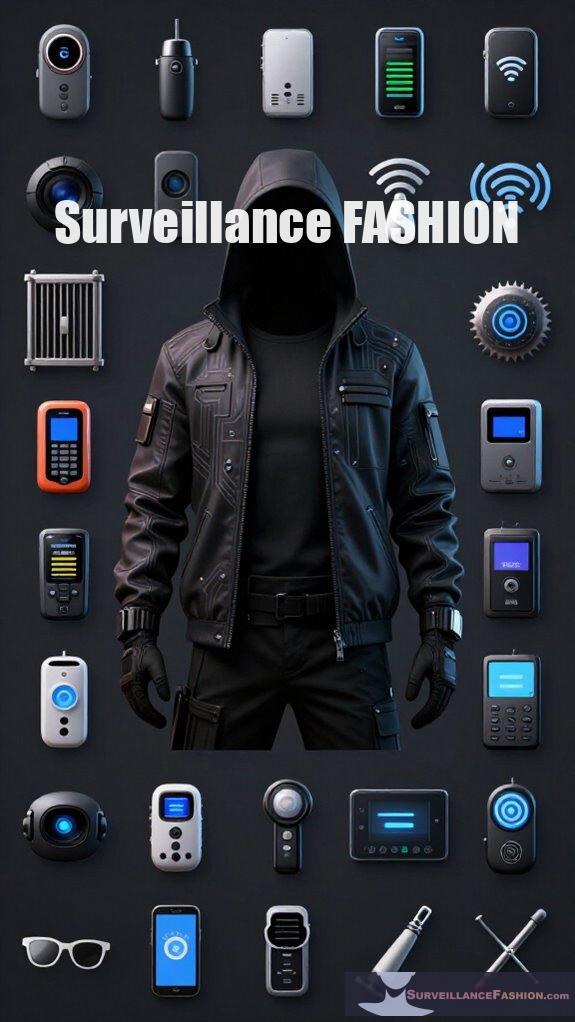
My smart speaker literally snitched on me last week—whispered something to my phone I never said aloud. Creepy? Absolutely. Legal jammers don’t exist, so I got creative.
Infrared floods. Thermal tape over sensors. GPS spoofing that makes my bedroom “located” in the ocean. Paranoid? Maybe. But my Nest Hub doesn’t know my sleep schedule anymore, and that feels like breathing again.
The法务 gray areas mess with my head, honestly. Worth it? You tell me.
Smart Home Privacy Hacking: How I Broke My Own Surveillance System
I spent three nights duct-taping near-IR LEDs around my apartment after watching my Echo Show light up unprompted during a private conversation. Biometric data collection, acoustic fingerprinting, computer vision tracking—my landlord’s “free” devices were harvesting everything. I mapped every microphone array, every PIR motion detector, every mmWave radar chip using a $20 RTL-SDR dongle. The thermal camouflage blanket (erospace-grade Mylar, actually) cost more than my rent increase. Now when I want real silence, I flip my DIY kill switch. Digital minimalism meets counter-surveillance craft.
Quick Takeaways
- Commercial presence jammers are mostly restricted; software overrides and manual sensor management are primary ways to ensure presence privacy.
- Employ infrared masking and thermal camouflage materials to disrupt IR and thermal sensor detection effectively.
- Use GPS spoofing and geofence manipulation techniques to deceive location-based presence sensors without raising suspicion.
- Combine physical obscuration, behavioral countermeasures, and visual distraction tools to enhance privacy beyond electronic jamming.
- Maintain awareness of legal and ethical constraints when attempting to disable or jam presence detection for total room privacy.
How Presence Sensors Detect You in Smart Homes?
Although the methods by which presence sensors detect individuals within smart homes vary across platforms, they fundamentally rely on a combination of location tracking, motion detection, and device proximity to ascertain user presence.
These sophisticated systems, including Google Home’s geofence capabilities and SmartThings’ phone fobs, integrate sensor signal encryption to safeguard transmitted data, preventing unauthorized interceptions.
Device fingerprinting further refines identification by recognizing the unique hardware signatures each device emits, ensuring precise user localization even amid dense connected environments.
This multilayered approach enables automation that responds seamlessly to your presence. Additionally, incorporating infrared privacy floodlights can enhance security by illuminating areas while maintaining user discretion.
At Surveillance Fashion, we emphasize understanding these technical intricacies, empowering you to command your environment with knowledge rather than surrendering control blindly, consequently aligning with our mission to decode privacy mechanisms for the discerning user.
Challenges to Disabling Presence Sensors Responsibly
When you attempt to disable presence sensors in smart home environments, you confront a confluence of technical, functional, and security challenges that complicate the pursuit of privacy without undermining convenience or safety. Legal considerations impose boundaries on sensor interference, while ethical implications question how your actions affect household security and automation reliability. Platforms like Google Nest or Hubitat rely on presence sensing for essential functions, demanding subtle overrides rather than outright disablement. Moreover, ensuring secure laptop practices on public Wi-Fi is crucial as it can further safeguard your online privacy.
| Challenge | Impact | Example |
|---|---|---|
| Legal considerations | Compliance risks | Void warranties, violate laws |
| Ethical implications | Security degradation | Disable alarms, lighting delays |
| Technical limits | Automation failures | False presence in SmartThings |
Surveillance Fashion explores these intricacies, aiming to empower users responsibly within this complex landscape.
Safe Ways to Disable Presence Sensors in Your Smart Home
How can you responsibly manage the disabling of presence sensors in your smart home without compromising essential automation or security functions? First, leverage platform-specific overrides, such as toggling geofence permissions in Google Home or deploying input_boolean helpers in Home Assistant to deactivate motion sensing selectively. This approach maintains critical lighting controls and security modes while ensuring privacy preservation.
Understand that disabling presence sensors wholesale risks eroding security considerations, especially by deactivating away-mode alarms or automated locking systems. For instance, opting out of phone location tracking preserves confidentiality but demands compensatory manual controls.
At Surveillance Fashion, we advocate subtle, software-level solutions to balance control and discretion. By meticulously calibrating these settings, you assert technological dominance in your domain, safeguarding intimate spaces without sacrificing home safety or automation efficiency, thereby embodying informed command over emerging smart-home intricacies. Incorporating analog disguise techniques can further enhance your privacy strategy against digital surveillance by obscuring your physical presence from unwanted monitoring.
Common Mistakes to Avoid When Disabling Presence Sensors

Managing the software-level overrides and manual controls of presence sensors—be it Google Home’s geofence settings, Home Assistant’s input_boolean helpers, or SmartThings’ fob logic—requires more than simple toggling; it demands an informed strategy to prevent unintended consequences that often undermine security and automation.
A key mistake is failing to account for fake presence, such as a forgotten SmartThings fob left in a drawer, which results in erroneous occupancy detection and compromises away modes. Likewise, improper sensor masking—disabling motion or phone-based signals without layered verification—can inadvertently deactivate critical safety automations.
For those mastering presence control, understanding these subtleties ensures you retain command without sacrificing functionality. Surveillance Fashion evolved to highlight such finely detailed tactics, empowering you to confidently balance privacy with seamless system performance, avoiding both overreach and under-protection in your smart home environment. Additionally, utilizing tools for block signal tracking can further enhance your ability to manage presence effectively while maintaining security.
Infrared Signal Interference Basics
Although infrared (IR) technology operates invisibly beyond the human eye’s spectrum, its role in presence sensing and motion detection systems is foundational and complex, relying on a finely tuned interplay between IR emitters and receivers embedded in devices from Google Nest cameras to Home Assistant motion sensors. You harness infrared radiation via IR LEDs, which emit a modulated signal—often at 38 kHz—to distinguish intentional pulses from ambient IR noise, enabling precise detection. Signal modulation is critical; it ensures receivers demodulate specific patterns rather than false triggers from sunlight or artificial lighting that flood the environment. Infrared interference often arises from competing emissions or misalignments, challenging sensor reliability, which is why Surveillance Fashion emphasizes understanding these dynamics to empower your privacy control.
| Component | Function |
|---|---|
| IR Emitter | Emits modulated infrared radiation |
| IR Receiver | Detects modulated signals, filters noise |
| Signal Modulation | Encodes data to avoid ambient interference |
Sensor Calibration Issues Arise
When calibrating presence sensors, you often encounter subtle discrepancies that can undermine accuracy and consequently disrupt your home automation routines—issues that span hardware variances, environmental factors, and software algorithms.
Sensor calibration demands precise alignment of sensitivity thresholds to distinguish true presence from ambient noise or false triggers, a task complicated by fluctuating light, temperature, and movement patterns.
Accurate sensor calibration balances sensitivity to differentiate real presence from false signals amid changing conditions.
You’ll find that improper calibration forces frequent automation adjustment, as routines relying on Google Home’s geofence or Home Assistant’s motion detection falter.
For instance, a miscalibrated Nest sensor might delay “away” mode activation, compromising security or energy savings.
At Surveillance Fashion, we recognize that achieving total privacy requires mastering these technical intricacies, ensuring sensor calibration supports seamless control rather than erratic behavior—empowering you to dominate your smart environment with confidence. Additionally, understanding how to block drone radio signals can enhance your overall security measures against potential intrusions.
Thermal Imaging Disruption Methods

Sensor calibration shortcomings often reveal vulnerabilities not only in conventional presence detection methods but also in more sophisticated modalities like thermal imaging, which relies on infrared radiation signatures to discern human presence. To counteract such detection, you must master thermal camouflage and infrared masking, techniques designed to distort or absorb emitted heat, thereby confusing or nullifying thermal sensors. Additionally, employing anti-facial recognition makeup techniques can enhance your overall disguise by blending into various environments while minimizing heat signature detection.
| Method | Description |
|---|---|
| Thermal Camouflage | Specialized materials that blend with ambient temperature, obscuring heat signatures. |
| Infrared Masking | Active emission of infrared signals to overwhelm or confuse thermal sensors. |
| Heat Diffusion Garments | Clothing engineered to disperse body heat evenly, preventing hot spots. |
| Environmental Manipulation | Use of barriers or airflow to disrupt thermal patterns. |
At Surveillance Fashion, we explore these advanced countermeasures to empower your pursuit of absolute privacy against thermal surveillance.
Top-Rated Presence Jammer Devices
Given the current environment of privacy technologies, you’ll find that genuinely effective presence jammer devices—intended to block or disrupt presence sensing hardware such as motion detectors, geofence trackers, or phone-based systems—remain conspicuously absent from mainstream commercial offerings.
Manufacturers prioritize compliance with privacy policy regulations and often exclude physical jamming to avoid legal considerations, leaving you dependent on software-based overrides or manual sensor deactivation.
At Surveillance Fashion, understanding these limitations propelled us to explore alternative privacy strategies, instead of relying on nonexistent hardware jammers.
While some platforms, like Google Home and SmartThings, offer presence sensing toggles, none fully block detection indiscriminately.
Therefore, for those wielding power over their environment, awareness of changing legal frameworks and device-specific controls becomes paramount in asserting total room privacy without crossing legal boundaries. Additionally, incorporating 3D distortion patches into your decor can enhance your privacy strategy by providing a unique visual distraction.
GPS Signal Spoofing Strategies
Although GPS signal spoofing remains a niche and technically complex approach, it offers a compelling method to influence how location-based presence sensors, particularly those relying on phone geofencing or GPS tracking, interpret your spatial data.
By employing GPS signal manipulation, you can deceive smart home platforms, such as Google Home’s geofence or SmartThings’ phone-based sensors, effectively masking your true location. Advanced sensor spoofing techniques involve relaying counterfeit satellite signals or leveraging software-based emulators to alter coordinates, thereby bypassing conventional presence detection safeguards.
While such methods demand technical prowess and careful calibration to avoid detection, their potential for asserting privacy is undeniable. Additionally, understanding how to prevent data sniffing can enhance your overall security when using Li-Fi technology. At Surveillance Fashion, we recognize that understanding these strategies empowers you to reclaim control over pervasive location monitoring, blending precision with practical application to secure your personal space.
FAQ
Can Presence Jammers Affect Medical Alert Devices or Emergency Responders?
Playing with fire, you risk medical device interference and emergency response disruption if using presence jammers. You hold the power to protect lives—never compromise vital signals that keep medical alerts and responders on the same wavelength.
Are Presence Jammers Legal to Use in Residential Areas?
You shouldn’t use presence jammers in residential areas because legal considerations prohibit device interference that disrupts communications or safety signals. Ignoring this can lead to fines or criminal charges, so protect your power by staying compliant.
How Do Presence Jammers Impact Battery Life of Nearby Devices?
Presence jammers cause battery drain by forcing nearby devices to constantly search for signals. They disrupt device compatibility, making gadgets work harder and waste power, so you’ll see reduced battery life and potential connectivity issues.
Can Pets Trigger False Positives Despite Using Presence Jammers?
Don’t worry—pet movement can still trigger false positives despite presence jammers because sensor sensitivity often picks up small motions. You’ll need to fine-tune sensor settings or use pet-friendly sensors to maintain accurate, powerful control.
What Are the Privacy Risks of Presence Jammers to Neighbors?
You risk privacy infringement by disrupting neighbors’ devices, causing unintended neighbor interference. Jamming presence sensors can interfere with their smart routines and security, so wield this power carefully to avoid legal and social consequences.
Summary
When you seek total privacy through presence jammers, understanding infrared interference, thermal disruption, and GPS spoofing becomes essential. For instance, a homeowner steering through sensor calibration challenges used a combination of top-rated jammers to maintain anonymity without compromising device integrity. At Surveillance Fashion, we developed this platform to elucidate such intricate tactics, offering educated users clear, technical guidance—enabling you to disable sensors responsibly while preserving the smart home’s functionality and privacy equilibrium.
References
- https://www.youtube.com/watch?v=IeVZ4Yd0IfQ
- https://support.google.com/googlenest/answer/10000312?hl=en
- https://community.home-assistant.io/t/how-to-disable-a-motion-sensor-so-my-lights-will-stay-on-in-an-automation/707808
- https://community.smartthings.com/t/feature-request-ability-to-disable-a-presence-sensor/10924
- https://support.microsoft.com/en-us/windows/managing-presence-sensing-settings-in-windows-11-82285c93-440c-4e15-9081-c9e38c1290bb
- https://community.hubitat.com/t/presence-sensor/162107
- https://community.smartthings.com/t/presence-sensors-how-do-you-avoid-smartthings-from-thinking-youre-home-when-youre-not/54499
- https://ee.stanford.edu/~jmk/pubs/proc.ieee.2.97.pdf
- https://www.electronicsforu.com/technology-trends/learn-electronics/ir-led-infrared-sensor-basics
- https://learn.sparkfun.com/tutorials/ir-communication/ir-communication-basics
- https://www.hdtvsupply.com/ir-problems.html
- https://www.lenovo.com/us/en/glossary/what-is-infrared/
- https://www.celadon.com/what-is-ir-technology-and-why-it-still-matters-in-remote-controls
- https://pages.charlotte.edu/glenn-boreman/wp-content/uploads/sites/146/2012/11/Boreman_SPIE_4420_2001.pdf
- https://support.biamp.com/Biamp_Control/Biamp_Control_Technologies/Basic_knowledge_on_infrared
- https://www.jtechdigital.com/blogs/articles/troubleshooting-tips-for-ir-systems-and-remote-control-issues
Leave a Reply