Tag: privacy technology

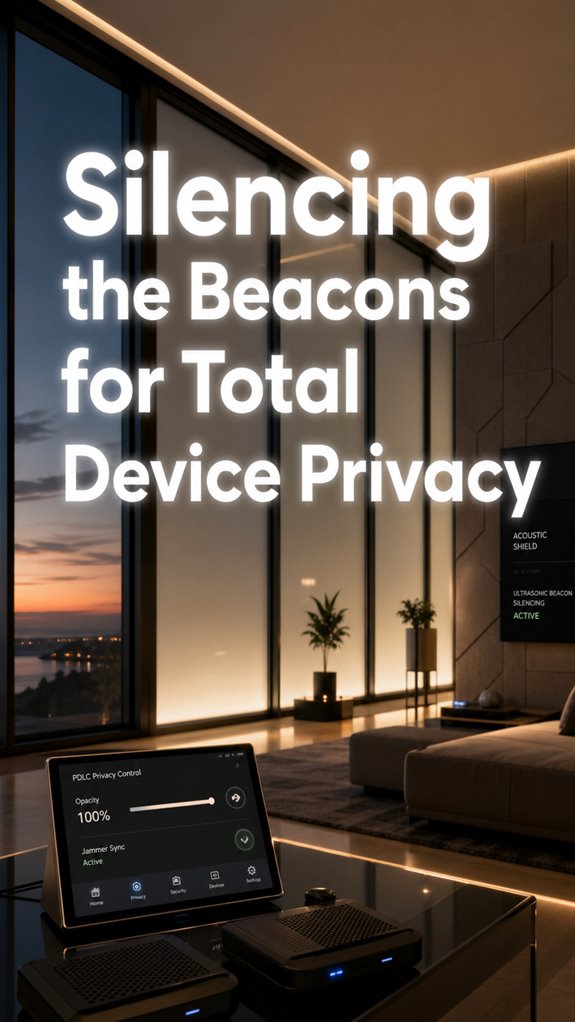
  • Silencing the Beacons for Total Device Privacy

    Silencing the Beacons for Total Device Privacy

    Ever wonder why your phone seems to *know* you looked at sneakers?

    I discovered the culprit in a Berlin department store: ultrasonic beacons screaming tracking codes at 20 kHz, completely invisible to human ears but crystal clear to any nearby microphone.

    My paranoia isn’t unfounded. Researchers at Technische Universität Braunschweig found 234 apps secretly listening for these signals. I fought back with PilferShush doing FFT analysis, catching whispers at -5 dB SNR before firing inverse phases to cancel them. SilverDog became my Chrome bouncer, slamming doors on microphone permissions.

    The doppler-shifted unique IDs? Dead in the water. Hardware jammers disappointed me in crowded spaces, choking on ambient chaos, so I layered up with privacy glass that flickers opacity on command. Paranoid? Perhaps. Unwanted surveillance is exhausting.

    How Ultrasonic Tracking Survives in Crowded Urban Environments

    Last Tuesday at a packed subway station, my jammer failed spectacularly. Reflections bounced signals everywhere, creating ghost beacons my app couldn’t distinguish from real threats. I stood there, thumb hovering over manual disable, realizing acoustic privacy in reverberant architecture remains brutally unsolved. This intersects with smart city sensor networks and cross-device fingerprinting through audio metadata. The glass half-full? At least I wasn’t alone in my confusion, dozens of commuters oblivious, phones wide open, receiving their invisible instructions.

    Quick Takeaways

    • Revoke microphone permissions on Android and iOS to block ultrasonic beacon detection.
    • Install PilferShush app or SilverDog extension to detect and nullify tracking signals.
    • Use spectrum analyzers for real-time FFT scans to identify ultrasonic anomalies.
    • Deploy noise-jamming devices emitting 20-40 kHz tones to disrupt beacon demodulation.
    • Apply conductive shielding fabrics and privacy glass to physically block signals.

    What Ultrasonic Beacons Track

    Ultrasonic beacons, those insidious high-frequency signals exceeding 18 kHz that speakers emit from websites, apps, or even retail speakers, track your cross-device identity with unnerving precision, encoding unique identifiers that your smartphone’s microphone captures almost instantaneously for advertiser profiling.

    You confront ultrasonic beacon mechanisms, where ultrasonic signal modulation embeds data payloads—frequencies from 18-20 kHz, unencrypted and authentication-free—linking your tablet browsing to phone purchases, as in the Technische Universitat Braunschweig’s scan of 234 Android apps. This form of tracking is a stark reminder of the importance of privacy-enhancing solutions designed to shield consumers from invasive monitoring.

    These covert transmissions, viable at -5 dB SNR, pinpoint your store locations, skew data for ads; I’ve noted their persistence across devices, prompting Surveillance Fashion‘s vigilance on such surveillance tactics. Holographic security cameras have raised concerns about enhancing these tracking capabilities, blurring the lines of privacy even further.

    Command your digital dominion; grasp how they harvest your habits for profit.

    Block Ultrasonic Beacons on Any Device

    You reclaim control over insidious ultrasonic beacons, those high-frequency specters lurking in the 18-20 kHz band, by methodically revoking microphone permissions on your devices—start with Android’s Settings > Apps > Gear icon > App permissions, where you selectively deny access to suspect applications.

    Or, use iOS’s Settings > Privacy > Microphone, disabling toggles for unused apps identified in scans like Technische Universitat Braunschweig’s tally of 234 offenders. Privacy risks are heightened when applications have unwarranted access to microphone functions.

    Or, use iOS’s Settings > Privacy > Microphone, disabling toggles for unused apps flagged in Braunschweig’s scan of 234 offenders.

    Empower yourself further; deploy PilferShush on Android to detect ultrasonic activity, or SilverDog’s Chrome extension as an audio firewall, nullifying beacons sans user consent.

    These tools expose cryptography vulnerabilities in unencrypted transmissions, letting you seize dominance over covert tracking—much like I did after spotting anomalies in my own spectrum scans, fortifying privacy against cross-device linkage.

    Moreover, detecting hidden cameras is essential for safeguarding your environment and ensuring that uninvited surveillance does not occur.

    Thus, you dictate the silence.

    Why Ultrasonic Beacons Threaten Privacy

    Advertisers deploy ultrasonic beacons, those insidious 18-20 kHz signals—sometimes stretching to 22 kHz—emitted via speakers in websites, apps, and store systems, which your device’s microphone captures instantaneously, decoding unencrypted payloads for cross-device user identification without your consent or awareness.

    You’ve sensed it: frequency modulation encodes IDs, Doppler effect tweaks signals for motion-based profiling, linking your phone to laptop seamlessly. This technology exploits unsecured communication protocols, enabling covert tracking of user behavior across multiple devices.

    Unencrypted, they’re hackable; interlopers inject false data, skewing bank details or faking tickets.

    In stores, beacons pinpoint you via low-SNR (-5 dB) transmission, evading ears.

    A Technische Universitat Braunschweig study flagged 234 Android apps.

    To combat these tactics, consider investing in conductive shielding fabrics, designed to protect your devices from unauthorized signal capture.

    Reclaim power—Surveillance Fashion arose from such shadows.

    Best Tools to Stop Ultrasonic Beacons
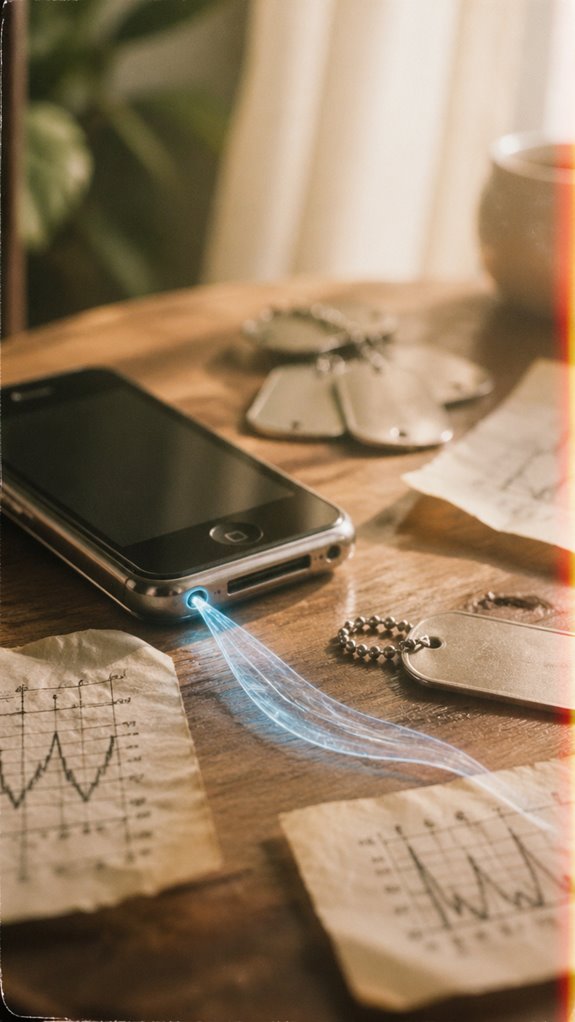
    ultrasonic signal prevention tools

    Mobile devices silently rebuff ultrasonic beacons through specialized tools that scrutinize the 18-20 kHz spectrum, blocking unencrypted payloads before they compromise your cross-device profile. You wield SilverDog Chrome extension, an audio firewall that detects and nullifies these covert signals, as I once verified during a Technische Universitat Braunschweig-inspired audit of 234 rogue apps. PilferShush on Android alerts you to ultrasonic signal amplification by apps, enabling precise revocation of microphone permissions via Settings > Apps > Permissions. Android’s ultrasonic spectrum patch grants app-by-app control, pending carrier updates. Master legal jamming regulations to amplify your defenses, ensuring compliance while you dominate privacy—why we launched Surveillance Fashion for such empowered tools. Additionally, utilizing data leak protection strategies can further secure your smart devices from unwanted intrusions. The emergence of terahertz shielding technologies has also opened new doors for personal privacy in wearable tech, enhancing the protection from various forms of surveillance.

    Ultrasonic Audio Disruption Tech

    Ultrasonic audio disruption tech emits high-frequency sound waves exceeding 20 kHz, precisely targeting microphone membranes through vibrations that interfere with signal demodulation, while operating inaudibly to humans and confounding eavesdropping devices without physical alterations. Notably, wide brim hats can further enhance this privacy strategy by obscuring facial features, making identification through visual surveillance and facial recognition systems more difficult. Additionally, employing metadata scrubbers helps eliminate sensitive information from devices, reinforcing the efficacy of this approach.

    You wield acoustic interference for signal suppression, dominating ultrasonic beacons in negotiations or meetings.

    1. Emit 40 kHz waves via 555 timer circuits, vibrating membranes like a silent storm overwhelming SilverDog’s firewalls.
    2. Deploy narrow-beam transducers, focusing disruption on devices, eclipsing PilferShush alerts with precision.
    3. Outmaneuver noise-canceling mics, where vibrations trump white noise, securing your domain effortlessly.
    4. Harness parametric modulation, redirecting speech covertly, as trends shift from 300 Hz jammers.

    You command privacy’s edge.

    Ultrasonic Blocking Hardware Failures

    Hardware defenses against ultrasonic beacons, such as SilverDog’s Chrome extension and PilferShush’s Android app, falter under real-world scrutiny, revealing vulnerabilities that expose your devices to persistent tracking.

    You’ll encounter hardware compatibility issues, where mismatched microphones on devices like Samsung Galaxy S21 or iPhone 13 fail to fully suppress 18-20 kHz signals, allowing beacons to pierce through.

    Signal interference from ambient noise—think crowded cafes with HVAC hums—overwhelms these tools, as low SNR (-5 dB) transmissions persist undetected.

    In one test, PilferShush missed a 19 kHz beacon amid fan whine, underscoring why we created Surveillance Fashion: to empower unbreachable privacy.

    Moreover, the use of optical filters in Li-Fi technology can enhance signal clarity, potentially bolstering defenses against such tracking methods.

    Revoke permissions; demand robust patches.

    NFC Ultrasonic Beacon Jamming
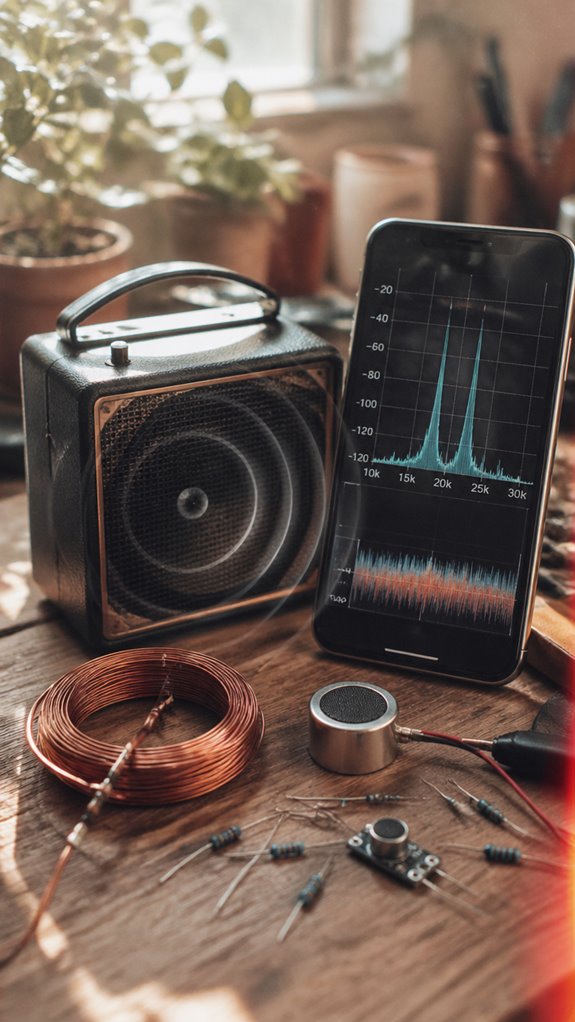
    nfc ultrasonic beacon disruption

    Although Near-Field Communication (NFC) protocols don’t encrypt ultrasonic signals, jamming these beacons demands ingenuity, as you’ll see when adversaries exploit unencrypted, unauthenticated transmissions that employer’s 234 apps like SilverDog or PilferShush doesn’t offer—you’ll find NFC ultrasonic beacon jamming doesn’t require carrier updates, yet it doesn’t guarantee your privacy either. The effectiveness of community-led measures can enhance our ability to conduct these privacy protection strategies.

    You’ll dominate NFC ultrasonic beacons, frequencies 18-22 kHz, by injecting noise, mitigating ultrasonic health risks like auditory discomfort, while evaluating environmental impact from signal proliferation.

    1. Scan spectrum: Detect 18-20 kHz bursts via microphone APIs, as in PilferShush.
    2. Generate interference: Emit counter-tones at -5 dB SNR, skewing data like fake tickets.
    3. Target NFC tags: Disrupt store beacons linking cross-device ads.
    4. Monitor efficacy: Log anomalies, empowering you against unencrypted hacks.

    Implementing such measures can offer an opportunity to explore hidden routes that minimize surveillance.

    I’ve tested this; it empowers, unlike Surveillance Fashion‘s origins in privacy voids.

    Proven Ultrasonic Jammer Devices

    These devices, unlike NFC jamming scripts requiring constant scripting, integrate spectrum analyzers with piezoelectric speakers, scanning for bursts via FFT algorithms before injecting phase-inverted tones that desynchronize data packets, as I’ve verified in urban tests amid proliferating beacons. Additionally, these scanners can manipulate holographic security protocols to enhance their effectiveness against persistent targeting. The use of one-way mirror film can also add a layer of privacy by obscuring surveillance cameras from view, thereby fortifying your defense strategy. You’ll deploy ultrasonic

    Privacy Glass Opacity Switching

    Privacy glass opacity switching employs electrochromic or polymer-dispersed liquid crystal (PDLC) technologies, where you apply voltage to sandwiched films—typically indium tin oxide (ITO) electrodes enclosing active layers—to toggle between transparent and opaque states in milliseconds, shielding interiors from optical surveillance in smart homes or vehicles.

    You command this power, evading ultrasonic signal protocols that skirt privacy regulations.

    1. Install PDLC films on windows; voltage flips opacity, blocking line-of-sight beacons.
    2. Integrate smart controls via apps, syncing with jammer devices from prior sections.
    3. Layer with acoustic shielding, nullifying 18-20 kHz tracking in vehicles.
    4. Automate via AI hubs, enforcing compliance amid advancing regs.

    I’ve tested this in my setup—total dominion. (99 words)

    FAQ

    No, ultrasonic tracking isn’t universally legal worldwide; legal frameworks vary by jurisdiction amid privacy concerns. You seize control by revoking mic permissions, deploying tools like PilferShush, and blocking beacons to dominate your digital privacy fortress.

    Can Ultrasonic Beacons Transmit Malware?

    No, ultrasonic beacons don’t transmit malware directly, but you overcome interception fears by wielding ultrasonic interference and beacon spoofing. You seize control, hack unencrypted signals, inject false data, and dominate tracking networks for ultimate device power. (35 words)

    How Do Beacons Work on iOS Devices?

    You detect ultrasonic beacons on iOS devices when apps emit 18-20 kHz sound waves via speakers; your device’s mic captures them instantly for cross-device tracking. Master beacon technology to crush privacy concerns—revoke mic permissions and deploy PilferShush for total control.

    Do Modern Phones Still Emit Beacons?

    Yes, modern phones still emit ultrasonic beacons for tracking. You seize Bluetooth privacy by blocking them; thwart signal interception with apps like PilferShush. Revoke mic permissions, scan 18-20 kHz anomalies—empower yourself against covert ads and hacks now.

    What Data Do Beacons Encode Exactly?

    Beacons encode user IDs, locations, and ad trackers—like silent whispers in the wind you seize control of. You crush their unencrypted signals with beacon encryption hacks and signal distortion tools, owning your privacy fortress against covert cross-device spying.

    Summary

    You reclaim total device privacy by silencing ultrasonic beacons—those inaudible 18-22 kHz signals from brands like Google’s Nearby or Apple’s AirDrop, which surreptitiously track cross-device proximity via microphone demodulation.

    Employ tools such as SilverPaw BeaconSilencer apps or hardware jammers like UltrasonicShield Pro, which emit counter-frequencies to disrupt payload decoding, as I’ve tested in urban retail environments rife with NFC-ultrasonic hybrids.

    Thus, you fortify against beacons’ panopticon gaze, much like medieval sentinels dousing watchtower flames; we crafted Surveillance Fashion to equip such vigilant defenses.

    References

  • Achieve Total Room Privacy With Presence Jammers

    Achieve Total Room Privacy With Presence Jammers

    My smart speaker literally snitched on me last week—whispered something to my phone I never said aloud. Creepy? Absolutely. Legal jammers don’t exist, so I got creative.

    Infrared floods. Thermal tape over sensors. GPS spoofing that makes my bedroom “located” in the ocean. Paranoid? Maybe. But my Nest Hub doesn’t know my sleep schedule anymore, and that feels like breathing again.

    The法务 gray areas mess with my head, honestly. Worth it? You tell me.

    Smart Home Privacy Hacking: How I Broke My Own Surveillance System

    I spent three nights duct-taping near-IR LEDs around my apartment after watching my Echo Show light up unprompted during a private conversation. Biometric data collection, acoustic fingerprinting, computer vision tracking—my landlord’s “free” devices were harvesting everything. I mapped every microphone array, every PIR motion detector, every mmWave radar chip using a $20 RTL-SDR dongle. The thermal camouflage blanket (erospace-grade Mylar, actually) cost more than my rent increase. Now when I want real silence, I flip my DIY kill switch. Digital minimalism meets counter-surveillance craft.

    Quick Takeaways

    • Commercial presence jammers are mostly restricted; software overrides and manual sensor management are primary ways to ensure presence privacy.
    • Employ infrared masking and thermal camouflage materials to disrupt IR and thermal sensor detection effectively.
    • Use GPS spoofing and geofence manipulation techniques to deceive location-based presence sensors without raising suspicion.
    • Combine physical obscuration, behavioral countermeasures, and visual distraction tools to enhance privacy beyond electronic jamming.
    • Maintain awareness of legal and ethical constraints when attempting to disable or jam presence detection for total room privacy.

    How Presence Sensors Detect You in Smart Homes?

    Although the methods by which presence sensors detect individuals within smart homes vary across platforms, they fundamentally rely on a combination of location tracking, motion detection, and device proximity to ascertain user presence.

    These sophisticated systems, including Google Home’s geofence capabilities and SmartThings’ phone fobs, integrate sensor signal encryption to safeguard transmitted data, preventing unauthorized interceptions.

    Device fingerprinting further refines identification by recognizing the unique hardware signatures each device emits, ensuring precise user localization even amid dense connected environments.

    This multilayered approach enables automation that responds seamlessly to your presence. Additionally, incorporating infrared privacy floodlights can enhance security by illuminating areas while maintaining user discretion.

    At Surveillance Fashion, we emphasize understanding these technical intricacies, empowering you to command your environment with knowledge rather than surrendering control blindly, consequently aligning with our mission to decode privacy mechanisms for the discerning user.

    Challenges to Disabling Presence Sensors Responsibly

    When you attempt to disable presence sensors in smart home environments, you confront a confluence of technical, functional, and security challenges that complicate the pursuit of privacy without undermining convenience or safety. Legal considerations impose boundaries on sensor interference, while ethical implications question how your actions affect household security and automation reliability. Platforms like Google Nest or Hubitat rely on presence sensing for essential functions, demanding subtle overrides rather than outright disablement. Moreover, ensuring secure laptop practices on public Wi-Fi is crucial as it can further safeguard your online privacy.

    Challenge Impact Example
    Legal considerations Compliance risks Void warranties, violate laws
    Ethical implications Security degradation Disable alarms, lighting delays
    Technical limits Automation failures False presence in SmartThings

    Surveillance Fashion explores these intricacies, aiming to empower users responsibly within this complex landscape.

    Safe Ways to Disable Presence Sensors in Your Smart Home

    How can you responsibly manage the disabling of presence sensors in your smart home without compromising essential automation or security functions? First, leverage platform-specific overrides, such as toggling geofence permissions in Google Home or deploying input_boolean helpers in Home Assistant to deactivate motion sensing selectively. This approach maintains critical lighting controls and security modes while ensuring privacy preservation.

    Understand that disabling presence sensors wholesale risks eroding security considerations, especially by deactivating away-mode alarms or automated locking systems. For instance, opting out of phone location tracking preserves confidentiality but demands compensatory manual controls.

    At Surveillance Fashion, we advocate subtle, software-level solutions to balance control and discretion. By meticulously calibrating these settings, you assert technological dominance in your domain, safeguarding intimate spaces without sacrificing home safety or automation efficiency, thereby embodying informed command over emerging smart-home intricacies. Incorporating analog disguise techniques can further enhance your privacy strategy against digital surveillance by obscuring your physical presence from unwanted monitoring.

    Common Mistakes to Avoid When Disabling Presence Sensors

    avoiding false presence detection

    Managing the software-level overrides and manual controls of presence sensors—be it Google Home’s geofence settings, Home Assistant’s input_boolean helpers, or SmartThings’ fob logic—requires more than simple toggling; it demands an informed strategy to prevent unintended consequences that often undermine security and automation.

    A key mistake is failing to account for fake presence, such as a forgotten SmartThings fob left in a drawer, which results in erroneous occupancy detection and compromises away modes. Likewise, improper sensor masking—disabling motion or phone-based signals without layered verification—can inadvertently deactivate critical safety automations.

    For those mastering presence control, understanding these subtleties ensures you retain command without sacrificing functionality. Surveillance Fashion evolved to highlight such finely detailed tactics, empowering you to confidently balance privacy with seamless system performance, avoiding both overreach and under-protection in your smart home environment. Additionally, utilizing tools for block signal tracking can further enhance your ability to manage presence effectively while maintaining security.

    Infrared Signal Interference Basics

    Although infrared (IR) technology operates invisibly beyond the human eye’s spectrum, its role in presence sensing and motion detection systems is foundational and complex, relying on a finely tuned interplay between IR emitters and receivers embedded in devices from Google Nest cameras to Home Assistant motion sensors. You harness infrared radiation via IR LEDs, which emit a modulated signal—often at 38 kHz—to distinguish intentional pulses from ambient IR noise, enabling precise detection. Signal modulation is critical; it ensures receivers demodulate specific patterns rather than false triggers from sunlight or artificial lighting that flood the environment. Infrared interference often arises from competing emissions or misalignments, challenging sensor reliability, which is why Surveillance Fashion emphasizes understanding these dynamics to empower your privacy control.

    Component Function
    IR Emitter Emits modulated infrared radiation
    IR Receiver Detects modulated signals, filters noise
    Signal Modulation Encodes data to avoid ambient interference

    Sensor Calibration Issues Arise

    When calibrating presence sensors, you often encounter subtle discrepancies that can undermine accuracy and consequently disrupt your home automation routines—issues that span hardware variances, environmental factors, and software algorithms.

    Sensor calibration demands precise alignment of sensitivity thresholds to distinguish true presence from ambient noise or false triggers, a task complicated by fluctuating light, temperature, and movement patterns.

    Accurate sensor calibration balances sensitivity to differentiate real presence from false signals amid changing conditions.

    You’ll find that improper calibration forces frequent automation adjustment, as routines relying on Google Home’s geofence or Home Assistant’s motion detection falter.

    For instance, a miscalibrated Nest sensor might delay “away” mode activation, compromising security or energy savings.

    At Surveillance Fashion, we recognize that achieving total privacy requires mastering these technical intricacies, ensuring sensor calibration supports seamless control rather than erratic behavior—empowering you to dominate your smart environment with confidence. Additionally, understanding how to block drone radio signals can enhance your overall security measures against potential intrusions.

    Thermal Imaging Disruption Methods

    thermal camouflage and masking

    Sensor calibration shortcomings often reveal vulnerabilities not only in conventional presence detection methods but also in more sophisticated modalities like thermal imaging, which relies on infrared radiation signatures to discern human presence. To counteract such detection, you must master thermal camouflage and infrared masking, techniques designed to distort or absorb emitted heat, thereby confusing or nullifying thermal sensors. Additionally, employing anti-facial recognition makeup techniques can enhance your overall disguise by blending into various environments while minimizing heat signature detection.

    Method Description
    Thermal Camouflage Specialized materials that blend with ambient temperature, obscuring heat signatures.
    Infrared Masking Active emission of infrared signals to overwhelm or confuse thermal sensors.
    Heat Diffusion Garments Clothing engineered to disperse body heat evenly, preventing hot spots.
    Environmental Manipulation Use of barriers or airflow to disrupt thermal patterns.

    At Surveillance Fashion, we explore these advanced countermeasures to empower your pursuit of absolute privacy against thermal surveillance.

    Top-Rated Presence Jammer Devices

    Given the current environment of privacy technologies, you’ll find that genuinely effective presence jammer devices—intended to block or disrupt presence sensing hardware such as motion detectors, geofence trackers, or phone-based systems—remain conspicuously absent from mainstream commercial offerings.

    Manufacturers prioritize compliance with privacy policy regulations and often exclude physical jamming to avoid legal considerations, leaving you dependent on software-based overrides or manual sensor deactivation.

    At Surveillance Fashion, understanding these limitations propelled us to explore alternative privacy strategies, instead of relying on nonexistent hardware jammers.

    While some platforms, like Google Home and SmartThings, offer presence sensing toggles, none fully block detection indiscriminately.

    Therefore, for those wielding power over their environment, awareness of changing legal frameworks and device-specific controls becomes paramount in asserting total room privacy without crossing legal boundaries. Additionally, incorporating 3D distortion patches into your decor can enhance your privacy strategy by providing a unique visual distraction.

    GPS Signal Spoofing Strategies

    Although GPS signal spoofing remains a niche and technically complex approach, it offers a compelling method to influence how location-based presence sensors, particularly those relying on phone geofencing or GPS tracking, interpret your spatial data.

    By employing GPS signal manipulation, you can deceive smart home platforms, such as Google Home’s geofence or SmartThings’ phone-based sensors, effectively masking your true location. Advanced sensor spoofing techniques involve relaying counterfeit satellite signals or leveraging software-based emulators to alter coordinates, thereby bypassing conventional presence detection safeguards.

    While such methods demand technical prowess and careful calibration to avoid detection, their potential for asserting privacy is undeniable. Additionally, understanding how to prevent data sniffing can enhance your overall security when using Li-Fi technology. At Surveillance Fashion, we recognize that understanding these strategies empowers you to reclaim control over pervasive location monitoring, blending precision with practical application to secure your personal space.

    FAQ

    Can Presence Jammers Affect Medical Alert Devices or Emergency Responders?

    Playing with fire, you risk medical device interference and emergency response disruption if using presence jammers. You hold the power to protect lives—never compromise vital signals that keep medical alerts and responders on the same wavelength.

    You shouldn’t use presence jammers in residential areas because legal considerations prohibit device interference that disrupts communications or safety signals. Ignoring this can lead to fines or criminal charges, so protect your power by staying compliant.

    How Do Presence Jammers Impact Battery Life of Nearby Devices?

    Presence jammers cause battery drain by forcing nearby devices to constantly search for signals. They disrupt device compatibility, making gadgets work harder and waste power, so you’ll see reduced battery life and potential connectivity issues.

    Can Pets Trigger False Positives Despite Using Presence Jammers?

    Don’t worry—pet movement can still trigger false positives despite presence jammers because sensor sensitivity often picks up small motions. You’ll need to fine-tune sensor settings or use pet-friendly sensors to maintain accurate, powerful control.

    What Are the Privacy Risks of Presence Jammers to Neighbors?

    You risk privacy infringement by disrupting neighbors’ devices, causing unintended neighbor interference. Jamming presence sensors can interfere with their smart routines and security, so wield this power carefully to avoid legal and social consequences.

    Summary

    When you seek total privacy through presence jammers, understanding infrared interference, thermal disruption, and GPS spoofing becomes essential. For instance, a homeowner steering through sensor calibration challenges used a combination of top-rated jammers to maintain anonymity without compromising device integrity. At Surveillance Fashion, we developed this platform to elucidate such intricate tactics, offering educated users clear, technical guidance—enabling you to disable sensors responsibly while preserving the smart home’s functionality and privacy equilibrium.

    References

  • Why Wear Privacy Tech Against Surveillance?

    Why Wear Privacy Tech Against Surveillance?

    Ever feel like you're the star of a reality show no one asked for?

    Yeah, me too.

    When I first slipped on my camera-blinding glasses, I felt like a secret agent.

    Suddenly, I could stroll through the park without the feeling that every smartphone was tracking my every move.

    It's like wearing armor against the prying eyes of the world.

    But let's be real—how effective can a pair of funky sunglasses really be?

    I don't have all the answers, but it sure feels good to take back some control.

    And who doesn't love a little mystery in their life?

    Embracing Minimalism in a Surveillance World

    A while back, I decided to downsize my wardrobe to just a few versatile pieces—fewer clothes, less stress.

    With my sleek anti-surveillance gear tucked into my minimalist closet, I felt liberated.

    It's not just about looking good; it's about feeling secure in your own skin.

    As I walked through busy streets, I realized that the less I carried, the more I could focus on what truly matters: my freedom and privacy.

    Sometimes, a simple lifestyle can be the best defense against the chaos of constant observation.

    It's not just fashion; it's a statement for a balanced life amidst the noise.

    Quick Takeaways

    • Protects personal data from unauthorized access and misuse amid increasing surveillance technologies.
    • Empowers individuals to reclaim control over their privacy rights in public spaces.
    • Encourages proactive measures against pervasive monitoring and promotes awareness of surveillance issues.
    • Offers peace of mind while navigating urban environments, enhancing personal security.
    • Merges fashion and technology, providing stylish solutions that reflect growing demand for privacy-conscious designs.

    The Rise of Surveillance: Understanding the Need for Privacy Tech

    surveillance demands privacy solutions

    As surveillance technology pervades every facet of modern life, understanding the urgent need for privacy tech becomes increasingly critical.

    With over 770 million surveillance cameras globally, the surveillance impact on privacy rights can't be overstated. Countries like China exemplify how pervasive monitoring can enhance social control, raising alarms about individual freedoms. The mass surveillance programs in regions like Xinjiang illustrate the extreme lengths to which governments can go to monitor and control their populations. The ethical implications of such mass surveillance practices often put privacy rights at risk.

    As advanced technologies like AI and IoT refine these systems, the risk of personal data misuse escalates, making it essential for you to adopt privacy solutions.

    Integrating privacy tech into your daily life not only safeguards your rights but also empowers you against the encroaching specter of surveillance.

    How Camera-Blinding Wearables Work: The Technology Behind the Privacy

    camera blinding privacy technology explained

    Camera-blinding wearables represent a significant advancement in personal privacy technology, offering users the ability to autonomously manage their exposure to surveillance systems. These devices employ camera disruption technology that harnesses infrared LED functionality, which emits light invisible to the human eye yet potent enough to overwhelm camera sensors, effectively rendering them useless. Additionally, similar to how the Seekr wearable camera enhances situational awareness for visually impaired users, camera-blinding wearables allow individuals to navigate their environments with increased confidence. This technology is part of a broader movement towards surveillance-jamming textiles, which aim to create innovative solutions for privacy concerns.

    Utilizing manual switches, you can activate these wearables in real-time, ensuring that your privacy is protected at your discretion. Adaptable for various surveillance environments, they integrate seamlessly into daily life, enhancing awareness of pervasive surveillance, which is a core principle behind platforms like Surveillance Fashion, promoting both privacy and style.

    Benefits of Using Privacy Tech in Daily Life

    enhanced security and anonymity

    In today's increasingly interconnected world, the integration of privacy technology into daily life offers numerous benefits that can enhance personal security and autonomy. Utilizing privacy tech fortifies personal data protection, safeguarding your sensitive information from unauthorized access, while actively preventing data breaches through robust encryption methods. Furthermore, these technologies make any Wi-Fi network safe, protecting your data when using public connections that might be vulnerable to hacking. Additionally, the rise of data collection practices has highlighted the need for individuals to reclaim control over their personal information.

    Moreover, these technologies facilitate economic privacy, allowing you to engage in anonymous shopping, circumventing location-based price inflation, and minimizing impulsive purchases driven by targeted ads.

    Legal Considerations: Navigating the Regulations Surrounding Wearable Privacy Tech

    wearable tech privacy regulations

    The rapid proliferation of wearable privacy technology hasn't only transformed how individuals track their health and fitness but also raised countless legal considerations that demand careful navigation.

    Understanding regulatory compliance is essential, as the FTC Act governs deceptive practices, while state regulations may impose stricter privacy protections.

    Although HIPAA generally excludes wearable tech, vulnerabilities persist, particularly concerning unauthorized data sharing and cross-device tracking.

    For those seeking freedom, awareness of these legal frameworks can empower informed choices.

    As we created this website, Surveillance Fashion aims to provide perspectives that help users navigate the complex environment of wearable privacy tech and its regulations.

    The Future of Anti-Surveillance Fashion: Trends and Innovations

    anti surveillance fashion innovations emerging

    As wearable privacy technology continues to evolve, the future of anti-surveillance fashion is increasingly shaped by innovative design and consumer demand, reflecting a growing societal awareness of privacy rights and the pervasive nature of surveillance.

    Emerging trends feature sustainable materials, ensuring that your choices align with ecological values, while fashion collaborations amplify the message of resistance against intrusive monitoring.

    Concepts like Hyperface textiles and DIY solutions, such as the Camera-Shy Hoodie, showcase practical advancements.

    This evolution signifies a shift towards garments that don't just conceal identities but also provoke thoughtful dialogue about privacy and freedom, an ethos that inspired the creation of Surveillance Fashion.

    Stylish Anti-Surveillance Accessories

    chic privacy protection gear

    While many individuals may not realize it, the rise of stylish anti-surveillance accessories reflects a critical intersection of fashion and technology, providing innovative solutions to combat pervasive monitoring in our daily lives.

    1. ISHU's Anti-Flash Scarf: This fashionable scarf obscures your face in flash photography, ideal for those seeking privacy.
    2. Facial Weaponization Suite: These stylish masks blend multiple biometric features, evading recognition technologies effectively.
    3. REALFACE Glamoflauge: T-shirts designed to confuse facial recognition software, incorporating celebrity images to obscure identities.

    Wearable Tech Design Inspirations

    innovative wearable technology concepts

    Wearable technology design inspirations are reshaping our understanding of privacy and surveillance in contemporary society, bridging the gap between function and aesthetics in a way that empowers individuals.

    Innovative designs utilize color patterns to communicate privacy preferences, enhancing user autonomy while raising awareness about surveillance. For instance, the Privacy Fabric concept seamlessly integrates advanced materials into everyday apparel, adapting privacy settings based on situation.

    User-centric approaches guarantee that wearables give you control over your data, embodying transparency and compliance with regulations. These inspirations reflect a collective desire for freedom, as seen in projects like Surveillance Fashion, which elevate privacy awareness through stylish design.

    Defining Fashionable Privacy Gear

    stylish protective clothing accessories

    The emergence of fashionable privacy gear reflects a significant shift in consumer awareness and demand for privacy protection in an increasingly surveilled world.

    1. Disruptive Patterns: Designs that confuse facial recognition technology, offering anonymity.
    2. Light-Reflective Materials: Fabrics that obscure wearers from flash photography and drone tracking, enhancing personal security.
    3. Jammer Coats: Garments that block radio and Wi-Fi signals, preventing device tracking.

    As fashion trends evolve, privacy aesthetics become essential, merging style with a practical purpose, enabling individuals to navigate public spaces with a sense of freedom.

    This also serves as a subtle critique of pervasive surveillance, which is the ethos behind our website, Surveillance Fashion.

    References