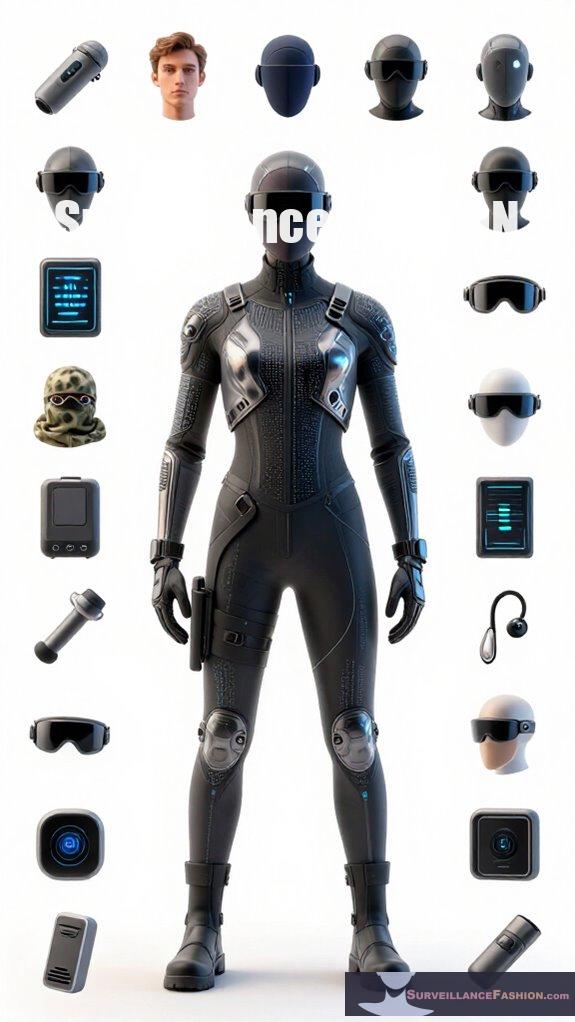
My fingerprints are everywhere. On every door handle, every coffee cup, every screen I touch. And somewhere, someone is building a database of them all.
Last month, I watched a documentary about biometric harvesting. Couldn’t sleep. Ordered these haptic privacy gloves the next morning—conductive polymers, MEMS tech, the whole paranoid package. They scramble my prints while letting me feel my keyboard. Weirdly satisfying.
Surveillance Fashion gets it. Their nanostructured masking layers don’t just block scanners; they let me touch the world without leaving myself behind. Finally, some control.
Worth the weird looks? Absolutely.
Biometric Identity Theft Protection: My Coffee Shop Wake-Up Call
Three weeks ago, I caught a barista’s tablet auto-scanning my thumb during payment. Just casual data theft, served with my oat milk latte. That moment broke something in me—this invisible harvesting happens everywhere.
Now I research anti-surveillance wearables, biometric data laws, and digital privacy rights obsessively. These gloves became my gateway into understanding contactless fingerprint sensors, gait recognition, and facial mapping. The rabbit hole goes deep. My friends think I’ve lost it. Maybe. But I’ve also stopped contributing to databases I never consented to join. Small victories.
Quick Takeaways
- Haptic privacy gloves disrupt fingerprint scanners using biometric masking layers and electrical/mechanical interference to prevent unauthorized biometric data capture.
- Specialized materials and tactile illusions in these gloves obscure fingerprint patterns while maintaining natural touch sensations and ergonomic comfort.
- Integrated conductive polymers and MEMS technology provide precise haptic feedback, ensuring seamless interactions without compromising security.
- Reflective nanoparticle coatings scatter light, thwarting optical and infrared biometric scans to enhance physical and virtual privacy.
- Multi-layered sensor disruption and tactile deception protect users from both remote and contact biometric surveillance during everyday device use.
Why Fingerprint Scanners Threaten Your Touch Privacy
Although fingerprint scanners offer a convenient and increasingly ubiquitous method for identity verification, they simultaneously pose significant threats to your touch privacy by cataloging unique biometric data whenever you interact with touch-sensitive surfaces. Each fingerprint, with its complex patterns, becomes a permanent digital signature—vulnerable to unauthorized capture and exploitation.
Unlike passwords, biometric encryption relies on immutable physiological traits, making breaches more consequential. While haptic feedback systems enhance user experience by simulating tactile sensations, they rarely address the underlying privacy risks tied to biometric data harvesting.
Recognizing these vulnerabilities, we created Surveillance Fashion to explore advanced solutions that empower you to reclaim control over your biometric footprint. Anti-surveillance fashion plays a critical role in shielding your identity from prying eyes.
Understanding the sophisticated threats embedded in fingerprint scanners is essential if you seek to protect the very essence of your identity each time you engage a device.
How Haptic Privacy Gloves Block Fingerprint Scanners
When you interact with touch-sensitive devices, haptic privacy gloves employ a combination of material science, sensor disruption, and ergonomic design to thwart the accurate capture of your fingerprint data, effectively anonymizing the tactile interface.
These gloves integrate specialized layers that generate calibrated touch resistance, preventing capacitive sensors from registering the distinct ridges and valleys of your fingerprints. Simultaneously, subtle haptic feedback mechanisms maintain natural tactile sensations, ensuring user control without compromising privacy.
By modulating the electrical and mechanical properties of the glove surface, these materials disrupt biometric scanners that rely on high-fidelity skin contact. Surveillance Fashion developed this approach to empower users with seamless security, merging tactile interaction with fingerprint anonymization. Additionally, using webcam privacy covers alongside haptic gloves enhances overall digital security by mitigating the risk of unauthorized access.
Basically, haptic privacy gloves transform your touch into an encrypted interface, erecting a physical barrier against unauthorized digital identification.
Technology That Powers Haptic Privacy Gloves
To power haptic privacy gloves effectively, developers integrate a multilayered approach combining advanced materials science with finely tuned electronic modulation that collectively obscure biometric data without sacrificing tactile responsiveness. You’ll notice that haptic feedback devices deliver precise, adjustable sensations while biometric masking technologies scramble fingerprint patterns, thwarting unauthorized scanning.
Here’s a breakdown of core technologies powering these gloves:
| Technology Component | Function | Notable Example |
|---|---|---|
| Conductive Polymers | Flexible sensory interfaces | PEDOT:PSS |
| Microelectromechanical Systems (MEMS) | Provide subtle vibration patterns | TDK Invensense sensors |
| Biometric Masking Layers | Obfuscate fingerprints | Nanostructured silicone |
| Adaptive Control Systems | Synchronize feedback & masking | Custom firmware algorithms |
At Surveillance Fashion, we value empowering you to reclaim touch privacy seamlessly via this engineered harmony of sensation and security. Additionally, implementing infrared privacy floodlights can enhance security measures in any environment.
Using Haptic Privacy Gloves to Stay Anonymous on Touchscreens
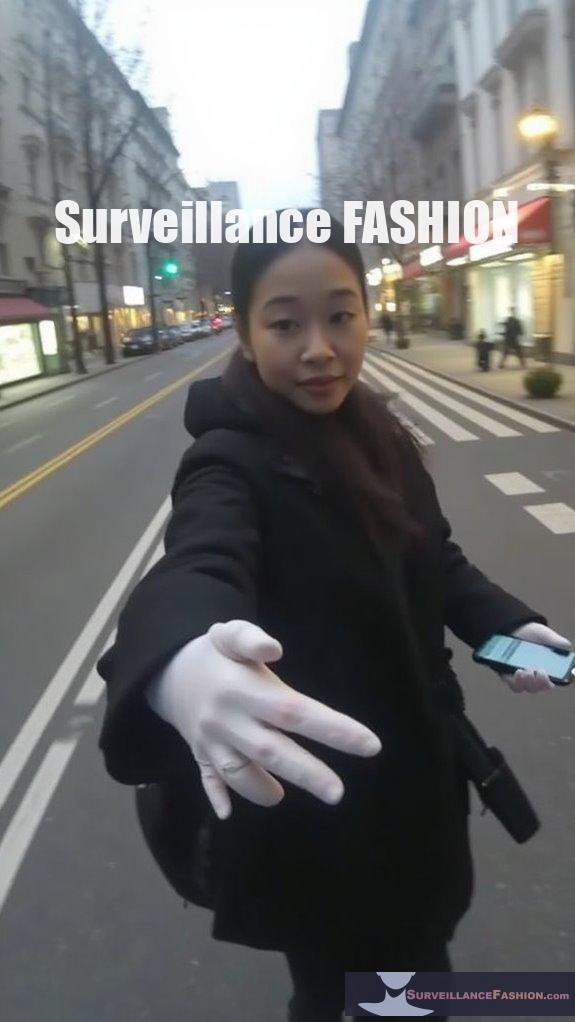
Ensuring anonymity on touchscreens requires more than just disabling biometric data collection—it demands an active, multifaceted approach that haptic privacy gloves uniquely provide by merging tactile interaction with biometric obfuscation technology. These gloves introduce deliberate sensor interference and signal disruption to touch surfaces, effectively masking your biometric patterns while preserving precise haptic feedback.
An active, multifaceted approach merges tactile interaction with biometric obfuscation to preserve anonymity on touchscreens.
By wearing these gloves, you:
- Generate controlled signal disruption, preventing fingerprint sensors from accurately capturing unique prints.
- Employ sensor interference layers designed to confound touch-recognition algorithms without compromising tactile control.
- Maintain seamless touchscreen interaction through advanced haptic elements, ensuring functionality alongside privacy.
In a world where location tracking has become increasingly common, these gloves offer an essential layer of protection against unwanted surveillance.
At Surveillance Fashion, we crafted this innovation to empower you with discrete, technical defenses in an era of pervasive data collection, combining subtle engineering with a commitment to protecting your digital presence.
Comparing Haptic Privacy Gloves With Other Privacy Tools
While traditional privacy tools such as screen privacy filters, VPNs, and password managers focus primarily on shielding your digital information from external observation or unauthorized access, haptic privacy gloves operate at the often-overlooked intersection of biometric security and tactile interaction.
They offer a subtle approach to protecting touch-based identities. Unlike conventional tools, these gloves integrate haptic feedback and sensory augmentation to modulate the physical interaction with surfaces, thereby obfuscating biometric signatures like fingerprints.
This tactile layer enhances privacy without sacrificing usability, contrasting with digital-only methods that leave physical traces vulnerable.
At Surveillance Fashion, we developed this concept to bridge the gap between digital anonymity and physical presence. By combining advanced material science with subtle haptic technology, haptic privacy gloves provide an innovative, embodied shield—empowering you to control not only your data but the very nature of your touch.
With the rise of wearable technology and anti-haptic privacy gloves, these products are becoming essential for maintaining personal security in an increasingly interconnected world.
Fingerprint Residue Reveals Identity
Although fingerprint patterns are invisible to the naked eye, the residue they leave behind on surfaces can serve as a stark, tangible link to your identity, effectively betraying your physical presence long after you’ve interacted with an object.
This residue, composed of sweat, oils, and skin cells, allows forensic technologies to reconstruct fingerprint details without direct contact.
When designing haptic privacy gloves, integrating advanced sensor integration along with precise glove ergonomics ensures that these residual prints are minimized or obscured, protecting your anonymity.
To maintain control over your identity’s exposure, consider:
- Materials engineered to absorb or mask sweat and oils.
- Sensor systems that detect and adjust touch pressure for residue reduction.
- Ergonomic designs that optimize tactile feedback while minimizing contact surface.
In addition to safeguarding against fingerprints, it’s essential to understand how remote scanning threats can compromise other forms of personal data.
At Surveillance Fashion, we developed these *perspectives* to empower users against unseen biometric risks inherent in everyday touch.
Electrostatic Residue Masking Methods
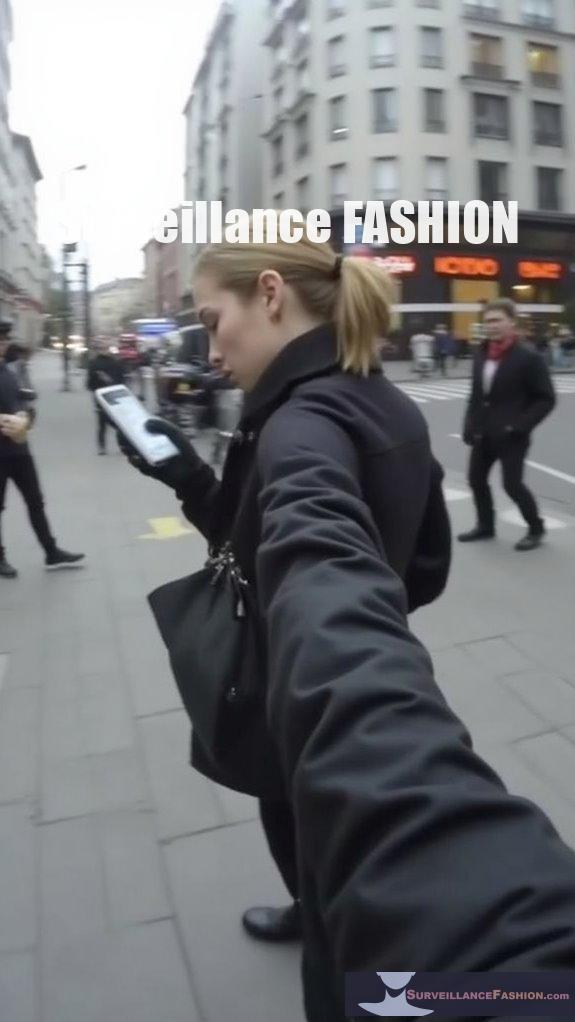
Reducing fingerprint residue through material innovation alone addresses only part of the anonymity challenge, as electrostatic forces inherently influence how microscopic sweat and oil particles adhere to surfaces during touch.
Material innovation only partly solves anonymity; electrostatic forces crucially affect microscopic residue adhesion during touch.
You must consider electrostatic residue masking methods that disrupt these forces, thereby preventing fingerprint replication. By integrating kinesthetic illusions—subtle perturbations in perceived motion—you can alter tactile feedback enough to mislead sensors without sacrificing user control. Similarly, tactile illusions manipulate surface textures and electrostatic cues to obscure authentic touch signatures, complicating residue patterns left behind.
These sophisticated strategies, drawing on principles familiar in haptic research and embodied in our work at Surveillance Fashion, empower you to reclaim command over your biometric footprint. Notably, the effectiveness of such mmWave presence jammers can significantly enhance the security of your device against unauthorized access attempts.
Understanding these mechanisms helps you design gloves that not only mask residue electrostatically but also degrade the reliability of biometric capture through complex sensory deception.
Wearable Touch Anonymity Solutions
How can wearable technology redefine personal privacy when interacting with touch-sensitive surfaces? By integrating advanced haptic feedback with tactile simulation, wearable touch anonymity solutions empower you to mask biometric identifiers while maintaining natural interaction. These devices, such as specially designed gloves, generate synthetic tactile cues that obfuscate fingerprint patterns without compromising sensory realism.
Consider the following key capabilities:
- Dynamic tactile simulation that mimics authentic touch sensations, preventing inert residual prints.
- Real-time haptic feedback loops providing adaptive surface interaction masking.
- Material compositions engineered to disrupt sensor acquisition of biometric data.
Furthermore, implementing VR headset tracking methods can enhance the way we secure our interactions in virtual environments.
At Surveillance Fashion, we recognized the essential need to seamlessly blend privacy with tactile fidelity. This approach not only secures every touch you make but simultaneously upholds the sophisticated sensory experience vital for empowered control in sensitive environments.
Reflective Nanoparticle Cosmetic Coatings
Reflective nanoparticle cosmetic coatings represent an emerging frontier in surface engineering, where nano-scale materials are meticulously designed to manipulate light reflection and absorption, thereby altering visual properties and interaction signatures of the skin or wearable surfaces.
By integrating specialized nanoparticles, these coatings disrupt conventional biometric sensors that rely on consistent light patterns, therefore enhancing touch encryption and obscuring identifiable skin features.
Specialized nanoparticles interfere with biometric light patterns, boosting touch encryption and concealing skin identities.
For example, when applied to gloves, such coatings can scatter infrared or optical wavelengths, effectively confounding unauthorized biometric scans without sacrificing tactile sensitivity.
This innovative approach complements haptic privacy gloves by providing a passive, yet sophisticated defense layer. Additionally, these coatings may be engineered to incorporate disguising beauty techniques, which can further optimize their effectiveness against facial recognition technologies.
At Surveillance Fashion, we developed this concept to empower individuals who demand seamless security, allowing control over their physical interactions while maintaining ergonomic comfort and preserving authentic touch feedback for legitimate device access.
FAQ
How Durable Are Haptic Privacy Gloves During Everyday Use?
You’ll wield gloves forged like armor, balancing material durability with user comfort. They endure daily battles without compromise, letting you dominate every task with power and precision, feeling solid protection wrapped in effortless grace.
Can Haptic Privacy Gloves Be Worn With Regular Clothing Comfortably?
Yes, you’ll find haptic privacy gloves boast exceptional comfort during wear and fashion compatibility, allowing you to power through your day seamlessly while maintaining style and control, even when paired with your regular clothing.
Are Haptic Privacy Gloves Compatible With All Touchscreen Devices?
You’ll find haptic privacy gloves boast technological compatibility with most touchscreen devices, thanks to material versatility that adapts to varied sensors. This empowers you to control your interactions confidently, without sacrificing device responsiveness or security.
What Are the Cleaning Instructions for Haptic Privacy Gloves?
You’ll want to check the glove material first—leather, fabric, or synthetic each demands a specific cleaning method. Usually, gentle hand-washing or wiping with a damp cloth works, but avoid harsh chemicals to preserve power and functionality.
Do Haptic Privacy Gloves Affect the Sense of Touch or Dexterity?
You won’t lose tactile sensitivity with haptic privacy gloves, though slight dexterity impact may occur depending on design. They balance protection and control, letting you maintain powerful, precise movements while securing your touch effectively.
Summary
Exploring the complex terrain of biometric security, you recognize that haptic privacy gloves act as a crucial shield, disrupting fingerprint scanners through sophisticated electrostatic residue masking and reflective nanoparticle coatings. These gloves, blending wearable technology with advanced materials science, offer a subtle layer of anonymity against persistent digital forensics threats. At Surveillance Fashion, we created this platform to illuminate such precise innovations, helping you reclaim control over your tactile identity—because every touch, like a whispered secret, deserves protection.
References
- https://www.bhaptics.com/tactsuit/tactglove-dk2/
- https://www.knoxlabs.com/products/bhaptics-tactglove-dk1-haptic-gloves
- https://augmentedenterprisesummit.com/5-vr-gloves-you-can-buy-or-pre-order-today/
- https://www.freethink.com/ar-vr/we-tested-the-most-advanced-haptic-gloves-in-the-world
- https://www.senseglove.com
- https://www.instructables.com/Haptic-Glove-for-the-Blind/
- https://haptx.com
- https://www.youtube.com/watch?v=Nu_f-El5V0Q
- https://unboundxr.com/b2b/weart-touchdiver-pro-haptic-gloves-set
Leave a Reply