
Camera-blocking glasses function by utilizing specialized coatings and optical filters that disrupt facial recognition technologies. They effectively block infrared light, which surveillance cameras rely on for capturing accurate facial features, particularly during low-light conditions. By reflecting or absorbing specific infrared wavelengths, these glasses prevent algorithms from mapping your face.
The integration of various materials enhances comfort and aesthetic appeal, ensuring not only functionality but style. Explore the intricacies of these technologies further to grasp their full potential and implications.
Quick Takeaways
- Camera-blocking glasses obscure facial features and reflect infrared light essential for facial recognition technologies.
- They utilize optical filters to selectively block IR wavelengths, preventing accurate data capture by algorithms.
- High-quality materials and adjustable lenses ensure comfort while enhancing privacy features.
- Effectiveness varies against different camera types; they work best with CCD sensors sensitive to IR light.
- Modern advancements include AI integrations and eco-friendly designs, increasing their appeal and functionality.
How Do Camera-Blocking Glasses Disrupt Facial Recognition Technology?

Camera-blocking glasses disrupt facial recognition technology by obscuring key facial features and blocking infrared (IR) light essential for identification. They create blurring effects that prevent accurate data capture by algorithms. These glasses utilize special coatings to reflect or block IR wavelengths, which are critical for many recognition systems, particularly those using 3D infrared imaging. By obscuring the eyes and altering facial contours, the glasses considerably hinder the ability of algorithms to recognize individuals.
Key effects include:
- Reduced accuracy against 3D recognition systems.
- Limited efficacy against 2D recognition in bright conditions.
- Potential failure against AI that can reconstruct faces despite obstructions.
- Enhanced protection from surveillance using other biometric data.
Stylish solutions for anti-tracking glasses can enhance the appeal of these privacy-enhancing eyewear options. In essence, the design effectively interferes with the input mechanisms of both 3D and some 2D facial recognition technologies, ensuring privacy and reducing unconsented tracking.
What Is the Role of Infrared Light in Surveillance Cameras?
Infrared light plays an essential role in surveillance cameras by enabling them to capture images in low or no-light conditions without visible illumination. This technology enhances night vision capabilities, allowing for discreet monitoring in total darkness. Infrared cameras employ specialized sensors for infrared radiation detection, making them critical tools for effective security measures.
Infrared cameras utilize LEDs to emit invisible light, illuminating scenes for detection. The IR sensors translate reflected light into electrical signals that create grayscale or color images.
Key benefits include:
- Covert surveillance without light pollution
- Enhanced night-time object detection
- Capability to combine with visible light for added detail
- Effective monitoring in challenging environments like parking garages and warehouses
Through these functions, infrared light greatly enhances the effectiveness of surveillance systems.
How Do Optical Filters in Lenses Work?
Optical filters in lenses work by selectively transmitting or blocking specific wavelengths of light through absorption, interference, or diffraction mechanisms. This enhances image quality and protects camera lenses from unwanted light and reflections. Optical filters have a wide application in photography, scientific research, medical diagnosis, and industrial testing.
These filters are essential in photography and imaging. They manipulate light based on their material properties and design:
- Absorption Filters: Utilize materials that absorb particular wavelengths while permitting others, filtering out unwanted light.
- Interference Filters: Employ multi-layer coatings to reflect and refract light, allowing only specific wavelengths to pass through.
- Diffraction Filters: Feature patterned surfaces that diffract light for precise control over wavelengths.
The choice of filter type depends on desired outcomes, including color balance, exposure control, and glare reduction.
What Wavelengths Do Infrared-Blocking Glasses Target?
These glasses employ special coatings and materials to efficiently absorb or reflect infrared radiation. Maximum protection is critical since IR-A light can penetrate deep into ocular tissues, potentially causing harm to the retina.
The blocking efficiency is optimized to guarantee safety while maintaining high visibility for the wearer.
Key points include:
- 100% blockage of harmful ultraviolet light below 420 nm
- Declining efficiency in the blue light spectrum (400–495 nm)
- Enhanced contrast and visibility for military applications
- Compliance with standards such as EN 171 and MIL-PRF-32432A for reliability
How Do Retro-Reflective Materials Enhance Privacy?

These materials function through optical structures such as glass beads or microprisms, which achieve minimal scattering of light.
Key benefits include:
- Effective against facial recognition systems.
- Active interference with camera optics.
- Bright reflections visible only to cameras or light sources.
When integrated into glasses, they’re designed to be durable and comfortable while ensuring wearer safety without compromising functionality.
What Is the Difference Between Blocking and Reflecting Infrared Light?
When it comes to infrared light, the two mechanisms differ markedly in their operational principles and applications.
- Blocking involves materials designed to absorb IR wavelengths, converting them into other energy forms, usually heat. This approach effectively prevents IR from reaching sensors or eyes and can influence both IR and visible light transmission.
- Reflecting, on the other hand, uses coatings or films to redirect incoming IR radiation. This method allows visible light to pass while minimizing IR detection or heat buildup. Reflective coatings can be designed for various IR spectral ranges and may be governed by factors such as the angle of incidence.
In practical applications, such as camera-blocking glasses, reflecting IR is often favored to disrupt IR surveillance without impairing the wearer’s visibility, maintaining a balance between privacy and comfort.
How Effective Are Camera-Blocking Glasses Against Different Types of Cameras?
Camera-blocking glasses’ effectiveness varies considerably across different types of cameras. They tend to work better against CCD sensors, while their impact is limited with CMOS sensors, high-resolution, and multi-spectral cameras.
In general, camera-blocking glasses function by obstructing infrared (IR) light. However, their effectiveness is influenced by several factors:
- Camera Type: CCD sensors are usually more sensitive to IR light, making the glasses more effective against them. Conversely, CMOS sensors often feature IR cut filters that reduce the impact of these glasses.
- Camera Technology: High-resolution cameras can often reconstruct images using visible spectrum data, thereby minimizing the blocking effects. Multi-spectral or hyperspectral cameras can operate outside the ranges that these glasses affect.
- Environmental Conditions: Ambient lighting plays a vital role; glasses may be less effective in well-lit conditions when visibility is naturally higher.
- Lens Design: The effectiveness may also vary based on the specific design and coating of the glasses, as some are engineered to block particular IR wavelengths more efficiently.
What Designs Make Stealth Privacy Eyewear Visually Appealing?
Stealth privacy eyewear achieves visual appeal through diverse design elements and materials, including sleek frame shapes, a range of colors, and subtle finishes. This careful integration guarantees glasses maintain a fashionable yet functional look without drawing attention to their unique features.
Distinct frame designs such as full wrap-arounds enhance coverage and sporty aesthetics, while classic silhouettes appeal broadly.
High-quality cellulose acetate and mixed frame colors like black, honey, and gray cater to varying personal styles. Reflective and non-reflective elements can be blended to offer discretion, with matte or glossy finishes providing customization options, balancing privacy and fashion seamlessly.
How Do Adjustable Lenses or Clip-Ons Function in Privacy Eyewear?

Adjustable lenses and clip-ons in privacy eyewear function by tailoring visual correction and privacy features to individual needs, ensuring comfort and protection against tracking technologies.
Adjustable lenses utilize mechanical or electronic settings to customize diopter adjustments based on personal eyesight prescriptions. They also allow physical alignment for ideal visual clarity while maintaining necessary privacy functionalities.
Clip-on lenses are detachable additions over standard prescription glasses, providing privacy enhancements like infrared-blocking features. Together, they enable users to preserve clear vision while effectively obscuring eye details from surveillance and tracking devices.
What Are the Key Limitations of Infrared-Blocking Glasses?
Infrared-blocking glasses have several key limitations, including their limited spectral blocking range, potential thermal and visual distortions, vulnerability to specific infrared sources, and the degradation of materials and coatings over time.
These limitations can compromise eye safety during prolonged exposure to infrared radiation.
For instance:
- Many glasses only block specific infrared wavelengths, failing to shield against harmful ranges.
- Prolonged use in high-IR environments may result in cumulative eye damage.
- Inconsistent manufacturing can hamper effectiveness, while lens materials may degrade, necessitating frequent replacement to secure protection.
How Can Infrared-Blocking Glasses Be Used in Daily Life?
Infrared-blocking glasses can be utilized in daily life to enhance privacy, protect against eye strain, and improve visual clarity.
They’re particularly effective in environments with facial recognition technology and can mitigate glare from infrared radiation.
In everyday situations, these glasses can prevent unauthorized biometric scanning when maneuvering through public spaces, thereby safeguarding personal information.
Moreover, they shield the eyes from harmful IR radiation, reducing the risk of fatigue and irritation, especially in industrial settings.
Key benefits include:
- Enhanced privacy against facial recognition systems.
- Protection from eye strain and potential health issues.
- Improved visual comfort by reducing glare.
- Versatile applications in various environments, including outdoor and workplace settings.
What Are the Primary Concerns Regarding Facial Recognition Technology?
The primary concerns regarding facial recognition technology include racial bias and discrimination, data privacy violations, mass surveillance impacts on civil liberties, and regulatory challenges.
These issues collectively compromise fairness, individual privacy rights, and systemic safeguards against abuse.
Facial recognition systems disproportionately misidentify people of color, leading to wrongful arrests and systemic inequalities.
The technology often operates without user consent, raising privacy concerns.
In addition, its potential for mass surveillance threatens anonymity and freedom of expression.
Current regulations are inadequate, leaving gaps in oversight and enforcement, necessitating urgent legal reforms and transparency measures.
How Do Stealth Privacy Eyewear Products Address Surveillance Fears?

Stealth privacy eyewear products address surveillance fears by incorporating infrared (IR) blocking lenses and reflective frames that disrupt facial recognition systems, effectively preventing the capture of biometric data.
These glasses use advanced technologies, including proprietary anti-IR coatings and multispectral materials, to block both visible and infrared light.
Key features include:
- IR blocking lenses that shield eyes from camera illumination,
- Reflective coatings that scatter IR light, degrading image quality,
- Darker tint options that further enhance privacy without compromising comfort,
- Durable materials certified for safety, ensuring usability in surveillance-heavy environments.
How Do Infrared-Reflective Glasses Saturate Camera Sensors?
Infrared-reflective glasses saturate camera sensors by reflecting IR light back towards them, overwhelming the sensors at the pixel level and causing overexposure.
This saturation results in loss of detail in the captured image.
These glasses are engineered to specifically reflect IR wavelengths that align with camera sensor sensitivities, targeting mid-wave and near IR ranges.
When IR light is reflected, the intensity of IR photons hitting the sensor increases dramatically, leading to saturation where pixels can no longer accurately record details.
Key factors include:
- Increased IR photon intensity floods the sensor.
- Saturated pixels appear “washed-out” or “blown-out.”
- Longer exposure times further heighten saturation risk.
- The architecture of IR-reflective coatings maximizes reflection while ensuring visible transparency.
What Is the Impact of Ambient Lighting on Retro-Reflective Eyewear?
The bright appearance of retro-reflective materials relies on the amount of light they can reflect, which is directly influenced by surrounding light levels. In bright environments, increased light facilitates better visibility.
However, excessive ambient light can produce glare, impairing comfort and reducing the eyewear’s efficacy.
Key factors include:
- The angle of incoming light affects reflection intensity.
- Variances in ambient light color temperatures alter the perceived brightness and appearance of reflections.
- Material properties such as refractive index influence light interaction.
- Multi-layer coatings can enhance performance by managing unwanted reflections.
Why Is It Essential for Privacy-Enhancing Eyewear to Be Covert?
Covert design in privacy-enhancing eyewear is essential as it maintains the wearer’s anonymity in public, prevents triggering suspicions, and supports psychological comfort. By avoiding attention, these discreet designs allow for natural social interactions without fear of being singled out.
Covert eyewear effectively blends functionality with everyday fashion, encouraging greater user adoption.
Key features include:
- Invisible reflective coatings that disrupt facial recognition systems.
- Ergonomic fits using premium materials, enhancing comfort without bulk.
- High-quality lenses protecting against harmful UV and blue light.
- Unobtrusive designs that safeguard individuals from unauthorized biometrics in crowded spaces.
Incorporating these elements guarantees continuous privacy protection while considering the comfort and wellbeing of the wearer.
How Effective Are These Glasses Against Smartphone Cameras?
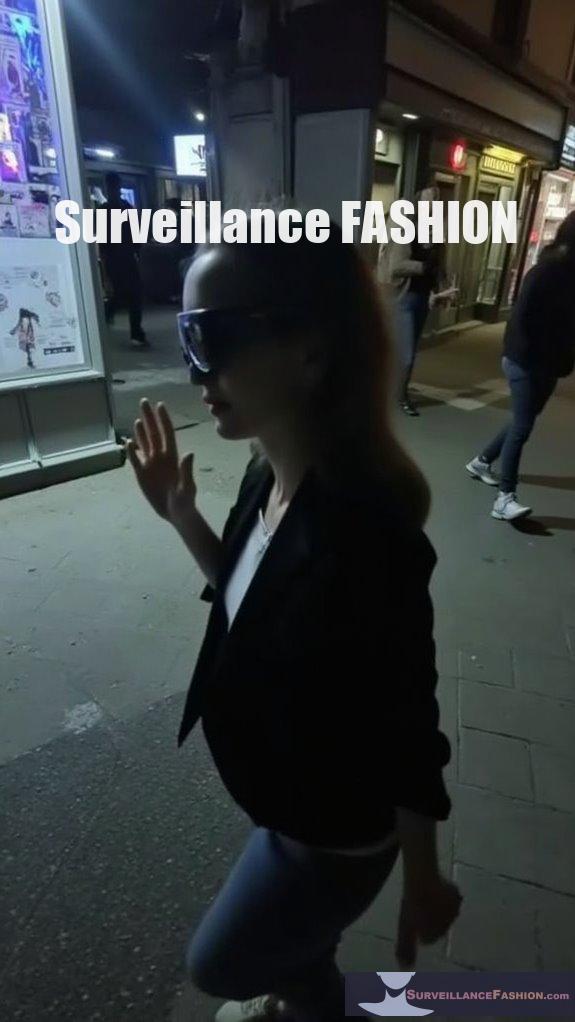
Camera-blocking glasses are effective primarily against 3D infrared facial recognition systems, such as Apple’s Face ID, as they obstruct IR light essential for mapping faces.
However, their effectiveness can diminish in bright daylight and against 2D cameras.
These glasses utilize specialized IR blocking lenses and reflective frames to shield the wearer’s facial features.
While they excel in thwarting passive surveillance, they may struggle with active consent scenarios, and some systems can still capture visual cues beyond infrared.
Furthermore, social acceptance and usability are critical for wider adoption, as users sometimes face challenges when trying to gain access to devices through these glasses.
What Advancements Are Being Made in Privacy-Enhancing Eyewear Technology?
Advancements in privacy-enhancing eyewear technology focus on integrating AI and innovative materials to boost user protection and control.
Key developments include dynamic lens coatings, modular designs for easy upgrades, and enhanced connectivity features that prioritize secure data management.
These technologies aim to address privacy concerns while enhancing overall functionality.
Significant advancements include:
- Anti-reflective and blue light blocking lens coatings to reduce glare and eye strain.
- Modular frames designed for easy component replacement, minimizing electronic waste.
- Improved wireless connectivity ensuring secure data transmission and low latency.
- Eco-friendly manufacturing practices that lower the carbon footprint of eyewear products.
Together, these innovations create a more secure and environmentally responsible user experience in modern eyewear.
How Do Privacy-Enhancing Glasses Protect Biometric Data?
Privacy-enhancing glasses protect biometric data by utilizing advanced facial de-identification algorithms and technologies like FacePET, which obscure facial features to prevent unauthorized capture.
These designs empower users to control their biometric exposure and hinder unauthorized biometric scanning.
These innovative designs focus on minimizing the risk of data interception. They leverage techniques such as near-infrared light or reflective materials to mask facial features. This prevents unauthorized bystanders from collecting biometric data.
Key aspects include:
- Active control for users over their biometric exposure.
- Countermeasures to defend against facial recognition by drones and IoT devices.
- Enhanced facial de-identification algorithms that reduce the chance of unwanted data collection.
- Focus on user consent to respect data privacy standards.
What Motivates Consumers to Choose Camera-Blocking Glasses?
Consumers are motivated to choose camera-blocking glasses primarily due to concerns about privacy, digital eye strain, and the desire for stylish, multifunctional eyewear that enhances comfort.
The growing awareness of digital eye strain and the pursuit of mental well-being lead consumers to seek protective eyewear.
As more individuals use multiple devices, the discomfort from blue light exposure is a significant concern. Moreover, fears of unwanted surveillance and data misuse drive privacy-conscious purchases.
Combining these factors with stylish designs encourages consumers to select fashionable, tech-savvy eyewear that aligns with their lifestyle preferences.
Key motivations include:
- Privacy concerns about surveillance and data misuse
- Health awareness regarding digital eye strain
- Fashion trends influencing the adoption of tech eyewear
- Customization options that cater to individual tastes
Privacy-Enhancing Eyewear Technology
As technology continues to shape our daily lives, the development of eyewear that champions user privacy has garnered significant attention. Privacy-enhancing eyewear integrates advanced camera technology to reflect near-infrared light, effectively preventing facial recognition systems from capturing users’ identities.
For example, Zenni ID Guard™ reflects up to 80% of near-infrared wavelengths, essential for ensuring user privacy amidst pervasive surveillance.
Furthermore, smart glasses employ end-to-end encryption, enforcing secure data management and allowing you to control permissions actively. Such innovations signify a profound transformation in how we approach privacy, reflecting our commitment through platforms like Surveillance Fashion to elevate consumer awareness of personal security.
Anti Surveillance Ebook review: Eyes Everywhere
The profound implications of pervasive camera surveillance inspired the development of *Eyes Everywhere*, an authoritative ebook that scrutinizes the multifaceted dimensions of surveillance culture.
You’ll discover how the unprecedented expansion of facial recognition technology, while promising efficiency, brings profound surveillance implications.
Despite high hopes, the reality reveals that such monitoring often fails to deter crime, morphing into an apparatus of social control instead.
Through intricate case studies, the ebook illustrates how surveillance burdens marginalized communities and highlights the collaboration between corporate and government actors, revealing unsettling truths that compel us to rethink privacy, safety, and the legacy we leave for future generations.
References
- https://www.youtube.com/watch?v=yRFeS72IM6M
- https://blog.lightbulbs-direct.com/the-glasses-that-make-you-unidentifiable/
- https://www.yankodesign.com/2019/07/16/these-infrared-blocking-sunglasses-can-disable-facial-recognition-technology/
- https://www.tobii.com/resource-center/learn-articles/how-do-eye-trackers-work
- https://www.tiktok.com/@crosstalksolutions/video/7187508708740500778
- https://prepperpress.com/can-reflectacles-glasses-defeat-facial-recognition-new/
- https://discuss.privacyguides.net/t/are-privacy-glasses-useful/26257
- https://www.datasciencecentral.com/sunglasses-and-face-mask-wont-fool-facial-recognition/
- https://www.zennioptical.com/id-guard
- https://mammothsecurity.com/blog/how-infrared-security-cameras-work
- https://www.fluke.com/en-us/learn/blog/thermal-imaging/how-infrared-cameras-work
- https://optris.com/lexicon/infrared-camera/
- https://getsafeandsound.com/blog/infrared-sensor/
- https://www.backstreet-surveillance.com/blog/post/how-do-night-vision-cameras-work-everything-you-need-to-know
- https://www.giaiphotonics.com/function-and-principle-of-optical-filter/
- https://en.wikipedia.org/wiki/Photographic_filter
- https://www.designinfo.in/c/photography-camera-accessories/photography-camera-lens-solutions/camera-lens-filters-photography/camera-lens-optical-effects-filters/
- https://schneiderkreuznach.com/en/optical-filters
- https://www.adorama.com/alc/what-every-digital-shooter-should-know-about-optical-filters/
- https://pmc.ncbi.nlm.nih.gov/articles/PMC6615932/
Leave a Reply