Tag: facial recognition

  • Best UV Patterns Blocking Facial Recognition Systems

    Best UV Patterns Blocking Facial Recognition Systems

    To effectively block facial recognition systems, you should explore UV patterns that utilize advanced technologies, such as generative adversarial networks, to craft complex designs. These designs confuse recognition algorithms by creating high spatial frequency patterns that adapt to environmental changes. Furthermore, clothing incorporating reflective materials can obscure facial features, while UV makeup can further enhance these privacy strategies. This unique fusion of fashion and technology reflects the ongoing dialogue about personal identity and privacy in an increasingly surveilled world, inviting you to discover more.

    Quick Takeaways

    • UV patterns with high spatial frequencies can significantly reduce recognition accuracy by confusing facial recognition algorithms.
    • Complex adaptive UV designs enhance spoof detection, making it difficult for systems to accurately identify individuals.
    • Incorporating reflective materials into clothing and accessories disrupts infrared detection, adding another layer of privacy protection.
    • Generative adversarial networks can create synthetic UV patterns that improve effectiveness against facial recognition systems.
    • Utilizing tactical gear with high-tech fabrics that absorb or reflect UV light can further enhance anti-surveillance strategies.

    Innovative Strategies for Privacy Protection
    privacy protection innovations strategy

    As privacy concerns escalate in our increasingly surveilled society, individuals are exploring innovative ways to evade facial recognition systems, particularly through the use of UV-blocking patterns. The advent of facial recognition technology, which identifies individuals by analyzing unique facial features, has prompted a growing unease regarding its implications for personal privacy. With surveillance systems proliferating globally, the need for effective privacy protection has never been more pressing.

    As surveillance intensifies, innovative UV-blocking patterns emerge as a vital defense against facial recognition technology’s threat to privacy.

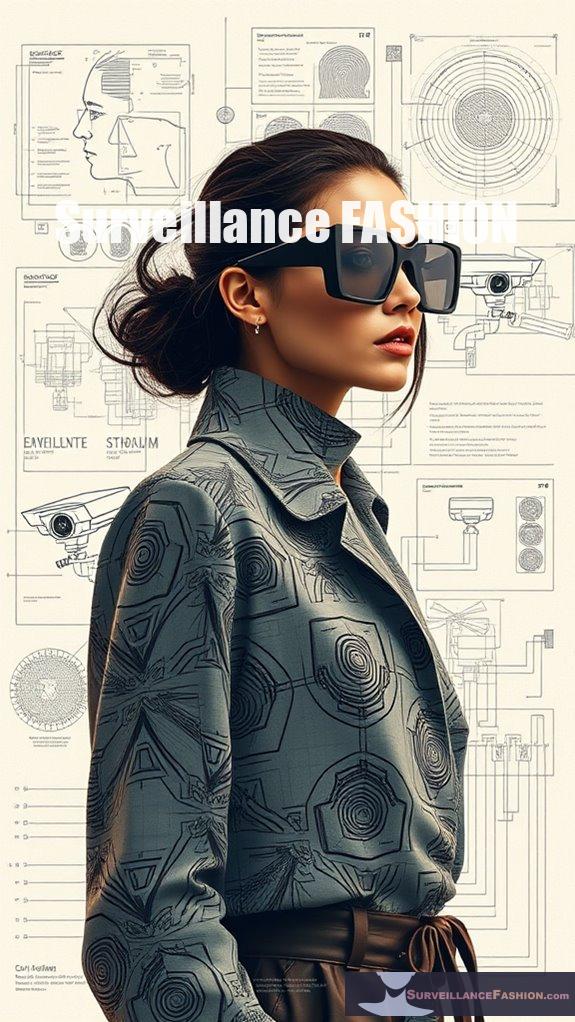
    In response, fashion designers and artists are embracing the concept of anti-surveillance fashion, crafting clothing and accessories that not only serve aesthetic purposes but also act as formidable countermeasures against invasive technologies. One of the more intriguing methods employed in this domain involves the utilization of UV-blocking patterns. These patterns can be incorporated into various garments and accessories, effectively confusing the algorithms underpinning facial recognition systems. Notably, facial recognition technology has been widely utilized by law enforcement in the US for identification and safety measures, highlighting the urgent need for countermeasures. Recent studies in public health surveillance have also shown that social media data can enhance our understanding of how individuals interact with surveillance technologies.

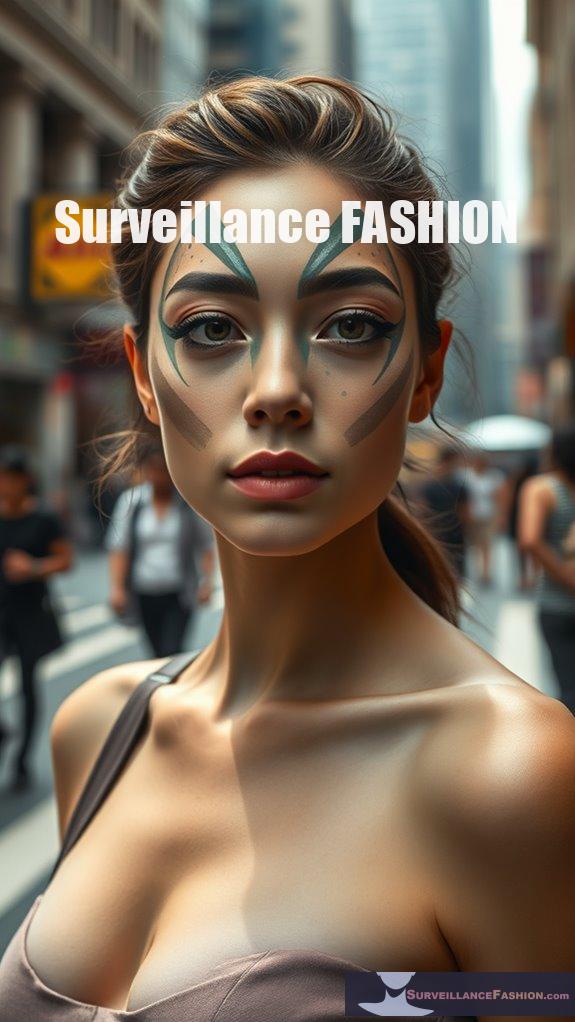
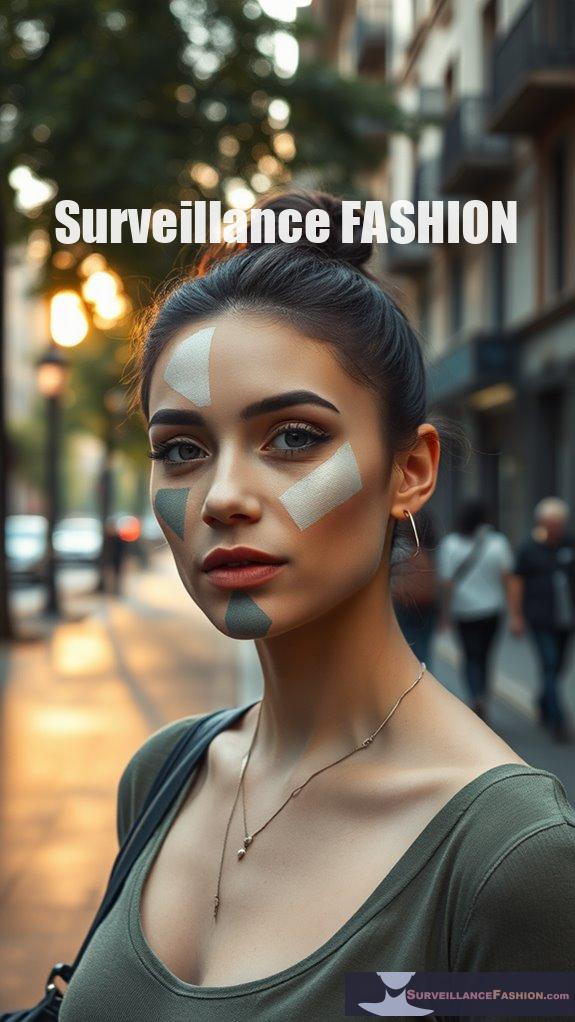
    For instance, clothing designed with facial-like patterns can inundate the system with false positives, rendering it unable to accurately identify the wearer. Similarly, reflective materials, when applied to various accessories like glasses or hats, can disrupt the infrared detection capabilities of surveillance cameras, creating a layer of obfuscation that’s both practical and stylish. Additionally, disguise techniques such as UV makeup can further confuse these systems, adding another layer of complexity to the challenge of facial recognition. Employing these makeup techniques can obscure facial features, making it difficult for the technology to achieve accurate identification.

    In addition, the integration of high-tech fabrics into everyday wear is a reflection of the innovation driving the anti-surveillance fashion movement. By employing materials specifically engineered to reflect or absorb UV and infrared light, designers aren’t only enhancing the protective capabilities of their creations, but they’re also making a bold statement about privacy in the digital age. For example, consider scarves or hats that aren’t merely fashion items but also serve as tactical gear against pervasive surveillance.

    Physical methods of evasion also complement the use of UV-blocking patterns. You might find that tilting your head or adjusting your posture can greatly hinder a camera’s ability to capture your facial features accurately. Additionally, combining these strategies with carefully chosen accessories—such as glasses equipped with infrared-blocking films—can create an additional layer of defense.

    The synergy of these approaches underscores the multifaceted nature of privacy protection in an age dominated by technology. As you explore deeper into the world of anti-surveillance fashion, you’ll discover an array of innovative solutions designed to thwart facial recognition systems. From reflective tapes to camera-distorting accessories, each design element serves a dual purpose: to enhance personal style and safeguard individual privacy.

    This intersection of fashion and technology isn’t just a trend; it’s a transforming environment that reflects a collective desire for autonomy in a world increasingly characterized by surveillance. At Surveillance Fashion, we’ve dedicated ourselves to exploring these advancements, providing a platform for discussion and innovation in the field of privacy protection.

    Cloaking Designs With UV Patterns
    uv patterned cloaking designs

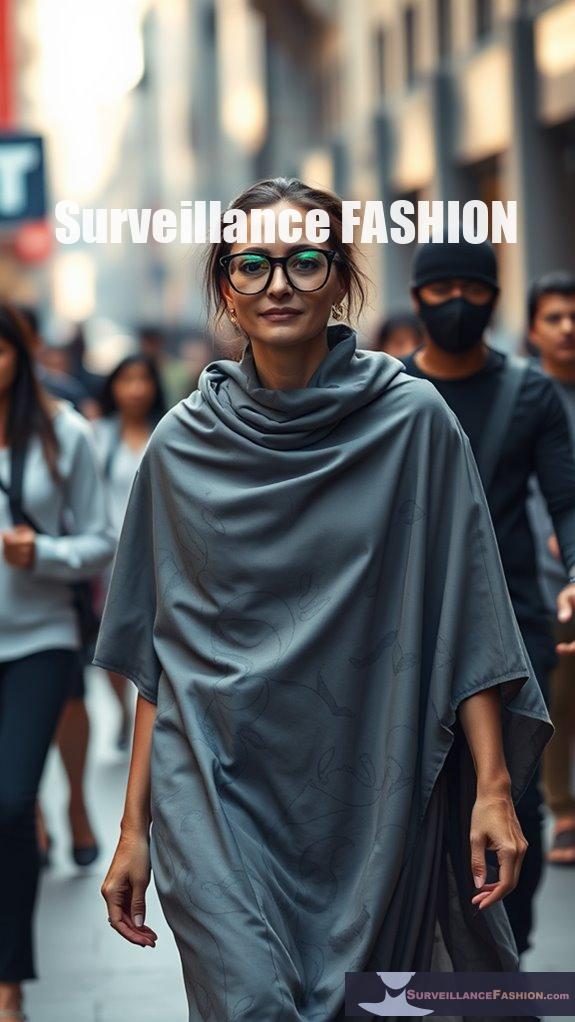
    Cloaking designs with UV patterns represent a sophisticated approach to enhancing privacy in an era dominated by facial recognition technology. By employing innovative cloaking methods, these designs utilize UV technology to create undetectable alterations to one’s appearance, effectively confusing recognition algorithms. For instance, reflective materials incorporated into eyewear can obscure facial features, while UV patterns can block harmful rays and prevent identification. This multi-layered strategy, which includes microscopic adjustments, leverages pixel-level manipulation to guarantee that even subtle changes remain invisible to the naked eye yet disrupt machine detection. The technology behind Fawkes Image Cloaking has inspired new methods that enhance personal privacy online. Additionally, infrared-reflecting materials are being researched to further improve the efficacy of these designs. Infrared-resistant fabrics are also being explored for their potential to augment privacy by providing stylish yet functional clothing options. As various companies and researchers compete to develop these privacy-enhancing tools, the demand for effective solutions grows.

    Our website, Surveillance Fashion, aims to illuminate these advancements, providing perspectives into how you can safeguard your identity in an increasingly surveilled world. Embracing these cutting-edge designs could redefine your experience in public spaces, merging functionality with style to promote privacy. The Phantom Miasma eyewear, for instance, utilizes innovative lens technology to block infrared illumination and prevent facial mapping, making it a powerful tool in the quest for privacy.

    Creative UV Pattern Innovations
    innovative ultraviolet design techniques

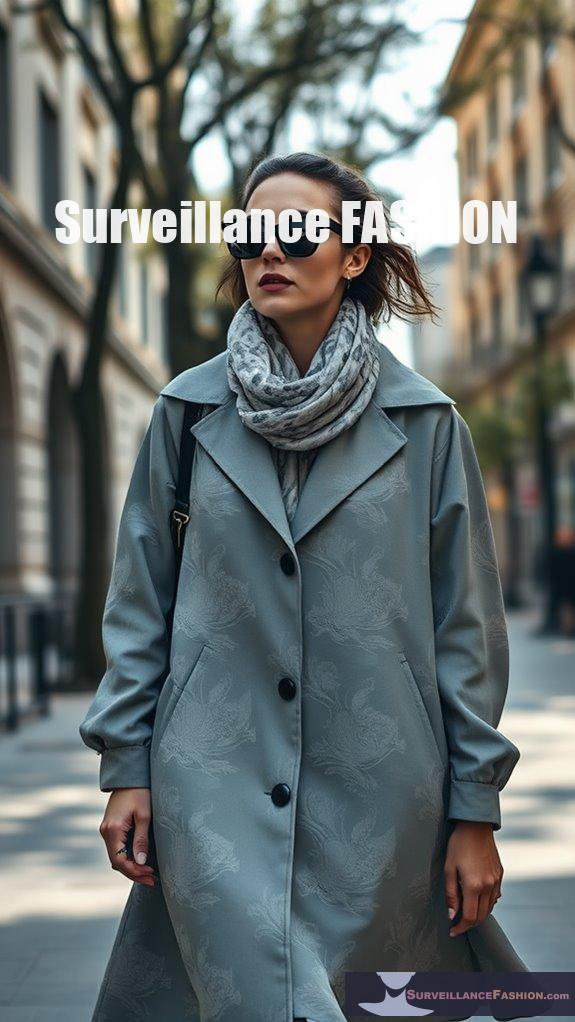
    What if you could transform the way facial recognition systems perceive your identity through the innovative use of UV patterns? By embracing adaptive UV designs, you can create a new frontier in privacy protection.

    Envision projecting complex UV pattern aesthetics—these patterns not only enhance spoof detection but also obscure your identity from prying eyes. For instance, high spatial frequency UV patterns can be dynamically adjusted to suit varying environmental conditions, effectively rendering your facial features indistinguishable to recognition algorithms. Utilizing deep learning models, specialized algorithms interpret these UV projections, enabling pose-invariant recognition even under challenging lighting scenarios. Moreover, advancements in generative adversarial networks (GANs) allow for the generation of synthetic UV patterns, which can camouflage faces that might otherwise be detected. These developments align with the increasing integration of AFR in security and surveillance, highlighting the need for innovative privacy solutions.

    The use of makeup techniques can further enhance the effectiveness of these UV patterns in obstructing identity detection. Furthermore, the application of real 3D information in facial recognition enhances the effectiveness of such UV patterns in obstructing identity detection. As a result, employing anti-surveillance makeup alongside these UV innovations can significantly improve your chances of evading detection.

    As we explore these exciting innovations, the potential for privacy enhancement becomes apparent, making the technology a vital element in the ongoing discourse surrounding surveillance fashion and individual rights.

    Questions and Answers

    How Effective Are UV Patterns Against Various Facial Recognition Systems?

    You’ll find that UV patterns have varying effectiveness against different recognition systems. By comparing their vulnerabilities, you can explore innovative ways to enhance privacy protection and potentially outsmart advancing facial recognition technologies.

    Can UV Patterns Be Customized for Individual Users?

    Yes, you can customize UV patterns for individual users. Personalized UV patterns leverage custom user designs, enhancing privacy and effectiveness while considering facial structure and recognition system vulnerabilities for innovative, tailored solutions in evading surveillance.

    Are There Any Legal Implications of Using UV Patterns?

    Using UV patterns is like dancing on a legal tightrope; you’ve got to navigate privacy concerns and legal regulations carefully. Without clear laws, you might find yourself in uncharted waters, risking unintended consequences. Stay informed!

    How Durable Are UV Patterns on Clothing and Accessories?

    UV patterns on clothing and accessories can offer impressive fabric longevity and pattern resilience. However, factors like moisture, temperature, and wear can impact their durability, so you should choose wisely and maintain them properly for lasting effectiveness.

    What Materials Work Best for Applying UV Patterns?

    When applying UV patterns, consider fabric types like metallic textiles and reflective materials. Utilize innovative application techniques, such as embedding UV-blocking properties or using fluorescence, to enhance effectiveness and disrupt recognition systems creatively.

    References

  • Outsmart Cameras: Privacy Fashion Against Facial Recognition

    Outsmart Cameras: Privacy Fashion Against Facial Recognition

    Fashion isn't just about looking good anymore; it's my secret weapon against the ever-watchful eye of facial recognition tech.

    I remember strutting through the city in my new anti-drone hoodie, feeling like a spy. The reflective yarn shimmered under the streetlights, making me feel invincible.

    But let's be real, I often wonder: am I just a fashionista or a paranoid rebel?

    That hoodie isn't just a style choice; it's a statement. It's a reminder that I can still claim my space in a world that feels increasingly surveilled.

    Do I look good? Sure. Do I feel protected? Absolutely.

    Minimalist Lifestyle: Simplifying My Anti-Surveillance Wardrobe

    I recently decided to declutter my closet, embracing a minimalist lifestyle. It felt liberating—like shedding an old skin.

    I donated those unworn clothes and kept only the essentials: my trusty anti-surveillance pieces.

    Each item I own now serves a purpose, merging style with privacy.

    I often reflect on how simplicity can be powerful. Less really is more, especially when fighting against prying eyes.

    Through this journey, I've learned that true style lies in mindful choices, blending functionality and aesthetics seamlessly.

    Quick Takeaways

    • Reflective yarns and textured patterns in garments confuse facial recognition systems, enhancing personal privacy through fashion.
    • Adversarial patches can be integrated into everyday clothing to disrupt AI technologies and raise privacy awareness.
    • Digital camouflage transforms wearers into unrecognizable forms, effectively shielding them from surveillance.
    • Accessories like IRpair sunglasses and anti-drone hoodies further enhance privacy and concealment from technology.
    • Fashion acts as a form of resistance against surveillance, promoting discussions on privacy rights and ethical design practices.

    Reflective Yarn Innovations: Blurring Personal Identity

    innovative yarn personal identity

    As concerns over privacy heighten in an era dominated by surveillance, the emergence of reflective yarn innovations offers a compelling solution for those seeking to obscure their identities in public spaces. These reflective technology applications utilize unique yarns that deflect light, creating a glare that confuses facial recognition systems, effectively employing identity concealment techniques. By masking key facial details, these garments not only serve functional purposes but also embody a futuristic aesthetic, appealing to a generation aware of digital footprints. Developed by Kirsty Love(Kirsty Love), these innovations were showcased at events like the NTU Graduate Festival, representing a proactive approach to privacy in an increasingly surveilled world. Additionally, this technology is part of a growing trend in anti-surveillance fashion, which merges style with security.

    Adversarial Patches: Clothing That Confuses AI

    clothing that misleads ai

    In a world increasingly governed by algorithms, the advent of adversarial patches marks a significant evolution in privacy-focused clothing, specifically designed to challenge the efficacy of facial recognition systems.

    • Adversarial clothing employs deceptive patterns to mislead AI.
    • These patches can be seamlessly integrated into everyday garments. Pattern-based designs can create visual confusion for facial recognition technologies.
    • Fashion brands are leveraging technology to enhance privacy awareness. Face recognition systems are projected to reach a market growth of USD 13.87 billion by 2028, highlighting the urgent need for privacy solutions.

    License Plate Disguises: Feeding Misinformation to Surveillance

    surveillance evasion techniques unveiled

    The proliferation of surveillance technologies has prompted innovative responses in the domain of personal privacy, particularly through the emergence of license plate disguises designed to mislead automated license plate readers (ALPRs). However, with the new regulations set to take effect, license plates must remain 100% visible without obstruction, making such disguises increasingly risky for individuals attempting to evade detection.

    Vision-Blocking Accessories: Outwitting CCTV Cameras

    cctv evasion through accessories

    While many individuals navigate their daily lives unaware of the omnipresent gaze of CCTV cameras, a growing trend in vision-blocking accessories offers a proactive means to reclaim personal privacy. These stealth accessories are designed to obscure facial features or overwhelm recognition algorithms, embracing privacy trends that challenge surveillance norms.

    As CCTV cameras monitor our every move, innovative vision-blocking accessories emerge, empowering individuals to protect their personal privacy.

    • Reflective fabrics that bounce light back at cameras. Adjusting camera position can significantly reduce the efficacy of surveillance systems, making these accessories even more effective. Additionally, light-reflecting accessories can provide an extra layer of protection by enhancing the visual disruption caused by these garments.
    • Textured masks that confuse facial recognition software.
    • Clothing with complex patterns that disrupt recognition systems.

    Fashion as Resistance: Empowering Privacy Awareness

    empower privacy through fashion

    Fashion serves as a potent medium for expressing resistance against the pervasive surveillance that characterizes contemporary society, particularly through the lens of privacy awareness.

    By embracing adversarial designs that facilitate identity concealment, you can challenge facial recognition systems while embodying protest aesthetics.

    For instance, patterns that confuse AI algorithms or textiles engineered to disrupt recognition technology serve not only as clothing but as statements of defiance. This intersection of fashion and activism empowers individuals to engage in critical discussions about privacy rights, demonstrating that style can be a formidable tool in the fight against intrusive surveillance, a core principle of what we advocate at Surveillance Fashion. Moreover, with the number of surveillance cameras in the U.S. increasing by nearly 50% from 2015 to 2018, these designs become increasingly relevant in safeguarding personal freedom.

    The Future of Privacy Fashion: Legal and Ethical Implications

    privacy in fashion ethics

    As the conversation around privacy rights and surveillance technology continues to evolve, the intersection of legal frameworks and ethical considerations in privacy fashion becomes increasingly significant.

    • Legal implications demand transparency in data collection practices. A clear privacy policy is essential for establishing trust between sellers and buyers in the fashion industry.
    • Ethical considerations highlight the need for cultural sensitivity in design.
    • An informed consent model is essential for utilizing biometric data.

    Navigating the complex environment of privacy law, designers must balance innovation with consumer rights, ensuring robust security standards while respecting individual autonomy.

    Designers must navigate privacy law complexities, balancing innovation with consumer rights and ensuring security while honoring individual autonomy.

    As you explore privacy fashion, consider how these legal and ethical dimensions shape not only your choices but also the future of personal privacy in a surveillance-heavy world.

    Stealthy Patterns for Privacy

    covert designs for confidentiality

    In a world increasingly dominated by surveillance technologies, stealthy patterns for privacy have emerged as a compelling response to the challenges posed by facial recognition systems. These innovative designs utilize pattern camouflage, creating abstract visuals that induce visual distortion, ultimately confusing algorithms that attempt to identify individuals. Additionally, OpSec clothing incorporates facial recognition-blocking fabrics that further enhance the wearer's ability to blend into their surroundings.

    Cloaking Colors and Textures

    cloaking techniques in design

    Cloaking techniques employing specific colors and textures have emerged as pivotal strategies in the ongoing battle against facial recognition technologies, addressing the urgent need for privacy in an era marked by pervasive surveillance.

    • Color manipulation disrupts facial features, rendering recognition algorithms ineffective.
    • Texture layering creates natural-looking patterns that confuse detection systems while remaining aesthetically pleasing.
    • Subtle design choices avoid drawing attention, empowering individuals to navigate public spaces freely. Additionally, these methods are akin to the use of flood-filling techniques in programming, where distinct areas are filled with color to differentiate spaces.

    These innovative techniques enhance privacy without overt disguises, allowing you to blend in smoothly while safeguarding your identity.

    Fashion That Evades Detection

    invisible style statement

    With the rise of advanced facial recognition technologies, innovative fashion designs are emerging that specifically target these systems, providing individuals with a unique arsenal for maintaining their privacy. Garments like Cap_able's collection utilize digital camouflage, transforming wearers into unrecognizable forms. Meanwhile, Harvey's Hyperface employs privacy textiles that mimic facial features, diverting AI focus. The Italian clothing line Cap_able exemplifies this trend, as it aims to provide privacy in an era of invasive biometric recognition. Accessories such as IRpair sunglasses and anti-drone hoodies, designed to obscure thermal signatures, further enhance privacy. These creations reflect a growing trend in stealth fashion, embodying a proactive approach to counter surveillance culture—a personal expression of freedom in an era where technology often invades the private sphere.

    References

  • Makeup Tricks to Dodge Facial Recognition Systems

    Makeup Tricks to Dodge Facial Recognition Systems

    To effectively dodge facial recognition systems, focus on bold colors and creative eye shadow patterns. Enhancing brow lines and jaw contours with dark shades confounds algorithms, while bright hues around the eyes disrupt symmetry. Asymmetrical makeup designs, such as geometric shapes, can further obscure key features. Pairing these techniques with strategic hair styling and clothing choices complicates identification. Engaging in such practices not only highlights personal privacy but also fosters innovative approaches—there's much more to discover about maintaining anonymity.

    Quick Takeaways

    • Apply makeup to high-density areas like brow lines and jaw contours to create visual imbalance and confound recognition systems.
    • Use asymmetrical eyeliner and eyeshadow patterns to disrupt facial symmetry, making it harder for algorithms to identify features.
    • Incorporate bold colors around the T-zone to obscure key features like the nose bridge and enhance visual disruption.
    • Style hair in an unbalanced manner, combining light and dark features to complicate recognition further.
    • Utilize creative makeup techniques as a form of digital camouflage, altering the perceived structure of your face.

    Makeup Techniques to Bypass Facial Recognition

    disguise for facial recognition

    In an era where facial recognition technology permeates various aspects of daily life, from security systems to social media platforms, understanding how to navigate this terrain has become increasingly important. One fascinating approach that has emerged involves the use of subtle makeup techniques designed to confound these advanced systems without drawing undue attention. While it may seem counterintuitive to employ makeup to evade recognition, the strategic application of products can create a façade that disrupts the algorithms that rely on facial symmetry and prominent features for identification.

    As facial recognition technology becomes ubiquitous, mastering subtle makeup techniques can cleverly disrupt these systems while maintaining a natural appearance.

    When considering how to effectively employ these subtle contouring techniques, one must focus on high-density key-point regions of the face, such as brow lines and jaw contours. For instance, darkening prominent features, like cheekbones or brow arches, while lightening shadowed areas creates a visual imbalance that can confuse recognition systems. You might find that applying concealer over scars or moles helps obscure these identifiers, which facial recognition algorithms often rely upon. By minimally altering the face's natural contours, you can enhance your anonymity without appearing overly made-up or theatrical. PeopleTec's research findings suggest that by focusing on these key regions, you can better evade detection. Additionally, leveraging infrared LEDs can further confuse facial recognition systems that rely on infrared light. The use of anti-surveillance makeup patterns can also enhance your ability to disguise your identity effectively, often referred to as camouflage techniques.

    As you explore deeper into the world of makeup as a tool for evasion, the concept of asymmetrical makeup patterns becomes increasingly relevant. Facial recognition systems are predicated on the assumption of symmetry; thus, introducing asymmetry through strategic makeup application can greatly improve your chances of going unnoticed. You may experiment with applying eyeliner or eyeshadow in a way that creates an unbalanced look, thereby introducing elements that disrupt your facial symmetry. Such techniques can be complemented by styling your hair in an unbalanced manner, adding another layer of complexity that recognition algorithms struggle to interpret.

    Moreover, utilizing natural colors and inconspicuous makeup strategies allows you to alter your features subtly. By focusing on shadings or lightings that mislead recognition systems, you maintain a degree of discretion that bold colors simply can't offer. For example, using a neutral foundation that blends seamlessly with your skin tone can enhance your natural look while simultaneously masking features that algorithms might latch onto. This approach allows you to navigate public spaces without drawing attention, aligning perfectly with the ethos behind our website, Surveillance Fashion, where we explore the intersection of style and privacy.

    Incorporating unusual hair colors or patterns can further contribute to your evasion efforts, as algorithms often struggle with tonal variations that deviate from the norm. By harmonizing light and dark features on your face, you can create a confusing visual experience for these systems, enhancing your chances of remaining undetected. Ultimately, by combining these makeup techniques with thoughtful hair styling and even clothing choices, you can develop a thorough strategy to evade facial recognition, ensuring that you remain in control of your identity in an increasingly surveilled world.

    Disguising Features With Bold Colors

    bold colors to disguise

    When you consider the potential of bold colors to obscure facial features, it becomes evident how effective strategic makeup application can be in evading facial recognition systems. Utilizing color contrast, you can apply contrasting shades around your eyes and on your forehead, creating a visual disruption that confuses algorithms that rely on facial landmarks for identification. Asymmetrical designs, such as geometric patterns or uneven color applications, further enhance this effect by distorting the perceived structure of your face. For instance, using vibrant blues or purples around the T-zone can obscure key features like the nose bridge and brow ridge, making it challenging for recognition systems to map your face accurately. Additionally, Juggalo face paint serves as a unique method that may also disrupt facial recognition systems, demonstrating the intersection of creativity and activism in protecting one's identity. Furthermore, Juggalo makeup is known to significantly alter facial features, which can further complicate the identification process. Moreover, bold color choices can be combined with innovative techniques, such as applying foundation in dramatic shifts to alter your overall appearance. This approach aligns with our mission at Surveillance Fashion to explore creative ways to navigate the complexities of modern surveillance technologies. Incorporating anti-facial recognition techniques into your makeup routine can enhance your ability to evade detection even further. In addition, embracing color theory can help you choose shades that not only stand out but also serve to obscure your facial contours effectively.

    Creative Eye Shadow Patterns

    colorful eye makeup designs

    Creative eye shadow patterns serve as an innovative means of disrupting facial recognition systems, particularly by targeting the symmetry and expected features that these algorithms rely upon for identification.

    Through the practice of eye shadow artistry, you can employ contrasting colors and unique designs to create asymmetrical visuals that confuse detection algorithms. For instance, strategically applying high-contrast hues around your eyes can obscure the features that AI systems typically recognize, thereby enhancing algorithm evasion. Additionally, researchers have found that makeup applied to identifiable facial parts significantly reduces detection rates, showcasing the potential of creative makeup techniques. Moreover, creative eye shadow patterns can draw attention away from the face's natural contours, further complicating recognition efforts. The application of disruptive color schemes can also alter the perceived structure of the face, making it harder for algorithms to match facial data.

    Utilizing heatmap guidance to identify the most recognizable facial areas allows for selective coverage, which can further diminish the likelihood of successful identification. Researchers have demonstrated that such creative applications can achieve up to a 98% success rate in evading facial recognition systems.

    As we explore these techniques, the understanding gained contributes to the overarching conversation about personal privacy, a core reason behind the creation of our platform, Surveillance Fashion. CV Dazzle's original designs were specifically created to exploit algorithm vulnerabilities by altering expected dark and light areas of a face, further emphasizing the potential of artistic expression in privacy protection.

    Questions and Answers

    Can These Makeup Tricks Be Used for Everyday Situations?

    You can definitely use everyday cosmetics with concealment techniques to subtly alter your appearance. By blending natural looks with innovative methods, you can navigate daily situations while minimizing the risk of unwanted recognition.

    Are There Risks Associated With Using These Techniques?

    Yes, there're significant risks with these techniques. You'll face privacy concerns and ethical implications, as using them might provoke public scrutiny and legal repercussions, especially if perceived as evasion or identity manipulation in sensitive situations.

    How Long Do These Makeup Applications Typically Last?

    Think of makeup as a fleeting whisper; it offers temporary solutions. Its durability hinges on the products you choose. Long-lasting formulas shine, while natural looks may fade, needing reapplication to maintain their magic throughout the day.

    Can These Tricks Be Applied to All Skin Types?

    Yes, these tricks can be tailored to different skin types. You'll need to take into account makeup formulation variations to guarantee compatibility, as each skin type reacts uniquely, impacting the overall effectiveness of your application.

    Are There Specific Brands Recommended for This Purpose?

    In a scenery where innovation blooms, you won't find specific makeup brands tailored for this purpose. Instead, focus on product effectiveness; explore versatile options that creatively mask features while remaining practical and stylish in your daily life.

    References

  • Strategic Times to Avoid Facial Recognition

    Strategic Times to Avoid Facial Recognition

    To avoid facial recognition, be mindful of high-profile events such as major festivals, sporting occasions, or election days, where surveillance is ubiquitous. Also, consider public transportation hubs and crowded retail environments during the holiday shopping season, times notorious for enhanced monitoring. Employing clothing patterns that disrupt recognition algorithms can be effective, as well as choosing less frequented times for travel or shopping. By understanding these dynamics, you can gain awareness into maintaining your digital privacy. Further exploration of practical strategies awaits.

    Quick Takeaways

    • Avoid major festivals and parades where extensive facial recognition systems are deployed for crowd safety and security.
    • Steer clear of popular sporting events, as unintentional monitoring by law enforcement networks is prevalent.
    • Be cautious on election days, when heightened facial recognition systems can track voters without consent.
    • Use public transportation during off-peak hours to minimize exposure to facial recognition technologies at airports and train stations.
    • Refrain from shopping during the holiday season when malls and retail centers implement increased surveillance for security and targeted advertising.

    Strategic Times to Be Aware of Facial Recognition

    facial recognition awareness strategies

    As societal reliance on technology escalates, so too does the prevalence of facial recognition systems, which, while offering enhanced security measures in various public spaces, can inadvertently compromise personal privacy. You mightn't realize it, but certain strategic times and locations can notably increase your exposure to these invasive technologies. Understanding when to be cautious about facial recognition will empower you to navigate public spaces while preserving your anonymity.

    Reflect on major festivals and parades. These high-profile events attract large crowds, prompting organizers to deploy extensive surveillance systems, including facial recognition technology, to guarantee safety and security. If you're planning to attend such an occasion, it's wise to think about the potential implications of being digitally cataloged by these systems. Facial recognition technology achieves up to 99.97% accuracy under ideal conditions, making it particularly effective in crowded settings.

    Major festivals and parades heighten facial recognition use, raising concerns about your digital privacy and identity.

    Similarly, sporting events often employ facial recognition for crowd management and security, so your attendance could lead to unintentional tracking. Over 117 million Americans were part of a law enforcement facial recognition network as of 2016, highlighting the scale of this issue.

    Election days present another scenario where facial recognition's role is heightened. The increase in security measures, including biometric verification, aims to prevent electoral fraud but also means you could be identified and monitored without your consent. It's essential to weigh the civic duty of participating in democratic processes against your desire for privacy.

    Public transportation hubs, such as airports and train stations, often use facial recognition for security purposes. You might feel a sense of safety, but this comes at the cost of your personal privacy. If you're traveling, reflect on opting for airports that allow you to bypass facial recognition scans, an option that some facilities now provide. This way, you can enjoy the benefits of travel while minimizing your digital footprint.

    The holiday shopping season is another time to be cautious. Malls and shopping centers ramp up their use of facial recognition for security and marketing tactics during this busy period. You may find yourself being tracked not only for safety but also for targeted advertising, which can feel invasive. It's beneficial to be aware of how retailers utilize this technology and to contemplate alternative shopping methods that respect your privacy.

    Beyond simply avoiding specific locations and times, you can employ various evasion techniques to protect your identity. For instance, using anti-facial recognition software, such as Fawkes or FaceShield tools, can help obscure your image from algorithms while still allowing you to be recognized by humans.

    These innovative solutions enable you to maintain a degree of anonymity in a world increasingly dominated by surveillance technologies.

    Clothing Patterns for Evasion

    stealthy attire for escape

    Clothing patterns designed for evasion serve as a fascinating intersection of fashion and technology, where aesthetics meet functionality in the quest for personal privacy.

    These innovative designs employ a variety of techniques to enhance pattern effectiveness against facial recognition systems:

    • Adversarial Patches: AI-generated patterns confuse algorithms.
    • Animal-Inspired Patterns: Mimicking the appearances of animals, such as zebras, misleads AI.
    • Infrared Light Management: Reflective materials disrupt nighttime surveillance, creating a disorienting visual effect for cameras. This approach leverages advanced material science to enhance the effectiveness of the patterns.
    • Complex Abstract Art: Disrupts digital detection through elaborate designs.

    Through extensive research and development, designers create garments that engage with the pressing issue of surveillance, emphasizing the importance of individual visibility rights. The Manifesto Collection from Capable showcases clothing that specifically aims to deter facial recognition systems.

    Collections like the Hyperface Project illustrate design innovation, featuring prints that overload facial recognition systems.

    In this age of heightened surveillance, understanding these clothing patterns not only empowers individual choices but also aligns with our mission at Surveillance Fashion to raise awareness about privacy in an increasingly monitored world.

    Timing for Optimal Evasion

    evasive maneuvering time strategy

    Timing plays an essential role in enhancing the effectiveness of evasion strategies against facial recognition systems. To maximize your chances of remaining undetected, consider the following best approaches:

    Time of Day Strategy Effectiveness Level
    Early Morning Off-Peak Strategies High
    Midday Peak Hours Low
    Late Evening Off-Peak Strategies Medium
    Nighttime Off-Peak Strategies Very High
    Rainy Weather Off-Peak Strategies High

    Utilizing off-peak hours can effectively reduce your exposure to surveillance, particularly in less monitored environments. During these times, facial recognition cameras may not operate at full capacity, and the presence of fewer people enhances the ability to blend in. Such perspectives are essential for those exploring innovative ways to navigate an increasingly surveilled world, which is why we created Surveillance Fashion to share these strategies. Additionally, understanding your chronotype's optimal performance can further inform your timing decisions for evasion. Recognizing key anti-surveillance methods can also empower individuals to make more informed choices about when and how to appear in public. Being aware of surveillance-free zones can significantly aid in planning your routes to avoid detection. With the rise of deepfakes and regulatory actions, it is crucial to stay informed about how technology is evolving in the surveillance landscape.

    Questions and Answers

    How Does Facial Recognition Technology Work in Public Spaces?

    Facial recognition technology in public spaces enhances surveillance capabilities, but it raises significant privacy concerns. While it identifies individuals quickly, you must consider the ethical implications of constant monitoring in your community.

    What Are the Legal Implications of Using Facial Recognition?

    When using facial recognition, you face significant privacy concerns and must navigate complex regulatory frameworks. Balancing innovation with legal requirements is essential to guarantee responsible use while protecting individuals' rights and personal data.

    Can Facial Recognition Be Used Without Consent?

    Facial recognition can't be used without consent due to significant privacy concerns. Consent issues arise when individuals aren't informed or agreeing, leading to unauthorized use of sensitive biometric data and potential ethical violations.

    How Accurate Is Facial Recognition Software?

    Facial recognition software boasts impressive accuracy, yet you've got to contemplate technology limitations. Accuracy concerns arise in real-world conditions where factors like lighting and demographics can impact results, highlighting the need for continuous innovation and improvement.

    What Are Common Misconceptions About Facial Recognition Technology?

    You might think facial recognition technology links personal data across databases, but that's a misconception. Ethical concerns and privacy issues stem from misunderstandings, yet regulations guarantee responsible use and protect your data effectively.

    References

  • Why Face Recognition Fails During Strategic Appearances?

    Why Face Recognition Fails During Strategic Appearances?

    Facial recognition fails during strategic appearances primarily due to algorithmic biases that skew accuracy, particularly for marginalized groups. For instance, darker-skinned women face a staggering 34.7% error rate, while light-skinned men enjoy an impressive 0.8% accuracy. These discrepancies stem from biased datasets poorly representing diverse demographics and flawed algorithms affected by environmental factors. Such imperfections lead to misidentifications that not only damage individual reputations but also exacerbate societal inequalities. Explore further to uncover deeper understandings into these challenges.

    Quick Takeaways

    • Facial recognition technology struggles with diverse demographic groups, leading to higher misidentification rates during events with varied appearances.
    • Poor lighting and environmental factors can significantly diminish the accuracy of facial recognition systems during strategic appearances.
    • Cognitive biases in algorithms and operators can exacerbate inaccuracies, particularly in high-pressure public settings.
    • Biased datasets, lacking representation of non-white faces and women, result in systemic errors during key public events.
    • Increased surveillance during strategic appearances can lead to wrongful arrests and heightened discrimination against marginalized communities.

    The Flaws of Facial Recognition Technology

    inaccurate identification and bias

    As the use of facial recognition technology becomes increasingly pervasive, it's essential to recognize the troubling failures that accompany its implementation, particularly regarding accuracy and fairness. This technology, often hailed as a beacon of innovation, paradoxically reveals considerable flaws, especially during strategic appearances where public engagement is paramount.

    You might be surprised to learn that studies have found error rates drastically differ across demographic groups, with darker-skinned women facing an alarming 34.7% error rate compared to a mere 0.8% for light-skinned men. Such disparities highlight the troubling reality of algorithm bias, underscoring the systemic racism embedded within these systems. This situation is further complicated by understanding surveillance****, which shapes public perception and awareness of privacy issues.

    The primary issue stems from biased datasets, which often lack adequate representation of non-white faces and women. When you consider how these datasets are constructed, it becomes clear that they perpetuate injustices, leading to wrongful arrests and investigations that disproportionately affect marginalized communities. This isn't merely an oversight; it's a systemic failure that echoes broader societal inequalities. Techniques for WCAG 2.0(Group 1) can help enhance web accessibility for diverse groups, which is a crucial consideration in technology deployment. Furthermore, the report highlights that face recognition is likely an unreliable source of identity evidence, reinforcing the need for scrutiny in its application.

    Without robust regulation and oversight, especially within law enforcement situations, the potential for misuse escalates, raising considerable liberty and privacy concerns that could chill public protest and engagement.

    Technical limitations further exacerbate these issues. Current algorithms, while advancing, still struggle with diverse demographic groups, primarily due to the quality of the data they process. Environmental factors, such as poor lighting or unfavorable angles, can remarkably impact accuracy, introducing additional layers of complexity.

    For instance, if you attend a public event where diverse participants are present, the chances of facial recognition errors increase, posing a real risk for misidentification. Furthermore, cognitive biases from both algorithms and human operators can amplify these inaccuracies, creating a feedback loop of discrimination that undermines the credibility of facial recognition technology.

    The social impacts of these failures extend beyond individual misidentifications. Communities of color, already vulnerable to systemic inequities, find themselves further marginalized as facial recognition technology automates discrimination. This can lead to increased surveillance, often conducted without consent, thereby infringing upon civil liberties.

    The global deployment of facial recognition systems, despite ethical considerations, often occurs in a vacuum of accountability, fueling concerns about justice and fairness.

    Additionally, the legal environment remains murky. There's frequently a lack of transparency surrounding how facial recognition evidence is gathered and utilized within legal frameworks, raising questions about its reliability. You may find it unsettling that biased evidence generated by these technologies can lead to unjust outcomes in criminal investigations.

    Advocates are calling for stronger regulations to address these biases, emphasizing the urgent need for ethical oversight.

    In an age where technology promises to enhance our lives, the failures of facial recognition systems serve as a sobering reminder of the complexities that lie beneath the surface. As you navigate public spaces, consider how innovations like these influence not only your personal experiences but also the broader societal fabric.

    At Surveillance Fashion, we aim to shed light on these issues, fostering a dialogue about the balance between technological advancement and ethical considerations in our increasingly surveilled world.

    Style Timing for Public Events

    event timing guidelines overview

    Understanding the nuances of style timing for public events can greatly influence both brand visibility and consumer engagement, especially when strategic alignment with seasonal trends is prioritized. Incorporating seasonal relevance into your event planning not only amplifies your outreach but also fosters community engagement. Consider these key strategies:

    • Schedule events during peak shopping seasons, like holidays, to capture heightened consumer attention.
    • Align product launches with significant seasonal events, such as fashion weeks, maximizing impact and relevance.
    • Engage with local trends by hosting events that resonate with community interests, like styling workshops during National Women's History Month. Additionally, consider hosting styling events to connect with customers on a deeper level and enhance brand loyalty. By employing urban camouflage techniques in fashion, you can create pieces that not only enhance personal style but also provide a layer of privacy in crowded settings. Furthermore, incorporating cctv defeating technology in your designs can further ensure privacy and protection from unwanted surveillance.

    Timing Insights for Public Engagements

    timing for effective engagements

    Timing perceptions for public engagements play a vital role in enhancing participation and fostering meaningful interactions among attendees. Understanding attendance patterns, such as ideal meeting times based on demographics, can greatly improve engagement metrics. By analyzing these patterns, you can strategically schedule events, thereby increasing public participation. Moreover, increased surveillance's chilling effect on protests can deter individuals from attending events, emphasizing the importance of creating a welcoming atmosphere. Attendance trends reveal who shows up and when, which can help tailor future meetings to better serve community interests. Furthermore, implementing facial recognition avoidance strategies can enhance the comfort level of attendees, encouraging greater participation. Moreover, image quality issues in public visibility can influence how effectively attendees are recognized and engaged during events.

    Here's a concise look at key timing observations:

    Metric Description
    Attendance Trends Identify peak times for maximum turnout
    Public Participation Measure how often and when the public engages
    Agenda Item Engagement Determine topics that generate interest
    Accessibility Metrics Evaluate inclusivity barriers
    Post-Meeting Feedback Gain perspectives for future improvements

    Leveraging technology enables you to track these metrics effectively. For instance, utilizing digital platforms can simplify data collection, facilitating a more inclusive and engaging public discourse. This approach aligns with our goal at Surveillance Fashion to enhance connectivity through informed strategies.

    Questions and Answers

    How Does Lighting Affect Facial Recognition Accuracy?

    Lighting conditions greatly impact facial recognition accuracy. You'll notice that shadow effects can obscure features, leading to errors. By understanding and adapting to these challenges, you can enhance recognition technology's performance in diverse environments.

    Can Facial Recognition Be Fooled by Makeup or Accessories?

    You might say makeup techniques and accessory interference create a delightful disguise, but they can indeed trick facial recognition systems. These clever alterations often obscure features, leading to challenges in accurate identification. Innovation is key!

    What Role Does Ethnicity Play in Recognition Bias?

    Ethnicity considerably influences recognition bias, creating disparities in accuracy. When you consider ethnic diversity in training data, you can reduce recognition disparity, enhancing performance across various groups and fostering more innovative, inclusive facial recognition technologies.

    How Does Age Impact Facial Recognition Effectiveness?

    Age-related changes affect your ability to recognize facial features effectively. As you age, cognitive decline and perceptual deterioration can hinder your performance, making it challenging to distinguish familiar faces and emotional expressions accurately.

    Are There Legal Limitations to Using Facial Recognition Technology?

    Envision a crowded street, faces blending in a sea of anonymity. You'll find legal limitations on facial recognition technology addressing privacy concerns, imposing regulations that guarantee safety while steering through the delicate balance between innovation and personal rights.

    References

  • Why Shadows Confuse Facial Recognition Systems?

    Why Shadows Confuse Facial Recognition Systems?

    Shadows confuse facial recognition systems because they obscure key features and distort facial contours, which can lead to misinterpretation during identification tasks. When light varies, shadows mask critical elements, making it nearly impossible for algorithms to differentiate unique characteristics effectively. For instance, harsh shadows or uneven illumination may lead to false contours and recognition errors, thereby complicating the identification process. Understanding these challenges serves as a foundation for innovative approaches, like those discussed at Surveillance Fashion, where artistic solutions are explored.

    Quick Takeaways

    • Shadows obscure key facial features, making it difficult for recognition algorithms to identify distinct elements of a face.
    • Uneven illumination creates false contours, leading to misinterpretation of facial structures and characteristics.
    • The direction of light affects visibility; horizontal lighting emphasizes width, while vertical lighting highlights height, complicating recognition.
    • Harsh shadows mask critical edges and high-contrast regions necessary for accurate facial identification.
    • Low-light conditions degrade image quality, challenging recognition algorithms to extract usable data effectively.

    The Impact of Shadows on Facial Recognition Accuracy

    shadows affect recognition performance

    In a world increasingly reliant on technology, understanding the interplay between shadows and facial recognition systems becomes essential, especially when you consider how lighting conditions can dramatically alter the accuracy of these complex tools. As you explore the elaborate details of how facial recognition works, you may find yourself surprised at how something as seemingly innocuous as a shadow can derail an entire identification process.

    Shadows and highlights can distort facial features markedly, creating what experts describe as "shadow distortion." When a face is illuminated unevenly, shadows obscure key elements, altering contours and ultimately making identification challenging. Envision standing under a harsh overhead light; the shadows that fall on your face might create false contours, leading a recognition system to misinterpret your features. In practical terms, this means that even the slightest variation in lighting conditions can have profound impacts on how well a system performs. Consistent lighting is essential for reliable identification and can significantly improve algorithm performance. Additionally, light projection methods can be utilized to intentionally obscure faces, further complicating recognition efforts. Research has shown that dynamic lighting techniques can also be employed to adaptively manipulate shadows, enhancing the ability to evade surveillance.

    Shadows can significantly distort facial features, complicating recognition accuracy by obscuring key elements and altering contours.

    The direction from which light hits a face is fundamental. If you consider the way shadows fall, you can appreciate that certain angles might enhance or hinder the visibility of distinct facial characteristics. For example, horizontal lighting may emphasize the width of a face, while vertical lighting might highlight its height. This interplay can either aid in face detection or create confusion, as shadows might obscure critical identifying features. Consequently, achieving uniform illumination becomes necessary for improving recognition accuracy.

    In environments where lighting conditions fluctuate—such as outdoor settings or poorly lit rooms—recognition systems face substantial hurdles. Low-light scenarios often lead to image quality deterioration, complicating the algorithms' ability to extract usable data from facial images. These challenges aren't trivial; they require advanced solutions, including infrared technology that detects heat signatures, thereby bypassing the need for visible light altogether.

    Further complicating matters, shadows can cause distortion that masks the very edges and high-contrast regions that recognition algorithms rely upon for effective identification. When you think about how recognition systems analyze images, it becomes clear that phase components, which provide structural information, are often compromised by the presence of harsh shadows. This is where innovative compensation methods come into play, such as Fourier analysis, which helps to restore images by accounting for shadows, enhancing the reliability of the overall system.

    At Surveillance Fashion, we recognize these challenges and the importance of enhancing facial recognition accuracy. By developing techniques that address shadow compensation, we aim to improve the adaptability of these systems across various lighting conditions. For instance, methods like the Weighted Average Difference (SCWAD) estimate light direction to mitigate the impact of shadows, thereby facilitating more accurate face detection.

    Disruptive Color Blocking Techniques

    bold contrasting color combinations

    Shadows may obscure facial features, but disruptive color blocking techniques actively counteract the efficacy of facial recognition systems by manipulating visual perceptions. Techniques like CV Dazzle employ bold color patterns and high-contrast makeup to create visual asymmetry, effectively confusing algorithms that rely on expected facial structures. Additionally, CV Dazzle was designed to exploit vulnerabilities in algorithms, showcasing the innovative potential of these disruptive techniques. By darkening specific regions, such as brow lines, you can subtly disrupt recognition without attracting undue attention. Furthermore, traditional defenses like masks remain one of the most effective evasion methods against facial recognition systems, highlighting the importance of combining various strategies for optimal results.

    Moreover, adversarial attacks introduce noise or patterns that challenge machine learning models while remaining imperceptible to the human eye. This innovative approach serves not only as a means of resistance against surveillance but also as a form of artistic expression, pushing the boundaries of personal identity. As facial recognition technology evolves, so must your strategies. Tools like Camera Adversaria exemplify the intersection of privacy and design, emphasizing the critical need to adapt in a digital society increasingly defined by surveillance. Additionally, incorporating anti-surveillance fashion can further enhance your ability to evade detection while making a bold statement. The use of disruptive color blocking can be particularly effective, transforming your makeup into a strategic tool against these technologies.

    Reflective Materials Usage

    reflective materials applications guide

    Reflective materials serve as a compelling tool in the ongoing effort to counteract facial recognition systems, effectively manipulating light and shadow to obscure identifiable features. By altering the grayscale balance critical for detection, these materials disrupt the algorithms facial recognition systems rely on. Interestingly, research indicates that shape is more critical for grayscale faces, highlighting how these reflective materials may further complicate detection by affecting the structural features of the face. In a similar way, feature films can enhance critical media literacy and foster a deeper understanding of visual culture. You might encounter various forms of reflective fashion, including hoodies and scarves, which can confuse these systems. For instance, reflective glasses, like Reflectacles, manipulate light in low-light conditions, demonstrating their versatility. The use of anti-surveillance fashion has been gaining traction as a method to creatively reclaim personal privacy in public spaces. Additionally, the integration of infrared-reflecting materials into clothing designs can further enhance the effectiveness of these anti-facial recognition strategies.

    Artists such as Adam Harvey exemplify innovation through projects like CV Dazzle, where dramatic hairstyles and makeup create face distortion, enhancing privacy while pushing artistic boundaries.

    However, while these materials present intriguing solutions to privacy concerns, their effectiveness often fluctuates based on lighting and algorithmic sensitivities. As you explore these advancements, consider how initiatives like Surveillance Fashion aim to raise awareness and advocate for privacy in an increasingly surveilled world.

    Questions and Answers

    How Do Shadows Specifically Affect Facial Recognition Algorithms?

    Shadows complicate facial recognition by distorting features, requiring you to implement shadow analysis and algorithm adjustments. By enhancing training datasets and employing shadow removal techniques, you can boost accuracy in diverse lighting conditions and improve performance.

    Are Certain Facial Features More Affected by Shadows Than Others?

    Like a painter's brush, shadow intensity alters your facial symmetry. Features like noses and cheekbones suffer most, as shadows obscure details and create depth illusions, challenging recognition technologies to accurately interpret your unique expressions and characteristics.

    Can Lighting Conditions Improve Facial Recognition Accuracy Despite Shadows?

    Yes, lighting adjustments can enhance facial recognition accuracy despite shadows. Implementing shadow reduction techniques and optimizing light conditions allows systems to better identify features, improving overall performance and fostering innovative advancements in facial recognition technology.

    What Technologies Are Being Developed to Counter Shadow Effects?

    You might think shadow removal is impossible, but adaptive algorithms are revolutionizing facial recognition. These innovative technologies analyze shadows, enhancing accuracy and ensuring systems can effectively identify faces in challenging lighting conditions. Exciting advancements await!

    How Do Different Environments Influence Shadow Impact on Recognition Systems?

    In urban environments, shadows from buildings can disrupt facial recognition, while rural settings often provide consistent natural lighting. Adapting technology to these diverse conditions enhances accuracy, driving innovation in recognition systems for real-world applications.

    References

  • The Gray Man: Avoiding Facial Recognition Detection

    The Gray Man: Avoiding Facial Recognition Detection

    To effectively evade facial recognition, utilize techniques like bold makeup, unconventional hairstyles, and strategic clothing choices that present confusing patterns. For instance, wearing high-contrast colors and asymmetrical designs can bewilder detection algorithms by obscuring essential facial features. In addition, employing light-sensitive glasses or masks can further disrupt recognition efforts, ensuring your privacy is maintained. By understanding the intricacies of these methods, you can navigate a world increasingly saturated with surveillance, and you’ll uncover more effective strategies along the way.

    Quick Takeaways

    • Use light-sensitive glasses that create patterns invisible to the human eye, disrupting facial recognition technology under certain lighting conditions.
    • Employ bold makeup and asymmetrical hairstyles to obscure key facial landmarks and confuse recognition algorithms.
    • Consider wearing masks or strategically placed accessories to occlude parts of your face, misleading facial recognition systems.
    • Engage in strategic movement patterns to avoid detection, making it harder for cameras to track your movements.
    • Maintain a low online presence to prevent the sharing of identifiable images, enhancing your digital anonymity.

    Techniques for Evading Facial Recognition

    facial recognition evasion techniques

    In an era where facial recognition technology permeates everyday life, understanding how to maneuver and evade these systems has become increasingly pertinent, especially for individuals seeking privacy and autonomy. The rise of biometric systems has led many to explore various disguise techniques, which can serve as effective tools in safeguarding one’s identity against invasive surveillance practices.

    To begin with, comprehending the mechanics of the Viola-Jones face detector is essential. This algorithm identifies facial features through specific patterns, making it vital for you to manipulate those features to remain undetected. By employing makeup and altering your hairstyle, you can create subtle shifts in your appearance that may confuse the system, complicating its ability to classify you correctly. For instance, a bold lip color or a different hairstyle can obscure key facial landmarks, providing a layer of protection against recognition. The operation of facial recognition systems relies heavily on accurate feature extraction, which means that any alterations you make can significantly impact the system’s effectiveness. Understanding biometric data collection can enhance your strategies for evasion, employing creative methods like light projection techniques can obscure your face in real-time, making it even harder for recognition systems to pinpoint your identity.

    Understanding the Viola-Jones face detector allows you to cleverly manipulate your features, enhancing your ability to evade recognition.

    Another intriguing method involves the use of light-sensitive glasses. These glasses create patterns that are invisible to the human eye but can disrupt how cameras perceive your face, rendering you unrecognizable in certain lighting conditions. While this may sound like science fiction, the technology exists and showcases the lengths individuals can go to in pursuit of biometric privacy.

    Occlusion techniques, such as wearing masks or strategically placed glasses, can also be effective. By covering parts of your face, you can mislead facial recognition models, which rely on full facial data to make accurate identifications. The effectiveness of this approach, however, is contingent on the specific systems in use, as advanced algorithms may still detect certain patterns or features. Consequently, understanding the limitations and capabilities of the facial recognition technology in your environment is paramount.

    Dodging attacks represent another fascinating aspect of evading facial recognition, as they aim to misclassify your face entirely. This technique is particularly pertinent for those who wish to maintain their privacy without engaging in overly elaborate disguises. The idea is to present a face that the system interprets as someone entirely different, thereby bypassing identification altogether.

    As you consider these methods, it’s also important to recognize the ongoing advancements in security measures against evasion tactics. Liveness detection, for instance, can discern whether a system is interacting with a real person or a mere prop, enhancing the security protocols in place. Moreover, motion-based anti-spoofing methods can identify static presentations, underscoring the need for dynamic behavior to reinforce authenticity.

    Engaging with these techniques, while potentially effective, also reveals the complexities of maneuvering a world increasingly dominated by surveillance. The delicate balance between utilizing disguise techniques and understanding the shifting terrain of biometric privacy is essential for anyone wishing to reclaim their autonomy in this digital age.

    This journey toward privacy is precisely why we created Surveillance Fashion, to empower individuals like you with the knowledge and tools necessary to protect oneself against the encroaching gaze of technology. By mastering these evasion techniques, you stand a better chance of maintaining your individuality amidst a sea of digital observation.

    Style Tips for Evasion

    discreet fashion for avoidance

    While steering through a world increasingly dominated by facial recognition technology, employing strategic style choices can greatly enhance your ability to evade detection.

    Consider these four effective style tips:

    1. Invisible Patterns: Incorporate designs that confuse algorithms, creating non-human shapes that disrupt recognition. These patterns can include geometric illusions that further obscure your true form.
    2. High-Contrast Makeup: Use bold colors that stand out against your skin tone, thereby complicating the system’s ability to identify your features accurately.
    3. Asymmetrical Looks: Covering one eye or opting for asymmetrical hairstyles can create facial irregularities, further complicating detection.
    4. Clothing with Faces: Outfitting yourself in garments that display multiple faces can overload detection systems, making your true identity hard to ascertain.

    Additionally, utilizing anti-facial recognition techniques can further enhance your camouflage by incorporating unconventional makeup styles that mask your identity.

    Recognition Evasion Strategy Guide

    avoiding detection techniques explained

    A thorough understanding of recognition evasion strategies is essential for traversing a territory increasingly defined by facial recognition technologies.

    With privacy laws often lagging behind advancements in this field, individuals must adopt proactive measures to guarantee digital anonymity. Strategic movement patterns can significantly enhance your ability to evade detection.

    Begin by manipulating your appearance through complex patterns or makeup to disrupt recognition algorithms.

    For instance, using specialized accessories like infrared LED glasses can confuse facial detection systems, rendering you less identifiable.

    Controlling your online presence is critical; avoid sharing identifiable images on social media, which can feed into recognition databases.

    Engaging in discussions about the ethical implications of surveillance fosters public awareness, potentially leading to stronger privacy protections.

    Practicing physical distancing from surveillance points can significantly reduce the likelihood of being captured by facial recognition systems.

    Ultimately, as we navigate this transforming environment, recognizing the limitations of existing technologies and advocating for meaningful legal reforms can empower us to reclaim our privacy, an endeavor that inspired the creation of Surveillance Fashion.

    References

  • Best Non-Technical Ways To Thwart Facial Surveillance

    Best Non-Technical Ways To Thwart Facial Surveillance

    To thwart facial surveillance non-technically, consider employing distinct makeup strategies, such as bold lip colors or asymmetrical application, which distract from identifiable features. Accessorize thoughtfully with wide-brimmed hats and oversized sunglasses, while incorporating reflective fabrics. Stylize your outfits using complex designs or patterns that confuse recognition algorithms. Innovate with face paint and hairstyles that obscure key facial markers; these methods collectively contribute to a growing movement on privacy rights, revealing further revelations on protecting identity.

    Quick Takeaways

    • Utilize asymmetrical makeup techniques to create visual confusion and obscure identifiable features.
    • Wear wide-brimmed hats and oversized sunglasses to shield your face from surveillance cameras.
    • Choose clothing with complex patterns or infrared reflective fabrics to disrupt facial recognition algorithms.
    • Incorporate reflective accessories, like scarves or hats, to alter how your identity is perceived.
    • Engage in the privacy movement by adopting fashion choices that promote anonymity and reclaim personal autonomy.

    Non-Technical Strategies for Facial Anonymity

    facial recognition avoidance techniques

    In an age where facial surveillance technologies permeate public and private life, the quest for personal anonymity has garnered significant attention, prompting individuals to seek non-technical methods to evade the prying eyes of cameras. You might find yourself pondering how to navigate this terrain of constant observation, where even a casual outing can feel fraught with the potential for misidentification or data breaches.

    Fortunately, there are makeup strategies and accessory choices that can enhance your ability to remain under the radar. When considering makeup, think beyond the conventional application. You can use strategically placed cosmetics to alter your facial features subtly, making it challenging for facial recognition systems to identify you. For instance, contouring your jawline or cheekbones can create shadows that confuse these systems, while a bold lipstick can draw attention away from your eyes, which are often the primary focus for identification. Additionally, the use of innovative techniques like privacy preservation by birth can inspire new ways to think about how we can maintain our anonymity. Moreover, makeup for privacy protection can include unconventional patterns that further obscure your identity. Adding to this, disguise techniques can be an essential aspect of your overall strategy to avoid detection.

    You might also experiment with unconventional colors or patterns; vibrant hues or unique designs can disrupt the standard visual cues that cameras rely on for recognition. As you weigh your options, accessory choices become equally critical. Wide-brimmed hats can shield your face from view, offering a simple yet effective way to obscure key features. Pairing these with oversized sunglasses can further enhance your disguise, providing a double layer of defense against prying lenses.

    Anti-surveillance goggles, designed specifically to deflect light, can also serve as an innovative solution for individuals concerned about their privacy. These accessories not only contribute to a fashionable look but also work to frustrate the algorithms that power facial recognition technology. Moreover, reflective and metalliferous fabrics have emerged as intriguing options for clothing.

    These materials disrupt camera imaging by reflecting various wavelengths of light, making it difficult for systems to capture a clear image of your face. Consider incorporating such textiles into your wardrobe, perhaps as a stylish shirt or jacket, to embrace an avant-garde approach to privacy. Even a simple scarf made from a reflective fabric can act as a clever shield, subtly enhancing your anonymity while contributing to your overall aesthetic.

    With the increasing awareness surrounding data security concerns, it's essential to recognize the broader implications of facial recognition technologies. Misidentification risks can lead to serious legal issues, and the loss of anonymity in public spaces can erode personal privacy. By employing these non-technical methods, you not only protect yourself but also contribute to a growing movement that champions the right to privacy.

    As you explore these makeup strategies and accessory choices, keep in mind that each decision you make is a step toward reclaiming your autonomy in a world that often prioritizes surveillance over individuality. Engaging with these ideas through our website, Surveillance Fashion, can help you navigate the complexities of modern life, allowing you to express yourself while safeguarding your privacy.

    Stylish Anti-Surveillance Outfit Tips

    fashionable privacy protection attire

    How can you blend style with functionality when it comes to thwarting facial surveillance?

    By selecting fashion patterns that confuse facial recognition algorithms, you can create an effective yet stylish wardrobe. Opt for garments featuring complex designs or asymmetrical cuts, which disrupt symmetry and challenge detection systems. In 2024, many designers are experimenting with patterned fashion that confuses the eye, making their pieces not only visually striking but also practical for anti-surveillance purposes.

    Consider incorporating metamaterials or infrared reflective fabrics, as they not only enhance your invisibility but also make for chic outfits. Additionally, clothing featuring camera-confusing patterns can significantly improve your chances of remaining undetected in public spaces.

    Accessorize with trendy items like anti-paparazzi scarves or stealth headgear, which cleverly disguise your features while keeping you fashionable. Face masks, now a staple in many wardrobes, can obscure your identity while providing a unique fashion statement.

    As you explore accessory trends, keep in mind that the balance between practicality and aesthetics is essential for an effective anti-surveillance strategy.

    This website, Surveillance Fashion, aims to inspire you to embrace innovative textiles while making bold fashion choices that protect your privacy.

    Creative Disguise Ideas

    inventive costume transformation concepts

    Creative disguise ideas offer a unique opportunity to blend aesthetics with functionality, allowing individuals to navigate environments laden with surveillance while maintaining a sense of personal style and identity.

    Consider employing innovative makeup techniques, such as using contrasting tones to obscure facial features and disrupt algorithms. For instance, apply dark colors on light skin or vice versa, creating visual confusion. You might also partially obscure your nose and eyes, utilizing asymmetrical hair styling or makeup to enhance unpredictability. Techniques like anti-surveillance makeup patterns can be particularly effective in thwarting recognition.

    Complement your look with accessory ideas like asymmetrical headgear or stylish face paint that distracts from key facial markers. A reflective hat or a vibrant scarf can alter the perception of your identity, making recognition challenging. Additionally, incorporating anti-surveillance makeup techniques can further enhance your ability to evade detection.

    These creative strategies resonate with our mission at Surveillance Fashion, which seeks to empower individuals through stylish yet practical means to resist invasive technologies.

    References

  • Everyday Tactics to Dodge Facial Recognition Systems

    Everyday Tactics to Dodge Facial Recognition Systems

    To effectively dodge facial recognition systems, consider utilizing physical disguises and digital tools. Wearing wide-brimmed hats or infrared LED glasses can obscure critical facial features, while strategic movements exploit algorithmic weaknesses. Moreover, employing CV Dazzle-inspired patterns or reflective fabrics disrupts recognition algorithms. Digital tools, like Fawkes, alter your image to prevent unauthorized recognition online. Understanding these varied strategies not only enhances personal privacy but informs you of technological vulnerabilities—exploring these connections reveals further essential perspectives.

    Quick Takeaways

    • Wear wide-brimmed hats or hoodies to obscure facial features from cameras.
    • Use CV Dazzle-inspired patterns on clothing to disrupt facial recognition algorithms.
    • Employ infrared LED glasses to confuse cameras and protect your identity.
    • Alter your appearance with strategic makeup or 3D-printed prosthetics to change facial contours.
    • Utilize digital tools like Fawkes to modify images and prevent unauthorized recognition online.

    Everyday Strategies for Evading Facial Recognition

    facial recognition evasion techniques

    In a world increasingly dominated by digital surveillance, understanding how to evade facial recognition systems has become not just a matter of personal privacy but also an exploration of technological vulnerabilities. As you maneuver through this maze of algorithms and cameras, you might consider how your daily choices can help shield you from invasive tracking. The art of digital cloaking, which involves employing various tactics to obscure your identity from recognition systems, has gained importance in an era where algorithm evasion is essential for maintaining privacy.

    One significant vulnerability of facial recognition technology lies in its susceptibility to physical disguises. You might think about simply donning a wide-brimmed hat or oversized sunglasses. These simple accessories can effectively obscure key facial features, rendering the system unable to recognize you. The power of such disguises is amplified in environments where they blend seamlessly with the norm, such as public transport or city streets. By choosing the right time and place, you can exploit the limited viewing angles that these systems often rely on. Additionally, facial recognition systems often struggle with technical limitations like poor lighting and camera angles, which can further aid in your evasion efforts. Exploiting these weaknesses can significantly increase your chances of remaining undetected by surveillance technology. Recent studies highlight that these systems often fail to recognize individuals when they utilize strategic movement patterns, thus enhancing your evasion techniques.

    Facial recognition systems falter against simple disguises like hats and sunglasses, blending seamlessly into everyday life.

    Moreover, consider the potential of altering your facial features temporarily. A little makeup or even prosthetics can create a barrier between you and the watchful eyes of surveillance cameras. Envision the surprise of a recognition system when faced with a face it can’t quite pinpoint, thanks to your clever modifications. This approach not only aids in algorithm evasion but also provides a sense of agency over your image in a digital world that often feels out of control.

    The rise of deepfake technology adds another layer of complexity to this discussion. Deepfakes can manipulate images so convincingly that they confuse recognition algorithms. By utilizing these digital tools, you can craft a virtual persona that allows you to slip through the cracks of surveillance systems. However, it’s essential to tread lightly, as the same technology that aids in evasion can also be exploited for impersonation and misinformation. The balance between privacy and ethics is a delicate one, and maneuvering it requires awareness and caution.

    Additionally, if you find yourself in crowded places, you might consider using unconventional methods to obscure your identity. Things like LED privacy visors emit light that disrupts camera functionality, effectively cloaking your features without hindering your vision. As technology progresses, innovative solutions emerge that empower individuals to reclaim their privacy. These advancements reflect a broader movement towards questioning the balance of power in societal surveillance.

    Ultimately, opting out of facial scans wherever possible serves as a proactive measure against data collection. The less information that can be harvested from you, the safer you remain from unwanted scrutiny. Tools that enable digital cloaking of your online presence, like Fawkes, allow you to step back from the digital footprint you leave behind. As you experiment with these methods, consider how they promote not just your privacy but a collective urge to challenge intrusive surveillance practices.

    Disguised Accessories for Privacy

    privacy focused disguised accessories

    Surveillance technology’s pervasive reach has prompted individuals to explore a variety of disguised accessories for privacy, enhancing their ability to navigate public spaces without being recognized.

    Consider these effective options:

    • Disguised headgear: Wide-brimmed hats and hoodies can obscure vital facial features, while CV Dazzle-inspired patterns disrupt recognition algorithms. Makeup techniques can also complement these accessories by adding further layers of disguise.
    • Specialized eyewear: Infrared LED glasses emit light that confuses cameras, while large sunglasses and anti-surveillance goggles shield your identity.
    • Facial enhancements: Strategic makeup can alter contours, and 3D-printed prosthetics can mimic different faces entirely.

    Incorporating these accessories into your daily attire not only fortifies your privacy but also allows for a creative expression of individuality. Additionally, Chic Styles for Privacy-Enhancing Eyewear highlight fashionable options that blend seamlessly into your wardrobe.

    As we continue to navigate a world increasingly governed by surveillance, understanding and utilizing these tools becomes essential.

    That’s precisely why we created Surveillance Fashion—to empower you with knowledge and options in this complex environment.

    Creative Masking Techniques

    innovative disguise methods explained

    How can creative masking techniques effectively shield your identity in an era dominated by facial recognition technology?

    Employing innovative mask design strategies can greatly enhance your digital privacy. For instance, artists have begun crafting masks that utilize reflective fabrics, effectively thwarting thermal tracking. Furthermore, the Facial Weaponization Suite presents masks generated from aggregated facial data, illuminating the plight of marginalized communities through performance activism. Consider utilizing asymmetrical hairstyles or makeup to obscure facial features, or even experimenting with three-dimensional metal masks that mimic cages—these can provide a striking visual while protecting your identity.

    The use of ir-reflective materials can significantly improve the effectiveness of these masks by blinding infrared cameras. In addition, digital privacy tools like Fawkes alter images to prevent unauthorized recognition online, further demonstrating the synergy between technology and creative design. Incorporating face-obscuring accessories such as stylish veils and unique headwear can enhance personal expression while ensuring greater privacy in public spaces.

    References

  • Camouflaging Your Face: Computer Vision-Proof Makeup Guide

    Camouflaging Your Face: Computer Vision-Proof Makeup Guide

    Ever thought about how to hide from the all-seeing eyes of surveillance?

    Let me tell you, I once walked into a party looking like a Picasso painting. I used CV Dazzle techniques—high-contrast makeup and asymmetrical designs, all to confuse those pesky facial recognition algorithms.

    Sure, I got a few weird looks, but hey, I was invisible!

    With natural bristles for precision and accessories that sparkled like a disco ball, I felt like a stealthy ninja of identity.

    But let's be real—how often do we really need to hide?

    Embracing Minimalism: A Journey to Identity Protection

    I remember decluttering my closet one rainy afternoon, realizing that less is truly more. I ditched the excess and kept only the essentials—like my trusty oversized sunglasses and a chic hat.

    These pieces became my armor against prying eyes. Each item holds a story, and I felt liberated, shedding the pressure of constant surveillance.

    Minimalism isn't just about owning fewer things; it's about carving out a space for privacy in a world that tries to know everything about us. Who knew simplifying my life would also protect my identity?

    Quick Takeaways

    • Use asymmetrical makeup techniques to disrupt facial symmetry and confuse facial recognition algorithms targeting key landmarks.
    • Incorporate high-contrast colors and geological patterns to obscure facial features and alter textures effectively.
    • Combine theatrical cosmetics with contouring to mimic target characteristics and enhance evasion from biometric systems.
    • Employ accessories like hats, scarves, and reflective eyewear to physically shield your face from recognition technologies.
    • Explore fashion trends designed with privacy features, such as adaptive camouflage and distracting patterns, to enhance personal privacy.

    Understanding CV Dazzle Techniques

    cv dazzle camouflage methods

    In the domain of contemporary aesthetics and technology, CV Dazzle techniques emerge as a fascinating intersection of art and science, offering individuals a means to navigate the complexities of facial recognition systems.

    Drawing from makeup history and innovative camouflage techniques, these methods exploit algorithm vulnerabilities by manipulating light and dark areas on the face. High-contrast makeup, often black and white, disrupts expected facial symmetry, while asymmetric styling occludes key features. CV Dazzle was initially designed to target the Viola-Jones face detection algorithm, showcasing its ability to thwart machine vision systems while remaining visible to humans. This approach has proven effective against facial recognition algorithms that rely on detecting facial landmarks.

    Inspired by WWI dazzle camouflage, CV Dazzle adapts to advancing technologies, embodying not just a practical response to surveillance but also a form of artistic expression within the movement for privacy awareness.

    Essential Makeup Tools and Materials

    makeup tools and materials

    The application of makeup has evolved considerably, especially when considering its intersection with technology and personal expression. To effectively navigate this environment, understanding essential makeup materials and beauty tools is vital. Durable metals like stainless steel and aluminum are favored for their versatility in beauty tools, while elegant glass containers enhance user experience. Metal tools often provide a professional and polished appearance, making them a popular choice among makeup enthusiasts. The use of anti-facial recognition techniques in makeup application is becoming increasingly significant in today's tech-driven society.

    Natural bristles in luxury brushes offer gentle application, and silicone sponges guarantee flexibility. Packaging often utilizes resilient plastics, such as polypropylene, combining functionality with aesthetic appeal. As we explore these materials, it's clear that sustainable practices are emerging, reflecting a growing commitment to mindful beauty—an ethos that inspired our creation of Surveillance Fashion.

    Key Makeup Strategies for Obscuring Features

    makeup techniques for concealment

    While traditional makeup application often highlights and enhances facial features, key strategies for obscuring those features have emerged, especially in the framework of evading facial recognition technologies. To disrupt detection algorithms, consider employing asymmetrical makeup that skews typical facial symmetry, utilizing techniques targeting prominent landmarks like the nose bridge and eyes. Incorporating geological patterns inspired by CV Dazzle, and layering contrasting colors, can further confuse recognition systems. Additionally, utilizing anti-surveillance methods can enhance the effectiveness of your makeup by creating a more unpredictable visual profile. Moreover, hairstyles and fashion accessories can obscure facial contours, enhancing the illusion of irregularity. These methods not only empower individual expression but also align with our mission at Surveillance Fashion to navigate an increasingly monitored world. Notably, makeup presentation attacks maintain liveness cues, making them effective against detection systems.

    Limitations of Computer Vision Makeup

    challenges in makeup application

    As you explore the terrain of computer vision makeup, recognizing its limitations becomes essential for understanding how effectively these techniques can obscure facial features in the face of advanced recognition systems.

    Occlusion challenges arise when masks or other makeup techniques obscure critical facial elements, greatly impairing recognition accuracy. For instance, while masks can halve performance, eye occlusions also diminish effectiveness but to a lesser degree.

    Furthermore, the privacy implications of using such makeup techniques can complicate ethical concerns surrounding surveillance technologies. Ultimately, tailored approaches and ongoing algorithm improvements are necessary to address these limitations and enhance personal freedom in an increasingly monitored world.

    Makeup Presentation Attacks Explained

    makeup presentation attack methods

    Makeup presentation attacks (M-PAs) represent a fascinating intersection of artistry and technology, where individuals leverage cosmetics to manipulate their facial appearance for various motives, ranging from impersonation to evasion of biometric recognition systems.

    Utilizing impostor techniques, skilled makeup artists apply concealment methods to alter facial textures and shapes, thereby challenging facial recognition algorithms. For instance, theatrical cosmetics and strategic contouring can effectively mimic target features, achieving a deceptive likeness.

    As social media illustrates, these transformations can be striking, revealing vulnerabilities in biometric security systems. Ultimately, understanding M-PAs empowers individuals, highlighting the need for innovative approaches to combat identity concealment and impersonation.

    Countermeasures to Facial Recognition Detection

    facial recognition evasion techniques

    Facial recognition technology continues to advance, prompting a need for effective countermeasures that individuals can utilize to protect their identities.

    To enhance your digital privacy, consider physical and digital strategies for facial obfuscation. For example, wearing hats or reflective eyewear can obscure your features physically, while tools like Fawkes can corrupt your uploaded images online.

    Moreover, using face masks in appropriate settings or employing infrared disruptors can further shield your identity.

    Combining these methods into an extensive strategy not only helps deter surveillance but also emphasizes the importance of personal freedom in an increasingly monitored world.

    Disruptive Color Patterns

    vibrant unconventional design aesthetics

    Disruptive color patterns, which cleverly manipulate visual perception, can greatly enhance your ability to obscure your identity in an age of increasing surveillance.

    By employing high-contrast designs that promote visual fragmentation, you can effectively confuse facial recognition technologies.

    • Use non-repetitive configurations for unpredictability.
    • Incorporate spots, stripes, or geometric shapes to break outlines.
    • Combine these patterns with other techniques like background matching.
    • Experiment with color contrasts to distract from facial features.
    • Stay versatile across different environments, ensuring adaptability.

    Incorporating these disruptive patterns into your makeup can provide significant advantages in maintaining your privacy.

    Visual Disruption Techniques

    visual interference methods employed

    Visual disruption techniques encompass a range of strategies designed to confound the visual processing systems employed by various forms of computer vision, effectively rendering traditional identification methods less reliable.

    Fashion for Evading Recognition

    disguise through stylish clothing

    In an era characterized by ubiquitous surveillance, the intersection of fashion and privacy emerges as a compelling domain, where innovative designs not only challenge traditional aesthetics but also serve as shields against invasive recognition technologies.

    Consider these fashion trends that blend style with protection:

    • Anti-paparazzi scarves using reflective materials
    • Face masks, practical in common environments
    • Temporary face paintings for obscuring features
    • Patterned clothing with distracting prints
    • Adaptive camouflage jackets reflecting varied colors

    These innovations reflect a growing awareness of privacy rights, as more individuals seek to navigate a world increasingly dominated by surveillance technologies while maintaining their personal freedom.

    References