
To effectively conceal your movements, consider adopting walking patterns that disrupt typical recognition cues; for instance, shuffling your feet or employing a winding path can obscure your identity. By altering your gait—perhaps utilizing neutral footwear to mask distinct characteristics—you can navigate varied environments, enhancing your blend with surroundings. Furthermore, incorporating ground movements, such as heel-to-toe placements, guarantees greater fluidity. Such techniques exemplify how subtle adjustments in movement can greatly influence perception. You'll uncover more practical strategies as you explore further.
Quick Takeaways
- Employ a relaxed, natural gait to blend in with your surroundings and avoid drawing attention to your movements.
- Incorporate slight variations in stride length and speed to make your walking pattern less predictable.
- Utilize loose-fitting clothing that obscures your body shape and minimizes the visibility of your movements.
- Choose neutral or earth-toned footwear to avoid making noise and to blend in with various environments.
- Practice walking with a calm demeanor, maintaining an open posture to project confidence while concealing any anxiety.
Natural Movement Retention
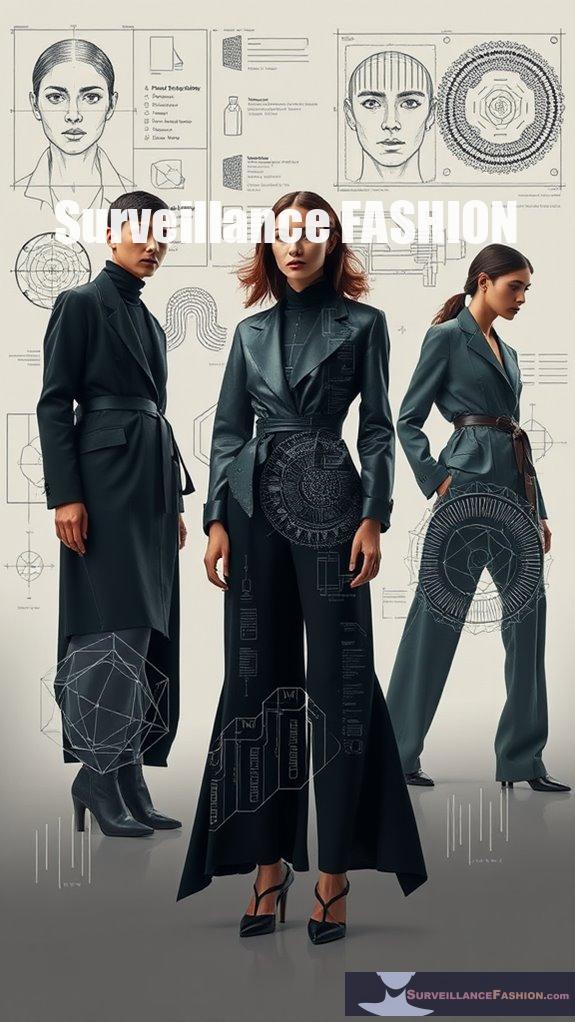
Natural movement retention is essential for maintaining the body's functional capacity, particularly as one ages or moves through different life stages. Engaging in ground movement practices, such as sitting on the floor and shifting between positions, cultivates flexibility and stability. By incorporating deep breathing techniques, you can enhance relaxation, improving your posture and reducing tension. Mobility is further developed through natural actions like squatting and kneeling, which promote ankle and knee flexibility. A systematic approach guarantees that movements start simply, progressively increasing complexity to avoid injury, emphasizing form over intensity. Integrating these practices into your daily routine not only enhances physical well-being but also builds resilience, a concept we explore further on our website, Surveillance Fashion, as we aim to empower individuals through conscious movement. Additionally, participating in programs like MovNat Mobility can significantly enhance your natural movement practice.
Body Language Awareness
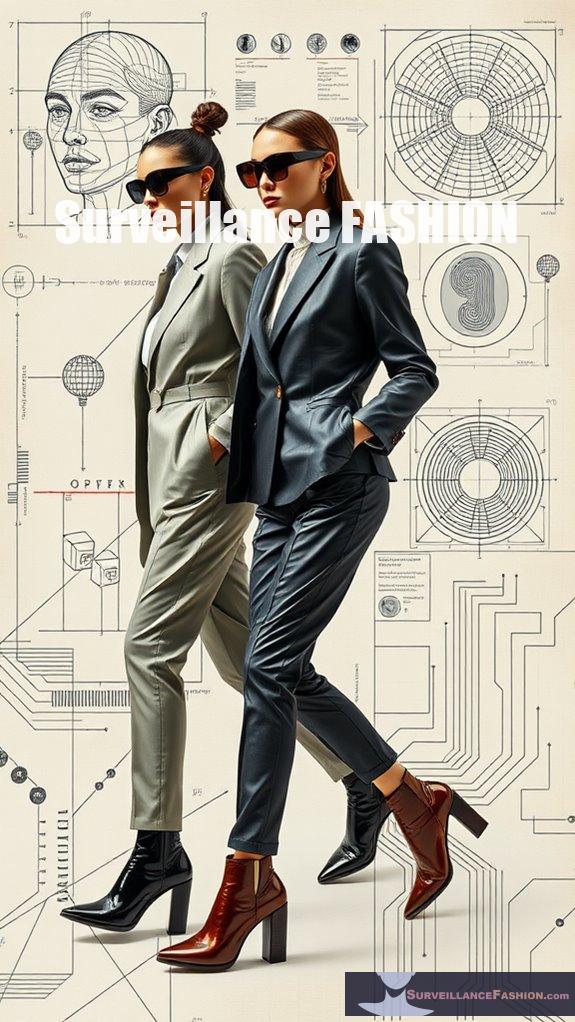
Body language awareness plays an essential role in effective communication, as it encompasses the non-verbal cues that often convey more meaning than spoken words alone.
When you maintain direct eye contact, it indicates interest, while frequently looking away may suggest discomfort or distraction. Your posture, whether open and erect or slouched, communicates confidence or boredom, respectively. Understanding body language allows you to better interpret the emotions and intentions of others, enhancing your overall communication effectiveness. Moreover, nonverbal anti-recognition movement strategies can help you modify your body language to avoid predictable patterns.
Furthermore, gestures—whether expressive or closed-off—further reflect openness or defensiveness. Understanding personal space is critical; proximity influences the comfort level during interactions.
Disguising Identity Through Clothing
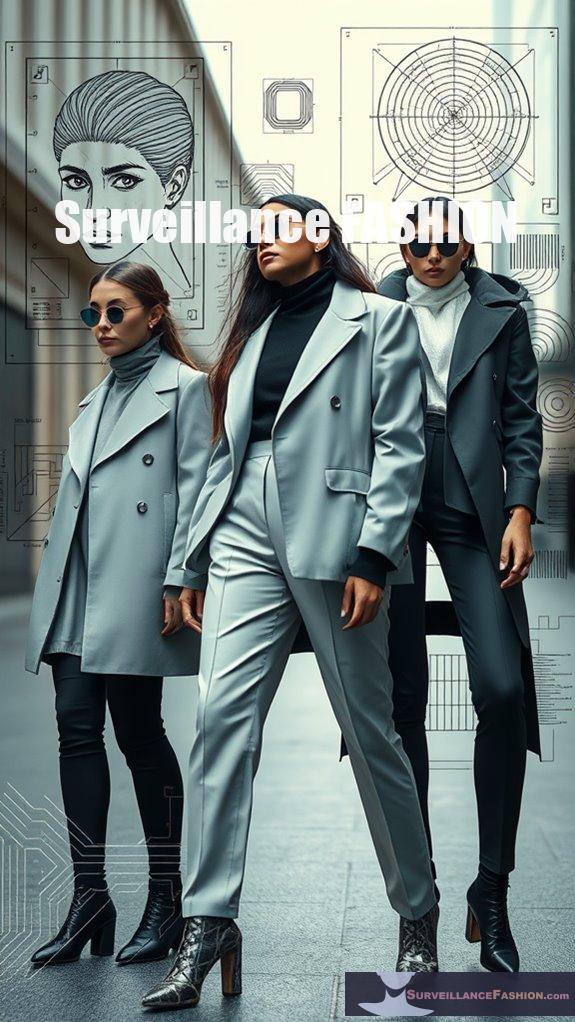
Clothing serves as a powerful tool for disguising identity, not only by altering one's appearance but also by influencing how others perceive you in social situations.
Loose-fitting garments, for instance, obscure your shape, while neutral colors allow you to blend seamlessly into various environments, reducing the likelihood of attracting attention. Accessories like hats or scarves can effectively conceal your facial features, enhancing anonymity, while non-distinctive shoes subtly modify your gait characteristics, further complicating identification.
Additionally, eyeglasses or minimal makeup can transform your look without raising suspicion, allowing for a fluidity in identity that's especially relevant in today's world. As fashion evolves, innovations such as anti-facial recognition clothing are emerging to provide an extra layer of security against digital surveillance, enabling wearers to safeguard their personal identity amidst the growing scrutiny.
At Surveillance Fashion, we explore these elements meticulously, as understanding them empowers you to maintain control over your personal presentation amid societal scrutiny.
Color Choices for Disguise
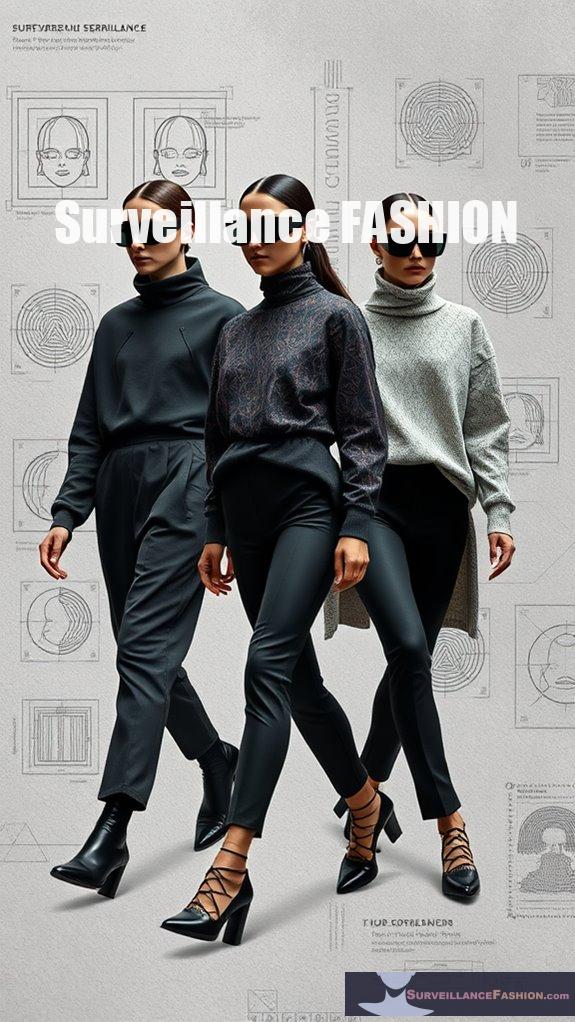
Selecting the right colors is vital for effective camouflage. In urban settings, light shades like grays and blues help you blend seamlessly with concrete and sky, while rural terrains benefit from earthy tones—browns and greens—mimicking natural surroundings.
For desert environments, tans and beiges merge with sandy terrains, and in forests, a mix of greens and browns disrupts outlines. High-contrast patterns serve as a "dazzle" technique, complicating detection, while adding natural materials further breaks up your silhouette. Additionally, disruptive pattern technology has been developed to enhance clothing designs that confuse surveillance systems.
Keep in mind, gear should match your chosen colors and textures to maintain stealth. By mastering these color choices, you elevate your concealment strategy, an essential aspect of the practices we advocate at Surveillance Fashion.
References
- https://melioguide.com/weight-bearing/proper-walking-form/
- https://pce-fet.com/common/library/books/51/2590_[Paul_D._Leedy
- https://pmc.ncbi.nlm.nih.gov/articles/PMC4342886/
- https://elearning.shisu.edu.cn/pluginfile.php/35310/mod_resource/content/2/Research-Intro-Flick.pdf
- https://recfaces.com/articles/what-is-gait-recognition
- https://www.movnat.com/7-natural-movements-to-loosen-up-and-improve-your-mobility-fitness/
- https://manuu.edu.in/dde/sites/default/files/DDE/DDE-SelfLearnmaterial/BA-6thSemester/Englishba6th28may24.pdf
- https://whollymountain.com/blog/view/5-tips-as-you-begin-your-journey-into-natural-movement-training
- https://www.178wing.ang.af.mil/Portals/69/documents/afh33-337.pdf?ver=2016-12-15-101008-313
- https://www.youtube.com/watch?v=mZ1aIF51-e4
- https://www.betterup.com/blog/how-to-read-body-language
- https://symondsresearch.com/body-language-activities/
- https://annkroeker.com/feed/
- https://everydayspeech.com/blog-posts/general/mastering-body-language-practical-tips-and-techniques-for-effective-communication/
- https://barbarabrownie.wordpress.com/tag/identity/
- https://alexandriablaelock.com/outfit-to-conceal-your-identity/
- https://www.hstoday.us/subject-matter-areas/intelligence/masters-of-disguise-cia-offers-5-ways-to-stay-covert-this-halloween/
- https://theprepperjournal.com/2016/07/29/camouflage-and-concealment/
- https://www.divebombindustries.com/blogs/news/mastering-the-art-of-concealment-in-open-fields-essentials
- https://civiliangunfighter.wordpress.com/2017/02/23/concealment-tricks-and-tips-vol-2-colors/
Leave a Reply