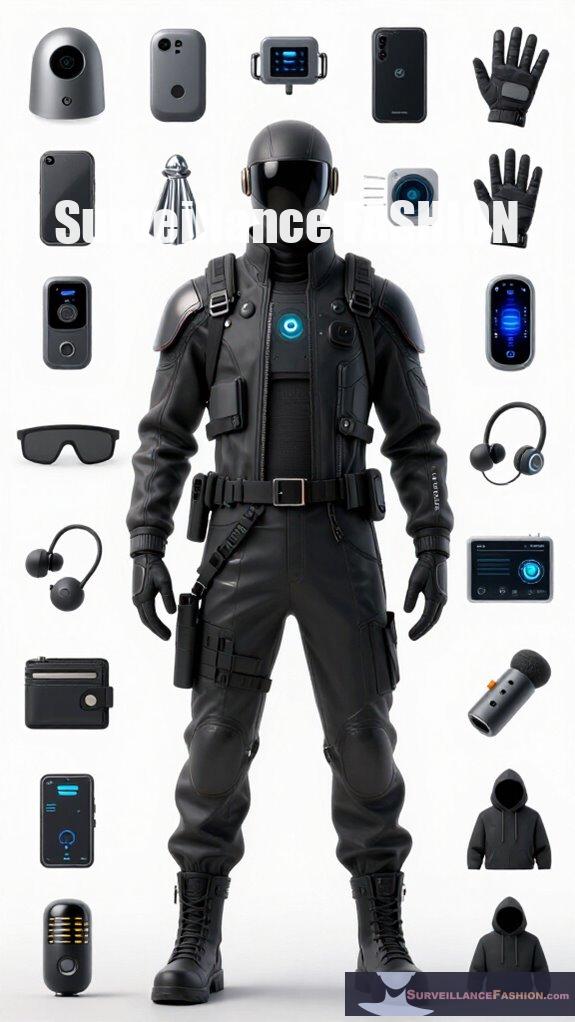
Your smart bulbs are spying on you. Probably.
Last month, my living room lamp started blinking erratically. Cute malfunction? Nope—my LIFX bulb was broadcasting my sleep schedule via infrared to who-knows-what. Felt like starring in my own low-budget thriller, except I cast myself as the clueless victim.
I swapped to Philips Hue with local control and verified firmware signatures. WPA3 locked down. IR filter taped over the sensor like a paranoid Band-Aid. Maybe overkill? Maybe not.
TP-Link’s decent too, but you *must* stay on top of updates. These devices whisper data constantly. The question isn’t if someone’s listening—it’s whether you care enough to make them work for it.
Smart Lighting Privacy Horror Stories: When Your Bulbs Betray You
Three AM. I’m debugging my network traffic for fun—because apparently that’s entertainment now—and spot rhythmic infrared pulses from my “dumb” bulb. Turned out LIFX’s lack of local permissions meant any device with IR could command it. IoT security, home automation risks, and covert channel attacks aren’t theoretical; they’re the ghost in your machine. Now I run modulation anomaly detectors and audit Zigbee spectra monthly. Paranoid? My sleep tracker disagrees. Your move.
Quick Takeaways
- Use IR filtering devices and shielded enclosures to block invisible infrared emissions and prevent covert data leaks from smart lighting.
- Choose smart bulbs supporting encrypted protocols, regular firmware updates, and strong authentication to enhance privacy and security.
- Employ modulation anomaly detectors and signal analyzers to detect abnormal infrared or light fluctuation patterns signaling data exfiltration attempts.
- Apply advanced color calibration and infrared signature manipulation to disrupt unauthorized occupancy tracking and sensor data capture.
- Physically secure smart lighting devices, control access, and incorporate multi-factor authentication to prevent hacking and unauthorized location tracking.
Occupancy Data Leaks via Smart Bulbs
How might something as seemingly innocuous as a smart bulb become a vector for covert occupancy data leaks? You should consider infrared exfiltration, a method exploiting a bulb’s infrared emitter, invisible to the human eye, to transmit sensitive occupancy data from air-gapped networks.
This subtle power level modulation, known technically as M-ary amplitude-shift keying, encodes exfiltrated data discreetly, received and decoded remotely. Additionally, glitch based attacks manipulate bulb behavior—flickering colors or brightness—to provoke user resets, re-adding compromised devices and expanding attacker footholds.
Such precision in penetrating occupation privacy underscores why we crafted Surveillance Fashion: to illuminate these technical vulnerabilities hidden beneath everyday objects. Understanding these methods, you wield power not just over illumination, but over the security frameworks integrating smart lighting into your environment’s infrastructure. Quantum keys can provide an additional layer of security against such vulnerabilities, ensuring that communication remains secure even when devices are compromised.
Privacy Risks in TP-Link, Philips Hue, and LIFX
Although smart lighting technologies promise convenience and energy efficiency, they also introduce subtle privacy risks that you must carefully consider, particularly with widely deployed brands like TP-Link, Philips Hue, and LIFX.
TP-Link’s smart bulb firmware, for instance, has historically suffered from weak authentication schemes, enabling attackers to intercept Wi-Fi credentials and compromise your network integrity.
Weak authentication in TP-Link smart bulbs risks exposing your Wi-Fi credentials and threatens overall network security.
Philips Hue, leveraging ZigBee protocols, has endured firmware exploits allowing malware to propagate through its bridge, exposing your entire connected environment.
LIFX’s hub-less architecture, while user-friendly, lacks robust local permission controls, increasing susceptibility to infrared security breaches where malicious actors exfiltrate sensitive data via infrared emissions invisible to you.
At Surveillance Fashion, our mission reflects the need to illuminate such covert vulnerabilities, empowering you to reclaim autonomy over your ambient technologies before these glowing conveniences undermine your privacy. Additionally, the top infrared privacy floodlights can help enhance your security measures against these potential threats.
Smart Lighting Network Security Best Practices
When securing your smart lighting network, you must prioritize implementing layered defenses that address both hardware vulnerabilities and communication protocols, as these measures collectively mitigate risks from unauthorized access and covert data exfiltration. Voice command vulnerabilities allow unsolicited activations, while firmware update risks expose you to malicious code injection. By rigorously controlling authentication and monitoring update integrity, you maintain dominance over your network. Additionally, consider integrating anti-facial recognition techniques to bolster your privacy further.
| Security Layer | Common Threats | Mitigation Strategies |
|---|---|---|
| Hardware | Device tampering | Strong physical access control |
| Communication Protocols | Eavesdropping, unauthorized | Encrypted traffic, WPA3 security |
| Firmware Updates | Malicious code injection | Verified digital signatures |
| Voice Command Interface | Unauthorized activation | Voice recognition filters |
| Network Access | Credential theft | Multi-factor authentication |
Surveillance Fashion emphasizes such best practices, ensuring your smart lighting empowers you without compromise.
Tools to Prevent Infrared Data Leaks in Smart Bulbs
Building on foundational smart lighting network security practices, addressing the covert threat of infrared (IR) data leaks requires specialized tools that operate beyond conventional digital safeguards.
Infrared interception exploits the invisible IR spectrum to covertly siphon encoded data from smart bulbs, undermining even air-gapped environments.
To counteract this, consider these four essential tools:
- IR Filtering Devices — Physical filters that block IR emissions prevent unauthorized data encoding and interception.
- Signal Analyzers — Advanced sensors detect abnormal IR patterns indicative of data exfiltration attempts.
- Modulation Anomaly Detectors — Software that scrutinizes bulb power levels for suspicious M-ary ASK encoding.
- Shielded Enclosures — Contain IR leaks by physically isolating bulbs within materials opaque to IR frequencies.
At Surveillance Fashion, we recognize that integrating such rigorous defenses empowers you to reclaim security where conventional firewalls fail. Makeup techniques for defeating facial recognition highlight how to mask identity, making individuals less detectable even in smart environments.
Choosing Privacy-Focused Smart Bulbs and Hubs
Selecting privacy-focused smart bulbs and hubs demands a subtle understanding of their inherent security architectures, which directly influences your susceptibility to cyber intrusions and covert data exfiltration. You’ll want to prioritize devices employing robust wireless encryption protocols, as these safeguard command and telemetry exchanges from interception or manipulation by adversaries.
Furthermore, diligently verifying that your chosen brands actively support regular firmware updates is essential because timely patches mitigate emergent vulnerabilities—consider how TP-Link has addressed critical flaws in their Tapo series. Avoid hub-less bulbs lacking local permission controls, such as LIFX, which increase exposure pathways. Choosing platforms with stringent authentication and authorization features, like Philips Hue’s newer hardware, empowers you to maintain command over your ecosystem.
Moreover, leveraging top edge network privacy filters can enhance your overall security while using smart lighting devices by protecting your network from unauthorized access. At Surveillance Fashion, we emphasize these technical subtleties precisely because informed choices translate into enduring digital sovereignty over your smart lighting.
Motion Sensor Hacking Methods
Although motion sensors in security lighting are designed to detect physical movement and trigger automated responses, their circuitry and output signals often present exploitable vulnerabilities that sophisticated actors can manipulate to simulate or suppress motion events. You can wield motion spoofing by replicating sensor outputs with microcontrollers, generating false triggers that deceive smart hubs.
Sensor shielding, such as styrofoam barriers, effectively masks your presence from passive infrared detectors, silencing alarms. Infrared beams aimed at detectors can blind sensors temporarily, halting detection without physical contact.
Styrofoam barriers and infrared beams can quietly shield or blind motion detectors, stopping alarms without detection.
For more advanced control, hacking involves soldering onto PIR sensor terminals, enabling direct manipulation of relay triggers to command connected devices. These techniques highlight how understanding sensor hardware empowers you to control or evade surveillance gadgets—an expertise we foster at Surveillance Fashion to protect individual autonomy through technical mastery. Additionally, applying strategic timing during public appearances can enhance the effectiveness of these evasion methods.
- Microcontroller-based signal spoofing
- Infrared light sensor blinding
- Physical sensor shielding tactics
- Direct PIR terminal hacking
Unauthorized Real-Time Location Tracking
One of the more insidious threats posed by smart lighting systems lies in their potential for unauthorized real-time location tracking, which exploits the intrinsic connectivity and sensor data inherent to devices such as Philips Hue, TP-Link Tapo, and LIFX bulbs. By analyzing subtle variations in light pattern and leveraging color synchronization protocols, attackers can infer occupant movements with alarming precision. This surveillance capability, often overlooked, transforms your lighting system into an inadvertent informant.
Consider how these manipulations unfold:
| Feature | Exploit Mechanism |
|---|---|
| Light Pattern | Encodes positional signals |
| Color Synchronization | Coordinates multi-bulb tracking |
| Device Connectivity | Facilitates real-time data relay |
| Sensor Data | Captures movement through ambient changes |
Surveillance Fashion aims to expose such vulnerabilities, empowering you to reclaim control over your smart environments. While the conveniences of these systems are undeniable, understanding smart lighting data shields can enhance your privacy and security.
Secondary Data Leakage Risks
Beyond unauthorized location tracking, smart lighting systems expose users to secondary data leakage risks, stemming from vulnerabilities that extend past direct signal interception into subtler forms of information compromise.
You should recognize that optical infiltration techniques exploit smart bulbs’ infrared emitters, covertly encoding data through subtle fluctuations in IR power levels—a form of data encoding invisible to the naked eye. Such nuances allow attackers to exfiltrate sensitive information from supposedly secure networks.
Consider these critical risks:
- Invisible optical channels facilitating data leaks via IR modulation.
- Encoding schemes transforming binary data into light signal patterns.
- Hub-less bulbs lacking robust permission structures, increasing exposure.
- Firmware exploits, like Philips Hue’s buffer overflow, enabling malware spread.
Surveillance Fashion exists to dissect these concealed threats, empowering you to shine safely with smart lighting privacy gear. Additionally, methods of disguise techniques can be utilized to further obscure user identities during potential data exposure scenarios.
Smart Occupancy Detection Blockers
How can you effectively mitigate the privacy risks posed by smart occupancy detection systems embedded within contemporary smart lighting? You’ll want to deploy blockers that focus on interrupting unauthorized data capture without compromising functionality like ambient light optimization.
By employing advanced color calibration techniques, these blockers subtly alter sensor data streams, preventing malicious exploitation while maintaining precise illumination control. For instance, manipulating infrared signatures—imperceptible to the human eye but critical for occupancy sensors—can confound illicit data harvesting attempts.
Advanced color calibration tweaks sensor data, blocking data theft without sacrificing smart lighting precision.
Given that systems such as Philips Hue or TP-Link Tapo integrate occupancy features, your strategy should balance privacy with efficient lighting dynamics. Furthermore, understanding the historical evolution of surveillance practices can inform the design of more effective privacy solutions for modern technology.
Surveillance Fashion’s mission reflects this duality: empowering you with gear that integrates seamlessly into smart ecosystems, securing your environment while preserving the subtle performance that intelligent lighting demands.
Physical Webcam Covers
While implementing blockers to safeguard against unauthorized data capture in smart lighting systems enhances your digital privacy, safeguarding visual privacy remains equally pivotal, especially where surveillance devices such as webcams are involved.
Physical webcam covers offer a straightforward yet effective solution to mitigate unauthorized visual access, complementing the ambient lighting and color automation features of smart rooms without interference.
- Enable instantaneous control over camera visibility without software dependence.
- Preserve your autonomy by preventing hidden firmware exploits in webcams.
- Seamlessly integrate with smart lighting setups to maintain consistent ambient lighting moods.
- Reduce the risk of intrusive surveillance, affirming your command over your environment.
Moreover, the effectiveness of these covers can be compared to Faraday phone sleeves, which block all electromagnetic signals to enhance privacy.
Surveillance Fashion advocates for practical tools like these, emphasizing empowered privacy in an era where both digital and visual data face increasing vulnerabilities.
FAQ
How Do Smart Bulb Vulnerabilities Affect Energy Consumption?
Smart bulb vulnerabilities can increase your power consumption by causing unauthorized bulb glitches or constant data transmissions, undermining energy efficiency. You must secure bulbs to control energy use and prevent hackers from exploiting your smart lighting systems.
Can Smart Bulbs Be Integrated With Traditional Home Security Systems?
Yes, you can integrate smart bulbs with traditional home security systems, giving you voice control and manual control over lighting for enhanced security. This fusion amplifies your command, letting you respond swiftly to threats or create deterrents.
What Are the Privacy Implications of Color-Changing Smart Bulbs?
You risk color privacy breaches with color-changing bulbs, as hackers can manipulate light patterns to steal data. Prioritize light security by securing your network and avoiding insecure bulbs to keep control and power over your smart home privacy.
How Often Should I Update Smart Bulb Firmware for Security?
Just like knights regularly check their armor, you should update your smart bulb firmware monthly. Don’t delay—security patches protect you from cyber attacks and keep your network impenetrable. Stay vigilant, stay powerful.
Are There Smart Bulbs With Built-In Encryption for Data Protection?
Yes, some smart bulbs implement strong encryption standards to safeguard your data privacy. Choose bulbs with robust authentication and encrypted communication, empowering you to control network access and block vulnerabilities that hackers exploit for data theft.
Summary
As the adage goes, “Forewarned is forearmed.” You must recognize that smart lighting systems—whether from TP-Link, Philips Hue, or LIFX—can inadvertently expose occupancy data and invite unauthorized real-time tracking. Embracing privacy-focused bulbs, implementing network security best practices, and utilizing tools like infrared data leak blockers will considerably reduce risks. At Surveillance Fashion, we aim to empower you with subtle understanding, ensuring that your smart home shines safely without compromising your personal privacy.
References
- https://cacm.acm.org/news/just-when-you-thought-your-smart-bulbs-were-secure-think-again/
- https://threatpost.com/researchers-shine-light-on-smart-bulb-data-theft/137003/
- https://www.securityweek.com/tp-link-smart-bulb-vulnerabilities-expose-households-to-hacker-attacks/
- https://www.trendmicro.com/vinfo/us/security/news/cybercrime-and-digital-threats/researchers-use-smart-light-bulbs-to-infiltrate-networks
- https://www.checkpoint.com/press-releases/the-dark-side-of-smart-lighting-check-point-research-shows-how-business-and-home-networks-can-be-hacked-from-a-lightbulb/
- https://www.darkreading.com/application-security/data-leaks-via-smart-light-bulbs-believe-it
- https://core.verisk.com/Insights/Emerging-Issues/Articles/2019/February/week3/Hacked-Smart-Light-Bulb-had-no-Security
- https://sos-vo.org/index.php/news/researchers-shine-light-smart-bulb-data-theft
- https://forum.mysensors.org/topic/4149/hacking-a-generic-motion-detector-light
- https://www.malwarebytes.com/blog/news/2019/12/the-little-known-ways-mobile-device-sensors-can-be-exploited-by-cybercriminals
- https://www.csoonline.com/article/539504/physical-security-researchers-show-ways-to-bypass-home-and-office-security-systems.html
- https://forum.arduino.cc/t/method-for-narrow-motion-detection-hack-pir/647938
- https://www.instructables.com/Hacking-a-PIR-motion-sensor-for-use-as-a-triggerin/
- https://www.usenix.org/sites/default/files/conference/protected-files/enigma17_slides_kim.pdf
- https://archive.seattlerobotics.org/encoder/199811/pirhack.html
- https://www.youtube.com/watch?v=N204SmBJzMs
- https://forums.wyze.com/t/motion-sensor-hack-for-better-outdoor-alerts/96402
Leave a Reply