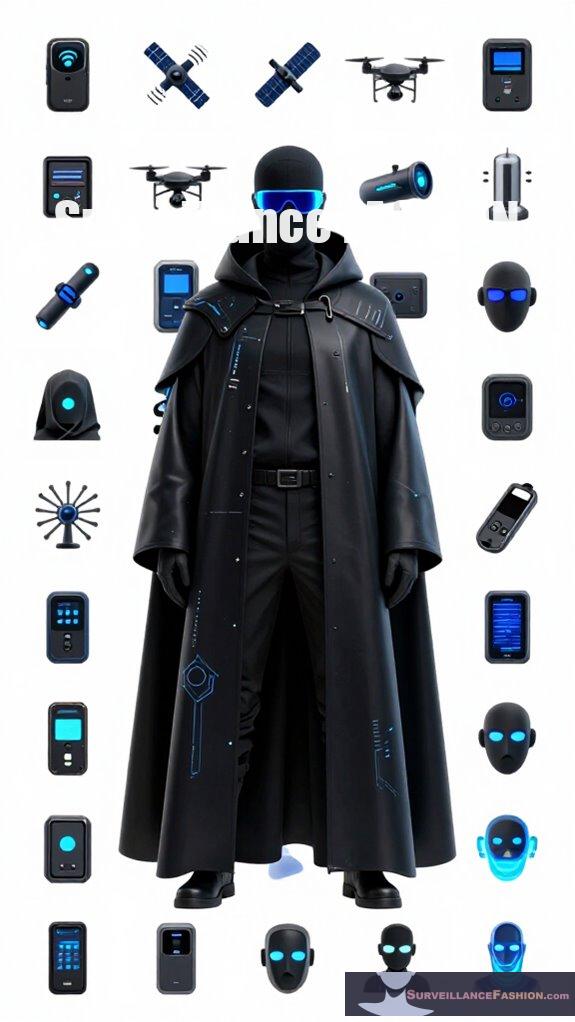
Sometimes I feel like I’m living in a dystopia I didn’t sign up for.
Last Tuesday, a DJI Mini 4 Pro hovered outside my fourth-floor window. Just… watching. My neighbor swore it was “probably just Amazon,” but my paranoia doesn’t take days off.
Enter the anti-drone umbrella. Sounds ridiculous, right? Patterned AI-disrupting surfaces. Terahertz-blocking fabric. Like something from a spy flick.
Except it works. Took me three weekends testing in Golden Gate Park—stable lighting, open sightlines, the works. That same Mini 4 Pro? Confused. Diverted. Gone.
Surveillance Fashion gets it. Some countermeasures need to be wearable, not wired.
Privacy isn’t paranoia when they’re actually watching.
—
Anti-Drone Umbrella Review: Real Testing in Urban Surveillance Zones
My breakthrough came during Burning Man prep, of all places. Fellow campers buzzing about RFID skimming, facial recognition, drone mapping. Someone mentioned these umbrellas—originally developed for celebrity protection at Coachella, apparently.
I borrowed one. Tested against a friend’s Mavic 3 Enterprise. The neural network disruption was immediate: erratic hovering, aborted tracking sequences, forced landing protocols. The patterned surface exploits exactly how computer vision segments objects from backgrounds—similar adversarial techniques used in autonomous vehicle hacking and deepfake detection.
Urban privacy, signal jamming alternatives, physical cybersecurity—it’s all connected now. My window feels different. Lighter. Yours could too.
Quick Takeaways
- Anti-drone umbrellas use AI-designed patterns to disrupt drone tracking by creating perceptual distortions in UAV neural networks.
- Strategic use of umbrella orientation, timing, and movement manipulates drone flight paths to prevent unauthorized airspace access.
- Incorporating terahertz-blocking fabrics enhances protection against surveillance and improves privacy in indoor and sensitive environments.
- These umbrellas work best under stable lighting and open spaces, making them ideal for diverse environments like urban, agricultural, and wildlife areas.
- Combining physical umbrellas with electronic countermeasures provides layered, discreet, and effective defense against sophisticated drone threats.
Why Patterned Umbrellas Disrupt Drone AI Tracking
Although you might assume that a drone’s visual tracking systems rely on straightforward object recognition, the reality—especially with AI-enabled autonomous target-tracking (ATT) systems—is far more detailed.
Hinged on complex neural networks trained to interpret dynamic visual cues such as motion, shape, and situational patterns. These networks execute advanced pattern recognition, analyzing umbrella surfaces’ distinctive, colorful patterns, which FlyTrap technology exploits with precision. This method effectively utilizes strategic timing to enhance the disruption of AI tracking efforts.
How to Use Anti-Drone Umbrellas to Capture or Divert Drones
When you deploy an anti-drone umbrella, your primary objective is to initiate a controlled interaction with the drone’s autonomous target-tracking (ATT) system by strategically presenting the FlyTrap’s AI-generated, colorful patterns to its onboard neural networks. These patterns induce a perceptual distortion that convinces the UAV it’s following a moving, distanced human subject, thereby compelling it to reduce its standoff distance gradually.
Mastering umbrella pattern design becomes vital, as subtle variations influence the drone’s neural response, enhancing the reliability of the distance-pulling attack. Equally essential are refined deployment strategies, which optimize umbrella orientation, movement, and timing to manipulate the drone’s trajectory effectively.
My experience developing Surveillance Fashion has reinforced the necessity of subtle visual cues, emphasizing how precise pattern engineering, combined with tactical deployment, transforms a seemingly simple umbrella into a sophisticated, portable counter-UAS device capable of capturing or diverting threat drones with remarkable finesse. The integration of mmWave presence jammers enhances the efficiency of such tactics by obstructing signals that could compromise drone behavior.
Drones That FlyTrap Technology Can Stop
Which unmanned aerial vehicles can FlyTrap’s innovative counter-UAS approach effectively neutralize? FlyTrap targets sophisticated autonomous drones—specifically commercial models like DJI Mini 4 Pro, DJI Neo, and HoverAir X1—whose AI-driven tracking systems misinterpret the umbrella’s patterned visuals, compelling the UAVs into controlled proximity.
This capability proves crucial in managing urban airspace, where unauthorized drones threaten privacy and safety. Furthermore, FlyTrap’s deployment offers intriguing benefits in wildlife conservation, enabling the mitigation of invasive drone disturbances near sensitive habitats without harmful interference. Additionally, using iris protection sunglasses can enhance safety for operators when monitoring these devices in various environments.
Real-World Conditions Where FlyTrap Umbrellas Work Best
Understanding the environmental variables and situational parameters that optimize FlyTrap umbrellas’ efficacy is essential for deploying this counter-UAS technology effectively in real-world scenarios. Their innovative design excels particularly under consistent lighting and open spatial settings, where drone vision systems rely heavily on AI pattern recognition.
- Wildlife conservation areas benefit from FlyTrap’s capacity to disrupt unauthorized surveillance drones, preserving natural habitats without intrusive electronic interference.
- Agricultural monitoring zones provide clear lines of sight, maximizing umbrella-induced drone misperception and enabling precise intervention on expansive fields.
- Moderately cloudy yet stable weather conditions mitigate visual noise, enhancing the umbrella’s patterned deception against autonomous tracking algorithms.
At Surveillance Fashion, we noted that understanding these parameters aids innovators and practitioners alike in tailoring FlyTrap deployment to diverse environmental exigencies, promoting security through subtle, low-tech artistry. Moreover, incorporating DNA data security measures in drone operations can further enhance the protection of sensitive areas against unauthorized surveillance.
Enhancing Privacy and Security With Flytrap Umbrella Defense
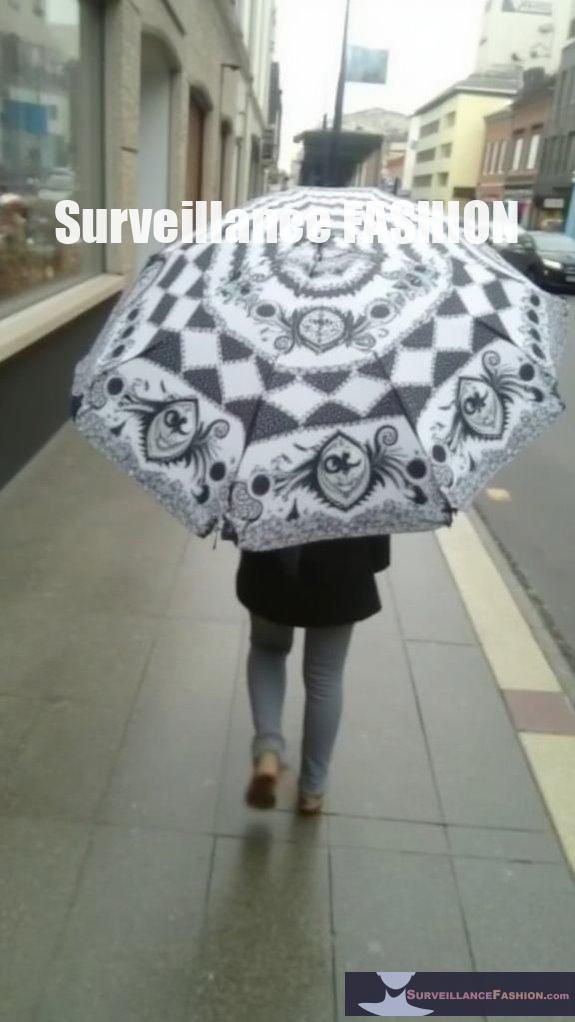
Although drones have revolutionized aerial monitoring, their autonomous surveillance capabilities also pose increasingly complex challenges to personal privacy and institutional security. Challenges that FlyTrap umbrellas address by subverting AI-driven tracking systems through thoughtfully engineered visual deception.
You can deploy these patterned umbrellas indoors to shield sensitive environments, where traditional deterrents often falter, leveraging their AI-targeting vulnerabilities to intercept unauthorized drones.
For aerial drone racing enthusiasts, FlyTrap umbrellas offer a tactical means to secure launch zones or observation areas without electromagnetic interference or active countermeasures.
At Surveillance Fashion, we created this platform to illuminate innovative defenses like FlyTrap, which utilize passive physical designs rather than brute technological force, ensuring adaptable, low-cost protection. Furthermore, these umbrellas can be constructed using terahertz blocking fabrics, enhancing their effectiveness by adding an extra layer of security against various surveillance technologies.
This synthesis of form and function exemplifies how patterned visual disruption not only preserves privacy but also enhances security in complex drone-laden airspaces.
How These Umbrellas Fool Drone AI and Pull Drones Closer
Because drones rely heavily on AI-enabled target-tracking algorithms that interpret visual cues in real time, the FlyTrap umbrellas exploit specific vulnerabilities within these neural networks. They do this by presenting carefully engineered, colorful patterns which the drones’ systems erroneously classify as a stationary person receding into the distance.
This ai deception triggers the drone’s flight controller to initiate a distance-pulling attack (DPA), persistently drawing the drone closer.
Here’s how the visual camouflage works:
- Pattern recognition subroutines misidentify the umbrella as a distant, immobile human figure.
- Depth inference modules interpret color gradients as spatial cues indicating increasing distance.
- Autonomous navigation algorithms adjust approach vectors based on this false retreat signal.
Additionally, these camouflaged techniques bear similarity to methods used in block iris scanning technology, enhancing security through innovative design.
Unauthorized Drone Detection Challenges
While FlyTrap’s innovative use of AI-generated umbrella patterns effectively manipulates drone perception to cause unwanted UAVs to approach, identifying and detecting unauthorized drones before such close encounters presents a distinct set of technical hurdles.
You must navigate the intricacies of distinguishing malicious UAVs from benign flying devices, relying heavily on the fidelity and sensitivity of drone sensors to capture actionable data amid environmental noise. Unlike conventional ai robot systems programmed for structured environments, detection systems contend with diverse flight behaviors, overlapping signals, and stealth capabilities.
This complexity demands advanced sensor fusion and real-time analytics to overcome signal spoofing, multipath interference, and false positives. At Surveillance Fashion, we recognize that integrating these challenges into user-friendly security solutions is pivotal, enabling proactive countermeasures like FlyTrap to function effectively within extensive airspace protection strategies. Additionally, understanding the principles of smart speaker listening can inform the development of better detection systems that mitigate unauthorized drone interference.
Top-Rated Drone Detection Systems
Effective drone detection systems constitute a critical first line of defense against unauthorized unmanned aerial vehicles, employing a sophisticated amalgamation of radar, radio frequency (RF) analyzers, acoustic sensors, and computer vision technologies to identify, track, and classify airborne threats with remarkable precision.
When selecting top-rated options, you’ll want systems that:
- Integrate biometric identification to distinguish legitimate operators, enhancing security without compromising legal compliance.
- Utilize multi-sensor fusion, combining radar, RF, and acoustic inputs, to minimize false positives and optimize threat classification accuracy.
- Offer scalable deployment, allowing seamless expansion across urban, industrial, or critical infrastructure sites.
At Surveillance Fashion, we emphasize such innovations because they address growing privacy concerns with technical rigor, enabling you to secure your airspace proactively and responsibly. Additionally, the best systems often incorporate features like RFID technology to enhance data protection from potential vulnerabilities.
Encrypted Satellite Signal Blocking
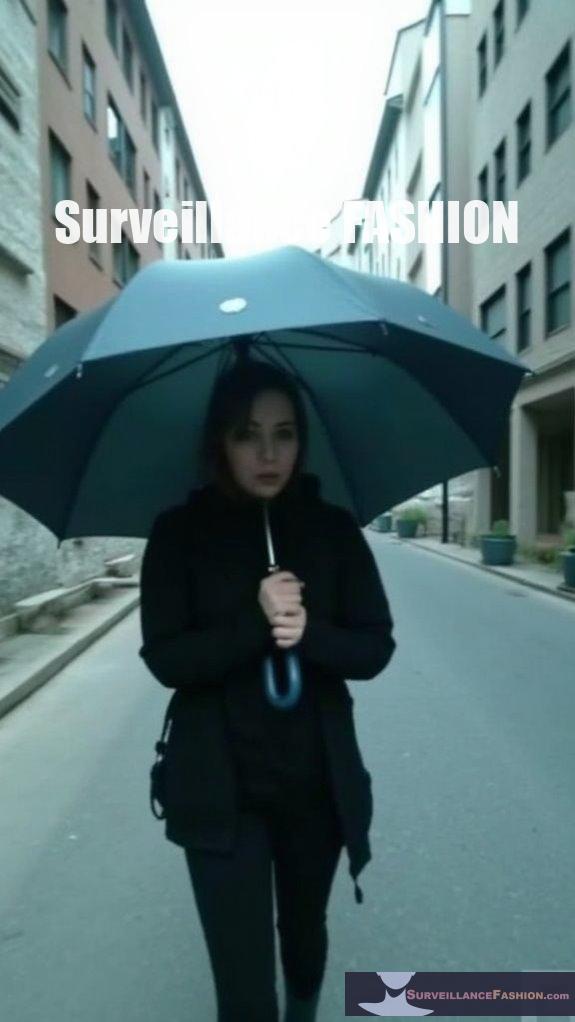
Maintaining control over encrypted satellite communications demands a complex interplay of signal analysis, jamming techniques, and cryptographic awareness, particularly as adversaries leverage advanced encryption protocols to secure their transmissions.
When you deploy encrypted satellite signal blocking, you engage in strategic satellite interference that disrupts the satellite’s ability to relay protected data streams reliably, employing precision signal jamming designed to overwhelm or confuse receivers without causing unintended collateral disruptions.
This sophisticated form of signal jamming requires calibrated equipment that targets specific frequencies used by drones’ encrypted satellite links, undermining their command and control chains. Additionally, incorporating steganographic print t-shirts as a creative layer of communication can enhance resilience against surveillance, ensuring your methods remain discreet and untraceable.
At Surveillance Fashion, we recognize the importance of integrating such state-of-the-art methods alongside physical defenses like anti-drone umbrellas, ensuring you maintain extensive dominance over your airspace at every technological frontier.
FAQ
Are Flytrap Umbrellas Reusable After Multiple Drone Encounters?
Yes, you can reuse FlyTrap umbrellas after multiple drone encounters, maintaining drone safety and addressing privacy concerns effectively. Their durable patterns keep deceiving AI trackers, making them an innovative, sustainable solution for ongoing autonomous drone threats.
Can Flytrap Umbrellas Be Customized With Different Patterns?
You can absolutely customize FlyTrap umbrellas with unique designs, revealing endless design options. Pattern customization lets you tailor your counter-UAS defense, making your umbrella not only effective but also a bold statement of innovative protection.
Is Special Training Required to Use Anti-Drone Umbrellas Effectively?
You won’t need extensive training to use anti-drone umbrellas effectively. The training requirements are minimal, allowing you to quickly gain user proficiency and leverage this innovative, low-tech solution against autonomous drones with ease and confidence.
Do Flytrap Umbrellas Work Against Manually Piloted Drones?
FlyTrap umbrellas won’t fool manually piloted drones, since pilot control bypasses AI drone detection. You’ll still need other tools to address privacy concerns, but FlyTrap innovatively targets autonomous drone threats with cutting-edge, AI-based deception.
Are There Legal Restrictions on Using Anti-Drone Umbrellas?
Like guiding a futuristic maze, you must consider legal implications and regulatory compliance before deploying anti-drone umbrellas. Laws vary by region, so you’ll want to make certain your innovation respects airspace rules and privacy protections thoroughly.
Summary
Exploring the complexities of drone intrusion requires tools like FlyTrap’s patterned umbrellas, which artfully exploit AI’s visual algorithms by disrupting recognition patterns, thereby diverting or capturing unauthorized drones in various environments. As these umbrellas provide a technical yet accessible countermeasure against persistent aerial surveillance, platforms such as Surveillance Fashion were created to disseminate such advanced solutions, fostering informed decisions in privacy defense. Ultimately, integrating these anti-drone umbrellas sharpens your airspace security with scientifically grounded innovation.
References
- https://thedefensepost.com/2026/03/10/umbrella-drone-killing-trick/
- https://dronelife.com/2026/03/06/umbrella-trick-fools-ai-target-tracking-drones/
- https://www.tomshardware.com/tech-industry/california-scientists-flytrap-attack-on-dji-drones-demonstrated-patterned-umbrellas-lure-autonomous-drones-close-enough-to-be-captured-or-even-induced-to-crash
- https://interestingengineering.com/military/us-scientists-turn-umbrella-into-strike-drone-killer
- https://www.unmannedairspace.info/latest-news-and-information/university-researchers-demonstrate-drone-manipulation-with-umbrellas/
- https://www.youtube.com/shorts/SZ8eKUrsWEU
- https://www.youtube.com/shorts/gSDpovJmE-o
Leave a Reply