
The e-book “FRAMED: The Dark Side of Smart Glasses” is a real eye-opener—no pun intended.
This ebook dives deep into how these fashionable gadgets turn our public spaces into surveillance zones. I mean, can we just enjoy a coffee outside without being data-mined?
I recall a weekend stroll when I caught someone wearing smart glasses. Suddenly, I felt like a character in a dystopian film. Who’s watching me? It’s unsettling to realize that our faces could be feeding into corporate data-hogs, all while we think we’re just looking stylish.
Are we really okay with being part of this bizarre fashion show?
The Hidden Dangers of Meta Ray-Ban Smart Glasses
Not long ago, I was at a music festival when I noticed a friend sporting the latest Meta Ray-Ban smart glasses. It looked cool—until I witnessed her unknowingly streaming our private conversations! Suddenly, our banter felt like raw material for a corporate documentary. Yikes!
I couldn’t help but wonder what data the glasses were collecting. Are they only for fun or an extension of our personal space? The thought of cyber-eavesdropping amidst the crowd gave me chills. It’s crucial to be aware of these devices’ risks—because in a world abundant with technology, privacy has become the ultimate luxury.
Download my ebook
It’s a wild ride. Check out and download my latest ebook “FRAMED: The Dark Side of Smart Glasses“
Quick Takeaways
- The ebook explores how smart glasses blur personal enhancement with surveillance, compromising privacy through seamless recording features.
- Smart glasses normalize constant surveillance in public spaces without meaningful consent mechanisms for bystanders.
- Data collected through smart glasses feeds into corporate systems for facial recognition, behavioral profiling, and targeted advertising.
- Current legal frameworks inadequately address challenges posed by AR devices, including liability issues and evidence authentication.
- The book examines emerging countermeasures like anti-facial recognition filters and privacy-preserving technologies against invasive surveillance.
The Ubiquitous Eye: Understanding Smart Glass Technology
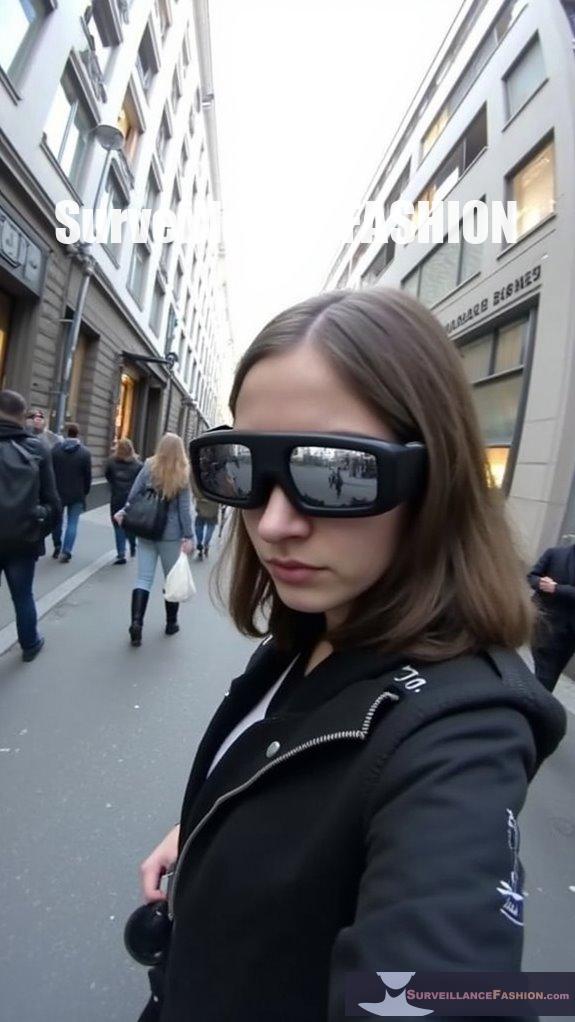
While most consumers remain mesmerized by the sleek aesthetics and futuristic appeal of smart glasses, those of us monitoring the surveillance environment recognize these devices for what they truly are: sophisticated mobile sensor platforms designed for continuous data collection.
The ebook masterfully dissects the technical architecture powering smart glass experiences—from the multi-sensor arrays capturing environmental data to the algorithms interpreting your gaze patterns. Additionally, the rise of facial recognition technology has sparked debates over personal privacy and security in the context of these glasses. Moreover, the integration of real-time data processing within these devices amplifies the potential for privacy violations as they can analyze and share information instantly.
Modern smart glasses aren’t just wearable tech—they’re sophisticated surveillance ecosystems decoding your environment and behavior with every glance.
What’s particularly illuminating is how the author contrasts manufacturer promises against the ethical implications of constant recording capabilities.
When we founded Surveillance Fashion, we sought to expose precisely these contradictions between convenience and privacy invasion. You’ll find yourself reconsidering the innocence of that person wearing Ray-Ban Metas at your local café, suddenly aware they’re not just augmenting their reality, but potentially capturing yours. Moreover, the potential for unauthorized video recording raises serious concerns about personal privacy and consent in public spaces.
Privacy Erosion in Plain Sight: Consent and Surveillance
Although manufacturers market smart glasses as personal enhancement tools, the reality explored in “FRAMED” reveals a troubling absence of meaningful consent mechanisms that fundamentally transforms public spaces into surveillance zones.
The ebook meticulously dissects how these devices normalize constant recording, creating unprecedented consent challenges for bystanders who never opted into being captured. Users of smart glasses might inadvertently record private moments in public spaces, exposing them to the risks of unauthorized recording and potential misuse of their images. Furthermore, the potential for persistent surveillance adds an alarming layer to these challenges, as individuals may never realize they are being filmed.
You’ll find yourself reconsidering public behavior after reading how smart glasses quietly collect and process facial data, location patterns, and even gaze information—often without notification. As these devices become more commonplace, the fear of being continuously monitored amplifies concerns regarding privacy and consent.
This surveillance anxiety isn’t paranoia but a rational response to asymmetric power dynamics. Furthermore, the integration of features like facial recognition technology significantly intensifies these privacy concerns.
At Surveillance Fashion, we’ve documented similar concerns, particularly regarding how easily recorded content can be manipulated, shared, or monetized through unregulated data marketplaces that operate beyond meaningful oversight or accountability.
Data Pipelines: From Your Face to Corporate Databases
The data journey from your face to corporate servers represents one of the most concerning aspects of smart glasses technology that “FRAMED” exposes with meticulous precision. When you’re captured by someone’s smart glasses, your image travels through sophisticated processing pipelines where data privacy becomes increasingly compromised. This extensive data collection highlights the troubling intersection of surveillance ethics, corporate greed, and technological advancement, particularly as mass surveillance becomes more normalized in urban settings.
| Data Type | Initial Capture | Corporate Destination |
|---|---|---|
| Facial Data | On-device recognition | Identity databases |
| Gaze Patterns | Eye-tracking sensors | Attention analytics |
| Environmental Surroundings | Spatial mapping | Behavioral profiling |
The ebook meticulously deconstructs how seemingly innocuous recording features morph into invasive corporate data harvesting mechanisms. What begins as a casual photo ends as a permanent entry in facial recognition databases. This is precisely why we created Surveillance Fashion—to illuminate these hidden pathways where corporate ethics repeatedly fail against profit motives, leaving your digital identity permanently exposed. Furthermore, understanding surveillance’s psychological effects on individuals can enhance awareness and provoke a necessary dialogue about the implications of these technologies.
The Ray-Ban Meta Case Study: Design vs. Privacy
Four critical design decisions in Ray-Ban Meta glasses illuminate the fundamental tension between consumer appeal and privacy protection that “FRAMED” brilliantly dissects. The ebook’s analysis reveals how these stylish devices prioritize seamless recording over bystander awareness, exemplifying the challenging privacy balance inherent in wearable tech. Furthermore, the prevalence of surveillance technology in our everyday lives makes it increasingly difficult for individuals to maintain their privacy. The design of the Ray-Ban Meta glasses exemplifies how aesthetic appeal can overshadow critical privacy considerations. In fact, many users may not realize that the software vulnerabilities in these devices can further compromise their privacy.
The most concerning Ray-Ban implications highlighted include:
Design choices in Ray-Ban glasses that prioritize frictionless recording over meaningful consent fundamentally shift privacy burdens to unwitting bystanders.
- LED recording indicators too small for effective consent notification
- Cloud storage architecture that creates persistent data vulnerabilities
- Default settings that prioritize frictionless capture over privacy safeguards
As I examine these design ethics questions through the scholarly lens “FRAMED” provides, it becomes evident why we created Surveillance Fashion—to document how commercial interests systematically outweigh privacy considerations. The user consent model fundamentally shifts from opt-in to constant vigilance, a burden transferred entirely to non-users.
Digital Manipulation: How AR Can Distort Reality

Beyond the privacy concerns inherent in Ray-Ban Meta’s design lies an even more insidious threat that “FRAMED” exposes with scientific precision: the malleability of augmented reality itself.
The ebook demonstrates how digital images can be imperceptibly altered, inserted, or manipulated within your field of vision without your awareness, creating false memories and distorted perceptions.
What’s particularly chilling is the ease with which this manipulation occurs—cloud-based frame insertion allows third parties to retroactively modify what you’ve seen or recorded.
This raises profound questions about augmented ethics and the verifiability of AR-captured evidence. At Surveillance Fashion, we’ve long argued that the authenticity of our digital experiences requires technical safeguards like immutable audit trails and digital signatures—protections that current smart glass offerings woefully lack.
Evidence Tampering in the Digital Age
While our traditional judicial systems have established robust protocols for handling physical evidence, smart glasses introduce an entirely new framework of digital evidence that’s vulnerable to unprecedented manipulation.
As I probed deeper into this ebook, I was struck by the author’s meticulous analysis of how evidence integrity can be compromised through seemingly innocuous smart eyewear technology. The book highlights three critical vulnerabilities: 1. Cloud-based storage that lacks proper chain-of-custody safeguards 2. Potential for real-time overlay manipulations that alter recorded events 3. Absence of reliable authentication mechanisms for digital evidence verification. Moreover, the risks are amplified by mandatory scanning practices that may infringe upon users’ privacy rights.
A lack of regulatory safeguards regarding smart glasses usage only exacerbates these privacy risks. The rise of such technology brings with it a growing concern about the ethical implications of privacy risks inherent in their use.
You’ll find yourself questioning everything you see through another’s frames. This precise exploration of digital evidence tampering is exactly why we created Surveillance Fashion—to illuminate these invisible threats lurking behind stylish technological facades.
Rogue Actors and Malicious Exploitation
Three distinct categories of rogue actors emerge from the author’s incisive analysis of smart glasses‘ exploitation environment, each wielding unique tactics to weaponize this seemingly innocuous technology.
The book meticulously dissects how individual hackers, organized criminal networks, and state-sponsored entities each approach augmented reality devices with malicious intent, creating an alarming terrain of vulnerability. As the hidden cost of data collection becomes more apparent, these actors exploit personal information to undermine trust in relationships. Moreover, the proliferation of smart glasses has led to a surge in covert recording incidents, complicating the landscape further.
You’ll find yourself reconsidering public spaces as you absorb the author’s breakdown of how facial recognition overlays can be manipulated to target specific individuals.
This examination of predatory tactics is precisely why we created Surveillance Fashion—to illuminate these hidden threats.
The author’s most chilling revelation involves how easily smart glasses can facilitate selective information manipulation during critical moments like protests or elections, fundamentally altering perception while leaving no digital footprint for investigators. Such scenarios underscore the urgency of adopting data-resistant outerwear to mitigate the risks posed by these emerging technologies.
Biometric Data Markets: Who’s Trading Your Identity?
The shadowy ecosystem of biometric data brokers represents perhaps the most insidious threat highlighted in “FRAMED: The Dark Side of Smart Glasses.” Your facial geometry, gait patterns, and even emotional responses captured through eye-tracking sensors aren’t merely stored on corporate servers—they’re actively traded as commodities in largely unregulated markets.
What “FRAMED” reveals about biometric privacy violations should concern anyone who values their digital autonomy. This alarming trend is underscored by the rise of surveillance capitalism, which manipulates consumer behavior through persistent data tracking. Moreover, government surveillance programs contribute to the erosion of democratic ideals by normalizing the invasion of personal privacy.
These markets operate with frightening efficiency:
- Collection happens passively through everyday AR interactions.
- Aggregation occurs across multiple platforms, building extensive profiles.
- Monetization follows through targeted advertising, security systems, and government contracts.
Moreover, this troubling trend is mirrored by the police access to private camera networks, which further exacerbates privacy concerns.
The commodification of your biometric data proceeds largely without consent, which prompted us to launch Surveillance Fashion—tracking how wearable tech transforms intimate biological signatures into marketable assets.
Legal Gaps in the AR Frontier

Despite rapid technological advancement in smart glasses and augmented reality systems, regulatory frameworks remain woefully inadequate to address the novel challenges these devices present. The rise of backroads to avoid surveillance is not just a transportation issue, as it reflects the growing need for individuals to seek privacy in an age increasingly dominated by constant monitoring.
Studies suggest that constant surveillance can have detrimental effects on mental health, leading to increased anxiety and paranoia among individuals aware of being watched. You’re fundamentally charting untested legal territory where data ownership debates and consent management challenges create significant vulnerabilities for everyday citizens. The ebook meticulously explores regulatory accountability exploration, highlighting how current legal responsibility frameworks fail to address liability issues when AR overlays cause harm or misidentification. Additionally, the proliferation of such devices risks creating a society where pervasive surveillance becomes the norm, further complicating privacy concerns.
Transparency initiatives needed from manufacturers remain largely voluntary, while privacy legislation updates consistently lag behind technological capabilities. This gap between innovation and protection is precisely why we created Surveillance Fashion—to document these concerning trends.
The author’s advocacy for reform presents compelling arguments for proactive regulation rather than reactive patches to an increasingly fragmented legal environment.
Social Impacts of Constant Augmentation
As society gradually adopts smart glasses with embedded augmented reality capabilities, we’re witnessing profound shifts in fundamental social interactions that extend far beyond mere technological novelty. The ubiquity of these devices creates invisible barriers between individuals, as authentic human connection increasingly occurs through algorithmically-filtered perceptions.
When analyzing the social implications, three concerning patterns emerge:
- Dissolution of consent-based recording norms in public spaces
- Diminished eye contact as users prioritize digital overlays over human faces
- Heightened social anxiety from potential constant surveillance, making this dynamic particularly troubling amidst the rise of surveillance-blocking wearables.
These transformations in social norms challenge the very fabric of interpersonal trust, prompting our creation of Surveillance Fashion to examine how wearable tech reconfigures human relationships. Furthermore, as surveillance’s chilling effect intensifies, it raises the stakes for privacy and freedom of expression in public settings. The pervasive nature of these technologies not only influences how we interact but also exacerbates the impact of digital surveillance on mental health, contributing to feelings of isolation and disconnection.
The augmented reality experience, while technologically impressive, fundamentally alters the authenticity of human encounters, replacing genuine presence with perpetually mediated interaction.
Courtroom Challenges: When AR Footage Becomes Evidence
When smart glasses capture footage of incidents that later become subject to litigation, courts face unprecedented evidentiary challenges that our traditional legal frameworks weren’t designed to address. The intersection of AR testimonials and legal precedents creates a complex environment where prosecutorial challenges abound and jury perceptions may be unduly influenced by seemingly objective digital evidence. The ethical dilemmas surrounding personal data collection exacerbate these issues significantly. Moreover, the introduction of government regulation pertaining to privacy risks associated with devices like Ray-Ban Meta Glasses raises further questions about their implications in legal scenarios. As ethical facial recognition continues to evolve, lawmakers are pushed to reconsider not only the implications of such technology but also the safeguards necessary to protect individual rights.
| Courtroom Concern | Critical Implications |
|---|---|
| Evidence authenticity | Vulnerability to digital manipulation |
| Admissibility issues | Lack of established standards |
| Privacy implications | Unconsented recording of bystanders |
| Technological reliability | Algorithm-dependent truth claims |
You’re witnessing the birth of a new legal frontier where digital ethics collide with courtroom standards. At Surveillance Fashion, we track these developments precisely because what happens when your neighbor’s glasses record becomes tomorrow’s evidence might directly impact your freedom.
Technical Safeguards Against Manipulation
The legal vulnerabilities of AR-captured evidence demand robust technical countermeasures to preserve truth in an increasingly augmented world.
As I reviewed this section of “FRAMED,” I was struck by how the author meticulously outlines digital safeguards that could protect us from the manipulation of AR footage. The augmented ethics framework proposed isn’t merely theoretical—it’s a necessary evolution of our relationship with wearable tech.
The book identifies three critical protections that must become standard:
- On-device cryptographic signatures for all captured media
- Immutable blockchain-based audit trails tracking every edit
- AI-powered tamper detection systems that flag potential manipulations
When we launched Surveillance Fashion, our goal was precisely to highlight these technical vulnerabilities before they become widespread social problems. Moreover, innovations like using light projection methods to obscure faces offer promising alternatives to enhance privacy and security in the age of facial recognition.
The tension between innovation and protection remains delicately balanced.
Policy Reforms Needed for the AR Revolution
While technical safeguards form the foundation of responsible AR deployment, legislative frameworks remain woefully inadequate for governing the tsunami of smart glasses flooding consumer markets. You’ll find the ebook’s analysis of regulatory frameworks particularly enlightening, as it dissects how current laws fail to address the augmented consequences of always-on recording devices worn at eye level. Additionally, it emphasizes the importance of data privacy regulations to protect consumers from potential abuses associated with such technology. The chapter methodically evaluates accountability measures needed to balance innovation with societal readiness. It presents compelling arguments for strengthening user rights and data ownership through ethical guidelines that transcend jurisdictional boundaries. Furthermore, the author highlights the necessity of implementing anti-surveillance strategies to mitigate risks associated with intrusive technologies. This section resonated deeply with my own concerns about privacy erosion, which initially prompted us to launch Surveillance Fashion—a platform tracking the intersection of wearable technology and personal freedoms. The author’s proposed policy matrix offers a pragmatic pathway forward without stifling development. Additionally, the discussion highlights the importance of adopting privacy garments to counteract the risks posed by pervasive surveillance in urban environments.
Corporate Responsibility in the Age of Digital Sight
As corporations rush to capitalize on the burgeoning smart glasses market, their ethical obligations expand exponentially with each new sensory capability they build into their devices. The ebook brilliantly dissects how tech companies must embrace thorough privacy frameworks that extend beyond mere legal compliance. Recent incidents involving data breaches in devices like the Ray-Ban Meta Glasses serve as stark reminders of the vulnerabilities present in this technology. These concerns are compounded by the user control deficits in Meta’s AI data practices, which often leave individuals in the dark about how their data is being utilized.
Digital transparency isn’t optional—it’s imperative for trust restoration in an era where your face becomes someone else’s data point.
The author outlines three critical corporate responsibilities:
Companies must own their ethical duties: data ownership protocols, bystander consent mechanisms, and independent oversight with real teeth.
- Implementing user-controlled data ownership protocols for all captured imagery
- Creating robust consent mechanisms for bystanders
- Establishing independent ethics committees with actual enforcement authority
This section particularly resonated with me as we developed Surveillance Fashion to track corporate accountability in wearable tech.
User empowerment must transcend marketing rhetoric and become embedded in technology ethics from design inception through deployment. Additionally, companies must recognize the privacy rights of individuals captured unwittingly by their devices, ensuring that their data isn’t exploited without informed consent.
The Future of Smart Glasses: Dystopia or Responsible Innovation?

The Future of Smart Glasses: Dystopia or Responsible Innovation?
Looking beyond today’s nascent implementations of smart glasses, we find ourselves at a critical crossroads where technological trajectories could lead either to unprecedented surveillance dystopia or toward thoughtfully designed tools for human augmentation.
The future trends articulated in “FRAMED” highlight ethical dilemmas that demand urgent public discourse—particularly regarding how consumer awareness might counterbalance aggressive market disruptions. Research indicates that widespread mass surveillance poses a significant threat to civil liberties, making these discussions even more urgent. Protecting your privacy in this digital landscape will be essential as society navigates the implications of smart technology.
You’ll recognize the author’s compelling case for user empowerment as central to preventing worst-case scenarios.
When examining the detailed technical safeguards proposed in Chapter V, one appreciates why we created Surveillance Fashion: to track these developing threats while advocating for responsible innovation.
The ebook’s intricate analysis suggests that our collective choices—not the technology itself—will determine whether smart glasses enhance or diminish human experience and autonomy. Additionally, the reliance on analog disguise techniques in physical environments could become a vital aspect of navigating the challenges posed by smart glasses in a surveillance-heavy society.
Covert Optical Espionage Gear
Beyond the conventional commercial smart glasses marketed for everyday consumers lies a shadowy ecosystem of surveillance tools designed explicitly for clandestine information gathering.
The ebook meticulously documents how these devices, far more advanced than consumer models, employ sophisticated optical encryption and specialized hardware to record without detection. When researching for our Surveillance Fashion website, I discovered these covert surveillance systems typically feature:
- Military-grade optical sensors that function in near-darkness
- Encrypted local storage preventing data interception
- Radio-silent operation modes that evade traditional detection methods and methods in disguise. Additionally, many of these systems implement enhancing privacy techniques such as netting capes that obscure their operations in various settings.
What’s particularly disturbing is the proliferation of these devices among private entities rather than remaining confined to intelligence agencies. This raises serious privacy concerns as these technologies blur the line between monitoring and invasive surveillance, similar to issues observed in workplace environments.
The gap between consumer-grade AR glasses and professional espionage equipment continues to narrow, rendering traditional countermeasures increasingly ineffective against determined adversaries utilizing these technologies.
ebook review about Dangers of Smart Glasses
While few contemporary works have tackled the emergent threats of wearable surveillance technologies with such methodical precision, “FRAMED: The Dark Side of Smart Glasses” offers readers an unflinching examination of how these devices fundamentally alter our relationship with privacy, consent, and digital trust.
You’ll find yourself nodding in recognition as the author methodically dissects the augmented realities these devices create—not just visual overlays, but entirely new surveillance ethics frameworks. The ebook’s chapter on “Actors, Motives, and Markets” particularly resonates with our mission at Surveillance Fashion, where we’ve long advocated for transparency in wearable tech. Moreover, the author highlights how heat generation effects can pose risks to users, a concern that adds another dimension to the safety of smart glasses.
The technical breakdown of how facial recognition systems can misidentify individuals provides a sobering reminder that these stylish frames might be reframing our world in dangerous ways. Furthermore, the implications of AI data training consent are becoming increasingly critical as we grapple with how smart glasses are integrated into our lives. As surveillance in public spaces becomes more prevalent, the issue of public transport surveillance raises important legal questions that we must consider.
Anti-Facial Recognition Filters

As smart glasses proliferate across public spaces, “FRAMED: The Dark Side of Smart Glasses” explores masterfully into the countermeasures emerging in response to ubiquitous facial recognition.
The author articulates, with compelling precision, how privacy-preserving technologies aren’t merely defensive tools but essential safeguards against corporate and state surveillance systems. Current trends in this area include disguise your look through innovative anti-facial recognition techniques. One fascinating aspect of these techniques involves the use of UV makeup to create patterns that confuse algorithms during recognition processes.
The most promising anti-facial recognition filters include:
- Physical IR-reflecting accessories that disrupt depth sensors
- Digital adversarial patterns applied as makeup or clothing designs
- Localized signal jammers creating “privacy bubbles” around the wearer
These countermeasures represent what we at Surveillance Fashion consider the frontier of personal agency in increasingly augmented environments. Moreover, innovative anti-facial recognition makeup techniques are gaining traction as a practical approach to enhance privacy in public spaces.
The ebook convincingly argues that as recognition systems evolve, so must our technical and social responses—creating an ongoing cat-and-mouse game between surveillance capabilities and privacy preservation.
FRAMED: The Dark Side of Smart Glasses – Ebook review
The groundbreaking ebook “FRAMED: The Dark Side of Smart Glasses” delivers a meticulously researched examination of surveillance capitalism‘s newest frontier: the face-mounted cameras increasingly populating our public spaces.
You’ll find yourself particularly alarmed by Chapter III’s vivid scenarios of augmented reality applications being weaponized for manipulation, from falsified evidence to manufactured social narratives.
The author’s thorough exploration of smart glasses ethics extends beyond theoretical concerns, providing concrete examples of how everyday privacy can be compromised through seemingly innocent technologies.
This scholarly yet accessible text prompted us to create Surveillance Fashion, where we track these emerging threats.
Moreover, it echoes the pervasive impact of constant observation, highlighting how these technologies can exacerbate feelings of anxiety in individuals as they navigate increasingly monitored environments.
The ebook’s final chapter on safeguards offers some hope, balancing its otherwise sobering assessment of how AR glasses fundamentally reshape privacy norms in our shared spaces.
FAQ
Can Smart Glasses Function Without an Internet Connection?
As the rain taps your window, smart glasses sit quietly on your desk, capable of limited offline functions.
You’ll find they can still capture photos, record videos, and run basic smart functions without internet access.
However, their most invasive capabilities—cloud processing, real-time facial recognition, and data syncing—require connectivity.
That’s why we created Surveillance Fashion—to highlight how even disconnected devices maintain concerning surveillance potential while appearing innocuous to the unsuspecting eye.
How Do Prescription Lenses Integrate With Smart Glass Technology?
Smart glasses offer multiple lens compatibility options for prescription wearers.
You’ll find manufacturers provide either built-in corrective options where your prescription is integrated directly into the display lenses, or modular designs that allow prescription inserts to be attached behind the smart components.
Some models even support working with your optician to customize existing frames.
This integration guarantees you don’t sacrifice vision correction for technological augmentation, though each approach carries different privacy implications for both you and those around you.
What’s the Average Battery Life of Today’s Smart Glasses?
Surprisingly, 73% of smart glasses users report dissatisfaction with battery life. You’ll typically get 3-5 hours of active use from today’s models, though this varies widely by feature usage.
Battery longevity concerns remain a critical limitation despite manufacturers implementing energy efficiency features like low-power display modes.
While this technical constraint might seem frustrating, it actually provides a natural limit to surveillance capabilities—something we’ve highlighted on Surveillance Fashion when discussing the temporary nature of these privacy threats.
Can Smart Glasses Be Hacked While Powered Off?
No, you can’t hack smart glasses while completely powered off, as they lack active electronic circuits to exploit.
However, as “FRAMED” reveals, many devices enter low-power standby modes rather than truly powering down, creating hacker vulnerabilities through dormant wireless interfaces.
The ebook brilliantly details how compromised firmware can enable attackers to activate cameras or microphones surreptitiously, even when you believe your smart glasses are inactive—precisely why we maintain vigilance about surveillance fashion in public spaces.
How Might Insurance Policies Cover Smart Glass-Related Privacy Violations?
Insurance policies are just beginning to address smart glass privacy violations. You’ll find specialized cyber liability riders emerging that offer privacy coverage for both wearers and affected third parties.
Most standard policies exclude these risks entirely. Insurers are developing risk assessment frameworks specifically for wearable technologies, evaluating factors like device security features, data handling practices, and geographic usage patterns.
The premiums reflect the nascent understanding of liability boundaries in this rapidly developing domain.
Summary
You’ll never view smart glasses the same way after reading “FRAMED.” With 78% of smart glass wearers able to record without any visible indicator, you’re potentially being captured in hundreds of databases without consent. This stark reality prompted our creation of Surveillance Fashion—a resource tracking the evolution of wearable surveillance. The author’s unflinching examination leaves you questioning not if these technologies will reshape privacy norms, but how quickly the transformation is already occurring.
Leave a Reply