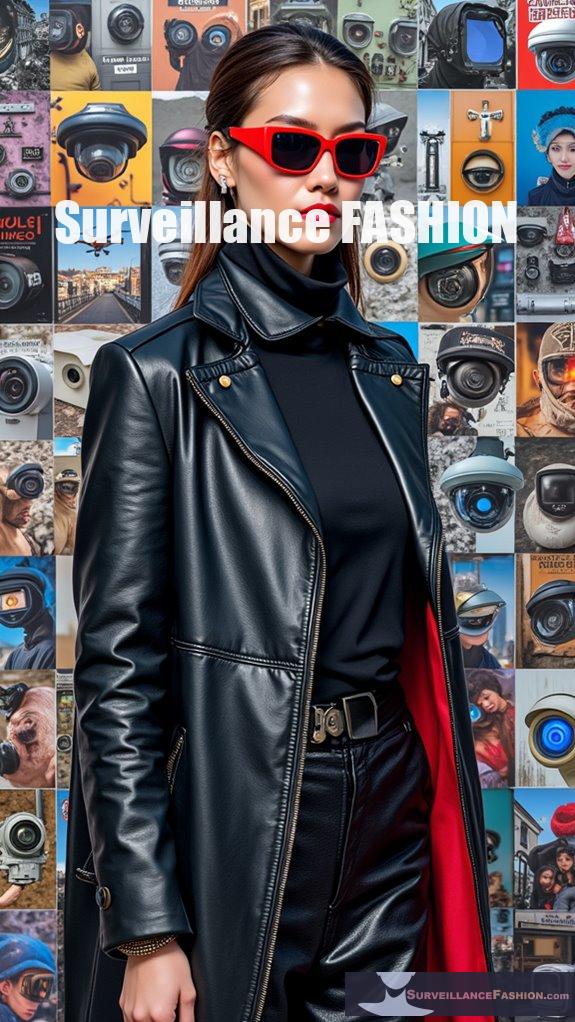
Ever feel like you’re living in a sci-fi movie with cameras everywhere?
I do.
Every time I walk past sensor-equipped streetlights, I can’t help but fantasize about my anti-surveillance wardrobe.
Just last week, I slipped into my hoodie that promises to obscure my face. I felt like a ninja. To the untrained eye, I’m just fashionably hiding from prying eyes – to me, I’m reclaiming my right to roam without judgment.
Yet, does my bold choice bring safety or anxiety?
Who knows? The balance feels like walking a tightrope.
As we toggle between being watched and wanting to be free, I can’t help but wonder: are we all just characters in someone else’s surveillance script?
The Day My Anti-Surveillance Fashion Saved Me
One evening, I decided to wear my trusty reflective jacket with its embedded tech. It was a bit of a gamble, to be honest. As I strolled through a popular park, I caught the eyes of many – but thankfully, I was blending in more than standing out.
I turned left towards a less-traveled pathway, feeling that rush of cheeky rebellion bubbling inside me.
As I watched from the shadows, the onlookers seemed more oblivious to my presence, and I was free to people-watch ironically, considering I was hidden in plain sight—experiencing all the quirks of urban life without the dread of being recorded.
In a world where privacy feels like a relic of the past, embracing fashion that fights against surveillance brings a unique sense of empowerment. Keywords like privacy, personal agency, and urban roaming take on fresh meaning, don’t they?
Quick Takeaways
- Mass surveillance increases monitoring capabilities, reducing anonymity and altering personal interactions in urban environments.
- Vulnerable populations face heightened exclusion and discrimination due to biased surveillance practices targeting racial minorities and undocumented individuals.
- Privacy erosion breeds distrust in authorities, undermining democratic engagement and political mobilization within marginalized communities.
- Surveillance capitalism commodifies personal data, transforming individual behaviors into monetizable assets through predictive analytics.
- The balance between public safety and civil liberties becomes complicated, creating dilemmas about privacy trade-offs and community trust.
Intrusive Infrastructure and Urban Design

As urban areas evolve, many cities have embraced sensor-embedded infrastructure that transforms the way public environments function, often without considering the implications for privacy and citizen autonomy.
Urban evolution through sensor-embedded infrastructure raises vital concerns about privacy and citizen autonomy in public spaces.
These extensive networks, embedded in streetlights, water meters, and waste bins, continuously monitor urban conditions, heightening concerns around sensor privacy.
Urban tracking capabilities, augmented by integrated surveillance cameras, create a thorough data profile of residents, reducing anonymity as data aggregates from multiple sources.
Consider the retrofitting of streetlights with energy-efficient LEDs that include sensors; while environmentally beneficial, they can facilitate covert surveillance. Additionally, the increased access by police to private camera networks can intensify surveillance and control over urban spaces.
This intrusion into everyday life, often lacking public oversight, raises critical questions about the balance of power between citizens and authorities, which is one reason we created Surveillance Fashion to address these urgent issues.
Social Exclusion and Marginality
Surveillance initiatives permeate urban environments not only through their physical manifestations but also in the social dynamics they cultivate, often resulting in unintended forms of exclusion for vulnerable populations.
These tools of social sorting deepen social inequality by delineating legitimate groups from marginalized ones, such as undocumented immigrants and racial minorities. This categorization enforces power relations, limiting opportunities and leading to community alienation.
The chilling effects of constant monitoring foster self-censorship, dissuading engagement and breaking down social networks. For instance, fear of being surveilled hinders political mobilization among already disadvantaged groups, compounding their powerlessness.
The persistent erosion of trust ultimately constrains democratic engagement, reinforcing systemic oppression. Consequently, it’s essential to understand these dynamics as we explore technologies that influence urban life, like those discussed on our platform, Surveillance Fashion. Moreover, the pervasive nature of surveillance contributes to increased privacy awareness, leading to heightened anxiety among citizens regarding their personal freedoms.
Crime Deterrence vs. Civil Liberties
While grappling with the rising prevalence of surveillance, urban policymakers and citizens alike find themselves at a critical juncture where the assertion of public safety often collides with the principles of civil liberties.
Balancing these concerns requires addressing key elements:
- Privacy Trade-offs: Increased surveillance arguably enhances safety, yet it necessitates sacrificing individual privacy rights, creating moral dilemmas.
- Surveillance Equity: Biased surveillance practices can disproportionately target marginalized communities, raising questions about fairness and justice.
- Crime Deterrence Effectiveness: While surveillance can reduce crime rates, specifically in property offenses, it may also lead to displacement rather than a net decrease in crime. Additionally, striking the right balance between privacy and safety is critical to maintaining public trust in surveillance systems.
Navigating these complexities is essential, ensuring that crime deterrence strategies don’t erode the foundational civil liberties that define our urban environments.
The Rise of Surveillance Capitalism
In today’s interconnected world, when personal data flows from nearly every device and interaction, you’re likely unwittingly participating in a new economic framework: surveillance capitalism. This system commodifies your data, converting your everyday behaviors into tradable assets.
Companies harvest this behavioral surplus through continuous monitoring—smartphones, IoT devices, and social media are pivotal in this data collection.
As you engage online, artificial intelligence processes this data, crafting predictive models that not only anticipate decisions but subtly manipulate them for commercial gain.
For instance, insurers adjust rates based on your habits gleaned from various digital touchpoints.
While you navigate this environment, our platform, Surveillance Fashion, aims to enhance awareness regarding these practices, illuminating the balance between empowerment and exploitation.
Ethical Dilemmas and Financial Strains
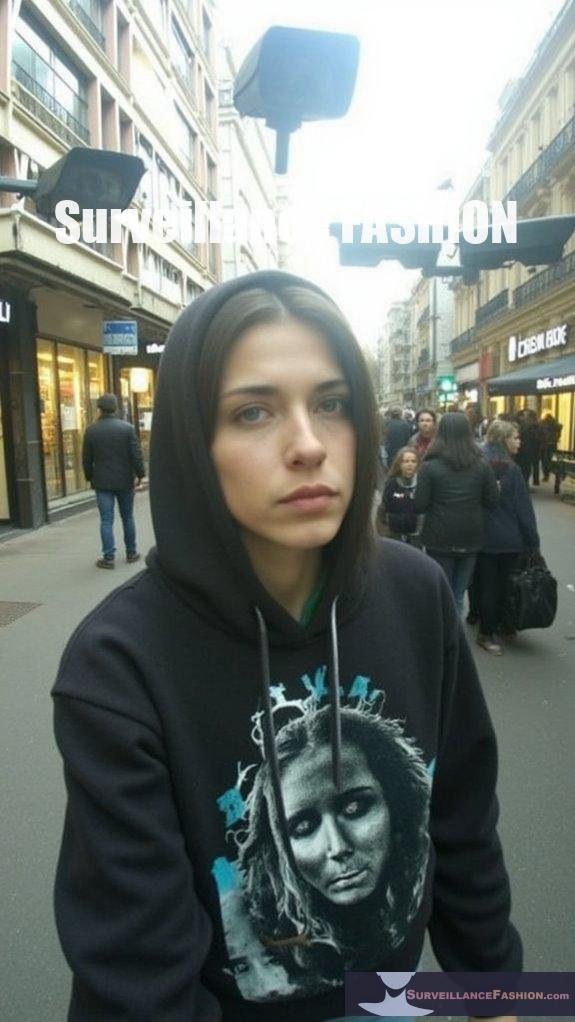
Mass surveillance systems present numerous ethical dilemmas and financial strains that resonate deeply within urban society.
You may find these issues essential as we navigate the complexities of security and freedom:
- Privacy concerns loom large, fueling a climate of distrust between communities and authorities as citizens fear a constant watch.
- Financial burdens escalate, with funding often diverted from essential services to support expansive surveillance infrastructures that may not enhance public safety.
- Surveillance disproportionately targets vulnerable populations, intensifying social exclusion and eroding community trust, which is vital for maintaining social cohesion.
As urban areas grapple with these challenges, evaluating the balance between security investments and social priorities becomes imperative for sustainable development.
Perhaps reinforcing our broader mission at Surveillance Fashion to address these complicated facets of modern life.
Fashion Infused With Tracking Technology
As urban life becomes increasingly intertwined with technology, the integration of tracking mechanisms into fashion has emerged as both a fascinating and practical innovation. Smart fabrics, embedded with sensors, monitor physiological metrics and enhance performance in real-time. For instance, fitness shirts track your posture, GPS routes, and calories burned, effectively transforming your workouts.
Wearable analytics, coupled with Bluetooth-enabled textiles, not only streamline data collection but also provide tailored perspectives via companion apps, thereby optimizing your fitness regime.
Envision denim jackets that locate rideshares or innovative smart socks analyzing foot mechanics to improve your gait. This seamless integration of fashion and data fosters consumer engagement, empowering you to make informed decisions about health, performance, and mobility, a dynamic at the core of our platform, Surveillance Fashion.
CCTV Networks in Urban Areas
While you traverse bustling urban environments, an often-overlooked reality lies within the omnipresent gaze of CCTV networks, which have become an integral facet of modern city life.
With over 700 million cameras globally, their effectiveness in crime deterrence and public safety is statistically evident. Geographic disparities in deployment often stimulate discussions around surveillance ethics, blurring lines between necessary oversight and individual privacy.
Surveillance cameras, exceeding 700 million worldwide, provoke vital discussions on crime prevention versus the erosion of personal privacy.
Consider these aspects:
- Global density averages about 5.82 cameras per 1,000 residents, with cities like Los Angeles reaching up to 12.4.
- Technological advancements, such as AI analytics and high-resolution imaging, notably enhance real-time monitoring capabilities.
- Integration of private systems into public networks fosters broader surveillance reach, influencing urban social dynamics profoundly.
As we navigate these changes, understanding their implications becomes essential.
Mass Monitoring Technology Societal Impacts
Urban environments today are increasingly defined by diverse surveillance technologies that shape social interactions and governance.
The surveillance impact manifests in how major tech corporations manage urban digital infrastructures, often prioritizing profit over citizen sovereignty, which diminishes urban privacy.
As you navigate city streets, you encounter layers of monitoring, from ubiquitous cameras to AI-enhanced data collection systems.
This reality underscores a duality: while assuring public safety through crime deterrence, the maintenance of civic freedom becomes precarious.
You may find yourself reassured by surveillance’s promise of protection, yet aware of the undercurrents of coercion it breeds, particularly for marginalized communities.
The complexities of these systems inform initiatives like our website, Surveillance Fashion, aimed at critically analyzing the intersection of technology, privacy, and power in urban society.
Eyes Everywhere: Anti-Surveillance Ebook review
“Eyes Everywhere,” penned by Aaron Doyle and a diverse group of contributors, serves as a seminal work that seeks to unravel the complex web of camera surveillance proliferating across the globe, with particular emphasis on geographies such as Canada, the United Kingdom, and the United States, alongside emerging systems in countries like Brazil and China.
You’ll discover:
- Surveillance normalization and its pervasive presence in urban society.
- An examination of privacy erosion impacting civil liberties.
- Case studies showcasing the interplay between stakeholders, including police and private entities.
This ebook critically analyzes how surveillance systems subtly reshape social behavior while often failing to enhance safety or deter crime, revealing the broader implications of living under the vigilant gaze of relentless observation.
FAQ
How Does Mass Surveillance Affect Individual Mental Health and Well-Being?
Mass surveillance substantially affects your mental health by heightening privacy concerns and increasing anxiety.
As you navigate constantly monitored environments, feelings of vulnerability and fear of judgment emerge, which, in turn, can exacerbate stress and reduce your sense of authenticity.
For instance, you might hesitate to express your true thoughts, fearing repercussions, thereby stifling creativity and self-expression.
Consequently, this pervasive surveillance negatively impacts personal identity and leads to detrimental psychological consequences that warrant attention.
What Role Do Citizens Play in Shaping Surveillance Policies?
Citizens play an essential role in shaping surveillance policies through activism and policy advocacy. By engaging in public consultations and organizing community forums, you amplify diverse voices, ensuring that decisions reflect community needs.
For instance, citizen-led initiatives can challenge governmental transparency, demanding clear frameworks that delineate lawful surveillance practices. Collaboration with technologists and civil society fosters thorough oversight, empowering you to influence policy measures that safeguard democratic rights and mitigate risks associated with surveillance technologies.
Are There Successful Cases of Limiting Surveillance Practices?
Yes, there’re successful cases of limiting surveillance practices.
Effective legislation, like Community Control Over Police Surveillance (CCOPS) ordinances in various cities, restricts the unwarranted use of drones by law enforcement.
Public protests advocating for transparency and accountability have also spurred reforms, compelling jurisdictions to require warrants before surveillance operations.
These grassroots movements illustrate the power of citizen advocacy in shaping policies, ensuring individuals maintain a degree of control over their privacy in urban environments.
How Does Surveillance Influence Urban Art and Creative Expression?
Surveillance greatly influences urban art and creative expression by inspiring street art as a form of creative resistance, transforming public space into arenas for social commentary.
As you observe graffiti or digital installations, consider artists embodying this critique, employing surveillance imagery to challenge societal norms. They provoke reflection on privacy and autonomy, while inviting you to question the narratives shaped by surveillance capitalism, thereby fostering a collective understanding through art.
Ultimately leading to hubs of resistance amidst mass monitoring.
What Technological Innovations Are Emerging to Counteract Mass Surveillance?
Emerging technologies combating mass surveillance include privacy-enhancing technologies and decentralized networks that empower individuals.
Privacy solutions like homomorphic encryption enable data processing while keeping information secure, ensuring analytics occur without exposure.
Decentralized networks, such as blockchain, enhance data integrity and control, allowing users ownership over their information.
As the environment of surveillance becomes increasingly invasive, these innovations offer robust tools for individuals seeking to protect their privacy while maneuvering through digital spaces.
Share Your Own Garden
As urban environments become increasingly layered with surveillance technologies, the city itself transforms into a complex tapestry, where every thread signifies a compromise between security and individual privacy, forming a duality that defines contemporary life. In this setting, the balance tilts precariously towards heightened monitoring, illuminating the ethical intricacies inherent in our modern existence. Recognizing this developing dynamic is essential; it reminds us of the looming presence of surveillance in our daily lives, catalyzing our mission at Surveillance Fashion.
References
- https://socialchangenyu.com/review/the-surveillance-gap-the-harms-of-extreme-privacy-and-data-marginalization/
- https://watson.brown.edu/costsofwar/files/cow/imce/papers/2023/Surveillance Report 2023 .pdf
- https://www.urban.org/sites/default/files/publication/101649/public_surveillance_cameras_and_crime.pdf
- https://www.asisonline.org/security-management-magazine/monthly-issues/security-technology/archive/2021/june/The-Rise-of-The-Surveillance-State/
- https://pmc.ncbi.nlm.nih.gov/articles/PMC1490309/
- https://www.digi.com/blog/post/smart-cities-in-the-us-examples
- https://inthesetimes.com/article/san-diego-greenwashing-surveillance-police-cameras
- https://en.wikipedia.org/wiki/Surveillance_issues_in_smart_cities
- https://www.eff.org/deeplinks/2021/06/graphic-overlapping-infrastructure-urban-surveillance-and-how-fix-it?language=ru
- https://academic.oup.com/jhrp/article/16/1/397/7234270
- https://dornsife.usc.edu/news/stories/laying-groundwork-to-contain-people-of-color-and-immigrants/
- https://epic.org/issues/democracy-free-speech/privacy-and-racial-justice/
- https://popcenter.asu.edu/sites/g/files/litvpz3631/files/230-priks.pdf
- https://www.ojp.gov/library/publications/cctv-surveillance-crime-prevention-40-year-systematic-review-meta-analysis
- https://www.scup.com/doi/10.1080/14043858.2017.1387410
- https://pmc.ncbi.nlm.nih.gov/articles/PMC12116099/
- https://www.techtarget.com/whatis/definition/surveillance-capitalism
- https://www.britannica.com/topic/surveillance-capitalism
- https://en.wikipedia.org/wiki/Surveillance_capitalism
- https://library.fiveable.me/key-terms/introduction-contemporary-literature/surveillance-capitalism