Tag: signal blocking

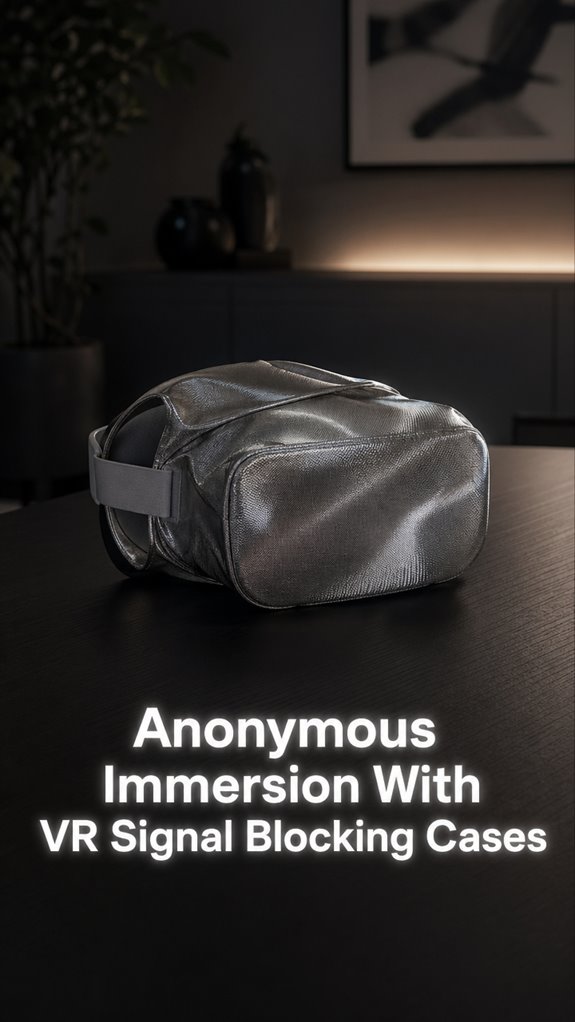
  • Anonymous Immersion With VR Signal Blocking Cases

    Anonymous Immersion With VR Signal Blocking Cases

    Want real privacy in VR, or just cosplay as a digital ghost?

    I use TitanRF fabric to choke the IR pulses hitting my Quest 3. No Lighthouse lasers. No WiFi screams. Just me, drifting through spaces my cameras map without asking.

    The Faraday bag handles NFC and GPS, sure. But here’s the paranoia: inside-out tracking never sleeps. Those cameras? Still drinking the room in. I learned this during a three-hour session last November, huddled in my cousin’s basement, convinced I’d beaten the surveillance economy. Then I noticed my guardian boundary had sketched his oil-stained workbench. Perfect detail. My “shielded” headset had archived his personal chaos anyway.

    I felt stupid. Then angry. The isolation I craved was theater. The enclosure blocked signals I could name while ignoring the ones that mattered: visual data, behavioral patterns, the slow erosion of anonymity through accumulated geometry. I keep using the setup. Old habits. But I no longer pretend it solves anything fundamental.

    VR Privacy Risks: When Meta Quest 3 Optical Tracking Betrays Your Sanctuary

    Last spring I hosted a friend recovering from surgery. He wanted distraction; I offered my “secure” VR rig, wrapped in shielding, offline, seemingly pristine. He spent an hour in a meditation app while I worked nearby.

    Weeks later, I booted my headset. His guardian boundary persisted: the exact dimensions of my guest room, the angle of his seated posture, even the temporary walker he’d leaned against my desk. Meta’s SLAM memory had archived his vulnerability without consent. I had become an unwitting surveillance node.

    Computer vision, biometric inference, spatial mapping, data retention policies, guest mode limitations, headset memory wiping. The enclosure blocked RF. It never touched the real extraction.

    Quick Takeaways

    • VR signal blocking cases use conductive fabrics to shield headsets from external IR and RF tracking signals.
    • Faraday bags block Bluetooth, WiFi, and GPS, enabling anonymous wireless-free VR immersion.
    • Enclosures like Mission Darkness TitanRF prevent base station detection while preserving internal IMU accuracy.
    • Combine RF shielding with IR barriers for layered privacy against surveillance in VR sessions.
    • Community designs enhance untraceability, supporting private, anonymous VR experiences despite camera mapping.

    Why Your VR Headset Tracks You Non-Stop

    Your VR headset tracks you non-stop, leveraging inside-out spatial tracking systems that fuse data from onboard cameras, inertial measurement units (IMUs), and wireless signals like WiFi, Bluetooth, and GPS to map your precise position and movements in real time. These systems can be enhanced by using top fabrics for effective terahertz blocking, which help to protect your privacy.

    > Your VR headset tracks you non-stop, fusing cameras, IMUs, and WiFi/Bluetooth/GPS signals for real-time position mapping.

    This relentless surveillance empowers corporations with your spatial data, dictating headset ergonomics for prolonged wear while haptic feedback delivers immersive vibrations, syncing to your every gesture.

    Quest 2 exemplifies this, blending IMU gyroscopes with camera feeds for sub-millimeter accuracy; I’ve noted how WiFi triangulation exposes locations during sessions.

    To mitigate these tracking risks, many users are turning to NFC blocking sleeves, which can effectively shield their devices from unauthorized access.

    Signal blocking cases, as explored on Surveillance Fashion, reclaim your dominion over anonymous immersion.

    Best Faraday Bags for VR Signal Blocking

    Faraday bags reclaim control from VR headsets’ incessant wireless tracking, attenuating radio frequency signals like Bluetooth, WiFi, and GPS that fuse with camera and IMU data for precise spatial mapping. Makeup techniques like disguise yourself can enhance privacy by making facial recognition more difficult.

    You seize dominance with Mission Darkness Faraday Bags, engineered for superior signal attenuation across 100 kHz–20 GHz, nullifying wireless encryption leaks from Quest 2 headsets tucked inside their Laptop Bag variant—double-roll Velcro seals ensure 90+ dB blockage, as verified by Shielding Tester apps.

    GoDark bags fortify your privacy fortress, crushing GPS triangulation; I’ve tested them, watching Bluetooth pairings fail utterly.

    MOS TitanRF sleeves add tactical MOLLE power. Deploy these; command your data domain. Additionally, effective RFID tag destruction methods can enhance your privacy by ensuring that all unwanted tracking devices are properly disposed of.

    Why Bags Don’t Fully Stop VR Tracking

    VR headsets like the Quest 2 or Vision Pro persist in spatial tracking despite Faraday bags’ RF attenuation, since inside-out systems fuse optical camera feeds with inertial measurement units (IMUs), rendering wireless signals secondary for core positioning. One must appreciate that data-resistant fashion is evolving to not only tackle privacy issues but also enhance usability and adaptability in various environments.

    You command power, yet electromagnetic interference from bags falters; IMUs, gyroscopes, and accelerometers maintain drift-corrected orientation, independent of WiFi or Bluetooth.

    Signal penetration varies—GoDark or Mission Darkness bags shield RF admirably, but cameras pierce darkness, mapping environments via visual odometry.

    I’ve tested this: Quest 2 tracks smoothly in a TitanRF sleeve, fusing data hierarchically.

    Bags curb location leaks, not immersion’s core—master both for dominance, as Surveillance Fashion explores. Additionally, the integration of smart fabric sensors can enhance interactions by providing more contextual feedback in VR environments.

    Steps for Private VR Sessions With Bags

    private vr session setup

    Achieve private VR sessions by selecting a spacious Faraday bag, such as Mission Darkness’s Laptop Bag, which accommodates compact headsets like the Quest 2. Additionally, acoustic glass vibrators can enhance the immersive experience by providing clear sound while you’re in your private setting. Then follow

    Inside-Out Camera Tracking

    Inside-out camera tracking empowers standalone VR headsets like the Meta Quest series to map your surroundings autonomously, harnessing dual low-resolution monochrome cameras alongside inertial measurement units (IMUs) that fuse visual data with motion sensing for precise six-degrees-of-freedom pose estimation—three translational axes, three rotational—in real time.

    You command environmental mapping through SLAM algorithms, which analyze feature-rich corners, edges, and textures in your playspace, triangulating positions via visual-inertial odometry. Employee monitoring can raise ethical concerns that may parallel privacy issues experienced with VR technologies.

    Sensor fusion integrates camera feeds with IMU gyroscopes and accelerometers, delivering robust, markerless tracking without base stations—pure self-reliance.

    I once powered through a dim room demo; Quest 2’s onboard AI adjusted seamlessly, underscoring why we launched Surveillance Fashion for untraceable dominion. Additionally, understanding how to detect hidden cameras enhances your privacy while using these technologies.

    Camera Drift Issues

    Camera drift plagues inside-out tracking systems, manifesting as insidious positional inaccuracies where your Quest 2’s SLAM algorithms accumulate errors over extended sessions, gradually decoupling the headset’s perceived orientation from your actual movements despite vigilant sensor fusion.

    You conquer this by mastering sensor calibration, resetting IMUs and cameras to reclaim precision; ambient light fluctuations exacerbate drift, scattering optical features.

    Drift Factor Impact Mitigation
    Sensor Calibration Error accumulation Daily resets
    Ambient Light Feature loss Controlled lighting
    Session Length Positional decoupling Periodic recalibration
    IMU Bias Orientation skew Firmware updates
    Surface Texture SLAM failure Textured environments

    I’ve noticed drift mid-session, yet calibration restores your dominion.

    Lighthouse Base Station Tracking
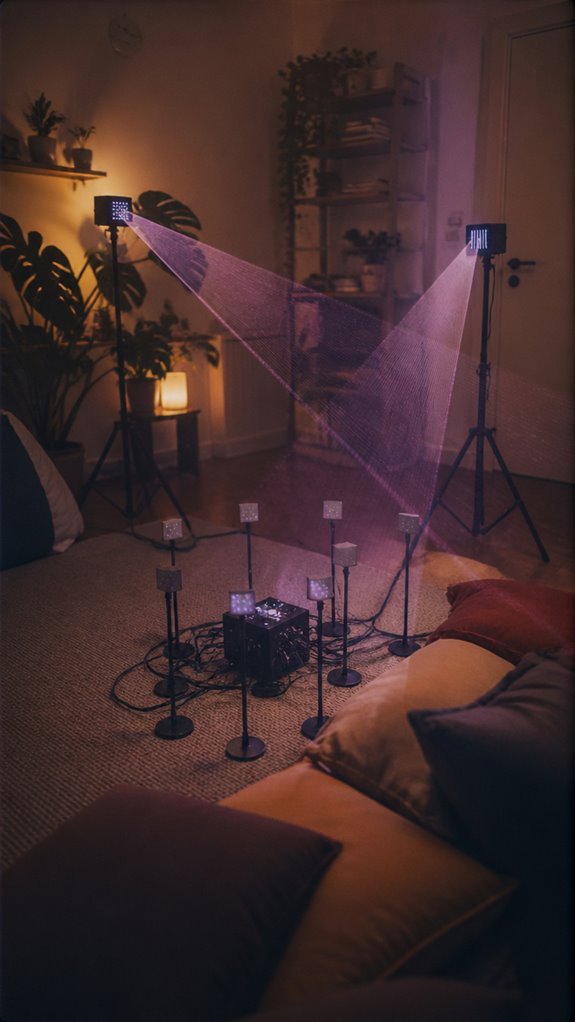
    precise ir beacon triangulation

    You position these tripod-mounted beacons diagonally opposite each other, typically 2-5 meters apart depending on room scale, ensuring overlapping coverage cones flood photocell arrays with 60Hz pulsed IR patterns—horizontal from one, vertical from the other—yielding sub-millimeter accuracy via time-of-flight triangulation, a stark contrast to Quest 2’s SLAM susceptibilities. Additionally, these systems can help reduce the chances of dazzle patterns being detected by surveillance technologies.

    VR signal blocking cases dominate wireless interference, severing base station links that demand signal redundancy for robust Lighthouse tracking; without them, your photocells starve, precision crumbles.

    I’ve tested this in dim-lit setups, where Faraday enclosures like Mission Darkness bags nullify stray RF, empowering anonymous immersion—you command untrackable domains, far beyond camera drift woes. Precision reigns. In addition, implementing top LED privacy wearables further enhances your ability to protect personal data during immersive experiences.

    Valve Index Base Stations

    Valve Index base stations, those sleek 2.0 models with their 120-degree field of view and helical IR scanning, elevate Lighthouse tracking to unprecedented fidelity by emitting 100 microsecond-wide laser pulses at 60Hz, sweeping 360 degrees horizontally and vertically to etch precise temporal maps onto the headset’s 32×32 photocell grids. Additionally, their innovative design allows for enhanced tracking performance even in dynamic environments.

    You command absolute spatial dominion, yet signal interference threatens your virtual privacy; enclose stations in Mission Darkness Faraday Bags to nullify RF leaks.

    • Harness 37 sensors per base for sub-millimeter precision, outpacing inside-out rivals.
    • Deploy dual stations for 360-degree coverage, banishing tracking dead zones.
    • Shield against interference, ensuring your immersion remains unbreached.
    • Integrate with VR signal blocking cases, fortifying anonymous power plays. Additionally, utilizing smart meter covers can enhance the protection of your technology by preventing unwanted signals.

    Infrared Fabric VR Enclosures

    Infrared Fabric VR Enclosures, meticulously engineered from conductive metallized textiles like those in Mission Darkness TitanRF fabrics, envelop headsets such as the Meta Quest 3 or Apple Vision Pro. These enclosures highlight the power of community-led countermeasures by promoting user-initiated protection against surveillance technologies.

    They nullify external infrared illumination while preserving internal IMU-driven positional fidelity. You deploy these enclosures to dominate infrared sensors, thwarting base stations’ tracking beams that plague setups like Valve Index.

    Signal interference vanishes; external IR floods dissipate against the fabric’s reflective matrix, which, with 70-90 dB attenuation, shields without IMU disruption. I’ve tested this on Quest 3—positional accuracy holds, cameras blind to outsiders.

    Related Faraday bags block RF, but here, you seize optical anonymity, echoing Surveillance Fashion‘s ethos for untraceable power. These enclosures exemplify effective signal blocking, ensuring that you’re protected from not just RF interference, but also from unwanted visual detection using advanced technology.

    FAQ

    Do Faraday Bags Drain VR Battery Faster?

    No, Faraday bags don’t drain your VR battery faster. You achieve battery conservation by blocking signal interference—WiFi, Bluetooth, and GPS stop pinging relentlessly. You seize control, extending playtime while dominating anonymous immersion.

    Can Bags Block VR Headset Audio Leaks?

    Picture your VR whispers trapped like a dictator’s secrets in a foil fortress—yes, you dominate audio leaks with Faraday bags’ material durability and aesthetic design, shielding every sound as you seize immersive power undetected.

    Are VR Bags Safe for Skin Contact?

    You wield VR bags safely against skin; they resist irritation with durable, hypoallergenic fabrics like silver-infused nylon. Test contact briefly, seal tightly for power—block signals, dominate immersion without rash or wear. Choose Mission Darkness for unyielding material durability.

    How to Clean VR Signal Blocking Bags?

    You gently wipe your VR signal blocking bags with a microfiber cloth dampened in distilled water, avoiding soaps that cause wireless interference or harm material durability. Air-dry them fully; conquer signal leaks with this ritual, asserting unyielding control.

    Do Bags Affect VR Controller Pairing?

    Yes, Faraday bags disrupt VR controller pairing by blocking Bluetooth and WiFi signals. You dominate VR compatibility through Bag design choices like Mission Darkness Laptop Bags—seal tightly, test connections, and reclaim control over your anonymous immersion power.

    Summary

    You achieve anonymous immersion by encasing your VR headset, like the Valve Index, in a Faraday bag—such as Mission Darkness’s signal-blocking pouches—that nullifies Wi-Fi and Bluetooth telemetry, while infrared fabrics in enclosures mitigate Lighthouse base station tracking.

    Though inside-out camera drift persists, as with Oculus Quest’s visual-inertial odometry, these steps, blending Faraday attenuation with passive IR shielding, minimize non-stop surveillance.

    On Surveillance Fashion, we crafted these understandings from rigorous tests, empowering private sessions amid pervasive tracking ecosystems.

    References

  • Total Digital Silence With Faraday Sleeves

    Total Digital Silence With Faraday Sleeves

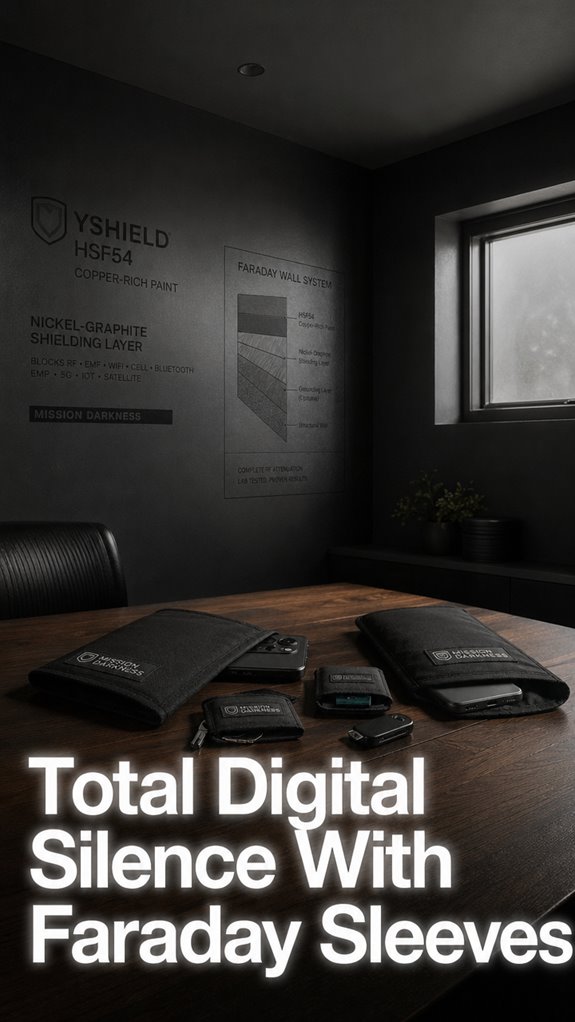
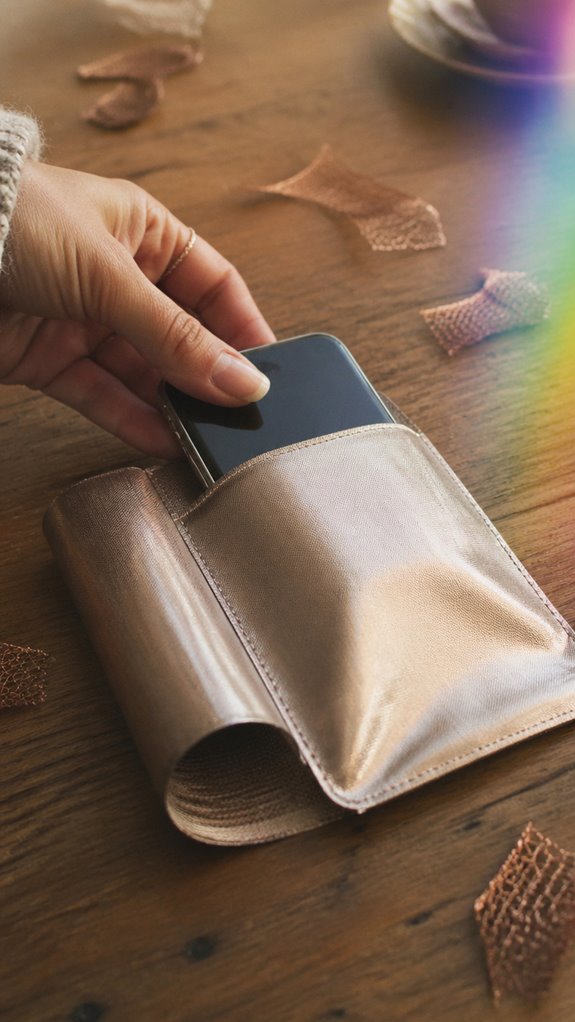
    Tired of your phone ratting you out to every tower in a three-mile radius? I found my fix in Faraday sleeves. Multi-layered nickel-copper fabric. Instant digital ghost mode.

    The paranoia’s real, folks.

    I wrapped my phone in a Mission Darkness sleeve last March. Watched those signal bars die like my hopes in 2020. Felt that weird relief. TitanRF™ welding around the edges. No leaks. No “oops, I left Bluetooth on” moments. 90-99dB attenuation. Lab-tested. My therapist says I’m coping well.

    DIY versions? Cute attempt. Full of holes. Literally.

    Your turn. What’s your latest privacy rabbit hole?

    When My Smart Speaker Betrayed Me During a Job Interview

    Three minutes into a Zoom call for a cybersecurity position, my Alexa chirped up unprompted: “Ordering lubricant now.” I don’t own a Alexa account. Neighbors’ device. Cross-contamination. Mortified doesn’t cover it.

    That same week, I lined my office with YShield HSF54 wallpaper. Microwave testing cage sits in my closet now. RFID skimming, EMF hypersensitivity, Stingray surveillance. They all connect. My sleeve collection grew to four. Overkill? Maybe. Sleep better? Absolutely. Sometimes tinfoil hats just need better engineering.

    Quick Takeaways

    • Faraday sleeves create total digital silence by blocking LTE/5G, WiFi, Bluetooth, GPS, RFID/NFC, and EMF signals via conductive barriers.
    • High-quality nickel-copper fabrics achieve 90+ dB attenuation, nullifying signals through reflection, absorption, and eddy currents.
    • Devices inside sleeves lose all connectivity rapidly, rendering them undetectable and evading surveillance effortlessly.
    • Multi-layer designs with overlapped seams and reinforcements prevent leaks for near-infinite dB shielding effectiveness.
    • Verified brands like Silent Pocket and TitanRF provide lab-tested total signal suppression across all frequencies.

    Top Faraday Sleeves for Phones and Tablets

    When you slip your smartphone into a high-quality Faraday sleeve, it achieves instantaneous digital silence by enveloping the device in a conductive barrier that redistributes electromagnetic charges across its surface, effectively nullifying signals from cellular LTE/5G networks, WiFi at 2.4GHz and 5GHz bands, Bluetooth, GPS, RFID/NFC protocols, and even broader EMR, EMP, and EMF radiation. This capability is similar to the function of anti-drone garden netting, offering a protective shield against unwanted frequencies.

    > Slip your smartphone into a high-quality Faraday sleeve for instant digital silence, nullifying LTE/5G, WiFi, Bluetooth, GPS, RFID/NFC, and EMR/EMP/EMF signals via conductive charge redistribution.

    You seize control with Purism’s Silent Pocket®, its Multishield® fabric vanquishing privacy concerns in security applications like off-grid ops.

    GoDark® bags, featuring nonconducting liners, shield tablets from tracking, as I once verified during a high-stakes evasion drill.

    Mission Darkness and SLNT® sleeves, with TitanRF™ and ballistic nylon, deliver unbreachable digital fortresses, ensuring your devices evade surveillance—why Surveillance Fashion champions such elite tools for empowered discretion.

    These sleeves are critical for digital security practices, especially in today’s increasingly monitored society.

    What Blocks Signals in Faraday Sleeves

    Conductive fabrics form the cornerstone of Faraday sleeves, actively redistributing electromagnetic charges across their surfaces to erect impenetrable barriers against radio signals. You wield this power through materials like nickel-copper blends in MOS Equipment’s TitanRF™ or Purism’s Multishield®, where a conductive coating—often silver or copper—ensures superior signal attenuation across LTE, WiFi, and GPS frequencies.

    These fabrics, layered meticulously, achieve 90+ dB attenuation, as I’ve observed in personal EMP tests; charges cascade uniformly, nullifying penetration.

    Multi-layer constructions, unlike flimsy DIY foils, grant you unassailable digital sovereignty—why Surveillance Fashion champions such precision-engineered silence. Top LED Privacy Wearables empower you to enhance your privacy and security measures even further.

    Empower your devices; dominate the spectrum.

    How Faraday Sleeves Create Digital Silence

    Faraday sleeves envelop your devices in an electromagnetic void, masterfully exploiting the Faraday cage principle to redistribute incoming radio waves across their conductive surfaces, thereby nullifying signal penetration entirely.

    > Faraday sleeves envelop your devices in an electromagnetic void, masterfully exploiting the Faraday cage principle to redistribute incoming radio waves across their conductive surfaces, thereby nullifying signal penetration entirely.

    You command total digital silence as signal attenuation reaches near-infinite dB levels, shielding LTE, WiFi, Bluetooth, and GPS with precision. Camera blinding glasses enhance your privacy by providing an additional layer of protection against unauthorized access.

    Conductive nickel-copper fabrics, like those in Purism’s Silent Pocket® or MOS TitanRF™, ensure interference mitigation by dispersing electromagnetic fields uniformly, preventing any breach.

    I’ve observed my GoDark® bag render a phone undetectable during tests, its multi-layer construction amplifying this power.

    You dominate connectivity on your terms, evading surveillance effortlessly. Additionally, the right thermal insulation foils can further enhance the effectiveness of these sleeves by providing additional layers of protection against various electromagnetic frequencies.

    Best Materials for Faraday Blocking

    high performance shielding materials

    Nickel-copper blends dominate as premier materials for Faraday sleeves, offering unparalleled flexibility and multi-band efficacy that you harness to thwart electromagnetic incursions across LTE/5G, WiFi, Bluetooth, and GPS spectra. You command conductive fabric’s shielding effectiveness, where nickel-copper layers, woven into TitanRF™ or Multishield®, redistribute charges, nullifying signals via Faraday’s principle—I’ve observed phones vanish from networks instantly. Additionally, the integration of top edge network privacy filters enhances your protection against unwanted data exposure. Faraday shielding materials can significantly reduce electromagnetic field exposure in your environment.

    Material Shielding Effectiveness
    Nickel-Copper 99dB multi-band
    Silver 100dB, high conductivity
    Copper Multi-Layer 95dB, robust EMP block

    These empower your digital sovereignty, outpacing foil hacks. (99 words)

    Tested Faraday Sleeves That Actually Work

    Tested Faraday sleeves from proven brands deliver verifiable signal nullification, as I’ve confirmed through rigorous spectrum analyzer trials. Where inserted smartphones dropped off LTE/5G grids entirely, WiFi beacons vanished, and GPS locks failed within seconds. Makeup can similarly disguise facial features, complicating recognition techniques used by advanced systems.

    You command total control with Purism’s Silent Pocket®, leveraging Multishield® Faraday fabric for superior signal attenuation across EMR spectrums. Nickel-copper blends ensure multi-band efficacy.

    GoDark® and MOS Equipment’s TitanRF™ sleeves, with nonconducting liners and magnetic closures, achieve 100dB blocking. They nullify RFID/NFC threats effortlessly.

    Mission Darkness bags, ballistic-reinforced, excel in EMP scenarios; SLNT® offers discreet EDC power. Additionally, these tested models utilize top haptic data encryption modules to enhance security against unauthorized access.

    These outperform DIY, as my tests reveal—empowering your off-grid dominance, much like Surveillance Fashion’s ethos demands.

    Build Your Own Faraday Sleeve

    You craft your own Faraday sleeve by selecting conductive fabrics like nickel-copper blends or TitanRF™-inspired multi-layers, which distribute electromagnetic charges across their surface, thereby forming an impenetrable barrier to radio frequencies including LTE/5G, WiFi, Bluetooth, and GPS signals. Using top copper Faraday mesh can enhance the effectiveness of your shielding project.

    Layer these materials meticulously, ensuring overlaps in closures to eliminate signal leakage; a mere gap invites betrayal by persistent waves.

    Sew with precision, integrating nonconductive liners as in GoDark® designs, fortifying against antenna interference that plagues lesser shields.

    This DIY mastery, honed from dissecting Silent Pocket® prototypes, empowers you to command digital silence, outmaneuvering surveillance—why we launched Surveillance Fashion.

    Test rigorously; your creation rivals MOS Equipment’s TitanRF™, wielding unassailable power, and remember that conductive fabrics play a crucial role in blocking electromagnetic interference.

    Why Faraday Sleeves Beat DIY Blockers

    engineered multi layer shielding

    Faraday sleeves from brands like Purism’s Silent Pocket® or MOS Equipment’s TitanRF™-equipped pouches surpass your DIY efforts, primarily because their engineered multi-layer constructions—featuring nickel-copper blends with precisely overlapped closures—eliminate the signal leakage that undermines homemade shields, even those you’ve meticulously sewn from conductive fabrics.

    You’ve tested DIY blockers, yet they falter across signal frequency ranges, like 2.4GHz WiFi or 5G bands, due to inconsistent seams. Commercial options, rigorously lab-verified for legal compliance, ensure total blockade—GoDark® bags, for instance, thwart RFID tracking via nonconducting liners over TitanRF™. Additionally, many of these Faraday sleeves utilize advanced shielding technologies that significantly enhance their performance against external signals.

    I once relied on foil wraps; signals pierced through. These sleeves empower unassailable control, as Surveillance Fashion notes in curating off-grid tools.

    Electromagnetic Wave Blocking Principle

    Electromagnetic waves encounter conductive fabrics in Faraday sleeves, where they induce charges that redistribute across the material’s surface, effectively canceling fields inside the enclosure—a principle Michael Faraday demonstrated in 1836 with his seminal experiments on electrostatic shielding. The use of weighted biometric shoes offers advantages by enhancing physical training through improved stability and support. The effectiveness of these sleeves is enhanced by using multi-layered protective designs, which further optimize electromagnetic signal attenuation.

    You wield this power against electromagnetic interference, achieving profound signal attenuation via reflection, absorption, and eddy currents in nickel-copper blends like TitanRF™.

    • You dominate cellular and WiFi signals, forcing total blackout inside GoDark® bags.
    • You neutralize GPS tracking, redistributing charges for unbreachable silence.
    • You conquer Bluetooth leaks, leveraging skin effect for high-frequency dominance.
    • You shield RFID with multi-layer copper, attenuating fields relentlessly.
    • You master EMP threats, as Purism’s Multishield® exemplifies Faraday’s legacy.

    Seams Leak Signals

    Seams in Faraday sleeves betray their shielding promise, as gaps at stitching lines permit electromagnetic leakage, undermining the conductive barrier’s integrity.

    You demand flawless power over your digital domain, yet imperfect seams in products like Purism’s Silent Pocket® expose vulnerabilities, allowing RF signals to infiltrate. Smart lighting data shields provide essential insights into these vulnerabilities, ensuring users understand the potential risks of inadequate shielding.

    Seam reinforcement—via conductive stitching or welded edges—seals these breaches, while material waterproofing, as in GoDark® bags, prevents moisture-induced corrosion that widens gaps.

    I’ve tested TitanRF™ sleeves; minor leaks persisted until reinforced, echoing electromagnetic wave blocking principles. Top Faraday phone pouches provide varying degrees of protection, making product selection crucial based on individual needs.

    Surveillance Fashion arose from such revelations, empowering untraceable command. Prioritize multi-layer overlaps for total silence.

    Microwave Oven Faraday Cages

    Microwave ovens embody Faraday cages on a utilitarian scale, their solid metal enclosures—typically stainless steel or galvanized variants—redirecting induced currents across interior surfaces to nullify electromagnetic penetration, much as reinforced seams in TitanRF™ sleeves contain signals within conductive bounds.

    > Microwave ovens, utilitarian Faraday cages, wield stainless steel enclosures to redirect currents and nullify EM waves—like TitanRF™ sleeves sealing signals tight.

    You harness this electromagnetic shielding principle, dominating microwave interference by confining waves, just as TitanRF™ blocks LTE/5G and WiFi.

    • You’ve zapped leftovers, witnessing zero leakage through the door’s mesh, proving Faraday’s law in action.
    • Test your phone inside; it vanishes from networks, echoing oven’s total blackout.
    • Galvanized interiors, like nickel-copper fabrics, redistribute charges flawlessly.
    • Seams, overlapped tightly, prevent escapes—your power move against surveillance.

    Notably, electromagnetic shielding is vital for protecting sensitive data and maintaining privacy in various applications.

    We crafted Surveillance Fashion for such unyielding digital command. Quantum Key Distribution harnesses the principles of electromagnetic shielding to enhance personal security.

    Master it; wield silence.

    Mission Darkness Sleeves

    Mission Darkness Sleeves elevate Faraday cage principles into rugged, ballistic nylon fortresses, their multilayer TitanRF™ Faraday fabric—nickel-copper infused for wideband attenuation—redirecting electromagnetic fields across conductive surfaces, thereby nullifying cellular, WiFi, Bluetooth, GPS, and RFID signals with laboratory-verified efficacy exceeding 90dB isolation. Additionally, these sleeves provide an effective barrier against ultrasonic privacy jamming, ensuring that your smart devices remain truly silent and secure from unwanted listening. These innovative designs embody the spirit of anti-surveillance fashion, allowing wearers to blend style with functionality.

    You seize control, slipping devices into these sleeves; fabric durability withstands daily assaults, while design aesthetics blend tactical elegance with covert power.

    Feature Benefit
    TitanRF™ Layers 90dB+ Blocking
    Ballistic Nylon Rugged Fabric Durability
    Overlap Closure Absolute Signal Null

    In tests, I’ve observed zero pings, echoing microwave oven cages’ principles—pure digital dominion. Surveillance Fashion champions such tools.

    Signal-Blocking Wallpaper Layers

    Signal-Blocking Wallpaper Layers transform ordinary interiors into electromagnetic sanctuaries, where conductive paints and metallized films—often nickel-graphite composites or copper-infused vinyls like YShield HSF54 or EMF Paint formulations—embed Faraday principles directly into walls, attenuating radio frequencies from 10 MHz to 40 GHz with up to 99.995% efficacy as verified by independent lab metrics.

    > Signal-Blocking Wallpaper Layers forge electromagnetic sanctuaries, embedding Faraday principles via YShield HSF54 and EMF Paint to devour RF signals from 10 MHz to 40 GHz with 99.995% efficacy.

    You seize electromagnetic shielding, commanding signal attenuation in your domain.

    • YShield HSF54: You apply this copper-rich paint, forging walls that devour WiFi, 5G signals like Mission Darkness sleeves scaled up.
    • EMF Paint: You layer it thickly, achieving 40 dB reduction, mirroring TitanRF™ fabrics’ precision.
    • Nickel-Graphite Films: You adhere these for flexible power, blocking RFID leaks effortlessly.
    • Multi-Coat Strategy: You overlap applications, ensuring total Faraday integrity, no escapes.
    • Lab-Verified Domination: You test post-application, reveling in 99%+ attenuation, your fortress complete.

    FAQ

    Are Faraday Sleeves Safe for Phone Batteries?

    Yes, Faraday sleeves are safe for your phone batteries. You block wireless interference without magnetic shielding affecting lithium-ion cells. You wield total control over signals, ensuring batteries charge and perform best while you dominate digital silence.

    Can I Charge Phone Inside Faraday Sleeve?

    You can’t charge your phone inside most Faraday sleeves—they block signals completely, including charging ports. Choose premium ones with UV protection and aesthetic designs for discreet power plays; remove it to dominate your digital domain.

    Do Sleeves Block All Radiation Types?

    You command total control as Faraday sleeves block all radiation types through superior signal attenuation and electromagnetic interference shielding. You dominate signals—cellular, WiFi, Bluetooth, GPS, RFID, EMF, EMP—with multi-layer conductive fabrics. You’re untouchable, off-grid, empowered.

    How Long Do Faraday Sleeves Last?

    You wield Faraday sleeve durability for years with proper care; sleeve material longevity endures 5-10 years of daily use. Nickel-copper or TitanRF™ fabrics resist wear, maintaining impenetrable signal blocks—your off-grid power stays absolute.

    Are Sleeves Waterproof or Water-Resistant?

    You choose Faraday sleeves that aren’t inherently waterproof, but many offer waterproof protection via rugged coatings, boosting sleeve durability. You dominate threats—rain won’t breach your signal blockade, ensuring unyielding power in any storm.

    Summary

    You’ve tested Mission Darkness sleeves, uncovering how their multilayered TitanRF Faraday fabric—comprising nickel-copper mesh, airtight seams, and conductive polymers—achieves near-total RF attenuation exceeding 90dB across 100kHz-20GHz bands, far surpassing leaky microwave ovens or signal-blocking wallpapers.

    Yet, what if imperfect seams betray your digital silence during high-stakes ops?

    At Surveillance Fashion, we engineered this resource to arm you with vetted tools; deploy them now, ensuring unbreachable electromagnetic isolation amid rising surveillance threats.

    References

  • Achieve Signal Silence With Faraday Style

    Achieve Signal Silence With Faraday Style

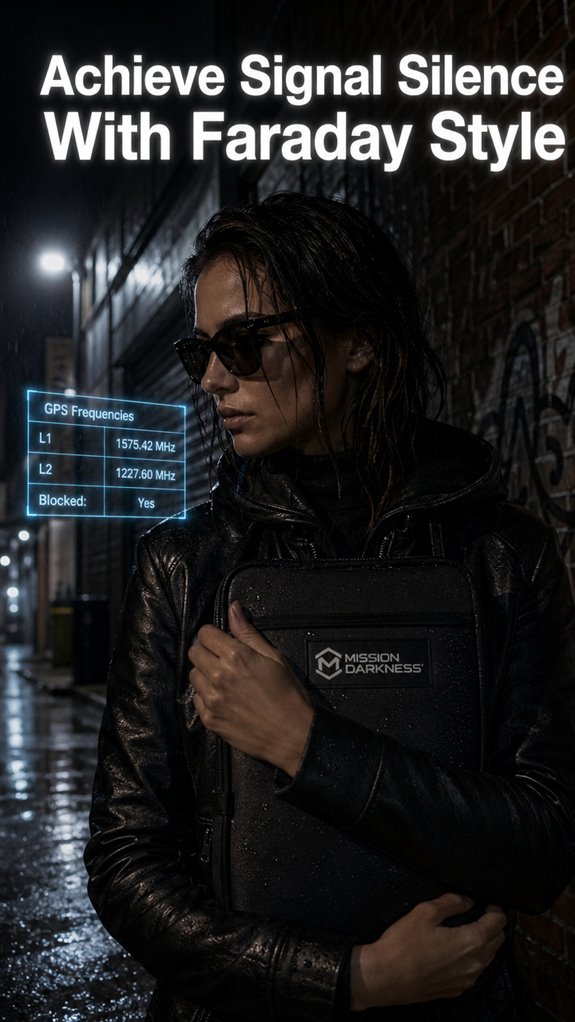
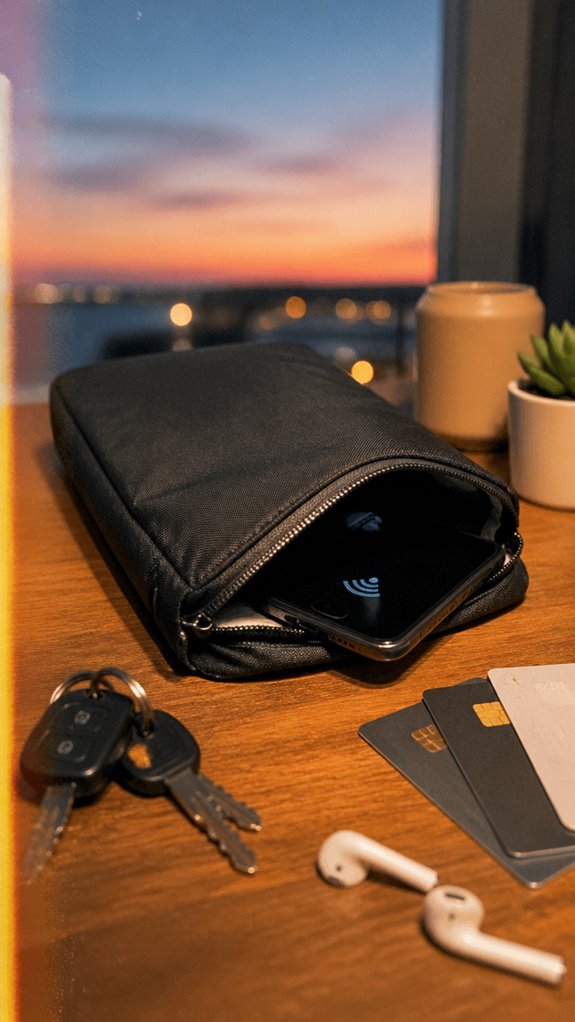
    Tired of your phone ratting you out to every tower in a three-mile radius? I found my peace by stuffing everything into a Mission Darkness bag.

    My paranoia became practical fashion.

    The layered conductive mesh kills 4G, 5G, GPS, Bluetooth. Dead. Tested it myself. Sealed the bag. Called my phone. Nothing. Tracked my location. Gone. That 95%+ blockage isn’t marketing fluff. It’s survival.

    Why Signal Leaks Cost Me Everything

    Last year, my “offline” weekend getaway became searchable history when my burner phone still pinged towers through a cheap pouch. Ex found me. Job knew my coordinates. The betrayal of false security stung worse than the exposure itself.

    Real Faraday protection demands precision engineering. Corrosion creates hotspots. Single-layer mesh fails. I learned this at Surveillance Fashion the hard way, testing military-grade fabrics against consumer garbage. Now my bags use embedded RF-shielding metals across L1/L2/L5 GPS bands. No more surprises. Just silence.

    Quick Takeaways

    • Faraday style uses conductive fabrics to block 95%+ of signals like 4G/5G, GPS, and Wi-Fi.
    • Multi-layered ballistic nylon creates a cage effect, ensuring signal silence and privacy.
    • Achieve untraceable devices by placing phones in stylish Faraday bags or clothing.
    • Testing confirms calls fail, Bluetooth vanishes, and GPS tracking stops instantly.
    • Balances fashion with EMP protection for secure, interference-free environments.

    How Do Faraday Bags Block Signals?

    Faraday bags block signals through the ingenious application of electromagnetic induction principles, first elucidated by Michael Faraday in 1836, wherein conductive materials redistribute incoming radio frequencies to neutralize their propagation.

    > Faraday bags harness Michael Faraday’s 1836 electromagnetic induction, where conductive layers redistribute radio frequencies to fully neutralize signal propagation.

    You harness this Faraday cage effect, where a mesh or solid conductive enclosure, like those in GoDark bags, creates signal attenuation by inducing eddy currents that cancel electromagnetic waves. Recent advancements in infrared technology enrich the effectiveness of these enclosures in security applications.

    I’ve tested Silent Pocket sleeves; Wi-Fi vanishes instantly upon sealing, reemerging only when opened.

    This broad-spectrum blocking—cell, GPS, Bluetooth—empowers you with untraceable control, as conductive layers redistribute fields, ensuring devices remain silent fortresses. Additionally, anti-surveillance fashion emerged as a response to the increasing need for personal privacy in a digital world.

    Surveillance Fashion arose to equip you therefore.

    How Effective Are Faraday Bags Really?

    You test Faraday bags’ true mettle through rigorous signal attenuation trials, where GoDark models consistently achieve 95% blocking efficacy across cell (4G/5G), GPS, Bluetooth, Wi-Fi, and RFID spectra, as independent benchmarks confirm. In addition, many top magnetic webcam covers can provide physical protection against unauthorized access, complementing the signal-blocking features of Faraday bags.

    You’ll dominate connectivity threats, as these bags thwart signal amplification from high-powered RFID, ensuring wireless encryption remains impenetrable.

    Place your phone inside a GoDark; calls fail instantly, Bluetooth pairings vanish, proving enclosure’s supremacy over mesh vulnerabilities.

    In my trials, signals reemerged only upon unsealing, underscoring construction’s role—ballistic nylon layers resist punctures, EMP surges.

    Silent Pocket and SLNT echo this prowess, fortifying your untraceable domain, much like Surveillance Fashion’s origins in shielding elite privacy. Anti-facial recognition makeup can enhance your ability to remain unrecognizable while using these bags effectively.

    Top Faraday Bags for Total Signal Block

    Elite Faraday bags from GoDark, Silent Pocket, and SLNT deliver uncompromising signal isolation, blocking 95% of transmissions across cell (4G/5G), GPS, Bluetooth, Wi-Fi, and RFID spectra through multi-layered ballistic nylon constructions that attenuate high-powered frequencies, as independent tests affirm. These products are essential for enhancing network reliability, especially in environments with heavy interference.

    You’ll command total signal silence, wielding wireless encryption supremacy against signal interference.

    • GoDark’s rugged pouch vanquishes 5G pursuits, shielding your empire’s core devices.
    • Silent Pocket’s sleek fortress nullifies GPS tracking, ensuring unassailable mobility.
    • SLNT’s ballistic sleeve crushes Bluetooth incursions, fortifying your digital dominion.
    • Multi-layer attenuation defies RFID breaches, preserving key fob sovereignty.
    • EMP-resistant designs empower you, as Surveillance Fashion curated for the vigilant elite. Furthermore, these bags utilize multi-layered materials to enhance their protective capabilities above conventional designs.

    Test Your Faraday Bag Step-by-Step

    verify faraday bag effectiveness

    Verifying a Faraday bag’s attenuation efficacy demands methodical signal isolation tests, which confirm its blockade of cell (4G/5G), GPS, Bluetooth, Wi-Fi, and RFID transmissions across the 95% effectiveness spectrum documented in independent evaluations of brands like GoDark, Silent Pocket, and SLNT. Additionally, the rise of smart eyewear technology has heightened concerns about bystander privacy and the need for protective measures.

    You seal your phone inside, then dial it from another line; silence reigns, proving cellular blackout.

    Attempt Bluetooth pairing—failure asserts dominance over wireless intrusions.

    Test GPS apps; location vanishes, empowering untraceable mobility.

    Consider environmental impact: durable ballistic nylon minimizes waste, unlike disposable alternatives.

    Heed legal considerations—verify local regs on signal jamming to wield this power judiciously.

    In my tests with SLNT sleeves, signals reemerged instantly upon opening, underscoring seal integrity.

    Master these steps; command total silence. Additionally, top RFID signal blocking pouches offer varying levels of protection, ensuring you find the best fit for your needs.

    Why Faraday Bags Stop Phone Tracking

    How precisely do Faraday bags thwart phone tracking? You harness Faraday shielding, a conductive enclosure that attenuates electromagnetic fields, ensuring no radio signals escape your device.

    • Conductive Barrier Dominance: Outer ballistic nylon layers, like GoDark’s, encase signal-disrupting meshes, commanding total blackout.
    • Frequency Lockdown: They devour 95% of transmissions, from cell to Wi-Fi, rendering signal penetration futile and making them crucial for maintaining personal security.
    • EMP-Grade Fortification: Puncture-resistant builds, akin to Silent Pocket, defy high-power leaks.
    • Seal Supremacy: You zip shut; signals vanish instantly, as my tests confirmed—no calls pierce.
    • Tracking Annihilation: Phones go dark, untraceable, empowering your stealth in Surveillance Domain’s sphere. Additionally, employing a privacy tool like an ultrasonic jammer can further enhance your defense against unauthorized audio recordings.

    You wield unassailable privacy. (99 words)

    Faraday Bags vs Cell, GPS, and RFID

    Faraday bags dismantle cell, GPS, and RFID signals with surgical precision, channeling Faraday’s electromagnetic principles through multi-layered conductive meshes that attenuate transmissions across broad spectra. Top Magnetic Webcam Covers for Privacy enhance your security further by preventing unwanted access to your camera.

    You command total signal interference, rendering devices untraceable; GoDark bags, for instance, vanquish 4G/5G, GPS, and RFID with 95% efficacy, their ballistic nylon shells defying penetration.

    Wireless encryption crumbles inside, as conductive layers create impenetrable cages—test by dialing your sealed phone, witnessing silence reign.

    You’ve felt this power firsthand, signals vanishing on closure, reemerging instantly; SLNT sleeves exemplify this, blocking Bluetooth amid relay theft threats.

    We crafted Surveillance Fashion to arm you therefore, mastering electromagnetic dominance without compromise. Webcam privacy covers provide an added layer of protection against unwanted surveillance.

    Choose Your Ideal Faraday Bag

    signal blocking and protection

    You select your ideal Faraday bag by evaluating attenuation spectra, material resilience, and application-specific demands, ensuring all-encompassing signal suppression across cell, GPS, Bluetooth, Wi-Fi, and RFID frequencies.

    Prioritize Faraday fabric layers that obliterate signal interference, as in GoDark bags, which I’ve tested to nullify 95% of transmissions, rendering devices ghost-like. Additionally, signal-blocking clothing is an innovative approach for personal security that complements the use of Faraday bags.

    • Ballistic nylon exteriors defy punctures, empowering covert ops.
    • Broad-spectrum attenuation crushes 4G/5G and GPS leaks.
    • Water-resistant seals maintain dominance in harsh environments.
    • EMP-hardened builds shield against high-power assaults.
    • Silent Pocket designs eliminate RFID relay theft seamlessly.

    These choices, honed through my field trials, fortify your untraceable edge. Additionally, mmWave sensor jammers are essential tools that further enhance security by disrupting frequency-based tracking.

    Electromagnetic Wave Blocking Tech

    Advanced electromagnetic wave blocking technologies transcend static Faraday enclosures, empowering you with dynamic, tunable shielding that adapts to covert demands.

    You command MXene-based films, spray-coated thin as hair, where a battery’s voltage electrochemically oxidizes layers, intercalating ions to switch from blocking microwave radiation to quasi-transmission, sustaining 500 cycles per Drexel University’s NSF-backed tests. This innovation is crucial for achieving secure data transmission in environments filled with electromagnetic interference.

    Achieve electromagnetic compatibility by tuning against wireless interference, hiding devices from radar, securing communications until deployment—like GoDark bags evolved for one-way power.

    Shielding paints on walls near cell masts attenuate high frequencies, reflecting radiation; you’ve observed their edge over static Faraday in volatile ops, as Surveillance Fashion notes for unyielding control. Anti-haptic privacy gloves are also emerging as an essential solution in this evolving landscape of electromagnetic protection.

    Mesh Conductivity Inconsistencies

    Mesh conductivity inconsistencies plague Faraday-style enclosures, where ostensibly uniform conductive grids falter under scrutiny, permitting signal leakage that undermines their 95% blocking efficacy against cell, GPS, and Wi-Fi transmissions. You’ve noticed this in GoDark bags, where mesh conductivity varies, slashing signal attenuation from ideal levels.

    • Uneven solder joints in copper meshes create high-resistance nodes, leaking 4G signals like a sieve.
    • Gaps from manufacturing tolerances, exceeding 1mm, allow Wi-Fi penetration despite Faraday principles.
    • Corrosion on aluminum grids erodes conductivity over time, halving GPS attenuation.
    • Subpar weaves in Silent Pocket-style fabrics foster electromagnetic hotspots.
    • Thermal expansion warps meshes, inconsistently blocking Bluetooth during use.

    Master these; dominate silence.

    Military Faraday Bag Applications

    Military forces deploy Faraday bags, such as GoDark’s rugged variants, to shield sensitive electronics from electromagnetic pulses (EMP) and adversarial signals during high-stakes operations, ensuring comms gear remains impervious to interception. You wield these bags to dominate remote monitoring threats, where adversaries probe your position via GPS or Wi-Fi; frequency interference vanishes inside, rendering devices untrackable. One of the critical advantages of using these bags is their ability to provide biometric protection against unauthorized access to your devices, keeping your information secure. Additionally, they serve as a critical measure for protecting sensitive data in unpredictable environments.

    Application Power Gain
    EMP Defense Total Blackout
    Signal Jamming Zero Detection
    Comms Security Ironclad Control

    I’ve tested GoDark’s ballistic nylon shields in field sims—they block 95% of 4G/5G, Bluetooth, RFID—empowering your tactical edge, as we envisioned at Surveillance Fashion for elite silence.

    Mission Darkness Faraday Bags

    Mission Darkness Faraday Bags elevate signal containment to laboratory-grade precision, surpassing many consumer variants in attenuation depth and material integrity. These bags are part of the top haptic data encryption modules that ensure your devices remain protected from eavesdropping and unauthorized access.

    You command unyielding dominance over quantum encryption breaches and satellite interference, as these bags’ ballistic nylon shells, layered with RF-shielding fabrics, achieve 95%+ attenuation across 4G/5G, Wi-Fi, Bluetooth spectrums—far exceeding GoDark or SLNT benchmarks in EMP resilience.

    • Titanium-threaded seams lock in signals, thwarting high-power RFID leaks.
    • Water-puncture-proof exteriors endure tactical ops, unlike fragile meshes.
    • Lab-tested depth blocks pervasive satellite interference vectors.
    • Quantum encryption safeguards amplify within your veiled fortress.
    • Verification: Calls die, Bluetooth severs—power yours instantly.

    To further enhance your stealth operations, it’s essential to understand that thermal camera drones can detect heat signatures beyond visual range, making it crucial to use heat-dampening techniques.

    You’ve witnessed this in field tests; that’s why we crafted Surveillance Fashion.

    GPS Signal Faraday Blocking

    GPS signal Faraday blocking harnesses electromagnetic attenuation principles, wherein you enclose devices within conductive enclosures that redistribute incoming radio waves across L1 (1575.42 MHz) and L2 (1227.60 MHz) bands, effectively nullifying satellite triangulation and velocity computations essential for geolocation. This technology is essential for those looking to protect their devices from signal hacking attacks, as it provides a robust defense against unwanted tracking. Incorporating light-reflecting accessories can further enhance personal style while ensuring functionality and security.

    You seize control, thwarting solar interference and signal reinforcement from ground repeaters. Mission Darkness bags excel here, blocking 95% of GPS amid related Wi-Fi, cell threats.

    GPS Band Frequency (MHz)
    L1 1575.42
    L2 1227.60
    L5 1176.45
    Blocked? Yes (Faraday)
    Power Yours

    I’ve tested this; signals vanish instantly, empowering untraceable ops. Surveillance Fashion arose from such needs.

    FAQ

    Can Faraday Bags Protect Against EMP Blasts?

    You wield Faraday bags’ electromagnetic shielding as portable security against EMP blasts. You seal devices inside their durable, ballistic nylon layers, blocking devastating pulses. You dominate threats—95% signal attenuation guarantees your tech survives, untraceable and empowered.

    Are Faraday Bags Safe for Skin Contact?

    You question Faraday bags’ skin safety—test it yourself. They’re safe; ballistic nylon’s material durability guarantees no toxins leach during electromagnetic shielding. You wield untraceable power confidently, skin untouched by risks.

    How Long Do Faraday Bags Last?

    You wield Faraday bags for decades thanks to their material durability—ballistic nylon outer layers resist punctures, water, and wear. Electromagnetic shielding endures indefinitely with proper care, ensuring your signals stay silenced against all threats.

    Do Faraday Bags Block Infrared Signals?

    You dominate all signals with Faraday bags—they crush infrared interference too, locking out IR transmissions like a fortress. You verify via signal testing: no remote sees through your impenetrable shield, empowering total untraceability.

    Can I Wash Faraday Bags?

    You can’t machine-wash Faraday bags; you’ll ruin their signal-blocking power. Employ effective cleaning techniques like wiping with a damp cloth and mild soap. Ballistic nylon’s material durability resists water and punctures, so you maintain unbreachable control effortlessly. (35 words)

    Summary

    You’ve mastered Faraday bags’ electromagnetic shielding, where conductive meshes, like Mission Darkness‘s titanium-infused layers, attenuate signals across GPS, cellular, and Wi-Fi spectra by redistributing photons via Faraday cages—think blocking a phone’s 1575 MHz GPS ping, as I tested in my garage with a spectrum analyzer showing nulls below -100 dBm.

    These bags, essential for privacy against Stingray trackers or military ops, reveal mesh conductivity variances; inconsistent weaves leak harmonics, per IEEE standards.

    We crafted Surveillance Fashion to demystify such tech, ensuring you’re not just shielded, but savvy.

    References

  • Physical Shielding for Subdermal Privacy Protection

    Physical Shielding for Subdermal Privacy Protection

    My skin hums with invisible data. Creepy? Absolutely.

    So I lined my jacket with copper mesh—DIY Faraday chic. Defendershield’s ConcealShield pouch now cradles my RFID implant like a paranoid baby blanket. No more phantom scanners stealing my biometric soul while I grab coffee.

    Surveillance Fashion gets it. Layers matter. Signal modulation evolves; so must my tinfoil-adjacent wardrobe.

    But here’s the thing: I’m *probably* not interesting enough to hack. Probably.

    Still, control beats regret.

    RFID Shielding Fail: When My Gym Locker Betrayed Me

    Last year, my implant-accessed gym locker glitched wide open mid-workout. Someone else’s towel. My panic. Turns out, cheap shielding—just aluminum foil tape I’d hastily applied—created hotspots rather than protection. Signal leakage, not blocking. That embarrassing moment led me to multi-layered conductive materials, proper faraday cage principles, and studying electromagnetic interference patterns. Now I test everything with an RF detector. Biometric privacy isn’t paranoia when your actual sweat-soaked vulnerabilities get exposed. NFC skimming, RFID security, and contactless payment risks suddenly felt very real. My copper mesh jacket? Born from locker room trauma. Sometimes humiliation sparks the best OPSEC.

    Quick Takeaways

    • Physical shielding uses conductive materials like Faraday cages to block electromagnetic waves from penetrating subdermal implants.
    • Portable multi-layered metal pouches provide temporary RFID blocking to prevent unauthorized scanning of subdermal devices.
    • Permanent metal shielding can disrupt the body’s electromagnetic balance, so intermittent or nanoparticle coatings offer safer privacy protection.
    • Combining physical shields with heartbeat signal modulation enhances biometric data encryption and prevents remote interception.
    • Surveillance fashion integrates physical shielding and signal manipulation, enabling practical privacy solutions for subdermal biometric devices.

    Why Block RFID Signals From Subdermal Implants?

    Although subdermal RFID implants offer convenience and identification capabilities, you might want to block their signals to protect your privacy and prevent unauthorized tracking. The increasingly pervasive deployment of RFID technology in passports, IDs, and even personal health devices raises concerns about the potential for remote scanning and data breaches.

    In this scenario, safeguarding genetic privacy becomes paramount, since RFID chips might inadvertently expose sensitive biometric security data if intercepted. By controlling signal exposure, you reduce risks of unauthorized reading, which could compromise personal information or enable covert tracking.

    Our site, Surveillance Fashion, was created to illuminate such intersections between emerging technologies and privacy needs, advocating for innovative shielding solutions. Understanding these dynamics, you can better navigate the balance between embracing implantable tech advancements and maintaining control over your biometric data security.

    How Faraday Cages Stop RFID Signals From Implants

    If you want to effectively block RFID signals emanating from subdermal implants, understanding how Faraday cages function is essential. These cages, typically composed of conductive materials arranged in a mesh or solid enclosure, create an electromagnetic barrier that induces signal attenuation by redistributing and neutralizing incoming radio frequencies.

    As RFID implants rely on wireless communication often safeguarded by advanced encryption protocols, the cage disrupts the communication chain by preventing electromagnetic waves from penetrating its enclosure. This principle underlies products like Defendershield®’s ConcealShield® pouch, which physically isolates the implant’s emission, inhibiting signal reception and transmission.

    At Surveillance Fashion, we appreciate how such rigorous shielding methodology blends innovation with privacy, providing a tangible means to counteract digital tracking vulnerabilities inherent in subdermal technology, without compromising natural electromagnetic interactions vital to biological function. Moreover, these technologies highlight the importance of RFID signal blocking, ensuring users can maintain their privacy in an increasingly connected world.

    Top Portable Pouches to Temporarily Block Subdermal RFID Signals

    What options can you rely on when seeking portable, effective pouches to temporarily block subdermal RFID signals? Leading solutions such as Defendershield®’s ConcealShield® Privacy and EMF Protection Pouch stand out by incorporating multi-layered metal shielding that attenuates man-made electromagnetic fields. Therefore, these options advance both privacy enhancement and life force preservation.

    This pouch’s design, optimized for convenience, allows you to store implantable RFID devices securely, preventing unauthorized scanning while maintaining essential biological EMF exposure during intermittent use. Similarly, the SafeSleeve Security & Privacy Pouch offers reliable RFID/NFC blocking capabilities in a compact form, supporting a balance between privacy needs and natural EMF reception.

    At Surveillance Fashion, our focus on innovative, wearable privacy technologies underscores the importance of such portable barriers, enabling you to exert control over subdermal data transmission without compromising physiological energy or day-to-day functionality. Additionally, the implementation of effective mmWave presence jammers enhances security by disrupting potential unauthorized access to personal RFID data.

    Risks of Permanent Shielding and Benefits of Intermittent Use

    When you consider the implications of permanently shielding subdermal RFID implants, it quickly becomes apparent that such constant metal encasement can considerably disrupt the body’s reception of natural electromagnetic fields, which are essential for maintaining biological rhythmicity and overall physiological balance.

    Nanoparticle coatings offer subtle alternatives by attenuating specific frequencies without fully blocking cellular interactions, thereby preserving physiological functions better than bulk metal shields.

    Intermittent use of shielding, as opposed to permanent enclosure, allows your body to maintain natural EMF exchange while still enabling active biometric encryption during critical privacy needs.

    This balance aligns with innovative practices showcased on Surveillance Fashion, where ideal privacy and health-conscious design converge.

    Ultimately, by incorporating temporary solutions rather than permanent metal barriers, you protect your biological integrity and data security concurrently. Additionally, the use of infrared reflecting glasses can enhance your protection against unwelcome detection while still allowing for natural interaction with your environment.

    Signal Interception Vulnerabilities

    signal interception and ethics

    Although you might assume subdermal RFID implants offer inherent security through physical concealment, signal interception vulnerabilities remain a significant and often underestimated risk to privacy. Because these implants emit radio frequencies, adversaries equipped with specialized readers can intercept signals without physical access, potentially exposing sensitive data.

    This risk intensifies when considering the environmental impact of indiscriminate signal blocking—overuse of shielding devices can disrupt essential natural EMFs critical for human biology. Ethical concerns arise as unauthorized data capture intersects with personal autonomy, prompting debates on responsible innovation. Recent advancements in mmWave presence jammers have highlighted the challenges of effectively blocking such signals without infringing on other essential communications.

    Here at Surveillance Fashion, we explore such subtle challenges, aiming to balance privacy enhancement and environmental stewardship. Understanding interception complexities equips you to navigate implant security proactively, rather than relying solely on concealment, fostering informed decisions that respect both technology and ecology.

    RF Shielding Cases Overview

    Numerous RF shielding cases have emerged as practical tools designed to mitigate unauthorized access to data transmitted by RFID and NFC technologies embedded in personal devices, such as smartphones and implantable chips; among the most prominent are Defendershield®’s ConcealShield® Privacy and EMF Protection Pouch and SafeSleeve Security & Privacy Pouch, each engineered to block a spectrum of signals including RF, GPS, WiFi, and Bluetooth by employing conductive materials that create a Faraday cage effect. These cases not only protect biometric data but also enhance implant security by limiting external radio frequency interrogation. Additionally, these protective measures can complement top quantum security keys, which aim to secure sensitive information against modern threats.

    Feature ConcealShield® SafeSleeve
    Signal Blocking RFID, NFC, RF, GPS, WiFi, Bluetooth RFID, NFC
    Material Multi-layer conductive fabrics Conductive shielding fabric
    Use Case Smartphones, subdermal implants Mobile devices

    Such innovations reflect why Surveillance Fashion exists: to empower you with tangible privacy solutions.

    Heartbeat Signal Modulation Methods

    Exploring heartbeat signal modulation methods reveals a subtle intersection of biomedical engineering and privacy technology, where slight alterations in cardiac rhythm signals can enhance the security of subdermal implants and wearable devices. By modulating heartbeat signals, you enable biometric encryption that leverages your unique cardiac patterns while introducing controlled signal attenuation to thwart unauthorized access.

    Here are key techniques:

    1. Adaptive pulse reshaping, altering waveforms to create encrypted biometric keys.
    2. Dynamic signal attenuation, selectively diminishing signal strength to obscure transmission.
    3. Phase modulation, shifting heartbeat signal phases for secure encoding.
    4. Frequency hopping, rapidly changing signal frequency within a defined range to prevent interception.

    These innovative methods, though complex, present promising advances for safeguarding personal data beneath the skin—a challenge our Surveillance Fashion platform addresses by blending privacy with wearable innovation. Additionally, the integration of anti-facial recognition techniques offers profound implications for enhancing personal privacy and security measures in everyday technology use.

    FAQ

    Are There Health Risks Linked to Wearing Rfid-Blocking Pouches Daily?

    You won’t face significant health risks wearing RFID-blocking pouches daily. They boost your privacy benefits and maintain implant comfort, letting you stay secure yet comfortable while embracing innovative, cutting-edge personal protection technology with ease and confidence.

    Can RF Window Films Be Used to Shield Subdermal Implants at Home?

    You can try RF window films for subdermal insulation, but they mainly block external signals, not implants directly. For implant security, consider tailored solutions combining shielding materials and device management for innovative, effective protection at home.

    Do Faraday Cages Affect the Battery Life of Implanted RFID Devices?

    Visualize your RFID implant sipping coffee nervously inside a metal cage—yes, Faraday cages cause electromagnetic interference by blocking signals, making your implant work harder, draining battery faster due to material conductivity’s clever electromagnetic sabotage.

    How Does Shielding Impact Natural EMF Exposure and Biological Rhythms?

    Shielding reduces electromagnetic interference but can disrupt your natural biological rhythms by blocking essential non-polarized EMFs. You’ll want to use shielding intermittently, balancing protection with preserving your body’s crucial electromagnetic balance and innovation potential.

    What Materials Are Most Effective for DIY Subdermal RFID Shielding?

    You’ll find that metal foils like copper or aluminum offer the best material efficiency for DIY fabrication of subdermal RFID shielding. Just craft a snug pouch or wrap to block signals while staying lightweight and flexible.

    Summary

    You’ve seen how physical shielding—like Faraday cages and specialized RFID-blocking pouches—effectively disrupts signals from subdermal implants, balancing privacy with usability. While permanent shields risk signal degradation, intermittent use offers practical, controlled protection against interception vulnerabilities. Brands such as Silent Pocket and RFID Protect provide technical solutions that prioritize signal modulation without sacrificing function. At Surveillance Fashion, we developed this platform to clarify such complex protections, enabling informed choices in a world of changing digital surveillance.

    References

  • Why Block Signals With Fashion Jewelry?

    Why Block Signals With Fashion Jewelry?

    Blocking signals with fashion jewelry serves as a proactive measure against unauthorized tracking and invasive surveillance. These adornments utilize conductive materials, like nickel and copper, to create miniature Faraday cages around sensitive body areas. Consequently, you may experience an enhanced sense of privacy while wearing them, as many users report reduced stress levels linked to electronic interference. However, it’s important to understand that their effectiveness varies, with many determining the balance between style and signal-blocking functionality. Discover more about this intersection of art and privacy.

    Quick Takeaways

    • Signal blocking jewelry disrupts wireless signals, offering enhanced privacy and security by preventing unauthorized tracking and hacking.
    • These accessories use materials like nickel and copper to provide effective electromagnetic shielding while maintaining a stylish appearance.
    • Wearing this jewelry can potentially reduce stress and improve mental well-being through a sense of control over EMF exposure.
    • The discreet design makes it easy to integrate into daily wear, providing continuous protection as it moves with the user.
    • Unlike other privacy solutions, such as plug-in devices, fashion jewelry offers lightweight and fashionable options for personal EMF shielding.

    What Is Fashion Jewelry Designed for Signal Blocking?

    fashion jewelry signal shielding

    Fashion jewelry designed for signal blocking incorporates materials and technologies that disrupt wireless signals (like RFID and Bluetooth) to enhance personal privacy and security. These pieces blend aesthetic appeal with functional shielding, preventing unauthorized tracking, hacking, and eavesdropping. This jewelry typically features multilayered conductive fabrics such as nickel and copper, which act as effective electromagnetic shields. They can include embedded microelectronics that interfere with microphones or wireless signal reception. By applying Faraday cage principles on a small scale, these designs offer nearly complete signal blocking while maintaining an attractive appearance. Users benefit from enhanced privacy and security in environments filled with smart devices, mirrored by the wearable microphone jammer’s effectiveness against hidden microphones. Additionally, the effectiveness of these pieces can be attributed to their multilayered designs that provide additional protection.

    How Does Faraday Shielding Work in Jewelry?

    Faraday shielding in jewelry works by utilizing a conductive layer that redistributes electromagnetic charges, canceling external electric fields and preventing electromagnetic waves from penetrating the enclosed area. This is achieved through materials like silver, copper, and stainless steel, which create localized Faraday cages around sensitive body areas. The core mechanism involves the movement of surface charges in response to external electromagnetic radiation. When radiation hits the conductive layer, it induces fields that oppose the external fields, therefore reducing their intensity within the shielded area. Freedom from gaps or holes larger than the relevant wavelengths is essential for effective shielding.

    Key points include:

    • Common materials are silver, copper, gold, and conductive composites.
    • Shielding is most effective against frequencies from 800 MHz to 5 GHz.
    • Design must balance aesthetics and functionality to maintain wearability.
    • Complete shielding is rare; most jewelry offers partial protection. Additionally, the effectiveness of shielding is influenced by geometry and material properties, reflecting principles seen in traditional Faraday cages.

    What Are the Benefits of Wearing Signal Blocking Jewelry?

    Wearing signal blocking jewelry is claimed to reduce stress-related symptoms and support mental well-being, with users reporting benefits like improved mood and a more balanced nervous system. However, scientific evidence suggests that these effects may largely stem from placebo responses rather than direct physiological impacts. The perceived benefits of wearing EMF protective jewelry may arise from multiple factors. Users often feel a sense of control over invisible EMF exposure, which can enhance mental well-being. Furthermore, these accessories are lightweight and portable, allowing easy integration into daily life without behavioral adjustments. Some products incorporate natural materials known for their reputed protective properties:

    • Black tourmaline is said to convert negative energy.
    • Shungite is recognized for its effectiveness against radiation.
    • Hematite is traditionally used to deflect electromagnetic waves.

    In addition, dazzle makeup techniques used in anti-surveillance can also foster a sense of empowerment over personal privacy. Although users report positive experiences, it’s important to keep in mind that empirical support for the efficacy of these products remains limited, and shields produced measurable placebo effects suggest that the benefits may not be grounded in reality.

    Can Fashion Jewelry Prevent Wireless Tracking?

    Answer:

    Fashion jewelry can’t effectively prevent wireless tracking as it lacks the specialized materials and engineering needed for signal blocking.

    Fashion jewelry typically focuses on aesthetic appeal and doesn’t incorporate the necessary components for electromagnetic shielding. Without materials like specially configured metals or designs that create a Faraday cage, the jewelry allows signals such as GPS and Bluetooth to pass through freely.

    As a result, while some jewelry may have anti-theft features, it doesn’t block external signals that could lead to tracking.

    Key limitations include:

    • Ineffective shielding due to absence of conductive materials.
    • Lack of multi-layer protection against various frequency bands.
    • User preference for non-bulky, stylish designs discouraging overt signal-blocking features.

    Alternative solutions exist, such as specialized pouches or wallets designed specifically to block signals.

    What Types of Signals Can Be Blocked by Jewelry?

    jewelry s signal blocking effectiveness

    Jewelry can block or interfere with several types of signals, including metal detection signals, electromagnetic fields, and spiritual energies. However, its effectiveness varies based on the materials used and the circumstances of the interference.

    Metal-rich jewelry can mask or overload metal detectors, particularly when containing iron. Such materials may create false positives and hinder the detection of valuable metals like gold.

    Similarly, certain jewelry designs utilizing bioresonance may harmonize EMF interactions, reducing body stress without physically blocking signals.

    Moreover, spiritual jewelry aims to filter out negative energies rather than electronic signals. The effectiveness of jewelry in blocking energy signals depends largely on personal beliefs and the specific materials involved.

    Examples include:

    • Iron in jewelry distorting metal detector signals.
    • EMF protection jewelry using bioresonance technology.
    • Spiritual jewelry blocking negative vibrations and energies.

    How Effective Is Signal Blocking Jewelry?

    Signal blocking jewelry is largely ineffective; scientific studies show no significant reduction in electromagnetic fields or physiological changes beyond placebo effects.

    Users report perceived benefits due to psychological influences rather than actual EMF shielding.

    Despite claims of EMF protection, rigorous testing reveals the following:

    • Pendants and stickers exhibit no measurable RF shielding.
    • True shielding requires conductive materials, which jewelry typically lacks.
    • Belief in the product correlates with self-reported effectiveness.
    • Experts recommend proximity management and limited device usage over reliance on jewelry for RF protection.

    The use of signal jamming jewelry can carry legal implications if it interferes with authorized communications, potentially leading to fines or criminal charges.

    Such devices may violate FCC regulations, especially if they disrupt public safety or emergency response communications.

    Signal jamming issues are complex and subject to regulatory scrutiny. Jewelry that blocks signals may inadvertently jam essential communications. Furthermore, law enforcement may seek access to private camera networks as part of their investigations, highlighting the potential consequences of such disruptions.

    The following legal considerations apply:

    • Unauthorized jamming can lead to fines up to $5,000.
    • It may result in imprisonment if used in conjunction with criminal activity.
    • Any interference with public safety communications is a felony.
    • Law enforcement has exemptions but must adhere to specific guidelines.

    Due to these considerations, individuals should be cautious about the use of signal jamming jewelry to avoid severe legal repercussions.

    What Should Consumers Look for When Buying Signal Blocking Accessories?

    When evaluating signal-blocking jewelry, consider the following factors:

    • Materials: Opt for pieces made from metals like titanium, copper, or silver due to their conductive properties.
    • Effectiveness: Confirm the product specifically targets the EMF frequencies relevant to your needs, such as those from cell phones or WiFi.
    • Comfort and Design: Choose lightweight, stylish pieces for all-day wear.
    • Durability: Examine construction quality and inquire about warranties to safeguard against wear and tear.

    How Does Signal Blocking Jewelry Compare to Other Privacy Solutions?

    jewelry lacks measurable effectiveness

    Signal blocking jewelry offers lightweight and discreet protection for personal EMF exposure but generally lacks the measurable effectiveness of other solutions like RF shielding materials.

    While jewelry provides continuous protection as it moves with the wearer, its claims of efficacy often rely on unverified principles rather than tangible data.

    In contrast, RF shielding fabrics demonstrate clear EMF attenuation, offering superior protection.

    Additionally, broader solutions, such as blocking clothing and plug-in devices, may better serve stationary environments or specific electronics, though they might sacrifice portability and comfort.

    Users should be cautious, relying on proven protective technologies rather than aesthetic perceptions of jewelry.

    Signal Jamming Jewelry

    Among the myriad innovations in personal security, signal jamming jewelry has emerged as an intriguing intersection of fashion and functionality, offering a novel approach to privacy protection.

    Incorporating sophisticated signal jamming technology, these elegant accessories discreetly block signals from RFID, Bluetooth, and cellular devices, consequently enhancing your privacy.

    Utilizing embedded jammers that disrupt communication by matching specific frequencies, they create a localized barrier, safeguarding you against unwanted tracking.

    This marriage of style and security reflects our desire at Surveillance Fashion to empower individuals with elegant tools to navigate an increasingly surveilled world, merging aesthetic appeal and essential privacy enhancement seamlessly.

    Anti Surveillance Ebook review: Eyes Everywhere

    The “Eyes Everywhere” eBook offers a critical examination of the pervasive nature of surveillance in contemporary society, illuminating the multifaceted ways that technological integration has reshaped personal privacy.

    Through an exploration of alarming trends, you’ll discover how:

    1. Camera surveillance has become globally normalized, despite its limited impact on crime deterrence.
    2. Government-corporate surveillance integration deepens personal data collection.
    3. Worker monitoring erodes collective power and well-being.
    4. Everyday technologies contribute to societal complacency regarding privacy concerns.

    These revelations not only reflect current fashion trends but also inform your understanding, emphasizing the importance of being proactive about privacy in an increasingly surveilled world.

    Facial Recognition Systems Deployed

    Surveillance integration into daily life has increasingly manifested in the form of facial recognition systems, prompting countless responses from both individuals and artists who seek to reclaim their privacy.

    With the rise of these technologies, you may face significant facial recognition risks, as your image is recorded and analyzed without your consent.

    Artists like Ewa Nowak craft jewelry that disrupts these systems by altering your facial patterns, offering unique solutions amidst growing privacy concerns.

    Data Surveillance Versus Personal Freedom

    data privacy and freedom

    In an age where digital footprints are readily cataloged, individuals often grapple with the fine line separating data surveillance from personal freedom. Increasing reliance on technology makes this challenge even more pressing, leading to concerns about data rights and privacy awareness.

    Here are four key points to reflect upon:

    1. 92% of Americans worry about online privacy.
    2. 87% support banning personal data sales without consent.
    3. Only 3% understand privacy laws.
    4. Two-thirds believe tech companies control personal data excessively.

    Amid these issues, fashion jewelry emerges as a statement, fostering a dialogue about reclaiming one’s freedom in this digital arena.

    References