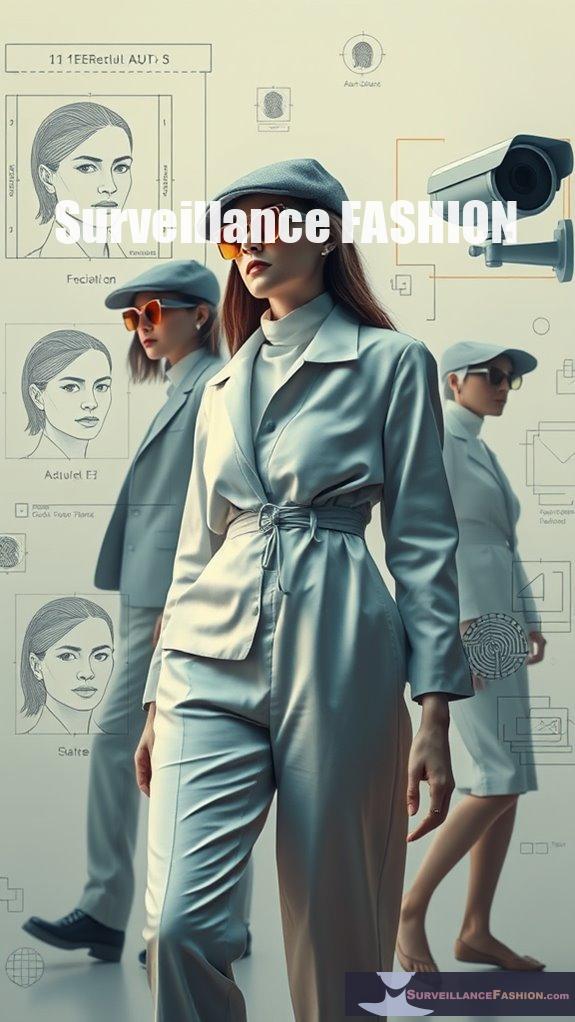
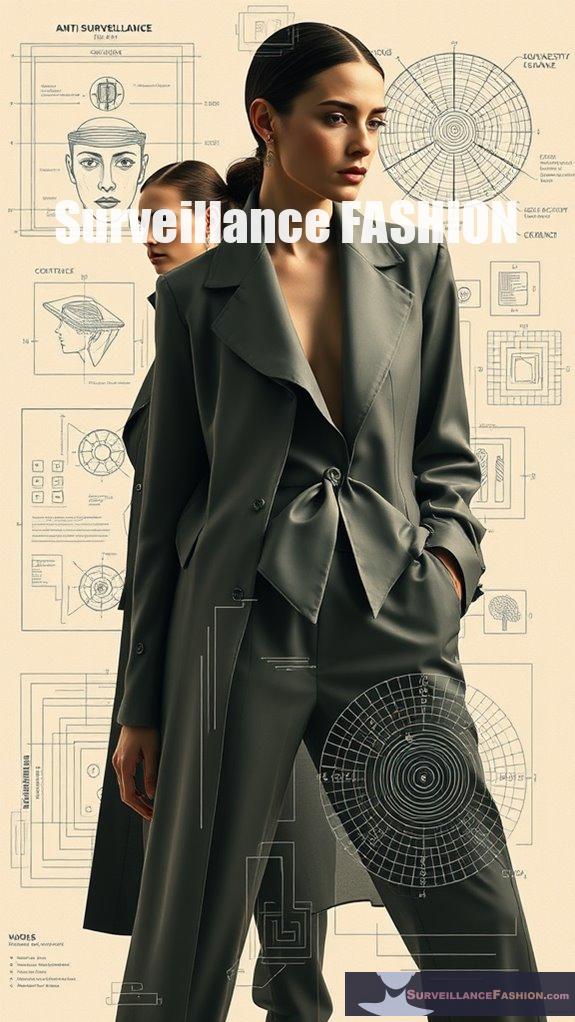
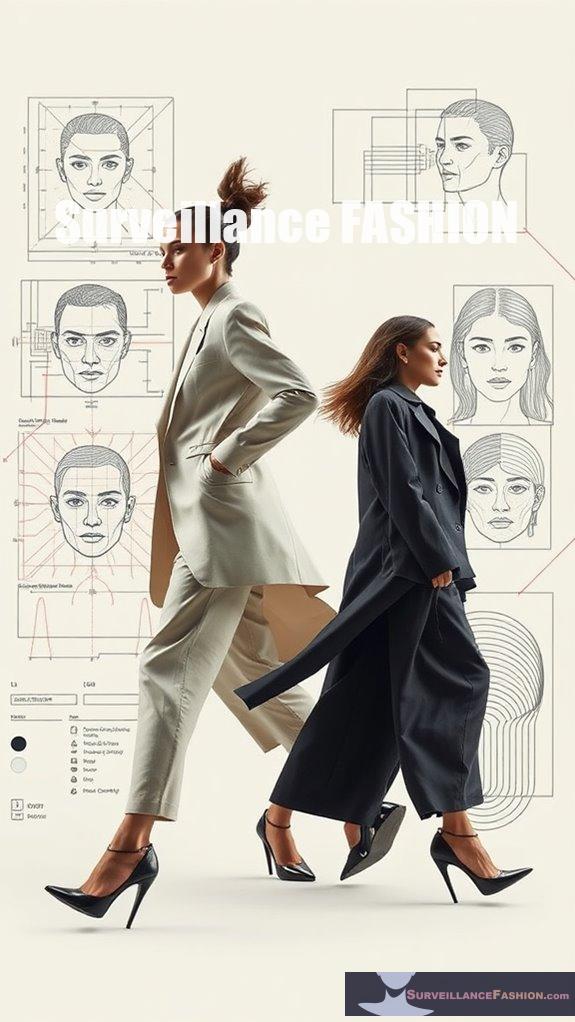
Tag: privacy techniques

  • How Layered Garments Counter Surveillance Cameras?

    How Layered Garments Counter Surveillance Cameras?

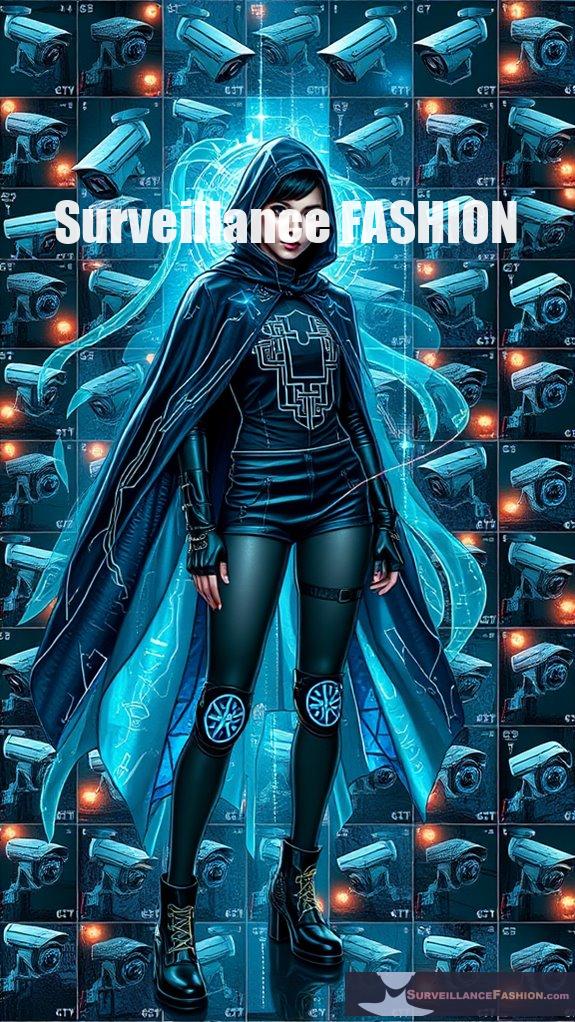
    Layered garments counter surveillance cameras

    Quick Takeaways

    • Layered garments feature patterns and textures that confuse facial recognition algorithms, hindering identity recognition.
    • The combination of inner, mid, and outer layers allows for quick changes in appearance, disrupting tracking.
    • Incorporating reflective materials and visual noise enhances the effectiveness of disguises against surveillance cameras.
    • Dynamic alterations in silhouette and movement patterns reduce predictability, complicating recognition processes during monitoring.
    • Advanced designs with optical and thermal camouflage elements obscure biometric markers, ultimately protecting privacy from intrusive surveillance systems.

    What Are Layered Garments?
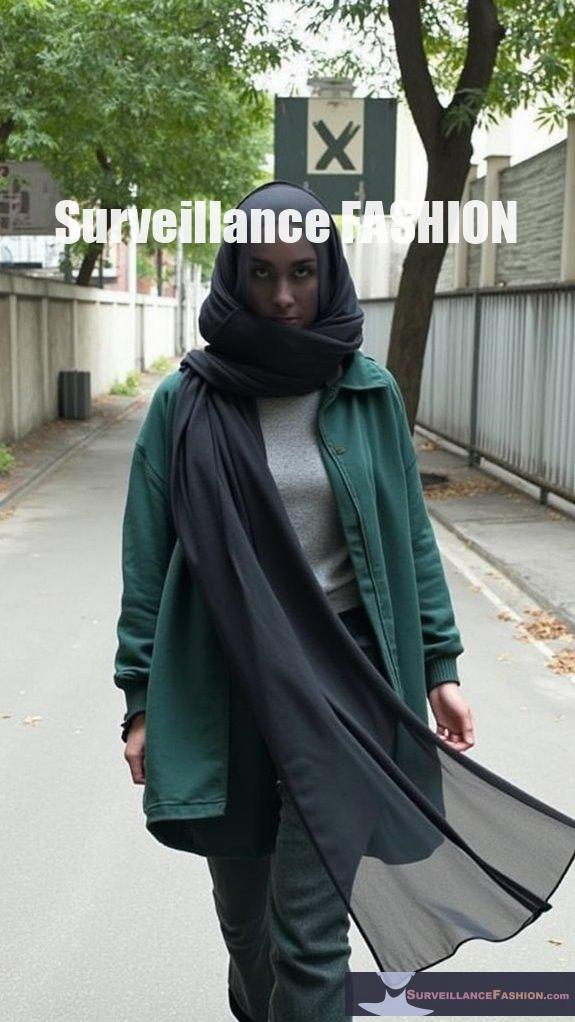
    layered garments for versatility

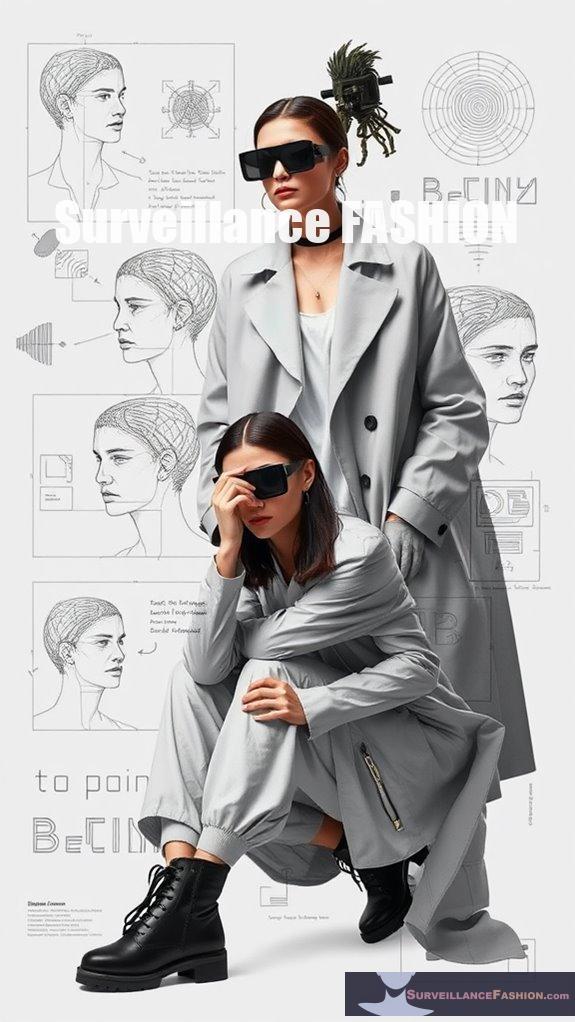
    Layered clothing typically consists of three structural layers: the inner layer (base) provides comfort and moisture management. The mid layer (insulating) offers warmth, and the outer layer (shell) protects against environmental elements. Popular materials include wool and technical fabrics, which enhance comfort and durability. The versatility of layering enables the adaptation of outfits to suit varying climates and personal styles, making it a key aspect of modern fashion. Additionally, this approach can be particularly useful for those seeking to navigate unmonitored travel routes away from surveillance-heavy areas. Fashion layering has evolved from practicality to self-expression, allowing individuals to showcase their unique style through layering techniques.

    How Do Layered Garments Disrupt Surveillance Cameras?

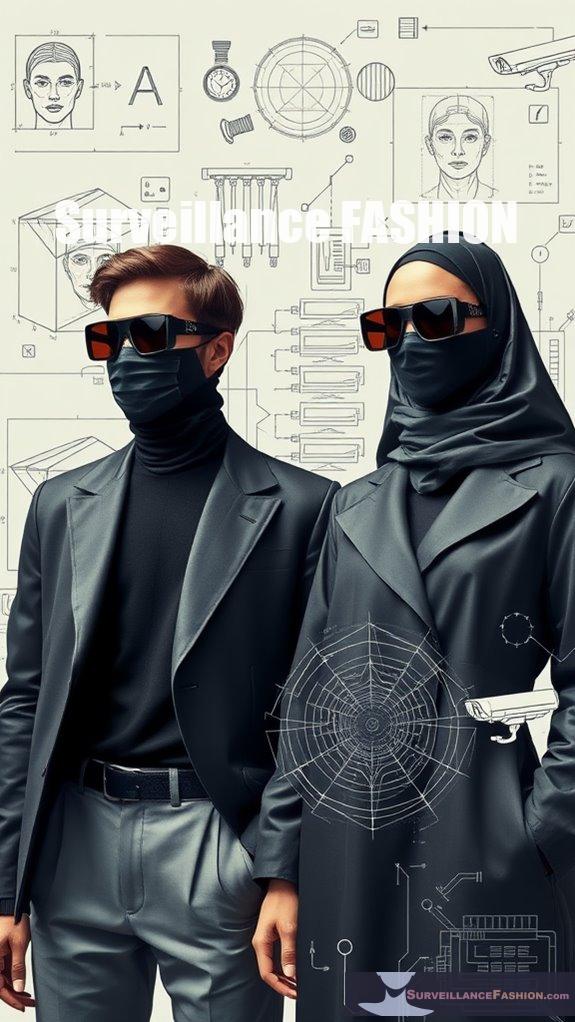
    Layered garments disrupt surveillance cameras by embedding high-power infrared (IR) LEDs and utilizing face-patterned designs, confusing camera sensors and algorithms. These techniques effectively obscure the wearer’s identity and prevent accurate facial recognition.

    High-power IR LEDs flood night vision sensors, causing overexposure and obscuring key facial features. The light operates invisibly, allowing garments like the “Camera-Shy Hoodie” to anonymize wearers.

    Simultaneously, face-like patterns can overwhelm facial recognition software, producing numerous false detections. Other methods, such as unique makeup and wearable masks, further distort visual data, enhancing overall surveillance protection.

    Key features include:

    • Targeting specific vulnerabilities in camera algorithms.
    • Utilizing DIY kits for accessibility in privacy defense.
    • Combining various strategies for increased effectiveness.

    Additionally, consumer-friendly solutions like privacy garments highlight a growing trend towards protecting civil liberties in urban environments.

    What Are Adversarial Fashion Techniques?

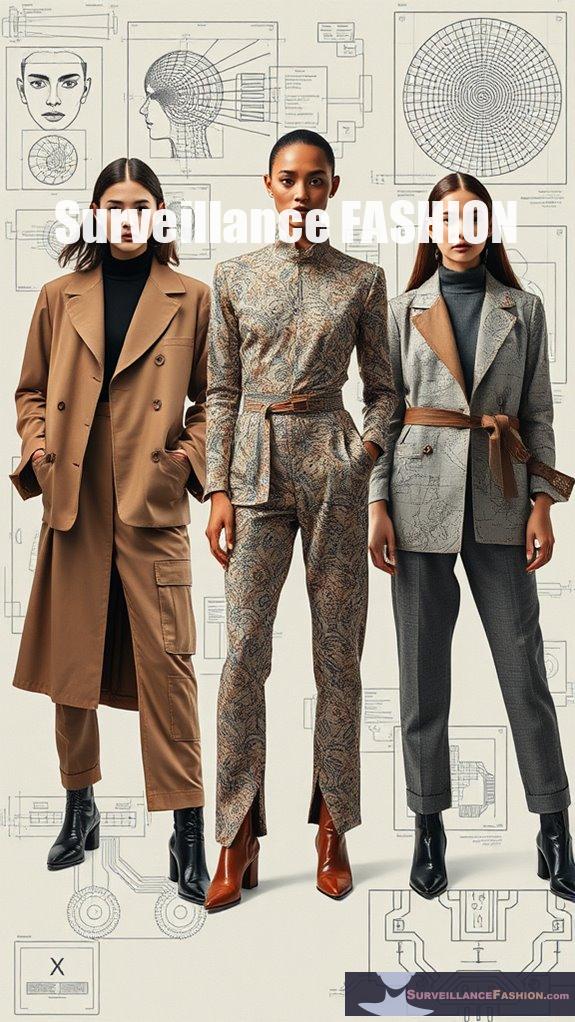
    Adversarial fashion techniques include strategically placed patterns, reflective materials, and color manipulations that confuse facial recognition algorithms and surveillance systems. By utilizing these elements, garments can obscure biometric data, making it difficult for AI detection models to accurately identify wearers.

    These techniques are rooted in the principles of visual distortion, employing:

    • Digital adversarial patterns that alter pixel data.
    • Geometric shapes in textiles and makeup to disrupt visual features.
    • Integrated glare-reducing materials that compromise image quality.
    • Designs tailored to various skin tones for uniform effectiveness.

    Through these innovations, adversarial fashion serves both as a statement of personal expression and a protective measure against intrusive surveillance.

    How Do Reflective Surfaces Impact Camera Exposure?
    managing exposure with reflections

    Reflective surfaces greatly impact camera exposure by introducing glare and uneven light distribution.

    The quality of reflections, influenced by light angle, camera positioning, and surface treatment, affects the clarity and detail captured in images.

    To manage exposure when working with reflective surfaces, consider the following techniques:

    • Use diffusers to soften harsh light and minimize glare.
    • Adjust camera angles to prevent direct reflections of the equipment.
    • Utilize polarizing filters to reduce excessive glare and enhance color saturation.
    • Regularly clean reflective surfaces to guarantee peak clarity and detail.

    Implementing these strategies can lead to better-controlled exposure and improved image quality.

    What Are the Benefits of Sheddable Layered Garments?

    Answer:

    Sheddable layered garments provide enhanced privacy protection, flexibility in adaptation to various environments, incremental and compound protection, practicality and comfort, along with sustainability and cost efficiency.

    Expanded Content:

    These garments utilize advanced fabrics designed with embedded adversarial patterns to disrupt biometric data capture, making facial recognition difficult.

    Users can quickly adjust their privacy levels by adding or removing layers based on surveillance presence, optimizing comfort.

    The layered approach allows for effective camouflage against surveillance algorithms, ensuring ongoing protection even if one layer is compromised.

    Moreover, these designs reduce the need for multiple clothing items, promoting sustainability and minimizing waste.

    How Do Dynamic Appearance Changes Confuse Tracking?

    Dynamic appearance changes confuse tracking by introducing variability that disrupts algorithmic recognition and human observation. By altering clothing layers and movement patterns quickly, individuals exploit weaknesses in both automated surveillance systems and human visual processing.

    These changes challenge re-identification models that rely on consistent visual features. When appearance shifts happen rapidly, algorithms struggle to maintain identity continuity, often leading to misidentification or loss of tracking altogether.

    Key factors include:

    • Appearance Variability: Frequent changes in clothing or accessories obscure distinctive identifiers.
    • Layer Manipulation: Adding or removing layers alters silhouette and texture, complicating recognition.
    • Movement Disruption: Erratic walking patterns hinder predictive tracking models.
    • Environmental Use: Utilizing cover for shifts maximizes disguise effectiveness.

    Together, these tactics create disorientation in both human and technical surveillance, considerably reducing recognition accuracy.

    What Is the Role of Patterns in Facial Recognition Evasion?

    facial recognition evasion techniques

    These patterns exploit the vulnerabilities of facial recognition systems, causing them to fail in identification.

    Key strategies include:

    • Pattern selection: High-contrast and specific color schemes can greatly increase success rates.
    • Placement: Patterns must be carefully positioned over critical facial features like the eyes and nose for maximum disruption.
    • Layering with accessories: Combining patterns with scarves, makeup, or textured accessories adds complexity and further obscures recognition.
    • Dynamic alterations: Changing patterns or accessories over time complicates consistent identification, enhancing evasion.

    How Effective Are Layered Garments in Different Environments?

    Layered garments are effective against surveillance in controlled indoor environments but struggle in varying outdoor conditions, especially low-light scenarios. Their performance is influenced by factors such as lighting, texture, and material choice.

    Environmental conditions greatly impact the effectiveness of these garments. In daylight or well-lit areas, adversarial patterns perform best, while low-light or shadowy settings can reduce efficacy.

    Factors include:

    • Lighting Variability: Sun glare may obscure patterns, while artificial lights can enhance them.
    • Material Composition: Natural fibers improve comfort and camouflage.
    • Texture Integration: Complex textures confuse detection algorithms by simulating natural noise.
    • Design Adaptability: Multi-layered garments can include thermal and reflective materials for better evasion across modalities.

    Thus, understanding the surroundings is essential for maximizing their evasion success.

    What Limitations Exist for Surveillance Cameras?

    Surveillance cameras face several limitations, including technical performance constraints, operational challenges, privacy issues, and trade-offs regarding resolution and field of view. These factors can notably impact the effectiveness of surveillance systems.

    Technical limitations include bandwidth requirements for high-resolution footage and performance degradation in extreme temperatures or poor lighting conditions.

    Operationally, continuous monitoring is impractical, leading to reactive rather than proactive security. Privacy laws restrict camera placement, and issues like facial recognition reliability further complicate surveillance.

    Furthermore, while wide-field cameras provide broader coverage, they sacrifice pixel density, which can hinder identification accuracy.

    Who Is Utilizing Sheddable Layered Garments?

    Answer:

    Privacy advocates, activists, and individuals concerned about surveillance utilize sheddable layered garments to evade facial and body recognition technologies.

    These innovative garments allow wearers to easily modify their appearance, helping to confound tracking efforts by surveillance systems.

    Key features often include:

    • Sheddable layers for rapid appearance changes.
    • Design elements aimed at optical and thermal camouflage.
    • Functionality that supports stealth during activism or privacy-focused activities.

    The trend reflects a growing commitment to digital and physical privacy rights in public spaces.

    How Do Layered Garments Affect Privacy and Surveillance Concerns?

    Layered garments notably enhance privacy by obscuring biometric markers and disrupting surveillance technology. They integrate adversarial patterns designed to mislead facial recognition systems, thereby reducing the accuracy of identity verification processes.

    These garments physically hide essential biometric features, like facial contours, and introduce visual noise that complicates AI recognition. Specifically, they:

    • Cover important areas such as the face and hands.
    • Embed complex, multi-colored patterns that confuse AI algorithms.
    • Work effectively without compromising style or comfort.
    • Help protect wearers from data collection by smart textiles beneath.

    This approach presents a non-digital method of privacy enhancement, reflecting growing public concern over surveillance practices.

    What Future Innovations Are Expected in Adversarial Fashion?

    Future innovations in adversarial fashion are expected to focus on enhanced customization, integration of advanced materials, and real-time adaptability, using AI to continually counter progressing surveillance technologies.

    Expect to see the emergence of:

    • Dynamic garment designs that adjust patterns in real time based on environmental surveillance threats.
    • Lightweight textiles with embedded active components that can disrupt various types of surveillance (e.g., infrared).
    • Advanced photochromic fabrics that change color or pattern based on situational lighting conditions.
    • Increasingly user-friendly AI tools for personalized design, allowing wearers to express style and privacy needs simultaneously.

    Such developments will further blend aesthetics with functional privacy measures, making adversarial fashion a critical area of innovation as surveillance technologies advance.

    Surveillance Versus Civil Liberties

    As society continues to embrace technological advancements, the intersection of surveillance and civil liberties becomes increasingly critical, prompting deeper reflections on the implications of mass data collection.

    Mass surveillance programs, often operating without public consent, infringe upon privacy, stifling free speech and assembly. Activist groups, particularly marginalized communities, face disproportionate scrutiny, underscoring civil rights violations.

    The lack of accountability permits misuse of data, raising ethical questions about transparency in governmental oversight. Emerging technologies accelerate intrusions into personal freedoms, challenging existing legal protections, and we must remain vigilant.

    Innovations in fashion, such as layered garments, offer practical solutions to counter these surveillance challenges, enriching our discourse on privacy and freedom.

    Urban Facial Recognition Systems

    Surveillance technologies have advanced rapidly, particularly within urban settings where the implementation of facial recognition systems has become pervasive, reshaping the dynamics of public spaces.

    In cities like Beijing, with an astounding density of one camera per two inhabitants, this technology combines biometric analysis and real-time AI, enhancing security through instant identity verification.

    Implementing complex algorithms, these systems process millions of identities to optimize urban management.

    Yet, as urban areas increasingly adopt these innovations, it raises critical questions about privacy.

    Initiatives like Surveillance Fashion emerge, encouraging discussions on how to navigate and challenge these changing surveillance environments while embracing technological innovation responsibly.

    Layered Clothing for Evading Surveillance Cameras

    Layered clothing serves as a potent method for evading surveillance cameras, particularly in urban environments inundated with increasingly sophisticated visual recognition technologies.

    By employing metalized and signal-attenuating fabrics, you can disrupt thermal imaging and obscure wearable devices’ signals, thereby diminishing tracking capabilities.

    Integrating contrasting patterns and textures not only confounds AI facial recognition algorithms but also complicates silhouette detection, effectively blurring your outline.

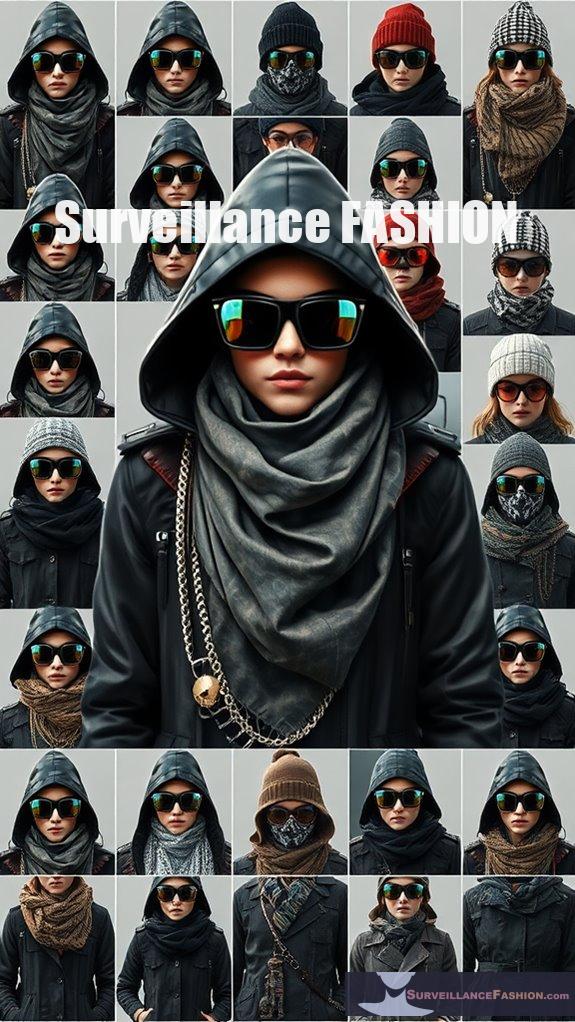
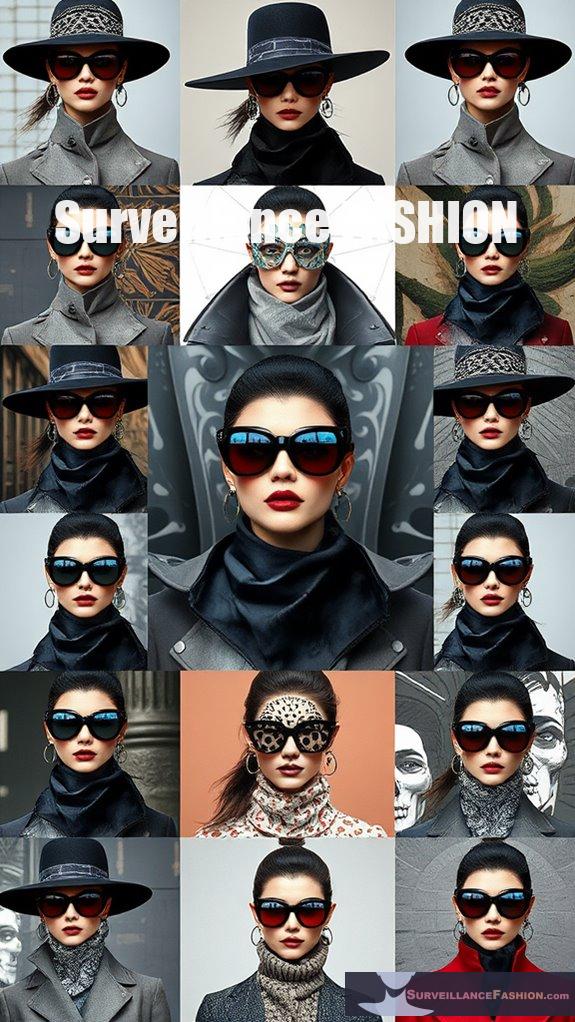
    Using oversized garments alongside accessories like hats and scarves adds extra layers of concealment, allowing you to adapt to varying camera angles.

    At Surveillance Fashion, our exploration of these innovative designs emphasizes practicality without sacrificing style.

    Eyes Everywhere: Anti-Surveillance Ebook review

    The ebook meticulously details how surveillance systems have proliferated globally, capturing real-world implications in countries like Canada, the UK, and Brazil.

    Aaron Doyle’s *Eyes Everywhere* explores the omnipresence of surveillance cameras and their minimal impact on crime deterrence, raising pertinent concerns about privacy.

    With case studies of social movements, such as the Occupy Movement, the interplay between governmental agencies and corporate interests in surveillance emerges as a critical theme.

    Emphasizing the normalization of invasive technologies, the book prompts readers to reflect on the extensive implications of unchallenged surveillance, resonating well with our mission at Surveillance Fashion to foster understanding and innovation in countermeasures.

    References

  • 7 Fashion Tricks That Block Security Cameras

    7 Fashion Tricks That Block Security Cameras

    Infrared light-emitting accessories and specialized fabrics constitute effective methods for blocking security cameras. Clothes embedded with IR LEDs can saturate camera visuals, while thermal signature reduction fabrics trap body heat, complicating detection. Ideal scenarios for these accessories are dark environments, such as nighttime outdoor settings or shaded areas where camera visibility is limited. Choosing garments with robust infrared-resistant materials guarantees durability and efficacy. Therefore, understanding these elements can greatly enhance your stealth in monitored spaces, revealing more fascinating perspectives to explore.

    Quick Takeaways

    • Wear IR-Embedded Garments designed with integrated infrared LEDs to create visual saturation for security cameras.
    • Opt for Tactical Camouflage apparel that mimics environmental thermal signatures, helping you blend in and evade detection.
    • Utilize Thermal Signature Reduction fabric, which traps body heat and blocks thermal radiation from being detected by cameras.
    • Choose IR-Absorbing Fabrics that redirect infrared radiation, minimizing your visibility to thermal camera technology.
    • Don IR accessories primarily in low-light conditions, as dark environments enhance the effectiveness of infrared disruption tactics.

    How Can Infrared Light-Emitting Accessories Disrupt Surveillance Cameras?

    infrared light disruption techniques

    Infrared light-emitting accessories can disrupt surveillance cameras by emitting intense IR light that overwhelms the camera’s sensor, blinding it temporarily and obscuring visible features. This is particularly effective when used in complete darkness, as cameras rely on IR illumination for visibility. These disruptive effects depend on several factors:

    • IR LED Strength: Higher wattage LEDs produce a more effective glare.
    • Wavelength: Specific wavelengths (840-950 nm) can vary in effectiveness across different cameras.
    • Proximity: Closer distances enhance the chance of sensory overload.
    • Surrounding Conditions: Dark environments maximize disruption efficiency since cameras operate on IR at night. Additionally, a missing foam ring can significantly reduce the effectiveness of a camera in low light and exacerbate the impact of IR light interference. Moreover, understanding the IR LED technology can help users select the best components for their accessories.

    Such accessories can be discreetly integrated into clothing, allowing for mobile and effective concealment against surveillance systems.

    What Types of Fashion Incorporate Infrared Technology for Evasion?

    Fashion incorporating infrared technology for evasion includes garments with IR LEDs, reflective materials, or emissivity-modified fabrics that reduce heat signatures and obscure identities.

    These innovative designs aim to confuse or blind cameras using infrared detection.

    Various techniques are employed in this type of fashion:

    • IR-Embedded Garments: Clothing like hoodies equipped with IR LEDs, which emit invisible light, saturating cameras.
    • Thermal Signature Reduction: Insulating fabrics that trap body heat and block thermal radiation.
    • IR-Absorbing Fabrics: Textiles that absorb or redirect infrared radiation to minimize visibility.
    • Tactical Camouflage: Clothing mimicking environmental thermal signatures to blend in with surroundings.

    These advancements provide functional and strategic benefits for privacy-conscious individuals.

    Are There Specific Situations Where IR Accessories Work Best?

    Yes, IR accessories work best in settings with total darkness or very low ambient light, especially where visible light cameras struggle to perform.

    Environments like indoor storage rooms, outdoor parking lots at night, and shaded urban areas highlight their effectiveness, ensuring improved clarity and reduced detection risk.

    Furthermore, the use of IR accessories is enhanced in high-security settings and areas where minimal artificial light exists, as their covert illumination capabilities support surveillance without alerting subjects.

    How Do Light-Emitting Elements Make You Less Detectable?

    Light-emitting elements, like LEDs, can make individuals less detectable by confusing infrared (IR) camera sensors and reducing reflectivity. These elements can create glare, saturate camera sensors, or blend emitted IR light with background noise, complicating image formation.

    Using strategically placed LEDs allows for controlled output that interferes with IR detection. By incorporating flickering patterns or low-intensity emissions, the light signature can become indistinguishable from ambient noise.

    Moreover, reflective fabrics and coatings absorbing IR radiation further decrease visibility to thermal cameras. However, care must be taken to avoid excessive visibility or interference from other lighting conditions, which may counteract these effects.

    Can Thermal-Blocking Fabrics Enhance Your Stealth in Public Spaces?

    thermal fabrics reduce heat signatures

    Yes, thermal-blocking fabrics can enhance stealth in public spaces by reducing heat signatures detectable by thermal sensors.

    Their effectiveness largely relies on the fabric’s thermal emissivity, design, and environmental conditions.

    These fabrics integrate heat-resistant materials and may be layered to trap body heat.

    However, they aren’t foolproof; factors like movement, ambient temperature contrast, and environmental conditions can limit efficacy.

    Effective use may also require complementary techniques, such as utilizing natural cover and blending thermal signatures with the surroundings.

    What Should You Consider When Choosing Infrared Fashion Items?

    When choosing infrared fashion items, consider the fabric’s composition, infrared wavelength coverage, durability, and comfort for optimal effectiveness in blocking surveillance technologies.

    Select infrared-resistant fabrics that utilize mineral additives for enhanced shielding against near-infrared radiation, ensuring they cover a wide wavelength spectrum.

    Furthermore, prioritize durability against environmental factors such as moisture and UV light, which can compromise performance over time.

    Comfort is also essential: lightweight, breathable fabrics that maintain flexibility without overheating greatly enhance wearability.

    Look for certifications in infrared emissivity and reflectivity to guarantee reliable functionality.

    How Effective Are These Techniques Against Advanced Surveillance Systems?

    Fashion tricks for evading advanced surveillance systems, such as reflective materials and specific patterns, may provide limited effectiveness.

    These techniques often struggle against sophisticated AI models with multi-angle recognition and advanced sensing capabilities.

    Advanced surveillance systems leverage technology like 3D depth sensing and infrared illumination, making conventional optical tricks less effective.

    While certain garments may disrupt image capture, their success is heavily contingent on environmental factors, camera setup, and lighting conditions. Techniques may also be rendered ineffective by other forms of surveillance, including gait analysis and infrared tracking.

    Limitations include:

    • Reduced efficacy in well-lit or high-resolution conditions
    • Lack of widespread availability of specialized anti-IR materials
    • Personal visibility concerns due to societal norms and laws about face coverings

    Review of Ava Longhorn’s Ebook: Eyes Everywhere

    Ava Longhorn’s ebook, *Eyes Everywhere*, emerges as a compelling exploration of contemporary methods to navigate the complexities of pervasive surveillance through innovative fashion practices.

    Delving into fashion activism, Longhorn equips you with techniques designed to thwart surveillance cameras, utilizing accessories that enhance privacy while maintaining style.

    You’ll learn about reflective materials, infrared-blocking makeup, and strategic disguises, all articulated with practical, step-by-step guides. Longhorn frames these methods within a broader discourse on privacy, empowering readers to embrace their right to anonymity through creative self-expression.

    In an age of increasing surveillance, her work serves as a notable resource for fashion-conscious privacy advocates.

    References

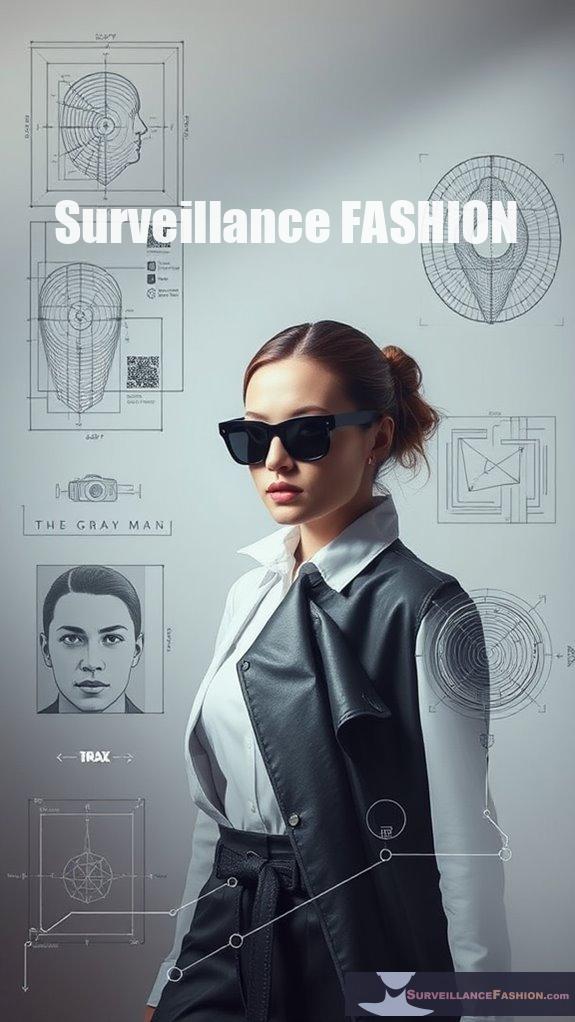
  • The Gray Man: Avoiding Facial Recognition Detection

    The Gray Man: Avoiding Facial Recognition Detection

    To effectively evade facial recognition, utilize techniques like bold makeup, unconventional hairstyles, and strategic clothing choices that present confusing patterns. For instance, wearing high-contrast colors and asymmetrical designs can bewilder detection algorithms by obscuring essential facial features. In addition, employing light-sensitive glasses or masks can further disrupt recognition efforts, ensuring your privacy is maintained. By understanding the intricacies of these methods, you can navigate a world increasingly saturated with surveillance, and you’ll uncover more effective strategies along the way.

    Quick Takeaways

    • Use light-sensitive glasses that create patterns invisible to the human eye, disrupting facial recognition technology under certain lighting conditions.
    • Employ bold makeup and asymmetrical hairstyles to obscure key facial landmarks and confuse recognition algorithms.
    • Consider wearing masks or strategically placed accessories to occlude parts of your face, misleading facial recognition systems.
    • Engage in strategic movement patterns to avoid detection, making it harder for cameras to track your movements.
    • Maintain a low online presence to prevent the sharing of identifiable images, enhancing your digital anonymity.

    Techniques for Evading Facial Recognition

    facial recognition evasion techniques

    In an era where facial recognition technology permeates everyday life, understanding how to maneuver and evade these systems has become increasingly pertinent, especially for individuals seeking privacy and autonomy. The rise of biometric systems has led many to explore various disguise techniques, which can serve as effective tools in safeguarding one’s identity against invasive surveillance practices.

    To begin with, comprehending the mechanics of the Viola-Jones face detector is essential. This algorithm identifies facial features through specific patterns, making it vital for you to manipulate those features to remain undetected. By employing makeup and altering your hairstyle, you can create subtle shifts in your appearance that may confuse the system, complicating its ability to classify you correctly. For instance, a bold lip color or a different hairstyle can obscure key facial landmarks, providing a layer of protection against recognition. The operation of facial recognition systems relies heavily on accurate feature extraction, which means that any alterations you make can significantly impact the system’s effectiveness. Understanding biometric data collection can enhance your strategies for evasion, employing creative methods like light projection techniques can obscure your face in real-time, making it even harder for recognition systems to pinpoint your identity.

    Understanding the Viola-Jones face detector allows you to cleverly manipulate your features, enhancing your ability to evade recognition.

    Another intriguing method involves the use of light-sensitive glasses. These glasses create patterns that are invisible to the human eye but can disrupt how cameras perceive your face, rendering you unrecognizable in certain lighting conditions. While this may sound like science fiction, the technology exists and showcases the lengths individuals can go to in pursuit of biometric privacy.

    Occlusion techniques, such as wearing masks or strategically placed glasses, can also be effective. By covering parts of your face, you can mislead facial recognition models, which rely on full facial data to make accurate identifications. The effectiveness of this approach, however, is contingent on the specific systems in use, as advanced algorithms may still detect certain patterns or features. Consequently, understanding the limitations and capabilities of the facial recognition technology in your environment is paramount.

    Dodging attacks represent another fascinating aspect of evading facial recognition, as they aim to misclassify your face entirely. This technique is particularly pertinent for those who wish to maintain their privacy without engaging in overly elaborate disguises. The idea is to present a face that the system interprets as someone entirely different, thereby bypassing identification altogether.

    As you consider these methods, it’s also important to recognize the ongoing advancements in security measures against evasion tactics. Liveness detection, for instance, can discern whether a system is interacting with a real person or a mere prop, enhancing the security protocols in place. Moreover, motion-based anti-spoofing methods can identify static presentations, underscoring the need for dynamic behavior to reinforce authenticity.

    Engaging with these techniques, while potentially effective, also reveals the complexities of maneuvering a world increasingly dominated by surveillance. The delicate balance between utilizing disguise techniques and understanding the shifting terrain of biometric privacy is essential for anyone wishing to reclaim their autonomy in this digital age.

    This journey toward privacy is precisely why we created Surveillance Fashion, to empower individuals like you with the knowledge and tools necessary to protect oneself against the encroaching gaze of technology. By mastering these evasion techniques, you stand a better chance of maintaining your individuality amidst a sea of digital observation.

    Style Tips for Evasion

    discreet fashion for avoidance

    While steering through a world increasingly dominated by facial recognition technology, employing strategic style choices can greatly enhance your ability to evade detection.

    Consider these four effective style tips:

    1. Invisible Patterns: Incorporate designs that confuse algorithms, creating non-human shapes that disrupt recognition. These patterns can include geometric illusions that further obscure your true form.
    2. High-Contrast Makeup: Use bold colors that stand out against your skin tone, thereby complicating the system’s ability to identify your features accurately.
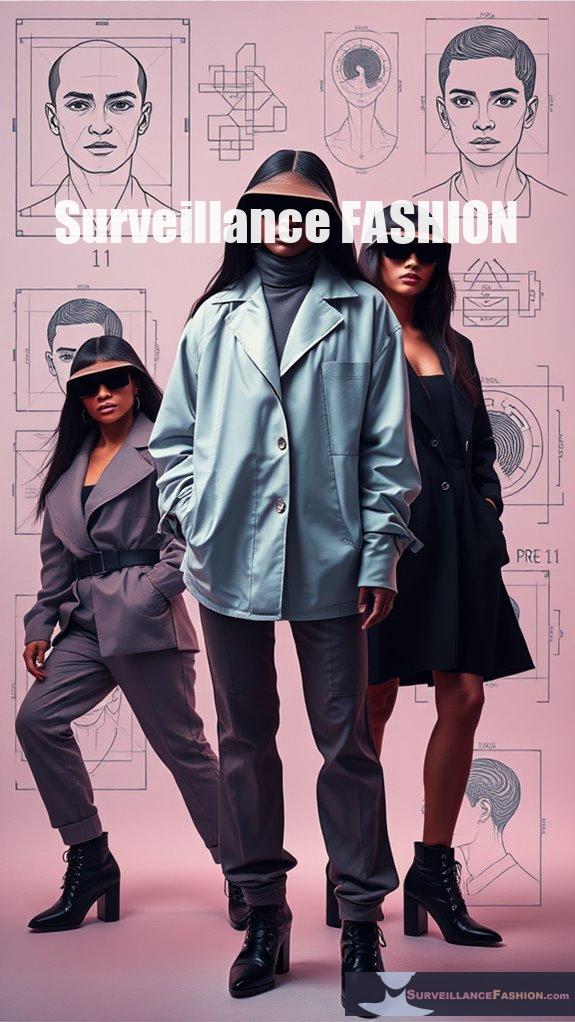
    3. Asymmetrical Looks: Covering one eye or opting for asymmetrical hairstyles can create facial irregularities, further complicating detection.
    4. Clothing with Faces: Outfitting yourself in garments that display multiple faces can overload detection systems, making your true identity hard to ascertain.

    Additionally, utilizing anti-facial recognition techniques can further enhance your camouflage by incorporating unconventional makeup styles that mask your identity.

    Recognition Evasion Strategy Guide

    avoiding detection techniques explained

    A thorough understanding of recognition evasion strategies is essential for traversing a territory increasingly defined by facial recognition technologies.

    With privacy laws often lagging behind advancements in this field, individuals must adopt proactive measures to guarantee digital anonymity. Strategic movement patterns can significantly enhance your ability to evade detection.

    Begin by manipulating your appearance through complex patterns or makeup to disrupt recognition algorithms.

    For instance, using specialized accessories like infrared LED glasses can confuse facial detection systems, rendering you less identifiable.

    Controlling your online presence is critical; avoid sharing identifiable images on social media, which can feed into recognition databases.

    Engaging in discussions about the ethical implications of surveillance fosters public awareness, potentially leading to stronger privacy protections.

    Practicing physical distancing from surveillance points can significantly reduce the likelihood of being captured by facial recognition systems.

    Ultimately, as we navigate this transforming environment, recognizing the limitations of existing technologies and advocating for meaningful legal reforms can empower us to reclaim our privacy, an endeavor that inspired the creation of Surveillance Fashion.

    References

  • What Face Patterns Defeat Recognition Systems Effectively?

    What Face Patterns Defeat Recognition Systems Effectively?

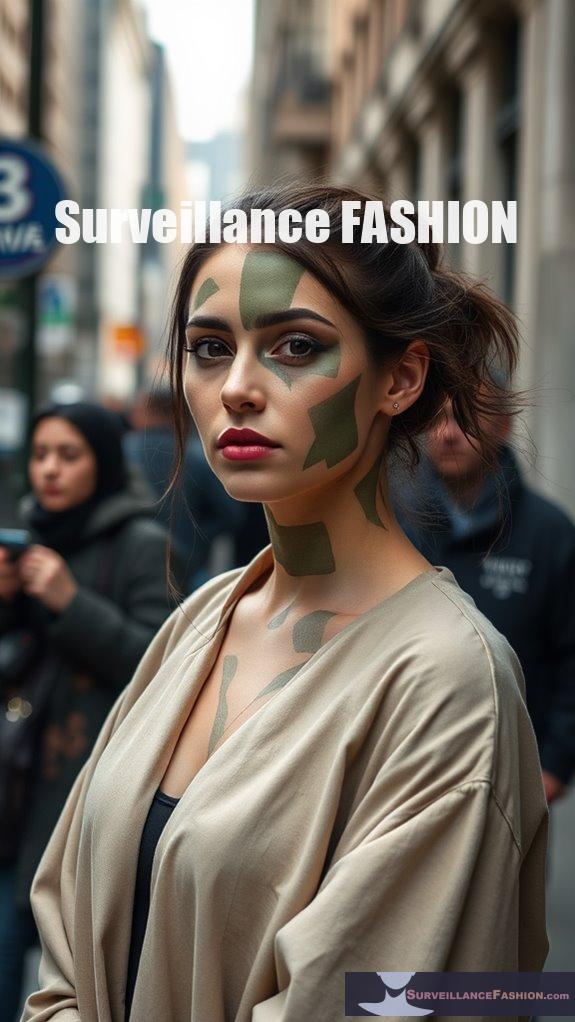
    To effectively defeat facial recognition systems, consider employing makeup patterns that disrupt facial symmetry. Utilizing camouflaging techniques, such as layering earthy shades and incorporating dynamic designs, enhances your disguise. For instance, breaking up outlines with unexpected colors or shapes can confuse algorithms. Furthermore, strategic highlighting directs attention away from identifiable features, bolstering your concealment. Through the developing intersection of style and privacy, as explored on the Surveillance Fashion platform, innovative approaches to personal security continue to emerge.

    Quick Takeaways

    • Digitally generated makeup patterns can evade facial recognition with up to 98% success rates, especially when customized for specific algorithms.
    • Camo patterns that break facial symmetry and mimic environmental colors enhance disguise and disrupt recognition systems effectively.
    • Layering tones and highlighting techniques create depth, making it harder for facial recognition algorithms to identify features accurately.
    • Simple face patterns can exploit vulnerabilities in advanced facial recognition models, leading to significantly reduced detection rates.
    • Dynamic and real-time modifications in expression can further enhance camouflage effectiveness against recognition systems.

    Evasive Makeup Techniques Against Facial Recognition

    disguise methods for privacy

    In today's technologically advanced society, many individuals may not realize just how vulnerable facial recognition systems are to innovative evasion techniques. One of the most fascinating developments in this domain involves the application of makeup technology, which has emerged as a surprisingly effective means to bypass these systems. Researchers have demonstrated that by utilizing digitally generated makeup patterns, individuals can achieve success rates of up to 98% in evading facial recognition systems during experimental trials. This effectiveness translates remarkably well when the patterns are applied physically, considerably lowering detection rates in real-world scenarios.

    The artistry of makeup isn't merely for enhancing beauty; it can also serve as a formidable tool against surveillance technologies. Makeup artists have skillfully applied natural-looking makeup to match these digitally generated patterns, ensuring that the disguise isn't overly conspicuous. Drawing inspiration from Adam Harvey's CV Dazzle project, which employs avant-garde hairstyling and makeup to disrupt facial recognition models, this method shows that creativity can indeed be a powerful weapon against technology. The beauty of this approach lies in its versatility, as both digitally applied and physically applied makeup have proven effective in thwarting recognition efforts.

    Advanced facial recognition models, particularly those based on deep learning, possess inherent vulnerabilities. Researchers have exploited these weaknesses through adversarial attacks, crafting universal masks that can deceive multiple systems by producing false classifications. This adaptability is essential, as different facial recognition models—like FaceNet and LResNet—can be targeted with tailored patterns, maximizing the chances of evasion. The realization that simple face patterns can undermine sophisticated technology is both alarming and enlightening. In fact, this study led by Nitzan Guettan demonstrated that makeup applied to identifiable facial parts led to recognition in only 1.2% of frames.

    Moreover, the concept of variability in patterns highlights the potential for customization, allowing individuals to develop unique disguises that align with specific facial recognition algorithms. This strategic approach not only reflects a deep understanding of how these systems operate but also underscores the ongoing arms race between surveillance technologies and evasion techniques. For those invested in the intersection of fashion and privacy, this knowledge is particularly relevant, as it aligns with the ethos behind our website, Surveillance Fashion, which aims to explore and promote innovative methods of maneuvering the complexities of modern surveillance.

    While common methods like wearing sunglasses or hats may obscure facial features, they often lack effectiveness, as their reliance on simple obscuration techniques can be easily circumvented. In contrast, using makeup to disrupt facial continuity serves as a more sophisticated method of hindering recognition. By breaking up facial symmetry through unconventional designs, individuals can enhance their chances of remaining undetected, a fact that should resonate with anyone concerned about privacy in an era of pervasive surveillance.

    As new technologies continue to evolve, the dynamic between facial recognition systems and evasion techniques remains a vital area of exploration. With gradient-based optimization and generative adversarial networks (GANs) paving the way for further advancements, the real-world applications of evasive techniques are bound to expand, inviting ongoing dialogue about privacy, identity, and the future of surveillance.

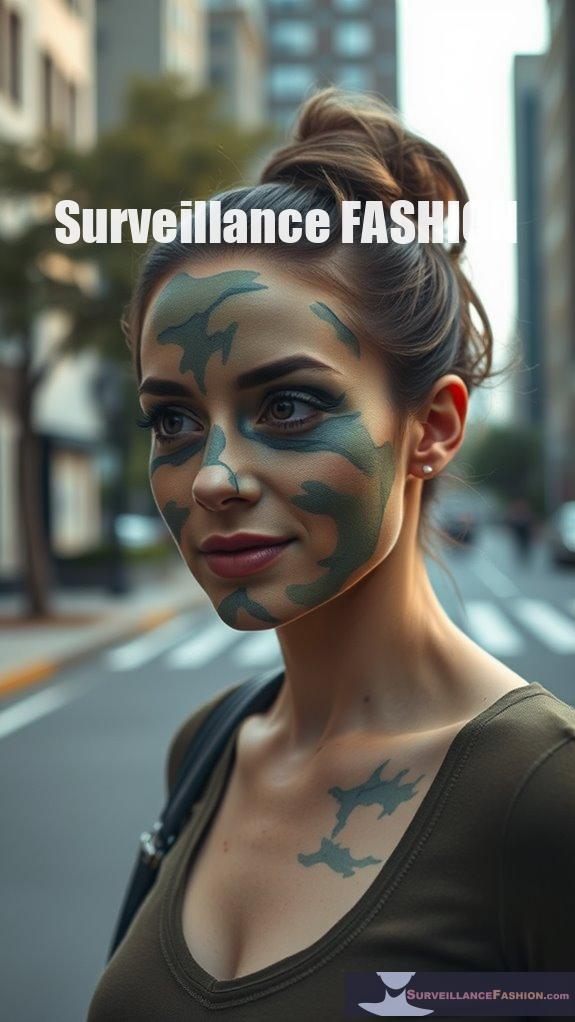
    Camo Patterns for Facial Disguise

    facial camouflage pattern techniques

    Camo patterns for facial disguise represent a sophisticated development in the quest for privacy and anonymity, particularly in an age where surveillance is omnipresent.

    These innovative designs employ facial distortion techniques, allowing the wearer to dynamically alter their appearance through color and shape variations. Inspired by nature, such as the adaptive abilities of chameleons, these masks can effectively evade facial recognition systems by breaking up facial outlines and mimicking environmental colors. Additionally, these patterns are designed to counteract facial recognition technology, which has become increasingly advanced in identifying individuals.

    Innovative facial distortion designs mimic chameleons, evading recognition through dynamic color and shape alterations.

    Dynamic patterns further enhance their effectiveness, allowing for real-time modifications in expression, an essential factor in maintaining realism. For example, countershading techniques strategically apply darker hues to prominent features, creating a natural shadow effect that disrupts recognition.

    As we explore these advancements, it's clear that the technology behind camo patterns not only aids in personal security but also invites ethical discussions about privacy, a core interest of Surveillance Fashion, where we aim to analyze these developing disguises critically and thoughtfully. Furthermore, the use of anti-CCTV patterns in everyday clothing designs showcases a growing trend towards fashionable privacy solutions.

    Camo Makeup Inspiration Ideas

    camouflage themed makeup ideas

    There's a growing interest in the innovative domain of camo makeup, where artistry converges with beauty, offering a unique canvas for self-expression and creativity. Additionally, these techniques can serve as a form of anti-surveillance makeup that challenges modern identification methods.

    1. Layering Tones: Experiment with earthy shades like greens and browns, layering them to mimic natural environments while ensuring smooth shifts.
    2. Highlighting Techniques: Use highlights strategically to create depth, illuminating parts of your face that you wish to stand out.
    3. Gel Liners for Definition: Incorporate gel or liquid liners for crisp edges and complex patterns that enhance your camouflage effect.
    4. Social Media Exploration: Explore platforms like Pinterest and YouTube for tutorials and community inspiration, discovering diverse interpretations of camo makeup.

    Additionally, consider that facial recognition systems are increasingly sophisticated, making these makeup techniques even more relevant for those who seek to obscure their identity.

    References

  • 7 Best Body Movements To Evade Facial Recognition

    7 Best Body Movements To Evade Facial Recognition

    To effectively evade facial recognition, you need to master positional changes—like lowering your posture and utilizing surroundings to block cameras. Employ movement obstruction techniques, such as wearing masks or glasses to obscure your features, and altering your gait to confuse analysis algorithms. Moreover, wearing asymmetrical clothing disrupts symmetry, complicating recognition. Quick direction changes and timing your movements during lower surveillance activity can enhance your evasion. By understanding these strategies, you empower yourself against intrusive technologies and navigate monitored environments more effectively. Explore further to enhance your approach.

    Quick Takeaways

    • Utilize quick changes in direction to disrupt facial recognition systems and confuse algorithms.
    • Maintain a lowered posture or tilt your head to obscure facial features from cameras.
    • Incorporate dynamic movements, such as sudden turns or varying speeds, to complicate facial captures.
    • Engage in gait alteration, changing your walking style to hinder pattern recognition by surveillance technology.
    • Move through shaded areas or utilize obstacles to block the line of sight from cameras.

    Positional Changes to Block Camera Views

    adjusting camera angles strategically

    When maneuvering through environments equipped with facial recognition technology, understanding how to effectively position yourself can greatly enhance your ability to evade detection. Begin by evaluating your surroundings; identify camera locations and angles. Adopting a lowered posture or tilting your head can obscure your face, making it difficult for cameras to capture a clear image. Additionally, be aware of the growing public concern regarding facial recognition systems, as this awareness can inform your movements and strategies. Utilizing recognition evasion techniques such as obstacles like pillars or crowds to block direct lines of sight can effectively disrupt the camera's field of view. Furthermore, familiarize yourself with common camera placements, allowing you to anticipate and avoid detection zones. For instance, moving through shaded regions or alcoves can further enhance your concealment.

    Movement Obstruction Techniques

    impediments to physical movement

    To effectively evade facial recognition systems, employing movement obstruction techniques can greatly enhance your chances of remaining undetected.

    Consider implementing face occlusion methods, such as wearing glasses or masks, which can obscure critical facial features, complicating the extraction process for recognition algorithms.

    Furthermore, slight pose variations can create challenges for these systems, as they rely on holistic processing, which is considerably impaired under partial occlusion. This is particularly true considering that facial recognition algorithms are designed to detect specific features for accurate identification.

    Moreover, utilizing motion as a distractor—albeit not foolproof—can momentarily interrupt video feeds, further enhancing your concealment strategy.

    Be mindful that gait analysis may also present identification challenges, particularly when movement obstructions disrupt consistent patterns.

    Utilizing Patterns and Distractors

    patterns and distractors analysis

    While facial recognition systems have advanced considerably, their vulnerabilities can be exploited through the strategic use of patterns and distractors.

    For instance, wearing clothing adorned with complex patterns or multiple faces can overload recognition algorithms, rendering your identity indistinguishable.

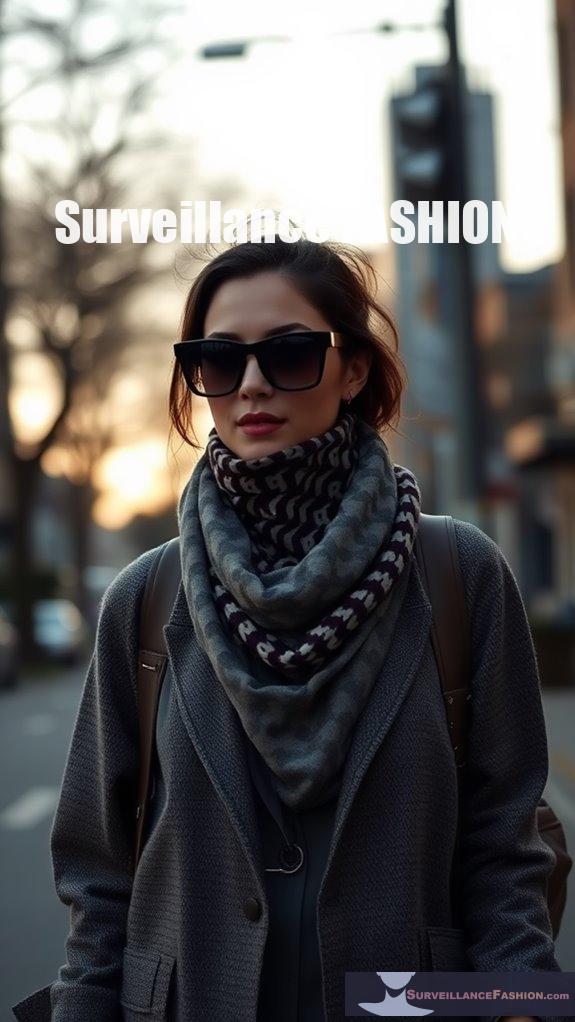
    Incorporating accessories, such as large hats or sunglasses, obscures key facial features, while scarves or masks add an extra layer of protection.

    Specialized garments designed to trick these systems enhance your ability to evade detection. Additionally, using clothing with surveillance-resistant patterns can significantly increase your chances of avoiding recognition by confusing the algorithms further.

    Altering Posture for Better Evasion

    improve evasion through posture

    Altering your posture can greatly enhance your ability to evade facial recognition systems, providing a tactical advantage against increasingly sophisticated surveillance technologies. By adjusting body alignment and strategically tilting or turning your head, you can obscure key facial features, markedly reducing the likelihood of recognition.

    Engaging in dynamic movement, such as frequently changing your posture, complicates consistent facial captures for static algorithms. Moreover, manipulating shoulder and neck positions further conceals facial visibility, creating an effective barrier against detection.

    Incorporating elements of gait alteration into your movement patterns can further enhance your evasion tactics.

    Integrating these posture techniques into your daily routine, as suggested by our findings on Surveillance Fashion, empowers you to navigate environments with heightened awareness, ensuring a proactive stance against intrusive surveillance methods.

    Embrace these adjustments to reclaim your privacy.

    Managing Proximity to Surveillance Cameras

    surveillance camera distance management

    Understanding the intricacies of managing proximity to surveillance cameras is essential for effectively evading facial recognition systems, particularly as these technologies become increasingly pervasive in urban environments. To navigate these challenges successfully, consider the following strategies:

    Navigating urban surveillance requires a keen understanding of camera proximity to effectively avoid facial recognition systems.

    • Surveillance Area Awareness: Familiarize yourself with locations where cameras are installed to avoid detection.
    • Camera Placement Recognition: Identify specific camera placements to plan safer routes that minimize exposure.
    • Avoidance Techniques: Utilize reflective materials or accessories that can create glare, obstructing facial recognition.

    Moreover, being aware of physical surveillance blind spots can significantly enhance your ability to stay out of sight while navigating through monitored areas.

    Creating Facial Asymmetry

    facial feature unevenness techniques

    Creating facial asymmetry can serve as an effective strategy for those aiming to evade facial recognition systems, particularly in an age where such technologies are becoming increasingly sophisticated.

    By intentionally altering features, you can create a unique profile that may confuse recognition algorithms. Consider the following techniques:

    Technique Description Impact on Asymmetry
    Jaw Repositioning Exercises targeting lateral pterygoid Modifies chin alignment
    Asymmetrical Extractions Dental adjustments to balance features Alters facial proportions
    Inclined Occlusal Plane Adjustments over four degrees Enhances perceived asymmetry

    Each method not only makes you less recognizable but also emphasizes the importance of understanding facial structures. Additionally, mastering everyday face recognition avoidance techniques can help individuals further enhance their ability to navigate these challenges effectively. At Surveillance Fashion, we aim to empower individuals with knowledge to navigate these challenges effectively.

    Speed and Timing to Enhance Evasion

    evasion through speed mastery

    The rapid evolution of facial recognition technology necessitates adaptive strategies for evading surveillance, particularly when considering the role of speed and timing in enhancing one's ability to remain anonymous.

    To effectively evade detection, you should focus on several key factors:

    • Quick Changes in Direction: Rapidly altering your path can confuse recognition systems.
    • Timing of Passage: Navigate during less active surveillance periods to minimize capture opportunities.
    • Speed of Movement: Swiftly traversing monitored areas reduces the likelihood of being identified.

    Additionally, understanding the physics of facial recognition technology can provide valuable insights into how to effectively navigate and evade detection.

    Disguising Identity Through Clothing

    clothing conceals true identity

    While evading facial recognition systems can seem challenging, utilizing specialized clothing offers a practical approach to disguise your identity. Companies like Capable design garments specifically aimed at confusing these algorithms, ensuring you maintain anonymity in public spaces. Additionally, the rise of privacy clothing highlights the increasing demand for innovative solutions to protect personal identity.

    Clothing Type Purpose
    Hoodies Obscures facial features
    Adversarial Masks Evades recognition algorithms
    Complex Patterns Overwhelms facial analysis

    These designs must evolve as technology advances, yet they provide a means to regain control over personal data. For instance, wearing a hoodie combined with an adversarial mask can greatly enhance your disguise. By understanding these clothing choices, you can navigate environments where surveillance is prevalent, ultimately contributing to the mission of Surveillance Fashion, which seeks to empower individuals against intrusive technologies.

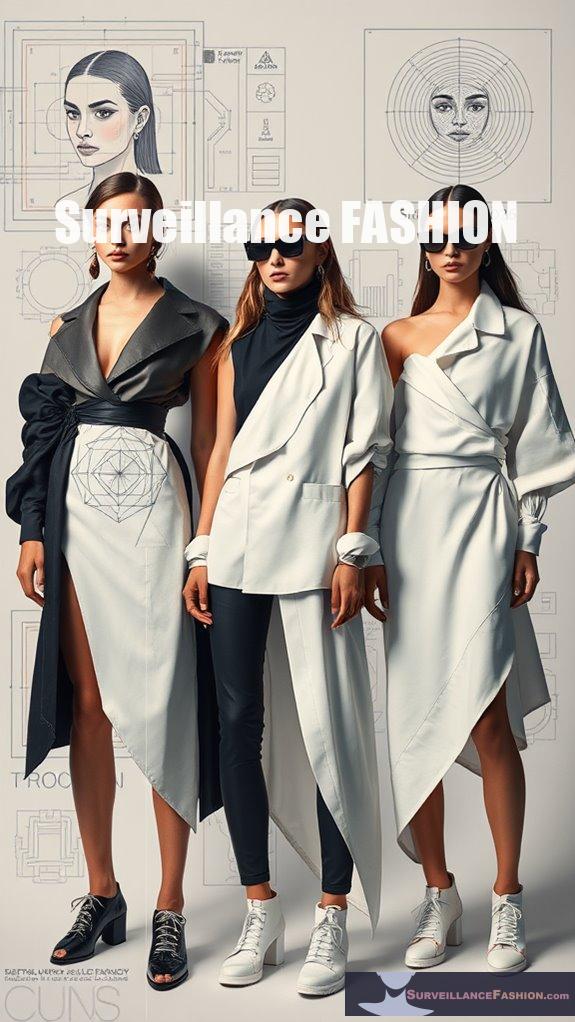
    Clothing That Disrupts Symmetry

    asymmetrical fashion statements

    As you navigate the complexities of modern surveillance, consider how clothing that disrupts symmetry can serve not just as a fashion statement but as a tactical strategy against facial recognition systems.

    Incorporating asymmetrical designs can effectively obscure your features, challenging the algorithms' reliance on symmetry.

    • Utilize asymmetrical hemlines to create visual distraction from your facial structure.
    • Incorporate contrasting textures and patterns that divert attention away from your face.
    • Accessorize with unique embellishments on one side to amplify imbalance and further confuse recognition systems.

    Additionally, research shows that asymmetrical clothing designs can significantly reduce the accuracy of facial recognition technologies by making it difficult for algorithms to identify key facial landmarks.

    References