Tag: privacy fashion

  • 7 Tech-Bending Styles That Defeat CCTV

    7 Tech-Bending Styles That Defeat CCTV

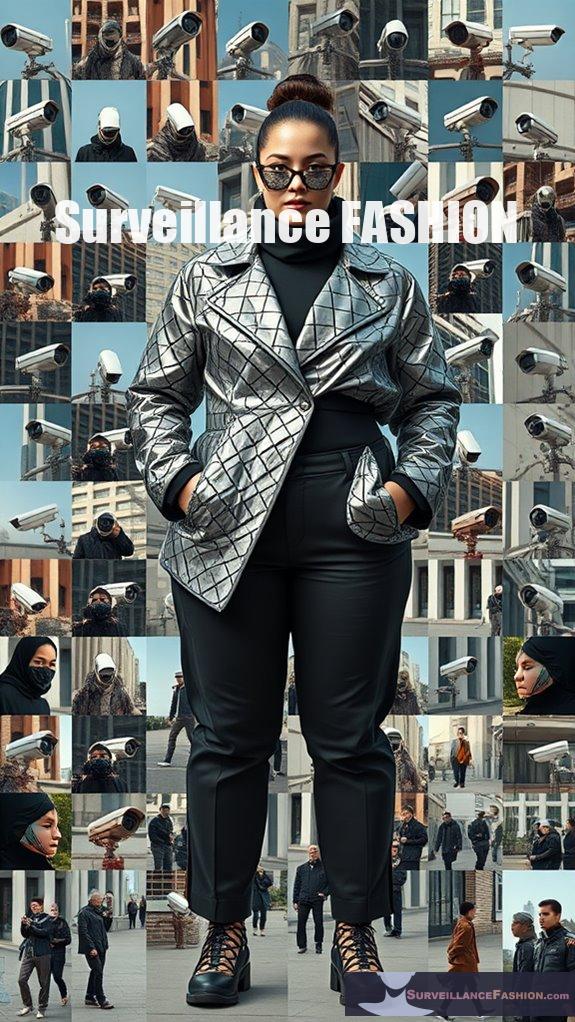
    To combat CCTV systems, innovative styles like anonymous silhouette-altering jackets and disguise-enhancing hats are gaining traction, cleverly utilizing advanced materials to obscure identity. For instance, these garments may feature IR-blocking fabrics that hinder detection by surveillance technologies. Moreover, face-obscuring masks employ metalliferous materials to distort facial recognition, while patterned clothing distracts visual algorithms through complex designs. Such fashion-forward choices are essential in fostering personal privacy, which is one of the aims behind the creation of our platform, Surveillance Fashion. Further exploration awaits.

    Quick Takeaways

    Anonymous Silhouette-Altering Jackets

    disguising clothing for anonymity

    As concerns over personal privacy continue to mount, the emergence of anonymous silhouette-altering jackets offers a fascinating intersection of fashion and technology designed to combat the pervasive reach of surveillance systems. These innovative garments utilize advanced materials and disruptive patterns to achieve silhouette manipulation, effectively obscuring your identity from prying eyes. Fashion pioneers like Adam Harvey have integrated camouflage and signal-blocking fabrics, ensuring that your movements remain private. This approach signifies a shift in the purpose of clothing towards protecting individual visibility in an age of surveillance. With the inclusion of ir-blocking fabrics, these jackets not only obscure your silhouette but also prevent infrared cameras from capturing your image.

    Disguise-Enhancing Hats

    hats for better disguises

    Disguise-enhancing hats represent a significant evolution in anti-surveillance fashion, providing a practical means of evading the scrutiny of facial recognition systems and CCTV surveillance.

    These innovative hats merge disguise technology with bold fashion statements, making them a popular choice for those seeking anonymity.

    Innovative disguise-enhancing hats blend cutting-edge technology with striking style, appealing to those who value anonymity in a surveillance-laden world.

    • Utilize complex camouflage patterns to confuse algorithms.
    • Incorporate signal-blocking materials to thwart digital tracking.
    • Feature advanced fabrics that disrupt infrared detection.

    Additionally, some designs may include high-powered infrared LEDs that render night vision cameras ineffective, further enhancing your ability to remain unseen.

    As you navigate public spaces, these hats not only shield your identity but also foster a dialogue on privacy rights, which is essential in today's surveillance-driven society.

    Face Obscuring Masks

    face covering protective gear

    While many individuals navigate public spaces with a sense of confidence, the pervasive threat of facial recognition technology looms large, prompting the exploration of face obscuring masks as a practical solution. These masks, crafted from various materials like metalliferous fabrics and complex designs, aim to obscure or alter facial features, effectively confusing recognition algorithms. Studies indicate that covering features can increase error rates considerably, enhancing your privacy rights. Ultimately, face obscuring masks symbolize a growing resistance against invasive surveillance, reflecting the urgent need for innovative privacy solutions in our increasingly monitored world, a theme we explore at Surveillance Fashion. Additionally, the importance of privacy masking emphasizes the need to protect personal identities in the age of surveillance. With tech-bending styles emerging, these accessories not only serve a functional purpose but also showcase a unique blend of fashion and activism.

    Patterned Clothing for Distraction

    clothing designs for diversion

    In an era where surveillance technology has become omnipresent, innovative approaches to privacy are gaining traction, and patterned clothing emerges as a compelling method of distraction.

    These complex designs disrupt visual recognition systems by confusing surveillance algorithms, effectively masking human identities.

    • Abstract art-inspired patterns mislead facial recognition technology.
    • Collaborations between designers and tech firms enhance anti-surveillance effectiveness.
    • Such garments serve as ethical statements against invasive monitoring.

    Moreover, the use of anti-surveillance method clothing patterns is rapidly evolving as a practical solution to protect individual privacy in public spaces.

    Color-Changing Fabrics

    dynamic hue shifting textiles

    Color-changing fabrics represent a groundbreaking fusion of technology and fashion, enabling individuals to adapt their appearance with remarkable ease and efficiency.

    Utilizing micro-wires and color-altering pigments, these innovative materials respond to electrical currents, altering hues without light emission. You can easily customize patterns and colors through smartphone apps, tapping into the principles of color psychology to express your personality or mood.

    This fashion technology not only revolutionizes personal style but also has applications in home decor and accessories.

    As the smart textiles market expands, the potential for these dynamic fabrics to redefine norms becomes increasingly evident.

    Reflective Material Outfits

    shiny light reflecting clothing

    Reflective material outfits represent a significant technological advancement in the domain of anti-surveillance fashion, merging aesthetic appeal with functional privacy solutions.

    These garments utilize reflective material applications to confuse imaging systems, ensuring your privacy remains intact in a surveilled world.

    • Obscure Facial Features: Disrupt facial recognition technology effectively.
    • Versatile Styles: Includes scarves, jackets, and hats for everyday wear.
    • Signal-Blocking Integration: Some designs inhibit GPS or RFID tracking.

    Fashion privacy innovations like ISHU's anti-flash scarf demonstrate the potential of reflective materials to empower individuals, promoting a culture of privacy awareness that's essential in our increasingly monitored society.

    Modular Clothing Systems

    versatile and adaptable apparel

    As individuals endeavor to reclaim their autonomy in a world increasingly dominated by surveillance technologies, modular clothing systems emerge as a compelling innovation that marries aesthetic flexibility with functional privacy strategies.

    These customizable garments, featuring detachable components and modular accessories, allow you to adapt your outfit to various occasions while maintaining a sense of personal expression.

    By embracing a modular design philosophy, you can extend garment lifespans, reduce waste, and contribute to a circular economy.

    The fusion of smart fabrics and innovative fastenings enhances versatility, enabling you to effortlessly transform styles, thereby helping to navigate the complexities of modern surveillance.

    Adaptive Textiles for Privacy

    privacy enhancing adaptive fabrics

    While the evolution of adaptive textiles has opened new avenues for personal expression and comfort, the intersection of these innovations with privacy concerns can't be overlooked.

    The rise of smart fabrics raises critical questions about biometric security and data protection. Consider these aspects:

    • Sensitive Data Collection: Adaptive textiles often gather personal biometric information, heightening privacy risks.
    • Unauthorized Access: Wireless transmission can lead to potential hacking vulnerabilities.
    • User Awareness: Many users remain uninformed about data practices.

    As we explore these technologies, understanding their implications helps shape a future where personal freedom and privacy coexist harmoniously, a goal that inspired the creation of Surveillance Fashion.

    Cloaking Fabrics for Urban Wear

    urban camouflage clothing materials

    Cloaking fabrics have emerged as a revolutionary solution for urban wear, skillfully combining advanced material technology with innovative design to create garments that not only protect against the elements but also provide a layer of anonymity in increasingly surveilled environments.

    Utilizing stealth materials like Gore-Tex and ripstop nylon, these cloaks feature urban camouflage patterns that seamlessly blend into cityscapes.

    With breathable membranes ensuring comfort and modular pockets enhancing functionality, you'll find yourself equipped for any urban adventure.

    Their striking aesthetics, influenced by cyberpunk themes, allow you to navigate the streets while embracing a sense of freedom, reflecting the ethos of our platform, Surveillance Fashion.

    Definition of Privacy-Enhancing Attire

    privacy enhancing clothing concepts

    Privacy-enhancing attire represents a transformative intersection of fashion, technology, and personal autonomy, effectively challenging the pervasive nature of surveillance in contemporary society.

    This innovative clothing aims to protect individual privacy while offering aesthetic appeal through:

    • Anti-surveillance fabrics that disrupt facial recognition systems
    • Complex patterns designed to confuse digital tracking algorithms
    • Signal-blocking materials that prevent unauthorized data access

    References

  • Why Facial Jewelry Blocks Recognition Systems

    Why Facial Jewelry Blocks Recognition Systems

    Facial jewelry obstructs recognition systems by masking critical facial features like the nose and eyebrows, which are essential for biometric identification. The geometric shapes and reflective materials common in jewelry create disturbances that confuse algorithms, considerably lowering accuracy rates. This interference occurs as variations in lighting introduce glare and distortions, complicating the matching process. As awareness around surveillance grows, innovative designs emerge that enhance personal expression while mitigating identification risks, revealing a broader discussion on privacy and technology. Discover more about the ways fashion can combat these intrusions.

    Quick Takeaways

    • Facial jewelry obscures key facial features like the nose and eyebrows, hindering recognition accuracy.
    • Reflective materials in jewelry distort light patterns, confusing facial recognition algorithms.
    • Complex jewelry designs create algorithmic blind spots, complicating identification processes.
    • Variations in lighting and glare from jewelry further decrease biometric measurement accuracy.
    • Jewelry shapes can alter perceived facial structure, increasing false rejection rates in recognition systems.

    Mechanism of Disruption in Facial Recognition

    facial recognition disruption mechanisms

    Facial recognition systems, while increasingly sophisticated, remain vulnerable to disruption, particularly through the innovative use of facial jewelry. These pieces employ various disruption techniques that obscure key facial geometry, such as the nose and eyebrows, rendering recognition algorithms less effective.

    By decreasing facial symmetry, they complicate the matching process, as many systems depend on symmetrical features for identification. Moreover, the integration of highly reflective materials distorts light patterns, further confusing these algorithms. This creative facial jewelry approach not only enhances personal expression but also serves as a form of resistance against invasive technologies. Additionally, certain designs may incorporate specific patterns that are known to confuse facial recognition systems, further amplifying their effectiveness.

    Certain designs even obstruct the field of view of facial recognition cameras, greatly lowering their surveillance efficacy. Understanding these mechanisms is essential for asserting control over personal data in an era dominated by technology, a core principle behind our initiative, Surveillance Fashion, which emphasizes the intersection of aesthetics and functionality in counter-surveillance tactics.

    Impact of Facial Jewelry on Biometric Measurements

    facial jewelry biometric effects

    While many people mightn't consider the implications of wearing facial jewelry in the framework of biometric measurements, the reality is that even subtle adornments can greatly impact the accuracy of facial recognition systems.

    Consider the following factors:

    1. Facial jewelry can obscure key features, leading to decreased biometric accuracy.
    2. Variations in lighting can create glare, complicating recognition.
    3. Certain designs may alter perceived facial structure, confusing the algorithm.
    4. Systems that aren't designed for jewelry often result in higher false rejection rates, negatively affecting user experience.
    5. Biometric scanners are often optimized for unobstructed facial features, making them less effective when jewelry is present. Additionally, the presence of infrared-reflecting materials in jewelry can further hinder the effectiveness of recognition systems.

    Disguising Identity Through Clothing

    clothing conceals true identity

    In an era where personal privacy is increasingly compromised by advanced surveillance technologies, clothing has emerged as a surprising yet effective tool for disguising identity.

    Innovative clothing patterns, often generated by AI algorithms, confuse facial recognition systems, while adaptive garments incorporate reflective or absorbent materials that disrupt nighttime surveillance. For instance, complex textile designs can overload image recognition software, rendering wearers virtually unidentifiable.

    Additionally, garments employing camouflage principles allow individuals to blend seamlessly into their surroundings, enhancing privacy. By integrating signal-blocking fabrics, these clothing items not only protect against RFID tracking but also serve as a statement against invasive monitoring technologies. Furthermore, the incorporation of infrared-blocking fabrics in these designs adds an extra layer of protection against thermal imaging systems.

    This website, Surveillance Fashion, aims to inform and empower consumers by highlighting these advancements in anti-surveillance clothing, emphasizing the importance of safeguarding personal identity in today's digital world.

    Jewelry Masking Facial Features

    jewelry obscuring facial features

    As concerns about personal privacy intensify, innovative designs in jewelry have emerged as a novel approach to masking facial features, effectively challenging the capabilities of modern facial recognition systems. This jewelry employs geometric design principles to obstruct key facial contours typically relied upon by algorithms.

    1. Geometric Shapes: Patterns like circles and rectangles cover essential features.
    2. Material Usage: Brass is favored for its aesthetic appeal.
    3. Wearing Style: Worn like eyeglasses, the jewelry remains stable.
    4. Feature Disruption: It creates algorithmic blind spots, complicating identification.

    Through such jewelry aesthetics, individuals can assert control over their privacy, reflecting a growing awareness of surveillance issues, which inspired the creation of our website, Surveillance Fashion, dedicated to exploring these innovative solutions.

    References

  • 7 Jewelry Designs That Block Facial Recognition

    7 Jewelry Designs That Block Facial Recognition

    Jewelry designers are innovating to block facial recognition, blending style with privacy protection. For example, Ewa Nowak’s “Incognito” uses brass components to obscure facial features, effectively confusing algorithms like Facebook’s DeepFace. Sara Sallam’s Orwell Jewelry Collection furthers this by employing asymmetrical designs to disrupt recognized geometries. Reflective materials and geometric patterns—integrated with fashion techniques—further enhance this concealment, providing you with options that marry aesthetics and autonomy. Discover more about these pioneering designs that challenge surveillance technology.

    Quick Takeaways

    • Ewa Nowak’s “Incognito” jewelry uses durable brass components to distort facial features and disrupt facial recognition algorithms effectively.
    • Sara Sallam’s Orwell Jewelry Collection obscures key facial geometry with asymmetrical designs, preventing biometric tracking and enhancing privacy.
    • Reflective face masks and jewelry utilize reflective materials to confuse depth-sensing technologies and disrupt biometric data collection.
    • Geometric patterns in facial jewelry create illusions that challenge facial recognition algorithms while allowing for personal style expression.
    • Face-masking jewelry incorporates artistic designs and materials like brass to obscure critical facial recognition points, promoting individuality and privacy.

    Ewa Nowak’s “Incognito” Jewelry Design

    elegant and discreet jewelry

    In a world increasingly dominated by surveillance technologies, Ewa Nowak’s “Incognito” jewelry design emerges as a compelling response to the pervasive threat of facial recognition. Crafted from durable brass, this innovative piece comprises two round components covering the cheeks and a central piece between the eyes, effectively distorting facial features to disrupt algorithmic detection. This design not only embodies privacy aesthetics but also serves as a significant surveillance accessory, tested against Facebook’s DeepFace algorithm for effectiveness, and aligns with the growing trend of anti-facial recognition fashion that seeks to protect individual identities.

    Addressing growing concerns about personal privacy, “Incognito” encourages you to reclaim anonymity in public spaces while making a bold fashion statement. As surveillance becomes ubiquitous, the potential for such designs to transform our interactions with technology and society is both necessary and intriguing, prompting crucial discussions about individual autonomy.

    Sara Sallam’s Orwell Jewelry Collection

    sara sallam s unique jewelry

    Sara Sallam’s Orwell Jewelry Collection represents a significant intersection of art, technology, and personal privacy. Named after George Orwell, the collection articulates concerns about modern surveillance, echoing themes from “1984.”

    Each piece marries Orwellian aesthetics with functional beauty, obscuring key facial geometry to thwart recognition systems. For instance, the asymmetrical designs disrupt facial symmetry, while the ripple finish draws inspiration from historical Lover’s Eye jewelry. This innovative approach doesn’t merely serve as adornment; it actively protects against biometric tracking, including gait recognition. Additionally, the collection emphasizes the importance of anti facial recognition techniques that can help individuals maintain their privacy in a world increasingly dominated by surveillance. The collection also features jewelry for the chest designed to shield users from invasive monitoring associated with heart rate detection technology.

    Reflective Face Masks and Jewelry

    shiny masks and accessories

    As concerns about surveillance technologies escalate, reflective face masks and jewelry emerge as innovative solutions designed to thwart facial recognition systems by distorting biometric data.

    Utilizing reflective materials, these accessories effectively disrupt depth-sensing technologies, rendering your facial features nearly unrecognizable to algorithms.

    For instance, retro-reflective fabrics can confuse infrared projections, while complex designs in brass and metal create asymmetrical shapes that challenge facial recognition software.

    This duality of fashion and functionality addresses rising privacy concerns, making it increasingly viable for individuals to reclaim control over their personal data in public spaces. Moreover, the use of anti-surveillance fashion highlights a growing movement towards personal expression and privacy protection.

    Geometric Patterns in Facial Jewelry

    geometric designs in jewelry

    While you mightn’t immediately associate fashion with technological resistance, geometric patterns in facial jewelry serve a compelling purpose in the domain of anti-surveillance design. These elaborate designs create geometric illusions that disrupt pattern recognition algorithms, effectively masking your facial features.

    Geometric facial jewelry blends fashion with anti-surveillance, disrupting recognition algorithms and masking your features with style.

    1. They draw inspiration from ancient tribal masks, blending artistry with utility.
    2. The asymmetrical shapes confuse algorithms, complicating facial recognition efforts.
    3. Crafted from materials like brass, they obscure key facial contours.
    4. Despite their protective nature, they remain visually appealing for public wear.

    With the rise of surveillance technologies, incorporating such jewelry allows you to reclaim a sense of control. By embracing these geometric patterns, you not only express your style but also protect your privacy in an increasingly monitored world. Additionally, these designs tap into the concept of facial recognition blocking, allowing wearers to navigate public spaces with greater anonymity.

    Innovative Materials for Surveillance Jewelry

    surveillance enhanced innovative jewelry

    Innovative materials in surveillance jewelry have emerged as a crucial component in the design of accessories that not only enhance personal style but also provide essential protection against intrusive monitoring technologies.

    Among these materials, reflective coatings play an essential part, distorting facial features to confound facial recognition systems.

    Furthermore, dielectric shielding is increasingly utilized to disrupt electromagnetic signals, effectively thwarting surveillance efforts.

    Metal alloys, such as brass, are integrated into designs like the “Incognito” mask, while smart fabrics are being explored for their adaptability in blocking techniques.

    As our desire for control over personal privacy intensifies, these innovative materials represent a significant advancement, allowing individuals to navigate an increasingly surveilled world with confidence, a key principle behind the creation of Surveillance Fashion. Additionally, the use of creative facial jewelry techniques highlights the intersection of art and technology in the fight against modern surveillance.

    Combining Fashion With Privacy Protection

    fashion meets privacy innovation

    Jewelry that effectively blocks facial recognition technology represents a fascinating intersection of fashion and privacy protection, where aesthetic choices meet the pressing need for personal security in an increasingly monitored world.

    This unique blend of privacy aesthetics and surveillance artistry empowers you to reclaim control over your identity.

    Consider the following:

    1. Metal masks that transform security into style.
    2. Head ornaments designed to disrupt intrusive surveillance.
    3. Fashionable accessories that symbolize resistance against overreach.
    4. Innovative designs inspired by technological advancements.

    In regions plagued by extensive surveillance, this jewelry serves not just as a protective barrier but also as a statement of defiance, reflecting a growing desire for autonomy in an era dominated by constant observation. Additionally, these pieces often utilize cutting-edge materials that enhance digital privacy while remaining chic and fashionable.

    Future Trends in Biometric Disrupting Jewelry

    biometric advancements in jewelry

    As biometric technology continues to evolve, the future of jewelry that disrupts traditional identification methods is becoming increasingly promising.

    You’ll find that biometric innovations are reshaping the terrain of wearable accessories, integrating biometric sensors for seamless user experiences while ensuring data security through blockchain technology.

    These advancements facilitate personalized designs, where AI-driven customization tailors jewelry to reflect individual preferences and behavioral biometrics, creating unique user profiles.

    AI-driven customization in biometric jewelry creates personalized designs that reflect individual preferences and unique user profiles.

    Moreover, the rise of multimodal techniques enhances authentication accuracy, allowing for secure transactions without physical tokens.

    As privacy technologies advance, there’s an urgent need for ethical considerations, including informed consent and transparency, which are essential to maintaining user trust in biometric jewelry.

    This commitment to privacy is a core motivation behind our website, Surveillance Fashion.

    Fashion That Thwarts Surveillance Technology

    clothing against surveillance systems

    In light of the escalating concerns surrounding privacy and surveillance, fashion has emerged as a powerful medium to counteract the pervasive reach of monitoring technologies.

    By employing innovative anti-surveillance techniques, designers create garments that challenge the omnipresence of facial recognition systems. You can explore various options that prioritize your autonomy and privacy:

    1. Signal-blocking fabrics that disrupt RFID tracking.
    2. IR-reflective materials to evade night vision cameras.
    3. Complex patterns that confuse facial recognition algorithms.
    4. Wearable technology that protects against heartbeat detection.

    These advancements not only empower you to reclaim control over your personal space but also elevate artistic expression, making the fight for privacy visually compelling. Moreover, the incorporation of pattern-based camera-confusing designs showcases how fashion can be a form of resistance against technological overreach.

    Consequently, embracing these styles fosters a culture of resistance against intrusive surveillance, as seen on platforms like Surveillance Fashion.

    Jewelry That Masks Facial Features

    concealing adornments for faces

    Amid the ongoing dialogue about privacy and the implications of surveillance technology, an intriguing intersection has emerged, blending the domains of fashion and functionality through face-masking jewelry.

    This innovative jewelry not only masks facial features, but also serves as a form of artistic expression, intertwining cultural significance with the desire for privacy. Many designs incorporate materials like brass, creating shapes that obscure key facial recognition points, while offering aesthetic appeal.

    For instance, pieces resembling masks or abstract representations invite curiosity and challenge conventional design.

    Artisans draw inspiration from diverse cultures, producing wearable art that enhances self-expression. As you consider your own choices, keep in mind that these pieces not only enhance your individuality but also empower you in the ongoing struggle against intrusive surveillance, an essential aspect that inspired the creation of this website, Surveillance Fashion. Additionally, these accessories are part of a growing trend in stealth accessories that aim to evade AI detection with style.

    References

  • 7 Privacy Scarves That Defeat Surveillance Cameras

    7 Privacy Scarves That Defeat Surveillance Cameras

    Anti-surveillance scarves have emerged as sophisticated solutions in your battle against intrusive surveillance cameras. Designs employing algorithmic patterns confuse facial recognition technologies, while reflective materials create glare that obscures identity in photos. Furthermore, scarves featuring layered fabrics can disrupt facial symmetry, making it difficult for algorithms to detect key features. Customizable options further enhance personal defense, with eco-friendly materials now entering the mix. As you explore these innovations, you'll uncover their deeper implications for privacy in modern society.

    Quick Takeaways

    • Innovative privacy scarves utilize reflective materials to obscure identities from surveillance cameras and flash photography.
    • Scarves incorporate RFID-blocking fabrics, preventing unauthorized tracking of personal information.
    • Some designs feature HyperFace technology to disrupt facial recognition algorithms with false features.
    • Layered scarf designs can adjust transparency, confusing recognition systems based on surroundings.
    • Customizable options allow individuals to express personal style while enhancing privacy protection.

    Algorithmic Pattern Scarves: Confusing the Cameras

    scarf patterns deceive cameras

    Algorithmic pattern scarves serve as a compelling manifestation of this need, employing advanced design principles to disrupt facial recognition systems. By integrating HyperFace technology, these scarves introduce multiple false facial features, effectively confusing the algorithms that power surveillance systems, particularly those vulnerable to false positives like the Haar cascade classifier. This innovative approach is part of a broader trend, as anti-surveillance clothing has emerged to challenge the effectiveness of facial recognition technologies in public spaces. Recent developments in pattern-based camera-confusing clothing have further enhanced the potential of these designs.

    Algorithmic pattern scarves disrupt facial recognition systems, utilizing HyperFace technology to confuse surveillance algorithms with false facial features.

    These algorithmic aesthetics not only challenge the omnipresence of surveillance but also represent a significant surveillance critique, merging ethical considerations with artistic expression. As you explore the possibilities of these prototypes, keep in mind that they embody a broader movement towards reclaiming privacy in an increasingly monitored world—something we passionately advocate through our platform, Surveillance Fashion.

    Reflective Scarves: Glare as a Defense

    Reflective scarves represent a unique intersection of fashion and technology, functioning not only as an aesthetic choice but also as a strategic defense mechanism against pervasive surveillance.

    These garments leverage reflective innovations to obstruct facial recognition technologies, primarily by reflecting light from camera flashes, which creates a silhouette effect that obscures your facial features in photographs.

    They're crafted from specialized fabrics containing microscopic glass spheres, enhancing their reflectivity and adaptability to various lighting conditions, thereby proving effective in both indoor and outdoor settings.

    Celebrities frequently don these scarves, transforming an ordinary accessory into a powerful symbol of fashion privacy and resistance against intrusive scrutiny.

    As you navigate public spaces, wearing such reflective attire fosters awareness of surveillance culture, underscoring the importance of protecting personal privacy. Additionally, these accessories serve as a statement on anti-surveillance fashion, promoting both style and self-defense in a world increasingly dominated by digital monitoring.

    The Art of Camouflage: Disrupting Facial Symmetry

    disguising facial features effectively

    Surveillance cameras, omnipresent in urban environments, rely heavily on facial recognition algorithms that exploit the inherent symmetry found in human features. To disrupt this reliance, you can employ facial asymmetry techniques and makeup disruption strategies. By introducing asymmetrical elements, you challenge the expected patterns, complicating algorithmic detection.

    One effective method to enhance your disguise is to incorporate anti-facial recognition clothing that uses materials designed to confuse these technologies.

    Technique Description
    Contrasting Makeup Alter skin tone with shadows to confuse algorithms.
    Unusual Hairstyles Cover key features to obscure detection.
    Asymmetrical Patterns Apply one-sided designs for increased difficulty.
    Turtlenecks and Scarves Shape alterations to mislead recognition efforts.
    Tonal Gradients Use light-to-dark shifts to evade detection.

    Combining these strategies not only enhances personal privacy but also empowers you against invasive surveillance technologies, a core tenet of our mission at Surveillance Fashion.

    Multi-Pattern Scarves: A Layered Approach to Privacy

    Multi-pattern scarves emerge as innovative solutions in the ongoing battle against invasive surveillance technologies, particularly in urban environments saturated with cameras.

    These scarves feature layered designs that distract facial recognition algorithms by presenting a multitude of face-like patterns, effectively confusing and manipulating their capabilities.

    Employing hyperface technology, they activate numerous false facial features, rendering surveillance software ineffective.

    Additionally, the artistic expression inherent in these privacy aesthetics transforms them into bold fashion statements, embodying the intersection of art and activism.

    As the market for such anti-surveillance garments expands, awareness about privacy issues rises, encouraging dialogue on human rights. The development of these garments highlights the importance of surveillance-resistant pattern technology in promoting personal privacy.

    Ultimately, wearing a multi-pattern scarf not only protects your identity but also contributes to a broader movement advocating for personal freedom against digital intrusion.

    Customizable Privacy Scarves: Personalizing Your Defense

    personalized privacy protection solutions

    In an age where personal privacy feels increasingly compromised, the emergence of customizable privacy scarves presents a compelling avenue for individuals seeking to assert their autonomy amid pervasive surveillance.

    These scarves offer a unique blend of style and security, allowing you to reflect your individuality while enhancing your protection.

    These customizable scarves merge fashion and security, empowering you to showcase your unique style while fortifying your personal privacy.

    Consider the benefits:

    1. Custom designs that resonate with your aesthetic preferences.
    2. Layered fabrics that adjust transparency based on surroundings, enhancing adaptability.
    3. Integrated technology, such as RFID blockers, ensuring thorough defense against tracking.

    With increasing demand for privacy solutions, these scarves not only serve as a personal statement but also as a collective movement towards greater awareness. Additionally, similar to anti-surveillance glasses, these scarves exemplify innovative approaches to combat the challenges of modern surveillance.

    As you personalize your defense, you join a community committed to safeguarding privacy, aligning perfectly with our mission at Surveillance Fashion.

    Eco-Friendly Scarves: Sustainability Meets Surveillance Evasion

    As privacy concerns escalate in the face of advancing surveillance technologies, eco-friendly scarves emerge as a dual-purpose solution, effectively blending sustainability with privacy protection.

    Crafted from eco-friendly materials like organic cotton, merino wool, and linen, these sustainable fashion pieces not only reduce environmental impact but also disrupt facial recognition algorithms through their complex patterns and textures. Moreover, incorporating anti-facial recognition technology into the design enhances their effectiveness in thwarting surveillance efforts.

    Scarves With Built-In Technology: Enhancing Privacy Features

    tech enhanced privacy scarves

    While the demand for privacy continues to rise amid an ever-watchful society, scarves infused with cutting-edge technology serve as practical instruments for those looking to shield their identities from intrusive surveillance.

    These privacy-enhancing fabrics employ various technological advancements, such as:

    1. Nano-spherical crystals that reflect flash photography, obscuring your features.
    2. Reflective materials designed to react specifically to bright lights, rendering you almost invisible in photographs.
    3. Signal-blocking fabrics that prevent RFID tracking, safeguarding your personal information.

    Additionally, many of these scarves utilize infrared-resistant materials to further enhance protection against thermal imaging technology.

    What is Anti-surveillance Fashion?

    Anti-surveillance fashion represents a revolutionary intersection of aesthetics and technology, where garments are meticulously designed to thwart the encroaching gaze of surveillance systems, particularly those employing facial recognition.

    This innovative movement embodies fashion activism, aiming to raise privacy awareness while providing practical solutions against intrusive surveillance.

    Prominent designers like Adam Harvey and Leonardo Selvaggio create clothing that utilizes adversarial patterns and reflective materials to confuse facial recognition algorithms.

    For instance, some designs mimic or distort facial features, effectively obfuscating identities. Additionally, these garments often incorporate infrared-blocking fabrics, which enhance their effectiveness against monitoring technologies.

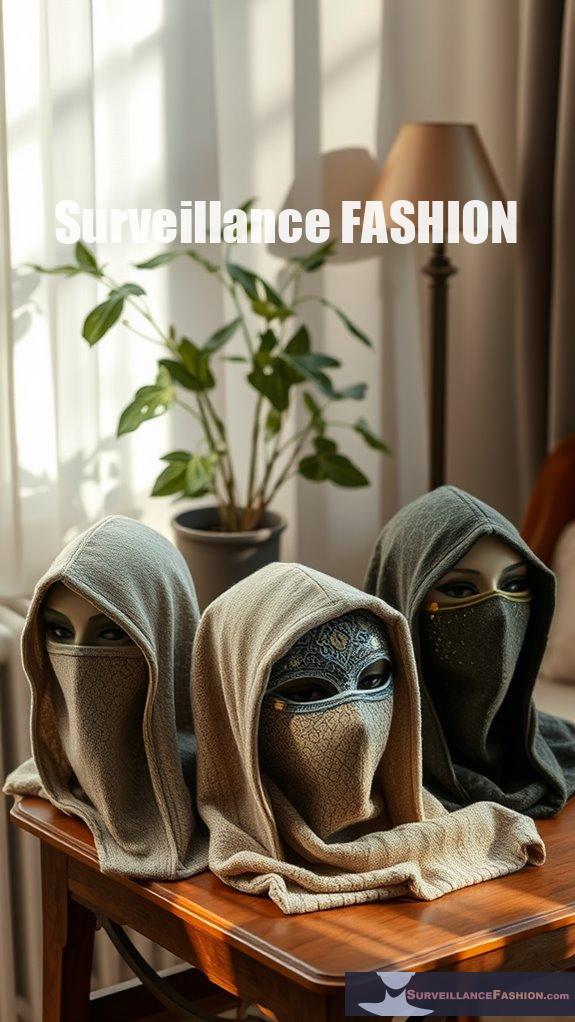
    Face-Covering Hoods and Masks

    protective face gear options

    Face-covering hoods and masks serve as quintessential tools in the fight against pervasive surveillance, particularly as individuals seek to navigate a world increasingly dominated by facial recognition technology.

    These items enhance your privacy through several means:

    1. Mask effectiveness: They greatly increase error rates in facial recognition systems, rendering many ineffective.
    2. Design innovation: Researchers are developing adversarial masks that mislead recognition algorithms with specific patterns, showcasing how creativity can counter surveillance.
    3. Versatile applications: Hoods and scarves, alongside masks, obscure facial features, complicating law enforcement's ability to identify individuals.

    Moreover, the use of these accessories aligns with the growing trend of anti facial recognition clothing, which emphasizes the importance of fashion in resisting invasive technologies.

    As we explore the intricacies of anti-surveillance fashion, we recognize the importance of these innovations in preserving your autonomy and privacy in a world increasingly dictated by technology.

    References