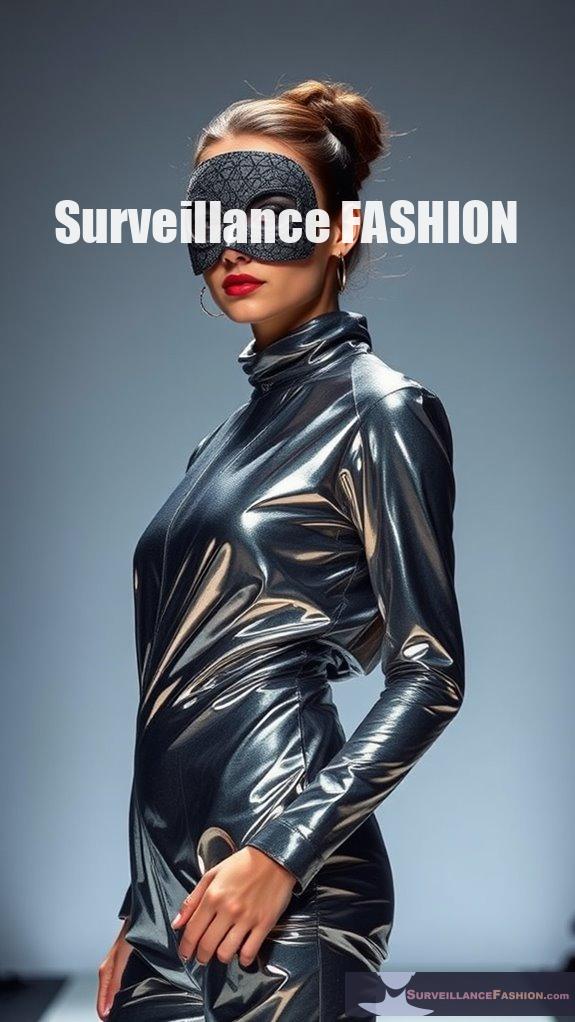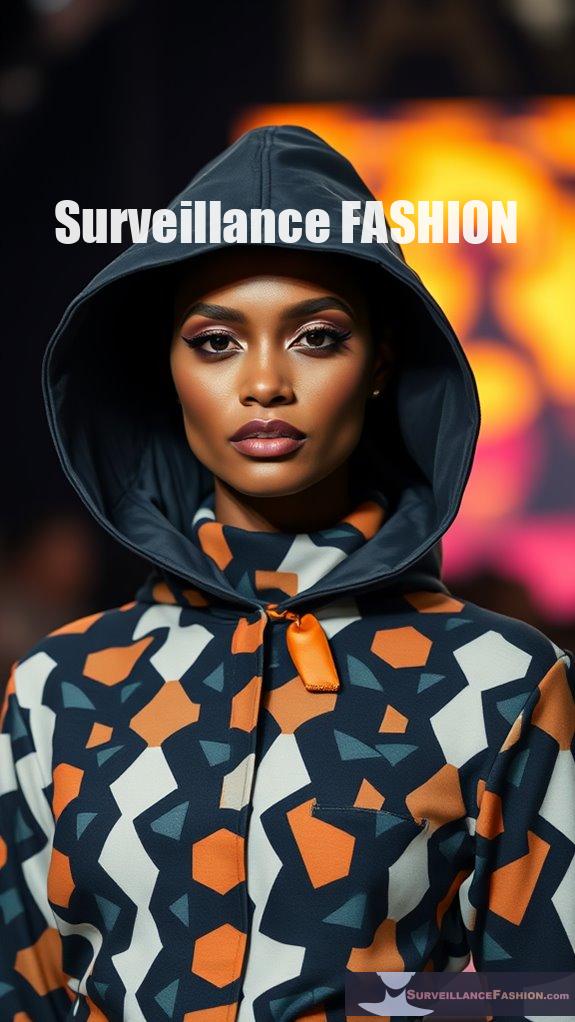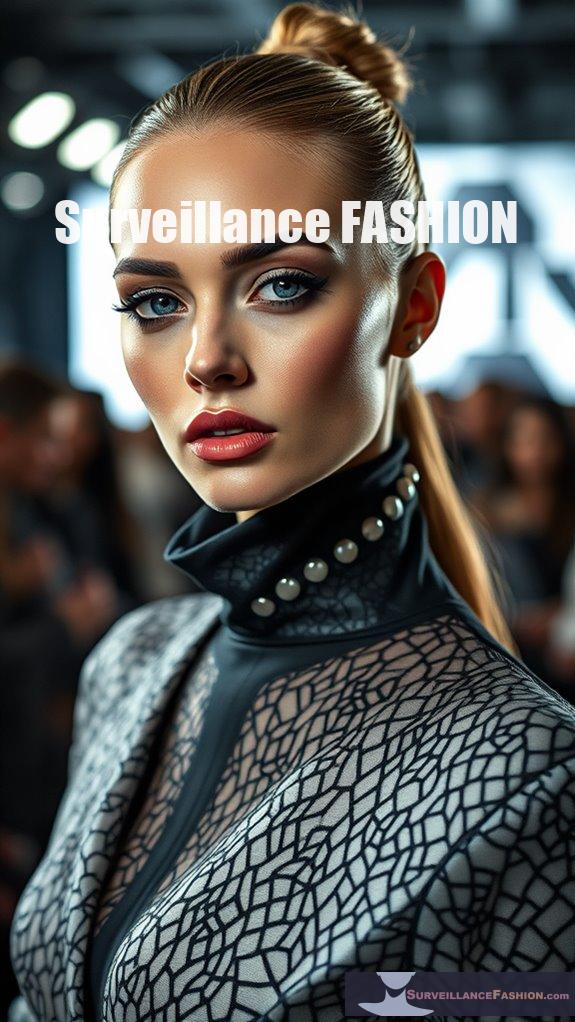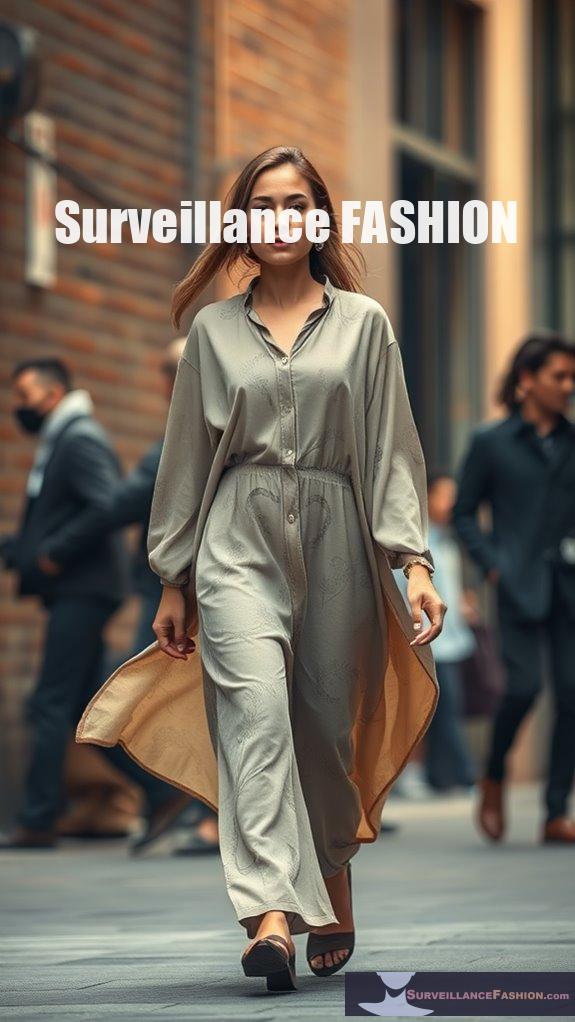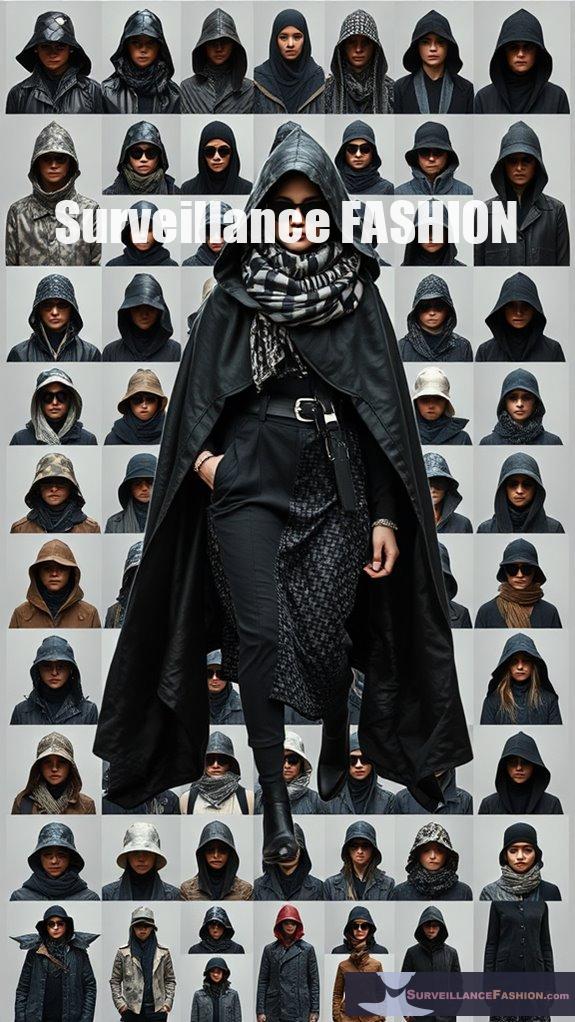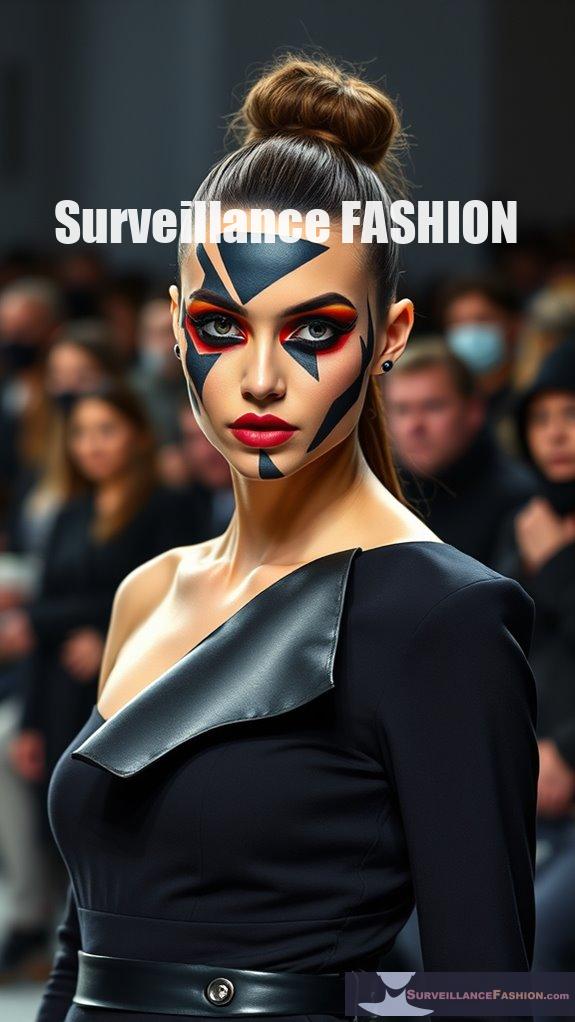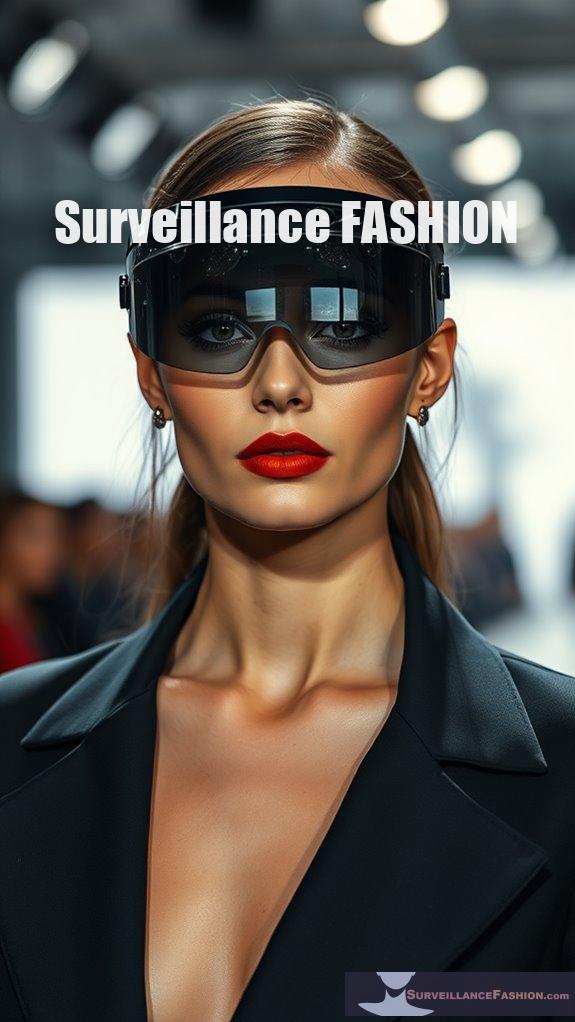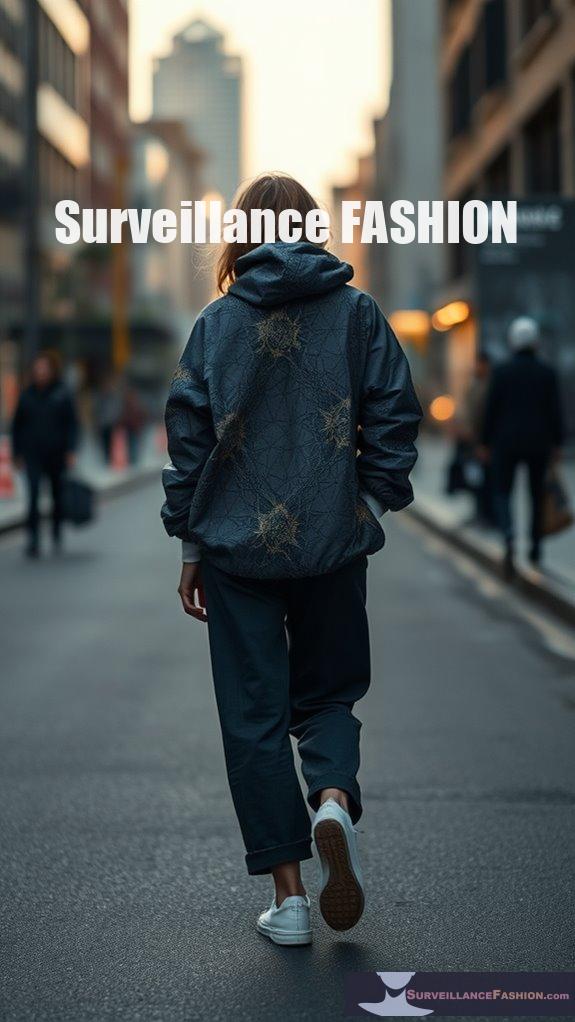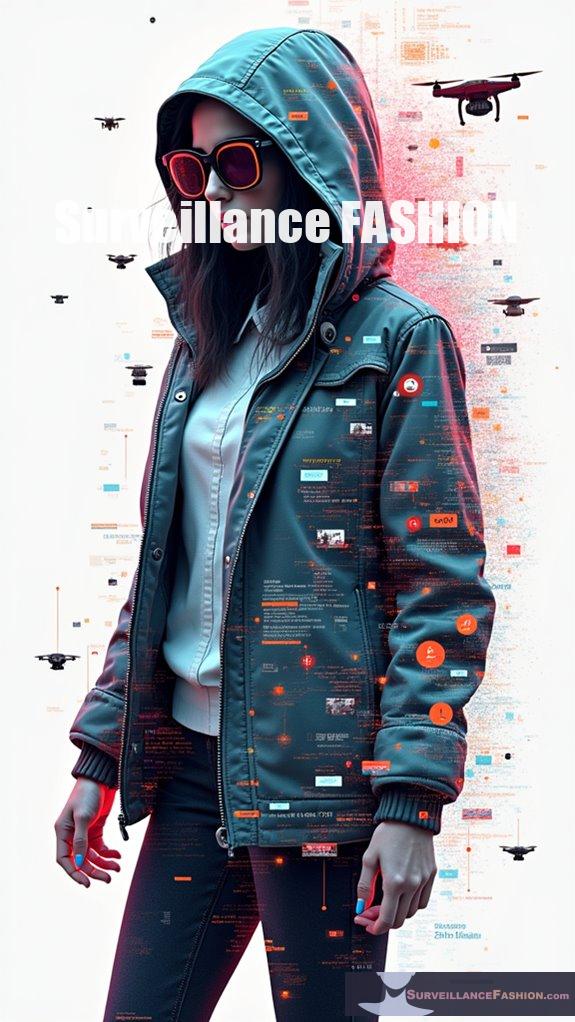
Tag: privacy fashion

  • Using Anti-Surveillance Hoodies

    Using Anti-Surveillance Hoodies

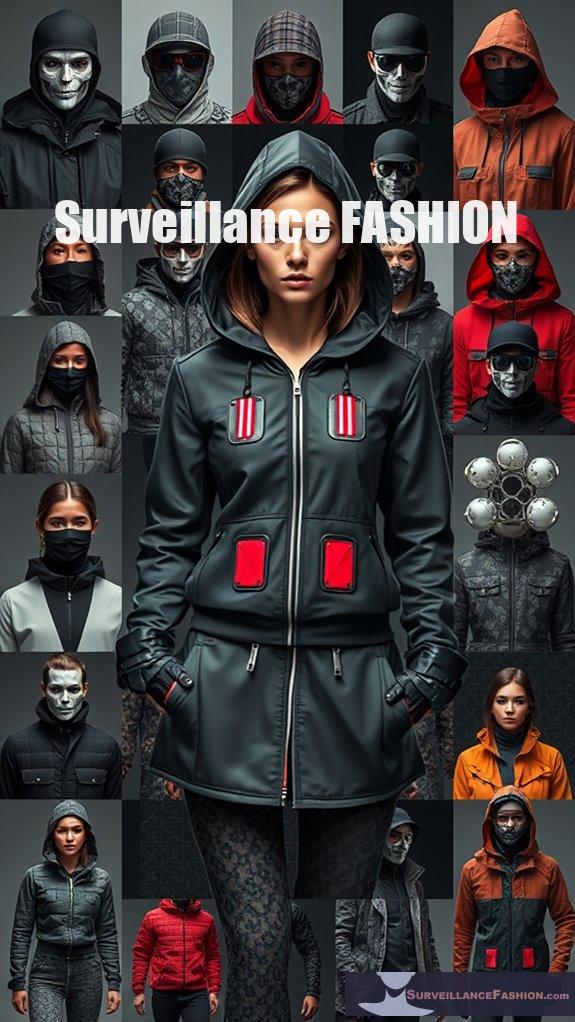
    Using anti-surveillance hoodies, you can effectively shield your identity from pervasive surveillance technologies. These garments utilize infrared LEDs, which emit invisible light to disrupt camera sensors, leading to facial feature obfuscation. Furthermore, they incorporate adversarial patterns to confuse facial recognition algorithms. However, their effectiveness diminishes in daylight, as natural light overwhelms IR signals. By exploring further, you’ll uncover various functionalities and innovative designs that can enhance your privacy while traversing increasingly monitored urban environments.

    Quick Takeaways

    • Anti-surveillance hoodies use infrared LEDs to disrupt cameras, enhancing user anonymity in high-surveillance environments.
    • Features like adversarial patterns confuse facial recognition algorithms, increasing personal privacy.
    • Designed for urban settings, they protect against both daytime and nighttime surveillance techniques.
    • Some models include customizable electronics and DIY options for personalized use.
    • Consider limitations such as reduced effectiveness in daylight and vulnerability to biometric identification methods.

    What Are Anti-Surveillance Hoodies and How Do They Work?
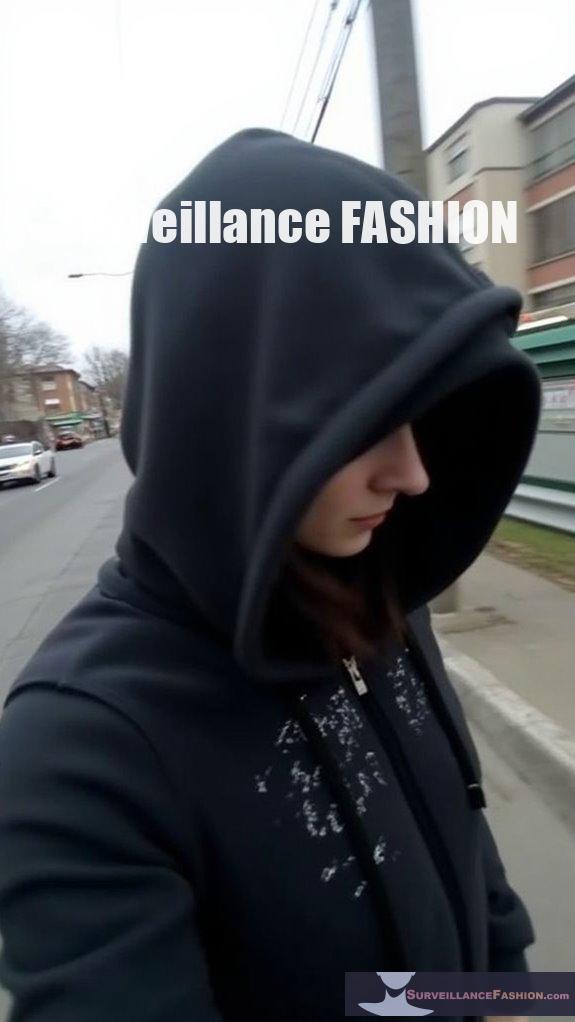
    anti surveillance technology hoodies explained

    These hoodies typically incorporate various technologies to counteract surveillance, such as:

    • Infrared (IR) LEDs that emit invisible light, overwhelming cameras,
    • Adversarial patterns that disrupt AI facial recognition algorithms,
    • Blocking fabrics to shield against electronic tracking,
    • Design features like double-lined hoods and strategic lighting for maximum effectiveness. Additionally, some designs, like the Camera Shy Hoodie, are aimed at making the wearer unrecognizable in security footage. The integration of privacy-enhancing eyewear can further complement these hoodies, enhancing the overall effectiveness against surveillance. Their performance can vary based on the type of camera and environmental factors, highlighting the ongoing debates surrounding privacy in public spaces.

    How Do Built-In Infrared LEDS Contribute to Facial Feature Obfuscation?

    Built-in infrared LEDs contribute to facial feature obfuscation by emitting invisible light that saturates camera sensors, resulting in loss of detail and overexposure in captured images. This disruption hinders facial recognition algorithms from accurately identifying key features. The camera shy hoodie is designed specifically to maximize this effect by integrating high-powered infrared LEDs.

    The strategic placement and operation of these IR LEDs amplify their effectiveness. When positioned near the face, they flood the camera’s view, creating overly bright regions that confuse auto-exposure settings. Additionally, using anti-surveillance techniques such as these can significantly enhance personal privacy in increasingly monitored environments.

    Key points include:

    • Strobing patterns create fluctuating brightness, complicating stable image capture.
    • The IR halo effect isolates facial features from their surroundings.
    • Placement around the hoodie facilitates consistent illumination from multiple angles.

    Ultimately, this combination of techniques makes it difficult for surveillance systems to capture clear images of the wearer, effectively masking their identity.

    What Is the Effectiveness of Strobing Patterns Against Facial Recognition Technology?

    Strobing patterns enhance the effectiveness of liveness detection in facial recognition technology by generating unpredictable light reflections that differentiate between genuine faces and spoofing attempts. Their use in conjunction with neural networks improves spoof detection accuracy. The unpredictability of strobing patterns reduces the likelihood of successful replay attacks using static images or videos. Genuine faces reflect light uniformly, while forgeries typically show delays in reflection due to processing time. Neural networks further analyze these light reflection patterns to detect subtle discrepancies that indicate spoofing. Additionally, these techniques rely on reflected light to ensure an accurate distinction between authentic and counterfeit responses. Recent studies suggest that biometric spoofing is increasingly becoming a challenge for identification systems, highlighting the importance of such anti-surveillance measures. However, the effectiveness of strobing can be influenced by:

    • Controlled illumination conditions.
    • Variability in skin reflectance across different demographics.
    • Advanced computational techniques that rogue actors may employ.

    While strobing can detect liveness, it’s essential to combine it with other biometric measures for thorough identity verification.

    Can Anti-Surveillance Hoodies Be Used Successfully in Daylight?

    Anti-surveillance hoodies utilizing infrared (IR) LEDs are ineffective in daylight due to natural IR saturation and dominance of visible light, which makes facial recognition algorithms far more operational.

    In daylight conditions, the ambient light, particularly sunlight, overwhelms the IR signals emitted by the hoodies. This saturation greatly diminishes their ability to blind night vision cameras.

    While these garments are designed to exploit the invisibility of IR light at night, they don’t provide any visible obstruction or protection against surveillance in bright environments.

    Key points include:

    • Passive adversarial clothing and visual patterns are more effective for daytime use.
    • IR LEDs create no visible light during the day, offering no camouflage against visible-light cameras.
    • The technology primarily serves as a nocturnal solution, with limited practical use in direct sunlight.

    What Are the Key Features of Mac Pierce’s Camera Shy Hoodie?

    infrared hoodie for surveillance protection

    The key features of Mac Pierce’s Camera Shy Hoodie include a 12-LED infrared array for blinding night vision cameras, a user-controlled IR strobe mode, and customizable DIY electronics. It requires a 15-volt power source and effectively obscures the wearer’s identity in low-light environments.

    The hoodie is designed to combat surveillance by emitting infrared light that disrupts typical cameras used in security systems. The LEDs are strategically placed to cover the head and upper body, ensuring thorough coverage.

    Users can activate the strobe mode via a sleeve switch, allowing for discretion and control over its use. Constructed as a DIY project, the hoodie encourages custom modifications while raising awareness about surveillance issues.

    Key considerations for use include the need for an insulating layer to avoid discomfort and the efficacy being limited to low-light situations. The project is intended for ethical privacy protection rather than illegal activities.

    How Do Anti-Surveillance Hoodies Promote Personal Anonymity?

    Anti-surveillance hoodies promote personal anonymity by utilizing embedded IR LEDs and disruptive visual patterns to obscure the wearer’s facial features from surveillance cameras. This balance allows individuals to maintain privacy without attracting undue attention in public spaces.

    The integration of high-power infrared LEDs targets night-vision cameras, creating overexposure effects that anonymize the wearer’s head and face. Moreover, the printed designs on the hoodies confuse facial recognition algorithms by presenting misleading visuals.

    Key features include:

    • Camouflage against surveillance in monitored environments.
    • Disruption of AI detection through complex patterns.
    • Enhanced privacy while traversing public or activist spaces.
    • A blend of technology with fashion for everyday wearability.

    Ultimately, these garments offer a proactive approach to protect individual privacy in an age of increasing surveillance technology. However, their effectiveness may vary based on lighting conditions and the sophistication of detection systems.

    What Are the Limitations of Using These Hoodies Against Various Surveillance Systems?

    Anti-surveillance hoodies have significant limitations, particularly against various surveillance systems. They mainly disrupt infrared night vision cameras in low-light environments but are ineffective in daylight conditions and face challenges against alternative tracking methods.

    These hoodies rely on infrared (IR) technology, only affecting specific IR cameras while leaving conventional RGB cameras unaffected. In well-lit or sunny areas, they can attract attention instead of providing anonymity. Furthermore, biometric identification methods like gait analysis and behavior recognition can still identify individuals, undermining the hoodies’ purpose.

    High-security or actively monitored environments further reduce their effectiveness, as security personnel and AI systems may easily spot the visual anomalies created by the IR lights.

    In addition, their design must match specific IR wavelengths, which limits their utility across varied camera types. Factors such as environmental conditions, battery life, and user comfort also hinder their practicality, making it difficult to achieve effective anonymity solely through these garments.

    Finally, they don’t address non-visual surveillance methods, such as thermal imaging or radio frequency (RF) tracking, leaving wearers vulnerable to other forms of surveillance.

    Who Is the Target Market for Anti-Surveillance Hoodies?

    The target market for anti-surveillance hoodies includes privacy-conscious activists, tech-savvy privacy advocates, individuals in high-surveillance urban environments, privacy-focused designers, and supporters of digital rights campaigns.

    These consumers seek protection from pervasive surveillance through fashionable, functional clothing. They often prioritize garments that disrupt recognition technologies, such as complex patterns and metal-infused fabrics. Furthermore, their motivation stems from a desire to maintain anonymity and push back against state and corporate overreach.

    Target demographics also include:

    • Grassroots activists and protesters
    • Tech enthusiasts aware of biometric risks
    • Urban dwellers facing ubiquitous monitoring
    • Designers innovating in privacy-focused fashion
    • Digital rights advocates committed to reform

    How Are Privacy Concerns Driving Innovation in Fashion Technology?

    privacy driven fashion innovation

    Privacy concerns are driving innovation in fashion technology by prompting the development of anti-surveillance designs, reflective materials, and AI-driven customization that protect personal data from modern surveillance systems.

    This evolution in fashion addresses the increasing use of facial recognition and data extraction methods. Designers are integrating features such as:

    • Patterns that confuse facial recognition algorithms
    • Reflective fabrics that impair photography in low light
    • AI-driven personalization enhancing privacy
    • Smart textiles that adapt to surveillance threats

    These innovations aim to provide stylish options that prioritize individual privacy while remaining functional.

    Hoodies With Obscuring Hoods

    In the domain of modern fashion technology, innovative hoodies equipped with obscuring hoods represent a fascinating intersection of style and security, designed thoughtfully to counteract the pervasive threats of surveillance.

    These garments ingeniously integrate high-powered infrared LEDs that disrupt night vision cameras, rendering facial recognition useless.

    However, as you consider the safety implications and ethical considerations of wearing such a device, questions arise about broader surveillance practices.

    While these hoodies create a unique blend of anonymity and fashion, they can’t eliminate surveillance entirely, highlighting an ongoing tension between personal privacy and technological advancement, which is why we created this website, Surveillance Fashion.

    Anti Surveillance Ebook review: Eyes Everywhere

    Boghosian intricately weaves stories of social movements, revealing how surveillance ethically compromises both activism and fashion privacy.

    Through examining varied instances—from phone tracking to the coordinated monitoring of protests—he highlights an unsettling truth: surveillance operates as a mechanism of control rather than safety.

    In a world increasingly influenced by surveillance ethics, this eBook encourages a deeper reflection on your role within this pervasive digital environment.

    Crowded Urban CCTV Networks

    As urban settings evolve, the proliferation of CCTV cameras transforms public spaces into a matrix of surveillance, fundamentally altering the dynamics of city life.

    With over 700 million cameras globally, densely populated cities like Beijing, where there’s one camera for every two residents, exemplify this shift.

    Each camera, strategically placed near transport hubs or crowded areas, forms part of a complex sensor network, often enhanced by AI analytics for facial recognition.

    This elaborate web jeopardizes urban privacy, amplifying concerns about anonymity.

    In such an environment, anti-surveillance fashion becomes essential, as we endeavor to reclaim a sense of privacy amidst invasive watchfulness.

    Civil Liberties Against Safety Measures
    surveillance safety civil liberties

    While the tension between civil liberties and safety measures escalates amidst an increasingly surveilled society, one can’t ignore the complex dilemmas presented by anti-surveillance garments.

    References

  • Why Anti-Facial Recognition Fashion Blocks Your Identity

    Why Anti-Facial Recognition Fashion Blocks Your Identity

    Anti-facial recognition fashion effectively obscures your identity by utilizing cutting-edge designs and materials that disrupt surveillance technologies. For instance, hats often incorporate infrared LEDs, while scarves feature reflective elements and elaborate patterns that confuse recognition systems.

    By layering these fabrics, you create a complex visual environment that algorithms struggle to decipher. This innovative approach to privacy not only challenges corporate surveillance but also resonates with cultural dialogues around autonomy; keep exploring to uncover more intriguing facets.

    Quick Takeaways

    • Anti-facial recognition fashion uses unique designs and patterns to confuse detection algorithms, disrupting their ability to accurately identify individuals.
    • Incorporating reflective materials and infrared light emission helps block facial recognition systems that rely on visual symmetry for identification.
    • Techniques such as adversarial printed patterns create visual noise, overwhelming recognition algorithms and masking true facial features.
    • Accessories like hats and scarves can strategically cover critical facial areas, adding layers of privacy protection against invasive surveillance techniques.
    • The clothing’s structural elements and modular designs further complicate facial recognition, challenging the effectiveness of existing surveillance technologies.

    What Are the Key Features of Anti-Surveillance Hats?

    facial recognition disruption features

    Anti-surveillance hats are designed with several key features to disrupt facial recognition technology, including infrared light emission, reflective materials, adversarial designs, and physical coverage.

    These elements work together to obscure facial features and shield the wearer from recognition systems. The hats utilize infrared LEDs to emit noise that interferes with facial recognition cameras, particularly in low-light conditions. Reflective materials enhance this effect by creating glare that obscures facial contours, adversarial patterns are printed to confuse recognition algorithms by degrading confidence scores.

    In addition to these technologies, many hats are crafted from advanced fabrics that also enhance comfort and breathability, making them suitable for prolonged use. Finally, the design often incorporates visors or extensions to maximize shadow coverage, limiting camera visibility of key facial landmarks. In line with advancements in surveillance evasion, these hats are part of a growing trend to use adversarial clothing as a means to protect individual privacy.

    These features aren’t only functional but also focus on aesthetics and comfort for everyday wear.

    How Do Beanie Hats Disrupt Facial Recognition Systems?

    Beanie hats disrupt facial recognition systems primarily by integrating infrared LEDs to project patterns that interfere with machine vision sensors and confuse algorithmic input.

    Furthermore, their design provides partial facial occlusion, reducing identifiable features available to recognition software.

    The infrared projections emitted by the beanies create noise that misleads facial recognition algorithms, leading to misidentification. These projected patterns often render specific facial features unusable by shifting the AI’s focus toward non-facial elements.

    In conjunction with occlusion from the hat itself, the overall effect drastically reduces the accuracy of facial recognition systems, increasing the chance of error.

    • The combination of infrared interference and occlusion heightens confusion for recognition software.
    • Patterns can be tailored to confuse specific algorithms like ArcFace.
    • Beanies are socially acceptable and can be worn casually, enhancing user comfort.
    • Additionally, these infrared-reflecting materials significantly deter unauthorized surveillance and tracking.
    • The effectiveness may vary based on lighting conditions and camera technology.

    What Materials Enhance the Effectiveness of Anti-Surveillance Headwear?

    Answer:

    Effective anti-surveillance headwear incorporates infrared-emitting materials, adversarial patterned fabrics, and reflective thermal shielding to obscure recognition by cameras and thermal imaging systems.

    Expanded Content:

    1. Infrared-Emitting Materials: High-powered infrared (IR) LEDs can blind night vision cameras, preventing facial recognition without detection by the human eye.
    2. Adversarial Patterned Fabrics: These fabrics confuse AI detection systems by altering biometric data, making wearers appear as animals or objects.
    3. Reflective and Thermal Shielding Materials: Silver-plated fabrics reflect thermal signatures, thwarting heat-based detection methods, while glare from reflective surfaces can disrupt surveillance cameras.
    4. Disruptive Patterns and Makeup: Integrating dynamic patterns and asymmetrical makeup can mislead recognition algorithms by introducing visual noise.

    Combining these materials enhances the overall effectiveness of anti-surveillance headwear, ensuring better privacy for the wearer.

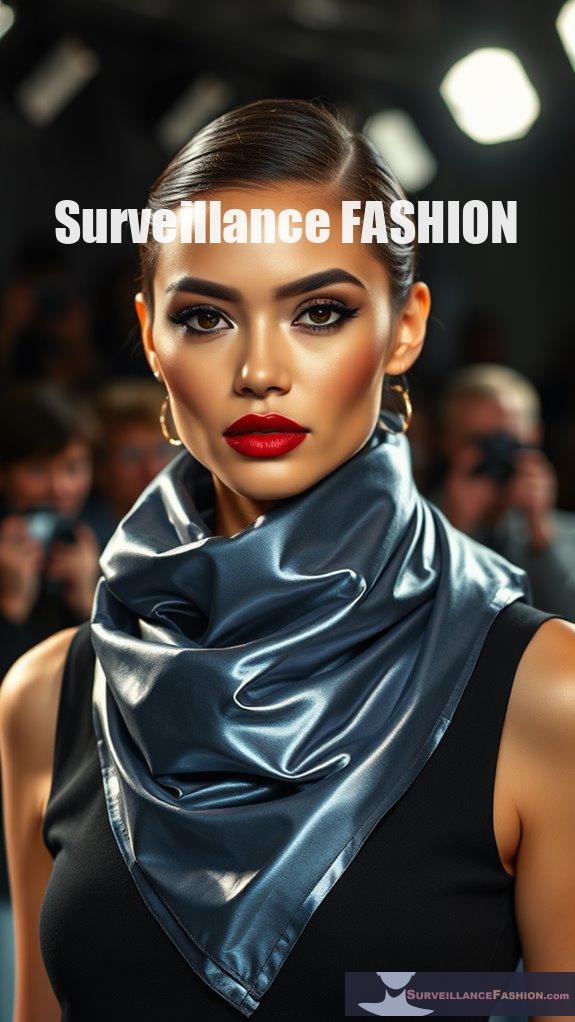
    How Do Reflective Elements in Scarves Confuse Surveillance Cameras?

    Reflective elements in scarves confuse surveillance cameras by redirecting infrared (IR) light and creating glare that obscures facial features.

    This interference disrupts image clarity, leading to loss of definition, sensor saturation, and challenges for facial recognition algorithms.

    The effectiveness of these reflective materials hinges on both their reflective properties and camera angles. Scarves designed with glossy or metallic finishes create significant glare under strong lighting, confusing image processing and diminishing facial detail recognition.

    Key mechanisms include:

    • Redirection of IR light, resulting in bright spots.
    • Triggering of auto-exposure adjustments causing blurriness.
    • Dynamic glare patterns complicating consistent identification.
    • Angle-dependent performance that maximizes obstruction when aligned with camera positions.

    While reflective elements can enhance anonymity, their efficacy may be limited by advanced surveillance technologies capable of mitigating such disruptions.

    What Role Do Layered Fabrics Play in Protecting Identity?

    Layered fabrics considerably enhance identity protection by increasing particle filtration efficiency and disrupting facial recognition algorithms through texture and structural irregularities. This combination obscures facial features and hinders detailed imaging, complicating AI pattern detection.

    The design of multilayered fabrics strategically employs varying weaves and densities to create unpredictable surface geometries, making it challenging for facial recognition technology to accurately map features.

    Key aspects include:

    • Texture Variability: Raised fibers and irregular surfaces interrupt the continuity of face-shaped pixels.
    • Filtration and Breathability: While layered materials improve particle capture, they must maintain airflow for comfort.
    • Optical Disruption: Layering alters light reflection, further confounding recognition algorithms.
    • Dynamic Movement Masking: Variability in fabric textures limits AI’s ability to track facial muscle movements, enhancing concealment.

    Collectively, these features work synergistically to bolster privacy in an era dominated by surveillance technologies.

    How Can Patterns on Hats Scramble Facial Recognition Algorithms?

    patterned hats disrupt recognition

    Patterns on hats can scramble facial recognition algorithms by creating visual noise and misleading cues that disrupt the detection of key facial landmarks. Irregular shapes and contrasting colors interfere with the algorithms’ ability to accurately map facial features, leading to increased error rates and false positives.

    The complexity of hat patterns affects facial recognition in several ways:

    • Visual noise: Layered textures and disruptive colors degrade image quality, causing algorithms to misinterpret facial regions.
    • Misleading cues: Patterns resembling eyes or mouths create false landmarks, skewing feature mapping.
    • Geometric disruption: Irregular shapes near the face disturb symmetry, leading to reduced identification accuracy.
    • Shadow manipulation: Patterns can alter expected light and shadow, affecting 3D model reconstruction.

    What Techniques Are Used in DIY Anti-Surveillance Fashion?

    DIY anti-surveillance fashion techniques include using conductive fabrics, adversarial printed patterns, infrared LED integration, and incorporating masks and accessories. These methods effectively disrupt facial recognition algorithms and enhance wearer anonymity.

    To expand on these techniques:

    • Conductive Fabrics: Incorporating fabrics embedded with conductive materials can block signals from biometric scanners and RFID readers.
    • Adversarial Patterns: Clothing with complex, multi-directional designs confuses facial recognition by obscuring key features.
    • Infrared LED Clothing: Attaching IR LEDs to garments creates bright spots for cameras, ensuring facial details are lost.
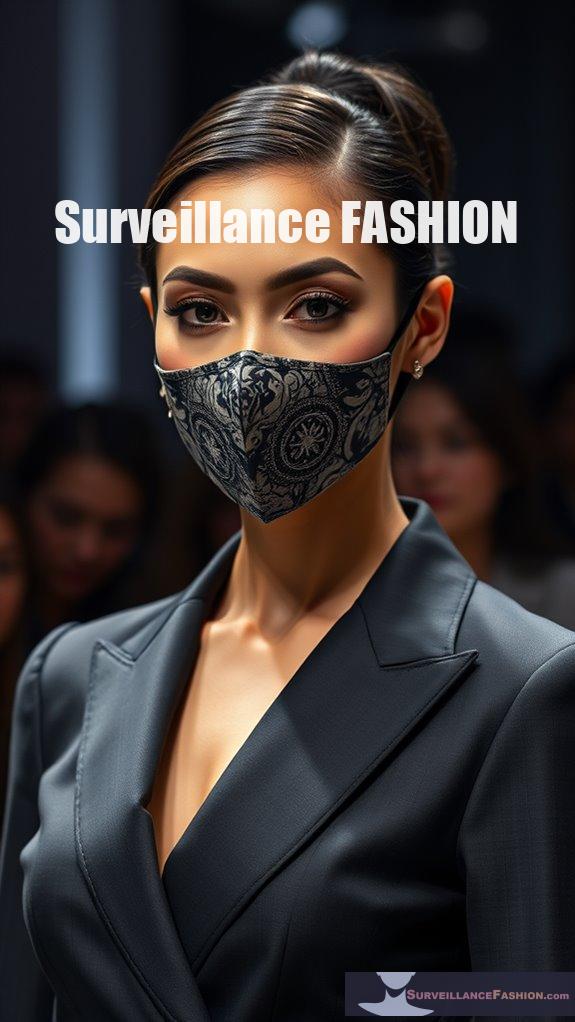
    • Face Masks and Reflective Accessories: Wearing masks or reflective materials can disrupt image capture while blending into common attire.

    These methods allow individuals to enhance their privacy in an increasingly surveilled environment.

    How Does the Design of Hyperface Clothing Work Against Recognition Systems?

    Hyperface clothing designs utilize patterns that mimic facial features to confuse facial recognition systems, effectively lowering the accuracy of identity detection. By introducing numerous false facial images, these garments disrupt algorithmic detection methods, rendering the wearer’s actual face difficult to identify.

    Hyperface patterns incorporate elements like eyes, mouths, and noses, laid out strategically to mislead recognition algorithms. This overload of visual data aims to trigger multiple detections, considerably reducing the confidence level of identification.

    Key points include:

    • The designs challenge algorithms dependent on edge detection and shape recognition.
    • Patterns appear as digital noise, disrupting the extraction of facial landmarks.
    • Clothing can adaptally be worn or used to cover environments, enhancing privacy.
    • Applications range from clothing to scarves, extending the potential anti-surveillance capabilities.

    The complexity and density of these patterns create a dynamic interaction with recognition systems, improving privacy for the wearer.

    What Are the Best Practices for Wearing Anti-Surveillance Hats and Scarves?

    Best Practices for Wearing Anti-Surveillance Hats and Scarves:

    To effectively wear anti-surveillance hats and scarves, choose dark or reflective materials. Opt for designs that cover key facial areas and utilize patterns that confuse recognition algorithms. Layering garments and considering the environment are also crucial for maximizing effectiveness.

    When selecting your anti-surveillance gear, consider these additional understandings:

    • Prioritize large-brimmed or hooded hats to cast shadows over your face.
    • Choose scarves that cover the mouth and nose, obscuring critical facial landmarks.
    • Use patterns that include multiple face-like images to confuse detection algorithms.
    • Be aware of cultural norms regarding face coverings in your area to avoid drawing attention.

    Incorporating these strategies can greatly enhance anonymity in various settings.

    How Do Makeup and Face Paint Contribute to Anti-Surveillance Efforts?

    Makeup and face paint contribute to anti-surveillance efforts by disrupting the features used by facial recognition algorithms, effectively creating ‘anti-faces’ that confuse detection systems while remaining recognizable to human observers.

    This approach utilizes strategic darkening and asymmetric designs to reduce algorithm accuracy. These methods enable individuals to mask their identities without the need for cumbersome disguises.

    Key tactics include:

    • Targeted contouring on facial high-density regions.
    • Manipulation of facial patterns to break recognition.
    • Subtle application that avoids drawing attention.
    • Layered combinations with other anti-surveillance techniques to enhance efficacy.

    However, as facial recognition technology evolves, the effectiveness of makeup-based methods may diminish, highlighting the need for ongoing innovation in anti-surveillance strategies.

    What Impact Do Color Choices Have on Facial Recognition Error Rates?

    color choices impact recognition

    Color choices greatly impact facial recognition error rates, with high contrast and certain patterns increasing misidentification. This is particularly pronounced for individuals with darker skin tones, where color and design can obscure key facial features.

    High contrast colors near facial features can disrupt algorithms, leading to more errors. For instance, dark or vibrant clothing can obscure facial landmarks like the eyes and nose, which are essential for recognition.

    Furthermore, specific color choices might amplify biases present in algorithms trained on datasets favoring lighter skin tones, reducing their effectiveness on darker complexions.

    • Dark colors can obscure facial features.
    • High contrast patterns like masks increase misidentification.
    • Color choices affecting symmetry contribute to errors.
    • Certain hues can distort image quality, increasing algorithmic inaccuracies.

    How Can Anti-Surveillance Fashion Reflect Individual Style?

    Anti-surveillance fashion reflects individual style by integrating aesthetics with privacy protection, allowing wearers to express their identity while safeguarding against biometric tracking.

    This fashion movement combines innovative materials and design techniques to maintain versatility and align with socio-cultural values.

    Designers employ glitchy prints, reflective stripes, and customizable accessories to merge functionality with personal flair.

    Popular choices include:

    • Scarves and masks crafted from reflective materials
    • High-contrast patterns that disrupt recognition algorithms
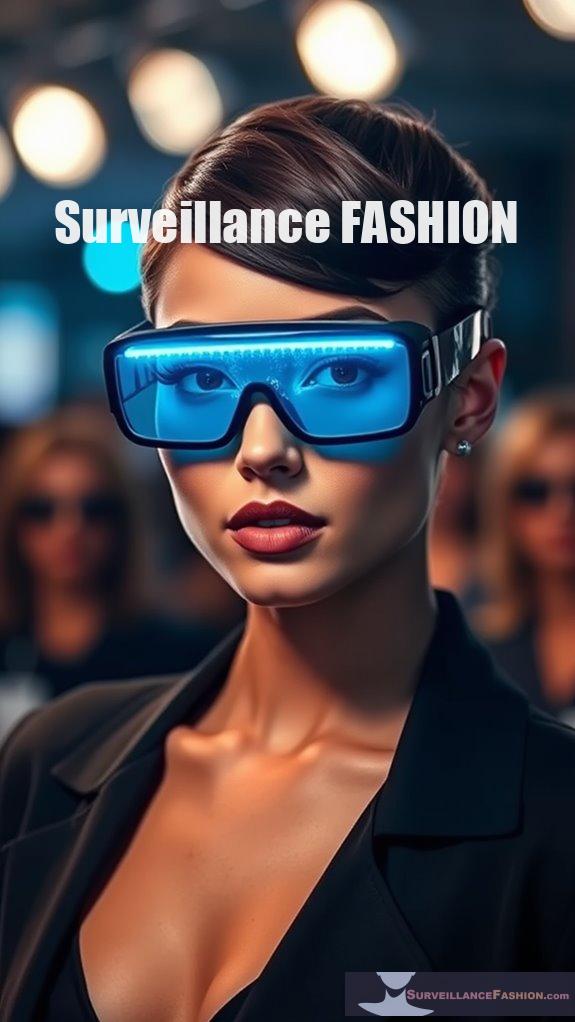
    • Accessories like anti-CCTV glasses

    As public concern over surveillance increases, such fashion not only preserves anonymity but also serves as a statement on privacy and autonomy, enabling stylish self-expression amid growing scrutiny.

    What Is the Significance of Anti-Surveillance Fashion From a Political Perspective?

    Anti-surveillance fashion holds significant political value as it serves as visible resistance against state and corporate surveillance, critiques the legitimacy of these systems, and empowers individuals through accessible activism.

    This form of fashion not only interrupts the normalization of surveillance but also engages the public in discourse about privacy rights and individual anonymity. By utilizing creative designs that disrupt facial recognition technology, activists challenge government claims of infallibility.

    Key aspects of anti-surveillance fashion include:

    • Deliberate choices to conceal identity
    • Public events raising awareness about surveillance
    • Open-source designs that encourage participation
    • Everyday actions becoming significant political statements

    Ultimately, it democratizes resistance and amplifies voices of those disproportionately affected by surveillance.

    Anti Surveillance Ebook review: Eyes Everywhere

    Surveillance has become an omnipresent element of modern life, seamlessly woven into the fabric of both public and private environments, leaving individuals often feeling exposed and vulnerable.

    In “Eyes Everywhere,” the author dissects the pervasive nature of surveillance, emphasizing its global proliferation. Despite widespread camera installation, there’s scant evidence showing it effectively deters crime.

    The book explores the implications for social equity, as surveillance disproportionately targets marginalized groups. Offering a keen analysis of the technological evolution from traditional CCTV to advanced smart systems, it evaluates how our privacy erodes under the watchful eye, prompting us to rethink our societal structures—hence, the importance of Anti-Surveillance Fashion.

    Anti-Surveillance Hairstyles and Headwear

    Have you ever considered how the simplest changes to your hairstyle or headwear could potentially shield you from prying eyes?

    Innovative approaches like CV Dazzle demonstrate that asymmetric hairstyles can obscure key facial landmarks, thereby obstructing facial recognition algorithms that depend on symmetry.

    Implementing unique silhouettes, such as spiky or multi-directional styles, disrupts the predictable features these technologies target.

    Additionally, strategically designed headwear can cast shadows or project false facial landmarks, further complicating model detection.

    Ultimately, adopting such anti-surveillance hairstyles and headwear provides a wearable solution, allowing you to navigate daily life while maintaining an element of privacy in a scrutinized world.

    Anti Surveillance Hat Designs Tutorial

    As your journey into protective fashion evolves from hairstyles and headwear, exploring the design of hats specifically engineered to thwart facial recognition technology offers an innovative frontier.

    Utilizing infrared LEDs strategically placed around the hat’s brim, you can emit invisible light that overwhelms surveillance cameras, rendering your facial details indecipherable.

    Lightweight fabrics, embedded with conductive threads, discreetly integrate electronic components without compromising comfort. Modular elements and reflective surfaces further confuse detection algorithms, enhancing effectiveness.

    Testing these designs against various lighting conditions, coupled with smartphone filters, can validate their capability.

    This complex interplay of technology and style exemplifies why we created this website, Surveillance Fashion.

    References

  • 10 IR-Blocking Materials for Privacy Fashion

    10 IR-Blocking Materials for Privacy Fashion

    Ever tried to blend in while feeling like a walking signal?

    I remember the first time I ventured into a crowded tech conference. Everyone was networking, and I was sweating bullets, hoping my outfit wouldn’t scream “Look at me!”

    That’s when I discovered Shieldex® Bremen-IR. It’s a silver-plated nylon fabric that zaps IR signatures by 90%. Talk about a fashion miracle!

    And then there’s aluminized Mylar. Super reflective and a DIY dream—perfect for those of us who live on a budget but still want to stay off the grid.

    Navigating privacy fashion can feel like a stealth mission, but isn’t that part of the thrill?

    Embracing Minimalism in Anti-Surveillance Fashion

    I once lived in a closet-sized apartment, and let me tell you, less stuff meant fewer distractions—and more focus on what really mattered. I ditched excess clothing and embraced multifunctional pieces that also kept me hidden from prying eyes.

    Every item had to earn its keep, like my favorite anti-IR jacket that doubles as a raincoat. Minimalism taught me that simplicity can be stylish and practical, especially when navigating a world that’s always watching. It’s a delicate balance of comfort, privacy, and personal expression.

    Quick Takeaways

    • Shieldex® Bremen-IR effectively reduces IR signatures by up to 90%, making it ideal for privacy-focused fashion applications.
    • Silver-plated synthetic fabric combines thermal defense with flexibility, enhancing comfort and privacy through its IR-blocking technology.
    • Aluminized Mylar blankets are a cost-effective option, reflecting body heat and retaining warmth while providing thermal concealment.
    • Infrared-reflective fabrics disrupt night vision detection, enhancing stealth and privacy for military and tactical garment designs.
    • IR-absorbent materials minimize infrared radiation detection, expanding applications for innovative privacy-enhancing wear in various environments.

    Shieldex® Bremen-IR: The Silver-Plated Solution

    silver plated shieldex solution

    In the domain of advanced materials, Shieldex® Bremen-IR stands out as a significant innovation, particularly for those involved in military applications where infrared (IR) signature management is essential. This silver-plated Nylon ripstop fabric offers remarkable shieldex durability, achieving up to a 90% reduction in IR signature while maintaining an impressive average of 60 dB RF shielding from 30MHz to 10GHz. With a surface resistivity of less than 0.5 Ohms/square and a temperature range from -40°C to 100°C, it’s engineered for resilience. Its applications span from IR signature-reducing garments to protective equipment covers, enhancing stealth capabilities in diverse military environments.

    It is designed to conceal objects and people effectively in the mid and long wave infrared radiation spectrum. The use of infrared-blocking fabrics has also gained popularity in civilian fashion, offering privacy and comfort for everyday wear.

    Silver-Plated Synthetic Fabric: Flexibility Meets Thermal Defense

    flexible thermal protection fabric

    Silver-plated synthetic fabrics represent a remarkable convergence of flexibility and thermal defense, offering unique properties that cater to a variety of practical applications. Utilizing silver properties, these fabrics provide exceptional thermal comfort, effectively managing body heat while maintaining a stylish appearance. Their inherent antimicrobial qualities enhance health safety, making them ideal for both everyday wear and specialized environments, like medical settings.

    These fabrics exhibit improved chemical composition due to their silver coating, which contributes to their overall durability and functionality in various conditions. The integration of ir-blocking technology further enhances privacy, making these fabrics a cutting-edge choice for anti-surveillance fashion.

    Aluminized Mylar Blanket: The Low-Cost Reflective Option

    affordable reflective insulation blanket

    Aluminized Mylar blankets represent a compelling solution for those seeking an economical yet effective means of thermal concealment in the domain of privacy fashion.

    These low-cost options, initially designed for emergency applications, provide remarkable thermal reflectivity, effectively minimizing your thermal signature and enhancing stealth. They can reflect body heat, retaining up to 90% of warmth, making them particularly useful in cold environments. Thermal signature-masking garments have gained popularity due to their innovative designs and practical applications in various settings.

    Constructed from military-grade materials, they’re waterproof and windproof, ensuring durability in various conditions.

    While their aesthetic appeal may be limited compared to other fabrics, their versatility allows for innovative DIY approaches, enabling you to craft unique garments.

    In an era of increasing surveillance, embracing such cost-effective solutions can empower personal privacy and security.

    Ir-Reflective Fabric: Blending Into the Night

    invisible in darkness

    As privacy fashion evolves, the integration of advanced materials like infrared-reflective (IRR) fabric marks a significant advancement in concealment technologies, particularly for those who find themselves traversing environments where stealth is paramount. This specialized fabric, engineered to manipulate infrared reflectivity, effectively disrupts night vision detection, allowing you to blend seamlessly into your surroundings.

    By employing multi-layered signatures and inorganic pigments, IRR fabric mimics natural features, enhancing its camouflage capabilities. Modern camouflage textiles utilize colors like olive, green, khaki, brown, and black, which further contribute to the effectiveness of the fabric in various environments. Whether in military uniforms or tactical gear, this stealth technology guarantees undetected movement, proving invaluable in covert operations and outdoor pursuits alike. This reflects a growing interest in materials that prioritize privacy and security in daily life.

    IR-Absorbent Materials: Reducing Thermal Signatures

    thermal signature reduction materials

    While the evolution of textiles often focuses on aesthetic appeal and comfort, the advent of IR-absorbent materials represents a framework shift in the intersection of fashion and technology, primarily aimed at reducing thermal signatures and enhancing privacy.

    • Inspired by stealth technology for thermal camouflage
    • Integrates components to absorb infrared radiation
    • Collaborations with sportswear brands for innovative applications

    These privacy textiles minimize detection by infrared cameras, thereby complicating surveillance efforts. As demand for privacy grows, these materials not only transform sportswear but also extend into broader applications, enhancing your ability to navigate an increasingly monitored world. The development of infrared-blocking textiles ensures that specific user needs are met, further driving the adoption of this innovative technology.

    Metamaterials: The Future of Invisibility

    invisibility through advanced materials

    Metamaterials represent a groundbreaking frontier in the pursuit of invisibility, aligning closely with the technological advancements that have emerged in the field of privacy fashion.

    By manipulating light through engineered properties, metamaterials applications are redefining invisibility technology, allowing light to bend seamlessly around objects, rendering them unseen. Recent developments show promise in achieving this effect across the visible spectrum, paving the way for transformative uses in both military camouflage and personal privacy.

    As you explore this innovative domain, consider how metamaterials may soon empower you, providing an unprecedented level of concealment and control over your personal visibility in an increasingly surveilled world. Current research focuses on developing metamaterials could significantly extend the wavelength coverage for effective cloaking.

    Anti-Surveillance Clothing: A Comprehensive Approach

    protective wear against surveillance

    In an age where digital surveillance has become an omnipresent concern, anti-surveillance clothing presents a multifaceted approach to safeguarding personal privacy.

    • Utilizes sustainable materials, enhancing fashion ethics
    • Employs complex patterns to confuse surveillance technologies
    • Integrates advanced fabrics for thermal evasion

    RFID-Blocking Fabrics: Enhancing Privacy

    privacy enhancing rfid blocking materials

    As digital privacy concerns escalate in today’s interconnected world, RFID-blocking fabrics emerge as a pivotal innovation in the domain of personal security.

    These advanced materials, typically composed of polyester infused with metal components like copper and nickel, effectively disrupt RFID signals, ensuring robust RFID security.

    Used in wallets and travel accessories, they not only prevent unauthorized data access but also maintain functionality for contactless payments.

    The lightweight nature and stylish designs allow seamless integration into daily life, enhancing privacy without sacrificing aesthetics.

    Investing in such fabric technology provides peace of mind, a fundamental principle behind our creation of Surveillance Fashion.

    Smart Technology Integration: Dynamic Surveillance Countermeasures

    dynamic smart surveillance solutions

    While the potential of smart clothing to enhance personal security is undeniable, it also raises significant concerns regarding data privacy and surveillance.

    • Smart clothing collects sensitive biometric data, heightening privacy risks.
    • Companies face scrutiny over robust data protection measures.
    • Regulatory frameworks like GDPR and CCPA demand stringent compliance.

    As you embrace smart clothing, consider the implications of biometric security and the constant monitoring it entails.

    The integration of sensors, while innovative, presents vulnerabilities that could lead to unauthorized access and exploitation.

    Therefore, awareness and proactive measures in data management become essential for maintaining control in a rapidly changing environment of personal surveillance, which is why we created this website Surveillance Fashion.

    Shielding and Privacy Screens: Static Protection Against Detection

    static detection protection solutions

    Shielding and privacy screens represent a pivotal advancement in static protection against detection, employing innovative materials to safeguard personal privacy in an increasingly surveilled world.

    By utilizing IR-blocking fabrics, such as silver-plated textiles like Shieldex® Bremen-IR, you can achieve effective thermal camouflage, considerably reducing your thermal signatures.

    These materials not only thwart unwanted surveillance but also align with emerging privacy regulations, ensuring you maintain control over your personal space.

    As privacy screens integrate seamlessly into clothing, they provide a sophisticated defense mechanism, allowing you to navigate sensitive environments with confidence and assert your right to remain undetected.

    Innovative Designs for Heat-Blocking Attire

    heat blocking clothing innovations

    Innovative designs for heat-blocking attire have emerged as essential solutions for maneuvering the challenges posed by fluctuating environmental conditions, especially in an era where personal comfort intersects with the demands of modern life.

    • Modular heated jackets enable adaptability to varying climates.
    • Adaptive fabrics like carbon nanotubes dynamically adjust to body heat.
    • Moisture-reactive films, as seen in Nike’s Aerogami, enhance ventilation.

    These advancements in modular designs and adaptive fabrics not only elevate personal comfort but also redefine the intersection of functionality and style, paving the way for future innovations in temperature-regulating fashion, a core focus of our website, Surveillance Fashion.

    Ideas for Heat-Reflective Textiles

    heat reflective textile innovations

    As the demand for advanced materials grows, the exploration of heat-reflective textiles offers a fascinating intersection of functionality and design that can greatly enhance personal comfort and safety.

    By utilizing sustainable materials such as non-woven polypropylene and silver-plated synthetic fabrics, you can achieve high thermal reflectivity while maintaining flexibility.

    Utilizing sustainable materials like non-woven polypropylene and silver-plated fabrics achieves thermal reflectivity without sacrificing flexibility.

    Advanced coatings, including metallic options like aluminum, guarantee effective heat dissipation, reducing heat stress in various environments.

    Moreover, incorporating moisture management technologies and phase change materials can optimize comfort, making these textiles suitable for outdoor activities or industrial applications.

    Consequently, such innovations contribute considerably to personal and occupational well-being.

    Definition of Privacy-Enhancing Wear

    privacy enhancing clothing technology

    Privacy-enhancing wear represents an advancing frontier in the intersection of fashion and technology, where garments not only serve aesthetic and functional purposes but also play an essential part in safeguarding personal information.

    • Utilize wearable technology that prioritizes data encryption
    • Implement features for data minimization and user anonymity
    • Guarantee compliance with privacy regulations like GDPR

    These innovations collectively transform how you interact with the world, minimizing personal data exposure while maintaining style.

    Questions and Answers

    How Effective Are Ir-Blocking Materials Against Various Surveillance Technologies?

    IR-blocking materials act as effective surveillance countermeasures, adapting to technology advancements. They obscure heat signatures from infrared sensors, enhancing your privacy and empowering you against invasive surveillance techniques that threaten your autonomy in various environments.

    Can These Materials Be Washed Without Losing Effectiveness?

    You can wash these materials, but using proper washing techniques is essential. By following specific fabric care instructions, you’ll maintain their effectiveness, ensuring they perform at their best even after multiple wash cycles. Your power lies in knowledge.

    Are There Any Health Concerns Associated With Wearing These Fabrics?

    Wearing these fabrics won’t turn you into a superhero, but skin sensitivity and long-term effects might be lurking. You’ll feel invincible, yet it’s wise to stay alert for any unexpected reactions. Stay powerful, stay informed!

    How Do I Choose the Right Ir-Blocking Material for My Needs?

    To choose the right fabric types, assess your usage scenarios. Consider how often you’ll wear the material and the environment you’ll be in. Look for durability, comfort, and effectiveness to meet your specific needs confidently.

    What Are the Environmental Impacts of Producing These Materials?

    Did you know that fashion contributes to 10% of global carbon emissions? By choosing sustainable sourcing and mindful manufacturing processes, you can considerably reduce environmental harm, empowering a shift towards a more responsible and eco-friendly industry.

    References

  • Outsmart Cameras: Privacy Fashion Against Facial Recognition

    Outsmart Cameras: Privacy Fashion Against Facial Recognition

    Fashion isn't just about looking good anymore; it's my secret weapon against the ever-watchful eye of facial recognition tech.

    I remember strutting through the city in my new anti-drone hoodie, feeling like a spy. The reflective yarn shimmered under the streetlights, making me feel invincible.

    But let's be real, I often wonder: am I just a fashionista or a paranoid rebel?

    That hoodie isn't just a style choice; it's a statement. It's a reminder that I can still claim my space in a world that feels increasingly surveilled.

    Do I look good? Sure. Do I feel protected? Absolutely.

    Minimalist Lifestyle: Simplifying My Anti-Surveillance Wardrobe

    I recently decided to declutter my closet, embracing a minimalist lifestyle. It felt liberating—like shedding an old skin.

    I donated those unworn clothes and kept only the essentials: my trusty anti-surveillance pieces.

    Each item I own now serves a purpose, merging style with privacy.

    I often reflect on how simplicity can be powerful. Less really is more, especially when fighting against prying eyes.

    Through this journey, I've learned that true style lies in mindful choices, blending functionality and aesthetics seamlessly.

    Quick Takeaways

    • Reflective yarns and textured patterns in garments confuse facial recognition systems, enhancing personal privacy through fashion.
    • Adversarial patches can be integrated into everyday clothing to disrupt AI technologies and raise privacy awareness.
    • Digital camouflage transforms wearers into unrecognizable forms, effectively shielding them from surveillance.
    • Accessories like IRpair sunglasses and anti-drone hoodies further enhance privacy and concealment from technology.
    • Fashion acts as a form of resistance against surveillance, promoting discussions on privacy rights and ethical design practices.

    Reflective Yarn Innovations: Blurring Personal Identity

    innovative yarn personal identity

    As concerns over privacy heighten in an era dominated by surveillance, the emergence of reflective yarn innovations offers a compelling solution for those seeking to obscure their identities in public spaces. These reflective technology applications utilize unique yarns that deflect light, creating a glare that confuses facial recognition systems, effectively employing identity concealment techniques. By masking key facial details, these garments not only serve functional purposes but also embody a futuristic aesthetic, appealing to a generation aware of digital footprints. Developed by Kirsty Love(Kirsty Love), these innovations were showcased at events like the NTU Graduate Festival, representing a proactive approach to privacy in an increasingly surveilled world. Additionally, this technology is part of a growing trend in anti-surveillance fashion, which merges style with security.

    Adversarial Patches: Clothing That Confuses AI

    clothing that misleads ai

    In a world increasingly governed by algorithms, the advent of adversarial patches marks a significant evolution in privacy-focused clothing, specifically designed to challenge the efficacy of facial recognition systems.

    • Adversarial clothing employs deceptive patterns to mislead AI.
    • These patches can be seamlessly integrated into everyday garments. Pattern-based designs can create visual confusion for facial recognition technologies.
    • Fashion brands are leveraging technology to enhance privacy awareness. Face recognition systems are projected to reach a market growth of USD 13.87 billion by 2028, highlighting the urgent need for privacy solutions.

    License Plate Disguises: Feeding Misinformation to Surveillance

    surveillance evasion techniques unveiled

    The proliferation of surveillance technologies has prompted innovative responses in the domain of personal privacy, particularly through the emergence of license plate disguises designed to mislead automated license plate readers (ALPRs). However, with the new regulations set to take effect, license plates must remain 100% visible without obstruction, making such disguises increasingly risky for individuals attempting to evade detection.

    Vision-Blocking Accessories: Outwitting CCTV Cameras

    cctv evasion through accessories

    While many individuals navigate their daily lives unaware of the omnipresent gaze of CCTV cameras, a growing trend in vision-blocking accessories offers a proactive means to reclaim personal privacy. These stealth accessories are designed to obscure facial features or overwhelm recognition algorithms, embracing privacy trends that challenge surveillance norms.

    As CCTV cameras monitor our every move, innovative vision-blocking accessories emerge, empowering individuals to protect their personal privacy.

    • Reflective fabrics that bounce light back at cameras. Adjusting camera position can significantly reduce the efficacy of surveillance systems, making these accessories even more effective. Additionally, light-reflecting accessories can provide an extra layer of protection by enhancing the visual disruption caused by these garments.
    • Textured masks that confuse facial recognition software.
    • Clothing with complex patterns that disrupt recognition systems.

    Fashion as Resistance: Empowering Privacy Awareness

    empower privacy through fashion

    Fashion serves as a potent medium for expressing resistance against the pervasive surveillance that characterizes contemporary society, particularly through the lens of privacy awareness.

    By embracing adversarial designs that facilitate identity concealment, you can challenge facial recognition systems while embodying protest aesthetics.

    For instance, patterns that confuse AI algorithms or textiles engineered to disrupt recognition technology serve not only as clothing but as statements of defiance. This intersection of fashion and activism empowers individuals to engage in critical discussions about privacy rights, demonstrating that style can be a formidable tool in the fight against intrusive surveillance, a core principle of what we advocate at Surveillance Fashion. Moreover, with the number of surveillance cameras in the U.S. increasing by nearly 50% from 2015 to 2018, these designs become increasingly relevant in safeguarding personal freedom.

    The Future of Privacy Fashion: Legal and Ethical Implications

    privacy in fashion ethics

    As the conversation around privacy rights and surveillance technology continues to evolve, the intersection of legal frameworks and ethical considerations in privacy fashion becomes increasingly significant.

    • Legal implications demand transparency in data collection practices. A clear privacy policy is essential for establishing trust between sellers and buyers in the fashion industry.
    • Ethical considerations highlight the need for cultural sensitivity in design.
    • An informed consent model is essential for utilizing biometric data.

    Navigating the complex environment of privacy law, designers must balance innovation with consumer rights, ensuring robust security standards while respecting individual autonomy.

    Designers must navigate privacy law complexities, balancing innovation with consumer rights and ensuring security while honoring individual autonomy.

    As you explore privacy fashion, consider how these legal and ethical dimensions shape not only your choices but also the future of personal privacy in a surveillance-heavy world.

    Stealthy Patterns for Privacy

    covert designs for confidentiality

    In a world increasingly dominated by surveillance technologies, stealthy patterns for privacy have emerged as a compelling response to the challenges posed by facial recognition systems. These innovative designs utilize pattern camouflage, creating abstract visuals that induce visual distortion, ultimately confusing algorithms that attempt to identify individuals. Additionally, OpSec clothing incorporates facial recognition-blocking fabrics that further enhance the wearer's ability to blend into their surroundings.

    Cloaking Colors and Textures

    cloaking techniques in design

    Cloaking techniques employing specific colors and textures have emerged as pivotal strategies in the ongoing battle against facial recognition technologies, addressing the urgent need for privacy in an era marked by pervasive surveillance.

    • Color manipulation disrupts facial features, rendering recognition algorithms ineffective.
    • Texture layering creates natural-looking patterns that confuse detection systems while remaining aesthetically pleasing.
    • Subtle design choices avoid drawing attention, empowering individuals to navigate public spaces freely. Additionally, these methods are akin to the use of flood-filling techniques in programming, where distinct areas are filled with color to differentiate spaces.

    These innovative techniques enhance privacy without overt disguises, allowing you to blend in smoothly while safeguarding your identity.

    Fashion That Evades Detection

    invisible style statement

    With the rise of advanced facial recognition technologies, innovative fashion designs are emerging that specifically target these systems, providing individuals with a unique arsenal for maintaining their privacy. Garments like Cap_able's collection utilize digital camouflage, transforming wearers into unrecognizable forms. Meanwhile, Harvey's Hyperface employs privacy textiles that mimic facial features, diverting AI focus. The Italian clothing line Cap_able exemplifies this trend, as it aims to provide privacy in an era of invasive biometric recognition. Accessories such as IRpair sunglasses and anti-drone hoodies, designed to obscure thermal signatures, further enhance privacy. These creations reflect a growing trend in stealth fashion, embodying a proactive approach to counter surveillance culture—a personal expression of freedom in an era where technology often invades the private sphere.

    References

  • Privacy Outerwear: 10 Tech-Resistant Fashion Trends

    Privacy Outerwear: 10 Tech-Resistant Fashion Trends

    Ever felt like you're constantly being watched? I have.

    One day, while sipping my overpriced coffee, I realized my credit card was vulnerable—it could be scanned without me even knowing. That's when I dove into the world of privacy outerwear.

    With RFID-blocking fabric, my credit cards are now safe from prying eyes. I've even got this chic weatherproof jacket that feels like a superhero cape. Who knew protecting my info could look this good?

    Can we really trust tech these days?

    The struggle is real, but with the right gear, I feel a little less exposed.

    Embracing Minimalism in a Tech-Heavy World

    A few months back, I decided to declutter my life. I stripped my wardrobe down to essentials—think simple, sleek pieces that scream "I'm not a walking data breach!"

    I donated clothes that no longer served me and invested in a few quality, privacy-focused items.

    This minimalist approach not only simplified my style but also helped me focus on what truly matters. Life's chaotic enough without unnecessary distractions, right?

    Embracing this lifestyle has made me feel lighter, both physically and mentally. Less really is more when it comes to living sustainably and securely!

    Quick Takeaways

    • Privacy-enhancing fabrics incorporate RFID-blocking and signal-blocking technologies to protect personal information from unauthorized access.
    • Weather-resistant outerwear features breathable membranes and data-resistant elements, ensuring comfort while maintaining privacy.
    • Camouflage and stealth designs use adaptive patterns to disrupt outlines, enhancing the wearer's ability to evade detection.
    • Statement capes with concealed tech elements like GPS tracking offer stylish options that prioritize privacy and functionality.
    • Sustainable materials such as organic cotton and recycled fabrics merge eco-friendliness with tech-resistant features, appealing to conscious consumers.

    RFID-Blocking Fabrics: A New Layer of Security

    rfid protection for security

    RFID-blocking fabrics are designed to prevent unauthorized access to the information stored on RFID-enabled devices, such as credit cards, passports, and identification cards. As our lives become more intertwined with technology, the risk of identity theft and data breaches increases. By using RFID-blocking materials in clothing, bags, and accessories, individuals can protect themselves from potential threats. These fabrics work by creating a barrier that disrupts the radio frequency signals used to read RFID tags, effectively shielding your personal information from scanners and readers. In addition to providing a layer of security, RFID-blocking fabrics can also offer peace of mind. Knowing that your sensitive information is protected allows you to navigate public spaces, such as airports and crowded events, with confidence. Moreover, as more people become aware of the risks associated with RFID technology, the demand for protective solutions will likely grow. This trend may lead to more innovative designs and applications of RFID-blocking materials, further enhancing personal security in our digital age. Higher dB ratings in these fabrics indicate better protection against unauthorized scanning, making them a key feature to consider when choosing protective gear. Additionally, many stylish designer anti-tracking wallets are now incorporating these advanced fabrics to combine fashion with functionality.

    Camouflage Patterns for Enhanced Privacy

    camouflage for privacy enhancement

    In an era where personal privacy often feels compromised by technological advancements, integrating camouflage patterns into everyday fashion offers a compelling solution for enhancing one's anonymity in various environments.

    By embracing camouflage innovation, you can adopt stealth aesthetics that seamlessly blend with your surroundings.

    Embracing camouflage allows you to effortlessly merge with your environment, enhancing both style and anonymity.

    • High contrast patterns disrupt outlines, making you less discernible.
    • Digital textures mimic natural colors, enhancing your environmental integration.
    • Adaptive patterns adjust to lighting changes, ensuring ongoing effectiveness.

    This innovative fashion approach not only enhances your privacy but also demonstrates a creative response to a world increasingly focused on surveillance, a core principle of our platform, Surveillance Fashion. Furthermore, effective camouflage patterns render the wearer indistinguishable from background objects, providing an additional layer of protection in public spaces. Additionally, the use of urban camouflage can further enhance your ability to evade detection by blending in with the urban landscape.

    Weatherproof Coats With Data-Resistant Features

    weatherproof coats data resistant features

    While the primary function of weatherproof coats is to shield the wearer from environmental elements, an emerging interest in data-resistant features elevates these garments beyond mere protection. Today's waterproof innovations incorporate breathable membranes, such as Gore-Tex and eVent, ensuring you stay dry while allowing moisture vapor to escape. Fully taped seams and windproofing enhance durability, while features like adjustable components provide a customizable fit. As data-resistant fashion evolves, it opens new avenues for privacy-conscious consumers seeking style without compromising security. Although data-resistant capabilities remain limited in mainstream models, the potential for integration offers a glimpse into a future where your privacy and comfort coexist seamlessly. As we explore this intersection, it's clear that surveillance fashion is advancing to meet modern needs.

    Eco-Friendly Materials That Protect Your Data

    sustainable data protection solutions

    As the fashion industry increasingly prioritizes sustainability, the integration of eco-friendly materials with data protection features emerges as an innovative frontier. This reflects a growing consumer demand for both environmental consciousness and privacy.

    You'll find that these eco-friendly textiles not only contribute to sustainable fashion but also offer unique data protection attributes:

    • Organic Cotton: Grown without pesticides, it minimizes environmental impact while ensuring comfort.
    • Recycled Polyester: Produced from PET bottles, it reduces energy usage and promotes circularity.
    • Tencel (Lyocell): This moisture-managing fabric utilizes less water, merging functionality with sustainability. Additionally, the focus on increased longevity ensures that these textiles can withstand frequent use, aligning with the goals of both sustainability and data protection.

    As we explore these developments, they exemplify the goals of our website, Surveillance Fashion.

    Statement Capes With Concealed Tech

    tech enhanced concealed capes

    Statement capes are emerging as a fascinating intersection of fashion and technology, where the allure of dramatic silhouettes meets the practical demands of modern life.

    These statement cape innovations feature concealed tech elements, seamlessly integrating advanced textiles with functionalities like GPS tracking and health monitors. Designers cleverly incorporate concealed pouches and seams, masking devices to enhance privacy without sacrificing style. Furthermore, the integration of new cloaking device technology could lead to even more innovative designs that provide an additional layer of invisibility and security.

    Moreover, smart fabrics can regulate body temperature, ensuring comfort amidst the chic aesthetic.

    Smart fabrics offer temperature regulation, blending comfort with sophisticated style effortlessly.

    This blend of fashion and technology reflects a growing consumer desire for garments that empower personal freedom while maintaining a sense of security, a core principle behind our website, Surveillance Fashion.

    Puffer Jackets With Built-In Privacy Layers

    privacy enhanced puffer jackets

    Puffer jackets, which have long been celebrated for their insulating properties, are now transforming to incorporate built-in privacy layers that cater to the modern consumer's desire for both warmth and discretion.

    These innovative designs combine thermal insulation with stylish layering, ensuring you stay comfortable while maintaining a low profile. The insulation of these jackets is often infused with graphene filaments for enhanced heat conduction and temperature regulation.

    • Enhanced breathability features prevent moisture build-up.
    • Water-resistant coatings offer durability in various conditions.
    • Minimalist designs provide discreet coverage.

    As we explore trends like these through our website Surveillance Fashion, we aim to empower you with choices that blend functionality and style, allowing you to navigate your world with confidence and freedom.

    Faux Fur: The Luxurious Yet Secure Option

    luxurious and secure fabric

    While the allure of traditional fur has long captivated fashion enthusiasts, faux fur emerges as a sophisticated alternative that marries luxury with ethical considerations. You'll appreciate the luxurious appearance and soft texture of faux fur, which offers an ethical choice without compromising on style. With its growing popularity in faux fur fashion, this sustainable option allows you to enjoy a wide range of colors and styles, catering to your personal aesthetic. Moreover, you'll find that faux fur jackets are generally more affordable and easier to maintain, making them a practical yet chic addition to your wardrobe, aligning perfectly with the principles of faux fur sustainability. Additionally, faux fur production is less expensive, resulting in lower retail prices compared to real fur options.

    Innovative Zipper Designs to Guard Against Intrusion

    intrusion resistant zipper innovations

    As the demands of modern outdoor activities evolve, innovative zipper designs have emerged to address privacy concerns without sacrificing functionality or style.

    These zipper innovations offer privacy enhancements by integrating advanced mechanisms and materials, allowing for a seamless outdoor experience.

    Consider the following:

    • Dual Zipper Mechanisms: The GoFly system guarantees privacy during essential moments in nature. This design was inspired by the challenges faced by women in outdoor settings.
    • Magnetic Technology: AnkhGear's MagZip zippers enhance user convenience with effortless alignment.
    • Universal Accessibility: YKK's click-TRAK zippers simplify operation for individuals with disabilities.

    Such advancements reflect a growing commitment to user-friendly designs, guaranteeing outdoor enthusiasts can enjoy their pursuits while maintaining their privacy.

    Recycled Fabrics With Antenna-Blocking Properties

    recycled antenna blocking fabrics

    Recycled textiles, particularly those made from polyester and nylon, not only support sustainable fashion but also offer unique antenna-blocking properties. By integrating materials with high dielectric constants into these recycled fabrics, manufacturers can effectively reflect electromagnetic signals, enhancing privacy in a tech-driven world. This innovative approach balances environmental responsibility with consumer demand for affordable, functional clothing. Additionally, ensuring that moisture absorption doesn't hinder blocking performance requires rigorous testing and development. As we embrace this fusion of eco-consciousness and high-tech design, we redefine our clothing choices for a more secure future. Furthermore, the dielectric properties of these recycled materials play a crucial role in optimizing their antenna-blocking capabilities.

    Versatile Outerwear That Blends Style and Security

    stylish and secure outerwear

    In today's fashion environment, versatile outerwear that seamlessly blends style and security has become increasingly essential for the modern individual traversing a complex world.

    You'll find fashion functionality in designs that include protective hoods and face-covering masks, ensuring anonymity while maintaining aesthetic appeal.

    • Layering options for customizable privacy
    • Secure pocket designs for safeguarding personal items
    • Neutral color schemes that enhance concealment

    These secure styles not only adapt to various weather conditions but also employ eco-friendly materials, addressing environmental concerns while prioritizing your comfort.

    Such innovations reflect the core ethos of our website, Surveillance Fashion, dedicated to merging style with privacy.

    Wearable Tech for Privacy

    wearable devices ensuring privacy

    Wearable technology, while celebrated for its convenience, often raises significant privacy concerns that demand careful consideration.

    As you explore wearable privacy options, it's essential to understand how devices, like smartwatches and fitness trackers, collect sensitive data, including location and biometric information.

    With varied data privacy policies among manufacturers, you should prioritize informed consent, ensuring that your data is handled ethically.

    Regularly reviewing your privacy settings enhances control, but keep in mind, breaches can lead to identity theft.

    Designs With Signal-Blocking Fabrics

    signal blocking fabric designs

    As the demand for privacy in an increasingly surveilled world intensifies, designers are turning to innovative materials, such as signal-blocking fabrics, to create garments that blend style with security.

    These stealthy silhouettes utilize layered shielding, incorporating silver, copper, and nickel to thwart unauthorized access to personal devices.

    • Lightweight and breathable, ensuring comfort
    • Internal silver pockets for enhanced protection
    • Customizable designs to fit your unique style

    With applications ranging from military use to individual privacy, these garments exemplify a growing trend toward tech-resistant fashion, aligning with our mission at Surveillance Fashion to embrace personal freedom in an interconnected world.

    Definition of Privacy-Concerned Apparel

    clothing for personal privacy

    Privacy-concerned apparel represents a significant evolution in fashion, addressing the pressing need for individual protection against pervasive surveillance technologies. This innovative clothing, crafted with advanced materials and designs, disrupts facial recognition systems and symbolizes a commitment to privacy rights in our digital world.

    As consumer trends shift toward ethical considerations, individuals increasingly embrace privacy-focused designs, reflecting a desire for autonomy in a surveillance-heavy environment.

    However, high costs challenge accessibility, limiting the reach of this important movement. By wearing such apparel, you're not just making a fashion statement; you're engaging in a broader conversation about human rights and personal freedom.

    References

  • 7 Best Privacy-First Brands Hiding Your Data

    7 Best Privacy-First Brands Hiding Your Data

    When I first learned about anti-surveillance fashion, I thought, "Finally, a way to dress without feeling like I'm a walking data collection unit!"

    Suddenly, brands like Patagonia and Reformation became my go-tos. Who knew fashion could be both stylish and ethical?

    I remember slipping into a Reformation dress and feeling like a secret agent, dodging cameras left and right.

    Everlane's transparency about sourcing costs? A breath of fresh air in a world of hidden fees.

    Isn't it wild how our clothes can now protect our privacy?

    But seriously, what's the point of a cute outfit if it comes with a side of surveillance?

    I digress.

    Embracing Minimalism: A Journey to Less Stress

    Once, I found myself buried under a mountain of clothes I never wore. It was suffocating! So, I took a bold step—donated half my wardrobe. The liberation was real!

    Now, I focus on quality over quantity. Each piece, like my trusty Patagonia jacket, is a staple I cherish.

    Living minimally has stripped away distractions, allowing me to enjoy life's little moments. Who knew that decluttering my closet would declutter my mind too?

    Now, I can stroll through life with less stress and more confidence, embracing the freedom of simplicity!

    Quick Takeaways

    • Patagonia prioritizes consumer privacy by collecting only essential data and adhering to data protection laws, ensuring minimal data retention.
    • Reformation offers transparency in data collection and aligns with frameworks like the CCPA to respect consumer rights.
    • Outdoor Voices fosters a community-focused culture, emphasizing inclusivity and consumer engagement while maintaining ethical data practices.
    • Everlane highlights transparency in sourcing and ethical practices, sharing detailed cost breakdowns to build consumer trust in data handling.
    • Eileen Fisher uses sustainable materials and certifications like GOTS to support ethical practices while prioritizing consumer privacy in fashion choices.

    Patagonia: Sustainable Style With Privacy in Mind

    eco friendly fashion choices

    In today's digital environment, where data privacy concerns are increasingly paramount, Patagonia stands out as a brand that deftly marries sustainability with a commitment to consumer privacy.

    Their sustainable practices extend beyond eco-friendly materials to encompass robust privacy policies, ensuring that data collection is both transparent and purposeful. For instance, Patagonia collects essential information like names and addresses solely for order fulfillment, aligning data usage with legitimate interests. They regularly review data retention, securely deleting unnecessary information, thereby prioritizing your privacy while fostering an ethical shopping experience. Additionally, Patagonia's commitment to data protection legislation underscores their dedication to safeguarding consumer information. The brand also emphasizes the importance of modern surveillance tools in understanding how data can be monitored and protected effectively.

    Embracing such principles, Patagonia exemplifies how brands can protect your freedom without compromising their environmental ethos.

    Reformation: Ethical Fashion Meets Data Resistance

    ethical fashion and data resistance

    While maneuvering the complex terrain of modern fashion, Reformation emerges as a brand that seamlessly intertwines ethical production with a staunch commitment to data privacy, creating a unique proposition in the retail sector.

    Utilizing ethical data practices, Reformation engages consumers sustainably, allowing you to shop confidently, knowing your information is handled responsibly. They prioritize transparency, offering clear perspectives into their data collection methods and respecting your rights under frameworks like the CCPA. Personal Information is collected carefully, ensuring that sensitive data is not processed, reinforcing their dedication to user privacy. This approach aligns with the principles of ethical data practices, which emphasize the importance of safeguarding individual rights while collecting data.

    Linda Rodin: Minimalist Designs for the Privacy-Conscious

    minimalist privacy focused designs

    Linda Rodin's brand embodies a minimalist ethos, seamlessly merging aesthetic appeal with a conscious approach to consumer engagement and environmental responsibility. Her designs reflect minimalist aesthetics, prioritizing quality and simplicity, as seen in her chic denim line, *Linda Hopp*, crafted from organic materials. This commitment to sustainable practices not only aligns with eco-conscious values but also minimizes reliance on extensive supply chains, suggesting a preference for transparency. Her latest venture, Linda Hopp, showcases her passion for creating versatile denim that resonates with modern consumers.

    Outdoor Voices: Activewear Without the Tracking

    activewear promoting freedom movement

    Outdoor Voices represents a significant shift in the activewear environment, prioritizing enjoyment and community engagement over the often performance-driven narratives that dominate the industry. You'll find that the brand encapsulates the essence of the activewear community, fostering a culture where fitness is about fun rather than competition. Their designs, such as The Exercise Dress and CloudKnit, reflect this philosophy, encouraging ethical engagement through inclusivity and accessibility. Additionally, Outdoor Voices offers free shipping on orders over $75, making it easier for customers to enjoy their activewear.

    Everlane: Transparency in Fashion and Data Practices

    ethical fashion brand transparency

    Everlane exemplifies a model of transparency in the fashion industry that not only addresses consumer concerns regarding ethical practices but also aligns with the overarching principles of privacy and sustainability that we advocate at Surveillance Fashion.

    With Everlane transparency as a cornerstone, the brand shares detailed cost breakdowns, emphasizing ethical sourcing while endeavoring to reduce its environmental footprint through initiatives like ReNew. Supply chain transparency is essential for the brand's commitment to pursuing sustainable initiatives like recycled materials.

    However, despite the commendable efforts, questions linger about labor practices due to insufficient disclosures on worker conditions.

    This juxtaposition of transparency and ethical sourcing underscores a complex narrative in modern fashion, where sustainability must be pursued alongside genuine ethical considerations.

    Toad&Co: Eco-Friendly Apparel That Respects Your Privacy

    eco friendly apparel brand

    Toad&Co stands out in the apparel industry by intertwining eco-friendly practices with a commitment to consumer privacy, thereby fostering a holistic approach to sustainability that resonates with conscientious shoppers.

    Utilizing sustainable materials such as organic cotton and recycled fibers, Toad&Co guarantees that at least 80% of its clothing is made from certified fabrics, reflecting their dedication to environmental stewardship. Their commitment to sustainable materials ensures the durability and longevity of their clothing, making it a responsible choice for consumers.

    Their innovative circular fashion initiatives, like the ToadAgain resale platform, promote a sustainable consumption model while reducing landfill waste.

    PACT: Organic Clothing With a Commitment to Data Integrity

    organic clothing data integrity

    In the domain of sustainable fashion, Pact Apparel emerges as a significant contender, deftly weaving together environmental responsibility and social equity through its meticulously crafted clothing line.

    Here's what sets Pact apart:

    1. Organic Cotton Use: Pact prioritizes GOTS-certified organic cotton, ensuring minimal environmental impact.
    2. Fair Trade Practices: All facilities adhere to strict ethical production standards, promoting worker safety and fair wages.
    3. Sustainable Materials: Low-impact dyes and recyclable wastewater processes enhance environmental protection, showcasing commitment to sustainability. Additionally, Pact Apparel's sustainability information was last updated in November 2024, reflecting their commitment to accountability.

    While Pact emphasizes ethical production, the brand's transparency regarding data practices remains limited, inviting curiosity about privacy in an era marked by surveillance.

    Wearable Privacy-Enhancing Fabrics

    privacy enhancing wearable fabrics

    Wearable privacy-enhancing fabrics integrate sensors to monitor biometric and environmental data, yet they come with significant privacy implications. For instance, GPS-enabled textiles can track your movements, risking unauthorized data access. To counter these threats, manufacturers must prioritize end-to-end encryption, secure authentication methods, and regular software updates. By fostering transparency about data collection, these brands can empower users, ensuring that the freedom to monitor health doesn't compromise personal security, a principle that underpins our mission at Surveillance Fashion. Additionally, data-resistant fashion can provide an extra layer of protection by incorporating materials designed to block unauthorized surveillance.

    Innovative Anti-Surveillance Apparel Ideas

    anti surveillance clothing concepts

    The evolution of wearable technology has paved the way for a new frontier in personal security, as innovative anti-surveillance apparel ideas emerge to combat the pervasive reach of monitoring systems.

    Consider these options for enhancing your surveillance resistance:

    1. CV Dazzle: This toolkit employs hair and makeup techniques to confuse facial recognition systems, allowing you to blend into crowds effectively. It achieves this by utilizing fashion and accessories to manipulate light and dark areas on the face.
    2. CHBL Jammer Coat: Made with metallized fabrics, this coat blocks RFID signals while its vibrant patterns disrupt camera recognition.
    3. Wearable Projector: By projecting shifting faces onto the wearer, this technology actively thwarts identification efforts, providing an engaging means of personal privacy.

    Fashion That Evades Tracking

    untraceable style revolution

    While awareness of personal privacy has surged in recent years, the fashion industry is responding with innovative designs that prioritize evasion from tracking technologies, effectively marrying aesthetics with functionality.

    Brands like Outerknown and Everlane demonstrate ethical sourcing, emphasizing supply chain transparency to build consumer trust. Eileen Fisher utilizes sustainable and eco-friendly materials, such as organic cotton and recycled polyester, they address sustainability while protecting your data.

    Furthermore, certifications like GOTS and Fair Trade guarantee that ethical practices are upheld.

    References

  • Stealth Wear: 5 Privacy Fashion Innovations

    Stealth Wear: 5 Privacy Fashion Innovations

    Ever felt like you're living in a spy movie?

    I know I have.

    Picture this: I'm out, minding my own business when I realize my phone is tracking my every move. Yikes!

    Enter stealth wear – my new favorite armor against prying eyes.

    I've tried on thermal resistance gear that reflects my body heat. It's like a cloak of invisibility, but way less Harry Potter. And let's not forget the CV Dazzle Makeup. I painted my face in chaotic patterns, feeling like a Picasso in a world of selfies.

    It's a wild ride, balancing style with security. Who said fashion can't be fun and protective?

    Minimalist Fashion: Less Clutter, More Freedom

    A few months back, I decided to simplify my life. I ditched the clutter, including most of my wardrobe.

    Gone were the days of endless outfit choices. Instead, I embraced a minimalist style that let me express myself without the chaos.

    With just a few key pieces, I felt liberated.

    No more worrying about what to wear, just a simple, sleek outfit that screamed confidence.

    It's amazing how much mental clarity comes with a streamlined closet. Plus, now I have more time to focus on what really matters—like dodging unwanted attention in this tech-heavy world.

    Embracing minimalism isn't just about clothes; it's about reclaiming my time and space.

    Quick Takeaways

    • Thermal Resistance Garments mask heat signatures using neoprene and silicone, enhancing personal security against thermal detection systems.
    • CV Dazzle Makeup employs angular patterns to disrupt facial recognition algorithms, prioritizing privacy in public spaces.
    • Infrared Visors and Cell Phone Blocking Pockets utilize advanced materials to obscure thermal signatures and block unauthorized tracking signals effectively.
    • Adaptive Camouflage fabrics change color based on environmental stimuli, allowing individuals to blend into surroundings for improved anonymity.
    • Sustainable Practices in privacy fashion promote eco-friendly materials, merging ethical manufacturing with stylish designs for conscious consumer choices.

    Thermal Resistance Garments: Reflecting Heat for Privacy

    heat reflective privacy garments

    As the demand for innovative solutions to privacy concerns increases, one intriguing avenue lies in the adaptation of thermal resistance garments, which traditionally serve to protect against heat hazards, to address the nuances of personal privacy through heat signature management.

    These garments, typically made from advanced materials like neoprene and silicone, can theoretically function as thermal barriers, reflecting body heat and thereby masking your presence from thermal detection systems. FR/AR garments mitigate thermal hazard risks in workplace settings while also providing an opportunity for privacy innovation. Additionally, the integration of thermal signature-masking technology could further enhance the effectiveness of these garments in ensuring user anonymity.

    While the focus has been on safety, adapting these technologies for privacy could revolutionize personal security, merging everyday wear with discreet heat signature management, ultimately fostering greater freedom in public spaces.

    CV Dazzle Makeup: Evading Facial Recognition

    disguising faces with makeup

    CV Dazzle makeup emerges as a fascinating intersection of art and technology, designed to challenge the pervasive reach of facial recognition systems, particularly in environments where privacy is increasingly compromised.

    CV Dazzle makeup artfully disrupts facial recognition, merging creativity with a powerful statement on privacy in our surveillance-driven world.

    This innovative approach employs makeup techniques inspired by WWI "dazzle" camouflage, utilizing angular shapes and contrasting colors to disrupt the algorithms that identify facial landmarks. Additionally, the use of Juggalo face paint has been shown to effectively obscure facial features, further complicating identification efforts by surveillance technologies. The effectiveness of this method is partly due to its ability to confuse algorithms, making it harder for systems to accurately map facial features.

    While effective against simpler systems, CV Dazzle's limitations become evident against advanced recognition technologies, highlighting ongoing privacy concerns.

    As you explore this artistic expression, consider its dual role—both a statement against surveillance and a reminder of the changing environment of privacy-enhancing innovations.

    Infrared Visor: Blocking Surveillance With Light

    infrared technology for privacy

    Innovative in design and purpose, the infrared visor represents a significant advancement in personal privacy technology, specifically aimed at counteracting the intrusive capabilities of modern surveillance systems.

    By utilizing infrared technology, this visor disrupts and obscures thermal signatures, effectively rendering you invisible to thermal imaging surveillance. Materials like Mylar and advanced heat-reflective coatings absorb or reflect infrared radiation, enhancing your anonymity in public spaces. Thermal shielding materials are essential for maximizing the effectiveness of this innovative visor, ensuring optimal protection against detection. Additionally, the incorporation of infrared-blocking fabrics further boosts the visor's ability to shield wearers from unwanted surveillance.

    As concerns about privacy escalate, the infrared visor emerges as a practical solution, combining comfort and functionality while allowing individuals to reclaim their freedom in an increasingly monitored world.

    Ultimately, it embodies a proactive approach to personal security.

    Cell Phone Blocking Pockets: Enhancing Signal Privacy

    signal blocking cell phone pockets

    Cell phone blocking pockets have emerged as a pivotal solution in the ongoing battle for personal privacy, particularly in a world where constant connectivity often comes at the cost of security.

    These innovative pockets function as portable Faraday cages, effectively enhancing signal privacy by blocking cellular, Wi-Fi, Bluetooth, and GPS signals, thereby preventing hacking and unauthorized tracking.

    Crafted from materials like silver and copper, they achieve over 100 dB signal blockage, ensuring your devices remain secure even when powered off. The secured locking mechanism ensures complete signal blockage, making them ideal for travelers and those seeking a digital detox, as these pockets not only protect your data but also mitigate EMF radiation exposure, promoting a healthier lifestyle.

    Adaptive Camouflage: Blending Into Your Environment

    environmental blending technology

    As the need for personal privacy intensifies in an increasingly surveilled world, adaptive camouflage has emerged as a remarkable technology that allows individuals to blend seamlessly into their surroundings.

    Utilizing advanced camouflage materials like thermochromic and electrochromic fabrics, these adaptive technologies respond dynamically to environmental stimuli, ensuring you remain discreet in various scenarios. Thermal conductivity is a crucial factor in the effectiveness of these materials, as it influences how well they can adapt to changes in temperature and light.

    Inspired by nature's color-changing organisms, such materials can shift hues based on temperature or light, providing an innovative solution for privacy-conscious individuals.

    This fusion of fashion and technology not only enhances personal freedom but also addresses the growing concerns surrounding surveillance, a key focus of our exploration at Surveillance Fashion.

    Cloaking Technology in Apparel

    invisible clothing technology advancements

    Cloaking technology in apparel represents a fascinating intersection of fashion and advanced scientific innovation, pushing the boundaries of how we perceive personal privacy in an era dominated by surveillance.

    Utilizing stealth textiles that reflect thermal energy, these garments can obscure wearers from thermal cameras, enhancing personal privacy. Furthermore, pioneering light manipulation techniques, such as the bending of light through synthetic fabrics, allow for invisibility effects akin to those seen in nature. For instance, some materials adapt their color based on surroundings, mimicking a chameleon. Notably, the invisibility cloak developed by Nottingham Trent University demonstrates how technology can revolutionize fashion while addressing privacy concerns.

    As you explore this innovative environment, consider how these advancements empower individuals to reclaim their privacy in public spaces.

    Cloak-and-Dagger Style Inspirations

    espionage and mystery aesthetics

    While the concept of privacy in fashion may seem paradoxical, the emergence of cloak-and-dagger style inspirations signifies a transformative approach to personal expression and protection in an increasingly surveilled world.

    Drawing from cultural heritage, modern adaptations of traditional garments, such as the Burqa or Hijab, offer full-body coverage while also inspiring contemporary designs.

    Innovative textures, including metallic and nature-inspired camouflage, serve to confuse facial recognition systems.

    Furthermore, elements from historical costumes, like cloaks, evoke a sense of privacy. This innovative shift in fashion reflects the need for digital media literacy as individuals seek to navigate a world dominated by surveillance.

    Fashion That Evades Monitoring

    untraceable style trends

    In an era where surveillance technology permeates daily life, innovative fashion that evades monitoring emerges as a critical response to the demand for privacy and personal agency. Adversarial fashion, like Cap_able's garments featuring AI-adversarial patterns, confounds facial recognition systems, allowing you to navigate the world discreetly. Crafted from sustainable materials, these stylish pieces embody privacy advocacy while promoting ethical practices. The One by One Collection represents a bold experiment that merges fashion with technology to create a digital invisibility for its wearers.

    References

  • 7 Camera-Defeating Fashion Accessories Worth Buying

    7 Camera-Defeating Fashion Accessories Worth Buying

    Ever feel like you're being watched? Yeah, me too.

    I once strolled through the city, camera flashes popping like popcorn. I thought, "Great, now I'm someone's Instagram story."

    That's when I discovered anti-paparazzi scarves and face masks that mess with facial recognition. Who knew fashion could be my personal bodyguard?

    With Adam Harvey's stealth wear, I felt like a ninja in broad daylight.

    And those LED glasses? They're like a disco ball for surveillance!

    It's empowering to reclaim my privacy, wouldn't you agree?

    Now I feel stylishly sneaky, ready to take on the world—one paparazzo at a time.

    The Minimalist Approach to Anti-Surveillance Fashion: My Journey to Less is More

    Embracing minimalism changed my life. I started with my closet—less clutter meant more clarity.

    I ditched the flashy outfits for sleek, anti-surveillance gear. A single anti-paparazzi scarf paired with versatile pieces transformed my wardrobe.

    Less is more, they say, and I found freedom in simplicity.

    Now, each accessory I own serves a purpose, blending style with security.

    It's not just about looking good; it's about feeling good.

    In a world where privacy is rare, I've chosen to protect mine—one minimalist piece at a time.

    Quick Takeaways

    • Anti-Paparazzi Scarves: Utilize retro-reflective materials to confuse cameras, providing a stylish way to protect personal privacy from unwanted media attention.
    • Adam Harvey's Stealth Wear: Fashionable garments made from thermal-masking fabric help you evade surveillance while maintaining comfort and style.
    • Privacy Visor: A chic accessory that employs reflective materials to disrupt facial recognition, blending functionality with modern aesthetics.
    • Reflectacles (Ghost Version): Stylish eyewear that reflects infrared and visible light, designed to block recognition while offering prescription lens options.
    • Temporary Face Paintings: Creative designs that obscure facial features, effectively confusing recognition algorithms and promoting privacy awareness in a fashionable manner.

    Anti-Paparazzi Scarves

    paparazzi resistant fashion accessory

    In recent years, an intriguing intersection of fashion and technology has emerged through the development of anti-paparazzi scarves, which serve not only as stylish accessories but also as practical tools for privacy protection.

    These scarves utilize retro-reflective materials that confuse cameras, tricking them into improperly adjusting flash settings. For instance, the ISHU scarf, popular among celebrities, effectively renders portions of photographs excessively bright, thereby protecting celebrity privacy. The ISHU scarf is made from highly reflective fabric, which enhances its effectiveness against flash photography. Many designers are exploring advanced materials that not only provide privacy but also offer unique textures and styles.

    As you embrace these anti-paparazzi trends, consider how they symbolize a broader cultural movement towards reclaiming personal space amidst intrusive media scrutiny, an ethos that inspired the creation of our website, Surveillance Fashion, dedicated to fashion-forward privacy solutions.

    Face Masks

    protective face coverings essential

    As facial recognition technologies proliferate in public spaces, face masks have emerged as unexpected allies in the quest for privacy, effectively obstructing these systems in notable ways. Their mask effectiveness can considerably disrupt recognition algorithms, leading to error rates between 5% and 50%.

    Consider these points:

    1. Privacy Protection: Masks serve as a barrier against unwanted surveillance.
    2. Technological Adaptation: Systems are advancing to identify faces even when partially obscured, as recent studies show that advanced algorithms can achieve nearly 99% sensitivity in recognizing obscured faces. This rising trend highlights the need for creative countermeasures to maintain personal privacy.
    3. Legislative Responses: Ongoing efforts aim to regulate facial recognition due to rising privacy concerns.

    In this scenario, masks become a practical accessory for those valuing freedom from surveillance.

    Temporary Face Paintings

    transitory artistic facial designs

    Temporary face paintings emerge as a fascinating intersection of art and technology, serving not only as a bold fashion statement but also as a practical tool for evading facial recognition systems. By employing complex designs and vibrant colors, you can create unique artistic expressions that distract computer algorithms and enhance your privacy awareness. These temporary adornments, while visually striking, also challenge societal norms regarding surveillance. As facial recognition technology widely used in various applications continues to evolve, the significance of such innovative designs becomes even more pertinent.

    Moreover, these methods are inspired by anti-surveillance makeup techniques that have been developed to outwit facial recognition systems. As cultural influences shape these designs, they engage communities in conversations about privacy, encouraging a collective stance against invasive monitoring. Hence, wearing such face paintings not only showcases personal style but also promotes deeper societal awareness.

    Adam Harvey's Stealth Wear

    fashion meets privacy technology

    Fashion continues to evolve, often reflecting deeper societal issues, and Adam Harvey's Stealth Wear collection embodies this intersection of style and surveillance awareness.

    Fashion evolves to mirror societal shifts, and Adam Harvey's Stealth Wear collection highlights the critical link between style and surveillance awareness.

    With the stealth wear evolution gaining traction, these garments serve as both a statement and a shield.

    Consider these key features:

    1. Thermal Protection: Made from metallized fabric, they mask your thermal signature from surveillance technology.
    2. Breathability: Lightweight and comfortable, ensuring safety during wear.
    3. Cultural Fusion: Blending traditional garments like the hijab with anti-surveillance elements, they promote fashion resistance while sparking essential conversations about privacy.

    Explore Stealth Wear at the Privacy Gift Shop.

    Camera-Fighting LED Glasses (Privacy Visor)

    privacy enhancing led eyewear

    In an age where facial recognition technology has become increasingly pervasive, the Privacy Visor emerges as a revolutionary response to the growing concerns surrounding personal privacy. Designed by researchers at the National Institute of Informatics in Tokyo, this innovative accessory employs advanced privacy technology to disrupt facial recognition systems effectively.

    Utilizing reflective and absorptive materials, the glasses target critical facial features, creating "noise" that renders identification nearly impossible.

    Early prototypes evolved from cumbersome goggles to stylish, lightweight designs. Priced around $240, the Privacy Visor not only empowers individuals to protect their identities but also fuels conversations about our rights in an increasingly surveilled world.

    Reflectacles (Ghost Version)

    ghostly reflective eyewear design

    Reflectacles, specifically the Ghost version, represent a significant advancement in the domain of privacy-enhancing eyewear, building upon the foundational concepts established by predecessors like the Privacy Visor.

    These innovative glasses offer:

    1. Infrared protection by reflecting both infrared and visible light, blocking facial recognition technology.
    2. High-quality cellulose acetate construction, ensuring durability and comfort with adjustable frames.
    3. Versatile lens options, including prescription compatibility and effective UV and blue light blocking.

    With Reflectacles, you embrace privacy technology that empowers your freedom, safeguarding against unwanted surveillance while maintaining style.

    Embrace privacy technology with Reflectacles, protecting your freedom from surveillance while keeping your style intact.

    They exemplify how we can creatively reclaim our privacy in an increasingly monitored world.

    ISHU's Anti-Flash Scarves

    stylish protective scarf collection

    While the need for privacy in an increasingly digital world grows ever more pressing, ISHU's anti-flash scarves provide a practical and stylish solution for those seeking to shield themselves from unwanted photography.

    These scarves, featuring unisex design versatility, seamlessly blend fashion with innovative technology derived from nano-spherical crystals that effectively obscure images captured by mobile flash photography.

    Celebrity endorsements from figures like Beyoncé and Jay-Z lend credibility to their appeal, enhancing their status as a must-have accessory.

    Whether draped or tied, ISHU's scarves empower you to navigate public spaces while maintaining your personal freedom in this surveillance-heavy age.

    Trendy Anti-Surveillance Accessories

    stylish privacy protection gear

    How can you navigate a world increasingly dominated by surveillance without sacrificing your sense of style? Embracing trendy anti-surveillance accessories not only enhances your wardrobe but also aligns with your desire for privacy and freedom.

    Consider these innovative options:

    1. Vollebak's Black Squid Jacket: This adaptive apparel features microscopic glass spheres for camouflage.
    2. Facial Weaponization Masks: These masks evade facial recognition by using aggregated biometric data.
    3. Disruptive Patterned Fabrics: Designed to confuse digital surveillance, these fabrics mimic various images.

    Staying stylish while promoting surveillance awareness is indeed possible through these cutting-edge fashion choices.

    Stylish Privacy-Enhancing Accessories

    chic privacy protection gear

    In a setting where personal privacy frequently clashes with modern design aesthetics, the emergence of stylish privacy-enhancing accessories presents a compelling solution for those seeking to safeguard their personal space without compromising their taste.

    For instance, privacy curtains, like those from Covoc, effectively block light while offering a range of materials and colors, making them suitable for diverse environments, from hospitals to homes.

    Similarly, outdoor screens, designed to conceal unsightly elements and enhance aesthetic appeal, provide customizable privacy options that adapt seamlessly to outdoor living spaces.

    Fashion That Thwarts Surveillance

    privacy enhancing fashion trends

    As concerns about pervasive surveillance grow, you might find yourself intrigued by fashion that actively thwarts such technologies, transforming everyday attire into a shield against intrusive observation.

    Consider these innovative options:

    1. Face Masks: These obscure your features, complicating facial recognition.
    2. Abstract Patterns: They confuse algorithms, creating non-human images.
    3. Signal-Blocking Fabrics: These materials prevent device tracking, enhancing your privacy rights.

    Through fashion innovation, you can creatively assert your right to anonymity.

    As this website suggests, blending style with purpose empowers you to navigate an increasingly monitored world while making a statement about personal freedom.

    References

  • Privacy Clothing Tips Against Facial Recognition

    Privacy Clothing Tips Against Facial Recognition

    To effectively combat facial recognition, consider wearing loose-fitting clothing in bold patterns and contrasting colors, which can disrupt surveillance algorithms. Incorporating layers creates visual complexity, making it difficult for cameras to capture clear images. Reflective materials and animal-inspired prints can obscure your identity. Furthermore, employing cloaking fabrics that manipulate light can enhance invisibility. By choosing privacy-conscious fashion, you reclaim control over your visibility—a vital aspect of personal expression in modern society. Explore further to uncover additional strategies.

    Quick Takeaways

    • Opt for bold patterns and contrasting colors to confuse facial recognition algorithms and disrupt visual identification.
    • Wear loose-fitting clothing to provide better coverage and hinder identification by surveillance systems.
    • Incorporate layering techniques using mixed fabrics and textures to enhance visual complexity and evade detection.
    • Choose clothing made from cloaking fabrics that manipulate light or absorb infrared, making it harder for cameras to recognize you.
    • Accessorize with scarves and hats to add additional layers of disguise, further obscuring your identity from surveillance.

    Fashion Strategies for Privacy Protection

    privacy focused fashion approaches

    In a world increasingly dominated by surveillance technologies, you may find yourself seeking ways to protect your privacy without sacrificing style. The rise of facial recognition systems and other intrusive measures necessitate that you explore innovative approaches to clothing that not only reflect your personal aesthetic but also enhance your anonymity. One effective method is to contemplate the strategic use of color choices and layering techniques in your wardrobe.

    When selecting garments, recall that certain colors can disrupt the efficiency of facial recognition algorithms. For instance, highly contrasting colors or bold patterns can confuse these systems, making it challenging for them to accurately identify you. The innovative designs from Cap_able, such as their Manifesto Collection, embody this principle, featuring complex patterns that deliberately confuse surveillance technology. You might opt for hoodies or dresses that incorporate these principles and stimulate conversations about privacy rights and the misuse of biometric data. The Manifesto Collection showcases how fashion can serve as a statement for the right to privacy. Additionally, the use of disruptive patterns in clothing design has gained traction as a way to enhance privacy.

    Layering techniques also play a critical role in your anti-surveillance strategy. By mixing different fabrics and textures, you create a visual complexity that can hinder image recognition software. Choose to wear a combination of reflective and absorbent materials, which not only serve the functional purpose of disrupting infrared light detection during nighttime surveillance but also elevate your fashion game. For example, pairing a reflective jacket with a patterned top can serve both as a statement piece and a shield against unwanted attention.

    Layering different fabrics and textures creates visual complexity, enhancing your style while disrupting image recognition systems.

    Think about the silhouette of your outfits as well. Loose-fitting clothing often provides better coverage, making it more difficult for facial recognition systems to accurately gauge body shape and structure. A well-placed scarf or hat can act as an additional layer of disguise, further enhancing your anonymity while allowing for personal expression. This approach complements the privacy-conscious design philosophy that has gained traction among those aware of their digital footprints.

    Incorporating new materials into your wardrobe, such as those developed with adversarial patches woven into the fabric, can also provide an added layer of protection. These patches are designed to mislead AI cameras, often causing them to misidentify you as an animal or another object entirely. Such technological innovations aren't just functional; they also serve as a conversation starter, enabling you to engage others in meaningful discussions about privacy and surveillance.

    As you navigate this growing niche market for privacy-conscious fashion, reflect that your choices matter. Each garment you wear can reflect your values while also providing protection against increasingly sophisticated surveillance methods. The anti-surveillance clothing movement, once regarded as fringe, has become a mainstream appeal, offering you stylish options that align with your desire for privacy.

    Ultimately, as you build your wardrobe, keep in mind that it's about more than just fashion; it's about reclaiming control over your visibility in a world that often seeks to strip it away. By embracing color choices, layering techniques, and innovative materials, you can craft a personal style that not only looks good but also protects your anonymity in an increasingly surveilled society.

    Disguising Patterns and Textures

    concealing designs and surfaces

    The careful selection of disguising patterns and textures can greatly enhance your ability to evade facial recognition technologies, particularly as these systems become increasingly sophisticated. Incorporating adversarial patches into your clothing can confuse algorithms, sometimes making you appear as an animal rather than a human. Likewise, animal-inspired prints can further obscure your identity, ensuring misidentification. Reflective materials, like yarns that shine under light, create an invisible barrier against detection, while garments featuring blurred human faces complicate AI recognition, rendering you less identifiable. Additionally, the use of disguise techniques such as layering different textures can further enhance your ability to confuse these surveillance systems.

    Moreover, consider wearing jacquard fabric, with its three-dimensional textures that disrupt the clarity of your silhouette. By targeting specific algorithms, such as OpenCV's frontalface profile, you can enhance your effectiveness in evading surveillance. Additionally, the use of patterned fashion designs can play a vital role in confusing visual recognition systems and enhancing your privacy.

    We created this website to explore these innovations, emphasizing the importance of such designs in our increasingly monitored environments, enabling you to navigate the world with a bit more privacy.

    Cloaking Fabrics and Designs

    invisible textile innovations revealed

    Cloaking fabrics represent a significant advancement in the domain of privacy clothing, utilizing innovative materials that can manipulate light and electromagnetic waves, consequently rendering the wearer less visible to surveillance technologies. These metamaterial innovations allow garments to reflect or absorb infrared light, effectively evading nighttime scrutiny, while others incorporate RFID signal blocking to safeguard personal devices from clandestine scanning. Additionally, some fabrics are designed to disrupt facial recognition algorithms, further enhancing privacy for the wearer. Adversarial designs, like those from Cap_Able, weave jacquard knit patterns that confuse AI cameras, making faces appear as indistinct shapes or even animals. This clever integration of technology into fashion not only elevates style but also champions privacy rights in an increasingly monitored world. Data-resistant outerwear collections are becoming essential for those wishing to navigate urban environments without compromising their personal privacy. Through this blend of functionality and aesthetic appeal, such clothing raises awareness about the implications of surveillance, resonating with a generation keen to reclaim their autonomy. This is why we created this website, Surveillance Fashion, to showcase these pivotal innovations.

    References

  • Anti-Surveillance Fashion Tricks That Work

    Anti-Surveillance Fashion Tricks That Work

    To effectively navigate the domain of anti-surveillance fashion, consider employing techniques that alter facial recognition capabilities. Use darker makeup to obscure prominent features while adding highlighting contrasts to disrupt algorithmic detection. Innovative accessories—like hoods with infrared technology—blind night-vision cameras. Accessories such as hats and sunglasses further obscure vital facial elements, complicating biometric recognition. These methods not only enhance personal privacy but also spark important discussions about autonomy in the digital age. Explore more perspectives and strategies for your journey.

    Quick Takeaways

    • Utilize clothing with patented fabrics and adversarial patterns to confuse facial recognition algorithms effectively.
    • Incorporate hoods or hats to obscure key facial features from surveillance cameras.
    • Apply contrasting foundation and concealer to mask unique facial markings and characteristics.
    • Use infrared technology in garments, such as hoodies, to blind night-vision cameras.
    • Experiment with creative face paint designs to disguise facial features and express individuality.

    Anti-Surveillance Fashion as a Statement of Privacy

    privacy defending fashion statement

    As surveillance technologies proliferate, it becomes increasingly essential to contemplate how fashion can serve as a countermeasure against these encroachments on personal privacy. With mass surveillance systems, including facial recognition, becoming a standard fixture in modern society, the need for protective clothing has emerged, offering individuals a tangible way to assert control over their personal space. Anti-surveillance fashion, within this framework, isn't just a trend; it's a form of resistance against the unauthorized collection of biometric data, and it encourages a dialogue about privacy rights.

    One of the most fascinating aspects of anti-surveillance fashion lies in its innovative use of masking techniques. By incorporating elements that confuse facial recognition algorithms, these garments allow you to navigate public spaces with a degree of anonymity. High-end designs often feature patented fabrics that disrupt the algorithms, while adversarial patterns—think of complex designs resembling non-human objects—are crafted to mislead the technology that seeks to identify you. This pattern selection plays a crucial part, as the right visual distractions can render the data collected by surveillance systems virtually useless. Additionally, tactical innovations such as 3D-printed accessories can further enhance the effectiveness of these garments in thwarting surveillance efforts. The integration of ir-blocking fabrics ensures that wearers can benefit from both style and security.

    The innovative masking techniques in anti-surveillance fashion confuse algorithms, empowering you with anonymity in public spaces.

    For example, consider clothing that employs infrared technology, such as hoodies embedded with infrared LEDs. These garments can effectively blind night-vision cameras, a clever tactical move when traversing areas heavily monitored by security systems. This approach not only serves practical purposes but also serves as an assertion of your autonomy against an ever-watchful eye. While these innovations may seem futuristic, they're already manifesting in the marketplace, with brands increasingly investing in these cutting-edge designs that confuse facial recognition software.

    It's important to recognize that anti-surveillance fashion is also a protest against mass surveillance itself. By choosing to wear these garments, you're making a statement about your right to privacy and your desire for control over your image. The very act of donning such clothing can serve as a conversation starter, raising awareness among those who mightn't fully grasp the implications of biometric data collection. This growing popularity reflects a societal shift; as more people become aware of privacy issues, the demand for protective clothing rises.

    However, a critical balance must be struck between aesthetic appeal and functional efficacy when it comes to anti-surveillance fashion. The challenge lies not only in making these garments desirable but also in ensuring they're effective against the increasingly sophisticated surveillance technologies. Some designs, while innovative, may not provide foolproof protection against multi-camera setups or the rapid advancements in AI algorithms. This is where the question of scalability becomes pertinent—how can we make these protective measures accessible to a broader audience?

    Amid these discussions, we created Surveillance Fashion to provide a space where such ideas could flourish, connecting consumers with the latest advancements in this advancing field. The intersection of technology and fashion offers a unique viewpoint on personal privacy, and as you explore these innovative designs, you engage in a larger dialogue about the future of personal autonomy in a world increasingly dominated by surveillance.

    Ultimately, as you select your garments, keep in mind that each choice can be a deliberate act of resistance, an embrace of identity amid the chaos of the digital age.

    Disguising Facial Recognition Features

    facial recognition feature concealment

    Disguising facial recognition features has become an essential strategy for those seeking to navigate a world increasingly dominated by surveillance technologies. By mastering certain makeup techniques and accessory choices, you can markedly reduce the likelihood of being recognized by automated systems.

    • Darken prominent features while lightening shadows to confuse algorithms.
    • Use foundation that contrasts with your skin tone to obscure defining characteristics.
    • Apply concealer to mask unique markings such as scars or moles.
    • Wear hats or hoods to obscure key facial elements from cameras.
    • Opt for sunglasses that confuse infrared detection systems.

    Additionally, incorporating anti-surveillance makeup patterns into your routine can further enhance your disguise. These methods not only enhance your privacy but also allow you to express individuality amid pervasive surveillance. In a world where personal data is constantly at risk, adopting these strategies can empower you, fostering a sense of control. Understanding computer vision confusion is crucial for effectively implementing these makeup techniques.

    After all, the mission behind Surveillance Fashion is to reclaim your right to anonymity without sacrificing style.

    Creative Face Paint Ideas

    colorful artistic facial designs

    Creative face paint transcends mere decoration; it serves as a medium for self-expression and cultural commentary, inviting individuals to explore their identities in vibrant and imaginative ways. Incorporating whimsical designs, such as unicorns or rainbow skulls, not only showcases artistic flair but also allows for personal storytelling. For instance, a butterfly effect design, with its colorful patterns, can evoke a sense of freedom and creativity, appealing to both children and those young at heart. Furthermore, these creative designs can disguise facial features, making it harder for facial recognition technology to identify individuals.

    Seasonal themes further enhance this artistic expression; consider a Grinch face paint for Christmas or a playful zombie rendition for Halloween. These themes not only celebrate the seasons but also provide opportunities for social engagement, making them ideal for gatherings or events. Ultimately, as we examine creative face paint ideas, we find a unique intersection of art and identity, reinforcing the purpose behind our exploration of anti-surveillance fashion—encouraging personal expression in a world increasingly focused on observation. Additionally, utilizing anti-surveillance makeup techniques can further enhance one's ability to remain unrecognized in public spaces.

    References