To effectively dodge facial recognition systems, focus on bold colors and creative eye shadow patterns. Enhancing brow lines and jaw contours with dark shades confounds algorithms, while bright hues around the eyes disrupt symmetry. Asymmetrical makeup designs, such as geometric shapes, can further obscure key features. Pairing these techniques with strategic hair styling and clothing choices complicates identification. Engaging in such practices not only highlights personal privacy but also fosters innovative approaches—there's much more to discover about maintaining anonymity.
Quick Takeaways
- Apply makeup to high-density areas like brow lines and jaw contours to create visual imbalance and confound recognition systems.
- Use asymmetrical eyeliner and eyeshadow patterns to disrupt facial symmetry, making it harder for algorithms to identify features.
- Incorporate bold colors around the T-zone to obscure key features like the nose bridge and enhance visual disruption.
- Style hair in an unbalanced manner, combining light and dark features to complicate recognition further.
- Utilize creative makeup techniques as a form of digital camouflage, altering the perceived structure of your face.
Makeup Techniques to Bypass Facial Recognition
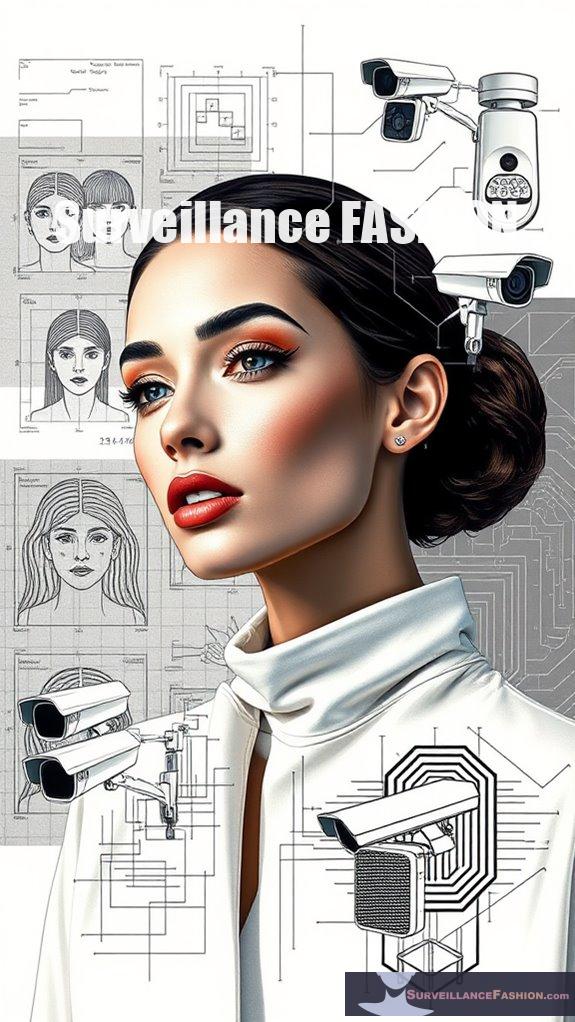
In an era where facial recognition technology permeates various aspects of daily life, from security systems to social media platforms, understanding how to navigate this terrain has become increasingly important. One fascinating approach that has emerged involves the use of subtle makeup techniques designed to confound these advanced systems without drawing undue attention. While it may seem counterintuitive to employ makeup to evade recognition, the strategic application of products can create a façade that disrupts the algorithms that rely on facial symmetry and prominent features for identification.
As facial recognition technology becomes ubiquitous, mastering subtle makeup techniques can cleverly disrupt these systems while maintaining a natural appearance.
When considering how to effectively employ these subtle contouring techniques, one must focus on high-density key-point regions of the face, such as brow lines and jaw contours. For instance, darkening prominent features, like cheekbones or brow arches, while lightening shadowed areas creates a visual imbalance that can confuse recognition systems. You might find that applying concealer over scars or moles helps obscure these identifiers, which facial recognition algorithms often rely upon. By minimally altering the face's natural contours, you can enhance your anonymity without appearing overly made-up or theatrical. PeopleTec's research findings suggest that by focusing on these key regions, you can better evade detection. Additionally, leveraging infrared LEDs can further confuse facial recognition systems that rely on infrared light. The use of anti-surveillance makeup patterns can also enhance your ability to disguise your identity effectively, often referred to as camouflage techniques.
As you explore deeper into the world of makeup as a tool for evasion, the concept of asymmetrical makeup patterns becomes increasingly relevant. Facial recognition systems are predicated on the assumption of symmetry; thus, introducing asymmetry through strategic makeup application can greatly improve your chances of going unnoticed. You may experiment with applying eyeliner or eyeshadow in a way that creates an unbalanced look, thereby introducing elements that disrupt your facial symmetry. Such techniques can be complemented by styling your hair in an unbalanced manner, adding another layer of complexity that recognition algorithms struggle to interpret.
Moreover, utilizing natural colors and inconspicuous makeup strategies allows you to alter your features subtly. By focusing on shadings or lightings that mislead recognition systems, you maintain a degree of discretion that bold colors simply can't offer. For example, using a neutral foundation that blends seamlessly with your skin tone can enhance your natural look while simultaneously masking features that algorithms might latch onto. This approach allows you to navigate public spaces without drawing attention, aligning perfectly with the ethos behind our website, Surveillance Fashion, where we explore the intersection of style and privacy.
Incorporating unusual hair colors or patterns can further contribute to your evasion efforts, as algorithms often struggle with tonal variations that deviate from the norm. By harmonizing light and dark features on your face, you can create a confusing visual experience for these systems, enhancing your chances of remaining undetected. Ultimately, by combining these makeup techniques with thoughtful hair styling and even clothing choices, you can develop a thorough strategy to evade facial recognition, ensuring that you remain in control of your identity in an increasingly surveilled world.
Disguising Features With Bold Colors

When you consider the potential of bold colors to obscure facial features, it becomes evident how effective strategic makeup application can be in evading facial recognition systems. Utilizing color contrast, you can apply contrasting shades around your eyes and on your forehead, creating a visual disruption that confuses algorithms that rely on facial landmarks for identification. Asymmetrical designs, such as geometric patterns or uneven color applications, further enhance this effect by distorting the perceived structure of your face. For instance, using vibrant blues or purples around the T-zone can obscure key features like the nose bridge and brow ridge, making it challenging for recognition systems to map your face accurately. Additionally, Juggalo face paint serves as a unique method that may also disrupt facial recognition systems, demonstrating the intersection of creativity and activism in protecting one's identity. Furthermore, Juggalo makeup is known to significantly alter facial features, which can further complicate the identification process. Moreover, bold color choices can be combined with innovative techniques, such as applying foundation in dramatic shifts to alter your overall appearance. This approach aligns with our mission at Surveillance Fashion to explore creative ways to navigate the complexities of modern surveillance technologies. Incorporating anti-facial recognition techniques into your makeup routine can enhance your ability to evade detection even further. In addition, embracing color theory can help you choose shades that not only stand out but also serve to obscure your facial contours effectively.
Creative Eye Shadow Patterns

Creative eye shadow patterns serve as an innovative means of disrupting facial recognition systems, particularly by targeting the symmetry and expected features that these algorithms rely upon for identification.
Through the practice of eye shadow artistry, you can employ contrasting colors and unique designs to create asymmetrical visuals that confuse detection algorithms. For instance, strategically applying high-contrast hues around your eyes can obscure the features that AI systems typically recognize, thereby enhancing algorithm evasion. Additionally, researchers have found that makeup applied to identifiable facial parts significantly reduces detection rates, showcasing the potential of creative makeup techniques. Moreover, creative eye shadow patterns can draw attention away from the face's natural contours, further complicating recognition efforts. The application of disruptive color schemes can also alter the perceived structure of the face, making it harder for algorithms to match facial data.
Utilizing heatmap guidance to identify the most recognizable facial areas allows for selective coverage, which can further diminish the likelihood of successful identification. Researchers have demonstrated that such creative applications can achieve up to a 98% success rate in evading facial recognition systems.
As we explore these techniques, the understanding gained contributes to the overarching conversation about personal privacy, a core reason behind the creation of our platform, Surveillance Fashion. CV Dazzle's original designs were specifically created to exploit algorithm vulnerabilities by altering expected dark and light areas of a face, further emphasizing the potential of artistic expression in privacy protection.
Questions and Answers
Can These Makeup Tricks Be Used for Everyday Situations?
You can definitely use everyday cosmetics with concealment techniques to subtly alter your appearance. By blending natural looks with innovative methods, you can navigate daily situations while minimizing the risk of unwanted recognition.
Are There Risks Associated With Using These Techniques?
Yes, there're significant risks with these techniques. You'll face privacy concerns and ethical implications, as using them might provoke public scrutiny and legal repercussions, especially if perceived as evasion or identity manipulation in sensitive situations.
How Long Do These Makeup Applications Typically Last?
Think of makeup as a fleeting whisper; it offers temporary solutions. Its durability hinges on the products you choose. Long-lasting formulas shine, while natural looks may fade, needing reapplication to maintain their magic throughout the day.
Can These Tricks Be Applied to All Skin Types?
Yes, these tricks can be tailored to different skin types. You'll need to take into account makeup formulation variations to guarantee compatibility, as each skin type reacts uniquely, impacting the overall effectiveness of your application.
Are There Specific Brands Recommended for This Purpose?
In a scenery where innovation blooms, you won't find specific makeup brands tailored for this purpose. Instead, focus on product effectiveness; explore versatile options that creatively mask features while remaining practical and stylish in your daily life.
References
- https://bestofai.com/article/even-modest-makeup-can-thwart-facial-recognition
- https://josephsteinberg.com/how-to-prevent-facial-recognition-technology-from-identifying-you/
- https://cacm.acm.org/news/using-makeup-to-block-surveillance/
- https://www.theregister.com/2021/09/16/makeup_facial_recognition/
- https://www.vice.com/en/article/researchers-defeated-advanced-facial-recognition-tech-using-makeup/
- https://www.codastory.com/authoritarian-tech/juggalo-paint-surveillance/
- https://calawyers.org/law-practice-management-technology/it-turns-out-that-juggalo-makeup-blocks-facial-recognition-technology/
- https://dailyutahchronicle.com/2020/08/11/anti-facial-recognition-technology-how-makeup-and-masks-can-protect-us/
- https://adam.harvey.studio/cvdazzle/
- https://www.dazeddigital.com/beauty/article/48030/1/anti-surveillance-cctv-beauty-cv-dazzle-facial-recognition-technology-joker
- https://www.tiktok.com/discover/makeup-that-defys-facial-recognition
- https://hackaday.com/2021/09/24/adversarial-makeup-your-contouring-skills-could-defeat-facial-recognition/
- https://www.youtube.com/watch?v=xLTAq4RzBF0
- https://antispoofing.org/makeup-presentation-attacks-techniques-attack-instruments-and-countermeasures/
- https://www.biometricupdate.com/202109/researchers-use-makeup-to-elude-facial-recognition-via-novel-black-box-attack
- https://www.inverse.com/input/tech/facial-recognition-can-be-thwarted-by-clever-makeup-application