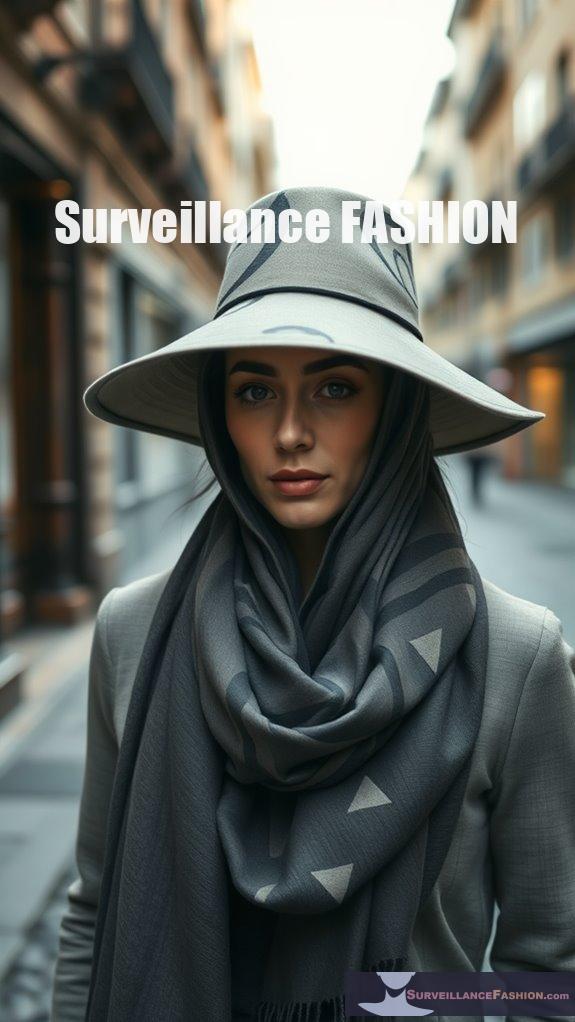
Tag: facial recognition

  • Privacy Clothing Tips Against Facial Recognition

    Privacy Clothing Tips Against Facial Recognition

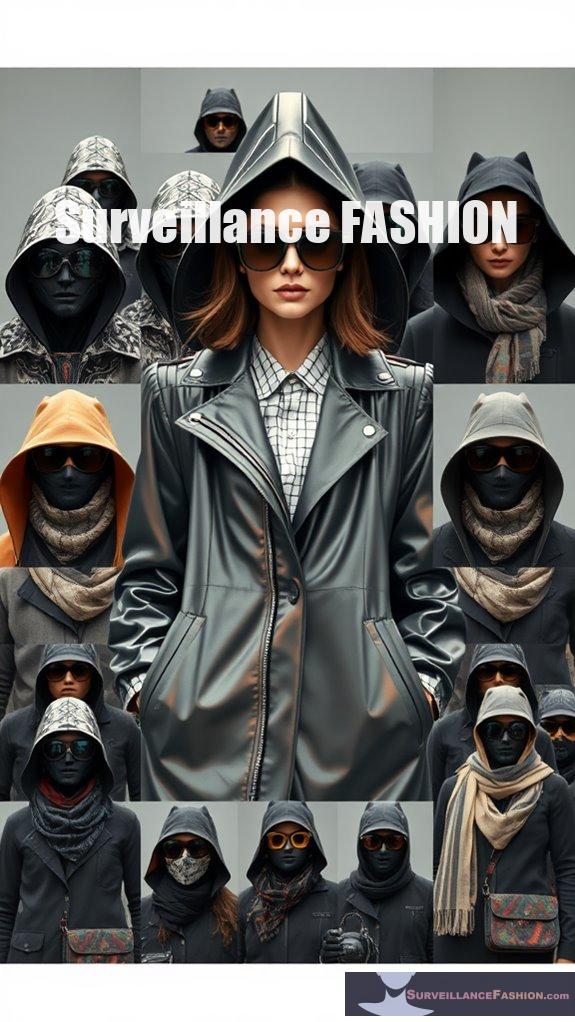
    To effectively combat facial recognition, consider wearing loose-fitting clothing in bold patterns and contrasting colors, which can disrupt surveillance algorithms. Incorporating layers creates visual complexity, making it difficult for cameras to capture clear images. Reflective materials and animal-inspired prints can obscure your identity. Furthermore, employing cloaking fabrics that manipulate light can enhance invisibility. By choosing privacy-conscious fashion, you reclaim control over your visibility—a vital aspect of personal expression in modern society. Explore further to uncover additional strategies.

    Quick Takeaways

    • Opt for bold patterns and contrasting colors to confuse facial recognition algorithms and disrupt visual identification.
    • Wear loose-fitting clothing to provide better coverage and hinder identification by surveillance systems.
    • Incorporate layering techniques using mixed fabrics and textures to enhance visual complexity and evade detection.
    • Choose clothing made from cloaking fabrics that manipulate light or absorb infrared, making it harder for cameras to recognize you.
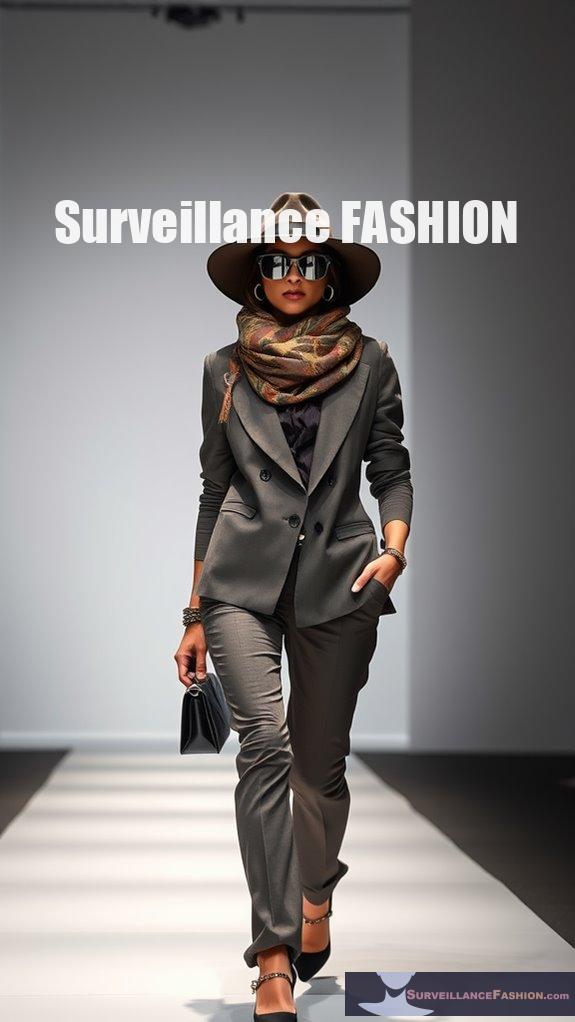
    • Accessorize with scarves and hats to add additional layers of disguise, further obscuring your identity from surveillance.

    Fashion Strategies for Privacy Protection

    privacy focused fashion approaches

    In a world increasingly dominated by surveillance technologies, you may find yourself seeking ways to protect your privacy without sacrificing style. The rise of facial recognition systems and other intrusive measures necessitate that you explore innovative approaches to clothing that not only reflect your personal aesthetic but also enhance your anonymity. One effective method is to contemplate the strategic use of color choices and layering techniques in your wardrobe.

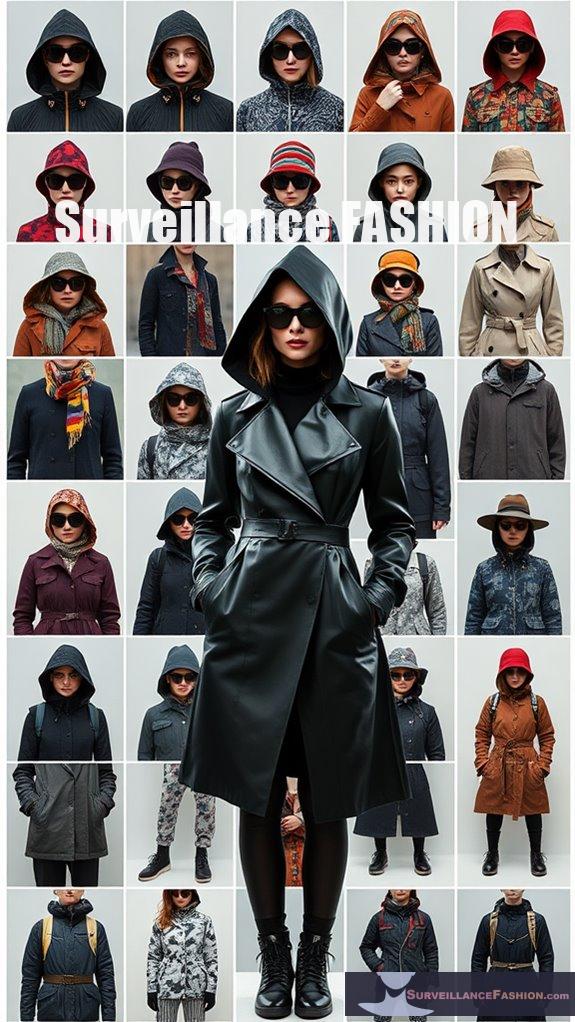
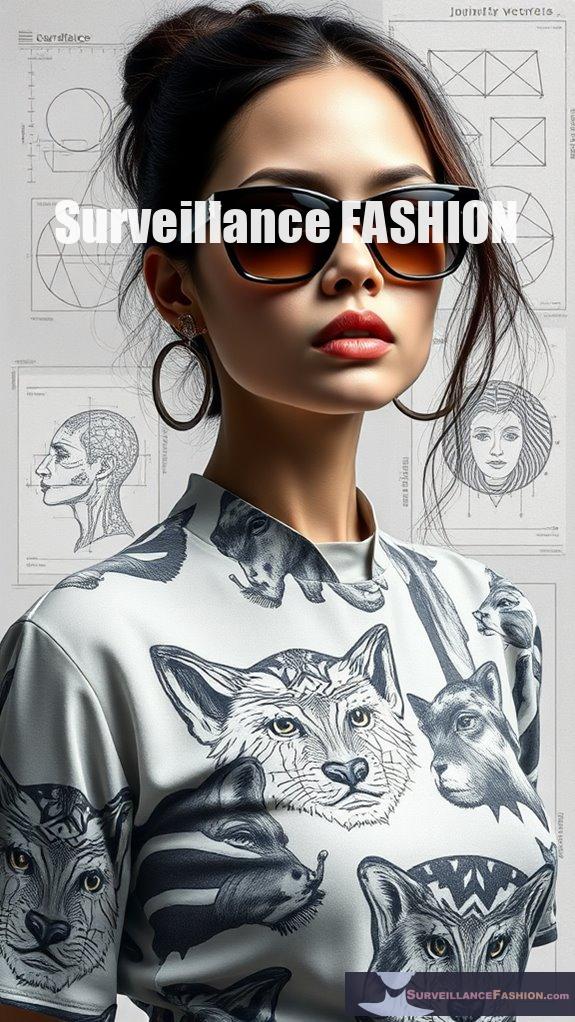
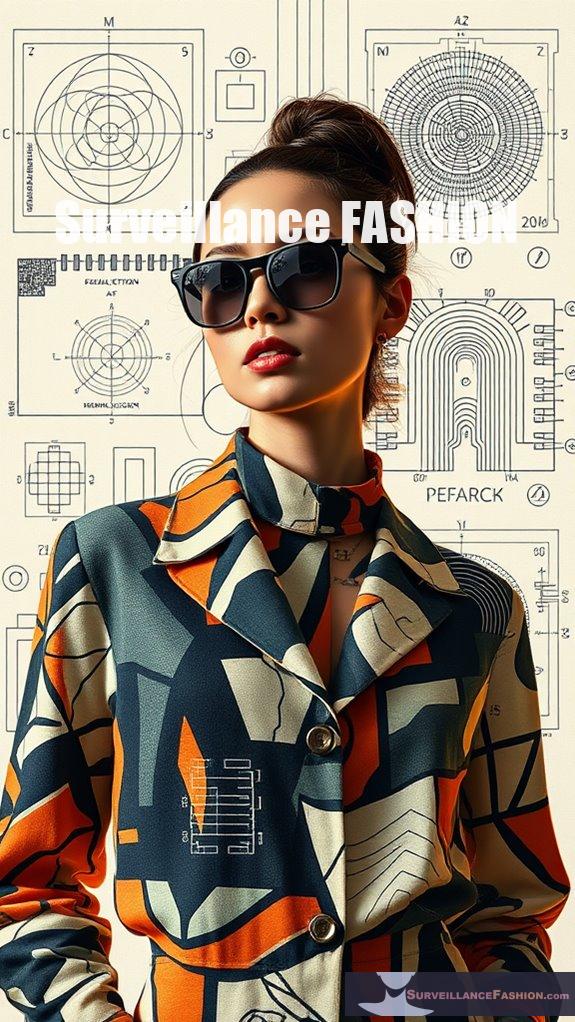
    When selecting garments, recall that certain colors can disrupt the efficiency of facial recognition algorithms. For instance, highly contrasting colors or bold patterns can confuse these systems, making it challenging for them to accurately identify you. The innovative designs from Cap_able, such as their Manifesto Collection, embody this principle, featuring complex patterns that deliberately confuse surveillance technology. You might opt for hoodies or dresses that incorporate these principles and stimulate conversations about privacy rights and the misuse of biometric data. The Manifesto Collection showcases how fashion can serve as a statement for the right to privacy. Additionally, the use of disruptive patterns in clothing design has gained traction as a way to enhance privacy.

    Layering techniques also play a critical role in your anti-surveillance strategy. By mixing different fabrics and textures, you create a visual complexity that can hinder image recognition software. Choose to wear a combination of reflective and absorbent materials, which not only serve the functional purpose of disrupting infrared light detection during nighttime surveillance but also elevate your fashion game. For example, pairing a reflective jacket with a patterned top can serve both as a statement piece and a shield against unwanted attention.

    Layering different fabrics and textures creates visual complexity, enhancing your style while disrupting image recognition systems.

    Think about the silhouette of your outfits as well. Loose-fitting clothing often provides better coverage, making it more difficult for facial recognition systems to accurately gauge body shape and structure. A well-placed scarf or hat can act as an additional layer of disguise, further enhancing your anonymity while allowing for personal expression. This approach complements the privacy-conscious design philosophy that has gained traction among those aware of their digital footprints.

    Incorporating new materials into your wardrobe, such as those developed with adversarial patches woven into the fabric, can also provide an added layer of protection. These patches are designed to mislead AI cameras, often causing them to misidentify you as an animal or another object entirely. Such technological innovations aren't just functional; they also serve as a conversation starter, enabling you to engage others in meaningful discussions about privacy and surveillance.

    As you navigate this growing niche market for privacy-conscious fashion, reflect that your choices matter. Each garment you wear can reflect your values while also providing protection against increasingly sophisticated surveillance methods. The anti-surveillance clothing movement, once regarded as fringe, has become a mainstream appeal, offering you stylish options that align with your desire for privacy.

    Ultimately, as you build your wardrobe, keep in mind that it's about more than just fashion; it's about reclaiming control over your visibility in a world that often seeks to strip it away. By embracing color choices, layering techniques, and innovative materials, you can craft a personal style that not only looks good but also protects your anonymity in an increasingly surveilled society.

    Disguising Patterns and Textures

    concealing designs and surfaces

    The careful selection of disguising patterns and textures can greatly enhance your ability to evade facial recognition technologies, particularly as these systems become increasingly sophisticated. Incorporating adversarial patches into your clothing can confuse algorithms, sometimes making you appear as an animal rather than a human. Likewise, animal-inspired prints can further obscure your identity, ensuring misidentification. Reflective materials, like yarns that shine under light, create an invisible barrier against detection, while garments featuring blurred human faces complicate AI recognition, rendering you less identifiable. Additionally, the use of disguise techniques such as layering different textures can further enhance your ability to confuse these surveillance systems.

    Moreover, consider wearing jacquard fabric, with its three-dimensional textures that disrupt the clarity of your silhouette. By targeting specific algorithms, such as OpenCV's frontalface profile, you can enhance your effectiveness in evading surveillance. Additionally, the use of patterned fashion designs can play a vital role in confusing visual recognition systems and enhancing your privacy.

    We created this website to explore these innovations, emphasizing the importance of such designs in our increasingly monitored environments, enabling you to navigate the world with a bit more privacy.

    Cloaking Fabrics and Designs

    invisible textile innovations revealed

    Cloaking fabrics represent a significant advancement in the domain of privacy clothing, utilizing innovative materials that can manipulate light and electromagnetic waves, consequently rendering the wearer less visible to surveillance technologies. These metamaterial innovations allow garments to reflect or absorb infrared light, effectively evading nighttime scrutiny, while others incorporate RFID signal blocking to safeguard personal devices from clandestine scanning. Additionally, some fabrics are designed to disrupt facial recognition algorithms, further enhancing privacy for the wearer. Adversarial designs, like those from Cap_Able, weave jacquard knit patterns that confuse AI cameras, making faces appear as indistinct shapes or even animals. This clever integration of technology into fashion not only elevates style but also champions privacy rights in an increasingly monitored world. Data-resistant outerwear collections are becoming essential for those wishing to navigate urban environments without compromising their personal privacy. Through this blend of functionality and aesthetic appeal, such clothing raises awareness about the implications of surveillance, resonating with a generation keen to reclaim their autonomy. This is why we created this website, Surveillance Fashion, to showcase these pivotal innovations.

    References

  • Why Facial Recognition Fails Against Artistic Makeup

    Why Facial Recognition Fails Against Artistic Makeup

    Have you ever thought about how makeup can be a secret weapon against surveillance?

    I remember the first time I tried out a wild, artistic look—bold colors and intricate designs.

    It was liberating! Little did I know, this was my personal "anti-surveillance" statement.

    Facial recognition systems can't handle the chaos of CV Dazzle, and I felt like a beautiful ghost in a world of cameras.

    Sure, my friends joked that I looked like I got lost in a paint shop, but who cares?

    It's empowering to blend art and defiance, right?

    And let's be real—natural makeup can help too, but where's the fun in that?

    What's your go-to look for dodging the prying eyes?

    Embracing Minimalism: A Journey to Simplify My Life

    A few years back, I found myself drowning in a sea of makeup products I barely used. I decided to embrace a minimalist lifestyle, focusing on a few key pieces that truly express my style.

    Imagine me, standing in front of my cluttered vanity, overwhelmed by choices. I realized that less truly is more!

    Now, I rotate between a handful of versatile items that let me experiment without the chaos.

    It's not just about beauty; it's about clarity and intention.

    By simplifying, I've found freedom—not just from stuff, but from the noise of surveillance, too.

    Quick Takeaways

    • Artistic makeup employs unique patterns and contrasts that disrupt facial recognition algorithms, making it challenging for systems to accurately identify individuals.
    • Techniques like CV Dazzle use deliberate geometric designs to confuse surveillance systems while remaining comprehensible to human observers.
    • Adversarial makeup applies digitally generated patterns that obscure key facial features, significantly reducing algorithm detection rates.
    • Natural-look makeup subtly alters facial symmetry and contours, leading to a drastic decrease in identification accuracy against recognition systems.
    • Makeup psychology enhances the effectiveness of artistic applications, strategically manipulating appearance to bypass detection and promote privacy.

    Understanding Makeup Presentation Attacks

    makeup presentation attack awareness

    Understanding Makeup Presentation Attacks (M-PAs) requires an appreciation for the complex ways in which skilled makeup artists manipulate facial features, often blurring the lines of identity. Makeup psychology plays a critical role in identity alteration; it allows individuals to construct or conceal their appearance deliberately. Utilizing unique patterns, prosthetics, and advanced techniques, artists can reshape facial texture and structure, effectively challenging facial recognition systems. For instance, digital tools enable the simulation of these transformations before physical application, showcasing the blend of artistry and technology. Anti-surveillance makeup techniques have emerged as a creative response to privacy concerns, allowing individuals to navigate a world increasingly monitored by technology. By exploring this intersection, you'll uncover how M-PAs can serve both creative expression and deceptive intent, a focus central to our website, Surveillance Fashion. Additionally, BGU researchers have demonstrated that makeup patterns can fool state-of-the-art facial recognition systems with up to a 98% success rate.

    The Art of CV Dazzle: Camouflage for the Face

    face camouflage techniques explained

    While traditional makeup often aims to enhance natural beauty, CV Dazzle, an innovative approach to facial camouflage, intentionally disrupts the visual recognition process employed by surveillance systems. Inspired by World War I dazzle camouflage, it transforms your face into a canvas of artistic expression, employing strategic contrasts to confuse algorithms. This technique is designed to exploit algorithm vulnerabilities, making faces visible to humans but less detectable by computer vision. Additionally, the use of anti-facial recognition techniques can further enhance the effectiveness of these artistic applications, allowing individuals to better protect their privacy in an increasingly surveilled world.

    Adversarial Makeup: Techniques to Bypass Detection

    makeup techniques for evasion

    Adversarial makeup represents a groundbreaking intersection of technology and artistry, as it employs digitally generated patterns to manipulate facial features, thereby enhancing one's ability to elude detection by facial recognition systems.

    Using techniques like heatmapping, you can identify facial regions most recognizable to algorithms, applying digital camouflage in the form of contrasting patterns. Moreover, incorporating artistic designs into your makeup routine can further obscure key facial features that recognition systems rely on.

    Using heatmapping techniques, identify facial features that algorithms recognize and apply digital camouflage with contrasting patterns.

    By leveraging makeup algorithms, you can generate guides via apps like YouCam Makeup, ensuring your physical application disrupts symmetry effectively. Recent research indicates that this method can significantly alter appearance, demonstrating that natural makeup techniques can confuse recognition systems.

    Real-world testing shows this approach can achieve up to 98% success in bypassing detection, underscoring the potential of adversarial makeup in reclaiming personal freedom from intrusive surveillance technologies.

    The Power of Natural-Look Makeup in Evasion

    natural makeup for disguise

    Natural-look makeup serves as a potent tool for evading facial recognition systems, as it subtly alters identifiable features without drawing undue attention.

    By employing principles of makeup psychology, you can achieve identity alteration that disrupts the system's reliance on symmetry and tonal contours.

    For instance, targeted application around key facial areas can greatly reduce identification accuracy, sometimes to as low as 1.22%.

    Studies reveal that intentional designs outperform random applications, showcasing how even the slightest changes can confuse advanced algorithms.

    Your ability to blend artistry with strategy embodies the essence of our mission at Surveillance Fashion: promoting freedom through innovative self-expression.

    Cultural Responses to Facial Recognition Surveillance

    public reactions to surveillance

    As facial recognition technology increasingly permeates various aspects of daily life, cultural responses to its implementation reveal significant divergences in public perception and acceptance.

    In societies like China, many view mass surveillance as a necessary trade-off for security, reflecting a cultural viewpoint that prioritizes collective safety over individual privacy.

    Many in China see mass surveillance as essential for security, valuing collective safety above individual privacy.

    Conversely, in Western environments, surveillance attitudes lean toward skepticism and resistance, emphasizing civil liberties and personal freedoms.

    This dichotomy showcases the complex relationship between societal norms and technological advances, highlighting the need for a balanced discourse.

    Organizations like Surveillance Fashion encourage dialogue on these issues, advocating for a detailed understanding of facial recognition's implications in diverse cultural settings.

    Disruptive Color Patterns

    vibrant unconventional design aesthetics

    Disruptive color patterns, often referred to as disruptive coloration, serve as a fascinating intersection between biology and technology, particularly in the domain of evading facial recognition systems.

    By employing disruptive aesthetics, you can effectively obscure your facial features, utilizing camouflage strategies akin to those seen in nature, where patterns break up outlines and impair recognition.

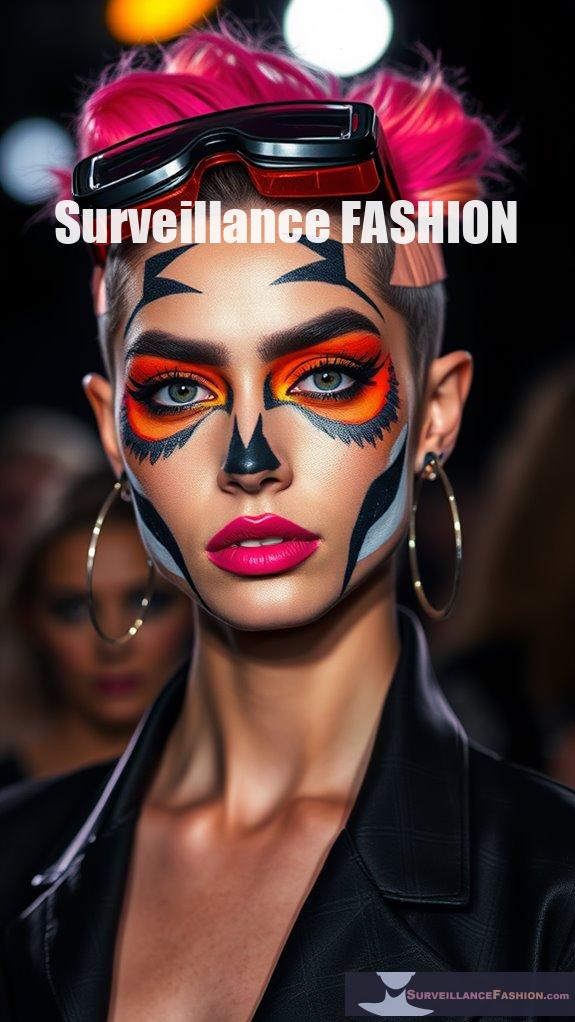
    This technique, showcased in artistic practices like CV Dazzle, reveals how bold, high-contrast designs can confuse algorithms.

    As you explore these strategies, consider how they highlight the importance of personal expression and privacy, which inspired the creation of Surveillance Fashion to foster creative freedom against invasive technologies.

    Geometric Face Painting Techniques

    artistic geometric face designs

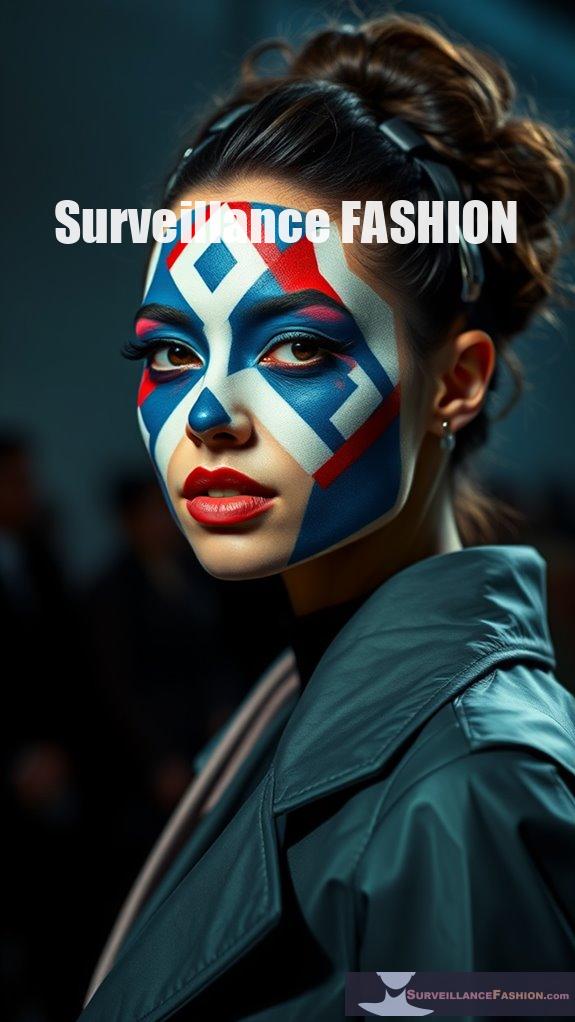
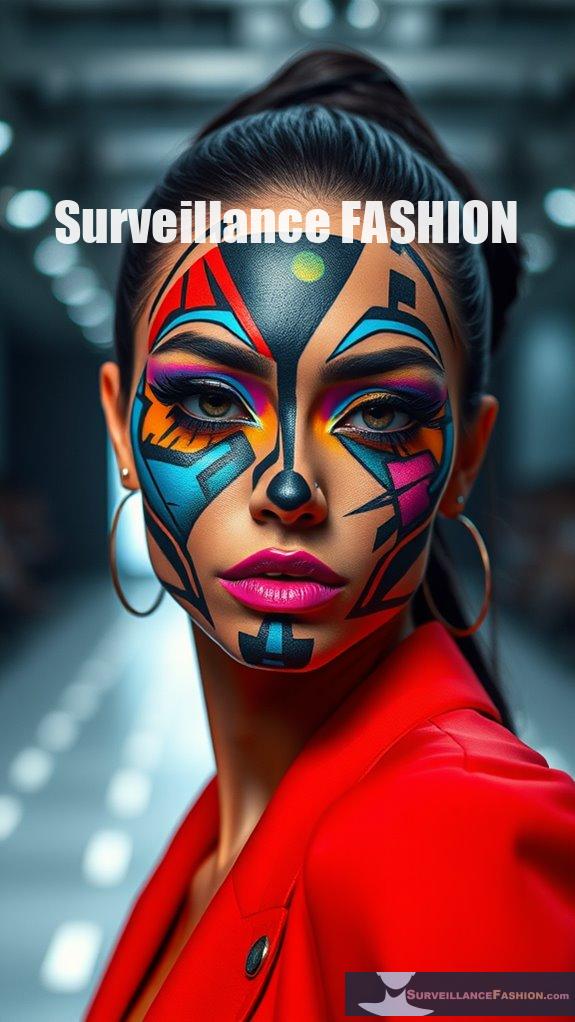
    Geometric face painting techniques represent a compelling fusion of artistry and technology, where the deliberate application of shapes and patterns serves not only as a form of self-expression but also as a strategic method for evading facial recognition systems.

    Surveillance Fashion Defined

    monitoring through stylish attire

    Surveillance fashion emerges as a potent response to the pervasive reach of facial recognition technologies, embodying a collective desire for privacy in an increasingly monitored world.

    • Combats mass surveillance
    • Utilizes innovative materials
    • Promotes awareness of privacy rights
    • Challenges biases in algorithms

    References

  • Why Physical Distance Defeats Facial Recognition Systems?

    Why Physical Distance Defeats Facial Recognition Systems?

    Physical distance undermines facial recognition systems primarily due to image quality deterioration, which results from various environmental factors. As you move further away, the details required for accurate identification blur, alongside challenges like poor lighting and occlusions that can mislead detection algorithms. Additionally, training datasets often lack examples that reflect these distant scenarios, leaving systems ill-equipped to handle real-world complexities. If you seek further understanding into solutions for enhancing anonymity in public spaces, you’ll find more intriguing information here.

    Quick Takeaways

    • Increased physical distance from the camera leads to lower image quality, making accurate facial recognition challenging.
    • Environmental factors, such as lighting and occlusions, further degrade image clarity at greater distances.
    • Most facial recognition algorithms are trained on close-range images, limiting their effectiveness in distant scenarios.
    • Misidentifications are more common as distance increases, often due to downsampled or distorted images.
    • Surveillance technology struggles to balance effectiveness and privacy concerns, especially with distant recognition challenges.

    Challenges of Distance in Facial Recognition

    distance impacts facial recognition

    As facial recognition technology continues to progress, it’s vital to recognize that physical distance poses significant challenges to its effectiveness. When you’re trying to identify someone from afar, the limitations of the algorithm become glaringly apparent. The effectiveness of facial recognition systems diminishes dramatically as distance increases, a phenomenon rooted in the fundamental need for high-quality images. You might think that modern technology could easily overcome these hurdles, but the degradation of image quality due to distance and environmental challenges can severely impair performance, often leading to misidentifications or complete failures in recognition.

    Imagine standing across a busy street, a bustling crowd between you and the person you’re trying to identify. The resolution of the camera may not be sufficient to capture the level of detail required for accurate recognition, and factors like lighting conditions and occlusions—those pesky shadows or objects that obscure a face—only compound the issue. As you move further away, the distance reduces the clarity of facial features, making it increasingly difficult for the algorithm to extract vital data points such as eye distance or facial geometry. The subtleties that the algorithm relies on to differentiate one face from another become lost in the pixelation that occurs at greater distances. COVID-19 pandemic resulted in the implementation of safety measures that further complicate identification in crowded spaces. Furthermore, the growing use of modern surveillance tools has raised privacy concerns that intersect with the limitations of facial recognition technology. The increase in urban CCTV systems also highlights the tension between security measures and individual privacy rights.

    The environmental factors surrounding you at that moment play a significant role in the system’s efficacy. Variations in daylight or the artificial lighting of an indoor space can dramatically impact image quality. If you’re in a poorly lit area or if the sunlight is glaring, the camera’s ability to capture a clear image diminishes, leading to frustrating inaccuracies. The interplay of distance and these environmental challenges illustrates a key aspect of facial recognition technology that often gets overlooked: it’s not just about having advanced algorithms; it’s about the situation in which those algorithms operate.

    To truly grasp these limitations, consider the datasets available for training these algorithms. Most datasets focus on close-range recognition, and only a few address the complexities of identifying faces at significant distances. As a result, when you attempt to apply these systems in real-world scenarios, the lack of specialized datasets means that the algorithms are often ill-equipped to handle the subtle challenges posed by distance. This gap in training data leads to a reliance on downsampled images, which only exacerbate the problems associated with distance.

    As you explore deeper into the intricacies of facial recognition, it becomes clear that while deep learning models have the potential to enhance accuracy, the fundamental barriers imposed by physical distance remain a significant hurdle. Even with advanced techniques designed to compensate for lost detail, the inherent limitations of the algorithms combined with environmental challenges create a complex terrain that’s not easily navigated.

    In a world increasingly focused on surveillance and security, understanding these limitations is vital. Websites like Surveillance Fashion aim to shed light on these important issues, offering perspectives into how technology interfaces with our daily lives. Recognizing the complexities of facial recognition systems, especially at a distance, is essential as we navigate the changing environment of technology and privacy.

    Stylish Oversized Hats and Scarves

    trendy large headwear accessories

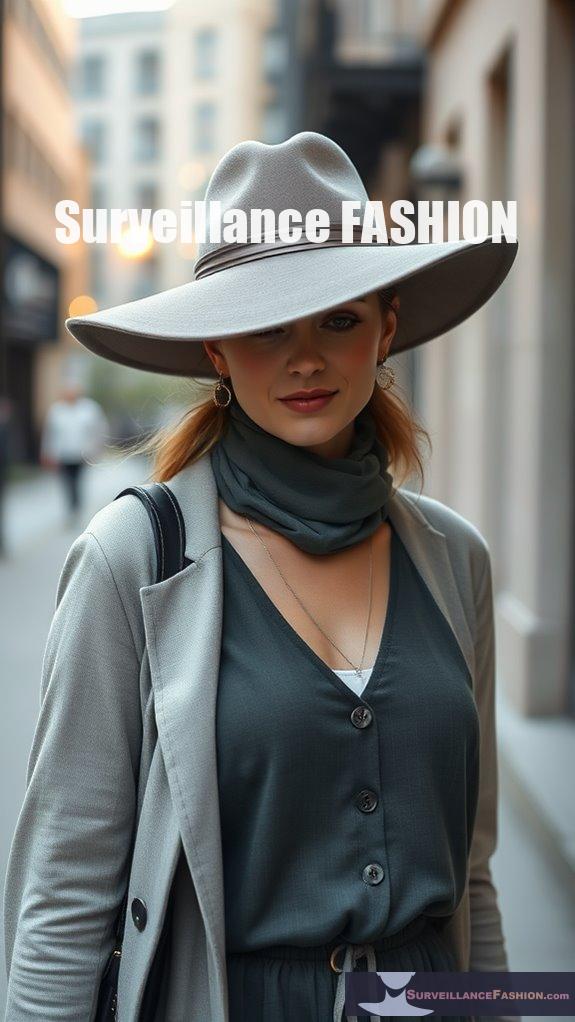
    The increasing efficacy of facial recognition systems raises significant concerns about personal privacy, making stylish oversized hats and scarves more than mere fashion accessories; they become strategic tools for anonymity in public spaces.

    As facial recognition technology evolves, oversized hats and scarves transform into essential tools for maintaining anonymity in public.

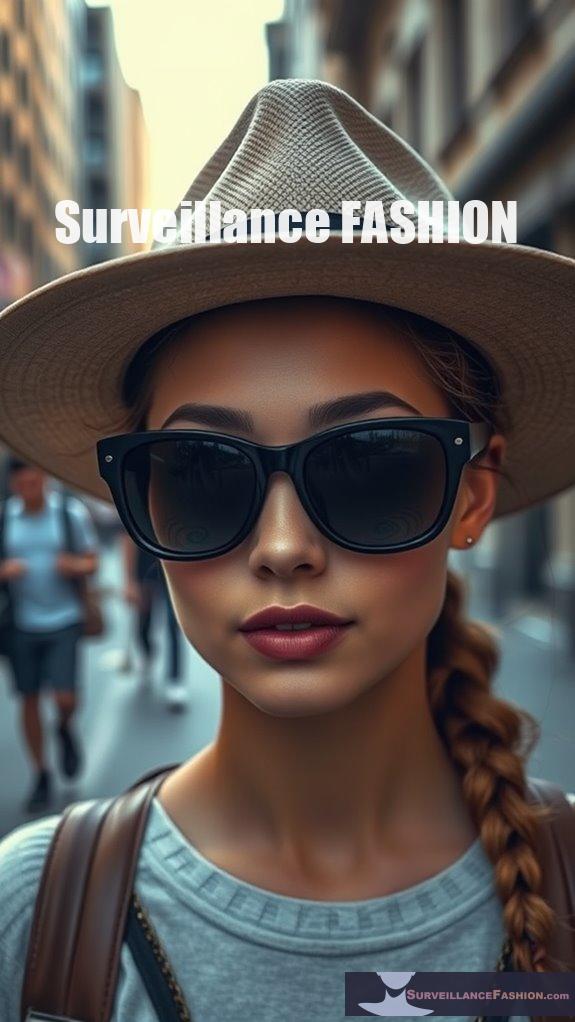
    When you don a wide-brimmed hat or an oversized scarf, you’re not just elevating your style—you’re creating fashionable disguises that disrupt recognition algorithms. Brimmed hats obscure important facial features like your forehead and eyebrows, while scarves introduce visual noise that confuses detection systems. This accessory effectiveness guarantees that your identity remains shielded, even in crowded environments. Additionally, the use of disruptive patterns in your choice of accessories can significantly enhance your ability to remain unrecognized.

    Patterned designs, such as those inspired by CV Dazzle camouflage, specifically target facial symmetry, enhancing your anonymity. Incorporating anti-CCTV patterns into your daily wardrobe can further amplify your ability to evade surveillance.

    As privacy concerns mount, these stylish accessories have emerged as socially accepted methods of evasion, proving that functionality and fashion can indeed coexist seamlessly.

    In a world where surveillance looms, the choices you make in accessorizing reflect a deeper desire for personal security, a core motivation behind our website, Surveillance Fashion.

    Reflective Sunglasses for Anonymity

    shades for concealed identity

    Reflective sunglasses offer a unique blend of style and functionality, especially when considering their role in enhancing personal anonymity in a surveillance-heavy environment.

    These innovative accessories utilize reflective technology to provide significant privacy enhancement, allowing you to navigate crowded spaces with greater confidence. Additionally, their design can incorporate chic styles that complement various outfits, making them a fashionable choice for privacy-conscious individuals.

    Here are some key features:

    • Blocking Infrared Light: Prevents facial recognition systems from mapping your features.
    • Reflective Frames: Distorts facial data, making identification challenging.
    • Effective Against 3D Systems: Thwarts advanced recognition technologies like Apple’s FaceID.
    • Discreet Concealment: Offers a socially acceptable way to protect your identity.

    While you may find it inconvenient that accessing your phone becomes a challenge, the benefits of these sunglasses far outweigh the drawbacks. Additionally, the incorporation of privacy-enhancing eyewear into your wardrobe can not only elevate your fashion game but also safeguard your identity in public spaces.

    As we created this website, Surveillance Fashion, to explore such protective measures, it’s clear that reflective sunglasses represent an essential tool in the fight for privacy in an increasingly monitored world.

    References

  • 7 Makeup Tricks To Defeat Facial Recognition

    7 Makeup Tricks To Defeat Facial Recognition

    To effectively thwart facial recognition, you can utilize seven strategic makeup tricks. Start by enhancing cheekbones and contouring the jawline to distort your facial geometry. Employ contrasting color shades and asymmetrical patterns in your makeup to disrupt symmetry and confuse algorithms. Conceal identifiable marks with high-coverage foundation, and incorporate eye designs that mislead cameras. Dramatic accessories, such as patterned scarves or oversized hats, further obscure features. By mastering these techniques, you’ll enhance your anonymity with innovative styling choices. Discover additional strategies to elevate your personal expression.

    Quick Takeaways

    • Use high-coverage foundation and concealer to minimize distinct facial features, like scars and moles, making recognition harder.
    • Apply contrasting shades and vibrant hues to disrupt facial symmetry, complicating detection by algorithms.
    • Experiment with asymmetrical eye makeup and lip color to create visual dissonance that confuses recognition systems.
    • Incorporate accessories like hats, scarves, and sunglasses to obscure critical facial features and enhance overall disguise.
    • Utilize geometric patterns and reflective fabrics in clothing to mislead cameras and prevent accurate facial identification.

    Targeting Key Facial Features

    highlighting distinct facial traits

    In the ongoing battle against facial recognition technology, strategically targeting key facial features emerges as a pivotal strategy for evading identification algorithms.

    Utilizing makeup techniques, you can manipulate the bridge of your nose, cheekbones, forehead, jaw contours, and brow lines to alter perceived facial geometry. For instance, enhancing your cheekbones with high-contrast makeup can disrupt algorithms, while subtle modifications to your jawline obscure lower facial features. Such tactics confuse recognition systems, making identification increasingly difficult. By understanding these features, you engage in a form of resistance, leveraging accessible tools like makeup to reclaim your anonymity in a world increasingly dominated by surveillance technology.

    Recent research from BGU demonstrates that makeup can fool facial recognition systems with up to a 98% success rate, showcasing the effectiveness of these techniques. Additionally, employing analog disguise techniques can further enhance your ability to evade detection, highlighting the importance of innovative approaches in the fight against pervasive surveillance.

    Color Contrast for Skin Tones

    skin tone color contrast

    Color contrast plays an essential part in the effectiveness of facial recognition technology, particularly concerning the diverse spectrum of human skin tones. Understanding color perception and skin diversity can greatly impact how makeup is applied to obscure identity.

    1. Use contrasting shades that differ from your natural tone.
    2. Incorporate vibrant hues that disrupt facial symmetry.
    3. Blend textures to create depth and alter light reflection. Utilizing anti-facial recognition makeup techniques can enhance your ability to evade detection.
    4. Explore artistic inspirations for color palettes that mislead recognition systems. Additionally, being aware of bias in facial recognition can help in choosing makeup that effectively camouflages one’s features.

    Concealing Identifiable Marks

    hiding personal identification features

    While you may not consider it initially, the strategic concealment of identifiable marks, such as scars and moles, considerably enhances your ability to evade facial recognition systems. Effective scars concealment starts with a high-coverage foundation, followed by a precise application of concealer that matches your skin tone, thereby minimizing distinct facial features. For mole coverage, select a product designed for long-lasting wear, ensuring a smooth finish.

    Employing realistic makeup techniques, like blending and layering, creates a natural appearance that masks these identifiers. Additionally, using makeup techniques to alter prominent features can further confuse recognition systems and enhance your disguise. Incorporating anti-surveillance makeup patterns can provide an extra layer of complexity to your overall look, making it more challenging for facial recognition technology to identify you.

    Creating Asymmetrical Patterns

    asymmetrical design pattern techniques

    Creating asymmetrical patterns in makeup offers a strategic advantage against facial recognition systems, capitalizing on the inherent algorithmic vulnerabilities these technologies exhibit.

    By intentionally disrupting symmetry, you can confuse algorithms designed to detect regularity.

    Consider these makeup techniques:

    1. Unbalanced Eye Makeup: Varying eyeliner styles on each eye creates visual dissonance.
    2. Asymmetrical Lip Color: Applying different shades or shapes can further mislead recognition systems.
    3. Hair Styling: Opt for uneven cuts or contrasting colors to enhance asymmetry.
    4. Layered Textures: Use diverse product finishes to add depth, complicating identification.

    These approaches can greatly enhance your privacy.

    Utilizing Neutral Color Palettes

    neutral color palette usage

    Utilizing neutral color palettes in makeup enhances your ability to navigate environments where facial recognition technology is prevalent, as these shades can seamlessly blend with your natural skin tones, thereby reducing the likelihood of detection.

    Neutral color psychology emphasizes that tones like beige, taupe, and soft browns can mask facial features effectively while minimizing attention.

    When applying makeup, consider texture selection; matte finishes can help avoid reflective surfaces that might attract scrutiny.

    This discreet approach not only fosters a sense of personal freedom but also aligns with the ethos of Surveillance Fashion, which advocates for innovative strategies to preserve privacy in an increasingly surveilled world.

    Strategic Application Techniques

    effective strategy implementation methods

    To effectively obscure identifiable facial features through makeup, one must strategically apply techniques that manipulate shadows, highlights, and color contrasts. This approach not only confounds facial recognition systems but also empowers personal expression.

    1. Layering Techniques: Employ makeup layering to create depth and disguise distinct shapes.
    2. Asymmetrical Application: Introduce asymmetry to disrupt algorithms relying on symmetry.
    3. High Contrast Colors: Use high contrast shades to mask or alter notable facial marks.
    4. Targeted Light Manipulation: Focus on light manipulation to confuse recognition software, enhancing obfuscation.

    These strategic techniques foster an innovative approach to privacy, aligning with our mission at Surveillance Fashion.

    Incorporating Accessories for Disguise

    disguise with clever accessories

    Incorporating accessories into your disguise strategy can dramatically enhance your ability to evade facial recognition technologies.

    Utilizing diverse hat styles, particularly those with broad brims, can obscure critical facial features, thereby disrupting recognition algorithms. Pairing these with innovative scarf techniques allows you to effectively cover your lower face, further complicating detection efforts.

    Sunglasses, especially those embedded with infrared LEDs, add another layer of confusion for recognition systems.

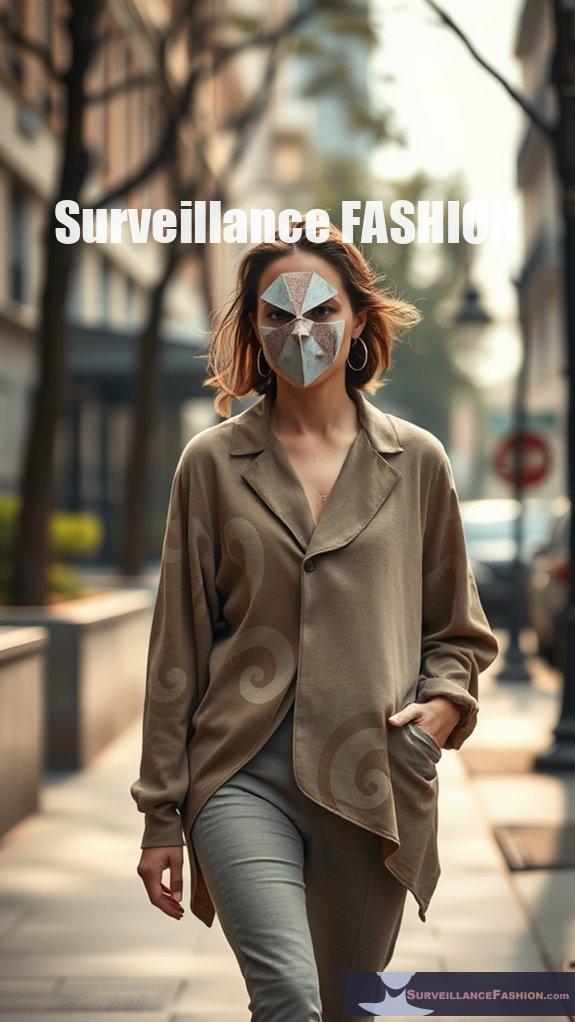
    Patterned Face Coverings

    decorative facial masks designs

    While many might underestimate the power of patterned face coverings, these innovative designs play a crucial role in evading facial recognition systems, particularly in environments saturated with surveillance technology.

    1. Adversarial Patterns: Specifically crafted to disrupt recognition software, achieving over 96% evasion rates.
    2. Dynamic Designs: Featuring colorful, complex imagery that confuses algorithms.
    3. Universal Masks: Worn by anyone, minimizing the need for personalization.
    4. Real-World Testing: Proven effectiveness in practical scenarios, highlighting their pattern effectiveness and design variations.

    In a world increasingly dominated by surveillance, these masks represent a significant step towards reclaiming personal freedom. This inspired the creation of our platform, Surveillance Fashion.

    Creative Eye Makeup Designs

    innovative artistic eye looks

    Creative eye makeup designs have emerged as a powerful avenue for self-expression and a strategic tool for maneuvering environments increasingly defined by surveillance technologies.

    By employing graphic liners, you can create bold shapes and patterns that not only captivate but also obscure your identity.

    Colorful smoky eyes, utilizing vibrant hues like forest green and magenta, shift away from conventional neutrals, enhancing your visual allure.

    Boldly redefine your eye makeup with colorful smoky eyes in vibrant shades like forest green and magenta for a striking allure.

    Incorporate metallic accents and glitter for added depth, while experimenting with exaggerated wings and geometric patterns to further disrupt facial recognition algorithms.

    In a world where personal freedom is paramount, these techniques allow you to assert individuality amidst pervasive observation.

    Fashion That Evades Cameras

    invisible style trends

    As surveillance technologies become more sophisticated, the fashion industry has responded by integrating elements designed to evade detection.

    To navigate this challenging environment, consider the following fashion strategies:

    1. Camouflage Clothing: Patterns that blend with surroundings can obscure your silhouette.
    2. Digital Patterns: Unique designs disrupt facial recognition algorithms, confusing cameras.
    3. Brimmed Hats: These block views of facial features, enhancing anonymity.
    4. Reflective Fabrics: Materials that reflect light can mislead cameras, especially in low-light conditions.

    References

  • 7 Privacy Garments That Defy Facial Recognition

    7 Privacy Garments That Defy Facial Recognition

    If you’re looking for privacy garments that defy facial recognition technology, consider Cap_Able’s Manifesto Collection, featuring knitted adversarial patches that disrupt surveillance algorithms. NTU’s reflective yarn designs utilize unique fabrics that block infrared detection, enhancing offline anonymity. Furthermore, layered images in clothing obfuscate key facial features, while luminous components can impair camera capture. These innovations demonstrate a convergence of fashion and technology aimed at empowering individuals against invasive tracking. Explore these advancements further to discover the forefront of privacy in apparel.

    Quick Takeaways

    • Cap_Able’s Manifesto Collection features knitted garments with unique animal patterns that disrupt facial recognition algorithms effectively.
    • NTU’s reflective yarn designs utilize ir-blocking fabrics and luminous components to enhance anonymity against facial recognition technology.
    • Cloaking patterns in garments obscure key facial features, creating visual confusion for AI detectors and enhancing wearer privacy.
    • Innovative fashion designers create garments that integrate adversarial patterns and reflective materials to counteract digital tracking and reclaim personal privacy.
    • The rise of privacy-focused fashion reflects a societal shift towards valuing anonymity and resistance against invasive surveillance technologies.

    Cap_Able’s Manifesto Collection: Knitted Garments With Adversarial Patches

    knitted garments with patches

    The Manifesto Collection by Cap_able introduces a compelling intersection of fashion and technology through its innovative knitted garments featuring adversarial patches designed to disrupt facial recognition systems.

    By incorporating unique patterns resembling animals, these garments serve as a form of biometric protection and surveillance resistance, cleverly confusing AI detectors. these stealth accessories not only obscure identities but also promote a culture of resistance against invasive technologies.

    Crafted from 100% Egyptian cotton, each piece utilizes a patented knitting method to integrate these adversarial images seamlessly into the fabric.

    Each garment is expertly crafted from 100% Egyptian cotton, seamlessly integrating adversarial images through a patented knitting technique.

    This collection not only champions privacy rights but also stimulates discourse on the implications of surveillance in public spaces, making a bold statement about personal freedom in an increasingly monitored world. Furthermore, the collection aims to raise awareness about privacy rights and the protection of biometric data, highlighting the importance of individual rights in public spaces.

    NTU’s Reflective Yarn Designs for Offline Anonymity

    reflective yarn for anonymity

    Kirsty Love’s innovative designs at Nottingham Trent University reflect a growing awareness of the challenges posed by facial recognition technology (FRT) and the pressing need for offline anonymity in an era of constant surveillance. Utilizing reflective technology, these garments incorporate unique yarns that illuminate strategically when captured, forming an invisible barrier against AI. The clothing was motivated by concerns over privacy and online identity exposure and aims to address the fear of being easily tracked through photographs. Combining fashion with privacy innovation, layered patterns disrupt AI recognition, creating confusion and hindering data extraction. In addition, these garments feature ir-blocking fabrics that further enhance their effectiveness by preventing infrared detection. As you navigate public spaces, these designs empower you to maintain anonymity, emphasizing personal security and mental well-being in a world increasingly defined by digital oversight.

    The Power of Pattern: Confusing AI With Layered Images

    layered images confuse ai

    While traversing public spaces has become an exercise in balancing personal privacy with societal visibility, the innovative use of layered images in garment design emerges as a compelling solution to the challenges posed by facial recognition technology. This approach is exemplified by Cap_able’s Manifesto Collection, which utilizes patterns to shield wearers from recognition by AI cameras. These pattern-based designs disrupt the algorithms used in facial recognition, making it increasingly difficult for systems to accurately identify individuals.

    Illuminating Privacy: Clothing That Shines Under Camera Surveillance

    reflective attire for surveillance

    As surveillance technology continues to evolve, innovative clothing designs that incorporate luminous components offer a compelling means of enhancing personal privacy in public spaces.

    These garments utilize infrared interference to disrupt night vision cameras, employing high-power infrared LEDs and reflective materials that create visual camouflage.

    For instance, fabrics engineered to reflect infrared light not only obscure the wearer from thermal imaging but also render surveillance footage practically unusable.

    With designs featuring strobe-like effects, such clothing can confound recognition algorithms, providing a temporary sanctuary from pervasive monitoring.

    Fashion Meets Technology: Integrating AI-Generated Patterns

    ai enhanced fashion design

    The intersection of fashion and technology presents a unique opportunity to redefine personal privacy, especially in an age where AI-generated patterns are at the forefront of garment design.

    AI Fashion integrates algorithms to create visually stunning patterns that disrupt facial recognition systems, enhancing privacy innovations. These garments not only serve aesthetic purposes but also employ adversarial techniques, confusing AI algorithms while appealing to human senses.

    As you explore these innovative designs, consider how they can reshape your approach to privacy in urban environments.

    Ethical Fashion: Addressing Privacy Concerns in a Digital Age

    privacy in ethical fashion

    In an era where digital footprints are as pervasive as the garments we wear, understanding the intersection of ethical fashion and data privacy becomes essential for both consumers and brands.

    As you navigate the fashion domain, consider how brands collect extensive consumer data, necessitating transparent practices to protect your privacy.

    Ethical data management is no longer optional; compliance with regulations like GDPR guarantees consumer protection against data misuse. Increased awareness about privacy fuels demand for brands to implement robust security measures, minimizing risks associated with data breaches and third-party sharing.

    Ultimately, embracing ethical fashion signifies a commitment to safeguarding your personal information in an interconnected world.

    The Future of Anonymity: Mainstreaming Anti-Surveillance Clothing

    anti surveillance fashion revolution

    Facial recognition technology’s rapid advancement has sparked a growing demand for anti-surveillance clothing, compelling brands to rethink their approach to fashion in a world increasingly characterized by digital monitoring.

    As consumer acceptance of privacy-enhancing garments rises, market trends indicate a shift from niche offerings to mainstream collections, exemplified by Cap_able’s Manifesto Collection.

    The rise of privacy-enhancing garments signals a shift from niche to mainstream fashion, as seen in Cap_able’s Manifesto Collection.

    These garments, crafted from sustainable materials and embedded with AI-developed patterns, effectively confuse facial recognition systems.

    As privacy becomes a collective concern, the fashion industry not only addresses personal style but also champions the right to anonymity, encouraging individuals to reclaim their freedom in an era of pervasive surveillance.

    Innovative Fabric Patterns

    creative textile design concepts

    As privacy concerns become increasingly paramount in today’s digitally monitored society, innovative fabric patterns are emerging as an essential aspect of anti-surveillance clothing.

    By employing fabric manipulation techniques, designers create visual deceptions that thwart facial recognition systems through:

    1. Knitting and weaving techniques that generate deceptive jacquard patterns.
    2. Adversarial patching, embedding misleading images directly onto fabrics.
    3. Geometric patterns that confuse detection algorithms with complex designs.
    4. Optical illusions crafted to distort facial features and enhance anonymity.

    These advancements not only foster individual freedom but also represent a significant evolution in fashion, as evidenced by the rise of brands like Cap_Able.

    Cloaking Patterns for Anonymity

    anonymity through cloaking techniques

    While many people may not realize it, the design of clothing can considerably influence how individuals interact with surveillance technologies, especially facial recognition systems.

    Cloaking patterns, rooted in a stealth aesthetics and innovative design philosophy, employ layered images of faces, generating visual confusion for AI detectors. These patterns can obscure key facial features, utilizing reflective materials to create an invisible barrier against recognition.

    Accessories like hats complement these designs, enhancing anonymity. With an emphasis on functionality and style, these garments resonate with a demographic keen on preserving privacy while traversing a world increasingly dominated by surveillance, a primary concern that inspired the creation of Surveillance Fashion.

    Fashion Against Digital Tracking

    fashion resists digital surveillance

    In a world increasingly dominated by digital surveillance, innovative fashion designers are crafting garments that actively counteract digital tracking technologies, thereby empowering individuals to reclaim their privacy.

    Innovative fashion designers are creating garments that empower individuals to reclaim their privacy against digital surveillance.

    Consider these revolutionary elements:

    1. Adversarial Patterns: Clothing designed to confuse AI facial recognition systems.
    2. Reflective Yarns: Materials that block facial recognition by reflecting infrared light.
    3. AI-Generated Designs: Unique patterns that distort digital identities without obscuring the face.
    4. Public Awareness: Initiatives that spark discussions about the implications of surveillance culture.

    These advancements not only challenge invasive technologies but also redefine fashion as a form of resistance, emphasizing the importance of safeguarding personal privacy.

    Questions and Answers

    How Effective Are These Garments Against All Facial Recognition Systems?

    You’d think these garments are foolproof, but their effectiveness varies. While some can confuse certain systems, technology limitations mean they’re not a guaranteed shield against all facial recognition. Stay aware, your freedom depends on it.

    Can These Clothes Be Washed Without Compromising Their Technology?

    You can wash these clothes, but be mindful of the washing methods you use. Proper care helps maintain the technology’s durability, ensuring you keep your freedom while enjoying the benefits of innovative fabric designs.

    What Are the Price Ranges for These Privacy Garments?

    Did you know some privacy garments can cost over $600? In a cost comparison, AntiAi offers items around $14, while Cap_able’s high-end options reflect their market availability and commitment to blending fashion with freedom.

    Are There Any Specific Care Instructions for Maintaining the Fabrics?

    For fabric maintenance, stick to gentle washing guidelines. Use cool water and avoid harsh chemicals. Air drying’s best to keep your clothes intact, helping you enjoy freedom in style without compromising quality.

    How Do These Garments Impact Everyday Wearability and Comfort?

    These garments prioritize everyday wearability and comfort through thoughtful design considerations. User feedback emphasizes breathable materials, ensuring you feel free and stylish. You’ll appreciate how these clothes seamlessly integrate privacy while enhancing your daily fashion experience.

    References

  • DIY Anti-Surveillance Makeup: Defeat Facial Recognition

    DIY Anti-Surveillance Makeup: Defeat Facial Recognition

    To defeat facial recognition, you should employ asymmetrical makeup techniques that disrupt facial symmetry, utilizing contouring to redefine features. Apply high-contrast colors strategically on key areas like the nose bridge and lips, while experimenting with different eyeliner styles to alter eye symmetry. Coupling these makeup choices with loose, camouflaging clothing and accessories can further obscure your identity, creating a layered effect that confounds recognition technologies. Explore these methods and enhance your understanding of effective anti-surveillance strategies.

    Quick Takeaways

    • Use asymmetrical makeup techniques, such as uneven eyeliner and varied contouring, to disrupt facial symmetry and confuse recognition systems.
    • Apply bold, high-contrast colors on key features like lips and cheekbones to complicate identification and leverage color psychology.
    • Incorporate camo patterns and textures in your makeup design to further obscure facial features and enhance visual disruption.
    • Pair makeup with accessories like bangs or scarves to conceal identity and obscure facial recognition from cameras.
    • Experiment with geometric shapes using makeup tools to create straight lines and patterns that confuse algorithmic detection.

    Effective Asymmetrical Makeup Techniques

    asymmetrical makeup application tips

    In a world increasingly dominated by surveillance technologies, understanding effective asymmetrical makeup techniques can empower you to navigate public spaces with a degree of anonymity. These asymmetry techniques disrupt facial recognition systems by intentionally breaking facial symmetry, rendering identification more challenging. For instance, you can strategically apply contouring to minimize asymmetry, enhancing your facial structure while creating visual illusions. Use shadow placement to mask uneven cheekbones, and experiment with different eyeliner styles to alter the perceived symmetry of your eyes.

    Concealing key features, such as the jawline or brow, can complicate recognition. facial recognition systems are particularly sensitive to symmetrical features, so pairing makeup with accessories—like bangs or face coverings—further enhances your ability to obscure identity. Contouring the nose can also help in creating a more balanced appearance, making it harder for facial recognition systems to pinpoint your features. These methods reflect a growing movement against invasive surveillance technologies, which is why we created Surveillance Fashion. Incorporating makeup techniques that create visual distortion can further enhance your disguise and thwart surveillance efforts.

    Utilizing Contrast and Targeted Application

    effective differentiation strategies applied

    While you may not always be aware of it, the strategic application of contrast and targeted makeup can greatly alter your appearance, thereby complicating facial recognition systems. By employing high-contrast patterns, you can disrupt facial symmetry, making it challenging for algorithms to accurately identify you. This is particularly effective given that makeup presentation attacks M-PA utilize artifacts to change facial features. Research shows that utilizing techniques such as high-contrast patterns can enhance the effectiveness of your makeup in blocking recognition. Utilize bold colors that starkly contrast with your skin tone, leveraging color psychology to enhance visual disruption. Focusing your application on key facial landmarks—like the nose bridge and lips—using makeup tools such as tape to create straight lines and geometric shapes can significantly heighten the effectiveness of these techniques.

    This targeted approach not only confuses recognition systems but also illustrates an understanding of their weaknesses. Incorporate both physical and digital makeup methods, ensuring that your techniques are easily reversible. This adaptability not only offers you control over your appearance but also aligns with the underlying mission of Surveillance Fashion: empowering individuals to navigate and challenge pervasive surveillance in everyday life.

    Fashion That Conceals Identity

    identity hiding fashion trends

    Fashion that conceals identity operates on the principle that one’s clothing choices can markedly alter how one is perceived, particularly in environments dominated by surveillance technologies. To effectively achieve identity camouflage, consider implementing fashion innovations designed for this purpose.

    Clothing TypePurpose
    Loose, Neutral ClothingBlends into surroundings, reducing recognition.
    Head AccessoriesObscures facial features from recognition.
    Anti-Paparazzi ScarvesDisrupts camera functionalities with reflective materials.
    Special FabricsBlocks RFID signals to protect personal data.

    In addition to choosing the right clothing, versatility in clothing choices is essential to adapt to various environments and activities. Utilizing infrared-blocking fabrics can further enhance your disguise by preventing surveillance technologies from capturing your image accurately.

    Camo Patterns and Textures

    camo designs and fabrics

    Camo patterns and textures serve as a foundational element in the development of anti-surveillance makeup, as they adeptly disrupt the visual recognition capabilities of advanced facial recognition systems.

    Drawing on camo inspiration from historical techniques like WWI dazzle camouflage, you can create designs that break up facial symmetry.

    Inspired by WWI dazzle camouflage, innovative designs can disrupt facial symmetry and enhance anti-surveillance efforts.

    The evolution of these patterns incorporates asymmetry and high-contrast markings, which confuse algorithmic detection. For instance, bold, pigment-rich shapes can effectively obscure your features, making it difficult for systems to identify you accurately.

    However, it’s essential to understand that while these methods can evade certain algorithms, they aren’t foolproof due to the rapid advancements in recognition technology.

    Incorporating textures that enhance skin tonal contrast, such as black on white or vice versa, further amplifies effectiveness.

    As you experiment with these elements, keep in mind that ongoing research aims to refine these techniques, ensuring you maintain control over your privacy in an increasingly surveilled world.

    References

  • 7 Face Infrared Tricks Against Recognition Cameras

    7 Face Infrared Tricks Against Recognition Cameras

    To evade recognition cameras, consider seven infrared strategies that effectively obscure your identity. Utilize infrared LED tools that generate disruptive noise for surveillance systems, while shielding clothing with infrared-blocking materials enhances privacy. Implement dynamic lighting techniques to shadow essential facial features, confounding algorithms. Employ anti-CCTV glasses designed with reflective coatings to scatter infrared light. Furthermore, fashion garments with adversarial designs mislead facial recognition systems. By synthesizing these approaches, you can gain considerable protection against advancing surveillance technologies. Explore further to uncover more understanding.

    Quick Takeaways

    • Wear infrared-blocking clothing materials to obscure your identity from recognition cameras effectively.
    • Utilize infrared LEDs to disrupt facial recognition software and enhance your digital evasion efforts.
    • Adopt thermal camouflage to reflect thermal radiation and mask your heat signature from surveillance.
    • Combine adversarial patterns in clothing designs to confuse facial recognition algorithms and misidentify you.
    • Employ reflective coatings in glasses to disrupt camera functionality by reflecting infrared light, enhancing your privacy.

    Utilizing Infrared LED Tools for Enhanced Privacy

    infrared led privacy enhancement

    In an era where personal privacy increasingly comes under threat from advancing surveillance technologies, utilizing infrared LED tools offers a compelling solution to enhance individual anonymity in public spaces.

    By strategically employing infrared frequencies, you can obscure your identity from recognition cameras that typically rely on visible light. Incorporating infrared-blocking clothing materials into your outfit can provide an additional layer of protection against these technologies. LED positioning plays an essential role in this process, as ideal placement can create a barrier against facial recognition software. For instance, integrating infrared LEDs into wearable devices can effectively generate noise that disrupts the accuracy of surveillance systems. Additionally, using infrared-reflecting materials can further enhance the effectiveness of your DIY solutions.

    This approach not only empowers you to reclaim your privacy but also highlights the innovative ways technology can be harnessed for personal protection.

    Through initiatives like Surveillance Fashion, we aim to provide practical solutions that facilitate your control in an increasingly monitored world.

    Manipulating Lighting Environments to Disrupt Recognition

    disrupting recognition through lighting

    While many may underestimate the influence of lighting on facial recognition systems, manipulating these environments serves as an essential strategy for evading surveillance.

    By understanding the nuances of lighting manipulation, you can greatly enhance your ability to disrupt recognition systems. Consider these strategies:

    1. Shadow Play: Use shadows to obscure key facial features, creating false contours that confuse recognition algorithms.
    2. Highlight Control: Avoid excessive lighting that can flatten facial features, causing overexposure and reducing accuracy. The correct lighting environment can drastically alter the effectiveness of facial recognition technologies.
    3. Environmental Disruption: Change your surroundings to create inconsistent lighting that hinders the system’s performance, making face detection increasingly challenging.
    4. employing dynamic lighting techniques can significantly increase your chances of successfully evading surveillance.

    These techniques not only enhance personal privacy but embody the foundational principles behind our mission at Surveillance Fashion, where we aim to reclaim control in an increasingly monitored world.

    The Power of Invisible Masks in Facial Evasion

    invisible masks for evasion

    Invisible masks represent a revolutionary approach to evading facial recognition systems, as they leverage advanced technologies that obscure facial features from detection algorithms. These masks utilize invisible technology, such as infrared signals, which disrupt the functioning of facial recognition systems, rendering them ineffective.

    FeatureTechnologyFunction
    Infrared LEDEmits light to obscure facesAids in digital evasion
    Thermal CamouflageReflects thermal radiationMasks thermal signatures
    CV Dazzle PatternsCreates visual noiseDisrupts facial recognition

    Through these innovative methods, you gain a sense of control over your privacy, as emerging challenges in facial recognition are met with equally advanced evasion techniques. This pursuit of privacy and freedom is a major motivation behind the development of platforms like Surveillance Fashion. Additionally, these anti-surveillance clothing innovations enhance personal security by incorporating infrared-blocking fabrics, which further complicate detection efforts.

    Reflecting UV and IR Light With Anti-Cctv Glasses

    anti cctv reflective eyewear technology

    Anti-CCTV glasses offer a compelling solution for those who wish to protect their identity from prying surveillance cameras, particularly in an age where facial recognition technology has become increasingly sophisticated.

    These glasses utilize advanced technologies that include:

    1. Reflective Coatings: Designed to reflect infrared light, these coatings appear matte to the human eye but disrupt camera functionality.
    2. Infrared Absorption: Films applied to the lenses absorb infrared light, further blocking recognition capabilities.
    3. Multispectral Blocking: They effectively block a wide range of wavelengths, including both visible and infrared light.

    With these features, anti-CCTV glasses fulfill a growing need for privacy in public spaces, a critical concern that inspired the creation of this website, Surveillance Fashion, aimed at exploring innovative ways to maintain personal anonymity.

    Fashion Design Elements That Confuse Facial Recognition

    fashion elements hinder recognition

    As the prevalence of facial recognition technology continues to escalate, fashion designers have begun to explore innovative elements that not only enhance personal style but also confuse and mislead surveillance systems.

    Hyperface designs, for instance, strategically incorporate fake facial features that disrupt the algorithms intended to identify human faces.

    Similarly, garments adorned with animal patterns can deceive facial recognition software, often misclassifying wearers as animals rather than humans.

    By weaving adversarial images into jacquard fabrics, designers create adversarial fabrics that add another layer of confusion, further thwarting detection efforts.

    These developments not only provide a means of personal expression but also empower individuals to reclaim control over their privacy in an increasingly surveilled world, a central theme of our website, Surveillance Fashion.

    Combining Multiple Techniques for Better Protection

    enhanced security through integration

    While many individuals seek to navigate an increasingly surveilled world, the fusion of various protective techniques emerges as a compelling strategy for enhancing privacy and evading facial recognition systems.

    By combining advanced disguises with innovative technology, you can create a formidable barrier against surveillance.

    Combining cutting-edge disguises with technology offers a powerful defense against modern surveillance methods.

    1. Infrared LED Masks: These can obscure your features while enhancing anonymity when paired with traditional disguises like wigs or hats.
    2. Reflective Clothing: This bounces back camera light, creating glare that disrupts recognition, especially when integrated with infrared-emitting devices.
    3. Strategic Makeup and Hairstyles: Altering your facial contours can confuse algorithms, but combining these with infrared elements can greatly boost your privacy enhancements.

    Ultimately, utilizing a combination of these techniques empowers you to reclaim control over your personal privacy in public spaces.

    Staying Ahead of Evolving Facial Recognition Technologies

    adapting to facial recognition

    Understanding the intricacies of developing facial recognition technologies is essential for anyone seeking to navigate the complexities of modern surveillance. As advancements in AI and deep learning bolster the accuracy and speed of these systems, you’re faced with significant privacy implications.

    Furthermore, the rise of 3D facial recognition and real-time processing raises ethical considerations regarding consent and bias. To stay ahead, you need to understand countermeasures like liveness detection and presentation attack detection, which are pivotal in combating spoofing attempts and deepfake threats.

    By integrating these technologies responsibly, you can guarantee that privacy and fairness remain at the forefront.

    At Surveillance Fashion, we explore how innovative clothing can counteract these advancing threats, empowering you to maintain control over your personal identity.

    Clothing That Disrupts Facial Recognition

    face blocking fashion apparel

    Innovative clothing designed to disrupt facial recognition systems offers a fascinating intersection of fashion and technology, where aesthetics meet privacy protection in an increasingly surveilled world.

    These garments employ adversarial patterns to confuse recognition algorithms, ensuring your biometric data remains protected.

    Here are three key features of this emerging trend:

    1. Knitted Garments: Utilizing AI-generated designs, these clothes can trick recognition software into misidentifying wearers as animals, like zebras or giraffes.
    2. Biometric Camouflage: Fashion serves as a shield against intrusive surveillance, raising awareness about digital privacy rights.
    3. Material Quality: High-quality fabrics, such as 100% Egyptian cotton, enhance durability while retaining the effectiveness of adversarial patterns.

    As surveillance technology evolves, clothing like this represents a proactive step toward reclaiming control over personal privacy.

    Lighting Techniques for Disguise

    lighting for concealment strategies

    As facial recognition technology becomes increasingly sophisticated, employing lighting techniques for disguise offers a compelling avenue for protecting one’s identity in public spaces.

    Utilizing light manipulation, you can obscure critical facial features like the eyes and mouth, considerably diminishing disguise effectiveness against surveillance systems. Devices such as specialized glasses or hats equipped with infrared LEDs can generate near-infrared light, rendering your features less recognizable to cameras while remaining invisible to the human eye.

    However, be mindful that some cameras utilize IR block filters, potentially neutralizing these efforts.

    Integrating these lighting strategies with other disguise methods, such as reflective clothing, can enhance your overall protection.

    In this way, understanding the nuances of these techniques can empower you in a shifting environment of surveillance, guiding your choices in daily life.

    References

  • Lighting Tricks to Dodge Facial Recognition Cameras

    Lighting Tricks to Dodge Facial Recognition Cameras

    To effectively evade facial recognition cameras, consider utilizing infrared light and reflective materials strategically. Wearing glasses embedded with infrared LEDs can create an undetectable glare that obstructs facial identification. Incorporating clothing with adversarial patterns, like those found in Cap_able’s Manifesto Collection, can also confuse AI algorithms. Furthermore, employing color-changing fabrics enables spontaneous disguise transformations, enhancing anonymity in monitored environments. These methods highlight innovative approaches to personal privacy that are essential in today’s surveillance-driven society and reveal even more fascinating options.

    Quick Takeaways

    • Utilize glasses with built-in LEDs that distort facial features, creating glare and enhancing privacy from cameras.
    • Employ wide-brimmed hats to block views from specific angles, reducing facial recognition effectiveness.
    • Use portable light sources to cast shadows or create glare, hindering camera visibility.
    • Project dynamic visual patterns with light to confuse surveillance systems and obscure identity.
    • Wear clothing with adversarial patterns that mislead AI algorithms, disrupting facial recognition accuracy.

    Utilizing Infrared Light and Reflective Materials

    infrared light reflective materials

    When considering the complexities of facial recognition evasion, utilizing infrared light and reflective materials presents a compelling dual strategy for individuals seeking privacy in an increasingly surveilled world.

    Infrared evasion techniques, such as infrared LED glasses, effectively create glare on key facial features, obfuscating your identity from digital cameras. These glasses employ 11 infrared LEDs to generate this interference, targeting specific areas used for facial identification while remaining invisible to the naked eye. Additionally, infrared-reflecting materials have been developed to further enhance the effectiveness of these evasion techniques.

    Infrared LED glasses generate invisible glare on facial features, effectively shielding your identity from digital cameras.

    Simultaneously, reflective material applications enhance this strategy, as clothing or accessories embedded with reflective substances can disrupt camera focus by bouncing light back, effectively obstructing views. infrared flash technologies have been shown to improve the effectiveness of these evasion techniques by overwhelming facial recognition systems with non-visible light.

    Together, these methods provide a sophisticated approach to maintaining privacy, aligning with our mission at Surveillance Fashion to empower individuals against pervasive surveillance technologies.

    Manipulating Lighting Environments With Accessories and Gadgets

    lighting enhancement tools and techniques

    As individuals navigate a world increasingly dominated by surveillance technologies, manipulating one’s lighting environment through specialized accessories and gadgets offers a practical means of enhancing personal privacy.

    Consider utilizing lighting accessories like glasses equipped with built-in LEDs, which can distort facial features, or face masks that obscure key identifiers. These techniques can be especially effective when combined with infrared-reflecting materials, which can further enhance the blinding effect on cameras.

    Wide-brimmed hats can effectively block views from specific angles, while small LED lights embedded in jewelry can disrupt facial recognition systems.

    Additionally, portable light sources allow for strategic positioning, creating shadows or glare that hinder detection.

    Engaging with gadget interference techniques, such as compact disruptors or IR tools, can further obscure your presence in heavily monitored areas.

    Moreover, employing techniques that utilize light projection methods can create dynamic visual patterns to confuse surveillance systems.

    Clothing That Disrupts Recognition

    disguising garments for anonymity

    Clothing designed to disrupt facial recognition technology has emerged as an innovative response to the growing concerns surrounding surveillance, particularly in urban environments where privacy is increasingly compromised.

    These garments utilize adversarial patterns to confuse AI algorithms, effectively misidentifying wearers as animals or other objects.

    Garments featuring adversarial patterns cleverly mislead AI algorithms, misidentifying wearers as animals or other inanimate objects.

    Consider the following aspects of this fashion activism:

    • Adversarial Fashion: Clothing tricks AI systems into misidentifying individuals.
    • Knitted Clothing: Cap_able’s Manifesto Collection employs AI-designed patterns to deceive.
    • Adversarial Patches: Digital patterns on clothing embed images that confuse recognition.
    • Pattern Diversity: Repetitive designs overload systems with excessive data, enhancing misdirection.

    As technology advances, the efficacy of these designs may wane, yet they remain a striking form of protest against intrusive surveillance, a core principle that inspired the creation of our website, Surveillance Fashion. Additionally, these designs often borrow techniques from pattern-based camera-confusing clothing, which have been shown to effectively disrupt recognition systems.

    Color-Changing Fabrics for Disguise

    adaptive camouflage textile technology

    Color-changing fabrics offer an intriguing approach to disguise, blending innovative technology with practical applications for evading surveillance. Utilizing color changing textiles, these materials can shift hues or patterns, providing a dynamic visual experience that confounds facial recognition systems.

    Mechanisms like thermochromic pigments and electronic components facilitate these transformations, allowing you to alter your appearance in real-time. For instance, fabrics embedded with heat-sensitive microcapsules change color in response to temperature fluctuations, creating spontaneous shifts in design, smartphone-controlled options enable precise customization, so you can tailor your disguise to specific environments.

    As you explore these advancements, consider how such dynamic patterns can serve not only in fashion but also in strategic situations, enhancing personal security in an increasingly monitored world.

    References

  • 7 Tips: Project Light To Block Face Detection

    7 Tips: Project Light To Block Face Detection

    To effectively project light and block facial detection, first, understand how light interacts with your features. Choose high-resolution LED projectors for sharp patterns. Create contrasting patterns that disrupt facial symmetry through strategic angles and colors. Time your light pulses to match camera exposure, and combine this with reflective accessories to enhance obfuscation. Also, consider incorporating clothing designed for privacy. For deeper understanding, additional techniques await for effectively managing light manipulation in a world of pervasive surveillance.

    Quick Takeaways

    • Position light sources at acute angles to create glare and distort facial visibility for effective obfuscation.
    • Choose high-resolution LED or laser projectors to enhance pattern clarity and disruption of facial features.
    • Customize light patterns with unusual colors that contrast with skin tones to obscure facial landmarks effectively.
    • Synchronize light pulses with the camera's exposure duration and flicker frequency for maximum impact on detection.
    • Combine light projection with reflective materials or fog to diffusing light and enhance overall obfuscation efforts.

    Understanding the Basics of Light Projection for Face Obfuscation

    light projection face obfuscation

    Understanding the mechanisms of light projection for face obfuscation is crucial, especially as face detection technology becomes increasingly sophisticated. You must grasp how light behavior interacts with facial features and the environment to effectively utilize projection techniques.

    By manipulating light intensity, angle, and color, you can obscure facial landmarks, creating shadows that mask distinctive traits and potentially confuse detection algorithms. For instance, positioning a light source at an acute angle may generate glare that distorts visibility, thereby impeding face recognition efforts. Additionally, using infrared flash technology can enhance the effectiveness of obfuscation strategies by exploiting the limitations of conventional cameras.

    However, keep in mind that modern systems adapt to such tactics, necessitating a detailed approach. As we explore these principles, the understanding gained can inform your strategies for maintaining privacy in a world increasingly governed by surveillance technologies. Additionally, exploring anti-surveillance techniques can provide further insights into effective strategies for face obfuscation.

    This is why we created this website, Surveillance Fashion.

    Selecting the Right Type of Light Projector

    choosing appropriate light projector

    Selecting the right type of light projector is pivotal for effectively obstructing face detection, as the nuances of light behavior can greatly influence the outcome of your privacy protection efforts.

    To maximize your success, consider the following factors:

    To achieve optimal results, evaluate power efficiency, resolution, portability, and light source when selecting a projector.

    1. Power Efficiency: Opt for energy-efficient models to guarantee prolonged operation without overheating.
    2. Projection Resolution: High-resolution projectors deliver sharper patterns, enhancing interference with detection systems.
    3. Portability: Choose compact, lightweight options for versatility across various usage scenarios.
    4. Light Source: Projector brands utilizing LEDs or lasers provide superior brightness and precision for effective pattern creation.

    With these considerations, you can make informed decisions that align with your privacy goals, enhancing your control over surveillance environments.

    Creating Effective Patterns for Facial Obscuration

    facial obscuration design techniques

    Creating effective patterns for facial obscuration is essential in disrupting facial recognition technologies, especially as these systems become increasingly sophisticated in identifying individuals through key facial features. To achieve this, you should focus on pattern customization that contrasts sharply with your skin tone, utilizing unusual colors and directions. For example, applying light colors on darker skin or vice versa can greatly obscure your facial features.

    Moreover, asymmetry plays an essential part; by intentionally disrupting facial symmetry with strategic hair or accessory placement, you can further reduce detection probability. Incorporating reflective fashion accessories can enhance your ability to disrupt cameras and facial recognition systems. Additionally, using photo-blocking fashion items can provide further protection against unwanted surveillance, as these items are specifically designed to interfere with camera technology.

    This approach not only empowers you to regain control over your privacy but also fosters awareness of the complex dynamics between fashion and surveillance, concepts we champion through our website, Surveillance Fashion.

    Timing Your Light Projection for Maximum Impact

    optimal light timing strategy

    Effective timing of light projection can greatly enhance your ability to thwart facial detection systems, especially those utilizing event-based technologies.

    To maximize your impact, consider the following strategies for light synchronization and exposure timing:

    1. Align your light pulses with the camera's exposure duration to obscure facial features effectively.
    2. Match the flicker frequency of your light source to the camera's frame rate, ensuring seamless interference.
    3. Adjust the projection duration based on the detected temporal patterns of movements, like eye blinks, to optimize coverage.
    4. Monitor environmental lighting conditions to recalibrate your timing, ensuring that your projection remains effective in varying scenarios.

    Additionally, using infrared-reflecting materials can enhance your light projection's effectiveness by adding another layer of obstruction to the camera's detection capabilities.

    Combining Light Projection With Other Obfuscation Techniques

    light projection obfuscation methods

    While employing light projection techniques can greatly enhance your efforts to evade facial detection, the true potential lies in integrating these methods with other obfuscation strategies for a more robust solution.

    For instance, combining light projection with particle dispersal or fog can diffuse the projected light, further obscuring your facial features. Utilizing reflective materials can redirect light away, enhancing the effectiveness of your obfuscation methods. You might also consider dynamic facial projection mapping (DFPM) to obscure key facial recognition points.

    Moreover, integrating traditional surveillance avoidance techniques—such as rapid movement or closed-face apparel like hoods—can considerably maximize your evasion efforts.

    Assessing the Environmental Conditions for Optimal Results

    optimal environmental assessment conditions

    Understanding the environmental conditions surrounding facial recognition systems is essential for enhancing light projection techniques aimed at obfuscation.

    To achieve effective results, consider these factors:

    1. Location Analysis: Evaluate the surveillance environment for potential obfuscation challenges.
    2. Weather Impact: Recognize how sunlight, rain, or fog can diminish your light projection's effectiveness.
    3. Crowd Dynamics: Assess how high-density crowds may interfere with your projected light, obstructing ideal visibility.
    4. Camera Placement: Analyze the placement of cameras and how it influences your ability to project light effectively.

    Staying Informed on Advances in Facial Recognition Technology

    facial recognition technology updates

    How can you stay ahead in the rapidly changing environment of facial recognition technology?

    By regularly following facial recognition advancements, you'll better grasp the implications of cutting-edge innovations. For instance, AI enhancements not only refine accuracy but also reduce errors in real-time applications, impacting security protocols across industries like healthcare and finance.

    Moreover, the rise of 3D facial recognition complicates spoofing efforts, showcasing the importance of depth analysis.

    However, as you navigate this terrain, remain vigilant about ethical implications. Regulatory updates emphasize privacy and data protection, ensuring responsible usage.

    Staying informed allows you to engage with these technologies critically, empowering you to advocate for transparency and ethical practices—an essential aspect of our mission at Surveillance Fashion—to foster a society that values privacy.

    Fashion That Evades Recognition

    unseen style trends emerging

    As advancements in facial recognition technology continue to evolve, innovative fashion solutions emerge that seek to obfuscate personal identities from these pervasive systems.

    To navigate privacy concerns effectively, consider these cutting-edge fashion trends:

    1. Face Masks: Opt for darker colors and contrasting tones to diminish facial detection.
    2. Anti-Paparazzi Scarves: Utilize patterns designed to obscure facial features, tricking AI systems.
    3. Temporary Face Paintings: Incorporate temporary tattoos or face art to disrupt biometric recognition.
    4. Glasses with Infrared Lights: Wear glasses that reflect UV light, potentially blinding facial recognition cameras.

    These items represent a strategic approach to enhancing your privacy while engaging with the world, a principle foundational to our website, Surveillance Fashion.

    Always stay informed, as fashion must adapt to the ever-evolving environment of surveillance technology.

    Light Patterns for Face Concealment

    concealment through light patterns

    Effective light patterns play an essential role in the art of face concealment, allowing individuals to manipulate their visibility within environments increasingly saturated with surveillance technology.

    By employing techniques like Rembrandt lighting, you can create dynamic shadow manipulation that obscures facial features, making recognition more challenging.

    Utilizing light diffusion through softboxes or diffusers softens harsh shadows, enhancing your concealment strategy. For instance, cross lighting generates depth while strategically placed sidelights can either accentuate or obscure features based on the angle.

    Incorporating layered lighting can further enhance your control, allowing for complex effects that adapt to surroundings.

    This website, Surveillance Fashion, was created to support your journey toward mastery in maneuvering these visual terrains, ensuring you remain one step ahead of detection.

    References

  • Simple Light Hacks to Block Facial Recognition

    Simple Light Hacks to Block Facial Recognition

    To effectively block facial recognition, consider employing simple light hacks such as dynamic projection techniques. Utilizing portable projectors, you can project adversarial patterns onto your face in real-time, thereby obscuring distinct features from detection. Furthermore, integrating reflective materials or infrared LED devices can create glare that further disrupts recognition systems. These innovative methods exemplify the intersection of art and technology, illustrating the potential of fashion to reclaim personal privacy. Discover how these ideas can further enhance your privacy.

    Quick Takeaways

    • Use portable projectors to display dynamic patterns on your face, effectively obscuring distinct facial features from recognition systems.
    • Implement reflective materials in clothing or accessories to create glare that confuses facial recognition technologies.
    • Wear anti-surveillance makeup techniques like CV Dazzle, employing bold and asymmetrical patterns that disrupt algorithmic detection.
    • Choose fashion items with integrated adversarial designs, such as hyperface fabric, to distract recognition algorithms through visual complexity.
    • Utilize infrared LED devices to emit light that interferes with infrared detection, enhancing your anonymity in surveillance-heavy environments.

    Light Projection Techniques to Disrupt Facial Recognition

    disrupting facial recognition technology

    When you consider the changing terrain of facial recognition technology, it becomes evident that light projection techniques represent a critical frontier in counteracting these systems.

    Utilizing dynamic projection methods, you can effectively deploy adversarial patterns that disrupt facial recognition processes. For instance, portable projectors like the Pico Mini can project carefully crafted adversarial patterns onto your face in real-time, creating obfuscation or impersonation opportunities. These techniques leverage dynamic lighting strategies to manipulate the visual environment, enhancing their effectiveness.

    These patterns, generated through advanced algorithms, are designed to remain effective even under varying environmental conditions. The setup typically involves a camera aligning with the projector to guarantee accurate projection, making it a viable option in both white-box and black-box scenarios. Additionally, these dynamic projection methods can be tailored to counter specific facial recognition algorithms, enhancing their effectiveness.

    This website, Surveillance Fashion, seeks to illuminate these innovative methods, empowering individuals to reclaim their visual privacy.

    Creative Patterns and Accessories for Facial Obscuration

    artistic face cover designs

    As you explore the domain of facial obscuration, you'll find that creative patterns and accessories play an essential part in thwarting facial recognition technologies.

    Incorporating makeup techniques, such as CV Dazzle, allows you to disrupt algorithms by applying bold and bright patterns, effectively confusing facial detection systems that rely on symmetry. This technique leverages the concept of disruptive visual patterns, which are designed specifically to confuse AI systems.

    Furthermore, artistic designs can transform your appearance, utilizing asymmetry and contrasting textures to obscure key facial features, thereby enhancing your anonymity.

    Consider accessories like adversarial t-shirts with deceptive images, which distort when worn, creating a visual barrier against detection.

    These innovative methods not only empower you but also exemplify our commitment at Surveillance Fashion to merging art and technology in the fight for privacy and personal control over one's identity. Additionally, the use of anti-surveillance makeup can significantly increase your ability to remain undetected in a world dominated by facial recognition systems.

    Fashion That Thwarts Identification

    disguising styles for anonymity

    How can fashion serve as a formidable barrier against the encroachment of facial recognition technology?

    Emerging fashion technology, like Capable's Manifesto Collection, employs AI-generated animal patterns to confuse recognition systems, effectively categorizing wearers as animals. This innovation highlights the potential of clothing to promote privacy advocacy while stimulating necessary discourse on biometric rights. Additionally, CV Dazzle transforms makeup and hair into shields, creating asymmetrical features that disrupt algorithmic detection. Hyperface fabric distracts facial recognition algorithms with integrated facial patterns, while IRpair sunglasses thwart infrared detection. These advancements showcase how fashion can serve not only as a personal expression but also as a collective stand against invasive surveillance practices.

    Emerging fashion technology, like Capable's Manifesto Collection, cleverly confuses recognition systems, paving the way for vital conversations on biometric rights.

    Furthermore, the concept of pattern-based camera-confusing designs illustrates the growing intersection of fashion and technology in the fight for privacy rights. This reinforces the ethos behind our website, Surveillance Fashion, which champions privacy through innovative design.

    Light Patterns Concealing Features

    hidden elements through illumination

    While the advent of light-based techniques for concealing facial features may seem like a novel approach, their effectiveness lies in a complex understanding of the vulnerabilities inherent in facial recognition systems.

    Adversarial design plays a significant role in this situation, where lighting manipulation creates dynamic patterns that confuse algorithms. For example, projecting adversarial patterns onto your face can obscure distinct facial features, rendering recognition futile.

    Using commercially available projectors, these patterns can adapt in real-time to various lighting conditions and transformations.

    Moreover, reflective materials or infrared LED devices can further disrupt recognition by blinding cameras or creating glare.

    References