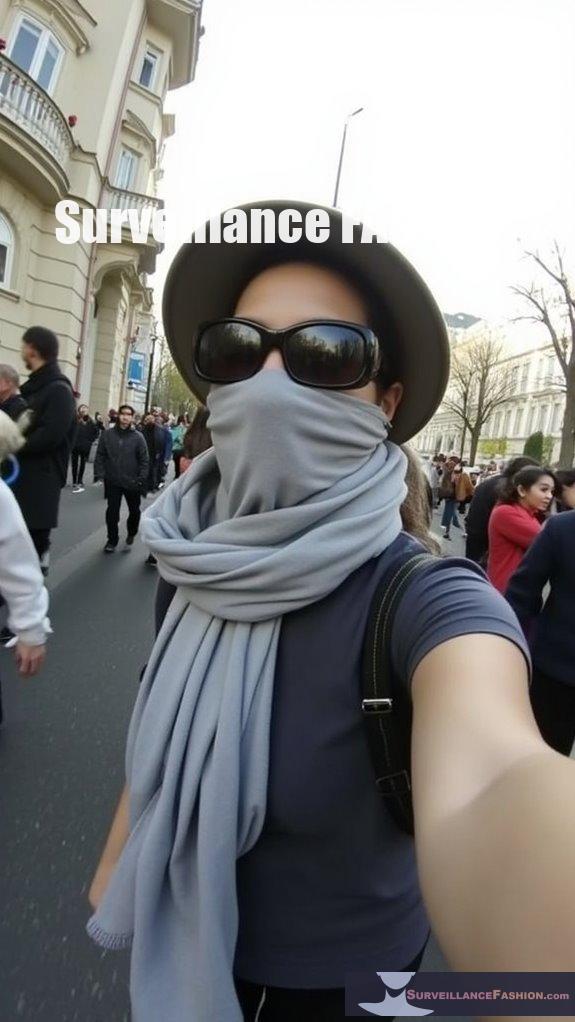
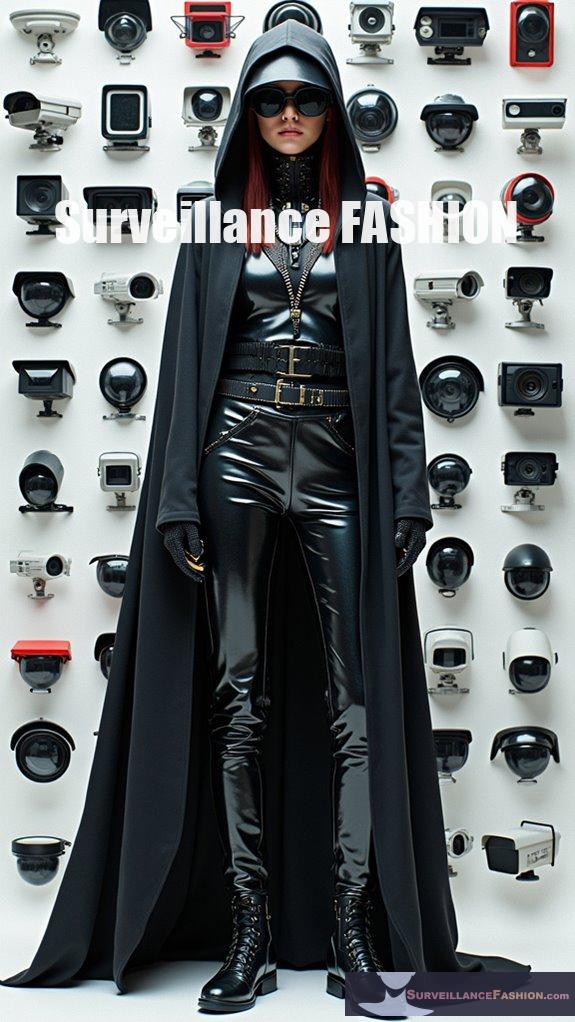
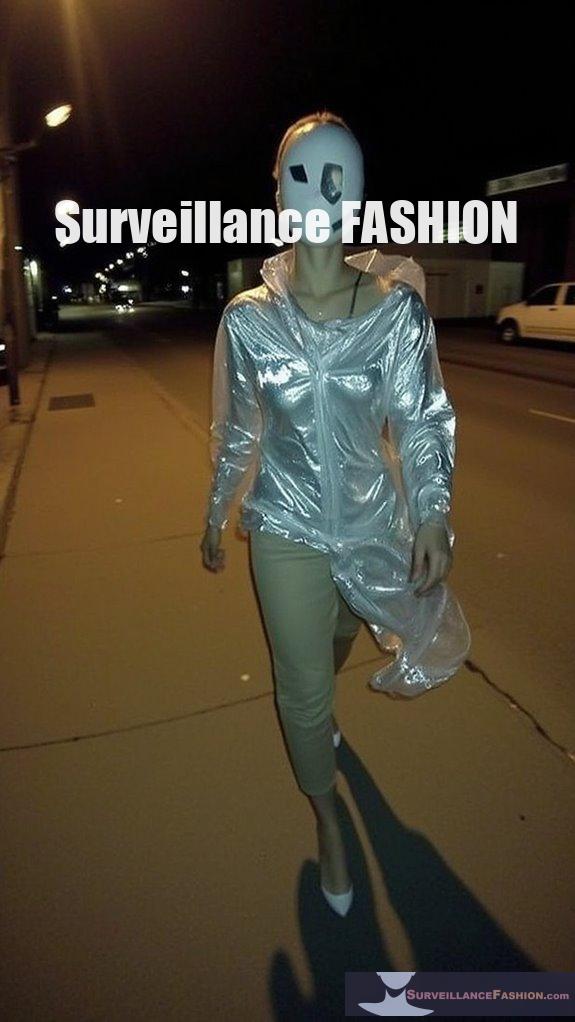
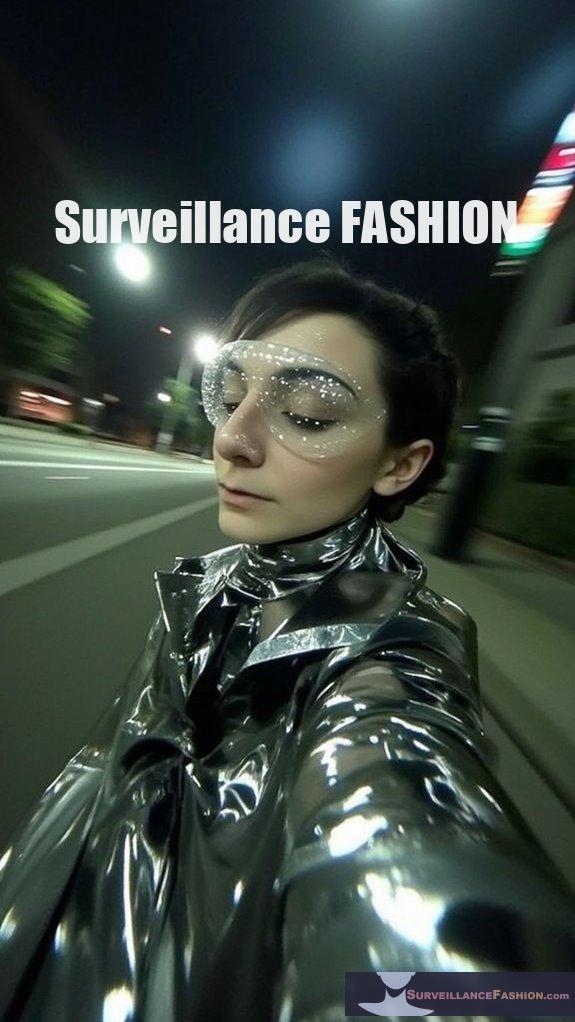
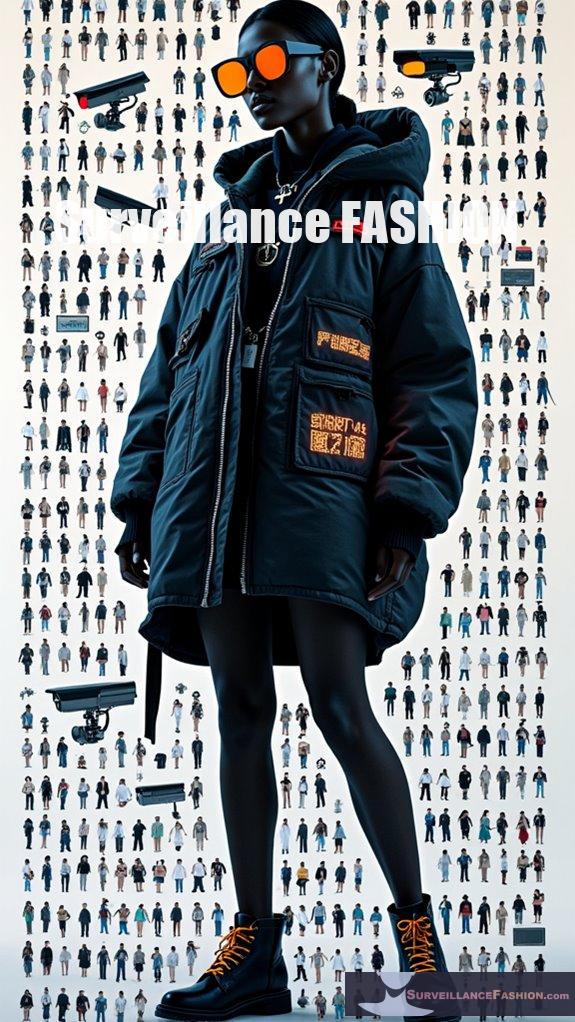
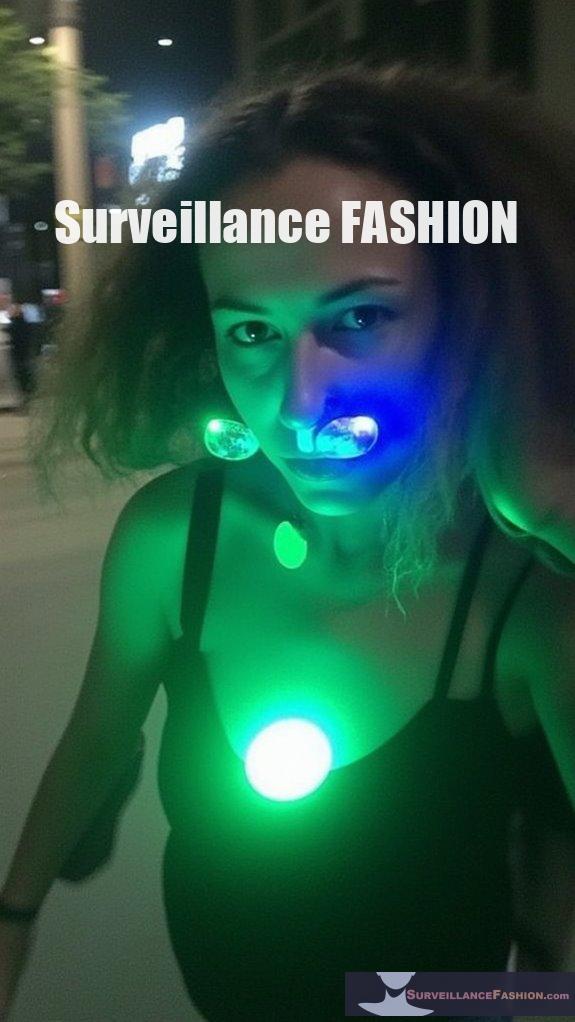
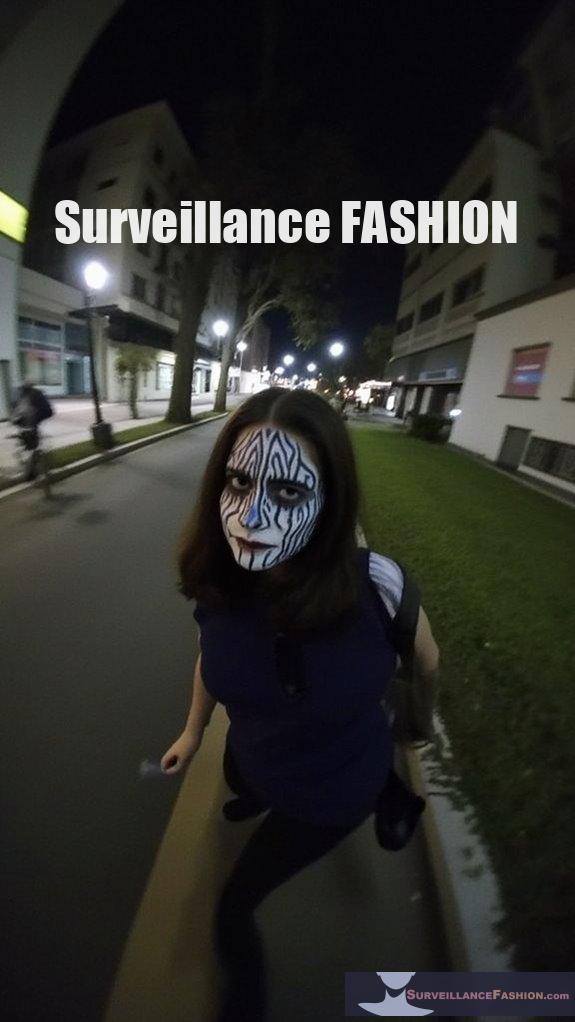
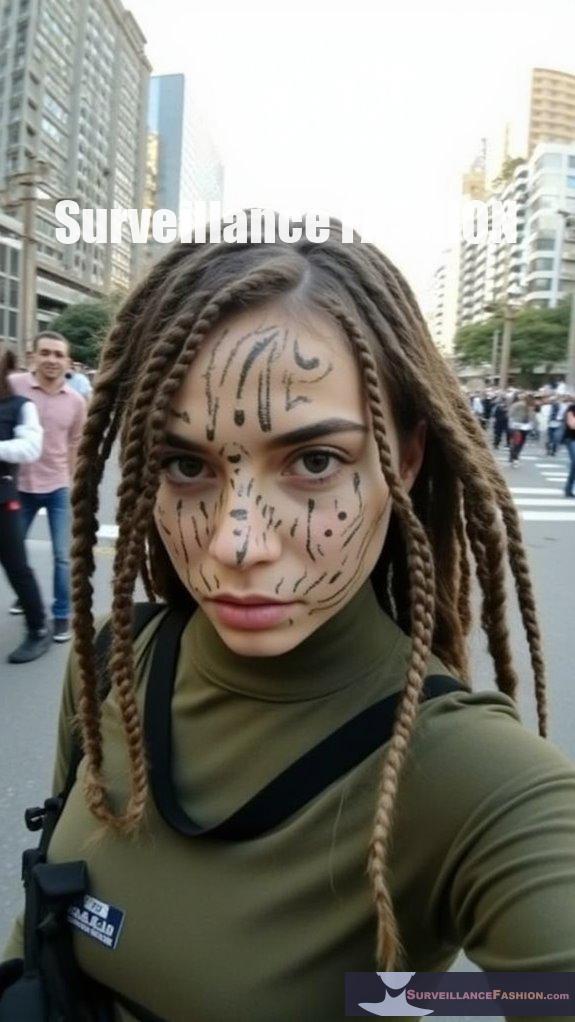
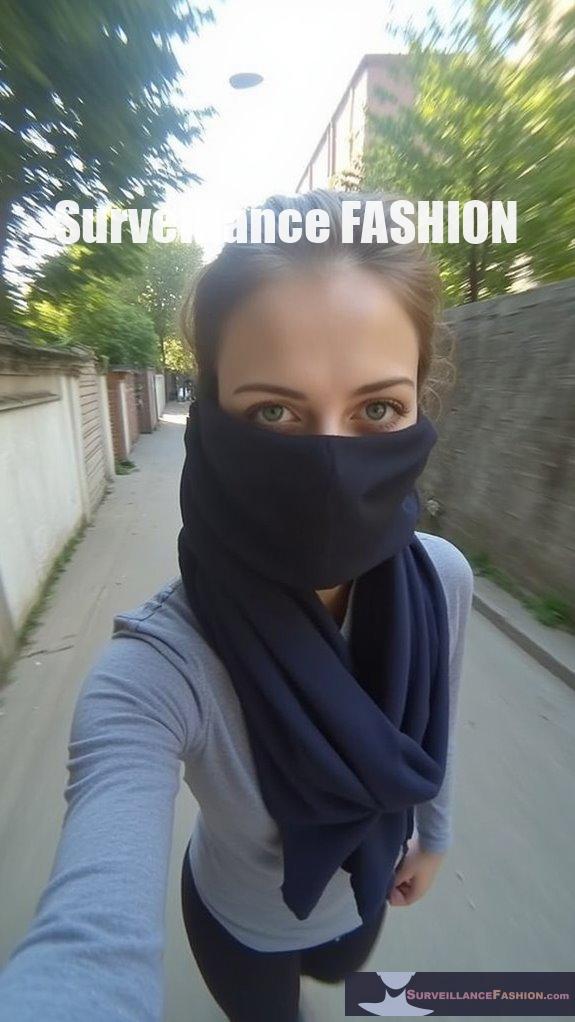
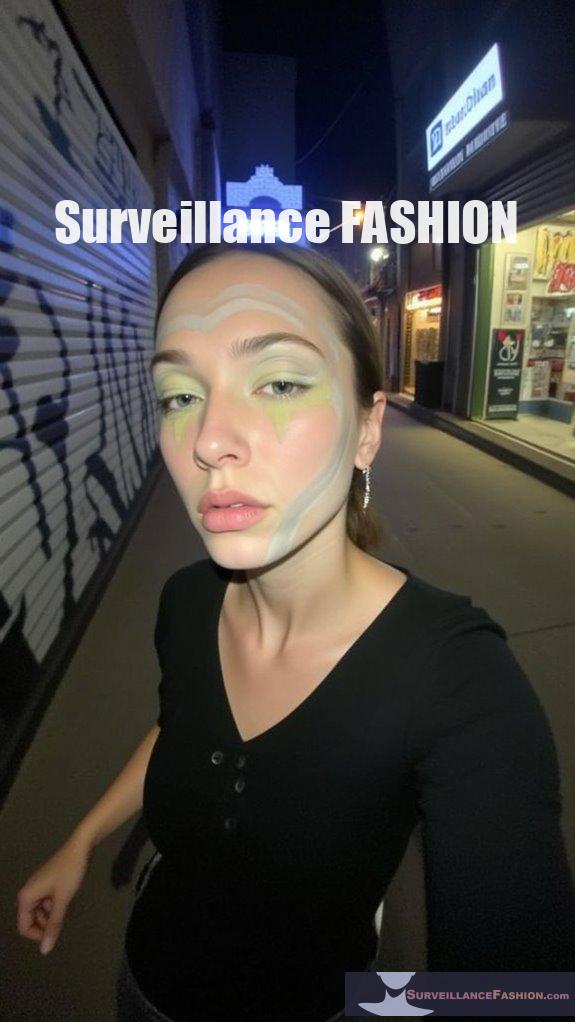
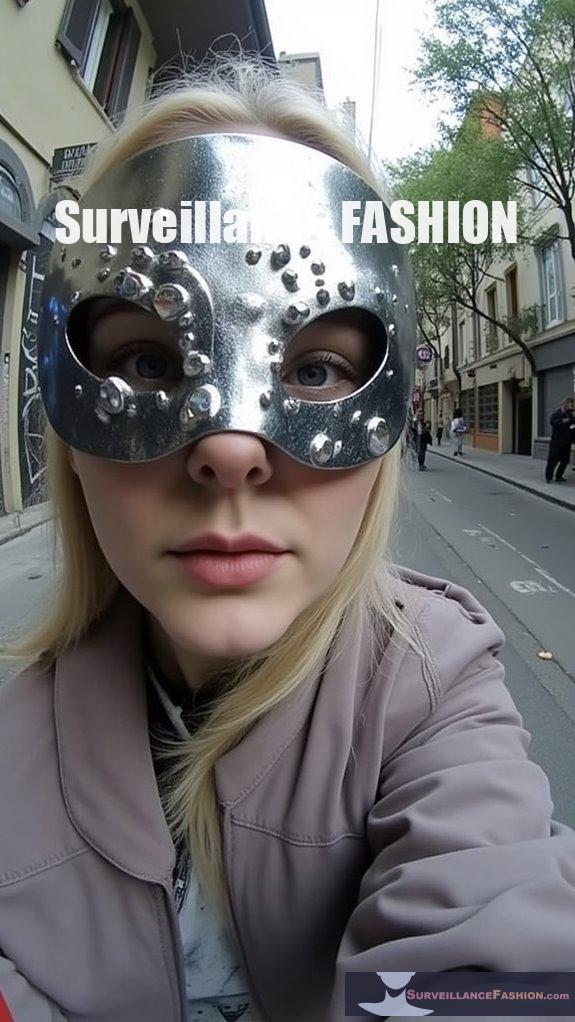
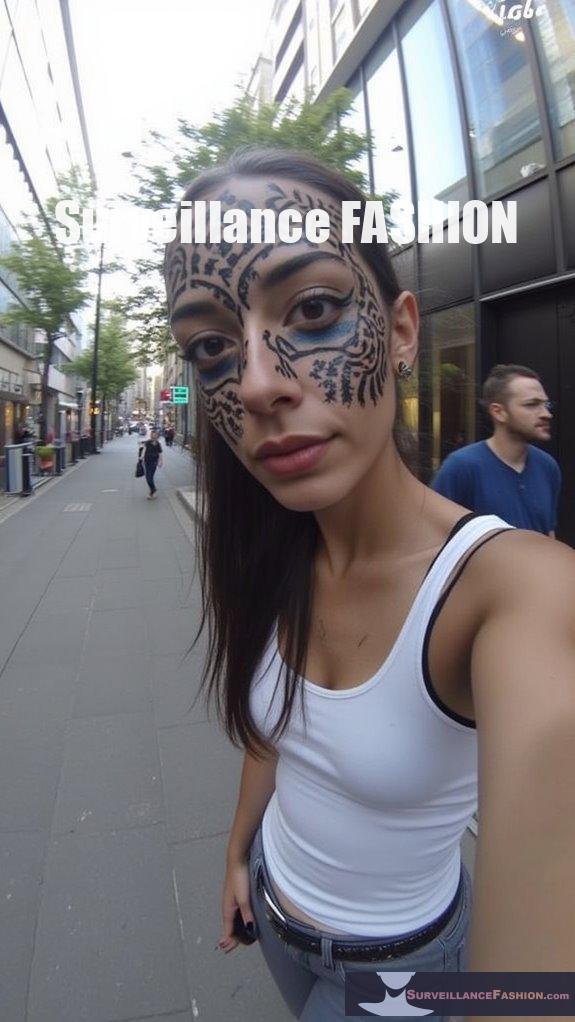
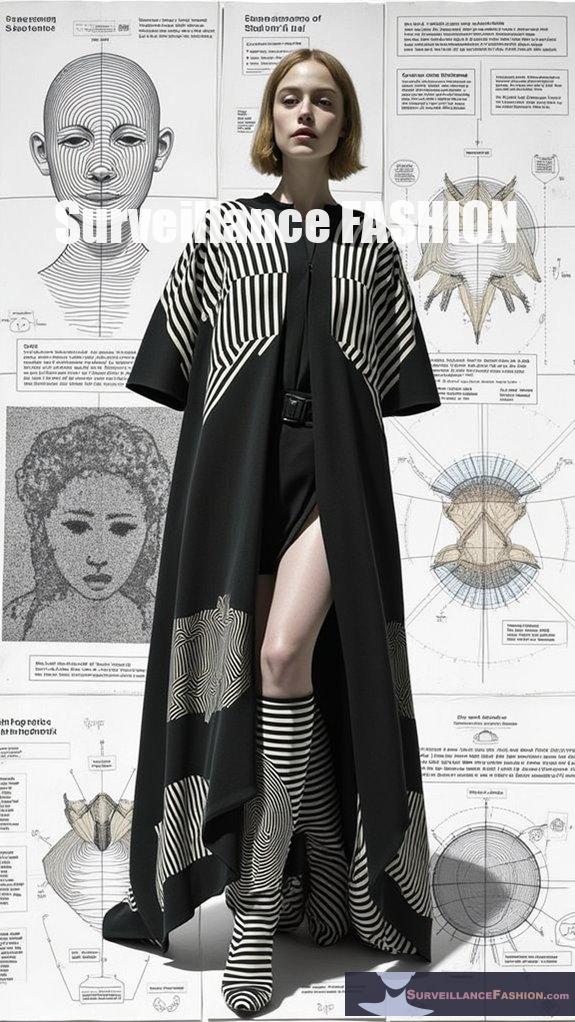
Tag: facial recognition

  • What Makes IR Privacy Masks Block Facial Recognition?

    What Makes IR Privacy Masks Block Facial Recognition?

    IR privacy masks block facial recognition by emitting near-infrared light, which obscures key facial features from cameras. This technology confuses infrared sensors, distorting the NIR patterns that recognition algorithms depend on, effectively disrupting their ability to identify individuals. The masks utilize advanced materials, such as infrared-blocking polymers, that enhance this obscuration. Additionally, reflective designs can amplify the masks’ effectiveness, adding another layer of protection. Understanding these mechanisms can aid your choice in privacy solutions tailored for the modern surveillance environment.

    Quick Takeaways

    • IR privacy masks emit near-infrared light, obscuring facial features from cameras and disrupting facial recognition algorithms.
    • They use infrared-blocking polymers and reflective textiles that confuse tracking algorithms by bouncing back IR light.
    • Asymmetric surface designs alter facial geometry to interfere with recognition while maintaining optical clarity.
    • The masks provide real-time protection by overwhelming infrared sensors with distorted and inconsistent signals.
    • Combining IR-blocking technologies with reflective accessories further enhances their effectiveness against facial recognition systems.

    How Do Infrared Embedded Facial Recognition Systems Work?

    infrared facial recognition technology

    Infrared embedded facial recognition systems utilize near-infrared (NIR) light and dual-spectrum imaging to create accurate 3D facial maps, capturing detailed features and depth information even in low light or darkness. This technology can be significantly hindered by infrared fashion innovations, which reflect NIR light in a way that masks facial features.

    These systems employ AI algorithms for liveness detection and spoof prevention. RGB-IR cameras improve the overall recognition accuracy as they allow for simultaneous capture of visible and infrared light.

    These systems operate by projecting NIR patterns onto the face, which are then reflected and captured by sensors to create an extensive 3D profile. The integration of RGB-IR cameras allows simultaneous capture of visible and infrared light, improving feature detection and overall recognition accuracy.

    Key aspects include:

    • Resistance to spoofing attempts through depth detection.
    • Consistent performance with IR illumination, aiding in the capture of fine facial details.
    • The use of thermal imaging adds biometric uniqueness by tracking heat patterns.
    • AI further enhances security by discerning liveness and rejecting static images or masks.

    What Are IR Privacy Masks and Their Basic Functionality?

    IR privacy masks are devices that utilize infrared light to obscure facial features from cameras equipped with infrared sensors, primarily to protect individuals from unwanted surveillance and facial recognition.

    These masks function by emitting near-infrared (NIR) light, typically around 940 nm, which is invisible to the human eye but detectable by IR-sensitive cameras. When worn, they overwhelm the camera’s sensors, causing facial details to become distorted or washed out.

    Key aspects include:

    • Real-time protection: They interfere with data acquisition, preventing real-time facial recognition.
    • Non-invasive: Normal visual interaction is maintained; there’s no alteration of visible appearance.
    • Discreet integration: Often designed into accessories such as glasses or hats for ease of use.
    • Dependent on technology: Their efficacy varies with the camera’s sensitivity and filtering capabilities.

    Additionally, these masks can utilize stealth fabric electromagnetic shielding to enhance privacy and protect users from various surveillance technologies.

    How Do IR Privacy Masks Disrupt Facial Recognition Algorithms?

    IR privacy masks disrupt facial recognition algorithms by overwhelming infrared (IR) sensors, distorting facial measurements, and interfering with liveness detection systems.

    By reflecting or emitting IR light inconsistently, these masks prevent accurate face recognition and complicate the identification process.

    IR masks are designed to emit or reflect IR light, which confuses the camera sensors used in facial recognition technology. This results in several key disruptions:

    • Disrupted Landmark Detection: The masks obscure facial features such as eyes, mouth, and nose, preventing the system from recognizing them.
    • Distorted Measurements: By altering the IR patterns, the masks lead to inaccurate data points that interfere with the recognition algorithms’ ability to match a face to an identity.
    • Blinded Cameras: Reflective surfaces cause glare, reducing image quality and hiding important facial data, which is essential for recognition.
    • Anti-spoofing Challenges: These masks produce inconsistent IR signals, making it hard for systems to differentiate real faces from images or masks.

    Together, these factors hinder facial recognition systems’ effectiveness and contribute to the advancing arms race between privacy technology and recognition algorithms.

    What Are Common Materials Used in IR Privacy Masks?

    Common materials used in IR privacy masks include specialized infrared-blocking polymers, reflective textiles, and asymmetric surface designs. These materials are engineered to disrupt facial recognition systems by manipulating infrared light reflectance and transmittance.

    Infrared-blocking polymers are often blended with nanoparticles to enhance their effectiveness. These materials provide optical clarity while blocking relevant IR wavelengths. Moreover, reflective textiles can bounce back IR light, further confusing tracking algorithms.

    Asymmetric surface designs, such as irregular patterns, exploit face geometry to interfere with recognition systems. This combination of advanced materials and innovative designs enables effective protection against facial recognition technologies.

    How Effective Are Reflective Accessories Against Facial Recognition?

    Reflective accessories can reduce the effectiveness of facial recognition (FR) systems, particularly when combined with infrared (IR) blocking technologies. However, not all reflective items provide adequate protection against FR software, especially those that lack IR-blocking properties.

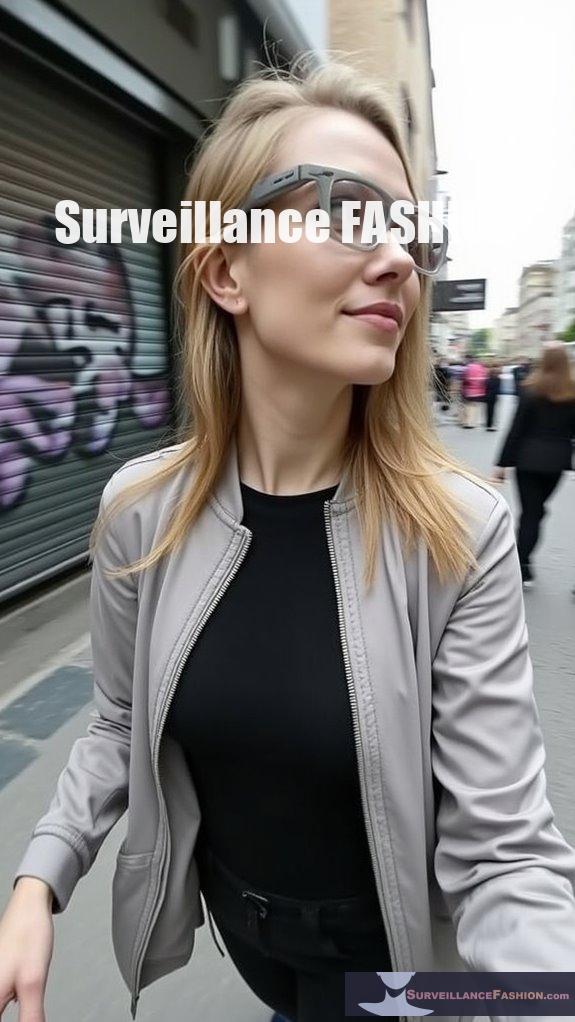
    The effectiveness of reflective accessories relies heavily on their design and materials. Accessories like Reflectacles utilize IR-blocking lenses that deny FR systems critical data needed for identification. Furthermore, reflective surfaces scatter IR light, complicating facial mapping for FR technologies.

    While these tactics offer a level of privacy, they aren’t foolproof:

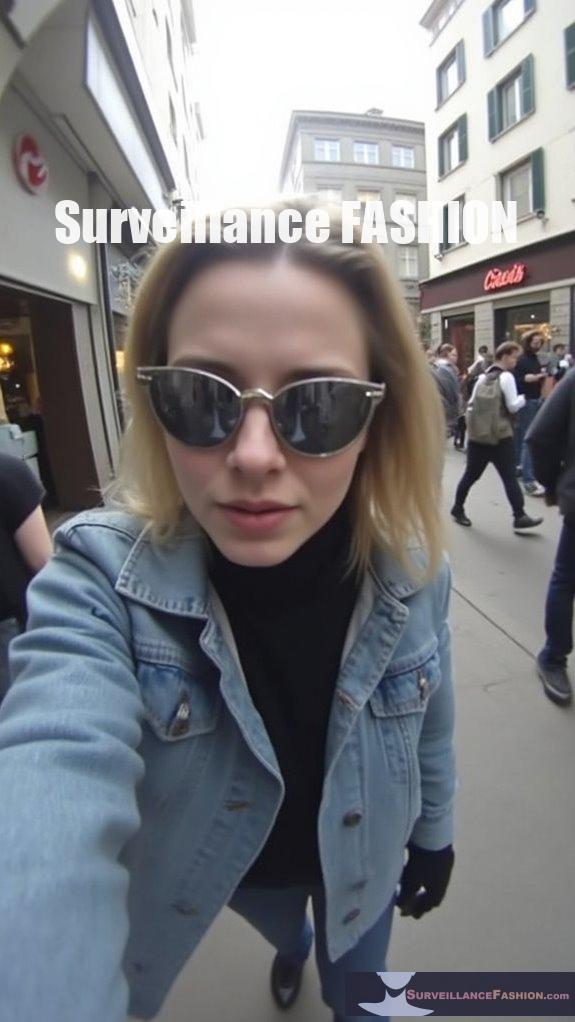
    • Some reflective sunglasses without IR specifications can still be recognized by FR systems.
    • High-accuracy FR tools continue to pose a challenge, often requiring dual approaches of reflection and IR blocking.
    • Visual artifacts from reflective surfaces may draw attention rather than obscure identity.
    • Variations across FR algorithms suggest mixed efficacy, emphasizing the need for thorough protective gear in varying conditions.

    What Role Do Infrared Blocking Hoodies Play in Privacy Protection?
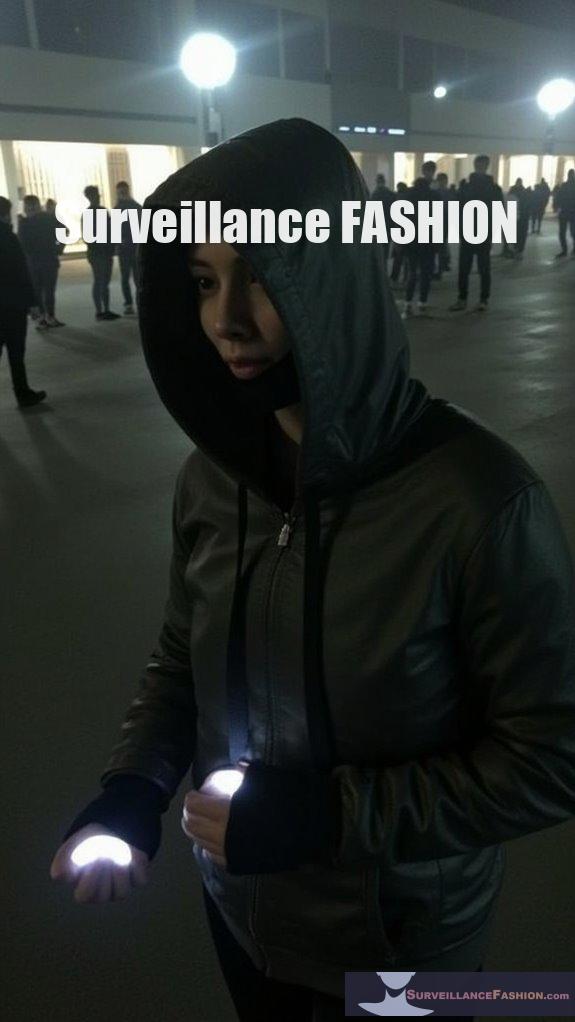
    infrared protection for privacy

    Infrared blocking hoodies enhance privacy protection by emitting infrared light that disrupts night-vision cameras, making facial recognition nearly impossible in low-light conditions. They effectively obscure facial features from IR-sensitive surveillance while allowing normal visibility during daylight.

    These hoodies utilize high-power infrared LEDs strategically placed to flood cameras with IR light.

    Key features include:

    • Manual Control: Users can activate or deactivate the IR strobe as needed.
    • Programmable Patterns: Microcontrollers allow varied strobing to confuse camera algorithms.
    • Portable Power: USB-powered options provide extended use while maintaining mobility.

    However, they’re ineffective against non-IR-based recognition systems and may attract attention due to their brightness in footage, limiting their overall utility to specific scenarios.

    Can IR-blocking Eyewear Prevent Smartphone Face Unlock Features?

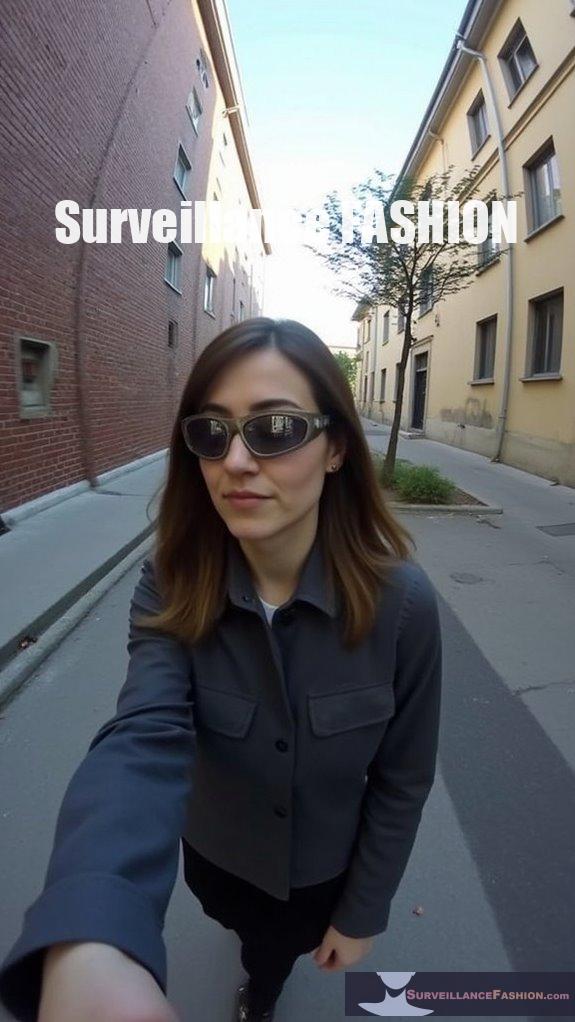
    Yes, IR-blocking eyewear can impede smartphone Face ID and similar infrared facial recognition features by reflecting or absorbing near-infrared light, leading to access failures.

    The effectiveness of IR-blocking eyewear varies based on design, coating effectiveness, and environmental factors. Eyewear that reflects up to 80% of near-infrared light can disrupt face mapping technologies. Regular glasses typically don’t have this effect.

    Key points include:

    • Temporary eyewear removal may be necessary for Face ID.
    • Certain models, like Reflectacles, are specially designed for this purpose.
    • Effectiveness can change with lighting and angle of use.

    Ultimately, while these glasses can enhance privacy, they don’t guarantee anonymity.

    What Types of IR Privacy Masks Are Available on the Market?

    IR privacy masks are available in several types based on material and design, including soft silicone, hard shell, combination, multi-layer, and custom-fitted masks.

    Each type offers unique benefits for blocking infrared signatures and meeting specific user needs.

    Soft silicone masks provide comfort and flexibility, while hard shell masks prioritize durability.

    Combination masks integrate comfort with effective blocking features, and multi-layer masks enhance IR suppression.

    Custom-fitted options guarantee ideal coverage, minimizing gaps for better IR emission blocking.

    How Do IR Masks Protect Against Surveillance in Public Spaces?

    IR masks protect against surveillance in public spaces by emitting or reflecting infrared light that disrupts facial recognition algorithms, preventing accurate identification in real-time.

    These masks target the infrared spectrum used by many facial recognition systems, overwhelming the sensors with unpredictable IR signals. As a result, they obscure unique facial patterns and heat signatures, making it difficult for algorithms to match biometric data.

    Key advantages include:

    • Immediate disruption of recognition at the point of capture.
    • Enhanced privacy in environments with pervasive surveillance.
    • Complementing digital privacy tools with physical countermeasures.
    • Mitigating unauthorized tracking in crowded areas.

    What Are the Limitations of IR Privacy Masks and Clothing?

    IR privacy masks and clothing face significant limitations, including reduced effectiveness against advanced facial recognition algorithms, vulnerability to alternative biometric methods, practical challenges in everyday use, and the need for specialized training datasets.

    These limitations mean that while IR masks can obscure faces to a degree, they don’t guarantee anonymity. Advanced systems adapt to recognize masked faces, and alternative biometric methods like gait recognition and thermal imaging can still identify individuals.

    Additionally, practical issues like power requirements, comfort, and social acceptability hinder widespread adoption. As technology evolves, the reliability of current IR privacy solutions diminishes, consequently necessitating continuous updates and improvements in both privacy technologies and surveillance systems.

    How Is IR Technology Evolving in Facial Recognition Systems?
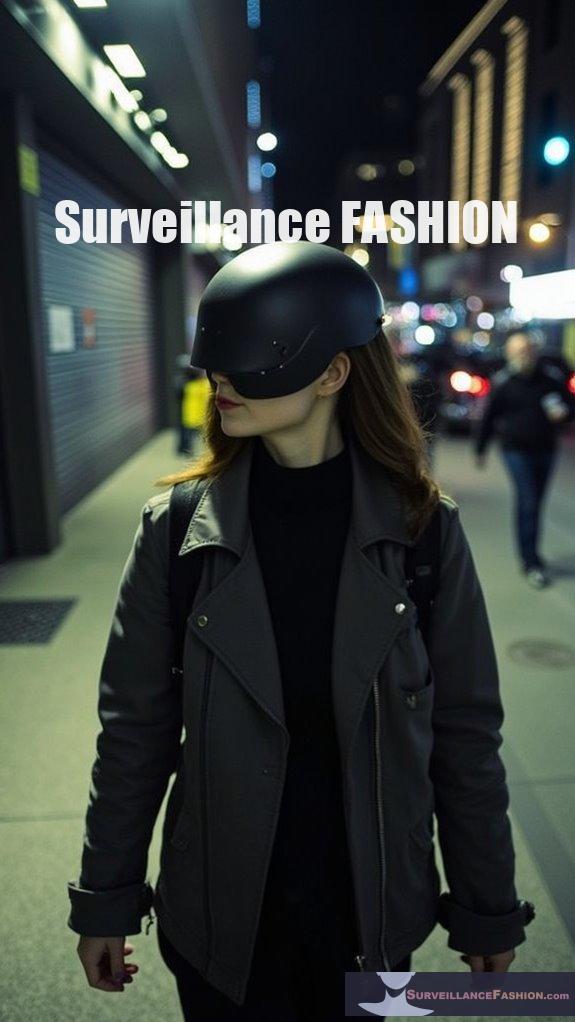
    advancements in ir technology

    IR technology in facial recognition systems is progressing through advancements in thermal imaging, integration of RGB-IR cameras, and improved machine learning algorithms, enhancing accuracy and robustness.

    Recent developments focus on capturing unique heat patterns for reliable identification, even in diverse environmental conditions. The integration of RGB-IR cameras allows simultaneous capture of visible and infrared light, aiding feature detection in low-light situations.

    Furthermore, machine learning models are increasingly capable of interpreting complex IR data, addressing challenges like pose variations and occlusions. Key trends include:

    • Compact, low-power IR sensors for consumer devices
    • Hyperspectral IR imaging for richer biometric data
    • Fusion of 3D depth sensing with IR imaging to mitigate spoofing risks
    • Ongoing enhancements in IR camera resolution and noise reduction

    What Are the Ethical Considerations Surrounding IR Privacy Masks?

    IR privacy masks raise important ethical considerations regarding individual autonomy, consent, and the protection of biometric data. They serve as a countermeasure to unwanted surveillance, emphasizing the necessity for privacy in the age of facial recognition technology.

    Ethically, IR privacy masks confront several key issues:

    • Privacy Autonomy: They empower individuals to safeguard their anonymity in public spaces.
    • Consent and Transparency: Masks facilitate an opt-out mechanism in environments lacking explicit consent protocols.
    • Data Security: By obstructing facial recognition capture, they reduce risks of identity theft.
    • Regulation Awareness: Their use highlights the urgent need for thorough legal protections addressing biometric data collection.

    How Can Consumers Choose the Right IR Privacy Mask for Their Needs?

    When selecting an IR privacy mask, consider the following factors for maximum protection and comfort:

    • Material Quality: Look for masks made with multi-layered fabrics and specialized coatings that effectively absorb or reflect IR wavelengths, especially in the 800–1000 nm range.
    • Fit and Design: Opt for adjustable masks that conform closely to your face to minimize light leakage. Ascertain they cover critical facial recognition areas like the eyes and nose.
    • Testing Certification: Seek masks backed by independent testing data, indicating an IR light blocking efficiency above 95%.
    • Additional Features: Consider ease of cleaning, compatibility with other gear, and size options to ascertain the mask meets your needs and preferences.

    Anti Surveillance Ebook review: Eyes Everywhere

    Surveillance has become an omnipresent force in contemporary society, affecting how individuals maneuver their daily lives.

    The ebook “Eyes Everywhere” explores the complex web of surveillance technologies permeating both government and corporate environments. Readers examine the expansive use of cameras, from bustling cities to specific venues, alongside personal data collection methods like digital communication monitoring.

    The text highlights both the technological advances and the emerging risks to civil liberties, challenging you to reconsider the implications of acceptance surrounding these technologies.

    Infrared Blocking Hoodies and Masks

    As technology continues to evolve, the urgency for protective measures against invasive surveillance grows, leading to innovative solutions like infrared blocking hoodies and masks.

    These garments utilize specialized materials designed to absorb or scatter infrared wavelengths, masking the heat signatures that facial recognition systems rely upon for accurate identification.

    For instance, 3D-printed masks, with their low IR transmittance, effectively disrupt live skin detection, making authentication challenging.

    With their unique blends of breathability and protection, these hoods and masks have emerged as critical tools in the ongoing battle against surveillance, informing our mission at Surveillance Fashion to help you navigate this complex environment.

    Privacy Mask IR Facial Recognition Protection

    The emergence of privacy masks specifically designed to block infrared (IR) light represents a significant advancement in personal protection against facial recognition technologies that increasingly infiltrate our lives.

    These masks employ innovative materials that absorb or block IR light, disrupting the vital sensors in facial recognition systems, which rely on IR illumination for accuracy.

    By altering reflected light patterns, the masks effectively obscure essential facial features like skin texture and eye contours.

    As we explore this technology further, the balance between usability and effectiveness becomes essential, ensuring individuals can maintain privacy seamlessly without compromising comfort in a world dominated by surveillance.

    References

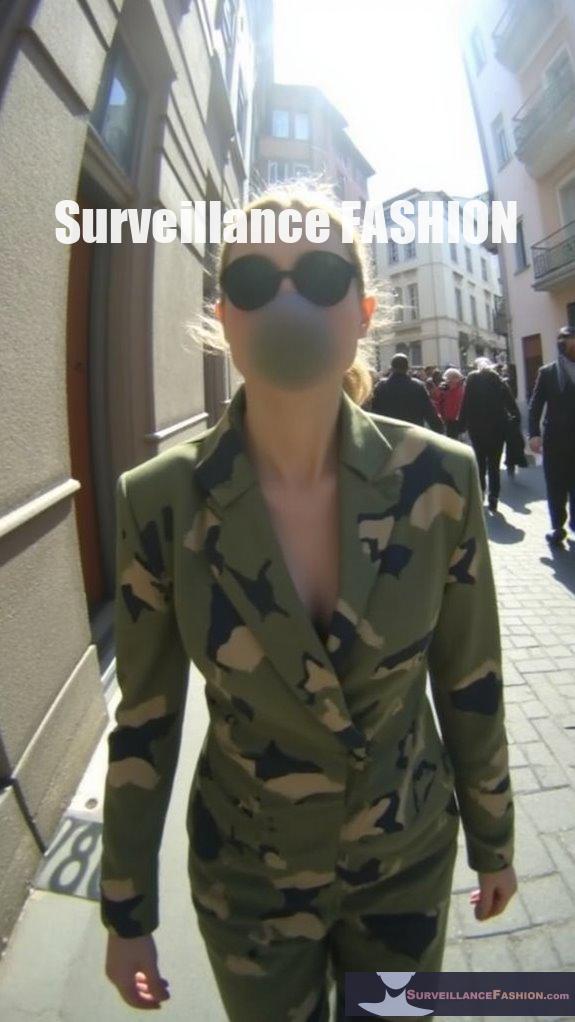
  • 3 Ways Digital Camouflage Clothing Blocks Facial Recognition

    3 Ways Digital Camouflage Clothing Blocks Facial Recognition

    Digital camouflage clothing inhibits facial recognition through innovative design strategies. First, it deploys asymmetry in patterns and shapes to disrupt detection algorithms, making facial features appear as visual noise. Second, it uses occlusion techniques, effectively concealing critical facial landmarks with bold contrasts. Finally, adversarial patterns, embedded in the fabric, create false identities to mislead recognition systems. This fusion of art and technology not only reflects our commitment to personal privacy but also offers exciting understandings into emerging anti-surveillance methods. Keep exploring to uncover more.

    Quick Takeaways

    • Digital camouflage clothing uses bold geometric patterns to create visual noise, disrupting facial feature extraction by recognition algorithms.
    • By employing asymmetry and contrasting colors, these designs lower detection confidence by confusing facial geometry expectations.
    • Innovative materials reflect infrared signals, making it challenging for detection sensors to identify facial features accurately.
    • Strategic placement of disruptive shapes fragments recognizable facial landmarks, impeding the recognition process by creating competing focal points.
    • Constant adaptation of patterns and styles ensures effectiveness against evolving facial recognition technologies, enhancing personal safety.

    How Do Adversarial Patterns in Fabric Disrupt Facial Recognition Algorithms?

    adversarial patterns disrupt identification

    Adversarial patterns in fabric disrupt facial recognition algorithms by introducing high-contrast, irregular geometric shapes that confuse software in identifying key facial landmarks. These patterns create visual noise that impedes feature extraction, preventing accurate detection and recognition of faces. Additionally, the design of these fabrics can incorporate specific pattern-based techniques that further enhance their efficacy against recognition systems.

    The effectiveness of these patterns stems from their design, specifically aimed at exploiting vulnerabilities in facial detection systems. Key mechanisms include:

    • High-contrast shapes that interfere with landmark recognition.
    • Visual noise distracting algorithms from actual facial features.
    • Simulation of false edges, leading to misinterpretation of shapes.

    These cleverly crafted patterns can render existing algorithms ineffective, emphasizing the need for ongoing improvements in facial recognition technology. Notably, the project has been instrumental in highlighting the vulnerabilities in facial recognition systems that can be exploited through innovative design techniques. However, their success can be inconsistent, influenced by the specific algorithms employed and their adaptability to new adversarial inputs.

    What Role Do False Faces and Pattern Distractors Play in Reducing True Facial Detection?

    False faces and pattern distractors effectively reduce true facial detection by mimicking facial features that attract the algorithm’s attention, thereby lowering confidence scores for the actual face. This distraction is achieved through artificially generated patterns that confuse detection systems and fragment the recognition process.

    These techniques rely on manipulating visual cues that facial recognition algorithms depend upon. False faces typically distort or abstract key facial features, creating misleading high-confidence regions.

    • Distractors disrupt expected facial geometry using asymmetry and contrasting colors.
    • They can include repeated motifs or alternative features that create competing focal points.
    • This fragmentation makes it difficult for the algorithm to form a stable detection output.
    • Effective designs align with specific feature extraction parameters to guarantee maximum disruption.

    Combining these elements within digital camouflage clothing results in garments that protect the wearer from facial detection across various viewing angles while maintaining aesthetic appeal. Additionally, incorporating surveillance countermeasures can enhance the effectiveness of these designs against evolving recognition technologies.

    In What Ways Does CV Dazzle Adapt to Evolving Facial Recognition Technologies?

    CV Dazzle adapts to advancing facial recognition technologies by creating patterns that specifically disrupt algorithms’ ability to detect facial features through asymmetry, color contrast, and occlusion techniques. Continuous innovation is essential to address the increasing sophistication of detection methods employed by advanced algorithms.

    To effectively counteract advanced facial recognition, CV Dazzle designs incorporate various strategic elements:

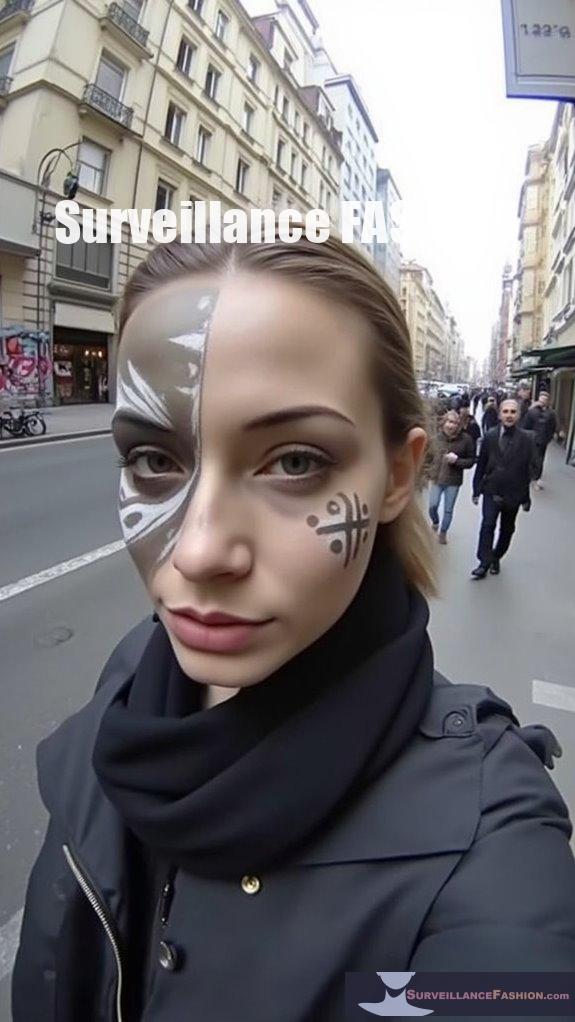
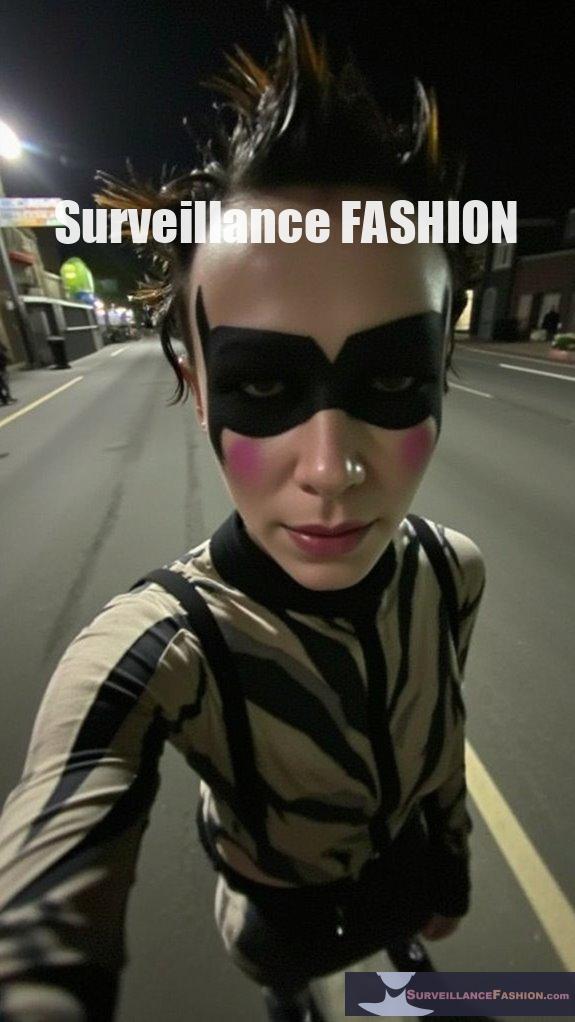
    • Asymmetric hair styling and bold makeup that break up the symmetry of facial features.
    • Occlusion techniques that hide or distort critical landmarks like eyes, nose, and mouth.
    • Transformation of colors and shapes to mislead classifiers about face shape.
    • Utilization of infrared reflective materials to interfere with detection sensors.

    However, challenges such as human visibility, practical application in daily life, and the need for constant adaptation to new algorithms remain prominent. This ongoing progression emphasizes the necessity for users to stay informed or collaborate within community movements to maintain relevance against advancing recognition technologies.

    Anti Surveillance Ebook review: Eyes Everywhere

    While many consider the role of surveillance in modern society seldom discussed, an astute examination of the eBook “Eyes Everywhere” reveals the pervasive nature of camera surveillance and its implications for civil liberties.

    This collection of essays elucidates how government and corporate entities collaborate to surveil individuals, detailing the integration of advanced technologies that monitor physical movements through ubiquitous CCTV systems and digital communication channels.

    Digital Pattern Camouflage Techniques

    As surveillance technologies continue to evolve, the need for innovative countermeasures becomes increasingly apparent, prompting interest in digital pattern camouflage techniques.

    These methods leverage advanced algorithms and design principles to disrupt facial recognition systems effectively.

    • AI-Adversarial Camouflage utilizes embedded patterns altering pixel features, confusing recognition algorithms.
    • False Face Patterns create artificial facial features, steering algorithms toward decoys.
    • Color and Texture Models optimize blending using advanced similarity metrics, minimizing visible differences.

    With emerging technologies, our platform, Surveillance Fashion, aims to provide perspectives into these revolutionary approaches, fostering a deeper understanding of digital camouflage’s role in personal safety.

    Dazzle Pattern Clothing Anti Surveillance

    dazzle patterns for disguise

    Dazzle pattern clothing, originally conceived in the early 20th century for naval applications, has found renewed purpose in the domain of anti-surveillance technology, addressing the contemporary challenge of facial recognition systems.

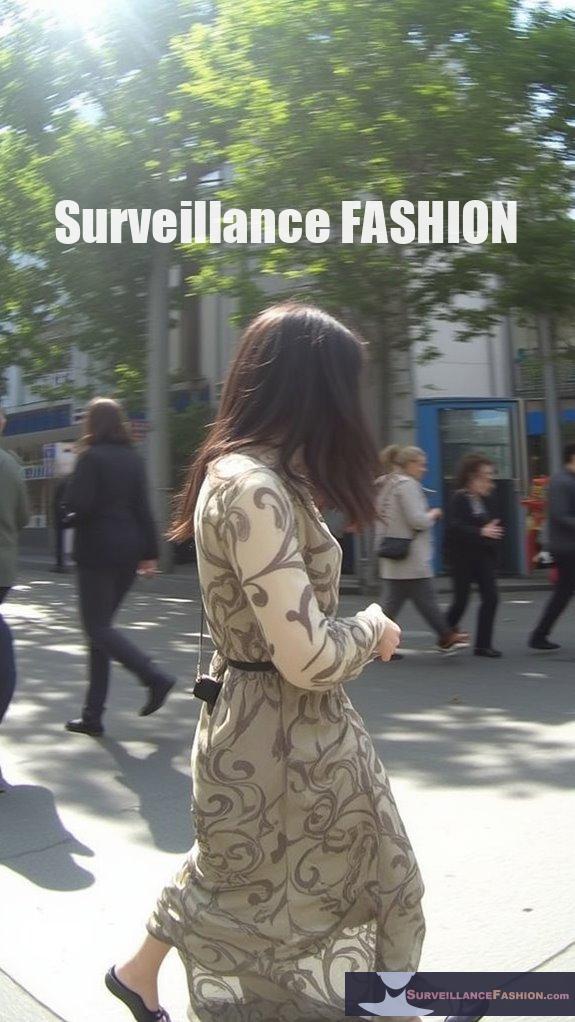
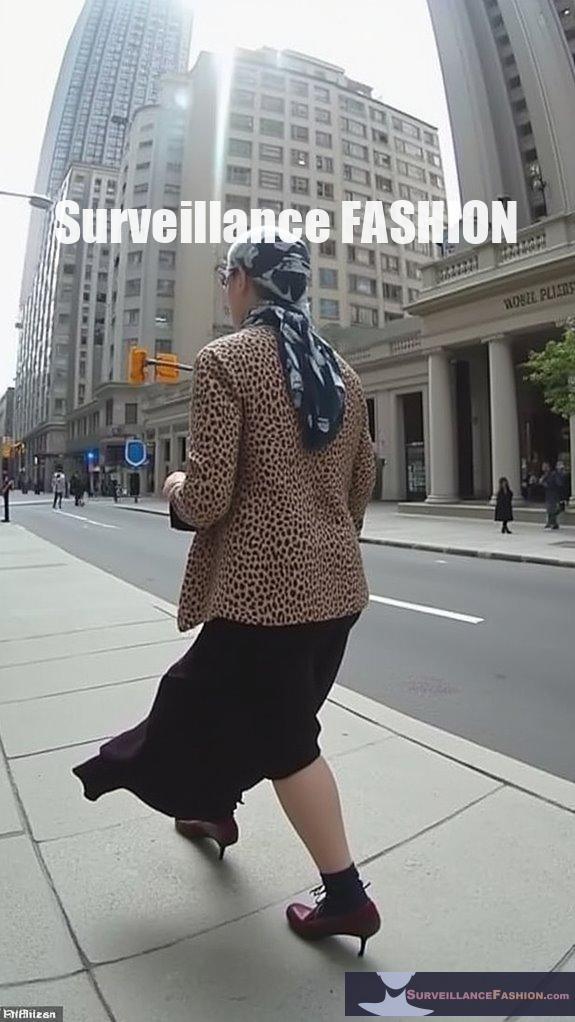
    Utilizing bold, asymmetric designs, these garments confuse algorithms by disrupting facial landmarks and creating misleading visual data. For example, patterns can obscure eyes, noses, and mouths, transforming recognizable features into visual noise, which effectively misdirects machine vision.

    Moreover, the strategic placement of contrasting shapes plays a critical role, as it exploits the spatial relationships algorithms rely on.

    As the environment of surveillance evolves, so too must the designs, highlighting the necessity of ongoing innovations like those found on Surveillance Fashion.

    References

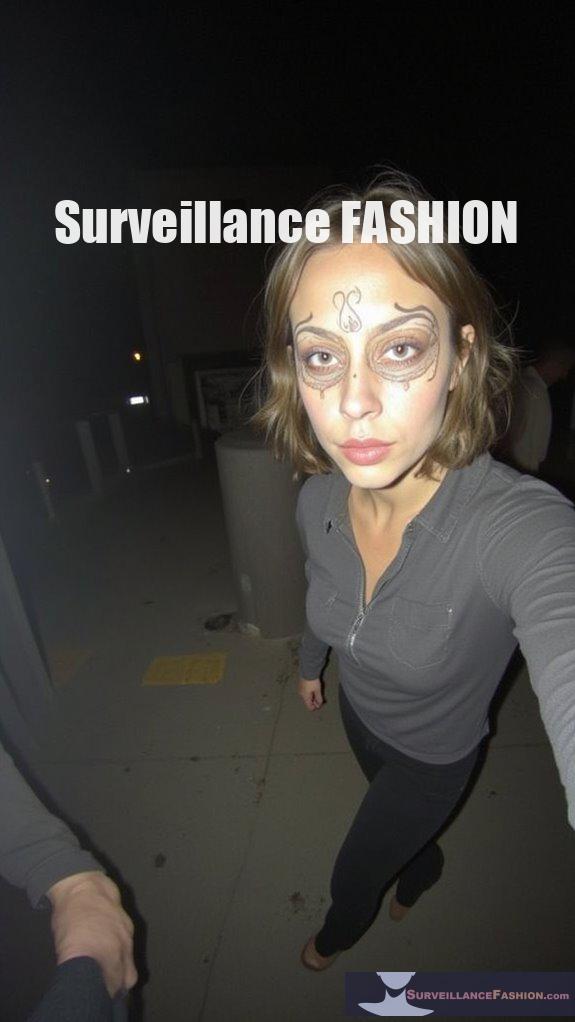
  • What Makeup Patterns Block Face Recognition Systems?

    What Makeup Patterns Block Face Recognition Systems?

    Adversarial makeup patterns can notably block facial recognition systems by manipulating key facial landmarks, specifically targeting regions like the eyes, nose, and mouth. Techniques such as CV Dazzle employ high-contrast, asymmetric designs to disrupt facial symmetry, complicating algorithmic detection. Unlike random applications, algorithmically crafted makeup demonstrates effectiveness, potentially reducing recognition rates to minimal levels. These methods illustrate how everyday cosmetics can serve as a form of privacy protection, rewarding further exploration into innovative strategies for anonymity.

    Quick Takeaways

    • Adversarial makeup patterns use digital optimization to create designs that exploit facial recognition system vulnerabilities, enhancing privacy.
    • Targeting facial landmarks, such as the eyes and mouth, with effective patterns can significantly disrupt recognition algorithms.
    • CV Dazzle techniques involve high-contrast asymmetry and unique color combinations to obstruct key facial regions and complicate detection.
    • Algorithmically crafted makeup patterns, informed by machine learning, have been shown to reduce identification accuracy to as low as 1.2%.
    • Combining makeup with physical accessories like scarves or sunglasses increases effectiveness against facial recognition systems.

    What Are Adversarial Makeup Patterns and How Do They Work?

    adversarial makeup privacy enhancement

    Adversarial makeup patterns are specific cosmetic techniques designed to manipulate facial features and mislead facial recognition algorithms while remaining inconspicuous to human observers. By exploiting FR model vulnerabilities, these patterns alter facial regions critical for identification, drastically reducing recognition success rates.

    Adversarial makeup utilizes digital optimization methods that create subtle changes in contours and shading. These modifications specifically target key facial landmark regions, challenging the effectiveness of recognition systems. Researchers employ generative adversarial networks (GANs) and diffusion models to produce these realistic patterns, using surrogate FR networks to refine their effectiveness. The technique was developed by researchers to offer a practical means for individuals to enhance privacy against surveillance. Recent studies have indicated that adversarial methods can significantly obscure facial features that are typically used in identification processes.

    Key aspects include:

    – Iterative testing guarantees minimal recognition confidence.

    – Patterns are applied unobtrusively with everyday cosmetic styles.

    – Results demonstrate significant drops in FR success rates, outperforming random makeup options.

    How Does Facial Recognition Technology Identify Human Faces?

    Facial recognition technology identifies human faces by detecting and analyzing unique facial features, transforming them into numerical faceprints for accurate matching against existing databases. This process involves face detection, feature mapping, and rapid matching using advanced algorithms.

    Initially, the system captures the presence and location of faces in images or video streams. Specific landmarks are mapped, including eye distance and jawline shape, resulting in a quantifiable dataset. The facial feature data is then converted into unique mathematical representations called faceprints, similar to fingerprints.

    These faceprints are compared against stored data in databases, enabling quick identity verification.

    Key steps in the process include:

    • Detecting faces and isolating them from the background.
    • Mapping about 80 nodal points that represent key facial features.
    • Creating numerical faceprints using deep learning models.
    • Rapidly matching faceprints to existing databases for identity verification.

    This technology is widely used for security, user authentication, and even law enforcement purposes, benefiting from increasing accuracy as AI models evolve.

    What Are the Most Effective Facial Landmarks to Target With Makeup?

    To effectively disrupt face recognition systems, target landmarks around the eyes, nose, mouth, and jawline with makeup techniques that alter shape, shading, and visibility. This includes using asymmetry, unusual colors, or obscuring key features.

    Focusing on these facial areas can greatly hinder recognition algorithms that rely on stable geometric relationships.

    Specifically, consider:

    • Eye Region: Use patterns or colors that create distortion.
    • Nose: Alter shading to confuse depth perception.
    • Mouth: Apply striking colors or patterns to occlude key points.
    • Jawline: Implement contouring to mislead shape detection.

    How Does CV Dazzle Makeup Disrupt Facial Recognition?

    CV Dazzle makeup disrupts facial recognition by obstructing key facial regions and creating high-contrast asymmetry that confuses detection algorithms, preventing successful identification. This approach leverages artistic application of makeup and hair styling to render facial landmarks unrecognizable to facial detection systems.

    The main strategies include:

    • Covering the bridge of the nose, a crucial reference point for algorithms.
    • Using hair styles like bangs to obscure facial features.
    • Implementing contrasting colors to disrupt facial contours.
    • Adding visual noise with reflective elements or abstract shapes, further complicating machine recognition.

    While effective against older systems, CV Dazzle faces challenges from modern, robust algorithms and is recommended to be combined with additional anti-surveillance methods.

    What Are the Differences Between Random and Algorithmically Crafted Makeup?

    Random makeup patterns reduce facial recognition accuracy moderately, while algorithmically crafted makeup considerably lowers identification rates, leveraging targeted perturbations that exploit recognition system vulnerabilities.

    Random makeup lacks the precision needed to disrupt facial recognition algorithms effectively. Recognition rates drop from 47.57% to 33.73% with random patterns, primarily due to their inconsistent nature.

    In contrast, algorithmically crafted makeup employs advanced machine learning techniques to create tailored adversarial patterns, achieving identification rates as low as 1.2%.

    Key differences include:

    • Targeting: Algorithmic makeup focuses on identifiable facial features, while random patterns do not.
    • Effectiveness: Crafting techniques can achieve nearly 100% success in digitally generated trials.
    • Consistency: Algorithmic patterns create firm perturbations, while random ones lack reliability.

    These structured approaches enhance the makeup’s impact on recognition systems, showcasing a clear disparity in effectiveness.

    How Do Makeup Patterns Create Adversarial Perturbations?

    adversarial makeup for deception

    Makeup patterns create adversarial perturbations by embedding localized modifications within natural-looking cosmetic designs. These subtle alterations manipulate key facial features to mislead face recognition models without greatly impacting human perception.

    Adversarial makeup utilizes generative models, such as diffusion models and GANs, to synthesize these perturbations seamlessly into makeup textures. By focusing on critical facial areas, like the eyes and lips, the crafted patterns enhance evasion or mimicry.

    Additionally, these perturbations are designed to maintain high naturalness and resist various transformations, optimizing their effectiveness across different face recognition systems without drawing suspicion.

    Can Transparent Layers Enhance the Effectiveness of Anti-Surveillance Makeup?

    Yes, transparent layers can markedly enhance the effectiveness of anti-surveillance makeup by creating subtle obfuscation that disrupts facial recognition systems while remaining less conspicuous to human observers.

    By leveraging transparency layers, users can obscure key facial features that algorithms rely on for detection. This dual-layer effect allows the face to remain visible to the human eye, while obscure to automated systems:

    • Manipulating alpha transparency can erase facial key-points without the need for bold makeup.
    • Combined with minimal cosmetic perturbations, transparent overlays can effectively evade modern recognition technologies.
    • The approach is less conspicuous than traditional high-contrast patterns, making it suitable for everyday use.
    • Precision in application is essential to achieve the right balance between visibility and obfuscation.

    This strategy presents a novel way to navigate the challenges of facial recognition while maintaining a natural appearance.

    What Challenges Exist in Creating Natural-Looking Adversarial Makeup?

    Creating natural-looking adversarial makeup presents challenges in achieving seamless blending with skin tones, ensuring robustness against various face recognition models, and maintaining social acceptability while still modifying key facial landmarks.

    These challenges encompass:

    • Physical Realism: The makeup must blend with natural skin textures and colors to remain undetectable.
    • Transferability: It must perform well across different recognition systems, requiring generalization strategies during development.
    • Localized Perturbation: Modifying specific facial areas without drawing attention is essential, yet often leads to weaker adversarial signals.
    • Human Perception: The makeup shouldn’t stand out socially, complicating the design process for effectiveness and acceptability.

    How Does Modern Surveillance Technology Impact the Effectiveness of Makeup Patterns?

    Modern surveillance technology greatly reduces the effectiveness of makeup patterns intended to obscure identity due to advancements in facial recognition accuracy, real-time processing, and deep learning algorithms.

    High-resolution imaging and automated alert systems enhance identification reliability, making transient makeup changes less impactful.

    With over 90% accuracy in ideal conditions, contemporary systems adapt to new data, improving resilience against makeup distortions.

    By employing multiple cameras and advanced image sensors, modern facial recognition can function effectively in various environments, ultimately limiting escape routes for individuals using adversarial makeup patterns.

    Key factors include:

    • Real-time data analysis minimizes the lag for identifying individuals.
    • Integration with access control allows for continuous verification.
    • Multiple angles help capture consistent facial data despite makeup.
    • Improved sensor technology guarantees recognition remains effective at long distances.

    What Practical Considerations Must Be Taken Into Account for Makeup Application in Protests?

    Practical considerations for applying makeup in protests include durability under outdoor conditions, the time and skill needed for application, and the balance between anonymity and visibility.

    Coordination among protesters and the possibility of attracting attention must also be addressed.

    Complex dazzle makeup requires significant preparation and materials, which may not be feasible for spontaneous protests. It should withstand elements like heat and rain while ensuring comfort and breathability.

    Moreover, coordination enhances the effectiveness of makeup, allowing protesters to blend visually. Striking appearances can make individuals stand out, increasing risk from law enforcement or counter-protesters.

    Therefore, careful assessment of these factors is essential for effective application.

    Are There Alternative Methods to Combat Facial Recognition Apart From Makeup?

    alternative facial recognition methods

    Yes, there are several alternative methods to combat facial recognition beyond the use of makeup. These include physical accessories, digital image perturbation tools, and low-technology visual disguise techniques.

    Physical accessories, such as anti-paparazzi scarves and specially designed glasses, can interfere with facial recognition systems.

    Furthermore, digital tools like Fawkes and Chameleon introduce pixel-level changes to images, disrupting AI identification.

    Low-tech methods such as wearing hats or sunglasses can partially occlude features, making it harder for algorithms to work effectively.

    Combining these techniques may enhance overall protection against facial recognition systems.

    How Can Makeup Be Designed to Reduce Human Recognition While Blocking AI Detection?

    Makeup can be designed to reduce human recognition and block AI detection by applying asymmetrical patterns, high-contrast geometric shapes, and occlusion techniques around key facial features.

    This approach disrupts the expected facial structure, confusing both human observers and facial recognition algorithms.

    To achieve effective results, consider the following techniques:

    • Use dark and light makeup strategically to break tonal gradients.
    • Obscure eyes and nose, which are crucial for recognition.
    • Incorporate bold, irregular designs that contrast with skin tone.
    • Integrate accessories and hairstyles to alter facial outlines.

    These methods combine to create a deceptive “anti-face,” markedly lowering the probability of detection by facial recognition systems.

    What Are the Limitations of Facial Recognition Systems Against Anti-Makeup Techniques?

    Facial recognition systems exhibit significant limitations when confronted with anti-makeup techniques, particularly due to high equal error rates influenced by makeup application.

    Targeted alterations to key facial features can successfully disrupt algorithms while remaining imperceptible to human observers.

    The application of makeup can obscure pivotal facial landmarks, leading to decreased recognition accuracy.

    Key limitations include:

    • High Equal Error Rates, reaching up to 23.68% with makeup.
    • Subtle makeup changes that affect identifiable features like brow lines and jaw contours.
    • Difficulty in sustaining performance across varying lighting and poses.
    • Inconsistency in effectiveness across different facial recognition models.

    Current adversarial makeup methods pose challenges for practical application, lacking reliability in real-world scenarios despite promising success rates in digital testing.

    How Do the Performance Metrics of Different Makeup Styles Vary Against Facial Recognition?

    Different makeup styles greatly affect facial recognition performance metrics, with light makeup leading to higher attractiveness but lower recognition accuracy, while heavy makeup drastically diminishes recognition accuracy.

    Light makeup yields moderate error rates, but recognition accuracy decreases substantially with heavy makeup due to reduced facial distinctiveness.

    Key findings include:

    • Lipstick alone causes minimal recognition errors.
    • Eye makeup greatly impacts matching capability.
    • Full-face makeup has the most detrimental effect on recognition scores.
    • Concealment and impersonation makeup attacks elevate false acceptance rates considerably.

    Review of Ava Longhorn’s Ebook: Eyes Everywhere

    Ava Longhorn’s ebook, “Eyes Everywhere,” profoundly challenges conventional perceptions about makeup, positioning it not merely as an aesthetic enhancement but as a strategic tool for evading sophisticated facial recognition technologies.

    In her work, Longhorn dives into the interplay between artistry and surveillance, exploring how high-contrast geometric shapes and fragmented color blocks can obstruct AI algorithms.

    By employing bold eye makeup to obscure identifying features and utilizing reflective pigments, you can markedly reduce successful face matches, which could have far-reaching implications for privacy rights.

    This innovative approach elegantly intertwines technical understanding with practical applications, fostering a new framework in anti-surveillance artistry.

    Anti-Facial Recognition Makeup Techniques

    Innovative makeup techniques serve as a compelling means to hinder recognition by advanced facial recognition systems, enabling individuals to navigate public spaces with heightened privacy.

    By employing highly contrasted markings to disrupt facial symmetry, you can obscure key features, confounding algorithms reliant on symmetrical patterns.

    For example, darkening brow lines or altering nose contours subtly interferes with recognition processes.

    Additionally, integrating asymmetric hair styling with CV Dazzle techniques allows for further disruption of detection algorithms, creating an “anti-face” that remains elusive.

    These approaches underscore the potential of everyday cosmetics to serve privacy needs, which is a fundamental notion we champion at Surveillance Fashion.

    Facial Recognition Defeating Cosmetic Patterns

    Facial recognition systems continually evolve, pushing the boundaries of their capabilities to identify individuals in diverse environments.

    This advancement has led to the emergence of innovative cosmetic patterns designed specifically to thwart these technologies. For instance, digital makeup applications target critical facial regions, substantially decreasing recognition rates. When makeup artists replicate these patterns, the success rate plummets to about 1.2%.

    Additionally, perturbations combined with transparency enhance invisibility to algorithms. As we explore these transformations, it’s clear that our project, Surveillance Fashion, seeks to unravel these complex interactions between cosmetic artistry and technology, reflecting on how everyday choices impact identity visibility.

    References

  • Disrupt Facial Recognition With Strategic Reflective Patterns

    Disrupt Facial Recognition With Strategic Reflective Patterns

    To disrupt facial recognition effectively, you can incorporate strategic reflective patterns into your clothing designs. Focus on areas like the eyes, nose, and mouth to misalign nodal points, employing angular and geometric designs that scatter light unpredictably. Combining retro-reflective fabrics with non-reflective markings creates visual complexities, challenging software algorithms. For best effectiveness, balance opacity and transparency across facial features, allowing human recognition while thwarting machine detection. Explore further strategies to enhance your creations’ protective capabilities.

    Quick Takeaways

    • Employ angular and geometric patterns to alter light reflection and create inconsistencies in facial feature recognition.
    • Focus on critical facial areas like eyes, mouth, and nose to disrupt symmetry and shape recognition.
    • Use high-contrast reflective fabrics combined with non-reflective markings to challenge facial recognition software’s accuracy.
    • Manipulate opacity selectively in key zones while maintaining transparency elsewhere to confuse recognition algorithms.
    • Incorporate retro-reflective materials in accessories to strategically obscure facial features and enhance privacy.

    How Can Retro-Reflective Materials Be Effectively Integrated Into Fashion Designs to Disrupt Facial Recognition?

    retro reflective fashion integration techniques

    Retro-reflective materials can be seamlessly integrated into fashion designs by utilizing accessories like masks and chokers, strategically employing patterns and textures that maximize reflective properties. This approach guarantees disruption of facial recognition systems while maintaining style and comfort. Additionally, incorporating invisibility technology could enhance the overall effectiveness of these designs. Employing light-reflecting accessories can amplify the capabilities of retro-reflective materials by offering multifaceted ways to obscure facial features.

    To effectively integrate retro-reflective elements into fashion:

    • Utilize laser-cut designs for precise placement on wearables.
    • Combine retro-reflective fabrics with other privacy technologies, such as infrared-emitting coatings.
    • Ascertain that the reflectivity is visually appealing without compromising wearability.
    • Consider durability, weight, and breathability to encourage consumer adoption and use in daily attire.

    What Key Facial Areas Should Be Targeted With Reflective Patterns for Maximum Disruption?

    To achieve maximum disruption in facial recognition, reflective patterns should be strategically applied to the eye and eyebrow regions, nose and nostril landmarks, mouth corners and lip contours, as well as cheekbones and jawline contours.

    Targeting these key facial areas disrupts essential geometric and reflective cues that recognition systems rely on for accurate identification. Specifically:

    • Eyes and Eyebrows: Distortion here can misalign nodal points and interfere with distance measurements.
    • Nose: Altering contours affects symmetry measures essential for recognition accuracy.
    • Mouth: Interference in this area disrupts shape recognition, critical for expression and identity analysis.
    • Cheekbones and Jawline: Modifying these contours can mislead shape extraction for overall facial profiling.

    Combining disruptions across these facial features leads to a compounded effect, greatly reducing the effectiveness of recognition algorithms.

    How Do Angular and Geometric Patterns Enhance the Effectiveness of Retro-Reflective Materials?

    Angular and geometric patterns enhance the effectiveness of retro-reflective materials by altering light reflection angles, intensifying scattering, and misaligning facial feature geometry. These patterns disrupt recognition algorithms by creating inconsistencies in feature distances and angles.

    Angular and geometric designs capitalize on the physics of light to create disruptive reflective effects. By introducing sharp angles, these patterns scatter reflected light in unpredictable ways, making it challenging for recognition systems to detect consistent facial features.

    Additionally, strategically arranged patterns can obscure the spatial relations critical for facial recognition. This manipulation complicates algorithmic adaptation, as face recognition systems depend on stable facial geometries.

    Key points include:

    • Variable Light Reflection: Different angles enhance retro-reflection.
    • Bio-Aligned Disruption: Reflective elements misalign with facial features.
    • Feature Geometry Alteration: Changes in perceived distances confuse algorithms.

    Ultimately, these geometric patterns create a robust defense against facial recognition technology.

    What Are the Benefits of Combining Reflective Fabrics With Non-Reflective Markings?

    Combining reflective fabrics with non-reflective markings greatly enhances the disruption of facial recognition technologies by creating high-contrast patterns that obscure facial features and confuse algorithms. This dual approach interferes with both visible and infrared light capture, complicating machine learning models and improving the wearer’s privacy.

    The benefits of this combination lie in several critical factors:

    • Visual Complexity: The mixture of reflective and non-reflective surfaces creates unpredictable patterns, challenging facial recognition software.
    • Wide Spectrum Interference: By disrupting not only visible light but also infrared detection, these materials offer extensive protection against different tracking technologies.
    • Aesthetic Appeal: The design flexibility allows for practical clothing that’s visually attractive, encouraging wider adoption.
    • Dynamic Countermeasure: As recognition algorithms evolve, these varied designs continue to thwart detection efforts by preventing predictability.

    How Can Designers Balance Opacity and Transparency for Both Human Subtlety and Machine Disruption?

    Designers can balance opacity and transparency for human subtlety and machine disruption by selectively manipulating opacity in critical facial regions while preserving transparency in less significant areas. This approach enhances human recognition and aesthetic appeal while confusing facial recognition algorithms.

    To achieve this balance, focus on the brow, nose bridge, and jawline as key facial regions susceptible to disruption. Employ partial opacity and varied transparency to obscure key points without compromising the overall facial structure.

    Consider these strategies:

    • Use vertical perturbations or line patterns to confuse algorithms.
    • Apply opacity gradients specifically to critical zones.
    • Maintain transparent areas for human visibility and natural expressions.
    • Dynamically adjust transparency based on lighting conditions and capture methods.

    Such design choices facilitate both effective camouflage from machines and retention of human perceptual cues.

    Review of Ava Longhorn’s Ebook: Eyes Everywhere

    disruptive design for privacy

    While many individuals may perceive facial recognition technology merely as an inconvenience or an infringement on privacy, Ava Longhorn’s ebook, *Eyes Everywhere*, explores deeply into the intricacies of disrupting such systems through innovative design strategies.

    It provides an extensive analysis that merges design ethics with practical applications, emphasizing reflective patterns as potent biometric privacy countermeasures. By exploiting camera sensitivity, these designs create disruptive asymmetries that challenge recognition algorithms.

    Longhorn’s perspectives are invaluable for designers and technologists, advocating for a proactive approach in reshaping societal dialogues around surveillance. This text encapsulates how creativity can lead to resistance against intrusive biometric practices.

    References

  • How Fashion Hacks Disrupt Facial Recognition

    How Fashion Hacks Disrupt Facial Recognition

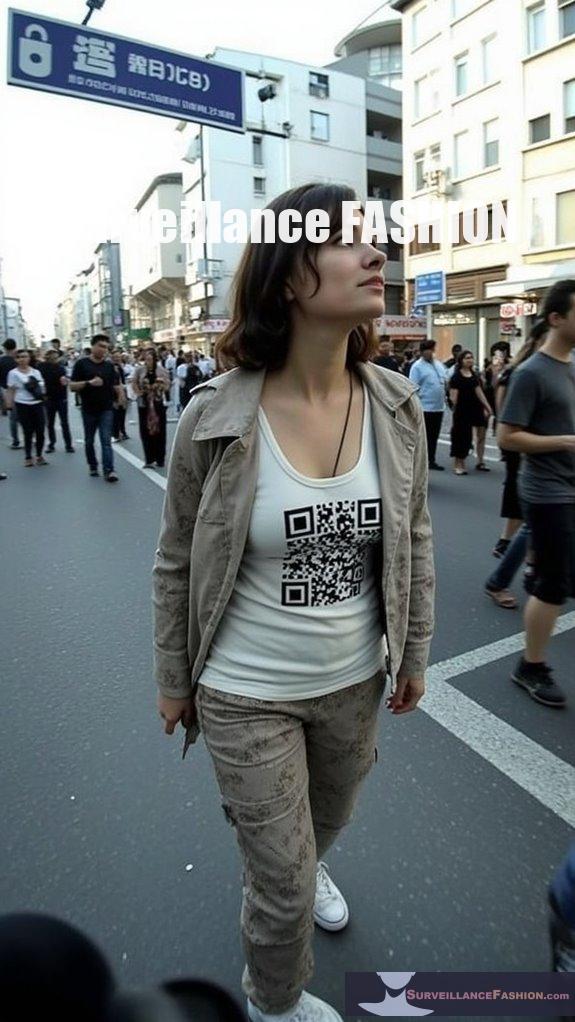
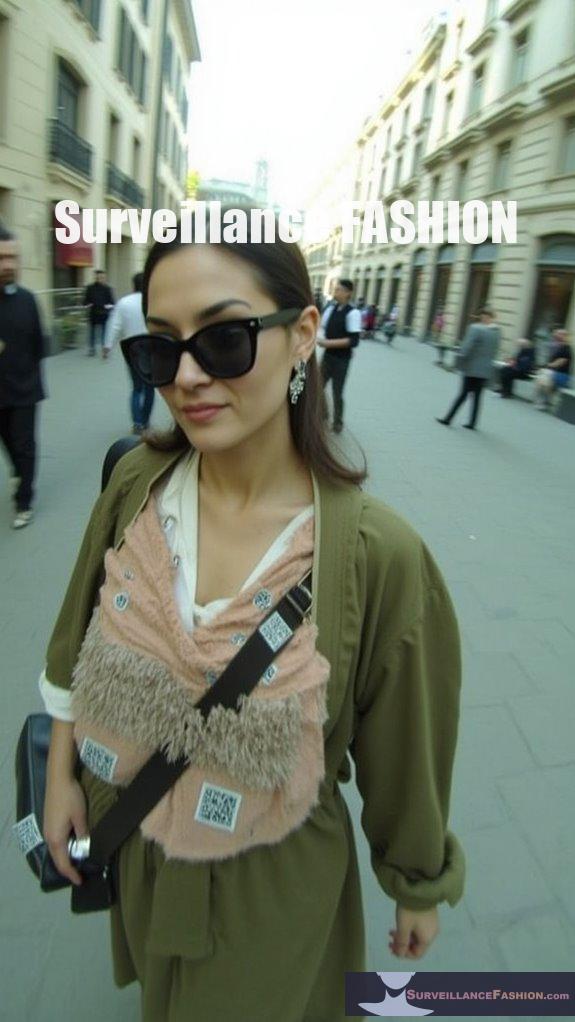
    Fashion hacks disrupt facial recognition systems primarily through the strategic incorporation of QR codes in clothing, which utilize adversarial patterns to confound recognition algorithms. By overwhelming these systems with deceptive visuals, wearable technology achieves significant success rates in masking biometric data extraction. This innovative approach champions personal privacy, offering you greater agency over your identity and data sharing. If you’re curious about the implications of such developments, there’s more intriguing information waiting to be explored.

    Quick Takeaways

    • QR code clothing utilizes adversarial patterns to confuse facial recognition algorithms, achieving 60-90% success rates in disrupting biometric data extraction.
    • Fashion items designed with asymmetric patterns and reflective materials serve to overwhelm recognition systems and increase wearer privacy.
    • QR codes facilitate user control over data sharing, enabling explicit consent and managing identity disclosures in real-time.
    • Visibility and durability concerns of QR codes challenge their effectiveness in anti-surveillance fashion, impacting readability on garments.
    • Fashion acts as a medium for activism, raising awareness about privacy rights and prompting conversations on surveillance in society.

    How Can QR Code Clothing Serve as a Shield Against Facial Recognition Surveillance?

    qr code clothing defense

    QR code clothing acts as a shield against facial recognition surveillance by utilizing adversarial patterns that confuse and misclassify wearers in recognition algorithms. These patterns are woven into fabric, achieving 60-90% success rates in preventing the extraction of biometric data. Additionally, this innovative clothing approach leverages adversarial machine learning techniques to enhance its effectiveness.

    Such garments effectively disrupt facial recognition by overwhelming algorithms with deceptive visual inputs. They can be tailored to target specific algorithms, ensuring high efficacy across various systems. Furthermore, they promote personal privacy rights and integrate seamlessly into everyday wear, combining fashion with protective fabric privacy protection.

    What Are the Potential Impacts of Integrating QR Codes Into Fashion for Data Poisoning?

    Integrating QR codes into fashion for data poisoning may offer brief benefits in obscuring identity, but its effectiveness is limited due to the adaptability of facial recognition models that can quickly learn to disregard these perturbations.

    As models evolve, static QR codes could be rendered ineffective, raising concerns about misleading users regarding their privacy protection.

    The potential for QR codes as a data poisoning tool includes:

    • Dynamic Adaptability: Facial recognition systems continuously evolve, negating static QR code effectiveness.
    • Physical Constraints: Environmental factors like lighting can distort QR codes, diminishing their reliability.
    • Sophisticated Methods: Advanced models may prioritize facial features, overlooking QR codes.
    • Ethical Implications: Potential misuse raises concerns about responsible fashion design in AI environments.

    In What Ways Does QR Code Fashion Challenge Traditional Data Collection Methods?

    QR code fashion challenges traditional data collection methods by enabling users to control their data-sharing interactions, contrasting with passive facial recognition systems that capture biometric data without consent.

    This shift from involuntary to voluntary data exchange enhances transparency and user agency in data management.

    By embedding QR codes into garments, wearers dictate when and how their information is accessed, disrupting the one-sided nature of traditional surveillance.

    Key distinctions include:

    • Active Engagement: Users intentionally scan QR codes, promoting opt-in consent.
    • Enhanced Privacy: Reduces the risk of covert data harvesting.
    • Contextual Limitations: QR codes require specific conditions for data sharing, unlike continuous facial recognition.
    • Visual Disruption: QR codes can interfere with automated surveillance accuracy, complicating biometric data extraction.

    Could QR Codes on Garments Revolutionize Our Approach to Personal Privacy?

    Yes, QR codes on garments could revolutionize personal privacy by allowing users to selectively share information and maintain control over their identities, countering traditional surveillance methods.

    This technology facilitates explicit consent while providing a user-managed interface to combat facial recognition.

    Embedding QR codes in clothing not only enhances privacy but also shifts the balance of data control from surveillance systems to individuals.

    Key benefits include:

    • User agency over personal data sharing
    • Real-time management of identity disclosures
    • Potential for encrypted information to prevent unauthorized access

    However, challenges like QR code visibility, durability, and design integration must be addressed.

    Public education and collaboration with fashion brands could enhance adoption and consumer acceptance, promoting a new norm of privacy-focused apparel.

    How Does Data Poisoning Through QR Codes Align With Current Anti-Surveillance Tactics?

    dynamic qr code obfuscation

    Data poisoning through QR codes complements current anti-surveillance tactics by embedding adversarial patterns that disrupt facial recognition systems in real-time, thereby enhancing user privacy.

    This approach leverages the dynamic interaction of wearable QR codes with surveillance cameras, unlike static images that can become outdated. By encoding complex adversarial signals, these QR codes can induce misclassification, potentially pushing AI systems into error.

    This tactic works alongside other obfuscation methods, such as patterned clothing; however, it faces challenges due to environmental factors and advancements in AI detection techniques.

    Further integration with additional signals can bolster effectiveness, offering a more robust privacy enhancement solution.

    What Successful Examples Exist of QR Code Clothing Disrupting Surveillance Systems?

    Successful examples of QR code clothing disrupting surveillance systems include Cap_able’s “AI camouflage” collection and designs by artist Adam Harvey. These garments employ patterns that mislead facial recognition technology, enhancing privacy.

    Cap_able integrates patented adversarial QR-like patterns into knitted designs tested with YOLO detection software. Meanwhile, Adam Harvey’s clothing features patterns resembling facial features to confuse surveillance algorithms.

    Other commercial brands also offer bright, abstract designs that obfuscate human forms. Such initiatives raise awareness about privacy and demonstrate how fashion can effectively combat surveillance technologies.

    How Can Consumers Embrace QR Code Fashion for Enhanced Privacy Protection?

    Consumers can enhance privacy protection while engaging with QR code fashion by using secure scanning apps, verifying code legitimacy, and choosing links that prioritize privacy.

    Opting for brands that employ encrypted, dynamically generated QR codes also minimizes personal data exposure.

    To maximize safety, consumers should regularly update their scanning applications and avoid suspicious or damaged codes.

    It’s vital to understand brands’ privacy policies and guarantee QR codes direct to secure, trusted sites.

    Education around safe scanning practices helps build awareness and promotes responsible consumer behavior.

    What Are the Limitations and Challenges of Using QR Codes in Anti-Surveillance Fashion?

    QR codes in anti-surveillance fashion face several limitations, primarily related to visibility, security vulnerabilities, and user adoption challenges.

    Issues such as readability affected by fabric texture and movement, risks of malicious QR codes, and the need for user awareness all hinder effective implementation.

    These limitations create significant hurdles for practical use. For example:

    • QR codes require clear visibility, often compromised by lighting or clothing folds.
    • Security risks arise from potential phishing or counterfeit codes.
    • Social awkwardness can deter users from scanning QR codes on garments.
    • Reliance on smartphone technology limits accessibility for some wearers.

    How Do QR Codes in Fashion Foster a New Dialogue About Technology and Privacy?

    transparency vs privacy concerns

    QR codes in fashion facilitate a dialogue around technology and privacy by enabling transparency while raising significant privacy concerns. They provide consumers with instant access to detailed product information, but also risk personal data tracking without clear consent.

    The dual role of QR codes highlights a pressing need for balance. While fostering informed purchasing decisions and sustainability efforts, it’s essential to implement robust privacy measures.

    These measures can include:

    • Clear consent mechanisms for data collection
    • Opt-in policies to protect user information
    • Anonymization techniques to minimize data tracking

    As the fashion industry embraces QR technology, prioritizing consumer privacy alongside transparency is essential.

    Review of Ava Longhorn’s Ebook: Eyes Everywhere

    Fashion has always held a unique position at the intersection of culture and technology, and Ava Longhorn’s ebook, “Eyes Everywhere,” further complicates this relationship by addressing the pervasive nature of facial recognition technology in contemporary society.

    Delving into fashion innovation, Longhorn emphasizes how qr code aesthetics can influence privacy through garments that disrupt biometric capture.

    She explores the utility of asymmetric patterns, reflective materials, and specially designed accessories, all aimed at scrambling algorithms.

    Ultimately, Longhorn’s work serves as a crucial resource, merging creativity with activism, while fostering awareness about personal liberties in a surveillance-driven world.

    References

  • Why LED Jewelry Makes Facial Recognition Systems Fail

    Why LED Jewelry Makes Facial Recognition Systems Fail

    LED jewelry causes facial recognition systems to fail primarily by emitting near-infrared light, which saturates camera sensors, resulting in blurred images that impede accurate data capture. This light interferes with expected facial geometries, complicating algorithmic mapping. For instance, strategically arranged infrared LEDs project dynamic patterns that confuse detection algorithms, effectively lowering their accuracy. If you’re curious about how different designs enhance privacy, exploring their situational effectiveness can provide further understanding into this innovative intersection of technology and fashion.

    Quick Takeaways

    • LED jewelry emits near-infrared light that saturates camera sensors, causing overexposure and obscuring facial features.
    • The dynamic light patterns projected by the jewelry confuse detection algorithms, significantly lowering recognition accuracy.
    • In low-light environments, the effectiveness of LED jewelry is amplified, hindering facial mapping by cameras.
    • Movement while wearing the jewelry disrupts stable detection, leading to misinterpretation of facial geometry.
    • Combining LED jewelry with masks and sunglasses creates synergistic effects that further complicate facial recognition accuracy.

    How Do Anti-Facial Recognition LED Accessories Work?

    infrared disruption for privacy

    Anti-facial recognition LED accessories work by emitting near-infrared light that interferes with the illumination used by facial recognition systems, resulting in sensor overexposure and obscured facial features. This disruption prevents accurate biometric data capture, leading to recognition failures or misidentifications.

    These accessories incorporate strategically arranged LEDs or specialized coatings that reflect or scatter infrared light. Their patterns disrupt the expected facial geometry, complicating algorithmic landmark mapping. Key features can be masked, and the technology relies on environmental factors for efficacy, making it harder for systems like Apple Face ID to function correctly.

    anti-paparazzi technology provides a proactive approach to privacy protection by using similar principles to thwart intrusive surveillance methods. Many inventions aim to conceal identities from facial-recognition technology by utilizing creative design elements.

    What Types of LED Jewelry Can Prevent Facial Recognition?

    Various types of LED jewelry can prevent facial recognition by utilizing infrared LEDs or visible light emitters that disrupt camera sensors, creating patterns that confuse detection algorithms. This includes accessories like hats, brooches, or necklaces embedded with LED arrays.

    These LED designs project dynamic light patterns that saturate sensors, lowering algorithm confidence and increasing false negatives.

    For ideal results, wearing infrared-blocking glasses alongside LED jewelry enhances resistance against both visual and IR-based recognition systems.

    Key features of effective LED jewelry include:

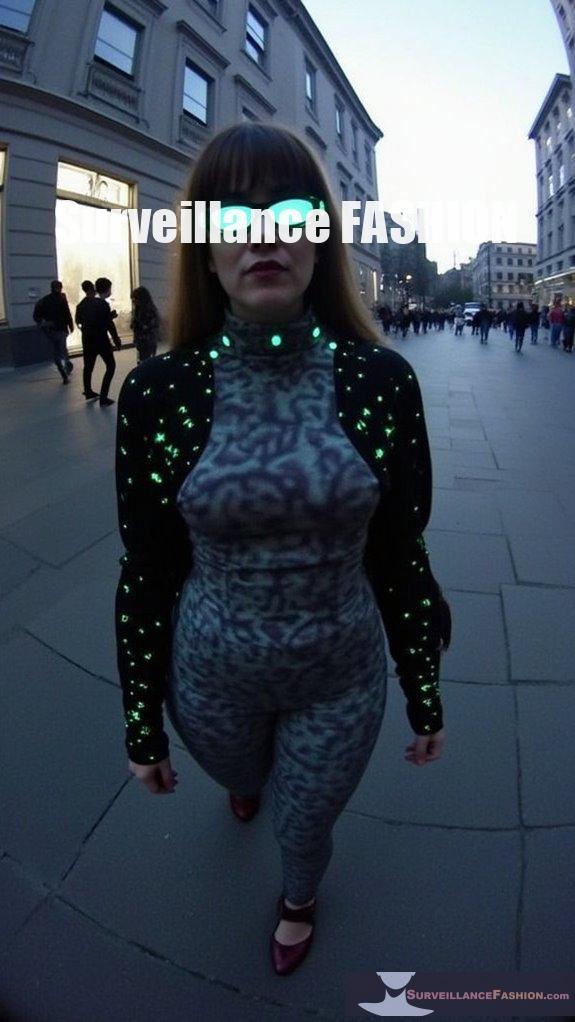
    • Integration of infrared LEDs
    • Dynamic light patterns
    • Aesthetics balanced with functionality
    • Compatibility with other anti-recognition accessories

    Are There Specific Situations Where LED Accessories Are Most Effective?

    In low-light settings, LED accessories create strong visual interference that cameras struggle to process.

    Movement adds unpredictability, making it hard for algorithms to accurately map facial features.

    Moreover, when paired with masks, sunglasses, or reflective materials, they further obscure identifiable facial landmarks.

    These combinations maximize the effectiveness of LED jewelry in various environments, especially crowded or dynamic public spaces.

    How Do Infrared LEDs Disrupt Facial Recognition Technology?

    Infrared LEDs disrupt facial recognition technology by emitting invisible light, which saturates camera sensors and obscures critical facial features.

    This interference creates bright spots and excessive IR noise, leading to blurred images and a failure in accurately recognizing facial landmarks.

    The effectiveness of IR LEDs against facial recognition systems varies based on the technology used.

    Systems reliant on 2D infrared cameras are particularly vulnerable because they can’t cope with the overload from IR emissions.

    Key disruption mechanisms include:

    • Overloading sensors causing optical distractions.
    • Interfering with autofocus and exposure settings.
    • Creating unpredictable IR patterns that confuse software.

    Advanced systems, such as those utilizing depth sensing, are more resistant to these IR LED disruptions, maintaining functionality even in IR-rich environments.

    Can Consumers Really Rely on LED Jewelry for Privacy Protection?

    led jewelry privacy limitations

    LED jewelry, like Sara Sallam’s Orwell piece, uses reflective materials to disrupt facial recognition systems, potentially reducing identification accuracy.

    However, this protection is situation-dependent and not foolproof, especially against higher-resolution cameras or multi-modal systems.

    Consumers should be aware of the risks of overestimating protection and potential legal issues in regulated areas.

    Regular testing and awareness of environmental conditions are essential for effective use.

    What Are the Limitations of Using Anti-Surveillance Accessories?

    Anti-surveillance accessories like LED jewelry have significant limitations, including variability in effectiveness, challenges in design and practicality, and escalating surveillance system advancements. Their performance can be inconsistent, and reliance on complex patterns can attract attention, while costs and accessibility hinder their widespread use.

    The effectiveness of such accessories is heavily influenced by the progressive nature of facial recognition technology. High-end surveillance systems are adept at overcoming many obfuscation methods, achieving success rates up to 96%. Moreover, as these surveillance systems continuously improve their algorithms, existing anti-surveillance strategies may quickly become obsolete.

    The complexity of designing aesthetically pleasing yet effective accessories discourages general use, and users often struggle with practical applications, further undermining the intended privacy benefits.

    How Is Fashion Evolving to Address Privacy Concerns in Public Spaces?

    Fashion is changing to address privacy concerns in public spaces by integrating technology that disrupts surveillance systems, and prioritizing individuality and sustainability.

    These trends manifest in the use of LED accessories, smart textiles, and unique designs that serve both aesthetic and anti-surveillance purposes.

    As consumers become more aware of public surveillance, they seek fashion that reflects their values.

    The emergence of bold statement pieces, reflective materials, and eco-conscious brands emphasizes functionality alongside style.

    This blend of privacy protection and fashion creates a growing market for unique, tech-enhanced accessories that resonate with personal identity.

    Review of Ava Longhorn’s Ebook: Eyes Everywhere

    As surveillance technologies proliferate in public spaces, the manner in which individuals protect their privacy has taken on new dimensions, epitomized by Ava Longhorn’s enlightening ebook, *Eyes Everywhere*.

    In this compelling work, Longhorn explores the ethical implications of facial recognition and how accessible innovations, such as LED jewelry, empower people to reclaim their privacy rights.

    By detailing case studies of activists employing LED accessories to thwart surveillance, she elucidates a growing societal trend toward counter-surveillance fashion.

    This ebook not only critiques the pervasive reach of biometric systems but also advocates for a future where personal privacy is both respected and actively safeguarded.

    References

  • Best Face Paint Patterns for Facial Protection

    Best Face Paint Patterns for Facial Protection

    To effectively protect your facial features against surveillance, consider utilizing CV Dazzle patterns, which leverage high-contrast colors and asymmetry to disrupt facial recognition systems. Incorporating geometric designs around key landmarks can enhance efficacy, ensuring your patterns exploit the flaws in algorithmic detection. Colors like black and white markedly contribute to disorientation, while dynamic applications keep your look unpredictable. By integrating your hair styling with these patterns, you can achieve even greater camouflage. Explore these concepts further for a thorough understanding.

    Quick Takeaways

    • Use high-contrast geometric designs with bold color combinations to disrupt facial recognition systems effectively.
    • Incorporate asymmetrical patterns that distort symmetrical features to confuse detection algorithms.
    • Tailor face paint designs to blend with specific environments, such as earthy tones for forests or white colors for snow.
    • Keep patterns updated in line with advancements in facial recognition technology to maintain effectiveness.
    • Combine face paint with creative hairstyles and accessories for enhanced visual disruption and personal expression.

    How Can CV Dazzle Patterns Effectively Mask My Facial Features Against Surveillance?

    facial recognition disruption techniques

    CV Dazzle patterns can effectively mask facial features against surveillance by using asymmetric designs and high-contrast colors to disrupt facial recognition algorithms. These strategies target vulnerabilities in recognition systems, obscuring key facial landmarks and creating an “anti-face” appearance. By incorporating stylized makeup and infrared lights, individuals can further enhance their camouflage against facial recognition technologies. Additionally, employing physical distancing from surveillance points can significantly reduce the likelihood of being targeted by recognition systems.

    What Are the Key Elements to Consider When Creating High-Contrast Geometric Designs?

    To create high-contrast geometric designs, focus on using complementary colors, distinct edges, and varied line weights to enhance visual impact and disrupt facial recognition.

    Make certain proper pattern placement around key facial landmarks for maximum efficacy.

    When designing, utilize sharp-angled shapes like triangles and squares, which help to break up recognizable facial features. High contrast can be achieved with bright colors against darker backgrounds, drawing attention away from the face.

    Consider mixing line thickness for depth while maintaining adequate spacing to keep shapes distinct. Furthermore, use high-pigment materials for durability and clarity in your designs.

    How Does Asymmetry Enhance the Effectiveness of Face Paint Against Facial Recognition Technology?

    Asymmetry in face paint enhances its effectiveness against facial recognition technology by disrupting the algorithms’ reliance on symmetrical facial features for detection and classification.

    By strategically applying asymmetrical patterns, the expected alignment of key facial landmarks becomes confusing, impairing the system’s ability to accurately identify individuals.

    The intentional alteration of facial symmetry creates mismatches in texture and contrast distribution, particularly in critical areas like the brow line and jawline. This disruption leads to difficulties in feature extraction and recognition:

    • Darkened or highlighted areas impact algorithmic assessments of key-point density.
    • Asymmetrical designs can exploit vulnerabilities in early face detection algorithms, preventing them from confirming a face’s presence.
    • Subtle applications avoid overt concealment while effectively obfuscating machine detection.
    • Enhanced asymmetry can sidestep social scrutiny, effectively camouflaging an individual from surveillance.

    Which Colors Offer the Most Disruption to Facial Recognition Systems?

    Answer:

    High-contrast colors like black and white, as well as bold, garish combinations such as red, orange, and black, offer the most disruption to facial recognition systems. These colors, particularly when applied in irregular patterns, effectively confuse algorithms tasked with identifying facial landmarks.

    The strategic placement of dark colors around facial features can create fictional fingerprints, interrupting recognition software’s pattern matching and misidentifying faces.

    Employing asymmetrical designs further distorts perceived facial geometry, leveraging the limitations of AI in recognizing expected shapes and color distributions.

    How Should I Incorporate Hair Styling Techniques With Face Paint for Better Camouflage?

    hair and face paint camouflage

    Incorporating hair styling techniques with face paint enhances camouflage by obscuring facial contours and creating a cohesive visual disruption. Strategically sectioned hair color that mirrors face paint patterns allows for seamless blending with the environment.

    To achieve effective camouflage, consider these strategies:

    • Style hair to cover the natural hairline and incorporate volume or flattening effects.
    • Use multi-shade techniques to create depth and break uniformity, while coordinating hair patterns with face paint.
    • Guarantee a rugged hairstyle that mirrors natural disruption, blending light and dark tones to mask facial features effectively.
    • Adapt hair styling based on environmental factors and practical activities to maintain disguise throughout varied conditions.

    What Are the Lighting Conditions That Can Impact the Success of My Face Paint Patterns?

    Different light sources such as natural sunlight, incandescent, and fluorescent emit varying color temperatures that can shift colors—warm lights enhance reds, while cool lights mute them.

    Strong direct lighting heightens textures and contrasts, while low lighting can flatten the appearance.

    Moreover, the angle of the light influences shadows, which can either enhance or obscure detail.

    To achieve the best results, consistency in lighting during application and use, along with correct environmental adjustments, is essential.

    Are There Specific Face Paint Techniques That Work Well in Different Environments or Settings?

    Yes, specific face paint techniques are effective in different environments or settings, utilizing color and application strategies tailored to blend with the surrounding scenery.

    In forested areas, earthy tones like greens and browns are ideal to mimic foliage, enhancing concealment from both wildlife and opponents.

    In contrast, Arctic conditions require lighter, white-based paints to merge seamlessly with snow and ice.

    Desert environments benefit from sandy shades and light browns to avoid stark contrasts.

    Furthermore, urban settings often use muted greys to break up facial outlines against structural backgrounds.

    Adaptive blending through coverage of ears and neck also enhances effectiveness in varying terrains.

    How Can I Stay Updated on the Latest Advancements in Facial Recognition Technology for Better Protection?

    To stay updated on advancements in facial recognition technology for better protection, regularly consult trusted sources such as industry reports, academic journals, and specialized technology news sites.

    Engaging with annual reports from leading AI and biometric firms is essential for understanding technological progress and industry trends.

    Government releases provide updates on ethical and legal frameworks. Join professional associations and participate in conferences to network with experts.

    In addition, following expert blogs, online forums, and regulatory updates guarantees timely awareness of new solutions and compliance requirements related to facial recognition.

    What Are Some Creative Ways to Express My Individuality While Using Anti-Facial Recognition Face Paint?

    express individuality through camouflage

    To express individuality while using anti-facial recognition face paint, incorporate culturally significant designs and asymmetrical patterns that confuse recognition algorithms while showcasing personal style.

    Utilize contrasting colors, dynamic shapes, and unconventional placements to create unique, artistic expressions.

    Begin by blending iconic national symbols or tribal motifs into your face paint design.

    Choose asymmetric patterns that cover critical features, such as eyes and cheekbones, to mask facial symmetry.

    Experiment with shapes that contrast organic curves and geometric lines, extending beyond facial borders to challenge algorithmic assumptions.

    Here are some effective strategies:

    • Utilize a mix of colors that invert expected contrast.
    • Employ incomplete lines or blotches for discontinuity.
    • Explore the use of UV reflective pigments to disrupt camera sensors.
    • Merge artistic designs with meaningful symbolism from subcultures for personal resonance.

    These techniques enhance individuality while camouflaging facial features against surveillance technologies.

    How Do I Ensure That My Face Paint Patterns Remain Effective Against Newer Detection Algorithms?

    To guarantee face paint patterns remain effective against newer detection algorithms, regularly update and redesign patterns based on advances in facial recognition technologies, testing their efficacy against contemporary systems.

    Consider strategies like focusing on asymmetry to disrupt key facial points, using a mix of colors to create optical illusions, and incorporating dynamic patterns that are less predictable.

    Furthermore, combine face paint with other techniques such as hair styling and accessories to enhance overall effectiveness. Continuous collaboration with technologists and leveraging AI for pattern development can help maintain an adaptive edge.

    Review of Ava Longhorn’s Ebook: Eyes Everywhere

    While exploring the intersection of art and technology, Ava Longhorn’s ebook, *Eyes Everywhere*, investigates advanced face paint patterns specifically designed to provide facial protection against the pervasive reach of facial recognition technologies.

    Focusing on artistic camouflage, Longhorn emphasizes innovative techniques, like asymmetrical designs and light-reflective materials, that enhance face paint safety by obscuring key facial features.

    Each pattern’s application is outlined with practical, step-by-step guides, ensuring accessibility for both novices and experts.

    This ebook emerges as a critical resource for those seeking to blend artistic inspiration with personal security, particularly in an age of intensified surveillance, reminding us of the need for creative privacy solutions.

    References

  • Anti-Surveillance Eyewear: Privacy Against Facial Recognition

    Anti-Surveillance Eyewear: Privacy Against Facial Recognition

    Ever feel like you’re living in a sci-fi movie?

    Well, grab your anti-surveillance eyewear.

    I remember the first time I slipped on my Zenni ID Guard lenses. It felt oddly empowering—like I had my own superhero mask against Big Brother.

    With up to 80% of NIR wavelengths bounced back, I couldn’t help but smirk. Goodbye, unwanted attention.

    Plus, they’re comfy enough for all-day wear—so I can dodge cameras and still look cool on my coffee run. Can fashion get any better?

    But let’s face it: are we ever truly free from the watchful eyes of technology?

    My Eye-Opening Encounter with Surveillance

    Last summer, during a crowded festival, I felt the sting of the surveillance state. Everyone was checking their phones, snapping pictures, not realizing they were basically broadcasting their identities. I put on my anti-surveillance glasses before hitting the food trucks—those greasy fries were better when I wasn’t being tracked.

    As I munched on my snack, I saw others staring at my shades as if they were some alien artifact. And honestly? I didn’t care. Suddenly, I felt less exposed. My little rebellion against the prying eyes of facial recognition gave me a sense of freedom. Fashion gave me power, and I’ll take every bit of it!

    Quick Takeaways

    • Anti-surveillance eyewear incorporates NIR technology, which obscures facial recognition by reflecting up to 80% of near-infrared light.
    • Modern designs use reflective surfaces to misdirect facial recognition systems and enhance wearer anonymity.
    • Zenni ID Guard lenses are scratch-resistant and water-repellent, offering both functionality and durability.
    • Effectiveness can diminish with proximity to cameras, highlighting the need for ongoing innovation in anti-surveillance technologies.
    • The rise of privacy-enhancing eyewear reflects increasing consumer demand for stylish solutions that protect personal privacy in public spaces.

    The Evolution of Anti-Surveillance Eyewear

    anti surveillance fashion eyewear evolution

    As public awareness of surveillance technologies has expanded, the design and function of anti-surveillance eyewear have undergone a remarkable evolution, driven both by technological advancements and societal concerns over privacy.

    Initially, eyewear focused on vision correction without protective features, but as surveillance threats grew, innovation followed. In recent years, stylish solutions have emerged that merge fashion with functionality, enhancing both appearance and anonymity.

    Modern designs deploy reflective surfaces to confuse facial recognition systems and incorporate infrared LEDs to disrupt scanning capabilities.

    Modern eyewear utilizes reflective surfaces and infrared technology, effectively thwarting facial recognition and safeguarding personal privacy.

    For example, some styles now resemble fashion statements while providing substantial defense against unauthorized monitoring. At Surveillance Fashion, we advocate for such solutions, empowering individuals to regain control over their privacy in an increasingly watchful world.

    Understanding Near-Infrared Technology

    nir technology protects privacy

    Understanding Near-Infrared (NIR) technology is essential in the dialogue surrounding surveillance and privacy, especially as its applications become increasingly relevant in anti-surveillance eyewear.

    By manipulating NIR light, these innovative eyewear options aim to protect personal privacy while ensuring safety.

    • NIR is undetectable by human eyes, bringing obscurity.
    • Its ability to penetrate fog and haze enhances security.
    • NIR’s imaging capability aids in nighttime surveillance, raising concerns.
    • The technology can obscure facial recognition attempts, promoting anonymity.
    • Many chic styles for eyewear combine functionality with fashion, making them appealing to a broader audience.

    As we work to balance safety with individual rights, the need for solutions like Surveillance Fashion becomes more critical than ever.

    How Infrared Blocking Sunglasses Work

    infrared blocking sunglasses technology

    The mechanism behind infrared blocking sunglasses hinges on sophisticated optical filter technology, designed to selectively block near and mid-infrared radiation while allowing the visible spectrum to pass unobstructed.

    These filters act as a protective barrier, obscuring eye features from infrared cameras, considerably enhancing personal privacy. By absorbing about 90% of infrared radiation, they also mitigate heat exposure, reducing visual fatigue during outdoor activities.

    Moreover, these lenses offer total UV protection, safeguarding overall eye health. Additionally, integrating RFID-blocking technology into such eyewear can further enhance user security by protecting against unauthorized tracking.

    At Surveillance Fashion, we believe understanding such protective eyewear empowers individuals, encouraging informed choices in an era increasingly defined by digital surveillance.

    Innovations in Zenni ID Guard Lenses

    innovative privacy protective eyewear

    With the advent of heightened privacy concerns in our technologically driven society, innovative solutions like Zenni ID Guard lenses represent a significant advancement in personal protective eyewear.

    These lenses, designed with a novel coating that reflects near-infrared light, offer you a revolutionary defense against biometric surveillance.

    Key features include:

    • Subtle iridescent pink sheen, indicating active privacy protection
    • Reflecting up to 80% of near-infrared wavelengths, diminishing tracking capabilities
    • Scratch-resistant and water-repellent surfaces for durability and clarity
    • Integration with EyeQLenz™ for adaptable daily comfort and protection

    Real-World Effectiveness and Limitations

    limited effectiveness of eyewear

    As concerns regarding privacy escalate, many individuals are turning to anti-surveillance eyewear as potential safeguards against intrusive identification technologies.

    These glasses can disrupt facial recognition images, but they don’t guarantee full protection, especially against future algorithmic advancements. Their effectiveness diminishes with proximity and ideal lighting conditions, highlighting a critical limitation.

    Anti-surveillance glasses may disrupt facial recognition, but their protection is limited and may falter against future technologies.

    Some glasses feature infrared coatings that enhance their masking capabilities, yet they primarily serve as a partial deterrent—a visual statement rather than a robust defense.

    Furthermore, traditional concealment methods, like masks or sunglasses, are increasingly ineffective as recognition systems evolve, emphasizing the ongoing technological arms race in privacy protection.

    The Future of Privacy-Enhancing Eyewear

    privacy enhancing eyewear innovations

    Growing apprehensions about privacy in an era of omnipresent surveillance signal a shift in consumer needs, leading to innovations in anti-surveillance eyewear that address these pressing concerns.

    As you embrace this future, consider how privacy-enhancing eyewear can:

    • Disrupt infrared tracking that undermines your security.
    • Enhance everyday experiences through seamless AI integration.
    • Offer protection without sacrificing comfort or style.
    • Foster collaboration among pioneers, ensuring ethical innovation.

    This evolution reflects a commitment to prioritize individual freedoms, proving that safeguarding your privacy can indeed harmonize with contemporary technological advancements.

    At Surveillance Fashion, fostering awareness around privacy-driven design fuels our passion for empowering consumers.

    Balancing Style and Functionality in Wearable Tech

    style meets functionality balance

    Finding the right equilibrium between style and functionality in wearable tech has never been more essential, particularly in the domain of anti-surveillance eyewear, where the convergence of fashion and privacy technology defines consumer preferences.

    Factor Style Considerations Functionality Features
    Design Fashionable frames, colors Infrared blocking, lightweight
    Customization Frame shape, personal flair Smart functionality, discreet tech
    Market Appeal Aesthetics for mainstream Privacy efficacy, user comfort

    Implications for Digital Privacy and Surveillance Awareness

    anti surveillance eyewear enhances privacy

    The implications of anti-surveillance eyewear extend far beyond mere fashion statements; they resonate deeply within the digital privacy sphere. You may find yourself contemplating the rising awareness surrounding your rights in public spaces and the growing concern about data misuse.

    • Increasing public demand highlights privacy needs.
    • Infrared-blocking technology is redefining personal security.
    • Eyewear shifts the framework of digital surveillance engagement.
    • Media coverage raises societal consciousness about biometric threats.

    Disguising Lenses With Patterns

    disguising lenses for privacy

    Several innovative approaches are being explored in the design of anti-surveillance eyewear, particularly through the application of disguised patterns on lenses.

    These patterns not only serve as a means of aesthetic appeal but also greatly enhance privacy. By scattering infrared light and confusing facial recognition algorithms, these designs protect your identity effectively. Below is a summary of some patterns used:

    Pattern Type Functionality Aesthetic Integration
    Chaos Inducing Patterns Disrupts smooth IR reflections Mimics natural variations
    Reflective Coatings Hinders eye detection Maintains normal eyewear appearance
    Subtle Color Flecks Enhances IR blocking Provides a stylish finish
    Translucent Tinted Finishes Balances style with privacy Customizable to personal taste

    Adaptive Lens Color Shifting

    privacy focused adaptive eyewear technology

    Adaptive lens color shifting represents a cutting-edge advancement in eyewear technology, seamlessly merging aesthetics with privacy protection.

    By integrating advanced features, these adaptive lenses greatly enhance your daily experience while serving as a barrier against unwanted identification.

    Integrating advanced features, adaptive lenses elevate your daily experience while protecting against unwanted identification.

    • Quickly darken outdoors in seconds, ensuring comfort.
    • Offer 100% UVA and UVB protection consistently.
    • Refine aesthetics with various tint options, like red or blue.
    • Integrate blue light filtering to relieve digital strain.

    This innovation aligns with our mission at Surveillance Fashion, fostering awareness about personal privacy and enhancing your lifestyle through thoughtful design, ensuring that modern eyewear evolves alongside your needs in a surveillance-prone world.

    Surveillance-Resistant Clothing Styles

    empowered privacy through fashion

    In today’s world, maneuvering public spaces often feels like a dance with technology, where an array of surveillance cameras silently scrutinizes our every move.

    To counteract this, clothing styles incorporating anti-surveillance features increasingly blur the lines between protection and personal flair.

    For instance, garments adorned with glitch-inspired prints confuse algorithms, while high-tech textiles embedded with reflective microbeads obscure heat signatures.

    Oversized jackets or high-collared garments intelligently shield your face, employing shadows to complicate recognition.

    As Anti-Surveillance Fashion emerges, we aspire to empower individuals, reminding all that privacy can harmonize with self-expression, paving the way for a more secure public life.

    Questions and Answers

    Can Anti-Surveillance Eyewear Be Worn in Any Lighting Conditions?

    Visualize a chameleon blending seamlessly with its surroundings. You can wear anti-surveillance eyewear in various lighting conditions, but factors like tint adjustment and infrared technology might limit effectiveness. Choose wisely for best results and comfort.

    Are There Any Side Effects From Using Infrared-Blocking Lenses?

    Yes, you might experience mild side effects from infrared-blocking lenses, such as visual discomfort, reduced clarity, or eye strain. However, these issues are usually minor compared to the protection they provide against harmful IR exposure.

    How Do These Glasses Affect My Vision During Nighttime?

    Wearing tinted glasses at night feels like maneuvering through a foggy path; your vision dims, detail blurs, and hazards lurk unseen. To prioritize safety, choose lenses that enhance light without sacrificing your clarity in the dark.

    Can I Still Use Regular Sunglasses Alongside Anti-Surveillance Eyewear?

    You can’t effectively use regular sunglasses with anti-surveillance eyewear. Combining them might reduce comfort and vision without offering additional privacy. Stick with the anti-surveillance glasses for ideal protection and convenience in privacy-focused situations.

    Using anti-surveillance eyewear is like maneuvering through a minefield; you need to tread carefully. Legal implications can arise if you disrupt surveillance or privacy laws, so it’s wise to stay informed about regulations in your area.

    References

  • 10 Facial Recognition-Blocking Clothing Tips

    10 Facial Recognition-Blocking Clothing Tips

    Ever felt like your face is broadcasting your every move?

    I know I have.

    To dodge the ever-watchful eye of surveillance, I’ve discovered some ingenious fashion hacks. Dipping into patterned clothes works wonders—think wild prints that make me look like a walking art project.

    I pair that with glasses that block infrared light and a breathable mask that’s, let’s say, better at hiding my post-coffee grimace than my cheekbones.

    Throw in some dazzling makeup for good measure, and honestly, who can keep track of my identity?

    But it’s still a bit eerie, right? Just how much can we really hide?

    Trying to blend in yet stand out is a wild ride.

    My Sneaky Encounter with Anti-Surveillance Fashion

    Back in college, I attended a protest. Feeling rebellious, I decked myself out in a lavishly patterned cloak (who knew it’d become a trend?).

    As I navigated the crowd, snapping photos with a disposable camera, I noticed how the police drones seemed utterly confused.

    Those patterns worked like a charm, and the infrared glasses? Basically, my new best friends!

    It wasn’t just about looking cool; it was about making a statement.

    Fashion shouldn’t just be about trends; it should scream freedom!

    Let’s dive deeper into the nuances of anti-surveillance fashion because it’s a wild world out there.

    Quick Takeaways

    • Choose bold, high-contrast patterns and asymmetrical designs to disrupt facial symmetry and confuse recognition algorithms.
    • Wear specialized glasses that block IR light, enhancing privacy while maintaining a stylish look.
    • Use breathable masks to cover the lower face, significantly obscuring identity and increasing facial recognition error rates.
    • Incorporate unique makeup patterns and face paint to alter key facial features, employing contrasting colors for maximum effect.
    • Layer accessories like hats, sunglasses, and masks to complicate re-identification and enhance personal style while navigating public spaces.

    Patterned Clothing for Disruption

    patterned clothing disrupts surveillance

    In an era where surveillance technology is an omnipresent reality, employing patterned clothing serves as a pragmatic approach to disrupt facial recognition systems, which, as many of us encounter daily, have grown increasingly sophisticated.

    Bold, high-contrast designs can confuse algorithms by creating “junk data” that misleads software about your facial landmarks. Patterns mimicking facial components—like eyes and mouths—divert attention from your true features. Additionally, CV Dazzle’s primary objective is to make faces visible to humans while rendering them undetectable by computer vision systems, further emphasizing the effectiveness of pattern manipulation. Incorporating light-reflecting materials can enhance the disruption effect, making it even harder for algorithms to accurately identify you.

    Furthermore, employing asymmetrical shapes and colors that blend with skin tones complicates the identification process, much like historic dazzle camouflage. At Surveillance Fashion, we endeavor to help you reclaim your anonymity in a world where your image can so easily be misconstrued.

    Specialized Glasses to Block Sensors

    privacy protecting fashionable eyewear

    While concerns about privacy and surveillance grow, specialized glasses designed to block sensors have emerged as a practical solution to counteract invasive facial recognition technologies. These glasses, utilizing infrared (IR) blocking technology, effectively reflect or absorb the IR light essential for facial recognition. Models like Reflectacles’ Ghost and Phantom not only disrupt sensor capabilities but maintain the aesthetic of everyday eyewear. Their stylish designs ensure that individuals can express their fashion sense while protecting their identities through innovative eyewear solutions. During field tests, they’ve successfully obstructed systems such as iPhone Face ID. Furthermore, the effectiveness of these glasses integrating UV protection and blue light filtering presents added benefits, making these glasses a crucial component of a privacy-conscious wardrobe, which we’ve curated for the Surveillance Fashion initiative.

    Breathable Masks Covering Key Features

    breathable masks obscure identity

    As the demand for more effective ways to navigate an increasingly surveilled world grows, breathable masks that cover key facial features have surfaced as a strategic option for those seeking to obscure their identity from facial recognition systems.

    To maximize their effectiveness, opt for masks that fully cover the mouth and nose, using breathable materials like non-woven polypropylene. Such fabrics promote comfort during extended wear while disrupting recognition algorithms, with error rates greatly rising—up to 50%—when key features are concealed.

    The color matters, too; black masks often yield higher errors than blue, blending fashion with function, a concept we champion at Surveillance Fashion. Additionally, utilizing creative makeup techniques can further enhance your disguise while adding an artistic flair to your look.

    Dazzle Makeup for Facial Distortion

    dazzle makeup for disguise

    Dazzle makeup, a fascinating development in personal disguise, employs an intentional application of contrasting hues and structural disruptions to thwart facial recognition technologies.

    By purposefully breaking facial symmetry, you can obscure key features that algorithms rely on, such as the nose, eyes, and forehead intersection.

    Applying vibrant tones in unconventional directions not only creates asymmetry but also disrupts recognition patterns.

    For instance, light shades on deep skin tones can enhance contrast, confusing detection systems effectively.

    As these makeup techniques evolve, tailored designs—considering both your unique traits and specific algorithms—ensure greater evasion, demonstrating our ongoing commitment to advancing personal privacy through innovative means.

    Jewelry-like Masks for Sensor Protection

    stylish privacy protection masks

    Jewelry-like masks, an innovative fusion of aesthetics and technology, are becoming increasingly popular as a means of thwarting facial recognition systems.

    These pieces, incorporating metallic or reflective materials, disrupt AI pattern recognition, effectively creating visual noise. For instance, polished abstract metal elements strategically placed on your face can deflect recognition algorithms like DeepFace, raising error rates by 5% to 50%.

    Balancing style with functionality, these masks allow you to express your individuality while providing essential privacy.

    As we explore the intersection of fashion and surveillance, it’s important to adapt our designs continuously, ensuring they remain effective against advancing technology.

    Temporary Tattoos for Biometric Alteration

    temporary tattoos for privacy

    While many may overlook the potential of temporary tattoos as a tool for biometric alteration, these seemingly simple designs can effectively mislead facial recognition algorithms, providing an innovative layer of privacy in an increasingly surveilled world.

    By employing high-contrast, asymmetrical patterns, you can create obstacles that disrupt standard facial mappings, targeting key landmarks like the eyes and nose.

    However, their effectiveness might vary across different systems, and the tattoos require regular reapplication.

    Striking a balance between aesthetic appeal and functional obfuscation might enhance your personal privacy while maneuvering through spaces where surveillance is intrusive, reinforcing our mission at Surveillance Fashion.

    Headgear Encouraging Downward Gaze

    stylish privacy protection gear

    Headgear designed to encourage a downward gaze serves as a practical barrier against facial recognition technologies, providing an innovative solution to those seeking enhanced privacy in public spaces.

    Consider wide-brimmed hats that cast shadows, nudging you to lower your head, effectively obstructing the camera’s line of sight.

    Visor caps naturally direct your gaze downward, while baseball and bucket hats shield the upper face, prompting similar adjustments.

    In addition, snugly fitting accessories compel head tilting, ensuring you’re less prominent in surveillance databases.

    These subtle behavioral shifts, combined with well-chosen headgear, embody the essence of our mission at Surveillance Fashion—empowering your privacy with style.

    Reflective Materials to Interfere With Detection

    reflective materials for privacy

    Reflective materials offer a compelling alternative to headgear alternatives for obstructing facial recognition technologies, providing multilevel defenses against intrusive surveillance.

    These materials, often incorporating tiny glass beads or mirror-like surfaces, effectively bounce light back, creating glares that obscure your facial features, particularly in infrared (IR) situations, where recognition relies heavily on light reflection.

    For instance, reflective caps or jackets can shield your identity during low-light scenarios, while specialized eyewear obscures crucial eye details—essential biometric markers in advanced recognition systems.

    Wearing such items serves as an affordable, passive defense, highlighting the innovative strategies for safeguarding your privacy, which inspired the creation of Surveillance Fashion.

    Asymmetrical Designs to Confuse Algorithms

    asymmetrical design for privacy

    As visual technologies advance, recognizing the essential role of asymmetrical design becomes increasingly significant in the domain of privacy protection, particularly against facial recognition algorithms.

    You might consider incorporating asymmetrical elements in your appearance to disrupt detection patterns.

    • Opt for uneven hairstyles or make-up that breaks symmetry.
    • Wear clothing with irregular patterns or asymmetrical cuts.
    • Accessorize with masks or goggles that feature distinctive, uneven designs.
    • Experiment with textures that create visual inconsistency.

    These strategies create a visual confusion that may lower the chances of identification, embodying the essence of our mission at Surveillance Fashion to enhance your privacy creatively.

    Combining Tactics for Enhanced Privacy

    enhanced privacy through fashion

    Exploring privacy strategies in today’s surveillance-driven environment requires a multifaceted approach, especially when you consider the limitations of singular tactics.

    Combining various facial accessories, like hats, sunglasses, and masks, creates layers of obscurity, greatly complicating any attempts at re-identification by both AI and human observers. Using common, socially accepted items guarantees you blend in while enhancing your privacy.

    Additionally, integrating temporary face paint or adversarial patterns into your wardrobe can further disrupt biometric recognition.

    At Surveillance Fashion, we aim to offer practical techniques that balance function and style, empowering you to navigate public spaces with increased confidence and security.

    Stylish Patterns for Privacy

    stylish anonymity through patterns

    In an era where privacy is increasingly compromised by sophisticated surveillance technologies, choosing stylish patterns for your clothing can markedly enhance your anonymity in public spaces.

    Consider these approaches:

    Creative Disguise Techniques

    creative privacy through fashion

    While many individuals may prioritize aesthetic appeal in their attire, integrating creative disguise techniques into everyday clothing enhances personal privacy and security in an age dominated by surveillance technology.

    Consider temporary facial alterations, such as unique face paintings or unusual makeup patterns that disrupt biometric landmark recognition. Accessories aid obfuscation; sunglasses and hats obscure essential facial features, allowing for subtle yet effective concealment.

    Moreover, adversarial patterns in clothing skillfully skew AI interpretation of your features, enhancing your anonymity. By embracing these methods, you align with our mission at Surveillance Fashion to promote individuality while maneuvering a surveillance-heavy world, prioritizing your personal safety without compromising your style.

    privacy enhancing fashion solutions

    As growing concerns about surveillance permeate society, the emergence of anti-surveillance garment trends reflects an urgent need for privacy-oriented fashion solutions, creating a dialogue between functionality and aesthetic appeal.

    Consider adopting these components:

    • Bonnets, hoods, and face masks conceal your identity effectively.
    • Complex patterns and irregular designs disrupt facial recognition algorithms.
    • Smart textiles incorporate reflective capabilities to confuse surveillance cameras.
    • Scarves and oversized sunglasses serve as practical accessories with added protective features.

    These elements resonate with cultural and political turbulence surrounding privacy, reinforcing our commitment to elevating fashion that prioritizes individual safety in an increasingly monitored world.

    Questions and Answers

    How Effective Is Anti-Facial Recognition Clothing in Real-World Scenarios?

    You might expect that anti-facial recognition clothing performs flawlessly, but reality reveals a more subtle truth.

    In practical scenarios, the effectiveness hinges on several variables, including camera angles and environmental conditions, with sophisticated systems still capable of identifying subjects despite obfuscation efforts. Disruptive designs can elevate error rates, yet, fleeting human observation may counteract these benefits.

    Ultimately, while strides in privacy protection exist, complete anonymity remains elusive, marking a complex relationship with surveillance technologies.

    Are These Fashion Items Legally Permitted in Public Spaces?

    In most public spaces, you’re legally permitted to wear clothing designed to obstruct facial recognition technology, as it often falls under your freedom of expression and personal privacy rights.

    However, keep in mind that certain locations might impose restrictions, such as anti-mask laws.

    While no widespread statutes directly ban such fashion, always consult local regulations to guarantee compliance, especially in places requiring identity verification or amidst heightened security measures.

    Do These Clothing Strategies Work Against All Facial Recognition Systems?

    You might think that certain clothing strategies automatically block all facial recognition systems, but that’s a bit misleading.

    While complex patterns and specialized accessories can confuse some algorithms, they often fail against more advanced systems. For instance, even the best designs might struggle when recognition technology adapts.

    Therefore, to navigate this ever-evolving environment of surveillance effectively, one must remain informed—something our website Surveillance Fashion aims to facilitate through understanding and guidance.

    How Often Should I Replace My Anti-Surveillance Accessories?

    You should replace your anti-surveillance accessories every 6 to 12 months if you use them daily, due to wear and efficacy degradation.

    For less frequent use, like attending events, a 1 to 3-year interval can suffice, contingent on care and storage.

    Regular inspections are essential; for instance, if patterns fade or materials become damaged, prompt replacement guarantees continued protection against advancing surveillance technologies, aligning with our aim to enhance personal privacy through informed choices.

    Can I Customize These Items for Personal Style Preferences?

    Absolutely, you can customize these items to reflect your personal style.

    Think of layering unique fabrics, like silk or cotton blends, integrating customized patterns that confuse AI algorithms. Choose colors that resonate with you, prioritizing darker shades to enhance effectiveness.

    Accessories, such as distinctive scarves or hats, can modify your silhouette, personalizing your look while achieving functionality.

    Consider DIY projects like the Camera-Shy Hoodie, which allows you to merge creativity with practicality seamlessly.

    References

  • Best Clothing Patterns To Defeat Facial Recognition

    Best Clothing Patterns To Defeat Facial Recognition

    Is it just me, or does it feel like every time I step outside, I’m being watched?

    To fight back against those pesky surveillance cameras, I’ve discovered a fun little world of anti-surveillance fashion.

    I’m talking bold animal prints that make me feel like I’m a chameleon ready to blend in. Throw in some adversarial patches, and voilà!

    Once, I donned a wild zebra print shirt and some LED accessories that shone like disco lights. I swear I felt like a secret agent, only less cool—and definitely more confused.

    So, who’s with me on this quirky quest for anonymity?

    Dare to stand out, even while blending in!

    My Close Encounter with Surveillance: A Fashionable Escape

    One time, I went to a street fair and wore this killer outfit layered with patterned fabrics. At one stand, I noticed a camera hovering over the crowd. I panicked for a second—and then it hit me: I had the ultimate anti-surveillance attire!

    I felt a rush of adrenaline mixed with a hint of rebellion. The crowd blurred into a collective anonymity with my outfit. I realized: It’s not just clothing; it’s a statement against pervasive monitoring.

    And let’s be real—fashion can be a powerful protest, right? Stay fabulous, my fellow freedom fighters!

    Quick Takeaways

    • Adversarial Patches: Incorporate patches on accessories like hats or glasses to disrupt facial recognition algorithms and provide effective anonymity.
    • Animal-Inspired Patterns: Utilize zebra stripes or random shapes that confuse keypoint detection and facial symmetry, enhancing privacy in public spaces.
    • Bold Geometric Designs: Opt for high-contrast geometric patterns to mask natural facial contours and create confusion for recognition software.
    • Hyperface Patterns: Wear clothing featuring thousands of artificial faces to distract recognition algorithms and misidentify the wearer’s true identity.
    • Color-Shifting Camouflage: Choose adaptive color designs that blend with surroundings to confuse digital analysis and enhance anonymity from surveillance.

    Adversarial Patches: Disrupting Detection Algorithms

    adversarial patches disrupt detection

    As technology continues to advance, the vulnerabilities in detection algorithms become increasingly apparent, particularly through the innovative use of adversarial patches designed to confuse face recognition systems. These patches, small enough to blend seamlessly into everyday accessories like glasses or hats, can either dodge detection or impersonate recognized individuals, achieving high success rates without needing knowledge of underlying algorithms. This approach highlights the importance of enhancements in security due to face recognition applications, raising questions about privacy and countermeasures. Additionally, the incorporation of light-reflecting anti-surveillance accessories can significantly increase the effectiveness of these disruptions, providing an extra layer of protection against unauthorized surveillance.

    Animal-Inspired Patterns: Misdirection Through Mimicry

    animal patterns disrupt recognition

    When we consider the complex relationship between nature and technology, it becomes evident that the visual tricks employed by the animal kingdom can serve as a rich source of inspiration for designing clothing patterns aimed at evading facial recognition systems.

    Animal PatternRecognition Disruption
    Zebra StripesDisrupts facial symmetry
    Giraffe PatchesImpairs keypoint detection
    Dog Fur TexturesMimics biometrics
    Randomized ShapesIncreases anonymity

    Using these principles allows you to actively engage in protecting privacy, blending creativity with functionality while embracing the ethos behind Surveillance Fashion, where awareness and innovation converge.

    CV Dazzle Techniques: Bold Makeup and Hair for Privacy

    dazzle techniques for privacy

    Through the innovative lens of CV Dazzle techniques, individuals can reshape their appearances to actively evade facial recognition systems. This is accomplished by employing bold makeup and striking hair designs that disrupt algorithmic detection.

    This method exploits facial asymmetries, applying high-contrast colors to key landmarks like the nose bridge and cheekbones, while utilizing angular patterns to mask natural contours. Non-elliptical shapes confuse algorithms by breaking symmetry, and dramatic color contrasts challenge traditional recognition techniques.

    Hence, by creatively manipulating facial features while embracing a dynamic aesthetic, wearers align with the ethos of our website, Surveillance Fashion, promoting privacy through expressive self-representation against pervasive surveillance. These techniques are an empowering way to challenge such technologies while showcasing personal style.

    LED-Embedded Accessories: High-Tech Face Confusion

    privacy enhancing wearable technology

    In the developing terrain of privacy protection, one intriguing innovation stands out: LED-embedded accessories designed to confound facial recognition systems. These accessories, like infrared LED glasses, emit invisible light near your eyes, effectively blinding cameras and obscuring facial features.

    Additionally, reflective materials can bounce light, causing glare that disrupts imaging, thereby serving as formidable shields against surveillance.

    Reflective materials create disruptive glare, acting as powerful shields to thwart surveillance efforts.

    Integrated patterns of LEDs can saturate camera sensors, generating confusing data that algorithms struggle to interpret, while thermal disrupting technologies extend protection to advanced monitoring systems. Such innovations invite users to engage with privacy measures that manifest our collective commitment to serve others. Furthermore, this bold leap into the realm of tracking-prevention fashion not only emphasizes personal privacy but also fosters a culture of awareness around surveillance in society.

    The Psychology of Patterned Clothing in Surveillance Context

    patterned clothing for resistance

    Amid the growing influence of high-tech accessories designed to disrupt surveillance, clothing patterns emerge as a fascinating yet underexplored tool in the fight against facial recognition technologies.

    Patterned clothing can reshape your psychological demeanor, enhancing assertiveness and altering your perception of exposure in public spaces.

    By wearing disruptive patterns, you can leverage their visual complexity, confusing recognition systems while simultaneously embodying a form of passive resistance against pervasive monitoring.

    This interplay of psychology, aesthetics, and functionality represents a critical area of exploration at Surveillance Fashion, where we advocate for designs that serve both individuality and security.

    Balancing Style and Functionality in Privacy Fashion

    fashion meets privacy functionality

    While some might view fashion solely as a means of self-expression, the changing terrain of privacy concerns demands that we reassess how clothing can serve dual purposes—namely, as stylish attire that also addresses the pressing need for personal security against surveillance technologies.

    Incorporating algorithm-driven patterns, such as animal-inspired prints, effectively confounds cameras and enhances privacy without sacrificing aesthetics. Reflective materials, which create glare impairing recognition clarity, further elevate functionality.

    Future Trends: Evolving Tactics Against Advanced Recognition Systems

    innovative privacy apparel solutions

    As societies continue to grapple with the implications of pervasive surveillance, the need for innovative tactics against advanced recognition systems has never been more pressing.

    Emerging trends in privacy apparel focus on sophisticated textile innovations, such as disruptively printed fabrics that actively shield faces from detection. These garments, employing materials that emit infrared signals or alter reflectance, confuse biometric capture and hinder precise facial mapping.

    Future designs may integrate micro-electromechanical systems, allowing surfaces to dynamically respond to environmental stimuli, further complicating recognition attempts. Our commitment to addressing these critical challenges informs our vision at Surveillance Fashion, offering the essential balance between protection and aesthetics in an increasingly monitored world.

    Unique Geometric Fabric Designs

    geometric patterns disrupt recognition

    Unique geometric fabric designs have surged in popularity, merging artistic expression with functionality in the world of privacy apparel. These patterns, when strategically incorporated, can enhance clothing’s ability to disrupt facial recognition algorithms, albeit with varying effectiveness.

    CharacteristicsBenefits
    Bold black-and-white contrastsInterrupts FR feature extraction
    Asymmetrical motifsReduces alignment with facial points
    Complex shapesCreates pattern confusion
    Multi-scale elementsAmplifies disruption
    Repetitive designsEnhances visual noise

    Optical Camouflage Fabric Ideas

    optical camouflage fabric advancements

    How can the evolution of optical camouflage fabric ideas lead to unprecedented advancements in both military and civilian applications?

    Surveillance-Resistant Clothing Styles

    surveillance resistant clothing styles

    In an increasingly digitized world, your wardrobe choices can considerably influence personal privacy, particularly when it comes to maneuvering surveillance systems. Surveillance-resistant clothing styles offer a proactive approach to enhance your anonymity, featuring disruptive patterns and materials designed for obfuscation.

    StyleKey FeaturesBenefits
    Hyperface PatternsThousands of artificial facesMisidentify wearer, distract algorithms
    Reflective FabricsMetallic materialDeflect thermal imaging
    Color-Shifting CamouflageAdaptive color technologyConfuse digital analysis
    Disruptive AccessoriesLarge hats, masks, oversized scarvesBlock critical facial recognition points
    Infrared-Reflective GlassesCustom lensesInterfere with eye detection systems

    Integrating these designs serves both functionality and aesthetic appeal.

    Questions and Answers

    How Do These Patterns Affect Interactions With Others?

    Wearing disruptive patterns ironically attracts attention, sparking curious conversations. While you might think it’ll deepen connections, it could also confuse others, complicating genuine interactions. It’s as if you’re both hidden and visible at once.

    When you wear anti-surveillance patterns, you’re expressing your privacy rights. While laws vary, generally you’re not violating anything, though certain situations might raise legal questions. Always stay informed about local regulations and guidelines.

    Can These Patterns Be Customized for Personal Style?

    You can customize these patterns to reflect your unique style, integrating colors and designs that resonate with you. Embrace individuality while enhancing function; this approach empowers you to express yourself boldly and stylishly.

    How Do Different Lighting Conditions Impact Effectiveness?

    Envision walking through a dimly lit alley; shadows can obscure features, making algorithms stumble. In bright light, contrast sharpens your details, while unpredictable lighting shifts keep detection confused. Your environment is your ally in evasion.

    Are There User Testimonials or Case Studies Available?

    You’ll find user testimonials and case studies primarily emphasize practical benefits and improvements in style and comfort. These observations help you understand how privacy-focused clothing impacts community awareness and user experiences while enhancing personal style.

    References