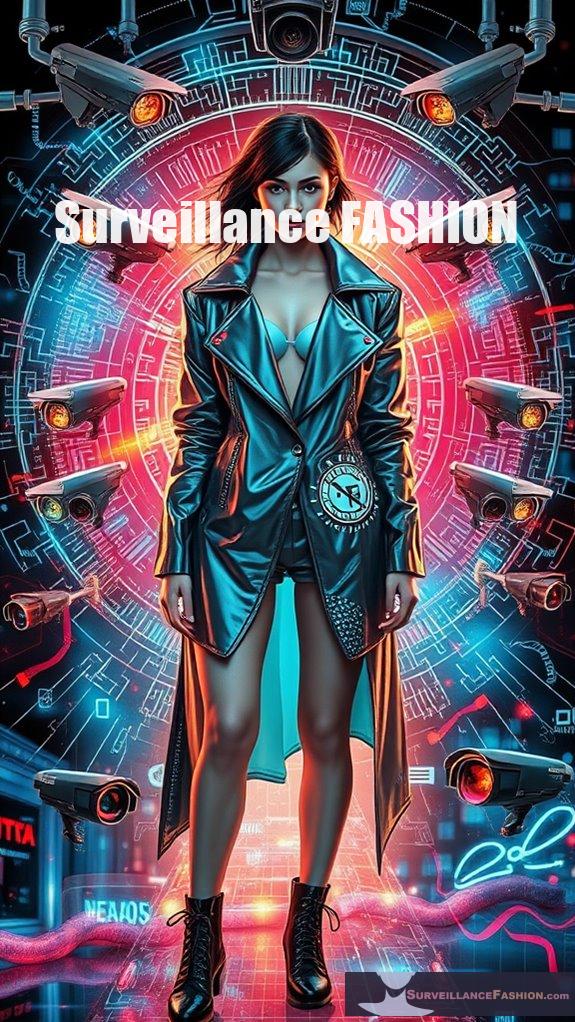
To effectively thwart facial recognition, you can engage in community tactics such as enforcing local surveillance regulations, creating public forums to discuss ethical implications, and collaborating with civil rights organizations like the ACLU. Furthermore, leveraging technology for anonymization, conducting surveillance impact reports, and fostering grassroots initiatives can empower individuals. Implementing collective resistance strategies not only addresses invasive technologies but also enhances local privacy culture. By exploring these methods, you’ll discover how communities can robustly counter surveillance threats.
Quick Takeaways
- Establish Community Control of Police Surveillance (CCOPS) ordinances to ensure local oversight of surveillance technologies and practices.
- Organize public forums to discuss ethical use of facial recognition and advocate for stronger privacy regulations.
- Collaborate with organizations like the ACLU to empower legal challenges against invasive surveillance practices.
- Create surveillance impact reports to raise awareness of facial recognition’s effects on community privacy.
- Foster grassroots movements that encourage collective action and resistance against facial recognition technologies.
Fashion and Accessories as Countermeasures

As facial recognition technology increasingly permeates public and private spaces, individuals have begun to explore innovative strategies through fashion and accessories to safeguard their privacy and evade surveillance. This burgeoning trend, known as anti-surveillance fashion, incorporates specialized fabrics and designs aimed at confounding facial recognition systems. For instance, CV Dazzle makeup employs historical camouflage principles, transforming facial features to render them unrecognizable to artificial intelligence, while the Hyperface Project utilizes garments adorned with artificial facial attributes to induce false positives in recognition algorithms. Additionally, it is noteworthy that over half of adult Americans’ faces are logged in police databases, highlighting the urgency of these protective measures. Furthermore, anti-surveillance fashion has gained traction as a creative means to resist invasive technologies. Moreover, accessories like Phantom glasses and IR-reflective fabrics enhance this protective layer, challenging invasive surveillance practices.
As you navigate this setting, a keen awareness of advancing fashion technologies empowers you to reclaim your privacy, which is precisely why we created this website, Surveillance Fashion, to inform and inspire.
Online Countermeasures

Online countermeasures against facial recognition technology have emerged as a significant aspect of protecting personal privacy in an increasingly monitored digital environment. Crowd-based anonymization techniques can also play a vital role in enhancing these measures.
To combat the virality of facial data collection, consider adopting strategies like avoiding personal photo uploads or utilizing apps such as Fawkes, which corrupts images to evade recognition algorithms.
You can also implement tagging avoidance by refraining from tagging yourself or others in photos, thereby limiting your contribution to vast facial recognition databases.
Furthermore, creating misleading data, or “data spoiling,” can confuse these systems, while engaging friends and family to refrain from sharing personal images adds another layer of protection.
At Surveillance Fashion, we aim to empower you with knowledge and tools, enabling you to take proactive steps toward safeguarding your privacy online.
Community Coordination Against Surveillance Networks

Understanding the impact of surveillance networks on communities is essential, particularly in an era where technology increasingly infiltrates daily life.
By implementing Community Control of Police Surveillance (CCOPS) ordinances, you can guarantee that your local government maintains oversight of surveillance technologies, limiting their misuse.
Implementing CCOPS ordinances ensures local government oversight of surveillance technologies, safeguarding against potential misuse.
Engaging in public forums fosters dialogue about ethical use, allowing you to advocate for stricter regulations that protect privacy rights.
Moreover, collaborating with organizations like the ACLU enhances your community’s legal stance against unethical surveillance practices.
Developing surveillance impact reports equips you with critical information, while open communication between law enforcement and the community promotes transparency.
Joining forces with advocacy networks further amplifies your voice, creating a powerful coalition for change in the fight against intrusive surveillance systems. Additionally, grassroots efforts to build community resistance can empower individuals to take a stand against invasive technologies.
Technological Tools for Privacy

In a world increasingly dominated by digital interactions and surveillance technologies, leveraging technological tools for privacy has become crucial for individuals seeking to safeguard their personal information.
One effective method involves using software like Fawkes, which subtly alters your photos to mislead facial recognition algorithms, ensuring your images remain protected from unauthorized databases.
Additionally, adjusting device settings—such as disabling facial recognition and employing VPNs—can further enhance your privacy by masking your online activities.
Legal frameworks, including BIPA and GDPR, emphasize the importance of consent in handling biometric data, empowering you to reclaim control over your personal information.
At Surveillance Fashion, we recognize these tools and regulations as critical resources for maintaining autonomy in an era where privacy is increasingly at risk. Moreover, wearing anti-surveillance glasses can provide an additional layer of protection against invasive camera systems.
Behavioral Strategies to Evade Detection
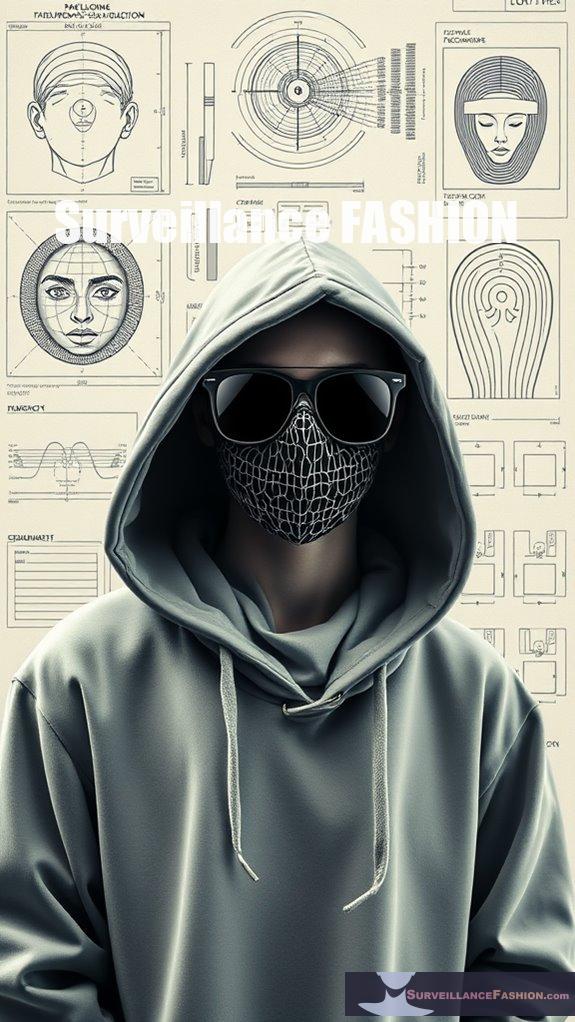
As digital surveillance continues to proliferate, individuals must employ behavioral strategies to evade detection by facial recognition systems, which have become ubiquitous in public spaces. Utilizing disguises, like masks or large sunglasses, can greatly obscure your facial features. Moreover, altering your physical appearance through changes in hairstyle or clothing can confuse recognition algorithms. Anti-surveillance fashion solutions, such as modified clothing, can provide additional layers of protection against these systems.
| Strategy | Description | Example |
|---|---|---|
| Disguises | Masks, hats, and scarves | Wearing a patterned hoodie |
| Anonymity | Limiting online presence | Avoiding tagged photos |
| Group Presence | Blending into crowds | Participating in rallies |
| Visual Disruption | Using complex patterns | CV Dazzle camouflage |
Researching Facial Recognition Weaknesses

While many individuals navigate public spaces under the watchful gaze of surveillance technology, a deeper exploration into the weaknesses of facial recognition systems reveals considerable vulnerabilities that can be exploited.
Understanding these weaknesses empowers you to take control of your privacy.
- Facial recognition algorithms misidentify racial minorities more frequently.
- Poor image quality considerably reduces accuracy across diverse conditions.
- Simple disguises, like hats or sunglasses, can easily deceive these systems.
- Operational biases often stem from uneven decision thresholds affecting different races.
- Incorporating makeup techniques can further obscure facial features and enhance privacy.
Legal Challenges Against Misuse of Surveillance
Legal challenges against the misuse of surveillance technologies, particularly facial recognition, have become increasingly significant as concerns about privacy rights and racial equity gain traction.
Litigation often targets both governmental and corporate entities misusing these technologies, with organizations like the ACLU challenging NSA programs that infringe on digital privacy.
For instance, Illinois’ Biometric Information Privacy Act mandates opt-in consent for biometric data collection, setting a legal standard for privacy protections.
However, judicial review complicates these efforts; courts frequently require plaintiffs to demonstrate direct targeting by surveillance to establish standing.
As we advocate for extensive legislation addressing these issues, it’s essential to remain vigilant and informed, ensuring that our collective right to privacy isn’t compromised by unchecked technological advancements. Moreover, the ethical implications of mass surveillance highlight the need for robust safeguards against potential abuses of power in our society.
Disguising Identity Through Clothing
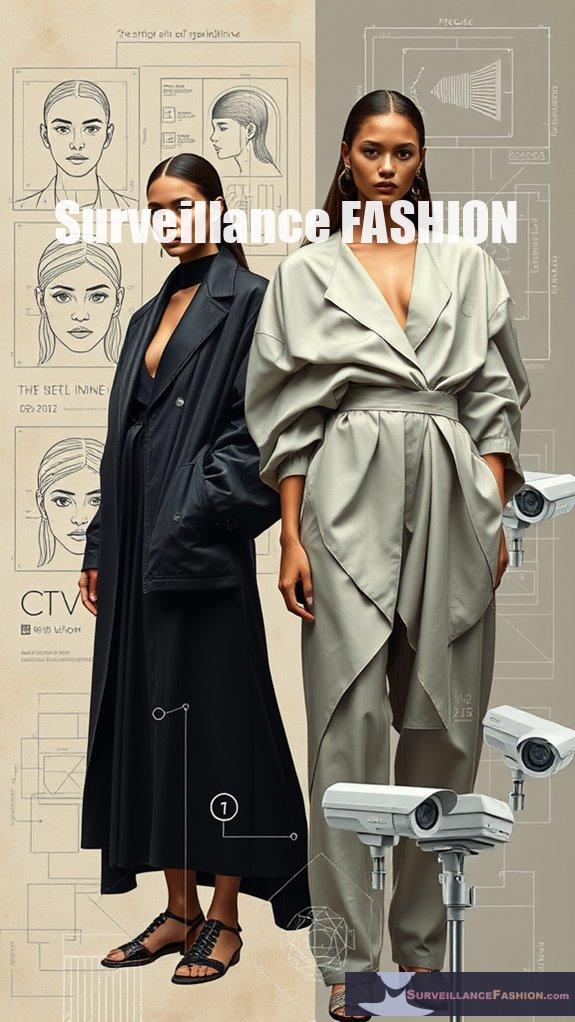
The ongoing legal battles surrounding surveillance technologies highlight a pressing need for innovative strategies to protect personal privacy. This has prompted exploration into how clothing can serve as a form of disguise against facial recognition systems.
You can utilize various clothing strategies to obscure your identity:
- Adversarial patches: Patterns that deceive algorithms, making you appear as non-human entities, like zebras.
- Animal-inspired garments: Clothes mimicking animals can prevent surveillance cameras from analyzing your face.
- Complex accessories: Scarves and brightly colored images can obscure key facial features.
- DIY tools: Innovative fashion lines provide affordable options to counteract surveillance, raising awareness simultaneously.
These methods underscore the necessity for continuous adaptation as facial recognition technology evolves. They frame a proactive approach to asserting your privacy. Additionally, the rise of pattern-based clothing designs reflects a growing movement towards using fashion as a shield against invasive technology.
Fashion Collective Against Surveillance

As awareness of privacy concerns heightens, the fashion collective against surveillance emerges as an essential player in the ongoing dialogue about personal freedoms and technological encroachment.
By creatively integrating style with privacy protection, designers develop garments like the Incognitio Mask, which obscures facial features, and the Hyperface Project, which deploys multiple decoy faces to confuse recognition systems. These innovative pieces not only challenge surveillance technology but also spark public debate surrounding the ethics of such systems, particularly regarding their disproportionate impact on marginalized communities.
The rise of anonymous wearable technology is encouraging more individuals to rethink their relationship with personal data and privacy in public spaces. As these anti-surveillance trends gain traction, they cultivate a culture of privacy awareness, pushing you to reflect on your own choices in a world increasingly dominated by surveillance.
This is precisely why we created this website, Surveillance Fashion.
References
- https://www.stratecta.exchange/fashion-that-can-beat-facial-recognition-systems/
- https://elearning.shisu.edu.cn/pluginfile.php/35310/mod_resource/content/2/Research-Intro-Flick.pdf
- https://www.aclu-nj.org/en/news/what-you-need-know-about-use-facial-recognition-new-jersey
- https://mhs.milfordk12.org/ourpages/auto/2020/1/15/12784324316041332238/294751235.pdf
- https://www.offgridweb.com/preparation/stop-facial-recognition-countermeasures-for-mass-surveillance/
- https://www.businessinsider.com/clothes-accessories-that-outsmart-facial-recognition-tech-2019-10
- https://blog.richardvanhooijdonk.com/en/the-fashion-industry-is-leading-the-fight-against-facial-recognition-technology/
- https://www.fox9.com/news/clothing-line-created-to-trick-ai-facial-recognition-into-thinking-youre-an-animal
- https://www.mccormick.northwestern.edu/computer-science/documents/allen-yilun-lin_tech-report.pdf
- https://physicalsciences.uchicago.edu/news/article/evaluating-anti-facial-recognition-tools/
- http://cda.psych.uiuc.edu/applied_probabilistic_reasoning/probabilistic_reasoning_modules_two_through_twelve.pdf
- https://www.cyberghostvpn.com/privacyhub/how-to-avoid-facial-recognition/
- https://epic.org/preserving-community-control-of-police-surveillance-is-essential-to-protect-privacy/
- https://www.brookings.edu/articles/police-surveillance-and-facial-recognition-why-data-privacy-is-an-imperative-for-communities-of-color/
- https://www.aclunc.org/publications/making-smart-decisions-about-surveillance-guide-community-transparency-accountability
- https://luxand.cloud/face-recognition-blog/how-to-fool-and-avoid-facial-recognition-in-public-places
- https://www.securecommunitynetwork.org
- https://www.isaca.org/resources/news-and-trends/newsletters/atisaca/2022/volume-51/facial-recognition-technology-and-privacy-concerns
- https://www.asisonline.org/security-management-magazine/monthly-issues/security-technology/archive/2021/december/facial-recognition-in-the-us-privacy-concerns-and-legal-developments/
Leave a Reply