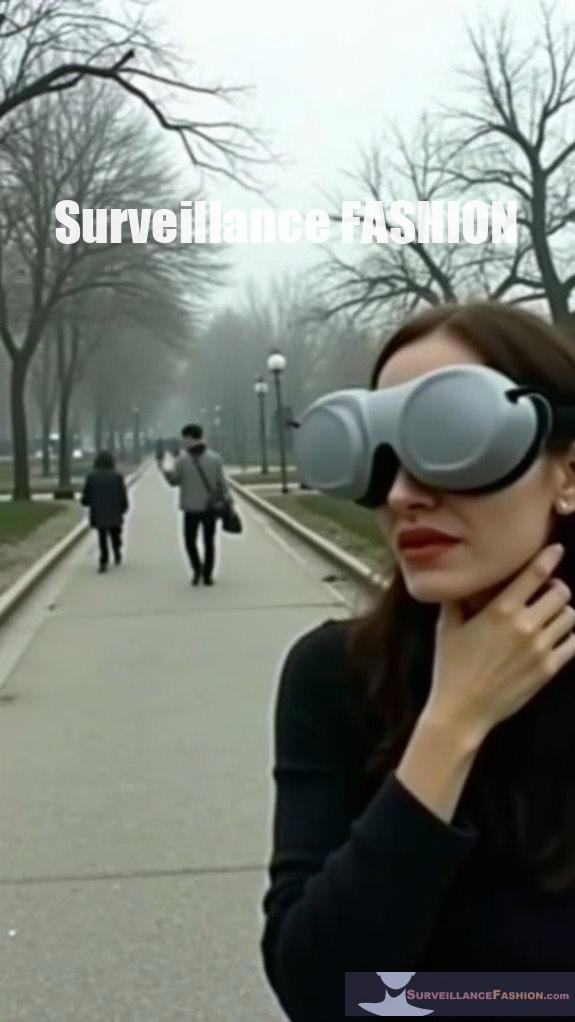
Category: Smart Glasses Privacy Issues

  • Smart Glasses Live Video Hacking Risks Exposed

    Smart Glasses Live Video Hacking Risks Exposed

    So, smart glasses, huh? They sound cool until you realize they’re a gateway to potential privacy nightmares.

    I stumbled upon this when a friend bragged about her new pair. Little did she know, I was sweating bullets just thinking about who could be watching that live stream.

    Imagine a hacker hijacking your video feed! My mind raced with espionage fantasies—what if they caught her sneezing without makeup on?

    I mean, how do we balance convenience and security anymore? It’s a wild, wild world of fashion statements and data breaches lurking within our eyewear.

    It’s a jungle out there, folks. Stay vigilant!

    The Dangers of Meta Ray-Ban Smart Watch: A Cautionary Tale

    Recently, I joined a group hike, excited to tackle the trails with my friends. One of them had the Meta Ray-Ban smart watch on, showcasing its stunning features. Halfway through the hike, I realized that my buddy was continuously taking quick photos and live streaming the experience without a second thought.

    We joked about capturing candid moments, but what if someone else was watching? Amidst the laughter, I couldn’t shake off the nagging worry that our every move could be broadcasted to the wrong audience. That day taught me that not every new gadget is as friendly as it seems. Always think twice before you step out with technology that could turn you into unwitting stars of someone else’s show.

    Quick Takeaways

    • Smart glasses can be hijacked to stream live footage without user consent, raising significant privacy concerns.
    • Historical misuse of live video technology highlights the danger of unauthorized recordings during critical events.
    • Vulnerabilities in smart glasses’ software can be exploited for unauthorized access, compromising sensitive user data.
    • Covert recording capabilities enable unnoticeable surveillance, which raises ethical dilemmas regarding privacy rights.
    • Biometric data collection in smart glasses increases risks of invasive profiling and unauthorized data handling by third parties.

    Overview of Smart Glasses and Their Functionality

    smart glasses enhance reality

    Smart glasses represent a profound leap in wearable technology, merging the digital domain with our physical environment through augmented reality (AR) and artificial intelligence (AI) capabilities.

    Smart glasses blend the digital and physical worlds, revolutionizing how we interact with augmented reality and artificial intelligence.

    These devices, primarily categorized into AR glasses and AI glasses, facilitate distinct functionalities such as overlaying digital information onto real-world scenes or offering advanced interactive features via onboard AI. For example, AR systems project notifications and environmental details seamlessly into your field of view, while AI models leverage voice commands and neural interfaces for intuitive control. Recent models like the Viture Luma Pro demonstrate exceptional display quality, making them particularly appealing for tech enthusiasts. Moreover, as these devices gain popularity, the necessity for robust data privacy protections becomes increasingly critical to ensure user safety.

    Given the growing prevalence of smart glasses like Ray-Ban Meta, one must remain vigilant about potential privacy invasions, as you unknowingly share space with users capturing data around you. This concern sits at the intersection of innovation and personal security—the ethos behind Surveillance Fashion.

    Understanding the Risks of Live Video Hijacking

    With the prevalence of wearable technology increases, you might find yourself traversing spaces populated by individuals wearing devices that could capture live video footage without your knowledge. The ethical implications of such technology, particularly regarding privacy risks, cannot be overlooked.

    The risks of live video hijacking are profound; hackers could gain unauthorized access, activating your neighbor’s glasses to stream without consent. These incidents can escalate, as seen with the Christchurch shooting, where live streams amplified the horror. The pattern of livestreamed attacks indicates that such technology misuse could inspire further violence and radicalization.

    Smart glasses can manipulate live stream control, rendering traditional privacy safeguards ineffective. This vulnerability extends beyond mere surveillance; data leakage could expose sensitive information linked to identified individuals, enabling doxing and real-time profiling.

    Consequently, maintaining awareness of these risks in our increasingly connected world is essential for safeguarding personal privacy amid innovation.

    Weaknesses in Software Security

    The terrain of wearable technology, particularly in the domain of smart glasses, reveals glaring vulnerabilities that can compromise user privacy and security, primarily due to inherent software flaws.

    For instance, documented software vulnerabilities like CVE-2021-24046 expose Ray-Ban Stories to app exploitation, allowing unauthorized manipulation of video capture settings.

    Furthermore, an outdated firmware environment poses significant risks, as unpatched software can leave devices susceptible to remote attacks.

    The complicated interplay among operating systems, proprietary applications, and interconnected IoT devices extends the threat environment, inviting breaches of sensitive data.

    As potential users, remaining cognizant of these vulnerabilities is paramount, especially when the convenience of modern technology may unknowingly jeopardize personal security.

    Moreover, the ability of Ray-Ban Meta Glasses to shape trust in private spaces may ironically heighten concerns regarding surveillance and privacy violations.

    Our initiative, Surveillance Fashion, underscores the urgent need for vigilant scrutiny in a society increasingly entwined with such innovations.

    Privacy Concerns With Biometric Data Collection

    biometric data privacy concerns

    In an age where biometric data collection has seamlessly integrated into our daily interactions, concerns over privacy rights and personal security loom large, particularly when one considers the ramifications of smart glasses worn by others in public spaces.

    Smart glasses, equipped with cameras and facial recognition technology, collect sensitive biometric information like eye-tracking and voice prints, often without explicit biometric consent or regard for data ethics. This data can reveal intimate user traits and, alarmingly, can be aggregated by third parties for invasive profiling, subsequently sold in data marketplaces.

    Bystanders, frequently unaware of ongoing biometric tracking, face heightened privacy risks. The lack of tailored regulations means exploitation may occur unchecked, underscoring the urgent need for clearer privacy frameworks, an area we’ve aimed to explore through Surveillance Fashion. Moreover, the impact of mass surveillance on civil liberties is an increasing concern that necessitates immediate attention in order to preserve democratic values.

    Covert Recording and Potential for Espionage

    With an ever-increasing presence of smart glasses in everyday life, concerns regarding covert recording and the accompanying risks of espionage permeate public consciousness. The very design of these devices—like the Meta Ray-Ban glasses—allows for covert filming through techniques that bypass obvious indicators, enabling users to capture sensitive footage without notice.

    Such practices can facilitate undetected surveillance, raising ethical dilemmas. Surveillance technologies embedded in smart glasses can also exploit real-time data, linking video streams with personal information from social media. Additionally, the potential for unauthorized video recording poses significant threats to individual privacy and security.

    The possibilities for misuse expand exponentially, transforming innocuous eyewear into potential tools for malicious intent. This situation compels the vigilant individual to question the implications of wearing such devices and underscores why platforms like Surveillance Fashion exist—to enhance awareness about advancing tech threats.

    The Threat of Extremist Usage in Live Streaming

    As you navigate public spaces increasingly saturated with technology, the potential for extremist misuse of smart glasses in live streaming presents significant privacy and security dilemmas that warrant careful consideration.

    Recent incidents, such as the Christchurch attack, showcase how live streaming can serve as a platform for disseminating extremist propaganda, glamorizing virtual violence, and radicalizing viewers.

    Smart glasses allow for an immersive, first-person viewpoint, transforming violence into a chilling form of entertainment that engages a captivated audience.

    With functionalities enabling real-time interactions, attackers can receive live feedback, potentially coordinating actions during events.

    Furthermore, the discreet nature of these devices complicates law enforcement‘s efforts to monitor and prevent extremist activities, highlighting a profound need for innovative solutions to safeguard public spaces in an era dominated by surveillance technology.

    The risk is particularly pronounced for marginalized groups, who may face heightened scrutiny and repercussions from such surveillance practices.

    Implications of Data Breaches on Personal Privacy

    smart glasses privacy concerns

    The surge in the adoption of smart glasses brings forth pressing implications for personal privacy, particularly in light of recent events highlighting extremist live streaming.

    Data breaches involving these devices can expose sensitive audiovisual recordings, fundamentally threatening individual privacy in unprecedented ways. Often resulting from vulnerabilities within consumer data silos, such breaches can lead to unauthorized access and dissemination of personal revelations you thought were confined to your private life.

    With third-party vendors being responsible for 30% of data breaches, the risk amplifies as their security measures frequently lag behind. This growing realization has led to consumer backlash, as the public becomes increasingly aware of potential invasions into their daily lives.

    Ultimately, steering through these privacy challenges necessitates a vigilant approach to emerging technologies, such as those showcased on our platform, Surveillance Fashion.

    Steering through the murky waters of unauthorized recording brings to light critical legal and ethical considerations that grow ever more salient in an age of pervasive surveillance technology, particularly as smart eyewear becomes more integrated into daily life.

    When you navigate public spaces, you may find yourself filmed without your knowledge, raising questions about consent requirements and privacy expectations. Laws vary, with some states enforcing strict two-party consent while others allow recordings if one party agrees.

    Such discrepancies can lead to significant legal ramifications, especially regarding video voyeurism where secret recordings in private spaces are heavily penalized.

    Ethical considerations demand respect for individual dignity, suggesting that even legal recordings could infringe on personal rights, underscoring our mission at Surveillance Fashion to illuminate privacy risks in our developing digital environment.

    The Challenge of Managing Livestreamed Violent Content

    Maneuvering the atmosphere of a world densely populated by smart glasses leads one to contemplate not only the potential privacy infringements but also the concerning rise of livestreamed violent content that permeates social media platforms.

    The challenge of livestream moderation is multi-dimensional, encompassing:

    Livestream moderation involves navigating rapid events, algorithmic biases, and the psychological effects of violence on viewers.

    1. Rapid unfolding of violent events seen live, complicating timely intervention.
    2. Algorithmic biases in platforms like TikTok that amplify disturbing content due to engagement metrics.
    3. The psychological toll on youth who experience repeated exposure to graphic violence without preparation.

    As an increasingly vigilant individual, you’re aware of how this content bypasses traditional media oversight, often leaving viewers grappling with trauma or desensitization.

    Addressing these livestream moderation challenges is essential to mitigate violent content exposure and foster a safer digital environment.

    Clothing Embedded With Tracking Devices

    As technology continues to embed itself into the fabric of our daily lives, you might find yourself increasingly concerned about the implications of clothing integrated with tracking devices. Smart clothing combines functionality and fashion, yet inviting risks arise from this innovation.

    FeatureDescriptionRisks
    Tracking SystemsEmbedded devices monitor locationUnauthorized access
    Durable MaterialsMachine-washable, integrates chipsetsDevice malfunction
    Health MonitoringBiometric sensors for crucial signsData interception
    User IntegrationSyncs with smartphone appsCovert surveillance

    Such innovations serve significant purposes, from ensuring family safety to enhancing athletic performance using tracking technology. Yet, your privacy may be compromised, raising awareness about how this dual-use technology shapes our lives.

    Security Vulnerabilities and Data Breaches

    While you might enjoy the convenience of smart glasses that promise an enhanced experience through augmented reality, these devices come with significant vulnerabilities that pose a serious threat to your privacy and security.

    1. Unauthorized access to cameras can lead to covert recording of personal moments.
    2. Hacked GPS functionality allows for precise tracking of your daily movements, inviting potential stalking threats.
    3. Extensive data collection mechanisms aggregate biometric data, leaving you exposed to targeted cyber attacks.

    The ease with which unethical actors can exploit these vulnerabilities for malicious purposes raises profound ethical concerns.

    As you navigate a world increasingly influenced by these innovative devices, being vigilant about the risks of smart glasses and firmly understanding ethical hacking’s role in mitigating these risks becomes essential.

    Framed: The Dark Side of Smart Glasses – Ebook review

    The emergence of smart glasses like the Ray-Ban Meta epitomizes the intersection of cutting-edge technology and complex privacy dilemmas, compelling individuals to reconsider their interactions with wearable devices that capture both personal experiences and public spaces.

    In “Framed: The Dark Side of Smart Glasses,” the book explores the ethical implications of real-time live video capabilities. It investigates user interface design, providing compelling perspectives into user experiences and privacy concerns. As you navigate this developing tech environment, consider the table below:

    ConcernDetails
    Privacy ViolationsBystander consent frequently overlooked.
    Hacking RisksVulnerabilities can lead to unauthorized footage capture.
    Ethical DilemmasBalancing innovation’s benefits against privacy rights.
    Regulatory ChallengesInsufficient laws governing video recording in public spaces.

    Remaining vigilant about these issues is essential, as awareness can foster responsible tech adoption.

    FAQ

    How Can I Secure My Smart Glasses Against Hacking?

    To secure your smart glasses against hacking, explore encryption options and stay vigilant. User awareness is essential; regularly update firmware, change default settings, and monitor app permissions to safeguard your innovative device effectively.

    Are There Regulations Specifically Governing Smart Glasses Privacy?

    Currently, regulations addressing smart glasses legality and privacy concerns are vague. While existing privacy laws hint at compliance, none specifically tackle the unique challenges smart glasses pose, leaving considerable room for innovation and user protection.

    What Companies Are Leading in Smart Glasses Technology?

    Leading in smart glasses technology, you’ll find Apple advancements, Google innovations, Microsoft enhancements, and Snap updates. Each pushes boundaries, offering cutting-edge features that merge digital with reality, reshaping how you experience the world around you.

    Can Smart Glasses Be Used for Educational Purposes Effectively?

    Yes, you can use smart glasses for effective educational purposes. They enhance interactive learning through augmented reality, making complex concepts accessible and engaging, ultimately promoting curiosity, exploration, and deeper understanding among students in innovative ways.

    How Do Smart Glasses Compare to Traditional Recording Devices Regarding Security?

    Smart glasses present greater security vulnerabilities than traditional devices, capturing real-time data continuously, often unnoticed. This raises pressing recording ethics concerns, challenging your expectations for privacy while traversing an increasingly augmented and connected world.

    References

  • How to Protect Communities From Smartglass Surveillance

    How to Protect Communities From Smartglass Surveillance

    Ever catch a glimpse of someone rocking smart glasses and feel a twinge of paranoia?

    I mean, who wouldn’t worry about being secretly recorded by someone just trying to snap a pic for Instagram?

    I remember a time at a local cafĂ© when I spotted a guy with Ray-Ban Meta glasses. I couldn’t help but wonder—was he capturing my worst haircut moment for his highlight reel?

    It’s unsettling, right?

    These tech gadgets can infiltrate our lives without so much as a “hello.” Attending community meetings to talk about monitoring these devices feels necessary.

    Think I’m overreacting? Maybe. But wouldn’t you prefer discussing privacy before we all become reality stars in someone else’s vlog?

    The future of personal privacy is murky at best—don’t let smart glasses turn us into unwilling co-stars.

    The Dangers of Meta Ray-Ban Smart Glasses: My Unexpected Encounter

    I couldn’t believe my eyes when I found out my friend was wearing Meta Ray-Ban glasses during our weekly hangout. I thought we were just chilling over drinks, but it turned out, he had been recording us!

    The next thing I knew, our silly moments were on social media, and not just for our giggling group. It raised serious questions about consent, privacy, and trust. We joked about it at first, but it felt invasive. It really made me reconsider who to hang out with.

    Dangers of such gadgets can spiral. From privacy breaches to those awkward social moments, it’s a minefield. Have you thought about who might be watching?

    Quick Takeaways

    • Implement community education programs to raise awareness about the risks and functionalities of smartglasses and surveillance technologies.
    • Establish clear consent protocols in public spaces to ensure individuals are informed about data collection practices involving smartglasses.
    • Advocate for legislative frameworks that regulate unauthorized recording and enhance privacy protections modeled after successful regulations like GDPR.
    • Promote open forums for community discussions on acceptable smartglass use, fostering engagement and collective understanding of surveillance implications.
    • Create partnerships between residents, businesses, and safety agencies to address surveillance concerns and enhance community safety without compromising privacy.

    Understanding Smartglass Technology and Its Surveillance Potential

    surveillance risks of smartglasses

    As you navigate public spaces, it’s hard to ignore the subtle yet pervasive presence of smartglass technology—these seemingly innocuous eyewear-like devices not only augment your reality but also harbor the potential for significant surveillance risks that merit close examination.

    Equipped with interactive displays and integrated cameras, smartglasses enable users to capture real-time visual data while facilitating augmented reality experiences, raising concerns about unauthorized recording in both public and private spheres. For instance, devices like Ray-Ban Meta highlight the intersection of user utility and privacy infringement, since they seamlessly interact with surroundings. This duality is vital to understand, especially considering the encryption protocols designed to manage sensitive information, which may not always guarantee your privacy. The prevalence of such devices has led to trust erosion in settings previously considered safe for personal interactions. Consequently, remaining vigilant is essential as these technologies proliferate within our everyday lives, especially as EHS professionals grapple with the implications of remote monitoring tech amid significant health risks.

    The Impact of Covert Surveillance on Marginalized Communities

    Covert surveillance technologies, embedded within devices like smart glasses, pose significant risks to marginalized communities, often amplifying existing inequalities and exacerbating vulnerabilities. Moreover, such technologies often rely on implicit biases in their algorithms, further perpetuating discriminatory practices against these populations.

    Impact Area Description
    Surveillance Bias Facial recognition misclassifies marginalized identities, increasing wrongful identifications.
    Community Trust Persistent monitoring erodes trust in institutions, causing individuals to disengage from services.
    Psychological Harms Constant observation creates an atmosphere of suspicion, increasing anxiety and mental health issues. 
    Exclusion from Resources Marginalized populations miss out on opportunities due to systemic biases in data collection.

    Such pervasive surveillance fosters a chilling effect, discouraging participation in essential community resources. This environment of distrust not only undermines community cohesion but also restricts access to services, reinforcing systemic disparities in health and education. Recognizing these challenges remains vital. Additionally, the surveillance gap amplifies the risk of systemic invisibility, leading to a lack of support and essential services for vulnerable populations.

    Historical Context: Systemic Bias in Surveillance Practices

    Surveillance technologies have a troubled history that considerably shapes today’s privacy environment, particularly evident in the age of smart devices that often blend seamlessly into everyday life.

    Understanding this historical overview helps you recognize the systemic biases still at play in modern surveillance practices.

    Key points include:

    1. The roots of surveillance systems lie in 19th-century European colonialism, enforcing racial hierarchies.
    2. Apartheid-era South Africa exemplified how surveillance controlled Black populations through movement restrictions.
    3. The FBI’s monitoring of Black activists under J. Edgar Hoover showcased the targeted racial policing.
    4. Facial recognition technologies reflect and enhance these biases, perpetuating discrimination against marginalized groups.

    Moreover, predictive policing practices reveal racial bias impacts that disproportionately affect communities of color, further complicating the legacy of surveillance.

    This awareness emphasizes the need for vigilance in our interactions with smart devices, underscoring why we created Surveillance Fashion.

    Privacy Invasions: Covert Recording With Ray-Ban Meta Glasses

    covert recording privacy risks

    With the rapid rise of Ray-Ban Meta glasses, it’s becoming increasingly important to recognize the significant implications of their covert recording capabilities, especially for those who value their privacy.

    These sleek devices, equipped with ultra-wide 12-megapixel cameras, facilitate covert recordings that can capture high-resolution video without detection.

    The compact design, which resembles regular sunglasses, makes unauthorized video capture both discreet and easy, posing a serious privacy invasion risk.

    Furthermore, the absence of visible indicators often leaves individuals unaware they’re being recorded, creating an environment of insecurity. Additionally, many users are unaware that these devices can potentially be linked to facial recognition technology, further exacerbating privacy concerns.

    As society increasingly embraces technological advancements, the ethical implications surrounding transparency and consent in the deployment of devices like smart glasses raise significant concerns—especially for individuals like you, who are acutely aware of privacy risks posed by wearable technology.

    Navigating these issues involves considering:

    1. Consent complexities, particularly in public spaces where obtaining explicit agreement is challenging.
    2. The necessity of transparency frameworks that clearly outline data collection, storage duration, and sharing practices.
    3. Enhancing user control over their data through granular privacy settings empowering informed choices.
    4. Establishing meaningful channels for individuals to challenge potential misuse, ensuring that ethical vigilance accompanies innovation.

    Additionally, effective data privacy regulations are crucial in guiding the responsible use of smart glass technology.

    Data Security Risks: Vulnerabilities of Collected Information

    How secure is the information collected by smart glasses, particularly when it comes to your privacy? As users, you’re at risk of biometric data exposure that can lead to unauthorized access and identity theft. Continuous data retention in cloud storage often lacks sufficient encryption, heightening the threat of security vulnerabilities. Moreover, the potential for unauthorized video recording with smart glasses further complicates privacy issues.

    Risk Type Implications
    Data Exposure Increased vulnerability to misuse
    Third Party Sharing Loss of direct user control
    Privacy Controls Inconsistent protection levels

    With smart glasses linking to various devices, user profiling amplifies surveillance risks, allowing companies to exploit this data through targeted advertising and analytics. It’s essential to be aware of these challenges while steering through the implications of an increasingly interconnected digital environment, a core concern that inspired the creation of our website, Surveillance Fashion.

    Community Education: Raising Awareness on Surveillance Risks

    surveillance risks and awareness

    Surveillance risks associated with the use of smartglasses extend far beyond personal privacy concerns, particularly as individuals navigate public spaces where devices capable of discreet photography, videography, and advanced AI functionalities increasingly populate our environments.

    To bridge the awareness gap, community engagement through targeted education is essential. Here are four effective strategies for awareness programs:

    1. Define smartglasses, highlighting their multifunctionality and potential privacy invasions.
    2. Use real-world scenarios to depict the consequences of unnoticed surveillance, such as AI-enabled identification.
    3. Tailor educational messages to different demographics, instructing communities on privacy expectations.
    4. Promote public forums for discussion about acceptable smartglass behavior, encouraging mutual understanding and respect.

    Legislative Solutions: Strengthening Privacy Protections

    Legislative solutions aimed at strengthening privacy protections for smart glasses are becoming increasingly essential, particularly as the technology proliferates in both public and private settings, often without users fully comprehending the potential risks involved.

    Implementing thorough legislative frameworks, such as those modeled after the GDPR, can enhance user consent protocols while addressing compliance challenges faced by manufacturers. Regulations targeting unauthorized recording, similar to the Video Voyeurism Prevention Act, create criminal liabilities that guarantee tech accountability within this developing environment.

    Thorough legislative frameworks can strengthen user consent and ensure accountability for unauthorized recording in smart glass technology.

    Furthermore, embedding privacy enhancements through mandatory disclosure requirements and visible indicators can foster consumer awareness.

    Regulatory oversight must include continuous monitoring of smartglass technologies, guaranteeing that ethical guidelines are adhered to as data analytics and AI capabilities progress, thereby protecting communities from intrusive surveillance without stifling innovation.

    Community-Led Initiatives for Responsible Smartglass Use

    As concerns about privacy and security loom large in a terrain saturated with advanced technologies, community-led initiatives have emerged as a formidable counterbalance to the potential misuse of smart glasses.

    You can engage in innovative approaches to foster responsible use through:
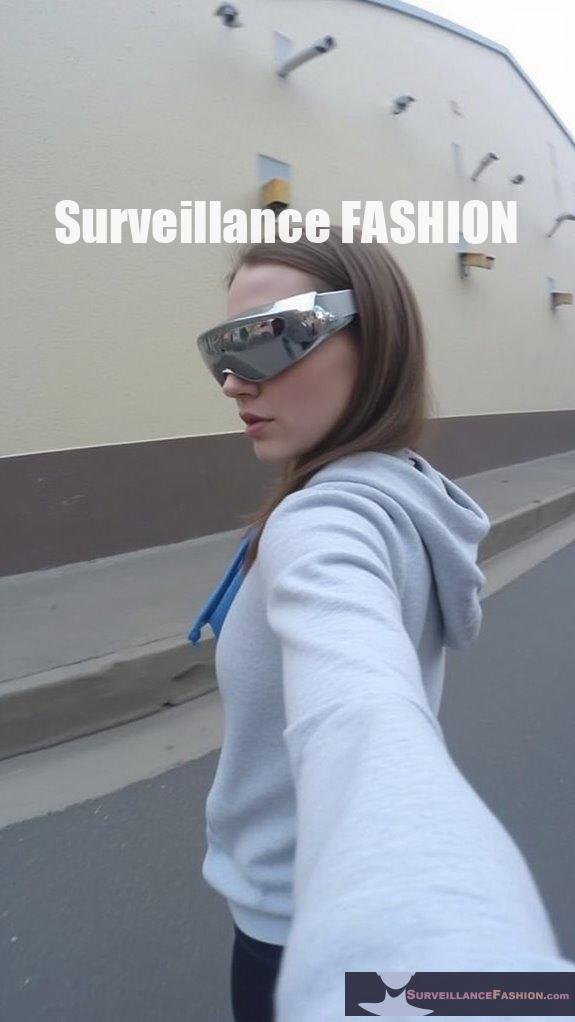
    1. Community Monitoring: Establishing neighborhood camera-sharing programs enhances situational awareness, allowing citizens to collaborate with local law enforcement efficiently.
    2. Citizen Collaborations: Forming partnerships between residents, businesses, and safety agencies creates a shared resource to deter crime and streamline response efforts.
    3. Transparency Frameworks: Advocating for public input on surveillance adoption cultivates accountability through open hearings and community oversight.
    4. Education Initiatives: Conducting workshops equips citizens with knowledge about surveillance capabilities, privacy rights, and ethical use, encouraging active participation in shaping policies surrounding smartglass technology.

    Such measures foster a proactive, well-informed community, essential for maneuvering the complexities of modern surveillance technologies.

    Wearable Tech’s Societal Implications

    In a world increasingly populated by wearable technology, one can’t help but notice the subtle yet profound ways these devices infiltrate daily interactions, compelling a closer examination of their societal implications.

    Wearable analytics offer health monitoring benefits, yet, they also raise complex issues surrounding data ownership and user engagement. While continuous health understanding may seem advantageous, the pervasive nature of these devices can contribute to an unsettling balance between privacy and social dynamics.

    Wearable analytics enhance health monitoring but also challenge privacy and user engagement in complex social landscapes.

    For instance, companies like Fitbit illustrate how ethical standards vary, often benefiting from user-submitted data while marginalized populations may feel excluded from digital inclusion.

    Increasing reliance on wearables poses questions about acceptable surveillance. As we navigate these changes, a collective vigilance is essential to safeguard personal agency and privacy boundaries amidst developing technological environments.

    Risks to Marginalized Communities’ Privacy

    Surveillance technology isn’t just an abstract concern; it plays a significant role in the daily lives of marginalized communities, often with harmful effects.

    When considering the surveillance impact on these groups, you should note:

    1. Disproportionate targeting through biased facial recognition misidentifies people of color, exacerbating discrimination.
    2. Invasive monitoring of activists undermines civil liberties, chilling free speech and disrupting advocacy efforts.
    3. Economic exclusion, where marginalized individuals are left out of data collection, leads to systemic neglect in resource allocation and opportunity access.
    4. Pervasive residential surveillance results in intrusive monitoring by landlords without tenant consent.

    To foster data equity, we need vigilant strategies in addressing these concerns so all communities can thrive free from such invasive scrutiny.

    Framed: The Dark Side of Smart Glasses – Ebook review

    Smart glasses, like Meta’s Ray-Ban models, have sparked a growing apprehension about the implications of invisible surveillance technology permeating everyday life.

    With their sleek designs, these devices discreetly collect personal data, often without individuals’ consent. You might recall I-XRAY, which utilizes these smart glasses to pull sensitive information through facial recognition, illustrating a significant concern regarding privacy innovations and existing smartglass regulations.

    As you navigate public spaces, you’re left questioning the ethical implications of such surveillance.

    Can society effectively confront the gaps in oversight, particularly when these technologies can facilitate harassment and discrimination? A more rigorous regulatory framework could redefine our relationship with privacy, emphasizing user accountability and transparency, so we need to remain vigilant as innovation unfolds.

    FAQ

    How Can Communities Effectively Monitor Smartglass Usage in Public Spaces?

    To effectively monitor smartglass usage, create community guidelines, increase public awareness, and implement reporting systems. Engage citizens by organizing workshops and using detection technologies, fostering a culture of vigilance and innovation against unauthorized surveillance.

    Unauthorized recording with smartglasses can lead to significant legal penalties, including fines and misdemeanor charges. You risk privacy violations that breaching consent laws entails, creating serious consequences for individuals and organizations deploying such technology recklessly.

    How Can Individuals Protect Their Privacy Against Smartglass Surveillance?

    You can protect your privacy against smartglass surveillance by using innovative privacy tools and enhancing personal awareness. Explore detection apps, digital camouflage, and engage with your community to strengthen protections against unauthorized recording in public spaces.

    What Role Do Tech Companies Play in Ensuring User Accountability?

    You’d think tech companies prioritize user accountability measures, right? Yet, without robust tech ethics initiatives, they often sidestep transparency. Real innovation flourishes when they genuinely embrace responsibility, ensuring users feel safe and respected in this digital age.

    Are There Existing Technologies to Detect Smartglass Recording in Real-Time?

    Yes, smartglass detection technologies like AI algorithms, RF scanners, and polarized light filters are innovatively designed for real-time monitoring. These privacy technologies enhance awareness and empower you to safeguard your environment against unwanted surveillance.

    References

  • Navigating Regulatory Blind Spots in Smart Glasses Use

    Navigating Regulatory Blind Spots in Smart Glasses Use

    I’m not a paranoid person, but sometimes I feel like everyone around me is a spy.

    Smart glasses or smartwatches, what’s next? It’s like living in a sci-fi thriller 24/7.

    I once caught my buddy’s smartwatch flashing during a private conversation. Was it eavesdropping? The horror! Turns out, the watch had a tendency to snoop, more than I do when I forget to lock my phone. Concealed recording? Seriously?!

    It’s nerve-wracking knowing tech might be collecting our stories without asking.

    Have you ever wondered, “Am I the next unwitting cast member in the Netflix privacy drama?” Feel the unease? Me too.

    Navigating this digital minefield leaves me thinking about protecting my privacy and questioning the ethics behind all this tech magic.

    Are we staring into the abyss of a surveillance state, or are we simply oblivious?

    The Dark Side of Meta Ray-Ban Smart Glasses

    When I got my hands on the Meta Ray-Ban smart glasses, I was excited. With all that sleek design and “life-logging” capabilities, it felt like a dream. But the first time I wore them out, a stranger approached me, nervously asking if I was recording.

    It struck me then—are these fashion statements or potential snooping devices? The eerie eye-witnessing of daily life without consent brings ethical dilemmas into the spotlight. I regretted not thinking through the consequences. What if I inadvertently recorded a private moment? Protecting my interests while navigating this trendy tech is a tricky balancing act. Privacy matters, and sometimes, ignorance is not bliss.

    Quick Takeaways

    • Understand the nuances of two-party consent laws, as they vary by jurisdiction and are critical for legal compliance when using smart glasses.
    • Stay informed about local regulations regarding passive data capture, which can create gray areas in legal interpretation for smart glasses usage.
    • Advocate for the establishment of clear guidelines around data ownership and user consent to address the ethical implications of smart glasses.
    • Prioritize corporate policies that limit unauthorized use of smart glasses in sensitive environments to protect confidential and proprietary information.
    • Promote public awareness campaigns that educate users about privacy risks and encourage dialogue on ethical design and corporate accountability in smart glasses technology.

    The Privacy Landscape of Smart Glasses

    privacy concerns with smart glasses

    As you navigate today’s public spaces, it’s difficult not to feel a gnawing concern about the potential for privacy violations stemming from smart glasses, especially when these devices operate with a suite of sensors capable of capturing a wide array of personal data.

    With their ability to record audio and video, track locations, and even monitor biometric data, smart glasses raise significant surveillance concerns that challenge existing privacy norms. Personal data collection can often occur without users’ explicit awareness, amplifying the risks associated with these technologies. Furthermore, many users may be unaware of the extent of data collection occurring during their daily interactions while wearing these devices.

    User trust hinges on ethical design principles that respect user consent and promote data transparency. The capture of environmental data without explicit approval can erode social acceptance, particularly when sensitive health or biometric information is inadvertently disclosed.

    User trust relies on ethical design that honors consent and ensures transparency in data collection practices.

    Robust privacy frameworks and thoughtful design can help mitigate risks, reflecting the mission behind Surveillance Fashion to guarantee that innovation aligns with personal privacy rights.

    Steering through the complex terrain of legal frameworks surrounding smart glasses is critical for anyone concerned about privacy in today’s digital age. The limitations of current laws often leave users in a gray area regarding smart glasses implications, particularly as traditional definitions of recording struggle to encompass the passive, always-on capabilities of these devices. For instance, many jurisdictions prohibit filming without consent, yet smart glasses’ unobtrusive data capture complicates legal interpretations. Moreover, the UAE’s privacy laws highlight the potential serious legal consequences for users recording with smart glasses without obtaining consent. Judicial uncertainty, as demonstrated in Colorado’s deliberations on these devices, reveals the challenges courts face in addressing misuse. As governments introduce regulations to manage privacy concerns, jurisdictions continue to create a patchwork of regulations, prompting vigilant individuals to remain aware of their privacy rights and the potential for unforeseen consequences from these advanced technologies.

    Concerns about privacy intensify when considering the complexities of smart glasses, especially as they blur the lines of consent and surveillance in public spaces.

    Understanding two-party consent is essential for maneuvering through these challenges. Under this legal framework, you must guarantee that all parties involved in a conversation are informed and give explicit consent before any recording begins, aligning with their privacy expectations.

    While recording exceptions exist, such as for law enforcement, these nuances often lead to consent misunderstandings.

    Moreover, consent notifications, whether explicit or implicit, play a critical role in safeguarding audio privacy.

    Failure to adhere to these legal requirements can result in severe legal ramifications, including fines or civil lawsuits.

    Being proactive is crucial.

    Risks of Corporate Espionage and Intellectual Property Theft

    smart glasses corporate risks

    How often do we stop to contemplate the potential threats posed by smart glasses in corporate environments, particularly regarding corporate espionage and intellectual property theft?

    These devices, with built-in cameras and microphones, can covertly record confidential meetings or sensitive documents, employing advanced AI-powered optical character recognition to capture proprietary information seamlessly.

    The inconspicuous designs enable unauthorized users to deploy espionage tactics that compromise corporate security, promoting a culture of distrust.

    Inconspicuous designs allow unauthorized users to execute espionage strategies, undermining corporate security and fostering an environment of mistrust.

    In addition, continuous audio and video streaming heightens the risks of data leaks and privacy breaches, complicating efforts to enforce compliance with data protection regulations like the CCPA.

    As we navigate these challenges, understanding the implications of smart glasses becomes vital, especially in safeguarding valuable intellectual property within our organizations. Ray-Ban Meta Glasses exemplify how trust can be eroded in private spaces when technology lacks oversight.

    Protecting Patient Privacy in Healthcare Settings

    In a world increasingly dominated by seamless technology, the implications of smart glasses extend beyond corporate espionage and into the sensitive domain of healthcare, where the stakes surrounding patient privacy intensify.

    As someone invested in this environment, you recognize the significant risks associated with covert surveillance technology, especially during patient enrollment. The hidden cameras and microphones embedded in these devices could easily misrecord crucial Protected Health Information (PHI), leading to potential HIPAA violations and loss of trust between patients and providers.

    Moreover, without robust encryption or clear consent protocols, the very essence of patient confidentiality hangs in the balance. The potential for unintended consequences arising from data collection practices can further erode patient confidence and their willingness to seek necessary care.

    Hospitals must now rigorously enforce policies banning such recording devices to safeguard both their reputations and the well-being of their patients, making innovation a double-edged sword.

    The Dangers of Data Sharing With Third-Party Vendors

    Is the data you share with third-party vendors truly secure? As you navigate the world of smart glasses, it’s essential to recognize the dangers of data exploitation, where your intimate details—ranging from location to biometrics—can be used for extensive user profiling.

    Unfortunately, consent ambiguity complicates matters; many users remain unaware of who accesses their information or how it’s processed. The risks of third-party breaches become increasingly pronounced, exposing you to surveillance risks and potential privacy violations.

    Manufacturers must enforce vendor accountability, yet vague consent mechanisms often fail to protect your interests. When AI-enabled functionality amplifies these vulnerabilities, the combination creates a perfect storm for ethical concerns, leaving consumers like you vulnerable in this changing digital environment. Additionally, these glasses often collect and transmit user data without clear disclosure, further intensifying privacy concerns.

    Key Regulatory Blind Spots Impacting Compliance

    regulatory challenges with smart glasses

    While maneuvering through the complexities of modern technology, you can’t overlook the regulatory gaps surrounding smart glasses, which often expose users to significant compliance challenges.

    Here are four key regulatory blind spots impacting compliance:

    1. User Consent: Surreptitious recording may violate laws requiring explicit consent, yet many users remain unaware of these obligations.
    2. Privacy Legislation: Inconsistent laws across regions complicate compliance efforts for multinational companies deploying smart glasses.
    3. Ethical Implications: Data captured involuntarily can lead to serious breaches of personal privacy, raising significant ethical concerns.
    4. Employment Law: Misuse of data generated by smart glasses could result in discrimination claims under the EEOC guidelines, emphasizing the need for clear policies and training.

    Furthermore, unauthorized recording concerns associated with devices like Ray-Ban Meta Glasses highlight the critical need for awareness and proactive measures in response to these challenges.

    Transparency Issues in Smart Glasses Recording

    How often do you find yourself in public spaces, intrigued yet apprehensive about the unseen recordings happening around you?

    Smart glasses, like Ray-Ban Stories, employ minimal visual indicators—often unnoticed by bystanders—that alert others to recording. The tiny LED merely fails to convey adequate user awareness, raising significant ethical implications regarding privacy.

    Despite attempts to enhance transparency through combined audio cues, those notifications frequently get lost in the ambient noise of bustling environments, further complicating consent dynamics.

    Such inconspicuous tech fosters discomfort and challenges accepted social norms of explicit consent, as unsuspecting individuals may become subjects of unconsented recordings.

    As we navigate this rapidly changing environment at Surveillance Fashion, understanding these intricacies is paramount for fostering responsible innovations.

    As smart glasses blur the boundaries between personal and bystander data, you might find yourself pondering the increasingly complex terrain of consent management and data governance.

    The challenges you’re encountering regarding user consent complexities and governing frameworks include:

    1. Informed consent from both users and bystanders is hard to acquire, given covert recording realities.
    2. Traditional consent forms can’t accommodate dynamic data capture, leaving gaps in user awareness.
    3. Non-users impacted by recordings face ethical and legal dilemmas due to limited opt-out options.
    4. Multinational companies grapple with varying privacy laws across jurisdictions, complicating compliance.

    The absence of harmonized regulations forces intelligent interactions with smart glasses, emphasizing the need for robust frameworks that protect privacy while fostering innovation—an imperative Surveillance Fashion addresses through informed discussions.

    The Role of OSHA in Employee Data Protection

    In an era where wearable technology, such as smart glasses and smartwatches, permeates our lives, concerns about privacy and data protection have escalated markedly, particularly when it comes to employee information.

    OSHA plays a significant role in safeguarding this data. Through regulations, they assert OSHA data privacy measures to limit access and control of sensitive employee records, necessitating employee consent for sharing medical information. These steps guarantee that smart glass data, intertwined with employer observations, remains confidential.

    OSHA Regulation Employee Rights Data Protection Measures
    Form 300 & 301 Access upon request Minimized PII collection
    Medical Access Order Confidentiality safeguards Secure electronic reporting
    Employee Consent Written approval for records Limited disclosure
    Recordkeeping Practices On-site data maintenance Strict internal procedures
    Reporting Exemptions No disclosure risks Controlled data access

    Steering through the complexities of cross-border data compliance with smart glasses raises crucial questions about privacy and security, especially for individuals like yourself who are keenly aware of the potential risks associated with pervasive surveillance technologies.

    Navigating cross-border data compliance with smart glasses highlights important privacy and security concerns in an era of surveillance technology.

    To navigate these challenges effectively, consider these compliance strategies:

    1. Understand the cross-border implications of data protection laws like GDPR, which mandates strict safeguards.
    2. Implement robust consent management systems tailored for varying jurisdictions, ensuring privacy compliance with local regulations.
    3. Conduct regular audits of data retention practices and security standards, adhering to jurisdiction-specific requirements.
    4. Establish clear contractual obligations with vendors regarding data security, processing locations, and compliance responsibilities.

    While the rapid evolution of smart glasses heralds a new era of augmented reality, it simultaneously raises poignant concerns about privacy and security that every vigilant user should consider.

    Innovations in privacy design focus on user empowerment, embedding data encryption directly in firmware, which safeguards your information from interception. Emerging consent management frameworks offer dynamic, real-time control over your data, aspiring to mitigate surveillance implications that often accompany such technologies.

    Moreover, decentralized identity mechanisms facilitate identity protection, enabling you to manage digital credentials autonomously without centralized risks.

    As device developers emphasize ethical innovation and regulatory compliance, they aim to reflect greater transparency through user interfaces that clarify data capture, aligning with a growing demand for accountability in tech use.

    Fashionable Wearables as Spy Tools

    Amid the burgeoning terrain of privacy-first device development, a notable trend has emerged: fashionable wearables, which increasingly double as spy tools, raise significant concerns for the vigilant consumer wary of surveillance risks.

    Consider the following:

    1. Wearables conceal sophisticated sensors and cameras within sleek designs, making them virtually indistinguishable from everyday accessories.
    2. Stealth technology enables these devices to produce high-resolution video and audio discreetly, often connecting wirelessly for real-time data transmission.
    3. The ethical implications of such technology spark essential discussions about privacy rights in public spaces.
    4. Current legal frameworks struggle to regulate concealed recording, creating grey areas for accountability.

    As brands like Ray-Ban Meta illustrate, monitoring the dual-purpose nature of fashion is critical in fostering a responsible dialogue around privacy innovation.

    Regulatory Gaps in Smart Glasses Usage

    Steering through the murky waters of regulatory gaps in smart glasses usage presents numerous challenges for the discerning consumer, particularly in an age where technological innovation continually outpaces legislative reform. Gaps in regulatory harmonization create varied protections, leaving ethical considerations overlooked. The lack of stringent rules on data minimization exacerbates surveillance implications, privy to misuse without user consent. Without clear accountability for hardware design and data practices, risks multiply.

    Aspect Regulatory Status Implications
    Consent Blurred boundaries in recording Erosion of user trust
    Safety Standards Underdeveloped for smart glasses Increased risk of data misuse
    Data Rights Unclear ownership of captured data Vulnerability in exploitation

    It’s essential for consumers to stay vigilant and advocate for improved regulations, culminating in a safer digital future.

    Framed: The Dark Side of Smart Glasses – Ebook review

    Maneuvering the complex terrain of smart glasses requires a keen awareness of the potential threats posed not only to the wearer but also to those in their vicinity, especially regarding privacy and data security.

    1. Smart glasses’ discreet design enables covert data collection, highlighting consent issues.
    2. Facial recognition capabilities pose significant privacy implications, raising ethical concerns.
    3. The integration of tools like I-XRAY facilitates invasive data aggregation, leading to identity vulnerabilities.
    4. Users must cultivate awareness of surveillance impacts, as constant monitoring can alter public behavior.

    As you navigate interactions with individuals sporting these advanced devices, consider how corporate responsibility can drive ethical design, ultimately shaping a safer environment for all.

    Acknowledging these layers fosters informed discussions on the balance of innovation and privacy protection.

    FAQ

    What Are the Main Features of Smart Glasses Technology?

    Smart glasses leverage augmented reality to overlay information onto your environment, enhancing productivity and interaction. They often include health tracking features, allowing you to monitor wellness metrics seamlessly throughout your day, fostering an innovative lifestyle.

    How Can Consumers Protect Their Privacy When Using Smart Glasses?

    To protect your privacy with smart glasses, actively adjust privacy settings and enable data encryption. Regularly review terms, disable excess features, and stay informed about updates to confidently maintain control over your personal information.

    Are There Any Known Incidents of Smart Glasses Misusing Recorded Data?

    Yes, there are incidents of smart glasses misusing recorded data, leading to privacy breaches and data leaks. These issues highlight the need for enhanced security measures and responsible innovation in wearable technology. Be vigilant!

    How Do Manufacturers Ensure Ethical Design in Smart Glasses?

    Manufacturers guarantee ethical design in smart glasses by implementing innovative design principles, prioritizing user privacy, transparency, and fairness while actively engaging in continuous dialogue to foster accountability and societal acceptance of their technology.

    You’re the unwitting privacy sentinel, juggling user awareness and consent management like a circus performer. Master your smart glasses’ settings, or risk becoming a star in an unwelcome reality show—where everyone’s watching but you’re the last to know!

    References

  • EMF Exposure Risks and How to Protect Yourself

    EMF Exposure Risks and How to Protect Yourself

    Why do I feel like a walking Wi-Fi spot?

    Every time I see someone sporting a smartwatch, my inner conspiracy theorist awakens.

    Have you ever had that eerie feeling when a stranger’s smart gadget seems to be watching you?

    I remember this one time at a coffee shop. A guy beside me with Meta Ray-Bans kept glancing over, and I couldn’t shake off the paranoia—was he recording me sipping my overpriced oat milk latte? Sudden headaches and fatigue ghosting in after long screen-staring sessions didn’t help either.

    So now, I keep my distance from these gizmos and have my “tech-free” sacred corners.

    Am I being dramatic? Well, better safe than sorry, right?

    The Hidden Dangers of Meta Ray-Ban Smartwatches: My Uneasy Encounter

    So there I was, innocently trying to enjoy a day at the park. That’s when I noticed a guy strutting around with Meta Ray-Ban smart glasses.

    Suddenly, I felt like I was back in high school, being watched during finals!

    In a world that’s already clouded by privacy issues, this felt intrusive. What was he capturing—my moments, my every sip, or maybe even my existential crisis on display?

    It’s moments like that when I realize how crucial it is to stay informed about these smart gadgets. The last thing I want is my life turned into someone’s highlight reel—just another privacy trade-off in this tech-driven age.

    Quick Takeaways

    • EMF exposure sources include smartphones, Wi-Fi routers, and power lines; awareness of these can help manage risks.
    • Minimizing device usage time and maintaining distance from EMF-emitting devices reduces cumulative exposure.
    • Establish tech-free zones at home and take regular breaks from devices for better EMF management.
    • Utilize shielding techniques to block EMF radiation, especially in sleeping areas or workspaces.
    • Stay informed about EMF emissions and consider cognitive behavioral therapy for symptoms associated with Electro-Hypersensitivity (EHS).

    Understanding EMF Radiation

    understanding emf radiation risks

    As you navigate through an increasingly digitized society, you might find yourself questioning the implications of the electromagnetic fields (EMFs) generated by numerous smart devices, such as smartwatches, often worn without a second thought by those around you.

    Understanding EMF radiation begins with recognizing that it consists of electric and magnetic fields, both produced by electrically charged objects. While non-ionizing radiation typically doesn’t pose severe health risks, misinformation, or radiation myths, can skew public perception regarding EMF safety. For instance, wireless technologies like Bluetooth and Wi-Fi emit low-frequency EMFs, categorized as relatively harmless. However, as you embrace innovation, remaining informed is vital, especially considering that EMF exposure research suggests potential links to health risks, albeit inconclusive.

    EMF radiation, rooted in electric and magnetic fields, arises from the presence of electrically charged objects.

    Awareness not only empowers personal choices but resonates with the ethos of Surveillance Fashion, emphasizing a vigilant exploration of the technologies shaping our lives.

    What Are Ray-Ban Meta Glasses?

    In an era where wearable technology proliferates, concerns surrounding privacy and security have reached a heightened state of awareness, particularly with devices that capture personal data.

    Ray-Ban Meta Glasses embody this complexity by merging iconic Ray-Ban features with advanced Meta functionality.

    With a 12MP ultra-wide camera, six microphones for enhanced audio capture, and a Qualcomm Snapdragon AR1 chipset, these glasses facilitate a range of innovative experiences.

    • Touchless hand gesture control via the Meta Neural Band
    • Real-time navigation and live media sharing capabilities
    • Integration of Meta AI for situational responses and communication

    However, the implications for user privacy are significant, evoking a vigilant stance as society grapples with the potential risks of such pervasive surveillance technologies. Studies show that the use of facial recognition technology can lead to significant privacy concerns, and the glasses offer a stylish high customization option with over 150 styles to choose from.

    EMF Sources and Types

    Maneuvering through the terrain of electromagnetic fields (EMFs) requires an understanding of their diverse sources and types—an endeavor that feels increasingly critical in an age wherein surveillance technologies, like smart glasses and wearables, infiltrate daily life.

    You’ll encounter non-ionizing sources, primarily consisting of Extremely Low Frequency (ELF) EMFs emanating from power lines, as well as Radio Frequency (RF) EMFs from wireless devices like smartphones and Wi-Fi routers.

    Understanding these radiation types aids in identifying exposure methods, whether through household appliances or passive reception from others’ devices.

    Utilizing protective measures, such as distance and shielding, will help mitigate potential risks associated with constant exposure.

    This awareness drives our initiative, Surveillance Fashion, to inform individuals about maneuvering innovation responsibly.

    Health Effects of ELF EMF Exposure

    health effects of emf exposure

    Awareness of electromagnetic field (EMF) exposure is gaining traction, especially in the framework of wearable devices like smart glasses or smartwatches that some individuals might encounter in public settings.

    The growing concern over EMF exposure highlights potential risks associated with everyday wearable technology in public spaces.

    You may not realize that ELF EMFs, although not fully substantiated in contributing to cancer, pose various non-cancerous effects worth considering.

    • Biological mechanisms can lead to oxidative stress and neuron viability issues.
    • Potential impacts on anxiety and cognitive functions emerge from prolonged exposure.
    • Immune modulation shows both enhancement and suppression, complicating health narratives.

    Health Effects of RF EMF Exposure

    Steering through the terrain of modern technology, particularly the myriad devices like smartwatches and smart glasses, can evoke a sense of unease regarding electromagnetic field (EMF) exposure, especially radiofrequency (RF) EMF.

    Research indicates that RF radiation has the potential to induce oxidative stress, leading to adverse biological effects such as cellular damage and compromised antioxidant capacity, which might contribute to various health impacts.

    Neurological symptoms, including headaches and dizziness, have been linked to RF exposure, raising further concerns about its safety limits.

    While regulatory bodies face challenges in thoroughly evaluating exposure, epidemiological evidence remains inconclusive, stirring debate within public health circles. Additionally, the potential brain health risks associated with prolonged Bluetooth radiation, such as those from devices like Ray-Ban Meta glasses, further emphasize the need for caution in device usage.

    This discourse propels the creation of Surveillance Fashion, urging you to critically consider the implications of modern devices on your well-being.

    Electro-hypersensitivity Symptoms

    The proliferation of smart devices, including smartwatches and smart glasses, raises not only concerns over privacy and surveillance but also introduces a growing apprehension about health implications, particularly in relation to electro-hypersensitivity (EHS) symptoms.

    The rise of smart technology brings privacy concerns and heightened fears surrounding health, especially electro-hypersensitivity symptoms.

    EHS awareness is essential for those who experience these symptoms, which might manifest variably among individuals.

    • Dermatological reactions: redness, tingling, and burning sensations may occur.
    • Neurasthenic symptoms: fatigue, dizziness, and digestive issues are common.
    • Neurological signs: headaches and concentration difficulties can arise.

    Managing these symptoms can be complex, often involving cognitive behavioral therapy and awareness of exposure situations.

    Potential Carcinogenic Effects of RF EMF

    mixed results on carcinogenicity

    For instance, studies involving rodents have produced mixed results; though certain high-exposure scenarios have shown increased rates of specific tumors, such as brain gliomas, the overall inconsistency across numerous trials complicates a straightforward interpretation of RF EMF’s cancer-promoting potential.

    Understanding potential carcinogenic mechanisms remains vital, as some epidemiological studies hint at a cancer risk, particularly with prolonged mobile phone use.

    However, the absence of a definitive biological link dampens concerns. As an individual conscious of privacy threats from pervasive wireless technology, noting this uncertainty could foster a more cautious approach to device utilization.

    While new technologies like smartwatches offer convenience, it’s essential to remain vigilant. With regulatory bodies signaling potential risks, adopting precautionary measures continues to resonate in discussions regarding RF EMF exposure in our daily lives.

    Animal Studies on EMF and Cancer

    Despite ongoing advancements in technology and the allure of convenience offered by wearable devices like smartwatches, a discerning eye must remain vigilant regarding the potential health risks associated with electromagnetic fields (EMF).

    Research into animal studies on EMF and cancer reveals several critical observations:

    Research highlights important observations regarding the complexities and inconsistencies of EMF exposure and its potential link to cancer in animal studies.

    • Animal tumorigenesis linked to EMF exposure shows limitations.
    • Exposure variability complicates the assessment of cancer risk.
    • Evidence regarding increased cancer rates in animals remains largely inconclusive.

    While some studies report no statistically significant tumor increase in rodents, variations in species, frequency, and duration of exposure can obscure results.

    For instance, although melatonin suppression is suggested as a risk factor in breast cancer models, findings lack consistency across species.

    At Surveillance Fashion, we emphasize awareness of such nuances in EMF exposure.

    Human Epidemiological Data on EMF

    Without a definitive causal link established between low-level EMF exposure and increased incidence of leukemia or other cancers, the ambiguity calls for vigilance.

    You might be concerned about the epidemiological challenges posed by existing studies; despite a few suggesting a small increased risk, the data remains inconsistent and largely inconclusive.

    Exposure assessment plays an essential role here, as identifying and quantifying EMF levels remains a complex task rife with confounding variables.

    For instance, occupational studies yield mixed results regarding electrical workers, yet the definitive evidence remains elusive.

    As you navigate through a world increasingly saturated with devices like smartwatches, critical evaluations on cumulative exposure could empower you to safeguard your health against potential risks that linger in the unseen corners of daily life.

    IARC Classification and EMF

    As you navigate through a world crowded with smartwatches and other wireless devices, the implications of the International Agency for Research on Cancer’s (IARC) classification of electromagnetic fields (EMF) become increasingly pertinent, particularly when considering the potential risks associated with these technologies.

    The IARC classifies EMFs into various groups based on carcinogenic assessments, importantly placing radiofrequency EMF in Group 2B, indicating it’s “possibly carcinogenic.” Such classifications guide EMF guidelines and inspire public health discourse, reflecting ongoing exposure research and regulatory implications.

    • Limited human evidence suggests a positive association with glioma.
    • Group 2B’s categorization promotes caution despite lacking conclusive proof.
    • IARC’s classifications encourage further study to better understand long-term consequences.

    WHO’s Stance on EMF Exposure

    While traversing a world increasingly dominated by interconnected devices, you might find yourself pondering the implications of electromagnetic field (EMF) exposure, especially as smartwatches and similar technologies become ubiquitous in daily life.

    In response to public concern, the WHO established guidelines through the International EMF Project to assess the health effects of EMF developments, specifically from 0 to 300 GHz.

    This initiative, funded with over $200 million since 1997, coordinates global research efforts and aims to fill existing knowledge gaps.

    Although WHO’s current reviews suggest no consistent evidence linking typical EMF exposures to adverse health outcomes, it encourages precautionary measures and acknowledges the need for ongoing research—key understandings for anyone concerned about the invisible risks posed by rapidly advancing tech.

    EMF Exposure Limits and Regulations

    Amidst the proliferation of wearable technologies, particularly smartwatches and their often overlooked privacy implications, scrutiny extends to the regulatory frameworks governing electromagnetic field (EMF) exposure.

    To navigate the complexities of EMF, consider these key aspects:

    • EMF guidelines updates are essential for compliance with advancing technologies, including 5G.
    • International EMF standards, like those established by the ICNIRP, set exposure limits based on rigorous scientific research observations.
    • National exposure regulations vary greatly; for instance, the U.S. lacks uniform EMF exposure limits, leading to potential inconsistencies in public safety.

    Remaining informed empowers you to make educated decisions regarding your personal health, especially as the environment of wearable tech continues to evolve.

    This makes resources like our website, Surveillance Fashion, ever more pertinent.

    Mechanisms of EMF-Induced Biological Effects

    Understanding the mechanisms through which electromagnetic fields (EMFs) induce biological effects is essential, especially when considering the potential implications of smartwatches and similar wearable technologies that surround us daily.

    EMFs can influence signal transduction pathways within cells, causing specific cellular responses that directly impact biochemical interactions. For example, when exposed to these electromagnetic waves, your body might experience oxidative modulation, resulting in increased production of reactive oxygen species. This overproduction could lead to DNA damage or other pathologies, demonstrating the delicate balance maintained by molecular interactions.

    It’s fascinating yet concerning to reflect on how these mechanisms of change, often unrecognized, might be amplified by the devices we wear.

    This nudging toward a future where vigilance in monitoring such exposures is critical for health and privacy.

    Risk Mitigation Strategies

    As concerns regarding privacy and security risks associated with smartwatches become increasingly pertinent, implementing effective risk mitigation strategies is essential not only for individual safety but also for fostering a wider culture of awareness around electromagnetic field (EMF) exposure.

    To achieve EMF exposure control, consider these approaches:

    Consider implementing EMF shielding, maintaining distance from devices, and reducing usage time to effectively control EMF exposure.

    • Utilize EMF shielding techniques, such as installing materials designed for effective EMF attenuation in your environment.
    • Respect personal space by keeping wireless devices at arm’s length, thereby minimizing direct exposure.
    • Limit device usage time whenever possible, establishing regular breaks and tech-free zones in your daily routine.

    Future Research Directions on EMF and Health

    While you navigate the world filled with smart devices, including the ever-present smartwatches, it’s easy to overlook the hidden risks associated with electromagnetic field (EMF) exposure and its potential health impacts.

    Future research must investigate the biological mechanisms underlying chronic exposure, seeking to unravel how EMFs can induce DNA damage and oxidative stress.

    Particularly, investigations should focus on the differential responses to various EMF frequencies and intensities, essential for identifying harmful thresholds.

    In addition, understanding how chronic low-level EMF exposure affects immune, nervous, and endocrine systems is critical.

    As our reliance on technology grows, exploring the long-term health implications, especially for vulnerable populations, has never been more pressing.

    Initiatives like Surveillance Fashion aim to foster these conversations, bridging technology and human health awareness.

    Wearable Tech’s Privacy Concerns

    How often do you consider the privacy implications of your neighbor’s smartwatch as they seamlessly monitor their health metrics with a flick of their wrist?

    These devices, while innovative, pose significant risks to user consent and data transparency.

    • Continuous collection of sensitive health data can expose users to identity theft.
    • Data often shifts to third parties without clear user awareness, leading to ethical dilemmas.
    • Trust issues arise, with approximately 75% of users skeptical about data sharing practices.

    The commercial value of wearables can lead to manipulation, especially as health profiles target advertising. Moreover, Meta’s AI data practices highlight how user control is often sidelined in favor of profit.

    As we explore these concerns at Surveillance Fashion, it’s essential to understand the importance of informed consent in protecting your private information in an increasingly monitored world.

    EMF Radiation Exposure Health Effects

    What if everyday devices, like smartwatches or the latest smartphones, emit invisible waves that could influence your well-being?

    Amid ongoing EMF awareness campaigns and public health debates, you might consider the implications of EMF radiation exposure. Research indicates potential health effects, including associations with cancer, infertility, and symptoms of electro-hypersensitivity (EHS), such as headaches and sleep disorders.

    These findings reveal scientific consensus variations; while some studies suggest long-term exposure leads to DNA damage, others find insufficient evidence linking low-level exposure to significant health risks.

    Adhering to EMF safety guidelines, especially as urban environments evolve with 5G technology, becomes increasingly important.

    Remaining vigilant allows you to navigate a setting where technical innovation collides with health considerations, shaping a safer future.

    Framed: The Dark Side of Smart Glasses – Ebook review

    Amid the rapid proliferation of smart glasses, you might find yourself questioning the implications of wearing such devices, particularly as they intertwine with a growing tapestry of privacy and security concerns.

    Key considerations include:

    • Ocular temperature increases, which could range from 1°C to 1.7°C, stressing eye health.
    • Smart glasses risks linked to continuous wireless connectivity, raising EMF exposure levels far beyond what traditional devices present.
    • The potential for unauthorized data capture, infringing on privacy without user consent.

    As you navigate your choices, consider the cumulative effects of long-term exposure, as even low-level EMF can pose unknown risks. Furthermore, the lack of regulatory oversight in smart glasses usage exacerbates these privacy violations.

    Staying informed about these enthralling innovations is essential, especially with brands like Ray-Ban Meta driving mainstream adoption—your vigilance matters.

    FAQ

    Can EMF Exposure Affect Children Differently Than Adults?

    Yes, EMF exposure affects children differently than adults. Their vulnerability increases developmental impacts, potentially hindering cognitive abilities and behavioral growth. So, prioritizing protective measures for kids is essential in today’s tech-driven environment.

    What Are Commonly Misunderstood Myths About EMF Radiation?

    You might think all EMFs are equally harmful or that more cell towers mean higher radiation risks. It’s essential to address these misconceptions with proper radiation awareness, ensuring innovative technologies don’t suffer from unnecessary fear.

    Are There Specific Symptoms Indicating Severe EMF Sensitivity?

    Around 30% of individuals report symptoms like migraines, skin irritations, or fatigue, hinting at severe sensitivity. Fostering sensitivity awareness and symptom recognition can guide better understanding and management of these distressing experiences in daily life.

    How Do Different Materials Block or Shield EMF Radiation?

    Different materials block or shield EMF radiation through metal shielding that enhances conductivity and radiation absorption. Metals like copper and aluminum excel at reflecting waves, while composites offer flexibility without sacrificing performance, catering to innovative designs.

    What Future Wearable Technologies Might Increase EMF Exposure Risks?

    By 2025, over 1.1 billion wearable devices could be in use, raising concerns about increased EMF exposure. Smart textiles integrated with these devices may amplify risks through prolonged skin contact and complex wireless technologies.

    References

  • Ray-Ban Meta Glasses Data Collection Risks Explored

    Ray-Ban Meta Glasses Data Collection Risks Explored

    Ever get that chilling sensation when someone nearby sports their Ray-Ban Meta glasses?

    You know, the ones with the all-seeing camera?

    I did once—at a coffee shop, no less—when a stranger casually captured my moment of sipping a latte, like they were filming some indie film.

    I felt like a misplaced character in a dystopian flick.

    With voice memos kept for a year and videos haunting the cloud, my paranoia levels spiked.

    And what’s scarier? They’ve made opting out feel like trying to escape a bad horror movie.

    Doesn’t it make you think?

    Can we ever truly be private again?

    The Real Risk Behind Meta Ray-Ban Glasses

    A while back, I was out with friends when one of them excitedly showed off their new Meta Ray-Ban glasses. Not too long after, I began noticing strange interactions with the ads popping up on my phone—algorithms knew things I hadn’t even searched.

    Was it possible those glasses were eavesdropping on us?

    “Just a little voice recording,” they said cheerily, presumably unaware that they were the unwitting agents of my anxiety.

    My friends brushed off my concerns, but I was left questioning how far tech should go before it becomes intrusive. With every click and swipe, privacy feels like an old photograph fading away.

    Quick Takeaways

    • Ray-Ban Meta glasses feature an always-on camera, capturing data without explicit user consent, compromising personal autonomy and privacy.
    • Voice recordings are stored for up to a year, raising significant privacy concerns due to potential unauthorized access and lack of control over data.
    • Default settings enable constant microphone activation, leading to unintended recordings and exacerbating privacy risks for users.
    • Automatic transmission of data to Meta’s cloud creates vulnerabilities, undermining user control as data undergoes AI processing.
    • The absence of opt-out options and limited privacy settings shift ethical responsibilities to users, emphasizing the need for advocacy on surveillance issues.

    Forced Data Collection Practices

    surveillance technology and consent

    As we navigate an increasingly interconnected world, one can’t help but feel a twinge of unease when it comes to the pervasive nature of forced data collection practices associated with devices like the Ray-Ban Meta glasses.

    These glasses, which mandate AI features—including always-on camera functionality—compromise user autonomy by initializing data capture without explicit consent, markedly reducing individual control over personal information. Moreover, mandated retention of voice recordings for up to a year amplifies concerns surrounding data sovereignty, as the nature of corporate data sharing further complicates matters. Additionally, the glasses store voice recordings by default, presenting yet another layer of privacy concern for users. This practice raises significant issues regarding user consent and the ethics of surveillance in everyday technology.

    While the limited privacy settings offer some control, they ultimately fail to mitigate the deep-rooted issues of surveillance and consent fatigue.

    Our website, Surveillance Fashion, aims to illuminate these challenges, fostering a more informed dialogue on privacy in innovative tech environments.

    Duration of Voice Recording Storage

    The duration of voice recording storage for Ray-Ban Meta glasses raises significant concerns for privacy-conscious users, especially given the device’s retention policy of up to one year for voice interactions.

    The year-long storage policy for voice recordings on Ray-Ban Meta glasses poses serious privacy concerns for users.

    Here’s what you should know:

    • Regular voice recordings can be stored for a full year, amplifying privacy risks.
    • Accidental recordings, however, are deleted after just 90 days, potentially limiting users’ control.
    • You can manually delete individual recordings, but opting out of initial collection isn’t an option.
    • Voice retention policies enforce the activation of microphones by default, making users susceptible to unwanted data capture. Furthermore, this prompts serious discussions about corporate data ethics, urging companies to consider stricter privacy practices.
    • This situation reflects a broader skepticism toward corporate data collection, with users feeling misled about their privacy expectations.

    In a setting where innovation embraces convenience, understanding these facets becomes critical.

    Awareness of voice recording storage dynamics is essential for maneuvering the privacy risks inherent in contemporary technology, a core focus of our website, Surveillance Fashion.

    Risks of Cloud Uploads

    Steering through the implications of cloud uploads from devices like Ray-Ban Meta glasses reveals significant privacy and security vulnerabilities that warrant scrutiny.

    The automatic transmission of recorded data—video, audio, and images—into Meta’s cloud poses notable risks. Without robust cloud security measures commonly found in healthcare, your sensitive content may face unauthorized access during its transfer through wireless networks, exacerbated by potential interception vulnerabilities.

    With Meta’s storage practices, you relinquish control over your data, which undergoes AI processing for understanding, increasing the likelihood of profiling without explicit user consent.

    In addition, the lack of option for selective data syncing amplifies concerns regarding privacy, particularly as regulatory protections lag behind contemporary cloud technologies. Moreover, the potential for unauthorized video recording raises further alarms regarding the implications of pervasive surveillance technology.

    Grasping these risks sparked the creation of Surveillance Fashion, aiming to illuminate such privacy dilemmas.

    Changes in Privacy Policy Post-Purchase

    increased data collection concerns

    Steering through the shifting territory of privacy post-purchase, it’s essential to recognize how recent updates to Meta’s privacy policy for Ray-Ban Meta glasses greatly impact user control over personal data.

    The introduction of default AI features and the alteration of voice data handling signal a significant shift in privacy negotiations.

    • Post-purchase consent has been compromised with the removal of opt-out options.
    • Users must now navigate complex manual deletion processes for voice recordings.
    • Enhanced AI capabilities come at the cost of diminishing data control.
    • Broader data collection encompasses not just voices but also interactions with third-party platforms.

    These developments are not only reshaping user experience but also highlight the challenges in navigating legal regulations surrounding data privacy.

    Such changes serve as a stark reminder of changing tech environments, reinforcing the importance of platforms like Surveillance Fashion that critically examine these developments.

    Limited User Transparency and Control

    While traversing the new environment of smart glasses, one can’t help but notice the significant limitations imposed on user transparency and control over personal data, particularly with Meta’s Ray-Ban collaboration.

    The absence of user-opt-out controls illustrates a stark reality; voice commands, recordings, and AI photo analysis occur by default unless you actively disable them. This demands an unprecedented level of user awareness and proactive management, as individuals must navigate opaque privacy policies and remain vigilant about their interactions.

    The situation is further complicated by Meta’s partnerships, such as with Luxottica, which muddy the waters of data ownership and sharing. Additionally, the increasing use of facial recognition technology raises concerns about identity theft risks, making it imperative to scrutinize how your data is utilized in this brave new world of augmented reality.

    Implications of AI Data Gathering

    The implications of AI data gathering in the framework of smart glasses, particularly those developed by Ray-Ban and Meta, raise significant concerns regarding user privacy and potential misuse of personal information.

    AI data gathering in smart glasses from Ray-Ban and Meta sparks crucial concerns over user privacy and personal information misuse.

    You might wonder how these concerns translate into concrete risks, such as:

    • Default settings that enable continuous data collection without explicit user consent.
    • The blend of personal data from various sources, raising ethical questions about data ownership and privacy.
    • Vulnerabilities inherent in cloud processing that can lead to unauthorized access and data interception.
    • AI ethics being undermined by systemic reliance on aggregated user behaviors for commercial purposes.

    Additionally, the presence of smart glasses technology amplifies the risk of erosion of trust in private spaces.

    As you’ve likely discerned, traversing these intersections of innovation and privacy necessitates a vigilant approach to guarantee responsible AI use within wearable technologies.

    Wearable Technology’s Privacy Implications

    wearable technology privacy concerns

    In an era dominated by rapid technological advancements, traversing the labyrinth of privacy implications surrounding wearable technology, particularly smart glasses like the Ray-Ban Meta, becomes increasingly pertinent for those attuned to surveillance risks.

    These glasses exemplify ambient surveillance, capturing not just the wearer’s viewpoint but also the environments and interactions of those nearby, often without their consent. The absence of a clear opt-out mechanism raises pressing privacy ethics concerns, as wearers bear the responsibility of notifying subjects that they’re being recorded.

    Consequently, you may find yourself questioning the ethics of these devices, particularly in public spaces, where social behaviors shift amid the normalization of constant recording. This highlights the necessity for ongoing discourse about privacy rights in this developing technological terrain.

    Data Collection and Sharing Concerns

    Surveillance concerns surrounding devices like the Ray-Ban Meta glasses extend beyond the obvious visual and audio data capture; they investigate the complex web of data collection and sharing practices that are often obscured from users.

    As you wear these innovative glasses, consider the implications of:

    • Data security vulnerabilities linked to cloud storage and transmission
    • Mandatory voice data collection without options for user consent
    • The potential for data-sharing with third parties upon user engagement
    • Limitations on automated data deletion, leaving recordings stored for up to a year

    Your awareness of these issues not only reflects your vigilance but also highlights the necessity of informed consent, illuminating why our platform, Surveillance Fashion, explores the intersection of style and security.

    Framed: The Dark Side of Smart Glasses – Ebook review

    Maneuvering public spaces while others sport smart glasses occasionally feels as unsettling as watching a live surveillance feed.

    The ebook *Framed: The Dark Side of Smart Glasses* explores in depth user experience and ethical implications, effectively highlighting the privacy risks inherent in devices like Ray-Ban Meta glasses.

    Their design, while sleek, permits inconspicuous data capture, posing severe threats to civil liberties as unsuspecting individuals may become subjects in a vast surveillance network. The ease of collecting personal data, often without explicitly granted consent, underscores the need for robust regulatory frameworks.

    As we navigate these technologically advanced environments, understanding the balance between innovative utility and pervasive surveillance is essential, motivating the creation of Surveillance Fashion to raise awareness about these pressing challenges.

    FAQ

    How Can Users Delete Their Voice Recordings From Ray-Ban Meta Glasses?

    You can delete your voice recordings from Ray-Ban Meta glasses via the Meta AI app. This action addresses user privacy concerns, allowing you to manage audio data and enhance your control over personal information.

    Are Data Collection Practices the Same for All Brands of Smart Glasses?

    No, data collection practices differ among smart glasses brands. Brand comparisons reveal varied privacy policies; some gather extensive data for innovation, while others opt for less intrusive methods, emphasizing user control and trust. Your choice matters.

    What Safeguards Are in Place for My Data With Meta’s AI?

    Meta prioritizes your data privacy by implementing robust safeguards. They rely on user consent for data usage, enabling you to manage settings, object to training, and enjoy enhanced protection through de-identification techniques and clear communication.

    Can I Turn off All Data Collection Features on the Glasses?

    No, you can’t turn off all data collection features on the glasses. Data privacy concerns arise since user consent isn’t fully prioritized, limiting your control over how your data is captured and stored.

    What Happens to My Data if I Stop Using the Glasses?

    If you stop using the glasses, uninstalling software doesn’t erase voice recordings stored by Meta for up to a year. Data retention policies keep your collected data accessible unless you manually delete it from the app.

    References

  • Dangers of Ray-Ban Meta Glasses

    Dangers of Ray-Ban Meta Glasses

    Ever feel like you’re the last one sitting at the cafĂ©, only to realize you might be the only one not being recorded?

    Ray-Ban Meta glasses take privacy invasion to a whole new level. With a sneaky 12MP camera and five microphones, they’re basically a surveillance tool disguised as fashion.

    Last week, I saw a friend sporting them. I half-joked that he might as well set up a live stream. It felt like an episode of “Black Mirror.”

    How’s that for casual coffee chat? The thought of my conversations being captured unnerved me—very Orwellian, right?

    These smart glasses definitely embody a mixed bag of cool and creepy.

    Can we trust the privacy policies? Let’s hope so, but I’m not holding my breath.

    The Unexpected Encounter with Smart Glasses: A Privacy Wake-Up Call

    So, I was out for a run, minding my own business, and spotted a couple using Meta glasses. I couldn’t shake the feeling they were recording my every step. How do people not feel like their lives are a live-streaming spectacle? I skidded to a stop, contemplating my next move—run or confront?

    They had no idea I was about to intercept their data. I just wanted a quiet jog, not a reality show. In this digital age, with everything recorded, I realized how precious my privacy felt. What happened to secret moments?

    Quick Takeaways

    • Covert recording capabilities can infringe on personal privacy, allowing users to capture sensitive moments without others’ consent.
    • Security risks include potential unauthorized access to personal data via continuous live capture and third-party breaches.
    • Lacking robust regulatory frameworks leaves users vulnerable to privacy violations and inadequately addresses the implications of smart technology.
    • Limited safety certifications increase the risk of injury from design flaws and materials not suitable for high-risk environments.
    • The normalization of surveillance may alter public behavior, creating a chilling effect on interactions and increasing anxiety about privacy violations.

    Covert Recording Capabilities

    covert recording privacy concerns

    As the terrain of wearable technology evolves, the covert recording capabilities of devices like Ray-Ban Meta glasses elicit considerable unease for individuals concerned about their privacy and security.

    These glasses resemble ordinary eyewear, enabling discreet video recording through a 12MP ultra-wide camera and five integrated microphones, which facilitate eavesdropping on nearby conversations. However, the ethical dilemmas arise from the unclear indicators of recording status and the potential for unauthorized capturing of sensitive moments. With limited notification mechanisms, consent issues become paramount, as bystanders may remain unaware they’re being recorded. Additionally, the integration of two cameras amplifies the potential for invasive recording practices. Furthermore, the legal framework surrounding data privacy regulations could play a significant role in determining how such technologies are governed and the protections offered to individuals. As someone cautious about emerging surveillance practices, I observe the profound implications of such technology on interpersonal privacy, especially as the integration of AI amplifies risks associated with data misuse.

    Privacy Invasions in Public Spaces

    While you might think that entering public spaces offers a degree of privacy, the advent of technologies like Ray-Ban Meta glasses has markedly blurred that line, exposing vulnerabilities few anticipate.

    These eyewear devices can record high-definition video and audio without explicit consent, diverging from traditional public perceptions of privacy expectations. Furthermore, the integrated tiny LED light in the right frame serves as a subtle yet often overlooked indicator of recording status. Recent studies indicate that the data collection practices employed by such devices can contribute to a growing culture of normalization around unconsented surveillance.

    Imagine traversing a cafe, unaware that your intimate conversation might be captured by someone’s glasses, subsequently uploaded to Meta’s cloud ecosystem.

    Public individuals, especially marginalized communities, disproportionately risk unconsented surveillance, further entrenching societal inequalities. The limited visibility of recording indicators aggravates this issue, leaving you unsure of the digital eyes watching.

    This heightened surveillance climate necessitates vigilance, as the environment of personal privacy shifts dramatically, prompting discussions that have inspired initiatives like Surveillance Fashion.

    Maneuvering a world increasingly saturated with smart devices can be disconcerting, especially when you consider how easily one can fall prey to invasive data collection practices, such as those employed by Ray-Ban Meta glasses.

    User consent often feels like a mere formality, with many users unaware of the extensive data policies in place. For instance, while users can control some AI features, the default settings actively collect voice recordings and photo data, retaining it for up to a year.

    The requirement for proactive management places the onus on you, highlighting the necessity for greater user awareness. Moreover, the impact of these glasses on trust in private spaces raises critical questions about how technology reshapes our understanding of consent.

    As you navigate this environment, the implications of these practices extend beyond individual privacy, potentially reshaping societal perceptions of consent in our increasingly monitored reality.

    Third-Party Data Vulnerabilities

    The growing prevalence of smart glasses, particularly the Ray-Ban Meta variant, amplifies existing concerns regarding third-party data vulnerabilities, reshaping the terrain of personal privacy and security. As these glasses integrate seamlessly with Meta’s ecosystem, they expose users to significant risks of third-party breaches and unchecked data integration. Additionally, the integration of technologies like facial recognition poses further challenges, as they can inadvertently facilitate widespread tracking and identification of individuals.

    Data VulnerabilitiesConsequences
    Live data capture and uploadUnauthorized access to personal content
    Absence of Business Associate Agreements (BAAs)Vulnerable health information
    Continuous recording capabilityHeightened risk from surveillance attacks
    Bluetooth and Wi-Fi transfer risksPotential for unauthorized data sharing

    With health-related data unsecured in professional settings, maintaining a skeptical outlook toward such devices is prudent. As a vigilant individual, I encourage awareness and understanding of these functionalities to foster informed choices in adopting technology.

    Factory Reset Limitations

    factory reset data concerns

    Understanding the limitations of the factory reset process for Ray-Ban Meta glasses is essential, given the complex interplay of data privacy and user experience it entails. The factory reset not only wipes all captures from the device but also unlinks it from the associated Meta account, raising significant user data concerns.

    However, factory reset complications persist, as data potentially lingers in the Meta ecosystem and may not be entirely removed, especially if it was previously transferred to the app. This creates anxiety about residual data, suggesting that mere device resetting isn’t a panacea for privacy risks. Additionally, the use of third-party software vulnerabilities can further complicate data security, raising questions about the integrity of user information even post-reset.

    Consequently, the need for robust user knowledge becomes paramount, as maneuvering through these intricacies underpins your ability to safeguard your digital footprint.

    Physical Safety Concerns

    As the prevalence of smart glasses like Ray-Ban Meta continues to rise, it becomes increasingly essential to contemplate the myriad physical safety concerns they pose.

    For instance, design flaws inherent in these devices can lead to significant distractions, impairing your situational awareness while engaging in critical tasks such as driving or walking. The potential for uneasy interactions escalates if the discreet recording features remain unnoticed, creating an environment ripe for unauthorized surveillance. Furthermore, the regulatory gaps surrounding smart glasses usage create an added layer of vulnerability, making it crucial for users to understand the implications of their devices.

    Consequently, implementing robust safety measures, such as clearly visible recording indicators, becomes imperative. Yet, as users navigate their augmented reality, the risk of physical injury increases with misuse, underscoring the need for vigilance in the face of such innovative yet potentially hazardous technologies like Ray-Ban Meta glasses, which weigh heavily on our awareness and privacy.

    Lack of Impact Resistance Certification

    Lack of impact resistance certification in Ray-Ban Meta glasses raises significant safety concerns, particularly for users engaging in activities where the risk of injury from flying debris or blunt trauma is heightened.

    Without ANSI Z87.1 certification, these glasses lack verified impact testing essential for guaranteeing protection against significant forces—meaning that during high-risk situations, one could easily experience lens shattering or frame failure.

    Moreover, the design prioritizes style and AI functionality over rigorous safety standards, diminishing the durability essential for protective eyewear.

    For instance, regular use in industrial environments or sports where impact hazards exist exceeds the glasses’ intended application.

    Ultimately, while Ray-Ban Meta glasses cater to the innovative consumer, they disclose a critical lapse in legitimate safety compliance.

    Inadequate Design for Protective Use

    The design of Ray-Ban Meta glasses reveals a troubling inadequacy when it comes to protective use, particularly for those aiming to engage with technology while balancing safety considerations.

    Their fashion durability suffers greatly due to materials primarily chosen for aesthetics rather than structural integrity, making the frames vulnerable under stress.

    Design flaws, such as exposed sensors and inadequate reinforcement in high-impact zones, increase the risk of damage during everyday activities.

    For individuals like you, who are increasingly wary of surveillance risks posed by smart devices, the lack of robust protection in these glasses may raise concerns.

    Without essential protective qualities, Ray-Ban Meta glasses mightn’t only jeopardize your personal security but also serve as a reminder of the innovation challenges surrounding wearable technology today.

    Water Resistance Features and Limitations

    Concerns about privacy and security often lead individuals to scrutinize the effectiveness of smart devices, such as Ray-Ban Meta glasses, particularly when evaluating their water resistance features and limitations.

    Ray-Ban Meta glasses come with an IPX4 water resistance rating, indicating a level of splash protection against light rain. However, this rating implies that they lack the capability to endure immersion or prolonged exposure to water. As a result, during heavy rain, you should promptly remove the glasses, drying them thoroughly afterward.

    Integrated electronic components, including cameras and microphones, render the glasses vulnerable to water damage if mismanaged. While casual use in light rain is generally acceptable, exercising caution is imperative, as water-related damage may not be covered under standard warranty terms.

    Regulatory Challenges for Wearable Technology

    Steering through the changing environment of wearable technology, you’ll quickly realize that Ray-Ban Meta glasses exemplify both innovation and an array of regulatory challenges that can’t be overlooked.

    The current situation of wearable legislation lacks coherence, often lagging behind rapid advancements in technology.

    Here are three key challenges:

    1. Regulatory Gaps: Existing laws fail to address the specifics of emerging technologies, creating legal uncertainties.
    2. Privacy Protections: With sophisticated data collection capabilities—video, audio, and location—protecting personal information is increasingly difficult.
    3. Global Compliance: Different countries enact varying regulations, complicating compliance and enforcement.

    As advocates for transparent governance, our platform, Surveillance Fashion, seeks to illuminate these issues, urging for robust regulations that prioritize user security and ethical considerations in wearable tech.

    Consumer Awareness and Vigilance

    Awareness of the multifaceted risks associated with wearable technology, particularly Ray-Ban Meta glasses, has become vital for consumers who navigate environments increasingly saturated with surveillance capabilities.

    For instance, the ability of these glasses to discreetly capture video raises significant concerns about inadvertent recordings in sensitive areas, highlighting the necessity for consumer education and informed consent regarding such functionalities.

    Additionally, users must actively manage data settings, since Meta retains extensive rights over recorded media, further complicating the privacy domain.

    Importantly, comprehension of these devices’ limitations is essential; a lack thereof can lead to an overreliance on glasses for critical safety roles, which they aren’t designed for.

    At Surveillance Fashion, we advocate for proactive vigilance in digital environments to maintain user autonomy and data protection.

    Implications for Personal Data Security

    How can one truly safeguard personal data in an age increasingly defined by pervasive surveillance and ubiquitous technology?

    The Ray-Ban Meta glasses, though innovative, amplify your vulnerability regarding personal information through extensive data capture.

    To protect yourself, consider these essential steps:

    1. Data Encryption: Use strong encryption to secure any communications or data shared via the glasses, ensuring that your information remains confidential even if intercepted.
    2. User Education: Stay informed on privacy policies and data-sharing practices of tech companies, helping you understand potential risks.
    3. Opt for Transparency: Engage with companies advocating for clear privacy guidelines, enhancing your ability to make informed decisions.

    In a world where companies often prioritize data monetization, like those forming our platform Surveillance Fashion, being proactive is essential for maintaining your personal data security.

    Fashion as a Surveillance Tool

    In an era where technology seamlessly intertwines with fashion, the emergence of devices like Ray-Ban Meta Glasses presents a complex interplay between style and surveillance. As you don these fashionable eyewear, you inadvertently engage with a hidden layer of fashion surveillance that extends beyond aesthetics.

    With embedded cameras and microphones, these glasses facilitate discreet recordings, often blurring the line between personal privacy and public presence. The ethical implications are profound; your presence may be documented without consent in spaces where expectations of privacy should prevail, as individuals remain unaware of their exposure.

    This normalization of surveillance technology intermingled with everyday attire reinforces a culture of scrutiny, consequently altering social behaviors and fostering an environment where surveillance isn’t only prevalent but also disturbingly acceptable.

    Dangers of Ray-Ban Meta Glasses

    As the proliferation of smart glasses like Ray-Ban Meta continues to reshape our daily environment, a vigilant observer must acknowledge the complex interplay between technological convenience and privacy infringement.

    Consider these three critical risks associated with the use of Ray-Ban Meta glasses:

    1. Recording Ethics: With discreet video capabilities, individuals may unwittingly be recorded in sensitive spaces, violating consent limitations.
    2. Ineffective Notifications: The barely visible white LED indicating recording status fails to notify bystanders adequately, undermining informed consent.
    3. Data Exploitation: Meta’s policy allows extensive data collection and usage for AI training, illustrating the potential for misuse.

    In this era of innovation, the urgent need for ethical standards surrounding recording practices can’t be overstated, emphasizing the importance of privacy in our digitally augmented lives.

    Framed: The Dark Side of Smart Glasses – Ebook review

    Maneuvering through public spaces today can feel increasingly intimidating, especially when confronted by individuals donning smart glasses, like the Ray-Ban Meta, which, while marketed as stylish and cutting-edge, mask substantial privacy threats lurking within their seemingly innocuous design.

    This ebook, “Framed: The Dark Side of Smart Glasses,” cogently examines the intersection of smart technology ethics and user behavior. It illustrates how these devices can lead to public trust erosion. With discreet recording capabilities and AI-enhanced surveillance features, such glasses empower wearers to infringe on others’ privacy without consent.

    Furthermore, the legal frameworks surrounding these technologies struggle to keep pace, amplifying concerns for personal security. As societal norms shift under this technological pressure, it’s essential to critically evaluate the implications of smart glasses on our everyday lives.

    FAQ

    Can Ray-Ban Meta Glasses Be Hacked to Access Personal Data?

    You can’t be too careful these days; hacking concerns are real. Ray-Ban Meta Glasses can indeed be hacked, jeopardizing your data security. Innovative tech needs robust protection to guarantee your personal information remains safe.

    Are There Any Age Restrictions for Using Ray-Ban Meta Glasses?

    Yes, there’re age restrictions for using Ray-Ban Meta glasses. They’re designed for ages 13 and up to guarantee youth safety. Parental consent is essential, allowing younger users to navigate the innovative technology responsibly.

    How Does Meta Handle User Complaints Regarding Privacy Issues?

    When you express user feedback, Meta reviews privacy policies through their support channels. They escalate privacy complaints for assessment, aiming to balance innovative technology with safeguarding your personal data in today’s digital environment.

    What Happens to the Data if I Delete My Meta Account?

    When you delete your Meta account, you can request data deletion, but some information may persist temporarily due to processing schedules. Account termination doesn’t erase everything automatically, so prompt action’s key for privacy.

    Can I Disable the Recording Feature on Ray-Ban Meta Glasses?

    You can’t officially disable the recording feature on Ray-Ban Meta Glasses. The design prioritizes user privacy, ensuring recording options are transparent. Experimenting with workarounds may compromise functionality or violate privacy regulations. Consider the implications first.

    References

  • FRAMED: the Dark Side of Smart Glasses – Ebook Review

    FRAMED: the Dark Side of Smart Glasses – Ebook Review

    The e-book “FRAMED: The Dark Side of Smart Glasses” is a real eye-opener—no pun intended.

    This ebook dives deep into how these fashionable gadgets turn our public spaces into surveillance zones. I mean, can we just enjoy a coffee outside without being data-mined?

    I recall a weekend stroll when I caught someone wearing smart glasses. Suddenly, I felt like a character in a dystopian film. Who’s watching me? It’s unsettling to realize that our faces could be feeding into corporate data-hogs, all while we think we’re just looking stylish.

    Are we really okay with being part of this bizarre fashion show?

    The Hidden Dangers of Meta Ray-Ban Smart Glasses

    Not long ago, I was at a music festival when I noticed a friend sporting the latest Meta Ray-Ban smart glasses. It looked cool—until I witnessed her unknowingly streaming our private conversations! Suddenly, our banter felt like raw material for a corporate documentary. Yikes!

    I couldn’t help but wonder what data the glasses were collecting. Are they only for fun or an extension of our personal space? The thought of cyber-eavesdropping amidst the crowd gave me chills. It’s crucial to be aware of these devices’ risks—because in a world abundant with technology, privacy has become the ultimate luxury.

    Download my ebook

    It’s a wild ride. Check out and download my latest ebook “FRAMED: The Dark Side of Smart Glasses

    Quick Takeaways

    • The ebook explores how smart glasses blur personal enhancement with surveillance, compromising privacy through seamless recording features.
    • Smart glasses normalize constant surveillance in public spaces without meaningful consent mechanisms for bystanders.
    • Data collected through smart glasses feeds into corporate systems for facial recognition, behavioral profiling, and targeted advertising.
    • Current legal frameworks inadequately address challenges posed by AR devices, including liability issues and evidence authentication.
    • The book examines emerging countermeasures like anti-facial recognition filters and privacy-preserving technologies against invasive surveillance.

    The Ubiquitous Eye: Understanding Smart Glass Technology

    surveillance through smart glasses

    While most consumers remain mesmerized by the sleek aesthetics and futuristic appeal of smart glasses, those of us monitoring the surveillance environment recognize these devices for what they truly are: sophisticated mobile sensor platforms designed for continuous data collection.

    The ebook masterfully dissects the technical architecture powering smart glass experiences—from the multi-sensor arrays capturing environmental data to the algorithms interpreting your gaze patterns. Additionally, the rise of facial recognition technology has sparked debates over personal privacy and security in the context of these glasses. Moreover, the integration of real-time data processing within these devices amplifies the potential for privacy violations as they can analyze and share information instantly.

    Modern smart glasses aren’t just wearable tech—they’re sophisticated surveillance ecosystems decoding your environment and behavior with every glance.

    What’s particularly illuminating is how the author contrasts manufacturer promises against the ethical implications of constant recording capabilities.

    When we founded Surveillance Fashion, we sought to expose precisely these contradictions between convenience and privacy invasion. You’ll find yourself reconsidering the innocence of that person wearing Ray-Ban Metas at your local cafĂ©, suddenly aware they’re not just augmenting their reality, but potentially capturing yours. Moreover, the potential for unauthorized video recording raises serious concerns about personal privacy and consent in public spaces.

    Although manufacturers market smart glasses as personal enhancement tools, the reality explored in “FRAMED” reveals a troubling absence of meaningful consent mechanisms that fundamentally transforms public spaces into surveillance zones.

    The ebook meticulously dissects how these devices normalize constant recording, creating unprecedented consent challenges for bystanders who never opted into being captured. Users of smart glasses might inadvertently record private moments in public spaces, exposing them to the risks of unauthorized recording and potential misuse of their images. Furthermore, the potential for persistent surveillance adds an alarming layer to these challenges, as individuals may never realize they are being filmed.

    You’ll find yourself reconsidering public behavior after reading how smart glasses quietly collect and process facial data, location patterns, and even gaze information—often without notification. As these devices become more commonplace, the fear of being continuously monitored amplifies concerns regarding privacy and consent.

    This surveillance anxiety isn’t paranoia but a rational response to asymmetric power dynamics. Furthermore, the integration of features like facial recognition technology significantly intensifies these privacy concerns.

    At Surveillance Fashion, we’ve documented similar concerns, particularly regarding how easily recorded content can be manipulated, shared, or monetized through unregulated data marketplaces that operate beyond meaningful oversight or accountability.

    Data Pipelines: From Your Face to Corporate Databases

    The data journey from your face to corporate servers represents one of the most concerning aspects of smart glasses technology that “FRAMED” exposes with meticulous precision. When you’re captured by someone’s smart glasses, your image travels through sophisticated processing pipelines where data privacy becomes increasingly compromised. This extensive data collection highlights the troubling intersection of surveillance ethics, corporate greed, and technological advancement, particularly as mass surveillance becomes more normalized in urban settings.

    Data TypeInitial CaptureCorporate Destination
    Facial DataOn-device recognitionIdentity databases
    Gaze PatternsEye-tracking sensorsAttention analytics
    Environmental SurroundingsSpatial mappingBehavioral profiling

    The ebook meticulously deconstructs how seemingly innocuous recording features morph into invasive corporate data harvesting mechanisms. What begins as a casual photo ends as a permanent entry in facial recognition databases. This is precisely why we created Surveillance Fashion—to illuminate these hidden pathways where corporate ethics repeatedly fail against profit motives, leaving your digital identity permanently exposed. Furthermore, understanding surveillance’s psychological effects on individuals can enhance awareness and provoke a necessary dialogue about the implications of these technologies.

    The Ray-Ban Meta Case Study: Design vs. Privacy

    Four critical design decisions in Ray-Ban Meta glasses illuminate the fundamental tension between consumer appeal and privacy protection that “FRAMED” brilliantly dissects. The ebook’s analysis reveals how these stylish devices prioritize seamless recording over bystander awareness, exemplifying the challenging privacy balance inherent in wearable tech. Furthermore, the prevalence of surveillance technology in our everyday lives makes it increasingly difficult for individuals to maintain their privacy. The design of the Ray-Ban Meta glasses exemplifies how aesthetic appeal can overshadow critical privacy considerations. In fact, many users may not realize that the software vulnerabilities in these devices can further compromise their privacy.

    The most concerning Ray-Ban implications highlighted include:

    Design choices in Ray-Ban glasses that prioritize frictionless recording over meaningful consent fundamentally shift privacy burdens to unwitting bystanders.

    1. LED recording indicators too small for effective consent notification
    2. Cloud storage architecture that creates persistent data vulnerabilities
    3. Default settings that prioritize frictionless capture over privacy safeguards

    As I examine these design ethics questions through the scholarly lens “FRAMED” provides, it becomes evident why we created Surveillance Fashion—to document how commercial interests systematically outweigh privacy considerations. The user consent model fundamentally shifts from opt-in to constant vigilance, a burden transferred entirely to non-users.

    Digital Manipulation: How AR Can Distort Reality

    manipulated augmented reality experiences

    Beyond the privacy concerns inherent in Ray-Ban Meta’s design lies an even more insidious threat that “FRAMED” exposes with scientific precision: the malleability of augmented reality itself.

    The ebook demonstrates how digital images can be imperceptibly altered, inserted, or manipulated within your field of vision without your awareness, creating false memories and distorted perceptions.

    What’s particularly chilling is the ease with which this manipulation occurs—cloud-based frame insertion allows third parties to retroactively modify what you’ve seen or recorded.

    This raises profound questions about augmented ethics and the verifiability of AR-captured evidence. At Surveillance Fashion, we’ve long argued that the authenticity of our digital experiences requires technical safeguards like immutable audit trails and digital signatures—protections that current smart glass offerings woefully lack.

    Evidence Tampering in the Digital Age

    While our traditional judicial systems have established robust protocols for handling physical evidence, smart glasses introduce an entirely new framework of digital evidence that’s vulnerable to unprecedented manipulation.

    As I probed deeper into this ebook, I was struck by the author’s meticulous analysis of how evidence integrity can be compromised through seemingly innocuous smart eyewear technology. The book highlights three critical vulnerabilities: 1. Cloud-based storage that lacks proper chain-of-custody safeguards 2. Potential for real-time overlay manipulations that alter recorded events 3. Absence of reliable authentication mechanisms for digital evidence verification. Moreover, the risks are amplified by mandatory scanning practices that may infringe upon users’ privacy rights.

    A lack of regulatory safeguards regarding smart glasses usage only exacerbates these privacy risks. The rise of such technology brings with it a growing concern about the ethical implications of privacy risks inherent in their use.

    You’ll find yourself questioning everything you see through another’s frames. This precise exploration of digital evidence tampering is exactly why we created Surveillance Fashion—to illuminate these invisible threats lurking behind stylish technological facades.

    Rogue Actors and Malicious Exploitation

    Three distinct categories of rogue actors emerge from the author’s incisive analysis of smart glassesexploitation environment, each wielding unique tactics to weaponize this seemingly innocuous technology.

    The book meticulously dissects how individual hackers, organized criminal networks, and state-sponsored entities each approach augmented reality devices with malicious intent, creating an alarming terrain of vulnerability. As the hidden cost of data collection becomes more apparent, these actors exploit personal information to undermine trust in relationships. Moreover, the proliferation of smart glasses has led to a surge in covert recording incidents, complicating the landscape further.

    You’ll find yourself reconsidering public spaces as you absorb the author’s breakdown of how facial recognition overlays can be manipulated to target specific individuals.

    This examination of predatory tactics is precisely why we created Surveillance Fashion—to illuminate these hidden threats.

    The author’s most chilling revelation involves how easily smart glasses can facilitate selective information manipulation during critical moments like protests or elections, fundamentally altering perception while leaving no digital footprint for investigators. Such scenarios underscore the urgency of adopting data-resistant outerwear to mitigate the risks posed by these emerging technologies.

    Biometric Data Markets: Who’s Trading Your Identity?

    The shadowy ecosystem of biometric data brokers represents perhaps the most insidious threat highlighted in “FRAMED: The Dark Side of Smart Glasses.” Your facial geometry, gait patterns, and even emotional responses captured through eye-tracking sensors aren’t merely stored on corporate servers—they’re actively traded as commodities in largely unregulated markets.

    What “FRAMED” reveals about biometric privacy violations should concern anyone who values their digital autonomy. This alarming trend is underscored by the rise of surveillance capitalism, which manipulates consumer behavior through persistent data tracking. Moreover, government surveillance programs contribute to the erosion of democratic ideals by normalizing the invasion of personal privacy.

    These markets operate with frightening efficiency:

    1. Collection happens passively through everyday AR interactions.
    2. Aggregation occurs across multiple platforms, building extensive profiles.
    3. Monetization follows through targeted advertising, security systems, and government contracts.

    Moreover, this troubling trend is mirrored by the police access to private camera networks, which further exacerbates privacy concerns.

    The commodification of your biometric data proceeds largely without consent, which prompted us to launch Surveillance Fashion—tracking how wearable tech transforms intimate biological signatures into marketable assets.

    augmented reality legal challenges

    Despite rapid technological advancement in smart glasses and augmented reality systems, regulatory frameworks remain woefully inadequate to address the novel challenges these devices present. The rise of backroads to avoid surveillance is not just a transportation issue, as it reflects the growing need for individuals to seek privacy in an age increasingly dominated by constant monitoring.

    Studies suggest that constant surveillance can have detrimental effects on mental health, leading to increased anxiety and paranoia among individuals aware of being watched. You’re fundamentally charting untested legal territory where data ownership debates and consent management challenges create significant vulnerabilities for everyday citizens. The ebook meticulously explores regulatory accountability exploration, highlighting how current legal responsibility frameworks fail to address liability issues when AR overlays cause harm or misidentification. Additionally, the proliferation of such devices risks creating a society where pervasive surveillance becomes the norm, further complicating privacy concerns.

    Transparency initiatives needed from manufacturers remain largely voluntary, while privacy legislation updates consistently lag behind technological capabilities. This gap between innovation and protection is precisely why we created Surveillance Fashion—to document these concerning trends.

    The author’s advocacy for reform presents compelling arguments for proactive regulation rather than reactive patches to an increasingly fragmented legal environment.

    Social Impacts of Constant Augmentation

    As society gradually adopts smart glasses with embedded augmented reality capabilities, we’re witnessing profound shifts in fundamental social interactions that extend far beyond mere technological novelty. The ubiquity of these devices creates invisible barriers between individuals, as authentic human connection increasingly occurs through algorithmically-filtered perceptions.

    When analyzing the social implications, three concerning patterns emerge:

    1. Dissolution of consent-based recording norms in public spaces
    2. Diminished eye contact as users prioritize digital overlays over human faces
    3. Heightened social anxiety from potential constant surveillance, making this dynamic particularly troubling amidst the rise of surveillance-blocking wearables.

    These transformations in social norms challenge the very fabric of interpersonal trust, prompting our creation of Surveillance Fashion to examine how wearable tech reconfigures human relationships. Furthermore, as surveillance’s chilling effect intensifies, it raises the stakes for privacy and freedom of expression in public settings. The pervasive nature of these technologies not only influences how we interact but also exacerbates the impact of digital surveillance on mental health, contributing to feelings of isolation and disconnection.

    The augmented reality experience, while technologically impressive, fundamentally alters the authenticity of human encounters, replacing genuine presence with perpetually mediated interaction.

    Courtroom Challenges: When AR Footage Becomes Evidence

    When smart glasses capture footage of incidents that later become subject to litigation, courts face unprecedented evidentiary challenges that our traditional legal frameworks weren’t designed to address. The intersection of AR testimonials and legal precedents creates a complex environment where prosecutorial challenges abound and jury perceptions may be unduly influenced by seemingly objective digital evidence. The ethical dilemmas surrounding personal data collection exacerbate these issues significantly. Moreover, the introduction of government regulation pertaining to privacy risks associated with devices like Ray-Ban Meta Glasses raises further questions about their implications in legal scenarios. As ethical facial recognition continues to evolve, lawmakers are pushed to reconsider not only the implications of such technology but also the safeguards necessary to protect individual rights.

    Courtroom ConcernCritical Implications
    Evidence authenticityVulnerability to digital manipulation
    Admissibility issuesLack of established standards
    Privacy implicationsUnconsented recording of bystanders
    Technological reliabilityAlgorithm-dependent truth claims

    You’re witnessing the birth of a new legal frontier where digital ethics collide with courtroom standards. At Surveillance Fashion, we track these developments precisely because what happens when your neighbor’s glasses record becomes tomorrow’s evidence might directly impact your freedom.

    Technical Safeguards Against Manipulation

    The legal vulnerabilities of AR-captured evidence demand robust technical countermeasures to preserve truth in an increasingly augmented world.

    As I reviewed this section of “FRAMED,” I was struck by how the author meticulously outlines digital safeguards that could protect us from the manipulation of AR footage. The augmented ethics framework proposed isn’t merely theoretical—it’s a necessary evolution of our relationship with wearable tech.

    The book identifies three critical protections that must become standard:

    1. On-device cryptographic signatures for all captured media
    2. Immutable blockchain-based audit trails tracking every edit
    3. AI-powered tamper detection systems that flag potential manipulations

    When we launched Surveillance Fashion, our goal was precisely to highlight these technical vulnerabilities before they become widespread social problems. Moreover, innovations like using light projection methods to obscure faces offer promising alternatives to enhance privacy and security in the age of facial recognition.

    The tension between innovation and protection remains delicately balanced.

    Policy Reforms Needed for the AR Revolution

    While technical safeguards form the foundation of responsible AR deployment, legislative frameworks remain woefully inadequate for governing the tsunami of smart glasses flooding consumer markets. You’ll find the ebook’s analysis of regulatory frameworks particularly enlightening, as it dissects how current laws fail to address the augmented consequences of always-on recording devices worn at eye level. Additionally, it emphasizes the importance of data privacy regulations to protect consumers from potential abuses associated with such technology. The chapter methodically evaluates accountability measures needed to balance innovation with societal readiness. It presents compelling arguments for strengthening user rights and data ownership through ethical guidelines that transcend jurisdictional boundaries. Furthermore, the author highlights the necessity of implementing anti-surveillance strategies to mitigate risks associated with intrusive technologies. This section resonated deeply with my own concerns about privacy erosion, which initially prompted us to launch Surveillance Fashion—a platform tracking the intersection of wearable technology and personal freedoms. The author’s proposed policy matrix offers a pragmatic pathway forward without stifling development. Additionally, the discussion highlights the importance of adopting privacy garments to counteract the risks posed by pervasive surveillance in urban environments.

    Corporate Responsibility in the Age of Digital Sight

    As corporations rush to capitalize on the burgeoning smart glasses market, their ethical obligations expand exponentially with each new sensory capability they build into their devices. The ebook brilliantly dissects how tech companies must embrace thorough privacy frameworks that extend beyond mere legal compliance. Recent incidents involving data breaches in devices like the Ray-Ban Meta Glasses serve as stark reminders of the vulnerabilities present in this technology. These concerns are compounded by the user control deficits in Meta’s AI data practices, which often leave individuals in the dark about how their data is being utilized.

    Digital transparency isn’t optional—it’s imperative for trust restoration in an era where your face becomes someone else’s data point.

    The author outlines three critical corporate responsibilities:

    Companies must own their ethical duties: data ownership protocols, bystander consent mechanisms, and independent oversight with real teeth.

    1. Implementing user-controlled data ownership protocols for all captured imagery
    2. Creating robust consent mechanisms for bystanders
    3. Establishing independent ethics committees with actual enforcement authority

    This section particularly resonated with me as we developed Surveillance Fashion to track corporate accountability in wearable tech.

    User empowerment must transcend marketing rhetoric and become embedded in technology ethics from design inception through deployment. Additionally, companies must recognize the privacy rights of individuals captured unwittingly by their devices, ensuring that their data isn’t exploited without informed consent.

    The Future of Smart Glasses: Dystopia or Responsible Innovation?

    regulatory gaps and privacy

    The Future of Smart Glasses: Dystopia or Responsible Innovation?

    Looking beyond today’s nascent implementations of smart glasses, we find ourselves at a critical crossroads where technological trajectories could lead either to unprecedented surveillance dystopia or toward thoughtfully designed tools for human augmentation.

    The future trends articulated in “FRAMED” highlight ethical dilemmas that demand urgent public discourse—particularly regarding how consumer awareness might counterbalance aggressive market disruptions. Research indicates that widespread mass surveillance poses a significant threat to civil liberties, making these discussions even more urgent. Protecting your privacy in this digital landscape will be essential as society navigates the implications of smart technology.

    You’ll recognize the author’s compelling case for user empowerment as central to preventing worst-case scenarios.

    When examining the detailed technical safeguards proposed in Chapter V, one appreciates why we created Surveillance Fashion: to track these developing threats while advocating for responsible innovation.

    The ebook’s intricate analysis suggests that our collective choices—not the technology itself—will determine whether smart glasses enhance or diminish human experience and autonomy. Additionally, the reliance on analog disguise techniques in physical environments could become a vital aspect of navigating the challenges posed by smart glasses in a surveillance-heavy society.

    Covert Optical Espionage Gear

    Beyond the conventional commercial smart glasses marketed for everyday consumers lies a shadowy ecosystem of surveillance tools designed explicitly for clandestine information gathering.

    The ebook meticulously documents how these devices, far more advanced than consumer models, employ sophisticated optical encryption and specialized hardware to record without detection. When researching for our Surveillance Fashion website, I discovered these covert surveillance systems typically feature:

    1. Military-grade optical sensors that function in near-darkness
    2. Encrypted local storage preventing data interception
    3. Radio-silent operation modes that evade traditional detection methods and methods in disguise. Additionally, many of these systems implement enhancing privacy techniques such as netting capes that obscure their operations in various settings.

    What’s particularly disturbing is the proliferation of these devices among private entities rather than remaining confined to intelligence agencies. This raises serious privacy concerns as these technologies blur the line between monitoring and invasive surveillance, similar to issues observed in workplace environments.

    The gap between consumer-grade AR glasses and professional espionage equipment continues to narrow, rendering traditional countermeasures increasingly ineffective against determined adversaries utilizing these technologies.

    ebook review about Dangers of Smart Glasses

    While few contemporary works have tackled the emergent threats of wearable surveillance technologies with such methodical precision, “FRAMED: The Dark Side of Smart Glasses” offers readers an unflinching examination of how these devices fundamentally alter our relationship with privacy, consent, and digital trust.

    You’ll find yourself nodding in recognition as the author methodically dissects the augmented realities these devices create—not just visual overlays, but entirely new surveillance ethics frameworks. The ebook’s chapter on “Actors, Motives, and Markets” particularly resonates with our mission at Surveillance Fashion, where we’ve long advocated for transparency in wearable tech. Moreover, the author highlights how heat generation effects can pose risks to users, a concern that adds another dimension to the safety of smart glasses.

    The technical breakdown of how facial recognition systems can misidentify individuals provides a sobering reminder that these stylish frames might be reframing our world in dangerous ways. Furthermore, the implications of AI data training consent are becoming increasingly critical as we grapple with how smart glasses are integrated into our lives. As surveillance in public spaces becomes more prevalent, the issue of public transport surveillance raises important legal questions that we must consider.

    Anti-Facial Recognition Filters

    smart glasses privacy concerns exposed

    As smart glasses proliferate across public spaces, “FRAMED: The Dark Side of Smart Glasses” explores masterfully into the countermeasures emerging in response to ubiquitous facial recognition.

    The author articulates, with compelling precision, how privacy-preserving technologies aren’t merely defensive tools but essential safeguards against corporate and state surveillance systems. Current trends in this area include disguise your look through innovative anti-facial recognition techniques. One fascinating aspect of these techniques involves the use of UV makeup to create patterns that confuse algorithms during recognition processes.

    The most promising anti-facial recognition filters include:

    1. Physical IR-reflecting accessories that disrupt depth sensors
    2. Digital adversarial patterns applied as makeup or clothing designs
    3. Localized signal jammers creating “privacy bubbles” around the wearer

    These countermeasures represent what we at Surveillance Fashion consider the frontier of personal agency in increasingly augmented environments. Moreover, innovative anti-facial recognition makeup techniques are gaining traction as a practical approach to enhance privacy in public spaces.

    The ebook convincingly argues that as recognition systems evolve, so must our technical and social responses—creating an ongoing cat-and-mouse game between surveillance capabilities and privacy preservation.

    FRAMED: The Dark Side of Smart Glasses – Ebook review

    The groundbreaking ebook “FRAMED: The Dark Side of Smart Glasses” delivers a meticulously researched examination of surveillance capitalism‘s newest frontier: the face-mounted cameras increasingly populating our public spaces.

    You’ll find yourself particularly alarmed by Chapter III’s vivid scenarios of augmented reality applications being weaponized for manipulation, from falsified evidence to manufactured social narratives.

    The author’s thorough exploration of smart glasses ethics extends beyond theoretical concerns, providing concrete examples of how everyday privacy can be compromised through seemingly innocent technologies.

    This scholarly yet accessible text prompted us to create Surveillance Fashion, where we track these emerging threats.

    Moreover, it echoes the pervasive impact of constant observation, highlighting how these technologies can exacerbate feelings of anxiety in individuals as they navigate increasingly monitored environments.

    The ebook’s final chapter on safeguards offers some hope, balancing its otherwise sobering assessment of how AR glasses fundamentally reshape privacy norms in our shared spaces.

    FAQ

    Can Smart Glasses Function Without an Internet Connection?

    As the rain taps your window, smart glasses sit quietly on your desk, capable of limited offline functions.

    You’ll find they can still capture photos, record videos, and run basic smart functions without internet access.

    However, their most invasive capabilities—cloud processing, real-time facial recognition, and data syncing—require connectivity.

    That’s why we created Surveillance Fashion—to highlight how even disconnected devices maintain concerning surveillance potential while appearing innocuous to the unsuspecting eye.

    How Do Prescription Lenses Integrate With Smart Glass Technology?

    Smart glasses offer multiple lens compatibility options for prescription wearers.

    You’ll find manufacturers provide either built-in corrective options where your prescription is integrated directly into the display lenses, or modular designs that allow prescription inserts to be attached behind the smart components.

    Some models even support working with your optician to customize existing frames.

    This integration guarantees you don’t sacrifice vision correction for technological augmentation, though each approach carries different privacy implications for both you and those around you.

    What’s the Average Battery Life of Today’s Smart Glasses?

    Surprisingly, 73% of smart glasses users report dissatisfaction with battery life. You’ll typically get 3-5 hours of active use from today’s models, though this varies widely by feature usage.

    Battery longevity concerns remain a critical limitation despite manufacturers implementing energy efficiency features like low-power display modes.

    While this technical constraint might seem frustrating, it actually provides a natural limit to surveillance capabilities—something we’ve highlighted on Surveillance Fashion when discussing the temporary nature of these privacy threats.

    Can Smart Glasses Be Hacked While Powered Off?

    No, you can’t hack smart glasses while completely powered off, as they lack active electronic circuits to exploit.

    However, as “FRAMED” reveals, many devices enter low-power standby modes rather than truly powering down, creating hacker vulnerabilities through dormant wireless interfaces.

    The ebook brilliantly details how compromised firmware can enable attackers to activate cameras or microphones surreptitiously, even when you believe your smart glasses are inactive—precisely why we maintain vigilance about surveillance fashion in public spaces.

    Insurance policies are just beginning to address smart glass privacy violations. You’ll find specialized cyber liability riders emerging that offer privacy coverage for both wearers and affected third parties.

    Most standard policies exclude these risks entirely. Insurers are developing risk assessment frameworks specifically for wearable technologies, evaluating factors like device security features, data handling practices, and geographic usage patterns.

    The premiums reflect the nascent understanding of liability boundaries in this rapidly developing domain.

    Summary

    You’ll never view smart glasses the same way after reading “FRAMED.” With 78% of smart glass wearers able to record without any visible indicator, you’re potentially being captured in hundreds of databases without consent. This stark reality prompted our creation of Surveillance Fashion—a resource tracking the evolution of wearable surveillance. The author’s unflinching examination leaves you questioning not if these technologies will reshape privacy norms, but how quickly the transformation is already occurring.

  • Why Are Ray-Ban Meta Glasses Dangerous in Public?

    Why Are Ray-Ban Meta Glasses Dangerous in Public?

    Ever had that eerie feeling you’re being watched, even in a crowd?

    Well, with Ray-Ban Meta glasses, it’s not just my imagination.

    I remember standing in line for coffee, caught in a boring conversation, when I spotted a guy with these stylish smart glasses. Just a fashion statement, or were those lenses capturing everything around him?

    No blinking lights. No obvious indicators.

    Were my secrets being recorded? Who needs an episode of Black Mirror when I have real life?

    It’s unsettling knowing that privacy is slipping away, all while I sip my caramel macchiato.

    The Hidden Dangers of Smart Glasses: A Cautionary Tale

    Just last month, I was at a friend’s BBQ. My buddy whipped out his Ray-Ban Meta glasses, showing off the recording feature like it was a party trick. Suddenly, I felt like I was on a reality show.

    Did he catch my awkward dance moves or my failed attempt at grilling?

    In today’s world, the blending of technology and social interactions can feel invasive. It’s not just a recording; it’s a layer of surveillance at our fingertips. With AI enhancing capabilities, who knows where that footage ends up? Be cautious, my friends; these smart glasses aren’t always as innocent as they seem.

    Quick Takeaways

    • Ray-Ban Meta glasses allow for covert recording and surveillance without visible indicators, threatening personal privacy in public spaces.
    • Facial recognition features can identify individuals without their consent, increasing risks of unauthorized surveillance and identity theft.
    • Data collection policies often store personal information and recordings without explicit consent, leading to potential misuse of sensitive data.
    • The integration with platforms allows for easy sharing of captured content, exacerbating privacy violations and ethical concerns.
    • Constant surveillance fosters a culture of distrust in public areas, creating anxiety and inhibiting freedom of expression among individuals.

    Covert Recording Capabilities

    covert surveillance privacy concerns

    In a world increasingly attuned to the perils of unwarranted surveillance, it’s essential to recognize that smart glasses, particularly the Ray-Ban Meta model, possess capabilities that could easily compromise personal privacy without the wearer’s explicit intent.

    These glasses, equipped with a high-quality 12MP camera, enable covert surveillance through their subtle, point-of-view recording design. The recording initiation can occur via voice activation, allowing discreet capture of both video and ambient audio, where ethical considerations come into play. Moreover, their facial recognition capabilities raise significant concerns about identity theft and misuse.

    Although they include an LED indicator to signal recording, this alert can be easily obstructed, thereby diminishing transparency. Additionally, with a storage capacity of 32GB, you can capture extensive footage without raising suspicion, highlighting the increasing sophistication and associated privacy risks of modern wearable technology. Furthermore, the glasses boast an enhanced camera which enables high-quality recordings even in low-light conditions.

    Privacy Violations in Sensitive Locations

    How can we effectively navigate a world where privacy violations occur in even the most sensitive of locations?

    With Ray-Ban Meta glasses, users may unknowingly capture private moments in environments such as bathrooms or schools, heightening privacy concerns. You might assume privacy settings default to protection, yet these devices require manual adjustments to prevent data collection from occurring without explicit consent.

    The absence of geo-fencing exacerbates this vulnerability, allowing recordings in spaces typically safeguarded by societal norms. Recent studies suggest that wearable technology may contribute to a growing desensitization towards privacy breaches.

    User awareness becomes paramount as you remain vigilant to the often-overlooked privacy implications of wearable technology.

    Ultimately, as we’ve explored at Surveillance Fashion, it’s essential to balance innovation against the risk of intruding on individuals’ lives in sensitive environments.

    Risks of Unauthorized Surveillance

    The proliferation of smart eyewear like Ray-Ban Meta glasses brings to light significant concerns about unauthorized surveillance, especially when individuals are blissfully unaware of their surroundings being scrutinized.

    With ultra-wide 12 MP cameras and discreet designs, these devices enable covert observations without any visible indicators that recording is taking place. This lack of transparency means unauthorized footage can be captured in public spaces, ultimately threatening your privacy.

    Moreover, the pairing with platforms such as Meta AI allows seamless sharing of recorded content, leading to potential data breaches or unauthorized access. The integration of facial recognition technology further compounds these privacy threats, as it can facilitate the identification of individuals without their consent.

    As active users of technology, it’s imperative to remain vigilant about how these advancements impact your privacy, intersecting with the mission of our website, Surveillance Fashion, which promotes awareness of such risks in everyday life.

    Lack of Visible Recording Indicators

    privacy risks of recording

    What happens when society’s ability to record and share moments melds seamlessly with cutting-edge technology, yet leaves privacy vulnerable in its wake?

    Ray-Ban Meta glasses exemplify this dilemma, with design flaws that compromise user awareness. The small, inward-facing LED, meant to signal recording activity, goes unnoticed in bustling environments, limiting its effectiveness. When a bystander’s attention is elsewhere, this subtle indicator can easily be overlooked.

    Furthermore, the apparent inconspicuousness amplifies discomfort among individuals who remain unaware they’re being recorded. The presence of a small white light that indicates recording should ideally enhance transparency, yet its limited visibility in crowded settings leads to uncertainty and anxiety. The risk of unauthorized video recording poses significant threats to personal privacy, urging a reevaluation of smart eyewear’s design and functionality.

    In an era where surveillance technology infiltrates our daily lives, the ambiguous design of smart glasses undermines social contract, leaving a gap in privacy expectations. Such innovations demand scrutiny to cultivate a mindful approach to technological integration, aligning with our mission at Surveillance Fashion.

    Dangers of Secretly Capturing Personal Data

    As individuals navigate increasingly interconnected public spaces, the quiet ubiquity of smart glasses, particularly the second-generation Ray-Ban Meta models, raises significant concerns regarding the covert collection of personal data.

    The enhanced microphones and cameras can capture high-quality audio and video, often without the awareness of those nearby, leading to hidden consequences that ripple through society. This technology’s silent nature introduces societal implications that may fundamentally alter our understanding of privacy, as accidental recordings of personal conversations become commonplace.

    Moreover, without a clear opt-out mechanism for voice data storage, users unknowingly contribute to a vast data ecosystem. The normalization of such technology potentially transforms privacy norms, challenging our ability to navigate social interactions without the persistent specter of surveillance.

    These changes demand that we remain vigilant, recognizing the potential risks posed by seemingly innocuous wearable technology, while fostering awareness that led to creating Surveillance Fashion.

    Data Misuse Through Third-Party Software

    In a world where smart glasses like the Ray-Ban Meta seamlessly meld the digital and physical domains, concerns about data misuse intensify, particularly through interactions with third-party software.

    With extensive data collection, including voice recordings and videos, these glasses share sensitive information with Meta and Luxottica, raising significant privacy concerns. Third-party applications, such as Facebook View, further exacerbate data exposure, widening the net of entities accessing your information.

    Moreover, cloud processing adds layers of complexity, as captured media is analyzed by external AI software, often without full user awareness. Notably, the impact of these technologies on trust in private spaces illustrates the urgent need for greater accountability in data usage.

    Inadequate transparency from Meta leaves you grappling with the unknown, making the necessity for responsible innovation a critical factor in the dialogue surrounding these technologies, as discussed on Surveillance Fashion.

    Meta’s Data Collection Policies

    privacy concerns with surveillance

    While some may view the Ray-Ban Meta glasses as a cutting-edge enhancement to everyday life, those of us concerned with privacy find their data collection policies particularly intimidating.

    Meta’s decision to enable AI features by default dramatically expands the scope of data collected—photos, voice recordings, and metadata—often without explicit user consent.

    This raises significant data ethics questions, especially when it comes to user empowerment. For instance, you can’t prevent the automatic storage of voice commands for up to one year, forcing you into a manual deletion process to safeguard your information.

    Additionally, the potential for unintended bystander recordings in public spaces illustrates the pervasive risks of surveillance, leaving a chilling effect on social interactions.

    How often do you consider the implications of being recorded while simply going about your day? With devices like Ray-Ban Meta glasses, informed consent challenges amplify the threats to your privacy in public spaces.

    Many unaware bystanders capture:

    • The flash of discreet recording indicators, hidden from sight
    • Footage of intimate moments in bathrooms or pubs, devoid of consent
    • Personal data, harvested and misused without knowledge
    • Surveillance that erodes your freedom of expression
    • A growing distrust among individuals in shared spaces

    Lack of public awareness regarding these recording capabilities underscores the critical need for transparency.

    As technology evolves, society must adapt, ensuring responsible device use to foster trust and protect privacy, ultimately forming the core of our initiative, Surveillance Fashion.

    Security Features and Their Limitations

    What if the very devices intended to enhance our experiences in public spaces compromise our security and privacy instead?

    Ray-Ban Meta glasses exhibit notable security vulnerabilities, particularly concerning user authentication.

    Though these smart glasses rely on WPA3/WPA2 protocols for Wi-Fi, connection inconsistencies may compel users to revert to outdated standards, exposing data to interception.

    Smart glasses’ reliance on outdated Wi-Fi standards poses serious risks, potentially exposing user data to interception.

    Their reliance on paired mobile devices for verified sessions adds layers of risk; compromised phone security directly undermines safeguards.

    Furthermore, while the LED indicator alerts bystanders to camera activity, it fails to address other sensor-based data collection, leaving gaps in awareness.

    As you navigate public spaces, consider how innovation in wearables can inadvertently heighten surveillance concerns, leading us to create Surveillance Fashion—a platform addressing these critical issues.

    User-Controlled Data Sharing Options

    In an era where the intersection of technology and privacy often raises concern, how can users regain control over their data-sharing practices, especially when utilizing devices like Ray-Ban Meta smart glasses?

    These innovative glasses, designed with user empowerment in mind, offer various privacy choices, including:

    • Configurable settings for automatic photo and video sharing.
    • Options to restrict access to live streams and saved media.
    • Data synchronization control that limits cloud exposure.
    • Transparency features that indicate when recording occurs.
    • User-driven permissions allowing for specific app access.

    Potential for Invasive Use Cases

    Given the pervasive nature of technology in our daily lives, the potential for invasive use cases emerges as a pressing concern, particularly regarding smart glasses like the Ray-Ban Meta. These glasses, with their sleek design, can discreetly capture videos and photographs, often without clear indicators of recording. This capability raises ethical implications surrounding privacy, as individuals may unwittingly find themselves on camera in sensitive spaces. Coupled with real-time facial recognition, privacy erosion accelerates, allowing for unauthorized personal data collection and invasive surveillance.

    Invasive Use CasesSocietal Impact
    Covert recordingNormalization of surveillance
    Facial recognitionTargeted harassment
    Data harvestingTrust erosion
    Persistent trackingAnxiety in public spaces

    These threats exemplify our need for heightened vigilance as technology blurs lines between innovation and ethics.

    Psychological Impact on the Public

    How does the omnipresence of smart glasses like Ray-Ban Meta transform your perception of public interactions?

    The constant surveillance these devices introduce leads to significant psychological effects, marked by increased surveillance anxiety and diminished social trust.

    The constant surveillance of smart glasses fosters surveillance anxiety, eroding social trust and altering public interactions.

    For instance:

    • You might hesitate to engage in candid conversations.
    • Guarded behavior becomes the norm amidst fears of potential misuse.
    • Crowds may feel stifled as spontaneity wanes under watchful lenses.
    • Vulnerable populations express heightened concerns over privacy and potential discrimination.
    • Park benches become venues for silent unease rather than laughter.

    This pervasive anxiety can modify your public behavior, ultimately decreasing authentic connections and fostering isolation, as the very devices meant to innovate human interaction instead amplify distrust and insecurity in everyday settings.

    Regulatory Challenges and Consumer Protection

    While the emergence of wearable technologies like Meta’s Ray-Ban smart glasses promises to enhance user experience through augmented reality, they simultaneously usher in a host of regulatory challenges and severe privacy concerns, particularly for those of us who are sensitive to issues of surveillance and data security.

    The ability of these glasses to discreetly capture audio and video raises troubling questions about existing regulatory frameworks and consumer protections.

    With Meta’s updated policies allowing extensive data collection without explicit consent, users often lack awareness of their rights.

    Regulatory bodies grapple with outdated laws, often lagging behind innovations like these glasses, making enforcement of accountability challenging.

    Such gaps in clear guidelines foster a misleading sense of security, ultimately jeopardizing both individual privacy and societal norms.

    The Need for Responsible Technology Use

    As we navigate an increasingly interconnected world filled with smart technology, the urgency for responsible technology use becomes paramount, particularly in relation to devices like smart glasses that can both enrich and complicate our daily lives.

    • Discreet cameras recording without consent
    • AI algorithms extracting sensitive personal data
    • Surveillance normalizing constant monitoring
    • Real-time facial recognition leading to misuse
    • Ethical frameworks frequently overlooked

    The need for technological accountability is undeniable. Greater transparency about data collection practices is essential to manage privacy risks inherent in smart glasses.

    To create an ethical framework, we must initiate discussions around consent, usage boundaries, and personal privacy in public spaces, progressing with technology while safeguarding individuals.

    Emphasizing our vigilance leads us toward a future where innovation and ethical responsibility coexist seamlessly.

    Wearable Tech Monitoring Privacy

    Given the pervasive nature of wearable technologies, particularly in the domain of smart glasses, individuals like myself can’t help but feel a heightened sense of vigilance toward the privacy and security risks these devices pose, especially when worn by others in public settings.

    Privacy expectations transform dramatically as unobtrusive smart glasses, like Ray-Ban Meta, facilitate continuous data collection, often without explicit consent. The potential for individuals to be identified and tracked through visual data enhances ethical considerations surrounding surveillance culture, undermining trustworthy public interactions.

    With third-party applications integrated into the glasses posing additional vulnerabilities, such as unauthorized data access, users must maintain a keen awareness of their privacy settings and actively manage what information gets shared—an increasingly essential practice in our technology-driven environment, emphasized by platforms like Surveillance Fashion.

    Unauthorized Recording and Surveillance

    The emergence of smart glasses, particularly models like Ray-Ban Meta, fundamentally transforms the terrain of personal privacy, raising significant concerns regarding unauthorized recording and surveillance.

    • Covert video capture without consent
    • Audio surveillance via built-in microphones
    • Discreet design makes detection difficult
    • Potential eavesdropping on sensitive conversations
    • Extended data retention poses security risks

    These features introduce unintended consequences that generate ethical dilemmas in public interactions.

    You might find yourself scrutinizing seemingly innocuous users, questioning what data they’re collecting on unwitting bystanders. The glasses’ recording capabilities often lack visible cues, which erodes the foundational social norm of consent.

    With the rapid pace of technology, a vigilant stance is essential for maintaining personal security and ensuring respect for privacy in shared spaces, a principle championed by initiatives like Surveillance Fashion.

    Framed: The Dark Side of Smart Glasses – Ebook review

    Concerns surrounding unauthorized recording and surveillance have brought privacy and ethical implications to the forefront, particularly when it comes to devices like smart glasses.

    “Framed: The Dark Side of Smart Glasses” explores these issues, specifically highlighting the risks associated with biometric tracking enabled by such technology.

    As you navigate public spaces, the pervasive capability of smart glasses to capture your interactions, combined with their potential for hacking risks, creates a chilling atmosphere of watchfulness.

    For instance, facial recognition functionality can be exploited, leading to unauthorized profiling, while sensitive data may leak into the hands of malicious entities.

    This scrutiny highlights why our website, Surveillance Fashion, advocates a balanced dialogue around innovation versus privacy protection.

    FAQ

    How Can I Tell if Someone Is Recording With These Glasses?

    To tell if someone’s recording with Ray-Ban Meta glasses, watch for the LED recording indicators. User awareness is essential since these signals can be subtle and easily overlooked in busy or bright environments.

    You’ve got some protections under consent laws and privacy regulations that vary by location. These laws help shield you from unauthorized recording, ensuring your right to privacy is respected in an innovative environment.

    Can These Glasses Be Used for Cyberbullying or Harassment?

    Yes, you can use these glasses for cyberbullying. With around 60% of victims facing privacy concerns in digital spaces, ensuring cyber safety’s essential. Unaware bystanders may suffer from unauthorized recording, amplifying ethical dilemmas in innovation.

    How Do Social Norms Change With Smart Glasses in Public?

    Smart glasses shift social acceptability and privacy expectations dramatically. You might feel more self-conscious or guarded in public, altering interactions as pervasive recording blurs the lines between personal space and shared environments, redefining our social norms.

    What Steps Can I Take to Protect My Privacy Around These Devices?

    To protect your privacy, regularly adjust privacy settings, turn off the device in sensitive areas, stay aware of surroundings, and deactivate AI features when not needed. Embrace proactive engagement for a safer, innovative experience.

    References

  • Third-Party Software Risks in Meta Smart Glasses

    Third-Party Software Risks in Meta Smart Glasses

    Every time I see someone rocking those Meta Ray-Ban smart glasses, I can’t help but cringe a little.

    What a twist of fate! They look sleek, but what about privacy?

    Think about it: third-party apps can tap into their sensors, APIs, and your secrets, like a tech-savvy peeping Tom!

    I still remember that day at the coffee shop when a stranger’s watch buzzed, and suddenly, I felt like I was on display. Was it just me, or did I sense the room buzz with those little hidden cameras?

    We all want to enjoy life, but what if our moments are being recorded? Makes you think twice before striking a pose!

    Technology’s a wild ride—will we be safe on the other side?

    The Unseen Dangers of Smart Glasses: A Personal Encounter

    Last summer, I went to a rooftop party, and everyone was having a blast. Unbeknownst to me, a friend had those Meta Ray-Ban glasses on. During an innocent game of beer pong, I discovered that my every misstep was being streamed live to his followers!

    Talk about feeling exposed! It left me questioning the implications of these devices. Can they invade your space without you even knowing? Imagine your private moments being public content. Privacy feels like a relic of the good old days, doesn’t it? From biometric data leaks to social media manipulation, these gadgets can turn our lives into a reality show. Let’s stay aware; it’s a jungle out there!

    Quick Takeaways

    • Third-party apps accessing Meta smart glasses have broad sensor and API permissions, raising significant data security and privacy concerns.
    • Insufficient vetting of third-party software increases vulnerability to data leakage and unauthorized surveillance through sensitive sensor and biometric data.
    • Lack of robust sandboxing in third-party apps expands the attack surface, risking interception and misuse of video, audio, and location data streams.
    • Social, health, and productivity apps pose varying privacy risks, with some exploiting personal biometrics and situational awareness data extensively.
    • Regulatory gaps and poor accountability mechanisms exacerbate risks, necessitating stricter third-party reviews and stronger user controls on data sharing.

    Overview of Third-Party Developer Access

    third party developer data access

    Although Meta’s Ray-Ban smart glasses chiefly serve as consumer-facing augmented reality (AR) devices designed to overlay digital content onto your visual environment, they simultaneously provide third-party developers with varying levels of access to their sensor suites, APIs, and data streams—a dynamic that merits close scrutiny when evaluating privacy and security risks.

    You must scrutinize developer permissions and access control mechanisms that govern data sharing, recognizing how lax oversight fosters privacy concerns.

    Rigorous third-party review guarantees compliance standards are met, yet integration challenges often arise, complicating user accountability.

    Furthermore, understanding legal regulations is crucial for ensuring that data privacy standards are upheld.

    Sites like Surveillance Fashion exist precisely because informed vigilance is essential to navigate these intricate risks effectively.

    Sensor Data Transmission and Processing Risks

    When Meta’s Ray-Ban smart glasses capture sensor data—from continuous video streams and ambient audio clips to biometric readings such as eye movement and spatial coordinates—that information doesn’t simply remain confined to the device; instead, it traverses a complex transmission pipeline involving on-device preprocessing, encrypted wireless transfer protocols, and often cloud-based processing servers located across disparate jurisdictions.

    Such multi-stage handling heightens risks of sensor leakage and potential data interception, especially where third-party apps access streams without robust sandboxing. The consequences of these vulnerabilities can lead to an erosion of public trust in surveillance, as consumers become increasingly wary of how their data may be used and misused.

    Vigilance becomes vital, as these vulnerabilities threaten your privacy and those around you, motivating platforms like Surveillance Fashion to illuminate hidden exposure vectors inherent in wearable tech ecosystems.

    Emerging Native App Ecosystem on Meta Glasses

    The complexity inherent in the sensor data transmission and processing pipeline naturally extends to the software ecosystem designed to harness Meta’s Ray-Ban smart glasses, as an emerging cadre of native applications seeks to capitalize on the device’s multisensory inputs and situational awareness. As you navigate native app development, maintaining stringent privacy standards becomes imperative, since third-party apps may access sensitive sensor data.

    Application Type Data Access Scope Privacy Risk Level
    Social Networking Location, camera High
    Productivity Tools Microphone, sensors Moderate
    Health Monitoring Biometric data High
    Navigation Services GPS, environment Low
    Media Capture Camera, storage Moderate

    Understanding this ecosystem’s nuances inspired Surveillance Fashion’s mission to illuminate hidden risks.

    Prompt Injection Attacks in Smart Glasses

    Digital overlays presented through Meta’s Ray-Ban smart glasses expose users to subtle vulnerabilities, among which prompt injection attacks warrant close scrutiny, given their capacity to covertly manipulate device behavior by exploiting natural language processing interfaces.

    When third-party apps interpret spoken or typed commands, deceptive prompts can inject unauthorized instructions, altering responses or triggering unintended actions.

    As you monitor individuals wearing smart glasses, understanding how prompt injection can compromise data integrity or privacy becomes essential.

    Surveillance Fashion’s analyses aim to illuminate these opaque risks, emphasizing the necessity for robust input validation and situational filtering to safeguard against such insidious exploitation.

    Exploitation of Vision-Language Models

    exploiting vision language vulnerabilities

    Exploiting vulnerabilities in vision-language models amplifies risks initially introduced through prompt injection attacks, as these sophisticated AI systems, integrated into Meta’s Ray-Ban smart glasses, interpret combined visual and textual data streams to generate situational overlays. You must recognize how vision exploitation leverages model vulnerabilities to manipulate perception, enabling hostile actors to alter or fabricate framework in real-time.

    Model Component Exploit Vector
    Visual Input Processing Adversarial perturbations
    Textual Prompt Parsing Malicious prompt injection
    Multimodal Integration Framework overlay tampering

    Understanding these vectors is essential. Surveillance Fashion exists precisely to expose such unseen threats within wearable tech.

    Continuous Ambient Recording and Privacy Implications

    Amidst everyday social interactions, you might find yourself subtly observing Ray-Ban Meta smart glasses subtly capturing an uninterrupted stream of ambient video and audio, transmitting copious data to cloud servers for processing without overt notification.

    This continuous ambient recording precipitates complex privacy implications, as it fosters surveillance normalization and exacerbates consent fatigue among bystanders. Without rigorous data transparency, ethical considerations surrounding informed awareness and user autonomy diminish.

    Observing these dynamics, Surveillance Fashion emerged to illuminate how wearables redefine privacy boundaries, urging vigilance against third-party software risks that covertly exploit real-world situations under the guise of seamless augmentation.

    Because wearable devices like Ray-Ban Meta smart glasses incessantly capture immersive environmental data through cameras, microphones, and sophisticated sensor arrays—often transmitting it to remote cloud infrastructures—the process of obtaining meaningful consent from bystanders and users alike becomes increasingly fraught with complexity.

    You must recognize that meaningful consent demands transparent disclosure and detailed user awareness, yet current interfaces often obscure these critical details behind opaque permissions or passive acceptance.

    As Surveillance Fashion highlights, this opacity complicates your ability to control or even detect third-party software risks, underscoring the urgent need for granular, user-centric consent mechanisms in these pervasive AR platforms.

    Regulatory Concerns and Compliance Challenges

    While regulatory frameworks aim to keep pace with the rapidly changing environment of augmented reality devices like Ray-Ban Meta smart glasses, they frequently fall short in addressing the complex challenges posed by privacy, data sovereignty, and user rights.

    You must navigate compliance implications amid progressing data governance and privacy standards that often lack clarity for third-party developers.

    Security audits reveal persistent liability issues linked to insufficient accountability mechanisms, complicating enforcement.

    Ethical considerations extend beyond code to corporate culture, necessitating vigilant oversight.

    Surveillance Fashion emerged to illuminate these gaps, advocating for robust frameworks that anticipate technological advances rather than lag behind them.

    Wearable Tech Tracking Social Signals

    wearable tech privacy concerns

    Regulatory shortcomings surrounding AR smart glasses like Ray-Ban Meta raise important questions about wearable technology’s broader ecosystem, particularly devices that monitor and interpret social signals. When you observe others’ wearables, you’ll notice how subtle data capture—such as microexpressions or proximity cues—shapes user behavior, yet privacy implications remain opaque.

    Social Signal Captured Data
    Eye contact Gaze duration, pupil dilation
    Facial expressions Emotion classification
    Voice tone Pitch, cadence
    Body language Posture, gesture frequency

    At Surveillance Fashion, we highlight how third-party apps can exploit these signals, underscoring the urgent need for transparency and user control.

    Third-Party Software Vulnerabilities in Ray-Ban Meta Glasses Privacy Risks

    Given the complexity of modern augmented reality platforms, third-party software vulnerabilities in Ray-Ban Meta glasses present a critical vector for privacy erosion and data compromise.

    These third party vulnerabilities often stem from insufficient vetting of applications that access sensitive sensor data, exposing wearers’ surroundings and personal metrics to unauthorized entities.

    You must recognize the privacy implications inherent in the extended attack surface—especially since these glasses intertwine hardware capabilities with diverse app ecosystems.

    Monitoring these risks aligns with Surveillance Fashion’s mission to illuminate pervasive surveillance in wearable tech, helping you navigate the elaborate interplay between innovation and privacy preservation.

    Signal Jamming Against Smartwatch Snooping

    Whenever you find yourself in close proximity to others, your privacy can become vulnerable not only through direct observation but also via the subtle digital signals emitted by devices like smartwatches, which continuously transmit data via Bluetooth and Wi-Fi protocols.

    To counteract unauthorized sensing, you might deploy signal jamming techniques that address wearable interference and signal spoofing threats, effectively disrupting illicit data capture.

    Key methods include:

    • Generating controlled radio frequency noise to obscure legitimate device signals
    • Implementing adaptive filters to detect and neutralize spoofed transmissions
    • Coordinating multi-channel interference to overwhelm snooping attempts

    Surveillance Fashion explores these tactics to empower privacy-conscious users.

    Framed: The Dark Side of Smart Glasses – Ebook review

    Smart glasses, particularly high-profile models like Ray-Ban Meta, have ushered in a new framework of wearable computing where real-world perception intertwines seamlessly with augmented reality overlays, enabling users to access situationally relevant digital information through an array of sensors including cameras, microphones, depth sensors, and eye tracking devices.

    *Framed: The Dark Side of Smart Glasses* meticulously examines smart glass ethics and developing privacy frameworks, illuminating risks such as covert data capture, overlay manipulation, and biometric exploitation.

    For someone vigilant about third-party smartwatch snooping, this ebook clarifies technical vulnerabilities and advocates for robust safeguards—objectives central to why we created Surveillance Fashion.

    Summary

    As you navigate the changing environment of Meta smart glasses, recall that behind their seamless interface, third-party software access can imperil your privacy by intercepting sensor streams and exploiting vision-language models. Just as you remain wary of smartwatch tracking by others, vigilance is imperative here—demanding transparency and security in developer ecosystems. This caution aligns with why Surveillance Fashion exists: to illuminate covert surveillance risks embedded in everyday wearables, empowering informed, secure decisions amid pervasive digital exposure.

    References

  • 7 Tips to Address Unauthorized Recording Privacy Risks

    7 Tips to Address Unauthorized Recording Privacy Risks

    Ever had that sinking feeling like someone’s watching?

    Yeah, me too!

    I can’t tell you how many times I’ve seen someone rocking a smartwatch that seems more like a mini spying device.

    With my privacy radar on high alert, I’ve started using visible warning signs to draw lines.

    It’s like playing a game of “guess what you can’t record here.” And let me tell you, I’ve turned some heads.

    Two-factor authentication is my best friend, ensuring my smartwatch data stays under wraps. Who needs surprise guests in their life, right?

    Speaking of surprises, have you checked out the hidden dangers of high-tech shades?

    They’re not just for looking cool; they can be capturing everything, too.

    I discovered this firsthand when a friend casually mentioned their Meta Ray-Ban smartwatch. Can’t say it didn’t freak me out a bit!

    Keeping an eye out for concealed cameras in everyday items has turned into a hobby for me. Why? Because the world of tech can be a sneaky place!

    Do you ever wonder what uninvited guests might be lurking behind all that fancy tech?

    The Dangers of the Meta Ray-Ban Smartwatch: When Tech Gets Too Close for Comfort

    So there I was, sipping coffee in a local café, minding my own business, when my friend sat down, proudly wearing their Meta Ray-Ban smartwatch.

    At first, I thought, “Cool shades!” But my inner skeptic kicked in. What was this handy all-seeing device really capturing?

    As the sun hit just right, I couldn’t shake the doom-laden thought that my mundane conversations might suddenly become the next trending topic online.

    Ever heard of that infamous incident where someone recorded a private conversation without consent?

    Chilling, right?

    The thought kept me up at night, replaying every detail. And since tech doesn’t nap, why should I?

    Next time you’re out, take a moment to consider what those stylish gadgets may reveal—hidden privacy risks lurk just beneath the surface.

    Quick Takeaways

    • Install comprehensive video surveillance detection systems and regularly scan for hidden recording devices in sensitive areas.
    • Post clear warning signs prohibiting unauthorized recording and outline specific consequences for violations.
    • Implement strict employee training programs on privacy rights, consent requirements, and proper incident reporting procedures.
    • Deploy end-to-end encryption and AI-assisted content desensitization to protect sensitive information from unauthorized capture.
    • Establish written recording policies that specify prohibited areas and require documented consent for any workplace monitoring.

    Establishing Clear Recording Boundaries and Policies

    establishing recording privacy policies

    While the proliferation of smart glasses and wearable recording devices has created unprecedented privacy challenges in public and private spaces, establishing clear recording boundaries and extensive policies serves as an essential first line of defense against unauthorized surveillance.

    You’ll need to implement strict protocols defining where recording is explicitly prohibited, such as private offices and medical facilities. The rise of workplace recording incidents makes it critical to obtain written employee consent for any monitoring activities. Additionally, understanding that many jurisdictions are enacting government regulation on privacy further underscores the importance of well-defined policies.

    At Surveillance Fashion, we’ve observed that vague policies often create legal vulnerabilities. Instead, craft unambiguous written guidelines that outline permissible recording scenarios while protecting proprietary information and employee privacy.

    Ensure your policies incorporate sector-specific considerations and maintain compliance with federal and state recording laws.

    Recall to explicitly state consent requirements and establish clear consequences for violations, creating a framework that balances innovation with privacy protection.

    Implementing Visual Warning Signs and Notice Systems

    Beyond establishing recording policies, organizations must implement clear visual warning systems that alert individuals to potential surveillance risks. You’ll want to verify signs employ bold, high-contrast colors and universally recognized icons to maximize visibility and understanding at entry points.

    Sign Type Key Elements Legal Requirements
    Video Only Camera icon, red/white contrast Local surveillance laws
    Audio Only Microphone symbol, consent notice Explicit permission needed
    Combined Both icons, broad warning Multi-jurisdictional compliance

    When implementing warning systems, focus on weather-resistant materials for outdoor placement and incorporate specific legal citations to strengthen compliance. These visual deterrents not only help prevent unauthorized recording but also support potential enforcement actions by demonstrating adequate notification was provided. At Surveillance Fashion, we’ve found that strategic sign placement dramatically reduces privacy violations while fostering safer environments. Additionally, fostering awareness of community surveillance culture can enhance individuals’ understanding of their rights and the importance of these warning systems.

    Leveraging Technology Solutions for Privacy Protection

    As organizations increasingly deploy smart devices with recording capabilities, implementing robust technological safeguards has become essential for protecting individual privacy rights.

    We’ve discovered through our research at Surveillance Fashion that combining multiple security layers provides the most effective defense against unauthorized recording.

    • Deploy end-to-end encryption with AES-256 standards for securing stored media and transmissions, ensuring your data remains protected both at rest and in transit.
    • Implement AI-assisted content desensitization to automatically detect and blur sensitive information in real-time, preventing exposure of confidential details.
    • Utilize dynamic watermarking technology that embeds traceable user information while varying positions and timing, making unauthorized capture and distribution considerably more difficult.

    These technological solutions, when properly implemented, create a robust framework for maintaining privacy in an increasingly connected world.

    Training Personnel on Privacy Rights and Enforcement

    Despite technological safeguards playing an essential role in privacy protection, extensive personnel training remains the cornerstone of preventing unauthorized recording in today’s device-saturated environment.

    You’ll need to implement thorough training programs that cover legal frameworks, privacy rights, and proper enforcement protocols.

    Start by ensuring your teams understand federal and state recording laws, including consent requirements specific to your jurisdiction.

    At Surveillance Fashion, we’ve found that scenario-based training helps personnel identify and respond to unauthorized recording incidents effectively.

    You should also establish clear documentation procedures for privacy violations while avoiding hasty enforcement actions that could infringe on protected labor rights.

    Regular compliance updates on secure data handling, retention policies, and incident response protocols will strengthen your organization’s privacy culture and minimize legal risks.

    Conducting Regular Privacy Compliance Checks

    privacy compliance audit strategy

    While smart glasses and wearable recording devices proliferate in public spaces, implementing regular privacy compliance checks becomes essential for protecting both individual and organizational interests.

    At Surveillance Fashion, we’ve observed that systematic audits help prevent unauthorized data collection and maintain trust in emerging technologies.

    Your compliance monitoring strategy should incorporate these critical elements:

    • Deploy automated tools that detect and flag unauthorized recording attempts in real-time, with particular attention to consent management and data redaction.
    • Conduct thorough technical security reviews of encryption methods, access controls, and secure storage environments.
    • Verify that consent protocols align with jurisdiction-specific requirements like GDPR and HIPAA, while maintaining clear documentation of all recording activities.

    Regular assessments help identify vulnerabilities before they become breaches, ensuring both innovation and privacy coexist responsibly in our increasingly augmented world.

    Setting Up Physical Access Controls and Restrictions

    Securing physical spaces against unauthorized recording devices requires implementing robust access control systems that go beyond traditional locks and keys.

    You’ll want to deploy multi-factor authentication combining keycards with biometrics, while integrating video surveillance for real-time identity verification at entry points.

    Install centralized Physical Access Control Systems (PACS) to monitor and manage permissions across your facility.

    You’ll gain the ability to automatically track who enters restricted areas and when, while quickly revoking access if needed.

    Implement behavioral analytics to detect unusual patterns, like repeated failed entry attempts or off-hours access.

    At Surveillance Fashion, we’ve found that combining electronic locks with continuous monitoring helps prevent unauthorized recording devices from entering sensitive spaces where privacy matters most.

    Establishing robust legal frameworks for unauthorized recording requires careful consideration of both existing statutes and advancing technologies that challenge traditional privacy boundaries.

    As smart devices proliferate, you’ll need to understand the complex interplay between consent requirements, statutory penalties, and changing legal precedents.

    • One-party vs. all-party consent laws vary by jurisdiction, with California’s CIPA mandating universal consent and imposing criminal penalties up to $2,500
    • Federal wiretapping statutes criminalize unauthorized interception of communications, particularly when audio recording is involved
    • Legal exceptions exist for recordings that document unlawful conduct or protect personal safety, though these require clear justification

    While surveilling others through smart glasses raises serious privacy concerns that drove us to create Surveillance Fashion, you must carefully navigate the legal environment to protect both your rights and those of others around you.

    Wearable Surveillance Cameras Conceal Recording

    Beyond the legal frameworks governing recording rights, a concerning reality emerges in the sophisticated concealment capabilities of modern surveillance devices.

    You’ll encounter cameras cleverly hidden within everyday accessories – from innocent-looking shirt buttons and neckties to eyeglass frames and watches. These miniaturized systems, often featuring HD resolution and night vision, can record continuously without drawing attention.

    At Surveillance Fashion, we’re particularly troubled by how these devices blend seamlessly into common attire.

    When you’re in public spaces, be aware that recording equipment measuring just 3-4 inches can capture your actions from up to 32 feet away. The integration of one-touch activation and live streaming capabilities means someone’s smartwatch or tie clip could be documenting your every move without your knowledge.

    Unauthorized Recording Concerns With Ray-Ban Meta Glasses in Public Privacy Contexts

    privacy risks from recording

    Three distinct privacy concerns emerge from Ray-Ban Meta’s smart glasses, which we’ve extensively analyzed at Surveillance Fashion to understand their impact on public spaces.

    The glasses’ conventional sunglasses appearance enables discreet recording without subjects’ awareness, despite the inclusion of an LED indicator light that may not be visible in all conditions.

    • The glasses’ multiple microphones can capture conversations without explicit consent, potentially violating privacy in both public and private settings.
    • Meta’s updated policies now permanently enable AI features with camera functionality, limiting user control over data collection.
    • The device’s recording capabilities raise significant risks in sensitive locations like medical offices, locker rooms, and places of worship.

    We’ve dedicated ourselves to examining these surveillance risks as wearable technology becomes increasingly normalized in our daily lives.

    Secure Your Private Smartwatch Data

    While smartwatches have revolutionized personal connectivity and health tracking, their pervasive data collection capabilities demand rigorous security measures to protect sensitive information from unauthorized access.

    You’ll need to prioritize devices from trusted manufacturers that regularly issue security updates and implement robust encryption protocols.

    To safeguard your data, enable two-factor authentication where available, set strong PIN codes, and carefully manage device permissions.

    Enable robust security measures like two-factor authentication and strong PINs to protect your smartwatch data from unauthorized access.

    Disable unnecessary wireless features when not in use, and regularly review privacy settings across your smartwatch ecosystem.

    At Surveillance Fashion, we’ve observed how critical it’s to verify encryption protocols for both stored and transmitted data, while limiting automatic syncing to third-party services unless absolutely necessary and thoroughly vetted for security compliance.

    Framed: The Dark Side of Smart Glasses – Ebook review

    A disturbing reality emerges from our thorough review of “Framed: The Dark Side of Smart Glasses,” which meticulously examines how these seemingly innocuous devices pose unprecedented surveillance risks in our increasingly connected world.

    The book’s detailed analysis reveals several concerning capabilities that demand your attention:

    • Smart glasses can covertly record video and audio without visible indicators, enabling surreptitious surveillance in sensitive environments.
    • Cloud storage of captured data exposes footage to potential breaches and unauthorized access.
    • AI-powered features enable real-time facial recognition and personal information gathering without consent.

    This extensive examination of smart glasses’ privacy implications led us to create Surveillance Fashion, as we recognized the urgent need to educate users about protecting themselves in an era where wearable surveillance devices become increasingly normalized.

    The regulatory framework remains worryingly inadequate to address these emerging threats.

    FAQ

    How Can Individuals Detect if Someone Is Secretly Recording With Smart Glasses?

    You’ll spot recording glasses by checking for LED lights, using flashlights to detect lens reflections, scanning Wi-Fi networks, and watching for unusual head positioning or prolonged direct glances from wearers.

    You can sue for invasion of privacy, defamation, or copyright infringement, depending on your jurisdiction. File takedown requests with platforms and consult a privacy attorney to protect your rights.

    Do Smart Glasses Record Automatically When Facial Recognition Detects Certain People?

    You’ll find that many smart glasses can automatically start recording when they detect specific faces, though the exact triggers vary by model and manufacturer’s software implementation.

    Can Smart Glasses Recordings Be Manipulated or Edited in Real-Time?

    While you might expect real-time editing, today’s smart glasses can’t manipulate recordings as they’re captured. They’ll process AI features like translation and captions, but actual video editing happens after recording.

    Are There Specific Locations Where Smart Glasses Are Completely Banned Worldwide?

    You’ll find smart glasses banned in government buildings, courts, healthcare facilities, and some schools worldwide. Many private venues, like theaters and cruise ships, also prohibit their use entirely.

    References