My phone literally vibrates in my pocket when I *haven’t* gotten a text. That’s when I started wondering what else was riding those invisible waves.
So I moved my router to the garage. Felt ridiculous. Felt necessary. Started using ethernet like it’s 2007—my downloads actually got faster. The irony?
I sleep under silver-threaded sheets now. Sounds woo-woo. Except I wake up with fewer headaches. Coincidence? Maybe. I’m tracking it anyway.
Melatonin’s become my nightly ritual. Not because Big Pharma told me—because my body started demanding it. The wearable EMF detector I bought? Mostly just makes me paranoid. But paranoia keeps me conscious.
What are you ignoring because it sounds crazy?
How I Hacked My Own EMF Exposure After a Neighbor’s 5G Tower Panic
Last summer, Mrs. Chen from 4B cornered me in the elevator hyperventilating about the new small cell installation. I nodded politely. Then I bought a $15 EMF meter off Amazon. Turns out? My “smart” mattress was cooking me at 0.8 milligauss all night. I ripped that thing apart like it was evidence. Found the Bluetooth module inside my pillow. Now I track sleep hygiene, dirty electricity, and even shungite stones—though honestly, the stones might just be expensive rocks. My Oura ring disagrees with my paranoia, but my Oura ring also sells my biometric data. Complexity is the game.
Quick Takeaways
- Reducing EMF exposure by increasing distance from devices and using wired connections lowers overall radiation in living spaces.
- Using antioxidant-rich foods like vitamin C, E, and polyphenols helps protect cells from EMF-induced oxidative damage.
- EMF-blocking bedding made from conductive fabrics enhances sleep quality by shielding against radiofrequency and low-frequency electromagnetic fields.
- Employing scientifically validated shielding products demands attention to complete coverage to avoid residual EMF exposure through gaps.
- Wearing well-designed conductive accessories can provide localized EMF protection while maintaining comfort and style for daily use.
What EMF Radiation Does to Your Health
Although everyday exposure to electromagnetic fields (EMF) at low levels remains largely inconclusive in terms of definitive harm according to the Environmental Protection Agency (EPA), mounting observational studies suggest that sustained, high-frequency EMF exposure can produce tangible biological effects.
Low-level everyday EMF exposure shows inconclusive harm, but high-frequency, sustained exposure may cause real biological effects.
You should understand that electromagnetic interference extends beyond technical disruptions—it influences cellular processes by damaging DNA and cell membranes, compromising your physiological resilience. Current health policy often lags behind emerging evidence, leaving you vulnerable in environments saturated with wireless signals, mobile phone radiation, and other high-frequency EMFs.
For instance, prolonged exposure correlates with neurological impairments and lowered sperm counts, underscoring the necessity for revised regulatory frameworks.
At Surveillance Fashion, we created this platform to empower you with science-based strategies, bridging the gap between cutting-edge research and everyday protective actions, ensuring you gain control over an increasingly invisible, yet potent, electromagnetic environment.
How Antioxidants Can Protect You From EMF Damage
Recognizing the subtle yet significant cellular damage wrought by high-frequency electromagnetic fields, particularly the oxidative stress induced in sensitive tissues such as the cornea and lens, invites a necessary focus on the body’s inherent defensive agents—antioxidants.
You can leverage antioxidant synergy by combining nutrients like vitamin C, vitamin E, and melatonin, each targeting distinct oxidative pathways disrupted by EMF exposure.
Effective dietary strategies include:
- Consuming citrus fruits rich in vitamin C to combat corneal oxidative stress.
- Incorporating nuts and seeds for vitamin E’s membrane protection.
- Utilizing melatonin supplements for neuroprotection across the blood-brain barrier.
- Enhancing systemic antioxidant enzyme activity through polyphenol-rich foods.
- Balancing antioxidant intake to optimize cellular defense without impairing hormesis.
Such precise nutritional maneuvers form a foundational element in reducing EMF-induced oxidative damage, a concept Surveillance Fashion highlights through evidence-based lifestyle adaptations. Additionally, the utilization of protective devices, such as anti-drone technology, can further minimize the risks posed by intrusive electromagnetic fields.
Easy Ways to Reduce EMF Exposure at Home
When you aim to curtail electromagnetic field (EMF) exposure within your living environment, the foremost strategy entails increasing physical distance from common household and personal electronic devices, as EMF intensity diminishes sharply with spatial separation according to the inverse square law.
For instance, positioning wireless routers outside primary living spaces or substituting indoor units with outdoor antennas can considerably lower ambient EMF levels.
Placing wireless routers outside main areas or using outdoor antennas significantly reduces ambient EMF exposure.
You should also relocate WiFi routers to less frequented areas, reducing prolonged proximity to high-frequency emissions.
Unplugging devices when idle minimizes unnecessary exposure, while employing wired alternatives further limits radiation intake.
At Surveillance Fashion, we emphasize pragmatic approaches like these to empower you in reclaiming control over your electromagnetic environment, blending scientific rigor with actionable understanding—because mastering your space’s EMF profile means safeguarding your wellness with intentional precision. Additionally, using edge network privacy filters can enhance your overall safety while browsing, reducing exposure to unwanted electromagnetic interference.
Simple Tips to Shield Your Cell Phone Radiation

Because cell phones emit radiofrequency (RF) radiation at levels that vary considerably depending on usage patterns and device design, implementing effective shielding strategies becomes essential to mitigate cumulative exposure. Additionally, adopting practices used in facial recognition evasion can aid in reducing overall electromagnetic exposure from your devices.
You can powerfully reduce your radiation burden by adopting disciplined cell phone etiquette and engaging with ongoing EMF awareness campaigns that advocate responsible usage.
Consider these five tactical measures:
- Use speakerphone or wired earphones to increase distance from your head.
- Avoid phone cases that amplify SAR absorption by up to 70%.
- Apply scientifically validated Wave Block stickers to lower RF emissions.
- Limit call duration and switch to airplane mode whenever feasible.
- Stay informed through EMF awareness campaigns to refine your habits.
At Surveillance Fashion, we created this platform to empower you with actionable knowledge, balancing technical nuance and real-world application in managing EMF radiation.
How EMF-Blocking Bedding Can Improve Your Sleep
Extending the principles of minimizing direct exposure to cell phone radiation, one practical advancement in EMF mitigation lies within your sleep environment, where EMF-blocking bedding offers a tangible means to reduce nocturnal electromagnetic interference and enhance restorative sleep quality. Bedding materials embedded with conductive fibers effectively shield against radiofrequency and low-frequency EMFs, directly influencing hormonal balance and circadian rhythms necessary for rejuvenation. By incorporating top conductive shielding fabrics, you can further optimize your sleep space for maximum protection against EMF exposure.
| Bedding Material | Shielding Effectiveness | Impact on Sleep Quality |
|---|---|---|
| Silver-Infused Fabric | High | Improves melatonin secretion |
| Carbon Fiber Weave | Moderate | Reduces cortisol levels |
| Metallic Mesh Layers | Very High | Enhances deep sleep phases |
| Copper Threading | High | Stabilizes nervous system |
At Surveillance Fashion, we crafted this perspective to empower you in reclaiming control over your sleep environment.
How to Choose Effective EMF Shielding Products
Selecting the most effective EMF shielding products demands a sophisticated understanding of electromagnetic spectrum characteristics, material conductivity, and device-specific emission patterns. These factors together dictate the attenuation capacity and practical usability of shielding solutions.
To harness power over your EMF exposure, you must:
- Evaluate materials like silver, copper, or stainless steel mesh for superior conductivity and durability.
- Examine product certifications reflecting compliance with or surpassing historical regulations, ensuring verified attenuation.
- Consider device-specific shielding tailored to differing emission frequencies and intensities, maximizing protective efficacy.
- Increase consumer awareness through reputable reviews and transparent testing data to avoid unsubstantiated claims.
- Prioritize ergonomic designs that integrate seamlessly into daily life without compromising functionality, a philosophy essential to Surveillance Fashion’s creation.
Additionally, familiarizing yourself with top Faraday fabrics can further enhance your selection process.
Mastering these factors sharpens your advantage, empowering health and resilience amid ubiquitous electromagnetic fields.
Incomplete Coverage in Protection
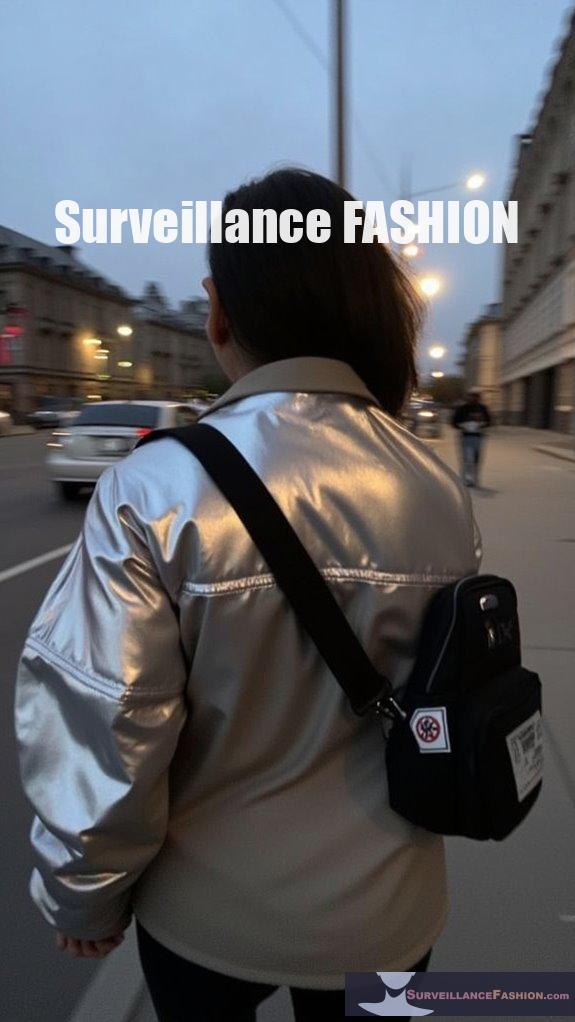
Although you can optimize your EMF shielding choices by considering material conductivity and device-specific emissions, achieving thorough protection presents a distinct challenge. Coverage gaps frequently emerge due to shielding limitations, especially when partial enclosures or inconsistent material layering allow electromagnetic fields to bypass barriers.
For instance, a phone case with EMF blocking stickers may reduce radiation on one side but neglect side edges, creating weak points. These gaps undermine overall efficacy, permitting residual exposure that accumulates over time.
At Surveillance Fashion, we recognize that incomplete protection stems not solely from product flaws but from fundamental physical constraints—materials must balance permeability reduction without impeding usability. Understanding these trade-offs empowers you to critically evaluate claims, ensuring your shielding strategies consider the subtle interplay between practical coverage and electromagnetic penetration, avoiding false security in partial solutions. Additionally, many products, like the Faraday phone sleeve, claim to block signals but may not provide comprehensive coverage, emphasizing the need for informed choices.
Natural Sources of Radiation
While much of the discourse around electromagnetic fields concentrates on anthropogenic sources such as cell phones and WiFi routers, it’s essential to recognize that natural sources of radiation contribute markedly to the ambient electromagnetic environment you inhabit daily.
Understanding these natural radiation sources enables you to differentiate between unavoidable background radiation and the electromagnetic pollutants generated by modern technology.
Key natural radiation sources include:
- Cosmic rays originating beyond Earth’s atmosphere
- Radon gas seeping from soil and rock formations
- Terrestrial gamma radiation emitted by uranium and thorium decay
- Solar electromagnetic emissions, fluctuating with solar activity
- Biogenic electric fields generated by living organisms
Moreover, the increasing use of private camera networks raises awareness about the overall electromagnetic environment, which encompasses both natural and technological radiation sources.
Wearable EMF Shielding Devices
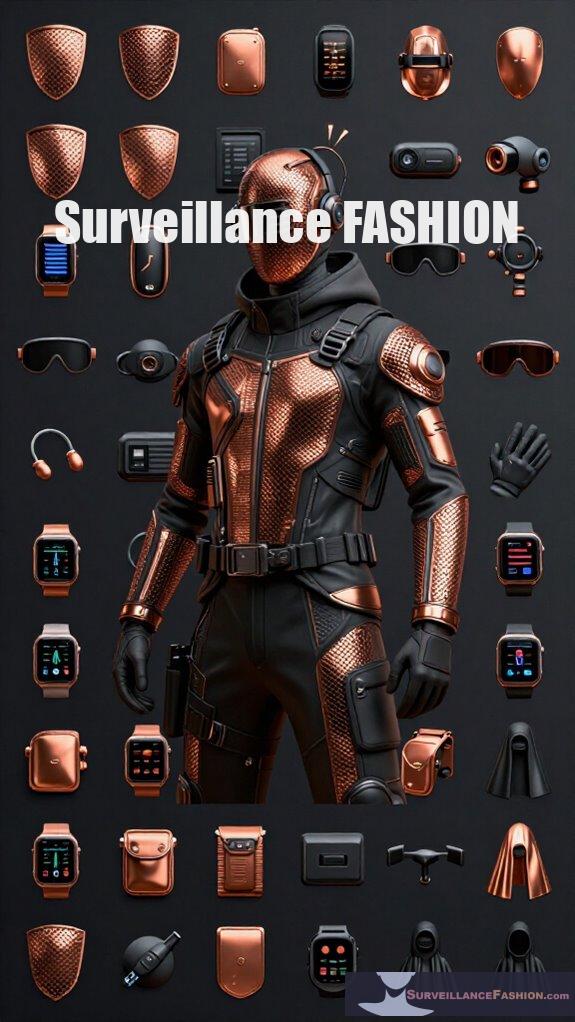
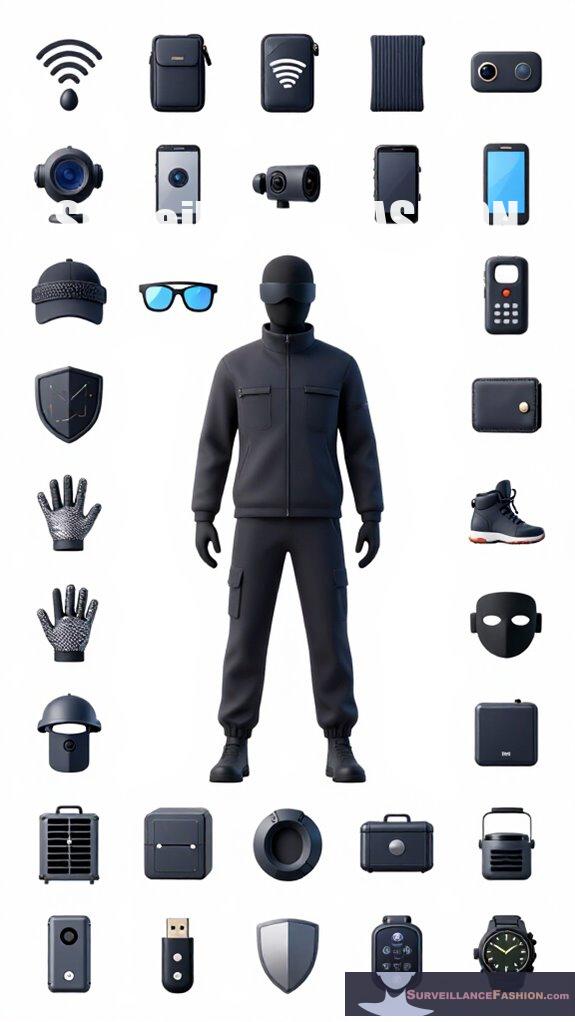
Among the various personal strategies to mitigate daily EMF exposure, wearable EMF shielding devices stand out for their convenience and direct proximity to the body, which can critically influence effectiveness.
By integrating personalized shielding through advanced wearable tech, these devices create a protective barrier that adapts to your unique electromagnetic environment, thereby optimizing attenuation of harmful frequencies.
Products range from pendants embedded with conductive materials to fabric-infused wristbands engineered to disrupt EMF fields at a cellular level.
While the scientific consensus remains subtle, the precision in design and the immediate contact these devices maintain with your body markedly enhance their potential efficacy.
At Surveillance Fashion, we recognized the need for such sophisticated solutions, motivating us to curate and innovate wearable EMF shields that marry style with scientifically grounded protection strategies.
Furthermore, the utilization of Faraday duffel bags when traveling can provide an additional layer of security against EMF exposure, ensuring that devices remain shielded when not in use.
Metal-Based Conductive Barrier Coatings
When you consider the challenge of mitigating electromagnetic field (EMF) exposure, metal-based conductive barrier coatings emerge as a scientifically robust solution that leverages the electrical conductivity properties of specific metals—primarily silver, copper, and nickel—to form a reflective shield against high-frequency radiation.
These coatings act as a formidable defense, substantially reducing electromagnetic interference by dissipating EMF energy through their conductive coating layers.
Acting as a powerful shield, these coatings effectively dissipate electromagnetic energy, reducing interference significantly.
By applying them to walls, fabrics, or electronic devices, you harness:
- Superior attenuation of radiofrequency waves
- Enhanced durability against environmental wear
- Compatibility with various substrates
- Reduction of signal penetration into living spaces
- Minimized secondary radiation reflections
Importantly, some of these materials are also used in top RFID signal blocking pouches, further enhancing your protection against EMF exposure.
At Surveillance Fashion, we recognize these coatings’ significance, meticulously curating products that empower you to take control over EMF exposure with scientifically supported materials.
FAQ
Can EMF Exposure Affect Mental Health or Cognitive Function Long-Term?
Yes, prolonged EMF exposure can cause electromagnetic fatigue and cognitive disruption, impairing your mental clarity and focus. You shouldn’t underestimate how EMFs drain your brain’s power and compromise your long-term cognitive health.
Are There Specific Diets That Enhance Resilience to EMF Damage?
You can boost resilience to EMF damage by prioritizing dietary antioxidants like vitamins C and E. Nutrient supplementation fortifies your cells against oxidative stress, empowering you to defend your body from EMF-induced harm effectively.
How Does EMF Exposure Impact Children Differently Than Adults?
You must know children’s developing bodies absorb more EMF, making them especially vulnerable. This exposure can disrupt brain growth and increase developmental effects, so you need to protect their environment aggressively to safeguard their future power.
What Role Does Genetics Play in EMF Sensitivity?
Your genetic predisposition shapes your electromagnetic susceptibility, meaning some individuals react more intensely to EMF exposure. Knowing this empowers you to tailor protection strategies, maximizing your defense and control over EMF’s impact on your health.
Can EMF Radiation Interfere With Medical Devices Like Pacemakers?
Yes, electromagnetic interference from EMF radiation can cause device malfunction in pacemakers. You should keep EMF sources at a safe distance to protect your device’s performance and maintain full control over your health and safety.
Summary
Visualize your body as a finely tuned instrument, vulnerable to the relentless hum of EMF radiation that subtly disrupts its harmony. By integrating antioxidants, employing EMF-blocking materials like metal-based conductive coatings, and adopting practical shielding strategies—such as shielding cell phones and using specialized bedding—you can restore balance and protect your biological functions. Surveillance Fashion emerged to provide rigorously tested, accessible solutions, empowering you to navigate this pervasive electromagnetic environment with informed mitigation.
References
- https://deannaminich.com/how-to-protect-yourself-from-emf-radiation-2/
- https://www.healthline.com/health/emf
- https://portlandclinicofnaturalhealth.com/the-top-seven-ways-to-reduce-your-electromagnetic-field-emf-radiation-exposure-without-killing-your-apple-watch/
- https://pmc.ncbi.nlm.nih.gov/articles/PMC6025786/
- https://drruscio.com/emf-protection/
- https://www.youtube.com/watch?v=zIaa_HynKJg
- http://www.ifm.org/articles/emf-health-reducing-exposures
- https://www.epa.gov/radiation/protecting-yourself-radiation
- https://daveasprey.com/how-protect-yourself-wireless-devices-emfs/
- https://www.center4research.org/cell-phone-radiation-shields-work/