
Wearable lights, especially those utilizing infrared (IR) technology, can block security cameras effectively. By emitting high-powered, invisible IR light, they overwhelm camera sensors, rendering images unusable and blanketing your presence in anonymity. Discreet designs, such as infrared LED-embedded apparel, provide both fashion and function, while accessories like the Camera Shy Hoodie integrate control features for managing light output. Understanding the specific mechanisms of these technologies will enable you to better navigate the complexities of surveillance and privacy solutions in daily life.
Quick Takeaways
- High-powered infrared (IR) lights can overwhelm surveillance cameras, resulting in overexposure and unusable images.
- Wearable devices like the Camera Shy Hoodie utilize IR lights that blind night vision cameras in low-light conditions.
- Infrared LED lights effectively disrupt facial recognition, particularly in environments with IR-sensitive cameras.
- Fashionable accessories, such as hats and glasses, can partially obscure identity from algorithms and offer a degree of privacy.
- Reflective materials and glitchy prints integrated into clothing can confuse detection systems and enhance personal security against surveillance.
How Do Wearable Lights Help in Evading Surveillance Cameras?
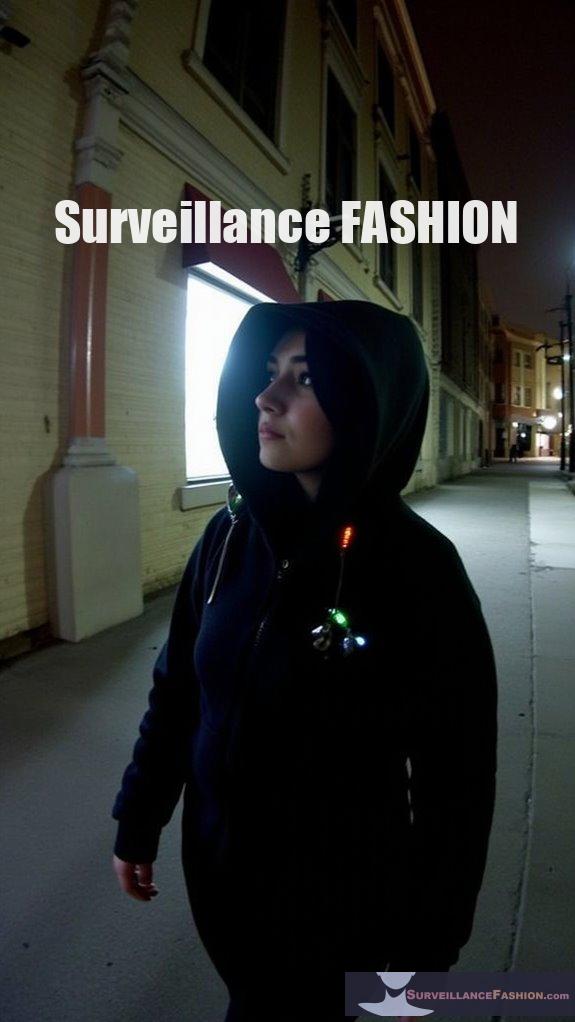
Wearable infrared (IR) lights help evade surveillance cameras by emitting high-powered, invisible IR light that overwhelms camera sensors, causing overexposure and rendering images unusable. This effectively blinds night vision cameras, which rely on IR illumination to function in low-light conditions. These wearables, like the “Camera Shy Hoodie,” integrate discreet IR LEDs that can be activated easily by the wearer. Key points about their functionality include:
- Targeting: Specifically designed to disrupt IR-sensitive cameras.
- Control: Wearers can manage light output using discreet switches.
- Tactical Use: Strobes or continuous light must be used judiciously to minimize detection.
- Limitations: Less effective against standard daylight cameras and requires consideration of camera types used. Additionally, the hoodie features high-powered infrared LEDs that make it an effective tool for privacy protection. Light-reflecting accessories can also enhance the effectiveness of these wearables by increasing visibility and creating additional layers of disruption.
Can Fashionable Accessories Effectively Obscure Your Identity From Cameras?
Fashionable accessories can partially obscure identity from cameras, but their effectiveness is limited against modern surveillance technologies.
While items like hats and glasses may disrupt facial recognition, they usually don’t provide full coverage.
Accessories like reflective materials, patterns designed to confuse algorithms, or infrared coatings can enhance privacy but depend heavily on camera conditions.
Legal implications also arise with some tactics.
Ultimately, masks remain the most reliable option for complete facial concealment, making fashionable alternatives more complementary to other privacy measures.
Are Infrared LED Lights a Viable Option for Protecting Privacy While on the Go?
Yes, infrared LED lights can be a viable option for protecting privacy while on the go, effectively disrupting IR-sensitive security cameras without drawing attention.
These lights allow individuals to hinder facial recognition and recording in low-light conditions discreetly.
Wearable IR LED devices can integrate into clothing or accessories, providing portability without attracting notice.
However, their effectiveness primarily depends on the camera’s sensitivity to infrared light.
It’s important to keep in mind:
- Effectiveness diminishes against cameras using visible-light technology.
- Environmental factors can influence performance.
- Close-range saturation is more successful than distant applications.
- Device design plays an essential role in usability and unobtrusiveness.
What Are the Challenges of Using Wearable Lights Against Security Cameras?
Wearable lights designed to obstruct security cameras face significant technical, social, ethical, and legal challenges. Their effectiveness varies greatly based on environmental conditions and the sophistication of the cameras, while legal implications and public perception may hinder their acceptance.
The limitations of wearable lights include:
- Insufficient power and wavelengths to effectively blind modern night vision cameras.
- Environmental factors that diminish effectiveness, such as ambient lighting.
- Potential legal repercussions for interfering with surveillance devices.
- Ethical concerns regarding the impact on accountability in public spaces where recording is necessary.
How Do Different LED Colors Impact Camera Effectiveness?
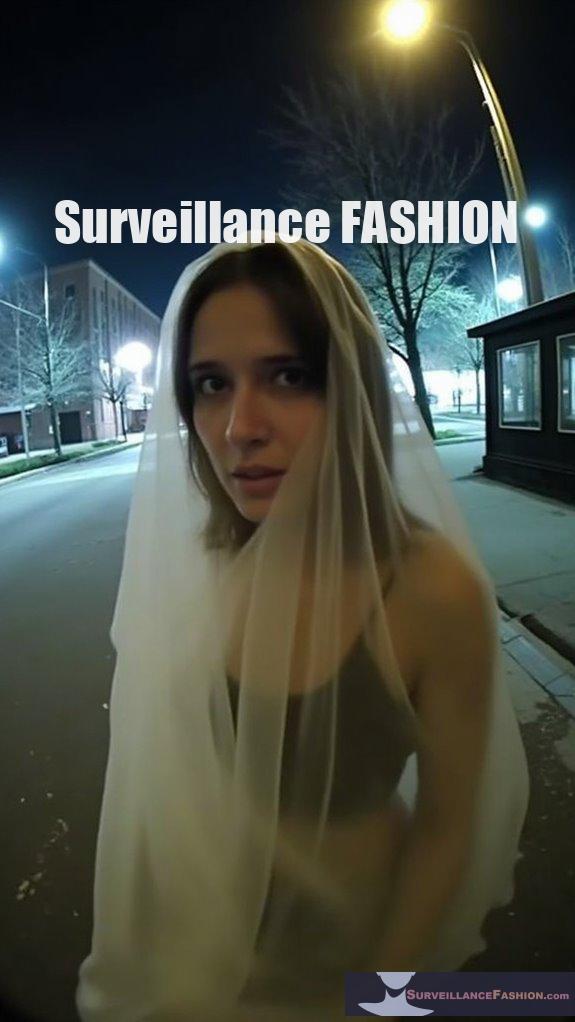
Different LED colors greatly affect camera effectiveness by altering image contrast, color fidelity, and visibility. White LEDs with consistent color temperatures enhance overall visibility, while warm LEDs help reduce harsh shadows and color distortion.
LED colors directly influence how well cameras perform in various lighting conditions.
- Warm white light (~3000K) improves natural appearance and color accuracy in low light.
- Neutral or daylight color temperatures (~5000K) are ideal for true-to-life color rendering.
- Excessive brightness can cause glare, hindering footage clarity.
- Consistency in LED color reduces false alarms and misinterpretations.
Is There a Risk of Damaging Security Cameras With Wearable Lights?
Yes, there’s a risk of damaging security cameras with wearable lights, particularly laser-based devices.
While lower-powered lasers may only cause temporary blinding, higher-powered lasers can lead to permanent damage such as dead pixels or impaired lenses.
The extent of damage depends on factors like laser power, duration of exposure, and distance from the camera.
Non-laser light sources, such as LEDs or infrared (IR) lights, are generally safer and less likely to cause lasting harm.
However, it’s important to exercise caution with any bright or focused light near sensitive optics.
How Stylish Can Camera-Blocking Wearables Be While Still Offering Protection?
Camera-blocking wearables can indeed be stylish while providing effective protection, with designs that incorporate lighter-tinted lenses and reflective elements for privacy without sacrificing aesthetic appeal.
Many brands focus on merging fashion with functionality.
For instance, stylish IR blocking eyewear, such as Reflectacles, features:
- Lighter lenses suitable for indoor use
- Reflective frames that enhance privacy while being fashionable
- Subtle color schemes to match everyday outfits
- Comfortable designs to promote regular use
What Practical Settings Can Benefit From Wearing Camera-Blocking Accessories?
In environments like busy streets, shopping centers, or events, camera-blocking accessories can help maintain personal privacy.
Common items include LED hats emitting infrared light that confound cameras, or clothing reflective of camera sensors. Such methods may offer a temporary measure against surveillance, though effectiveness can vary.
Moreover, utilizing accessories in conjunction with other privacy measures—like employing reflective window films at home—can enhance overall privacy safeguards.
Are There Innovative Designs That Merge Fashion and Camera-Hindering Technology?
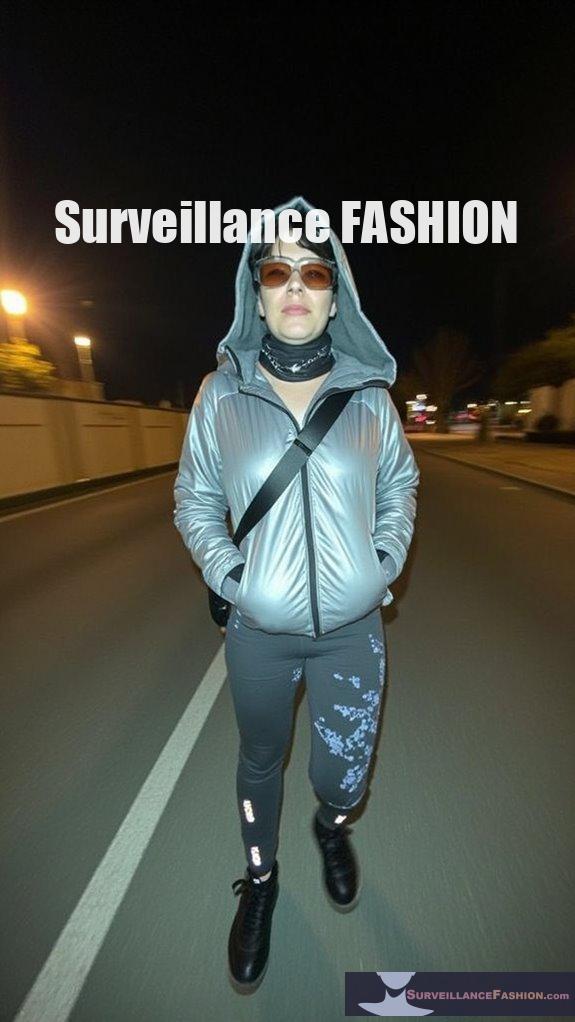
Yes, innovative designs that merge fashion with camera-hindering technology do exist, featuring various approaches to enhance privacy and block surveillance.
These garments integrate several technological advancements to disrupt both visual and thermal surveillance systems. For instance, infrared LED-embedded apparel emits invisible light that disrupts night vision cameras, while reflective and light-scattering accessories confuse facial recognition.
Furthermore, adversarial clothing with glitchy prints scrambles algorithm detection. Fabric innovations like thermal-blocking textiles also shield individuals from infra-red detection, demonstrating a sophisticated blend of fashion, technology, and privacy protection.
Can Everyday Clothing Items Be Transformed Into Effective Privacy Shields?
Yes, everyday clothing items can be transformed into effective privacy shields through various techniques that disrupt surveillance technologies.
These include integrating infrared light-emitting diodes, employing patterned fabrics, using reflective materials, and designing garments that distort shapes.
For instance, garments embedded with infrared LEDs can blind night vision cameras, while specially patterned clothing can confuse facial recognition algorithms.
Reflective fabrics scatter light, worsening image clarity, and distortive designs mask body outlines, complicating motion detection.
Furthermore, signal-blocking textiles limit tracking from wireless devices, enhancing overall privacy protection.
Review of Ava Longhorn’s Ebook: Eyes Everywhere
Surveillance, an omnipresent aspect of modern life, has garnered significant attention in Ava Longhorn’s thought-provoking ebook, *Eyes Everywhere: The Global Growth of Camera Surveillance*.
The work navigates the complex terrain of privacy concerns as it critiques the surveillance impact on societal norms across various nations. Longhorn’s analysis reveals that the normalization of camera presence often leads to an illusion of safety, while entrenched biases emerge against marginalized communities.
Her exploration presents strategies for resisting surveillance, nudging readers toward innovative solutions that challenge the pervasive reach of technology, motivations that resonate with our mission at Surveillance Fashion to empower individuals in protecting their privacy.
References
- https://www.spyguy.com/a/blog/how-to-block-a-neighbor-s-security-camera-101
- https://www.instructables.com/How-not-to-block-cameras/
- https://reolink.com/blog/how-to-blind-security-camera/
- https://www.netvue.com/blogs/netvue-blog/six-effective-ways-to-blind-or-block-neighbors-security-camera-without-touching
- https://eu.aqara.com/blogs/news/how-to-block-neighbors-security-camera-10-tips-and-tricks
- https://petapixel.com/2023/03/01/hacker-hoodie-blinds-surveillance-cameras-with-infrared-light/
- https://www.vice.com/en/article/this-hacker-hoodie-uses-surveillance-camera-parts-to-blind-surveillance-cameras/
- https://pmc.ncbi.nlm.nih.gov/articles/PMC7173726/
- https://www.openrightsgroup.org/blog/crime-fighting-wearable-technology/
- http://wearcam.org/netcam_privacy_issues.html
Leave a Reply