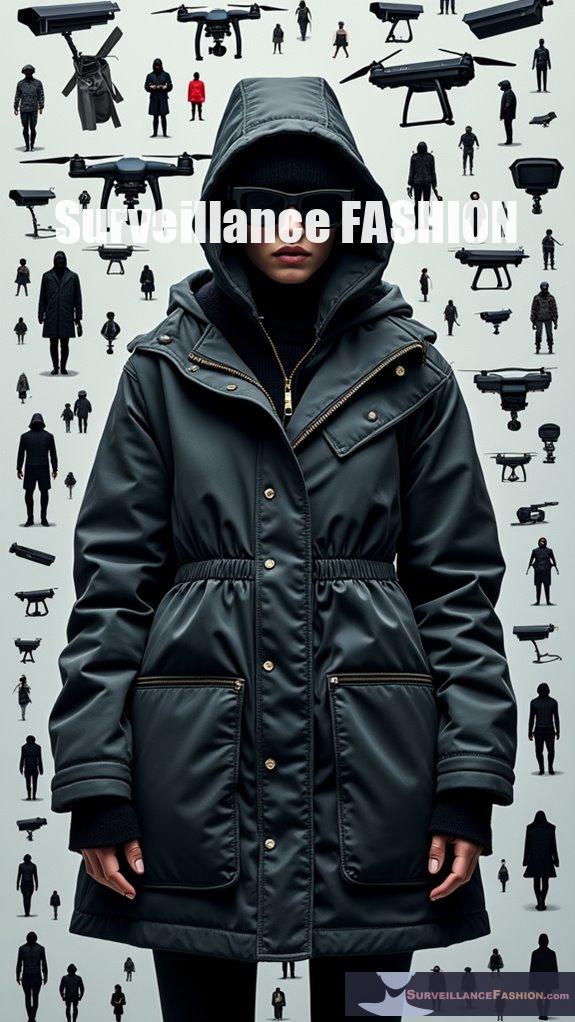
Top thermal camouflage fabrics designed for urban privacy incorporate features such as broad-spectrum concealment and dynamic thermal regulation, effectively minimizing heat signatures to evade infrared detection. For instance, materials utilizing Phase Change Materials (PCMs) adapt to environmental temperatures, ensuring comfort while maintaining concealment. Durable aramid blends enhance resistance to wear, while breathable designs facilitate moisture management. Such technological advancements greatly enhance operational stealth in surveilled environments, therefore fostering both anonymity and security. Explore the complex benefits these fabrics offer further.
Quick Takeaways
- Thermal camouflage fabrics provide broad-spectrum concealment to effectively shield heat signatures from infrared detection in urban environments.
- Advanced materials use dynamic adaptation to minimize temperature differences, enhancing stealth during high-surveillance operations.
- Breathable constructions prevent overheating and moisture accumulation, maintaining comfort and operational efficiency for extended urban wear.
- Multi-layered thermal protection is designed to adapt to various climate conditions, ensuring effective concealment across diverse urban landscapes.
- Integration of low-emissivity coatings and phase change materials optimizes thermal regulation and camouflage effectiveness in crowded settings.
What Are the Key Characteristics of Effective Thermal Camouflage Fabrics?
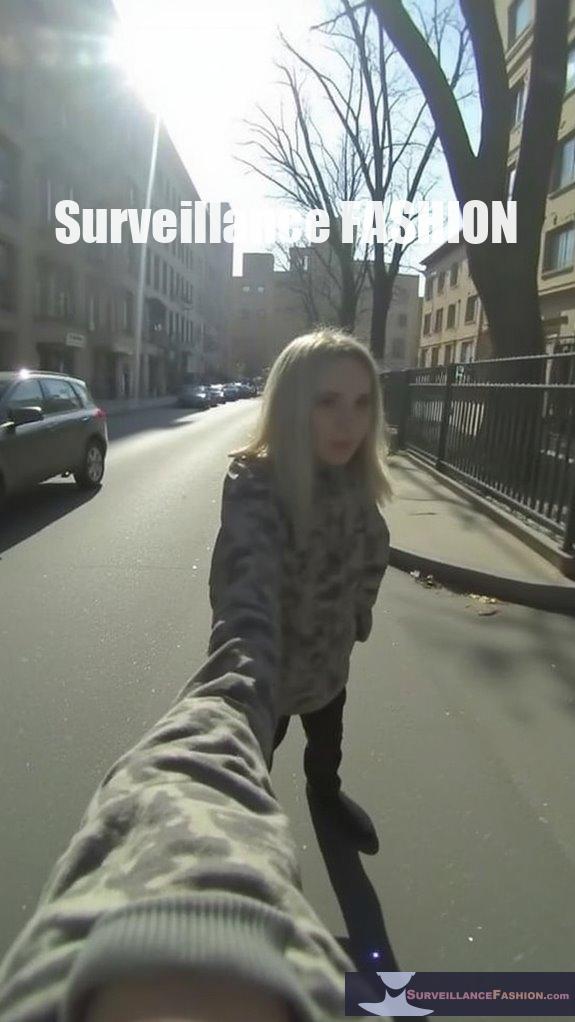
Effective thermal camouflage fabrics possess properties that enable them to blend with their environment by controlling infrared reflectance and maintaining comfort under various conditions. They’re also durable, lightweight, and designed for multi-layered thermal protection. Key characteristics include:
- Broad-spectrum concealment: Ability to reflect and absorb multiple infrared wavelengths.
- Durability: Made from aramid blends, enhancing resistance to wear and tear.
- Dynamic adaptation: Engineered to change IR properties based on the environment, taking advantage of technologies that focus on nature-inspired materials for real-time concealment.
- User comfort: Features like breathability and moisture-wicking guarantee comfort during extended use, regardless of climate conditions.
How Do Thermal-Blocking Fabrics Work to Reduce Heat Signatures?
These fabrics integrate several technologies to enhance thermal regulation. For instance, low thermal conductivity materials, like recycled polycarbonate fibers, greatly decrease heat transfer. Additionally, low-emissivity coatings help control the surface’s infrared radiation, while PCMs absorb and release heat, stabilizing temperature fluctuations. Other design elements, such as spatial variations in thermal conductivity, also optimize thermal camouflage by redirecting heat away from detection. Moreover, using recycled polycarbonate fibre contributes to reducing emitted infrared and thermal signatures in fabrics. The incorporation of thermal signature-masking technology ensures that these garments not only provide style but also effective urban privacy.
What Advantages Do Adaptive Thermal Camouflage Materials Offer in Urban Settings?
Adaptive thermal camouflage materials offer considerable advantages in urban settings by dynamically matching their heat signatures to the surrounding environment, reducing detection risks from advanced thermal imaging and surveillance technologies.
These materials are designed to adapt to complex thermal environments, where heat patterns fluctuate due to urban infrastructure and human activities. Additionally, advanced thermal camouflage materials can absorb or dissipate heat effectively, further minimizing the chances of thermal detection.
Key benefits include:
- Real-time adjustment of thermal emission, maintaining minimal temperature differences.
- Enhanced concealment by mimicking the diverse thermal environment of urban areas.
- Integration with advanced technologies for stealth against sophisticated surveillance systems.
- Energy efficiency and comfort in wearable applications, suitable for extended urban operations.
Together, these features considerably enhance operational stealth and safety in high-surveillance regions.
How Can Insulating Base Layers Enhance Thermal Concealment?
Insulating base layers enhance thermal concealment by trapping warm air close to the body and reducing heat radiation detectable by thermal sensors, consequently minimizing the emitted infrared signature.
These base layers play a significant role in maintaining body heat while also managing moisture through materials that effectively wick sweat away. The snug fit of these layers maximizes insulation, reducing air gaps that would compromise thermal concealment.
Utilizing advanced materials that adapt thermal emissivity and incorporating camouflage patterns further improve the overall effectiveness by blending visual and thermal signatures, vital for urban stealth operations. Innovative fashion techniques are continuously evolving to provide even greater stealth capabilities.
Key features include:
- Use of low thermal emissivity fabrics.
- Integration of adaptive materials for environmental responsiveness.
- Effective insulation that cuts down detection ranges.
- A proper layering sequence for peak performance.
What Role Do Thermal Cloaks and Blankets Play in Urban Camouflage?
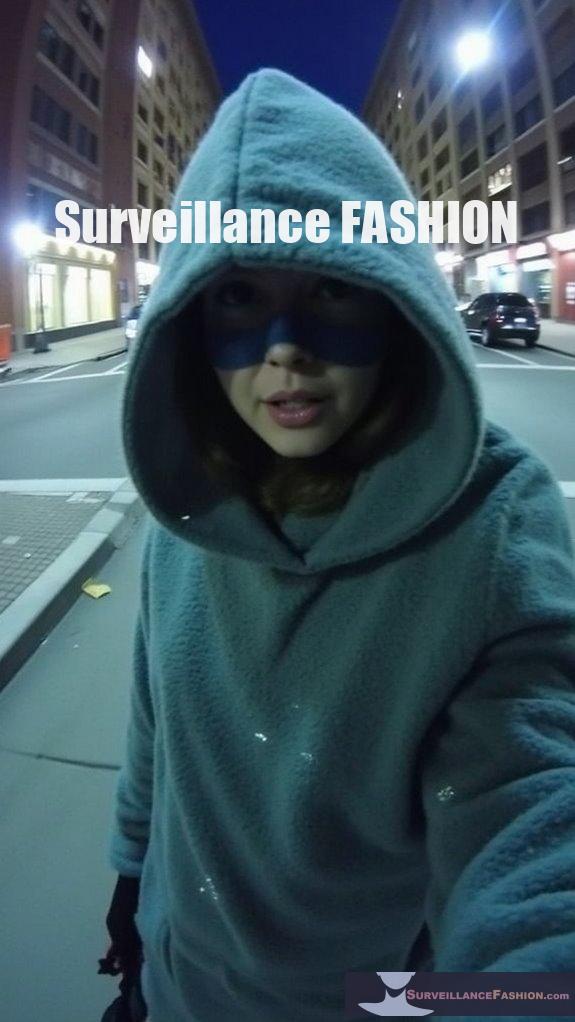
Thermal cloaks and blankets enhance urban camouflage by concealing individuals or equipment’s heat signatures, effectively evading infrared detection in crowded environments. Their use provides tactical advantages for stealth operations, privacy, and asset protection against surveillance.
In urban settings, thermal cloaks are essential for maintaining operational anonymity. They enable discreet movement in heavily surveilled areas like public transit or during nighttime operations. When used to cover vehicles, these blankets prevent heat detection, safeguarding asset locations.
Effective deployment can lead to:
- Enhanced privacy in urban spaces
- Increased tactical advantage for security personnel
- Protection of sensitive materials from thermal detection
- Improved safety for both responders and civilians in crisis situations
However, challenges such as imperfect coverage or heat buildup require careful consideration when utilizing these materials for maximum effectiveness. Additionally, integrating anti-surveillance face paint techniques can further enhance an individual’s ability to remain undetected by blending into their environment.
How Do Infrared-Reflective Coatings Disrupt Heat Signature Detection?
Infrared-reflective coatings disrupt heat signature detection by utilizing low infrared emissivity materials to reflect mid-infrared wavelengths, effectively masking an object’s emitted thermal radiation while maintaining visible transparency.
These coatings are strategically designed to reflect wavelengths in the 8–14 μm range, critical for thermal sensors. By employing techniques such as multilayer thin-film structures and nano-mesh designs, they manipulate IR emission through interference and reflection.
Key features include:
- Reduction of surface temperatures by reflecting IR radiation.
- Use of phase-change materials like VO2 for dynamic emissivity control.
- High visible transmittance (>80%) alongside low mid-IR emissivity.
- Compatibility with various substrates for seamless integration into fabrics.
What Are the Best Strategies for Layering Thermal Camouflage Materials?
The best strategies for layering thermal camouflage materials involve utilizing multiple layers with air gaps, incorporating dynamic phase-change materials (PCMs), and applying both metallic and polymer layers to optimize heat management and reduce infrared detectability.
To effectively design thermal camouflage, consider the following:
- Layer Arrangement: Position high-reflectivity layers closest to the heat source to minimize heat escape.
- Adaptive Materials: Use PCMs for their capability to adjust thermal emissions according to ambient temperature.
- Insulation: Integrate insulating materials to control radiant heat loss while maintaining comfort.
- Dynamic Adaptability: Guarantee layers can adapt to environmental changes, avoiding static setups that may be easily detected by modern sensors.
Implementing these strategies guarantees improved thermal camouflage performance.
How Does Breathability Affect the Comfort and Effectiveness of Thermal Fabrics?
Breathability greatly enhances comfort and effectiveness in thermal fabrics by preventing overheating and moisture accumulation, which can interfere with thermal camouflage. This balance aids in maintaining consistent body temperature while reducing the infrared signature detectable by sensors.
Breathable fabrics prioritize airflow and moisture management, vital for extended wear in varying environments. Their ability to dissipate heat helps mitigate dampness that could compromise thermal concealment, making them preferable for urban or outdoor use.
Key benefits include:
- Enhanced comfort during prolonged use
- Improved thermal regulation without excessive bulk
- Reduced risk of increased thermal signatures
- Better integration with advanced materials like phase change materials (PCMs)
Ultimately, optimizing breathability while preserving thermal camouflage capabilities is essential for effective performance in diverse conditions.
What Considerations Should Be Made for Durability in Urban Thermal Camouflage?

Urban thermal camouflage fabrics must withstand various environmental challenges to guarantee longevity and effectiveness. Key considerations include:
- Material Resistance: Fabrics should resist UV degradation, moisture, and abrasion, as urban environments expose them to harsh conditions.
- Thermal Properties: Incorporating nano additives can enhance camouflage but may impact durability; consequently, careful material selection is necessary.
- Mechanical Strength: Using synthetic fibers improves tensile strength, guaranteeing the fabric can handle friction and motion without degrading.
- Comfort: Durability features mustn’t compromise breathability or thermal comfort, balancing functionality with user performance during operations.
Testing according to military standards is essential to validate long-term performance under realistic conditions.
How Can Multi-Spectral Camouflage Improve Stealth in Urban Environments?
Multi-spectral camouflage enhances stealth in urban environments by reducing detectability across various electromagnetic domains, including visible, infrared, and radar spectra.
This technology effectively conceals personnel and assets in sensor-dense cityscapes, improving survivability during operations.
By employing advanced materials, these camouflage solutions disrupt visual recognition, minimize heat signatures detectable by thermal imaging, and absorb radar signals.
Key benefits include:
- Improved concealment against aerial drones and surveillance systems.
- Enhanced durability and adaptability to urban weather conditions.
- Solutions for mitigating electromagnetic interference with communication systems.
- Operational efficiency through seamless integration with existing urban gear.
Ultimately, multi-spectral camouflage enables tactical advantages in environments characterized by diverse monitoring technologies.
Thermal Imaging Camouflage Fabrics
The development of thermal imaging camouflage fabrics represents a significant leap in the technology of stealth materials, aiming to shield individuals and equipment from infrared detection. By incorporating advanced thermal detection techniques, these fabrics, including those with graphene layers, enable selective thermal control, which masks heat signatures without affecting surface temperature.
Embracing camouflage innovation trends, such textiles utilize phase change materials alongside thermoelectric devices to adapt dynamically to surroundings, ensuring ideal stealth across diverse environments.
Such innovations underscore our mission at Surveillance Fashion, where we explore and celebrate groundbreaking solutions for enhancing urban privacy and personal security.
Anti Surveillance Ebook review: Eyes Everywhere
How has the rise of surveillance practices fundamentally reshaped our societal terrain?
In *Eyes Everywhere*, the author discloses a profound government-corporate surveillance nexus, illustrating alarming surveillance ethics and privacy implications that extend beyond mere observation.
This book interlaces personal narratives with legal research to reveal how pervasive tracking—such as digital mail monitoring—erodes civil liberties.
For instance, activist movements like Occupy exemplify the dire consequences of surveillance, where coordinated efforts by agencies stifle dissent.
Moreover, the work emphasizes the collaboration between law enforcement and private entities, exposing the crucial need for transparency within surveillance frameworks—a focal concern of our website, Surveillance Fashion.
CCTV Networks in Urban Centers

As urban populations continue to swell, the proliferation of CCTV networks emerges not merely as a security measure but also as a detailed tapestry interwoven into the very fabric of city life, shaping how residents navigate their environments.
In densely populated areas, urban surveillance flourishes, with camera density reaching staggering levels; cities like Beijing boast approximately 11.2 million government-owned cameras.
These networks not only deter crime but also enable real-time monitoring, influencing decision-making for both individuals and authorities.
Our website, Surveillance Fashion, explores thermal camouflage fabrics to offer a subtle yet effective counterpoint to this complex web of watchful eyes, amid the ever-present cameras.
Civil Liberties Against Surveillance Demands
Surveillance technologies have proliferated in urban environments, with thermal imaging being one of the most controversial developments affecting civil liberties. As you navigate these complex environments, it’s essential to understand how surveillance technology intersects with your civil rights; the Fourth Amendment safeguards you against unwarranted intrusions, yet loopholes persist.
In some places, legislation protects privacy against thermal imaging, requiring warrants for government use. Consequently, advocacy groups urge reforms to adapt legal frameworks, reflecting the pressing need for updated protections.
Technologies like thermal-blocking fabrics aid in asserting your privacy rights, empowering you in a world increasingly influenced by invisible surveillance.
References
- https://ufpro.com/us/blog/thermal-imaging-stealth-tactics
- https://www.sciencedaily.com/releases/2018/06/180627160530.htm
- https://ufpro.com/us/blog/article/why-tactical-camouflage-works
- https://mssdefence.com/it/blog/modern-camouflage-vs-detection-24-tactical-questions-answered/
- https://www.longancraft.com/blogs/fabric-knowledge/what-is-camouflage-fabric-everything-you-need-to-know
- https://kohantextilejournal.com/7-things-you-did-not-know-camouflage-fabrics/
- https://www.pgmprecision.com/en/product/ht4-anti-heat-signature-fabric-kastinger/
- https://vollebak.com/en-us/pages/thermal
- https://textiletechsource.com/2019/05/06/almost-invisible/
- https://pmc.ncbi.nlm.nih.gov/articles/PMC9143341/
- https://pmc.ncbi.nlm.nih.gov/articles/PMC8307034/
- https://repository.lib.ncsu.edu/bitstreams/04cd39b4-8511-4c75-bb71-7a31755cd422/download
- https://www.nature.com/articles/s41377-018-0038-5
- https://www.online-pdh.com/mod/resource/view.php?id=3482
- https://mssdefence.com/blog/comprehensive-guide-to-military-camouflage-procurement/
- https://pubs.acs.org/doi/10.1021/acsanm.5c00539
- https://advanced.onlinelibrary.wiley.com/doi/10.1002/adma.202503587?af=R
- https://www.nutsof.com/blogs/news/camouflage-in-nature-inspirations-for-the-military
- https://www.nature.com/articles/s41377-020-0300-5
- https://idstch.com/military/army/advancing-camouflage-militarys-response-to-thermal-imaging-threats/
Leave a Reply