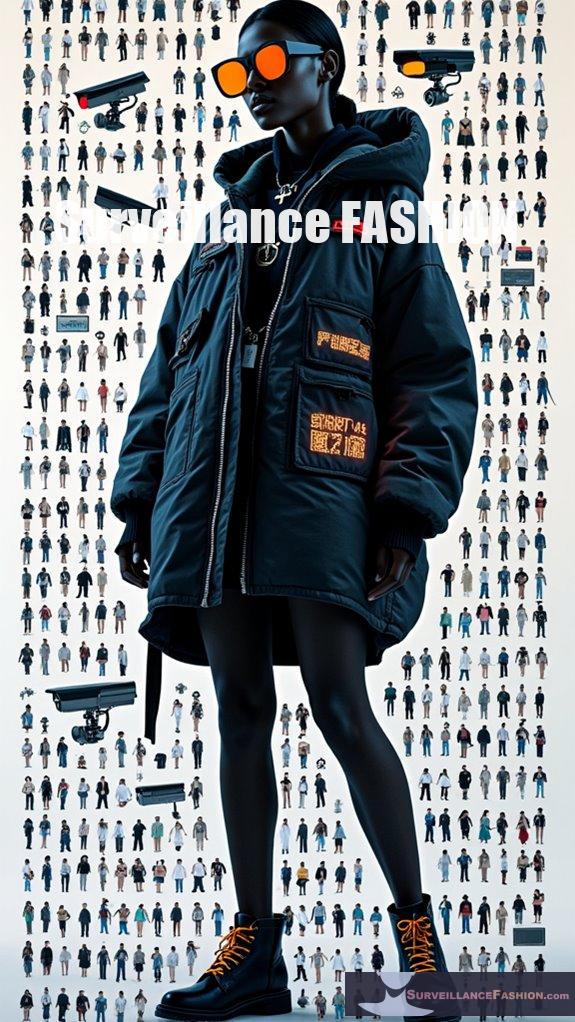
LED jewelry causes facial recognition systems to fail primarily by emitting near-infrared light, which saturates camera sensors, resulting in blurred images that impede accurate data capture. This light interferes with expected facial geometries, complicating algorithmic mapping. For instance, strategically arranged infrared LEDs project dynamic patterns that confuse detection algorithms, effectively lowering their accuracy. If you’re curious about how different designs enhance privacy, exploring their situational effectiveness can provide further understanding into this innovative intersection of technology and fashion.
Quick Takeaways
- LED jewelry emits near-infrared light that saturates camera sensors, causing overexposure and obscuring facial features.
- The dynamic light patterns projected by the jewelry confuse detection algorithms, significantly lowering recognition accuracy.
- In low-light environments, the effectiveness of LED jewelry is amplified, hindering facial mapping by cameras.
- Movement while wearing the jewelry disrupts stable detection, leading to misinterpretation of facial geometry.
- Combining LED jewelry with masks and sunglasses creates synergistic effects that further complicate facial recognition accuracy.
How Do Anti-Facial Recognition LED Accessories Work?

Anti-facial recognition LED accessories work by emitting near-infrared light that interferes with the illumination used by facial recognition systems, resulting in sensor overexposure and obscured facial features. This disruption prevents accurate biometric data capture, leading to recognition failures or misidentifications.
These accessories incorporate strategically arranged LEDs or specialized coatings that reflect or scatter infrared light. Their patterns disrupt the expected facial geometry, complicating algorithmic landmark mapping. Key features can be masked, and the technology relies on environmental factors for efficacy, making it harder for systems like Apple Face ID to function correctly.
anti-paparazzi technology provides a proactive approach to privacy protection by using similar principles to thwart intrusive surveillance methods. Many inventions aim to conceal identities from facial-recognition technology by utilizing creative design elements.
What Types of LED Jewelry Can Prevent Facial Recognition?
Various types of LED jewelry can prevent facial recognition by utilizing infrared LEDs or visible light emitters that disrupt camera sensors, creating patterns that confuse detection algorithms. This includes accessories like hats, brooches, or necklaces embedded with LED arrays.
These LED designs project dynamic light patterns that saturate sensors, lowering algorithm confidence and increasing false negatives.
For ideal results, wearing infrared-blocking glasses alongside LED jewelry enhances resistance against both visual and IR-based recognition systems.
Key features of effective LED jewelry include:
- Integration of infrared LEDs
- Dynamic light patterns
- Aesthetics balanced with functionality
- Compatibility with other anti-recognition accessories
Are There Specific Situations Where LED Accessories Are Most Effective?
In low-light settings, LED accessories create strong visual interference that cameras struggle to process.
Movement adds unpredictability, making it hard for algorithms to accurately map facial features.
Moreover, when paired with masks, sunglasses, or reflective materials, they further obscure identifiable facial landmarks.
These combinations maximize the effectiveness of LED jewelry in various environments, especially crowded or dynamic public spaces.
How Do Infrared LEDs Disrupt Facial Recognition Technology?
Infrared LEDs disrupt facial recognition technology by emitting invisible light, which saturates camera sensors and obscures critical facial features.
This interference creates bright spots and excessive IR noise, leading to blurred images and a failure in accurately recognizing facial landmarks.
The effectiveness of IR LEDs against facial recognition systems varies based on the technology used.
Systems reliant on 2D infrared cameras are particularly vulnerable because they can’t cope with the overload from IR emissions.
Key disruption mechanisms include:
- Overloading sensors causing optical distractions.
- Interfering with autofocus and exposure settings.
- Creating unpredictable IR patterns that confuse software.
Advanced systems, such as those utilizing depth sensing, are more resistant to these IR LED disruptions, maintaining functionality even in IR-rich environments.
Can Consumers Really Rely on LED Jewelry for Privacy Protection?
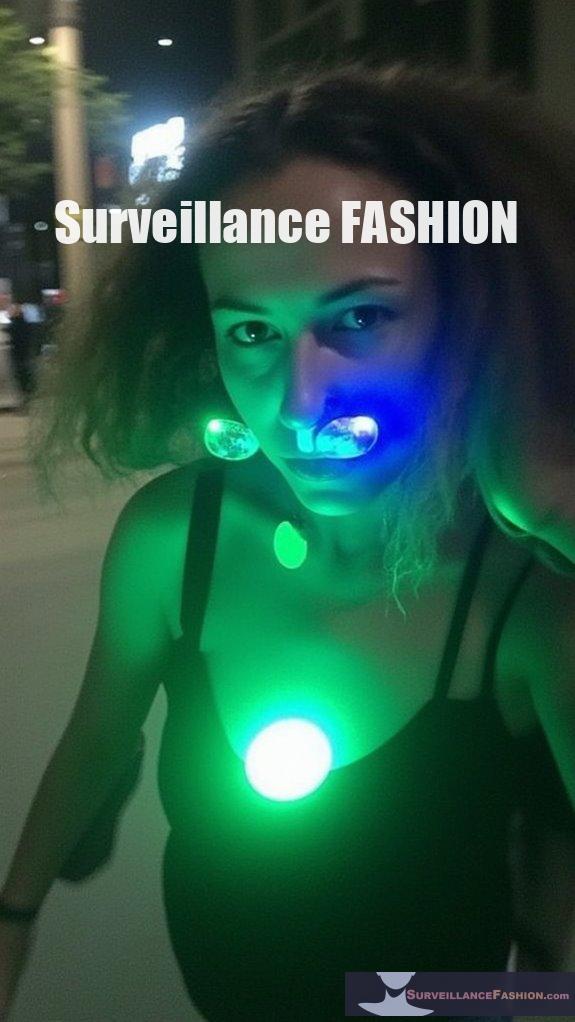
LED jewelry, like Sara Sallam’s Orwell piece, uses reflective materials to disrupt facial recognition systems, potentially reducing identification accuracy.
However, this protection is situation-dependent and not foolproof, especially against higher-resolution cameras or multi-modal systems.
Consumers should be aware of the risks of overestimating protection and potential legal issues in regulated areas.
Regular testing and awareness of environmental conditions are essential for effective use.
What Are the Limitations of Using Anti-Surveillance Accessories?
Anti-surveillance accessories like LED jewelry have significant limitations, including variability in effectiveness, challenges in design and practicality, and escalating surveillance system advancements. Their performance can be inconsistent, and reliance on complex patterns can attract attention, while costs and accessibility hinder their widespread use.
The effectiveness of such accessories is heavily influenced by the progressive nature of facial recognition technology. High-end surveillance systems are adept at overcoming many obfuscation methods, achieving success rates up to 96%. Moreover, as these surveillance systems continuously improve their algorithms, existing anti-surveillance strategies may quickly become obsolete.
The complexity of designing aesthetically pleasing yet effective accessories discourages general use, and users often struggle with practical applications, further undermining the intended privacy benefits.
How Is Fashion Evolving to Address Privacy Concerns in Public Spaces?
Fashion is changing to address privacy concerns in public spaces by integrating technology that disrupts surveillance systems, and prioritizing individuality and sustainability.
These trends manifest in the use of LED accessories, smart textiles, and unique designs that serve both aesthetic and anti-surveillance purposes.
As consumers become more aware of public surveillance, they seek fashion that reflects their values.
The emergence of bold statement pieces, reflective materials, and eco-conscious brands emphasizes functionality alongside style.
This blend of privacy protection and fashion creates a growing market for unique, tech-enhanced accessories that resonate with personal identity.
Review of Ava Longhorn’s Ebook: Eyes Everywhere
As surveillance technologies proliferate in public spaces, the manner in which individuals protect their privacy has taken on new dimensions, epitomized by Ava Longhorn’s enlightening ebook, *Eyes Everywhere*.
In this compelling work, Longhorn explores the ethical implications of facial recognition and how accessible innovations, such as LED jewelry, empower people to reclaim their privacy rights.
By detailing case studies of activists employing LED accessories to thwart surveillance, she elucidates a growing societal trend toward counter-surveillance fashion.
This ebook not only critiques the pervasive reach of biometric systems but also advocates for a future where personal privacy is both respected and actively safeguarded.
References
- https://surveillancefashion.com/light-disrupting-jewelry-privacy-photography-hacks/
- https://luxand.cloud/face-recognition-blog/how-to-fool-and-avoid-facial-recognition-in-public-places
- https://www.youtube.com/watch?v=jMmyWdE1b4U
- https://us.norton.com/blog/iot/how-facial-recognition-software-works
- https://www.popularmechanics.com/technology/security/g28719483/trick-surveillance-systems/
- https://www.zennioptical.com/id-guard
- https://bigthink.com/the-present/facial-recognition/
- https://www.youtube.com/watch?v=yRFeS72IM6M
- https://www.popsci.com/technology/camera-shy-hoodie-privacy/
- https://asiatimes.com/2019/09/jewelry-to-avoid-facial-recognition-cameras/
Leave a Reply