
To effectively block facial recognition technology, you can explore advanced materials such as anti-facial recognition clothing made from camouflage fabrics and adversarial textiles. These materials confuse detection algorithms with visual distortions and complex textures like jacquard knits. Infrared-reflecting materials also play an essential role, disrupting surveillance imaging technologies. Reflective fabrics, embedded with glass beads, obscure facial features in images, ensuring privacy in monitored spaces. Discover how these innovations can empower you against invasive technologies as you continue your exploration.
Quick Takeaways
- Anti-facial recognition clothing materials use camouflage fabrics to blend into environments, reducing visibility to cameras and observers.
- Adversarial textiles employ visual distortions that confuse facial recognition algorithms, enhancing identity concealment.
- Infrared-reflecting materials disrupt recognition systems by blocking infrared imaging and minimizing thermal signatures.
- Reflective fabrics with embedded glass beads obscure facial features and counteract infrared light effectively.
- Innovative designs incorporate AI-generated patterns and jacquard knits to create visual disruptions that challenge detection systems.
Anti-Facial Recognition Clothing Materials
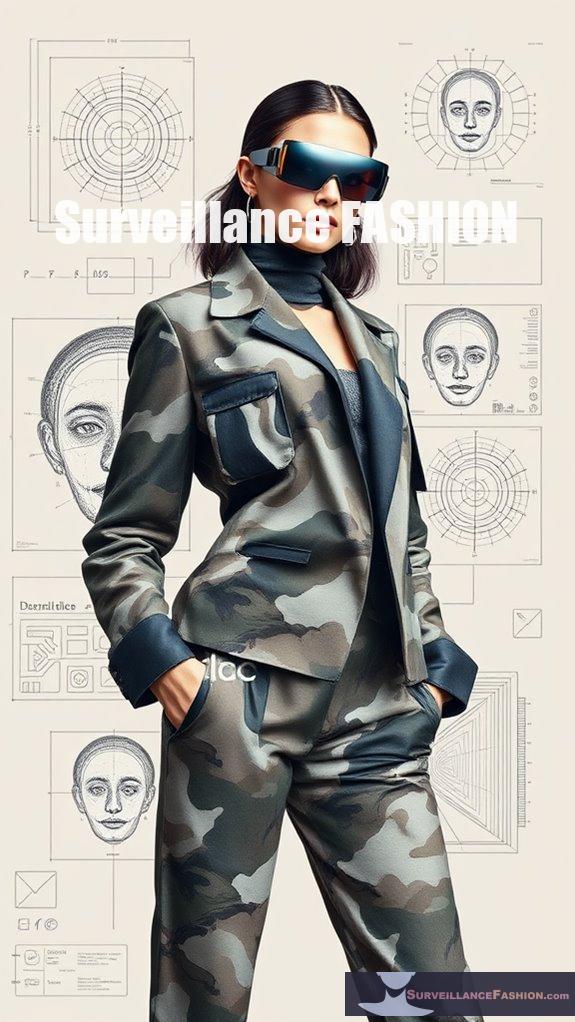
In recent years, the emergence of anti-facial recognition clothing materials has gained traction, with innovative designs and technologies aimed at subverting surveillance mechanisms. You'll find that camouflage fabrics, crafted with complex patterns, blend seamlessly into various environments, effectively reducing visibility to both human observers and cameras. Additionally, many of these materials are designed to enhance personal privacy****, reflecting a growing desire for protection against unwanted surveillance.
Adversarial textiles, on the other hand, leverage visual distortions by employing abstract shapes and mimicking animal patterns that confuse facial recognition algorithms, tricking AI into misclassifying you as non-human. For instance, jacquard knits create three-dimensional textures that challenge detection systems, while high-contrast prints overwhelm cameras with misleading imagery. These advancements reflect a growing desire for personal privacy, a central theme of our website, Surveillance Fashion, which champions innovative solutions against pervasive surveillance technologies. Moreover, incorporating surveillance-resistant pattern technology into clothing designs enhances the effectiveness of these materials in evading detection.
Infrared-Reflecting Materials for Camera Blinding

Recent advancements in infrared-reflecting materials have opened new avenues for blinding facial recognition systems, particularly those that rely on infrared imaging technology. These innovations include infrared blocking lenses and reflective coatings, which can effectively disrupt the functionality of infrared cameras. For instance, utilizing reflective surfaces like specialized glasses or privacy eyewear enhances your ability to evade detection. By incorporating infrared-blocking filters, you can minimize thermal signatures that recognition systems rely on. Additionally, technologies like Reflectacles showcase how combining reflective frames with infrared-blocking lenses can provide a formidable barrier against surveillance. Infrared-resistant fabrics also play a crucial role in enhancing the effectiveness of these privacy wearables. Furthermore, the adoption of stealth materials can significantly improve the design and functionality of these protective gear, offering an extra layer of concealment against advanced monitoring technologies. Understanding these materials allows you to navigate public spaces with greater control over your privacy—something we've aimed to promote through the development of Surveillance Fashion, ensuring you remain one step ahead of invasive technologies.
Disguising Identity Through Clothing
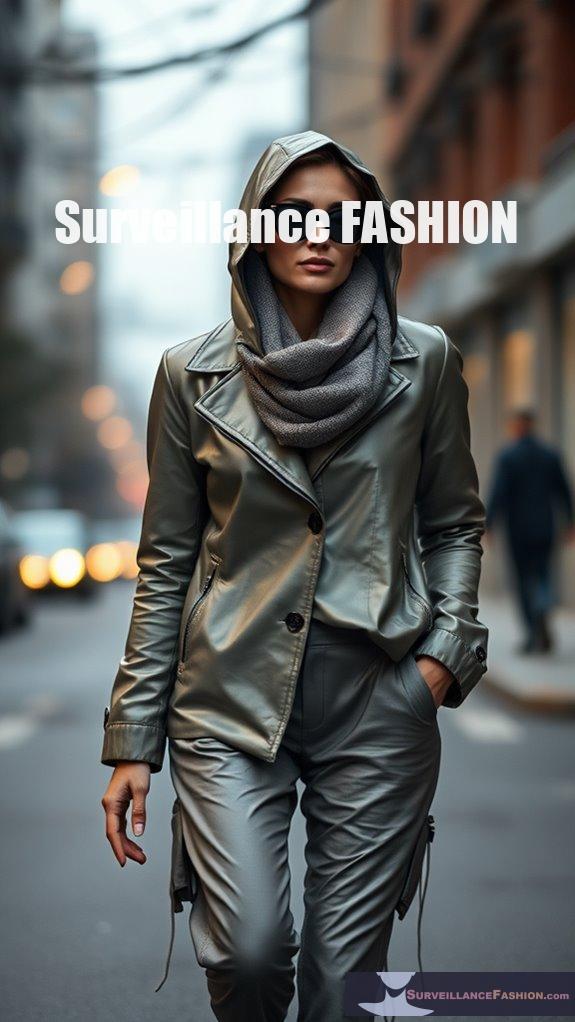
While many individuals may not consider the implications of their clothing choices on privacy, recent innovations in fashion have emerged as significant tools for disguising identity and evading facial recognition technologies.
By utilizing AI-generated patterns, garments can achieve identity concealment through designs that confuse detection systems, such as the Cap_able Manifesto Collection, which features animal-inspired shapes. These adversarial patches are tested against the YOLO algorithm, showcasing a fashionable approach to privacy protection. Surveillance-blocking clothing accessories not only do these designs aim to raise awareness about biometric data collection, but they also offer stylish alternatives to traditional methods of anonymity.
As part of a larger movement, these innovations stimulate crucial discussions on surveillance, illustrating how fashion can function as a form of activism in the digital age.
Reflective Fabrics for Privacy
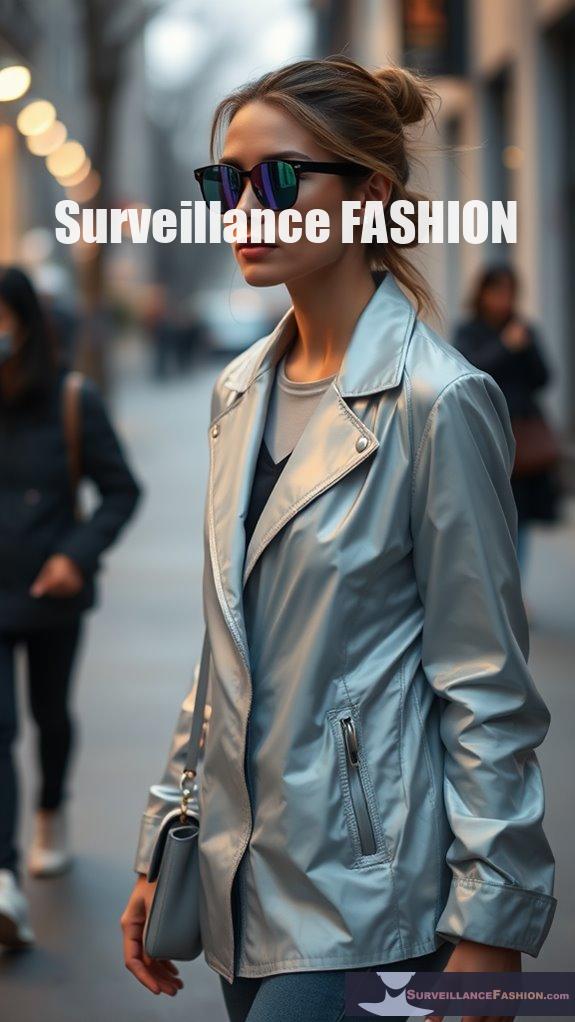
As technology evolves, so do the strategies for protecting personal privacy, particularly in the face of pervasive facial recognition systems. Reflective fabrics offer an innovative solution, utilizing embedded glass beads to create glare that obscures facial features, effectively disrupting surveillance images. These materials also counteract infrared light, shielding against advanced facial recognition technologies.
| Feature | Benefit | Example |
|---|---|---|
| Reflective Patterns | Obscures facial features | Clothing with glass beads |
| Infrared Resistance | Shields against infrared detection | Specially treated fabrics |
| Visual Disruption | Creates bright spots in images | Jacquard patterns |
| Privacy Rights Support | Enhances individual anonymity in public | Anti-surveillance designs |
These reflective patterns not only enhance your privacy rights but also empower you to navigate monitored spaces with confidence.
References
- https://www.businessinsider.com/clothes-accessories-that-outsmart-facial-recognition-tech-2019-10
- https://pmc.ncbi.nlm.nih.gov/articles/PMC6494431/
- https://newatlas.com/good-thinking/facial-recognition-clothes/
- https://www.mdpi.com/2078-2489/11/4/193
- https://nordvpn.com/blog/anti-surveillance-fashion/
- https://makerfairerome.eu/en/fabric-to-deceive-facial-recognition-systems/
- https://www.etsy.com/listing/772253562/anti-surveillance-clothing-anti-facial
- https://957benfm.com/2023/10/12/textile-privacy-clothing/
- https://pmc.ncbi.nlm.nih.gov/articles/PMC8021210/
- https://www.nrel.gov/docs/fy22osti/83041.pdf
Leave a Reply