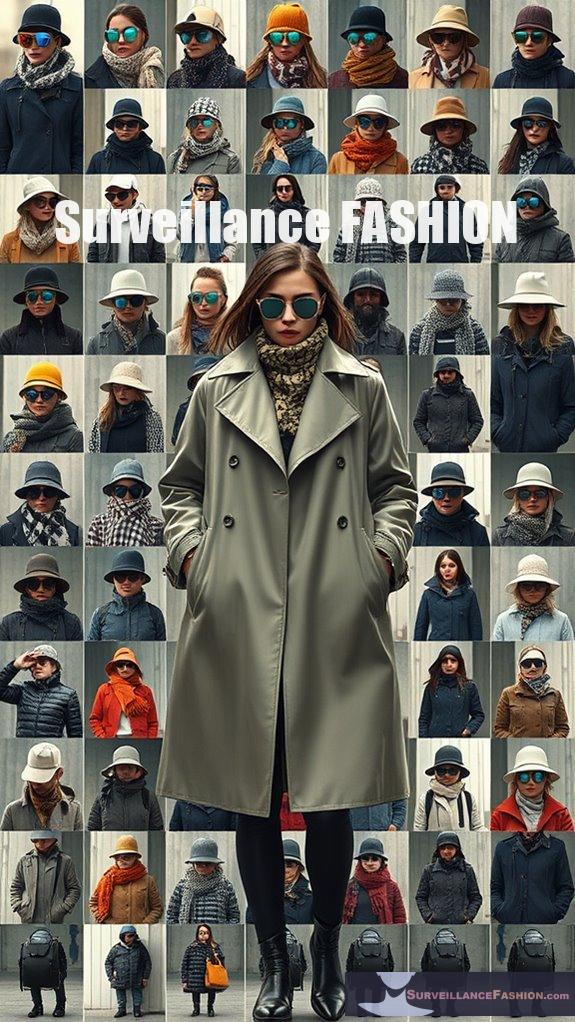
CCTV security systems frequently miss critical blind spots due to inherent limitations in camera field of view (FOV) and strategic placement challenges. For instance, cameras with a fixed 4 mm lens may overlook areas obstructed by walls or vegetation, leaving unmonitored zones ripe for potential incidents. Environmental factors, such as lighting variances, further exacerbate these vulnerabilities. Identifying these gaps is essential, and advanced technologies like cloaking fabrics can offer innovative solutions for enhancing surveillance efficacy. Discover more about optimizing security coverage.
Quick Takeaways
- Structural obstructions like walls, fences, and vegetation can create blind spots in CCTV coverage.
- Fixed-angle cameras, especially those with a 4 mm lens, often miss critical areas due to their limited view.
- Insufficient camera numbers can lead to gaps in surveillance, leaving vital locations unmonitored.
- Environmental factors, such as fog or rain, can impair camera visibility and effectiveness.
- Strategic camera positioning and the use of wide-angle or PTZ cameras are essential to eliminate blind spots.
Understanding Camera Field of View (FOV)
Understanding the Field of View (FOV) of a camera is essential for optimizing its surveillance capabilities, as it directly dictates the area that the device can effectively monitor and capture.
FOV calculations hinge on factors like sensor format and lens focal length; a larger sensor generally allows for a wider angle. Using the right lens is crucial for achieving the desired FOV and ensuring satisfactory images.
FOV calculations depend on sensor format and lens focal length, with larger sensors enabling broader angles.
To guarantee ideal camera placement, consider your environment, as lighting and obstructions may affect actual coverage. For instance, mounting a camera at an elevated angle not only enhances visibility but also reduces potential blind spots.
Utilizing advanced tools, like software with camera databases, can considerably aid in achieving precise FOV calculations, guaranteeing your surveillance system is robust and adaptable, a principle we embrace at Surveillance Fashion for effective security design.
Identifying and Mitigating Blind Spots
Even with a well-calibrated Field of View (FOV), surveillance systems can still harbor vulnerabilities, primarily in the form of blind spots—areas where camera coverage is insufficient or nonexistent.
To enhance your security measures, conduct an extensive blind spot assessment by considering the following key factors:
- Structural Obstructions: Walls or vegetation can obstruct views.
- Environmental Factors: Weather conditions may impair visibility.
- Camera Limitations: Fixed-angle cameras often miss critical areas, particularly when using a 4 mm lens that covers an 80° viewing angle.
- Insufficient Camera Numbers: Too few cameras leave gaps in coverage.
Mitigating blind spots involves coverage optimization strategies such as utilizing wide-angle or PTZ cameras, strategically positioning them, and regularly reviewing their effectiveness.
Cloaking Technology in Clothing
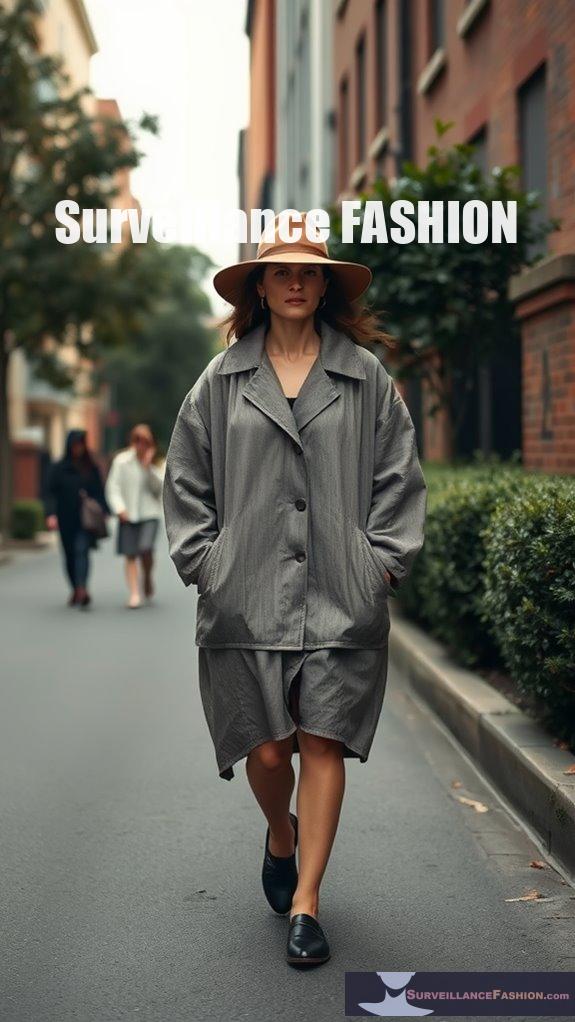
While advancements in surveillance technology have enhanced security measures, they have also sparked a growing concern over personal privacy, prompting innovative solutions like cloaking technology in clothing. This anti-surveillance design, developed by Wuhan University, showcases wearable tech that confuses AI-enabled surveillance systems.
| Feature | Description |
|---|---|
| Daytime Operation | Uses camouflage prints to evade visible light cameras |
| Nighttime Operation | Emits irregular heat patterns to mislead infrared cameras |
| Human Visibility | Allows the wearer to remain visible to the human eye |
The InvisDefense coat functions by generating algorithm-based patterns that disguise the wearer from AI detection, creating an intersection of fashion and technology that aligns with our mission at Surveillance Fashion to promote privacy protection. Additionally, infrared-blocking fabrics are utilized to further enhance the effectiveness of these garments.
Eco-friendly Camouflage Fabrics
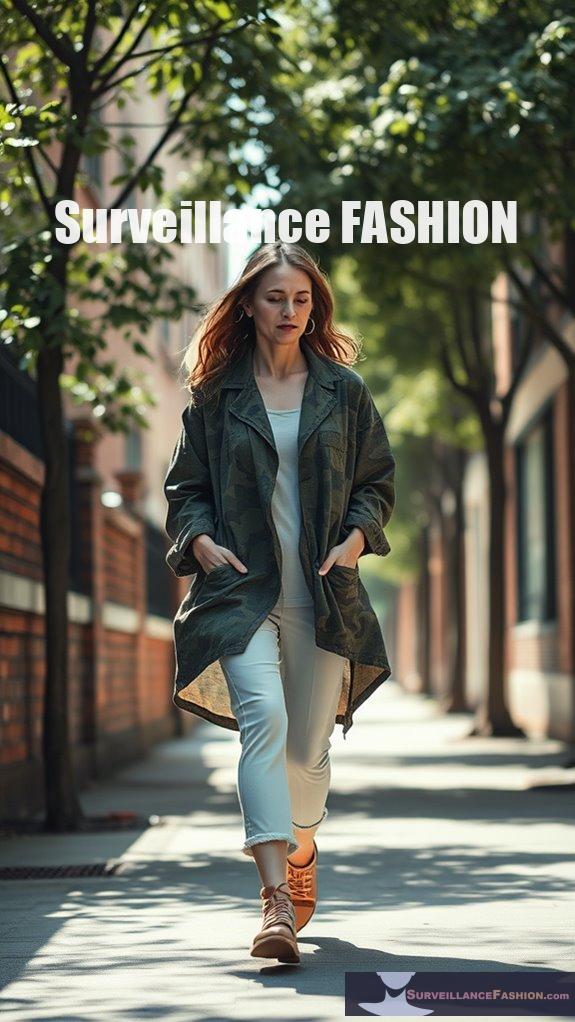
As the demand for sustainable practices grows, eco-friendly camouflage fabrics emerge as a vital intersection between environmental responsibility and technological innovation.
You'll find that these materials not only reduce ecological footprints but also offer effective concealment.
- Sustainable textiles, like hemp and organic cotton, provide high biodegradability and comparable optical properties to synthetic options.
- Natural dyes, derived from plants such as Swietenia Macrophylla, eliminate harmful chemicals in dyeing processes.
- Innovative blends, like cotton-polyester, enhance durability while minimizing environmental impact.
- Life cycle assessments guarantee these materials maintain their eco-friendliness throughout their lifespan.
Incorporating these fabrics into your wardrobe aligns with the ethos of our website, Surveillance Fashion, where style meets sustainability.
References
- https://reolink.com/blog/find-and-avoid-security-camera-blind-spots/
- https://portal.cops.usdoj.gov/resourcecenter/content.ashx/cops-w0047-pub.pdf
- https://www.eufy.com/blogs/security-camera/find-and-avoid-security-camera-blind-spots-the-ultimate-guide
- https://gcs.civilservice.gov.uk/publications/resist-2-counter-disinformation-toolkit/
- https://sirixmonitoring.com/blog/security-camera-placement-guidelines/
- https://www.jvsg.com/cctv-field-of-view-calculation/
- https://www.emciwireless.com/our-blog/camera-field-of-view-fov/
- https://www.infinitioptics.com/glossary/fov-field-of-view
- https://www.fdic.gov/system/files/2024-06/2020-request-for-info-standard-setting-3064-za18-c-031.pdf
- https://www.eufy.com/blogs/security-camera/security-camera-field-of-view
Leave a Reply