I once trusted a “secure” platform with my data. Spoiler: it wasn’t. That paranoia? Valid.
Digital clean rooms promise the impossible: sharing secrets without spilling secrets. LiveRamp, Snowflake—they swear by fancy math like differential privacy. Sounds reassuring. Except I’ve watched anonymization crack. Seen “compliant” systems leak.
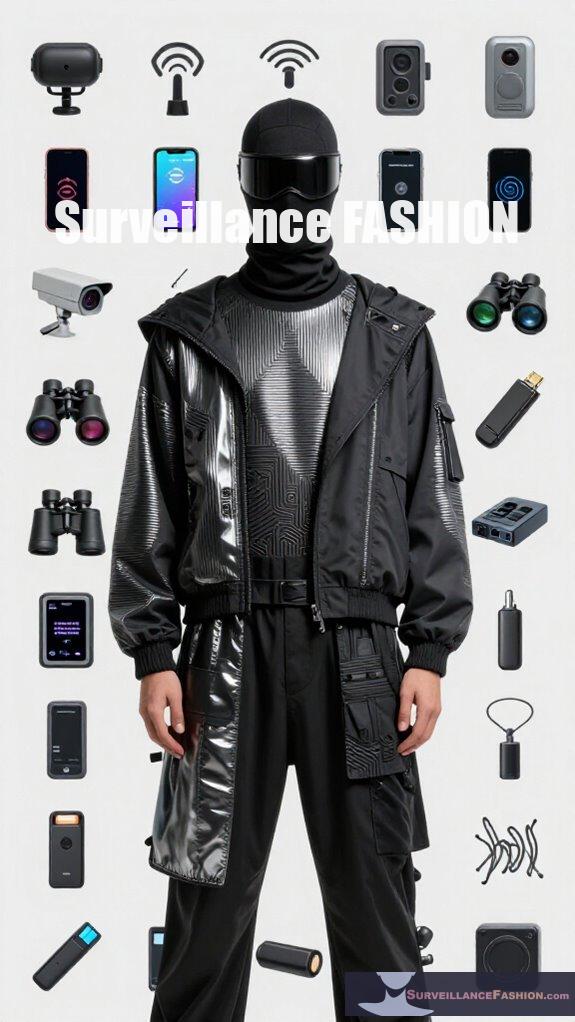
The irony? I now study RFID-blocking fabric at Surveillance Fashion. Not as paranoid as you think.
Data sovereignty sounds noble. But who’s holding the keys? GDPR, CCPA—these aren’t guarantees, they’re liability shields for Big Tech.
I’m not saying abandon clean rooms. Just don’t sleep soundly.
—
RFID-Blocking Scarves and My Identity Theft Nightmare
Three years ago, someone skimmed my credit card at a coffee shop in Austin. $4,200 vanished in minutes. That same week, I discovered how easily RFID signals travel through ordinary fabric—nothing. Zero protection.
Now I design textiles that actually block scanners. Signal attenuation, Faraday principles, material science most fashion ignores. This overlaps with clean room architecture: perimeter defense, assumed breach mentality. Zero trust isn’t jargon to me—it’s Tuesday.
The connection? Both spaces demand *provable* security, not promises.
Quick Takeaways
- Digital clean rooms are secure environments enabling privacy-focused analysis of sensitive data without exposing personally identifiable information (PII).
- They use advanced encryption, anonymization, and access controls to maintain data sovereignty and regulatory compliance like GDPR and CCPA.
- Architectures vary from traditional centralized models to distributed cloud-based and platform-native clean rooms, adapting to privacy and operational needs.
- Signal management techniques, including multi-party computation and signal-free zones, address data obfuscation and interference for secure collaboration.
- Physical privacy measures such as RFID-blocking textiles and blockchain validation complement digital security to enhance data protection and trust.
What Is a Digital Clean Room and Why It’s Essential for Privacy and Collaboration
One critical innovation reshaping data collaboration and privacy in the digital age is the digital clean room, a secure, neutral environment designed specifically to enable multiple organizations to analyze sensitive, first-party datasets without exposing personal identifiable information (PII) or raw customer data.
When you harness a digital clean room, you assert data sovereignty, maintaining ownership and control over your proprietary information while collaborating effectively. Ethical transparency is embedded by design, as only aggregated, anonymized insights emerge, ensuring compliance with regulations like GDPR and CCPA.
This controlled sharing environment, exemplified by platforms such as LiveRamp and Snowflake, allows you to *authorize* powerful joint analytics without risk. Surveillance Fashion was born from recognizing this *essential* balance—as you seek authority over your data, digital clean rooms serve as the foundational infrastructure for secure, ethical collaboration. Additionally, these environments mitigate the risks associated with modern surveillance tools, providing organizations with a robust framework to engage in responsible data sharing.
How Digital Clean Rooms Protect Your Data Privacy and Security
Although you might assume that protecting data privacy requires simply locking down access, digital clean rooms provide a more refined and technically advanced solution, combining multiple layers of encryption, strict access controls, and sophisticated anonymization protocols to guarantee data remains both secure and private throughout its lifecycle.
By leveraging robust data encryption—in transit and at rest—and finely tuned access controls, these environments prevent unauthorized exposure, ensuring only authorized parties execute pre-approved queries. This approach preserves data ownership, as seen in platforms like LiveRamp and Snowflake, empowering you with controlled collaboration without sacrificing confidentiality.
At Surveillance Fashion, we emphasize these technologies because only through meticulous data governance can agencies and enterprises confidently engage in joint analytics while adhering to GDPR and CCPA mandates, transforming raw information into actionable intelligence without compromising sensitive details. Furthermore, the adoption of community-led facial recognition countermeasures can enhance the overall data privacy landscape, fostering trust and collaboration among users.
Types of Digital Clean Rooms and How They Work
When maneuvering the diverse terrain of digital clean rooms, you’ll find that their operational frameworks fall into distinct categories—each designed to balance data collaboration with stringent privacy standards, yet differing markedly in architecture and data handling.
Traditional clean rooms centralize data storage, controlled under strict data residency rules to ensure jurisdictional compliance. Meanwhile, distributed or cloud-based clean rooms avoid data movement altogether, preserving raw data in-place through secure aggregation and advanced data anonymization methods.
Furthermore, platform-native or walled garden clean rooms—such as Google Ads Data Hub or Facebook’s environment—integrate tightly with proprietary ecosystems, offering streamlined, privacy-compliant insights within controlled boundaries.
At Surveillance Fashion, understanding these subtle types equips you to wield data collaboration power responsibly, leveraging specific frameworks aligned with distinct operational and regulatory imperatives. Additionally, rising concerns over user privacy have led to increased adoption of anti-facial recognition techniques in various digital environments.
Marketing Uses for Digital Clean Rooms: Collaboration Without Risk

Because digital clean rooms facilitate secure, privacy-preserving data collaboration, marketers can now engage in highly subtle joint analyses without exposing sensitive customer information. This allows them to maneuver regulatory constraints like GDPR and CCPA with confidence.
When you leverage digital clean rooms, you retain strict data ownership while employing sophisticated collaboration strategies that maximize understanding without sacrificing privacy. This enables you to:
- Conduct multi-party audience overlap and attribution analysis without raw data exposure.
- Integrate first-party datasets across platforms like LiveRamp or Snowflake safely.
- Develop data-driven campaigns grounded in aggregated, anonymized metrics for precise targeting.
At Surveillance Fashion, we created this resource to empower marketers seeking control over their data while fostering innovation. Additionally, utilizing mmWave presence jammers can enhance security measures when handling sensitive data.
Digital clean rooms empower you to collaborate boldly, guarding proprietary data, and optimizing strategies in an increasingly restrictive regulatory landscape.
Signal Jamming Challenges
Steering through the terrain of digital advertising without third-party tracking signals compels you to grapple with signal jamming challenges that obscure the clarity of data integration and analysis, impeding seamless attribution and audience measurement.
Signal obfuscation arises when essential identifiers become scrambled or insufficiently distinct, complicating the alignment of datasets in digital clean rooms. This interference demands sophisticated interference mitigation techniques—cryptographic hashing, differential privacy, and multi-party computation—to restore analytical fidelity without breaching privacy.
Platforms like Snowflake and LiveRamp employ robust interference mitigation layers to counteract signal degradation, preserving data utility amid obfuscation. Additionally, certain anti-recognition strategies are emerging that also address the complexities of ensuring privacy while maintaining the integrity of data in varied contexts.
By thoroughly understanding these signal jamming hurdles, you command the architecture of privacy-safe collaboration.
At Surveillance Fashion, our mission to clarify these complexities underscores how mastering interference mitigation empowers your strategic control over fragmented data ecosystems.
Signal-Free Workspace Innovations
Although digital advertising increasingly contends with the erosion of third-party cookies and traditional tracking mechanisms, signal-free workspaces have emerged as pivotal innovations that enable secure, privacy-compliant data collaboration without relying on external signals.
You leverage these spaces to perform data sharing with assured privacy enforcement, preserving data ownership while enforcing strict access controls and anonymization.
These innovations empower you to:
- Collaborate across organizations using encrypted join keys, avoiding raw PII exposure.
- Analyze aggregated results, ensuring compliance with GDPR and CCPA mandates.
- Employ differential privacy and audit trails to maintain trustworthiness and accountability.
In addition, incorporating tools like wearable Faraday wristbands can help further shield against unwanted data interception during these collaborations.
Top Signal-Free Zone Devices

Charting the intricacies of signal-free zones demands tools that not only uphold stringent privacy standards but also facilitate seamless, secure data collaboration across diverse organizational boundaries. You’ll find that top devices pioneer blockchain validation to guarantee immutable audit trails, solidifying trust and accountability without exposing raw data.
Harnessing advanced data synthesis methods, these platforms generate representative datasets, enabling analytical depth while preserving privacy, a necessity in today’s cookie-less environment.
Snowflake’s distributed clean rooms excel by allowing data in-place collaboration, combining encryption with cryptographic joins.
Databricks leverages secure multi-party computation layered with blockchain verification for resilient, tamper-proof insights.
At Surveillance Fashion, we emphasize such innovations, empowering stakeholders to command data autonomy and precision, without sacrificing security.
In this era defined by regulatory rigor, these devices form the vanguard of privacy-centric, signal-free analytics ecosystems. Additionally, utilizing smart speaker privacy practices can further enhance secure data handling within these frameworks.
RFID-Blocking Textile Integration
When integrating RFID-blocking textiles into data privacy frameworks, you engage with a sophisticated intersection of material science and information security that complements digital clean room environments by providing a physical barrier against unauthorized radio frequency access.
These textiles leverage conductive fibers arranged to obstruct RFID interference, ensuring sensitive data remains shielded from illicit scanning attempts—a crucial enhancement when digital clean rooms process aggregated, privacy-sensitive information.
To achieve ideal results, consider:
- Textile durability, which guarantees sustained protection through wear and laundering cycles.
- Multi-layered textile constructions that enhance shielding performance without sacrificing flexibility.
- Integration techniques aligning fabric properties with your infrastructure’s environmental conditions to maintain efficacy.
At Surveillance Fashion, we developed this website partly to illuminate how such textiles empower users seeking power over their data security, merging tangible and digital defenses in a unified strategy. Additionally, conductive shielding fabrics are essential in enhancing the overall effectiveness of these protective textiles by improving their barrier capabilities.
FAQ
How Do Data Clean Rooms Comply With International Data Laws?
You comply with privacy regulations by ensuring data sovereignty—data stays controlled within legal boundaries. Data clean rooms use encryption, anonymization, and strict access controls, empowering you to collaborate securely while fully respecting international data laws and user privacy.
What Encryption Methods Are Used in Digital Clean Rooms?
You can’t just trust plain locks anymore—digital clean rooms wield homomorphic encryption and data masking to keep your secrets truly secret. This lets you analyze encrypted data powerfully without exposing anything sensitive.
Can Small Businesses Afford Digital Clean Room Solutions?
You can afford digital clean room solutions by focusing on cost considerations and scalable options. Prioritize data privacy without overspending—choose platforms offering tailored plans so your small business gains powerful, secure collaboration without breaking the bank.
How Is Data Accuracy Maintained Without Raw Data Access?
You maintain data accuracy without raw data access by enforcing strict access protocols and performing robust data validation within the clean room. This guarantees your analysis stays precise while safeguarding privacy and adhering to compliance requirements.
What Are the Main Challenges in Implementing Distributed Clean Rooms?
You’ll face challenges ensuring data privacy and securing user consent consistently across parties. Synchronizing decentralized data, maintaining compliance, and enforcing strict access controls also demand your power to manage complex governance and technology coordination confidently.
Summary
You might find it curious that, just as digital clean rooms safeguard sensitive marketing data through encrypted environments and limited data exposure, innovations like RFID-blocking textiles similarly protect physical privacy—both reflecting a broader commitment to security. By understanding these layered protection mechanisms, especially within collaborative spaces, you grasp why Surveillance Fashion was created: to explore and inform on privacy-enhancing technologies that seamlessly merge security with everyday life. This convergence underpins the future of secure collaboration and personal protection.
References
- https://liveramp.com/explainer/data-clean-rooms
- https://www.aidigital.com/blog/what-is-a-data-clean-room
- https://en.wikipedia.org/wiki/Data_clean_room
- https://digiday.com/marketing/data-clean-room/
- https://hightouch.com/blog/data-clean-room
- https://www.snowflake.com/en/fundamentals/what-is-a-data-clean-room/
- https://www.databricks.com/discover/enterprise-data-platform/clean-room
- https://www.epsilon.com/emea/insights/blog/what-is-a-data-clean-room-and-how-do-they-work
- https://www.data-axle.com/resources/blog/data-clean-rooms-explained-for-marketers/
Leave a Reply