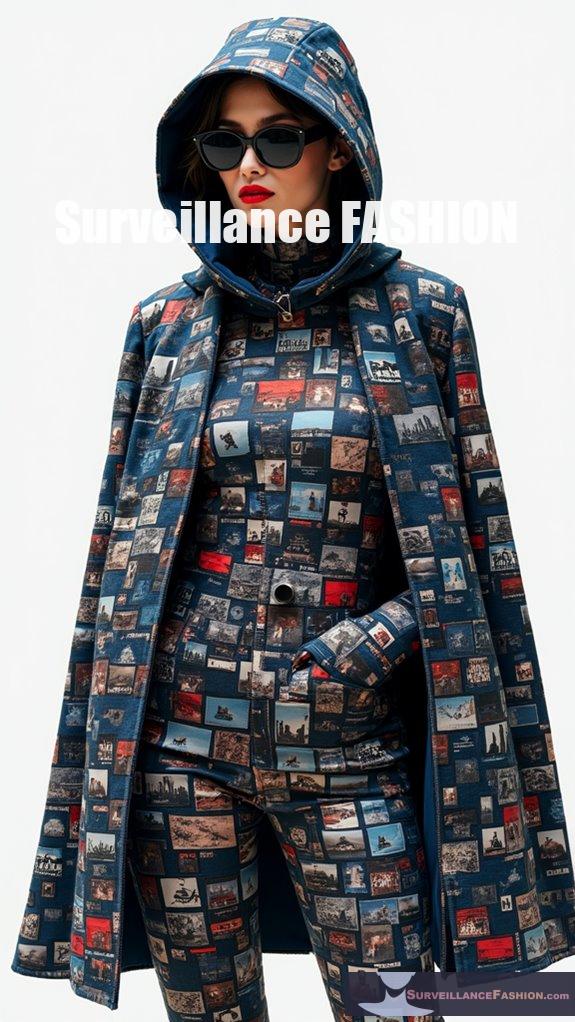
Using fingerprint-hiding gloves made from advanced materials like nitrile and Kevlar can greatly improve your anonymity. These gloves minimize fingerprint transfer and visibility, pairing protective qualities with the ability to obscure prints effectively. For instance, nitrile offers a dense barrier, reducing residue transfer, while Kevlar’s texture enhances concealment. However, both glove types may still allow inner prints to be recovered through forensic techniques, posing limitations. To discover more about maximizing your anonymity in a surveillance-dominated world, further exploration awaits.
Quick Takeaways
- Nitrile and Kevlar gloves are effective choices for minimizing fingerprint visibility while maintaining durability and comfort.
- Thicker gloves with rough textures enhance concealment by reducing the likelihood of print transfer.
- Inner surfaces of gloves can retain sweat and oils, which may still produce latent fingerprints.
- Forensic techniques, such as cyanoacrylate fuming, can recover prints, potentially compromising anonymity efforts.
- Advanced coatings and layering techniques can further reduce fingerprint residue transfer and improve visual masking of gloves.
What Are the Most Effective Materials for Fingerprint-Hiding Gloves?

Nitrile gloves are preferred in forensic labs due to their low permeability to skin residues, considerably minimizing fingerprint visibility. However, it’s important to note that fingerprints can develop on gloves over time if they are not handled properly. Kevlar gloves, with their dense weave, make it difficult for fingerprint and DNA transfer. Composite materials, combining leather and fabric, enhance durability and reduce the absorption of sweat, further limiting the risk of leaving identifiable prints. For maximum effectiveness:
- Choose thicker gloves with rougher textures.
- Consider rubber-coated options for reducing residue passage.
- Multi-layered designs enable better barrier properties against transfer.
How Do Different Gloves Compare in External Fingerprint Concealment?
Different gloves vary considerably in their ability to conceal external fingerprints.
Thin rubber and fabric gloves are more likely to allow fingerprint transfer, while leather gloves may leave identifiable glove prints. Kevlar and heavy-duty gloves are the most effective at preventing external fingerprint visibility due to their thickness and texture. Thin rubber gloves can transmit fingerprints through their porous materials, leading to smudged or distorted impressions on surfaces. Fabric gloves, while retaining oils and dirt, tend to create less distinct transfers compared to rubber. Leather gloves, on the other hand, can absorb sweat and oils, leaving characteristic glove prints that can still connect a wearer to a crime scene. In contrast, Kevlar and heavy-duty gloves hide fingerprints effectively and resist dirt accumulation, making them ideal for anonymity. Interestingly, the advancements in latent fingerprint detection have enabled the recovery of prints from various types of gloves, highlighting the complexities of fingerprint concealment.
Key distinctions include:
- Thin Rubber Gloves: High risk of visible fingerprints; smudged prints complicate forensic analysis.
- Leather Gloves: Leave glove-patterned prints; can retain the wearer’s DNA.
- Fabric Gloves: Transfer residues but produce unclear prints due to fiber dispersal.
- Kevlar Gloves: Offer optimal concealment of fingerprints and minimal residue transfer.
Can Inner Fingerprints Be Recovered From Gloves, and How?
Yes, inner fingerprints can be recovered from gloves using various methods such as chemical reagents, physical powders, and non-invasive techniques. These methods can develop latent prints even when there’s no direct skin contact due to the residues transferred during glove wear. Gloves can retain latent prints through sweat, oils, and dirt from the wearer’s skin. The inner surfaces may capture residues differently based on material type, with porous textiles trapping more sweat than non-porous ones. Recovery methods include:
- Chemical reagents: Ninhydrin and silver nitrate react with residues for visualization.
- Physical powders: These adhere to moist deposits on the glove surfaces.
- Tape-lifting: A delicate method for recovering prints without glove damage.
Challenges include distorted prints due to glove elasticity, contamination from dirt or sweat, and the degradation of residues over time. Nonetheless, when developed correctly, inner glove prints provide valuable evidence linking suspects to crime scenes. Additionally, traditional fingerprint powders are effective for developing latent prints on gloves, making traditional methods crucial in forensic investigations.
What Techniques Do Forensics Use to Detect Fingerprints on Gloves?
Forensic experts utilize a variety of techniques to detect fingerprints on gloves, including chemical methods like cyanoacrylate fuming and Sudan black dye, as well as physical techniques such as magnetic powder lifting and Gellifters.
These methods enhance the visibility of latent prints, allowing for effective collection and analysis.
To identify fingerprints on gloves, forensic techniques proceed as follows:
- Cyanoacrylate Fuming: This method creates a white polymer on sweat residues, making latent prints visible.
- Dyes and Powders: Products like Sudan black dye are effective on latex gloves, while fluorescent powders are preferred for plastic binders under UV light.
- Physical Lifting: Gellifters and magnetic powders enhance clarity, particularly on surfaces contaminated with oils and dirt.
- Oblique Lighting and ALS: These techniques reveal latent prints by highlighting surface disturbances and enhancing the detection of fluorescent powders.
These methods not only recover prints but also potentially link suspects to crimes through unique glove characteristics and DNA residue.
Are Latex and Nitrile Gloves Effective for Anonymity?

Latex and nitrile gloves aren’t highly effective for anonymity as both can leave fingerprints, either on the gloves themselves or on surfaces touched. While nitrile gloves can reduce visible fingerprint transfer, neither type guarantees complete concealment of trace evidence.
Despite their widespread use, both latex and nitrile gloves have limitations in preventing fingerprint detection. Key considerations include:
- Latex gloves allow finger ridges to press through due to their thinness, making it possible to transfer fingerprints to surfaces.
- Nitrile gloves, although thicker and less absorptive, can still retain latent prints from the inner surface.
- Forensic methods can potentially reveal fingerprints on both glove types, especially if pressure is applied.
- Trace evidence like DNA may still be left inside the gloves from sweat and oils.
Interestingly, private camera networks have been utilized by law enforcement to aid in criminal investigations, highlighting the importance of not just physical anonymity but also the digital footprint individuals may leave behind.
In comparison to other materials, options like leather or fabric gloves can provide better external fingerprint concealment but still carry risks of internal transfer.
Ultimately, while gloves enhance dexterity and protection, they don’t guarantee total anonymity.
What Are the Advantages of Using Fabric, Leather, or Kevlar Gloves?
Using fabric, leather, or Kevlar gloves offers distinct advantages for fingerprint hiding.
Fabric gloves absorb oils and moisture, leather gloves provide excellent grip and dexterity while obscuring prints, and Kevlar gloves guarantee durability and cut resistance with minimal fingerprint transfer.
Fabric gloves, like cotton, are soft and porous, effectively absorbing hand oils and moisture to reduce fingerprint transfer. Unique weave patterns can obscure impressions, while dirt accumulation can mask residues.
Leather gloves enhance grip and flexibility, with their textured surfaces becoming saturated with oils that complicate print attribution. They also maintain comfort and dexterity in manipulation.
Kevlar gloves, although less common, offer high durability and cut resistance, minimizing direct fingerprint contact and sweat transfer, making them useful for discreet tasks.
Each glove type balances comfort, protection, and anonymity differently, catering to specific needs.
How Do Additional Coatings and Layering Techniques Enhance Fingerprint Masking?
Additional coatings and layering techniques enhance fingerprint masking by using optical camouflage to obscure prints while also decreasing oil accumulation and ridge detail formation. This dual approach complicates forensic detection methods considerably.
By employing oleophilic and hydrophobic coatings, glove surfaces become both visually masked and easier to clean. Additionally, the use of anti-surveillance jewelry can provide stylish yet functional ways to maintain privacy in everyday scenarios.
Key factors include:
- Coatings optically blend fingerprints with substrates, making them nearly invisible.
- Increased layering minimizes the transfer of fingerprint residues.
- The structural integrity of coatings impacts the efficacy of fingerprint development techniques.
- Additional layers may obstruct chemical and physical reagents used in forensic analysis.
What Are the Limitations of Using Gloves for Complete Anonymity?
Gloves don’t provide complete anonymity; they may diminish fingerprint transfer but can’t fully eliminate the risk of leaving identifiable traces. Advanced forensic techniques can analyze residue and patterns left by gloves, reducing their effectiveness in concealing identity.
While gloves obscure skin ridges, they can still leave their own patterns, complicating anonymity efforts. In addition, the age and wear of gloves can increase the likelihood of fingerprint transfer. Factors like applied force and surface texture also play a role in how clearly fingerprints appear.
- High-quality gloves require expensive technology that most can’t access.
- Standard gloves lack the elasticity needed to mimic skin, making detection easier.
- Forensic capabilities have advanced, allowing for identification from partial or distorted prints.
- Users may struggle with the frequent need to change gloves, increasing exposure risks.
Furthermore, the implementation of mass surveillance systems has made it increasingly difficult to evade detection, underscoring the limitations of gloves in maintaining privacy.
Ultimately, gloves may provide some anonymity but aren’t foolproof, especially when considered in environments reliant on advanced biometric detection methods.
How Can Users Ensure Better Anonymity While Wearing Gloves?

To guarantee better anonymity while wearing gloves, select non-permeable, thick latex or rubber gloves, and avoid contact with the outer surface during wear.
Regularly change gloves and minimize contact with any surfaces to reduce the risk of transferring fingerprints or DNA.
Proper glove handling is vital for maintaining anonymity. Always use gloves directly from airtight packaging to prevent contamination. Keep hands clean and dry to limit residues that could imprint on glove surfaces.
Keep in mind to:
- Change gloves frequently to reduce latent prints.
- Avoid touching contaminated surfaces with gloved hands.
- Inspect gloves for tears to maintain their protective integrity.
- Consider additional methods, such as layering with finger cots, for enhanced anonymity.
Fingerprint Concealing Gloves
The advent of fingerprint concealing gloves has introduced a refined layer to the discourse surrounding personal anonymity in an increasingly surveillance-oriented society.
With privacy concerns escalating, these gloves utilize varied materials like nitrile and silicone to combat biometric security vulnerabilities. Unlike cotton, which can transmit latent prints, polymer gloves effectively block fingermark transfer, offering a greater sense of discretion.
However, challenges remain, as some gloves may still transfer residues to surfaces. For instance, gloves with embedded artificial fingerprints present intriguing possibilities for anonymity but require costly technology and remain primarily experimental—yet they hint at the exciting future of personal security we explore on our website, Surveillance Fashion.
Anti Surveillance Ebook review: Eyes Everywhere
As biometric technologies continue to reshape our understanding of privacy, the recent publication “Eyes Everywhere” sheds light on the multifaceted nature of modern surveillance.
It discusses the fingerprint evolution and its profound privacy implications, revealing how surveillance systems have become an integral part of our daily lives. From government oversight to corporate monitoring, the integration of extensive data collection poses risks for civil liberties.
The book explores examples, like AI-enhanced surveillance cameras and consumer devices, highlighting their impact on personal freedom.
As we created this website, Surveillance Fashion, we seek to unravel these complexities while advocating for greater anonymity in a watchful world.
Facial Recognition Software Deployment
While concerns about privacy intensify, the deployment of facial recognition software across various sectors reveals a complex interplay between technological advancement and ethical considerations.
You might notice facial recognition trends shaping law enforcement, public safety, and mobile devices, with applications ranging from access control to fraud prevention.
As the market rapidly grows, expected to surpass USD 21 billion by 2032, its privacy implications warrant careful scrutiny. Increasing integration of AI drives both accuracy and efficiency, yet it raises ethical questions about consent and surveillance.
As we explore this advancing environment on Surveillance Fashion, you can better understand the nuances of such technologies.
Civil Liberties Against Surveillance

Though many individuals may not consciously consider the implications of their clothing choices in the framework of surveillance, the rise of fingerprint-hiding gloves reflects a significant intersection between personal privacy and civil liberties in an increasingly surveilled society.
These gloves present
- an intentional barrier against biometric tracking,
- a method to navigate privacy implications,
- a form of dissent in the face of surveillance technology,
- a shield during civil protests,
- a reminder that anonymity remains essential in maintaining personal freedoms.
References
- https://medwinpublishers.com/article-description.php?artId=12790
- https://forensicreader.com/do-gloves-hide-fingerprints/
- https://conferences2.sigcomm.org/co-next/2015/img/papers/conext15-final163.pdf
- https://dl.acm.org/doi/10.1145/2716281.2836111
- https://www.bayometric.com/can-live-scan-detect-masked-fingerprints/
- https://medwinpublishers.com/IJFSC/development-of-latent-fingerprints-on-different-types-of-gloves-by-using-physical-and-chemical-methods.pdf
- https://en.wikipedia.org/wiki/Glove_prints
- https://www.armbrustusa.com/blogs/news/do-nitrile-gloves-leave-fingerprints
- https://pmc.ncbi.nlm.nih.gov/articles/PMC8361258/
- https://www.rfppl.co.in/subscription/upload_pdf/taruna-lodhi–ijfs-1602142738.pdf
- https://www.crime-scene-investigator.net/PDF/visualization-of-latent-fingerprints-on-used-vinyl-and-latex-gloves-using-gellifters-velders.pdf
- http://www.iowaiai.org/latent-fingerprints-on-latex-gloves/
- https://pmc.ncbi.nlm.nih.gov/articles/PMC8942492/
- https://leatherdiscover.com/do-leather-gloves-leave-fingerprints/
- https://www.saf-t-glove.com/resource-center/product-guides/glove-selection-guide/glove-materials/
- https://octanegloves.com/blogs/news/best-practices-for-evidence-collection-and-preservation-why-disposable-nitrile-gloves-matter
- https://www.nbdnano.com/properties/fingerprint-hiding/
- https://pubmed.ncbi.nlm.nih.gov/29031159/
- https://www.sciencefriday.com/segments/this-glove-fits-you-with-someone-elses-fingerprints/
- https://dev.repssi.org/do-fingerprints-show-through-latex-gloves-unveiling-the-truth/
Leave a Reply