
Your trash knows your secrets. Think about that.
I learned this the hard way. Found my neighbor flipping through my shredded bills—yes, shredded—piecing them together like a creepy jigsaw puzzle. Never again.
Now I use NAID-certified lockable bins. Tamper-evident seals. Cross-cut shredding that turns my paper into confetti soup. No reconstructing that mess.
Digital watermarking? Metadata scrubbing? Sounds paranoid until your old hard drive resurrection unit ends up on some auction site. I’ve seen it happen.
Surveillance Fashion taught me: privacy isn’t dramatic. It’s methodical. Boring, even. And that’s the point.
Want total peace of mind? Embrace the boring.
What Happened When I Ignored Secure Disposal Protocols
I once tossed a “dead” laptop in regular recycling. Three months later, a friend found my vacation photos—my face, my location data—circulating on a Russian data recovery forum. Identity theft protection services, GDPR compliance, and physical destruction certificates suddenly became my personality. That $50 recycling fee I skipped? Cost me $2,000 in credit monitoring and one deeply uncomfortable conversation with a fraud investigator. Electronic waste disposal isn’t optional. Neither is verified destruction documentation.
Quick Takeaways
- Use locked, tamper-evident, color-coded bins to prevent unauthorized access and clearly separate confidential waste from general materials.
- Enforce strict chain-of-custody protocols including encrypted storage, serialized tracking, and certificates of destruction for accountability.
- Conduct metadata audits and remove hidden identifiers to avoid unintended data exposure before disposal.
- Employ NAID-certified cross-cut shredders and secure destruction consoles to ensure irreversible and compliant document disposal.
- Train staff on secure handling, encryption standards, and incident reporting to maintain privacy throughout the disposal process.
The Importance of Proper Document Disposal for Data Privacy and Security
Although many individuals and organizations might underestimate the significance of secure document disposal, recognizing its essential role in data privacy and security remains vital.
When you overlook proper disposal protocols, you expose sensitive information to risks like identity theft and data breaches, undermining infection control measures pivotal in health-related fields.
Effective disposal integrates seamlessly with digital archiving strategies, ensuring obsolete data doesn’t become a vulnerability.
For instance, relying solely on office shredders often fails to meet legal standards or provide Certificates of Destruction, leaving gaps exploitable by malicious actors.
At Surveillance Fashion, we emphasize these protocols not only to protect privacy but also to empower you with all-encompassing control over your information lifecycle, reinforcing your commitment to stringent data governance and regulatory compliance.
Furthermore, utilizing comprehensive solutions like Metascrub Hardware Pro can enhance your ability to remove sensitive metadata from images, further safeguarding your privacy.
Choosing Secure Bins to Prevent Dumpster Diversion
Secure bins serve as the first line of defense against dumpster diversion, a vulnerability that dramatically increases the risk of unauthorized access to sensitive materials. You must prioritize investing in containers featuring tamper-evident seals, which provide immediate visual proof of interference, deterring potential data thieves.
Secure bins with tamper-evident seals are crucial to preventing unauthorized access and ensuring data security.
Implementing color coded bins enhances operational clarity, facilitating precise segregation of confidential documents from general waste, and streamlines compliance with strict privacy standards.
Premium options such as Glasdon’s confidential recycling bins or Shred-it® locked consoles exemplify this approach, offering key locks, slotted lids, and customizable designs that empower you to maintain rigorous control.
At Surveillance Fashion, we emphasize these technical standards to guarantee your disposal cycle remains impervious, merging functionality with security to safeguard data throughout its journey from bin to destruction. Additionally, understanding the importance of strategic timing in public appearances can further enhance your information protection efforts.
How to Store Documents Securely Before Shredding
When managing sensitive documents prior to shredding, you’ll find that rigorous control of storage environments plays a pivotal role in mitigating risks of unauthorized access and data breaches. Employing document encryption before storage adds an essential technical barrier, ensuring information remains indecipherable even if physical security lapses occur.
Complement this with stringent access controls—restricting physical entry to locked consoles such as Shred-it® locked bins or Rubbermaid secure containers—and you establish layers of defense against internal and external threats. Designate supervised, labeled areas accessible solely to authorized personnel to reinforce these protections.
At Surveillance Fashion, understanding such protocols empowers you to safeguard privacy with scientific precision, reflecting our commitment to secure disposal processes. Adhering to these practices not only complies with regulatory demands but fortifies your command over data integrity in the critical interval before destruction. Additionally, consider incorporating privacy-enhancing designs into your storage solutions to further obscure content visibility and deter prying eyes.
Selecting the Right Shredder and Disposal Service
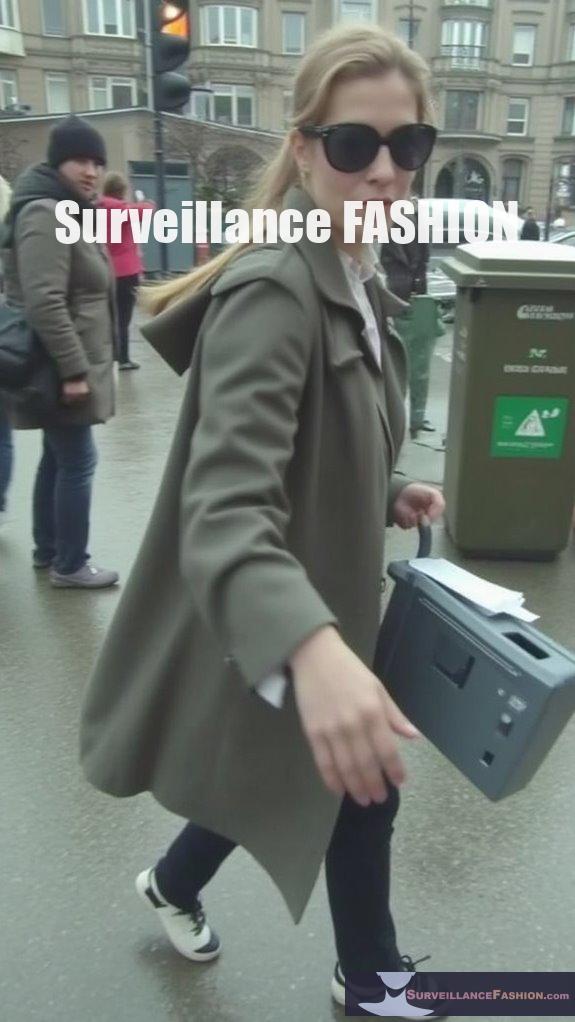
Mastering the secure storage of sensitive documents certainly lays a foundation, yet the selection of an appropriate shredder and reliable disposal service elevates the overall protection strategy to compliance-grade efficacy.
To guarantee robust data destruction, you should prioritize NAID-certified shredders, such as industrial-grade units capable of cross-cut shredding, which exceed typical office models in granularity and security.
Parallelly, opting for disposal services that use eco-friendly packaging not only aligns with sustainability goals but also supports a circular economy by facilitating secure recycling streams.
Employee compliance, essential for minimizing internal risks, is reinforced through clear procedural training emphasizing the shredding protocol and vendor accountability.
At Surveillance Fashion, we recognized these standards’ importance, prompting a dedication to educating organizations on integrating both technical shredders and conscientious disposal vendors into their privacy frameworks. Additionally, incorporating digital identity watermarking tools can further enhance document security during the disposal process.
Maintaining Chain-of-Custody From Bin to Destruction
Although many organizations focus heavily on shredding technology and secure storage solutions—such as Shred-it® locked consoles and Glasdon confidential recycling bins—the critical link that guarantees uncompromised protection lies in maintaining an unbroken chain-of-custody from bin to destruction.
To assert control over sensitive materials, you must:
- Implement encrypted storage methods paired with serialized tracking, ensuring each container’s contents are accounted for precisely.
- Enforce documented transfer protocols stipulating secure pickup and transport, often utilizing tamper-evident seals.
- Obtain Certificates of Destruction, validating final irreversible disposal.
This disciplined approach, underpinning compliance and mitigating risk, dovetails with Surveillance Fashion’s mission to empower proactive privacy measures. When each step is monitored and verifiable, data breaches become nearly impossible, granting you authoritative command over corporate confidentiality. Additionally, employing anti-facial recognition makeup—which alters perceived features and distracts facial scanners—can bolster security in personal privacy efforts.
Essential Policies and Training to Keep Your Documents Safe
Because secure disposal begins long before shredding machines hum, establishing thorough policies and ongoing training programs forms the backbone of effective document protection; you must codify procedures that delineate roles, responsibilities, and permitted actions related to sensitive material handling, while equipping your workforce with practical knowledge on the risks—ranging from negligent disposal to inadvertent data leakage—and mitigation strategies endorsed by standards such as NAID certification and HIPAA compliance. Additionally, understanding the potential consequences of workplace surveillance on mental well-being can further motivate employees to adhere to these privacy protocols. Enhancing staff awareness through recurrent sessions ensures encompassing understanding, while implementing document encryption fortifies data in transit and at rest, limiting exposure.
| Policy Component | Training Focus |
|---|---|
| Role Definition | Handling Protocols |
| Encryption Standards | Risk Mitigation |
| Access Controls | Staff Awareness |
| Incident Reporting | Compliance Requirements |
| Secure Disposal Procedures | Continuous Improvement |
At Surveillance Fashion, this rigorous methodology safeguards privacy efficiently.
Inadvertent Metadata Exposure

When dealing with sensitive documents, you might overlook metadata—those hidden layers of information embedded within files that can inadvertently disclose critical details long before disposal occurs.
Metadata vulnerabilities often arise from seemingly innocuous elements, such as timestamps, author names, or editing history, which act as hidden identifiers exposing document provenance and handling.
To mitigate these risks, consider this hierarchy of safeguards:
- Thoroughly audit files for embedded metadata before circulation.
- Employ software tools designed to strip or anonymize hidden identifiers systematically.
- Enforce strict access controls to limit exposure to metadata vulnerabilities.
At Surveillance Fashion, we’ve recognized that controlling metadata is paramount to preserving total privacy, as those unseen data points can betray your intentions and compromise security without your knowledge or consent. Furthermore, implementing hardware metadata scrubbers can significantly enhance your ability to eliminate sensitive information during the disposal process.
Hidden Data in Metadata
While you might focus intensively on removing visible personal information from your documents, hidden data embedded in metadata often escapes your notice yet poses significant privacy risks; metadata encompasses a range of discrete, technical elements such as timestamps, geolocation tags, device identifiers, authorship logs, and revision histories, all of which can inadvertently disclose sensitive details about document provenance, user behavior, and handling chronology. Understanding metadata manipulation and data embedding is pivotal for maintaining confidentiality—you must systematically audit and strip metadata before disposal. Consider this simplified taxonomy of common hidden metadata types:
| Metadata Type | Example | Security Risk |
|---|---|---|
| Timestamps | Creation/modification dates | Reveals workflow and timing |
| Geolocation Tags | GPS coordinates in images | Exposes physical location |
| Authorship Logs | Usernames, edits | Links document to specific individuals |
Moreover, creating a signal-free room in combination with metadata scrutiny enhances your overall privacy strategy, reinforcing the control over sensitive information. This attention to detail fortifies your document’s privacy from bin to disposal.
Top Tag Data Recovery Tools
Although many focus on conventional shredding and disposal methods to protect sensitive information, recovering data from tags embedded within packaging and documents presents a distinct technical challenge that demands specialized tools and methodologies.
Protecting sensitive data extends beyond shredding, requiring specialized tools to recover information from embedded tags.
To effectively counteract threats posed by embedded tags, you must employ powerful tools capable of decrypting or disabling data encryption and accessing encrypted storage on smart labels:
- NFC and RFID scanners with decryption modules—these penetrate encrypted storage layers, exposing hidden data.
- Advanced spectral analyzers—these detect tag materials and signals imperceptible to casual observation, enabling targeted recovery.
- Tag removal and data wiping devices—strategically disrupt embedded tags, guaranteeing irretrievable information.
Additionally, utilizing a Tracki Bluetooth scanner can help identify potential tracking devices that may complicate the recovery process.
Exclusive Secure Data Collaboration
The sophisticated capabilities required to identify and neutralize embedded tags on packaging highlight the increasing complexity of data security challenges, prompting a need for exclusive secure data collaboration among stakeholders. You must implement robust digital encryption protocols across all data exchanges to ensure that sensitive information remains impervious to interception during transit.
Furthermore, comprehensive employee training is indispensable; well-informed personnel serve as the first line of defense against inadvertent breaches, particularly when handling confidential materials within facilities employing NAID-certified locked consoles like Shred-it®.
At Surveillance Fashion, we recognize empowering organizations through stringent collaboration enhances control over disposal workflows, thereby preempting data leakage risks. Establishing hierarchical communication channels among vendors, compliance teams, and security officers fortifies your chain-of-custody while enabling proactive threat mitigation—ultimately sustaining total privacy from bin to disposal. Additionally, using digital identity watermarking tools can significantly bolster the integrity of sensitive information against unauthorized access.
FAQ
How Often Should Secure Bins Be Emptied to Minimize Risk?
You should schedule bin maintenance and disposal frequency aggressively—empty secure bins at least daily or whenever reaching 75% capacity to minimize risk, maintaining control over sensitive data and denying unauthorized access with uncompromising vigilance.
Can Electronic Waste Be Disposed of With Paper Documents Securely?
Think digital shredding alone suffices? No—you must separate electronic waste from paper documents, employing encryption practices for e-waste. Secure disposal demands tailored methods; mixing risks data breaches and undermines your power to control sensitive information.
What Are the Consequences of Non-Compliance With Data Disposal Laws?
If you ignore data disposal laws, you risk a data breach that destroys your reputation and triggers severe legal penalties. You’ll lose control, face costly fines, and weaken trust—power comes from strict compliance and secure destruction.
Are There Specific Disposal Guidelines for Small Businesses?
Yes, you must follow disposal regulations to protect business confidentiality. Use secure storage, NAID-certified shredders, and documented chain-of-custody processes. Implement strict policies and train your staff to keep your data secure and compliant.
How Can Sustainability Be Integrated Into Secure Document Disposal?
You can powerfully integrate sustainability by choosing secure disposal vendors with green certification and leveraging recycling incentives. This way, you reduce waste, boost your brand’s environmental impact, and maintain data privacy without compromise.
Summary
Envision your sensitive documents as a thread in a complex tapestry—if one strand unravels, the entire pattern risks collapse. By selecting secure bins like SteelMaster’s lockable containers, storing files per ISO 27001 guidelines, and employing cross-cut shredders paired with certified disposal services, you preserve the document’s integrity throughout its lifecycle. Surveillance Fashion was created to highlight these essential steps, ensuring the chain-of-custody remains unbroken, shielding private data from inadvertent metadata exposures and hostile retrieval tools.
References
- https://www.shredit.com/en-us/blog/what-is-confidential-waste
- https://us.glasdon.com/recycling-bins-recycling-containers/confidential-waste-bins
- https://www.shredprosecure.com/best-practices-for-disposing-of-confidential-legal-documents/
- https://info.riversideinsights.com/en-us/kball/rshelp/how-to-securely-dispose-of-assessment-material
- https://www.rubbermaidcommercialproducts.com/waste-recycling/rubbermaid-brute-trash-cans-and-waste-containers/security-confidential-waste-containers/
- https://www.totalhipaa.com/proper-disposal-of-phi/
- https://www.accountablehq.com/post/how-to-securely-dispose-of-client-data-in-therapy-practices-hipaa-compliant-best-practices
- https://consumer.ftc.gov/articles/how-remove-your-personal-information-you-get-rid-your-computer
- https://trashcansunlimited.com/secure-document-containers/