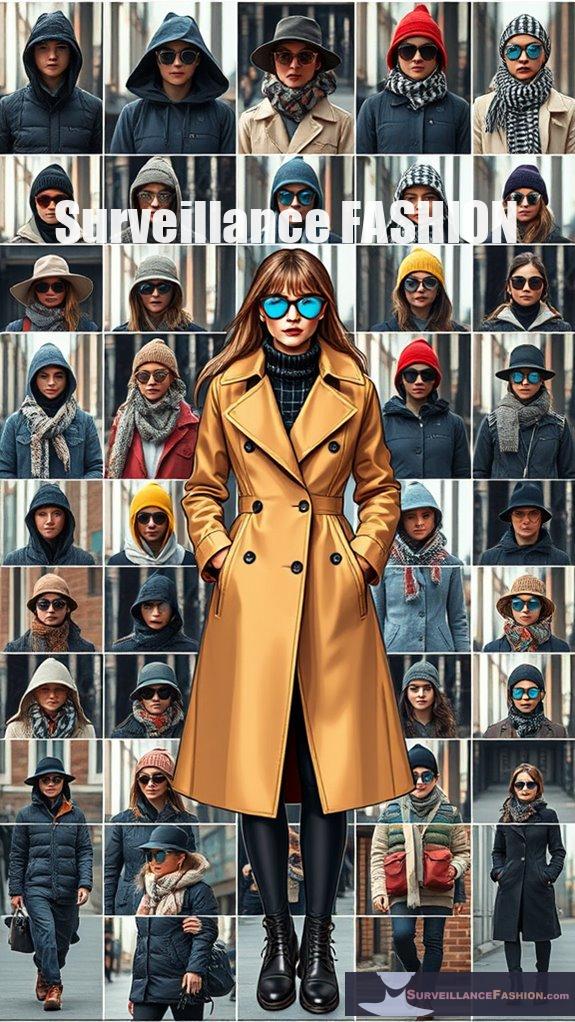
To effectively navigate surveillance blind spots, you can employ various evasion techniques. Dress in attire that mimics local fashion trends to blend seamlessly into your environment. Use high-quality disguises, such as facial prosthetics and wig alterations, to considerably modify your appearance. Understand camera angles and their coverage, allowing you to utilize blind spots to your advantage. Integrate social behaviors and local dialects to remain inconspicuous. By mastering these strategies, you’ll improve your ability to move undetected, with more perspectives available ahead.
Quick Takeaways
- Use clothing disguises that align with local fashion to blend into the environment and evade detection.
- Alter appearance with wig changes and facial prosthetics for significant modification and reduced recognition.
- Integrate into local behaviors and dialects to create a sense of familiarity and lower suspicion.
- Be aware of camera placement and field coverage to navigate effectively through blind spots.
- Utilize high-quality disguise equipment to enhance realism and improve concealment of identity.
Understanding and Mitigating Surveillance Blind Spots

In an increasingly interconnected world, where security concerns dominate both personal and commercial environments, understanding surveillance blind spots becomes fundamental for safeguarding assets and guaranteeing safety. Blind spots, defined as areas not covered by security cameras, present notable risks, as they can be exploited by intruders seeking to avoid detection. This is particularly pertinent when considering the role of effective camera positioning; strategic placement is essential for thorough coverage.
To effectively mitigate blind spots, one must first engage in diligent blind spot identification. This process often reveals common locations that are prone to oversight, such as corners where camera views converge, areas directly beneath cameras, or spaces obscured by large objects or vehicles. For instance, if you’ve positioned your cameras to monitor a parking lot, it’s imperative to recognize that high-sided vehicles, like delivery trucks, can block the view of smaller cars parked behind them. Such obstructions can create dead zones that are ripe for exploitation, underscoring the importance of a detailed assessment of your surveillance setup.
Effective blind spot identification reveals vulnerable areas, such as corners and obstructions, crucial for enhancing surveillance coverage.
Moreover, camera range limitations can exacerbate blind spots; even high-quality cameras possess finite fields of view, often leaving narrow gaps that can be easily overlooked. For example, fixed cameras may be unable to capture movement near their base, necessitating the use of additional cameras or sensor technology to cover these areas. A practical solution might involve integrating presence sensors that trigger nearby cameras when activity is detected, thereby enhancing your overall surveillance framework. Additionally, navigating surveillance-free zones can provide insights into areas where awareness of environmental factors is crucial for security.
Environmental factors, too, markedly impact the effectiveness of your surveillance system. Weather conditions, such as rain or fog, can obscure camera lenses, while poor lighting can render even the most advanced cameras ineffective. Consequently, conducting regular maintenance checks not only guarantees that your cameras are functioning effectively but also allows you to identify and rectify any obstructions or malfunctions that may arise over time.
By employing various techniques to identify and address blind spots, you can strengthen your security posture. Utilizing trial runs with actors to simulate potential intruders can reveal vulnerabilities in your camera coverage, while overlapping camera views through multiple camera systems can help affirm that one camera’s blind spot is covered by another. In doing so, you create a robust monitoring environment that minimizes risk.
As you contemplate the complex balance of surveillance technology, consider the advantages of wide-angle or PTZ (pan-tilt-zoom) cameras. These devices offer flexibility and broader coverage, which can markedly reduce the number of blind spots in your surveillance strategy. The thoughtful integration of these technologies, alongside automated alert systems that provide real-time notifications, can facilitate a proactive approach to security.
Ultimately, understanding surveillance blind spots not only protects your assets but also fosters a safer environment for all. By remaining vigilant and continuously evaluating your surveillance setup, you can create a thorough monitoring solution that addresses potential risks effectively, guaranteeing that both personal and commercial spaces remain secure. This ethos resonates with our mission at Surveillance Fashion, where we aim to blend fashion and function in security solutions.
Disguises for Evasion Techniques
While effective surveillance systems are designed to detect and deter unwanted activities, the techniques employed by individuals seeking to evade detection have become increasingly sophisticated.
In your quest for evasion, consider wig alterations and facial prosthetics to considerably modify your appearance. A well-chosen wig can transform you instantly, while removable facial pieces can enhance and obscure your natural features, guaranteeing your identity concealment remains intact. Additionally, utilizing advanced disguise technology can significantly improve the effectiveness of your alterations.
Clothing disguises play an essential role in environmental blending; attire that mimics local fashion trends helps you fit seamlessly into your surroundings, while layers allow for quick changes.
Social integration is equally important—mimicking local behaviors, dialects, and customs can dispel suspicion. Additionally, using analog disguise techniques can effectively confuse digital surveillance systems, making it harder for them to accurately identify individuals.
Investing in professional disguise equipment enhances realism, as high-quality materials guarantee a convincing appearance.
Surveillance Angle Awareness Tips

Understanding the intricacies of surveillance angle awareness is essential for anyone looking to maneuver environments where detection is a possibility. To effectively evade surveillance, consider the implications of camera placement and field coverage. Cameras are often mounted at ideal heights, ensuring broad visibility while capturing necessary detail.
When maneuvering spaces, observe camera positioning—especially at corners, where inward angles minimize blind spots. Additionally, being aware of the importance of camera height can help you better assess your surroundings and the likelihood of being detected.
Employing wide-angle lenses may provide expansive coverage but can compromise detail, making it vital to understand the trade-offs involved. As you move through high-traffic areas, be aware that focused surveillance might necessitate additional cameras for clarity, particularly at entry and exit points. Additionally, recognizing CCTV blind spots can help you navigate areas with reduced visibility and enhance your evasion strategy.
References
- https://www.youtube.com/watch?v=ZDwt54lLr8w
- https://www.treatlife.tech/blogs/pro-tips-tricks/how-to-monitor-blind-spots-in-your-home
- https://microsegur.com/en/camera-dead-zone-blind-spots/
- https://reolink.com/blog/find-and-avoid-security-camera-blind-spots/
- https://optraffic.com/blog/how-blind-spot-detection-systems-function/
- https://alert.mc.edu/15-proven-strategies-how-to-conceal-evidence-and-evade-detection
- https://blog.eyespysupply.com/2023/12/06/safeguarding-secrets-covert-tools-and-techniques/
- https://protectioncircle.org/2016/06/14/surveillance-evasion/
- https://www.insideninjutsu.com/articles/unveiling-the-modern-day-spy-the-art-of-disguise
- https://thesurvivaltabs.com/blogs/news/urban-escape-mastery-disguise-blending-and-evasion-techniques