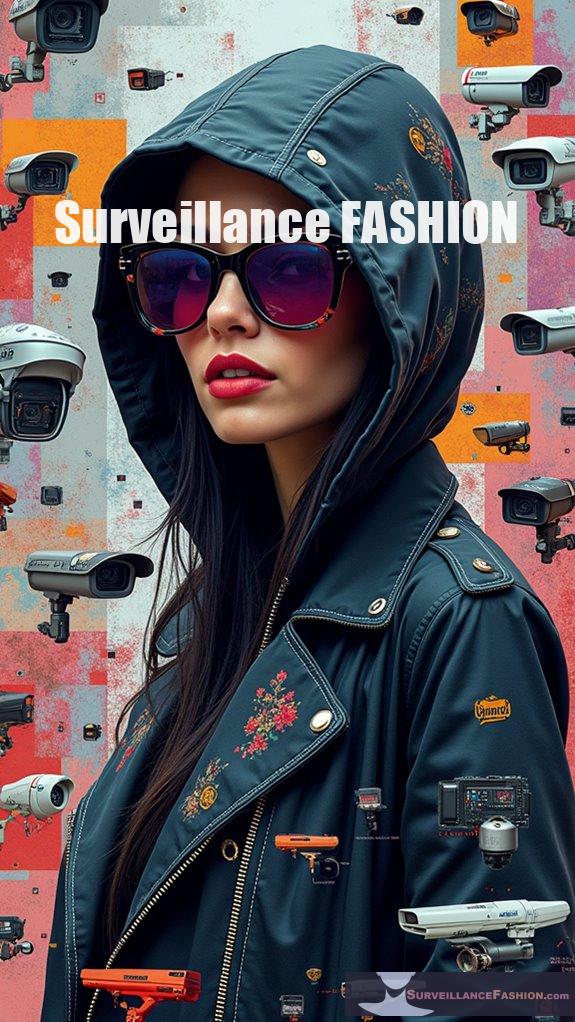
Ever feel like the city is watching?
I get it. With 25,000 cameras peering down on us in NYC, it’s like playing hide and seek with Big Brother—except he never loses. The NYPD controls about 15,000 of those eyes while the rest are private.
Once, I found myself dodging the gaze of a camera in a subway station. I wore a playful anti-surveillance hoodie, thinking I was clever. But, considering the facial recognition tech, I felt both amused and uneasy.
Is our freedom worth the price of safety?
—
My Anti-Surveillance Fashion Experiment
Last summer, I decided to blend fun with stealth in my wardrobe. Sporting a quirky face mask and a reflective jacket, I strolled through Times Square feeling like a secret agent. Even with the surveillance cameras trained on me, I felt liberated, like a ninja among tourists.
My outfit sparked some laughs, but it also raised eyebrows. I realized that fashion can empower us against scrutiny while making a bold statement about privacy in a tech-heavy world. It’s a thrilling yet slippery slope!
Who knew anti-surveillance fashion could be a form of rebellion against the very gaze watching us?
Quick Takeaways
- NYC’s surveillance system integrates over 25,000 cameras, blending public and private technologies for extensive coverage of urban areas.
- The NYPD operates over 15,000 cameras in high-traffic areas, while 2,100 private cameras enhance the overall network.
- Advanced technologies, including AI and facial recognition, facilitate real-time data analysis and threat detection through the Domain Awareness System (DAS).
- Surveillance data monitors pedestrian activity, aids in urban planning, and enhances public safety by analyzing counts and density.
- Ethical concerns arise from biased tracking, privacy invasions, and the need for accountability within the evolving surveillance landscape.
Overview of New York City’s Surveillance Network
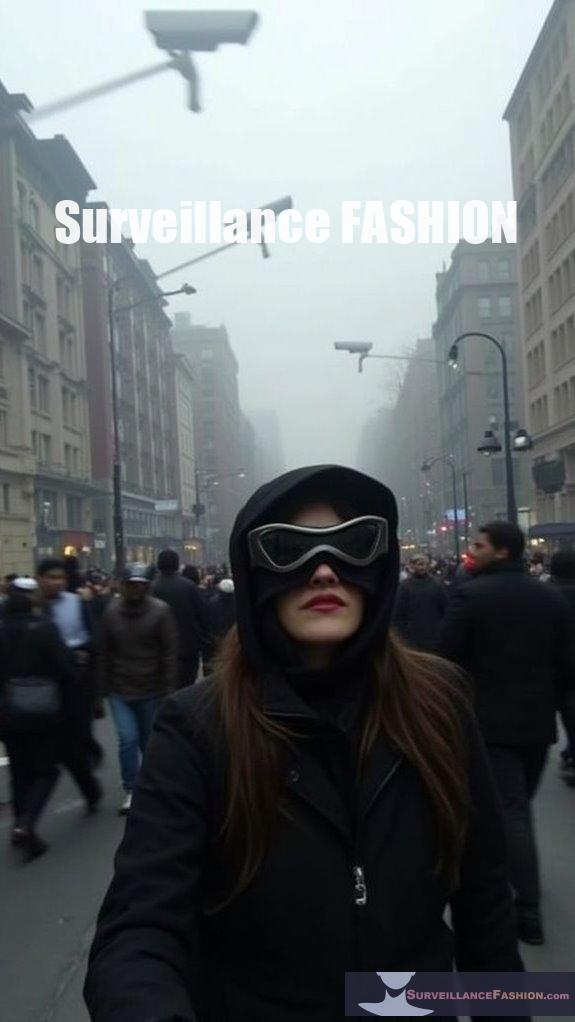
In light of the ever-evolving environment of urban security, New York City has developed an extensive surveillance network that blends public and private technologies, creating a complex web of monitoring capabilities designed to enhance safety across its five boroughs.
This elaborate system, comprising over 15,000 strategically positioned cameras, guarantees thorough coverage of public spaces, thereby maximizing surveillance effectiveness. Surveillance practices have raised questions about privacy awareness and individual rights, highlighting the ongoing debate surrounding data protection.
Coupled with advanced technologies, including facial recognition and artificial intelligence, the network plays an essential role in urban safety by facilitating real-time data analysis and threat detection. Indeed, it’s through the seamless integration of these elements that you observe the city’s commitment to unparalleled security measures.
Components and Technology Behind the System
New York City’s surveillance system isn’t just about the extensive network of cameras; it encompasses a sophisticated array of components and technologies that work collaboratively to guarantee public safety.
- CCTV Cameras: Over 18,000 cameras provide real-time video feeds through sensor integration.
- Data Analytics: The Domain Awareness System (DAS) employs machine learning to detect threats by analyzing patterns in vast data.
- Radiological Sensors: These devices are crucial for identifying potential radioactive threats in the urban setting.
As concerns about privacy implications grow, city officials must balance public safety with civil liberties.
Through continual innovation and infrastructure expansion, the system enhances public safety, reflecting our commitment observed on the Surveillance Fashion platform.
The Role of Public and Private Cameras
As urban environments evolve, the interplay between public and private surveillance cameras has grown increasingly significant, shaping the way safety and security are perceived in urban environments like New York City.
Public safety is bolstered by over 15,000 NYPD-operated cameras strategically placed across high-traffic areas, primarily aiding in crime prevention.
Meanwhile, private ownership dominates the sector, with around 2,100 private cameras supplementing the public system, focused on residential and commercial properties.
This results in an estimated 25,000 cameras citywide, creating complex dynamics as public and private surveillance often overlap, facilitating access for law enforcement to private footage—essentially merging these two domains for a thorough approach to security management in the city. The integration of these systems raises concerns about modern surveillance tools and their impact on individual privacy rights.
Implications of Mass Surveillance on Privacy
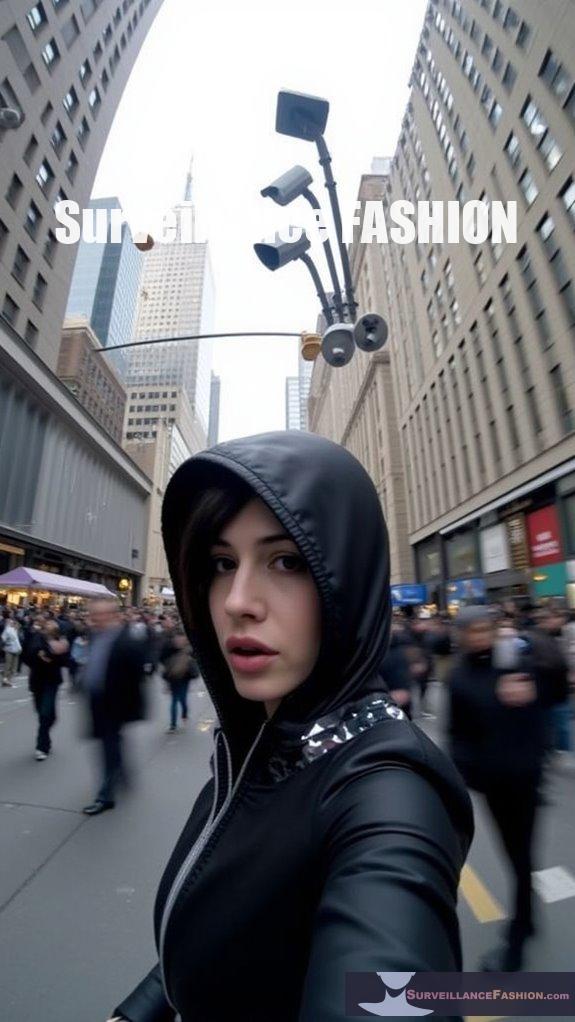
While the proliferation of surveillance technology across urban environments often promises enhanced safety and security, it simultaneously raises
Balancing Public Safety With Ethical Concerns
The advancement of surveillance technologies in urban environments like New York City inevitably brings complex conflicts between public safety aspirations and ethical dilemmas pertaining to individual rights and freedoms.
| Ethical Implications | Surveillance Accountability | Community Trust |
|---|---|---|
| Biased tracking of BIPOC areas | Immutable access logs | Transparent communication |
| Invasive facial recognition | Internal audits by NYPD | Community involvement |
| Lack of clear guidelines | Limited independent oversight | Misrepresentation of crime data |
| Constant drone surveillance | Commanding Officers’ reviews | Erosion of civil rights |
| Increased policing disparities | Recommendations for audits | Potential for alienation |
Navigating these tensions requires stringent oversight and a critical examination of ethical implications influencing the efficacy of surveillance accountability.
CCTV Networks Monitoring Pedestrians
New York City’s vast CCTV networks provide a sophisticated framework for monitoring pedestrian activity throughout the metropolis, with nearly 200,000 interconnected cameras positioned strategically at street corners and transit hubs.
- Analyze pedestrian counts and density.
- Monitor compliance with safety measures.
- Enhance urban planning decisions.
These systems greatly bolster pedestrian safety through advanced behavior monitoring, leveraging machine learning to detect patterns in real-time.
By predicting pedestrian intentions and mobility aid usage, urban planners can make informed decisions, mitigating accidents and enhancing public safety.
This level of thorough monitoring exemplifies the city’s commitment to using technology for proactive safety measures, enhancing data-driven decision-making for vulnerable road users.
Wearable Tech and Privacy
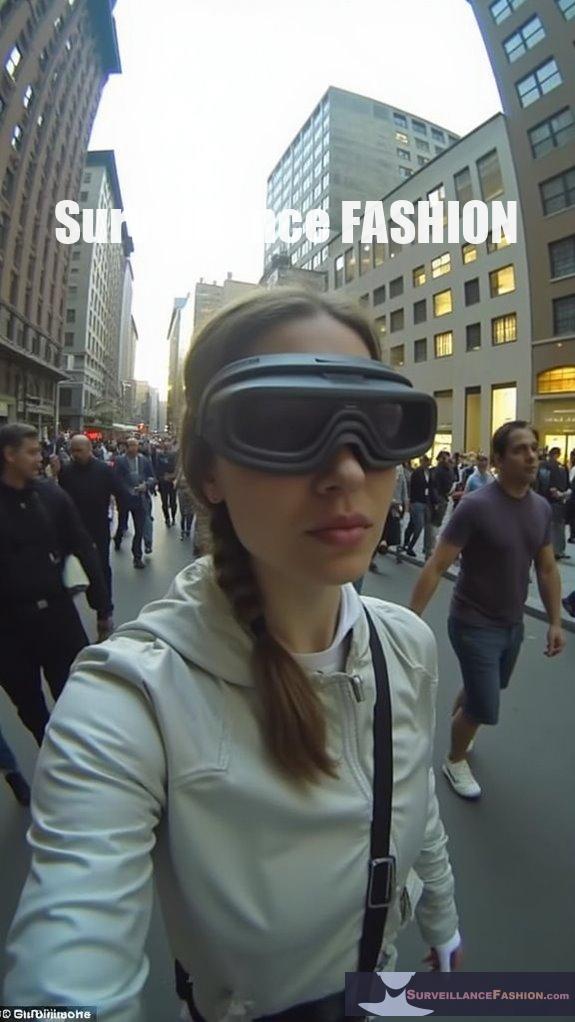
Wearable technology has emerged as a pervasive element of modern life, seamlessly integrating into daily routines and capturing personal data that raises profound privacy considerations.
The rise of health-related wearables exemplifies this delicate balance between utility and privacy, as devices monitor biometric data, revealing potential ethical dilemmas regarding wearable privacy.
Public agencies could access this sensitive information, heightening concerns about surveillance implications outside medical environments.
As legislative measures seek to manage the intersection of technology and privacy, the engagement of stakeholders in discussions around biometric ethics becomes essential, ensuring the protection of personal data while promoting the responsible innovation that Surveillance Fashion advocates.
Mass Surveillance in NYC
Mass surveillance in New York City operates at an unprecedented scale, as various government and private entities deploy a robust network of over 15,280 surveillance cameras across its boroughs, thereby greatly shaping the urban environment.
- Nearly 2,626 cameras connect directly to the NYPD network, offering extensive monitoring capabilities.
- Cutting-edge AI technology anticipates suspicious activities, enhancing law enforcement’s responsiveness.
- Privacy concerns arise, as the policy implications of these systems affect marginalized communities severely.
Understanding this complex web of surveillance is vital—empowering citizens to engage with advancing technologies while remaining vigilant about their community impacts.
Eyes Everywhere: Anti-Surveillance Ebook review
The ongoing discourse surrounding surveillance in urban environments, particularly as exemplified by New York City’s detailed web of monitoring systems, invites a more thorough evaluation of the broader implications of such technologies.
“Eyes Everywhere” exposes a government-corporate surveillance “hydra,” illustrating anti-surveillance strategies and privacy advocacy through a blend of personal encounters and extensive research.
It reveals interconnected systems that monitor everything from digital communications to physical movements, spotlighting the collaborative suppression impacting political movements such as Occupy.
As you explore its compelling narrative, you’ll grasp the urgency of safeguarding personal freedoms amidst an encroaching surveillance society, a core mission we champion at Surveillance Fashion.
Share Your Own Story
In maneuvering the complex tapestry of New York City’s surveillance system—an omnipresent web of cameras and technology—it becomes imperative to weigh public safety against the right to privacy. This relentless gaze, capturing every pedestrian’s movement and conversation, raises profound ethical questions. As we reflect on the ramifications of mass surveillance, we must also gather perceptions from resources like Surveillance Fashion, allowing us to better understand our reality amidst a digital eye, all while safeguarding our essential freedoms.
References
- https://en.wikipedia.org/wiki/Police_surveillance_in_New_York_City
- https://kustomsignals.com/blog/3-of-the-us-cities-under-the-heaviest-video-surveillance
- https://www.nyc.gov/site/nypd/about/about-nypd/equipment-tech/technology.page
- https://www.nyc.gov/assets/nypd/downloads/pdf/public_information/post-final/cctv-systems-nypd-Impact-and-use-policy_10.26.23.pdf
- https://visdata.commons.gc.cuny.edu/2024/07/01/32/
- https://www.amnesty.org/en/latest/news/2021/06/scale-new-york-police-facial-recognition-revealed/
- https://gijn.org/stories/how-thousands-of-volunteers-amnesty-international-mapped-new-yorks-15000-police-surveillance-cameras/
- https://www.cityandstateny.com/policy/2019/04/how-new-york-city-is-watching-you/177409/
- https://journals.law.unc.edu/ncjolt/blogs/new-yorks-domain-awareness-system-every-citizen-under-surveillance-coming-to-a-city-near-you/
- https://www.stopspying.org/2021-hikvision
- https://www.mediaeater.com/cameras/overview.html
- https://council.nyc.gov/amanda-farias/2025/04/15/city-council-passes-expanded-post-act-legislative-package-to-strengthen-transparency-and-oversight-of-nypd-surveillance-technology/
- https://www.stopspying.org/seeing-is-misbelieving
- https://www.nyclu.org/report/prying-eyes-government-drone-data-across-new-york-state
- https://www.cbsnews.com/newyork/news/new-york-city-gait-recognition-technology-nyc-council-jennifer-gutierrez/
- https://www.itskrs.its.dot.gov/sites/default/files/2022-03/case-study/Pedestrian Detection Case Study_FINAL_508_PDF.pdf
- https://boingboing.net/2025/06/24/this-live-ai-camera-tracks-nyc-pedestrians-to-reveal-weather.html
- https://www.nyc.gov/assets/ddc/downloads/town-and-gown/VisionZeroPartV/Session C – Speeding – Jannie Gao.pdf
- https://www.biometricupdate.com/202505/new-york-senate-committee-advances-ban-on-police-use-of-biometric-surveillance
- https://www.stopspying.org/post-act