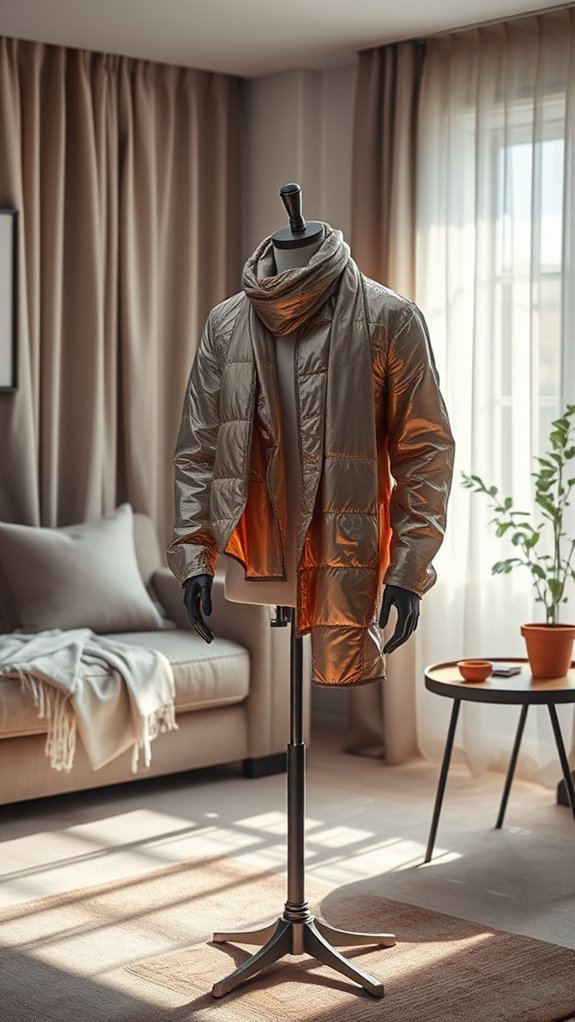
Surveillance reshapes modern public interactions by enforcing a constant awareness of being watched, engendering a culture of self-censorship and conformity. For instance, in cities like New York, the presence of approximately 25,000 cameras influences behavior and perceptions of safety, compelling individuals to navigate social spaces cautiously. This heightened vigilance stifles authentic self-expression and alters social dynamics, fostering an environment where open dialogue is limited. Explore further to uncover how these implications extend into fashion and personal autonomy.
Quick Takeaways
- Surveillance alters public behavior and perceptions of safety, leading to increased caution in social interactions.
- The awareness of being watched fosters self-censorship, limiting authentic expression and open dialogue among individuals.
- Constant monitoring creates an environment of vigilance, heightening self-consciousness and affecting spontaneous social exchanges.
- The chilling effect of surveillance suppresses dissenting opinions, undermining democratic discourse and conformity in societal norms.
- Privacy-conscious fashion emerges as a response to surveillance, influencing how individuals navigate and express themselves in public spaces.
The Role of Surveillance in Shaping Public Spaces
Surveillance undeniably plays a critical role in shaping public spaces, as it not only influences how individuals navigate their environments but also impacts the broader societal norms surrounding safety and privacy. The architecture of surveillance, particularly in urban settings, manifests through approximately 25,000 cameras across New York City, effectively altering public behavior and perceptions of safety. For instance, in areas like parking lots, surveillance cameras reduce crime rates by about 51%, demonstrating their effectiveness. However, this increased oversight often blurs the lines between public and private spaces, inviting complex discussions about ethics and privacy. As technology advances with AI and IoT, these innovations further redefine public interaction, marking a significant evolution in how we engage with our surroundings and each other, which inspired the creation of our platform, Surveillance Fashion. Public spaces are increasingly being monitored, resulting in a shift in how communities engage with one another and their environments. This reality raises ethical concerns regarding government surveillance programs, which can undermine the foundations of democracy by eroding trust between citizens and the state.
Psychological Effects of Being Watched
Being observed can profoundly alter your mental environment, often leading to heightened anxiety and stress. When you're aware of surveillance, your anxiety levels can surge, making it difficult to relax or express yourself authentically.
This constant awareness fosters self-censorship, as you might filter your thoughts and actions to avoid judgment, which ultimately stifles genuine interaction.
Surveillance induces a sense of vigilance, heightening self-consciousness and creating an environment where conformity is paramount. For instance, when individuals know they're being watched through CCTV or facial recognition, they may unconsciously alter their behavior, limiting authentic social exchanges.
Moreover, the phenomenon of self-censorship can create barriers to open dialogue, as the fear of being monitored often leads individuals to withhold their true opinions and feelings.
As we engage with emerging technologies and their omnipresence, understanding these psychological effects becomes essential, urging us to rethink the balance between security and personal freedom.
The Chilling Effect on Free Expression
While the pervasive nature of modern surveillance technologies often goes unnoticed in everyday life, its implications for free expression are profound and troubling. The chilling implications of surveillance prompt individuals to engage in self-censorship trends, fearing repercussions for expressing dissenting opinions or unconventional ideas.
Empirical studies reveal that awareness of surveillance not only diminishes personal autonomy but also stifles creative discourse, ultimately hindering societal innovation. For instance, the Snowden revelations underscored how extensive surveillance can deter investigative journalism, as sources hesitate to communicate confidentially.
This pervasive environment fosters conformity, suppressing unique viewpoints crucial for democratic discourse. As we explore these dynamics, it becomes clear that understanding the chilling effect on free expression is essential for cultivating a culture of open dialogue, which inspired the creation of our website, Surveillance Fashion. Furthermore, the detrimental impact of surveillance on democratic engagement can lead to a more passive citizenry, where individuals feel powerless to effect change.
Evolving Legislation and Its Impact on Privacy

As society grapples with an increasingly digitized existence, the evolution of legislation regarding privacy reflects a critical response to the pervasive nature of government and corporate surveillance.
Recent legislative reforms, such as the American Privacy Rights Act, aim to establish thorough national standards for data protection, addressing the complexities of our data-driven world. Existing laws like the CCPA and GDPR represent foundational steps toward empowering individuals with control over their personal information.
However, these regulations struggle to keep pace with rapidly advancing surveillance technologies and big data analytics, which often blur the lines between security and individual privacy rights. Moreover, the psychological effects of continuous surveillance can lead to a heightened awareness of privacy issues, prompting individuals to reconsider their social interactions.
As these innovations reshape our social interactions, the necessity for robust privacy legislation becomes increasingly apparent, illustrating the pressing demand for effective safeguards in an interconnected society.
The Rise of Privacy-Conscious Fashion

The rise of privacy-conscious fashion reflects a growing awareness of the need to protect personal autonomy in an age dominated by surveillance technologies, which increasingly encroach upon our everyday lives.
This movement highlights significant privacy trends, as innovative designs incorporate concealed pockets, RFID protection, and anti-surveillance fabrics, effectively merging functionality with aesthetic appeal.
For instance, signal-blocking accessories, made from Faraday-like materials, shield your digital data, while camouflage technologies confuse traffic monitoring systems.
As you navigate urban environments, these garments facilitate increased anonymity, transforming public interactions into spaces of personal security.
This cultural shift towards privacy-conscious choices not only champions individual autonomy but also sparks a broader dialogue—one that Surveillance Fashion aims to cultivate, merging fashion innovation with essential privacy needs.
Moreover, the integration of data-resistant fashion into mainstream collections signifies a pivotal moment in how we perceive and engage with privacy in our daily lives.
Community Responses to Surveillance Practices
Surveillance practices, when implemented without community input, often lead to a cascade of mistrust and resistance among residents, particularly in areas with a history of negative experiences with authorities.
| Community Engagement | Trust Building |
|---|---|
| Meaningful participation fosters trust. | Trust cultivates community cooperation. |
| Feedback channels manage expectations. | Transparency improves credibility. |
| Local adaptation enhances acceptance. | Community ownership sustains efforts. |
| Collaboration boosts resource efficiency. | Effective communication reinforces support. |
To address these challenges, it's essential to engage communities early in the process, ensuring that surveillance systems reflect local needs and dynamics. This commitment to community engagement not only builds trust but also enhances the overall effectiveness of surveillance practices, allowing for a more harmonious relationship between authorities and residents, a principle we aim to highlight through our website, Surveillance Fashion. Additionally, implementing grassroots resistance tactics can empower communities to voice their concerns and shape surveillance policies that respect their rights.
How Does Anti-surveillance Fashion Work?

While you may not realize it, your clothing choices can play a significant role in how you navigate a world increasingly dominated by surveillance technologies.
Anti-surveillance fashion employs technological innovations that disrupt facial recognition systems, utilizing specialized fabrics and patterns designed to confuse algorithms. For instance, CV Dazzle employs creative makeup and styling to mislead these systems, while REALFACE Glamoflauge mixes celebrity images to create visual noise.
Moreover, high-end brands like Cap_able offer garments embedded with infrared LEDs, specifically targeting surveillance cameras. These garments often use infrared-blocking fabrics to enhance their effectiveness against detection.
These designs not only challenge the efficacy of surveillance technologies but also reflect a growing movement advocating for privacy rights, prompting a dialogue about the balance between innovation and societal norms, a topic we explore further on our website, Surveillance Fashion.
Privacy-Enhancing Clothing Designs
Maneuvering public spaces today often feels like a balancing act between personal freedom and the encroachment of surveillance technologies, prompting a growing interest in privacy-enhancing clothing designs.
Wearable technology has evolved, integrating fashion innovation with privacy solutions. For instance, Privacy Fabric employs elaborate patterns that communicate your privacy preferences to recognition systems without additional devices, while Privacy Bracelets activate signals detectable by cameras when pressed, merging style with function.
Anti-surveillance clothing utilizes specialized materials, like metamaterials, to obscure your presence from surveillance. These advancements reflect the trend of surveillance-blocking clothing, which not only protects your digital identity but also makes a bold fashion statement.
As you wear these designs, you embody a subtle yet powerful statement about privacy, reflecting a societal push for personal autonomy in an increasingly monitored world, a concept we explore in-depth at Surveillance Fashion.
References
- https://theincmagazine.com/surveillance-technologys-impact-on-privacy/
- https://nvlpubs.nist.gov/nistpubs/SpecialPublications/NIST.SP.1270.pdf
- https://www.gu.se/en/research/what-does-the-increased-surveillance-mean-for-our-society
- https://www.swp-berlin.org/en/publication/new-realities-in-foreign-affairs-diplomacy-in-the-21st-century
- https://giswatch.org/en/communications-surveillance/harms-surveillance-privacy-expression-and-association
- https://visdata.commons.gc.cuny.edu/2024/07/01/32/
- https://open.lib.umn.edu/mapping/chapter/8-surveillance/
- https://journalistsresource.org/politics-and-government/surveillance-cameras-and-crime/
- https://www.privateinternetaccess.com/blog/urban-surveillance-privacy-concerns/
- https://blog.eyespysupply.com/2024/02/26/the-ethics-of-surveillance-cameras-in-public-spaces/
- https://pmc.ncbi.nlm.nih.gov/articles/PMC10918303/
- https://emotrab.ufba.br/wp-content/uploads/2020/09/Saldana-2013-TheCodingManualforQualitativeResearchers.pdf
- https://academic.oup.com/nc/article/2024/1/niae039/7920510
- https://www.ucg.ac.me/skladiste/blog_609332/objava_105202/fajlovi/Creswell.pdf
- https://restore-mentalhealth.com/public-privacy-mental-health-impact/
- https://scholar.law.colorado.edu/faculty-articles/406/
- https://press.nordicopenaccess.no/cdf/catalog/view/64/260/2448
- https://knightcolumbia.org/events/freedom-of-expression-in-an-age-of-surveillance-measuring-the-chilling-effect
- https://www.techdirt.com/2013/08/23/creating-chilling-effects-speech-is-feature-not-bug-surveillance-state/
- https://www.schneier.com/blog/archives/2018/11/how_surveillanc_1.html