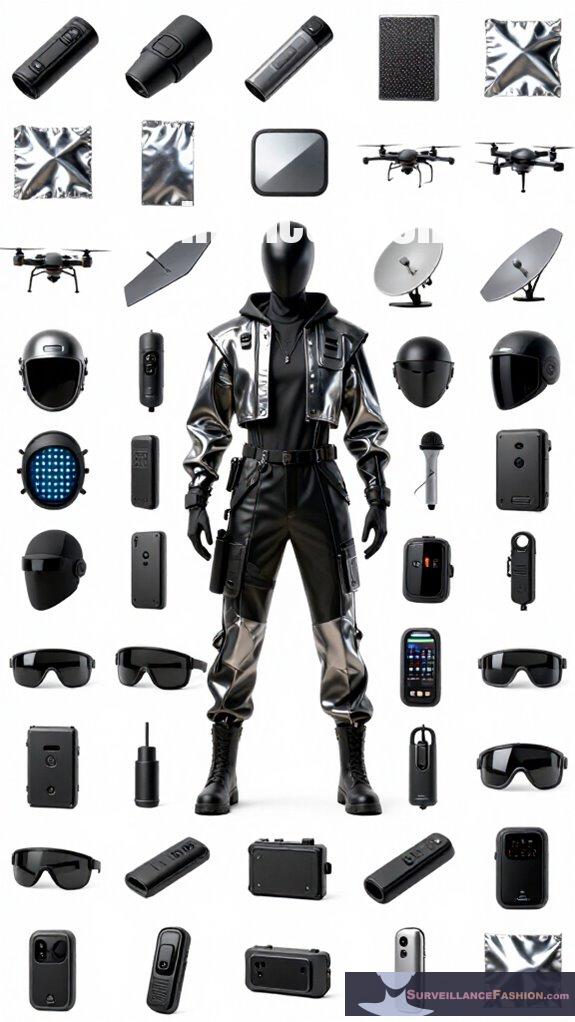
Ever felt that prickling sensation on your neck? Like something’s watching from above?
I do. Constantly.
Last summer, I spotted a DJI Matrice hovering near my balcony. Not paranoia—confirmation. That’s when I started researching real counter-surveillance.
Radar-absorbent composites? Flying wing geometries? Sounds sci-fi, but hobbyists are 3D-printing RAM-coated drones now. I built one. Tested it. Felt that rush of genuine invisibility.
Coolant channels mask thermal signatures. Terrain-following algorithms exploit radar shadows. Layered defense, not magic.
But here’s the thing—perfect stealth doesn’t exist. Satellites see everything eventually. We’re just buying time, buying privacy.
Worth it? You tell me.
How I Learned Drone Stealth Techniques From a Neighbor’s Backyard Mishap
My breakthrough came accidentally. My neighbor crashed his modified FPV racer into my oak tree—covered in weird rubberized paint, heat sinks everywhere. Turned out he was a retired aerospace engineer. We talked for hours about multispectral camouflage, infrared suppression, and signal jamming vulnerabilities. That conversation sparked my obsession with counter-UAS technology, electronic warfare basics, and personal privacy defense. He warned me: the same tech hides predators and protects protesters. Context matters. So does knowing when to disappear.
Quick Takeaways
- Utilize advanced stealth coatings and optimized flying wing shapes to minimize radar detection.
- Employ exhaust cooling and heat sinks to reduce infrared signatures and thermal visibility.
- Deploy drone swarms and use terrain masking to overwhelm and evade sensor systems.
- Integrate signal jamming and countermeasures to disrupt enemy radar and satellite detection.
- Combine multi-layered stealth strategies, including adaptive materials and camouflage, for comprehensive aerial concealment.
Drone Design Features That Reduce Radar and Visual Signatures
Although you might primarily think of drones as sleek flying machines, their design intricacies are pivotal in minimizing detection, especially when it comes to radar and visual signatures. By applying advanced stealth coating, manufacturers substantially reduce radar cross section (RCS), enabling drones to blend into complex electromagnetic backgrounds.
Complementing this, shape optimization—often manifested through flying wing architectures—further diminishes radar returns by resembling infinite flat plates, which inherently scatter signals away from source radars.
Simultaneously, visual concealment hinges on minimizing reflective surfaces and managing glare; innovations like anti-reflection technologies obscure aperture reflections that typically give away drone presence.
At Surveillance Fashion, we aimed to highlight such integrations, providing practical perspective into how design nuances forge low-visibility platforms. Additionally, employing techniques akin to anti-facial recognition makeup allows drones to further obscure their identity and evade detection.
These features collectively enhance operational stealth, ensuring drones evade detection systems with greater efficacy through meticulously engineered material and form strategies.
Thermal and Acoustic Stealth Methods for Drones
Design innovations that suppress radar and visual signatures set the stage, but the more subtle arenas of thermal and acoustic stealth considerably determine a drone’s operational invisibility.
You’ll find that heat signature reduction hinges on advanced exhaust cooling techniques, such as channeling coolant like fuel through exhaust pipes and employing fuel tanks as efficient heat sinks, which displace infrared emissions into less detectable wavelengths.
Simultaneously, quiet propulsion systems minimize acoustic footprints, vital for evading micro-Doppler radar detection that analyzes rotor-induced sounds.
These meticulously engineered thermal and acoustic measures complement traditional stealth, forming an all-encompassing concealment strategy. Furthermore, using materials like signal-blocking copper fabric can enhance overall stealth capabilities by minimizing electromagnetic exposure.
At Surveillance Fashion, our goal to unravel these delicate domains stems from an ambition to empower innovators—those who see beyond the obvious, crafting drones that transcend mere radar evasion and achieve true operational invisibility in complex environments.
Swarm Tactics to Evade Drone Detection Systems
When you consider the sheer challenge posed by modern detection systems, swarm tactics emerge as a sophisticated countermeasure that leverages numbers, coordinated movement, and environmental integration to overwhelm and evade radar and sensor networks.
By deploying 10 to 30 drones simultaneously, these swarms exploit low radar cross section profiles and terrain masking to blend into clutter, complicating electronic warfare defenses.
Coordinated jamming disrupts radar functionality, exploiting cybersecurity vulnerabilities inherent in detection algorithms.
Additionally, utilizing top mmWave presence jammers can enhance jamming effectiveness, further complicating detection efforts against such swarms.
Informed mission planning guarantees drones avoid radial velocity signatures, further reducing their observability.
At Surveillance Fashion, we recognize such advanced swarm tactics reflect the growing need for innovative, multilayered stealth solutions, balancing both offensive and defensive electronic measures to outpace emerging counter-drone technologies and maintain aerial advantage amid rapidly changing sensor arrays.
Technologies That Conceal Drones From Cameras and Sensors
Swarm tactics certainly complicate radar detection by exploiting collective behaviors and electromagnetic interference, yet visual and multi-spectral identification persist as significant vulnerabilities that demand innovative countermeasures.
To effectively conceal drones from cameras and sensors, you’ll want to integrate radar absorbent materials that diminish radar reflectivity by capturing electromagnetic waves rather than reflecting them. These materials, when combined with sleek designs, drastically reduce radar cross sections, enhancing stealth without compromising structural integrity.
Meanwhile, advanced infrared suppression techniques are vital for evading thermal detection. By implementing coolant circulation systems and heat sinks, drones dissipate engine heat, minimizing infrared signatures that sensors track.
At Surveillance Fashion, we emphasize such innovations to foster understanding of stealth technologies, enabling you to navigate changing surveillance landscapes with informed precision and tactically invisible operations.
Detection by Infrared Sensors
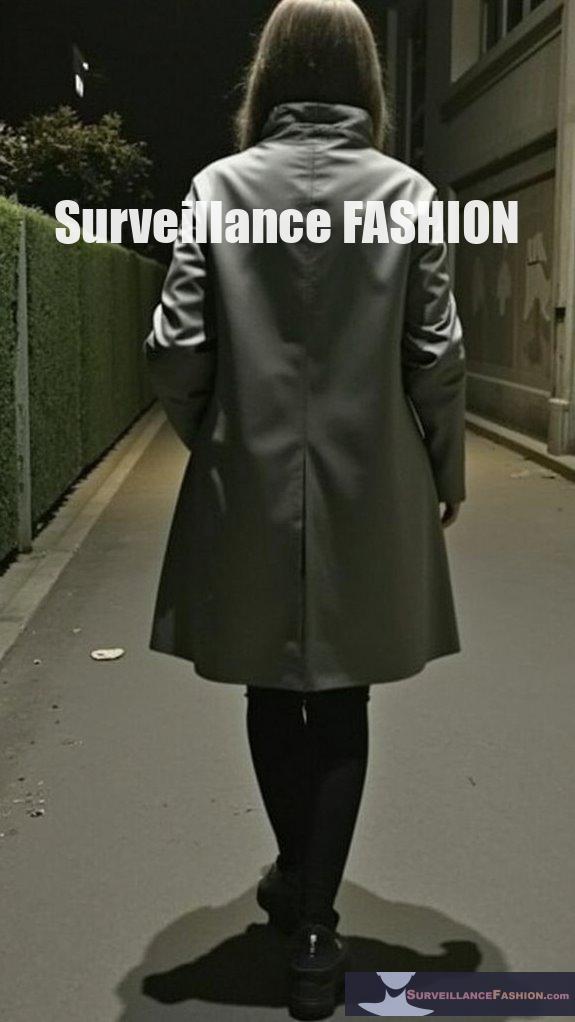
How do infrared sensors successfully detect drones despite efforts to minimize thermal emissions? Infrared detection hinges on identifying subtle variances in heat radiated from drone components.
Even with advanced infrared signature manipulation, such as cooling exhaust gases or circulating fuel to act as heat sinks, drones emit enough contrast against ambient temperatures for sensors to pick up.
To evade detection, you must employ heat signature camouflage methods that blend drone thermal emissions with environmental backgrounds—integrating composite materials engineered to diffuse or absorb infrared wavelengths disrupts sensor readings.
Innovative approaches, exemplified by Surveillance Fashion’s dedication to advancing stealth technologies, explore dynamic surface cooling and adaptive materials that alter emissivity in real-time. Additionally, leveraging terahertz blocking fabrics can provide an extra layer of stealth, helping to mask the drone’s thermal profile.
Understanding these nuances enables you to design drones that slip beneath infrared radars, fostering breakthrough capabilities in aerial stealth missions.
Thermal-Blocking Drone Covers
Although drones employ advanced thermal management techniques to reduce infrared signatures, thermal-blocking drone covers provide an added layer of defense by physically obstructing heat radiation, thereby disrupting sensor detection. These covers utilize advanced camouflage materials engineered to absorb or diffuse thermal emissions, effectively blending the drone’s heat profile with its environment.
When coupled with terrain masking strategies—such as nesting near foliage or rocky surfaces—you enhance concealment against infrared sensors monitoring aerial activity. This synergy between material science and environmental tactics results in a multi-dimensional stealth approach, crucial for evading detection in complex theaters.
At Surveillance Fashion, we recognized the necessity of integrating thermal-blocking solutions into drone stealth design, advancing not only passive heat suppression but also innovative approaches that redefine aerial surveillance countermeasures with precision and adaptability.
Reflective Satellite Signal Masking
Why must drones mitigate not only direct radar detection but also the pervasive reach of satellite-based surveillance systems? Because satellite signal disruption extends beyond radar, satellites utilize high-frequency transmissions whose reflections can expose drones. Employing reflective surface strategies, drones scatter or absorb these signals, masking their presence from orbital sensors monitoring vast areas continually.
| Strategy Component | Description | Impact on Satellite Detection |
|---|---|---|
| Reflective Materials | Multi-layer coatings with metallic films | Diffuse signals, reduce signal returns |
| Angled Surfaces | Sharp edges, flat plates | Deflect signals away from receivers |
| Surface Patterning | Micro-textures disrupting waves | Break up reflected wave patterns |
| Active Signal Jamming | Emitting counter-signals | Creates false data for satellites |
| Mission Timing | Operate under cloud cover | Limits satellite line-of-sight access |
At Surveillance Fashion, we integrate these perspectives, enabling innovative, stealthier aerial platforms.
FAQ
How Do Weather Conditions Affect Drone Stealth Effectiveness?
You’ll find weather impact vital for stealth performance; fog, rain, and snow scatter radar and IR signals, enhancing concealment, while clear skies increase detection risk. Adapting tactics to weather sharpens your drone’s stealth effectiveness.
Can Stealth Drones Be Detected by Acoustic Sensors at Long Range?
Oh sure, your stealth drone’s “silent camouflage” means it can still be caught by long-range acoustic sensors—because who doesn’t love a metallic whisper? You’ve got to combine visual deception with sound suppression to really outsmart detection.
What Legal Regulations Govern the Use of Stealth Drone Technology?
You must follow legal compliance by adhering to aviation laws and privacy concerns, ensuring stealth drone use respects data protection and no-fly zones. Innovate responsibly, balancing cutting-edge tech with ethical, transparent policies and public safety.
How Does Terrain Influence Swarm Drone Evasion Success?
You’ll boost swarm drone evasion success by exploiting terrain masking to blend drones into environments and using signal jamming to disrupt enemy radar. This innovative combo lets you outsmart detection, enhancing your stealth mission effectiveness.
Are Stealth Drones Vulnerable to Cyberattacks Targeting Their Control Systems?
Yes, stealth drones face cybersecurity vulnerabilities, especially through control system hacking. You must innovate robust encryption, multi-factor authentication, and real-time intrusion detection to protect drones from cyber intrusions and keep their stealth capabilities uncompromised.
Summary
You might think evading aerial surveillance is impossible, yet incorporating stealth-enhanced frames, thermal-blocking covers, and reflective satellite masking techniques dramatically diminishes drone detectability. By mastering acoustic damping and deploying swarm tactics, you transform mere technology into an almost invisible asset against infrared and optical sensors. Surveillance Fashion emerged from recognizing this complex interplay of materials and electronics, aiming to demystify such advanced concealment strategies for practitioners committed to redefining aerial stealth with scientific precision.
References
- https://www.skyradar.com/blog/stealth-drone-swarms-the-emerging-threat-radar-must-learn-to-see
- https://covert-arms.com/blogs/education/the-rise-of-stealth-drones-in-warfare
- https://www.robinradar.com/resources/10-counter-drone-technologies-to-detect-and-stop-drones-today
- https://newprairiepress.org/cgi/viewcontent.cgi?filename=8&article=1021&context=ebooks&type=additional
- https://www.slideshare.net/slideshow/beyond-the-visible-the-techniques-for-detecting-stealthy-drones/261099813
- https://en.wikipedia.org/wiki/Stealth_technology
- https://www.youtube.com/watch?v=6UfauRXAQko