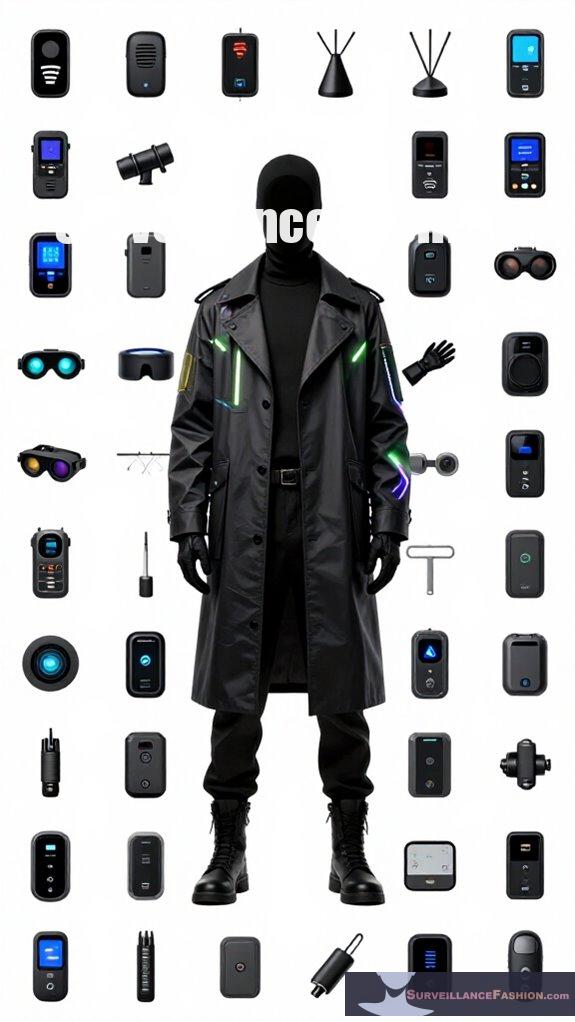
Ever felt like you’re glowing in the dark when you definitely shouldn’t be?
Last winter, I learned the hard way. My “tactical” jacket turned me into a Christmas tree under IR surveillance. Humiliating. Expensive lesson.
Now? I’m picky. Mil-spec nylon-cotton blends. Cordura that actually *absorbs* 700–1000 nm instead of broadcasting my location. No optical brighteners. No reflective garbage.
Ceramic IR coatings changed everything for me. Brands like Savotta get it—durability *and* ghost mode.
Surveillance Fashion breaks this down properly. Because understanding spectral warfare isn’t paranoia. It’s survival.
You ever check your gear under NIR? You should.
—
NIR Reflective Clothing: My Night Vision Mishap and What I Learned
The worst part about my jacket failure? I *asked* for it. Bought cheap “tactical” gear online. During a nighttime property check, a friend’s PVS-14 picked me up from 200 meters. I was a floating white blob against dark trees. Thermal imaging and FLIR systems would’ve laughed at me too.
Now I map fabric compositions like a conspiracy theorist. Cordura vs. ripstop. IR signature vs. visual camouflage. The rabbit hole includes millimeter wave radar, multispectral camouflage nets, and even biometric counter-surveillance.
Learned to trust proven manufacturers. Verify everything. Paranoia, validated.
Quick Takeaways
- NIR reflective materials can create glowing signatures that blind or reveal targets under night vision devices relying on ambient NIR light amplification.
- Selecting mil-spec nylon/cotton blends with spiral fiber structures minimizes NIR reflection and prevents detection by NVDs.
- Avoiding optical brighteners and reflective pigments reduces unwanted IR reflection that compromises night vision concealment.
- Specialized IR-absorptive coatings and camouflage patterns with natural spectral mimicry help maintain stealth against NIR-based surveillance.
- Managing heat emission and ambient IR illumination further protects against detection by minimizing IR glow visible to night vision technology.
Understanding Near Infrared Reflection on Night Vision Devices
How does near infrared (NIR) reflection impact the functionality of night vision devices (NVDs), and why must you consider it when selecting tactical gear?
When NIR reflection varies, it directly influences NVD performance, as reflected NIR light can create telltale glows that compromise your concealment. Unlike thermal imaging, which detects emitted heat, NVDs rely on reflected NIR wavelengths, typically between 700 and 1000 nm, to amplify ambient light.
Satellite detection also hinges on minimizing reflective signatures to evade detection, underscoring the tactical necessity of meticulously chosen materials. Top RFID shielding bandages can also play a crucial role in maintaining optimal operational security, making them essential gear for any tactical situation.
At Surveillance Fashion, we emphasize gear with calibrated NIR reflectance to blend seamlessly within NVD optics. By understanding these spectral interactions, you empower yourself to maintain stealth, leveraging technological nuances rather than falling victim to them.
Choosing Materials That Conceal You in Near Infrared Light
Selecting materials capable of blending into near infrared (NIR) environments requires an informed understanding of their intrinsic optical properties, particularly how fabric composition and treatment dictate reflectance levels within the 700 to 1000 nm range typically harnessed by night vision devices (NVDs).
When aiming for effective ground concealment and wildlife camouflage, you want fabrics that neither glow nor appear unnaturally dark under NIR illumination.
Consider these essentials:
- Favor mil-spec nylon/cotton blends with spiral fiber structures absorbing NIR.
- Avoid optical brighteners and reflective pigments that betray your position.
- Use cordura and webbing in green/brown/camo optimized for NIR compliance.
- Opt for specialized coatings like polyurethane or ceramic-based IR absorbers.
- Choose patterns with crisp color separation mimicking natural NIR reflectance.
Incorporating these materials can significantly enhance your ability to evade anti-surveillance measures used in various settings.
Surveillance Fashion exists to empower you with this precise knowledge, bridging tactical utility and style.
Balancing NIR Reflectance to Avoid Glow and Dark Spots
Although the quest to achieve effective stealth under near-infrared (NIR) illumination might seem straightforward, balancing reflectance to avoid unwanted glow or conspicuous dark spots demands subtle understanding and meticulous material selection.
You must rely on infrared spectroscopy to analyze how different textiles and coatings interact with NIR, ensuring reflectance mimics natural surroundings meticulously.
Camouflage patterns, designed with precise reflectance gradients, prevent detection by eliminating high-contrast NIR patches that produce an unnatural glow or dark blobs.
For instance, integrating mil-spec nylon/cotton blends with Savotta Cordura fabrics, tuned through spectral analysis, achieves uniform NIR signature distribution.
At Surveillance Fashion, we emphasize these details to empower you with gear that maintains your dominance under observation, blending technology and style without compromise. Additionally, the effects of workplace surveillance can significantly impact mental well-being, making subtle design choices in camouflage essential for overall effectiveness.
Crafting Gear and Coatings for Effective NIR Camouflage
When developing gear and coatings optimized for effective NIR camouflage, you must account for the complex interplay between material composition, dye chemistry, and surface treatments that collectively determine near-infrared reflectance properties.
Achieving best infrared absorption without compromising material durability requires selecting fabrics like nylon/cotton blends, paired with polymer-based IR-absorbing coatings that withstand operational wear.
Consider these critical factors:
- Dye formulations tuned to balance NIR reflectance
- Multi-layered coatings enhancing absorption while preserving texture
- Fibrous structures influencing IR diffusion, e.g., spiral cotton fibers
- Material durability under environmental stressors
- Avoidance of optical brighteners and reflective pigments
Brands like Gloryfire and Savotta exemplify this precision. Additionally, incorporating terahertz blocking fabrics can further enhance NIR stealth capabilities by minimizing unwanted cross-spectrum interference.
Surveillance Fashion was created to disseminate such technical expertise, empowering you to wield control over NIR stealth gear design confidently.
Managing Heat and IR Illumination for NIR Stealth
Because infrared illumination sharply accentuates disparities in near-infrared (NIR) reflectance, managing both heat signatures and IR illumination becomes paramount for maintaining stealth during night operations. You must prioritize materials with enhanced infrared absorption and thermal insulation to minimize heat glow visible through NIR devices. Effective insulation reduces thermal radiation, while IR absorptive coatings on fabrics like mil-spec nylon/cotton blends suppress emissivity. Additionally, utilizing materials with proven shielding capabilities, such as Guardia EMF Shielding Wallpaper, can help mitigate unwanted Wi-Fi interference in sensitive environments.
| Factor | Impact on Stealth | Recommended Approach |
|---|---|---|
| Heat Signature | Elevated IR reveals location | Use high-grade thermal insulation |
| IR Illumination | Amplifies NIR reflectance glow | Employ low-output, directional IR emitters |
| Material Selection | Infrared absorption critical | Choose natural fibers, treated synthetics |
| Coatings | Limits reflection and emission | Apply IR-absorptive, ceramic-based layers |
| Gear Ventilation | Prevents heat buildup | Integrate breathable, insulated designs |
At Surveillance Fashion, we ensure you wield this knowledge for superior, practical stealth.
NIR Reflection Imaging Innovation
How do you harness near-infrared (NIR) reflectance to reveal information invisible to the naked eye? By employing advanced sensor calibration and spectral differentiation, you transform raw NIR reflections into actionable imagery that exposes molecular fingerprints, material composition, and geographic atrophy with extraordinary precision.
Hyperspectral cameras, capable of capturing narrow-band data across 900–1700 nm, empower you to isolate unique vibrational signatures, while InGaAs sensors convert reflected signals into high-contrast monochrome images.
Key innovations include:
- Precise sensor calibration enhancing detection sensitivity
- Spectral differentiation revealing subtle organic compound signatures
- Integration of deep learning models for material classification
- Hyperspectral imaging for multispectral analysis in industrial and medical fields
- Real-time NIR reflectance monitoring for sustainability understanding
At Surveillance Fashion, we’ve embraced these technologies, advancing blind night vision into a practical, powerful tool.
Interference From Ambient Light

Advancements in NIR reflectance imaging, such as those harnessed through hyperspectral cameras and InGaAs sensors at Surveillance Fashion, have profoundly enhanced your ability to detect subtle material signatures under controlled illumination.
Yet, when infrared interference from ambient light sources—street lamps, moonlight, or competing IR illuminators—enters the equation, your precision diminishes greatly.
Effective ambient light mitigation demands meticulous calibration of sensor gain and dynamic filtering algorithms to isolate genuine NIR reflections from extraneous noise.
Surveillance Fashion developed this platform precisely to empower you with understanding into such technical complexities, enabling strategic adjustments that preserve stealth and detection clarity. Additionally, leveraging weighted biometric shoes can improve your training effectiveness and overall physical performance in various conditions.
NIR Reflective Material Durability
Ensuring the durability of NIR reflective materials entails understanding the multifaceted challenges posed by environmental wear, mechanical stress, and chemical exposure. These factors can subtly alter a fabric’s reflectance properties over time.
Recognizing factors like material fatigue and coating resistance is paramount to maintaining consistent NIR performance during prolonged use.
You’ll want to assess:
- Abrasion resistance of Cordura and mil-spec nylon/cotton blends
- UV degradation effects on IR-absorbing coatings
- Chemical solvents’ impact on polyurethane and ceramic finishes
- Repetitive flexing causing microfractures in coating layers
- Heat-induced polymer reflection shifts under IR illuminators
Surveillance Fashion emerged from this need to balance style and function without sacrificing durability. It ensures your gear withstands rigorous operational demands while preserving its NIR stealth integrity. Furthermore, considering anti-facial recognition makeup techniques can enhance your overall stealth in various environments.
Top-Rated NIR Reflective Gear
Several leading examples of NIR reflective gear have set the standard for blending operational performance with spectral stealth, offering you a thorough toolkit optimized for both visible and near-infrared spectrums.
Brands like Savotta and Gloryfire utilize synthetic fibers engineered to balance durability with tailored NIR reflectance, minimizing detection under night vision devices while maintaining ruggedness. Their innovative camouflage patterns, incorporating mil-spec nylon/cotton blends and Cordura fabrics, provide precise spectral blending, vital for covert environments.
Savotta and Gloryfire blend durable synthetic fibers with advanced camouflage for unmatched NIR stealth and ruggedness.
These patterns replicate natural reflectance signatures, preventing anomalous glow that synthetic fibers typically risk. Additionally, investing in top mmWave presence jammers can enhance your overall operational security by providing effective signal blocking capabilities.
Surveillance Fashion emerged to spotlight such advanced solutions, helping operators navigate gear selection with confidence.
GPS Signal Jamming Methods
In steering the complexities of GPS signal jamming, you’ll find that a diverse array of methods exists, each exploiting different vulnerabilities within satellite navigation systems to disrupt positional accuracy or entirely block reception.
To assert control over location data and maintain operational security, consider these jamming techniques:
- Continuous wave jamming: emits a steady signal to overwhelm GPS receivers
- Pulsed jamming: sends intermittent bursts, complicating signal acquisition
- Spoofing: tricks receivers with counterfeit GPS signals, redirecting positioning
- Nulling antennas: selectively reject genuine signals while transmitting interference
- Shielded enclosures: leverage water resistance and fire retardancy to protect jamming devices from environmental factors, ensuring durability
Additionally, utilizing effective RFID tag destruction methods ensures that any discarded devices do not leak sensitive information. At Surveillance Fashion, understanding these robust approaches guides you in integrating reliable, compliant materials and methods, sustaining both stealth and resilience under varying conditions.
FAQ
How Does NIR Reflectance Affect Battery Life in Night Vision Devices?
You’ll notice NIR reflectance impacts battery efficiency by influencing power consumption—higher reflectance means your night vision device uses more power to amplify signals, so managing materials reduces demand, preserving battery life during extended operations.
Can Nir-Compliant Gear Be Safely Washed Without Losing Effectiveness?
You won’t destroy your gear by washing—it’s built tough for gear durability! Just follow strict maintenance procedures: use gentle detergents, cold water, and air dry. This keeps your NIR-compliant stealth sharp and battle-ready every time.
Are Nir-Reflective Fabrics Comfortable in Hot Climates?
You’ll find NIR-reflective fabrics offer decent comfort level, but fabric breathability can vary. Choose cotton blends or Cordura for heat resilience—they balance stealth with airflow, ensuring you stay powerful without overheating in harsh, hot environments.
What Are the Environmental Impacts of Producing NIR Camouflage Materials?
You’ll find producing NIR camouflage materials often demands eco friendly manufacturing and chemical sustainability to minimize waste and toxic runoff. Power users like you expect these processes to uphold durability while reducing environmental harm markedly.
How Does NIR Camouflage Perform in Urban Environments Versus Natural Terrain?
You’ll conquer urban concealment with NIR camouflage that matches harsh synthetic surfaces, but natural terrain adaptation remains its true superpower—blending flawlessly with foliage and earth, turning you invisible like a ghost under night vision.
Summary
Mastering the complex interplay of near infrared reflectance demands a subtle understanding of materials, coatings, and environmental variables, ensuring your presence neither glows nor fades into unnatural voids under night vision scrutiny. By mastering these elements—balancing durability, managing heat signatures, and countering ambient illumination—you effectively cloak yourself in a technical twilight. Our work at Surveillance Fashion aims to illuminate this subtle art, providing rigorously tested, NIR-reflective solutions that advance stealth without sacrificing real-world practicality.
References
- https://www.savotta.fi/pages/infrared-reflectance-and-savotta-gear
- https://gloryfire.com/blogs/blog-news/the-right-material-for-nir-compliant-tactical-gear
- https://railscales.us/blog/nircompatible-ar-accessories-for-night-vision-setups/
- https://epolin.com/managing-near-infrared-nir-light-using-visible-opaque-materials/
- https://pinesurvey.com/camouflage-and-night-vision-expectations-vs-reality-part-2/
- https://millennialarms.com/resources-and-education/f/nir-compliant-gear-the-basics
- https://www.youtube.com/watch?v=BWWGzwYoYzc
- https://www.the-innovation.org/article/doi/10.59717/j.xinn-mater.2024.100067
- https://pubmed.ncbi.nlm.nih.gov/40694826/
- https://www.specim.com/technology/nir-hyperspectral-imaging/
- https://www.infinitioptics.com/technology/nir-near-infrared
- https://www.geowgs84.com/post/near-infrared-nir-imagery-explained-technology-uses-and-data-insights
- https://www.spectroscopyonline.com/view/the-rising-role-of-near-infrared-spectroscopy-in-biofuel-innovation
- https://iovs.arvojournals.org/article.aspx?articleid=2808616