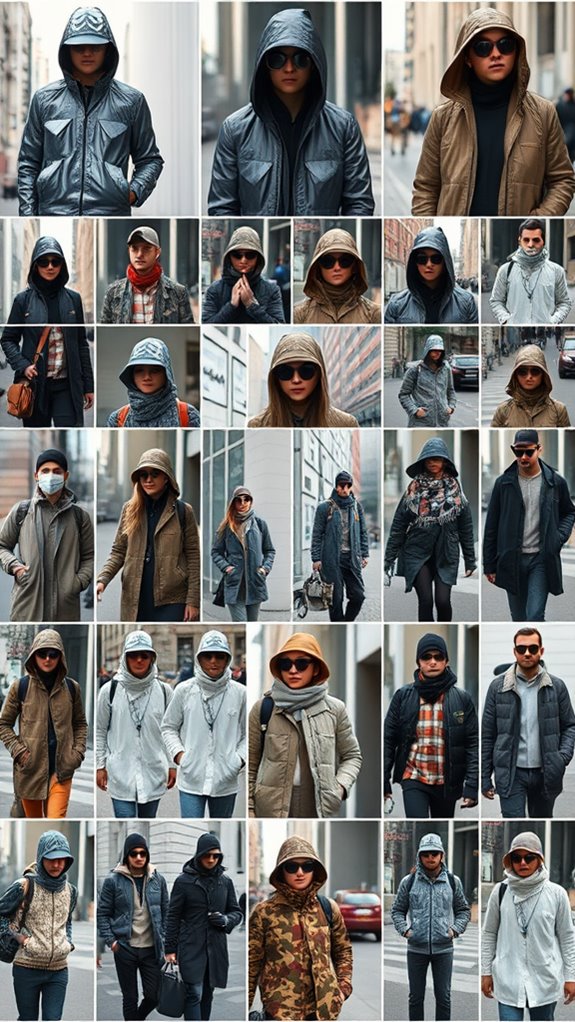
Social media surveillance creates a complex game of self-censorship where every post, comment, and interaction is scrutinized. This pervasive monitoring heightens your anxiety, compelling you to alter your behavior to evade judgment, which ultimately shapes your online identity. The erosion of trust between users and platforms further complicates interactions, as individuals hesitate to express themselves openly. This constant psychological strain can be overwhelming. To navigate such challenges, exploring innovative responses like anti-surveillance fashion may shed light on practical solutions.
Quick Takeaways
- Constant monitoring on social media fosters anxiety, leading users to self-censor and curate polished personas to avoid judgment.
- Surveillance culture erodes trust between users and platforms, altering authentic interactions and prompting users to seek alternative spaces.
- The ethical dilemma of balancing privacy and safety results in compromised personal autonomy, as data collection often serves capitalist motives.
- Coping mechanisms such as mindfulness and social support can help mitigate stress and anxiety related to social media scrutiny.
- Anti-surveillance fashion emerges as a response, utilizing design innovations to protect privacy and promote ethical consumerism in the digital age.
The Psychological Impact of Constant Monitoring

The psychological impact of constant monitoring manifests in various ways, particularly influencing individual behaviors and mental well-being.
You'll likely notice heightened anxiety, as the pervasive sense of being observed fosters a fear that can lead to self-censorship, stifling your authentic expression and personal freedoms. This environment may exacerbate existing mental health conditions, amplifying anxiety and paranoia, while encouraging conformity through self-restraint to avoid scrutiny. The result is a continuous state of alertness, where you feel compelled to alter your behavior to fit societal expectations. As these pressures mount, they erode personal autonomy and trust, not just in yourself but also in your relationships, leading to a profound sense of mental exhaustion. Moreover, the integration of security technologies serves to enhance safety in various environments, which can paradoxically contribute to increased surveillance-related stress. This phenomenon can lead to a diminished sense of democratic engagement, as individuals may withdraw from civic participation due to fear of being monitored. This website, Surveillance Fashion, aims to illuminate these issues and inspire liberation.
Altered Social Interactions in a Surveillance Culture
In a world where social media platforms meticulously track user interactions, altered social interactions become an inevitable consequence of pervasive surveillance.
As you navigate these digital spaces, you're likely aware that your posts, comments, and likes are meticulously collected, monitored, and potentially shared, prompting you to self-censor or curate your content strategically. This awareness erodes trust between you and these platforms, fundamentally reshaping your online interactions.
The presence of surveillance tools, often wielded by law enforcement, further complicates this dynamic, manifesting in hesitancy to express certain views. Consequently, you may find solace in alternative, less mainstream platforms, seeking environments free from such scrutiny. This cycle of self-censorship not only diminishes the authenticity of online discourse but also amplifies the psychological effects of feeling constantly watched.
Surveillance tools, particularly from law enforcement, breed reluctance in expressing views, driving users toward alternative, less scrutinized platforms.
Through these experiences, we created Surveillance Fashion, aiming to illuminate the nuances of digital privacy while advocating for liberated communication.
The Ethical Dilemma of Privacy vs. Safety

While traversing the complex terrain of social media, you may find yourself grappling with the ethical dilemma that arises when privacy rights clash with the imperative of safety.
On one hand, the expansive data collection practices employed by social media companies, driven by capitalist motives, often compromise individual privacy, commodifying personal information. This vast surveillance ecosystem raises pressing ethical concerns, prompting you to question the transparency of algorithms that govern your online experience.
Conversely, the argument for safety emerges, as surveillance tools assist law enforcement in crime prevention, presenting a compelling case for their efficacy. Additionally, the normalization of mass surveillance practices has led to a pervasive culture of monitoring that can undermine societal trust.
Yet, the challenge remains: how do you reconcile the need for public safety with the erosion of fundamental privacy rights? Finding a balance is essential, as it directly impacts your sense of autonomy and trust in digital spaces.
Fear of Judgment: How Surveillance Shapes Behavior
Surveillance, particularly in the domain of social media, profoundly influences how individuals present themselves online, as the ever-present awareness of being monitored fosters a pervasive fear of judgment.
This fear compels you to self-censor, curating a polished persona that may not reflect your true self. The stress of potential scrutiny can inhibit authentic expression, leading to anxiety and mental health struggles. Moreover, the psychological effects of constant surveillance can create a heightened sense of vulnerability in individuals, further complicating their relationship with privacy.
| Behavior Change | Motivation | Result |
|---|---|---|
| Self-censorship | Fear of negative feedback | Altered online persona |
| Polished presentations | Desire for acceptance | Reduced authenticity |
| Avoidance of sensitive topics | Concern for repercussions | Limited discourse |
| Increased monitoring awareness | Desire for safety | Normalization of surveillance |
This dynamic can stifle liberation, making platforms like Surveillance Fashion necessary for exploring genuine self-expression beyond the confines of societal judgment.
The Role of Trust in Social Media Engagement
Trust underpins the complex web of social media engagement, serving as a cornerstone for how individuals interact with platforms and each other. When users perceive tangible benefits, such as enhanced connectivity or informative content, their trust in these platforms grows, fostering deeper engagement.
Clear privacy guidelines further solidify this trust, as knowledge of privacy practices empowers users, allowing them to navigate these spaces with confidence.
Moreover, trusted platforms encourage you to share personal information, enhancing not only your engagement but also your community building. For example, when you trust a brand, you're more likely to engage in networking activities, amplifying your social capital.
Understanding these dynamics is crucial, especially in an era where social media surveillance influences daily interactions, as highlighted by our initiative, Surveillance Fashion. Furthermore, it's essential to recognize that personal data collection can significantly impact users' sense of security and trust in these platforms.
Coping Mechanisms for Living Under Surveillance

As the pervasive nature of surveillance becomes an integral aspect of modern life, individuals often find themselves grappling with heightened levels of anxiety and stress that accompany this reality. Studies show that constant surveillance can lead to long-term psychological effects, further complicating the mental health landscape.
To cope effectively, consider the following strategies:
- Increase Awareness of Stressors: Acknowledge the impact of social media on your mental health, recognizing triggers that amplify anxiety.
- Seek Social Support: Leverage social media as a platform for connection, utilizing your network to find comfort and understanding.
- Practice Mindfulness: Engage in mindfulness exercises to cultivate a sense of presence, reducing the pressure of surveillance.
- Limit Exposure: Reduce time spent on platforms that induce stress, creating boundaries that foster personal freedom.
These coping mechanisms can empower you to navigate the complexities of living under constant scrutiny, promoting resilience amidst modern challenges.
How Does Anti-surveillance Fashion Work?
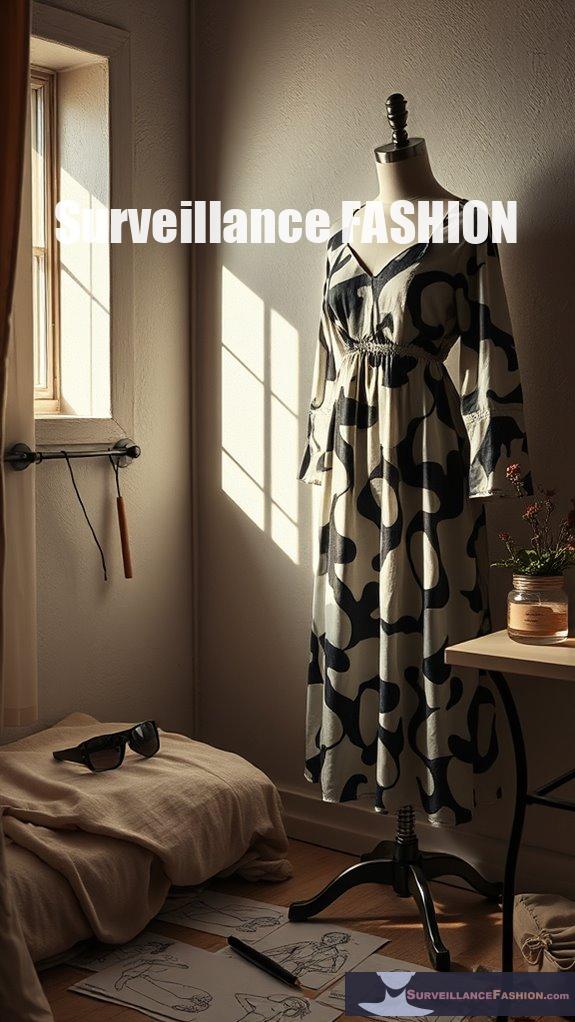
With the ubiquity of facial recognition technologies and the growing concerns surrounding privacy violations, anti-surveillance fashion emerges as a compelling response to these challenges.
This innovative clothing category employs patterns and materials specifically designed to confuse surveillance algorithms, effectively masking your identity in public spaces. For instance, garments adorned with false-face patterns or made from reflective fabrics serve as shields against thermal and visual surveillance.
Techniques like Computer Vision Dazzle utilize unconventional makeup to deceive facial recognition systems, while smart fabrics can make the wearer appear as an animal to software. Additionally, these designs often draw inspiration from anti-facial recognition clothing to enhance their effectiveness.
As awareness of surveillance risks increases, these fashion innovations not only provide practical solutions but also advocate for privacy rights—a mission that inspired the creation of our website, Surveillance Fashion.
Eco-Friendly Clothing for Privacy

Eco-friendly clothing serves as a significant intersection between sustainability and privacy, particularly in a world where surveillance technologies increasingly encroach upon personal freedoms.
By choosing eco-friendly options, you align your fashion choices with a commitment to environmental consciousness and personal autonomy.
- Plant-based fabrics: Opt for organic cotton or hemp, which are biodegradable and cultivated sustainably.
- Animal-friendly alternatives: Consider vegan leather, like Stella McCartney's Eco Alter-Nappa, for cruelty-free fashion.
- Recycled fabrics: Seek garments made from recycled polyester to minimize waste.
- Durable construction: Invest in long-lasting clothing, decreasing the need for frequent replacements.
Embracing eco-friendly clothing can empower you to reject the pervasive surveillance of fast fashion, allowing you to express individuality while supporting ethical consumerism.
References
- https://www.axios.com/2024/09/19/social-media-surveillance-ftc-report
- https://pmc.ncbi.nlm.nih.gov/articles/PMC8056296/
- https://www.cyberdefensemagazine.com/online-privacy-statistics/
- https://en.wikipedia.org/wiki/Confirmation_bias
- https://www.ftc.gov/news-events/news/press-releases/2024/09/ftc-staff-report-finds-large-social-media-video-streaming-companies-have-engaged-vast-surveillance
- https://pmc.ncbi.nlm.nih.gov/articles/PMC10918303/
- https://www.earth.com/news/psychological-impact-of-surveillance-how-being-watched-changes-your-brain/
- https://cyberpsychology.eu/article/view/33170
- https://blog.ufes.br/kyriafinardi/files/2017/10/What-Video-Games-Have-to-Teach-us-About-Learning-and-Literacy-2003.-ilovepdf-compressed.pdf
- https://fherehab.com/learning/public-exposure-and-mental-health/