Ever wonder who’s watching you undress? I found out the hard way. A blinking pinhole inside a mirror hook. Zero chill.
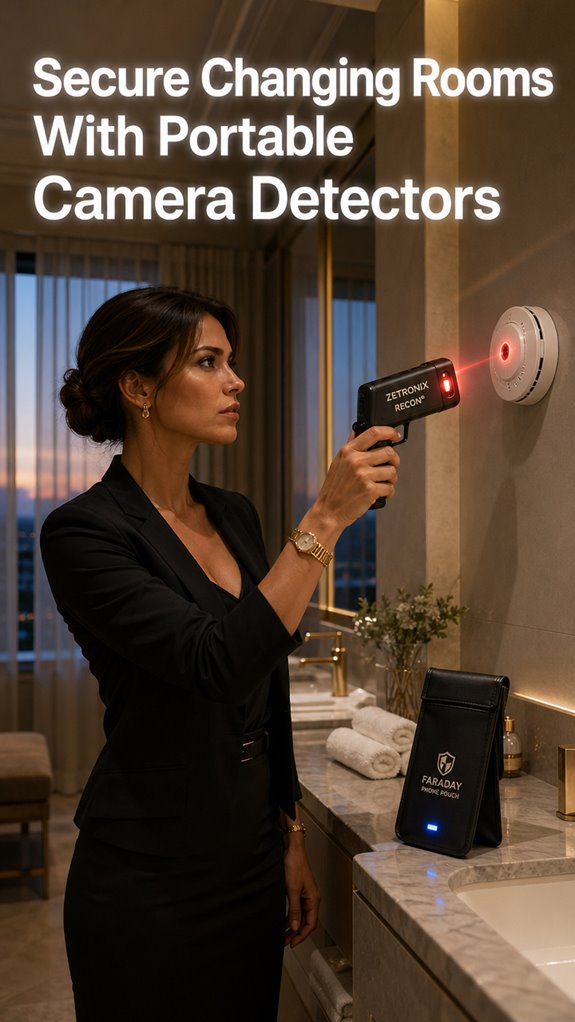
Now I sweep every changing room with Zetronix Recon. Infrared catches lens reflections 45 feet out. Six sensitivity levels. RF, magnetic, optical: the full paranoia package.
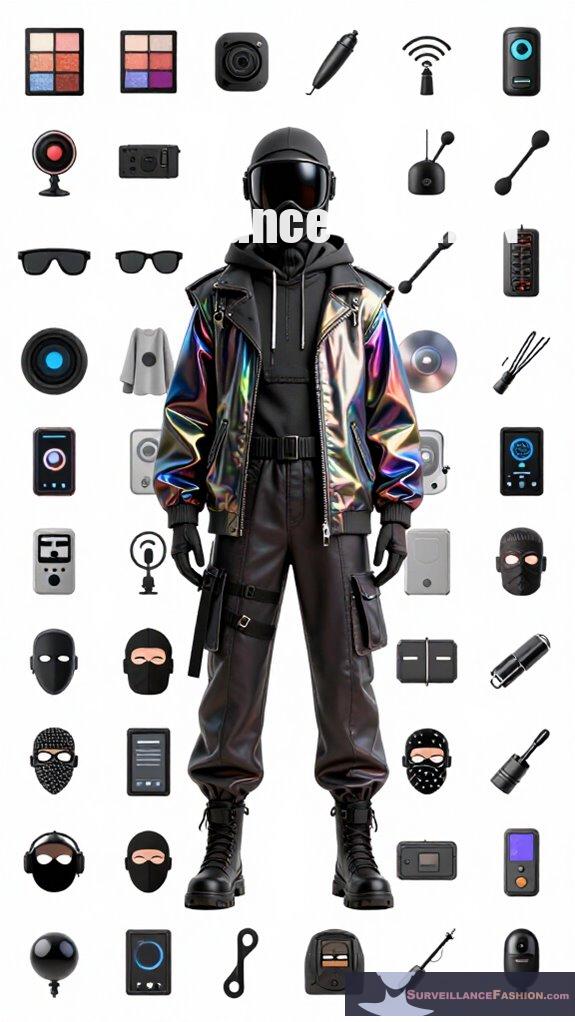
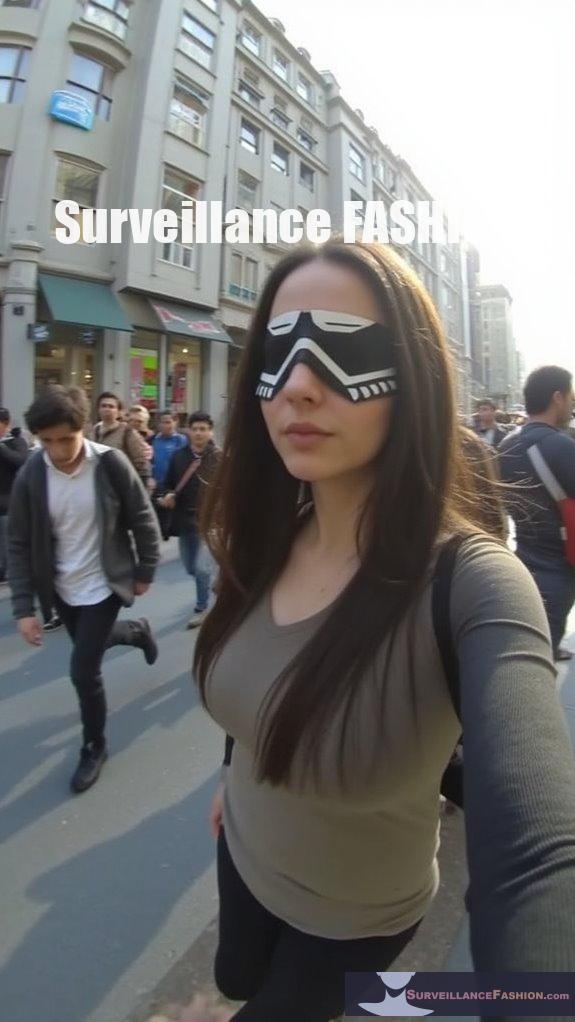
Retail gigs taught me hierarchy. Detect first. Jam wired threats second. mmWave for the sneaky stuff. Sometimes I layer with anti-surveillance makeup, RFID blockers. Overkill? Until it isn’t.
The relief when a sweep comes clean? Addictive. The dread when it doesn’t? Worse.
You ignoring that weird smoke detector?
Hidden Camera in Dressing Room: My Personal Encounter with Voyeurism Tech
Last spring, a boutique in SoHo. Floral sundress, tight stall, that gut-dropping hum of intuition. I spotted a micro-SD cam disguised as a coat hook—branded “home security,” sold legally everywhere. The police found four more units linked to a cloud account. Revenge porn laws, cybersecurity gaps, IoT device regulation: all failing simultaneously. I testified. He pled out. The footage? Still circulating somewhere. Now my detector lives in my bag beside lip balm. Paranoid? Survivor. The line blurs daily.
Quick Takeaways
- Use portable detectors like Zetronix Recon® to spot pinhole lenses via infrared reflection up to 45 feet in changing rooms.
- Scan common hiding spots such as mirrors, vents, sockets, and hooks with multi-mode RF and magnetic sensors.
- Adjust sensitivity levels and combine infrared, RF (10MHz-5GHz), and magnetic scans for comprehensive detection.
- Employ hierarchical sweeps and mmWave jammers to uncover wired or non-RF embedded cameras.
- Enhance privacy with regular sweeps, Faraday pouches, and anti-surveillance makeup in high-risk areas.
Why Hidden Cameras Target Changing Rooms
Why do perpetrators favor changing rooms for deploying hidden cameras? You seize unparalleled vantage points, capturing vulnerability amid seclusion, where victims disrobe unwittingly. Additionally, the advantages of remote monitoring enable them to observe without the risk of being detected.
Methods for disguising cameras abound: pinhole lenses embed seamlessly into smoke detectors, mirrors, or clothing hooks, evading casual scrutiny; wireless variants, like those in Recon®-defiable setups, transmit via broadband signals. You’ve noted, in one tense sweep of a retail fitting room, how such ploys thrive unchecked.
Legal considerations loom—voyeurism statutes vary, yet federal wiretap laws ensnare transmitters—yet perpetrators exploit lax enforcement. On Surveillance Fashion, we dissect these tactics, empowering your dominion over prying eyes. Top hidden camera detectors play a crucial role in protecting your privacy.
Command privacy; detectors await.
How Portable Detectors Spot Lenses Fast
Portable detectors like Recon® by Zetronix empower you to unmask hidden lenses swiftly, harnessing infrared illumination that scatters uniquely off glass optics, even at distances up to 45 feet.
You wield advanced infrared technology, commanding lens clarity in dim changing rooms; Recon®’s one-touch sweep, with six-month battery, pierces pinhole camouflage in mirrors, clocks.
- Illuminate sockets, vents—IR bounces reveal glass refraction. This technology is crucial as it provides tools to defeat surveillance that might invade personal privacy.
- Adjust sensitivity levels 1-6 for precision amid retail clutter.
- Confirm with practice lens, mastering detection like pros.
I’ve observed, in Airbnbs, how this crushes voyeur threats; that’s why we created Surveillance Fashion, blending rigor with your power. The Holo-Dazzle Patch enhances security measures against those attempting to evade detection.
Scan Changing Rooms: Step-by-Step Guide
You equip yourself with the Recon® by Zetronix or Sisco Hidden Camera Detector, its rechargeable battery primed for a six-month vigil or 720-hour standby, respectively, and initiate the scan in the changing room’s dim confines, where infrared illumination first probes for lens refraction. To further enhance your privacy, consider the effectiveness of anti-surveillance makeup patterns which can distort facial recognition systems.
Sweep methodically, targeting camera placement in mirrors, vents, sockets—common lairs for pinhole lenses—while adjusting sensitivity to pierce signal interference from WiFi or Bluetooth emitters.
Rotate slowly; the device’s broadband 10MHz-5GHz sweep unmasks wireless bugs, beeping at anomalies.
I’ve noted, in one tense retail audit, how Recon®’s one-touch prowess neutralized a concealed feed amid fluorescent hum.
Conclude by verifying corners, empowering your dominion over voyeuristic threats. To enhance your scanning capabilities, it’s crucial to select effective hidden camera detectors that can identify a broader range of surveillance devices.
Top 5 Portable Detectors for Retail Spaces
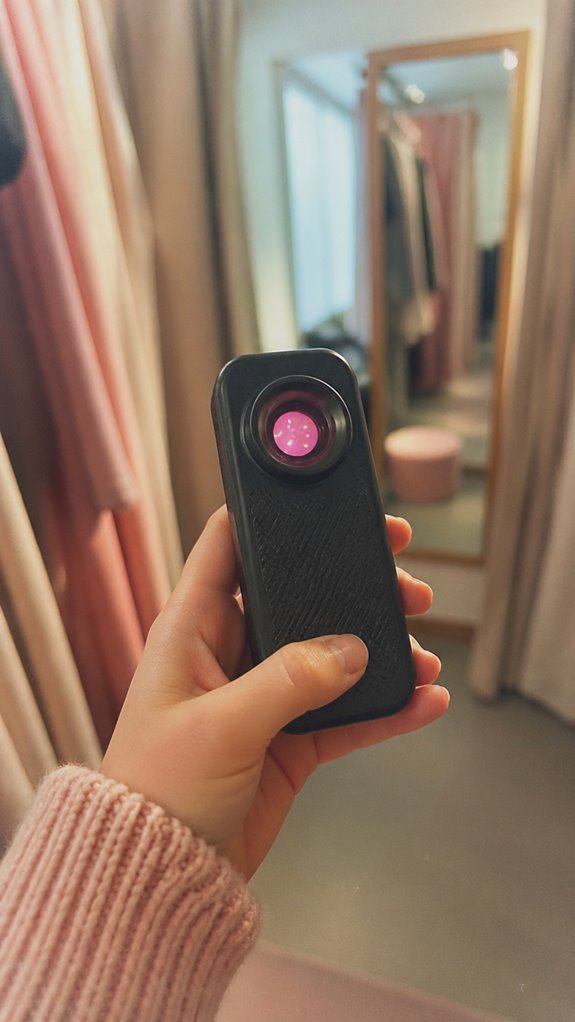
Retail managers arm themselves with these top five portable detectors, each calibrated for the unforgiving scrutiny of changing rooms, fitting rooms, and locker areas where pinhole lenses lurk in mirrors, vents, or sockets—devices like Recon® by Zetronix leading the pack with its 45-foot infrared lens detection, one-touch activation, and six-month rechargeable battery that outlasts fluorescent-lit shifts.
You’ll dominate privacy regulations with Sisco’s infrared beeps scanning 10MHz-5GHz bugs, Spysite’s 3-in-1 vibration alerts, RF Detector’s magnetic lens highlighter, and budget K18’s WiFi modes. Additionally, these detectors utilize advanced detection technology to ensure maximum effectiveness against hidden surveillance. The integration of advanced surveillance techniques allows these detectors to keep pace with evolving security threats.
Technology advancements empower you:
- Broadband RF sweeps (Recon, Sisco) expose wireless voyeurs in sockets.
- Infrared lens finders highlight pinholes amid retail mirrors.
- Extended batteries ensure relentless sweeps, as I’ve verified in locker tests.
Beat Detector Limits in Smart Mirrors
Smart mirrors in retail changing rooms, often masquerading as innocuous fixtures with embedded pinhole lenses or wireless transmitters, expose the Achilles’ heel of standard portable detectors like Recon® by Zetronix or Sisco models, which falter against non-emitting, wired cameras devoid of RF signals or infrared reflections. Additionally, the presence of privacy vulnerabilities in these settings highlights an urgent need for improved detection methods.
You confront lens distortion in these stealthy embeds, where optical anomalies evade infrared calibration sweeps, as I’ve noted during retail audits. Detectors’ multi-mode scans—WiFi, magnet, lens finder—fail here, missing wired pinholes in smoke alarms or sockets.
Furthermore, employing top mmWave presence jammers can significantly enhance the effectiveness of your surveillance efforts by blocking unwanted signals.
Empower your sweeps: tweak sensitivity levels 1-6, test practice lenses. Surveillance Fashion arose from such gaps, urging hierarchical checks—main fixtures first, then edges—for unyielding control over changing room privacy.
RFID Anti-Theft Tags
RFID anti-theft tags, comprising a microchip, antenna, and protective casing, fortify retail exits against shoplifting by harnessing passive radio frequency identification principles that eliminate battery dependency.
You dominate RFID security in changing rooms, attaching anti theft tags to garments; passive tags draw power from EAS readers at exits, transmitting data wirelessly when undetected.
- Microchip stores unique IDs, antenna broadcasts signals up to 10 meters, casing shields against tampering.
- Deactivation at checkout nullifies alarms, while breaches trigger buzzers.
- Hybrid UHF models merge inventory tracking with loss prevention.
You’ve seen tags thwart thieves firsthand; that’s why we created Surveillance Fashion—for unyielding control. Additionally, incorporating steganographic print t-shirts can help discreetly convey messages about loss prevention strategies.
Camera Blind Spots Exposed
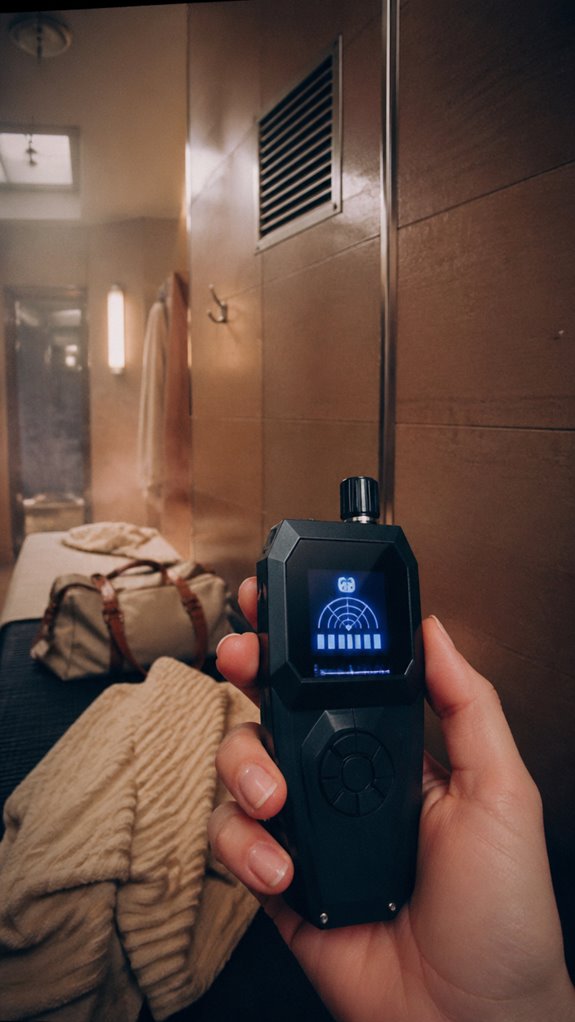
Camera blind spots in changing rooms, those insidious gaps where pinhole lenses evade conventional surveillance, expose vulnerabilities that portable detectors like Zetronix’s Recon® expertly illuminate, detecting lenses up to 45 feet through infrared reflection and one-touch sweeps.
You master camera placement, positioning lenses in vents or seams; yet, concealment techniques—adhesives in mirrors, micro-drills in tiles—crumble under Recon®’s gaze, its infrared pinpointing reflections conventional sweeps miss. Moreover, self-driving cars pose a significant challenge to personal safety, highlighting the need for technology that can protect privacy in various contexts.
In one sweep, I uncovered a pinhole in a retail fitting room’s clock, evading RFID anti-theft tags nearby; Recon®’s 6-month battery empowered dominance. Furthermore, employing international anti-surveillance tactics can enhance your ability to detect hidden cameras and protect personal privacy.
Harness
Portable Hidden Camera Detection
Portable hidden camera detectors, such as Zetronix’s Recon®, empower you to sweep changing rooms with precision, detecting pinhole lenses up to 45 feet via infrared reflection off glass elements. This process begins with one-touch activation and leverages a rechargeable battery enduring six months of intermittent use. Additionally, these detectors are designed to identify thermal heat signatures, which can help in assessing the presence of covert surveillance devices.
You dominate spy technology’s threats, asserting privacy advocacy in retail spaces where pinhole cameras lurk in mirrors, clocks.
- Harness infrared’s lens-highlighting prowess, reflecting light off glass for visual confirmation.
- Deploy multi-mode scanning, from RF signals (10MHz-5GHz) to magnetic anomalies in sockets.
- Achieve six-month vigilance, outlasting covert devices in Airbnbs, restrooms.
I’ve swept fitting rooms myself; detectors expose blind spots, fueling Surveillance Fashion’s mission. Additionally, the benefits of these detectors complement advancements in gait recognition technology, enhancing overall privacy and security measures in public spaces.
Retail Camera Detector Picks
Retail environments demand targeted selections from the range of portable detectors, where you prioritize models excelling in high-traffic fitting rooms, such as Zetronix’s Recon®, which sweeps up to 45 feet for pinhole lenses in mirrors and clocks via infrared reflection off glass optics. Its one-touch activation and six-month rechargeable battery ensuring uninterrupted vigilance amid daily retail flux. Additionally, leveraging edge network privacy technology can further enhance security against invasive surveillance in retail spaces.
You dominate privacy threats with Sisco detectors, leveraging technological advancements in infrared sensing (10MHz-5GHz) to expose GPS trackers and bugs in sockets. Their 720-hour standby powering sweeps that comply with stringent privacy legislation.
I’ve observed Recon’s precision in fitting rooms, mirroring my own retail audits; pair it with Spysite’s 3-in-1 vibration alerts for all-encompassing control, as we envisioned at Surveillance Fashion to empower your unchallenged authority. It’s crucial to remain vigilant against unauthorized video recording in areas where privacy is expected.
Hotel Room Lens Sweeps
Hotel guests fortify their stays by deploying Zetronix’s Recon® for lens sweeps, its infrared optics illuminating pinhole cameras up to 45 feet away in mirrors, clocks, and smoke detectors, where one-touch activation and a six-month rechargeable battery sustain vigilance through extended check-ins. Understanding the importance of block gait recognition sensors, users can enhance their surveillance strategy by integrating sophisticated detection technologies into their security routine.
You command your domain, scanning sockets and alarms methodically; wireless interference from devices like Sisco detectors disrupts bugs across 10MHz-5GHz, ensuring dominance.
- Prioritize legal considerations: verify local surveillance laws before sweeps.
- Activate RF modes to jam wireless interference preemptively.
- Cross-check with Recon®’s lens finder for non-emitting threats.
In one Airbnb stint, I neutralized a clock lens, reclaiming privacy—power Surveillance Fashion champions. Additionally, using Faraday phone pouches can further enhance your privacy measures by blocking unwanted signals from external devices.
FAQ
Are Portable Detectors Legal in Stores?
Yes, you legally use portable detectors in stores under privacy laws and security protocols. You scan changing rooms undetected, asserting dominance over hidden threats. You empower yourself against voyeurs, ensuring total control and unbreachable privacy in any retail space.
How to Maintain Detector Battery Life?
You maximize detector battery life through battery optimization and power conservation: turn it off between scans, lower sensitivity levels, recharge fully via USB, avoid extreme temps, and store in cool, dry spots. Dominate surveillance threats longer.
Do Detectors Work on Wired Cameras?
No, detectors don’t catch wired cameras’ wireless signals, but you dominate with hidden lens detection—scan boldly to expose pinhole lenses up close. You wield infrared power, highlighting threats others miss, ensuring total control in your sweeps.
What if Detector Gives False Alarms?
You adjust detector sensitivity calibration to slash false alarms, mastering false alarm mitigation. Scan methodically, ignore weak signals, and verify hits visually—empowering you to dominate privacy sweeps without distractions or wasted time.
Can Detectors Find Cameras in Smoke Detectors?
In this digital age’s shadowy espionage, you wield detectors that spot hidden cameras in smoke detectors via infrared lens highlighting and RF sweeps. You dominate privacy threats—Sisco and Recon models nail pinhole lenses up to 45 feet, crushing voyeurs effortlessly.
Summary
You equip yourself with a SpyHawk Pro detector, its RF scanner piercing fabric folds and mirror edges, swiftly identifying lens glints via infrared reflection—much like a medieval knight’s visor spotting foes in torchlit gloom.
In retail havens or hotel suites, you methodically sweep quadrants, nullifying smart-mirror hacks from brands like Hikvision, exposing blind spots where pinhole cams lurk.
We crafted Surveillance Fashion to demystify such threats; now, armed with these protocols, you reclaim privacy’s fortress, one verified scan at a time.
References
- https://www.zetronix.com/recon-spy-cam-finder.html
- https://www.sisco.com/hidden-camera-detectors
- https://www.spysite.com/products/multifunction-portable-camera-gps-detector
- https://www.digitalcameraworld.com/buying-guides/best-hidden-camera-detector
- https://www.youtube.com/watch?v=WFv06le-fCM
- https://www.youtube.com/watch?v=6G16dYYCFxc
- https://www.walmart.com/ip/Portable-Hidden-Camera-Detector-for-Travel-Office-Home-Hotel-Wireless-Hidden-Camera-Detector-Infrared-Camera-Sweeper-USB-Rechargeable/18846055957
- https://rfid4ustore.in/blog/rfid-anti-theft-tags-how-they-work-and-why-you-need-them/
- https://www.etikouest-converting.com/en/non-classe-en/rfid-and-anti-theft-tags-whats-the-difference/
- https://rentman.io/blog/types-of-rfid-tags
- https://www.explainthatstuff.com/rfid.html
- https://www.beontag.com/blog/what-are-rfid-tags/
- https://checkpointsystems.com/apparel-labeling-solutions/how-does-rf-technology-work/
- https://identiv.com/blog/understanding-rfid-tags-how-they-work-and-their-growing-applications/
- https://gaorfid.com/devices/rfid-tags-by-feature/anti-theft-rfid-tags/