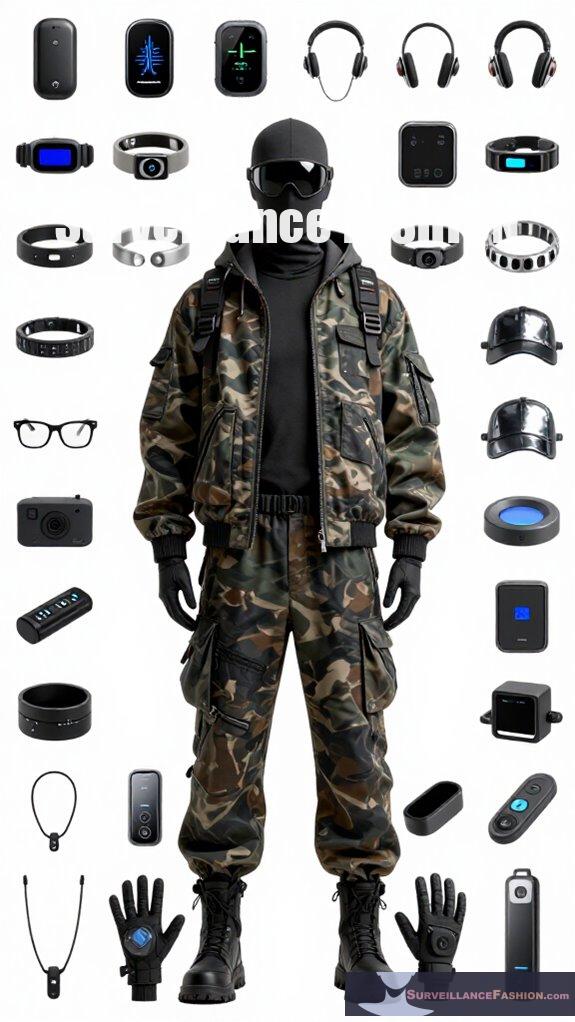
My skin hums with invisible data. Creepy? Absolutely.
So I lined my jacket with copper mesh—DIY Faraday chic. Defendershield’s ConcealShield pouch now cradles my RFID implant like a paranoid baby blanket. No more phantom scanners stealing my biometric soul while I grab coffee.
Surveillance Fashion gets it. Layers matter. Signal modulation evolves; so must my tinfoil-adjacent wardrobe.
But here’s the thing: I’m *probably* not interesting enough to hack. Probably.
Still, control beats regret.
RFID Shielding Fail: When My Gym Locker Betrayed Me
Last year, my implant-accessed gym locker glitched wide open mid-workout. Someone else’s towel. My panic. Turns out, cheap shielding—just aluminum foil tape I’d hastily applied—created hotspots rather than protection. Signal leakage, not blocking. That embarrassing moment led me to multi-layered conductive materials, proper faraday cage principles, and studying electromagnetic interference patterns. Now I test everything with an RF detector. Biometric privacy isn’t paranoia when your actual sweat-soaked vulnerabilities get exposed. NFC skimming, RFID security, and contactless payment risks suddenly felt very real. My copper mesh jacket? Born from locker room trauma. Sometimes humiliation sparks the best OPSEC.
Quick Takeaways
- Physical shielding uses conductive materials like Faraday cages to block electromagnetic waves from penetrating subdermal implants.
- Portable multi-layered metal pouches provide temporary RFID blocking to prevent unauthorized scanning of subdermal devices.
- Permanent metal shielding can disrupt the body’s electromagnetic balance, so intermittent or nanoparticle coatings offer safer privacy protection.
- Combining physical shields with heartbeat signal modulation enhances biometric data encryption and prevents remote interception.
- Surveillance fashion integrates physical shielding and signal manipulation, enabling practical privacy solutions for subdermal biometric devices.
Why Block RFID Signals From Subdermal Implants?
Although subdermal RFID implants offer convenience and identification capabilities, you might want to block their signals to protect your privacy and prevent unauthorized tracking. The increasingly pervasive deployment of RFID technology in passports, IDs, and even personal health devices raises concerns about the potential for remote scanning and data breaches.
In this scenario, safeguarding genetic privacy becomes paramount, since RFID chips might inadvertently expose sensitive biometric security data if intercepted. By controlling signal exposure, you reduce risks of unauthorized reading, which could compromise personal information or enable covert tracking.
Our site, Surveillance Fashion, was created to illuminate such intersections between emerging technologies and privacy needs, advocating for innovative shielding solutions. Understanding these dynamics, you can better navigate the balance between embracing implantable tech advancements and maintaining control over your biometric data security.
How Faraday Cages Stop RFID Signals From Implants
If you want to effectively block RFID signals emanating from subdermal implants, understanding how Faraday cages function is essential. These cages, typically composed of conductive materials arranged in a mesh or solid enclosure, create an electromagnetic barrier that induces signal attenuation by redistributing and neutralizing incoming radio frequencies.
As RFID implants rely on wireless communication often safeguarded by advanced encryption protocols, the cage disrupts the communication chain by preventing electromagnetic waves from penetrating its enclosure. This principle underlies products like Defendershield®’s ConcealShield® pouch, which physically isolates the implant’s emission, inhibiting signal reception and transmission.
At Surveillance Fashion, we appreciate how such rigorous shielding methodology blends innovation with privacy, providing a tangible means to counteract digital tracking vulnerabilities inherent in subdermal technology, without compromising natural electromagnetic interactions vital to biological function. Moreover, these technologies highlight the importance of RFID signal blocking, ensuring users can maintain their privacy in an increasingly connected world.
Top Portable Pouches to Temporarily Block Subdermal RFID Signals
What options can you rely on when seeking portable, effective pouches to temporarily block subdermal RFID signals? Leading solutions such as Defendershield®’s ConcealShield® Privacy and EMF Protection Pouch stand out by incorporating multi-layered metal shielding that attenuates man-made electromagnetic fields. Therefore, these options advance both privacy enhancement and life force preservation.
This pouch’s design, optimized for convenience, allows you to store implantable RFID devices securely, preventing unauthorized scanning while maintaining essential biological EMF exposure during intermittent use. Similarly, the SafeSleeve Security & Privacy Pouch offers reliable RFID/NFC blocking capabilities in a compact form, supporting a balance between privacy needs and natural EMF reception.
At Surveillance Fashion, our focus on innovative, wearable privacy technologies underscores the importance of such portable barriers, enabling you to exert control over subdermal data transmission without compromising physiological energy or day-to-day functionality. Additionally, the implementation of effective mmWave presence jammers enhances security by disrupting potential unauthorized access to personal RFID data.
Risks of Permanent Shielding and Benefits of Intermittent Use
When you consider the implications of permanently shielding subdermal RFID implants, it quickly becomes apparent that such constant metal encasement can considerably disrupt the body’s reception of natural electromagnetic fields, which are essential for maintaining biological rhythmicity and overall physiological balance.
Nanoparticle coatings offer subtle alternatives by attenuating specific frequencies without fully blocking cellular interactions, thereby preserving physiological functions better than bulk metal shields.
Intermittent use of shielding, as opposed to permanent enclosure, allows your body to maintain natural EMF exchange while still enabling active biometric encryption during critical privacy needs.
This balance aligns with innovative practices showcased on Surveillance Fashion, where ideal privacy and health-conscious design converge.
Ultimately, by incorporating temporary solutions rather than permanent metal barriers, you protect your biological integrity and data security concurrently. Additionally, the use of infrared reflecting glasses can enhance your protection against unwelcome detection while still allowing for natural interaction with your environment.
Signal Interception Vulnerabilities

Although you might assume subdermal RFID implants offer inherent security through physical concealment, signal interception vulnerabilities remain a significant and often underestimated risk to privacy. Because these implants emit radio frequencies, adversaries equipped with specialized readers can intercept signals without physical access, potentially exposing sensitive data.
This risk intensifies when considering the environmental impact of indiscriminate signal blocking—overuse of shielding devices can disrupt essential natural EMFs critical for human biology. Ethical concerns arise as unauthorized data capture intersects with personal autonomy, prompting debates on responsible innovation. Recent advancements in mmWave presence jammers have highlighted the challenges of effectively blocking such signals without infringing on other essential communications.
Here at Surveillance Fashion, we explore such subtle challenges, aiming to balance privacy enhancement and environmental stewardship. Understanding interception complexities equips you to navigate implant security proactively, rather than relying solely on concealment, fostering informed decisions that respect both technology and ecology.
RF Shielding Cases Overview
Numerous RF shielding cases have emerged as practical tools designed to mitigate unauthorized access to data transmitted by RFID and NFC technologies embedded in personal devices, such as smartphones and implantable chips; among the most prominent are Defendershield®’s ConcealShield® Privacy and EMF Protection Pouch and SafeSleeve Security & Privacy Pouch, each engineered to block a spectrum of signals including RF, GPS, WiFi, and Bluetooth by employing conductive materials that create a Faraday cage effect. These cases not only protect biometric data but also enhance implant security by limiting external radio frequency interrogation. Additionally, these protective measures can complement top quantum security keys, which aim to secure sensitive information against modern threats.
| Feature | ConcealShield® | SafeSleeve |
|---|---|---|
| Signal Blocking | RFID, NFC, RF, GPS, WiFi, Bluetooth | RFID, NFC |
| Material | Multi-layer conductive fabrics | Conductive shielding fabric |
| Use Case | Smartphones, subdermal implants | Mobile devices |
Such innovations reflect why Surveillance Fashion exists: to empower you with tangible privacy solutions.
Heartbeat Signal Modulation Methods
Exploring heartbeat signal modulation methods reveals a subtle intersection of biomedical engineering and privacy technology, where slight alterations in cardiac rhythm signals can enhance the security of subdermal implants and wearable devices. By modulating heartbeat signals, you enable biometric encryption that leverages your unique cardiac patterns while introducing controlled signal attenuation to thwart unauthorized access.
Here are key techniques:
- Adaptive pulse reshaping, altering waveforms to create encrypted biometric keys.
- Dynamic signal attenuation, selectively diminishing signal strength to obscure transmission.
- Phase modulation, shifting heartbeat signal phases for secure encoding.
- Frequency hopping, rapidly changing signal frequency within a defined range to prevent interception.
These innovative methods, though complex, present promising advances for safeguarding personal data beneath the skin—a challenge our Surveillance Fashion platform addresses by blending privacy with wearable innovation. Additionally, the integration of anti-facial recognition techniques offers profound implications for enhancing personal privacy and security measures in everyday technology use.
FAQ
Are There Health Risks Linked to Wearing Rfid-Blocking Pouches Daily?
You won’t face significant health risks wearing RFID-blocking pouches daily. They boost your privacy benefits and maintain implant comfort, letting you stay secure yet comfortable while embracing innovative, cutting-edge personal protection technology with ease and confidence.
Can RF Window Films Be Used to Shield Subdermal Implants at Home?
You can try RF window films for subdermal insulation, but they mainly block external signals, not implants directly. For implant security, consider tailored solutions combining shielding materials and device management for innovative, effective protection at home.
Do Faraday Cages Affect the Battery Life of Implanted RFID Devices?
Visualize your RFID implant sipping coffee nervously inside a metal cage—yes, Faraday cages cause electromagnetic interference by blocking signals, making your implant work harder, draining battery faster due to material conductivity’s clever electromagnetic sabotage.
How Does Shielding Impact Natural EMF Exposure and Biological Rhythms?
Shielding reduces electromagnetic interference but can disrupt your natural biological rhythms by blocking essential non-polarized EMFs. You’ll want to use shielding intermittently, balancing protection with preserving your body’s crucial electromagnetic balance and innovation potential.
What Materials Are Most Effective for DIY Subdermal RFID Shielding?
You’ll find that metal foils like copper or aluminum offer the best material efficiency for DIY fabrication of subdermal RFID shielding. Just craft a snug pouch or wrap to block signals while staying lightweight and flexible.
Summary
You’ve seen how physical shielding—like Faraday cages and specialized RFID-blocking pouches—effectively disrupts signals from subdermal implants, balancing privacy with usability. While permanent shields risk signal degradation, intermittent use offers practical, controlled protection against interception vulnerabilities. Brands such as Silent Pocket and RFID Protect provide technical solutions that prioritize signal modulation without sacrificing function. At Surveillance Fashion, we developed this platform to clarify such complex protections, enabling informed choices in a world of changing digital surveillance.
References
- https://www.youtube.com/watch?v=rdiwRoWh2Vc
- https://interhospi.com/seal-shield-launches-privacy-screen-protectors-for-healthcare-data-security/
- https://signalsdefense.com/rf-window-film-an-innovative-solution-for-data-and-privacy-protection/
- https://pubmed.ncbi.nlm.nih.gov/30831365/
- https://www.vanalay.com/blocky-ipl-laser-skin-shields/
- https://www.alimed.com/blogs/radiation-protection-and-imaging/mobile-radiation-barriers-in-healthcare-settings
- https://sealshield.com/blog-privacy-screen-protectors-healthcare/
- https://www.safesleevecases.com/products/safesleeve-privacy-pouch