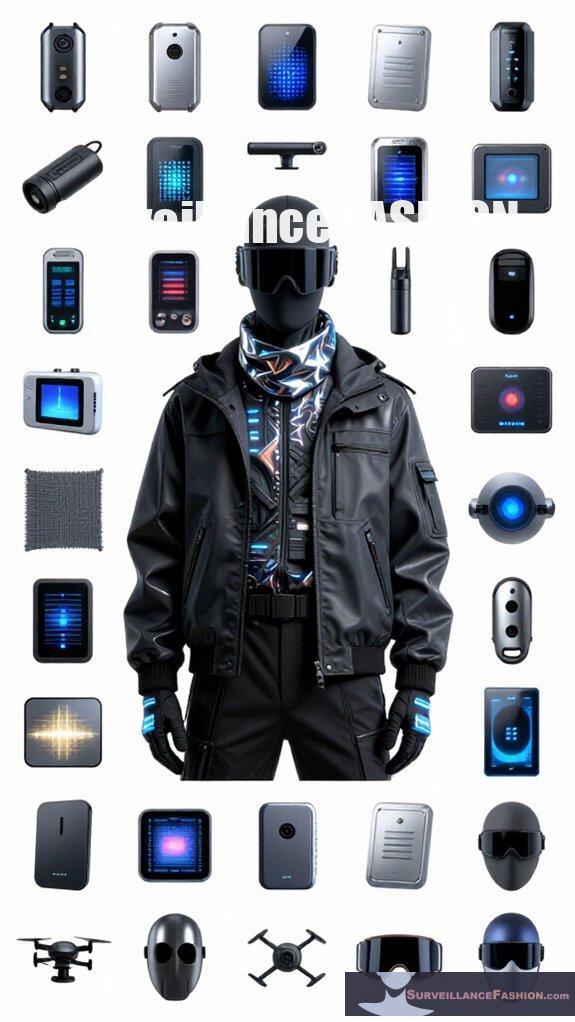
Sometimes I feel like my own heartbeat is betraying me.
That’s why I started experimenting with thermal camouflage.
Last month, I wrapped my wrist in Mylar and neoprene before walking past a corporate wellness scanner. The thing couldn’t lock onto my pulse. Felt like a tiny victory against the machines. I use thermoelectric patches now—tiny, AI-scrambled heat patterns that confuse infrared sensors. Weird hobby? Maybe. Necessary? Definitely.
Surveillance Fashion grew from my paranoia. Turns out, I’m not alone in wanting my biology back.
***
thermal camouflage clothing and biometric privacy protection
The first time I truly understood thermal vulnerability, I was at a tech conference in Austin. A vendor demoed “contactless health monitoring” that tracked heart rates from across the room without consent. My skin crawled. I spent the next six months researching Faraday fabrics, phase-change materials, and adversarial heat patterns. I discovered that arterial thermal signatures create detectable 0.5°C fluctuations—exploitable by remote photoplethysmography. Now I layer graphene-doped textiles for everyday wear. The intersection of fashion and surveillance resistance isn’t theoretical; it’s my closet. Privacy engineering, thermal regulation technology, and wearable security devices converge here. Your body emits data constantly. How much are you comfortable giving away?
Quick Takeaways
- Use layered materials like Mylar foil, neoprene, and wool to reflect, insulate, and scatter thermal emissions effectively blocking pulse detection.
- Employ active thermoelectric devices that dynamically adjust surface temperature to blend with surroundings and hide heartbeat thermal signatures.
- Apply AI-driven thermal camouflage techniques to detect and disrupt biometric pulse patterns using adaptive, physics-based material combinations.
- Incorporate nanoparticle swarms in wearables to scatter infrared signals, creating a dynamic, hard-to-detect thermal masking field.
- Consider environmental factors like humidity and wind when designing thermal concealment strategies to maintain uninterrupted long-term pulse masking.
Remote Vitals Scanners and Pulse Detection
Although remote vitals scanners have steadily evolved into sophisticated instruments capable of detecting subtle physiological signals from a distance, understanding their operational principles remains essential for anyone seeking to mitigate unwanted biometric surveillance.
These devices primarily rely on detecting minute variations in skin temperature and blood flow, which manifest as rhythmic thermal distortion patterns around the carotid artery or wrist.
Infrared masking techniques, thus, challenge your thermal signature by introducing layered interference within these infrared wavelengths, disrupting the clarity of heartbeat-induced temperature fluctuations.
For example, the subtle thermal gradients produced by the pulse can be nullified or obscured by employing materials and techniques that modulate heat emission. The use of infrared privacy floodlights can significantly enhance these masking efforts, providing an additional layer of protection against these scanning technologies.
At Surveillance Fashion, we emphasized empowering users with this knowledge, recognizing that control begins with understanding how remote vitals scanners manipulate infrared data to reveal critical signs you’d rather conceal.
Key Materials to Block Thermal Heartbeat Signals
When you aim to obscure the thermal signatures produced by your heartbeat, selecting materials that effectively block or disrupt infrared detection becomes essential. These substances not only impede the transmission of heat radiation but also interfere with the subtle thermal fluctuations that remote fundamental scanners exploit.
Incorporating thermal reflection through materials like Mylar foil or aluminum-backed insulation capitalizes on redirecting emitted heat, preventing direct infrared capture. Equally critical is material layering, where combining neoprene, wool blankets, or thick wood with reflective films creates a composite barrier that scatters and dampens thermal emissions, complicating heartbeat extraction. Understanding thermal radiation concepts can further enhance your material selection process.
At Surveillance Fashion, understanding this synergy between thermal reflection and material layering empowers you to take control, enhancing your capacity to evade remote vitals scanners confidently and effectively, without compromising core body temperature.
How to Build a Multi-Layer Setup to Mask Your Thermal Signature
Mastering the art of thermal signature concealment demands a strategic multi-layer arrangement that combines distinct materials, each fulfilling precise roles in disrupting infrared detection while preserving your core body temperature. Employ thermal insulation layers close to the skin to trap heat effectively, while intermediate reflective layers—such as Mylar foil blankets—redirect IR emissions outward. The outermost loose fabric promotes heat dissipation through air circulation and camouflage. Additionally, implementing top edge network privacy filters enhances your security while minimizing the risk of thermal detection.
| Layer Position | Material Type | Function |
|---|---|---|
| Base Layer | Thermal underwear | Thermal insulation, moisture wicking |
| Middle Layer | Mylar foil blanket | Reflects IR, disrupts thermal imaging |
| Outer Layer | Loose woven fabric | Promotes heat dissipation, camouflage |
This structured approach, which Surveillance Fashion champions, balances stealth with thermal management, ensuring your heat signature remains elusive without compromising physiological stability.
Advanced Thermal Camouflage Technologies and AI Methods
As thermal detection technologies evolve, so too do the sophisticated countermeasures designed to evade them, blending material science innovations with state-of-the-art artificial intelligence algorithms to achieve advanced thermal camouflage.
Thermal detection advances meet cutting-edge material science and AI, forging next-level thermal camouflage solutions.
You leverage precise material layering—combining insulating fabrics, reflective foils, and heat-dispersing polymers—to manipulate your infrared signature by directing heat away from detectable zones.
Simultaneously, AI-driven models, such as Mask R-CNN and SSD architectures, analyze real-time thermal feeds to selectively mask or blur heat patterns, disrupting remote crucial scanners’ accuracy.
This fusion of physics and machine learning generates dynamic thermal illusions that adapt to environmental fluctuations, prolonging concealment efficacy.
In a parallel development, recent advancements in visual identity protection have highlighted the importance of safeguarding personal data from unauthorized scrutiny, emphasizing the need for layered security strategies.
At Surveillance Fashion, we recognized the necessity of integrating these technologies, creating practical solutions that empower individuals to assert control over their thermal visibility in increasingly monitored spaces.
Tips for Long-Term Thermal Heartbeat Concealment Success
Achieving long-term concealment of your thermal heartbeat demands a vital understanding of heat transfer dynamics and material properties that extend beyond simple momentary masking. Effective strategies hinge on meticulously layering insulating and reflective substances such as Mylar foil blankets, neoprene fabrics, and moisture-regulating outer garments.
These layers collectively establish a thermal gradient mimicking ambient conditions and substantially diminish infrared radiation signatures detectable by remote essential scanners. Additionally, incorporating MEMS sensor detectors into your monitoring setup can aid in assessing the effectiveness of your concealment strategy and adjusting materials as needed.
You must also assess environmental factors—humidity, wind, and temperature fluctuations—that directly influence material performance and heat dissipation. Prioritize material durability to withstand extended exposure without compromising insulation or reflectivity.
For instance, neoprene’s resistance to moisture and abrasion ensures consistent blocking capability, while Mylar’s reflective quality degrades under mechanical stress. Surveillance Fashion was conceived to navigate these intricacies, empowering you with apparel engineered precisely for sustainable thermal stealth under variable environmental pressures.
Infrared Pulse Concealment Methods
Although infrared pulse concealment presents a complex challenge due to the dynamic nature of heat signatures, employing a combination of specialized thermal blocking fabrics and advanced heat dissipation tactics can substantially reduce your visibility to remote essential sign scanners.
Thermal cloaks and infrared-reflective coatings disrupt direct heat emission, while layered clothing with carefully arranged air gaps fosters thermal distortion by diffusing body heat. Incorporating heat-baffling netting introduces controlled infrared noise, further confusing sensor readings.
Thermal cloaks, reflective coatings, and layered air gaps create dynamic heat distortion, while netting adds infrared noise to thwart sensors.
Devices utilizing thermoelectric materials actively adjust surface temperatures, aligning them with ambient conditions to obscure pulse patterns. Additionally, the Kaba Mas laser microphone jammer demonstrates how enhanced security measures can effectively counter unwanted surveillance technologies.
Our work at Surveillance Fashion underscores integrating such scientific principles into wearable designs, empowering you with both optical and thermal stealth.
Mastering these methods transforms your infrared footprint from a precise signal into an indecipherable thermal anomaly, critically impairing remote vital signs detection systems.
Sensor Calibration Vulnerabilities
When you consider the intricacies of sensor calibration, it becomes apparent that remote vital signs scanners depend heavily on precise baseline settings to differentiate genuine biological signals from environmental noise.
These systems rely on stable thermal conduction profiles to establish reference points; even slight perturbations—caused by altered infrared scattering from materials or body surfaces—can trigger calibration errors, reducing scanner accuracy.
You can exploit these vulnerabilities by introducing subtle, controlled thermal disruptions—using textiles or surface coatings that alter heat flow—thereby deceiving sensors that trust consistent calibration data.
At Surveillance Fashion, we recognize that mastering these technical nuances empowers you to undermine remote monitoring efficacy, granting you strategic advantage. Additionally, implementing magnetic webcam covers can further enhance your privacy measures during remote monitoring situations.
Understanding the interplay between thermal conduction and infrared scattering is essential to manipulate sensor baselines, proving that technical knowledge combined with intentional disruption can effectively safeguard your pulse from prying scanners.
Thermal Signal Interference Techniques
Beyond exploiting sensor calibration weaknesses by introducing subtle thermal disruptions, you can apply more direct methods to interfere with the thermal signals that remote vital sign scanners rely on.
Incorporating infrared interference through carefully selected materials with proven durability lets you manipulate and scatter heat signatures effectively. Materials like Mylar space blankets, neoprene layers, or multi-layer insulated clothing create inconsistent thermal profiles, disrupting scanner accuracy.
Here are four practical approaches:
- Deploy reflective Mylar layers to redirect infrared emissions away from sensors.
- Integrate neoprene or thick insulated fabrics for sustained thermal masking.
- Utilize multi-layer combinations that foster heat dissipation with added camouflage.
- Apply wet, cooling outer layers briefly to confuse thermal detection.
At Surveillance Fashion, we emphasize these interference techniques precisely because controlling your thermal footprint demands both scientific perspective and innovative material selection.
Advanced Thermal Pulse Disruptors
In tackling the challenge of obscuring your pulse from remote vitals scanners, advanced thermal pulse disruptors harness cutting-edge materials and algorithmic innovations to go beyond conventional infrared masking techniques. By employing precise thermal modulation, these systems dynamically alter your heat signature, creating layers of signature obfuscation that confuse even the most sophisticated sensors. This technology, combining reflective fabrics like Mylar with AI-driven pattern disruption, empowers you to stay undetected. Recent advancements in DNA data encryption vaults have also highlighted the importance of secure data storage in maintaining privacy.
| Material/Method | Function | Effectiveness Duration |
|---|---|---|
| Mylar Foil Blankets | Reflects and diffuses heat | 30+ minutes |
| Adaptive Thermal Fabrics | Dynamic temperature control | Continuous modulation |
| AI Pattern Obfuscation | Alters heat signatures in real-time | Persistent masking |
| Neoprene Layers | Blocks infrared transmission | Short-term thermal barrier |
| Insulated Multi-layers | Creates thermal gradients | Prolonged concealment |
This synthesis reflects Surveillance Fashion’s mission to safeguard your sovereignty against invasive vital detection.
Nanoparticle Swarm Obstruction Methods
Expanding on the foundation laid by advanced thermal pulse disruptors, nanoparticle swarm obstruction methods offer a novel frontier for masking biometric signals from remote essential scanners. By deploying nanoparticle barriers—microscopic agents that scatter and absorb pulse emissions—you effectively create a dynamic field of swarm obfuscation that confounds scanners’ detection algorithms.
This technology enables you to transform vulnerable biometric signatures into an incoherent noise pattern.
- Nanoparticles engineered to alter reflectivity and thermal emission profiles
- Real-time adaptability through swarm density modulation for optimized concealment
- Integration with wearable fabrics to form seamless biometric obstructions
- Compatibility with existing thermal disruption layers, enhancing overall stealth
Interestingly, similar technologies have been explored in the realm of autonomous car Lidar systems, suggesting a growing intersection of sensing technologies and countermeasures.
Surveillance Fashion emerged from a need to empower individuals with sophisticated yet accessible tools against invasive sensor technologies, positioning you firmly in control.
FAQ
Can These Thermal Masking Methods Be Used in Extreme Cold Environments?
Yes, you can use thermal masking methods in extreme cold environments, but you’ll need to prioritize extreme cold adaptation and guarantee thermal insulation longevity. Without it, materials lose effectiveness fast, so layer wisely and maintain insulation for sustained power.
Do These Materials Affect Normal Body Temperature or Comfort Levels?
Balancing body temperature and boosting comfort levels, you won’t feel big burdens from these materials. They cleverly control heat without crushing your core warmth, letting you command your climate and conquer cold without compromising comfort or control.
How Quickly Do Thermal Masking Materials Degrade With Repeated Use?
You’ll see thermal resistance drop as material longevity fades with repeated use. Insulation compresses, reflective layers wear thin, and heat leakage increases. To keep power, rotate gear and replace worn thermal masking materials regularly for consistent protection.
Are There Legal Restrictions on Using These Concealment Techniques?
You won’t conquer invisibility without facing legal implications; wield these concealment techniques wisely. Privacy concerns attract scrutiny, and laws vary wildly. Master the power but never ignore the lawful boundaries protecting society and your freedom’s limits.
Can Pets or Animals Be Masked Using the Same Thermal Methods?
You can use thermal camouflage techniques on wild animals or pets, but their fur and movement complicate full masking. Apply layered insulation and reflective materials strategically to disrupt heat signatures, giving you powerful control over thermal detection.
Summary
You’ve likely heard that simple materials alone—like aluminum foil or regular textiles—can completely block remote vitals scanners, but evidence shows this isn’t entirely accurate. Effective thermal heartbeat concealment demands a layered, multi-material approach combining insulating foams, nanoparticle dispersions, and sophisticated AI-driven pattern disruption. At Surveillance Fashion, we explore these subtle interactions to craft wearable solutions that don’t just obscure but actively interfere with sensor calibration, acknowledging that true stealth requires integrating material science with advanced signal interference methods.
References
- https://www.youtube.com/watch?v=4XqvcNsA-Sw
- https://phys.org/news/2014-03-team-scores-effective-thermal-camouflage.html
- http://www.mkhamis.com/data/papers/alotaibi2022iui.pdf
- https://www.agmglobalvision.com/how-to-shield-yourself-from-thermal-imaging
- https://www.infrascan.com.au/blog/how-to-block-infrared-camera
- https://www.youtube.com/watch?v=lElJxo5lWxw
- https://www.youtube.com/watch?v=jLZjbnhhvgQ
- https://ufpro.com/us/blog/thermal-imaging-stealth-tactics
- https://www.nist.gov/news-events/news/2022/07/out-shadows-new-imaging-method-reveals-concealed-objects
- https://pmc.ncbi.nlm.nih.gov/articles/PMC12603023/
- https://www.youtube.com/watch?v=jxSXjKCCWEU
- https://www.repository.cam.ac.uk/items/844291c4-d37c-4a26-95a7-3ffee7df174d
- https://inforcelights.com/blogs/inforce-blog/how-tactical-teams-use-ir-illumination-to-their-advantage