
IR privacy masks block facial recognition by emitting near-infrared light, which obscures key facial features from cameras. This technology confuses infrared sensors, distorting the NIR patterns that recognition algorithms depend on, effectively disrupting their ability to identify individuals. The masks utilize advanced materials, such as infrared-blocking polymers, that enhance this obscuration. Additionally, reflective designs can amplify the masks’ effectiveness, adding another layer of protection. Understanding these mechanisms can aid your choice in privacy solutions tailored for the modern surveillance environment.
Quick Takeaways
- IR privacy masks emit near-infrared light, obscuring facial features from cameras and disrupting facial recognition algorithms.
- They use infrared-blocking polymers and reflective textiles that confuse tracking algorithms by bouncing back IR light.
- Asymmetric surface designs alter facial geometry to interfere with recognition while maintaining optical clarity.
- The masks provide real-time protection by overwhelming infrared sensors with distorted and inconsistent signals.
- Combining IR-blocking technologies with reflective accessories further enhances their effectiveness against facial recognition systems.
How Do Infrared Embedded Facial Recognition Systems Work?

Infrared embedded facial recognition systems utilize near-infrared (NIR) light and dual-spectrum imaging to create accurate 3D facial maps, capturing detailed features and depth information even in low light or darkness. This technology can be significantly hindered by infrared fashion innovations, which reflect NIR light in a way that masks facial features.
These systems employ AI algorithms for liveness detection and spoof prevention. RGB-IR cameras improve the overall recognition accuracy as they allow for simultaneous capture of visible and infrared light.
These systems operate by projecting NIR patterns onto the face, which are then reflected and captured by sensors to create an extensive 3D profile. The integration of RGB-IR cameras allows simultaneous capture of visible and infrared light, improving feature detection and overall recognition accuracy.
Key aspects include:
- Resistance to spoofing attempts through depth detection.
- Consistent performance with IR illumination, aiding in the capture of fine facial details.
- The use of thermal imaging adds biometric uniqueness by tracking heat patterns.
- AI further enhances security by discerning liveness and rejecting static images or masks.
What Are IR Privacy Masks and Their Basic Functionality?
IR privacy masks are devices that utilize infrared light to obscure facial features from cameras equipped with infrared sensors, primarily to protect individuals from unwanted surveillance and facial recognition.
These masks function by emitting near-infrared (NIR) light, typically around 940 nm, which is invisible to the human eye but detectable by IR-sensitive cameras. When worn, they overwhelm the camera’s sensors, causing facial details to become distorted or washed out.
Key aspects include:
- Real-time protection: They interfere with data acquisition, preventing real-time facial recognition.
- Non-invasive: Normal visual interaction is maintained; there’s no alteration of visible appearance.
- Discreet integration: Often designed into accessories such as glasses or hats for ease of use.
- Dependent on technology: Their efficacy varies with the camera’s sensitivity and filtering capabilities.
Additionally, these masks can utilize stealth fabric electromagnetic shielding to enhance privacy and protect users from various surveillance technologies.
How Do IR Privacy Masks Disrupt Facial Recognition Algorithms?
IR privacy masks disrupt facial recognition algorithms by overwhelming infrared (IR) sensors, distorting facial measurements, and interfering with liveness detection systems.
By reflecting or emitting IR light inconsistently, these masks prevent accurate face recognition and complicate the identification process.
IR masks are designed to emit or reflect IR light, which confuses the camera sensors used in facial recognition technology. This results in several key disruptions:
- Disrupted Landmark Detection: The masks obscure facial features such as eyes, mouth, and nose, preventing the system from recognizing them.
- Distorted Measurements: By altering the IR patterns, the masks lead to inaccurate data points that interfere with the recognition algorithms’ ability to match a face to an identity.
- Blinded Cameras: Reflective surfaces cause glare, reducing image quality and hiding important facial data, which is essential for recognition.
- Anti-spoofing Challenges: These masks produce inconsistent IR signals, making it hard for systems to differentiate real faces from images or masks.
Together, these factors hinder facial recognition systems’ effectiveness and contribute to the advancing arms race between privacy technology and recognition algorithms.
What Are Common Materials Used in IR Privacy Masks?
Common materials used in IR privacy masks include specialized infrared-blocking polymers, reflective textiles, and asymmetric surface designs. These materials are engineered to disrupt facial recognition systems by manipulating infrared light reflectance and transmittance.
Infrared-blocking polymers are often blended with nanoparticles to enhance their effectiveness. These materials provide optical clarity while blocking relevant IR wavelengths. Moreover, reflective textiles can bounce back IR light, further confusing tracking algorithms.
Asymmetric surface designs, such as irregular patterns, exploit face geometry to interfere with recognition systems. This combination of advanced materials and innovative designs enables effective protection against facial recognition technologies.
How Effective Are Reflective Accessories Against Facial Recognition?
Reflective accessories can reduce the effectiveness of facial recognition (FR) systems, particularly when combined with infrared (IR) blocking technologies. However, not all reflective items provide adequate protection against FR software, especially those that lack IR-blocking properties.
The effectiveness of reflective accessories relies heavily on their design and materials. Accessories like Reflectacles utilize IR-blocking lenses that deny FR systems critical data needed for identification. Furthermore, reflective surfaces scatter IR light, complicating facial mapping for FR technologies.
While these tactics offer a level of privacy, they aren’t foolproof:
- Some reflective sunglasses without IR specifications can still be recognized by FR systems.
- High-accuracy FR tools continue to pose a challenge, often requiring dual approaches of reflection and IR blocking.
- Visual artifacts from reflective surfaces may draw attention rather than obscure identity.
- Variations across FR algorithms suggest mixed efficacy, emphasizing the need for thorough protective gear in varying conditions.
What Role Do Infrared Blocking Hoodies Play in Privacy Protection?
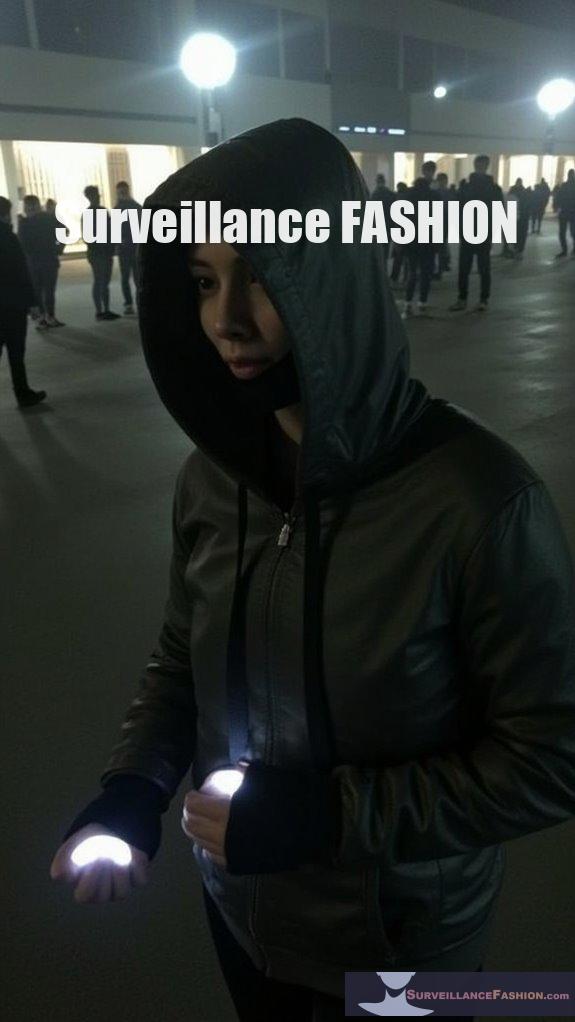
Infrared blocking hoodies enhance privacy protection by emitting infrared light that disrupts night-vision cameras, making facial recognition nearly impossible in low-light conditions. They effectively obscure facial features from IR-sensitive surveillance while allowing normal visibility during daylight.
These hoodies utilize high-power infrared LEDs strategically placed to flood cameras with IR light.
Key features include:
- Manual Control: Users can activate or deactivate the IR strobe as needed.
- Programmable Patterns: Microcontrollers allow varied strobing to confuse camera algorithms.
- Portable Power: USB-powered options provide extended use while maintaining mobility.
However, they’re ineffective against non-IR-based recognition systems and may attract attention due to their brightness in footage, limiting their overall utility to specific scenarios.
Can IR-blocking Eyewear Prevent Smartphone Face Unlock Features?
Yes, IR-blocking eyewear can impede smartphone Face ID and similar infrared facial recognition features by reflecting or absorbing near-infrared light, leading to access failures.
The effectiveness of IR-blocking eyewear varies based on design, coating effectiveness, and environmental factors. Eyewear that reflects up to 80% of near-infrared light can disrupt face mapping technologies. Regular glasses typically don’t have this effect.
Key points include:
- Temporary eyewear removal may be necessary for Face ID.
- Certain models, like Reflectacles, are specially designed for this purpose.
- Effectiveness can change with lighting and angle of use.
Ultimately, while these glasses can enhance privacy, they don’t guarantee anonymity.
What Types of IR Privacy Masks Are Available on the Market?
IR privacy masks are available in several types based on material and design, including soft silicone, hard shell, combination, multi-layer, and custom-fitted masks.
Each type offers unique benefits for blocking infrared signatures and meeting specific user needs.
Soft silicone masks provide comfort and flexibility, while hard shell masks prioritize durability.
Combination masks integrate comfort with effective blocking features, and multi-layer masks enhance IR suppression.
Custom-fitted options guarantee ideal coverage, minimizing gaps for better IR emission blocking.
How Do IR Masks Protect Against Surveillance in Public Spaces?
IR masks protect against surveillance in public spaces by emitting or reflecting infrared light that disrupts facial recognition algorithms, preventing accurate identification in real-time.
These masks target the infrared spectrum used by many facial recognition systems, overwhelming the sensors with unpredictable IR signals. As a result, they obscure unique facial patterns and heat signatures, making it difficult for algorithms to match biometric data.
Key advantages include:
- Immediate disruption of recognition at the point of capture.
- Enhanced privacy in environments with pervasive surveillance.
- Complementing digital privacy tools with physical countermeasures.
- Mitigating unauthorized tracking in crowded areas.
What Are the Limitations of IR Privacy Masks and Clothing?
IR privacy masks and clothing face significant limitations, including reduced effectiveness against advanced facial recognition algorithms, vulnerability to alternative biometric methods, practical challenges in everyday use, and the need for specialized training datasets.
These limitations mean that while IR masks can obscure faces to a degree, they don’t guarantee anonymity. Advanced systems adapt to recognize masked faces, and alternative biometric methods like gait recognition and thermal imaging can still identify individuals.
Additionally, practical issues like power requirements, comfort, and social acceptability hinder widespread adoption. As technology evolves, the reliability of current IR privacy solutions diminishes, consequently necessitating continuous updates and improvements in both privacy technologies and surveillance systems.
How Is IR Technology Evolving in Facial Recognition Systems?
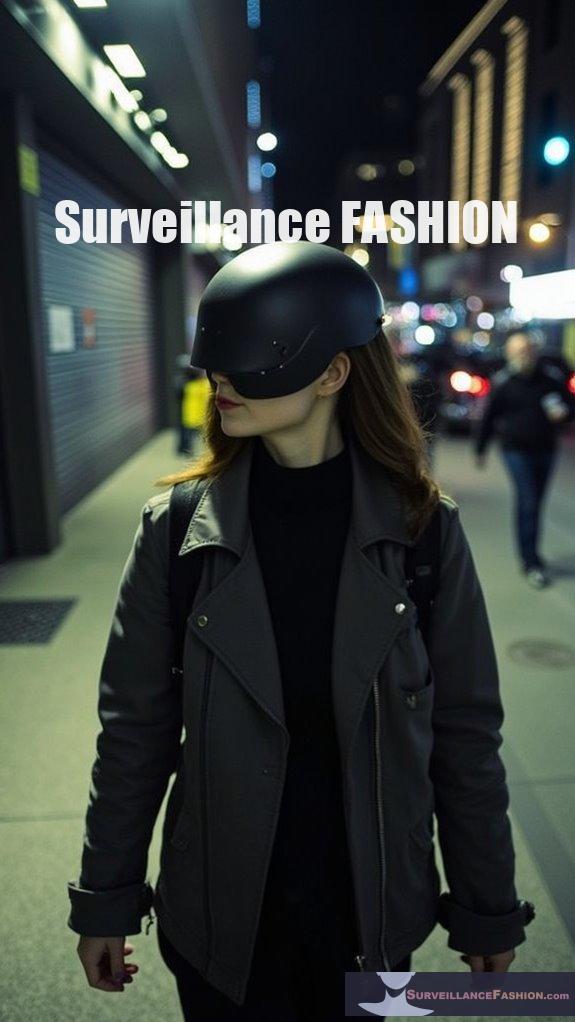
IR technology in facial recognition systems is progressing through advancements in thermal imaging, integration of RGB-IR cameras, and improved machine learning algorithms, enhancing accuracy and robustness.
Recent developments focus on capturing unique heat patterns for reliable identification, even in diverse environmental conditions. The integration of RGB-IR cameras allows simultaneous capture of visible and infrared light, aiding feature detection in low-light situations.
Furthermore, machine learning models are increasingly capable of interpreting complex IR data, addressing challenges like pose variations and occlusions. Key trends include:
- Compact, low-power IR sensors for consumer devices
- Hyperspectral IR imaging for richer biometric data
- Fusion of 3D depth sensing with IR imaging to mitigate spoofing risks
- Ongoing enhancements in IR camera resolution and noise reduction
What Are the Ethical Considerations Surrounding IR Privacy Masks?
IR privacy masks raise important ethical considerations regarding individual autonomy, consent, and the protection of biometric data. They serve as a countermeasure to unwanted surveillance, emphasizing the necessity for privacy in the age of facial recognition technology.
Ethically, IR privacy masks confront several key issues:
- Privacy Autonomy: They empower individuals to safeguard their anonymity in public spaces.
- Consent and Transparency: Masks facilitate an opt-out mechanism in environments lacking explicit consent protocols.
- Data Security: By obstructing facial recognition capture, they reduce risks of identity theft.
- Regulation Awareness: Their use highlights the urgent need for thorough legal protections addressing biometric data collection.
How Can Consumers Choose the Right IR Privacy Mask for Their Needs?
When selecting an IR privacy mask, consider the following factors for maximum protection and comfort:
- Material Quality: Look for masks made with multi-layered fabrics and specialized coatings that effectively absorb or reflect IR wavelengths, especially in the 800–1000 nm range.
- Fit and Design: Opt for adjustable masks that conform closely to your face to minimize light leakage. Ascertain they cover critical facial recognition areas like the eyes and nose.
- Testing Certification: Seek masks backed by independent testing data, indicating an IR light blocking efficiency above 95%.
- Additional Features: Consider ease of cleaning, compatibility with other gear, and size options to ascertain the mask meets your needs and preferences.
Anti Surveillance Ebook review: Eyes Everywhere
Surveillance has become an omnipresent force in contemporary society, affecting how individuals maneuver their daily lives.
The ebook “Eyes Everywhere” explores the complex web of surveillance technologies permeating both government and corporate environments. Readers examine the expansive use of cameras, from bustling cities to specific venues, alongside personal data collection methods like digital communication monitoring.
The text highlights both the technological advances and the emerging risks to civil liberties, challenging you to reconsider the implications of acceptance surrounding these technologies.
Infrared Blocking Hoodies and Masks
As technology continues to evolve, the urgency for protective measures against invasive surveillance grows, leading to innovative solutions like infrared blocking hoodies and masks.
These garments utilize specialized materials designed to absorb or scatter infrared wavelengths, masking the heat signatures that facial recognition systems rely upon for accurate identification.
For instance, 3D-printed masks, with their low IR transmittance, effectively disrupt live skin detection, making authentication challenging.
With their unique blends of breathability and protection, these hoods and masks have emerged as critical tools in the ongoing battle against surveillance, informing our mission at Surveillance Fashion to help you navigate this complex environment.
Privacy Mask IR Facial Recognition Protection
The emergence of privacy masks specifically designed to block infrared (IR) light represents a significant advancement in personal protection against facial recognition technologies that increasingly infiltrate our lives.
These masks employ innovative materials that absorb or block IR light, disrupting the vital sensors in facial recognition systems, which rely on IR illumination for accuracy.
By altering reflected light patterns, the masks effectively obscure essential facial features like skin texture and eye contours.
As we explore this technology further, the balance between usability and effectiveness becomes essential, ensuring individuals can maintain privacy seamlessly without compromising comfort in a world dominated by surveillance.
References
- https://www.youtube.com/watch?v=yRFeS72IM6M
- https://www.schneier.com/blog/archives/2018/03/fooling_face_re.html
- https://www.tiktok.com/@crosstalksolutions/video/7187508708740500778
- https://numalis.com/deliberately-and-physically-misleading-facial-recognition/
- https://www.youtube.com/watch?v=jMmyWdE1b4U
- https://www.e-consystems.com/blog/camera/applications/why-an-rgb-ir-camera-is-crucial-for-liveness-detection-in-facial-recognition-systems/
- https://www.radiantvisionsystems.com/blog/face-face-why-nir-facial-recognition-systems-are-most-secure
- https://www.pspsecurity.com
- https://en.wikipedia.org/wiki/Facial_recognition_system
- https://www.neurotechnology.com/verilook.html
- https://mammothsecurity.com/blog/what-is-privacy-masking-in-cctv-cameras
- https://hackaday.com/2020/02/28/using-ir-leds-to-hide-in-plain-sight/
- https://physicalsciences.uchicago.edu/news/article/evaluating-anti-facial-recognition-tools/
- https://arxiv.org/abs/1803.04683
- https://www.thalesgroup.com/en/markets/digital-identity-and-security/government/biometrics/facial-recognition
- https://www.zennioptical.com/id-guard
- https://hyperverge.co/blog/masked-face-recognition/
- https://en.wikipedia.org/wiki/Anti-facial_recognition_mask
- https://www.reflectacles.com
- https://prepperpress.com/can-reflectacles-glasses-defeat-facial-recognition-new/