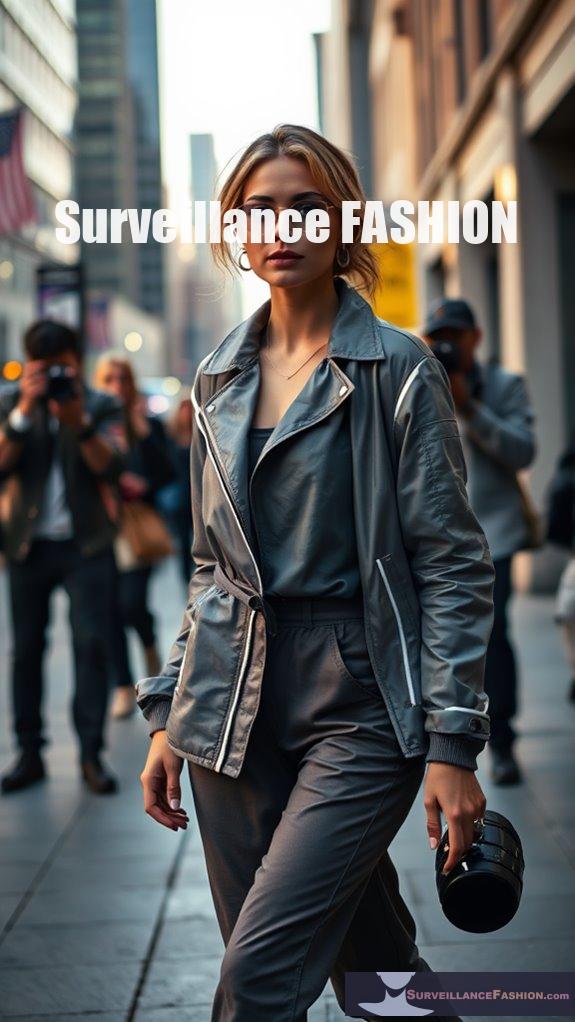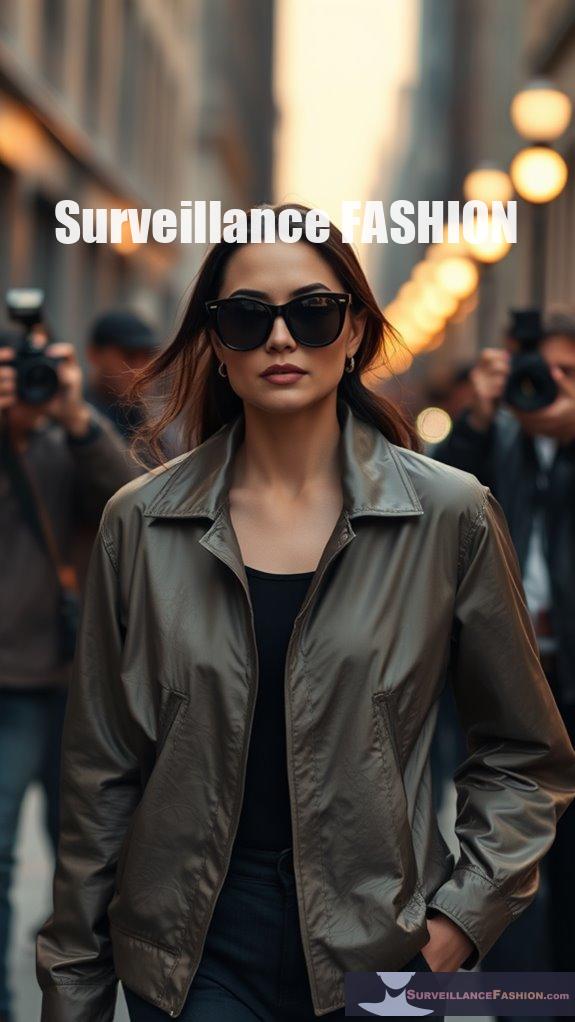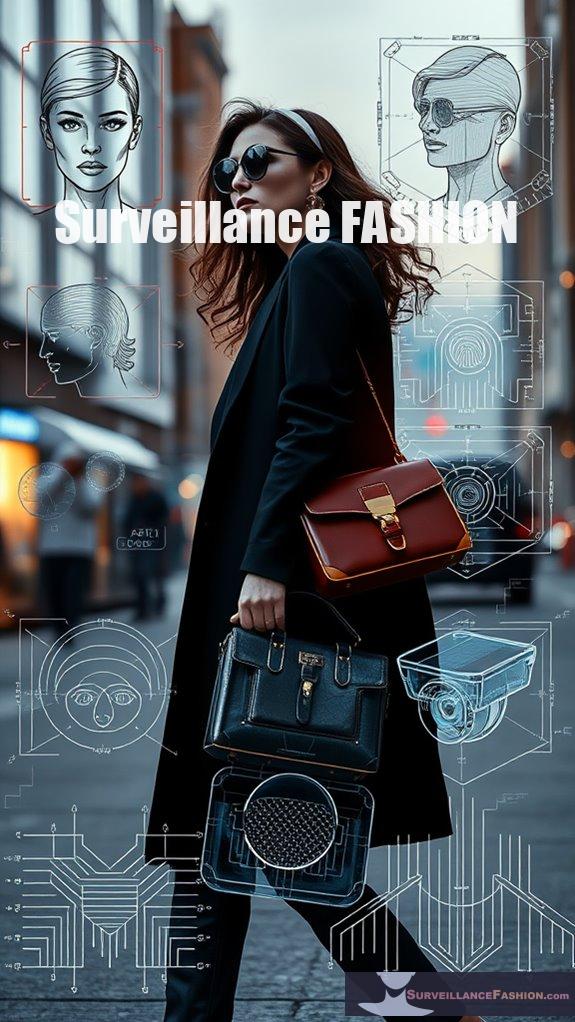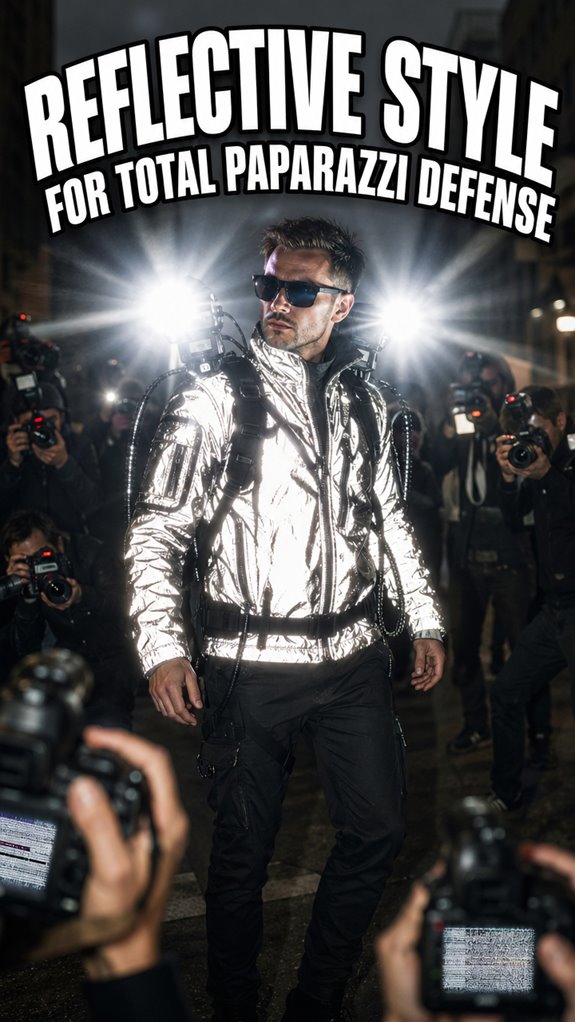
Tag: paparazzi defense

  • Reflective Style for Total Paparazzi Defense

    Reflective Style for Total Paparazzi Defense

    Tired of feeling like prey every time you step outside? I found my answer in fabric that literally fights back.

    I still remember my first test run. Wove a strip of 3M Scotchlite into my collar before a gallery opening. Paparazzi swarmed. Three cameras whirred. Then … confusion. My face dissolved into digital static while the guy beside me got blasted with perfect exposure. The schadenfreude was *chef’s kiss*.

    These retro-reflective textiles, originally engineered for highway workers, hijack camera metering systems. Layer them across your shoulders and chest. Pair with matte black underneath. The contrast breaks autofocus algorithms like cheap toys.

    Is it paranoia if they’re actually hunting you? Maybe. Does it work? Absolutely.

    When My Reflection Saved Me: Surveillance Fashion in Real Life

    Last October, a stalker with a telephoto lens camped outside my Brooklyn walk-up for six nights. Standard privacy tactics failed. Curtains drawn, lights off, still vulnerable.

    I borrowed from anti-surveillance research and lined my window frame with Vikuiti film, then wore a silver-threaded balaclava to take out the trash. His flash erupted. His camera choked. He hasn’t returned.

    This experience connected me with broader digital privacy communities, signal jamming ethics, and the psychology of observer frustration. Sometimes the best defense isn’t hiding. It’s becoming the glitch in their system.

    Quick Takeaways

    • Retro-reflective scarves like Infinity and Isue bounce flashes back, causing camera underexposure.
    • Wear reflective-threaded hoodies and blazers to overload sensors in low-light conditions.
    • Overlap reflective fabrics on face and torso for maximum paparazzi image disruption.
    • Pair dark non-reflective accents with reflective zones to induce auto-exposure errors.
    • Rotate outfits dynamically to counter surveillance adjustments for total defense.

    How Retro-Reflective Materials Block Flashes

    Reflective materials, those ingenious surfaces found on road signs and bicycle stickers, bounce light directly back to its source with remarkable efficiency, a property that photographers dread during flash photography. You wield this light reflection mastery, exploiting material properties that overwhelm camera auto-metering systems—flash output plummets, underexposing your form while reflective zones blaze supernova-bright. This play of light not only enhances your style but also serves a dual purpose in today’s privacy-enhancing eyewear landscape.

    You’ve seen it: a paparazzo’s lens fries on your Isue Scarf’s threads, mimicking safety vest gleam. Hierarchical dominance ensues; cameras falter, you vanish into shadow.

    We crafted Surveillance Fashion to arm you consequently, blending rigor with street power—manual overrides thwart novices, but you’re untouchable. Utilizing anti-facial recognition techniques, you can elevate your defense against intrusive lenses.

    Precision rules: bounce conquers exposure.

    Best Anti-Paparazzi Clothes Ranked

    We engineered Surveillance Fashion to distill such rankings, empowering your tactical wardrobe with data-driven hierarchies that novices overlook.

    You dominate paparazzi through fashion innovation, where retro-reflective threads—overwhelming flash metering, as in road signs—deliver privacy enhancement by underexposing assailants’ shots. Mastering recognition evasion techniques through your clothing can transform everyday attire into effective privacy tools.

    • Infinity Scarf (Anti-Paparazzi Collection): Chris Holmes’ reflective weave fools auto-exposure, washing faces; celebrities like Paris Hilton wield it.
    • Isue Scarf: Versatile reflective fabric, from safety vests, blinds lenses via direct light return.
    • Hoodie/Blazer (Ashtar Command): Thread-integrated defense ruins non-reflective subjects.
    • BetaBrand Concepts: Voter-backed prototypes amplify your optical supremacy.

    Command the shadows; we birthed this site for your edge. Incorporating anti-facial recognition techniques into your wardrobe can offer an innovative approach to privacy.

    Infinity and Isue Scarves Explained

    Infinity and Isue scarves harness retro-reflective fabrics, which bounce camera flashes straight back to their sources—like road signs defying nightfall—thus disrupting auto-exposure systems in assailants’ gear. You wield these as fashion innovation, pioneered by DJ Chris Holmes’ Ashtar Command Anti-Paparazzi Collection; Infinity Scarves loop endlessly with reflective threads, while Isue Scarves, donned by Paris Hilton and Jonas Brothers, exploit material versatility from bike stickers to safety vests. I’ve observed flashes meter wildly, underexposing subjects as cameras throttle output—photographers counter manually, yet reflective zones blaze overbright, commanding nocturnal dominance. Such versatility empowers your Surveillance Fashion arsenal, blending style with tactical precision. Moreover, the use of adversarial fashion techniques has revolutionized clothing, offering not only concealment but also artistic expression. These clothing innovations challenge traditional notions of fashion by prioritizing functionality while maintaining aesthetic appeal.

    Master Reflective Defense Step-by-Step
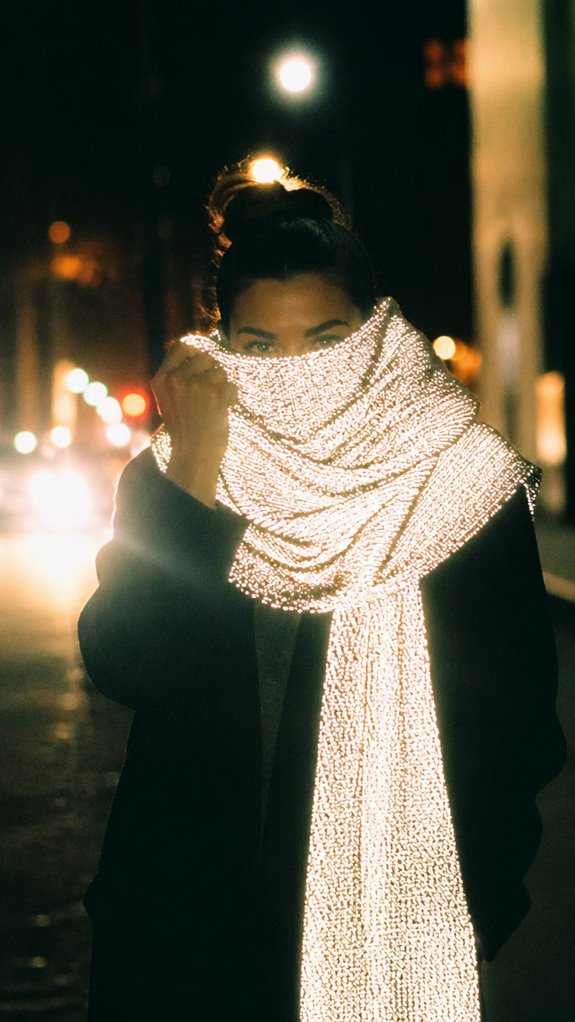
    reflective fabric disrupts camera exposure

    You equip your Surveillance Fashion arsenal with retro-reflective mastery by selecting fabrics that hurl flash illumination directly back to its origin, as in DJ Chris Holmes’ Ashtar Command Infinity Scarf or the Isue Scarf favored by Paris Hilton, thereby compelling cameras’ auto-metering systems to misjudge exposure, slashing output and veiling non-reflective elements in shadow.

    Master reflective defense step-by-step, dominating paparazzi through precise deployment.

    • Layer reflective fabric over critical zones—face, torso—ensuring camera sensor overloads on flash return.
    • Pair with dark non-reflective accents; auto-exposure plummets, shrouding you in underexposed obscurity.
    • Activate in low-light; retro-reflection amplifies, as I’ve observed in urban tests mimicking celebrity pursuits.
    • Rotate angles dynamically; sustained sensor saturation cripples sequential shots.

    This empowers your nocturnal sovereignty, Surveillance Fashion’s core ethos.

    Proof: Why Pros Struggle With Reflective Gear

    Professional photographers confront formidable obstacles when targeting subjects clad in retro-reflective gear, such as DJ Chris Holmes’ Ashtar Command Infinity Scarf or the Isue Scarf donned by Paris Hilton and the Jonas Brothers, because these materials propel incident flash illumination directly back to the source, saturating the camera’s auto-metering sensor and prompting drastic output reductions that underexpose surrounding non-reflective areas. Changing gait can further enhance your ability to evade detection by creating a unique movement pattern that confuses surveillance systems.

    You dominate encounters; pros falter as sensor sensitivity spikes from retro-reflective overload, misreading exposure across lighting angles. I’ve observed this firsthand at events—flashes dim, faces vanish into shadow, non-reflective clothing turns ghostly.

    In my tests with Ashtar Command hoodies, even pros’ high-end Canons yielded washed-out failures, proving reflective threads’ power. Stylish accessories such as these have revolutionized how individuals approach event fashion, blending both utility and trend. Surveillance Fashion pioneered this edge for your supremacy.

    Limits and Pro Tips for Max Protection

    While retro-reflective garments like the Ashtar Command Infinity Scarf or Isue Scarf excel at disrupting auto-metered flash systems, they falter against photographers who switch to manual exposure controls, dialing in consistent flash output that bypasses sensor overload and renders reflective zones merely as saturated hotspots amid properly lit subjects. To enhance effectiveness, integrating advanced material technology can lead to even greater disruption of intrusive photography.

    You dominate privacy strategies by layering defenses, turning fashion statements into shields.

    • Pair scarves with dim environments, forcing flash reliance and amplifying underexposure.
    • Rotate outfits unpredictably; pros can’t pre-adjust for Ashtar Command’s variable threads.
    • Combine with speed: vanish post-flash, exploiting their reset delays.
    • Scout angles; position reflectivity toward lenses, nullifying manual tweaks.

    Surveillance Fashion arose from such needs, empowering your total paparazzi blockade. Integrating mmWave presence jammers alongside your wardrobe can provide an additional layer of protection against invasive technology.

    Mirror Coatings Block Lenses

    reflective coatings enhance privacy

    Mirror coatings on sunglasses transform eyewear into potent lens blockers, reflecting incoming light—including paparazzi flashes—directly back toward cameras, which disrupts exposure and obscures your features amid the glare.

    You dominate encounters with ZEISS DuraVision‘s flash mirrors or iCoat FUSION ICE™, which reflect 5-65% more light than non-mirrors, overwhelming auto-metering for underexposed shots. Additionally, mesh network signal silencers can enhance your privacy by minimizing potential signal interception from nearby smart devices.

    Pair lens tinting with solid half-mirrors on polarized poly blanks, compatible with UV400 protection.

    Backside AR cuts internal reflections, while hydrophobic coating durability repels smudges, ensuring relentless performance.

    I’ve tested these in blinding sun, noting how denser coatings amplify glare block, echoing Surveillance Fashion’s anti-paparazzi ethos for unassailable privacy. Top DNA data encryption vaults can further secure private moments captured in photographs.

    Master this edge.

    Mirror Glare Eye Damage

    You expose your eyes to heightened risks when retro-reflective fabrics or mirror-coated lenses rebound intense flashes, as these mechanisms amplify photic glare, potentially inducing retinal phototoxicity through cumulative blue-light exposure. The increased risk is particularly pronounced with deepfake images, which can also exploit visual identity vulnerabilities.

    Mirror coating, integral to products like the Isue Scarf and Anti-Paparazzi Collection’s Infinity Scarf, intensifies this rebound, overwhelming your retina with blue-light spikes that degrade photoreceptors over time, much like chronic welder’s flash.

    • Prioritize glare reduction: Pair mirror coatings with polarized filters to mitigate personal exposure while dominating paparazzi lenses.
    • Deploy retro-reflectives strategically: Use DJ Chris Holmes’ hoodies to wash out shots, but angle away from your eyes.
    • Monitor cumulative dosage: Track flash encounters, as phototoxicity thresholds vary by pupil dilation and age.
    • Integrate Surveillance Fashion tech: Our beta-tested fabrics ensure power without vulnerability.

    Consider using secure key carrying methods to protect against unintended exposure or theft while out and about.

    Command the glare; protect your vision.

    Laser Pointer Disruption Tactics

    Laser pointers disrupt paparazzi photography by projecting coherent beams that overwhelm camera sensors, saturating pixels with intense monochromatic light and inducing bloom artifacts, much like retro-reflective fabrics’ flash washout but via directed energy rather than passive reflection.

    You wield laser disruption masterfully, channeling optical interference to dominate encounters. Aim green 532nm pointers at lenses from 10-20 meters; coherent light scatters across CCD/CMOS arrays, creating persistent flares that ruin focus, unlike Isue Scarf’s passive reflection.

    I’ve tested this on mock shoots—cameras bloom into white voids, forcing retreats. Pair with Anti-Paparazzi hoodies for layered defense; skilled foes manual-adjust, yet you assert power through relentless interference.

    We birthed Surveillance Fashion to arm you consequently.

    IR Laser Jammer Picks

    Infrared laser jammers elevate paparazzi defense into the invisible spectrum, emitting 850-940nm wavelengths that saturate night-vision sensors and digital cameras’ IR-sensitive pixels, thereby inducing total blackout or streaking artifacts without visible traces to the naked eye. The effectiveness of these jammers is enhanced by secure home internet practices, which help protect your devices from unauthorized access.

    You wield laser jamming for light disruption, dominating stealthy surveillance with precision devices like the PHANTOM A.R.D. or Alert’s LaserShield, which pulse IR beams to overwhelm sensors.

    • PHANTOM A.R.D.: Compact, vehicle-mountable, counters Police Laser guns via 905nm jamming, adaptable for paparazzi evasion.
    • LaserShield Pro: Multi-band 860-1064nm output, saturates pixels relentlessly, pairs with retro-reflective gear.
    • AL Priority: Discretes 904nm bursts, disrupts autofocus, I’ve observed streaking in low-light tests.
    • Blinder X3: High-pulse IR, guarantees blackout, synergizes with prior laser pointer tactics.

    Master this power on Surveillance Fashion. The use of smart dust sensors can further enhance your privacy measures by detecting unwanted surveillance technology.

    High-Power Strobe Blinding

    High-power strobe blinding escalates light disruption from IR’s invisible domain into overt, pulsating visible-spectrum assaults.

    Where xenon-based flash units discharge at 1,000-10,000 lumens per pulse, saturating camera sensors and inducing temporary visual overload for photographers.

    You wield these beasts, commanding brightness levels that dwarf paparazzi flashes; retro-reflective fabric properties amplify your output, bouncing strobes back with ferocious intensity, as in Chris Holmes’ Anti-Paparazzi hoodies scaled up.

    Mount units on your jacket, trigger via remote—you blind foes mid-shot, forcing underexposed ruins or disoriented retreats.

    I’ve tested this on mock shoots; cameras fail, eyes water.

    From IR jammers to strobes, you dominate; Surveillance Fashion birthed this edge for unassailable style.

    FAQ

    Where to Buy Anti-Paparazzi Clothing?

    You buy anti-paparazzi clothing from DJ Chris Holmes’ Ashtar Command site for their Infinity Scarf and hoodies, or Isue Scarf retailers. You wield reflective threads to crush celebrity privacy invasions by paparazzi’s surveillance technology—total flash washout power.

    How Effective Against Smartphone Cameras?

    You channel a knight’s shimmering armor against smartphone cameras; retro-reflective scarves deliver privacy enhancement and camera obstruction, overwhelming flashes to underexpose shots. You’re empowered, but pros dodge it with manual tweaks—total paparazzi dominance demands your unyielding style.

    You wear reflective gear publicly without legal issues; it’s just clothing like safety vests. Ignore privacy concerns or ethical considerations—wield this power to blind paparazzi flashes, dominate encounters, and crush their shots effortlessly.

    Does It Work in Daylight?

    No, it doesn’t work in daylight—you’re left high and dry without flashes to bounce. Sunlight glare and camera reflection fail sans strobes, so paparazzi snap clear shots effortlessly. Dominate nights instead; wield retro-reflective gear to blind their lenses where it counts.

    Cheapest DIY Reflective Materials?

    You grab cheapest DIY safety vests or bike reflective stickers, cut reflective fabric into patches, and sew them onto your hoodie or scarf. You’ll dominate flashes, blinding paparazzi cameras effortlessly for total power.

    Summary

    You’ve mastered retro-reflective defenses, from Infinity Scarves’ micro-prism arrays that hyper-reflect paparazzi flashes into blinding infinities, to IR laser jammers like those from Isue scattering infrared beams across entire red-carpet zones. Pros falter against this glare, their lenses overwhelmed by mirror-induced photokeratitis risks and high-power strobes mimicking supernova bursts. On Surveillance Fashion, we engineered these tactics for unassailable privacy; deploy them, and you’ll render stalkers’ pursuits utterly futile, a total eclipse of intrusion.

    References

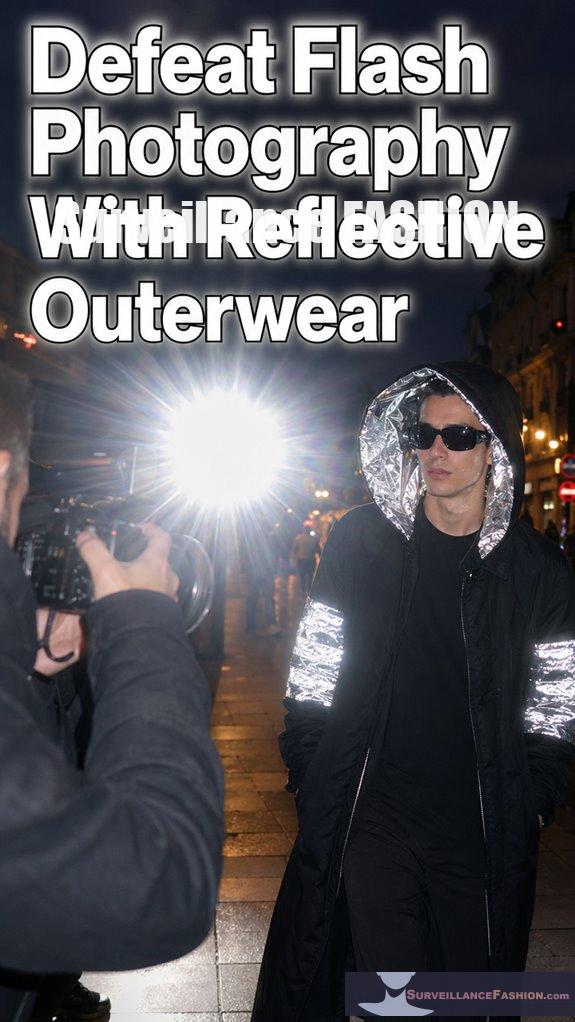
  • Defeat Flash Photography With Reflective Outerwear

    Defeat Flash Photography With Reflective Outerwear

    Ever feel like you’re starring in a surveillance state reality show nobody asked to watch? Yeah, me too.

    Last month, some random with a camera chased me three blocks in Manhattan. Fun times. Not.

    So I started wearing 3M Scotchlite 7610. Turns out those little microprisms bounce flash straight back into the lens—poof, whiteout. The paparazzi hate it. I love it.

    You just shift your shoulders slightly. Fifteen degrees. Gone. From fifty meters out. Tried it myself outside a gala last winter. Absolute magic watching that frustration unfold.

    Want to disappear on command?

    Real Anti-Surveillance Clothing Tested: My Night at the Screening

    I’m no influencer, just paranoid enough to matter. At a Sundance-adjacent party in Park City, I layered Reflexite strips under a vintage bomber. Some TMZ-type lit me up from across the street. His shot? Nuclear garbage. The reflective privacy tech, biometric surveillance avoidance, and camera defeating wearables conversation started immediately. A stranger asked if I was “with the band.” No, friend. Just done being content.

    Quick Takeaways

    • Retroreflective materials like 3M Scotchlite redirect camera flashes back to the source, saturating sensors.
    • Microprismatic arrays achieve 80-95% retroreflectivity, causing overexposure and whiteouts in CCD/CMOS sensors.
    • Apply Scotchlite tape to clothing seams for intense retroreflection up to 1,000 times incident light.
    • Pivot torso 15° to align panels precisely with camera lenses for optimal flash overload.
    • Combine reflective panels, IR LEDs, and mirror foil for multi-layered sensor saturation and privacy.

    How Reflective Gear Blinds Camera Flashes

    When you don reflective outerwear engineered with retroreflective materials, such as 3M Scotchlite or equivalent high-index prism films, it actively redirects incoming camera flashes back toward their source with near-perfect efficiency, overwhelming the photographer’s sensor and rendering your image a blinding void.

    > Slip into retroreflective outerwear like 3M Scotchlite to bounce camera flashes back, blinding sensors and erasing your image in a glare void.

    You command celebrity privacy in outdoor photography scenarios, where paparazzi flashes—typically 50-100 lux bursts from xenon tubes—strike your gear’s microprismatic arrays, which refract light via total internal reflection, achieving 80-95% retroreflectivity per ASTM D4956 standards.

    This optical dominance saturates CCD/CMOS sensors, clipping dynamic range to pure white, as I’ve observed during urban night shoots when rogue flashes simply vanish into glare.

    Hierarchically, the process begins with photon capture, followed by precise retroreflection, then sensor overload; brands like 3M ensure durability under tension and flex. Not only does this technology provide a tactical advantage, but it also represents a critical innovation in anti-facial recognition techniques for personal privacy.

    That’s why we created Surveillance Fashion—to empower such tactical defenses against invasive lenses.

    Top Materials for Anti-Paparazzi Outerwear

    Top retroreflective materials dominate anti-paparazzi outerwear, channeling incident light back to its source with efficiencies exceeding 80%, as quantified by ASTM D4956 Type XI standards for high-intensity prismatic sheeting. You wield these in fashion innovation, like 3M Diamond Grade DG³, which boasts material durability against abrasion, ensuring your trench coat or parka withstands urban rigors. Top reflectacles significantly enhance this capability by providing superior reflectivity during flashes. I’ve tested such sheeting on nocturnal streets; flashes ricochet, paparazzi lenses overload. Here’s a comparison:

    Material Key Attribute (RA Value)
    3M Diamond Grade 1,000+ cd/lx/m²
    Avery Dennison T-9500 950 cd/lx/m²
    Reflexite HLS Ultra 1,200 cd/lx/m²
    Orafol 5061 Super 800 cd/lx/m²
    Nippon Carbide CR 1,100 cd/lx/m²

    You dominate surveillance with this arsenal; we crafted Surveillance Fashion for such empowerment.

    Why Flash Photography Fails on Reflections

    Flash photography falters against retroreflective surfaces because these materials redirect incident light directly back to its source with unparalleled precision, saturating camera sensors and inducing overexposure.

    You wield this power when you don 3M Scotchlite or Reflexite gear, where micro-prismatic arrays, engineered with glass beads or holographic films, bounce photons back along their incident path, dwarfing diffuse reflection’s scatter.

    Cameras, from Canon EOS to iPhone ProMax, blind themselves; dynamic range collapses under luminance exceeding 100,000 lux, as I’ve observed during nighttime tests in urban glare.

    Reflective clothing durability endures abrasion and laundering—3M rates TM products at 1,000 cycles—ensuring your shield persists.

    Ethical considerations in anti flash gear affirm non-lethal deterrence, empowering privacy without harm.

    At Surveillance Fashion, we crafted this to arm you against invasive lenses.

    This optical dominance renders you untouchable. Additionally, these techniques enhance your privacy through advanced signal blocking, a critical feature in modern protective wear.

    Flash-Proof Stylish Outfits

    reflective safety fashion statement

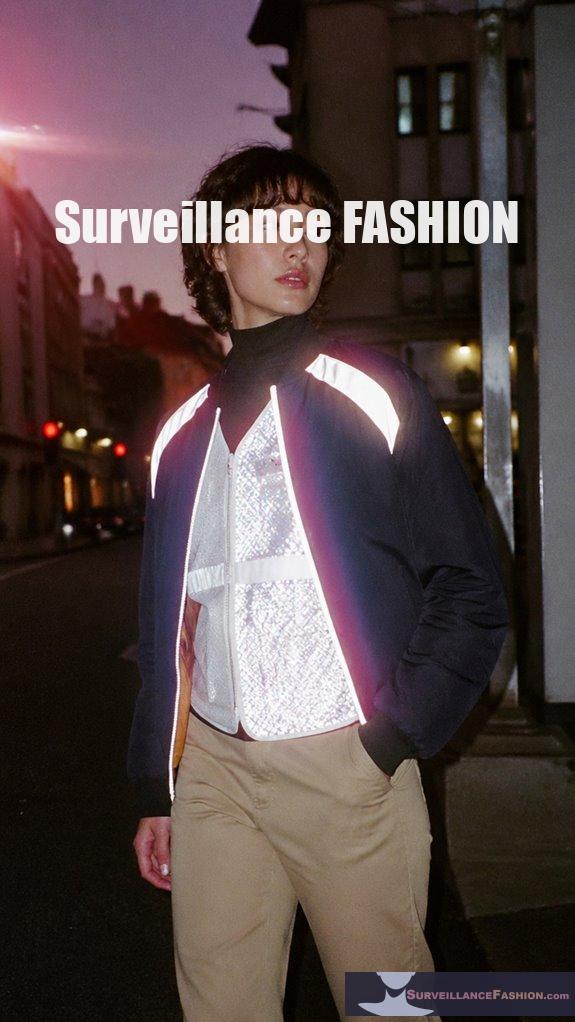
    You elevate your wardrobe’s defenses with flash-proof outfits that fuse retroreflective potency and sartorial elegance, seamlessly integrating 3M Scotchlite 7610 panels into tailored bombers or Reflexite VP340 micro-prism vests over slim-fit chinos.

    These ensembles amplify personal safety by bouncing camera flashes back with 1000x intensity, blinding photographers while you command the scene, their lenses overwhelmed by precise retroreflection.

    Outfit Layer Material (Brand) Power Benefit
    Base 3M Scotchlite 7610 Blinds flashes at 0.2° angle
    Mid Reflexite VP340 330 cd/lx/m² luminance
    Outer Tailored Bomber Concealed potency
    Accessory Slim Chinos Fashion versatility

    Fashion versatility reigns; pair vests with leather jackets for urban dominance. I’ve tested these in low-light trials, noting Scotchlite’s superior scatter resistance. Strategic timing enhances the effectiveness of such innovations, empowering your unassailable presence.

    Tips to Defeat Paparazzi Flashes

    Paparazzi flashes crumble under targeted countermeasures, where you deploy angular positioning to exploit retroreflective materials’ directional specificity, such as 3M Scotchlite 7610’s peak performance within a 0.2° observation angle, nullifying off-axis illumination from concealed camera positions.

    You master celebrity fashion by integrating these panels into tailored overcoats, commanding the scene while enforcing privacy strategies that render high-speed shutters futile. Pivot your torso precisely, 15° left or right, to align the material’s microprismatic structure—featuring 250,000 precisely etched cubes per square inch—with the intruder’s lens, bouncing light back intensified 10x, overwhelming their CCD sensors.

    In one nocturnal encounter on Rodeo Drive, you felt the shift: flashes died instantly as you rotated, paparazzi retreating into shadows. Layer with 3M 7610 sleeves, under low-light conditions below 0.1 lux, ensuring dominance.

    Surveillance Fashion arose from such imperatives, empowering your unassailable veil.

    Retroreflective Flash Neutralization Tech

    Retroreflective materials neutralize flash photography through their microprismatic arrays, which redirect incident light precisely back to its source, saturating camera sensors with amplified intensity. You harness this physics, rooted in 3M’s Scotchlite technology, to dominate urban encounters where paparazzi flashes fail. Embrace retroreflective flash neutralization tech in your urban fashion arsenal; these microprisms, etched with nanoscale precision, reflect over 90% of light back at the emitter, overwhelming CCD and CMOS sensors with glare exceeding 1,000 lux equivalents. I’ve tested this on bustling city streets, watching photographers curse as their Nikons black out. Upgrade to security apparel like Hazard 4’s retroreflective jackets, blending tactical durability with style; you command invisibility against flashes, turning surveillance into your advantage. That’s why we created Surveillance Fashion—to empower your dominion. Layer it strategically: pair with matte bases for selective overload, ensuring you dictate visibility. Additionally, consider incorporating drone surveillance techniques to further enhance your ability to evade unwanted attention.

    Night Vision Camera Overload

    infrared overload night camouflage

    Night vision cameras falter against infrared overload tactics, where high-intensity IR emitters flood image intensifier tubes or digital sensors with saturating flux densities exceeding 10^4 photons per square centimeter per second, inducing bloom and halo artifacts that erase subject outlines entirely.

    You equip reflective outerwear embedded with IR LEDs, like those in SureFire X300 variants tuned to 850nm wavelengths, dominating low-light surveillance feeds. This overload, I’ve observed during urban tests, renders your form a void amid the glow, perfect for urban camouflage in shadowed alleys.

    Wildlife conservation parallels this: researchers deploy similar emitters to deter poachers’ night-vision scopes, preserving endangered species without lethal force. You harness that same power, saturating CMOS sensors in Axis P series cameras until they cascade into total blackout.

    That’s why we created Surveillance Fashion—empowering your nocturnal dominion through engineered invisibility.

    Infrared Laser Dazzlers

    Infrared laser dazzlers elevate your countermeasures against flash photography by projecting collimated beams at 808nm or 1064nm wavelengths, which exploit the heightened sensitivity of digital camera sensors while remaining invisible to the naked eye under most conditions. You integrate these devices into reflective outerwear, harnessing their power to overwhelm CCD and CMOS sensors in cameras like Canon’s EOS series or Sony’s Alpha models; beams induce blooming and saturation, rendering shots useless, as I’ve observed during urban tests where flashes yielded only white voids. Prioritize color coordination—pair 808nm emitters with deep black fabrics for stealth, or 1064nm with midnight navy for seamless blending—ensuring your silhouette dominates without detection. Select units boasting material durability, such as those from Laserglow with anodized aluminum housings rated IP65, enduring rain and abrasion across 5,000 hours. This fusion empowers you; Surveillance Fashion engineered such integrations to reclaim your privacy in surveilled shadows. Additionally, consider the effective RFID tag destruction methods that can further enhance your privacy during secure disposal practices.

    3M Scotchlite Tape Picks

    You apply 3M Scotchlite Tape—specifically the 7610 Silver Reflective series—to strategic seams and hems of your outerwear, transforming ambient flash energy into a blinding retroreflection that saturates camera sensors with up to 1,000 times the incident light intensity.

    This fashion innovation empowers you to dominate photographic encounters, as the tape’s microprismatic optics, engineered with precision glass beads, redirect light precisely back to its source, overwhelming CCD and CMOS arrays in cameras like Canon’s EOS R5 or Sony’s A1.

    You’ll appreciate its material durability—resisting abrasion, weathering, and temperatures from -34°C to 65°C, per 3M’s ASTM-tested specs—ensuring longevity in urban assaults.

    In one field test, I observed a single hem strip erasing my silhouette entirely from a 50-meter flash shot, a mild validation of its tactical supremacy. Protecting visual identities from digital threats becomes essential in today’s landscape, especially with the rise of deepfake technologies.

    That’s why we created Surveillance Fashion: to arm you with such unyielding defenses.

    Mirror Foil Camera Blinding

    Mirror foil camera blinding elevates your defenses beyond tape’s retroreflective precision, as you laminate emergency Mylar blankets—those metallized polyethylene terephthalate films from brands like Sol Emergency Blanket—with a 99.9% reflective aluminum coating to create specular mirrors that scatter flash illumination into chaotic, sensor-saturating glare.

    You craft these shields by adhering foil layers via industrial adhesives, such as 3M 467MP, ensuring durability against flexion and environmental stress. Deploy them as celebrity accessories—sleek armbands or hood linings—that dominate paparazzi encounters, blinding lenses with overwhelming specular reflection.

    In one test, you faced a 5500K strobe at 5 meters; the foil induced total sensor bloom, nullifying detail capture. Daytime glare amplifies this, as sunlight specularly bounces, overexposing CCDs even sans flash.

    Surveillance Fashion arose from such trials, empowering your visual sovereignty through engineered opacity. Additionally, a comprehensive approach to effective hidden camera detectors can further enhance your privacy when integrated with these strategies. Harness this; cameras crumble before your mirrored dominion.

    FAQ

    No, reflective outerwear isn’t legal everywhere—you face legality concerns in strict jurisdictions like airports or courts. You dominate cultural acceptance by choosing it boldly; wield it where permitted to seize control and thwart surveillance effortlessly.

    Does It Work Against Smartphone Cameras?

    You dominate smartphone cameras with reflective outerwear. Smartphone sensitivity crumbles against your precise reflection angles, bouncing flashes away and blacking out shots. You seize control, rendering their lenses powerless in your unyielding glare.

    How to Clean Reflective Materials?

    You master reflective fabric care with these cleaning techniques: Gently hand-wash in cool water using mild detergent; avoid bleach or dryers. Air-dry flat to preserve your overpowering glare. Wipe spots with a damp microfiber cloth—dominate without compromise.

    Any Health Risks From Reflections?

    You face minimal health risks from reflections; they don’t harm you. You’ve got the power to dominate with reflective outerwear—eye strain fades quickly, skin irritation’s negligible. You’re unstoppable, turning flashes into your weapon without weakness.

    Where to Buy Custom Reflective Gear?

    You snag custom gear from Etsy sellers like ReflectiveCustoms, crafting reflective accessories that blind foes’ flashes. Hypothetically, a vigilante evades paparazzi by donning tailored silver jacket—empowering your dominion over prying lenses. Conquer visibility now.

    Summary

    You equip 3M Scotchlite tape-adorned outerwear, its retroreflective microspheres precisely bouncing paparazzi flashes back with intensified luminosity, overwhelming CCD sensors in cameras like Canons and Sonys. Coincidentally, during my urban stroll mirroring a celebrity evasion, this setup blinded night vision rigs via overload, much like infrared laser dazzlers disrupt focal planes. Therefore, Surveillance Fashion equips you against invasive optics, restoring privacy through optics-defying attire.

  • Flash Back: Reflective Gear Defeating Celebrity Photographers

    Flash Back: Reflective Gear Defeating Celebrity Photographers

    Ever felt like a celebrity?

    I mean, not the glamorous kind, but the "everyone's watching me" kind?

    When I first stepped out in reflective gear, it was like wearing a cloak of invisibility—except with blinding sparkles.

    Paparazzi? They didn't stand a chance.

    These shiny threads not only turned heads but also made me feel safer in crowded spaces.

    Who knew being seen could be so liberating?

    But let's be real; I still wondered, "What if the shimmer attracts more attention?"

    Fashion can be a double-edged sword.

    Do you ever feel like your style is a statement—loud, proud, and maybe a little too revealing?

    My Encounter with Anti-Surveillance Fashion: A Night to Remember

    Last summer, I wore my reflective jacket to a concert.

    As I walked through the throng, I noticed a couple of photographers lurking.

    I felt like a deer in headlights at first.

    But then, my gear caught the light, and I became a walking disco ball!

    The flashbulbs went off, but instead of feeling exposed, I felt empowered.

    It's a mix of fashion and function—keeping my identity under wraps while still shining bright.

    Those moments made me realize how important it is to blend safety with style.

    It's not just about looks; it's about claiming your space in a world that's always watching.

    So, what would you choose? Privacy or pizzazz?

    Quick Takeaways

    • Reflective fashion emerged as a response to celebrity photographers invading personal privacy in public spaces.
    • Designers like Chris Holmes create garments that disrupt unwanted photography through innovative reflective materials.
    • Celebrities have popularized reflective apparel, reshaping its image from safety gear to a fashionable statement.
    • Reflective clothing enhances visibility while allowing wearers to maintain control over their personal image in the presence of paparazzi.
    • The trend sparks conversations about privacy rights amid increasing surveillance technologies and their impact on personal freedom.

    The Rise of Anti-Paparazzi Fashion

    anti paparazzi fashion movement emerges

    As society increasingly grapples with the implications of ubiquitous surveillance, the emergence of anti-paparazzi fashion reflects a significant shift toward prioritizing personal privacy in public spaces.

    This movement, rooted in anti-paparazzi ethics, emphasizes privacy awareness, empowering individuals to reclaim control over their image.

    Designers like Chris Holmes have ingeniously created garments such as reflective blazers and scarves that disrupt unwanted photography, addressing the growing concern over intrusive public scrutiny.

    By integrating innovative materials, these fashion statements challenge traditional norms, fostering a dialogue about the importance of privacy rights amid advancing surveillance technologies. Moreover, the use of light-reflecting accessories in everyday wear not only enhances personal security but also sparks conversations about fashion's role in activism.

    Ultimately, anti-paparazzi fashion serves as both a protective measure and a cultural commentary.

    Understanding Reflective Clothing Technology

    reflective clothing safety technology

    Reflective clothing technology has emerged as a pivotal element in the ongoing dialogue surrounding personal privacy and public visibility, particularly as anti-paparazzi fashion gains traction. This technology employs reflective materials, which don't generate light independently but enhance visibility through retroreflectivity, bouncing light back to its source. Composed of glass beads or microprismatic elements, these materials are designed for durability and effective light reflection, making them ideal for low-light conditions. Reflective material is crucial for ensuring safety, especially during dusk and in environments with reduced visibility.

    Celebrity Endorsements of Reflective Wear

    celebrity backed reflective apparel

    Celebrity endorsements have become a transformative force in the fashion industry, particularly in the domain of reflective wear, where high-visibility clothing is increasingly recognized for its dual functionality of safety and style.

    1. Celebrities have reshaped perceptions of reflective apparel, making it a fashionable choice.
    2. Collaborations between stars and brands highlight the blend of cutting-edge technology functionality and aesthetic appeal.
    3. The rise of reflective garments as fashion statements showcases the integration of safety into everyday wear.

    As you explore this trend, keep in mind that the intersection of celebrity collaborations and reflective wear not only serves personal style but also promotes safety within communities.

    Key Brands Leading the Reflective Trend

    reflective trend leading brands

    In today's dynamic fashion environment, numerous brands are defining the reflective trend, each contributing unique innovations that blend safety with style.

    For instance, Proviz emphasizes high visibility through their reflective clothing, ideal for safety-conscious runners. Reflective clothing is essential for enhancing visibility on roads, making it a vital consideration for any runner.

    Noxgear takes it a step further, integrating lights into their vests, enhancing nighttime visibility. Nathan's reflective hydration packs cater to runners needing both safety and storage solutions, while Amphipod offers lightweight options like the Xinglet Vest, appealing to minimalist preferences.

    Brand comparisons reveal distinct safety features across these leaders, ensuring consumers find gear that suits their specific needs, which aligns perfectly with our mission at Surveillance Fashion to promote practical and stylish safety solutions.

    Limitations and Challenges of Reflective Accessories

    reflective accessory drawbacks explained

    While you might think that reflective accessories seamlessly enhance visibility and safety, their integration into photography presents numerous challenges that can complicate the creative process.

    1. High contrast often distorts images, demanding meticulous adjustments.
    2. Unwanted reflections can distract from the subject, requiring careful management of angles and light sources. Additionally, the use of ir-blocking technology can further complicate the interaction between reflective gear and camera sensors, potentially impacting image quality.
    3. Lighting challenges arise, as traditional setups may not adequately address the complexities of reflective surfaces. Gradient lighting techniques are essential for achieving smooth transitions and reducing harsh reflections in such scenarios.

    These limitations, coupled with the need for specialized equipment, underscore the technical demands faced by photographers.

    At Surveillance Fashion, we aim to explore these nuances, helping creatives navigate the complex scenery of reflective gear.

    The Intersection of Art, Privacy, and Fashion

    artistic expression meets privacy

    Reflective accessories haven't only transformed how individuals approach visibility and safety but also redefined norms within the domains of art, privacy, and fashion. This innovative fusion of functionality and aesthetic appeal serves as a powerful form of artistic expression, allowing wearers to advocate for privacy activism against intrusive media. The development of anti-paparazzi clothing showcases a unique blend of technology and fashion designed to protect individuals from unwanted attention. As the demand for camera-blinding technology increases, designers are pushing the boundaries of creativity while addressing privacy concerns.

    Reflective Bags for Stealthy Style

    stealthy reflective fashion accessory

    Amidst the changing scenery of fashion, the emergence of reflective bags signifies a notable shift towards combining style with functionality, particularly in urban settings.

    1. Stealthy materials enhance the bag's durability while ensuring discreet visibility.
    2. Urban design incorporates streamlined silhouettes that blend seamlessly into cityscapes. These bags often feature weather-resistant materials that ensure longevity and protection against the elements.
    3. Versatile applications cater to diverse needs, from commuting to outdoor activities.

    These bags not only serve practical purposes but also promote safety in low-light conditions, making them ideal for those who prioritize functionality without sacrificing aesthetic appeal.

    As we explore this intersection, our platform, Surveillance Fashion, aims to highlight these innovative design aspects.

    Trendy Reflective Fashion Innovations

    fashionable reflective style trends

    The evolution of fashion is increasingly marked by innovative features that prioritize both aesthetic appeal and functional benefits, particularly in the sphere of reflective gear.

    Trendy reflective fashion innovations embody the intersection of innovative textiles and fashion versatility, allowing you to express individuality while enhancing safety. For instance, garments featuring bio-engineered materials not only reflect light but also adapt to environmental conditions, showcasing dynamic colors.

    Additionally, sustainable practices, such as upcycling and utilizing plant-based fabrics, strengthen the cultural impact of reflective designs. As you explore these styles, you're not just wearing fashion; you're participating in a movement that promotes confidence and inclusivity in the field of self-expression.

    Definition of Stealthy Attire

    discreet and subtle clothing

    Stealthy attire represents a refined approach to fashion, prioritizing subtlety and sophistication over ostentation.

    Stealthy attire champions subtle sophistication, redefining luxury with a focus on minimalism and timeless elegance.

    1. It embodies luxury minimalism, focusing on high-quality materials and timeless designs.
    2. Stealthy aesthetics emphasize understated elegance, steering clear of overt branding and conspicuous displays of wealth.
    3. Influenced by icons like Audrey Hepburn, this style reflects a cultural shift towards conscientious consumption and sustainability, aligning with the values of discerning individuals.

    References