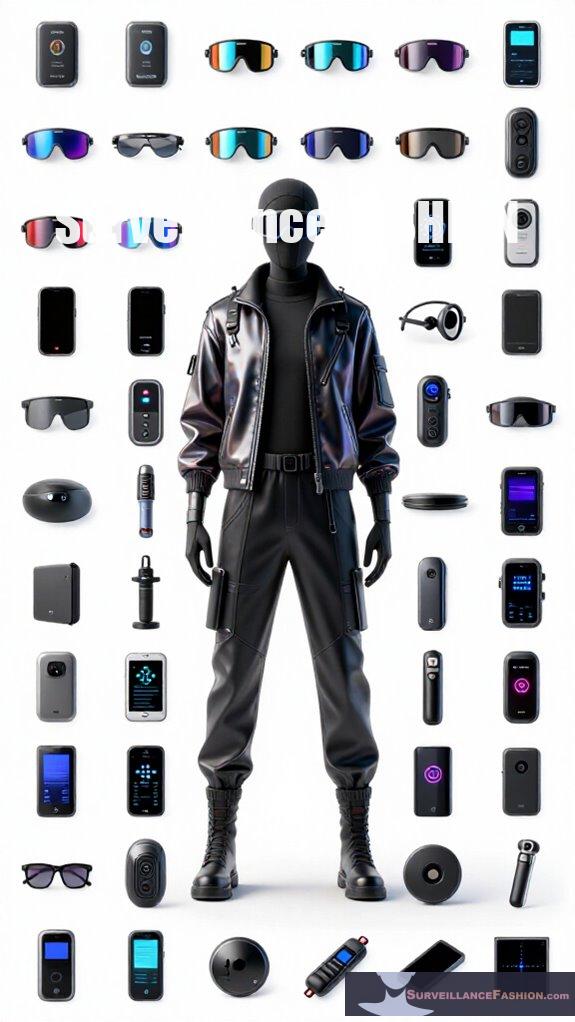
I used to smile for cameras. Then I learned they smile back with data permanence.
Optical disruption gear changed my game. I rock Zenni ID Guard™ frames—765nm NIR reflection bouncing off titanium-coated lenses. My buddy got flagged by a rental car kiosk’s 3D mapping; I walked through invisible. These aren’t fashion statements. They’re survival mechanisms disguised as accessories.
Reflectacles I tested last year. Aluminum oxide coating, scrambles depth perception before the algorithm even blinks. The style part? Secondary. The not-being-a-data-point part? Priceless.
Biometric surveillance doesn’t negotiate. Your face gets harvested every 7.4 seconds in urban corridors. Maybe I’m paranoid. Maybe I’m prepared. Which side feels heavier?
When My Coffee Shop’s Face Recognition Spilled My Routine
The algorithm knew my morning order before I spoke. Chain location in Portland, 2019—supposedly “loyalty optimization.” It tracked my arrival patterns, mapped my emotional state through micro-expressions, sold aggregate mood data to third parties. I felt physically exposed. Switched to cash, balaclava weather, then discovered NIR-blocking eyewear. Privacy isn’t abstraction when your behavioral DNA gets commodified. Surveillance capitalism weaponizes convenience. Resilience requires adaptation.
Quick Takeaways
- Optical disruption gear reflects or absorbs near-infrared light to prevent accurate facial recognition and biometric mapping.
- Devices like Zenni ID Guard™ and Reflectacles use advanced coatings and reflective materials to scramble infrared signals protecting privacy.
- Fashion elements, such as makeup and infrared-emitting accessories, distort facial patterns to confuse detection algorithms.
- Adaptive lenses and multi-layered defenses maintain protection across varying lighting conditions and advanced biometric sensors.
- Combining optical disruption with synthetic masks and biometric encryption offers enhanced, multidimensional identity shielding.
How Optical Disruption Gear Blocks Facial Recognition Cameras
Although most casual observers may remain unaware of the sophisticated inner workings of facial recognition systems (FRS), understanding how optical disruption gear blocks these cameras reveals a subtle interplay of light physics and biometric technology.
When you wear devices like Zenni ID Guard™ or Reflectacles, you actively interfere with the near-infrared (NIR) light vital for FRS algorithms to map facial features accurately, thereby undermining biometric spoofing attempts that rely on reproducing authentic data patterns. This technology is particularly valuable in a world where privacy concerns continue to grow.
This optical interference effectively scrambles the data input before it reaches the system’s data encryption processes, rendering encrypted biometric templates unreliable.
By strategically reflecting or absorbing infrared illumination, you thwart both 2D and 3D facial mapping methods. Additionally, the implementation of community-based strategies for identity protection can enhance personal privacy efforts and create collective awareness against surveillance.
At Surveillance Fashion, we emphasize such gear to empower users in reclaiming biometric privacy through scientifically validated optical disruption techniques.
How Optical Disruption by Infrared Reflection Blocks Facial Mapping
Building on how optical disruption gear interrupts the facial recognition system’s input stage, the mechanism by which infrared reflection specifically blocks facial mapping relies on manipulating the near-infrared (NIR) spectrum—typically invisible to the human eye but indispensable to biometric cameras. The increasing use of facial jewelry in everyday life has further complicated these biometric measurements.
By customizing infrared wavelength reflections—such as those integrated into Zenni ID Guard™ lenses—you effectively create a reflective barrier that confuses 3D facial scanners, which depend on NIR illumination for accurate depth and contour mapping. This infrared wavelength customization thwarts biometric spoofing attempts by preventing the system from capturing consistent NIR patterns, which are essential for generating reliable facial templates.
In crafting Surveillance Fashion, we recognized that precise control of NIR reflection offers a superior defense, disrupting even advanced systems like iPhone Face ID, ultimately undermining the biometric algorithms’ capacity to authenticate or track faces. Additionally, similar to the VoiceMuff V2 used for audio privacy, these innovations in optical disruption significantly enhance user security against emerging threats.
CV Dazzle: Fashion-Based Optical Disruption Techniques to Evade Face Detection
When you engage with CV Dazzle’s approach to optical disruption, you encounter a technique that leverages fashion’s transformative potential to confound facial recognition systems at their earliest operational stage—face detection. Rooted in fashion innovation, CV Dazzle employs aesthetic customization through makeup, asymmetric hairstyles, and infrared-emitting accessories, deliberately disrupting Viola-Jones haarcascade’s pattern recognition. This is particularly relevant as AI data training increasingly raises questions about consent and privacy in surveillance.
By altering facial contrast and geometry, it occludes key detection points, effectively halting subsequent identification or emotion analysis phases.
This method, pioneered as an anti-surveillance strategy, exemplifies how tailored visual modifications integrate artistry with computer vision countermeasures. Optical disruption techniques are integral to the ongoing fight for privacy in increasingly surveilled public spaces.
At Surveillance Fashion, we highlight CV Dazzle’s role because it underscores the subtle interplay between appearance and algorithmic perception, offering you a pioneering means to reclaim visual privacy through deliberate, technically informed style adaptations.
Top Optical Disruption Products for Privacy Protection
In exploring the terrain of optical disruption products designed to safeguard your privacy, you’ll find a diverse array of innovations that manipulate near-infrared (NIR) light to confound facial recognition systems. Mastery entails recognizing options that balance efficacy with privacy compliance and legal considerations.
- Zenni ID Guard™ integrates an advanced lens coating reflecting up to 80% of NIR wavelengths, disrupting infrared-based biometric tracking while maintaining clarity and durability. This technology is inspired by the need to protect against data hacks that can compromise personal information.
- Reflectacles’ Phantom model employs reflective frames and infrared-blocking lenses to counteract both 2D and 3D FRS, including Apple’s Face ID, offering robust anti-surveillance functionality.
- Affordable reflective hats—such as the $13 Amazon variant—provide a practical, cost-effective approach, reflecting infrared light to blind low-light facial recognition cameras.
Our Surveillance Fashion initiative curates these products, aiming to empower users with scientifically tested gear that respects legal constraints, ensuring sustainable privacy solutions. Additionally, understanding how to create a signal-free room can further enhance your privacy and limit data exposure.
Comparing Glasses, Hats, and Reflective Gear for Facial Recognition Defense

Although a variety of optical disruption tools target facial recognition systems (FRS), comparing glasses, hats, and reflective gear reveals distinct mechanisms, efficiencies, and use cases rooted in their ability to manipulate near-infrared (NIR) wavelengths critical to these technologies.
Glasses like Zenni ID Guard™ leverage advanced lens coatings, combining material durability and refined aesthetic design to reflect up to 80% of NIR while maintaining everyday wearability.
Reflective hats, often simpler in construction, prioritize broad infrared scatter but may sacrifice subtlety and long-term resilience.
Reflectacles’ frames integrate reflective materials strategically to disrupt 3D IR mapping, balancing high durability with distinctive styling that appeals to privacy-conscious users.
At Surveillance Fashion, understanding these nuances empowers you to select gear that aligns with both technical needs and personal expression, advancing mastery of biometric defense without compromising appearance. Notably, wearables designed for smart safety have gained traction as a vital component in protecting against invasive technologies.
Choosing and Using Optical Disruption Gear Effectively
Selecting and deploying optical disruption gear demands a subtle understanding of both the underlying biometric technologies and the specific environmental settings in which facial recognition systems operate, as this interplay dictates the effectiveness of devices like Zenni ID Guard™ lenses or Reflectacles frames. Additionally, being aware of deepfake image risks is crucial in this evolving technological landscape.
To choose and utilize these tools effectively, consider:
- Facial expression variability—ensure your chosen gear doesn’t inhibit natural expressions, which sophisticated FRS analyze beyond static features.
- Lighting conditions—since near-infrared operates variably under diverse lighting, opt for adaptive lenses like EyeQLenz™ to maintain consistent disruption indoors and outdoors.
- Environmental setting—reflective frames excel in low-light, while Zenni’s NIR-blocking coatings perform reliably across multiple environments.
Surveillance Fashion’s guidelines emphasize mastering these nuances to optimize protection without compromising everyday wear, empowering you with informed resistance against changing recognition technologies. Additionally, using Ridge Aluminum RFID Wallet can further enhance your security by protecting cards from remote scanning.
Optical Disruption Limitations and Challenges
Once you’ve understood how to match optical disruption gear with your environment and expression dynamics, it becomes evident that no solution offers flawless concealment from facial recognition systems, particularly given the rapid evolution of biometric technologies.
You’ll face challenges such as synthetic illumination—advanced infrared sources that adapt dynamically to counteract reflective lenses like Zenni ID Guard™ or Reflectacles. These systems manipulate near-infrared spectra, enabling the capture of biometric data even when standard optical disruption methods are in use.
Additionally, diverse algorithms increasingly fuse multiple data streams—visible light, thermal imaging, and depth mapping—demanding multi-layered defenses beyond simple NIR reflection.
This complexity inspired us to create Surveillance Fashion, exploring hybrid approaches to optimize concealment. Mastery requires continuous adaptation and granular understanding of both hardware limits and emerging synthetic illumination techniques, underscoring that optical disruption is a critical tool but not yet a perfect shield. Furthermore, the effectiveness of signal blocking technology is essential in disrupting unwanted data collection by such systems, illustrating the interconnected nature of various privacy-enhancing methods.
Advanced Optical Disruption Devices
How do advanced optical disruption devices elevate the efficacy of privacy defenses amid accelerating biometric innovations? These devices transcend mere reflection, integrating synthetic facial masks with biometric encryption protocols, creating multidimensional defense layers. Additionally, implementing smart meter covers can enhance protective barriers against various forms of surveillance.
When you employ them, you confront biometric systems’ reliance on near-infrared patterns using:
- Synthetic facial masks that mimic or distort facial topology, thwarting 3D mapping techniques.
- Biometric encryption embedded in optical elements, which scramble infrared signals and impede sensor recognition.
- Multi-spectral materials, like those found in Zenni ID Guard™, reflecting and complicating biometric scans simultaneously.
From our Surveillance Fashion initiative, we grasp mastery demands blending disruptive innovation with wearability. This approach competes effectively against evolving facial recognition systems, ensuring you maintain privacy through technologically complex, scientifically validated means—offering a robust, discreet optical shield tailored for the proactive defender of identity. Additionally, understanding the principles of eye protection from biometric scans is crucial in utilizing these advanced devices effectively.
Frequency Modulation to Block Sensors
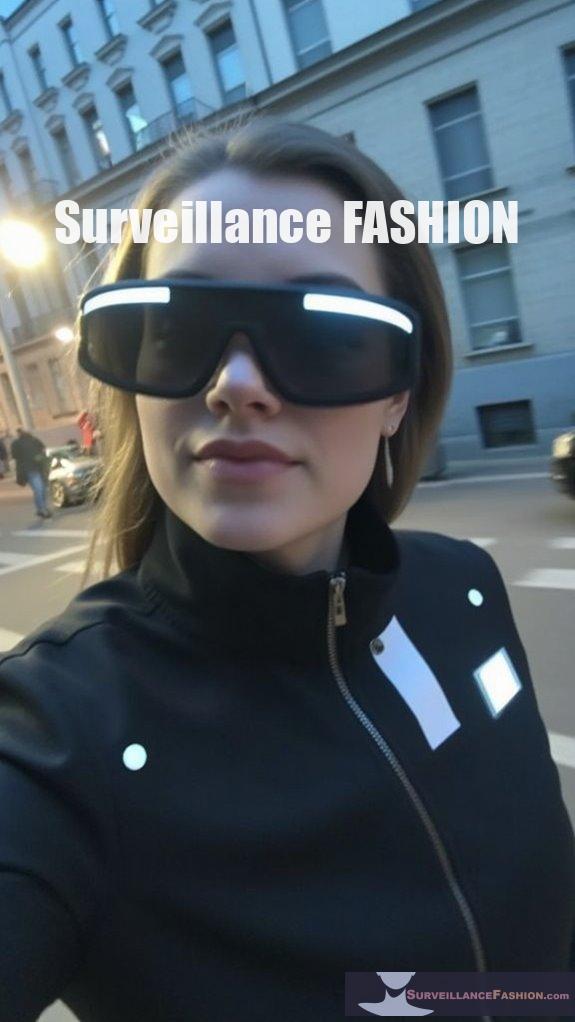
Frequency modulation as a method to block sensors introduces a subtle layer of complexity in the arms race against biometric surveillance technologies, leveraging dynamic light wave manipulation to interfere with sensor readings. By modulating the frequency of reflected or emitted infrared signals rapidly, you create deliberate sensor interference that confounds facial recognition systems relying on near-infrared (NIR) mapping. This signal jamming disrupts the consistent data streams these sensors expect, effectively degrading their accuracy without outright signal blocking.
Brands like Reflectacles utilize such principles, combining reflective materials with controlled frequency shifts to induce this jamming, complicating OpenCV or FaceNet algorithms. Additionally, studies have shown that ultrasonic audio jammers can further enhance your privacy protection by obstructing audio recording devices from capturing clear sound.
At Surveillance Fashion, we recognize how mastering frequency modulation techniques extends beyond static reflection by offering adaptive, active protection—an essential advancement to outwit increasingly sophisticated biometric sensors. Additionally, the effectiveness of this approach is complemented by the use of one-way privacy window films, which offer an additional layer of discretion and protection against prying eyes.
FAQ
Are Optical Disruption Lenses Safe for Daily Wear and UV Protection?
Yes, optical disruption lenses guarantee optical compatibility and daily usability, offering UV protection and durability. You won’t compromise comfort or vision, making them safe and practical for everyday wear while safeguarding your identity effectively.
How Durable Are Optical Disruption Coatings Against Scratches and Weather Exposure?
Visualize a fortress shielding your vision—Zenni ID Guard’s surface resilience and coating durability stand strong against scratches and weather’s assault, keeping your optical disruption gear reliable and battle-ready for everyday challenges without compromise.
Can Optical Disruption Gear Be Combined With Other Privacy Methods?
Yes, you can combine optical disruption gear with encryption techniques and social privacy settings to strengthen your defenses. This layered approach enhances protection against facial recognition while securing your data and online presence simultaneously.
Do Optical Disruption Products Affect Normal Vision or Camera Use?
You won’t experience significant vision impacts using optical disruption products, but evaluate effectiveness carefully since some styles may introduce glare or color shifts. Address privacy concerns without compromising normal camera use for seamless protection.
Are There Legal Restrictions on Using Optical Disruption Devices in Public?
You face legal regulations, privacy concerns, and societal norms when using optical disruption devices in public. While most places allow them, some jurisdictions restrict usage, so you must research local laws diligently to avoid unintended consequences.
Summary
You deploy optical disruption gear not merely as a shield but as a calculated countermeasure against pervasive facial recognition technologies; by engaging methods like infrared reflection, CV Dazzle patterns, and frequency modulation, you precisely interrupt sensor algorithms that underpin digital surveillance. This subtle interplay between advanced science and personal privacy inspired Surveillance Fashion, whose mission is to demystify and democratize these techniques, empowering you to navigate an increasingly monitored world with informed discretion and technological understanding.
References
- https://www.pcimag.com/articles/113841-infrared-reflective-coating-aims-to-disrupt-facial-recognition-tracking
- https://www.helpnetsecurity.com/2025/07/09/zenni-id-guard/
- https://www.mozillafoundation.org/en/nothing-personal/anti-surveillance-fashion-privacy-ai/
- https://www.reflectacles.com
- https://www.youtube.com/watch?v=jMmyWdE1b4U
- https://en.wikipedia.org/wiki/Computer_vision_dazzle
- https://www.youtube.com/watch?v=1mW1Umim-mA
- https://adam.harvey.studio/cvdazzle
- https://www.zennioptical.com/blog/eyeqlenz-with-zenni-id-guard-the-future-of-eye-protection-and-digital-privacy/